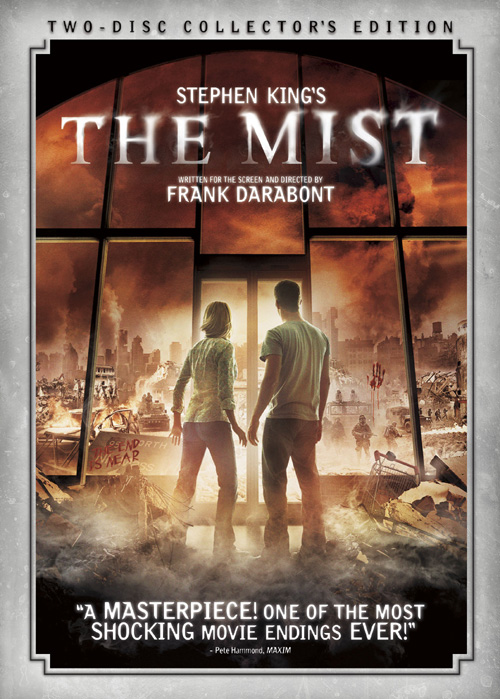
The Mist in the Pulpit

With the teaching schedule I have, vacations are not viable. One semester blends into another like some demonic tapestry with blurred edges between the somewhat discrete components. Breaks just aren’t part of the picture. While my family is on a well-deserved vacation, I’ve been home doing class prep and lecturing. On those nights when I have no classes, I sometimes watch a movie to hear the sound of human voices. This week one of my picks was The Mist.

My fascination with horror films stretches back to my college days, concurrent with my first degree in religious studies. Never a slasher fan, I’ve preferred the more thoughtful movie that has a (hopefully) profound message. I’d never read Stephen King’s novella on which this movie was based, so I didn’t know what to expect. All I knew was “there’s something in the mist.” The build-up was great until the creatures were shown – after that it became a standard monster flick. A human menace arises in the form of Mrs. Carmody, a religious zealot who is convinced the mist is the apocalypse. As the survivors try to form some plan of action, Carmody’s preaching becomes more and more strident and self-convinced as the “wicked” die and the “righteous” are spared. Not having read the book, I’m not sure if her over-the-top rhetoric originated with King or with Frank Darabont, the screenwriter/director.

I have often posted on the relationship of monsters and religion, but The Mist is almost too easy to cite. Perhaps released too late to make it into Douglas Cowan’s Sacred Terror, the connection between religion and fear is patent and bald. Mrs. Carmody’s religion, apart from being very generally Christian, is hard to identify. She insists on human sacrifice while constantly referencing the Bible. Although there are examples of human sacrifice in the Bible, that particular cultic activity is never advocated for monster invasions or the apocalypse. Carmody is a parody of religious over-reaction to the unfamiliar and dangerous. In her insistence that others take her point of view, the caricatured Carmody becomes a danger that threatens the community. It is left indeterminate whether her followers survive or not.

The religious agitator is a trite and tired character, but one that has instant recognition value. In The Mist, however, I came for the mystery and stayed for the monsters. Mrs. Carmody could have said much more by saying much less.
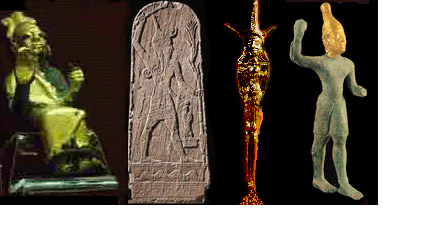


Birth of Religion

Since “religion” is a relatively modern concept, I always begin my Ancient Near Eastern Religions class with an exploration of what “religion” is. We all have a concept of “religion” (I’ve reached my quotation quota, so I’ll assume it is safe to write “religion” without them from now on). The idea, however, is an offshoot of the development of monotheism. Prior to the recognition of a single deity, in a world where no laws of physics existed, just about everything was the result of the conflicting interests of the gods. Why call it anything special beyond the facts of daily life? Keep the gods happy, live long and prosper.

With monotheism arrives the component of belief. If there are hundreds or thousands of gods, belief in the right one simply doesn’t enter the equation. Ancient gods aren’t overly concerned with humans. People were created to serve them, but salvation, fulfillment, apotheosis, and belief weren’t part of the picture. Look at the world around you: this is proof of the gods and their power. Religion in such a world is more a matter of what you do – placating the gods – than it is a matter of what you believe. It is difficult for modern people to project their minds back to a world without the explanatory value of science, a world where all could be explained by the gods. Such was the world of antiquity.

Once monotheism emerges with its views of belief in the correct god, and the corollary of that god’s personal concern for you, religion experiences a sea change. Yes, that god still may require placation, and yes, that god may still intervene regularly in the world, but this is the only god now. One of the surest ways to anger him (for he is male, like human rulers) is to disbelieve. A jealous deity, he detests belief in other gods, although they do not exist. At this juncture, we have found religion. When the world itself operates at the behest on one god, keeping that one god satisfied becomes a specialized part of life and religion is born. The world will never be the same again.

The usual suspects


Acts of God Algorithm

One of the oddest industry-standard phrases in use in secular contexts is “acts of God.” In a recent edition of Bostonia, the Boston University alumni magazine, an article entitled “The Acts of God Algorithm” seemed to promise some insight into this bizarre phenomenon. The piece, it turns out, is about an insurance analyst named Karen Clark. Of course, the place where “acts of God” are regularly invoked is in the insurance business. The reason this is so interesting is that in a nation as religiously motivated as the United States, people simply accept the slush-pile, default “act of God” as a given. The phrase, however, betrays a depth of fuzzy thinking and bad theology.

Does an “act of God” apply to an atheist? Does a devout Hindu have to accept any disaster that the monotheistic god and insurance companies present her or him with? Who tests to see if “God” is behind any of these acts? Given that monotheists differ widely on the day-to-day involvement of God in the natural world – certainly the world of insurance companies – how are any acts allocated to God? Legally! Predestinarians would assert that all acts are acts of God, and thus their insurance companies should be prepared for all such contingencies (they would, of course, have been predestined to deny this). Even those who accept less regular interference from on high would have trouble discerning whether a human-caused accident might or might not have had some hidden message from God. Are insurance moguls the ones qualified to decide?

To call any natural event an “act of God” betrays a level of jaded, if not indolent thinking that is inappropriate to all except those in the business of making money. Life is uncertain; it comes with no guarantees. Somehow our society accepts that if we pay good money to top-heavy, overly wealthy companies, bad things won’t happen to us, and if they do we get paid back. This kind of theology is diametrically opposed to the worldviews of the Bible and many monotheistic religious outlooks. Yet we accept that hurricanes, earthquakes, and floods are “acts of God.” The sneeze that causes a motorist to accidentally run a red light is not. And insurance brokers are weeping all the way to the bank.


When Dinosaurs Will Rule

Just about all of us begin life as budding paleontologists. What kid doesn’t adore dinosaurs and their paradigmatic story of planetary rule followed by inexplicable decline? The mystery and drama only add to the fantastical nature of the beasts themselves – creatures towering over houses and trees, predators the size of school buses. When my daughter hit dinosaur age, my latent paleontologist experienced a profound resurrection. Sure that she’d become the next great dinosaur hunter, I relearned all the old species names and added dozen more from creatures discovered since my interest went underground. While my career was spiraling downward at Nashotah House, I contacted the paleontology program at the University of Wisconsin to see about retraining. I even started to teach myself calculus.

Life delights in playing funny tricks on people. Once again my career in religious studies spirals downward and the specter of the dinosaurs rises. Literally. A former student of mine pointed out an article on Helium.com that spells out some possible implications of the Deepwater Horizon fiasco. The first sentence reads: “Ominous reports are leaking past the BP Gulf salvage operation news blackout that the disaster unfolding in the Gulf of Mexico may be about to reach biblical proportions.” The Bible is our standard measure for disaster; no crisis can not be made worse by throwing in the adjective “biblical.” If Terrence Aym is correct, however, even the Bible won’t save us now.

Apocalypse now?

Basing his analysis on Gregory Ryskin’s thesis that immense methane bubbles from under the ocean led to several past mass extinctions on our planet, Aym suggests that all the signs are present that a true doomsday scenario is unfolding in the Gulf of Mexico. I have seldom been impacted by doomsday predictions, but Aym’s article is perhaps the scariest thing I’ve read in years. I’m not enough of a scientist to assess the danger, and the media blockade only makes the speculation worse. Could it be that the decay from all those dead dinosaurs, their cohorts and predecessors, their flora – the very source of fossil fuels – is rising to deal yet another mass extinction on our planet? The reader will need to decide. For me, I regret that I didn’t stay with the dinosaurs, for they still rule the planet.


Aroma of the Divine

Religion is all about emotion. Those who approach religions rationally soon have to face the fact that believers approach the subject with a less-than-rational motivation. Religion fulfills basic psychological needs – we can explain our world without divine forces, but for many this cold and clinical approach lacks vitality and meaning. Belief in the divine is emotionally satisfying, and as long as humans experience emotion, God’s job is safe.

Aware of this emotional component, I was intrigued when I heard about Rachel Herz’s book, The Scent of Desire: Discovering Our Enigmatic Sense of Smell. It is schoolyard wisdom that smells are closely associated with memory; everyone I’ve asked about this has had the experience of a firm memory being mediated by an unexpected aroma. What Herz has discovered, however, is that our sense of smell evokes memory just about as well as other sensory cues. The vital difference is that our sense of smell is vital for emotional development. The fragrance-induced memory is more fraught with emotion, therefore it may seem more intense that memories brought on by old photos or songs. In fact, those who lose their sense of smell often report living with emotional flatness. Laboratory animals with their olfactory organs removed show no motivation in their pathetic lives.

Considering the emotional component of religion and the fact that our olfactory perceptions are closely linked with our limbic systems, I wonder how religious satisfaction smells. Surely emotion is more complex than what our noses detect, but if emotional systems are shut down without a sense of smell, it stands to reason that religion must be related, at least in some form, to smell. The presence of the divine is often described as “inspiration” or inhaling. In Hebrew and other Semitic languages the world for “spirit” is also “breath.” Although Herz doesn’t discuss this aspect of scentology in her book, it would be an avenue to investigate for those with an interest in the origin of religion and the aroma of the divine.


Jesus Friends Me

From Jesus' Facebook profile


Jesus has a Facebook page. Given the circumstances it is highly doubtful that he set it up without some help from his friends. I went to the page to check out his friend list, but apparently he’s not accepting invites. Over 125,000 like the page, however. I wondered if it might be a stunt, since when I found Facebook they insisted that you could only sign up with your real name. While there is no doubt that this is a stunt, it turns out that it is considered an evangelistic tool wielded by a John 3:16er. On his info page, Jesus writes, “Please invite your friends to ‘Like’ (love) Jesus Christ,” an upgraded “honk if you love Jesus” if ever I read one. If you read the comments on his wall, it is clear that some people believe Jesus himself really reads his own page. It doesn’t mention the car accident.

A Rutgers student once told me about the “six clicks of separation” phenomenon on Wikipedia. Apparently, no matter how obscure a page you’re on, just six link clicks can get you to the page on Jesus. Don’t get me wrong: with his impact and importance Jesus certainly should have a Wikipedia article. There can be little doubt that anyone else can claim his level of influence in both the Dark Ages and Twentieth Century America, now creeping into the Twenty-First. The sad part is, those who constantly link to Jesus have latched onto a chimera grafted together from disparate sources. And they are his followers on Facebook.

I wonder who has the audacity to speak (type) for Jesus. Who is it that believes they have the deep insight into who Jesus was – deep enough to speak for him? WWJT? Technology speeds along and fans of Jesus fear he may be left behind. By making your Facebook admiration for Jesus public, I suppose, a kind of “witnessing” is going on. It would seem to me that a better way to show support for Jesus would be to care for others, the poor, the disadvantaged, the lonely. Feed the hungry, provide healthcare to the sick, offer justice to those who have been treated unfairly. If a friend invitation came from this faux Jesus, who would be inclined to accept it?


Kupalle or Ivan Kupala

The mysteries of newspaper layout are opaque to the laity, but the basic premises are clear; important news in the front, less pressing matter behind. The human eye, while expert at pattern detection, craves breaks in a series of repetitive columns of identically sized words. Newspapers and textbooks therefore punctuate the strictly “factual” information with images that lighten the ocular burden. So it was that yesterday’s New Jersey Star-Ledger graced the World and Nation section on page 10 with a photo of Kupalle.

Photo credit: Nikolay Yastrebov, European Pressphoto Agency

The caption notes that these young ladies are celebrating the pagan summer solstice holiday of Kupalle in Minsk. The summer solstice was almost two weeks ago, so why the photo made its premiere yesterday is one of those newspaper-specialist mysteries. Nevertheless, my curiosity about Kupalle was piqued. The photo looked like a more family-friendly version of a ceremony portrayed in The Wicker Man where young ladies leap over a fire. Some research revealed that Kupala is an ancient Russian water goddess, connected in some way with Neman, a Celtic goddess (thus the Wicker Man tie-in). The festival dedicated to Kupala involves leaping over a bonfire to ensure fertility. Kupala may have been lunar in origin but her name translates as “she who bathes.”

Christianity has a long history of subsuming “pagan” celebrations, often “baptizing” them into Christian form. In Belarus, Kupalle became the festival of Ivan Kupala, “John the Bather.” Kupalle was literally baptized. June 24, as the fictive date of John the Baptist’s birth, is a saint’s day in Roman Catholicism. The timing of the holiday intentionally coincides with Midsummer, one of the most sacred times of many nature religions. Ironically, in the Baptist’s name a holiday was reborn into Christian form. In the post-communist days of Eastern Europe, not only does Orthodox Christianity appear publicly, but its precursors once again engage public interest. Even if it is two weeks late.


Green Bible


One of the most heinous theologies to emerge from Christendom is the idea that exploitation of our planet is good for the soul. The idea, apart from having been foundational to Bush II’s administration, is based on the idea that if we mess up our world badly enough we will force the divine hand into sending Jesus back to clear up our detritus. The Second Coming apparently will be in a garbage heap rather than a garden. Christian businessmen rest secure knowing that their exploitation of our natural resources is all part of God’s master-plan. This “theology” is alive and well among many Neo-Cons and it insists that the fact of global warming is a myth and the myth of creationism is a fact.

One of the unexpected perpetrators in the war on our planet has been the Bible. Accurate records of the number of Bibles actually printed were not kept in the early days of Gutenberg’s dream machine, but current estimates place the number of Bibles printed at over 8 billion. That’s more than enough for one per person. Some of us would have to confess to owning multiple copies, making us perhaps guiltier than the rest. It was in an effort to stem the dendrite slaughter of this industry that I shifted to the Green Bible for my classes last year.

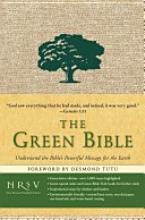
Some people treat the Bible as an object of veneration, never laying it on the floor or putting other objects atop it. Some people object to making Bibles out of “inferior” products – the Green Bible is printed on recycled paper and is biodegradable – but to me this seems to be the most responsible way to produce a book with the enormous environmental impact that the Bible has. I could live without the “green letter” sections intended to prooftext the Bible’s environmental concerns, but care for our planet trumps good taste at times. If anyone from Oxford University Press is reading this, the eco-friendly aspects of this Bible are what reluctantly switched me from 15 years of requiring students to purchase the New Oxford Annotated Bible! It is time that the Bible owned up to its part in our planetary plight.


Random Faces

A friend recently sent me an issue of the Annals of Improbable Research that featured an instance of pareidolia on the back cover. Pareidolia, or the brain’s tendency to read patterns in random input – especially faces or human forms, has been a subject addressed on this blog before. Nevertheless, the phenomenon has continued to find wider exposure on the internet, and its implications continue to grow. The Cheezburger folks who brought us LOL Cats now have a site dedicated to pareidolia entitled “Happy Chair is Happy.” The question is not so much why we see faces everywhere, but what do we do about it.

Photo credit: C. Vittore, K. Tribble and D. Savala, Ann. Improbable Research

Perhaps the most prevalent uses of pareidolia in natural phenomena (human-made objects are often funny or uncanny, but the faces may be there by intentional design) revolve around the supernatural. Would-be ghost hunters find what looks like a face in a window or shadowy corner and interpret it as a disembodied spirit. Religious believers of various faiths find the faces of their founders or leaders in natural noise. A tract I saw as a child told the heart-wrenching story of a woman who’d given up hope. She randomly took a photograph of her garden and when she developed it (this was back when film was actually still in use), she found the face of Jesus in among the leaves. Her angst alleviated, she went on to face life with a fresh sense of possibilities.

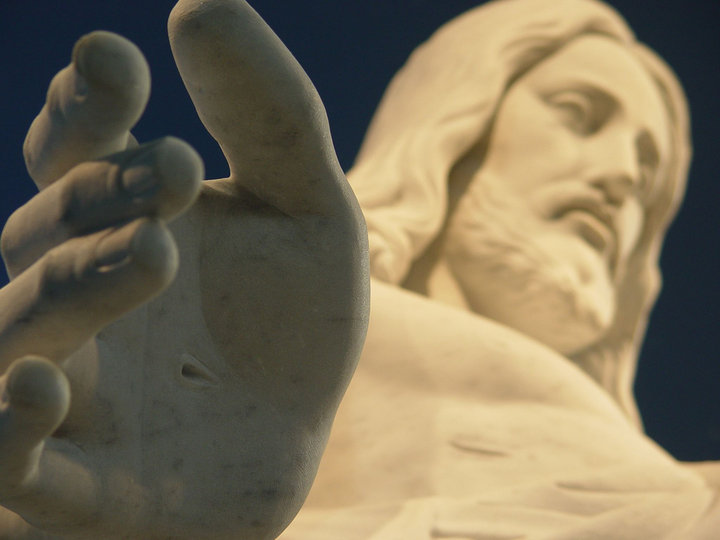
We often see what is not really there. On a visit to my niece last year, while waiting in the car outside her dorm, I saw a shadow on the wall that looked exactly like the recently deceased Michael Jackson. The shadow was cast by security lights through a bush, but the face was unmistakable. To test my observation, I asked my niece – who knew nothing of the fleeting rock star on the side of her building – if she could see it. Immediately it became obvious to her. An epiphany of Michael Jackson may be a religious event, or at least a supernatural one, to some. In reality it was a temporary arrangement of leaves aligned just right to catch a security light to form a public icon. Putting faith in pareidolia is a very haphazard source of security. However, if it helps someone deal with the stresses and strains of life, what harm is there in seeing Jesus (or Michael Jackson) where he really isn’t present?


Robots and Divine Engineers

Pennsylvania seldom comes to mind when one thinks of a “big state” unless, that is, you have to drive across it. On the way to a family wedding in Ohio, I had to drive interstate 80 from the Delaware Water Gap to Sharon, Pennsylvania, and beyond. Having made this trip more times than I care to recount, I knew some diversion would be necessary. So it was that my family settled in to hear the audio version of Daniel H. Wilson’s How To Survive a Robot Uprising. Given my current status as a “Robot Dad” and my lifelong interest in both monsters and doomsday scenarios, this particular book was an apt choice.

Although the book is classified as humor, there was much that was thought-provoking in it (as there frequently is in quality humor). As Wilson systematically describes what makes robots tick, back five years ago, it became clear what it means to make a creature in one’s own image. Roboticists analyze how humans go about doing things and how we think in order to replicate these processes in mechanical formats. The results are machines that easily outperform humans, but which also have severe limitations – what Wilson frequently refers to as the benefits of evolution. Not only is the book funny, but it is also informative concerning what amazing robots are already in development. For those with the capital, there is little that robots can not be made to do.

All the while, I was also thinking of the human dilemma. Judeo-Christian tradition claims that we are made “in the image of God” without ever really explaining what that means. Perhaps it is the height of hubris to suggest that we are pale reflections of what we might have been, given a divine designer. When humans make robots, they are designed to surpass what we can do. Is there a reason people can’t see in the infrared or ultraviolet light ranges, like robots can? Why are we not able to hear all available sounds waves or smell all possible odors, such as our machines and dogs can? Could a team of human engineers have designed a better prototype than the God of Genesis?

While I do not really fear a robot uprising, I often ponder why things are the way they are and why human limitations often lead to such intense suffering. It is an idea that can be explored thoroughly when, after hours of driving, you realize that you still have 200 miles to go to the border.


Hell on Earth, Part 2

Some time back I wrote a post on the Peshtigo, Wisconsin fire of 1871. That fire, one of the worst natural disasters on American soil, must have seemed like Hell to the residents of the small frontier town. Peshtigo regrew after the fire and is a thriving community today. On the way to a family wedding in Ohio, we stopped in Centralia, Pennsylvania yesterday. Centralia is its own variety of Hell on Earth. In 1962, a fire in a trash heap set an exposed coal seam on fire. The fire spread into a coal mine and has proved impossible to extinguish. The fire burns deep underground today, nearly fifty years after it started. Some analysts suggest that there is enough fuel in this anthracite-rich area to keep the fire burning for a thousand years.

Today Centralia is a ghost town. Toxic fumes, sinkholes, and at times unbearable ground temperatures have driven many away. The federal government bought out the remainder; however, fewer than ten people still live here, refusing to leave their homes. When I learned that we’d be stopping in a nearby town for the night, I diverted our route to Centralia. There is really nothing to see. Two houses were all that I counted, and abandoned roads run into the untrimmed bushes like Life After People. While I attempted to get a feel for the place, my family spotted another car cautiously driving the abandoned roadways, looking for some ineffable handle on this man-made natural disaster. While not to the scale of the Deepwater Horizon spill, it is another example of the lust for fossil fuels and what might go wrong when these volatile substances accidentally escape human control.

Centralia, Pennsylvania

I couldn’t find the perfect picture of Centralia. There is no perfect picture here. Wary of sinkholes and reports of hostile locals, I pulled aside to take in the overall scene. On a hillside not far away, giant wind turbines lazily spun in the summer air. This clean energy alternative felt almost like an apology for setting the earth aflame below the feet of a town inhabited by mostly ghosts and less than a dozen living souls. In my head I knew that the temperature was 1000 degrees Fahrenheit well below, that 1000 people had been relocated, and 1000 years from now the fire may still be burning. Who needs a metaphorical Hell when human beings are so good at creating their own physical perditions?


Artificial Ugarit

Yesterday a friend pointed me to an article in the MIT News entitled “Computer automatically deciphers ancient language.” The language in question is Ugaritic. The article, by Larry Hardesty, narrates how three computer scientists have developed a program that may potentially decipher as yet non-readable languages. Ugaritic was chosen as a test-case because it has already been decoded and since it meets the specific criteria needed for the program to work. Results from the program could be measured against the standard translations already produced by specialists. Perhaps Ugarit will have another day in the sun.

The larger issue, of course, is technology and its role in understanding the human endeavor. Written texts are an extension of the human mind and those of us who practice it copiously know that the written piece is a piece of the author. Ancient texts may not suffer the same burden of individuality – some undoubtedly were rote pieces set to clay only after a lengthy oral life – nevertheless they participate in the constant paronomasia that is the human psyche. We invent the myths that Ilimilku and his colleagues inscribed so carefully over three millennia ago. Computers may indeed aid us in unlocking their often obtuse forms of expression, but how close will they put us to laughing at Ilimilku’s jokes or wondering deeply at his profundities?

Having been involved in a research project involving computerization and the Ugaritic texts (I was an editor in the now defunct Ugaritic Tablets Digital Edition) I am very aware of the benefits that technology brings to the table. As a sometime writer, I am also aware of the ironies involved. Our ancient predecessors, humans like ourselves, wrote texts that they considered worthy of preservation. Their civilization collapsed. Their language died. We rediscovered it and eagerly wanted to know what they had to say. We, however, have lost the ability to understand. Computers have taken on a dominant role in disseminating the written word. They daily participate in the human experience. Perhaps some day it will be AI that is scrutinizing our whimsical words and trying to decipher what in the world we meant. When they succeed they will find we are not that far from where Ilimilku began.


Faith Healing

Having dissociative reading habits sometimes leads to fortuitous coincidences. My interests have always been widely dispersed, and although I have a few perennial favorites that I keep coming back around to, reading about new interests predominates. One of my favorite reading topics is science. Apart from the requisite intro courses in college, I have unfortunately had little formal training in the sciences, so I read extensively in the field. A number of my recent reading projects, books on widely divergent areas of science, have coincidentally mentioned faith healing. Being books written by scientists, there is little by way of physical explanation except that people who believe they are improving generally do. The mechanism remains undiscovered, but the phenomenon is well documented.

Faith healing has long lain among the taboo subjects of snake handling and snake oil hawkers. Those who approach the phenomenon from a religious angle claim that it is no less than divine power that causes a person to heal. Physicians and scientists who rely on empirical evidence, however, declare that a physical cause must exist, albeit a yet undiscovered one. With no way to test results, the objective approach simply must accept that it happens, we know not why.

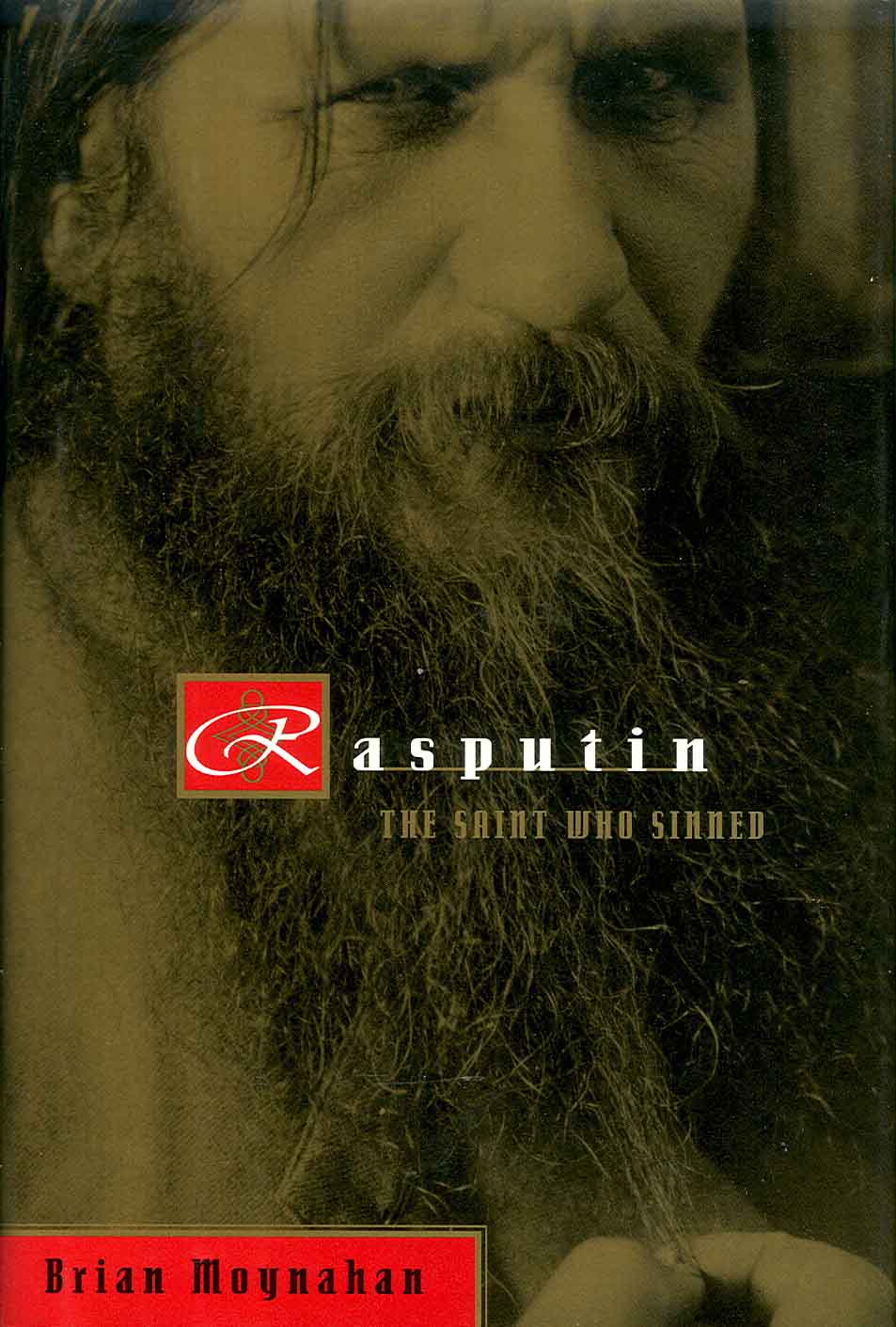
A number of years ago I read a book about Rasputin (Rasputin: The Saint Who Sinned by Brian Moynahan). At the time I was teaching at Nashotah House, a monastery-like seminary heavily influenced by Orthodox pretensions. “Rasputin” was a common slur on campus, particularly for a slovenly prelate-in-training. I had no idea who Rasputin was until I read this book. Apart from the distinctly creepy vibes his photographs give off, there are many documented cases of Rasputin’s ability as a faith healer. Few today would consider the “mad monk” as any kind of saint, but he apparently had a salubrious effect on those who believed in his power. This would shift the cause from supernatural to the suspect, unwashed hands of a notorious sinner.

Who wouldn’t want the ability to heal and make the world a place with a little less suffering? While faith healing has become a kind of holy grail for scientists, there are some not-so-holy religious folk who’ve unlocked a door that many never even suspected was there in the first place.