Religion in the Underworld

One of the unspoken truths of the study of religion is that it has an unacknowledged, problematic sibling in paranormal studies. There are many obvious differences: for one thing, religious study is respectable, if not really considered essential, whereas paranormal study is suspect and not generally acknowledged by established scientific or mainstream research institutes. Nevertheless, both religion and paranormal phenomena deal with unquantifiable experiences, aspects of human perception that cannot yet be measured. So it was with a large grain of salt that my wife signed me up for a year’s subscription to the TAPS Paramagazine. I’ve posted on this particular magazine before, but a new issue arrived just yesterday that contained so many references to the Bible and mainstream religion that I thought it worthy of reiteration.

In general I am skeptical about supernatural claims. At the same time, I am aware that we understand only a fraction of the universe and some aspects of theoretical physics are more bizarre than your average ghost story. When the magazine arrives I read through it with my salt-shaker within easy reach. Nevertheless, a feeling haunts me that at some deep level my specialization is connected with paranormal activity. The first article in the current issue concerns the Underworld. The author suggests that biblical and Mesopotamian references to the Underworld may be supported by the findings of ghost hunting investigators.

I’m all for a couple of working guys (plumbers Jason and Grant) daring to tread where scientists fear to go, but the problems of using ancient materials to bolster ghost-hunting claims are legion. Just a glance at the popularity of Zecharia Sitchin books warns against a simplistic reading of complex, ancient civilizations. We don’t need ghosts in the machine to explain the Sumerians or Babylonians. At the same time, we don’t have many academic options for uncovering the many, many ghost claims that have made throughout history. Mass neurosis is less believable than occasional hauntings. So although I have to disagree about the viability of a literal Underworld – a good understanding of ancient mythology helps to clarify that one – I do reserve some space for wondering if religious studies might not end up in the same final resting place as paranormal studies once science is able to penetrate the veil.

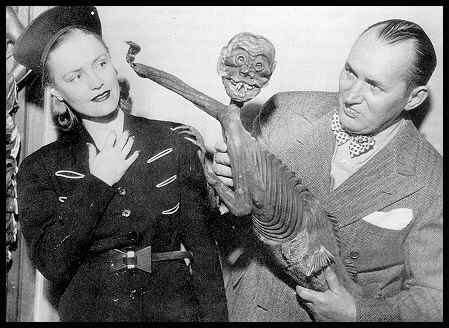
My all-time favorite ghost photo



What Hath AI Wrought?

Earlier this week an op-ed piece in the New York Times afforded the laity a rare glimpse into The First Church of Robotics, that is, Silicon Valley’s incredible and slightly disturbing vision of the future of technology. The writer of the piece, Jaron Lanier, an insider, expresses a concern that his area of specialization, a kind of artificial intelligence, is blurring the hard line between human and machine. Perhaps it is time we all watch Terminator again. Quoth Lanier, “It should go without saying that we can’t count on the appearance of a soul-detecting sensor that will verify a person’s consciousness has been virtualized and immortalized. There is certainly no such sensor with us today to confirm metaphysical ideas about people, or even to recognize the contents of the human brain. All thoughts about consciousness, souls and the like are bound up equally in faith, which suggests something remarkable: What we are seeing is a new religion, expressed through an engineering culture.” To put this in context, Lanier had been discussing the current concept that it might be possible to digitize human beings to incorporate all people in a Matrix-like universal brain.

I am woefully undereducated on the technology side of this issue to discuss whether or not such high-end digitization is possible. What interests me is the suggestion that this is a new religion. We haven’t even figured out the old ones yet. Defining what a religion is presents a nearly insurmountable barrier even to specialists in the field of religious studies, and some disgruntled conservatives claim that atheism and “sciencism” are religions. No matter how fast or how far you run, someone will always be able to label you as the adherent of one religion or another. Religion is an all-consuming category, a mental conundrum that cannot be contained by mere academic classification and circumscription. It is the universal solvent.

Meanwhile, universities and other learned bodies are reluctant to support the study of religion. In a world where the vast majority of individuals, university professors included, are motivated by religious guidelines and parameters, it is the elephant in the room we’d rather not discuss. From the sidelines I have watched reputable school after reputable school disembowel religion departments since they “don’t bring in money” and add nothing new to our understanding of the human condition. The sad truth is, religion indoctrinates much of the world. Deans and university presidents could learn a lot by reading op-ed pieces in the New York Times. Or at least have their avatars read them and store them away for future recall.


Bigger than Manhattan

Walking inside with the newspaper this morning, I would have wagered that the word “biblical” would appear on the front page. This would have been a fairly safe bet since the headline of the New Jersey Star-Ledger reads, “Fire, Flood and Now a Massive Iceberg.” The reference is to the Petermann Glacier iceberg from Greenland that will likely threaten human maritime activities in the North Atlantic for some years to come. The massive iceberg, “four Manhattans” in size, is expected to drift down along the Canadian coast, causing potential problems for off-shore oil wells and shipping traffic. Sounds like a job for James Cameron, or maybe Kevin Costner.

The biblical connection comes in paragraph three: “It’s been a summer of near biblical climatic havoc across the planet, with wildfires, heat and smog in Russia and killer floods in Asia.” The more I ponder this curious superlative for disaster (i.e., “biblical”), the odder it grows. The Bible is really home to few epic disasters, most of them centered in the flood, the exodus and wilderness wanderings. Those who favor an apocalypse might throw Revelation in for good measure, but overall the Bible deals mostly with everyday occurrences that seldom find reflections in the media. To convey the idea of grand disaster, however, the Bible remains unrivaled.

While the Petermann ice island may not be the end of life as we know it, it is an appropriate symbol of our times. Our planet is warming; no one denies that. It is through human irresponsibility, it is true, but like all truths, this is controversial. The Bible, that great bastion of western morality, is frequently used to bolster positions that claim God gave the earth to humanity to do with as we please. It might serve the captains of greed and industry well to realize that the world given to Adam and Eve was flat, with a see-through dome overhead, and it was the only habitable space in a very limited universe.


I Think, Therefore I Believe

This week in Time, an article by Jeffrey Kluger explores the intelligence of animals. Quite apart from many examples of how bonobos can string together relatively complex concepts using symbol cards (thus evidencing more intelligence than New Jersey’s current governor), the article demonstrates that many animal species display what we would recognize in other humans as intelligence. The article then develops the corollary that if animals think then perhaps they sense emotion as well. Having raised my daughter on Kratt’s Creatures and Zoboomafoo, none of this was new to me. I may be no scientist, but watching closely how animals behave, it has always been obvious to me that we are more like points on a continuum rather than a “special creation.”

Not to put too fine a point on it, this is what lies behind the human obsession with its non-animal status. As Kluger states, “For many people, the Bible offers the most powerful argument of all. Human being were granted ‘dominion over the beasts of the field,’ and there the discussion can more or less stop.” Unfortunately for our animal companions, the use of the Bible to repress others does not stop at human beings who don’t share your religious views. Many use the Bible as an excuse to do as they please to creatures who demonstrate similar emotional responses to people in similar situations and who, increasingly we realize, also think. Kluger’s article opens with an interview with Kanzi, a bonobo. One of the inevitable conclusions is that this great ape is able to think ahead and make plans. Evolution on this point has apparently skipped many Neo-Cons.

For years I have been telling my students that animals display behaviors that we label as “religious” in humans. The difference is that we are able to ask other humans what they are thinking and thereby gain somewhat direct access to their thought process (if they are telling the truth). Because we fail to share language with animals, we assume we are superior thinkers. To me this does not stand to reason. Animals are as fully members of this planet as humans are. Our desire to exploit them is more a reflection of human dominionist tendencies than a reflection of their lack of intelligence. We may even have animals to thank for the basic tenets of religious thought since religions are better described as evolved than revealed.

Maybe not the best sign of animal intelligence, but consider the Neo-Cons...


Weather the Psalms

Among the academic detritus cluttering my desktop is a book I wrote while employed at Nashotah House. Not being a native Midwesterner and finding myself where severe thunderstorms are a blasé fact of life for much of the year, I was captivated by and terrified of the weather. At the same time, daily recitation of the Psalms was a major part of our required, twice daily worship. With the thunder louder than I could ever imagine it outside, we’d calmly read the Psalms, at our stately pace, confident that he who rides upon the clouds could protect us, his humble servants. After many years of recitatio continua I noticed the plenitudinous mentions of the weather in the Psalms. After a painstaking five years of reading and rereading the entire Psalter, I had translated every verse with a weather reference and had written commentary on them.

Publishers showed no interest, this despite the enormous success of Sebastian Junger’s The Perfect Storm, and Erik Larson’s Isaac’s Storm (both of which I eagerly read) and the recent release of Twister. One publisher deigned to make comments as to the great problems of my thesis, so I sat down to revise this behemoth of a book. The very day I was called into the Dean’s office and fired was the last time I looked at the material. I had been revising the book that very morning. The one sad aspect of this entire episode is that every colleague to whom I mentioned the book was excited to read it when it came out. There was a real interest, but no publisher willing to take on the project, this side of vanity publishing.

Some days I think I may go back to that dead beast of a project and try to resurrect it. My academic publishing has slowed to a tortoisene pace without full-time institution support or interest (independent scholars are not worth investing in, I have learned), especially under the weight of teaching nearly a dozen classes a year. Nevertheless, the idea seems sound to me. I keep a weather-eye on the academic horizon and I have yet to spot a book like mine anywhere within the publication catalogues. Considering the importance of storm gods in the ancient world, perhaps we’ve simply moved beyond this interest, tucked away in our interior settings. Nevertheless, when a rare thunderstorm comes to New Jersey, I still remember the majesty of the weather and a forgotten book on the Psalms.

Even the NWS recognizes Noah


Reaping the Exodus

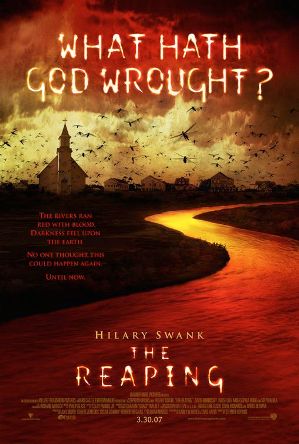
Strange coincidences transpire. In 2007, just after the professor in my discipline at Rutgers University retired, I showed up in the Religion Department seeking adjunct work. With the vicissitudes of “full-time” employment, at times my part-time stint at Rutgers is all I have. While covering the book of Exodus my first year there, students began asking me what I thought of The Reaping. I hadn’t seen the movie, which had been released on Good Friday of that year, but I promised my charges that I would. Still on my Hollyptic kick, I decided to rewatch it last night. The script was handled much better than that of Lost Souls, although the movie as a whole lacks credibility. It is, however, an example of how the Bible mystique continues to pulse through Hollywood’s veins.

The concept of bringing the plagues against Egypt into the bayou was a fresh one, but the satanic cult aspect has been overdone. A strong female lead in the role of a disenchanted former clergy-woman was a nice touch, and although the premise of her back-story was contrived, it was also decidedly eerie. The element of the movie that students wanted professional comment upon, however, was Katherine’s scientific assessment of the plagues of Egypt. This idea has a comparatively long history. Since critical biblical scholarship began, naturalistic suggestions for the non-historical plagues have been offered. Strangely, these offerings are intended to buttress an historical event that the theories themselves undermine. There is no archaeological or historical evidence for the exodus. Why then, are scientific explanations of the plagues necessary?

The story of the exodus is liberating; slaves liberated by a loving God forms a back-story that most oppressed people want to be true. The sad fact is that religion is more often used to repress than to liberate. Somewhere along the trajectory of human social evolution, religion became a key element in the control of the masses. This becomes clear from the merest glimpse at religion as it existed in ancient Egypt itself, or any of the other cultures contributing to Israel’s religious tradition. The Reaping, like so many films that springboard from the Bible, offers a conflicted worldview where nobody really knows who is in charge of the universe. In that aspect, it mirrors human religious experience.


Lost Apocalypse

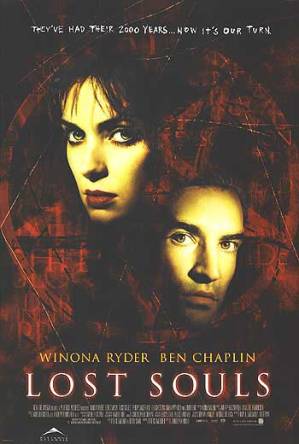
The Bible has many eminently quotable passages. I suspect that is one of the reasons it has the staying power that it does. Many critics of the theologies spun off by the Good Book have turned their vitriol toward the Bible itself, but I believe such hostility to be misplaced. Not everyone enjoys reading the Bible – that much is true for any book. The Bible, however, is foundational for not only our society, but the entire western literary tradition. Its influence on Shakespeare alone, who has, in turn, influenced just about every writer since the seventeenth century, underscores its literary importance. That’s why I’m always surprised with film-makers use concocted verses from the Bible when actual passages would produce the same effect. Granted, few Bible scholars comprise movie audiences and producers and directors seldom worry about writing the story for them. Last night I watched the “horror” film, Lost Souls, released in 2000. I’d read about the movie in Douglas Cowen’s Sacred Terror, so I wanted to see how it rated.

The movie begins with a false Bible quote: “… A man born of incest will become Satan and the world as we know it, will be no more. Deuteronomy Book 17.” Now granted, the movie failed to rock the critics, but the sheer weight of errors from pre-scene one should be the first warning to start from a better script. Beginning with an ellipsis for dramatic effect may be acceptable, but it serves no purpose – and what’s with the misplaced comma? A man born of incest in Deuteronomy is a non-starter because his potential parents could only be found dead, crushed together under a pile of hurled stones before the unfortunate could even be born. Satan as a devil is never mentioned in the Hebrew Bible, let alone Deuteronomy. Deuteronomy is almost never quoted by apocalypticists since it does not predict the end of the world, and Bible books are divided into chapters, not “books.” Well, the biblical illiteracy of Hollywood may be overlooked for a good story, but this is no such thing.

Lost Souls fails on the premise that a biblical “literalism” (and that is only if certain Evangelical interpretations are given unwarranted credence) about the coming of an Antichrist should be shored up by a fabricated quote from the Bible. I’m not trying to be a movie critic here, but a cultural one. The whole “end of the world” scenario held by many Evangelicals is a hodge-podge of biblical verses brought together by clever nineteenth-century clergy with little exegetical training. It is like trying to connect the dots while having to change pages constantly. The idea caught on amid the discarded lives left behind by advancing industrialism and the perceived threat of evolution. Apocalypticism has become its own industry as some otherwise unknown writers can attest. Movies like Lost Souls, or even The Omen, however, pale when compared to the antics of religiously motivated apocalypticists in the real world. Some of the rules in Deuteronomy itself are more frightening, if better written.


Kingship Divine


All conspiracy theories and history’s mysteries aside, there are some interesting correlations between the ancient Egyptians and the pre-European “New World.” Temples, pyramids, and large ceremonial structures are among the common features they share. Perhaps it is inevitable that where a ruling class becomes oligarchic that grand structures to their greatness will follow. Some factors transcend all times and cultures. It may be no surprise then, as MSNBC announced yesterday, that tunnels have been discovered under the ancient Mexican city of Teotihuacan. The tunnels, first noticed under the temple of Quetzacoatl, may be the entry to the tombs of the royalty, not unlike Old Kingdom Egypt. This great pre-Colombian city was already abandoned by the time the Aztecs came along. They gave the city its current name, a title that may be translated as “the place where men become gods,” according to Mark Stevenson of the Associated Press.

Not being an expert on ancient Americans, it is difficult to interpret all this information. Having read extensively on the ancient Near East, however, the parallels are unavoidable. The place where men become gods may well apply to several aspects of ancient Near Eastern thought as well. Not only the Egyptians, but also most ancient peoples attributed divinity to their kings. We have no personal statements from such rulers indicating their personal satisfaction at having been considered better than their fellow citizens, although one might speculate that captains of industry and finance share those views today. The ancients, however, seem to have taken this literally. Kings were gods. When kings died, and were conveniently no longer observable, they were among the unseen realms of the divine, continuing to influence the world from beyond the grave.

Even the Bible shares, to an extent, the idea of divine kingship. David comes pretty close to the mark in the books of Samuel, and certainly the idea had appeal in the pre-monotheistic eras of ancient Israel. The place where men become gods is, however, in the imagination. The great and powerful pharaohs do not govern the affairs of modern Egypt, nor do the shades of Assyrian and Babylonian emperors protect the war-torn realities of life in Iraq. We don’t even know who built Teotihuacan. The fate of divine kings, it seems, is to grow obscure and irrelevant to all but historians and reluctant school kids. There are those who still aspire to divine kingship. They may have lives of immense wealth and power, but if they read a little more history they would glimpse their own fate in the tombs of the divine kings.


The Evil That Men Do

The graveyards of humankind are filled with the victims of religious violence. That fact does not seem to have lessened the impact of religion as a whole on humankind. One reason may be that religion has been a focal point of the good and humanitarian deeds of which people are capable, as well as a justification of the most heinous. The irony is that adherents of a religion claim that a just, true and righteous god is their motivation, for good or for ill. In the same church, mosque, or synagogue, there are widely differing views that live together. Sometime the truce is an uneasy one. Sometimes the adherents are united against a common enemy.

The furor over whether a mosque should be permitted near Ground Zero has become a major political whipping boy. Heavyweights like Newt Gingrich and featherweights like Sarah Palin are quick to fire off their half-cocked mouths about the impropriety of it. Michael Bloomberg, the mayor of New York City has been given the task that kindergarten teachers around the country – around the world – should incorporate in their curriculum, the task of teaching tolerance. In an excellent speech delivered yesterday, the mayor reminded citizens of what many appear to have forgotten: without religious freedom nobody is free.

Muslims are not to be blamed for 9/11 any more than Christians are to be blamed for the Inquisition. Every religion has members that misuse their sacred trust as a vehicle for hate and repression. By forbidding religious freedom to any religious group, America sets a precedent of a growing intolerance that can only lead to more, and greater suffering. Already the Gingriches and Palins of our nation tell us that there are indeed lesser citizens and greater citizens. Those like them deserve freedom of religious expression, of marriage recognition, of family size, of medical care, and those who believe differently and therefore deserve less. Speaking only for myself, I would rather have tolerant Muslims as my neighbors than supersessionist Christians.


Hoax Folks

The internet bores me sometimes. I can’t keep up with the pace of blogs that chug away like a neverending newsfeed. Information comes at me so fast I want to cower in a corner and start constructing my own printing press from scraps of lumber and bits of broken screws and bent nails. Slow things down a bit. Write something of substance. Of course, electronic information has its advantages – I frequent online dictionaries and thesauri where looking up words is much quicker than flipping countless pages. While hovering on the thesaurus.com page this morning, I noticed one of the blog entries entitled “Relax, Bill Cosby isn’t dead — it was a hoax. Is it true that the origin of ‘hoax’ mocks Christianity?” I’m glad for Bill Cosby’s sake, but what really caught my attention was the subtitle. We are all subjected to hoaxes almost as regularly as we are fed real news. Was this blurb suggesting that Christianity originated hoaxes or had given us the word “hoax”? Okay, too much information, but I had to find out.

The blog post states, in part, “The Eucharist, a central Christian prayer, contains the Latin ‘hoc est enim corpus meum,’ meaning ‘for this is my body.’ Jesus is said to have spoken these words at the Last Supper. The British clergy John Tillotson speculates in 1694 that hocus pocus is not only a corruption of this key Latin phrase, but a parody in keeping with the occasionally vulgar humor of prestidigitators.” Having taught for more than a decade at the avowed queen of “Anglo-Catholic” seminaries, I’d heard the gist of this before. For a blog on a website supporting grammar, however, I winced at “a central Christian prayer” and “The British clergy John…” phrasing. The Eucharist is not a prayer, but a sacrament, part of which is the Eucharistic prayer. Clergy is a collective, not an individual. Not to mention that if one was speculating in 1694 it ought to have been in the past tense.

In any case, the story as I received it was that Protestants coined the phrase “hocus pocus” to abjure the idea that anything “magical” was happening at the Eucharist. Protestants generally held communion to have been symbolic rather than a literal act of changing bread to flesh and wine to blood. So it seems that from a Protestant point of view the Eucharistic prayer was a hoax, but from a Catholic viewpoint it was salvation. As with most things religious, it is a matter of perspective. The word “hoax,” it turns out, likely derives from “hocus.” Having found this gem nestled in among so many grammatical errors, however, shakes my confidence a bit. That, however, is just my perspective.

A hoax or Dagon's sister?


Writing the Divine

The media has displayed considerable interest of late in the views of well-known writers towards the divine. Given the vast numbers of non-famous people daily consigned to Hell by the righteous, there are more tears shed for Anne Rice than for the thousands who’ve never written a vampire novel. Equally fascinating is a story from CNN yesterday on Ray Bradbury’s views on God. I cut my literary teeth on Ray Bradbury. I don’t even recall how I discovered him in the small town where I grew up. More likely than not I found used copies of his story collections at Goodwill. Already interested in science fiction, his tales of the future or fanciful past and alternate worlds captured my imagination. Living in a town where nothing ever seemed to happen, Bradbury was a doorway into someplace colorful.

According to John Blake and Bradbury biographer Sam Weller, the doyen of the sci-fi short story is an avid believer in something out there. Reluctant to accept any single religion, Bradbury embraces religious concepts as the wisdom of the sages. He believes, according to the article, that we have much to learn from religions. The views suggested in the interview may lack the rigor and sophistication of the professional theologian, but Bradbury’s emphasis on love comes close to the mark for several religions. People build superstructures around their religious founders and insist on orthodoxy and military adherence to human speculation about them. Often in the process, love becomes just another tenet left over, if you have time for it.

For many decades as I pursued formal degrees in religious studies, I was taught to put away childish things. I gave away my Ray Bradbury books and purchased hefty tomes of incomprehensible gibberish that passes for theological erudition. Then my daughter was assigned Fahrenheit 451 as high school reading. I picked up Bradbury again. His writing lacked the absolute wonder and fascination it held for my twelve-year-old eyes, but it was like greeting an old friend once again. My thinking had been partially shaped by this storyteller, and it is perhaps even possible, in a Bradburian sort of way, that I felt a “spiritual” connection as I read his books as a young boy. Reading his amateur views on religion was a quiet sort of homecoming.

An old friend


Toy Story 2.1

Summer is a season for movies. When the weather gets hot, sitting in an artificially cooled dark room for a couple hours, even if it is with strangers, seems like a good idea. Generally the movies I see in theaters are family movies – I’ve never been one to go to a theater alone and my personal taste in movies is unique in my family. The more interesting flicks usually have to wait until DVD release before I see them. Nevertheless, the movies are an experience that many of us remember fondly from childhood and children deserve good movie memories. Since the movie theater was invented it has become one of the signatures of culture in many parts of the world.

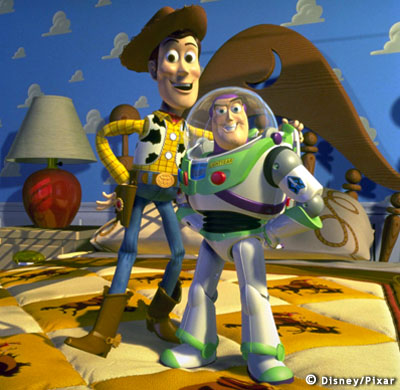
Last weekend, during the East Coast Heat Wave – a weather event so much talked about that it should have had its own theme music – we went to see Toy Story 3. In an unusual departure from my focus on religion, my comments here will focus on creativity. (Good religion is creative, after all.) Toy Story 3 opened to much critical acclaim, so my expectations ran a little high. A little too high. While I found the story to be interesting, it was a bit familiar. For those acquainted with the franchise, it felt like a remake of Toy Story 2. Both films open with the toys worried about their future because Andy is going away. In both 2 and 3 Woody is separated from his friends and has an epiphany that leads him back. Buzz gets returned to factory settings to reprise his humor in the first film. An evil toy in both movies holds the others captive against their wills. Meanwhile Woody makes new friends and with their assistance rescues the threatened toys. The evil toy ends up getting his just deserts and Andy’s toys successfully integrate.

The story line values friendship and commitment, and there is nothing to complain about there. Yet, after stepping out into the harsh sunlight, I felt like I’d just paid to see a movie I’d already seen before. Creativity – the factor that leads to truly new concepts – is not always valued in movies. This is particularly so in children’s movies. Our kids are being programmed to accept recycled stories as something new. It is not only Toy Story that has fallen into such rehashing: how many fresh ideas are shortly followed up by a 2, 3 or 4? Even if 1 wasn’t so good? I’ve even been told by publishers that publishing houses prefer to take few risks – they would rather have a product that is “like” one that has already proven a blockbuster. How many wizards and vampires have populated tween books over the last decade or so? It seems that the safe money is in the recycled story. In a society hooked on convenience, new ideas might seem just a little too dangerous. Once there was a cowboy blog…

Best friends forever and ever and ever


Everything but a Name

As we once again near the Ugaritic session of Ancient Near Eastern religions, I ponder the strange wonder that the city has all but completely escaped modern notice. As far as ancient city-states go, Ugarit had it all: drama, sex, violence, everything but a memorable name. Many ancient sites capture the imagination by their names alone: Nag Hammadi sounds exotic, the Dead Sea Scrolls bespeak a hidden mystery. Even Nineveh and Mari suggest hidden riches, but Ugarit? How short-sighted our ancient founders of civilization could be!

To begin with, nobody knows how to pronounce a word that begins with “u.” Vowels are notoriously amorphous, but never more so than when initiating a word. Is it “Yu-” or “Oo-”? The name then launches into the morass of uncertain syllabification. We moderns like to stress the first syllable of a word. Ancient Semitic language speakers tended to throw the emphasis back a syllable or two. How to say “Ugarit” with emphasis on the last syllable without sounding utterly pretentious and affected? Many of my colleagues pronounce the word with an emphasis on the penultimate syllable, “Harvard style.” To me this smacks of a pointy-nosed fish.

In a society that prefers the quick and superficial, stopping to think about pronunciation before barreling ahead into the substance of the matter is a decided detriment. If that ancient society provided us with our earliest complete alphabet and the nearest analog to stories from the Bible, well, it would gain some notoriety if it had a recognizable name. The Israelites forever changed the world that followed their appearance in the Levant. They borrowed concepts, characters, and ideas from their neighbors. Their associates to the north, gone by the time the first Israelite appeared, had chosen a forgettable name and have quietly fallen by the wayside until somebody unafraid of initial “u”s might come along and resurrect them.