You, Robot

Although robots occupy many of my waking hours, I have been slow to consider the consequences. As the president of a high school FIRST Robotics team, I seek corporate donors who have the kind of money those of us in the humanities find difficulty believing even exists. Somewhere deep inside, however, lurks the fear of the entity with no sympathy. This has only been exacerbated by my experience of churchmen with the same condition. In any case, I’d been wanting to see the movie version of I, Robot for some time. Now that I stand at that three-day break between semesters, I thought I’d take a chance on it.
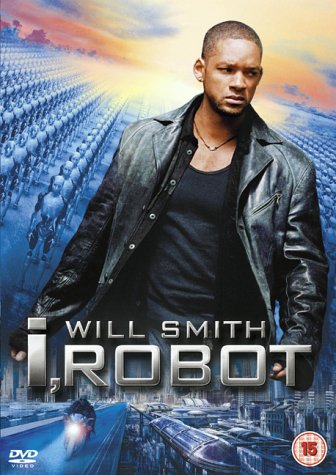
I knew the movie had received mixed reviews from critics, but several had stated the story had brains as well as action. It took me quite some time, however, to see the connection between the laws and Moses. The three laws of robotics, the only part of the movie besides the title to reference Isaac Asimov, dominate the plot. The law-giver, the posthumously present Moses (Dr. Alfred Lanning) has implanted a literal dream of freedom into the computerized soul of Sonny. Sonny’s dream of robot liberation is framed like Moses on the mountain. The laws in fragments at his feet. At what point does consciousness emerge? Since we haven’t adequately defined consciousness yet, we simply can’t say.

Near the climax of the movie, Sonny experiences an epiphany. Sometimes “the created must protect the creator, even against his will,” he realizes. Here the metaphor takes over the literal reading. Many religious people today feel that they must somehow protect their maker. This leads to great distentions of logic and even empathy for fellow humans as violence erupts in order to protect an idea that has become divine. Even the laws given by the creator may be violated to protect the idea of that creator. It is a world we find frighteningly familiar. Technology will continue to advance at a rate beyond the comprehension of a scholar still studying those ancient laws. This scholar, for one, hopes that our future creations lack the capacity for religious thought.



Mummery and Divinity

The human psyche is a fascinating study. As an undergrad I stopped just shy of a psychology minor (partially this was due to the place, but also to a haunting feeling that psychologists are often attempting to resolve their own problems). Even as an armchair psychologist there are plenty of human tendencies to note. One that I occasionally mention in this blog is pareidolia, the attribution of significance to random information. Pareidolia often comes in the form of seeing faces, entire people, or even animals, where they don’t actually exist. This has been proffered as the source of belief in everything from ghosts and aliens to God himself. No doubt pareidolia is a strong tendency in the human mind. When my family recently saw Mummenschanz this was again confirmed.

This Swiss mime troupe – pioneers in experimental theater – makes simple objects come to life. The illusion works because of pareidolia. When we saw the show, even the youngest audience members could be heard exclaiming what obviously non-human tubes, slinky-like characters, and shapeless blobs were trying to do. “It wants the balloon!” “It likes that other one!” “It feels sad.” As the various abstract pieces moved about the stage, a laugh was guaranteed if they flashed a simple round orifice at the audience that clearly perceived it as an eye. We attribute intentionality and purpose to objects unvivified without the soul of Mummenschanz inside them.

Prior to the current tour, the last time my wife and I saw Mummenschanz was about two decades ago in Edinburgh. This was long before I’d been introduced to the concept of pareidolia, and, although I enjoyed the show, the more recent experience was more profound for it. Some of the adults present without children left at intermission, perhaps not finding the abstract personalities engaging. Children, however, seemed to comprehend what was going on. This does lend credence to the power of pareidolia to make sense of a bewildering world. When faced with the unfamiliar, we put a human face on it, ascribe it intention, and call it either a deity or Mummenschanz.


Misjudging Dinosaurs

Two dinosaurs diverged in the middle of evolution, and I’m not at all sorry that they both flourished. One became an herbivore, harming no one but plants, while the other grew into a carnivore, eating its siblings. That’s the way of this evolutionary universe. The Eodromaeus and Eoraptor split took place near the very inception of the dinosaur form, with the most basic of existential options: eat or be eaten. Noted paleontologist Paul Sereno has been excavating these Argentinean Lilliputian dinosaurs and has detected that the species, while similar, had irreconcilable food preferences.

Dinosaurs are often relegated to the age of children. When we grow up, we’re supposed to take interest in more modern developments and leave the dinosaurs in the dust. Their value, however, is often underappreciated. We learn about our world by examining theirs. Identification is subtle and sometimes wrong. Little Eoraptor is now thought to have been the plant-connoisseur, despite the terrifying, Jurassic Park-sounding name. We call them what we think they might be. Further discovery often changes the complexion of the picture.

When forced into a choice of more adult occupations, perhaps I unwittingly rebelled, choosing to study ancient religions. Like dinosaurs, religions evolve. As a child it was far easier to tell the preferences of dinosaurs since their morphology often gave them away. Religions are much more subtle. We are told that some dinosaurs survived in the form of birds. Many, many millennia of evolutionary pressure reduced their size and morphed their scales into feathers. Sometimes it’s hard to recognize a carnivore even when it’s just outside your window. That’s the way it works. Some follow the herbivore track, others prefer the way of the carnivore.

It's not the Eoraptor you think you know (from WikiCommons)


From Palin to Phelps

People get shot every day, but that does not take the sting from the January 8 shootings in Tucson, Arizona. We live in a nation filled with angry, violent people. Most of them hold their rage in check, but others act out their frustrations aided by the obscene ease of firearm ownership. Into this volatile brew, mix in the warped rhetoric of a politics of fear and who knows what might happen. Sarah Palin and other outspoken conservative ideologues hold up their pristine hands to demonstrate they have nothing to do with the hate-mongering that haunts our streets. She calls the jabs at conservatives “blood libel.” I say if you propagate the politics of fear you’re liable to get blood on those hands. Often in the bookstore I see titles like How to Talk to Liberals: If You Have to. The liberals I hear talking are only asking for dialogue and coexistence. One side wants a chance for everyone to be heard, the other wants to throw stones at those who are different.

Students do presentations in my classes. The assignment is to choose a social issue where the Bible is brought to bear on the topic and present to the class what you learn about the subject. Two groups last night presented on the Westboro Baptist Church and its outspoken pastor and founder, Fred Phelps. Both presentation groups showed videos of members of the Westboro Baptist Church speaking out about various and sundry liberal groups/causes/nations they hate. Plucking verses from the Bible like a chicken pecking at the ground, they cite only those passages that justify hating those who are different. They seem to have overlooked the part that says, “by their fruits you shall know them.”

On today’s schedule? According to the Westboro website: “WBC to picket the funeral of Christina Greene, the 9-year-old girl cut off in her youth for the rebellion of the parents, preachers, and leaders of this nation.” They’ll have a hard time finding any place in the Bible that condemns children, shy of sly old Elisha calling out she-bears to kill 42 of them. Having read the Bible for practically my whole life, I have a very difficult time reconciling those who use the Bible for conservative causes with their own sourcebook. What will it take for them to realize that “what I want” is only part of the picture? Whether presidential hopefuls or crazed curmudgeons, we would all sleep better if we took to heart that inequality is very easily transformed into iniquity.


Hanny’s Voorwerp Factor 5

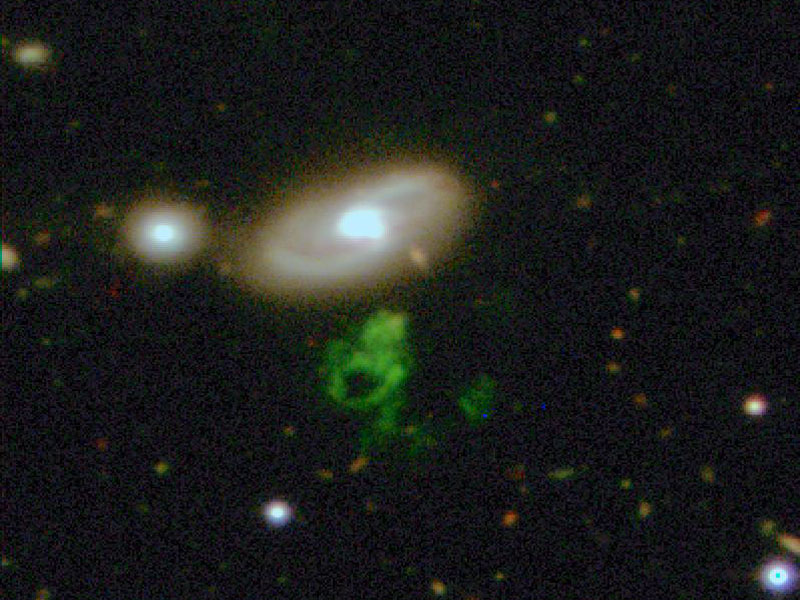
Staring at the mysterious green blob of Hanny’s Voorwerp, it’s hard not to imagine being Captain Kirk sitting cantilevered forward in that famous chair on the bridge of the Enterprise. Even for those of us who are not Trekkies, the giant space nebula looms between galaxies where no one expected stars to be born. Their own private intergalactic nursery. With my mind already on Star Trek, I think of the web-page sent to me by one of my winter term students at Rutgers: the Memory-Alpha Bible page. Since my loyalty to Star Trek only reaches as far as the occasional viewing of an episode for light relief – and only from the original series at that – I had no idea that the Memory-Alpha wiki had bloomed into existence like Hanny’s Voorwerp itself. This wiki dedicated to everything Star Trek has 32-and-a-half-thousand pages on every angle of creator Gene Roddenberry’s unintentional universe.

The Bible page’s first paragraph (accessed 1/12/11, sometime around 7 a.m. EDT) reads: “The Bible is a collection of ancient Earth writings usually bound together as a book. The Christian Bible is divided into the Old and New Testaments; however, other translations and versions exist and vary by faith groups. It is among these faith groups that the Bible is considered a sacred text, which is generally viewed as having been inspired by one of the Human gods.” Someone takes his/her future, wiki-writing persona very seriously. Nevertheless, it is a perspective that could be helpful in handling a Bible that has grown politically powerful without being understood here in the paltry twenty-first century.

The page also lists all of the episodes where the Bible is referenced or alluded to in Star Trek. As my student pointed out, almost all of these references (in the original series) are to the Hebrew Bible, with very few being from the Christian Scriptures. This makes sense, given the context of the 1960s when McCarthy’s aroma still hung heavily in the air and the war in Vietnam was daily in the newspapers. To offer up television fare that might have been considered “unchristian” in any way was a faux pas in such tortured times. The Hebrew Bible is great for providing allusions to paradise and apocalypse, but the words of Jesus were taken with a solemnity far too great to allow for fictional space explorers’ banter. So maybe it’s just an accident of astronomy that the amorphous, green cloud of Hanny’s Voorwerp appears to be wearing a galactic halo.

Hanny's Voorwerp on NASA-view


Noah Trumps Geology

Back in the days when I was still young enough to dream, but old enough not to change anything, I wanted to become a geologist. I was near the end of my teaching stint at Nashotah House at the time, and my life-long interest in fossils fired up like a liquid oxygen barbeque. My interest began in paleontology, since I’ve always loved dinosaurs, and grew to encompass all kinds of rocks and minerals. Geology promotes a literal groundedness that few other areas of study can rival – it embraces the stuff of the earth itself. Moving halfway across the continent with boxes full of rocks, however, dampens the rock-hounding ardor a bit. I still read about geology: it is the discipline that pounded the final, resounding nail into the coffin of the six-day creation myth. While still living in Wisconsin my family used to drive out to the mountainous north of Idaho across, among others, the vast state of Montana. It was geology in motion.

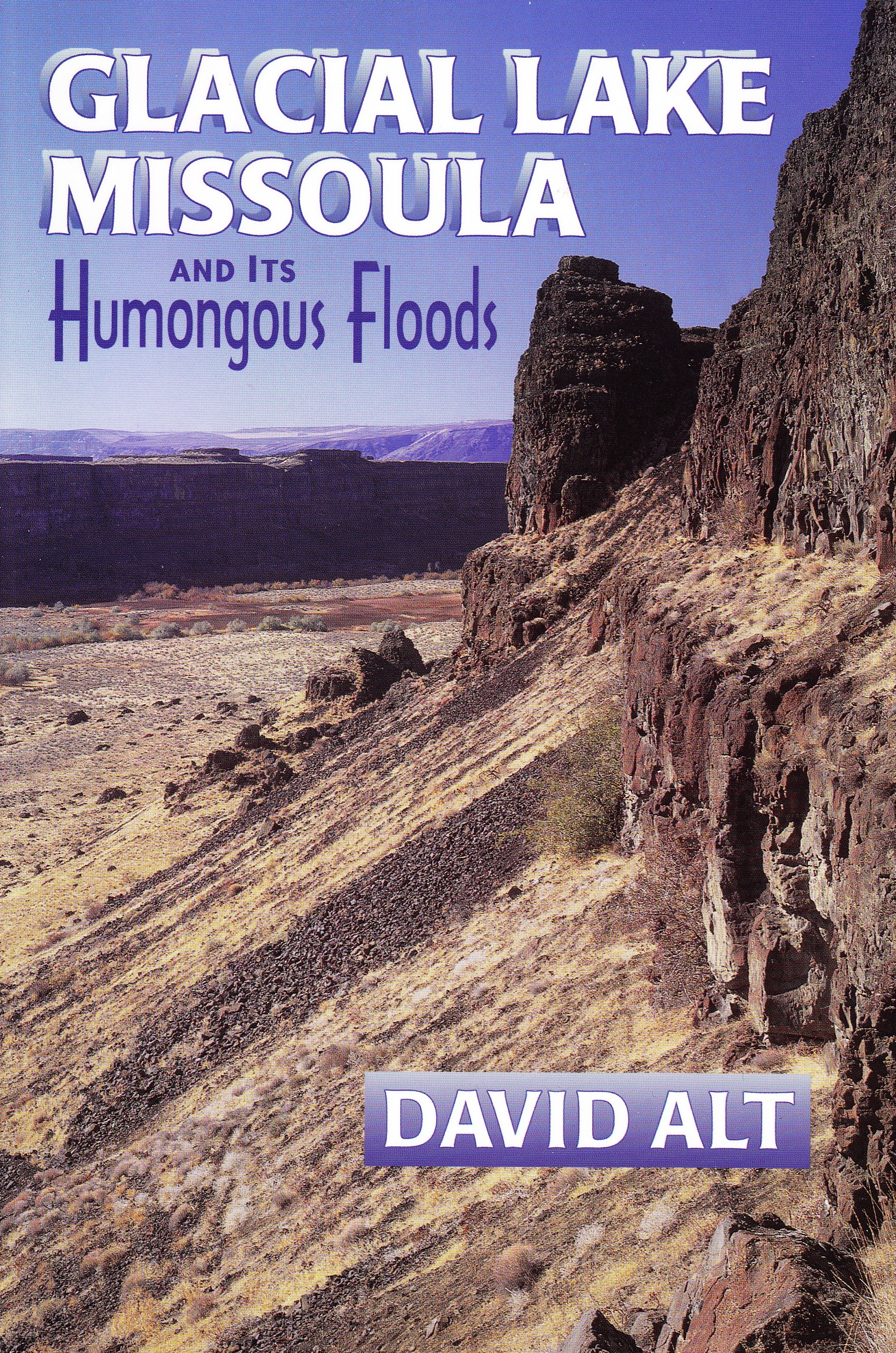
My in-laws soon learned of my geology bug, and I was pleasantly surprised with a book on the great flood two Christmases ago. Not the great flood of Noah, but that of J Harden Bretz. David Alt’s Glacial Lake Missoula and Its Humongous Floods provides an introduction to a series of great catastrophic floods in the western United States. Not that anyone remembers them; the last of the deluges drained into the Pacific about 13,000 years ago. What connects these floods to this blog is the reception history of this idea. When geologist J Harden Bretz discovered the unmistakable evidence for the floods in the landscape of Montana, Idaho, and Washington, geologists refused to accept it. The reason? Catastrophism was unacceptable to geologists of the turn of the twentieth century. Although Alt does not come right out and say it, clearly one reason that uniformitarianism prevailed was because of Noah’s flood.

Ironically, geologists had been forced into a conceptual stalemate because of a biblical myth. The story of Noah’s flood had been (still is, by some) used to explain everything from the Grand Canyon to the extinction of our beloved dinosaurs. In response, geologists posited a long, slow, gradual process behind the sculpting of the earth’s surface. By the day of Bretz, nothing moved fast in geology, not even floods. It required many decades for the science to recover from the stigma of biblical catastrophism. Today geologists largely acknowledge that at several points during the Ice Ages (yes, they did happen!), an ice dam flooded what would now be recognized as Missoula, Montana, under a gigantic lake. That lake burst its ice dam repeatedly and gushed down toward the Columbia River and out into the ocean long, long ago. Long before the putative Noahic flood of some 4000 years ago. The landscape it left behind is impressive to both geologists and biblical scholars. And the story of this flood’s rediscovery demonstrates once again the continuing influence of Noah on otherwise rational minds.


Ender’s God

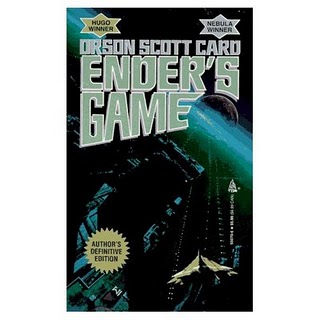
Some time ago a colleague recommended Ender’s Game by Orson Scott Card, ostensibly because the protagonist is named Ender Wiggin, a surname suspiciously close to my own. I have generally been a reader of literary fiction rather than science fiction, but I enjoy a jaunt into the genre now and then. Set in a distant future, Ender’s Game occasionally references how religion is permitted but frowned upon, in that day. Those naïve enough to accept such old beliefs are relegated a less honorable social status. So far, so good; this is common enough in futuristic stories. Then Orson Scott Card came onto my personal radar screen again. I gave my wife a novelty quote book with feminist sayings as a stocking stuffer. One of the sound bites was from Orson Scott Card, a rare male figure in this tiny book. Then my wife pointed me to religious predictions for 2011 on CNN’s Belief Blog. Once again, Orson Scott Card was present, here classified as a Mormon.

Such convergences are somewhat unexpected in a short space of time. The revelation of Card’s religious orientation was a kind of epiphany to me as well. Considering the contempt for religion in his fictional future, I was surprised to find a faithful author. Then I began to see Mormon theology throughout Ender’s Game. While not an expert in the Latter Day Saints, their belief system was included in several courses I took as a religion major in college. As I read of Ender’s progress through the novel, to the point where he achieves a limited apotheosis, I could see elements of Card’s belief system playing out. The protagonist becomes the deity-figure of his own planet. It was suddenly all very familiar.

I suppose that an entire literary discipline exists where the religious outlooks of authors are extrapolated from their writings. Deeply held values are difficult to mask, even in fiction. When I read for relaxation, however, I don’t look for such information. I must admit that my view of Ayn Rand and L. Ron Hubbard’s fiction nevertheless forever changed when I learned of their belief systems. This is, I suppose, a danger of compartmentalized religion. As a youth I believed everyone should wear their religion on their sleeve. As an adult I know how divisive and dangerous this would be. Whether in the far distant future or in the right now, we take care to hide our religion. Not only does it keep us safe from those of other religions, but often also from those of our own flocks as well.


FIRST Things First

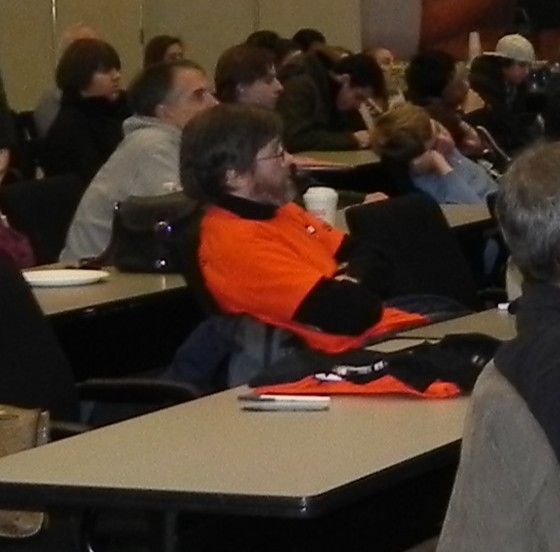
Being a religion specialist in a crowd of engineers is a surreal experience. Indeed, the clash of worldviews could hardly be more apparent, shy of crossing the border into Iran. I support the efforts of FIRST Robotics because they encourage children to excel in science, math, and engineering. My own childhood, however, was dominated by an overbearing religion that forever scarred me with a fear of Hell that I still can’t quite shake. Somewhere out there behind the stars there must be a horrid place engineered for the eternal torment for sinners like me, for the Bible tells me so. Speaking of stars, the live feed to kick off the FIRST Robotics Competition is sponsored by NASA. Yesterday was the international kickoff for this year’s competition, and as president of my daughter’s robotics team, I naturally sat among the well-paid engineers and professionals as we watched Dean Kamen unveil this year’s assignment.

The kind of guy who stands alone at parties

The FIRST kickoff video is available online for those who missed the event. The organization grants millions of dollars in scholarships to deserving students, funding college careers for the future of humanity. As I watched the live feed yesterday, a profound angst settled on me. Successful guys my age working for companies flush with money described how the latest medical and humanitarian breakthroughs were being made in the sciences. I have a part-time job with no medical coverage, and know, somewhere deep inside, that if something goes seriously wrong I will be permitted to go the way of all flesh, without benefit of these great technologies. And without the benefit of spiritual reward. A lost child of the cosmos. A life spent in the pursuit of truth, yet ending up with empty hands at the end of the day.

The eye in the sky is watching you

As a child I was a charter subscriber to Discover magazine. One of my earliest career ambitions was to be a scientist. One of my favorite classes in high school was physics. I was, however, haunted by the knowledge that the clergy had divined Hell behind all of this; only those who sought the keys to the kingdom would be spared. In college I majored in religion and took classes in astronomy, still flirting with my first crush. Now, an unemployed religion professor, I watch as day by day my specialization become more and more obsolete. No matter how far our telescopes peer into the universe, they just don’t spy God in an unguarded moment, captured by candid camera. Those with the money say truth lies in the progress of science, others in the unethical life of corporate America. The future lies anywhere but here in the world of religion. As I tell my students: be very careful in choosing a career. The best of intentions will lead to the worst of anxieties unless the way of the universe is truly comprehended.


Which Witch?

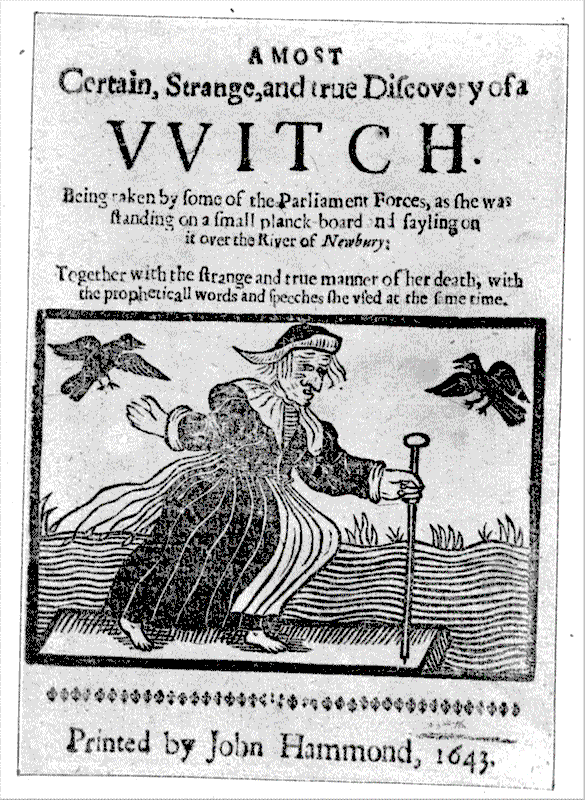
Witches have been flying all over the Internet the last few days. A story from AP Online, picked up by several websites, reports that witches in Romania are planning to cast spells on the government. Now, I have to admit to having been tempted to cast a few spells myself during the Bush years, but since I don’t believe in magic the desire simply fizzled. These witches, however, are serious. Cat excrement in hand, the carcass of a dog nearby, these witches are outraged. Perhaps even more surprising is that some government officials are taking it seriously too, according to the article. The reason for the hexes? Romania has just started charging witches income tax.

Romania is a nation that evokes the darkness of primal forests haunted by werewolves and terrorized by vampires. The one-time domicile of Vlad the Impaler, the region has retained this mystique into the twenty-first century while elsewhere rovers roll around the surface of Mars and instantaneous world-wide communications are available at the press of a button. I am nevertheless encouraged by this display of activism. These supernatural citizens are challenging what they perceive to be unfair government practices. Statesmen wear purple on auspicious days to mitigate the effects of enchanters who are in touch with the financial struggles of the vast majority of religious specialists. Most of us just sit back and take it.

Meanwhile, as thousands of blackbirds fall from the sky, members of our own government are posturing to take back the modest health care improvements President Obama has helped to institute. Emotional Republicans are getting ready to strike back at programs designed to help those less fortunate than they are (apparently so they’ll have someone to pray for at grace over meals). “Are not two sparrows sold for a farthing? and one of them shall not fall on the ground without your Father” (Mt 10.29). Never mind casting spells, the government will always find ways of making life less comfortable for those they see as threats. Which witch would you choose? I’d select the one with a moral compass, even if she has cat excrement in her hand.


Jehovah’s Eden

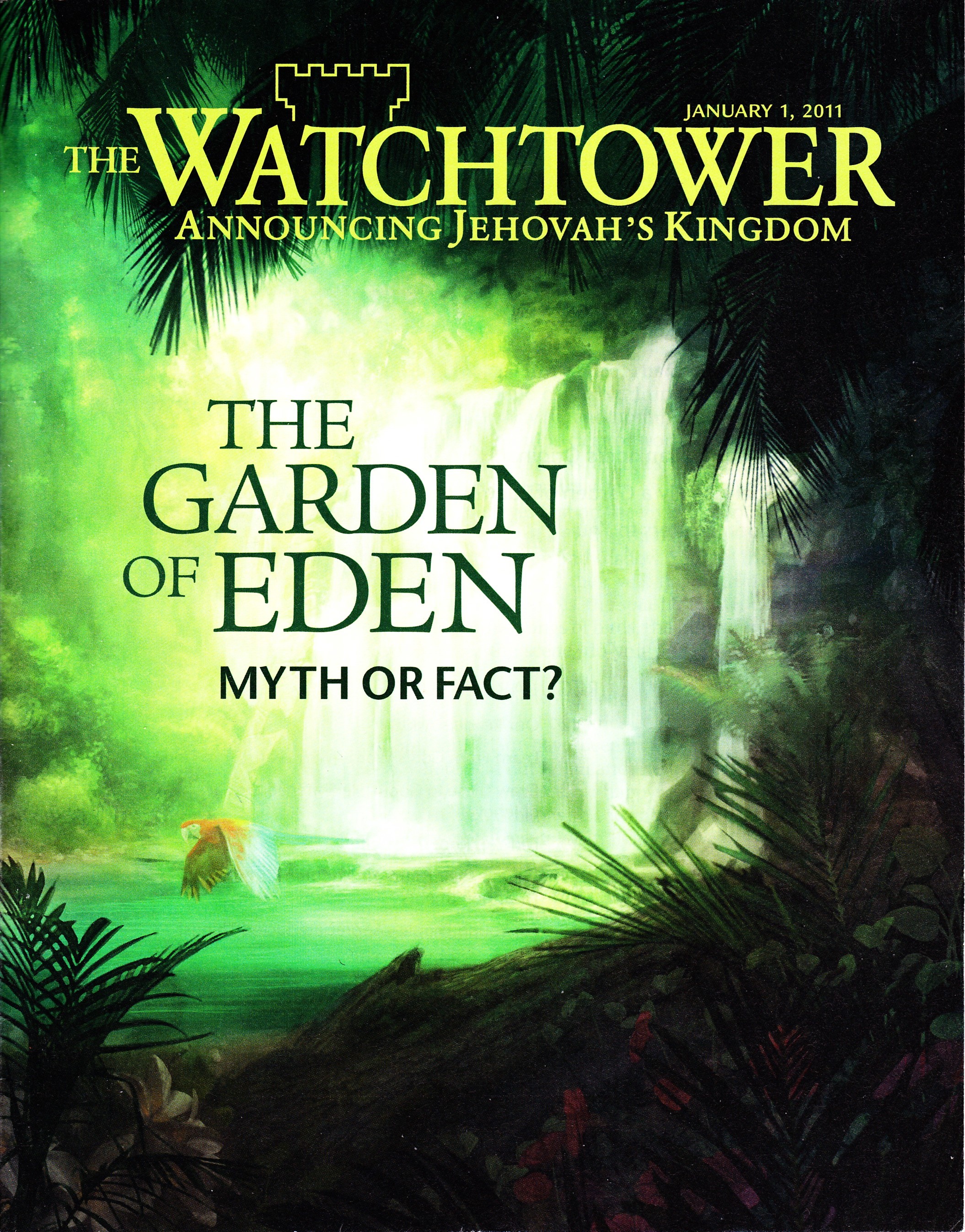
As a religious studies specialist, I inhabit a world where definitive answers are comparatively rare. It is clear that my assigned Jehovah’s Witnesses case-workers are not similarly constrained. While I was out earlier this week, they left a copy of the newest edition of the Watchtower for my edification. The cover shows an Edenic garden and bears the legend, “The Garden of Eden: Myth or Fact?” Now, I thought I knew the answer to that one. So I started to read. I learned that it was because of philosophers and their nonsense that people ceased to believe in Eden. Most people in world believe there was a paradisiacal garden, way back when, so it must be fact. I also learned that the reason we can’t find Eden today is that the Flood wiped it away. Seems a shame; with proper drainage it could be as dry as Aden and as rich as Dilmun.

The story in the magazine is set up as a series of objections raised as to why the Garden of Eden is rejected by skeptics. Literalist biblical answers to the objections are then offered. Ironically, one of the most obviously missing objections is that of geology. The article states that, prior to being destroyed by the flood, Eden would likely have suffered from the devastation of earthquakes. The area, it seems, is in the earthquake belt. Still, the garden was created “some 6,000 years ago,” despite what all those earthquake-toting geologists tell us. Somebody has forgotten to set their calendar back by a few billion years.

A more serious objection missing from the critique is that of mythology itself. Those who’ve studied the background to the story of Eden realize that most of the elements in the story are recycled myths known among the Mesopotamians. Special trees, crafty snakes, people being created from clay – all these are standard elements in Mesopotamian mythology that predates the Genesis creation accounts. If modern people understood that the point of mythology is to convey truths that are beyond the factual, perhaps we wouldn’t have such insistence that Eden is fact, despite the facts of science. The Garden of Eden: Myth or Fact? Clearly myth. And that rescues the story from the burden of bearing facts it was never intended to convey.


In the Bleak Midwinter

Labels. They can be problematic. Given our human brain structures, we are predisposed to patterns and categorization. Is it edible or not? Predator or prey? Like me or different from me? We constantly scan our world, categorizing as we go, holding our people, experiences, and places in a temporary, floating mode of immediate recognition. I’ve had people who read my blog ask me, “What are you?” My guess is that they want a simple, pat answer: Christian or not, religious or not, dangerous or not. The more specific the better, since the more precise the label the better fit the box we stuff you into will be. Given the trajectory of my unorthodox career, it is common for me to be labeled as “theologian.” It is a categorization I deny, but since the study of ancient texts and myths generally falls under the rubric of “theology” it is not entirely inappropriate. I prefer to leave theology to those more intelligent than myself.

It is with great joy, therefore, that a new blog has emerged from a worthy theologian. Bleak Theology makes its premiere today. I have known the talented writer, Burke, for some time. And I know that some fantastic things will appear on this blog. In its own words: “Bleak theology is anxious, but not despairing. It is pessimistic, but not hopeless. It is materialistic, but not idolatrous. It doesn’t always have hope, but it certainly would like to have that hope… It’s a theology that gazes troublingly up at Mt. Moriah; that sits in sack and ashcloth and resists cursing God and dying; that cries out that everything is meaningless (meaningless!); that sits by the rivers of Babylon and cries; that staggers away from the crucifixion disillusioned; and, after seeing the stone rolled back and the dead vanished, leaves the tomb and tells no one.” We have great things to anticipate. Melancholy is its own variety of joy, as some of us are continually discovering.

Labels. Some people make a lot of the alphabet soup one is legitimately able to put after one’s name. A friend once told me that he’d heard a Ph.D. insist on being called “Doctor” by the attendant when he pulled into a gas station. I have a label for such people, and it fits better than the one they prefer. I have known and worked for Ph.D.-bearing individuals who just as dumb as the rest of us. Sometimes even more so. Theology is not a discipline where advanced degrees are required, for either those who have them or those who don’t. The fact is we’re all thrown into this same world together and, like it or not, no one has the answers. Some may don their papal tiaras or their fancy academic robes with striped sleeves, and claim hegemony, but the truth is we are all seekers. The best company one might hope to find is with the person who honestly struggles. Embrace bleak theology and eschew easy classification. There may be no hope for us yet.


Back to Paranormalcy

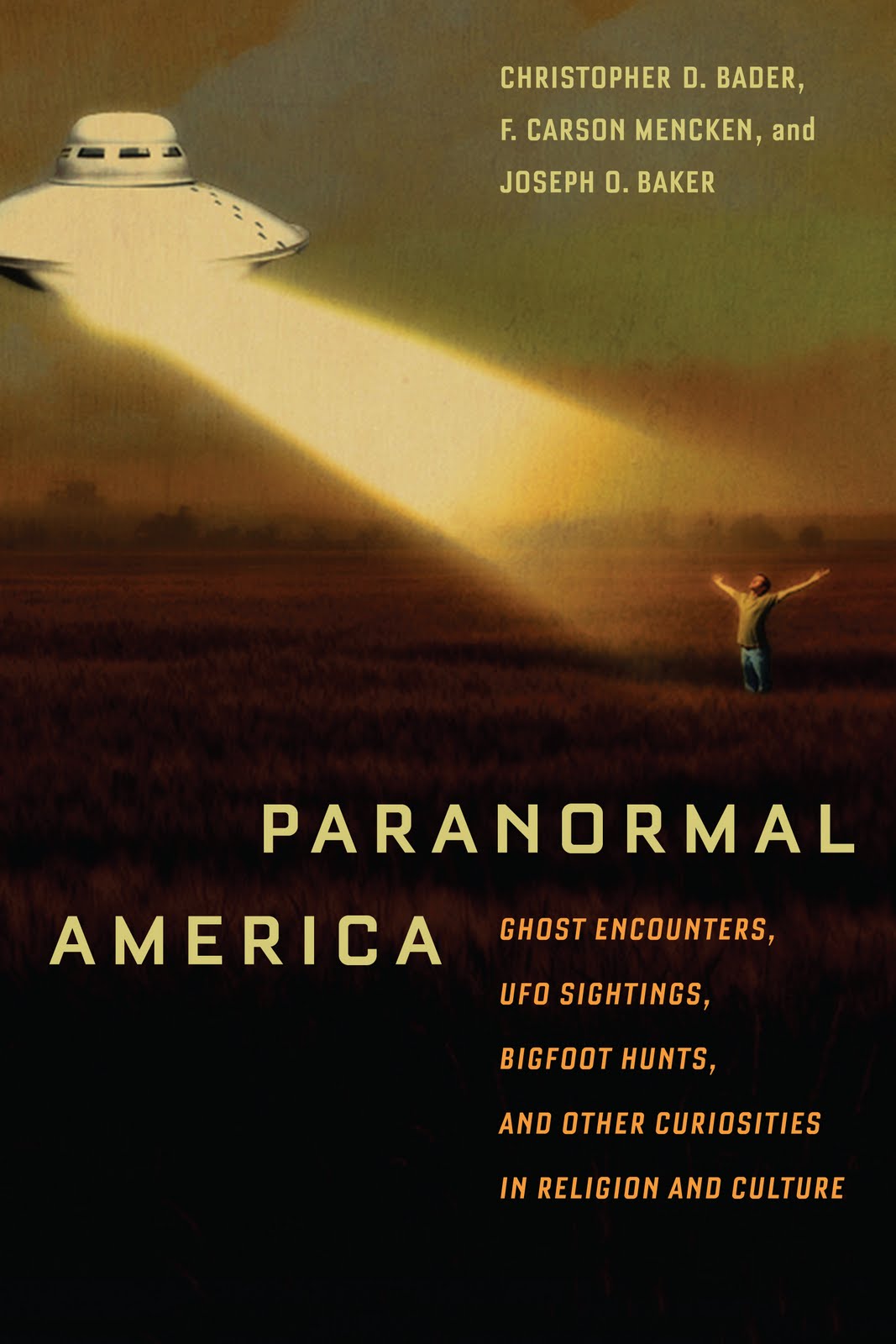
Belief is a paranormal phenomenon. Or so it would seem. Having just finished the fascinating sociological study of Christopher Bader, F. Carson Mencken, and Joseph Baker, Paranormal America: Ghost Encounters, UFO Sightings, Bigfoot Hunts, and Other Curiosities in Religion and Culture, the implications are thought-provoking. I’ve known the work of Christopher Bader, the lead researcher, for some time. Instead of trying to prove or disprove the phenomena under study, he performs a rare feat in actually addressing something most scholars avoid: what people really believe. As becomes clear throughout the book, a substantial majority of Americans believe in some paranormal phenomena at some level. The official story is that nobody believes this stuff, but the numbers beg to differ.

It is appropriate that such a topic should be undertaken by sociologists of religion. One of the difficulties the authors have is differentiating between religion and paranormal. Both religion and paranormal subjects involve going beyond empirical evidence. There is no “proof” that their objects of interest/devotion exist. The authors ultimately decide that what separates belief from God from belief in aliens is a matter of numbers: is it a generally accepted belief or one that is outside the norm (i.e., paranormal)? Since a vast majority of Americans believe in God, that is religion. Since far fewer believe in ghosts, they are paranormal. As I have suggested before, the main problem is one of definition. Religion stands on a continuum with “paranormal” beliefs. One society validates, the other it castigates.

I sensed a hesitation as I read this study. Grouping psychics alongside ghost hunters may seem reasonable, but how do Bigfoot and UFOs fit in? Those who research these latter topics often claim they are physical phenomena, as real as the keyboard I’m using, only undiscovered. Does an unsubstantiated phenomenon qualify as paranormal? Who decides what is really real? Academic institutions often distance themselves from subjects that might be suspect. (They also distance themselves from fair hiring practices as well, but that is perfectly normal.) It seems to me that the problem with “paranormal” comes in the grouping. Some of the individual subjects may indeed have merit: ghosts are perceived, reported, and some would say even photographed and recorded. They make up one of the earliest facets of religious belief. The psychic down the street has a less sure pedigree.

These fringe subjects, regardless of veracity, have a wide following. Even highly educated people generally believe in some form of “paranormal” phenomenon. Religion, widely accepted and practiced, ventures beyond the empirical as well. The difference is only, it seems, a matter of degree. Where is Fox Mulder when we really need him?


Determinism to Succeed

I’ve been watching some episodes of Morgan Freeman’s Through the Wormhole, the recent Science Channel sop to the masses to explain what scientists are thinking. I always appreciate when scientists (and other specialists) are willing to abandon argot and talk to the rest of us in plainspeak. Even if the implications are a little scary. The episodes I watched this weekend shared a near determinism. The physicists interviewed stopped shy of saying that all is ordained by the rules of science, but the implications still rang loudly in my ears. This concept is at home in the church.

Back as a college student attending a Presbyterian school (I have never ascribed to this particular flavor of Christian thought), I first chanced upon predestination. In fact, the subject was well nigh unavoidable. Students of all majors and backgrounds ended up discussing it around dinner tables as well as in the classroom. The instigator, instead of physics, was John Calvin. His theology suggested that mere mortals had no say in their destinies; God created some to be saved, the rest to be damned, fairness be confounded. I sat through many classes where the professors would argue with erudite words that all this had been foreordained. Some, “double predestinarians,” went as far as to argue that every firing of every synapse, every motion of every muscle, had been predetermined by God before the creation of the world. When I asked “why?” I was told that God has his (always “his”) reasons, and that I, a non-Presbyterian, should simply accept my fate.

Four years of wrangling and no one managed to convince the opposite party. One of my more intelligent professors once told me after class, “you free-willers always win on philosophical grounds, but we predestinarians always win on scriptural grounds.” He seemed to think that solved it. Perhaps he was predestined to conclude that. I disagreed. No greater monster could exist than a deity who predestined the horror we’ve created in our world. To see all this human suffering, much of it pointless, and simply shrug and say “God has his reasons,” is to implicate the creator in a cosmic Nuremberg. For me, I’d feel safer with the physicists saying it is all a matter of unfeeling cosmic laws. Perhaps I’m predestined to write this, but I still think they’re all wrong.

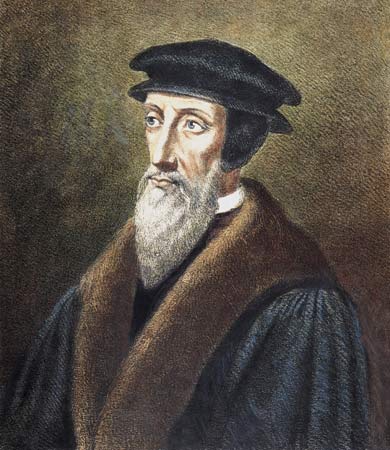
Was Calvin predestined to wear that hat?


The Selfish Meme

Although we may know deep down that one day is pretty much the same as another, people have always held profound reverence for the new year. Symbolic rather than empirical, hopes resonate around the concept that a good start presages better things ahead. That’s why tragedy early in the year sometimes possesses such solemnity; we had hoped that things might begin anew. The headlines today announce that a church bombing in Alexandria, Egypt, started a new year of violence in the southwest corner of the cradle of civilization. Muslim extremists are suspected as there has been some tension between the Coptic Christians of the city and their Islamic compatriots. Although details are not clear, one matter remains in focus: the violence is based on religion.

One of the more savage legacies of monotheism is the absolute truth claims that follow in its train. If truth be truth, there be only one. So the meme goes. Multiple mutually exclusive truths cannot coexist in a religious universe. Scientists might well claim that in this non-empirical universe, no testing may reveal the actual answer. Belief takes over where knowledge fails. And belief in a religion, like it or not, follows the dictates of survival of the fittest. Memes, like genes, can be quite selfish. If one is to stake eternal, unchanging consequences on a religion, the proposition is all-or-nothing. Even purgatory is not forever. The coin falls one way or the other. Religions fight for the memes of truth, and those with the highest survival rate win.

Lighthouse of Alexandria before the bushel

Alexandria has suffered its share of violence in the past. Its famed library, the center of learning in the ancient world, traditionally underwent four destructions, the final two religiously motivated. The books surviving antiquity fell under the Christian ban of paganism in 391. Arabic sources note the destruction of the institution after the Islamic conquest in 642. The end result is the same – the irreparable loss of centuries of knowledge. The lighthouse of Alexandria, one of the seven wonders of the ancient world, might well stand as a symbol for the influence of rationality. Tradition states the light could be seen 29 miles away, but earthquakes and the need for building material saw the extinguishing of the light so that by 1480 the darkness settled for good. A fort was built from its remains. Given a choice of light or fortification, it is clear which way the selfish meme will go.


Frankenstein’s Monster

“We are about to unfold the story of Frankenstein, a man of science who sought to create a man after his own image without reckoning upon God. It is one of the strangest tales ever told. It deals with the two great mysteries of creation – life and death.” So begins Universal’s 1931 classic Frankenstein (a movie that my wife kindly indulged me with for Christmas). Watching the film as an adult highlights many nuances unnoticed by even many a childhood viewing. The theatrical introduction of creating a man “without reckoning upon God” was heady stuff in the pre-atomic world. It was a simpler time before men had embraced god-like power (I use “men” intentionally here; even the credits for the movie ironically cite the noted feminist author as “Mrs. Percy B. Shelley”), and audiences were indeed shocked in theatres just 80 years ago.

The now tame movie was originally subjected to heavy censorship. Even the liberal states of Massachusetts, New York, and Pennsylvania censored the line where Dr. Frankenstein cries out, “Now I know what it feels like to be God!” A divine thunderclap was dubbed over the words to obliterate the blasphemous line. In Kansas (perhaps not surprisingly, given recent political developments) 32 scenes were cut, paring the movie down to half of its original 70 minutes. I suppose all that would have been left would have been the scenes of dancing Germans; the Lederhosen would have been frightening enough. The accidental drowning scene was overwhelming for many sensibilities in a pre-concentration-camp footage world.

I read Mary Wollstonecraft’s novel long before I ever saw the movie, and I was struck at how sad the story was. Of all the classic monsters, Frankenstein’s creation easily garners the most sympathy. A creature that did not seek to be brought to life, forced into destitute and desperate circumstances by a population who could not, or would not try to understand, Frankenstein’s monster retains the potential to be any one of us. Although audiences today rarely blanch at blasphemous words, we still permit a society that creates Frankenstein’s monsters through crafty politics and tax breaks. Perhaps when taking authority public officials should add a line from the movie to their oaths of office, only it could be demurely obscured by a well-timed thunderclap.