Funny Faith

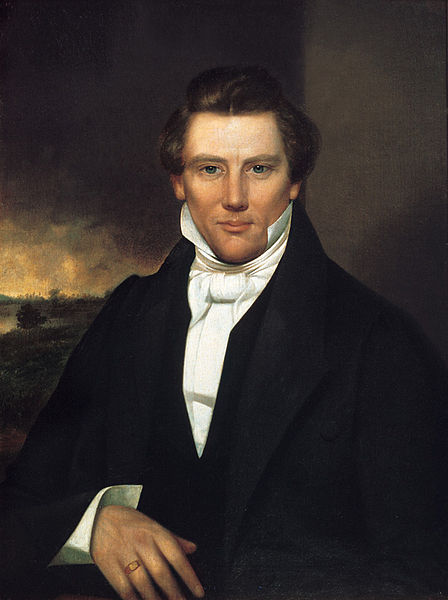
The entertainment industry is a window through which we might see what it is we value. After all, our mad-money and disposable income are often channeled toward the things we want, as opposed to what we really need. Living near New York City, it is clear that entertainment is also big business. Last night Spider-Man opened on Broadway to decidedly lackluster reviews. The web-slinger has had quite a journey from comic book to the musical stage—sometimes making it big, other times getting squashed. Earlier this week, however, it was The Book of Mormon that was making the news. Winning nine Tony awards, this musical is the first thing to pop up on a Google search when “Book of Mormon” is typed in (at the moment), I suppose, much to Mitt Romney’s chagrin.

A friend recently asked me why people take religion so seriously. To me it seems that it is a matter of historical development. Most religions developed before the culture of leisure took over. As I tell my students each semester, even in the early part of last century most people lived on farms rather than in cities. Time for leisure was rare and life was taken seriously: all work and no play. If we push that back a century, when the Church of Jesus Christ of Latter Day Saints was started, the effect was even more widespread. Go back to the days of Muhammad, Jesus, or Moses and the struggle to survive gets increasingly more difficult. Religion is a coping mechanism. When worries about food and shelter become less onerous, we can laugh at the path that led us here. Along the way few of us have met radioactive spiders, but most of us have been warmed, singed, or wholly consumed by religion in some form.

Well, in the entertainment industry talent also plays into it. But it has to be the right combination of talent. Matt Stone and Trey Parker have been making the social commentary A-list for several years now. (Bono and the Edge have too, but Broadway just doesn’t seem to be their genre.) Maybe trying to convert those of vastly different culture to white-shirt-and-tie, clean-cut American values is inherently funny. I suspect there is something more at work here. We are allowed to laugh at Mormonism—the other white religion—without too much recrimination. It is safe. What I doubt we’d ever see on Broadway is The Book of Common Prayer: the Musical. On the other hand, I wouldn’t be surprised to see the Incredible Hulk lurch onto stage and burst into song.
Everybody dance!
Vital Statistics

While going through a folder looking for some vital record recently I ran across my baptism certificate. The more I pondered this piece of paper the more reflective I became. In this electronic age when you can pay your bills online, keep all your bank records online, apply for and (perhaps) be offered a job online, we still hold stock in simple pieces of paper. Even without a pre-nup, couples are given a piece of paper to prove that they are married. When we’re born the first gift of the government is a birth certificate. Most of us don’t get to see our own death certificates, which, I suppose, is mostly a good thing. With the exception of the latter, we often have occasion to show these official papers to prove we are who we say we are. But what of the baptism certificate? Who do we show it to? Is it for God’s eyes only?

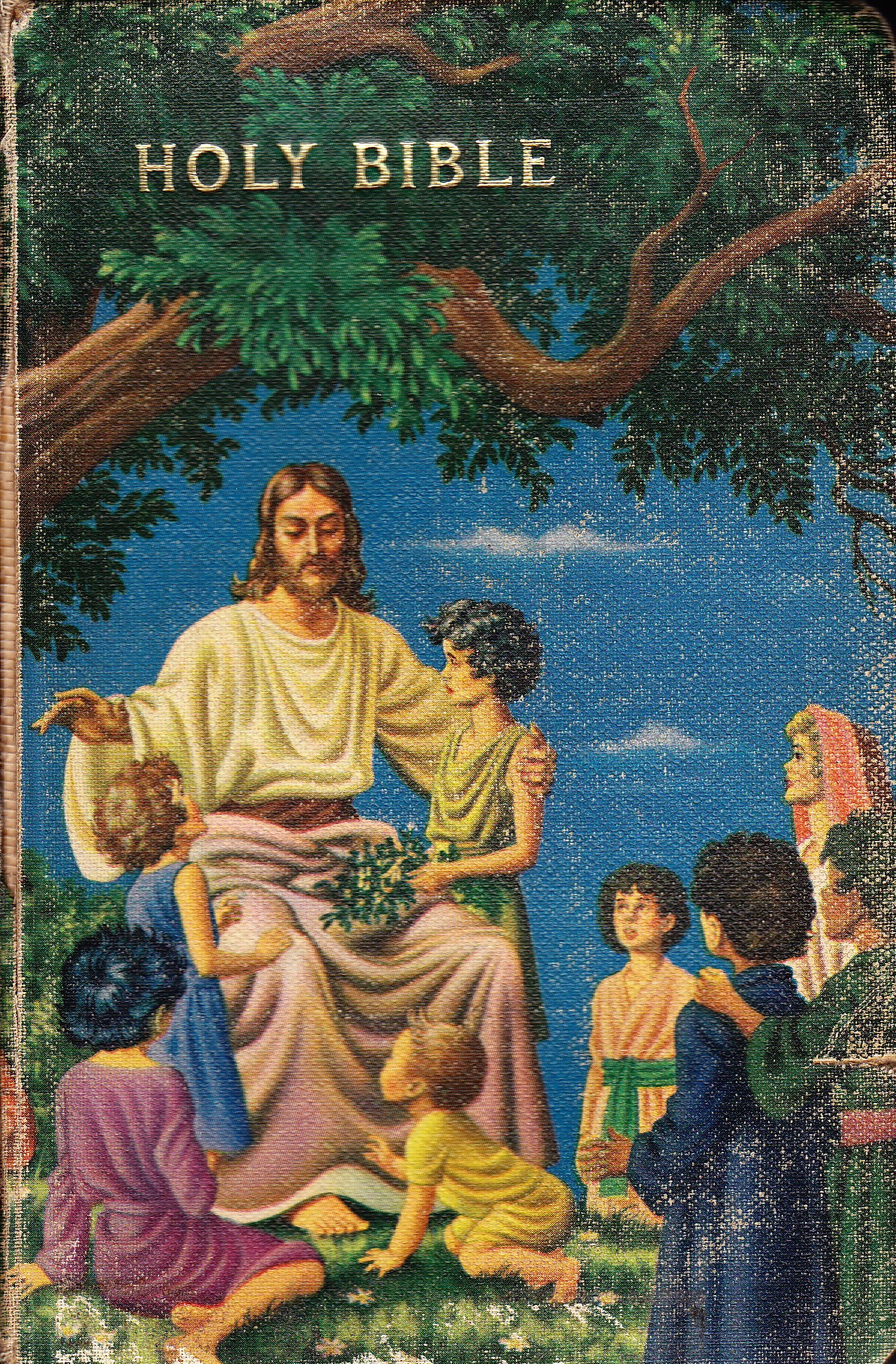
As an occasional dabbler in genealogy I have come to know the value of the family Bible. Sometimes the family tree recorded therein contains records that even the government may lack, often tucked away between the testaments as if we were all Maccabees. It might seem a curious place to keep personal records, but the practice dates back to the time when, if families could not afford to surround themselves with books, they would at least have a Bible. That Bible was a logical place for vital records since many people believed their own lives were recorded in God’s great book and having your name in a Bible was a species of insurance: after all, if God wrote it surely it was good to have your name there.

Like much of commerce, genealogy has now shifted to the Internet. The Church of Jesus Christ of Latter Day Saints has extensive online databases available (for a fee). We are all curious about where we’ve come from—how this spark of consciousness got inside this body. We can look at our birth certificate and learn some of the vital statistics, but we know that we are somehow more than the simple blending of gametes to form a zygote. At thresholds along the way we are given papers by which we might later prove ourselves. My box full of diplomas lies moldering away in some mildew-infested closet while on my bookshelf rests a Bible with the record of how it all began. At each major junction some form of religion is there, and more often than not, when it is all over we’ll end up with a piece of paper to prove who we’ve been.

A bureau of vital statistics


Bread Alone

The sad story of the death of an eight-year old girl from Irvington, New Jersey bears uncanny echoes to a case a year and a half ago of a mother who starved her children believing God would provide. The current case of Christiana Glenn’s death is heart-wrenching and the outlook is not improved when it appears that the girl’s mother had religious motivation to abuse her child. Christiana died from untreated physical wounds and malnutrition, prompting columnist Kathleen O’Brien to write about how food and religion often come together in unusual ways. As O’Brien points out, religions generally safeguard children from food privations, but less scrupulous leaders of what are frequently termed “cults” do not have the same strictures. The only real difference between a religion and a cult is society’s attitude toward it—religions tend to be larger and with finer pedigrees, but beliefs are beliefs. When religions seek control over believers’ lives, they often delve into the practice of deprivations, generally mild. More extreme groups take the idea to fatal limits.

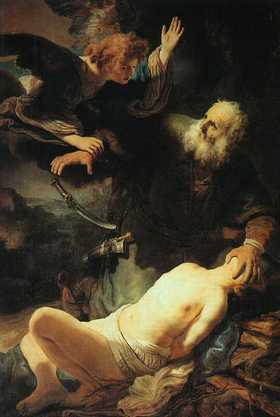
Even the Bible records from near the very beginning that deprivations are part of the religious expectation. One of the most complex and frightening stories from Genesis is that of Abraham’s near sacrifice of Isaac. No matter how theologians wash it, this story retains its stain of an adult—whether directed by God or not is a mute point—attempting to harm a child in the name of faith. The story, many centuries later, still sent Søren Kierkegaard into a tailspin that came out as Fear and Trembling. What kind of deity asks for a child to be harmed, even in jest? For Christiana Glenn, there’s no taking it back. The Bible tells us nothing of how the interior life of Isaac responded to this episode.

Food and religion are among the most common elements abused in American society. For our bifurcated (if not bipolar) outlook, one sustains body and the other sustains soul. While science still lacks evidence for the soul, the body remains the only basis upon which we have to base our ethics. Even biology dictates that care of one’s own young is an evolutionary imperative. It is tragic indeed when a religion overrides what all cultures respect as the ultimate “should” —take care of your children. In a world overpopulated by religious experts the street value of the soul will never face a recession. Believers, characterized my many religions as sheep, will go wherever their leaders tell them to go. As a culture suspicious of funding the study of religion, it may not be food that is reaped at the end of this harvest.

Thou shalt not...


Religious Raven

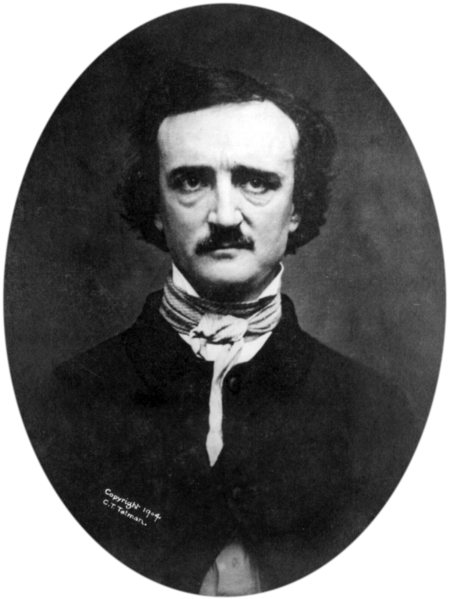
Having seldom achieved any sort of public recognition in my youth, I have been gratified to observe the approbation my daughter frequently earns. One such instance occurred yesterday as she won an Outstanding Presenter award at the state level of 4-H. For her presentation she introduced and recited Edgar Allan Poe’s “The Raven” from memory. As much as I like to take credit for some of her taste in literature, her remarkable memorizing ability that has impressed several judges and parents along the way is the result of her own determination. “The Raven” has always been among my favorite poems. As I listened to my daughter’s recitation yesterday, once again the wealth of religious and biblical images stood out.

Starting subtly with the perching of the raven on a bust of Pallas, Athena, the protective goddess of Athens itself, Poe adds the supernatural to his lamentation on the death of his wife. The bird’s origins on “the night’s Plutonian shore” also point the reader to the classical underworld toward which the poem inevitably points. The last five stanzas, where Poe’s verse turns directly toward his black thoughts at the decline of his wife, introduce the presence of seraphim—the turning point in the poem—angelic beings mentioned as attendants to God’s throne in Isaiah. The divine presence, however, offers Poe no comfort as the raven refuses to relinquish his memories of his love. Asking with Jeremiah (and citing the bird as prophet) if there is balm in Gilead, the poet is informed no such comfort exists. Calling God in Heaven as witness the bereaved asks if in Eden (Aidenn) he will be reunited with his bride, only to be informed such will not be the case. The raven, compared to devil, thing of evil, and a demon, represents for Poe the ultimate reality.

“The Raven” is a dark poem, tinged with religious imagery that was freely drawn upon in the nineteenth century. Having heard it recited many times over the past few months, I have come to believe that Poe would have been in accord with my belief that religion and fear are close siblings. When the climax of the author’s pain and sorrow is reached, the religious imagery predominates. This is a paradigm of many human lives. How many non-religious folk seek to make their peace with the supernatural when death is imminent? “Eleventh hour conversion” may be a trite trope, but it does point to something that Edgar Allan Poe recognized long before me—when we find ourselves most afraid religious impulses are frequently at hand.


Blood Lust

They emerge at night. They take your life-essence. They are very difficult to remove. In a particular political party their ruthless ways are highly praised. Yesterday I had occasion to watch the History Channel’s Vampire Secrets. Frequent readers of this blog know of my contention that horror films generally convey religious fears and certainly the vampire is prominent among such hosts of fear. Although superstition has held that actual creatures drew actual bodily fluids from their victims as far back as the Sumerians, today’s perception of the vampire has gone through several transformations. This particular documentary attempts to trace the origins of the modern vampire fascination through its major stages, beginning in ancient times. The writers and editors seem to favor a Far East origin of the concept, but linger for several minutes on the character of Lilith in Jewish folklore. Although Lilith does not really fit the profile of a classic vampire, she does contain a key to understanding the transformations: they are religious in nature.

People have believed in blood-suckers long before the GOP took on its recent transformation; there is no doubt, however, that the blood-lust of the vampire developed in the light of Christian ideas about the crucifixion. The regular imbibing of “blood” was an aspect of early Christianity that led to problems with the Roman authorities supposing this was some sort of precursor to Vampire: the Masquerade. By the time stories began to circulate about Elizabeth Bathory (ironically, at the same time the King James Version of the Bible was being translated) and her famous blood-lust, and after Bram Stoker later selected Vlad Tepes as a fictional model for his Dracula, blood-ingestion had become the singular hallmark of the vampire. In both cases, despite their historical facts, religious elements had entered in.

One of the most disturbing transformations, however, is that whereby religion itself becomes vampiristic. Originally established as a means of propitiating angry deities, religion very early assumed the aspect of blood-letting as a means of accomplishing that propitiation. With the development of religious abstractions, however, literal bloodshed has become distasteful and less common, but the deities still demand sacrifice. Even in the twenty-first century many accepting people are informed of the pecuniary sacrifice desired, commanded even, by the gods. While the occasional poverty-stricken cleric may occasionally appear, many far surpass the status quo in their crystal cathedrals while many of the faithful suffer want. The History Channel found vampire subcultures in the streets of New York City. They might also have found them in just about any town in any country of the world.

Saint or sinner?


Now Locusts?

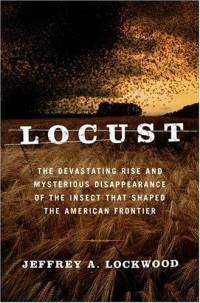
With the same page of the newspaper lamenting flooding in Iowa and drought in Florida, it seems that nature has turned against us in an almost biblical way. A more biblical plague than locusts would be hard to conceive, however, so when my wife pointed me to a current video of a locust invasion in Russia, I took notice. In the United States we seldom consider locusts since they have largely ceased to be a problem with the extinction of the Rocky Mountain locust for unknown reasons, last century. One of the more interesting books I’ve read over the last few years was Jeffrey Alan Lockwood’s Locust: The Devastating Rise and Mysterious Disappearance of the Insect that Shaped the American Frontier. Because the locust is not an American problem, biblical literalists like to transform biblical locusts into something else. The transformation is not necessary. We’ve eliminated the large predators from our planet, and the small ones often go unnoticed.

Each year as I lecture on the book of Joel, I spend a little time with locusts. The Asian varieties of locusts tend to reproduce rapidly and prolifically in the desert. Quickly exhausting the sparse food supply, they take to the air and fly for, literally, greener pastures. They can fly for three days without stopping which means they are suddenly there and eating everything. They look like divine judgment. Each locust eats its own body weight in green matter daily, and when a swarm can contain over 100 billion locusts, that can add up to 50,000 tons of food a day. Like poorly mannered house guests, locusts stay until all the food is gone, then leave. They are fully capable of devastating entire nations.

An actual biblical locust, vintage 1915.

Hal Lindsey famously converted Joel’s locusts into military helicopters, claiming that they presaged the end times. Decades later we are still here and so are, apparently, the locusts. They are part of evolution’s great machinery. The biblical view that we are the purpose behind that machinery has caused endless problems for the ecosystem. Locusts are a problem because they consume the food that we would otherwise eat or waste. In the struggle for survival, as Joel attests, it is not always the biggest that win.


Faith Value

An interesting op-ed piece by Doyle McManus of the Los Angeles Times appeared in today’s newspaper. McManus notes that twenty-eight of the forty-four Presidents of the United States have come from just four mainstream Protestant denominations. This year’s Republican front-runner list contains no mainstream Protestant denominational candidates at all. This McManus takes to reflect a growing tolerance among the American populace, but also shows how deeply rooted religion is in what has become, in a covert way, a theocratic state. Religious sentiment rules politics and savvy politicians know how to play the religion card to achieve the power they crave. As McManus’ column makes clear, when campaign season rolls around candidates begin attending church again. Of course, the average American accepts their sincere proclamations of religious faith at face value.

McManus also points out that the front-runner for the GOP, Mitt Romney, will face some difficulty as a member of the Church of Jesus Christ of Latter Day Saints. Most evangelical Protestants reject Mormonism from their fold, claiming that they follow a different shepherd or just see everything through rose-colored glasses. Mormonism, however, is among the fastest growing denominations in the country (the claim for fastest is staked by far too many to get an accurate count; it is a safe bet, however, that it is evangelical). Mormons tend to come down on the right side of conservative social issues, but without the seal of mainstream approval, the bid for presidency remains a difficult goal.

The other corollary that McManus points out is that mainstream denominations are losing their place of social prominence. Today it is far more likely that a person refers to a Pentecostal or non-denominational believer (or even a Catholic!) as a “Christian” than they would refer to a Methodist, Presbyterian, or a Lutheran as such. Both the political and religious rules have changed. Americans want a Christian President, but they have lost sight of what that actually means. In the mud-slinging that accompanies any campaign season, suspicions cast on a candidate’s political orthodoxy will be sure to score big points. It is an open question whether a democracy and a theocracy can truly coexist.

WWJ(S)D?


Robopocalypse


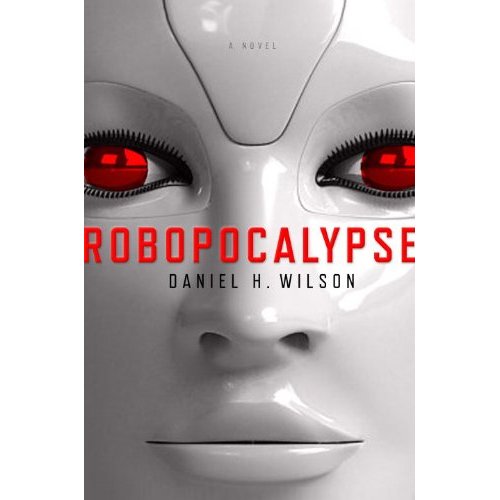
Yesterday the long anticipated novel Robopocalypse was released. Although I seldom indulge in hardcover fiction, I headed to my local Borders to purchase a copy. Sadly, it seems, my local is cutting back on first-day releases because I walked out of the store empty handed but with a robotic Armageddon in my head. Last summer I became acquainted with Daniel H. Wilson’s How to Survive a Robot Uprising, but word on the street is that this novel is serious. Steven Spielberg purchased the movie rights even before the book was released. And the concept owes its existence to religion.

If it were not for human religious sensibilities, would the concept of an apocalyptic end have ever arisen? Probing into the ancient psychology that lead Zoroastrians to suppose an ultimate conflict was just down the theological road, it is clear that even a strong moral sense alone does not dictate ultimate dissolution. By personifying evil in the form of Angra Mainyu, Zarathustra gave a (divine) human face to wickedness, and thus opened the possibility of battling against it. Evil as an abstract, non-personified force might simply be accepted as part of the universe we inherited. By providing it with will and intention, however, Zoroastrians allowed for a natural human response. Fight or flight is hardwired into our brains, but would we have dared fight a foe that is immaterial, amorphous, and completely abstract?

The nature of the enemy has transformed itself many times over the ages. Wilson, a scientist working with robotics during his education, has taken a religious theme and placed it in the context of a godless world of cybernetics. I must use caution here, since I haven’t yet acquired a copy of the book, but it remains clear that it is the humanization of non-human entities that gives force and pathos to a final conflict. Jesus charging his white horse into a foul-smelling cloud lacks the same impact. Thus mythologies are born. Mythologies that people live by and for which they frequently die. I do hope it all holds off until I can get a copy of Robopocalypse to read. Better yet, the end won’t come until after the movie is released.


Ouch!

Now in a dentist office near you!

Sitting in the dentist’s office may not be the best place to be reading about pain. Nevertheless, as I was anticipating my fillings (worn enamel at this stage, not cavities) I picked up the June edition of Discover magazine and noticed a story on the brain. Since pain and brain rhyme, I took it as a kind of omen. I actually subscribed to Discover for many years as a teenager, but with the vicissitudes of the job market as an adult, and the perpetual lack of storage space in apartments, I have let my magazine subscriptions lapse. The article, which I did not have time to finish, suggested that neurologists are on the cusp of being able to pin down whence chronic pain is experienced in the brain. If a chemical inhibitor can be found for this specific region it will be like turning off a light switch. There will be no more pain (rather like John’s vision of the New Jerusalem).

As I was called back to the dentist’s chair to the accompaniment of the whine of a dental drill, I reflected on the loss of pain. Being the sensitive sort, and probably more empathetic to others than may be healthy, I never wish pain on anyone. Life is difficult as it is, and even those who wish me harm do not deserve suffering. Nevertheless, I wonder if we could thrive in a world without pain. This is all the more relevant with the growing whispers among the AI community that brains can be simulated by computers. If they are programmed not to experience pain (as seems only sensible) then what becomes of humanity when pain is abolished? Some of us identify with the pains of mental agony even if the physical does not directly impinge on our lives. It is what makes us human. When I see another person in pain, my immediate reaction is to want to help. Being a religionist, however, my options are often limited in this regard.

After a very painful termination a few years ago, I had to give in to anti-depressants for a while. The very idea depressed me. My life, including its full array of mental anguish, defined who I was. Take that away, and what was left? Funny thing was, those in the church who initiated this particular pain showed no empathy whatsoever in the face of it. I weaned myself of the medication after a few years and occasionally the pain returns—particularly acutely when yet another religious employer let me go—but it is part, a very deep part, of the human experience. Could we thrive in a world without adversity? We are often at our best when we are helping each other. That to me seems to be what true religion is all about.


Vulcan’s Anvil

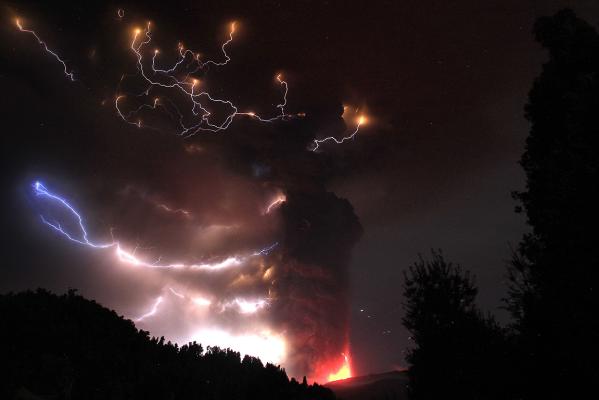
Volcanoes have long been the prerogative of the gods. Saturday’s eruption in the Puyehue-Cordon Caulle volcanic complex in southern Chile joins last month’s outburst from Grimsvotn in Iceland for divine fire-storms. In the days before geology, the only explanation for these impressive explosions was the gods. The concept of Hell was fairly late in the development of ancient Near Eastern religions, otherwise volcanoes might have been labeled as Hell breaking loose, literally. Many historic eruptions have influenced the course of history, most notably Thera and Vesuvius. Ancients would have been hard pressed to see such spectacular—and obviously divine—displays as “natural.” Indeed, the concept of “natural” events was itself slow in evolving since the gods were always lurking in the dark corners of the evolving human psyche.

Fortunately, beyond disrupting some air travel, these two latest outbursts have been fairly benign from a human point of view. This too is an evolved perspective since we tend to see ourselves as the overlords of the natural world. Watching industrialists poke new orifices in the planet’s crust for personal gain even in rare and delicately balanced ecosystems, who can doubt that we are masters of our own domain? Much of the misdirected sense of such entitlement comes from interpreting the Bible as declaring the planet ours from the days of mythical Eden. Some of the more perverse applications of this principle include those who try to force the hand of God into sending the Second Coming due to their creating conditions appropriate to an apocalypse. Others declare that since said Second Coming is nigh, why not trash the environment? We won’t be needing it much longer.

Apart from the obviously failure of logic here, the anthropocentric view is also misguided. The earth was not created for us—we simply evolved on it. The corollary also stands true: long after any human intelligence is here to read these words, our planet will continue on its weary track around the sun until it blossoms into a red giant and consumes our final cinders. There are no horsemen in the clouds, but this planet is all that we have (even the space station depends upon it) and when we grow too arrogant, the planet unconsciously gives us a spectacular display to remind us that we are mere guests upon this globe. We need to treat it with respect.


Not So White

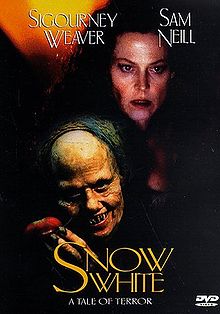
Over the past two decades, an interest in presenting fairy tales more akin to the spirit of the brothers Grimm has blossomed into its own industry. For those of us who were reared on Fractured Fairy Tales, this is a welcome development. Among the more creative approaches to this genre is the 1997 movie, Snow White: A Tale of Terror. Hampered by lack of theatrical release in the United States, this gothic attempt at telling the story in its original, dark form has gone largely unnoticed. I recently viewed the movie for the first time myself, and although the basic storyline is somewhat trite the Grimmesque features redeem it at many points. (Who doesn’t secretly want to see the pretty-boy prince charming thrown out of a castle tower window?) Perhaps the most unexpected addition to the Disneyfied tale we all know is the religious component to the movie.

“Snow White”—never named so in the movie—has been raised by a pious father who wears a cross and insists that she say her prayers and read her Scriptures. Being a local lord, he suppresses ruffians who populate the woods, including a band of not-so-merry men who incorporate some that were tortured for refusing to go on crusade. When the not entirely wicked step-mother needs Lord Hoffman’s blood to raise their stillborn son to life, she lashes him to a crucifix, saying to the corpus that occupies the other side, “now you shall have company.” (Did I mention this is a horror film?) Along with the unexpected twists that those conditioned to happy endings find so disturbing, the film actually contains a subtlety on matters of religion that is frequently missed. It also resists corny dialogue that so often plagues films where the storyline cannot bear any substantial weight.

While it will never be my favorite movie, this particular film was an effective adult retelling of a familiar tale with more depth than the common story might suggest. The Germanic folklore collected by the Grimm brothers often reveals a depth of insight into humanity that is bleached out by Disney’s bright colors and cheerful smiles. It is more true to the human experience. The scene that remains seared in my mind is where one of the seven miners (only one is a dwarf—another is actually a friar) is revealed to have been disfigured by crusaders off to liberate the Holy Land. Refusing to participate, he had to watch his family burned at the stake and had a red-hot iron cross pressed to one side of his face. (Did I mention this is a horror film?) As in the days of Grimm and continuing into our own, the church continues to scar many even as it attempts to heal others.


Crossing Over

The periodic reforms that have swept through the church like so many Massachusetts tornadoes have often whirled around the matter of ceremony. Certainly there have been disputes over obtuse points of esoteric doctrine for which there is no final arbiter, but frequently the rancor involves what the faithful do when they meet together. In keeping with ancient templates, religion is generally a matter of what people do more than of what they believe. I personally had my love of ceremony beaten out of me by its plangent and perpetual repetition at an institution so enamored of it that humans and their needs were viewed as mere obstacles to sacerdotal perfection. Nevertheless, as the school year winds down, ceremony is all around us: graduations, awards dinners, rites of social passage. Last night I attended a Girl Scout bridging ceremony. Bridging is the symbolic crossing of a bridge to indicate a new level of commitment and integration into the larger Girl Scout community.

It's just a bridge.

As I sat staring at the bridge, waiting for the celebration to begin, it occurred to me that this was very much like a religious service. A group of spectators had gathered to watch a ritual unfold—a ritual that involved everyday objects invested with a new significance by the context. The bridge is just a small arch bridge over artificial water; before the ceremony kids run and jump over it with no fear of divine reprisal. Once the correct words are spoken, however, crossing the bridge becomes a solemn act. The ceremony opened with a kind of invocation, a creed (the Girl Scout law), a kind of Scripture reading—complete with exegesis of what that “Scripture” means and a reference to God as creator of all—a sacramental act of transformation, and even a hymn or two. The main difference I felt between this ceremony and most religious events was that the Girl Scouts are far more accepting and affirming than most religious conglomerations. Of course, there is the matter of gender distinction, but what is a church without any exclusivity?

I have great admiration for the Girl Scouts. In the face of a community that continues to act out male supremacy as a matter of God-given right, the Girl Scouts (and other similar organizations) offer a place for young women to assert their sense of belonging. Religion has just as often been used to suppress aspirations as it has been to uplift them. Life is difficult enough without God breathing down our necks. Human institutions that encourage thoughtful regard for those who are different, or underprivileged, or simply overlooked, often fill the gaps that religions callously leave behind. Yes, some religious institutions still display a social conscience, but if we wait for the religious to solve the suffering of the world, it is good to have groups like the Girl Scouts around who actually put their beliefs behind their ceremonies into action.


Dusting the Lilim

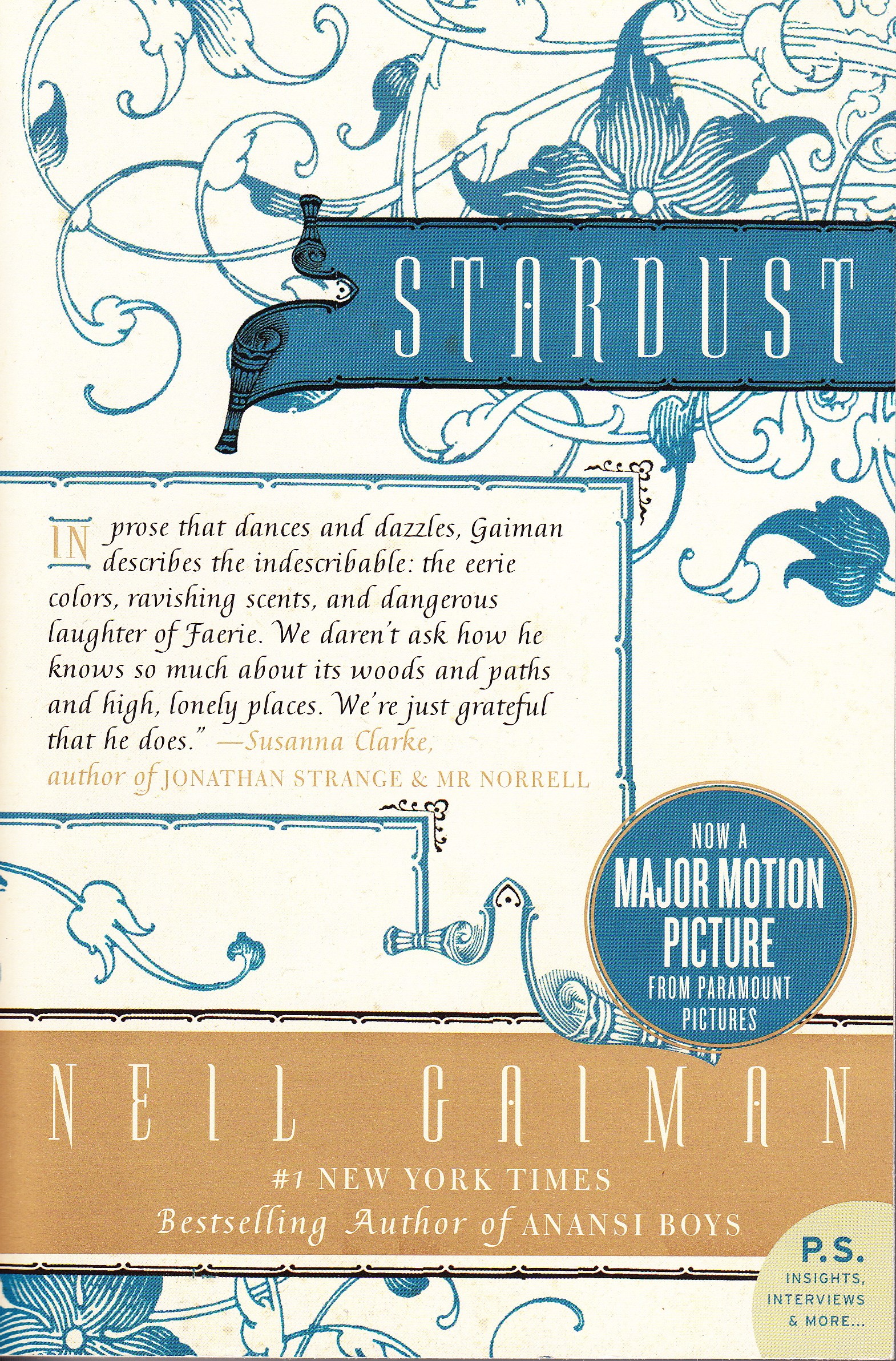
Having grown up on a literary diet of comic books and Doc Savage novellas, I have always had an appreciation for the fantastic. Since our town was relatively dull, it helped to have flights of imagination within the price range of those with humble means. I discovered Neil Gaiman (it seems that many profound writers are named Neil or Neal) through the machinations of one of my Rutgers students. After reading American Gods, which was an obvious starting place for someone of my erstwhile profession, I have sampled a bit more of his fare. I long ago gave up on comic books since I prefer the pictures I make in my own head, although I must admit that the few graphic novels I’ve tackled have required considerable thought. So it was that I came upon Stardust, a graphic-turned-prose novel.

Stardust serves up a number of folklore themes with the charm and wit that Gaiman generously doles out. It is a story replete with witches, fairies, and storm gods. A figurative smorgasbord of the mythical. What particularly arrested my attention was Gaiman’s use of the title Lilim for his witches. Lilim (or lilin) are mythical creatures of Semitic pedigree related to the (in)famous Lilith. Some traditions make the Lilim her children, and it has been suggested that they also put in an appearance or two in Mesopotamian mythology. Gaiman’s portrayal is fairly accurate here with the Lilim being selfish thieves of the night, but not entirely evil.

Beyond the escapism of relatively happy endings, this mix of evil tinged with the helpless inevitability of aging speaks paradigmatically of mythical ambiguity. Many modern-day religions tout the answers, but mythology parades the possibilities. The mythology of old continually returns to us in new forms. Using a mix of fantastical creatures from various eras of human story-telling, Stardust is a gentle fairytale for adults. Like the book of Ecclesiastes the story has a fatalism to it, no real happy ending but no hair-rending tragedy either. Turning the classic quest for the father into an unwitting search for the mother, the novel offers seemingly endless potential for hope. Although penned a few years ago, that message is still desperately needed today.


A Tribute

Judith Mills Gray, 2009

The death of a friend always covers life with a hazy gauze of disbelief for some time. In my fitful career I’ve taught several hundred students, and of those several hundred a handful have become friends. When the painful debacle of Nashotah House took place and I was reduced to a weeping mound of incoherent impulses, those who were friends tried to console me. Some had fortunately moved on by that point. Judith Mills Gray was one of those who had become a friend although she had made it to safety before me. Readers of this blog will likely not recognize her name—she never earned lots of money, the measure we use assess a person’s importance these days—but she was an artist, a deeply spiritual woman, and one of the kindest people I have ever known. In a day when the seminary actively discriminated against women, she managed to hang onto a place among the boys and did so with good humor. After my short stint as Registrar, she came along to lift that burden from my shoulders. When she left the seminary, my tiny family sat in her tiny house and wished her the joy that Nashotah could never offer.

Just two years ago we went to visit her in her native West Virginia. She was proof to me at that point that recovery from institutional abuse is possible, but I could see there were still scars. Many of those who suffered through years at the seminary left very bitter—I count myself among them—but Judith rose above it all. She was not perfect—none of us are—but she was a person determined to leave this world a better place than she found it. That is a tall order when the church, the putative bastion of good, turns all its guns on you. As Judith and I shared what would become our final reminiscences together, I sensed that ultimately she had come out the winner.

We are all born into a life with far more questions than answers. Jesus seemed to have had the idea that it was good to console those in difficulty, heal wounds, and try to make your fellow sojourners happy. Judith followed that path without the benefit of having the answers. Along the way we shared many laughs and quite a few tears. We both had experienced the face that the church carefully hides from the wider public, the face that finds Jesus a little too idealistic and hate and revenge a simpler and more effective option. Judith never returned hate for hate. She continued trying to find a path where, although not ordained, she could still minister to others. For those few of us fortunate enough to know her, she was an example of how to make gold out of lead. In my case, I know that there will be lead in my life for quite some time now that she is gone. I also know that lead can, and sometimes does, turn to gold.


I Can Haz Edukashun?

Myths are alive and well. One of the most pervasive myths, along with the one that says clergy only work on Sundays, is the concept that educators take the summer off. Undoubtedly some do, but the summer is traditionally the time for professors to conduct research without having to break up their concentration with several classes a day. Those were the halcyon days. This morning’s newspaper slapped me like a fistful of razors as I read the story of Rutgers University’s president’s resignation. I knew about the resignation, but being fumblingly employed part-time by his mighty university, and having to take annual ethics training for the pittance I’m allowed, I blanched as I read these two sentences: “McCormick earns $550,000 a year as president and is eligible for a $100,000 yearly bonus, though he hasn’t taken the money in recent years due to the university’s budget troubles. Ralph Izzo, chairman of the board of governors, said he thought McCormick would be worth his [continued] $334,000 professor’s salary.” A few pages later the headline tells how Chris Christie, New Jersey’s cut and bleed governor, took a state helicopter ride to get to his son’s baseball game. Also, he wants to prevent state employees from making a viable living.

In this twilight zone of an educational nightmare, a guy with professional ethics training just wants to close his eyes and make it all go away. For what are we educating our young if not for greed? What professor is worth more than 100,000 dollars to any university? In the old days, back with ethics had intestinal fortitude, the term for such folks was “sell outs.” Is there really any drive for excellence at such pay scales? It is no wonder we are raising the “entitlement generation.” Actions used to speak louder than words. State-mandated ethics training has now corrected that little oversight. Higher education used to be about ideas; today it’s “show me the money.”

The truly sad part of all this is that we keep pretending. We preach the myth to a public easily pacified and crucify those who beg to differ. Back in my Nashotah House days a trustee once hushed me so that the board might listen to a student with “fire in his belly.” My belly’s a blackened cinder by now. Is anybody listening? Mythology, particularly in the Greek world, revolves around the concept of hubris. It is a concept with which modern university folk are clearly unfamiliar. It goes something like this: like most people I think I am better than others. In order to prove it, I’ll increase my blandishments until there is no longer any doubt. Is that Olympus straight ahead? I might as well take that as well!

I’d love to stay and lecture some more, but I’m apparently entitled to more state ethics training.