Paradise Re-Lost

It is through the astute eye of my colleague Deane Galbraith that I came to know of my most recent reading project, Paradise Lust: Searching for the Garden of Eden by Brook Wilensky-Lanford. BWL (since the author’s name is a mouthful and since it took me four hours to get home tonight (at a distance of less than 30 miles) I’ll abbreviate her title. Being a fellow New Jerseyan, I’m sure BWL will understand) surveys various attempts that have been made over the past century-and-change to try to locate the Garden of Eden. Spurred on by the discovery that her own educated, rational great-uncle had also wondered about the mythical location of our mythical ancestors, she sketches various attempts to find Eden. Tracing a course that often crosses paths with my own academic background, BWL notes the pervasive—one might say undying—belief that once upon a time in a land far away there was a garden paradise.

Quite apart from the obviously folkloristic, and Mesopotamian, origin of the creation story, BWL demonstrates that the unifying factor behind the search for Eden is the four rivers mentioned in Genesis. The Tigris and Euphrates should be no-brainers, and no-brainer is a word that frequently comes to mind when otherwise intelligent people sincerely suggest Eden lies beneath the North Pole, or in Ohio, or Florida. Clearly this story left only psychological traces on the impressionable. Far more mysterious are the Pishon and the Gihon. The fact that these rivers have never been found (never existed) has fueled the economy of adventurers and bibliophiles for well over a century. The fact that people buy BWL’s book underscores the point. The end result is that any confluence of four rivers could potentially be Eden. What is lost is the biblical worldview.

The four rivers of Genesis 2 flow to the four points of the compass to water the entire earth since all ancient people seemed to have believed they lived in the middle of everything. The Genesis writer takes for granted that we’ve heard of them, and who, among the sophisticated, wants to admit otherwise? Since the story never happened, no physical evidence should be expected. And that’s what all of BWL’s explorers find. Nothing. Of course, if you want to run for President you’d better claim to believe in Eden, for plenty of Americans, despite our educational system, do. Many an ape is wiser. So if you want to find Eden, locate the center of the world. Given the traffic tonight, it surely must be New York City. If you’re going to look for it, you’ll want to take a book to read while the rivers of cars stop flowing. I’d suggest Brook Wilensky-Lanford’s Paradise Lust.
God Particle

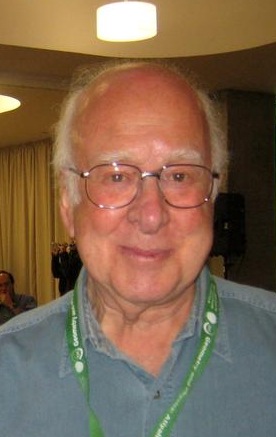
Over the last couple of days the Higgs boson has been in the news. Although I seldom ventured too far from New College and the faculty of divinity at the University of Edinburgh, it makes me glow with a special pride knowing I inhabited a small corner of the university of Peter Higgs. (And many other luminaries, including Charles Darwin.) My hopes of understanding the Higgs boson are more remote than even finding a university post (very long odds indeed), but I know that it is so important to physics that it has earned the moniker of “the God particle.” I first learned of the Higgs boson through Morgan Freeman’s Through the Wormhole series. At that stage it hadn’t yet acquired its divine status. Godhood must be earned, after all, at least in the eyes of humans. It is the proposed particle that stands to make sense of quantum physics, the world of the very small and the very weird.

There is an object lesson hidden in here. When even scientists get pushed to the limits of human knowledge, superlatives grow diminished. What can we call such a radical, powerful force in human thought? The particle itself, the boson, is not inherently stronger than a proton or electron, but its divine designation comes from its ability to, dare I say, replace god. In other words, it is the particle that explains so much that it is like the new god. News stories do not tell us where the nickname arose, but the best guess seems to be that some journalist with a flair for the dramatic brought God into the equation. God sells copy. But has the name also got enough room for a snake around the tree—or rather, around the nucleus?

In America, where science is under siege, any claims for God will be taken literally by some. We have witnessed again and again sheer silliness being paraded as “science” by Bible “experts” who take nearly half the population with them. The mental gyrations of the intelligent design crowd as they try to force God back into the equation should be warning enough. The God particle is baiting them and most Americans are ill-equipped to decide for themselves what is actually science. No sooner do we get a grip on nanotechnology than we begin building nanocathedrals. In that cathedral if scientists find the Higgs boson, it will not be god. It will, like god, open the door to many more unexplained phenomena, for god is not an explanatory principle. If we need a name to convey the great, rational explanatory power of such an elusive sub-atomic bit it seems to me—and I may be biased—that we call it the Edinburgh particle instead.


Silent Fright

Baylor University has begun to make quite a showing in the non-sectarian academic world of late. Knowing of the school’s Baptist heritage, I’d always been somewhat suspicious of any scholarship susceptible to doctrinal poisoning. I freely admit that my fear goes back to a hyper-evangelical college roommate. Even at the conservative bastion of Grove City College, John would lament the sorry religious state of the school and repeatedly thought of transferring to Baylor. (I need not fear that John will ever read this—he avoided liberal dribble like it was Planned Parenthood.) By association, Baylor became something in my mind that it apparently is not. When the administration recognized the direction the Southern Baptist Convention was going, they took steps to protect themselves from a takeover (something I’d witnessed at a much smaller school some distance north). The university press has been producing intriguing books, and the sociology department has been cranking out some fascinating studies of religion.

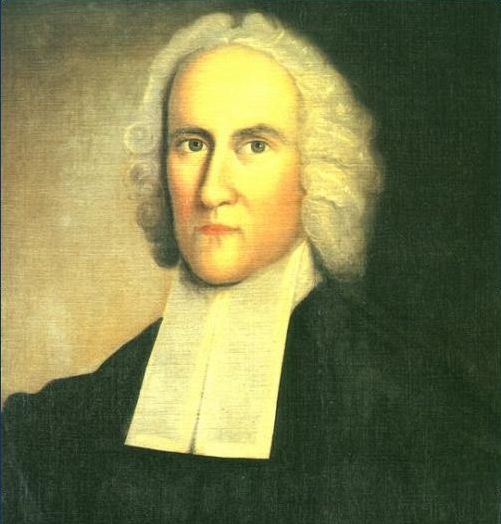
One of the more recent religion in America surveys from Baylor indicates that a correlation exists between the image of God presented by a version of Christianity and that contentedness of believers. More specifically, churches that promote a judgmental image of God (think Jonathan Edwards and his spiritual bedmates) tend to be anxiety-ridden and compulsive. Churches that teach a loving God have more balanced believers. Brimstone and hellfire, in other words, produce the expected results. What the Baylor study shows is not so much surprising as it is scientific. Well, softly scientific. As a social science, sociology relies on statistics and analysis to draw its conclusions. We now have a means of measuring religions outcomes.

Religion is, in many ways, self-fulfilling prophecy. By preparing believers for a literal Hell of a future, it cranks out automatons who’ll do anything to flee from the wrath to come. Herein lies its danger as well. Although some politicians may be naïve about the veracity of belief, many of them realize something their more liberal compatriots don’t—religion motivates. The religion of a loving God who has no Damoclesian sword hovering perilously over the heads of the faithful won’t get them to the polls. The god with believers on a skewer above the everlasting barbeque pit will. Baylor has shown us the data. If we ever hope to redress the damage constantly visited by politicians claiming God has told them to run for office, to invade Iraq, to commit war crimes in the name of the prince of peace, we must act on good information. If religion is a psychological anomaly, it pays to learn a little applied psychology. Otherwise the wrath of an angry god will consume us all.


Don’t Need No Righting

“If you can read this, thank a teacher.” So the old saying goes. Besides the virtue of venerable age, this proverb has the added advantage of being true. When I first peered at a page full of complex combinations of minute, triangular wedge-marks and was told I’d learn how to read them, I needed to head outside for a few gulps of cold air. My first attempt at Akkadian was doomed to failure, but eventually I learned to read cuneiform through the gateway language of Ugaritic. After that the bewildering sprawl of Mesopotamian languages didn’t seem so threatening. I don’t exactly remember when I was first exposed to English cursive in the classroom, but I do recall that same breathless fear of the unknown. The language I’d learned to print out neatly all seemed to be melting into curly figures that looked remarkably alike. How would anyone ever be able to read this?

According to a story in Sunday’s New Jersey Star-Ledger, schools are moving away from teaching cursive. Beginning next year 46 states will no longer require it. Beyond that, some politicians are questioning why teachers should be wasting their time instructing students in printing, or even keyboarding. The gold standard they are worried about is identity. Can you sign your name (to endorse this campaign check)? If we have another way of identifying you—eyeball scans seem to be very popular suggestion—why should you bother to scrawl your name? Keyboarding, well, kids already know that by the time they start school these days. If the texting craze really takes off we may evolve future generations with just thumbs. School is for teaching students science, math, business—practical stuff. Oh yes, and intelligent design. (Got to keep the gods, or anthropic principles, happy.)

In a world where languages are dying out at a disturbing rate (each language is a thought process as well as a way of stringing sounds together), we have become very cavalier about the very innovation that has allowed us to develop as we have. I used to tell my students that less than seventy years separated the Wright brothers from the moon landing. A human lifespan where technology outstripped our ability to think. And the pace has only accelerated since then. Are we premature in leaving out cursive from the curriculum? There is coming a day when future archaeologists will discover a strange substance that seems to have been manufactured from wood pulp. On it they will find scrawls with loops and curls that form a pleasing pattern in the repetition, but from which no intent can be discerned. And if they are like modern technocrats, they will quickly realize the utility of the wood pulp for starting a fire.

What's it say?


Crimes and Misogynies

Mill Creek Entertainment has, through no fault of its own, accounted for many an idle hour of my weekends. Assiduously gathering and collating public domain movies, mostly of dubious quality, into sets of fifty movies per box, sold at a rate that probably isn’t actually cheap since most of the movies are available free online, Mill Creek panders to the connoisseur of B, C, D, or even lower, movies. Sometimes, however, a good one slips through. That’s how I discovered Bluebeard (1944). One of John Carradine’s many movies, this version of the seventeenth-century tale of a murderous husband is set in Paris sometime in the not-too-distant past, Gaston Morel is a demented puppeteer who murders his models because of a religious incident. In the final confession scene Morel explains how he, as a starving artist, took a homeless girl to his studio to nurse her back to health. As he sketched her, he realized she reminded him of the Maid of Orleans—Joan of Arc. After her recovery, she turned to a life of debauchery, driving Morel insane with rage. He thus comes to kill his models due to his tattered faith (and fragile psychology).

Despite some typical overacting and strange plot twists (why would a Paris police inspector take his American girlfriend to examine evidence to solve a crime about which he is clueless? Was he planning to run for president later?), the movie manages to provide an intelligent number of turns in the plot to keep viewers interested to the end. The concept of a killer deranged by an idealistic fiction of a female victim is somewhat frightening because it continues to this day. Long before Eve bit the fruit, ancient Mesopotamians feared the demonic female of the night who later came to be called Lilith. When the unruly female entered Judeo-Christian tradition, however, she became the target of the hate and fears of too many men who had their own ideas (backed by their own religions) of how women should act.

Witch-hunts (of all varieties) have their basis in religion-fueled misogynies. Religious texts, written mostly by men, set the standard of female behavior. Those who fail to live up to it must be enemies of the world order of masculine ideals. They are the heretics, the expendable, the feminine. As someone raised by a woman without benefit of her husband, I have never had any doubts that women were just as, if not more, capable of making it in the world as men. Yet even then, in the 60’s, many women believed equal rights with men to be immoral because of the magisterial pronouncements of the male Bible. Remember, God for the Bible is a bearded man. And upon close inspection, at times at least, one may discern in that beard a touch of blue.

Parable


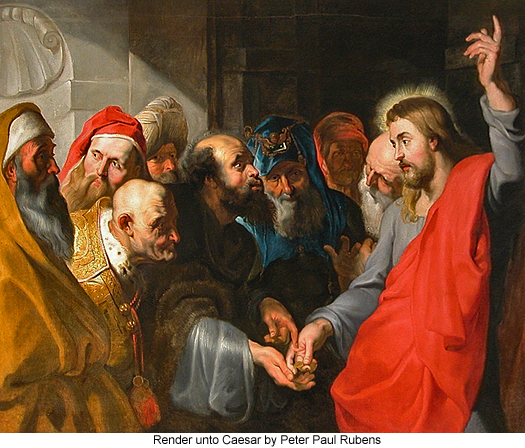
Render unto Caesar

My wife shared a very appropriate video concerning the ongoing tragedy of the GOP race for presidential nominations. Presented as an ad by Jesus, “Jesus” tells how Rick Perry has co-opted his name but not his message.

It is a fun look at a very serious issue. The serious issue is that people unable to think critically about religion are doomed to be its slaves. Where’s the proof that Jesus supports one candidate or another? When is the last time the voting, uncritical public ever demanded the proof?

Thinking back to just a few weeks ago, Herman Cain had made the spectacular claim that God told him to run for president. If the claim was sincere, how could he have withdrawn from the race? Where’s the lightning bolt (as long as we’re believing mythical images of God)? Has anyone checked his office lately to see if he’s still with us?

Religious gullibility is America’s most dangerous deficiency. We elect “the most powerful man on earth” based on his religion, and yet, very few know anything about it. But hey, it sure sounds good!

Religion is the elephant in the room. Nearly all people learn religion from their parents or guardians. Some rebel, but few study it beyond the requirements of their obviously biased religious leaders. Children trust adults to inform them of the truth. We fill their heads with images of a large, white man, bearded, sitting on a huge throne in the sky. You can’t see him, and he doesn’t answer when you talk to him, but he is very, very concerned about who you elect as president.

Many colleges and universities do not offer the opportunity to study religion with neutral experts. Those best poised to make a difference, like large state schools, often shy away from the study of religion completely. Those that do offer the chance to study often unknowingly hire a committed believer, sometimes presenting him or herself duplicitously as neutral and objective. And so the cycle continues. As the old hymn plaintively asks, “will the circle be unbroken?”

As a nation we value religious freedom, but we have set up a system to abuse that freedom. (One might say, “ritually abuse”.) Answer me honestly, Mr. Perry—is it not true? Oh, and that Frisbee is not a threat to national security.


Tolerance, Princeton Style

Princeton is an idealistic kind of town. A seat of great wealth, the town is dominated by the university and yet it manages to retain a sense of genteel quaintness that so often accompanies the aura of financial security. Even with my distrust of money, I love to wander its streets and imagine what the world could be like. My ideal world has bookstores, and so I always stop at the Labyrinth, the current incarnation of the university bookstore in town. Last time I was there I found an overstock sale copy of Ian Buruma’s Taming the Gods: Religion and Democracy on Three Continents. Well, both the price and the topic were right, so I read it this week. Buruma is actually a scholar of democracy, human rights, and journalism, not religion. One of the key identifiers of religion is that there is no central, unifying topic that ties all religions together, and therefore scholars of many disciplines have much to say about it. Buruma offers three chapters illustrating the way that religions interact with society, often violently. He then tenders suggestions for how this violence might be curbed.

Commenting on tensions of Islamic growth in a nominally Christian Europe, Buruma notes that one of the Enlightenment core values is a belief in universals. If truth is truth it is universal. This, he notes, often conflicts with religions since most religions also tend to make universal, often exclusive, claims. Here is precisely where human culture is brought to its knees by religion. Due to their revealed nature, western religions cannot be challenged on any rational grounds. This is as true of Mormonism as it is of Judaism. If God said it, and there is no empirical proof, people have no choice but to obey. Problem is, God can’t make up “his” mind about the final word on the subject. New religions sprout constantly, growing into inevitable conflict with their neighbors. Not to mention those who have reasoned their way out of religion.

What is the limit of religious tolerance? As Buruma notes, tolerance necessarily includes tolerating intolerance. Some religions are constrained to be intolerant of others, and how do we allow them to be part of our little tea party? (The metaphor is intentional. Think about it.) Buruma suggests, as many have, that the rule of law should settle the situation. People must learn to separate civil law from religion. But can it be done? I have serious doubts. I’ve heard this suggested before, by minds far greater than mine. Having grown up as a religious kid, however, I know that rule of law has its limits. It stops once God opens the door to direct revelation, whether to people today or thousands of years ago. Religion is not bound by the rule of law. It is its own highest authority. Many, many people throughout the world believe that. Moses, Jesus, Mohammad, all are noted to have had clashes with civil authorities of one sort or another during their lifetimes. The pattern is set. So even here in Princeton, with an engaging, thoughtful book in my greedy little hands, surrounded by great wealth, I realize just how idealistic all of it can be.


On the Move

Truth is increasingly a moving target. And when the Chronicle of Higher Education runs an article about religion, academics take notice. Actually, the article is about irreligion. An interview with Routledge author and Pitzer College professor Phil Zuckerman was the centerfold for November 23’s Chronicle Review. Zuckerman’s article, “Taking Leave of Religion” follows up from the book I reviewed on the sociology of religion. On the very same day, in an article my wife pointed out to me, MSNBC online published an article about the church and the Internet. Interviewed was Heidi Campbell, another Routledge author, at Texas A & M. What struck me in both of these cases was not so much what was said, but how.

In these days of higher education under siege, the media has come to love the young scholar. It has gotten to the point that I can hardly watch a documentary on the ancient world without seeing a friend or colleague on screen. I suppose the interviewing of scholars is not itself new, but the burgeoning of the celebrity scholar gives pause. Was a time when scholars wrote for other scholars. There are problems with that approach, mostly the issue of social irrelevance. Let’s be honest—when’s the last time we read a heavily footnoted, dry, academic monograph for fun? Honestly. So scholars have taken to the media. In popular forums with trendy words they make scholarship accessible.

What could be wrong with that?

The fact that I am writing this blog demonstrates that I believe in the public sharing of knowledge. I find it crass when experts charge for sharing what they’ve learned, but, I suppose knowledge is a kind of commodity in the marketplace of ideas. Herein lies the rub. The business of education. Scholars have become entertainer-specialists in the realm of commerce. Back in the day you had to seek the guru on the top of the mountain. Now he, or not uncommonly she, can be accessed from the comfort of your own couch or chair. Frequently there is no debate. Truth handed down, byte after exotic byte.

Perhaps we have lost the capacity for honest, if dusty, debate. Not only that, but the media now reserves the right to determine the truth we will receive. The target is moving, but the receiver is not.


Ignorance Should Be Bliss

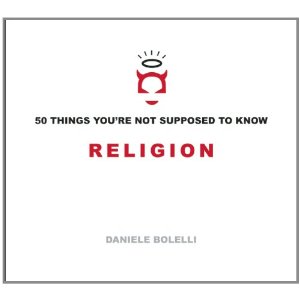
Even before we elected a president who was only a single year older than me, I had the creepy sensation that no one really knows what is going on. Call it what you will, but I am told, that for my own good, some information is kept from me. I can’t recall how old I was when I first came across the word “disinformation,” but the concept—a favorite of conspiracy theorists—has stayed with me ever since. It is that Kafka-esque sense that something is off kilter. Some time back I stumbled across a website called Disinformation, and was immediately intrigued. True to the nature of the title, the site keeps you guessing. I was pleased, therefore, when I was sent a prepublication copy of Daniele Bolelli’s forthcoming title, 50 Things You’re Not Supposed to Know: Religion. Disinformation has a plucky series of books in the 50 Things You’re Not Supposed to Know series, so I was decidedly curious about this new volume.

Not a heavy academic tome, 50 Things You’re Not Supposed to Know: Religion is written in a vein similar to this blog: reflective, unconventional, but not really earth-shattering. It is good fun. Bolelli does a great job pointing out less advertised aspects of otherwise socially respectable religions, not taking cheap shots, but simply rephrasing events as they really happened (mostly). Within all of this, however, some true wisdom lies. In thing 36 (of the 50), “Tao is the Sh*t,” Bolelli notes, “Many are those who, infatuated with all things ‘spiritual,’ forget that real spirituality is nothing but daily life lived with full awareness.” It is clear that Bolelli has an appreciation for eastern religions, but he is not so bourgeois as to let even those escape unscathed.

Often the reading of a book is the sharing of the author’s soul. The acknowledgements were so intense that I immediately felt that Bolelli has a hidden story. As the author of the highly regarded On the Warrior’s Path: Philosophy, Fighting, and Martial Arts Mythology, Bolelli is both a professor and a fourth-degree black belt. Clearly a man with whom to be reckoned (or better, reconciled). I too have been very influenced by a teacher who knows martial arts and who has one of the clearest heads around. I learned from him that there is a spiritual component to martial arts, and that spirituality seemed, rightly or wrongly, to be present even here in this book. Bolelli is willing to take on religions. In our alarmist society that stance is often confused with lack of morals or spiritual insight. From my idiosyncratic position, however, I found Bolelli’s small book engaging and irreverent and provocative (in every sense of the word). Do yourself a favor and read it. If you’re not careful, you’ll snigger a time or two and learn something along the way.


National Fear

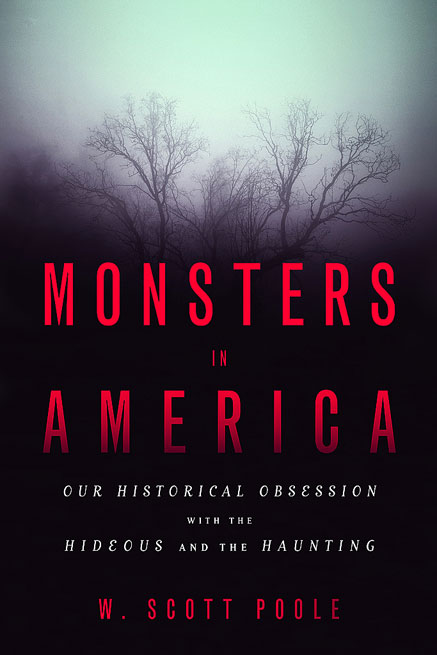
Back in my full-time teaching days, the American Academy of Religion and Society of Biblical Literature annual meeting was an excuse to buy books. Not that we were flush with money, but the prices were so good (we’re talking academic books here) that they simply couldn’t be passed up. Those days are long gone. This year I limited myself to a single book: W. Scott Poole’s Monsters in America: Our Historical Obsession with the Hideous and the Haunting. I was not disappointed. Poole gives us a smart study with considerable insight into American culture. Not only that, but it also proved an excellent source of self-understanding. I had never come across the phrase “monster kids” for those of us born in the blue light of the television when the Universal monster movies were released for television viewing in the 1960s and 70s. Poole classifies himself in that camp, and it is clear that we share this “guilty pleasure.”

Categorizing our monsters into types that fit various aspects of the American self-image, we find our national phobias reflected in our fictional fears. Throughout the book the uneasy sense of uncertainty towards sexuality, science, and death, like the revenants described, keep arising from the ground. Although Poole is a historian, it very soon becomes clear that one of the main driving forces behind both identifying and challenging these monsters is religion. It is a view Poole shares with Douglas Cowan and Stephen Asma and other analysts who take seriously the origins of our fears. Monsters creep out of the same mental space as gods. That which is not real is no less scary for its non-existence.

Particularly insightful was Poole’s analysis of the subversive nature of monsters. They challenge convention, forcing a cultural catharsis. The notable exception, Stephanie Meyer’s Twilight series, also has a religious rationale. Meyer, a conservative Mormon, effectively extracts the fangs of the vampire to make it a safe, if not Christian, monster. Monsters make establishment believers uncomfortable, for they remind us of the darkness that always follows the light. Humanity responds with efforts, religious and scientific, to banish the dark. But at the end of even the longest day, night will come. When it does, I would recommend curling up with Poole for an evening of cultural self-understanding. Followed by a bowl of popcorn and a movie from his filmography.


Bookless in Manhattan

I suppose the fact that I still harbor an inordinate love of dinosaurs, geology, ancient civilizations, and liberal politics should prepare me for the demise of books. The short road to extinction lies along the path of my interests. Except, of course, Bible. There must be a portrait of a very old, decrepit scroll somewhere in someone’s attic. The culture of books, apart from the library, is a fairly recent one in human history. Even the concept of stores dedicated to books is one that has had a very tenuous lifespan. Now that Borders is gone, I’m sometimes reduced to skulking about Barnes and Noble to find my quarry. So on my lunchtime yesterday I decided to visit the Barnes and Noble on Fifth Avenue and then swing by the Gotham Book Mart. I had heard of the Book Mart before—the store that hosted visits by Truman Capote, James Joyce, Arthur Miller and many, many more luminaries. I thought it would be a good antidote to B&N, and besides, the address is just blocks from my office.

Barnes and Noble is the last resort of a reading man. I don’t have much time for holiday shopping these days, so I figured I’d nip in with my list (nothing too obscure; in fact, I’d seen the titles in an indie bookstore over the weekend, but my family was with me) and be back out in a jiff. Fifth Avenue. Midtown Manhattan. The choice of books was atrocious. Purely lowest common denominator selection. It is symptomatic of America’s love affair with the ordinary, the lower-quality-if-higher-quantity mentality. Cosco of the intellect. Barnes and Noble is the only show in town and they don’t have the selection or panache of many a much smaller Borders. I had to walk out empty handed. Well, at least there was the Gotham Book Mart to look forward to!

I suppose my first clue should’ve been the fact that the photo on Google maps showed a storefront reading “Food World” at the address which still maintained the bookstore name. I thought maybe the Book Mart was behind it or something. No Gotham Book Mart. Back at the office, chewing a dry peanut butter sandwich, I stared crestfallen at the computer screen. Wikipedia informed me that the famed Gotham Book Mart closed four years ago. Rising rents in Manhattan and the very Barnes and Noble I’d just visited drove it out of business. e e cummings, George Gerschwin, Jacqueline Kennedy Onassis, and J. D. Salinger passed their hours here. Katharine Hepburn, Woody Allen, and Charlie Chaplin were no strangers here. When the remaining stock—valued at 3 million dollars—came up for auction, it was purchased for $400,000. By the landlords. So ended an era.

From monks hunched over their vellum by the sallow light of candles to the modern dreamer in the glow of her or his laptop screen, we have brought writing an unimaginable distance. Unfortunately, many of the landmarks along the way have vanished without the blink of an entrepreneurial eye.


Fecit potentiam

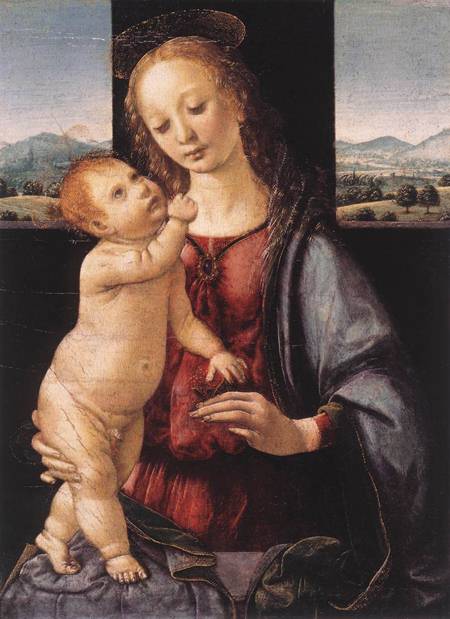
Yesterday at Princeton’s annual seasonal choral concert, the program consisted of Bach. The first piece was a Magnificat, a piece that, in prose form, I quickly memorized at Nashotah House. With our daily double dose of chapel services, liturgical standbys such as the Magnificat quickly became reflex recitations, made with little thought beyond getting on to the next piece. It occurred to me as I listened to it at leisure, the hopes of poor Mary haven’t really materialized after these 2000 plus years. After a couple of millennia, perhaps it is time for a state of the theology assessment.

Despite the veneration of Mary in the liturgical branches of Christianity, the collective handmaids of the Lord have made slow progress in being integrated fully into church leadership. Only with the last century, and fairly late therein, did many Protestant denominations finally recognize that Mary’s gender might have something to teach the men. Paul, for one, would have had none of it. Even today the Roman Catholic Church stalwartly refuses to consider female priesthood. Perhaps Mary’s prayer should be uttered yet again within its walls?

At the section labeled “fecit potentiam,” however, I noticed further lack of fulfillment. “God has shown strength with God’s arm,” the program translates, “God has scattered the proud.” The hopes expressed in the next several verses have been silenced beneath the greed of an economic system with no responsibility. “God has deposed the mighty from their seats.” When did that happen? Those of the Occupy movement who’ve received a face of pepper spray might beg to differ. “God has filled the hungry with good things, and the rich God has sent away empty.” Sent away to their summerhouses, their mansions, and their penthouse apartments? Away from the working class who oil the gears of their massive machines. No, it seems that the Magnificat has not fared so well at predicting the new era to be brought in by a special child.

Of course, Luke’s song of Mary is based on Hannah’s song at becoming the mother of Samuel from the Hebrew Bible. Samuel was the great judge and prophet who saw to the law and order in the land. Strangely, however, the Bible manages to confuse Samuel with his erstwhile enemy Saul, conflating their birth accounts. Isn’t it just like the Bible to confuse the oppressed with the oppressor? The strength shown with the divine arm, the wealthy inform us, is the strength they wield. After all, god and gold differ by only one letter.


Soccer Moms and Robot Dads

Long past Halloween, the air is taking on its terminal, winter chill. High school football teams have moved off the fields (although the “pros” will keep at it until the Super Bowl in sunnier climes). What are sports parents with an excess of aggression and competitiveness to do? It is the time of year when some parents start thinking about the FIRST (For Inspiration and Recognition of Science and Technology) robotics competition. It is a good sport for the hibernation season.

My daughter is on the FIRST Robotics teams in her high school. FIRST was invented by Dean Kamen (along with many physical inventions) as a way of stirring up interest in STEM careers. Interest in science and technology careers, inexplicably, is faltering in the US, while many of us who grew up enamored of science but without any natural ability sit by and scratch our heads. Careers in robotics are very hot—especially since machines can do things we mere biological units can’t. We are that squishy, organic chemistry with a mysterious plan that serve as gods to the mechanical beings we create. Woe to humanity when the robots become atheists! But that’s a point for another post. Sports—and FIRST clearly is a sport, as much as racecar driving or horse jockeying—take on a religious devotion among people of leisure that rivals the commitment oppressed peoples have to their more tradition forms of faith. The easiest means of seeing this is in the fans.

“Fan,” of course, is an apocopated form of “fanatic,” a word wielded with derision against those who take religious belief too seriously. In sports it is a venial sin, if not a downright virtue. Consider the continuing news stories still swirling around a non-necessary sports figure at Penn State. Even the name of the school evokes football rather than academic performance. The same thing applies to FIRST. FIRST robotics is a sport for the mind, and it has its share of analogues to the soccer mom, what I might call the robot dads. These are parents who are particularly driven to win. In a sport involving band saws, hydraulic lifts, and multiple motors, parents are actively involved in building robots suitable for competition. And the competition can be intense. It becomes a kind of robot religion. Dean Kamen, the Susan Calvin of FIRST, has tried to instill commandments of sportsmanship and gracious professionalism into the competitions. That is something the kids understand. As I attend the competitions, however, it is the religious parents that I worry about.

My worry includes the kind of gender disparity that characterizes the work place. Why should not the scientists and engineers include more women? The field strives to do so, but our society still discourages the participation of women in the men’s room of heavy equipment and intense mathematics. Isaac Asimov, frequently a writer with distance vision, made a woman the head robopsychologist of U.S. Robots and Mechanical Men, Inc. If Dr. Calvin were to look back from her fictional 21st century to the actual 21st century she would see women still struggling for equal voice in both science and religion.

Let's hear it for the boy


Name Recognition

Some two and a half years ago when my brother-in-law Neal Stephenson suggested I start a blog (primarily for the podcasts to which I intend to return), he asked me what I would call such a site. “Sects and Violence in the Ancient World,” was my attempt at a witty, non-committal riposte. Since I was unemployed at the time and still hoping some deus ex machina might put me back into a full-time university post, complete with an Ancient Near Eastern religions component, the title seemed apt. I determined that I would not exploit my relationship to a best-seller author since I wanted to earn my own readership. Sects sells, does they not? Since then I’ve had a number of curious readers wonder why I tend to address modern religious issues, unlike my title suggests. The reason goes back to what I want to be when I grow up.

How many eighteen-year olds really know what their lives will hold in store? Our society asks them to select majors and pick a career path far too young. I had visions of clergyhood in my head so I majored in religion. Like many children of alcoholics, I tend to be addictive in my devotion, so after completing a Master’s in religion, I had to have just one more degree—then I’ll stop—and a doctorate in religion finished ossifying my career track. Having been weaned on the Bible, I’d stuck with it for three degrees and found that during that time the job market had evaporated around me. As I watched society from the sidelines, I saw so many people at the place I had started out, staring wistfully at the Bible, looking for answers. Uncritically, magically expecting a miracle. Just like Oral Roberts said. Once my teaching career had been derailed by misguided Fundamentalists, I realized my interests were much more in the effect religion has on people. It was too late, however, to go back to school.

My way of dealing with any dilemma is to parse its history. That’s why I studied pre-biblical religions along the way to my doctorate in Bible. A couple of things had become clear along the way: religions are very fragile and easily splinter into sects. And most of the large-scale violence in the history of the world has a religious basis. (Probably much of the small-scale violence does as well.) Its origins are literally more ancient than history. What is religion in today’s world if not the direct descendent of sects and violence in the ancient world? And since my idiosyncratic musings have passed the 200K hit mark, it seemed all right to acknowledge the role my brother-in-law has played in all this. So, in good academic fashion, I’d like to acknowledge the suggestions and support of Neal Stephenson in starting this blog, but any errors are, of course, my own.


Christian Window Cleaners

In the city, with all the traffic, windows sure can get dirty. I often arrive in Manhattan around 7 in the morning, before the crowds grow too intense. It is a favored time with street-level window washers. There’s a lot of glass in the city, and when doing tall windows they need to use long poles, and that can be tricky with hundreds of people trying to get around you. So when I saw a window washer yesterday, I thought nothing of it. Then I noticed the red cross embroidered on his jacket. The back read “Christian Window Cleaners.” I tried to get a picture, but I didn’t want to be obvious. Even New York has its limits. The poor guy’s jacket already made him a target for stares, but I was intrigued. Long I had suspected my windows to have been cleaned by pagans, on account of the smears.

Businesses have been using the Christian cache to drum up the drachmas for decades, but for some reason, this particular business struck me as transparent. Are non-Christians going to peep in the windows while they’re cleaning? Try to steal your stuff when you step out to Starbucks? What does it say about those of us who never clean our windows at all? The implications suddenly seemed to grow enormous. I see window washers every day. Most of them seem like descent, upstanding citizens. If you’re going to go for a business where people are concerned with fairness, why not Christian cabbies? That’d be a big hit in New York. The prices, however, would remain extortionate. Such is the way of religion.

The eyes, they say, are the window to the soul. If so, window washers are given a unique privilege of looking inside. We all tend to be cautious about what we leave in front of windows, that which we want the world to see about our lives. At dusk we pull the shades. Perhaps it really does matter who stands close to our glass. But as C. S. Lewis once noted, a Christian and a pagan boil an egg the same way. Of course, C. S. Lewis is big business now among the evangelical crowd. His more sensible words are generally overlooked as he is stuffed into a coffin-shaped wardrobe of conservative dimensions. I suspect that his smoke-smeared windows were cleaned by people after whose faith he never inquired. But then, I am only looking through a glass darkly.