Academic Omelets

As an erstwhile accidental adjunct, I came to see a side of the academy increasingly rare these days: the professional who must earn his or her keep. That life is less than half-a-year away and I still look to see what is happening as higher education crumbles under its own excessively disproportionately top-heavy infrastructure. An article in a recent Chronicle of Higher Education outlined how an adjunct, on his own initiative, began a survey of working conditions for those in similar academic situations. The results went viral and universities felt the need (only occasionally) to justify their actions. Expediency at the cost of a few eggheads nobody worries about, but when the news starts to leak like so many yolks, it is about time to at least act concerned. The phrase that stuck in my shell as I read the piece was this: “many adjuncts nevertheless feel they embody a lower class in academe.”

I felt like a bulls-eye had just been struck, and that bulls-eye had been painted on my forehead. Higher education has always been subject to claims of elitism and exclusivity. I entered the industry because at every stage along the way my instructors encouraged me to continue since I thrived in that atmosphere. I had entered higher education, however, from a humble, working class family. No dreams of power drove me—it was the sheer joy of learning. When I tried to situate myself among those who had had a leg-up in life, it was an uneasy fit. It’s like that uncomfortable feeling when a homeless person sits next to you on the subway. You know you could help, but you know there is an invisible wall that separates your world from his or hers. And hopefully, somewhere deep inside, you also realize that that homeless person could have been you.

The adjuncts are the working class among higher education. At some schools the full-time faculty teach very little and get to earn their lights as the brilliant minds who write books. I’ve written a couple myself. The difference is, they are bona fide. Privileged. Education used to be considered a great leveler. As in most myths, the truths in that sentiment are heavily metaphorical. Education could level the playing field if people weren’t prone to accept privilege when it is offered to them. What adjunct would not just as soon become the full professor with a light load and the fame of being featured on television and interviewed in Time? I don’t mean to single out universities—people in all situations tend to behave that way. No, I don’t single out universities. It was just that I hoped they might have been above this kind of thing.

This is your life, on adjuncts.
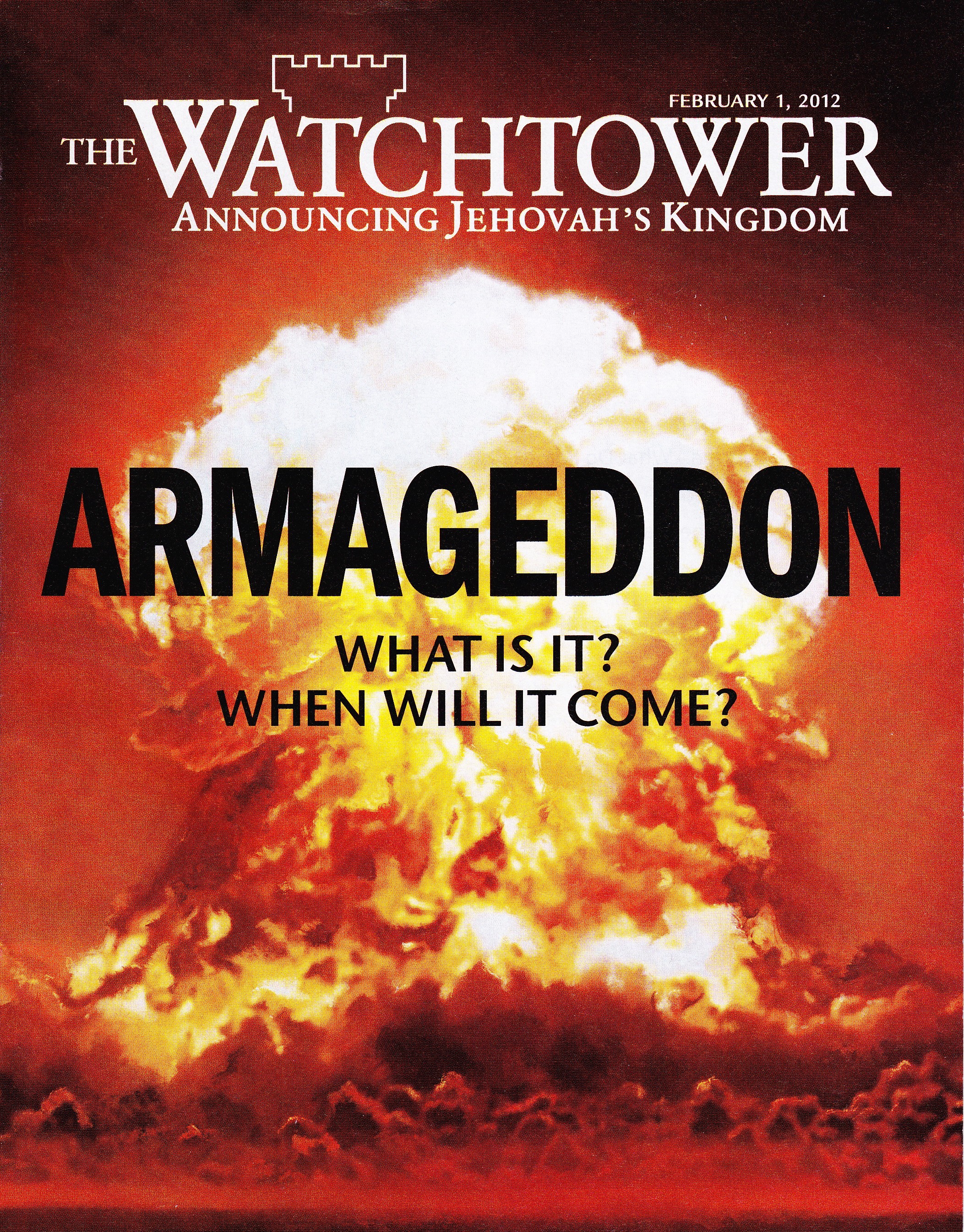

Watch Your Tower

So when the smoke clears from another leap day barely survived, and my Apocalypse calendar tells me about the looming end of all things, and the Jehovah’s Witnesses stop by and leave a Watchtower with the headline “Armageddon” at my door, I start to get a little paranoid. Did I miss the memo on this? I tend to be suspicious of any religion that is less than 150 years old—call me a historical snob in that respect. By the time of the nineteenth century of the Common Era, we were getting industrialization, evolution, and the Whig party sorted out. It was hardly a propitious time to be starting new religions. Well, I was curious about Armageddon, so I read a bit of the Watchtower in any case. It goes best with salt.

“The original Hebrew word Har-Magedon literally means, ‘Mountain of Megiddo.’ Although no such literal mountain existed, a place known as Megiddo does exist.” So I learned. But there was a mountain at Megiddo. Literally. I’ve been there. It’s not an impressive mountain like the Front Range of the Rockies, but it is sufficient for the purposes of the Bible. Megiddo overlooks the broad plain of the Jezreel Valley. In ancient times such valleys were highly valued for fighting because of a basic engineering difficulty with chariots: they don’t work well on hills. Chariots have open backs, so falling out would hamper effective up-hill battles (literal ones), and your chariot bumping into your horses or chasing them downhill would have resulted when the fighting was done. Or when you were fleeing. Valleys like Jezreel were perfect for fighting. And Megiddo has a front-row seat on its little mountain. The site of Megiddo has been excavated by archaeologists and is well worth the time it takes to get there.

By coincidence (or is it?) my apocalypse wall calendar begins March by saying, “Make Archaeology Your Friend.” Hmm, is there a message somewhere in here? When the Jehovah’s Witnesses and the Mayan interpreters agree, should we not at least admit a little doubt? I don’t think so. Both traditions, as certain of special revelation as they may be, are human attempts to make sense of our world. We know of nothing that doesn’t end. The great Eastern religions seem to have caught on more readily to the idea of impermanence than Western cultures have, but they all share this in common—it’s gotta end sometime. I would, however, point out to Mr. Santorum, as he begins to think about his concession speech, that the Jehovah’s Witnesses seem to agree with the amateur Catholic on the part about Satan. My Watchtower says “Satan will marshal the nations for an assault on those who worship Jehovah God.” Perhaps politicians should stick to following the Mayans.