Call it the Blues

BluesBrothers

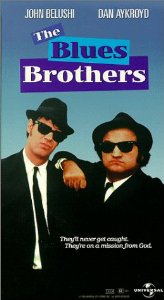
Coming back to The Blues Brothers after a couple of decades proved to be a kind of personal enlightenment. Of course I remembered “We’re on a mission from God,” as a catch-phrase, but in the intervening years I’d forgotten what that mission was. The movie is, as it were, backstory for the Saturday Night Live sketch in that show’s halcyon days. Watching the movie as an adult I was astonished at how positively religion is portrayed. Jake and Elwood’s mission is to save their childhood Catholic orphanage. Although there are a few laughs at the expense of religion, the movie as a whole is a redemption story with a surprising lack of irony. Released from prison where he was doing time for trying to do the right thing, Jake has an authentic religious experience and from that point on, the mission is unquestioned. In a self-sacrificial move that lands the whole band in prison, the Blues Brothers pay the taxes owed and save the orphanage. They are doing time for saving poor children.

I reflected on how, since 1980, it has become difficult to find mainstream movies that are so positive toward religious values. Not coincidentally, the 1980s saw the tragic Reagan years when religion and politics blended to the permanent detriment of religion being taken seriously. Since that time the cynicism has grown considerably. We are constantly reminded of it as conservative pundits force “Christianity” into a more and more reactionary mode, condemning all that reason has finally released from the dark ages. This is religion which thrives in the darkness of ignorance and fear. And it has coopted the very definition of religion itself. It is hard to imagine a “mission from God” being taken half as seriously today as it was when Jake and Elwood, although personally irreverent, nevertheless take the ethical call so seriously.

Today the “mission from God” is to protect one’s personal investments. Shut out those who require special consideration or those whose lifestyle differs from that which is putatively biblical. Anyone who dares step out of line is, in this enlightened era, condemned to the outer darkness. The Blues Brothers always wore dark glasses. While initially a branding gimmick, even this has symbolic value in the public view of religion. After all, Roman Catholic Sister Mary Stigmata gives them a sound thrashing for their profane language. But they find the truth in a black, evangelical service. There is a tolerance here—the neo-Nazis end up buried in their own grave—that has since vanished. The dark glasses hide something vital. The only time they are removed in the movie is to deceive. I wonder, I just wonder if with the glasses removed Jake saw a future for which the only prudent response was to hide once again.
Popeless

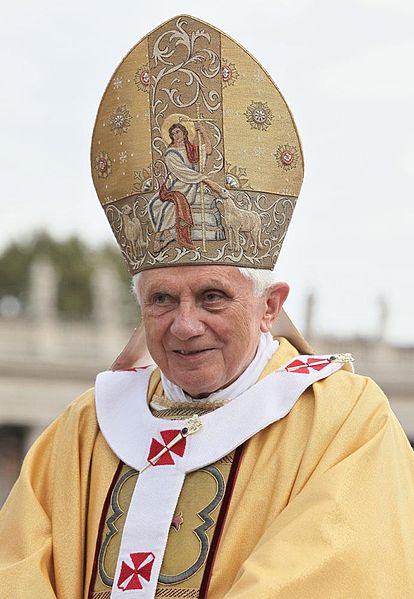
414px-Benedykt_XVI_(2010-10-17)_4 Pope Benedict XVI managed to catch many of us off-guard with his early retirement option. Not within living memory, or even very dusty, antiquated memory has a pope resigned. Such is the draw of power. Of course the founder and putative CEO of the organization stepped down at 33, or so the story goes, but after that the urge to stay on only grew. The papacy, some traditions claim, is as old as Christianity. Others suggest that the stresses and strains that eventually led to the primacy of Rome in the western church were much more intricate than that. Modern research has also indicated that one-size-fits-all Christianity really didn’t even exist from the beginning. Different groups claimed to be Christian but were labeled heretical by other groups. The Roman Catholic Church is still the single largest Christian denomination in the world, however, and that translates to quite a lot of weight.

According to the book of Acts, the first Christians were a communal lot, holding everything in common. Although we can’t call them communists, in a sense they were. It didn’t take long for that structure to break down, however. Before long it was obvious that leaders would emerge in the movement. At first they wouldn’t have been priests, but eventually that age-old designation came to describe what the clergy did. Worship became ceremony, and ritual requires expert leadership. Various religions have tried to break down the hierarchical structure of having one person over the others, but in this masculine world of CEOs and prestige, well, there’s only so much you can share.

What’s really striking is that no pope in 600 years has stepped down. There could’ve been many occasions. Presiding over about a sixth of the world’s population must be a heady experience, especially for a religious person. Already the speculation is thick on who the next pontiff might be. The fact that the faithful are already chomping at the bit shows something of the nature of the creature (one can’t very well say “beast” in such a context). The papacy has become a symbol in its own right, and even megachurches can’t hope to top their numbers. The Pentecostals, however, are racing to catch up. The two types of Christianity are about as far apart as possible while remaining under the same Lord. I suspect by the time the next pope vacates the office the religious landscape will be very different. Perhaps Benedict XVI is wise to call the game on his own terms.


Maltese Faction

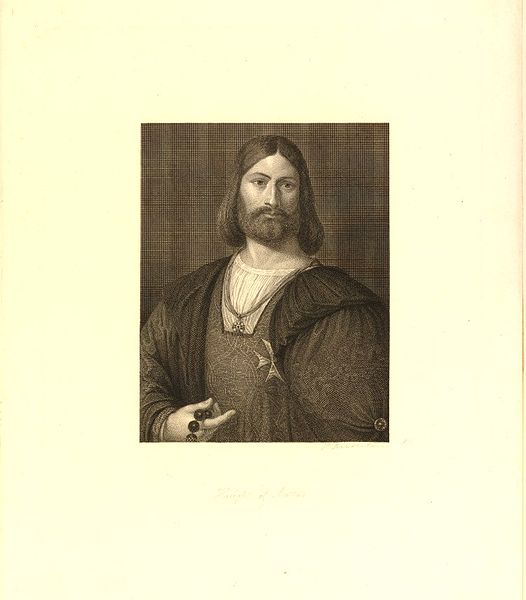
The Crusades remain one of the most celebrated episodes of religious violence in the history of the church. I am certain that many would put forward other instances of official violence to rival the piecemeal warfare of the Middle Ages, however, the Crusades still jolt many Muslims for their unflappable conviction that God gave the Holy Land to them. Ironically a bit of good emerged from the carnage in the form of sometimes secret orders of knights whose charge was originally to care for injured and sick Christians. Thanks to Dan Brown everyone knows of the Knights Templar. There were, however, several of these orders spanning the eleventh to the sixteenth centuries, and some of them survive today. In Sunday’s New Jersey Star-Ledger a story appeared of the 900th birthday of the Knights of Malta. I don’t recall having heard of them before, but then, it has been many years since my last class in Medieval Christianity. And no wonder—they don’t even appear in Wikipedia under that name.

What is so interesting about the Knights of Malta is that, like the Vatican, they have the authority to act like a country. According to the Associated Press, the knights can issue their own passports, stamps, and money, and have diplomatic relations with real countries and even have observer status in the United Nations. The blurring of the lines between religion and politics, as any student of history knows, has deep roots indeed. The Knights of Malta, however, own no territory (no, their eponymous island isn’t theirs). A nation with no territory. At least the Vatican has its own city. The Knights still exist for their charitable works and, it is to be hoped, not for the conquest of lands legitimately owned by others.

The Sovereign Military Order of Malta (“sovereign” and “military” were omitted in the press), is a sub-branch of the Knights Hospitaller, the oldest surviving chivalric order in the world. It is nice to think that the church might still have a few knights up its sleeves. The concept of chivalry has largely been absorbed into chauvinism, however, and even now the Knights of Malta are men. Along with the Vatican, that makes two entities run completely by males that assert their own sovereignty. In the twenty-first century it would be nice to think that we wouldn’t need monied men in robes in order to help out those in need. But then I’ve always been prone to believe in myths. And knights tend to follow after daze. Crusades, however, have far outlived their putative usefulness.

Good knight?

Good knight?


God’s Country Club?

Heaven is a sparsely populated place. Considering its vast celestial real estate, vis-a-vis the earth, it must be downright lonely. Maybe that’s the way the elect like it.

Official teaching, as it is often called, for many churches is downright brutal for those who dare explore. This past week the sin of Rob Morris, a Lutheran Pastor (Missouri Synod) who had the audacity to pray for the children slaughtered in Newtown, Connecticut in the same room as—gasp—Jews and Muslims, has been in the news. You see, Missouri Synod pastors aren’t allowed to worship with those outside their brand, and the president of the Synod, Matthew Harrison, insisted on an apology from Morris. Never mind the twenty-six coffins in the room. This is about doctrine!

Exclusion is part of what gives religion a bad name. Yes, there are some people who appear evil—I’m glad I’m not often put in the place of judging that. For some Christian sects, however, the gate is very narrow indeed, and the path exceptionally difficult. More than one Christian denomination, presumably those not so good with arithmetic, officially teaches that only 144,000 will be saved. A thousand gross, and not one more. These poor sinners keep hoping they’ll get in without adding up the hundreds of generations standing in line before them. I get the sense that their heaven wouldn’t exactly be paradise for any of the rest of us who happened to slip in. If the world were full of people like me, I think I’d be on the first space shuttle off to parts unknown.

Overlooking the gross insensitivity to the fact that Morris was trying to heal his community after a tragedy where children—children! To whom most religions give a free pass into heaven—were being mourned, we must wonder what the paradise of Missouri Synod Lutherans looks like. A heaven without diversity. Smiles must be rare indeed. And long, long, long naps very common.

For those of us committed to the common good, heaven on those terms is no ideal place. In fact, I doubt that God would be tempted to spend much time there. I think that God was present at the interfaith prayer vigil, and that Rev. Harrison has yet to receive an apology postmarked “Heaven.”

Rules is rules.

Rules is rules.


Peculiar Mythology

Peregrine Confession: I love books like Ransom Riggs’ Miss Peregrine’s Home for Peculiar Children. Ambiguity in fiction is under-appreciated at times. Of course, I’m not formally trained in fictional literature outside the confines of ancient mythology, but I do know what I like. This wondrous story of paranormal children in an alternate universe could almost have been drawn from Celtic mythology, and indeed Riggs provides a mythology to explain how things got this way. And every mythology is a kind of religion. In this world there are peculiars—not far removed from real life, for those willing to accept it—who have unusual powers. Miss Peregrine’s home, one where the children are under the guardianship of ymbrynes, houses those with special gifts. Some ymbrynes, however, wanted their godlike powers to make them into actual gods and in addition to causing the Siberian explosion, gave birth to hollowgasts, a kind of living damnation monster. “Rather than becoming gods, they had transformed themselves into devils.” Sounds a touch like Lucifer’s fall, n’est-ce pas?

It might be supposed by cynical readers of this blog that I select my reading based on the potential for finding religion in fiction. If that is true it is so only on a subconscious level, I assure you. I read about religion for many hours every day and I taught the subject for nearly two decades. When I turn to fiction it is generally for escape. I have found, however, that there is hardly any escape from religion. When I find it in fiction, therefore, I ponder some of its implications. Religion is so much a part of our lives that it can’t help working its way into popular culture. Maybe I just see it everywhere. That doesn’t mean that it’s not really there. But back to our story…

Hollowgasts, like Ugaritic devourers (sorry, couldn’t help myself), are powerful hungry. They must constantly feed their voracious appetites. Their favorite food, which actually transforms them a slight step back toward humanity, is the blood of peculiars. Blood is their salvation. The depth of this idea trickles down to the very roots of religion itself. Transformation is not possible without somebody paying the cost. Religion is bloody business. I won’t throw any plot spoilers in because I want to encourage you to read this strangely moving book. I will say that it is a strikingly well executed mythology for a world where God is not present, but where monsters and peculiars both partake in their own kind of divinity. And the strange photographs are real.


Rise of Religions

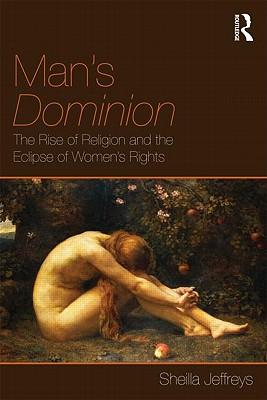
mansdominion Imagine my surprise when, as a boy raised in a fundamentalist family, I arrived at a liberal seminary to find myself accused of sexism. Like most kids I had been taught not to question religious dictates. Majoring in Religious Studies, even in as conservative a college as Grove City in the 1980s, even there I learned that to be educated meant learning to question. I’d thrown off fundamentalism by the time I reached seminary—I supposed I was making great strides. I’d always been in favor of equal rights for all, just because it seemed right. I supported gender and racial equity, but I was obviously still guilty of something. It has taken me decades to realize it, but being male is sufficient grounds to be despised. Perhaps it’s not as bad as all that. Maybe it’s worse.

Sheila Jeffreys’ Man’s Dominion: The Rise of Religion and the Eclipse of Women’s Rights was nevertheless a sobering read. I supposed that it might be a historical introduction to the problem, but instead it is a bold declaration of some uncomfortable facts. All ancient religions, at least those that survive, had subordinated (and continue to subordinate) women. That’s not path down which a liberated religionist wants to stroll. I found myself resisting these assertions at first, but as Jeffreys keeps the examples coming, they are difficult to deny. Yes, religions have been founded by men and they favor men. Not that belief necessitates that, but history seems to. Even in religions where women’s leadership is allowed, it is because some men have decided it is okay. There’s no changing the historical trajectory to the past. Religions were invented by men. Given their druthers, they will, at best, treat women as somehow less important than men. The missing element here, however, is sincerity of belief.

I doubt that Jeffreys would claim that religions were devised by males in order to subordinate females. It’s hard to say whether that first inventor of religion really believed all the stories he told, but soon people came to do exactly that. And those stories grew into something more than myths, and became the basis by which lives were lived. They became literal. And women, who played only supporting or villainous roles, soon became the victims. I know that’s too simplistic. I also know there’s some truth in it. I went to seminary to learn more about religion. What I discovered was often an unwelcome reality. Although I never personally tried to oppress women, I participated actively in a club that did—the club of masculinity. It may be that religion itself will always lead to oppression of the other, for religions don’t form in perfect worlds. If you have any doubts about that all you have to do is ask half the human race.


Scouting for Boys

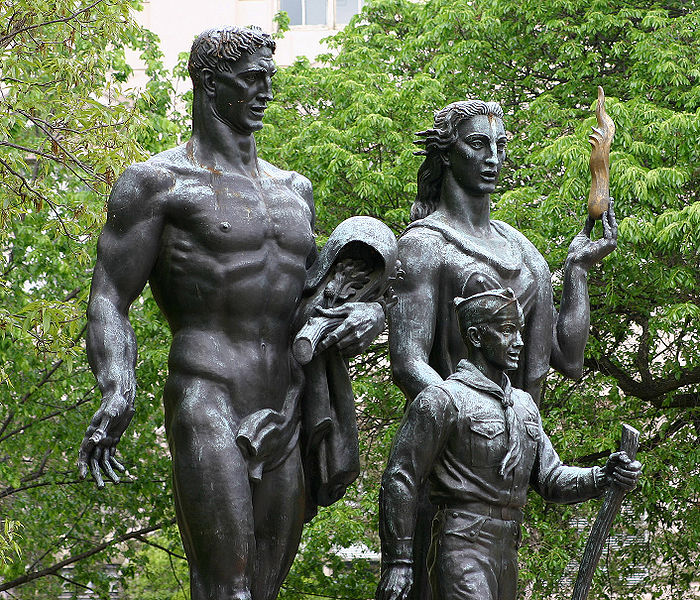
I guess losing a bid for a presidential nomination sanctions a guy to speak for God. Of course, that goes for just about any Republican these days. I’m frankly amazed that Moses managed to write the Ten Commandments without them. So Rick aptly-named Santorum has gone after the Boy Scouts. To remove the duplicitous ban on gay scouts, according to Santorum, is to remove God. Obviously Mr. Santorum was paid no attention in Boy Scouts himself. I spent many hours at Scout camp and I can attest that God was already the last thing on most boys’ minds. Maybe our former presidential hopeful ought to look back a little further, for Webelos and Cub Scouts may imply the love that dare not mewl its name. I predict this: if the ban is lifted, as it should be, no one will notice the difference. Santorum will continue beating his dead horse and the rest of America may achieve just a hint of maturity.

“Scouting may not survive this transformation of American society, but for the sake of the average boy in America, I hope the board of the Scouts doesn’t have its fingerprints on the murder weapon,” Santorum declared, according to CNN. I have to wonder what he knows about the average boy in America. Or the average girl. Santorum would have a difficult time finding the word “gay” in his Bible, for it is not there. But apparently God is not God without someone to hate, without the “Right” to show him the way. And God favors straight, white men, as the last presidential election clearly shows.

Any religion that makes someone feel better by repressing others is not worthy of propagation or emulation. Look at any oppressed group. What’s the backing always cited by the oppressor? Is it not narrow religious belief? Anyone can say “God says.” There—I just wrote it. And I could distort the Bible to make God dance to my prejudices as well. The problem is that I recognize how cheap and tawdry such eisegesis is. Of course, hot air expands. The Texas governor that God told to run for president, but then changed his divine, omniscient mind, and who never thought closely about the implications of that—aka Rick Perry—also had to weigh in on the issue. CNN quotes him as stating, “Scouting is about teaching a substantial amount of life lessons… Sexuality is not one of them. It never has been; it doesn’t need to be.” Mr. Perry needs to spend a weekend at camp with his eyes and ears open and his mouth shut. In the best of all possible political worlds, his bosom buddy Rick Santorum will be right there beside him. Maybe it will take a little child to lead them after all. And that actually is biblical.

From WikiCommons, AgnosticPreachersKid--worth a thousand words

From WikiCommons, AgnosticPreachersKid–worth a thousand words


Real World Ethics

Do yourself a favor. Spend five minutes watching this video:

(note: the video has been removed and a “family friendly” version is here: Kai)

Although it has a whiff of the apocryphal about it, I choose to believe that Kai is really who he claims to be. I don’t know what actually happened here, but this is ethics divorced from armchair pundits and congressional committees. Sometimes you see something and know it’s just wrong. Most of us wring our hands and await some authority figure to sort it out. When Kai met someone claiming to be Jesus, he was willing to be “the Antichrist” to save innocent people with no regard for himself. I am very impressed.

No, vigilantism is wrong. In fact, I wouldn’t trust a who coven of Republicans to ever arrive at so parsimonious a solution as Kai. He saw evil, he confronted it. I don’t know the backstory here, but I know that I feel a lot less threatened by the street people I see nearly every day than I do by those hiding away in limousines. Ethics is all about figuring out what is right. Kai has his head on straight here. If he could go back in time to stop “Jesus” reincarnated from harming an innocent bystander, he would. No regrets, no questions.

I have watched, and personally experienced, religious leaders intricately plotting how to ruin the life of their neighbors to maximum effect. I have read about politicians who shamelessly increase their earnings while knowing that some of their constituency live in poverty and persistent hunger. I have seen a president declare a war to fulfill a personal vendetta. And I have seen Kai lifting a hatchet to save a person he didn’t know.

There will certainly be those who would condemn such quick thinking and right action as immoral. For those who object from a Christian outlook I would remind them of Dietrich Bonhoeffer, one of the darlings of the Evangelical world. Bonhoeffer was hanged by the Nazis because he did what he knew to be right. Even though his bomb plot failed to kill Hitler, Bonhoeffer knew what Kai knows—those who sit around and watch evil happen as just as guilty as those who perpetrate it. And that’s like trying to surf when the ocean’s at a dead calm.


Secular Oaths

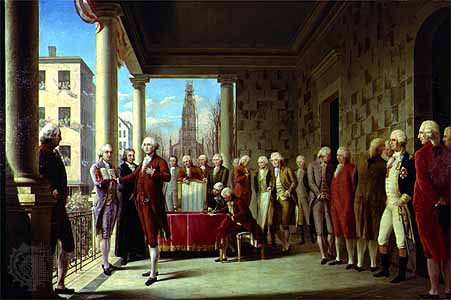
“I do solemnly swear that I will faithfully execute the Office of President of the United States,” so begins the story. With President Obama’s second inauguration so fresh in the public mind, an article in the Sunday New Jersey Star-Ledger raised the question of using Bibles for taking this secular oath. As A. James Rudin points out, not every president has laid a hand on the Bible to take the oath—John Quincy Adams preferred a law book to do the job. Rudin points out that commentators have started to question the practice of using any religious book for taking a vow for a government position. As I read this article I had to pause for a thought. It was the particular turn of phrase “the Bible, and by implication all other religious writings,” that stopped me at this brain crossing.

Washington's_Inauguration

Anyone who has taken time to study the phenomenon of religion seriously (admittedly not a large cohort) has stumbled upon the blue whale in the room: what exactly is religion? We all know, but nobody really knows. Many scientists equate religion with superstition and claim that we are evolving out of it, but we still seem preternaturally powerfully attached to it, if that’s the case. While religious writings have been around for ages, the idea of a sacred book seems to have its origins in the societal reception of the Bible. There are older religious books, but the Bible seems to have defined the category. What’s running rampant in my mind is where the line is drawn between a religious and a secular book. For some, it would seem, Fifty Shades of Grey, or Twilight would fall into that category. Some thinner, more glossy and heavily illustrated literature favored by teenaged boys might also qualify. What makes a book religious?

In current understanding, religion is a matter of belief. Not all religions insist on belief, but in the United States, in any case, it’s not properly religion without it. In our secular society belief is atomized into millions of varieties, even within the same religious family. Step outside the church, synagogue, or mosque, and the sheer varieties of religious experience would make even William James blush. “All other religious writings.” Those might include just about every pen stroke on paper (or electron on whatever it is that I’m typing this into). Those of us who venture to write know that at some level it is a sacred activity. I would swear it with my hand on my dissertation. (At graduation at Nashotah House students are hit on the head with a Bible. Perhaps this might be more appropriate to swearings in?) We lay our hands on that which is sacred, otherwise there’s no vow involved. Whether it be Bible, law book, or saucy literature, we pledge on it because all books are religious, regardless of definition.


Poe

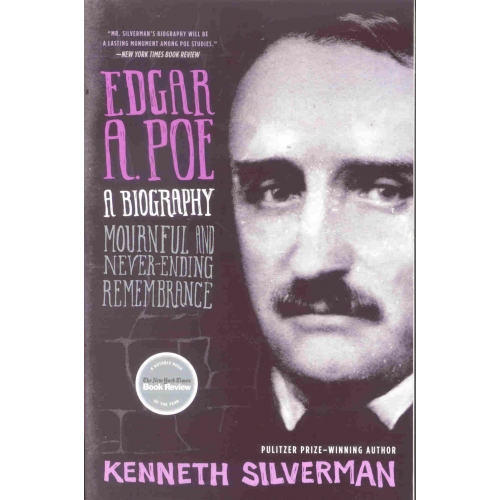
PoeSilvermanOn his birthday I began reading a biography of Edgar Allan Poe. The last biography of Poe I read, I’m embarrassed to admit, was in high school. To me Poe is like music: deeply appreciated and therefore taken in rare doses. The biography this time was Kenneth Silverman’s Edgar A. Poe, A Biography: Mournful and Never-Ending Remembrance. I picked this book up last time I was on the University of Virginia campus, just after I stopped by to gaze wonderingly into Poe’s room. Like most biographies these days, Silverman’s account is hardly a hagiography. Poe was a perfect man only in his embodiment as a man of sorrows. In the days when “writer” was not really a profession, Poe nevertheless recognized what his strengths were and persisted to try to make a living following those assets. A poverty-stricken living much of the time, but an honest one. It is not pleasant to have a hero’s foibles exposed, but Poe was all the more admirable for having been fully human. We have all experienced arrogance and humility in turns. Poe was a man who knew sorrow from his youngest years, and that cloud stayed with him until his death just forty years later. A personal tempest.

Poe, not a conventionally religious man, nevertheless recognized and drew upon religious imagery. In his poem “Ulalume—A Ballad” Astarte’s ghost appears. Astarte remains a goddess poorly understood, but Poe was likely drawing on her association with Venus. She fails, however, to lead to Heaven. Silverman points out how “Ulalume” was followed closely by Eureka, Poe’s only sustained attempt at metaphysics. Poe came to the conclusion that upon death we become part of the all-encompassing God. This daring deduction cost him friends and supporters, but it also led to a rebuttal by a seminary student. Poe’s reply to his criticisms remains apt, as Silverman quotes him, “‘God knows what’—he cared very little what he was called ‘so it be not a “Student of Theology.”’” Amen, Mr. Poe.

Some lives, like those of Job, seem fated to loss and suffering. Yes, there have been those who lost more than Poe, or even Job, but this is no contest to see who might bear the most weight before being driven to his or her knees. Poe felt it deeply and expressed it eloquently. He recognized, as most writers do today, that business models resent an honest voice. Those who sell are often those who pretend. I’m sure that Poe would nevertheless give a wry smile of irony if he knew how multiple editions of his works, long in the public domain, flow from the presses of publishers hoping to make a dollar or two on his now stellar reputation as a writer and, in full recognition of the paradox, a prophet. Like his raven, Poe could see beyond the confines of this world and paid the price for his vision. Obviously he was no student of theology.


On a Wager and a Prayer

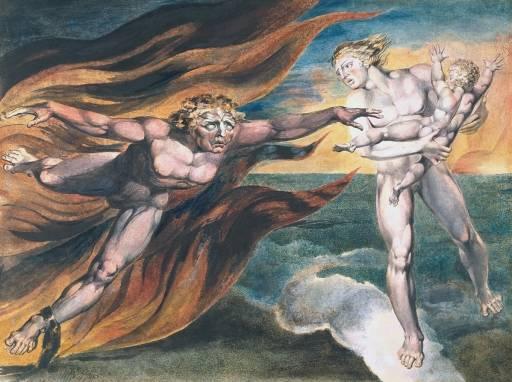
I’ve been thinking about Job a lot lately. Not my job, but the biblical book. Way back when I was preparing my initial classnotes on Job, I remember a commentator—I forget who—stating, as commentators are wont to do, that people have strong reactions to Job. Either they love it or they hate it. I have enough imagination to consider some people being somewhat ambivalent about it, but I have observed many people over the years revealing powerful reactions to this Wisdom book. One of the reasons, I suspect, is that God doesn’t come off looking particularly good in this story. This was recently reintroduced to my awareness in Steven Cahn’s God, Reason and Religion. The reader, unlike Job, knows the real reason for Job’s suffering. It was a divine wager, instigated by God, that Job would not curse him even if allowed GBH by the Satan. We know, however, and we are culpable for that knowledge. It puts a burden on the reader.

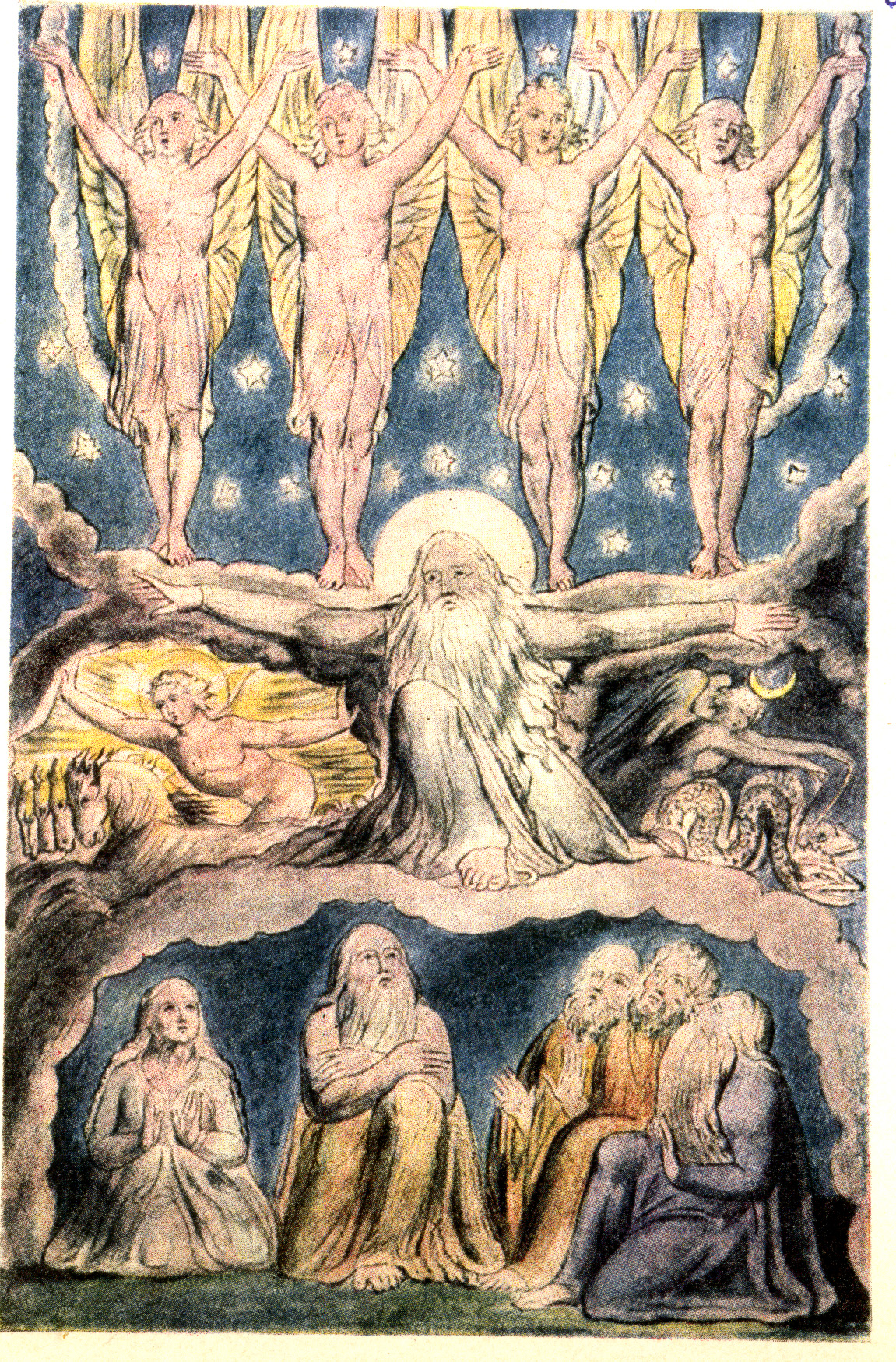
BlakesJob

When God does explain to Job why he shouldn’t question God’s acts, as Cahn points out, the answer rings hollow in the knowledge of the truth. God can’t admit to Job that he was playing fast and easy with his health and the death of his ten righteous children. A roll of the dice and Job is vulture-bait. The book of Job should make us squirm. We base our morality, we are often told, on the ideals of the Bible. If we were Job, who ends the book never knowing about the bet, we might be content. But the author, with a sly wink to those who face life squarely, points out that this is all a charade to justify God’s confidence in one of his many carroms. I suppose that might be small comfort to the pawns.

For Job there is no answer given to why he suffers. He doesn’t even really ask why—God’s right on that count, Job is very good. Yet the reader is not so lucky. How can we gain any comfort knowing that God sometimes lays us on that altar, not for any just cause, but as a wager against the divine prosecutor? No, the Satan in Job is not the Devil. He too is a divine character, an attorney borrowed from Zoroastrian mythology. He’s just doing his job. His Job. He is present to make us feel our guilt. And if Job, who the Bible itself says is perfect, can barely restrain his soul from cursing, how much of a chance do the rest of us have? There are many who hate the book of Job. I am not one of them. A more honest book I have a difficult time imagining. If it comes to justice in this world, however, I wouldn’t bet on it.


Ad Lib

Somewhere in the back of my mind I’ve had a notion to research and write a book on the history of “bad words.” Being raised Evangelical, I had a preternatural fear of saying something that might damn me to Hell, and even today working in Manhattan, I still flinch when I hear f-bombs falling all around me. Still, the concept of “bad words,” although almost universal, is very odd. We all know the tired jokes of a particularly offensive word in one language being common in another, with an entirely different denotation leading to embarrassing situations. No set of sounds, inherently, means anything bad. Surely it is the intention behind such outbursts that lead to accusations of profanity or blasphemy. I wonder how it got started. The Bible says nothing about bad words—in fact it contains a few—but it does warn against thoughtless curses. That’s because ancient people believed curses really worked.

As I stepped out in the dark to pick up the paper this morning I was curious, then, when a front page story announced, “At school, cursing’s out—for girls only.” The school in question turns out to be Queen of Peach High School in North Arlington, New Jersey. According to Leslie Brody the girls at the school were asked to take a no cursing pledge yesterday, while the boys weren’t. The real story here, however, is not my curiosity about “bad words,” but an insidious sexism. One of the teachers is quoted as saying “We want ladies to act like ladies.” And, of course, what lady would ever have anything to cuss about? Being paid lower wages than a man for the same work? Being blocked out of clergy positions in some churches? Being regularly maligned as “the weaker sex” who, like Eve, bear the guilt of bringing sin into the world? If anything, it seems to me, women have more cause to swear than men.

Just when I’ve been lulled into thinking we’re making strides toward equality, such stories dash the ice water of reality into my face. Who decided that it is appropriate for gentlemen to cuss? Can they just not help it? Are the same words any more offensive for slipping past feminine lips than masculine ones? I’m still not convinced about the entire bad word concept. As someone who smiths words every day, indeed, whose living depends on words, I find all words have their uses. It’s really a matter of context. And if I were a girl being told not to say what boys can say, I think I might have some choice words to add to that conversation.

Good, bad, and ugly.

Good, bad, and ugly.


Invoking Imbolc

As the year continues her eternal circle, we find ourselves once again at Imbolc, the cross-quarter day between the winter solstice and the vernal equinox. Imbolc is an ancient fire festival, and given how chilly our apartment has been these last few weeks, I think I could be downright pagan about it. Dividing the year into eighths, the pre-Christian calendar emphasizes the seasonal aspect of nature. The festival was originally dedicated to the goddess Brighid who became, in her later years, St. Brighid. Naturally, when the Celtic lands were converted, Imbolc was supplanted, somewhat, by the following day—not yet Groundhog Day—Candlemas, or the feast of Mary of the Candles. Diametrically apposed to Samhain, or Halloween, Imbolc celebrates the rekindling of light in a dark time of year. Some have suggested that the festival has roots as early as the Neolithic Period.

One feature of the old religions that was lost with the more transcendent interests of monotheism is the dedication to the earth. Religion, in its earliest forms, grew out of a profound awareness of human connections to the planet that was their home. Without our planet we do not thrive. Even though we’ve learned to catapult ourselves into space, our bodies don’t work so efficiently in zero gravity. (Read Mary Roach’s Packing for Mars for the gory details.) We evolved on and are part of the earth. Early peoples knew that instinctively. Their religion reflects that implicitly. Kindling a fire in winter is a small way of encouraging the light and warmth to return.

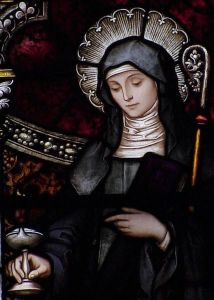
Stbrigid

Brighid, a goddess who represents the return to fertility with the earliest beginnings of spring, may also represent the earth. It will be at least another month or two before many of us will begin to see the hints of crocuses breaking through the wan grass, but Imbolc is all about turning that corner. The earth that seems to have forsaken us in the desolate winter is now about to welcome us back into the growing time. It is no wonder that, despite efforts of the missionaries, elements of the old religion remained. Whether with candles or bonfires, the pagan goddess Brighid, or the Christian Saint Brighid, ushers in February, our last full month of winter. And tomorrow, the groundhog will remind us once again that we are merely part of the earth.