Before Twilight

Despite the summer with its long, languid days, The Telegraph reported on vampires last week. In an article entitled “Polish archaeologists unearth ‘vampire grave,’” Matthew Day narrates how archaeologists have uncovered skeletons buried with their heads—decapitated, obviously—on their legs. This was apparently a not uncommon medieval practice for ensuring that suspected vampires stayed safely in their graves. Interestingly enough, Day comments that the practice mainly began after the Christianization of the pagan cultures that had preceded them. Even pagans, he suggests, ran the risk of being accused of vampirism, a broadly defined threat in the Middle Ages. Of course, the Twilight series had not been written then so that the safe, Mormon cast of vampire was unknown.

Vampires represented a couple of concepts terrifying to people before the scientific revolution: they were a source of draining an individual of some life essence, and they were the problematic undead. The decapitation, in Tim Burton-Sleepy Hollow style, was intended to prevent the vampire from being able to locate its head after death. Unable to find the business end of its vampiristic corpus, the undead might remain just plain dead. Of course, staking works, if the tales of the Highgate vampire, near whose grave I recently stayed while in London, are to be believed.

The belief in vampires, or at least fascination with them, has been very hard to shake. One of the earliest horror films made was Nosferatu, a rip-off of Bram Stoker’s Dracula that was nearly obliterated because of copyright violations. Nosferatu continues to be ranked among the scariest of horror movies, and the Werner Herzog’s 1979 remake is a classic in its own right. The Shadow of the Vampire was an even more recent movie about the filming of the F. W. Murnau original. Among the earliest of the Universal monster movies was Tod Browning’s Dracula, which forever identified the face of Bela Lugosi with the infamous Count. No matter how deeply we bury them, the vampires keep coming back to stalk our nights and nightmares. When future archaeologists uncover the detritus of our civilization, no doubt they will conclude that we too, in a secularized world, feared the undead.
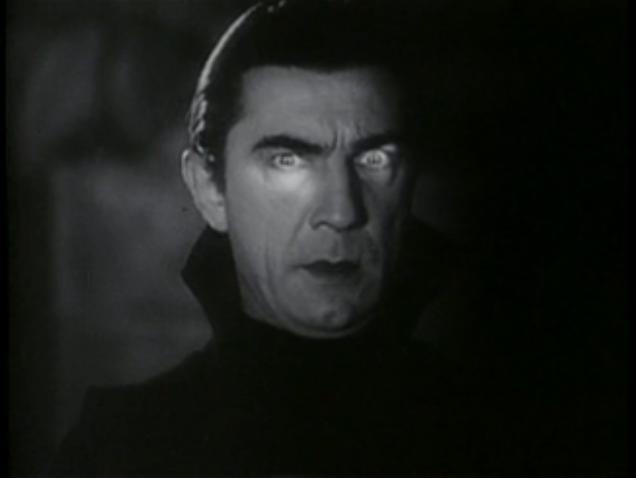
Bela_lugosi_dracula


To Be, Or

Science and Nonbelief

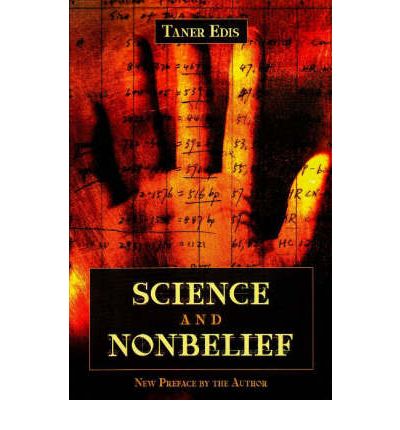
Science is, according to Taner Edis, ambitious. While Science and Nonbelief is somewhat sympathetic to the religiously minded, Edis demonstrates how science aggressively tackles the issues steadfastly claimed by religions, and ultimately triumphs. Interestingly enough, early on in the book Edis notes that “truth” is a philosophical concept, and science operates on the principle of the best explanatory theory of the moment. So far I am in complete agreement. I guess the part that gives me the most trouble is the assumption that reason is the only way of knowing. Perhaps I’m just not enough of a scientist to know such things, but it appears to me that all “lower” animals appear to get along very well in the world without great doses of “reason” that supposedly catapult humanity far above the other species. Scientific observation would seem to confirm that many animals feel emotion—after all, what is fight or flight if not an emotional response? And since we are animals, I reason, have we lost something when we leave feeling aside as a way of knowing?

Edis is quite fair-minded. He notes that science has no way to prove or disprove the existence of a deity, or deities, but he also states that the empirical method is so successful that a spiritual world is no longer required. He may be correct. The vast majority of the people in the world feel he is wrong, however. I may state this since we know, statistically, that most people in the world believe in some form of religion. Rational or not, here they come! It would seem that evolution has endowed us with religion, or an awareness of something we feel rather than reasoning out. And yet, we are told, science takes no prisoners.

I often ponder the fact that no one person has all the answers. Part of the human condition involves possessing limited resources for specializing in too many fields. Polymaths become rarer each year as specialists grow more and more precise. In this great mix of human learning, science often steps in and claims all the marbles belong to it. The rest of us have lost ours, apparently. There’s no denying that applied science has been very successful in bettering our understanding of our universe and our lot in the world. That doesn’t mean that all will believe in it. The title of Edis’ book is apt; belief is the real issue in attempting to fit religion and science into the same world. It is quite clear that religion doesn’t explain much in the way of the natural world. I wonder, however, if science is really capable of encapsulating all of what it means to be human.


Check Mace

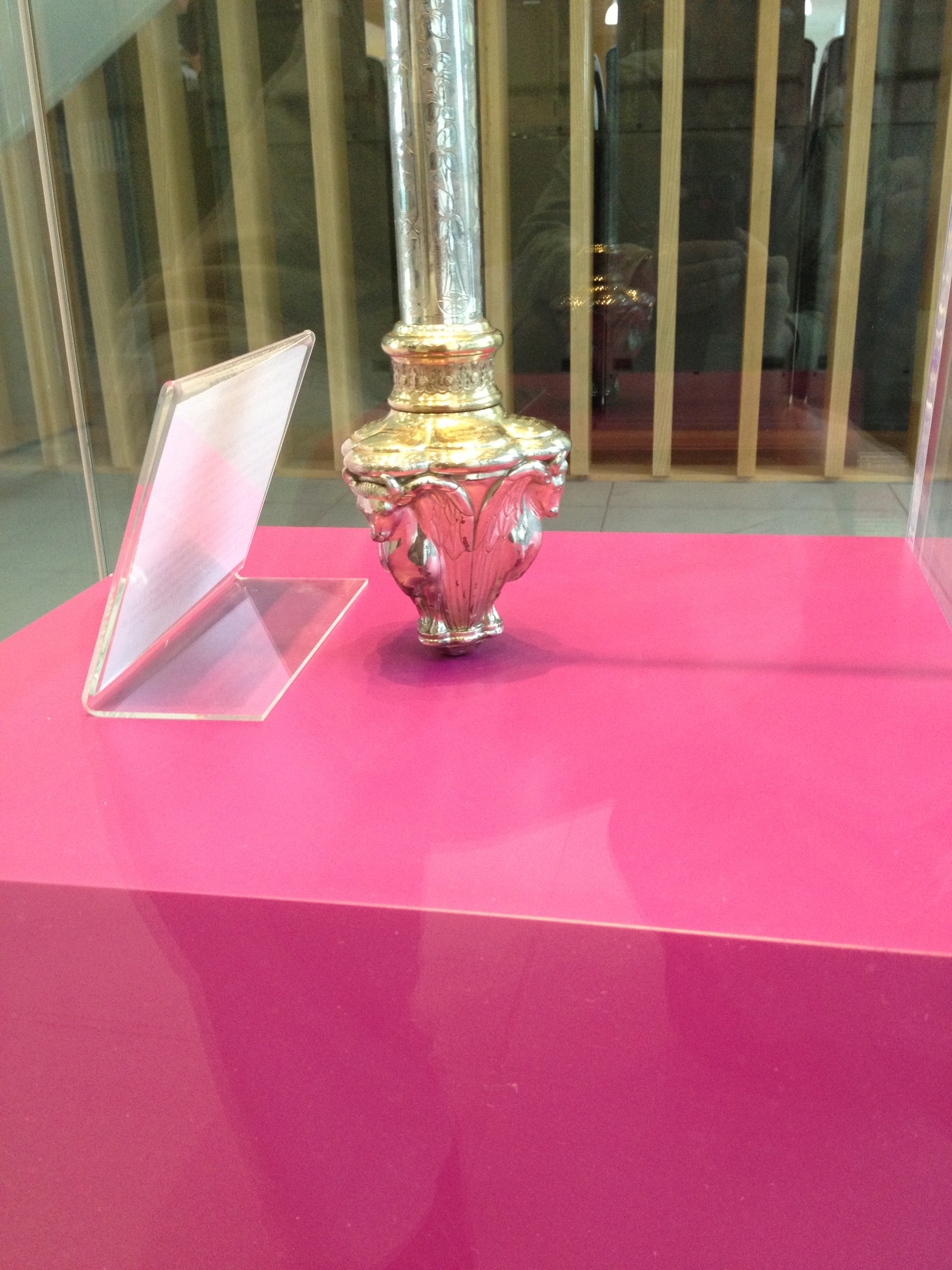
In the medical sciences building of the University of St Andrews stands a glass display case cradling a mace. The mace, a symbol of smiting authority that goes all the way back to Old Kingdom pharaohs, has a long tradition in academia as well. In all the pomp and glitter of an academic processional, a dean, provost, or chancellor carries a symbolic mace, as if to keep an unruly faculty in order. (I am sure that most of them have wanted to use that mace a time or two in reality, but have been constrained by both convention and the rule of law.) Medical science is among the fields of research quickly moving away from the spiritual mumbo-jumbo of medieval superstition. We are, after all, simply soft machines, doing as nature has programmed us. What more could there be to it?

IMG_0778

Looking more closely at the mace, I see on its ornate base, a flanking ring of winged oxen. Perhaps obscure to medical students, the winged ox is the symbol of the putative Gospel writer, Luke. Each of the Gospels emphasizes different aspects of Jesus, and the symbol assigned to Luke has been the ox. If the wings didn’t give it away, the explanatory placard on the wall nearby confirms my analysis. Eyes traveling up the silver shaft, the crown of the mace houses yet another saint, this one an apostle. St Andrew (of course) tops the mace, holding his X-winged cross. Underneath is an amorphous structure for which I need to turn to the placard to have explained. The fountain of healing waters, it tells me.

IMG_0779

From tip to tale, then, the mace of medical science is inherently religious. My reading of late has been from scientists claiming that, in the words of the old commercial, “parts is parts.” There is no underlying life-force or animating principle. Life is biological robotics, so I’m told. So as I stood in St Andrews last week, considering this metallic mace, I was poised on the edge of science and symbol. There is no biological need for such symbols—indeed, the mace was originally a weapon to inflict grievous bodily harm. Now, chased with silver, intricately ornate, it begins and ends with religious implications. I can’t help wonder what the robots make of that.


Hansel and Regretel

HanselGretelHansel and Gretel: Witch Hunters was on offer on the trans-Atlantic flight. Since I missed it in theaters, I decided to watch it on my mini-screen inches from my face. Witches, among the classical monsters, have a strange longevity into the world of science—like van Helsing (of movie fame) the protagonists have steam-punkish gadgets to destroy the naturally invincible foes. What’s not to like? I could not help but be disturbed, however, at what seemed to be the inherent misogyny of the film. Perhaps it was the lighting on the plane, but I saw only one male witch among the monstrous hordes of females who were battered, shot, and burned with apparent sangfroid. Women were guilty, it seemed, until proven innocent. And Mina, the white witch, again underscores that women who are “clean” are still potential witches underneath. Naturally, she dies before it’s over, but in a noble way.

The witches in the movie are strangely removed from a traditional, satanic context. They derive their power, like modern wiccans, from nature and strange mixes. The source of their magic is never explored very deeply, but when they catch trespassers in their forest, their queen states that even God himself fears to go there. Bewitching bravado, to be sure, but where does this image of God originate? A god afraid of the very nature that (in a film such as this, certainly) “he” created? The sacrifice of children is a good biblical trope, but seems to do little more here than to build the tension.

Monster movies, I realize, are “guy flicks.” Something about all that testosterone seems to be energized by images of ordinary people fighting monsters, against incredible odds. The monsters here, however, are barely distinguishable from regular women. Folklore has a deep well of traditions about witches from which the savvy might draw to write an intelligent, entertaining tale of witch-hunters. After all, the real antagonist, traditionally, is the male devil. He is, in medieval tradition, the source of witching magic. By removing Satan from the picture, we are left with strong women who must be repressed, and the world is really no safer when Hansel and Gretel are done. In fact, the end of the movie implies that they will never be finished. An opportunity for a subtle shift of paradigm was missed in this film, and, as usual, it is women who end up paying the price.


Caledonia Dreamin’

“Edinburgh is a mad god’s dream.” So penned poet Hugh MacDiarmid with sentiments that could’ve been composed by H. P. Lovecraft. My association with Edinburgh seems accidental, but there is little in my life that compares to this mad god’s dream. The Gnostics used to believe that there was nothing in divinity that precluded a kind of divine madness. Philosophers, back when they still considered god a postulate, argued about whether the deity was good or evil. If they’d come to Edinburgh, I suspect, the debate would’ve taken on a whole new cast. In his poem “Edinburgh,” MacDiarmid captures the untamed nature of a city that has never been given the accolades of Paris, London, or New York, but is just as edgy and twice as beautiful.

Dreaming gods, of course, are nothing new. Vishnu, according to some strains of Hinduism, is the god whose dream is the universe. In the Ugaritic Baal Cycle, it is a dream that reveals to the ancient god El that Baal has returned from the land of death. And, of course, Cthulhu lies dead but dreaming in the city of R’lyeh. To me, Edinburgh is a wonderful alchemy of divine dreams. I was a young man, still so very naive when I moved here. Looking back at those old photos, I see a much younger face from the past, telling the camera that yes, he’d found paradise, the very place of God’s dreaming. Our human politics, however, trump divine dreams every time. Although I never wanted to leave, I was not permitted to remain. Yes, the camera does, at times, capture the soul.

DSCN3490

I am on the train that will take me from Edinburgh, having seen it anew through my daughter’s eyes. I came here penniless some twenty-four years ago, but with a head full of dreams. Life has taught me the cost of dreams since that time, and I have had to pay with wrecked careers and uncertain futures, trusting that the god who is dreaming all this is mad indeed. Nevertheless, like the gods, I refuse to stop dreaming. As much as Hugh MacDiarmid captures the spirit of Edinburgh, as I sit here, with a wee bit of mist in my eyes, my mind is on the words of another poet, Baroness Nairne. To her I will have to leave the last words, from this south-bound train. “Fareweel, Edinburgh, where happy we hae been.”


Reflections on a Ruined Cathedral

On my final day in St Andrews, the symbol of its ruined cathedral weighs upon my mind. In a world both increasingly secular and religious, it is the latter that led to the fall of this house. I’ve toured many impressive cathedrals in my time, from Chartres in its gothic splendor to the plain majesty of Durham. These engineering feats of medieval “superstition” still draw theists and atheists alike, in wonder. In crass terms, they represent a large economic investment. It terms of spirit, they are sublime. Under the duress of ecclesiastical prestige, those who couldn’t really afford the resources nonetheless stretched their stonework toward God. In secular Europe, some of the best known sites are sacred.

St Andrews Cathedral fell victim to the Reformation. Religions are notoriously selfish in this way. When a new divine regime takes over, the wonders of the previous god become spoils. Hagia Sophia (which I’ve never seen) went from basilica to mosque, and Roman Catholic St Andrews became an eviscerated shell at the hands of Protestant thinkers. Even in ancient Israel the temple of Jerusalem was build atop a site of even more ancient heathen shrines. We conquer to stoop.

St Andrews, named for the patron saint of Scotland, is better known for its golf than its god. The divine may have built this city, but the divot has captured its heart. Priorities change with time—we call this progress. Not far from the crumbling cathedral lies a ruined castle. Not the haunt of royalty, the castle was build to house powerful bishops and archbishops. Some of these were the warrior bishops who were knights as well as prelates. Some, like Alexander Stewart, led troops to war. And yet the cathedral could not survive the change of religious climate. If we can’t have it, then it must be destroyed. The great cathedral, once the largest church in Scotland, and among the largest in Europe, perhaps represents the fate of all acts of faith, when something more insistent comes along. Or maybe I just don’t want to leave.

DSCN3593


Whose Reality?

It was a groggy, foggy morning when I stepped off the bus in St Andrews. I’d been here before, but it had been over two decades ago, and with my wife, who is my navigator. I knew the International Society of Biblical Literature meeting was here, but I didn’t know where. Instinctively, I headed toward the medieval part of town. A religion conference, I reasoned, would best fit there. Seeing no signs of the inimitable professorate that I associate with the Society, I finally stopped into a university office where a dubious-looking receptionist peered at the conference letter and shook her head. The she spied a familiar address on the letterhead. “Ach, that’ll be doon this way, past the second roond-aboot.” Having lived in Scotland for over three years, I understood. I suppose if I’d just read the materials sent ahead more closely, I would’ve known that we were meeting in the newest part of Scotland’s oldest university.

A religion and science reunion came in the form of the physics and maths building where the meetings were being held. Science grad students, somewhat bewildered by so many biblical scholars, pushed open their lab doors with a sense of wonder—and perhaps disbelief. Could so many educated people seriously spend their time on the Bible? Science, after all, now has cornered the market on truth, hasn’t it? What hath Jerusalem to do with St Andrews? Ancient universities were generally founded to study theology. In 1413, when St Andrews opened its academic doors, God was the undisputed arbiter of truth. Now high-tech fighter jets scream overhead in nearby Leuchars, and we are secure in the ability of science to save us. And still biblical scholars, like the horseshoe crabs, come together in huge numbers on the beachhead of the human psyche every year.

To the student trained in the sciences, I have no doubt that we appear superfluous. Nevertheless, without religious belief, or the Bible, our society would not be where it is today. Although now it seems that science and religion bear deep hostility to one another, they actually grew from the same root and have a similar goal—to discover the truth. Science finds no evidence beyond the material, but religion declares the material as the perennial under-achiever. Scholars of the Bible from around the world, many of them not religious believers, expend their limited resources to come to one of the more inaccessible tourist destinations of Scotland and meet in a clean, modern, comfortable sciences building. Across town, in the heart of the old, medieval district, stand the remains of a once grand cathedral. Still majestic in its glorious decay, the church towers over a town once ruled by religion where now science and golf define the new reality.

DSCN3582


Burning Faith

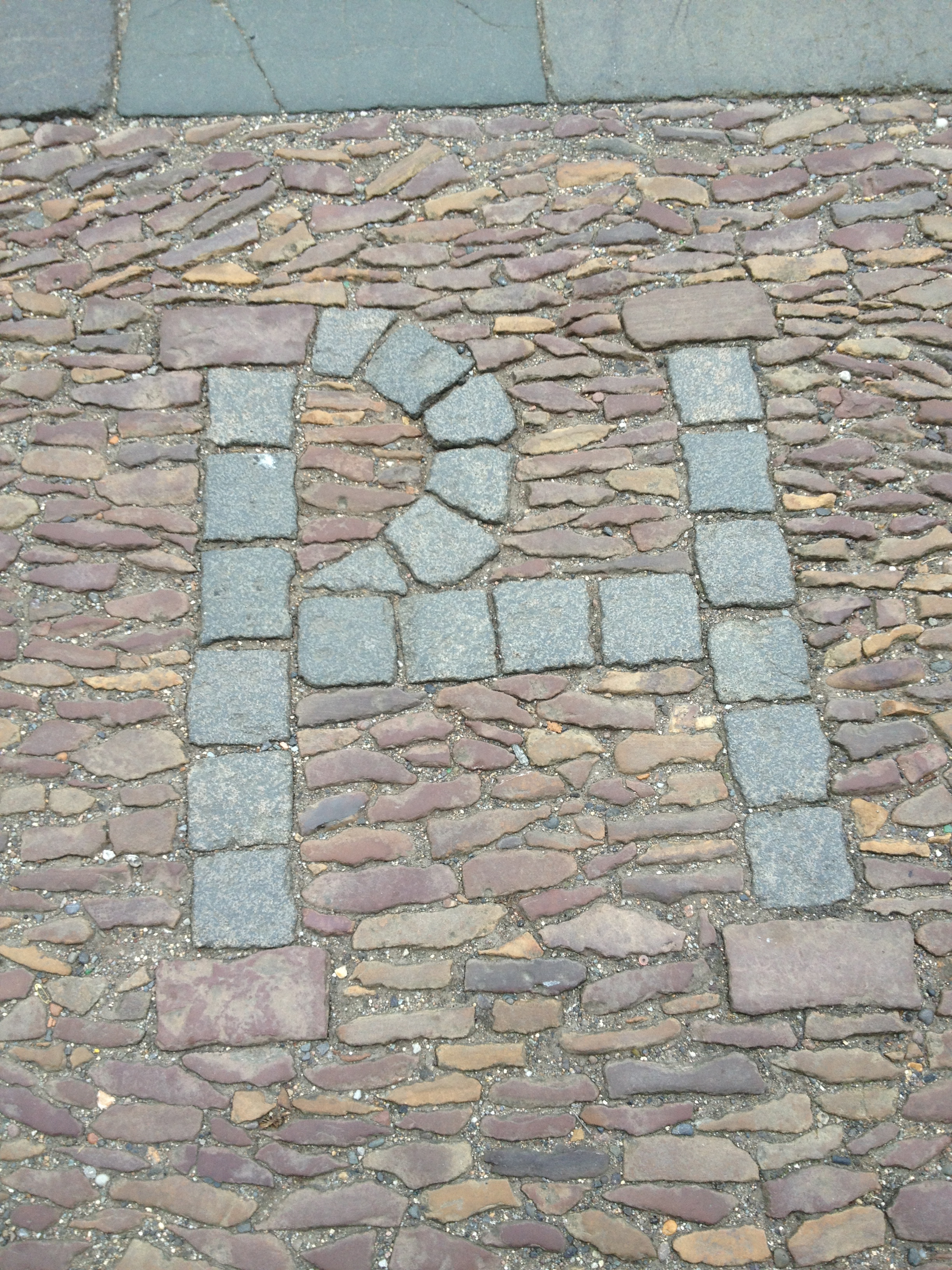
1528. February 29. St Andrews, Scotland. 24 year old Patrick Hamilton was burned to death for espousing the teachings of Martin Luther. St Andrews University is the oldest of Scotland’s four ancient centers of higher education. Heterodox religious teaching was considered a very dangerous thing in those days, especially in the halls of academe. Once infected with Lutheranism, like a zombie, you had to be burned so that the rest of the world could be safe, the virus contained. Only the problem in this case was an all too human one—difference of opinion regarding religion. The Thundering Scot, John Knox, would’ve been all of about 14 at the time, and reformation for the Catholic Scotland was still years in the future. Now, one of the largest European cathedrals, in St Andrews, lies in ruins because of that very reformation.

Religious bickering has a tendency to move beyond the ridiculous to the insane. Burning young men, after decades of burning hundreds of young and old women alike throughout Europe, was one of the most heinous symptoms of a horrid madness that had grown from religious fervor and fear. Religion itself is not to blame as much as the human tendency to use it as a weapon against those who are perceived as different. Some five centuries later and the physical stakes are gone but the fervor and fear are as strong as ever. As we hear politicians and televangelists lash out against those of whom God disapproves, the smoke still rises from the spot where Patrick Hamilton, late of the University of St Andrews, was sacrificed for his faith.

IMG_0729

Ironically, as I sat on the quiet morning train from Edinburgh to Leuchars, from the headphones on the young man behind me wafted AC/DC’s “Highway to Hell.” Was Patrick Hamilton aware that he was on a literal highway to hell as he returned home to Scotland? Did he have an inkling that his own people would torture him to death because he taught such dangerous ideas as salvation by faith alone and Scripture as the instruction for that salvation? Could anyone have guessed that the then teenaged John Knox would introduce what was to become an even less forgiving form of Christianity to Scotland by the time young Hamilton should’ve reached his dotage? Religion is funny that way. Even those who give their all to defend it easily become its victims. And a few yards down the road the Society of Biblical Literature meets in a university building dedicated to the sciences. History’s ironies never end.


The Importance of Being Honest

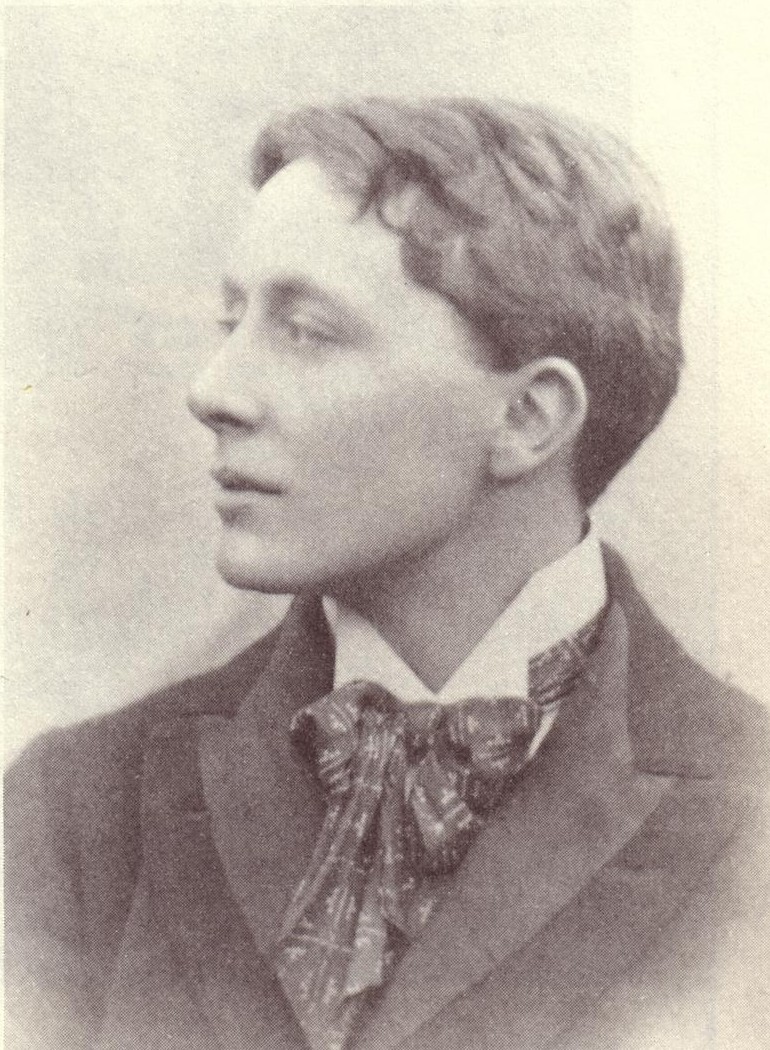
JohnGrayContinuing our quest to be a family out of sync with the modern world, we used part of our free day in Edinburgh to take the Book Lover’s Tour. Edinburgh has a long literary history that includes such writers as Sir Walter Scott, Robert Louis Stevenson, J. M. Barrie, and Sir Arthur Conan Doyle. A more recent star in that constellation is J. K. Rowling. The tour we took was led by the redoubtable Allan Foster, a geology student turned literary psychopomp. Although not associated personally with Edinburgh, Oscar Wilde had an unusual connection that made for an interesting tale. One of his male lovers, John Gray (a model for the eponymous Dorian) eventually became a Catholic priest, and lover of a wealthy Russian poet, Marc-André Raffalovich. When the Gray was assigned to St. Patrick’s in Edinburgh, Raffalovich was appalled at the state of the building and offered to finance a new church with the provision that his friend be appointed priest in charge. Thus the new building came to be and still stands on Cowgate.

Of course, nowhere is the priest or his lover, benefactor of the parish, mentioned in the church literature. Morality often parades as self-righteousness. Secret lives are not restricted to the clergy, of course. The fact is that people everywhere are human, and people are complex. So complex that we will sometimes carry on a charade to ensure religious respectability, to the point of having political candidates endorsed by clergy for issues that run counter to the very sources of their funding. Righteousness can be very costly, but self-righteousness comes cheap. Religious systems that demand standards that they can’t uphold either collapse or excel in duplicity.

When the tour was over, we walked by St. Patrick’s church. I wondered how many of the patrons knew the history of the lovely building they use for worship. Should they take a literary tour and learn the background of the church, would it make any difference? Ethics can be a matter of convenience, particularly when it is a matter of sexual propriety. Somebody else’s sexual propriety, that is. The real business of religion should be helping to improve authentic lives. Today it has often become the business of supporting the political system that bankrolls the special interests nearest to one’s heart. And reading, especially of unapproved materials, only gets in the way.


Persistence of Memory

I’ve posted before on sacred geography—the idea that a place is holy for some reason or other. That holiness is very personal, and although some locations seem to draw national, or even international, veneration, special places are intensely individualized. Edinburgh is one of those places for me. I haven’t been here for 21 years, after a stint as a post-graduate that lasted for three years and three months. Walking into Edinburgh from Waverley Station yesterday was overwhelming. Of course, it helped that the sun was shining (somewhat a rarity in these latitudes) and that my daughter was seeing it for the first time. Edinburgh is one of the truly beautiful cities of the world, but in my case, it is also invested with my personal history here. Once I called this city home.

DSCN3452

Wandering about, noticing the changes—Edinburgh has always drawn tourists during the summer—it was clear from the many languages and accents that people from all over the world were exploring the main touristed areas: the Royal Mile, Greyfriars Bobby, Princes Street Gardens-for me the experience seemed to run deeper. They will leave, I hope, with only positive memories of this mystical town, for a fair bit of medieval magic still hovers about it. For those of us who experience Edinburgh as sacred, however, there is good and bad mixed. I not only laughed here, but I cried, I worried, I was frustrated, sad, elated, depressed. I poured myself into a life here that I knew was ephemeral, temporary, destined to pass in the short hours that define one’s young adulthood. How could I have ever left? How can I ever leave again?

Away from the tourists, we wandered back to the places we used to live. How is it even possible, I wondered, staring up at the windows of our old flat, that I was ever bored there? Even the sacred, with constant exposure, becomes profane, I guess. And it requires an absence—perhaps two decades is far too long—to bring it back into focus. I am bursting open here. Some tourists are, I’m sure, busy falling in love with Edinburgh for the first time. For me, it is returning to an old friend. Twenty years of being heartlessly bounced about from job to job make the place I was born seem far less inviting than the streets and alleys that inspired Harry Potter and Waverley. This is the Nunc dimittis of my soul at this very moment. It comes to mind, Faust-like, whenever one enters paradise, knowing it will last for a few moments only.


Like Virgins

If you are reading this, I have safely arrived in the United Kingdom, courtesy of Virgin Atlantic. Given the lens through which I view everything, I somehow supposed that Virgin Atlantic was named after one of history’s two most famous Madonnas—the Blessed Virgin Mary, or just plain Madonna. It turns out that I was wrong on both counts. Virgin Atlantic, famously under the leadership of Richard Branson, borrowed its name from its older sister company, Virgin Records, also founded by Sir Branson. Virgin Records, I had supposed, was named after the only musical Madonna, but again, not so. The record company, new to an inexperienced Branson, was named by a colleague who noted that they were business neophytes, like virgins. The original logo showed an Eve-like virgin with a snake and everything.

Steve Fitzgerald's pic from WikiCommons

Steve Fitzgerald’s pic from WikiCommons

While in the UK I always call on Nick Wyatt, one of my doctoral advisors and now a good friend. As my mentor in Ugaritic, we always joke that I fly Virgin Atlantic because of the Virgin Anat, Baal’s famous warrior sister and sometimes lover. Anat was, of course, not the first perpetual virgin. The Mesopotamians had the idea that a goddess could be a perpetual virgin and still have kids, and what led up to said motherhood. Virginity is a status marker, still unfairly applied to women. I suspect a good part of it is biology (and if this seems weird, blame it on the jet lag), because the essential male reproductive function occurs whether or not a female is present, and even the most saintly men can not, from time-to-time, barring very extreme measures, avoid it. It is difficult to measure virginity in men, so why the double standard?

In this early morning haze (or is it really afternoon?), I suppose it comes down to not wanting to support somebody else’s child. Looks are at best a lackluster proof of paternity, and in the days before effective birth control, the only way you could be absolutely sure was to make sure your spouse was a virgin. Goddesses could get away with sex and still retain their purity. It was less sanguine for the human woman. Thus the Virgin Mary is accorded a special, but not unique status. But it turns out that none of this really matters because the Virgin I fly is merely a business virgin. And with a bit of experience, provides some of the best care in the air.


Bonnie the Brave

As a preemptive warning to my regular readers (am I’m sure you both know who you are), I am off today for a stint in my old haunt of Scotland. Before you get out your congratulations, be advised that this trip is for work. The Society of Biblical Literature, in addition to the big meeting about which I sometimes post, holds an international meeting every year. Since my employers frequently want me out of the office, I am being sent to the fair city of St Andrews in the kingdom of Fife for a week. Although I studied across the Firth of Forth in the wondrous town of Edinburgh, I ventured to St Andrews a time or two during my postgraduate days. By that time anyone in tune with popular culture had seen Chariots of Fire, and it was almost a requirement of credibility to visit the famous beach on the North Sea where the actors iconically ran as the movie began. And as in Chariots of Fire, I’m not sure that wifi access will be readily available. Should I find access, I shall gladly update my blog with my customary observations. If I fall silent, you’ll know why.

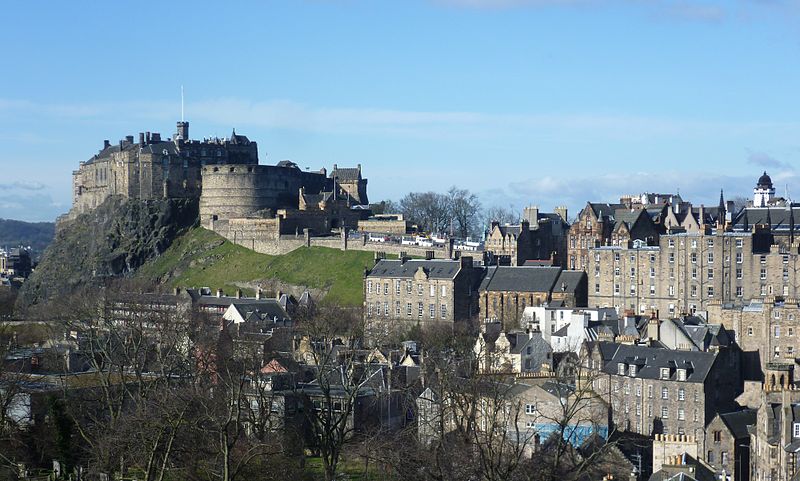
Scotland had a tremendous draw for me as I was contemplating where to complete my studies of religion (as if one ever can). Not that I was Presbyterian, and not that I have Scottish ancestry (although Celtic is represented in the Irish stowaway on my father’s side a few generations back)—it was the antiquity that drew me. One of the mysteries, to me, of new religious movements, is how people can believe in a religion that recently began. Should there be a supernatural, I’ve always supposed, and should that supernatural be concerned that humans have the truth, why wait so late in the story to start? It was such thinking that drew me from Methodism to its estranged parent, the Episcopal Church. Among the Episcopalians are many who argue for a continuity with the Catholic tradition, separated, literally, only by a matter of divorce. And Catholics go back to Jesus himself, a member of a religion so old that even the Romans grudgingly respected it (Judaism). I guess I’m guilty of old-school bias.

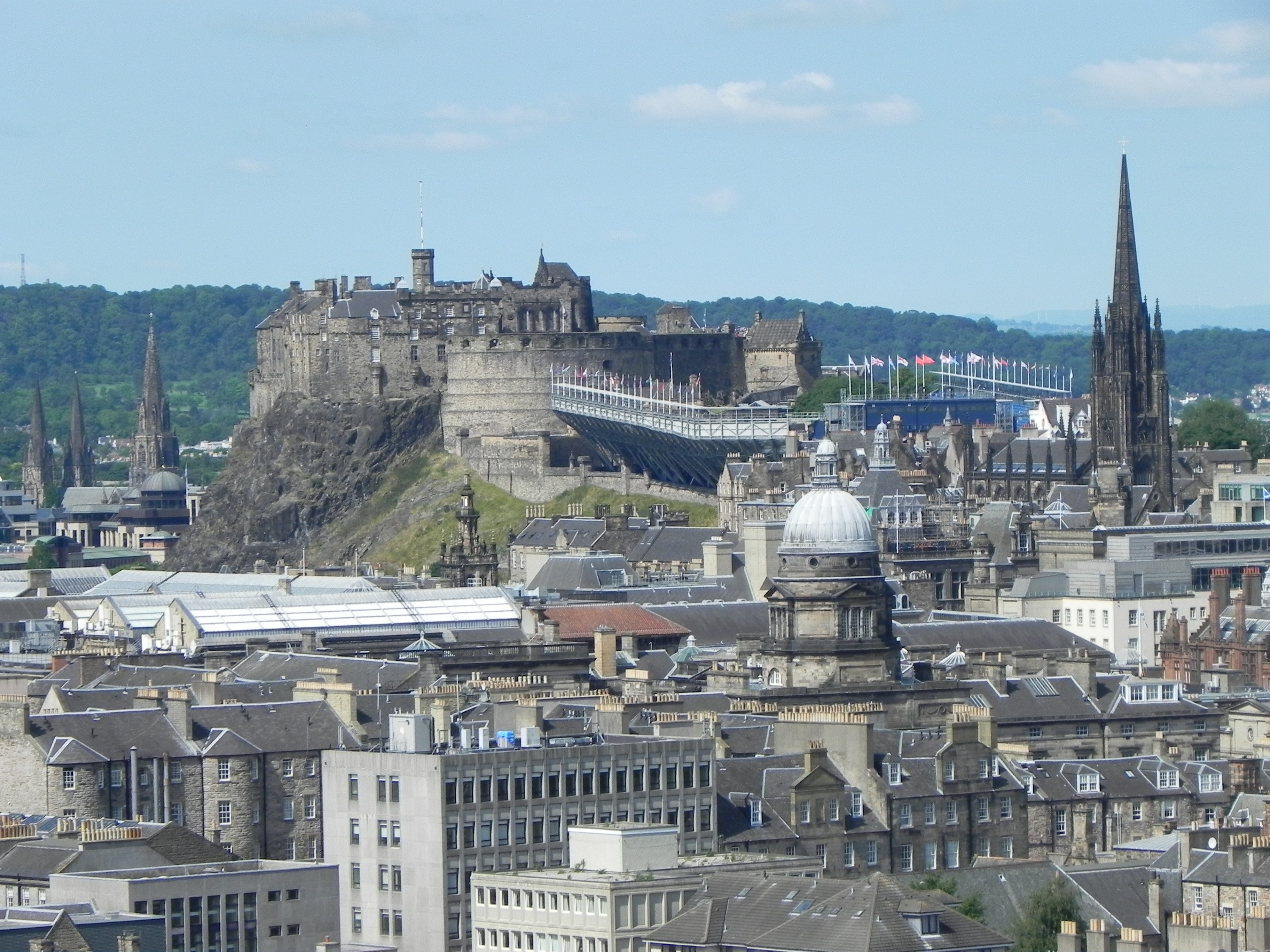
Kim Traynor's Edinburgh, from Wikicommons

Kim Traynor’s Edinburgh, from Wikicommons

So it was that I came to spend some years among the Presbyterians at Edinburgh University. The Ph.D. that I earned there translated to an unfortunately brief career doing what I’m best at—teaching. My tenure at Nashotah House never offered the opportunity to travel back to Scotland, or even England with its Anglicans. And as I prepare to board a plane across the Atlantic, although strictly for work, I can’t help but to reflect on those years of intensive learning, hoping to do my Scottish alma mater proud. And returning to the States to have my career shipwrecked on the rocks of unforgiving religious dogma. It may be that once I’m back among the heather and thistles, I may cast my laptop aside and try to claim religious asylum in a past that I can only see through rose-coloured glasses.


Unspoken Reality

In that impressive cultural marvel known as Facebook, a few gems amid the overburden occasionally appear. The post of a friend brought to my awareness a site known as everyday feminism, where, last year a post about religious privilege appeared. The brief piece entitled “30+ Examples of Christian Privilege” highlights one of the persistently overlooked aspects of religious liberty. No matter how much the founders of the United States valued freedom of religion, the colonials were, at least on the part of the non-slave side of the equation, Christians. Whether Jamestown, Plymouth Rock, or Guanahani, those Europeans who first set foot ashore did so under the banner of one variety of Christianity or another. (Such a case might be made for Vineland as well.) Religious liberty meant fleeing the oppressive practice of state religion—always Christianity—that kept shifting according to the whims of frequently unstable monarchs. For all its wide variety, Christianity is cut from a bolt of the same cloth. At least in the lining.

The Christian Privilege cited on everyday feminism is the most insipid kind brushed with the widest strokes. Still, it does reveal just how thoroughly Christian even the secular can be. Christianity, as I often told my students, pervades our culture. We live it, breathe it, ingest it. Often subconsciously. America was and wasn’t founded as a Christian nation. Intentionally, according to the wishes of the founders, no. Unintentionally, according to the dictates of privileged classes, yes. The problem here is not Christianity—it is privilege. Depending on whence you read the words of Jesus, his message seems to have been one of a general equality, or at least fairness. Those same words, however, can be distorted to support the monolith of the privileges granted those who follow the “one true faith.” The privilege to own slaves, for example. Or to oppress others born into less fortunate circumstances.

Ironically, among academics, I’m told, there is a push to hire those who are authentically unprivileged. Although I must, by my accidental Caucasianness, maleness, and inherited Christianity, be classified as privileged oppressor, I did grow up in economic privation. So much so that my wife feared to take our infant daughter to the unsafe house in which I was reared (which was, fortunately, condemned and demolished before that became an issue). It still shows in my natural, placating obsequiousness to supervisors and bosses—I was raised knowing my place. Yes, sir. As a first generation college student, I still find myself confused by why I was rejected by a higher education into which I poured all my youthful energy. Yes, in such circumstances, it is difficult at times to see the privileges. They are there, however, as anyone willing to walk across town with their eyes open may see.

IMG_0714


Seems Reasonable

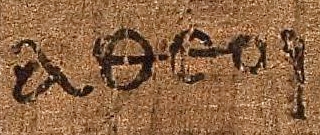
Florida is a state of contrasts. A news story from the Associated Press highlights that divergence. On the lawn of the Bradford County courthouse is a monument to the Ten Commandments that American Atheists sued, unsuccessfully, to have removed. In response to their legal defeat, they have placed their own monument to atheism alongside it. Well, what’ fair’s fair. Local reaction, according to the story, has been anything but positive. Nevertheless, I wonder what a monument to atheism must look like. The partial photographs reveal the atomic symbol-based American Atheists logo on top, and words on the sides. The monument, the story indicates, bears quotes from Thomas Jefferson, Benjamin Franklin, John Adams, and Madalyn Murray O’Hair, the last of whom was gruesomely murdered as an early martyr to the atheist cause. There are those who suggest that the atomism of Democritus in the fifth century BCE already tolled the death knell of the gods. Deities and very small particles, however, have continued to get along for the past 2500 years.

Ephesians_2,12_-_Greek_atheos

David Silverman, the current president of American Atheists, is quoted as saying the monument is an attack on Christian privilege, not Christianity. This may seem a fine point, but it is valid. Most reasonable atheists have no difficulty granting freedom of religious belief to anyone (only the more radical members of the atheist camp suggest religion ought to be stamped out). Does that mean governments should not display monuments to Moses’s magnum opus but not to, say, that of Lao Tzu? Or, perhaps in this instance, Lucretius? It might appear to be over-protesting, but what would a Hindu’s thoughts be, should s/he be ushered past the statutes of a foreign god on the way to court?

One of the most difficult things for a person to do is envision their normal as another person’s weird. Religions that seem perfectly logical to those raised within them have a way of seeming unbelievable to those who encounter them as a part of an exotic culture. To me it is difficult to suppose anyone would see American culture as “exotic.” I mean, we’re talking Wal-Mart and MacDonald’s here. It seems pretty ordinary to me. When I take a mental step back a little further, however, I begin to see a nation of widely varying traditions. Little pockets of true culture punch through the plastic here and there, and the light that shines through can be brilliant at times. And if you happen to run afoul of the law while visiting, you might end up in a courthouse that not only advertises the Ten Commandments, but also has a monument to humanistic spirit as well.


Dirty Laundry

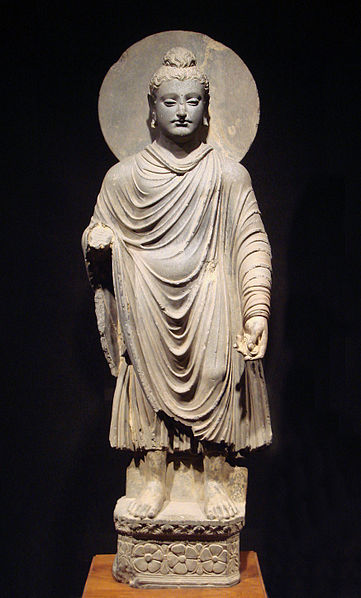
Wirathu may not be a household name, although Time magazine devoted an article to his teachings last week. The media has become fascinated with religiously motivated violence of late, although such violence is nothing new. Capitalizing on the fact that many of us in the western hemisphere see Buddhism as a religion of peace, Hannah Beech’s article, “The Face of Buddhist Terror,” reveals the growing conflict between some Buddhists and Muslims in Myanmar. The article took me back to my seminary days where, in a class in systematic theology, our professor was extolling the virtues of Buddhism as a religion of peace as opposed to Christianity with its history of warfare. Not denying that history, I raised my hand and asked how Christians then had come to know Jesus as the Prince of Peace. And Muslims, as any student of religion learns, also value peace. The ideals of most religions promote peace. The problem is that the practitioners of religions are humans.

Gandhara_Buddha_(tnm)

Like our chimpanzee cousins, we humans distrust those of other tribes. In one of the more disturbing aspects of chimpanzee research, encounters between especially a male isolated from his troop and another family group often end badly. Biology has programmed us to keep valued resources for ourselves. It’s as if nature knows there are limits to her bounty, and in order to survive and thrive, some will need to starve. Or be killed. Critics of religion—and there are many who are quite vocal—often overlook the aspect of religions that call for the reversal of our natural tendencies. Yes, I’m selfish. As a biological creature, I’m concerned that I get enough to eat, and have sufficient space. I want to stockpile money so that I may retire (unlikely to happen in reality), and spend my final years in peace and relative comfort. Yet, my religious upbringing has left the door open for others. What about those with even less than me? My empathy reaches out for them. Don’t they deserve what I deserve?

The problem is always at the friction point where belief systems rub passed each other like immense tectonic plates. The Buddhists of Myanmar say they just want to be left alone. The Muslims of Myanmar say they just want to survive. Their religions are pressure points building along fault lines. Still, I suspect that there are other sources of tension and violence in Myanmar, besides religion. I know there are in American society. In fact, most everyday violence, I suspect, has nothing to do with religion. Violence is part of human nature. Religion, at its best, urges us to fight this compelling biological message of self-preservation at any cost. Religious violence is a very real cause for concern, but to get to the root of the problem we must look past religion to biology. And sometimes—just sometimes—religion turns off the flame beneath the simmering pot.