The Problem with Apocalypses

Over on The Daily Beast, Joe McLean points out “How the Tea Party’s Apocalyptic Politics Are Destroying the Republican Party.” I say good riddance. Let me explain. It’s not that I have a problem with apocalypses. (Zombie apocalypses are especially fun.) My problem is that the mythology of one religion endangers us all. This is not some leftist-leaning rant, or at least not a leftist-leaning rant that’s uninformed. I grew up in a very conservative, apocalyptic Christianity. I was looking for the end of the world before I considered a college major. Even my (limited) choice of classes in high school were determined by a kind of eschatological laissez faire: the world’s going to end any day now, so why plan for a career? I was a true believer. In my Christian college I majored in religion. If the end is near, it pays to be ready for it. I know this doctrine inside-out. If Christ is returning any day now (can’t you hear the hoof-beats?) then we should pillage this poor old earth for all its worth. That’s what it’s here for. Do we want him coming back and saying we’re poor stewards? Besides, if we can ramp up the crisis in the Middle East far enough, Jesus will have to return. Won’t he? And these are “rational” adults thinking this way.

There was likely a naive cynicism on the part of the Republican Party when it realized that aligning itself with what was considered the religious fringe would boost their numbers. After all, the fringe surrounds the whole of the cloth. Apocalyptic Christianity is very popular because it appeals directly to the emotions. Although our society believes the study of religion is pointless, those of us who’ve persisted have noticed a few things. The religions that are really taking off are the ones that appeal to the emotions. Many Spock-like scientists intone their message of materialism only in the face of massive crowds of true believers. Who do you think is likely to win out? We have had presidents in the Oval Office who believed that triggering the apocalypse was a presidential prerogative. When society finally shook off its goofy grin and slowly pressed the electoral brakes, the Tea Party took off. Guess what? Apocalypses are all about destruction. If you invite apocalypticists to your party, the results are pretty predictable.

In the article McLean uses the word “zealot.” Rationalists might find the use of their dictionaries helpful here. Zealots do not respond to logic. Zealots are driven by emotion. Have you ever tried to argue with one? I have had years of experience teaching religion in a variety of classroom settings. Long ago I learned to lay down the sword when a zealot spoke up. Logic is not spoken here. The media, the scientific, the academic, they scratch their heads. How can any rational person believe this? The answer doesn’t require much effort to find. It might mean consulting someone who understands a bit about religion, though. Otherwise, the smart money is on stocking up on canned goods, gas masks, and a good supply of water. This could take a while.
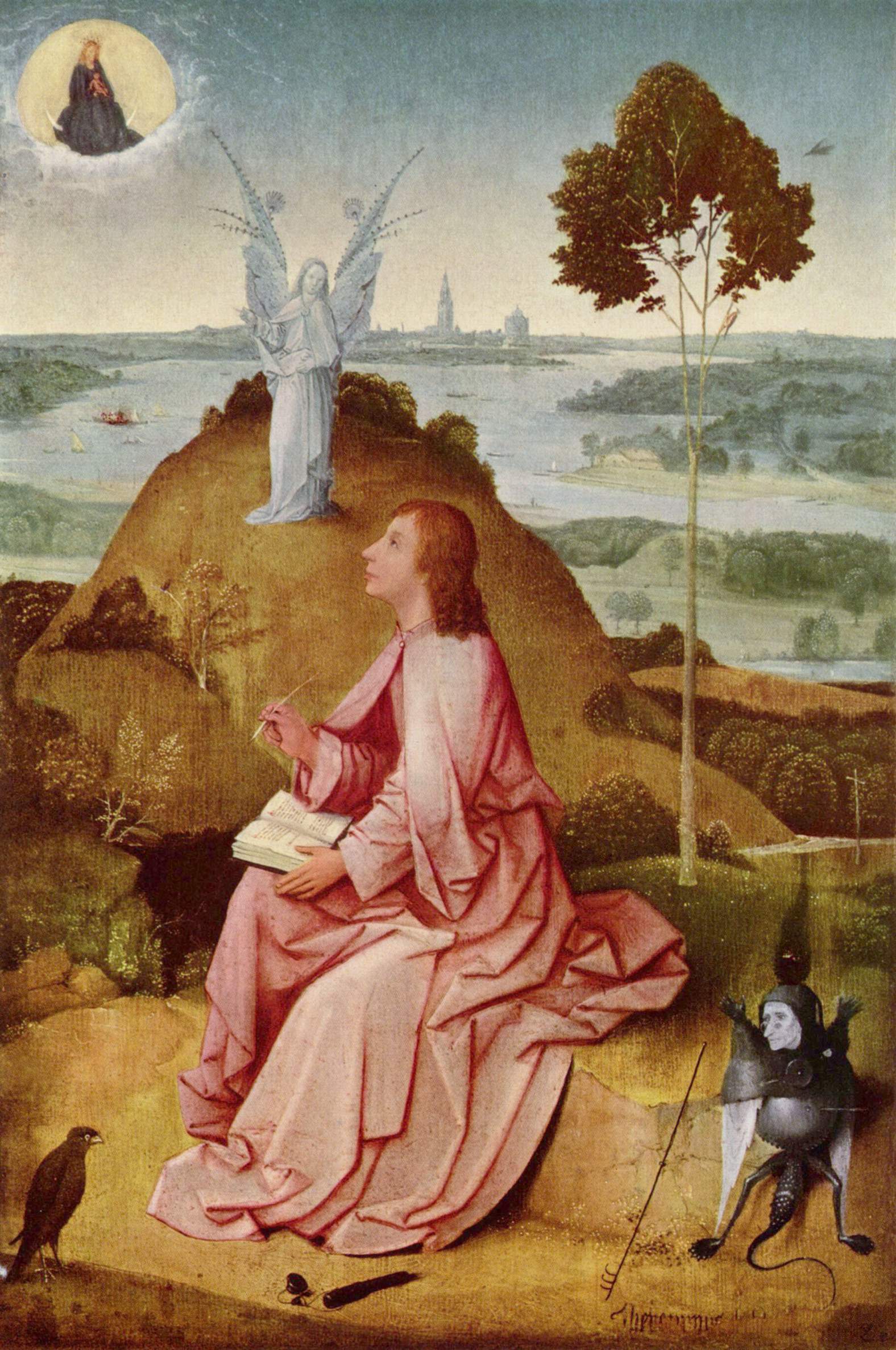
Mary in the sky with circles, or the apocalypse?

Mary in the sky with circles, or the apocalypse?


Honorable Theft

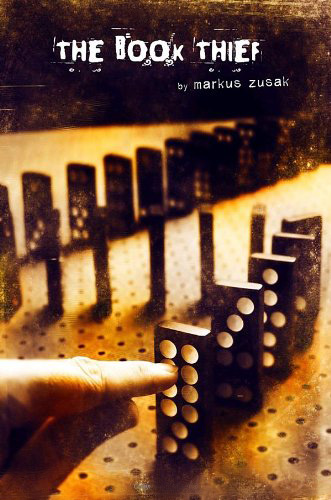
The_Book_ThiefYoung adult literature can be amazingly profound. My curiosity about Markus Zusak’s The Book Thief bubbled to the surface after the movie was released last weekend. I didn’t see it, along with thousands of others, because of its very limited theatrical release. I’m sure you know that distressing feeling when you type your zip code into Fandango and come up with zero results. Short of going all the way into New York City just to see a movie, I was pretty much out of luck. The silver lining is that it made me read the book. I’m not sure what I was expecting (I can also be the victim of hype), but what I found was deeply engrossing while also being deeply disturbing. Spoiler alert!

The Book Thief is set in Nazi Germany. It is narrated by Death. The protagonist, Liesel Meminger, represents the plight of all people; we have no control over when, where, or to whom we’re born. With parents considered enemies of the state, the Book Thief is raised by foster parents who are German, but who are also poor. They are good people, and much of the tension in the book revolves around their hiding a Jewish friend in their small house. The convention of Death as a narrator predates George Pendle’s Death: A Life, by three years. Although in the end Death is the only survivor, he is remarkably sympathetic to the human condition. Death also supplies the main religious observations in a book otherwise devoid of God. When Death attempts to pray during the horrors of war, a devastating conclusion is drawn: “God never says anything.” Is that why Veteran’s Day celebrations tend to be so silent? There may not be any atheists in foxholes, but there’s no God there either.

As Death stalks all those who are dear to her, Liesel finds her comfort in books. Although she begins the story illiterate, and although books are difficult to find in a poor family in a nation at war, Liesel discovers that words have a power that even dictators can’t steal. Her love of reading saves her life as her street is obliterated in an air raid. Even Death has to question the futility of war. In my most idealistic of moments, I hold the conviction that many of the world’s evils would be eliminated if people just read more. We would discover, for example, that even the devastation of war can be overcome by words. The only book Death is portrayed as reading is the Book Thief’s life story. And this gives Death pause, because even young adult literature can be amazingly profound.


Beliefism

A question never adequately resolved revolves around the status of atheism. What exactly is it? Well, I suppose it is many things, actually. One thing that seems indisputable is that religion has been part of human culture from the beginning. It would seem likely that not all believers carried the same level of conviction, and there may have been “atheists” shortly after theism evolved. The difficulty is that both belief in god/s, and/or the lack thereof, are matters of personal conviction. That somewhat blurred line has been crossed, according to some, by the recent growth of “atheist churches.” In several web stories my friends have pointed out to me, a growing movement of atheist “mega-churches” has been noticed. These are groups of atheists who meet for many of the same reasons religious folk do, sans salvation. It is a social occasion, and a chance to fellowship with like-minded non-believers, and to support their lack of faith. Some atheists bristle at this (as do some religious), claiming that it cheapens the atheistic enterprise (or that religions somehow hold a copyright on belief-based gatherings).

Herein lies the rub. Atheists are no more cut from the same cloth (or lack of cloth) as religious believers are. There are varieties of unbelief. Some obviously see that the weekly gathering has benefits. There’s no question that atheists can be every bit as humanitarian as religious believers are. Besides, who doesn’t like to meet with people who think like them? “Minister” might not be the leader’s title of choice, although it has a long pedigree in politics as a secular title (as, for example, in the Ministry of Defense). The slow decline in mainstream Christian services, however, might suggest that atheist services would be inclined to grow. Weekends were originally created for religious reasons and still generally remain the religious meeting days of choice. Some religious groups do not insist on doctrine to be members—Unitarians are a prime example of this—but the value of meeting together is human, all too human.

Clearly the purpose of an atheist gathering is not primarily worship. I should imagine, however, that wonder is still part of the non-religious vocabulary. God is not necessary for feelings of awe and joy. And sometimes it is fun to get together for some structured activity that isn’t work (for those who have jobs). An Associated Press story, however, points out the irony of the gathering of “people bound by their belief in non-belief.” There is, however, believing going on here. There can be no escaping it. Despite all the problems associated with omnipotence, the idea of a deity where the buck indeed stopped was an ebenezer for grounding belief. Even the most outspoken of atheists share this with the literalist and the moderate—they all believe. And as long as people believe, they will seek groups of those who share similar views. Why not? Even the truth requires belief.

What does it  mean?

What does it mean?


Atomic Girls

GirlsofAtomicCityRay Bradbury. Ray Harryhausen. Radioactive dinosaur loose in Manhattan. What’s not to like? I was inspired to watch The Beast from 20,000 Fathoms again for a single line, where Dr. Nesbitt informs the marksman his grenade has “the only isotope of its kind this side of Oak Ridge.” You see, I had just finished reading Denise Kiernan’s The Girls of Atomic City: The Untold Story of the Women Who Helped Win World War II. Atomic City, in this context, is Oak Ridge, Tennessee, a city built almost overnight with one objective: to produce uranium for the atomic bomb, then under development. The employees, many of them women, were not told the nature of their work and were not allowed to speak about the little they knew, putting many strains on marriages and human relationships. It is a captivating story, especially since Kiernan doesn’t pull any punches—the facility was in a segregated south, women scientists were belittled to their faces, and the end result was thousands of people incinerated in Japan. It is like the end of Eden, the loss of humanity’s innocence.

Growing up in the 1960s, I had heard of Oak Ridge. I knew it had something to do with nuclear stuff, but my understanding only went as far as the planetary model of the nucleus of an atom. I feared nuclear war. The height of that fear in the 1950s may have passed, but I was born just a month before the Cuban Missile Crisis began and all through the Reagan era that veiled threat of total, mutual annihilation hung heavily in the air. The religious had claimed God had created all this, but human hubris threatened to erase it all. On the eve of a friend’s wedding I sat across the Susquehanna River, eyeing Three Mile Island for the first time. Just six years earlier even those of us hundreds of miles to the northwest wondered if we would succumb to its radioactive glow. The power of the atom, as Kiernan demonstrates, was considered to be the basic power of the universe. And it was not divine.

When the war was over, a symbol of peace was erected at Oak Ridge. The International Friendship Bell was challenged as recently as 1998 by a local claiming that ringing the bell endorsed Buddhism, and it was therefore a religious symbol that had no business in a public place. For those who believe, ringing the bell is a form of Buddhist prayer. For others, it is a sign of goodwill between nations that have put their differences to rest. It is easy, sixty years after the release of The Beast from 20,000 Fathoms, to laugh smugly at Harryhausen’s famed stop-motion animation and the incessant worry about atomic fallout. But near the beginning of the movie, George Ritchie says of the atomic blast they’ve been monitoring, “You know, every time one of those things goes off, I feel as if I was helping to write the first chapter of a new Genesis.” Indeed, at least as far as chapter three. With the dawn of the atomic age, we had outgrown our need for the final chapters of Revelation as well.


Ancient History

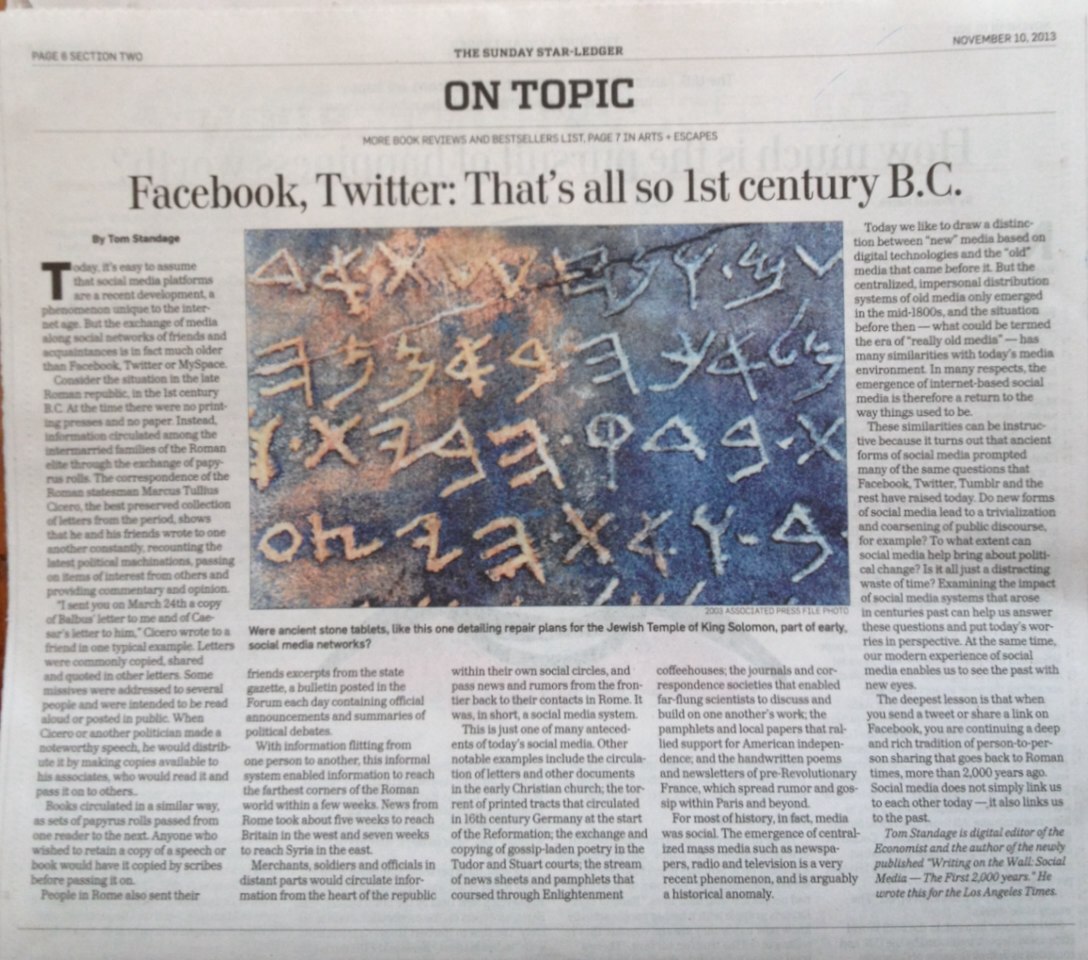
Every great once in a while somebody in the popular media seems to remember suddenly that the ancient world existed. I suppose that it is the fate of forward-looking species to forget the past, at least until it looks trendy. An editor for Sunday’s paper, for example, ran an article by Tom Standage, “Facebook, Twitter: That’s all so 1st century B.C.,” written originally for the Los Angeles Times. Tom Standage has written popular histories that go back to the Sumerians; I really enjoyed his A History of the World in Six Glasses. He’s got a great grasp of antiquity. In this short article, Standage points out similarities between modern, electronic social media and the distribution of gossip in ancient times. Indeed, he is basically right about writing: as soon as people learned to do it, it proliferated. Communication at a distance is such a wonder that we seldom pause to consider just how revolutionary it is. Social media has just made it that much easier. Instant thoughts, at the speed of light. Anywhere in the wired world. And yet…

SolomonFakeNot having been trained properly in journalism, I don’t know how newspaper articles are designed. People, I know, don’t like huge blocks of text without some visual candy. To illustrate Standage’s article is a close-up photo of some funky paleo-Hebrew letters with this caption: “Were ancient stone tablets, like this one detailing repair plans for the Jewish Temple of King Solomon, part of early social media networks?” I may be obsolete in the scholarly world, but I instantly recognized this inscription. It was “discovered” and rapidly disseminated in 2003. Almost immediately it was clearly demonstrated to have been a forgery. Scholars nowhere accept this as an authentic artifact. Even those of us who last saw this a decade ago know that it’s fake. Social media, indeed? Somebody in the design department needs to read their ancient history.

What is so striking about this faux pas is that most well-meaning readers have no way of assessing or ascertaining the validity of such an image. Oh, the script is cool, no doubt about that—but the artifact is fake. To answer the question posed by the caption: no, this is not ancient social media. It is a modern hoax. People are susceptible to hoaxes because of two factors: TMI and P. T. Barnum. Too Much Information exists for anyone to stay on top of it all. For progress to occur we need to rely on experts on the past to clear the way for us. Phineas Taylor Barnum knew how to turn any cheap scam into instant cash. It is no surprise that Solomon’s inscription first appeared on the antiquities market, certainly with an eye for cashing in on the success of the recently promoted James Ossuary, the one where someone much later added the phrase, “the brother of Jesus.” I’m sure that Tom Standage was in no way involved in the choice of image for the reprint of his article in our local paper. It does, however, suggest an old message that will even fit on your Twitter character limit: “There’s a sucker born every minute.”


Alien Bears

“And if there’s life on other planets, I’m sure that he must know, and has been there once already, and died to save their souls.” Larry Norman, one of the original Jesus Freaks, may not have been the deepest theologian, but his words come to mind as I see scientists reluctantly admitting that maybe life on earth is not so unique after all. It’s been in the news that Kepler Space Telescope’s data have been indicating that other planets like earth may be quite common. It has always amazed me that people have been so reluctant to let go of the notion that we are the only spark of intelligence in this vast, vast, cold, and dark universe. We seem to need to think we’re special. Religions generally indicate that the gods made us for some purpose or another, some love us, some are indifferent, others may be hostile. But generally, we’re unique. The Mormons have for years taught that there is life out there, but mainstream Christianity has generally been agin it, mainly owing to the crucifixion. Larry Norman, the original Christian rock artist, speculated that cosmic history repeated itself: if Jesus died for us, well then, he must’ve done the favor for them too.

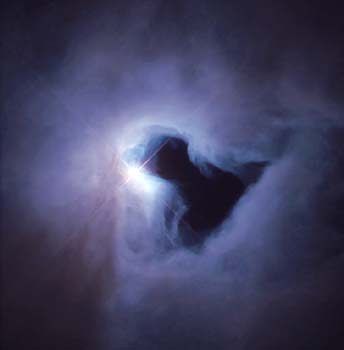
Once Edwin Hubble stepped away from the telescope, stuck his famous pipe in his mouth, and said “huh,” I would’ve thought other scientists might’ve considered, like H. G. Wells, that “they” were out there looking back at us. Why this reluctance to suppose that we’re not alone? The story in the Washington Post cites the typical reason: the Goldilocks effect. Scientists, perhaps unwittingly influenced by the anthropic principle, have supposed other planets, if they existed, were either too hot or too cold to support life. We, like Goldilocks, happened to inhabit the only planet among the billions of galaxies of billions of stars, that got it just right. More like God-ilocks. The idea derives from Genesis where, it is strongly implied, we are the only ones. Religion influences culture, whether materialists want to admit it or not. The earth-only bias is inherently religious.

Who's looking back at Hubble?

Who’s looking back at Hubble?

Astronomers will gradually come around to the idea that there are other planets like ours. It will likely take decades, perhaps centuries, before they will commonly admit that life forms like ours are out there walking around. Eventually they may decide that there’s something to UFOs after all. Meanwhile, various New Religious Movements have already hitched rides on those flying saucers and they will be laughing once the rest of us catch up. We tend, under the influence of those who claim religion is always Bronze Age drivel, to forget that religion often leads the way to new territory. When the little green men and women land, we’ll find that many religions have beat science to the punchline. I’m not so sure, however, that the aliens will know who Jesus is. After all, this chair’s too hard, and this one’s too soft.


A Theistic Nation

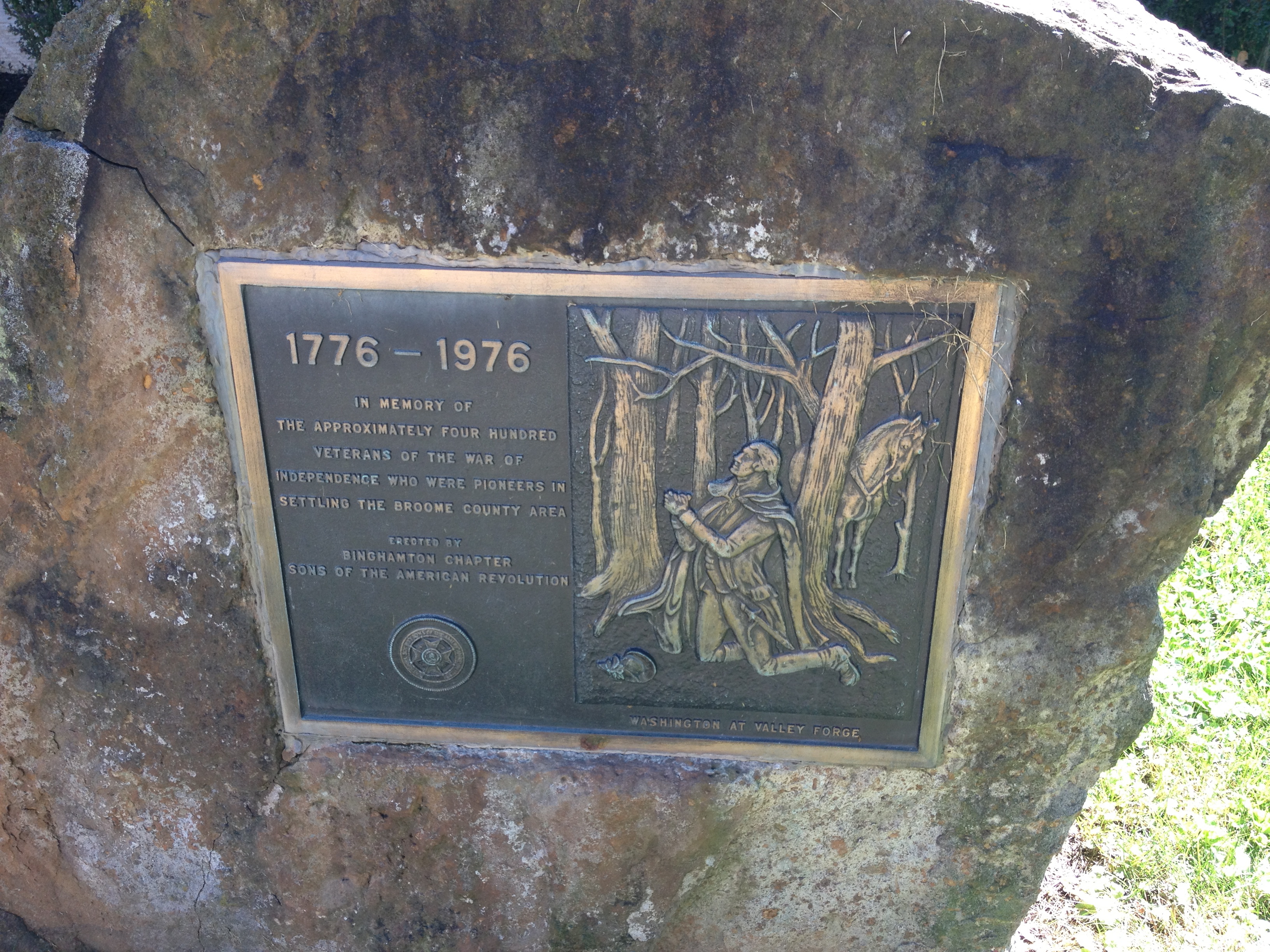
That’s a dill-pickillial of a peccadillo, if you’ll pardon my Ned Flanderism. I’m referring to the issue of the Supreme Court dealing with public prayer. Again. In a recent Chicago Tribune story, prayer before town board meetings in Greece, New York have led to accusations of violation of citizens’ rights. In a similar, but unrelated, situation, a friend asked me what I thought about religious symbols on public property. He asked the basic question that if atheism relies on no symbols, isn’t the absence of symbolism tacit approval of atheism. These issues are very difficult to resolve for a number of reasons. The first non-partisan elephant in the room is the fact that we do not have an acceptable definition of religion. Universities shy away from hiring specialists in religion and we, as a society, and, more restrictively, as an academy, can’t agree on what religion is. Is atheism a religious belief system? Some would argue that it is, and that it shouldn’t be the default stance—that would favor one religion. From what neuroscience seems to tell us, atheists aren’t born, they’re made. Religion, of some description, is normal human thinking.

A further issue involves both symbols and prayers. A symbol means nothing without interpretation. As I told my friend, unintentional crosses are ubiquitous. You might have to look a bit harder to find unintentional stars of David or yin-yangs, but I’m certain they exist. Without the Christian eye, however, those unintentional crosses are just architectural features or natural spaces between corners. The same applies to prayer. If I decide to speak, it is a matter of interpretation whether my words are prayers, a guy talking to himself, or, increasingly, somebody chatting on their blue tooth phone as they walk past a church. Intention, a specific aspect of interpretation, certainly plays into the sometimes coercive power of a symbol or a prayer. Do those Ten Commandments on the courthouse lawn just represent a nice piece of art, or do they bear an intended message? Do intended messages not attempt to persuade others that they are true?

Smart folk like Supreme Court justices have difficulty with this issue every time. I’m not surprised. We don’t know how to quantify religion, even though most of us are pretty sure of it when we see it. Some would argue that many eastern religions are in fact philosophies. Some would claim that atheism is the opposite of religion. Atheism is not so very far from some strains of Buddhism, however. And like it or not, people are all subject to belief. We seem to like forging ahead in the darkness on this issue. State universities hide their religious studies programs like embarrassing warts. What rational person would want to waste time studying such superstition? The Supreme Court of the United States, I might point out, just for one.

Religion or not?

Religion or not?


Vampires Versus Science

Blade_movie

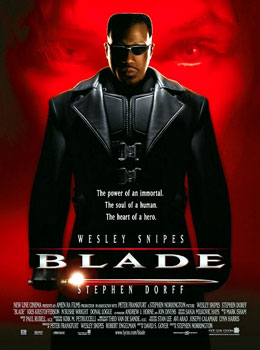
In keeping with my current explorations of vampire religiosity, I watched Blade for the first time. I’m aware that the figure of Blade is based on a comic book hero, but it is a series with which I’m unfamiliar. The movie is the basis of my knowledge here. The first interesting connection, or more properly, disconnect, between religion and vampires is the fact that in Blade’s universe crosses and holy water do not work. Vampires do respond to garlic and silver, and even to chemicals developed in medical labs. The faith-based origins, however, have disappeared. At one point Karen tells the vampire Frost that he’s just infected, like with a virus. Vampirism was, historically, based on diabolic influence and the signs of the “one true faith” had the ability to destroy them. In the modern worldview, however, organic chemistry holds greater promise. These seem to be secular vampires.

Still, not so fast—religion is not completely absent from this world. Frost conspicuously bears the cognomen Deacon, and he plans a revolution that will bring about the incarnation of “the blood god.” This is because of a prophecy in the book of Erebus, “the vampire Bible,” shown hanging in strips like so many Undead Sea Scrolls. Erebus, of course, is borrowed from one of the many Greek terms for sections of the Underworld. Hades is a general term, but an entire geography of the realm of the dead was speculated. Erebus may be translated as “deep darkness,” and thus is appropriate for vampiric faith. Religion is not absent, it is just that Christianity is irrelevant for vampires. They do, however, borrow the concepts of sacred scripture, sacrifice, incarnation, and even twelve disciples.

When Blade has his final showdown with Frost—now the blood god incarnate—it is the EDTA, the scientifically developed anticoagulant, that destroys him. A fascinating subtext lurks here. Although clearly intended as an action movie, the plot undermines the vampire religion with science. Frost believes that the ancient ritual, decoded from a forgotten language, will turn him into a god. When you need to bring down a god, science seems to be the best weapon. Vampires—Frost anyway—are believers. Karen is confronted with the existence of vampires by accident, yet she discovers the most effective means of killing them scientifically. In the bloody battle between science and religion, it is clear which side is most powerful in the vampire universe of Blade.


Heilige Geist

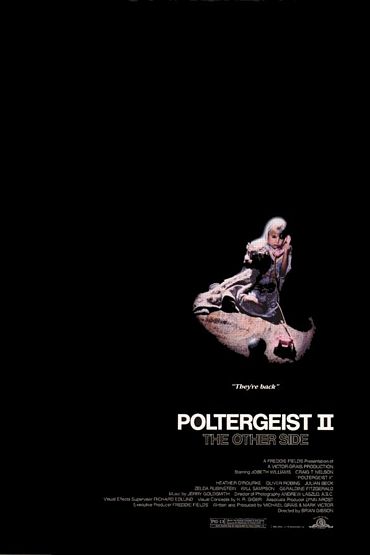
Poltergeist is one of those movies that evokes mixed emotions. Sure, it was one of the really scary ones when it just came out, and the rumors of a curse after the tragic early death of Heather O’Rourke probably added to the mystique. I actually didn’t see the movie until over a decade had passed since its release. It came out when I was in college, and I didn’t often splurge to see a movie in those days. VCRs were still expensive and your only real option was to rent a movie. In any case, a few years back I bought a cheap DVD and, after having seen many horror movies, it felt a little tame. And the ending was over-the-top. I have a theory that being unemployed makes you vulnerable to suggestion. Over the weekend I was looking for a movie I could watch for free on Amazon Prime, when Poltergeist II showed up. I hadn’t even realized that there had been a sequel, and after watching it, I think I understand why the movie was buried.

Poltergeist-2-the-other-side

Poltergeist II: The Other Side picks up where the original left off. An added character, Taylor, a Native American shaman, brings good spirits to the Freeling family as the original poltergeists start to haunt Diane’s mother’s house, where they are staying. Interestingly, the ghosts are revealed to be those of a traveling, apocalyptic preacher and his followers. The preacher, Henry Kane, led his group to the desert where they awaited the end of the world and then died after it did not come. They were apparently the ghosts haunting the original Freeling house, and not those of the “Indian burial ground” that the first movie touted. Taylor brings the healing, Native American spirits into the conflict and they win out over the Christian sect ghosts. All of this was becoming more unbelievably campy until Carol Anne was rescued by her now deceased grandmother, in the form of an angel. This mythological cocktail left me feeling a bit dizzy.

Some interesting subtexts floated through this film. Native Americans were now good, rather than the haunting spirits of the first movie. Kane’s sect, which had to be a veiled reference to the Latter Day Saints, showed Christian millennialists as the truly dangerous otherworldly residents. Kane is a preacher (and Mezcal worm) that doesn’t really want to pass over into the light. Why he travels all the way to Phoenix to try to pick up a nine-year-old girl isn’t really clearly explained. Horror movies, of course, frequently make use of religion as a vehicle for what truly frightens. Often it is religion misunderstood. Kane was not a believable character, in this case, without the abject cynicism of an unholy ghost who traveled to the desert southwest to set up a new religion. Once Mormonism breaks into the mainstream, perhaps I’ll have the stomach to watch Poltergeist III and see where the evil shifts the next time.


Voting Vicissitudes

“Remember, remember, the fifth of November, the Gunpowder Treason and plot. I know of no reason, why the Gunpowder Treason, should ever be forgot.” Election day fell on November fifth, and as I watched V for Vendetta again, I was reminded how true it rings. Religious leadership takes over government, the common person becomes an enemy of the state, and criticism is treason. Tea, anyone? I’ve always had a soft spot for dystopias, but the world of V is entirely too plausible at times. I have watched rational people transformed by fear and the certainty of religious dogma into those who will do what they are told without question. The movie always gives me a profound hope that the human spirit is larger than the powers that be. V can also stand for Vote.

I cast my ballot knowing that a vote against a governor who enjoys the bully image was indeed close to a lost cause. People are enamored of power. In my deepest Jedi dreams, however, I know that the most powerful moment in Star Wars is when Obi Wan turns off his light saber to allow himself to be struck down. There is a power, one upon which entire religions are premised, in the self-sacrificial act. It’s not that I have anything against Parliament; I saw it just this past year and enjoyed the experience in a way that Guy Fawkes could perhaps not have appreciated. As Evey says, “this country needs more than a building right now. It needs hope.” I guess we can hold on another four years. V can also stand for five.

“He’s a deeply religious man and a member of the conservative party. He has completely single-minded convictions and has no regard for the political process. Eventually, his party launches a special project in the name of ‘national security’.” So V tells Finch concerning a dictator who could be wearing any number of political masks in our world. We hand power over to those who encourage our fears rather than those who inspire our imagination. Camelot died in 1963. It is not so difficult to imagine a world so much better than the one we’ve constructed, but plutocracy does prevail when people do not take the implications of their religion seriously. When we only glance at the surface, the deeper message gets lost in the mythology of it all. November fifth is a myth that still has the potential to change the world. If we would allow it.

VoteV


Just Ducky

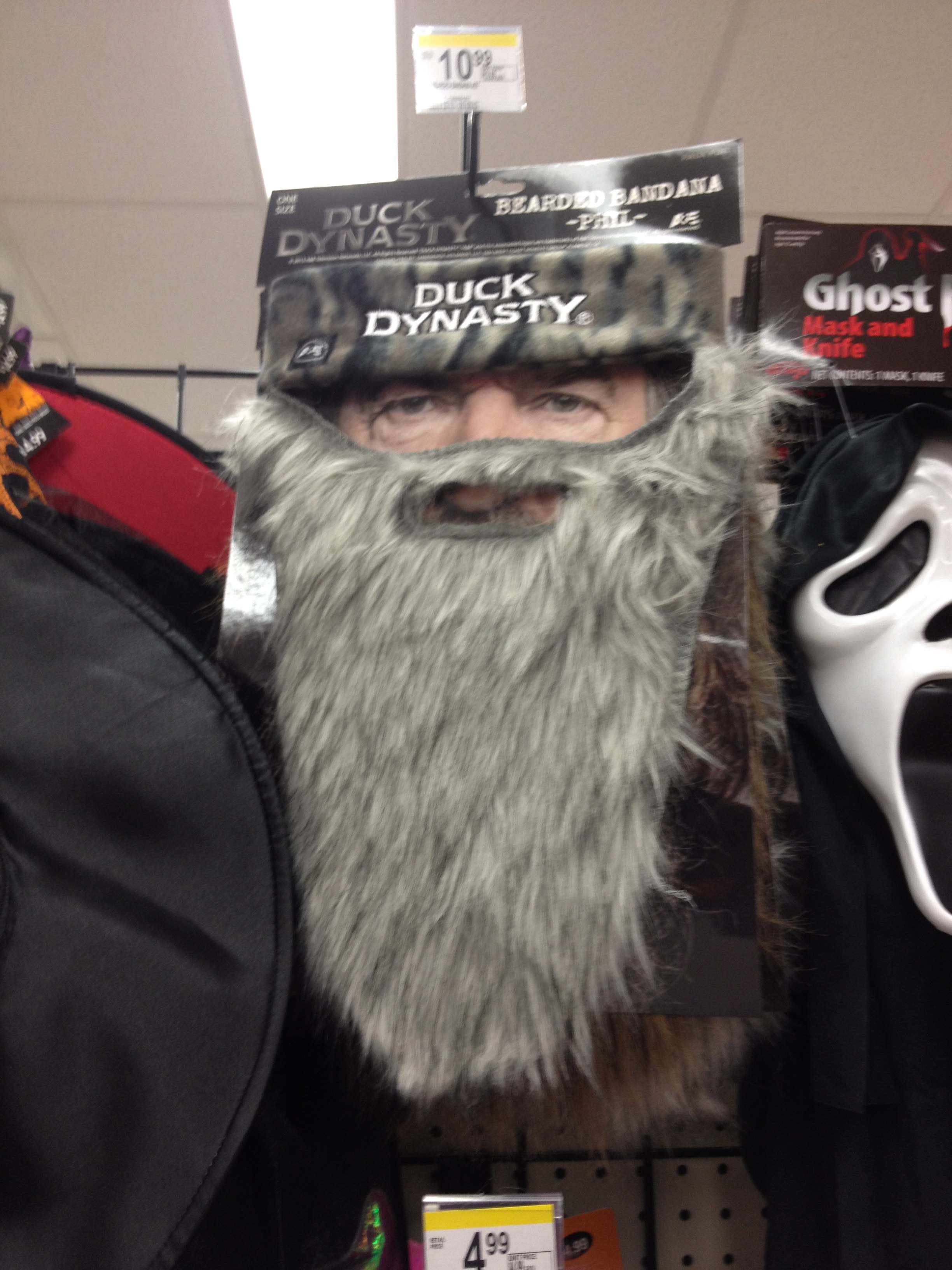
An innocent trip to Kohl’s. I was really just along for the ride since buying clothes is not really my thing, but I’d been spending quite a bit of time at home alone, pondering my fate. We’d just changed the clocks, so we had an extra hour and my wife needed a few things. Once there popular religion gave me the old Joab-and-Abner treatment, if you know what I mean. I’m not completely naive about movie tie-ins—they are big money for all kinds of products, especially food (both fast and slow). As if eating that burger will somehow make you more like Captain America than will a few brisk minutes on the treadmill might. In any case, I’ve known Kohl’s to support charitable causes in the past: buying a children’s book or plush animal for a donation to a wildlife conservancy or some such socially conscious promotion. I was a bit perplexed to find a tremendous amount of Duck Dynasty gear in the store on my recent trip. Being outside New York City, we are hardly rural. I mean, Kohl’s sells clothes, right? But there were Duck Dynasty bauble-heads, Duck Dynasty fanny packs, and even a whole stand of Duck Dynasty books. From conserving animals to shooting them.

IMG_1105

I realize Duck Dynasty items are big money. At a local store just before Halloween I spied a Duck Dynasty costume—fairly simple; a ZZ Top beard and you’re good to go. While getting a haircut the other day the girl, young enough to be my daughter (literally), said “You gonna keep the beard?” I told her I hadn’t shaved since 1988. Her response? “Well, at least you don’t look like those Duck Dynasty guys.” Like Rip Van Winkle (whom I understand also sported an impressive beard), I feel like I’ve been asleep for quite a long time. When did facial hair come to equate home-grown evangelism and love of shotguns?

IMG_1083

To calm my nerves, I signed onto Amazon.com. Prior to becoming dramatically unemployed, I used to treat myself every once in a while to some reasonably priced reading material from our Seattle savior. Naturally, they want you to buy more, so they suggest other books, based on viewing patterns, and, more importantly, purchasing records. That’s where I saw the Duck Commander Devotional, complete with a duck-themed camouflage cover. Now I think I finally understand. Reading the Bible for yourself (like Phil Robertson does) is too much trouble. It is easier to have the hirsute heroes of Louisiana tell you what the good book says. Maybe it’s just me, but it seems like religion might be going to the birds.


Falls Tree

The autumn trees have been absolutely transcendent the past few days. From my earliest memories fall has been my favorite time of year, and a large determinant is the trees. Some weeks back, while on the campus of Notre Dame University, I noticed the highly stylized icons of biblical tropes etched into the stone walls of the library. The marble of the walls was highly polished, making images difficult to capture, but I tried to snap one of the tree of life. The tree of life has many associations that go back even into pre-biblical times. Many people are familiar with the story from Genesis, where the tree of life is forbidden to Adam and Eve because they ate from the tree of knowledge. That tree, however, goes back to ancient Mesopotamian stories of paradise as well. Even the Sumerians considered trees foundational.

IMG_1001

I suspect that trees are impressive partially because of their longevity. From a human perspective, they long outlast us—some of the oldest trees in the world are located in western Asia. If we don’t attack them, some species have a pretty good chance of lasting hundreds of years. With roots that run deep and crowns that reach high, trees have been a rich source of symbolism for religions for a very long while. The goddess Asherah was, in some way, connected with trees. I’ve noted in some of my more academic work that the precise nature of this relationship is never really clarified, but some have suggested that the tree of life itself is a form of the goddess. Certainly in Judaism the tree of life inspired the menorah and its gift of light, to be celebrated later this month.

Looking out my window at the brilliant reds and yellows, I am glad for the solidity of trees. Much of life is much less stable than our wooden companions. The myth of the tree of life is a reminder that even if we can hold the eons in our heads, our bodies will not last so long. It is a poignant thought, best captured by the slow falling of the leaves at this time of year. The leaves had just started to change as I strolled the campus of Notre Dame, unaware that my own fall was likely already set in place. The proverbial axe, as it were, was already laid to the root of the tree. I was perhaps too busy thinking about the tree of life to notice the changes taking place around me. A good metaphor will do that to you, and it might even live as long as the tree of life itself.


Vampire Science

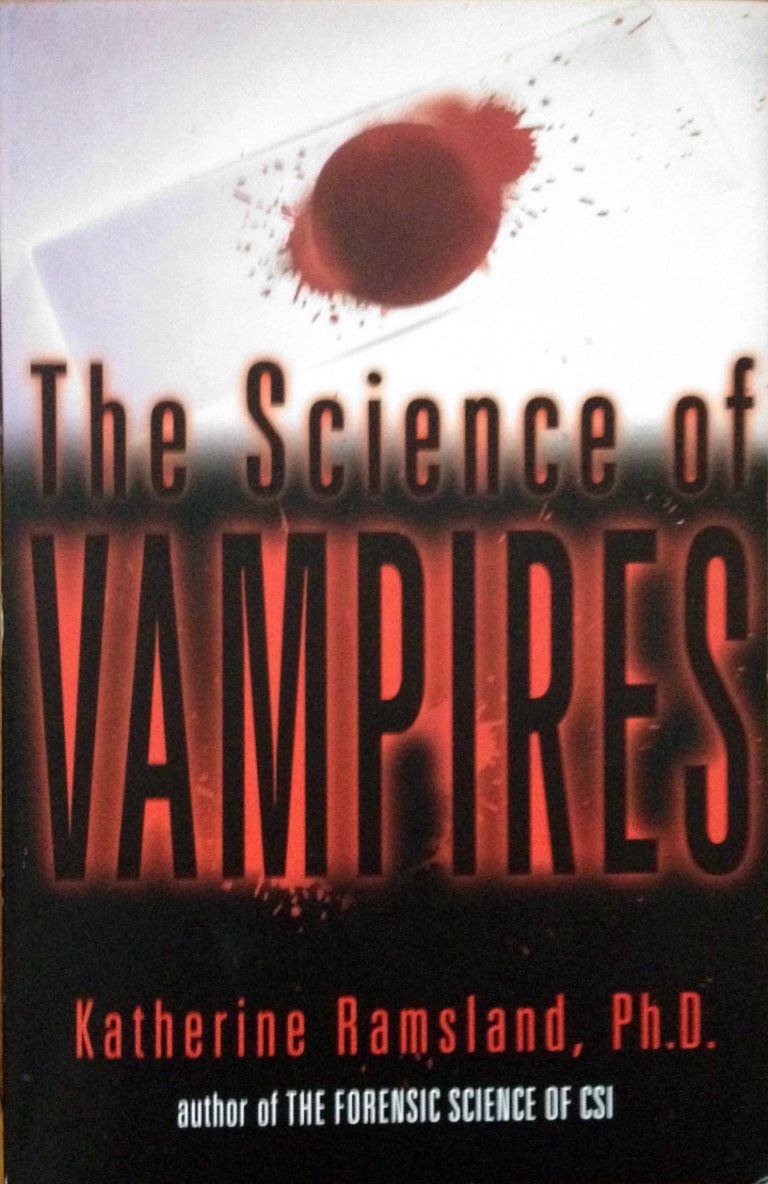
ScienceOfVampiresHow is one to take a book that combines science and vampires? That was the thought going through my head as I stood in Borders during the sad process of their going out of business sales, Katherine Ramstand’s The Science of Vampires in my hand. I knew already that I would buy the book—how could I not?—but I wasn’t sure whether it had been placed in non-fiction by accident or not. Ironically, I began reading the book on the day I was ultimately informed that my position had been made redundant. Vampires have been much on my mind since then. For several days I couldn’t concentrate enough to read, which is a kind of vampiristic encounter in its own right, in my case. Now that I’ve finished Ramstand’s study, I’m still not sure what to make of it.

Holding a Ph.D. in Philosophy from Rutgers University, Ramstand knows the fields of forensics and the supernatural surprisingly well. The Science of Vampires does indeed address the mythic creatures from a forensic perspective. The lore of the vampire is thoroughly examined and subjected to scientific scrutiny. Surprising results sometime arise. The book also contains its share of very disturbing material, more along the forensics than the fictional vampire side. I put it down woozily more than once. Yet, I found considerable insight here. Ramstand, although not focusing on the religious element, readily acknowledges the deeply religious nature of the vampire concept. She tends to focus on the scientific, rather than the spiritual, but she does have a telling interview with a professional counselor with a theological background. She quotes him as stating that he vampire is the disenfranchised among us—the pariahs of society: the homeless, people of color, those of differing sexual orientations, the working poor, the unemployed. Okay, I’ll admit that I added that last one to the list. I do, however, understand the point.

While supernatural powers may not create vampires, our society does. There are those who drain others of their resources, and there are those who are cast out. Both, in this post-modern world, might be considered vampires. At times Ramstand almost had me believing that Dracula might be more than fiction. As I read accounts of the horrors some people remorselessly perpetrate against other human beings, it seems that a vampire might be the lesser of two evils sometimes. As a symbol, both religious and secular, the vampire has proven to be irreplaceable. Hopefully some day we may outlive our use for those who prey on others.


Final Frontier?

Stay away from the dark side. That’s generally good advice. Ironically, new religious movements (NRMs, in the biz) have come up in my conversations quite a bit lately. Some of my friends have suggested that I start a new religion—job security would no longer be an issue. I’ve been studying religions my whole life, and at times I’m sorely, sorely tempted. Meanwhile a friend pointed me to a story on Details.com about Jediism. Yes, there is a religion based on Star Wars—actually, I shouldn’t be too hasty here. There is at least one religion based on Star Wars; likely there are many. The question that is indubitably raised is okay, so do these people actually believe this stuff? Don’t they know Star Wars was written by George Lucas? How can it be a religion? I can only respond with: Have you ever heard of Scientology? Religions do not have to be believable to be believed in. History has shown that time and again.

StarWars

Jediism is based on the teachings of saints like Yoda and Obi Wan Kenobi. What they are teaching is straight Joseph Campbell. Served neat. Good versus evil. A sense that a cosmic force surrounds us. The hero’s journey. The same thing can be found in the Bible. Wrap it up in a Jedi cloak or in a Galilean robe and the end result isn’t much different. I’ve seen bumper stickers suggesting that Obi Wan died for my sins. Just as long as good wins out in the end, who’s to complain? Does it really matter if it happened a long time ago in a galaxy far, far away or just away in a manger?

The problem with religion is that we lack a proper definition. Christianity clearly uses the word to describe itself. When looking at those who thought differently (adherents of Judaism, Roman paganism, the great goddess of Syria) early Christians had to call them something. If Christianity is a religion, so must they all be. Some religions, however, are not based on belief, but practice. To be is to do. Some religions are based on historical people, some on fictional people. Some are very serious while others are difficult to tell. Some religions are ancient, but looking at the state of the world it’s hard to say that they’ve been terribly successful. So when a bunch of sci-fi fans think they’ve discovered the truth in the mind of George Lucas, who’s to argue? And I really do mean that about keeping away from the dark side.


Sacred Fear

Last week’s Time magazine ran a story about fear. I’m no stranger to this emotion, so long ago I decided to engage it creatively rather than run away. The article, “Monsters Inc., Inside the weird word of professional haunting,” by Lily Rothman, contains the laments of those who operate seasonal haunted houses. People are just getting too hard to scare. Some blame violence in the media and computer games, a large-scale desensitization to the suffering people might cause to others. CGI has made the most hellish nightmare realistic in the theater or on the small screen. If you can imagine it, it can be brought to life. Yesterday was Halloween, the day we’re allowed to be afraid. Of course, those who fear the influence of negative emotions on children have cute-ified the frights: bulbous air-filled creatures lit up from within billow harmlessly in front lawns, monsters of various sorts sport silly grins, and humor is liberally sprinkled in with the horror. One haunted house owner wanted patrons to walk through naked, so they could feel vulnerable. Today most people will wake up to just another day of work, while others will roll out of bed ready for All Saints’ Day and a rousing chorus of Vaughn Williams. Some of us will still be scared.

DSCN0216

Thrice I’ve had to face the highly secretive severance agreement offered by employers who know that people over forty have a difficult time rebuilding a career. I know that in this I’m not alone. If it hasn’t happened to you, here’s how it goes: you show up to work one day and begin doing whatever it is someone pays you to do. Depending on the size of the organization, either Human Resources or some level of supervisor will innocently invite you to the office. They will have solemn smiles on their faces. The door will be closed. You will be told that, for whatever reason they wish to give, your services are no longer required. In return for your silence you’ll be offered some kind of adult care package. You’ll leave shattered and stunned and willing to sign anything slipped under your nose.

The secrecy’s the thing. I’ve never revealed to anyone, under pain of prosecution, what any of those agreements said. What I have noticed, however, is the fear. The lawyer-instilled fear of bad press. Organizations want to be thought of as caring and concerned. They do not want any clandestine information released. Truth seems to be the greatest engine of fear in the corporate world. A few years back, before the Bush-whacking of the economy, I read about optimistic companies practicing “naked business.” Revealing vulnerability. I immediately admired the idea. Like walking through a haunted house in the nude, businesses could demonstrate that they have nothing to hide. But there’s real fear here. Like a ghost, truth can pass through walls. Like Godzilla, truth is indestructible. Like the invisible man, naked truth just can’t be seen.