Real Life

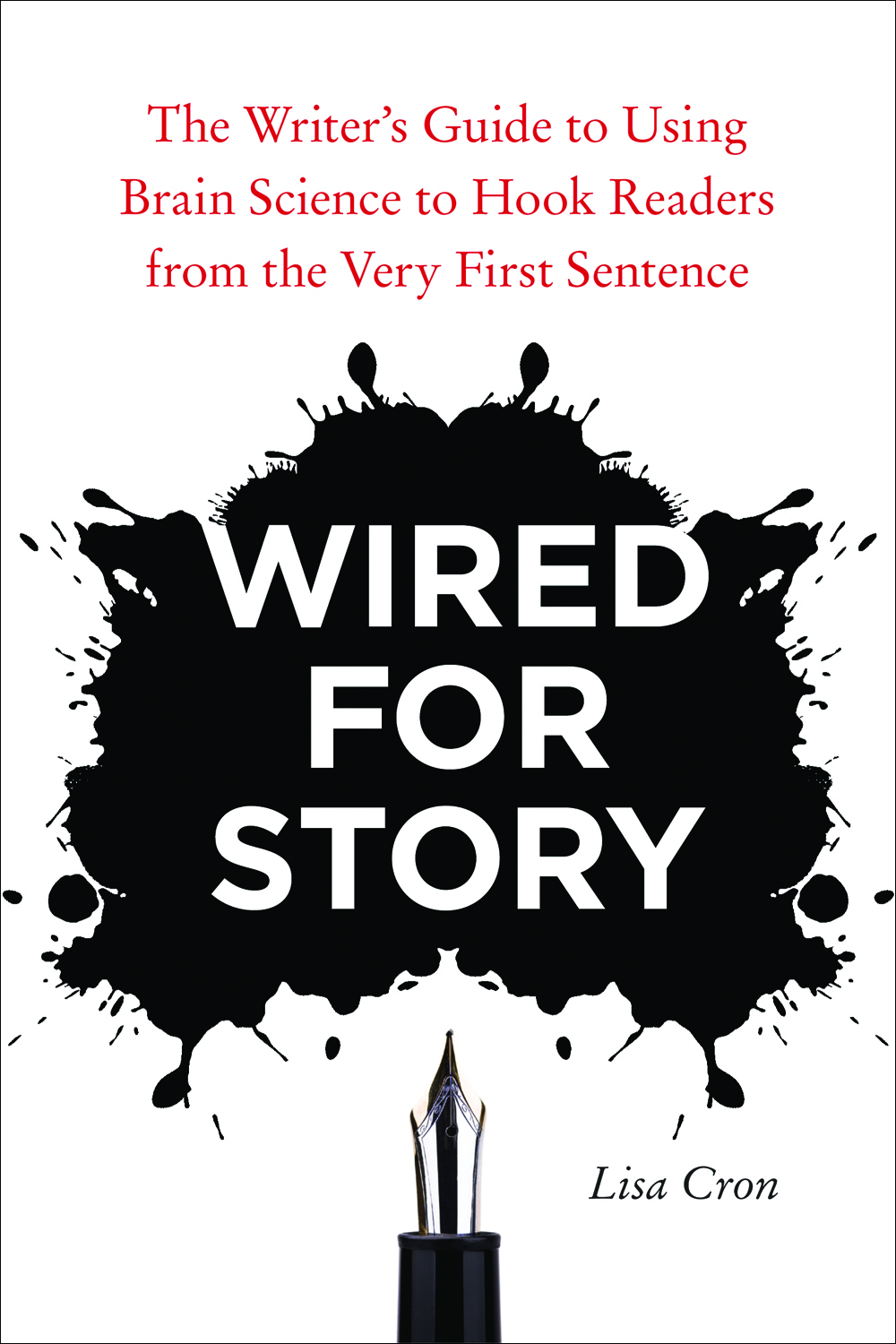
WiredForStoryThe brain, it seems to me, holds all of the cards. After all, what we call “reality” is actually a perception of what’s “really” there mediated by our brains. Philosophers and scientists have long warned us that direct participation with the universe is a figment of the, um, brain. This kind of thinking may have led me to trouble in certain jobs I’ve held, but there is no escaping it, unless we posit that there is another thinking center in the body. If there is, it must be invisible. As a dabbler in the literary arts, I couldn’t therefore pass up Lisa Cron’s Wired for Story. The premise spawns one of those “aha” moments so large that you wonder why nobody had tripped upon it before: brain science can reveal what makes a good story. For example, were I smarter, I would’ve begun with that wonderfully witty story told by Uncle Frank that kept us engrossed as kids, and left us roaring with leonine laughter. Only I don’t have an Uncle Frank, and the stories I grew up with were of the written species.

Cron, however, reminds us of a very important point: if it weren’t for feeling, thought would not be possible. This isn’t telling tales out of school. Even the most Spock-like rationalists know it’s true: emotions are essential to the thought process. Even the most proficient of thinkers can be stopped by the vague, “I don’t feel like—” (fill in the blank). To think well, we must feel that we can. When we greet someone we don’t lead with “how are you thinking?” but with “how are you feeling?” (often apocopated to “how are you?”). We interpret our world through a combination of reason and emotion. Both are necessary for survival. Think about it: does the world really make sense?

In writing, emotion plays an essential role. We lay aside the story that makes us feel nothing. Reductionistic materialists often espouse that getting down to the smallest piece of the smallest particle will eventually explain it all. The more spiritually inclined will ask them how it makes them feel. Emotion is the under-appreciated of these twins. While great ideas may come through in a novel (I can’t help but mention Moby Dick again), it is the feeling of the protagonist—the spiritual (call it what you will) struggle—that draws us in and keeps us reading. It may be secular or religious, but the realm of emotion reminds us that to be human is to feel. And if by chance you’re still reading this, I have a feeling that you might agree.


Sacred Education

A recent story in the New Jersey Star-Ledger describes the dynastic culture of some of the newer evangelical colleges. Presidents of such “universities” as Bob Jones, Oral Roberts, and Liberty, were drawn from the sons (not daughters) of the founders. Mostly they seem to prefer to name their schools after themselves, it seems. What strikes me as odd is not the dynastic succession—after all that is common in both business and Bible—but that society seems so content to see the explosion of evangelical colleges while holding traditional higher education in a strangle-hold. According to the article by Mark Oppenheimer, combined enrollment (online and in-person) at Liberty is over 100,000. For comparison, the full-time equivalent at Arizona State University (recently the numerically largest university in the country) is shy of 77,000. We bemoan the conservative evangelical impact in government and stop the flow of money to mainstream scholars of religion (among other disciplines) and wonder what’s wrong.

Education is costly. There can be no doubt about it. Still, most academics (apart from a few who’ve learned to sponge cynically off the system) are willing to work for modest wages. We don’t get into this field for the money. No matter how tall they build their towers in New York, or Dubai, some of us will believe it’s all vanity and that the life of the mind is more than a myth. But we will be the ones shouted down by the majority welcomed with open arms at Bob Jones, Oral Roberts, or Liberty. And it’s not with justice for all. Exclusion has always been the name of the game.

Higher education was established (largely by churches) with the premise that an educated society would be a prosperous, forward-looking one. And while some of those church-monied ventures took off (who can catch up with Harvard or Princeton?) they’ve left their Protestant roots far behind. In a society where bigger is, by definition, better, what hopes do universities founded with education in mind really have? You can put Ph.D. after your names whether you studied at Harvard or Bob Jones. Ours is a society of great equalization. Unless you happen to have one of those degrees from a suspect, secular university. You can see pretty far from atop the Mound in Edinburgh. Far off into the Kingdom of Fife and your mind is free to wander far beyond that. You can’t see as far as America’s shores, however, and if you want to get ahead here the safer money is invested in the dynastic colleges of the recently departed.

Evangelist at Arizona State

Evangelist at Arizona State


Underwater Zombies

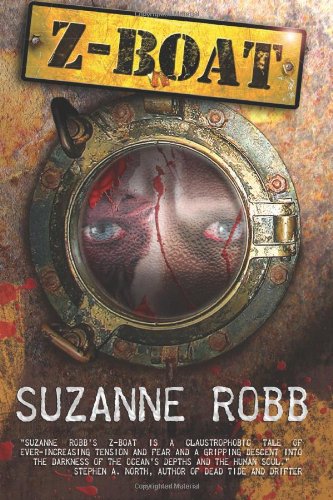
Z-BoatOne of the (many) benefits of blogging about zombies from time to time, is being sent books to read on the subject. Just as I cracked open The Zombie Bible volume What Our Eyes Have Witnessed, Permuted Press sent me an ebook of Suzanne Robb’s Z-Boat for comment. Z-Boat is an action novel with a strong female protagonist, that sets two naturally phobia-ridden subjects together: submarines and zombies. Since zombies, whether they acquire their undead status by vodou or by infection, are inherently a religious creation, they find their way onto this blog often. Unlike Stant Litore’s zombie universe, Robb’s is solidly secular, no mention of deities or demons anywhere. Set in a post-apocalyptic future (aren’t they all post-apocalyptic these days? We have difficulty envisioning anything much better), the crew of the submarine Betty Loo has to fight off a host of zombies intent on eating, and yes, converting, the living.

Zombies, whether conjured by spells and concoctions or by a contagious organism, while unthinking, always appreciate converts. The age-old human fear of being overwhelmed by swarms pertains just as well to the undead. We tend to avoid cemeteries at night, but death has a way of seeking us out in any case. I knew when my wife received a rather unsubtle flier in the mail advertising a local mausoleum that I too was likely on the list. Isn’t being a zombie all about the desire to survive, no matter what the cost? Still, it’s nice to know your custom is valued, right down to the end.

As I’ve mentioned before, zombie stories are difficult to take seriously in any rational world. Why a corpse with no stomach and no tongue would want to eat baffles the quasi-scientific mind I’ve installed. The Zombie Bible suggests that it’s hunger, and a metaphor is always appreciated in a room full of zombies. In Z-Boat the drive is more along the lines of the plot. You wouldn’t have a story without the undead. A potboiler, this is a page-turner, or, if you’re reading an ebook, a page-swiper. And although the function of a submarine is inherently like an ark—the preservation of breathing animals when overwhelmed by water—when the zombie organism eats its way into the crew, the only safety is found in escaping that ark. Robb’s tale is rollicking and rough, but her female Noah gives us all ground for hope.


Nothing to Do with Pigs

Pseudepigrapha is not a word that flows mellifluously off the tongue, and the first time reader stops to give pause over its awkward beginning and several syllables. It comes from a couple of words meaning “false” and “letters” and it designates a book, usually ancient, falsely attributed to somebody important. Since most people in our post-modern world don’t even read the regular Bible (many Fundamentalists among them), throwing a false gospel out there and telling everyone what it says is a fairly safe bet for getting some attention. A friend sent me a link to a web story about the “Gospel of Barnabas” based on an allegedly clandestine Turkish manuscript, that has been circulating for a few years now. Let’s face it: how is a non-specialist supposed to find a copy of the Gospel of Barnabas, and how is the public going to know how to weigh one ancient document against another? After all, we as a society have determined that biblical scholars are more than useless, and they should be employed doing odd jobs just above minimum wage, the unbelievers!

Dante making Scripture

Dante making Scripture

The story on the promisingly named Liberaland website makes a Bill Maher of mistakes regarding the ancient document, however. Citing only vague “religious experts and specialists located in Tehram,” (after all, we all know that there are no religious specialists in North America or Europe) the article claims with an unattributed quote, that this 23-million-dollar gospel has been squirreled away for safe keeping because of its scandalous claims about early Christianity. Any biblical scholar knows, however, that truly original scandalous claims are difficult to come by. The Gospel of Barnabas has been known since the seventeenth century and it is likely a document with Muslim sympathies. It doesn’t help that actual ancient documents are sometimes held in secret (I know of one being kept in a Turkish monastery that is being held, literally, for ransom to help finance the place), and the general public is ill-equipped to know who’s telling tales outside of school.

There’s no point in denying that religions have made a plethora of mistakes and missteps over the centuries. New religions are emerging all the time and new mistakes and missteps will be made. Given that people are, according to the best evidence, programmed to believe, it would seem to this insignificant former scholar that keeping a few religion specialists on the payroll might not be such a bad idea. Of course, I am an interested party, and that makes me suspect from the beginning. I spent my early adulthood years learning to read a dozen dead languages and that has landed me in an obscure job that barely covers the rent. One thing it did prevent, however, is being taken in by claims of mysterious gospels that seem to surface several times a year. There will be those who dispute what I write, but then any document these days is liable to be called pseudepigrapha.


Witches in History

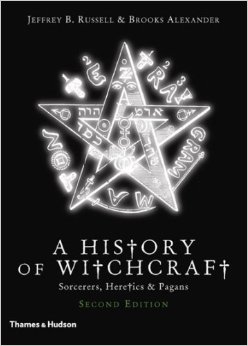
History of WitchcraftIn a rationalistic society, the concept of witches has no place. If only we knew what witches were. Sadly fascinated by the unfortunate—evil would be the more appropriate word—victimization of women in the late Middle Ages as partners of the Devil, I read Jeffrey B. Russell and Brooks Alexander’s time-honored study, A History of Witchcraft: Sorcerers, Heretics and Pagans. With its bold pentagram on the cover, I’d been afraid to take this on the bus, and so it sat in my reading pile until I figured out a way of keeping the cover from view while I perused the contents. The authors wisely spend the introduction with definitions. We define our world through lenses. For the most part, people today use the lens of science, as if that were the only way to view the universe. Still, even with that polished glass in hand, we have a difficult time knowing what “witch” is supposed to designate. Russell and Alexander suggest that it changes over time.

No doubt, witches still exist. The recognition of Wicca as an authentic religion (for tax purposes, the only true measure of a religion’s bona fides) demonstrates that. The problem is that Wicca is not in any sense a direct continuation of the witch hysteria that swept Europe, and parts of New England, centuries ago. As A History of Witchcraft demonstrates, this was a religion practiced by no one, but imagined, and feared, by many. Particularly men. Particularly religious men who had problems with women harboring hidden powers. It was a full-blown and horrible fantasy that led to many thousands dying for a religion that didn’t even exist. Modern witchcraft began in the 1930s and has become a nature religion that sees itself connected to that past, but which really only touches at the very edges.

Witchcraft was a way of looking at the world that saw all things as intimately connected. Russell and Alexander point out the similarity to chaos theory with its butterfly effect. We do see effects at a distance. Science tries to make them less spooky. Those who practiced witchcraft in ancient times, before the Middle Ages could even be dreamed, tried to bring such forces under human control. If some anthropologists are to be believed, some may have succeeded. This idea pulls at our darkest fears. Can we accept a world where we are manipulated by others in unseen ways? It happens every day. Not by spells or incantations, but by forces far more powerful than that. You don’t need to be a witch to see it. You only need to open your eyes.


Rosemary by Any Other Name

Rosemary

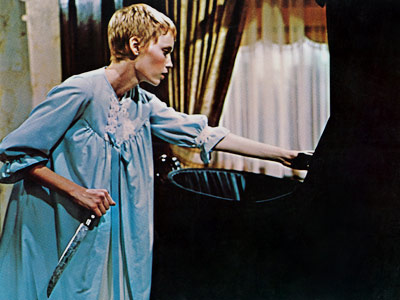
With NBC’s remake of Rosemary’s Baby into a mini-series in the news, I sat down to watch the original again. I’ve blogged about it before, but with most available funds being diverted to college, watching new movies will be a rare treat for some years to come. Besides, the original is a mishmash of religious ideas that despite their lack of coherence still leave the viewer somewhat disturbed. Since the last time I watched the movie, I’ve read several books on witches and have come to recognize the strange brew that Roman Polanski concocted for public consumption. Reaching back to the myth of diabolic witches, the original movie presents such witches initiating a new world by literally spawning Satan on a woman whose name is based on the mother of Jesus and who will ultimately care for the helpless little devil. The viewer, despite the knowledge that Rosemary is carrying evil incarnate, still sides with the vulnerable, pregnant protagonist. It’s the end of the world as we know it.

I’m not sure how you make a miniseries out of this thin plot. I suppose a nine-month pregnancy would lend itself to slow development, but haven’t we grown a little too old for witches and devils? In fact, Wicca is now a recognized religion in much of the industrial world, and the devil’s been on the run for decades. Religious movies, or at least movies based on religious themes and characters, are perennially popular, however, no matter what the secularists tell us. And why not open a series about pregnancy on the weekend of Mother’s Day? Nothing stirs the emotions like putting a young mother at risk. That’s perhaps the insidious side of the original movie—we silently side with the devil.

Rosemary is, of course, manipulated by her husband with the everyman name of Guy. This isn’t in any sense his child and, like any businessman, he stands to gain enormously from someone else’s labor. Exploitation is the cost of the continuation of the human race. It doesn’t take much to figure out that we’re watching a parable here. After all, the Time magazine cover asking if God is dead makes a cameo in Dr. Saperstein’s office. And the setting in Manhattan clues us in from the beginning that this is the place were many millions are asked to make a few very rich. There is a witchery in New York, and for those who know how to look, the devil may be found in the details.


Myth of Infinity

There are only five major trade publishing houses left. Despite the bewildering number of publishers around, five corporate giants own most of the industry labels that make really big money. Those of us who dabble in the literary arts dream of some day being published by one of these big houses because it might mean some success is involved. There are, of course, hundreds of indy publishers who are more author friendly, but you might never get noticed. So when I attend meetings and see the zig-zag that represents the EKG of capitalistic vital statistics, I often wonder about the myth of perpetual growth. A business isn’t really considered a success unless it can chart continued growth, year after weary year. And this in a finite world of shrinking resources. How long can perpetual growth last? In the publishing industry, if you get too successful you’ll be purchased by an even bigger company. Remaining solvent isn’t enough in a hungry, hungry capitalist world. The winner, they say, takes it all.

EndlessThis idea bothers me long after the meeting’s over and the lights have been turned off. Have we truly come to believe in our own mythology? What kind of value is it that can be measured only by acquiring more? I went into higher education unsure of my commitments to capitalism. I’d rather not have some kind of quota hanging like Damocles’ stock report over my head. I want to ponder through the implications and burst out on the other side, hold the whole thing at arm’s length to consider it. If all businesses constantly grow, we run out of material. Don’t we? If all businesses don’t grow, some will shrink, then die. As often as not, they will be the ones I like the best. Infinite growth in a finite universe. Or is it really infinite and the capitalists are mining the very stars we can’t yet reach?

Glancing over my bookshelves, I see publisher’s names I’d never noticed before. Long before I was forced out of academe, I had purchased books on esoteric aspects of religion from publishing houses most consumers would never recognize. I even surprise myself sometimes. Some of these publishers haven’t survived. The self-published never outlast the death of the author. This is not a world of perpetual growth, but some of the ideas are nevertheless very fruitful. Can infinity grow from a finite stock? I think we all know the answer to this deep down. But mythologies thrive when not examined too closely. So perhaps it is better just to keep on pretending. And if you ever find someone who works for an independent publisher, give that person a hug.


Atheist Deities

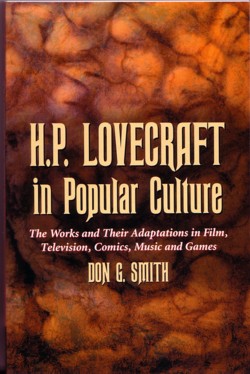
HPL in Pop CultureAn atheist who created gods. That’s the basic skinny on H. P. Lovecraft. Perhaps all gods are thus created. I can’t know; I wasn’t there at the beginning. Among writers who failed to make much of an impression in their lifetimes, Lovecraft staged a remarkable comeback in his afterlife. Don G. Smith’s H. P. Lovecraft in Popular Culture attests to the fact that some academics are beginning to pay attention to one of Providence’s most famous children as his works continue to spin off new forms. With an almost Puritan devotion to rationalism, Lovecraft saw no need nor room for deities in the world. His most ardent fans claim the gods he created are mere aliens, voyagers from beyond.

I wonder why one has to be a theist to create gods. Part of the problem is definitional; what is a god? According to the three fifty-cent words in the explanatory section of my young-person’s Bible, the traits are being omnipotent, omnipresent, and omniscient. Problem is, in the Bible God doesn’t really seem to fit any of these particularly well. The closest match seems to be omnipotent, but omnipotence leads to logical conundrums in reasoning, creating rocks so large you can’t lift them, and all that. Gods are, by just about any ancient standard, defined in relational terms—they are more powerful than us. That’s true of Lovecraft’s gods as well. They are so powerful that merely viewing them could drive you insane, eh, Ezekiel? (Perhaps Ezekiel is a good choice to compare, since his God comes down from the sky as well. Some would claim in a spaceship.)

Lovecraft survived because he understood what scares a person. Power, without feeling, is frightening. I’ve seen it in the eyes of both Christian and Pagan and it always sends me away shuddering. Smith’s book is more concerned with the survival of H. P.’s ideas in the media. It is a pleasant stroll, or an unpleasant stroll, depending on your perspective, through the descendants of Lovecraft’s monsters and gods. There’s no shame in calling them deities. If we are honest with ourselves, we will admit that some kinds of entities are inherently frightening.


Hotel Nowhere

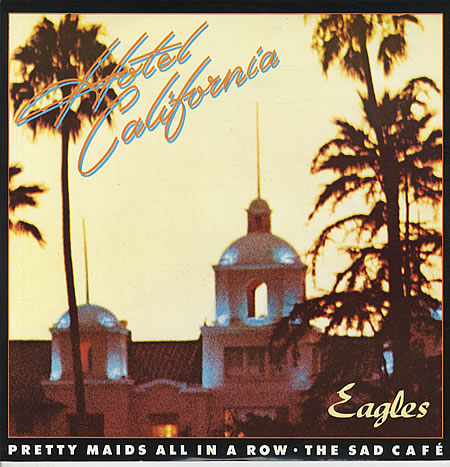
HotelCalifornia1977. I was in junior high school and I wore my hair long. I hadn’t yet donned the cross that I carried through my high school years with a constant fear of Hell on my back, but I did listen to the radio. The haunting song “Hotel California,” by the Eagles, scared me. There was something lurking there—something undefined and yet compelling. Cults were in the news, and after the People’s Temple suicide a year later, we were all pretty well convinced that the song was based on fact of some sort. Religious analysts concluded that the song referred to everything from the Antichrist (“they just can’t kill the beast”) to a New Religious Movement that had taken over a western mission (“we haven’t had that spirit here since 1969”). Members of the Eagles, when asked, said their intentions were to expose the darkness of the music industry as idealistic hippies came of age and realized, yes, it’s just business. Still, I shivered.

Nashotah House used to be on the frontier. Although it is only 30 miles from Milwaukee, it could still feel terribly isolated less than two decades after the Eagles had flown. Indeed, there were sotto voce suggestions that “Hotel California” should be the official seminary hymn. “You can check out any time you like, but you can never leave.” The nights could be very dark in the Wisconsin woods, and for those attuned to some of the more honest aspects of a religion based on exclusion this didn’t seem too far to stretch. “Hotel California” came forcefully back to mind reading about Oneiric Hotel in Wired. (Mentioning Wired makes me look smart.) The Oneiric Hotel is a lucid-dreaming device by artist Julijonas Urbonas, the kind of thing Wired finds newsworthy. The story mentions that Urbonas’s previous project—called Euthanasia Coaster—was designed to kill its passengers.

Now my mind checks into Bates Motel. I know Psycho is set in Arizona, but the desert southwest is terra incognita to an easterner, and besides, it’s just a metaphor. It looks like California to me. I saw Psycho as a college student, and was rather afraid to watch it while at Nashotah House. Indeed, the night I moved to campus I found a dog-eared script from a play about a murderous maid at the seminary left on my coffee table. “This could be Heaven or this could be Hell.” Psycho, it is asserted, was based on the macabre case of sociopathic killer Ed Gein who had roamed these self-same woods of Wisconsin, and who had died less than a decade earlier just down the road in Madison. There was, I knew, a psychiatric hospital just across the small lake that the campus bordered. We don’t call them cults anymore, but we all know what we’re talking about. There are indeed places that you can never check out, even if you leave.


Not Child’s Play

Games reveal quite a bit about a culture. That’s a little takeaway from my undergraduate anthropology class. Different societies favor different types of games: chance, strategy, zero-sum, role-playing, the list could go on and on. Indeed, games have surpassed movies as the big money makers of the tech entertainment industry. We love to play.

Religions sometimes try to capitalize on popular culture. The difference is that religions are taken with a lethal seriousness that most games leave behind. Sure, you may end up shooting a few hundred people, but when you walk away from the flat screen you probably know that the game is over. Religions, of course, realize that they aren’t fun. Despite the constant criticism that religions get for being simplistic and superstitious, anyone who has tried to be a serious adherent knows that it isn’t as easy as it looks. Being religious is very hard work. So, why not turn to games to convey hard truths? The other day I found an old, still-in-the-box, shrink-wrapped game called Divinity. It is designed to teach the catechism of the Catholic Church. A Monopoly-like track edges a stained-glass center board, and, I suspect, you get considerably more than $200 for passing Go.

IMG_1307

Using games to sugar-coat bad tasting doctrine is nothing new. One might argue that the Sunday School tradition long ago capitalized on the idea of making avoiding perdition fun. In some cases it does seem to have worked; some kids grow up terrified and spend their lives trying hard to win the game. In fact, it can set some lives on a trajectory far too high to achieve, but far too important not to try. We can’t all be priests, after all. Should we all be clergy, then many interested parties would be out of a job.

IMG_1308

Once upon a time, the state religion could demand a sizable chunk of municipal funding. Taxes went to support the expensive luxury of clergy dedicated to pleasing the gods, Then the rules changed. With religious freedom there comes a great outpouring of creativity to ensure that the coffers never run dry. Christian comic books, Christian rock, Christian movies, Christian board games. We have come to an age of faith branding. It’s no surprise, really, for it is, according to the rules, a zero-sum game.


East of Nowhere

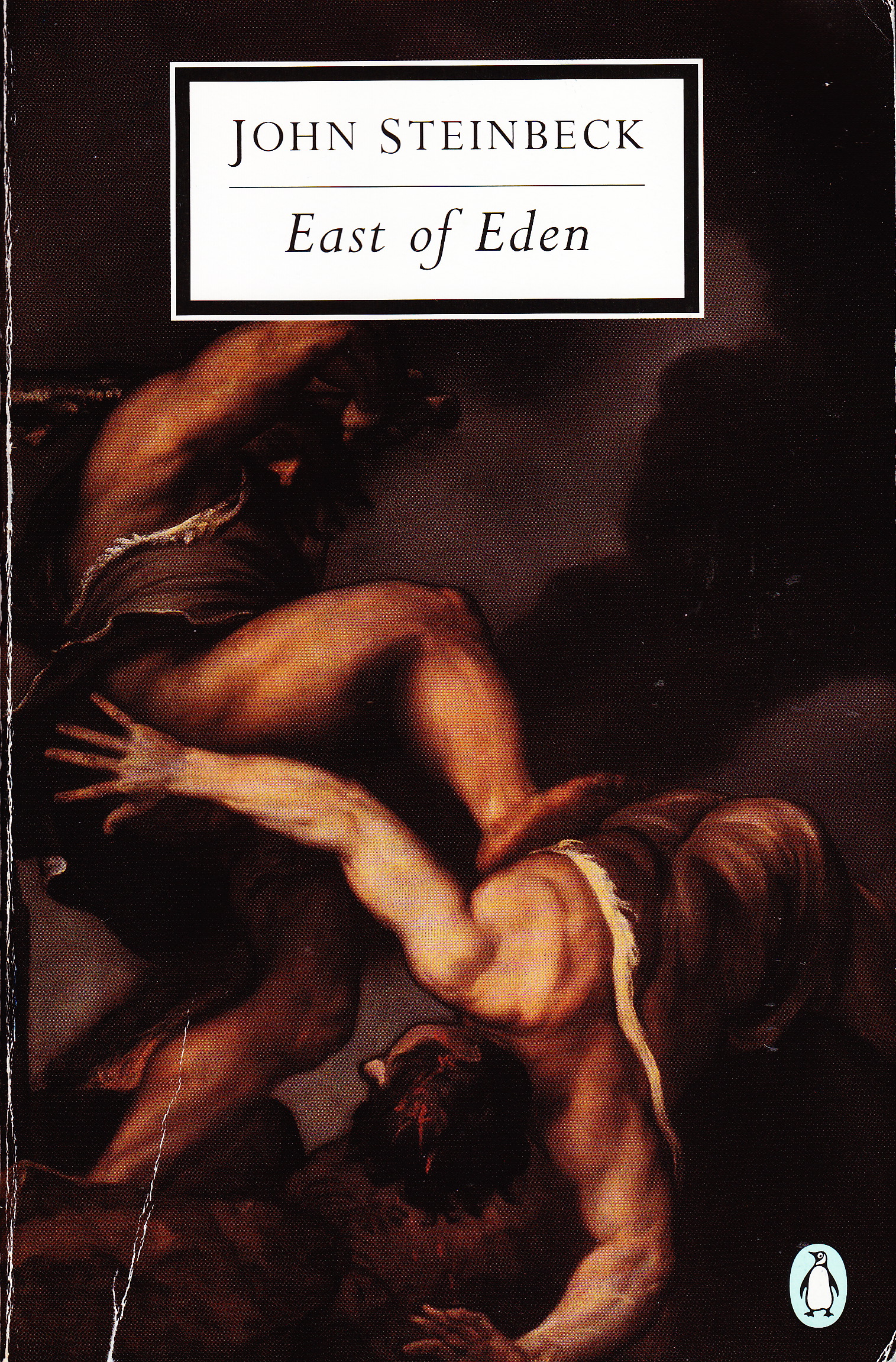
EastOfEdenThere was a time when you could assume a lot about your readers. Although it was only a little more than a half century ago, John Steinbeck could assume a biblically literate readership. East of Eden is so thoroughly pervaded with, one might say interlarded with, the Bible that the key scene could have three men sitting up half the night discussing 16 verses of Genesis, and not one of them being a priest or preacher. The earnestness of their conversation is haunting in its intensity. You know the boys will be named Cain and Abel and that only one of them will come out of this alive. Okay, so they decide on Caleb and Aron, but you get the picture. Of course their father is Adam. Even the title of the book is drawn from the last words of the 16th verse.

Ironically, this biblically literate author is one of the most frequently banned from high schools. Some censors can’t get beyond thinking that being good is the same thing as being a realist. In East of Eden, characters are flawed, and they tramp out the course laid in the Bible with an unwitting solemnity. The entire book hinges on the ability to change one’s fate, and yet, the characters dutifully enact their parts. Those who watch over the morals of youth are bothered by an occasional word with four letters, which, I must say, Steinbeck uses with moderation. They mistake the packaging for the message.

But why should we care? Hasn’t the world moved on inexorably these past sixty years? It is the wisdom of Lee, the Chinese servant, who answers this. “Any writing that has influenced the thinking and the lives of innumerable people is important.” This does not refer to the Bible alone—although at this juncture in the story it does—but it is a message that many who simply dismiss the Bible as just silly myths would do well to remember. Lee is a literate character who turns to Marcus Aurelius for comfort as well as other classics. Sometimes the Bible is regarded as so holy that we forget it too is a classic. Classics become what they are through the impact they have on innumerable people. East of Eden is considered a classic although the author walked this earth just half a century ago. And those who reject Steinbeck for their children would do well to read the Bible they would put back into schools in his place, if only to consider the irony.


The Cow Jumped

While digging through the attic for some reference material for a colleague this weekend, I came upon a box of Bibles. I actually have many Bibles around the place—often within an arm’s reach—despite the ease of internet biblical access. One thing of which I own few are leather-bound Bibles. Trying to be as vegetarian as I can, I have avoided leather in my apparel as much as possible (sometimes the alternatives are even more expensive), and apart from a rare, old book, I prefer cloth to leather, and, generally, paperback to cloth. Still, working in the Bible industry, I know that among the best selling Bibles are the leather variety—those that involve the ultimate sacrifice, although not of the human kind. Leather as a book-binding material is an early development. Leather is durable, and strong, even if a little kinky. Before synthetics, it was used to protect tomes that had been written by hand, representing hundreds, or thousands, of human-hours of work. You wanted it to last. So kill the fatted calf.

I was amazed, therefore, to discover that most leather Bibles are bound with pigskin. That’s right, the material tossed around the grid-iron Sunday afternoons from September through February is kin to the very binding on your standard Bible. Pig leather (never called that) is cheap and durable and is the routine binding for leather Bibles. You want a kosher holy book, you’ll need to buy calf-skin (one thinks of a savior dying at only 33), and it will cost you. Pigs, generally eaten by Christians, are unclean to Jews and Muslims, and books bound in pig cannot be touched by the most religious of the monotheistic sibling faiths. To me, I just see dead animals all around in any case, and wish we might find some way to protect our pages with something else.

Photo credit: Ben Salter, Wikimedia Commons

Photo credit: Ben Salter, Wikimedia Commons

A larger issue (isn’t there always a larger issue?) is a porcine one. Pigs, we are told, are very similar to humans. We use their organs to transplant for our own, and some scientists think they may have played a role in human evolution (although this is not the conventional view). Although I can’t claim Babe led me to vegetarianism, it certainly didn’t hurt. For that matter, neither did Charlotte’s Web. Still, the idea of swearing atop a deceased pig to tell the truth, or watching a televangelist beat a dead pig, definitely has some theological implications. So as I sit here staring into a Hammermill box full of Bibles, I wonder about the hidden costs. Not just to calves and pigs, but to the species who claim that this box of books contains a truth deeper than the many other tomes all around me. And I wonder just how naive I may have been on the finer points of the religion based on these books as well.


Fire Bearer

Prometheusposterfixed

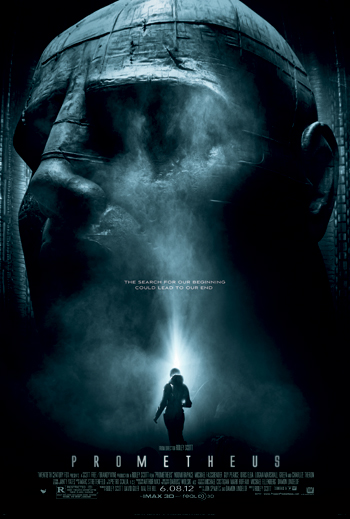
Part prequel and part religious odyssey, Prometheus both treads familiar ground and explores new territory. In keeping with my invariable sense of timing (I saw none of the Alien trilogy in theaters), I waited until well after the fact to see the movie. I had heard Prometheus called a prequel, but even if I hadn’t some of the Ridley Scottish touches might’ve given it away: a large ship bound for a distant planet, evidence of unexpected inhabitants—yes, they knew about the “engineers” (we could call them “watchers”) but not the proto-Aliens they were breeding. We even have the android that understands science’s need to be greater than that of human need. Déjà vu. Still, there’s something very different here—direct discussion of religion and how faith plays into the work of scientists. Elizabeth Shaw, the sole survivor, wears a cross as she tries to work out what her father’s teaching about religion might mean. The cross isn’t hidden in the background—it is brought out into the open and discussed.

If you haven’t seen the movie, the premise is that ancient artifacts (including the ubiquitous Sumerian, Egyptian, and Mayan templates) added to a new discovery in Scotland, demonstrate that a race of giants have been inviting us to their planet for thousands of years. In fact, they had engineered us. (Ironically, the biologist who espouses Darwin is among the first to die.) Peter Wayland, industrialist billionaire who doesn’t want to die, funds a trip to meet these engineers. The engineers, save one, died long ago. Apparently of some plague (cue the aliens!) that were created to destroy humans. They were about ready to send the nasty beasties to earth when they were overcome, with only a single survivor. No coincidence that this planet was reached on Christmas day. It becomes clear to Dr. Shaw that these engineers were intent on destroying the human race they created. And still, she slips her cross back on before facing the engineers of life and death. This was Noah without all the water (and much better writers).

Of course we think we know the rest of the story. Sigourney Weaver bravely led us through three alien attacks before sacrificing herself in a New Testament kind of ending. But what about Elizabeth Shaw? She who bore and aborted the mother of aliens in a very maculate conception? She is off to a prequel’s prequel to find out why these engineers wanted to destroy us. Rumor tells of Prometheus 2, and I wonder if we will get to meet our maker’s makers. Although Scott is an atheist, he brings us Moses later this year, and has already given us Mary and Jesus wrapped up into one with Ripley and her spiritual mother, a sci-fi St Anne, in Elizabeth Shaw. After all Elizabeth was cousin to Mary, and now that the question of faith has been openly discussed, it will have to be more fully addressed. Among the unanswered questions is whether I be able to make it to the theater on time to see this one, or will two years vanish before I find the time to address the eternal questions that Ridley Scott always seems to pose.


Take Twice Daily

Once in a way, when I feel a dusty archaism settling over me, and I realize my eyes don’t focus as well as they once did and that sedentary life in front of a computer screen is slowly killing me, I betake myself to a book sale. In this particular part of the country the big sales are in the spring. I’m told that the book business is dying, but if I can get out of a book sale with no bruises or scary brushes with over-eager buyers, I count myself lucky. I confess, I’m a bookaholic. I spend too many hours a week on public transit, and I consider it a moral obligation to read in public. Even in a city the size of New York, I’ve had people on the bus plop down next to me and say, “You’re that guy who reads.” Public displays of literacy. While some of the books I read are common enough, others are difficult to find in even university libraries. I know that’s an excuse, but my vice is buying books.

I once read a children’s story about a house actually constructed of books. I want that house. Although new books aren’t cheap, there are ways of making them fit into a modest budget. And although you really can’t build with them, they insulate the soul. Reading is more than fundamental—it is the very essence of learning. When I glance at Publisher’s Weekly and read that print sales aren’t what they used to be, I am buoyed by seeing the strong market in young adult literature. We have at least raised a generation that likes a good story. The earliest literature was religious, and many religions developed around written words. It’s a mistake to take religion for gullible belief. If there weren’t power in these words, why would anyone believe?

photo 2

Local book sales can be huge events. Each year Bryn Mawr and Wellesley have a combined book sale in Princeton. If you get there after opening, there will be no place to park. The libraries of Hunterdon County in New Jersey hold a sale that, until this year, required off-site parking and a full three days of hiring a shuttle bus service to get hundreds of buyers back to their cars. And these venues are packed. People do buy books. And many of them are half my age. It is a seed of hope. Some people are surely looking for a quick read, maybe to take on vacation, but you can also see the seasoned, selective literati carefully examining the offers, backs bent, brows furrowed. For twenty dollars you can even get in early, before the goods have been picked over. The man checking me out said the sale gets bigger every year. Looking out over the sea of cars, I feel strangely ebullient, as if I’m atop Nebo looking over the promised land. Although it’s quite a drive, I’m already home.


Lord Have Mercer

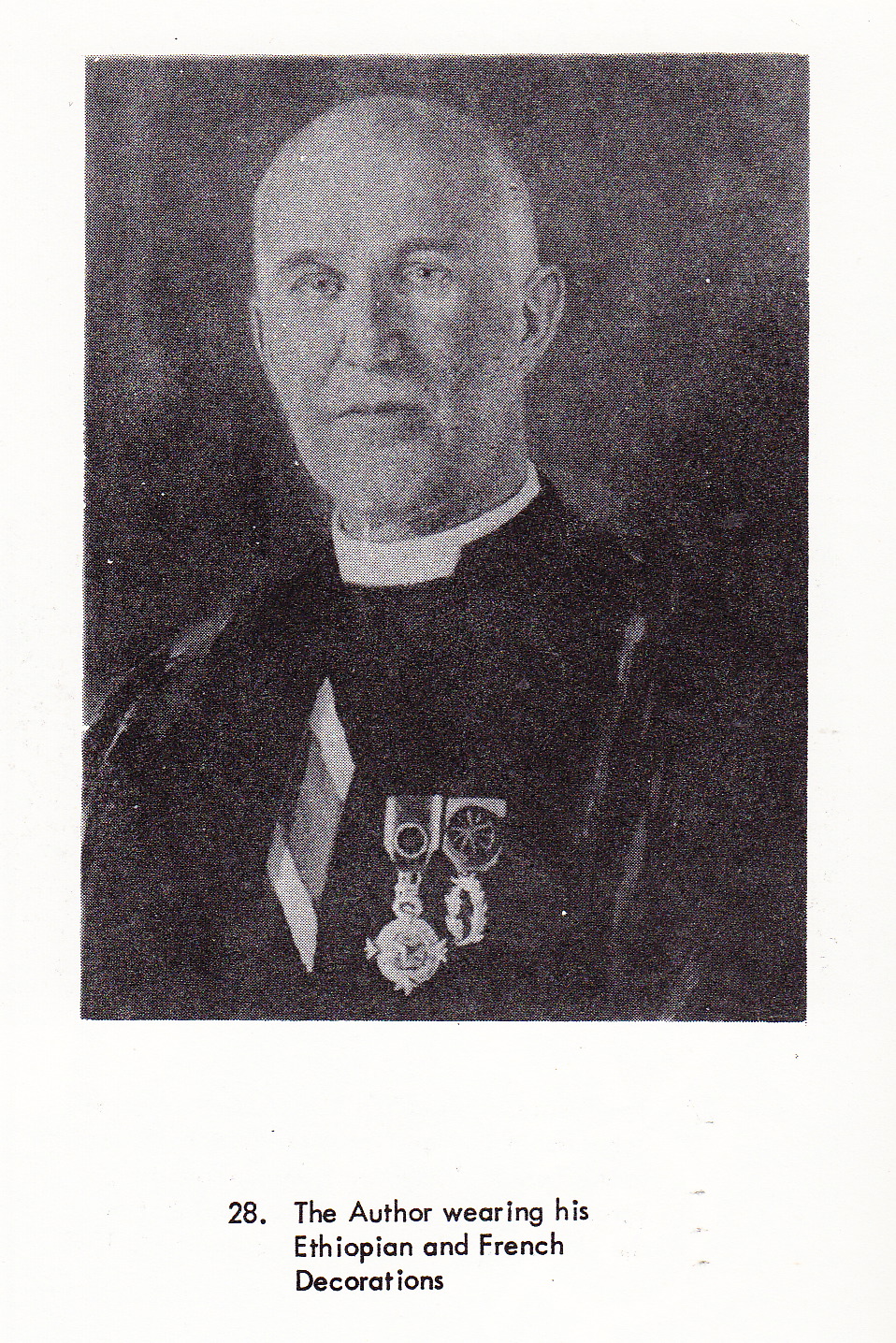
Samuel Alfred Browne Mercer was an Assyriologist who failed to establish an academic legacy.  I quickly learned, when consulting his The Tell El-Amarna Tablets that his work was considered inferior, and that it would not have been published, had it not been for his wealthy wife.  Not a very ringing endorsement for a guy who wrote a grammar of Assyrian.  It was a little odd, then, in the library at Nashotah House when Mr. Tolan was clearing out shelf space, that he asked me if I would like a copy of Mercer’s autobiography.  The library had two and, well, needed more shelf space.  I thanked him for the slim volume and took it home to read.  The little book is self-published, and it had been typed with a sans serif font, something rare for a published volume in those days.  It had been annotated by hand, I presume by the author.  And it told a most interesting story.
 
Mercer, I was to learn, had been a student at Nashotah House.  Now, in my days at the seminary the internet had not yet made it that far into the backwoods of Wisconsin.  We eventually did get a dial-up connection and we thought we were so twenty-first century.  In any case, Nashotah House, when it finally established a website, did nothing so vainglorious as to list noted alumni or faculty.  The only two I ever heard praised were Gustaf Unonius and Michael Ramsey, the former for being the first graduate, and the latter as an adjunct instructor (and, incidentally, the Archbishop of Canterbury).  Samuel A. B. Mercer, as he styled himself, would not likely have raised even a unibrow.  He had written a couple of books on a learned topic, but had failed to impress.  Reading his life story was somewhat intimate, however.  He tells of riding on the top of a train in Russia to get from city to city with little money, and of visiting Ethiopia where, it seems, he was convinced the Ark of the Covenant might just be.  Had I not studied Akkadian and read about Assyriology, I might not have ever come across his name.  We were, however, touching at an odd juncture.
 
Not even rating a Wikipedia article, Mercer disappears into obscurity after his informal accounting of his life.  He apparently had a wealthy wife (home life is not the focus of his brief story), and a lasting desire to spend time in Kush.  Although it has been years since I’ve read his story, I recall that he did have a life of adventure and a little intrigue.  Maybe we were spiritual kin after all, for we each tried and failed to make an impression on an ivory tower world where those who tarry too long at Nashotah are deemed among the least important of academics.  After all, even the relatively comprehensive list of institutions of higher education on the University of Texas website (and Texas and Nashotah have a lasting connection) fails to mention the seminary.  Its little library, nevertheless, does hold evidence of a lost life-story or two.

SABMercer