The Tower

Photo credit: Daderot, Wikimedia Commons

Photo credit: Daderot, Wikimedia Commons

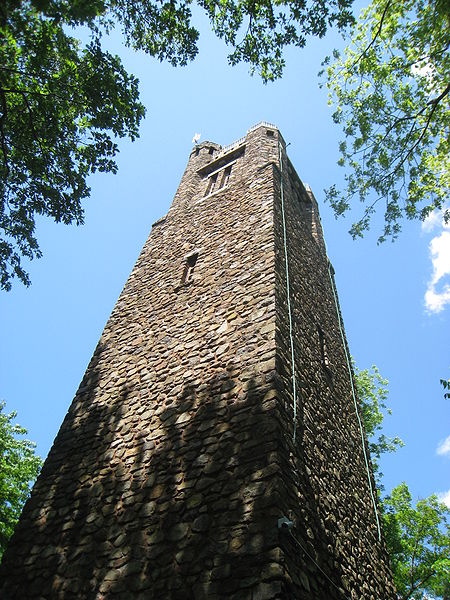
I’ve never been to Bowman’s Hill Tower. In truth, I’m not even sure what its significance might be. Beyond giving a spectacular view of the Delaware River valley, it is my understanding that it is a memorial built to George Washington and his many activities in this region. It’s not even that old. I have come, however, because of a memory not my own. Many decades ago, my mother visited the tower with her parents. She has pictures but couldn’t remember the name of the tower, or even where it was. As fate and happenstance have it, I live a mere hour away and I’ve undertaken this journey to a tower I’ve never seen to bring a sacred sense of place back to life for someone else. Too bad the park is closed today. It is a sunny Saturday in July, and it seems that everyone is outside. We drove across that impossibly narrow, rickety bridge between New Jersey and Pennsylvania at Washington’s Crossing (so named on both sides in both states) to find our way to this quiet park to find a lost past. “Closed” the sign laconically says.

The urge to travel, speaking strictly for me, is the pursuit of sacred space. Over Independence Day weekend we traveled to Boston not only to see fireworks, but to revisit a site of some personal significance. In my three years in that city life took me places I never imagined I might have gone. The memories, mine this time, although hazy, still permeate the air. Boston is a sacred city. Since childhood I have had dreams of Maine. From Boston I pushed further north to the rocky coasts and gray oceans of the stormy north Atlantic. Although neither God nor angel appeared, I knew that I had once again discovered the sacredness of space. Every time I leave, I count the days until I might return.

Many locations are sacred to a person. Some of mine are in the west, and some in the east. And when I’m there I require some time alone, for the sacredness of space is a deeply personal matter. When, many years ago, I was jostled into the Church of the Holy Sepulcher amid ecclesiastical robes too numerous to identify, I knew this was a holy spot for many. The very dust of Jerusalem seems sacred with age. But what had happened to me here? Beyond the endless readings and rereadings of the biblical tales, Jerusalem was someone else’s sacred location. Aside from the dark crusaders’ crypts, there was no place to be alone. I’ve never been to Bowman’s Hill Tower. Despite driving to Pennsylvania for that sole purpose, it is a place I have yet to see. And when I finally do climb that tower, it should, I hope become clear to me whether anything of the numinous remains in this dusty corner of somebody else’s memory. Sacred space is like that, and it keeps some of us forever on the move.


Equal Measure

Far off in the woods of Wisconsin sits a seminary. In these woods, I’m told, wolves eat little girls. That seminary has for decades distinguished itself by its stance against women priests. I knew of, and respectfully disagreed with this policy when I was hired to teach there in 1992. I didn’t make waves, but rollers have a way of finding you nevertheless. It doesn’t take much to capsize an unstable boat. Within my first year a student challenged me, “Did your life change forever on July 29, 1974?” I was unfamiliar with the code and asked what happened on that date, vaguely thinking perhaps it had something to do with the run-up to the Bicentennial. On that date, it turns out, Barbara Harris was ordained among the first female priests (the Philadelphia Eleven) in the Episcopal Church in the United States. I suppose my life should’ve changed—for the better—but I was a Methodist at the time. Perhaps my life changed then, for I was 12, but that change had little to do with what the student intended. Or maybe everything. I wouldn’t have had a problem with a woman priest in any case. In 1989, Harris was elected bishop, the first woman to hold that title in the Anglican communion. Just three years later I found myself in the lion’s den.

When I asked male students what their problem was with women priests the answer invariably pointed to three factors: Jesus had no women disciples (wrong, according to a certain sacred book they claim to have revered), the Roman Catholic church did not ordain women, and the Church of England did not ordain women. The problem with backing and filling is that filling always overtakes backing. By 1994 the Church of England was ordaining women. Yesterday, at long last, the General Synod approved of female bishops. Welcome to the twentieth century. Now only Rome stands in the way. I am confident, despite the certitude in the eyes of my Nashotah interlocutor, that Rome will eventually come around. I may not live to see it, but justice will be served.

Photo credit: ChrisO, Wiki Commons

Photo credit: ChrisO, Wiki Commons

There is good evidence that most religions, prior to the monotheistic triad, had women priests. Something about the singularity of deity seems to have contraindicated a protective mother in the psyche of male clergy. Ironically, the same day that the C of E decided to do what was right, Oxford University Press’s blog ran a post on Mormon women bloggers. Among the newest monotheistic faiths, like the traditions before it, the Church of Jesus Christ of Latter Day Saints has not recognized the sacerdotal role of women, leading some to be excommunicated for speaking out. We are told that God is a jealous god. This is, after all, the wilderness. After yesterday’s long-awaited decision the woods seem a little less dense, and the threat of the wolves may have been exaggerated all along. If religions would only see people as people all our lives might just change forever.


World Cup Runneth Over

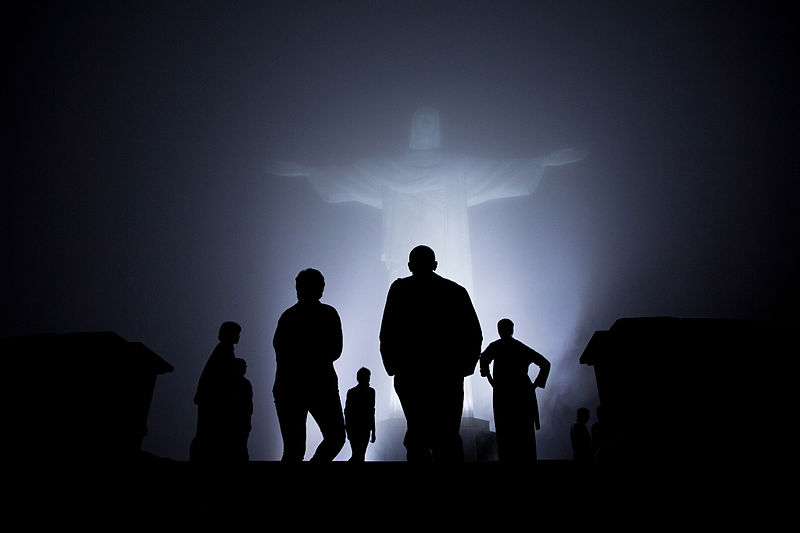
I’m not a sports fan of any description. I guess the message, “it’s just a game” sank in rather well as a child. Nevertheless, I was curious when some friends invited us over to watch the World Cup finals. New York City has been abuzz over the last few weeks, and if my walk home takes me past a bar in the city, I almost always have to cross the street to get around the crowds standing outside. So, I’ve been a little intrigued. It perhaps helps that some considerable primordial Teutonic blood makes its home in my ancestry. Hey, but it’s only a game. As a sometime jogger, it was interesting watching these guys running themselves ragged for 120 minutes, but what makes the World Cup worthy of a blog on religion is the sheer amount of religious imagery that pervaded the Brazilian broadcast of the event. Several lingering shots on Christ the Redeemer backlit by a halo-like sun preempted footage of the game. When night fell, the shots show Jesus looking down to watch the game.

800px-Obama_family_in_mist_in_Rio_de_Janeiro

The Argentineans, it would seem, should have had the spiritual advantage. With a pope in the Vatican, and a fan or two even dressed up like the Holy Father, the match taking place in some of the most Catholic territory outside of Rome, you might think some blessing would have been ambient. As the game ended Christ the Redeemer was lit up in rainbow colors and the Germans held the trophy high. Perhaps this is just grousing coming from a guy who’s lost as many times as I have, but it seemed that there could have been a bit more bonhomie on the part of those who managed to make their way to the final for what was, throughout, a very tight game. Perhaps they were just exhausted, but a smile for the camera might have gone a long way. They only lost by one.

During the match, as the director chose scenes of Christ the Redeemer, the announcers could be heard saying, “shouldn’t we be watching the game?” A profound, yet utterly human reversal of the usual evangelical trope of keeping one’s eyes on Jesus. But the millions around the world tuned in were not interested in Rio’s most famous landmark; rather, they wanted to see what was happening down on the ground, in real time. Heaven has its place, no doubt, but it should not interfere with matters of worldly importance. For many, some sociologists tell us, sports serves the function of religion. While extremely fit men run themselves to exhaustion, a kind of worship is taking place down on the field. Looking up to the icon on the hill, it is crucial to remember that it is just a game.


Truth Fully

An article on science reporting on the BBC has me thinking about truth. Again. Truth is, of course, a philosophical concept. What it means is a matter of debate, and always has been. The way that it’s used, however, is reflected in the debate-oriented situation in the story. According to IFL Science’s Lisa Winter, the BBC has been tasked with tightening up its science programs to avoid the dilemma posed by the “two sides to every story approach.” While not denying that debate is the lifeblood of science, assessing the strength of the debate is essential. For example, there is a true scientific consensus about global warming. Those who deny it are generally backed by either corporate or religious causes that motivate them to claim the truth lies elsewhere. Truth is a very slippery term. And anybody can use it and claim it. In philosophy there’s no answer key in the back of the book.

Photo credit: Marretao22, Wikimedia Commons

Photo credit: Marretao22, Wikimedia Commons

Science, which I’ve admired from my earliest years, has a really, really strong track record of describing the physical universe accurately. Truly enormous paradigm shifts are rare in science and must be accompanied by stringent evidence. Sometimes critics grow frustrated at the slowness of science to accept something that seems obvious, but scientific thinking is nothing if not careful. Enter religion. The claims of most religions lay far beyond the reach of science. And yet, religion too has a really, really good track record—not of describing the physical universe (at which it often does abysmally poorly), but of providing meaning to human lives. Scientists have actually studied this. Religion, like it or not, does help. When it makes a claim on truth, however, a religion often comes into conflict with science. And the problem is that policies based on faulty scientific outlooks can have catastrophic consequences.

So what is truth? If we define it as what really, physically describes the material universe, science is onto it. In fact, science has the best chance of giving us an intellectually honest answer. If we define truth as what a certain deity declared law about a particular aspect of human life, science can’t help. Science doesn’t concern itself with gods or their putative decrees. Religion, however, does. And a vast part of the population votes for leadership based on religious beliefs rather than on scientific principles. And most have not taken too many classes in philosophy. In a democracy we both benefit and suffer under the weight of public opinion. And right now, it seems, public opinion considers philosophy as waste of time and would prefer the truth shrink-wrapped and ready for easy consumption.


Stratego

lossy-page1-428px-CLiff_being_undermined_by_the_Virgin_River._West_wall_of_Canyon_above_Temple_of_Sinawava._-_NARA_-_520458The idea is a simple one. When someone undermines, the very foundation of an idea is left with no foundation. We are taught not to undermine ourselves; for enemies it’s okay. Encouraged even. The Bible contains the seeds to its own undermining. The claim that it is a sacred book encourages—even demands—serious attention be paid to it. When it is examined closely, however, it becomes plain that the status accorded it as a book undermines its own claims. Believers can respond in several ways. One is to declare the Bible inerrant and to claim that contradictions are not contradictions and that what history has proven false is actually true. The keenest breed of such inerrantists hardly exists any more, since it does require a stable, geocentric view of the universe, if a universe there be at all. On the other extreme there are believers who make sacred writ so highly symbolic that we need not worry about the obvious factual errors—they were never meant literally anyway. And, of course, every position in between.

The Bible is not a unified composition. This was evident to the person, whoever it was, who first joined the Prophets to the Torah. Or even Genesis to Exodus. We have no way of knowing if s/he (mostly likely the latter) really believed that Moses wrote all the stories from the creation of the world through his own death, but the books of the Pentateuch roughly hang together in an extended narrative with plenty of instruction along the way. The “Bible” that Jesus knew had considerably fewer books than our “Old Testament.” And one gets the sense that Paul’s letters were tacked on in a catch-as-catch-can fashion, with everyone knowing (as the letters themselves say) that material is missing. And what Paul authoritatively wrote to the people of Galatia may not have been the same advice he sent to the Corinthians. Tides and times. Bibles and believers.

When scholars began, out of deep devotion, to look closely at the Bible the cracks in this historical facade began to fracture. Once the breach is in the dike, one dare ignore it only at great peril. The first shaft had been dug. By the time of Julius Wellhausen, the undermining was already engineered and well underway. And it couldn’t be stopped. Biblical scholars had choices to make: ignore the evidence and continue to sing the Lord’s song in a strange land, or climb out of that tunnel before it caves in. And the church, unsuspecting of what it means, insisted on an educated clergy. Serious study of the Bible shows what many believers wish it didn’t. And yet we continue to make claims based on evidence that is faulty. Just as long as these supporting pillars hold up we have nothing to worry about. And the undermining continues daily, lest we all find ourselves in the breadline.


Working Dead

AmericanZombieGothicPerhaps being born into and reared in a working class environment naturally predisposes me to the populist variety of entertainments. Although this may be true, serious scholars have begun to pay attention to the subjects traditionally classified as “lowbrow,” and particularly zombies. I mention zombies not infrequently because they are monsters with religious origins (although not the only ones). Reading Kyle William Bishop’s American Zombie Gothic (and who could resist such a title?) resurrected all of these interests for a few happy days on the bus. Subtitled The Rise and Fall (and Rise) of the Walking Dead in Popular Culture, Bishop’s study goes back to the beginning with zombies and their religious origins. Since the concept of zombie required the blending of Catholicism with its root African indigenous religions, it seems natural that the concept would emerge in Voudon (voodoo) religions of the Caribbean. What Bishop makes clear, however, is that the zombie is a way of coping with slavery, since, as originally conceived, zombies represent the horrors of enslavement. In other words, they represent a social justice issue.

Dismissed as puerile and unsophisticated, zombies had a difficult time catching on in American culture. Once they caught on, however, they didn’t let go. (They are zombies, after all.) As Bishop shows, this appeal has many bases. George Romero’s zombies were always social critique. Exploiting their shock value made a point, but other filmmakers soon followed, enamored of the potential violence, gore, and exploitation the zombies offered. Then, following 9/11, zombie movies proliferated, demonstrating that even the undead might perform some kind of catharsis. As Bishop notes, zombies were primarily a movie phenomenon, slow to catch on in literature.

Having read a few zombie novels in the last few months, I have pondered this last point deeply. What is believable, momentarily, on the big screen is rendered laughable with the ponderation of reading. When your brain has time to process what slick visual editing denies, it is clear that decaying corpses would have a pretty tough time getting around—even living bodies have trouble with it from time to time. Zombies, after all, are not really ever literal. They are signs, or even prophets. They point to a reality beyond themselves. Zombies, in reality, represent enslavement—whether literal or figurative—that holds us back from our true potential. No wonder they’ve become such fixtures in a world where opportunity has become effaced and terror can breach even secure borders. They may be lowbrow, but having lived the working class life, I have always had profound respect for the walking dead.


Are You Being Served?

Weary from a long day at work, I stepped off the bus last night to find the street to my house barricaded. That’s seldom a good sign. From the looks of the sludgy stains along the street, it was pretty clear that we were dealing with a water-main break. Sure enough, at home, no water. As I pondered making supper, washing dishes, and brushing my teeth—all that I usually have time for before going to bed—I wondered how I’d do any of them without water. As humans do, I managed. This morning I awoke to find the faucets still empty and considered the prospect of going to work with no shower, when a natural kind of grumpiness settled over me. We expect water. We take it for granted. For much of the world, however, lack of clean water is one of the largest problems faced. Showing up for work in a modern city with dirty hair hardly seems like a major issue when children are dying of diseases due to lack of potable water. Water is a justice issue.

Some experts have been positing that the next great war (as if there’s anything such as a great war) will not be over oil, but water. Politics aside, we know that western involvement in Middle Eastern conflicts comes down to petroleum. They have what we want. Better make some friends. But water is even more basic than oil. Scientists have discovered many odd creatures in extreme environments on this planet, and all share this quality: life can’t go on without water. Even the amazing tardigrade, able to survive a decade without water, will eventually die without it. People can barely make it a day or two. We have the technology to make clean water possible for many. Instead we wonder what’s taking them so long with the repairs this time, and my gosh, it’s time to go to work and I can’t even brush my teeth. It’s a sliding scale of fairness. The ethics of economy.

I can’t put it off any longer. I’m going to need to head for the bus stop and await my fate. I live less than fifty miles from the ocean. All oceans are interconnected, covering a full three-fourths of our planet. With water we can’t drink. We emit our gases and melt our ice caps—some of the largest natural reservoirs of fresh water on the planet—thinking only of the joyous prospect of an overflowing bank account. What will we do, however, when we awake in the morning to find the water still off? Will we think of our fellow humans dying at this very moment for lack of life’s most basic necessity? Will we rush out to petition our leaders to ensure that safe water is provided to those without? Will we even remember this tomorrow? I know that like your average other guy I’ll find myself grumbling over the fact that I don’t have coffee, and it will seem that my petty world is suffering its own little apocalypse. And justice hasn’t been served.

Photo credit: Tiago Fioreze, Wiki Commons

Photo credit: Tiago Fioreze, Wiki Commons


High Road

“You take the high road and I’ll take the low road,” starts the chorus of that overused, unofficial national anthem of Scotland. The low road, while offering less spectacular views, is quicker and more practical. At least that’s how it seems to this erstwhile expatriate who spent three bonnie years in that land. Still, we all know the appeal of taking the high ground. In studies of morality, high moral standards are better than low. High income is sought after over low. We are encouraged ever to reach higher, shooting our probes out to the very stars. Who wants to admit to being low? There’s more than a hint of this condescension in the terminology I’ve lately been noticing when it comes to the Bible. Instead of saying that an author of a book is Conservative, it is now common code to claim that s/he has “a high view of scripture.” I guess the rest of us have a low view.

Despite the increasing secularity of culture, there are still many, many books being written about the Bible. In fact, the standard industry rag, Publisher’s Weekly, routinely carries story after story about religion publishing, much of it biblical. But readers want to feel safe when approaching the Bible. New ideas can be dangerous and challenging. So we want to know the perspective of the writer before we crack open the cover. Those who believe, within a reasonable degree, that the historical tales of the Bible are factual have a high view. When the four stories of Jesus contradict one another they can be harmonized. That’s the high view. Saying that the world was created in one day, as Genesis 2 asserts, is tending toward a low view, literal though it may be. After all, didn’t we just read in the previous chapter that it was six days? One can become six with a high enough view. Just stand on your tippy-toes.

A high view

A high view

Now the cynical side of me wants to believe that this coding of the high view of Scripture is willful misrepresentation. The stratospheric viewers may not actually say that the industry standard has a low view—not exactly—but miracles are easier to see from the mountain top. If you want to know who to trust, you rely on those with a high view. In this world the sun can stand still and giants can grow to be nine feet tall. It is a high view indeed. While no one knows the original meaning of the lyrics to “Loch Lomond,” many associate it with the Jacobite rebellions of the eighteenth century. The lyricist may be referring to the heads of the executed exhibited on pikes along the high road from London to Edinburgh while their dispossessed relatives walked on the low road. Neither group devalues its native land where some hope to return and others died trying. So feel free to take the beheaded high road while I take the low, because we’ll all end up at Loch Lomond in the end.


Soldiers of Forfeiture

Somebody, perhaps a robot, reads my blog. I can’t imagine what keeps this feeble enterprise going sometimes, since continued growth of readership has been elusive for several years now. Still, I get requests to post information on my daily soapbox, sometimes for issues of which I’ve never heard. Civil Forfeiture is one of those issues. I’ve only ever been stopped for driving too fast once. I’m not a speeder by nature, and it was an oversight in one of those slowdown zones between a highway and town. I had no idea, however, that civil forfeiture might happen without any conviction or charge. See the infographic below from one of my readers at arrestrecords.com.

Social justice is perhaps the leading motif in my existence. I was attracted to the life of the clergy out of a profound sense that life is unfair. As if it’s not bad enough that nature posts us each at unequal starting places, human society joins in the game by contributing rules that are inherently unfair. Healthcare in the United States, for example, has been unequally distributed. I had figured this out even as a child when my family doctor walked into the examination room with a lit cigarette dangling from his lips, asking why I was having trouble breathing. I didn’t know what chronic bronchitis was in those days, but thankfully I grew out of it. In any case, laws for fair treatment of all citizens should underlie any just society. Not just healthcare, but basic, constitutional rights.

Having been reared in a small community where arrest was not rare—most of the time certainly deserved—I was woefully ignorant about what a person was free to do. I still am, I guess. I go to work each day hoping that I don’t infringe on any unknown law that stands to make this land a nest of freedom. Having arrived in Boston with a migraine after driving all my worldly possessions from Pennsylvania back in 1985, I parked in Winthrop, outside my apartment, with the right wheels to the curb, just like every other car on the block. I stumbled inside and fell into my unmade bed. My first morning as a Massachusetts resident, I awoke to find a parking ticket on my windshield. I went to the police station to explain what happened only to have the receptionist say, like a line from Gilligan’s Island, “Ignorance of the law is no excuse.” I can think of no better excuse. Is a law degree necessary for fair treatment? Whom did I harm by parking with the rest of the residents? At least I didn’t face civil forfeiture. If I had, all they would’ve found would’ve been a few boxes of books and enough clothes to get me through the week—all my possession fit inside my VW Beetle in those days. What more does a person really need?

Civil Forfeiture, an infographic from ArrestRecords.com


5 Ways to Protect Women from Exploitation

Please enjoy this guest post by Daphne Holmes:

Women’s roles in society vary from region to region, with some states exhibiting greater equality than others. In the United States, for example, shifts continue to alter women’s place within social and work culture, so American society appears to be moving in a positive direction for many women. Unfortunately, women’s rights and social justice are not always promoted elsewhere, so realizing their potential is an upward struggle for most women worldwide.
Protecting women from exploitation is a moral imperative that sets progressive societies apart from others that do not share a commitment to equal treatment for all members. The following approaches help women’s causes by addressing some of the unique issues they face and supporting a fundamental guarantee of equality.

Remove Systematic Injustice

In order to protect all members of society from exploitation, social structures must be in place to accommodate each group equally, regardless of race, color, gender or creed. Government, for example, must reflect a stance that protects women equally, supporting laws that facilitate their advancement and punish those standing in their way.
A culture of respect instills and perpetuates the correct values, so adopting tolerance for diversity is an essential first-step for raising women’s profile in society. Patriarchal societies, on the other hand, leave the door open to exploitation, because women are deemed insignificant, and their right to excel is not guaranteed.

Ensure Essential Needs

Surviving as a woman in a culture that does not acknowledge equal rights can mean diminished access to basic elements of survival. To elevate women’s position in society and protect them from exploitation, fundamental needs like food, health care services, water and shelter must be available to furnish the cornerstones of personal development.

Educate and Enlighten

In many cases, ignorance and outdated thinking are behind exploitation, so education is a powerful tool for protecting victims. The benefits of education are seen in two distinct ways. General knowledge about women’s causes and education about the difficulties they face are enlightening to members of backward societies, opening their eyes to an entirely different standard of equality. And women’s education is also an important feature of equal societies, furnishing vital information that helps women rise-up from oppression. With inroads in both areas, exploitation can be seen for what it is; increasing the likelihood women will escape its ill effects.

Stop Sexualizing Women

For specific progress to occur, general changes must be made to the way women are characterized. Movies and other media, for example, sexualize women with graphic imagery and unflattering portrayals that diminish the progress women make in real life. Valuing women for reasons other than their appearance and sexuality increases their mobility within society. By recognizing their achievements and potential, women enjoy greater opportunity for advancement and suffer less at the hands of exploitation.

Increase Accountability

Women face a number of forms of exploitation worldwide, including sexual trafficking, labor mistreatment and other abuses. Unfortunately, cultural imperatives and other influences prevent most abusers from being held accountable for exploiting women. For lasting reforms to take-hold, consistent punishments must be applied to offenses against women, establishing consequences that curb abuses. And demand must also be slowed, in order to remove the incentives for trafficking and sexual exploitation. Stiff penalties for abusers and access to justice are key features of a system committed to protecting women.

Protecting women from exploitation starts within a culture of respect, acknowledging women’s valuable place in society. Through education and programs supporting women’s rights, even regions slowed by backward thinking and outdated social structure can make positive strides protecting women’s rights. And by changing views and values about women, and enforcing penalties against exploitation, society contributes to constructive outcomes, rather than turning a blind eye to harmful practices.

Author:
Daphne Holmes contributed this guest post. She is a writer from www.ArrestRecords.com and you can reach her at daphneholmes9@gmail.com.


Order of Melchizedek

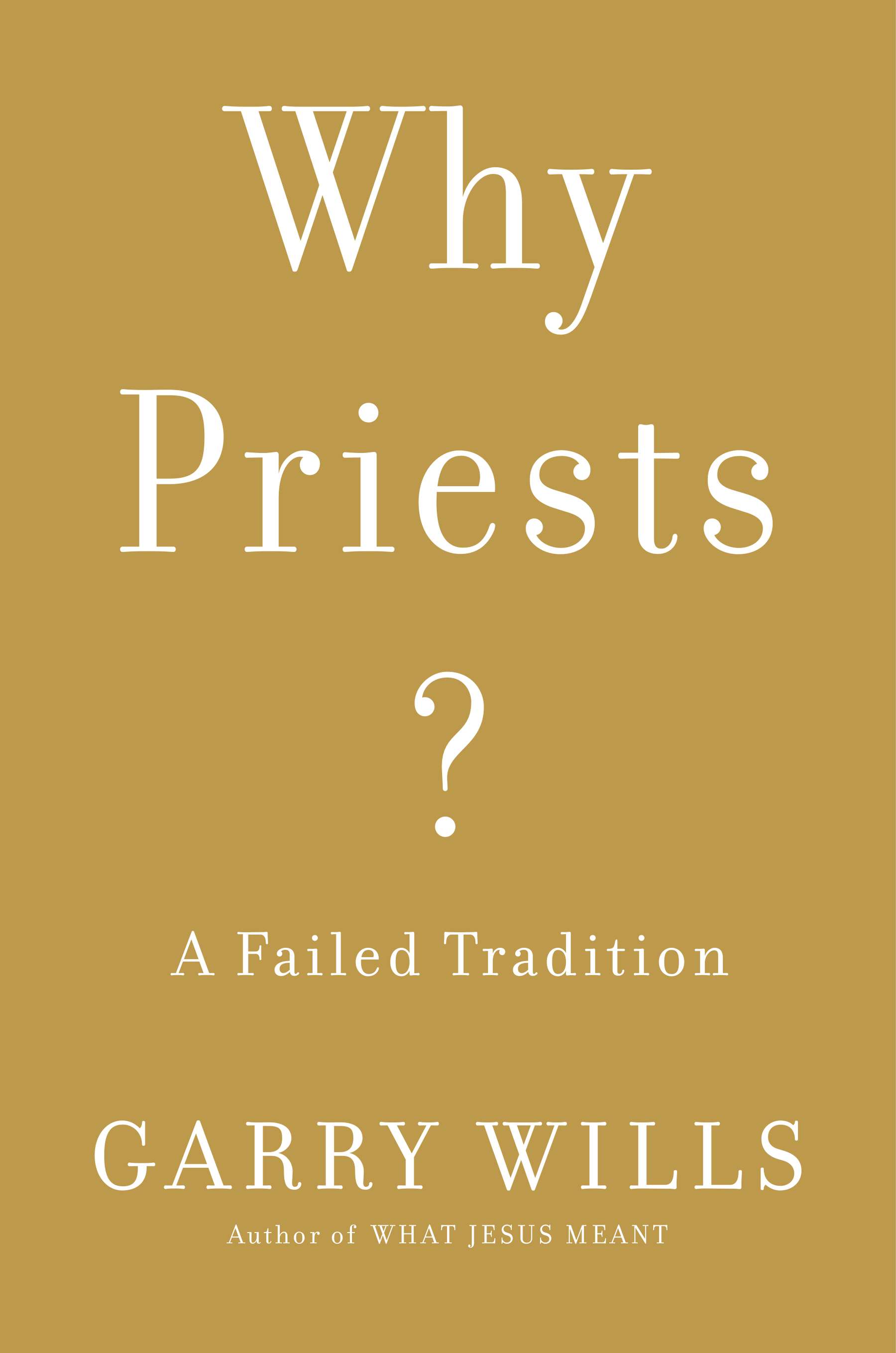
WhyPriests?A considered reflection from a long-time believer is a force never to be taken lightly. Garry Wills is a lifelong Catholic and an intellectual. His book, Why Priests? A Failed Tradition, was recommended to me by a friend and it is indeed a book that raises most profound questions. To someone born Protestant, such as the current writer, many of the arguments Wills marshals are strangely familiar. Many were lobbed in Fundamentalist harangues where clergy that believe in a literal six-day creation proved surprisingly adroit at finding the chinks in Catholic armor. The New Testament says nothing about the Christian movement having its own priests. And even the explicit command that seems to have come from Jesus—call no man father—is immediately reversed once priests become a fixture in a priestless faith. Wills explores the origins of these practices not to tear apart the religion of which he remains a loyal part, but to suggest that religious tolerance is the only proper solution. It is amazing how much of Catholic thought goes back to the disputed book of Hebrews with its mysterious Melchizedek.

While I have never been a Catholic, I have always been haunted by the idea that my religion was some kind of innovation. After all, the stakes were beyond stratospheric. If you pick the wrong one, at least according to what I was taught, Hell awaits at the end of the day. Then I discovered that my own Fundamentalism also had a history. We were called Protestants because we protested Catholicism. As I moved into the Methodist tradition, at least there seemed to be a continuity—John Wesley was an Anglican and Anglicans were really kind of English Catholics. Or so it seemed. Naturally, I became an Episcopalian since going Roman seemed like it came with exceptional amounts of accretions that were clearly not biblical. Such accretions are much of what Wills explores. Traditions that become doctrine. And exclusive. Those on the outside can hope for Purgatory at best, and the very Hell I was trying to avoid remained a distinct possibility. Who was right?

Religions suffer with time. The faith that Jesus seems to have proclaimed had already altered by the time Paul put pen to parchment. Ask any Gnostic. Already, within just three decades, the question became “now what did he say again?” And what exactly did he mean? The core of that message seemed to be love above all else, but that doesn’t make for sexy doctrine. Exclusivity achieves what love could never accomplish. Wills explores how sacraments evolved, and how Scripture became a sword dividing believer from believer. His most sensible solution? Its time to get beyond priests. He doesn’t actually suggest doing away with them, but asks Catholics why they don’t consider closely the implications of their roots. Melchizedek takes on a stature greater than anyone seems to have imagined for an imaginary figure. And a lifelong believer here asks the most basic of questions: what is Christianity truly about?


To the Swift

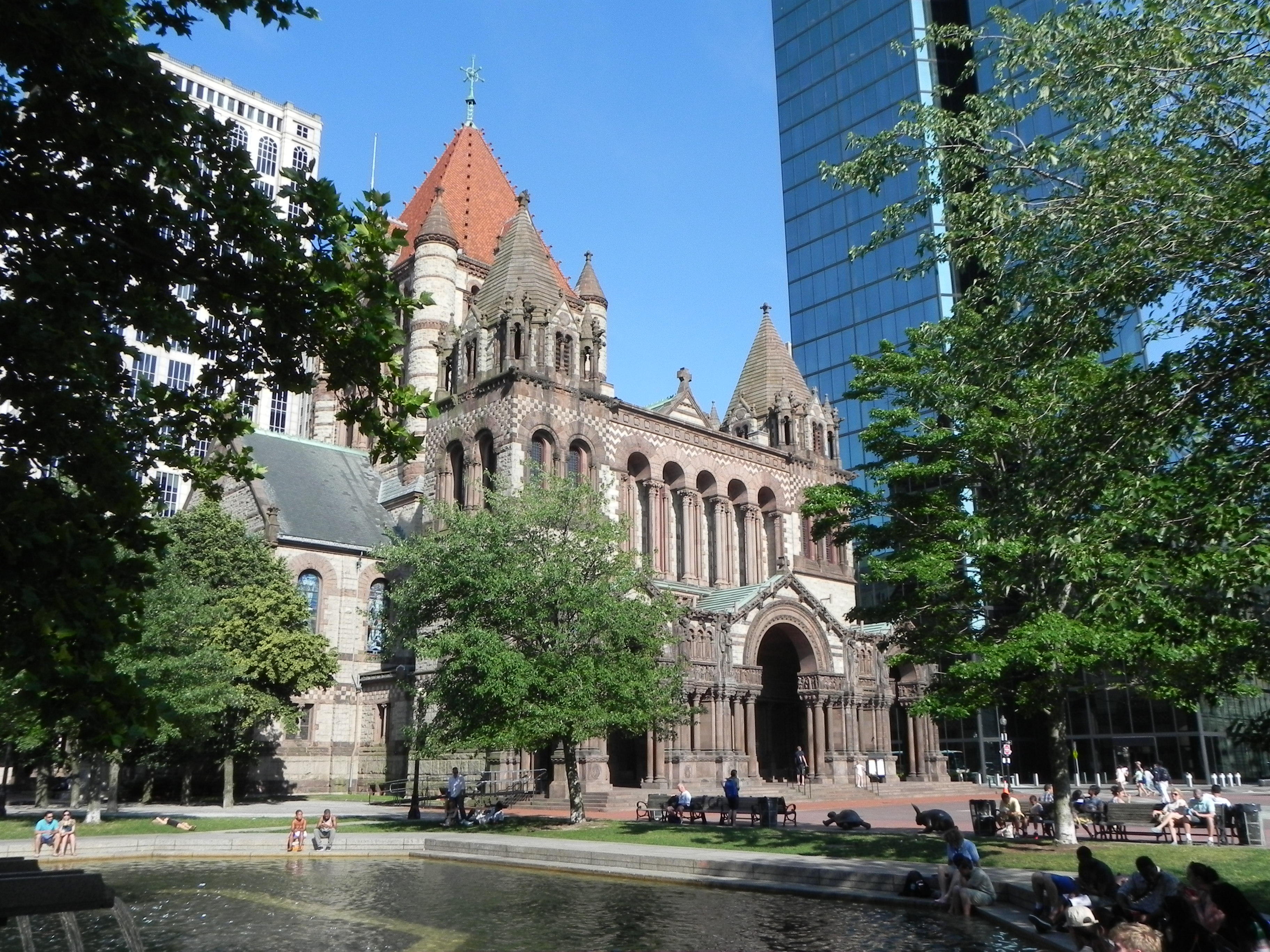
Despite its generally secular reputation, one of the great charms of New England is its churches. I was forcefully reminded of this during my recent trip to Boston. Each city along the way boasts impressive churches that might be glimpsed even from the highway, and although there are now many taller buildings it is possible to imagine the days when the steeples stood over all. Boston’s historic churches remain stunning symbols of the power Christianity once held in this city. We first climbed off the T at Arlington in the shadow of the great stone Arlington Church. On the Esplanade the looming steeple of the Church of the Advent violently reminded me of the deep mysticism that drew me to the Episcopal Church even while I was a Methodist seminary student. Park Street Church, King’s Chapel, The Old North Church, the Old South Church, and finally Trinity Church in Copley Square invited us to gander and ponder. Almost like fossils, these churches remind us of the history of what made the city, or the nation, what it is.

Trinity Church lies nestled at the base of the John Hancock Tower, Boston’s tallest building. A blue glass Brobdingnagian, this prophet of capitalism represents the highest possible aspirations of our race, so we are led to believe. The material triumph over the spiritual. And yet the tourists stop to photograph the stunning church. It is on the street level, down here among us mere mortals. Upon closer examination, I noticed the statue of the tortoise and the hare in the plaza of Copley Square, the holy terrapin racing toward the sanctuary, it appears from my angle. It seems that I have unexpectedly received a kind of epiphany.

Look closely.

Look closely.

I first came to Boston many years ago as a spiritual seeker. In the intervening years during which I was attempting to find out what that might mean in a life that was intellectually honest, many bronze sculptures appeared in this city. The one commemorating Robert McCloskey’s Make Way for Ducklings, installed after I completed my studies at Boston University, would not have caught my pre-parental attention, as I had never read the book. Now you have to stand in line even to snap a picture. The work of local artist Nancy Schön, both “Make Way for Duckings” and “The Tortoise and the Hare” are part of Boston’s continual evolution of character. Officially, we are told, the turtle and rabbit are representative of the Boston marathoners who trudge the final feet past this church toward the finish line. To me, this sculpture suggests something more as the hare dawdles and the tortoise breaks toward the church. It may be a marathon, indeed, but the race, I remind myself, is not always about being swift.


Fish Fridays

There’s an old myth among Protestants that on Fridays Catholics eat fish because fish are sinless animals. As far as I’ve been able to determine, this is pure fabrication on the part of curious outsiders. Still, it has grown a mythology of its own. Some say that the non-pecuniary piscines are that way because they, naturally, survived the flood. I’ve often wondered how that impacted the fresh-water varieties of fish, or if they evolved after the fact. In any case, the story, it seems, has grown with the telling. Fish on Fridays has nothing to do with the fish and everything to do with the people. And so does standing in line.

DSCN4792The New England Aquarium is, ironically, one of the big draws on a rainy day in Boston. I’ve stood in longer lines before, but after a late night of truncated fireworks and waiting an hour for a T train home after being thoroughly soaked, it is a test of endurance to stand for over an hour-and-a-half in rain encouraged by Hurricane Arthur. To see fish. To find sinlessness. The ocean, it always seems to me, is one of the places where human greed has not yet been fully realized (not that we haven’t tried) but in which we’ve dipped our polluting fingers time and again. Still, fish are fascinating. Watching them make lazy circles around the 200,000-gallon giant ocean tank, the many ways that creatures have evolved to swim enchants me like a kid. Of course, the real draw, for many, is the penguins. Psychologists have explored the human fascination with anthropomorphized animals. Penguins in their “formal attire,” clumsily totter about on two legs and occasionally display very human behavior. At feeding time some are polite, waiting their turn, while others are aggressive and pushy. If someone is too greedy, the bird next in line will push him or her off the rock into the water, where the offender has to come back to the group, having lost his or her place. Where does sin enter this picture?

Seeing fish on Friday has me wondering why we declare some animal behavior sinful and other animal behavior saintly. Wandering the four stories of this aquarium crowded with others seeking to avoid the rain is often like looking into a mirror. Do these animals realize they are trapped? Although the sea lions and seals seem happy and enthusiastic, and the penguins just bored, it is difficult to read the face of a fish. So after a long day standing, my family heads back into the rain, hoping to make it to some restaurant before this rain beats our weary umbrellas into utter submission. There’s almost no traffic today, but one driver speeds through the puddles down the great coastal highway 1, completely soaking those waiting to cross to drier climes. The wall of water coming at us would’ve made Cecil B. DeMille envious. It’s a holiday and I can’t figure what the hurry is as my second and last pair of shoes grows waterlogged from this selfish gesture only to get through the light. I’m pretty certain I’ve discovered where sin is, however, and it is definitely just outside the aquarium.


Freedom Trail

The machine gun on the bow of the National Guard boat would’ve impressed me as a boy. Now it kind of scares me. The helicopters overhead pass frequently. Police on jet skis chase girls in a canoe away from the shore of the Charles as if they were piloting a landing craft on D-Day. A whole blessed platoon of chartreuse-garbed police on bicycles pedal by, some clearly out of shape, creating a presence. It has been a quarter century since I’ve been in Boston to celebrate our freedom. I wonder where it’s gone. To get onto the Esplanade you have to be brushed with a metal detector. Although the web site said backpacks would be searched, the guy at the gate claims it said they were not allowed at all. “You can empty it out”, he said, “and put the contents in a plastic bag,” but the empty cloth must stay here under a tree like a naughty dog. “Happy Independence Day,” he says. I wonder if he’s aware of the irony.

Big Brother

Big Brother

We have become the most skittish home of the brave I know. We are being watched, we are told, for our own good. The watcher is not some enemy nation, but our own “leaders.” Lead us not, I pray, into temptation. I wonder when we considered chasing girls in a canoe away from the shore a matter of national security. In 1985 I called Boston home. When my wife and I came to the Fireworks Concert as a young engaged couple, we lazily wandered down to the Esplanade, plopped on a free bit of grass and saw maybe an officer or two the entire day. Now everyone on this grassy strip is treated as if they’re on a grassy knoll. Armed police on boats cruise the shore to make sure we’re minding our manners. After dark that helicopter spotlight can’t help but to make you feel guilty of something. There’s a hurricane coming, and three tons of fireworks are sitting anxiously on the barges in the river. The concert begins, but soon so does lightning. They skip right to the fireworks, forget the 1812 Overture. I wonder about my evil backpack under the tree.

The woman behind me is talking to her companion about how illogical the backpack rule is. “If the bag is empty, why can’t you take it in?” she asks. I’m not one to talk to strangers, but I have to turn around to agree. We exchange horror stories about being screened at the airport. Doesn’t anybody see how offended our revolutionary forebears would’ve been by such a military presence in peacetime? What if some crazed national decided to do something insane? Would that wicked machine gun hit me and my family, right on the waterfront, while trying to get the perpetrator? Are we collateral damage on the trail to freedom? Or is freedom even in the picture any more? We can’t let the terrorists win. Every time we face a backpack full of homemade explosives with hundreds and hundreds of chunky guys on bicycles and hovering our heads with deadly force, I can’t help but think it’s no contest. There’s a hurricane coming. They rush through the fireworks and I join the other owners of dispossessed backpacks looking for my luggage. Then the fattest raindrops I have even felt begin to fall.


Call it Civilization

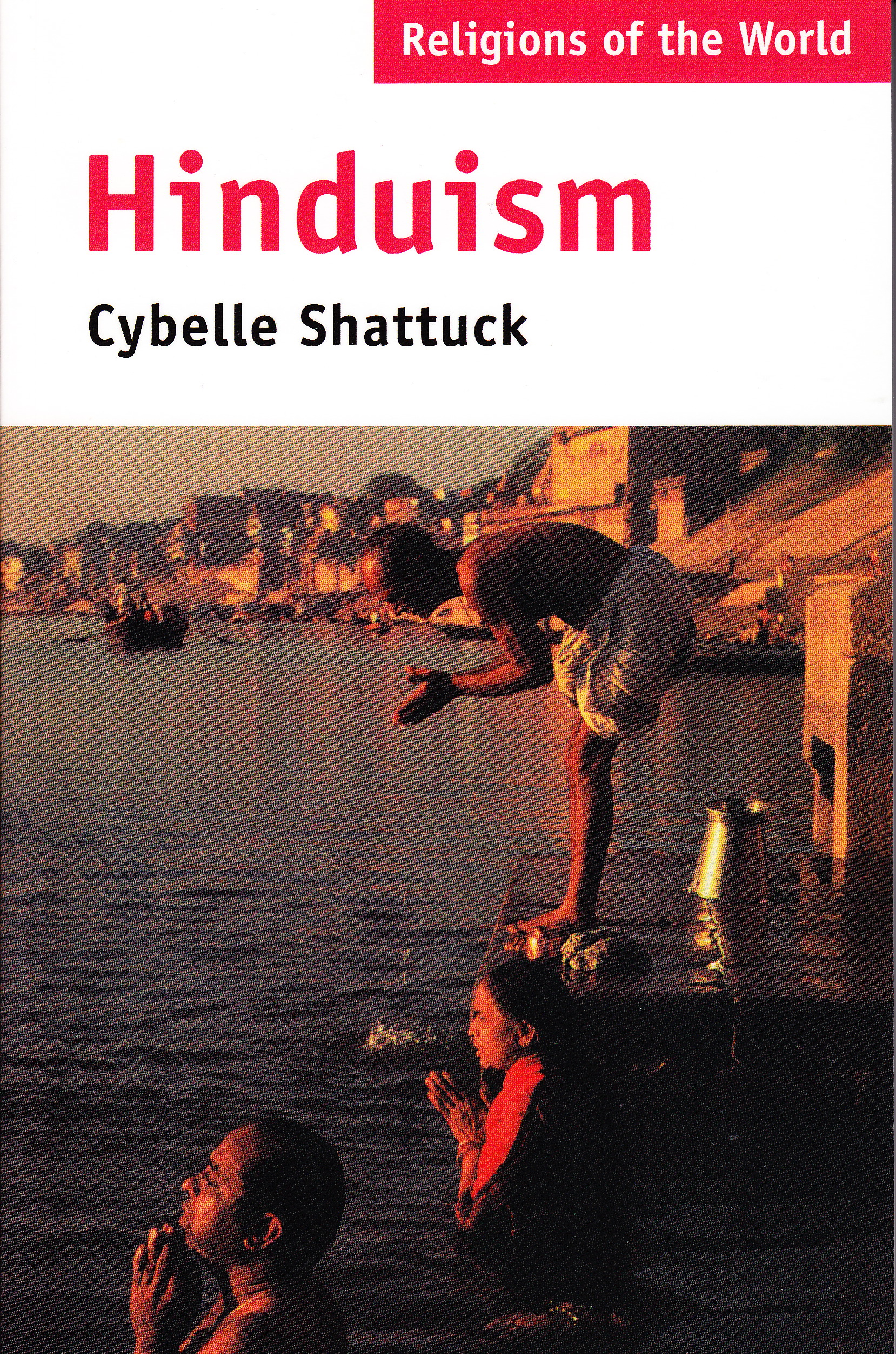
HinduismWhile brushing up on Hinduism by reading the book of that title by Cybelle Shattuck, it once again occurred to me how the concept of religion distorts itself. Prior to the Roman Period, the concept of religion really had no name. In fact, religions were sets of folk beliefs held in common by people of a single culture. These beliefs had many functions: keeping social order, establishing common practice, undergirding a kind of optimism in the face of inevitable death. Since long-distance communication was rare and unreliable, communities separated by more than a few miles soon developed details that fit their own situation and would hardly apply universally. Until they were written down, anyway. In Hinduism—which is in no sense a unified religion—even the “sacred writings” were not held to be authoritative for all people across all places and times. That concept would emerge with Christianity, a religion that would define the term and try to make it stable.

Hinduism is the oldest continually practiced “religion” in the world, as far as we can tell. The religions of the Mesopotamians and Egyptians eventually died out (although they have been revived by some in recent times) but the folk belief—or better, folk practice, of ancient India has continued relatively uninterrupted while new religions from Israel and Arabia changed the rules of the game. Monotheisms quickly demand heresies. A single God would not tell people different truths. Something upon which Shiite and Sunni, Catholic and Protestant, Pharisee and Sadducee all agree. One Lord, one faith, one baptism. By fire.

Meanwhile, even with Muslim and Christian missionaries afoot, Hinduism continued its accustomed continuity. To be a Hindu doesn’t mean worshipping the same god with the same ritual as everybody else. It is a way of living intended to keep dharma and avoid bad karma. And even as trendy westerners stretch themselves into impossible yoga postures, they are participating, at some level, in ancient practices that we call the religion of Hinduism. Shattuck’s brief introduction is a nice little primer that explains this time-honored folk tradition in a way even a believer in religion can understand. There are, it turns out, more things in this philosophy than our universe has ever dreamt of. Or perhaps the one dreaming is really Vishnu after all.