Weathering the Storm

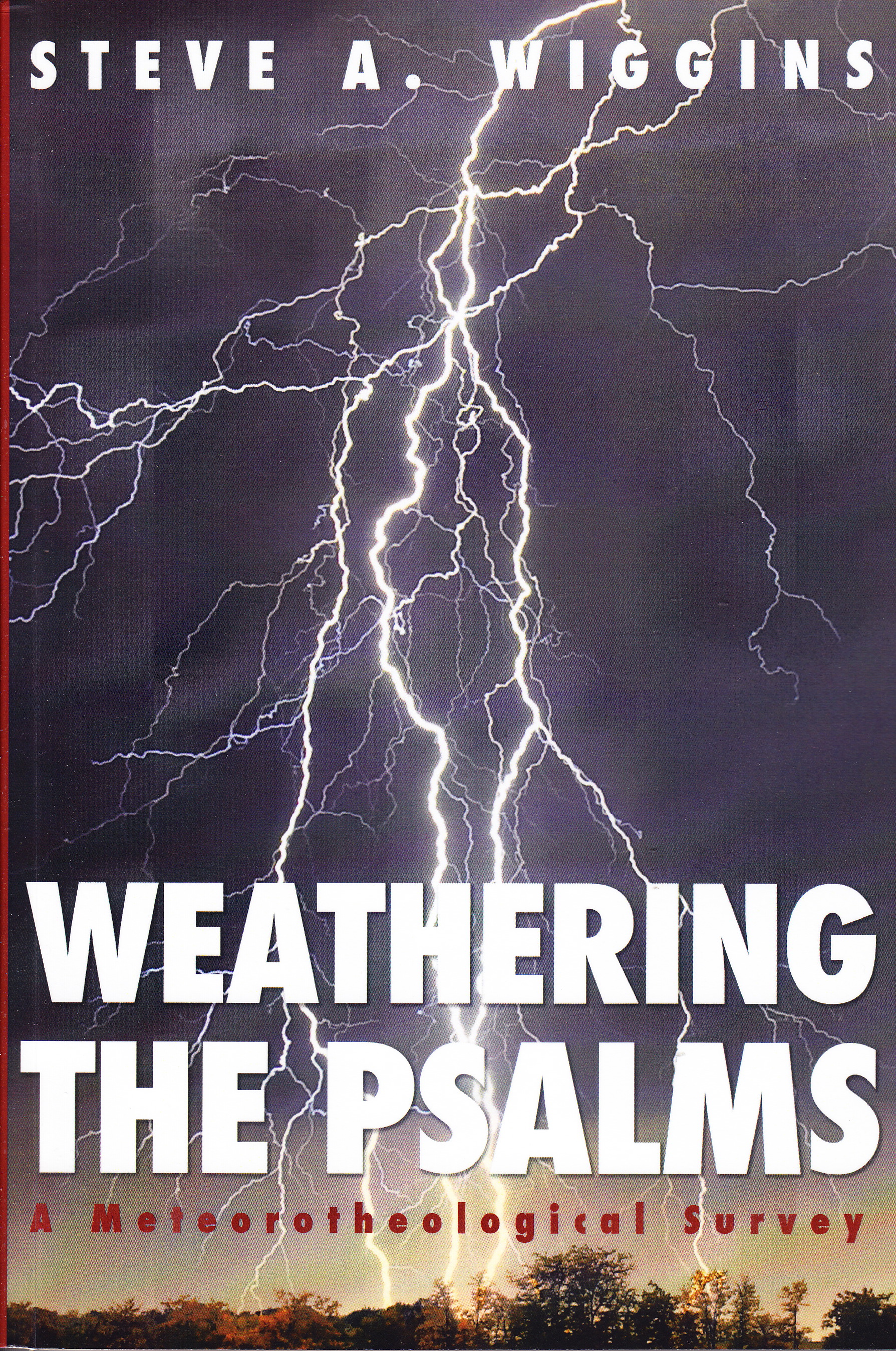
WeatheringThePsalmsI had almost forgotten the validation of being published. Colleagues sometimes ask me if I’m still working on any books without realizing that employment in publishing, with rare instances, constitutes a conflict of interest. Editors are acquirers of content, not producers thereof. As I’ve been preparing Weathering the Psalms for release on the world, I often consider how differently all this may have turned out, should I have found academic employment after Nashotah House. The day my contract was terminated, I was working on this book. It had recently been declined by Oxford University Press, and the reviewer (whom I had unwittingly met) had informed me that the book wasn’t really salvageable. It was a jumble of data with no narrative thrust. I was working on giving the data a different frame when I was called to the Dean’s office and told to read a legal memo in the presence of a lawyer. Every time I tried to turn back to my book after that, the nightmarish scene replayed in my head. Besides, I had to try to find a job.

It was only when working for what I thought was a stable Routledge that I had the chance to revisit the manuscript. Ironically, it was only after I was no longer in a position to do research that colleagues began to approach me to review submissions for journals, to invite me to write articles, and to express an interest in my research. Of course, it was too late for me to begin full-fledged research again. Despite the internet, scholars require two things I did not (do not) have: access to a university library, and time. Early on in my commuting days I discovered that the quality of the time on the bus did not allow for in-depth research. Too many other passengers have too many other agendas. I can read on the bus, and sometimes academic books, but anyone who’s tried to take notes when crammed into the space usually taken up by a backpack knows the difficulty of writing notes without the use of your arms or hands, over the constant electronic noise of your neighbor’s unsilenced electronic games.

All of which is to say that I’m very pleased to see Weathering the Psalms is out. Like a child untimely born—at the risk of sounding biblical—the book is being printed as I write. Working in publishing I know better than to expect phenomenal sales, still, many of my readers over the years have said they’d buy a copy if it was ever published. If you’re serious about that, take a look at the website of Wipf & Stock and click on the Cascade Books imprint. Finishing this book has, I must admit, awakened a hunger. I have, of course, started to write another. It may be another decade in the making, and, should it ever garner the attention of a publisher, a similar post may come along before I’m too old to think clearly. The ideas are there; the opportunity to express them is not. Still, despite the cruel vagaries of academia, I feel as though I’ve received a small validation, and I am very grateful for the honor. Wipf & Stock offers a service that other academic presses might do well to emulate. It’s not all about the earning potential of a title. Sometimes it’s just a storm.
Real Devotion

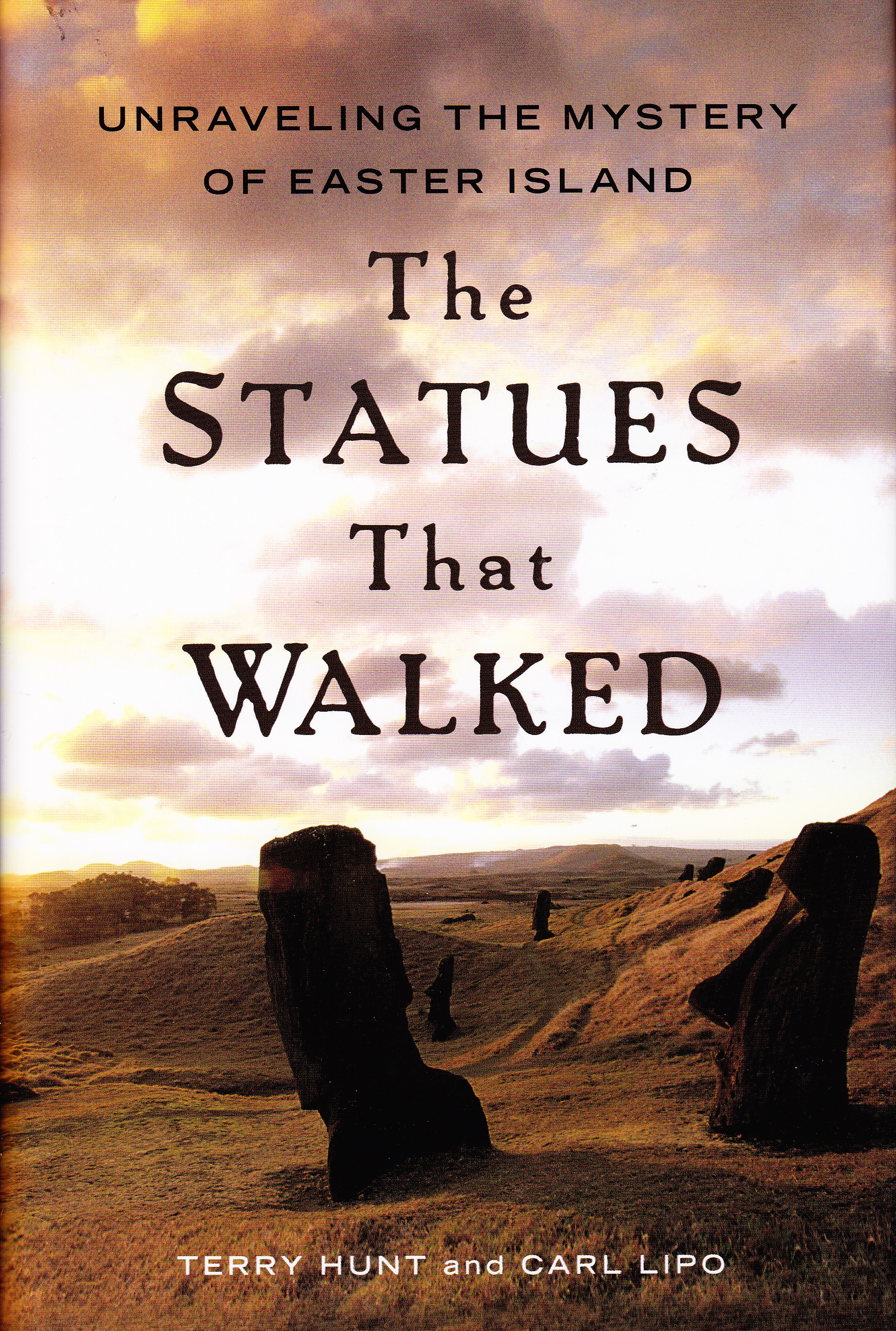
StatuesThatWalkedEaster Island instantly brings up images of massive statuary and mystery. From childhood (and that will likely continue for some time due to Night at the Museum) the sensationalized accounts of these eerie statues appeal to our sense of wonder. And they should. Still, as Terry Hunt and Carl Lipo demonstrate in their informative book, The Statues That Walked, the island is more than it first might seem. A small, extremely isolated bit of volcanic rock in the south Pacific, Rapa Nui—the native name for Easter Island—has never been a lush paradise. Its volcanic soil long ago depleted, it was only occupied from about 1000 CE, and then only marginally. In fact, were it not for the moai, nobody would probably have paid much attention to it. Even today this remote island draws thousands of visitors, despite its lack of luxury, because of these huge-headed, silent statues. And who but a specialist would read a book about the island if the moai were not featured?

Hunt and Lipo are archaeologists and anthropologists. Their interest is not primarily in mystery, yet after beginning their fieldwork on Rapa Nui, they felt compelled to turn their attention to the huge statues. Their book, in fact, takes its title from the moai, and soon settles in to a discussion of them. They are, not surprisingly, religious symbols. Many people would probably prefer that critically minded scientists leave their favorite mysteries alone. Yet the story of the moai is fascinating, and still unexplained in the larger sense of why people in a subsistence-level situation would expend so much effort on religion. Hunt and Lipo suggest the moai are examples of costly signaling—the evolutionary principle of the peacock’s tail. Even people with barely enough to eat will put enormous effort in demonstrating to their neighbors that they have the favor of the gods.

Other ancient Polynesians also built statues. On Rapa Nui it grew to a kind of religious obsession. Hunt and Lipo propose a perfectly naturalistic way that the massive statues could have been, and probably were, moved across the island. More importantly, they uncover that the inhabitants probably did not indulge in ecocide, cutting down all the trees. There were other culprits involved. After European discovery of the island, it was time and again devastated by disease. Although they don’t come out and say so in the book, European contact probably contributed to the abandonment of the great statues, many of them still in situ at their quarry. The moai likely represent ancient ancestors in a culture where veneration of the same is the basis for a natural religion. I won’t reveal any spoilers here since The Statues That Walked is an important book to read on many levels. And, although it doesn’t make this claim, it shows that religion will likely always be part of history’s great feats of lasting intrigue.


Not Your Grandma’s Moses

Exodus Gods and Kings

Exodus: Gods and Kings is, in many ways, a startling movie. It didn’t leave me with a strong impression of profundity, but it did make me a bit reflective. The media hype about God as an eleven-year-old boy proved to be merely hype. In fact, the boy deity was one of the most intriguing characters in the film. The role was played respectfully, and God, like a good Englishman, favored his tea. There was nothing comedic about it, however. More troubling was the agnostic Moses, à la Clash of the Titans with its unbelieving Perseus. Moses, even after meeting God, comes across as having little interior life. He hides in a cave and builds an army of terrorists making him seem like Moses bin Laden. He conceals himself while innocent Hebrews are hanged for his crimes (and did they even hang people in ancient Egypt?). When a great storm brews over Memphis, however, it is with a sense of wonder that we ponder at an eleven-year-old doing all this.

The movie plays lightly with the scholarly “explanations” that used to be doled out in seminaries about how one plague led to another. In fact, the character called “the Expert” in the credits is shown lecturing the Pharaoh on the causation scheme of clay churning up in the Nile turning it red, and killing the fish which in turn drove the frogs from the toxic water, but when they died flies came along and the flies spread disease. Then the Expert is hanged. Not so subtle a warning to biblical scholars. In fact, there seems to be a science behind much of the movie that makes miracles less acts of God than acts of nature. Even the drying of the Red Sea is understated. Its return is reminiscent of the Christmas Tsunami of 2004. God is sometimes not there when you’d expect a deity to care.

On the matter of caring, for an age of nones who have concerns for equality, the film was thin on women’s roles, making even the Bible appear to foreground them more. Sigourney Weaver—great in any context—seems only to be there to wish Moses dead. Even Miriam is given scant lines in the movie and no role in the Exodus itself. In Prince of Egypt she at least led her famous song. Zipporah is lovely but shows no sign of being as handy with a flint knife as Exodus makes her out to be. A woman of action. Miriam’s quick thinking saved the infant Moses. Overall, however, the Bible is a guy’s book, and Exodus is a guy’s flick. Opening with the battle of Qadesh on the Orontes is a way to draw men to a Bible movie. Lots of slashing, gashing, and charging horses. And the splendor of Egypt, filmed in Spain and the Canary Islands. Some miracles, it seems, are even impossible for CGI.


Exobiology

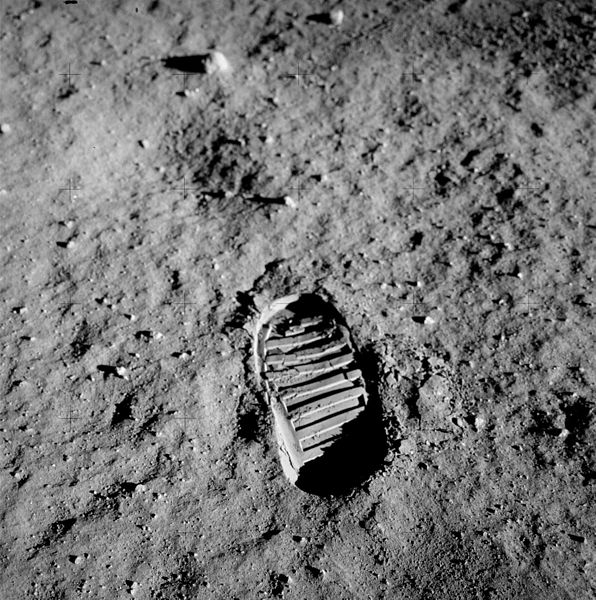
Are we alone in the universe? The answer is every day growing more and more certain that we are not. Humanity may experience shortages of many things, however, pride is not among them. For millennia we’ve been convinced of our own superiority and, of late, we’ve become convinced that we must be as good as it gets. We’ve mastered logic and our material world. We’ve sent probes to land on Venus and Mars, and flying by just about every other planetary body close enough to reach. We sure are smart. So it stands to reason that we are the brightest beings in a universe that we tell ourselves is infinite. A recent article on Exobiology that my wife pointed out to me on The Conversation, traces the history of the idea of life outside the earth. Not surprisingly, the idea has its origins in religious thought.

Giordano Bruno was an early modern Dominican who was burned at the stake for his heresies. Like his near contemporary Galileo, he was fascinated by the sky and postulated that the world up there could be full of life. A church increasingly under pressure from the pesky Protestant movement had no time for flights of fancy among the faithful. No, religion at the time wanted its feet planted on solid ground. The only life up there was angels and God. Still, the idea had been broached. Since the world’s major religions have been geocentric, as a rule, they’ve had a bit of difficulty adjusting to the idea of the other other. God as other is one thing, other creatures as other is quite another. How do earth-bound religions account for the possibility of life in space? This is not merely academic fancy at play. We will almost certainly discover life elsewhere—whether it comes to us (or already may have), or we go to it (which might take a little longer), we will discover that a universe that is infinite has infinite possibilities. Will religion keep us grounded?

596px-Apollo_11_bootprint

Ironically, one of the areas where science and religion have broadly agreed is in the superiority of humankind. Both remain staunchly geocentric. Religions and tend to say we’re sinful, but other than that, pretty much the best the earth has to offer. Although biologists say evolution is non-teleological, they still have a hard time imagining something more advanced than us. We are pretty self-absorbed. Meanwhile, we are discovering water is likely not unique to earth. Rocky planets seem to be the rule rather than the exception. And there are billions and billions of stars in our own galaxy alone, among billions of others. What are the chances we’re alone? Virtually none. Here is one place that both religion and science might learn a lesson based on early spiritual teachings. In the face of the unknown, humility is the most logical response. I’m impressed in how far we’ve come in the last several millennia of civilization. I think, however, that we’d better be prepared to meet exobiology with a realization that Genesis 1 was only the beginning.


And With Thy Spirit

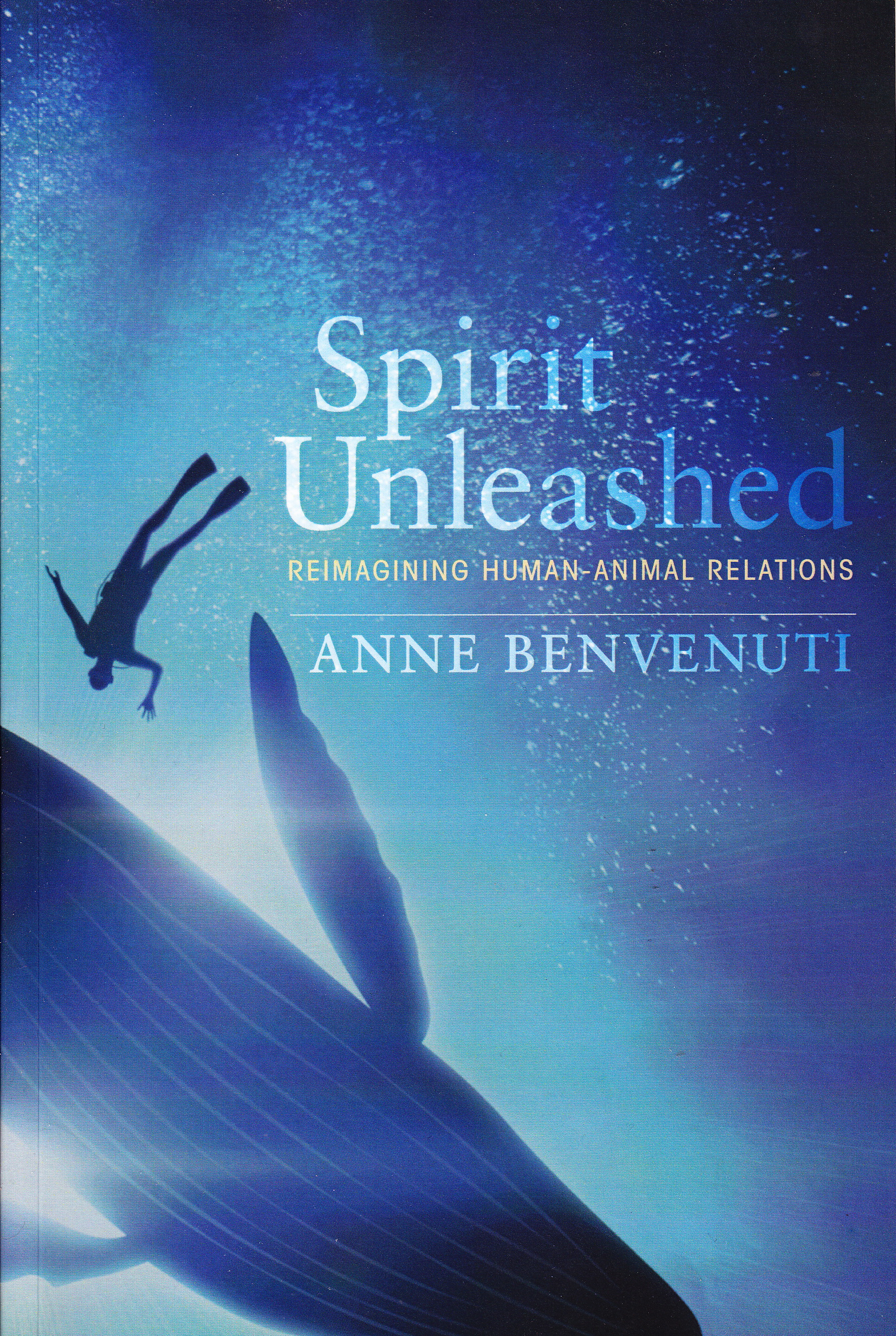
BenvenutiI grew up with pets. In a house with three boys, an aging mother, and no husband, my mother seemed to know instinctively that animals were a way to engage children. She herself had grown up with animals, although not really from a farming family. Living with animals leads to conclusions scientists fear to make. That’s one reason I find Anne Benvenuti’s Spirit Unleashed: Reimagining Human-Animal Relations so important. Not only do animals remind us of who we are, they are who we are. Benvenuti has the scientific credentials to make her case, although, I have to admit, her anecdotes of interactions with animals were my favorite part of the book. We may be told that animals don’t think or feel. Nature, however, proves that wrong for anyone who actually pays attention to animals. Unfortunately, humans are often the bullies of the planet just because our animal brains developed the way they did and our thumbs migrated to a position where we could easily manipulate objects. It’s time to bring animals up to the table with us.

For years I have suggested to my students that animal behavior has the rudiments of what we call religion. I’ve always felt like a voice calling in the wilderness here since both proponents of and opponents to religion think it is uniquely human. Again, the evidence suggests otherwise, but human knowledge often comes at the cost of evidence. It is refreshing to read a book—perhaps the first I ever have—that makes this idea plausible. The “spirit” of Benvenuti’s title is literal, in a sense. She argues forcefully that animals have souls and with this I would agree. The main problem is that we can’t quantify souls and therefore we don’t really know what they are. We know one, however, when we feel one. I’m not sure they’re much different than minds, or maybe they’re the feeling side of the thinking mind. Whatever they are, we are not the only animals to have them.

I’m convinced that one of the reasons we don’t like to admit animal souls (or animal religion) is that such belief ratchets up accountability. Stockyards start to become detainment camps for innocently condemned creatures. If we dare address the moral issue, we have to ask what gives us the right. To kill for food is natural (although I’m happily vegetarian) but to keep animals in miserable conditions their entire lives and then heartlessly kill them and process them as if they were mere objects is immoral. As Benvenuti notes, even farmers who spend time with their animals know they have personalities. Spirit Unleashed is a book full of wonder and awe. Not so much at human superiority, but rather at how much animals really are like us. How they communicate with us if we’ll listen. And how we all have, even if we can’t define the word, souls.


Behind the Exodus

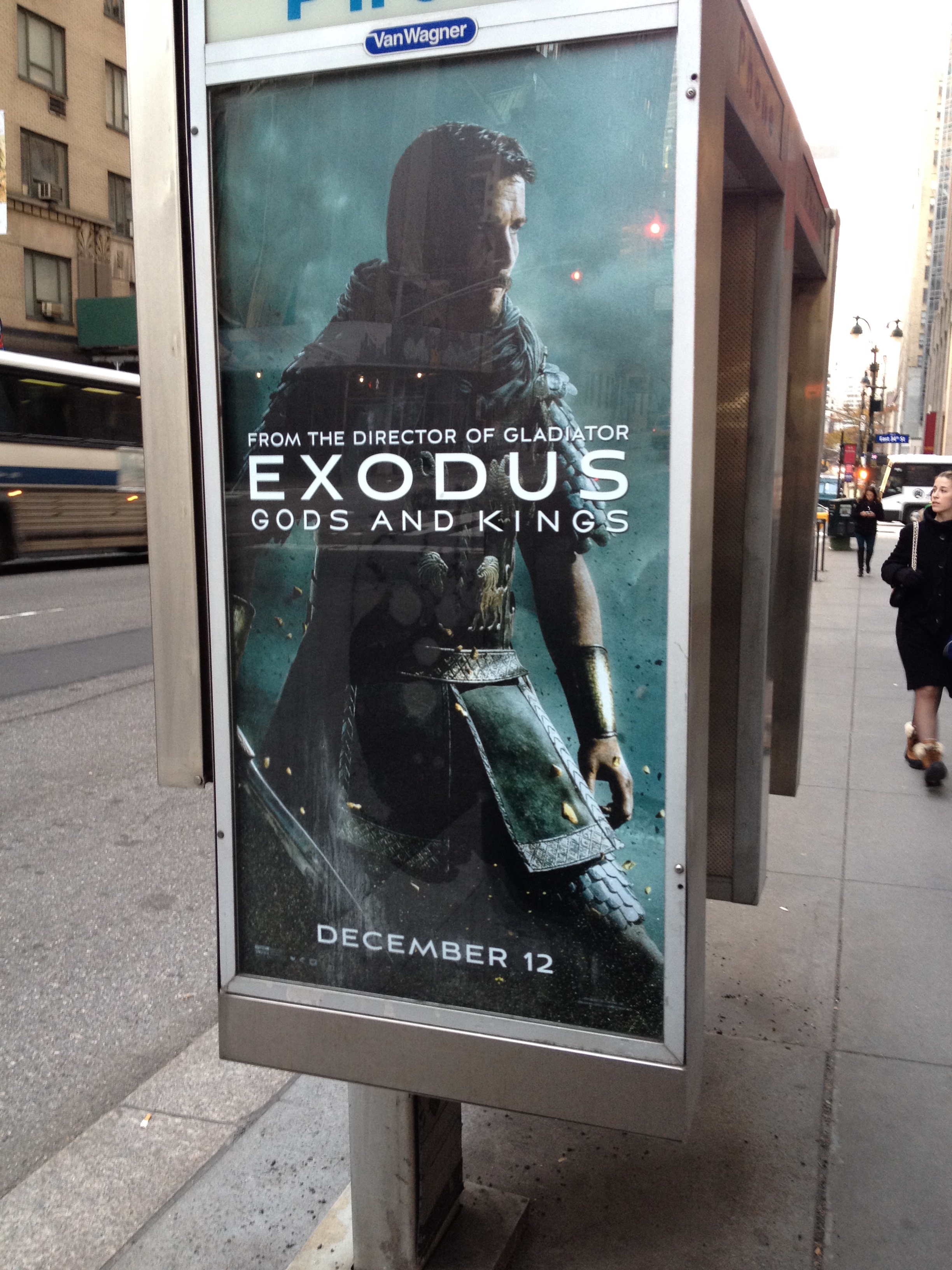
Over this past week two of my friends/colleagues were quoted in major media outlets about Exodus: Gods and Kings. Being merely a blogger with nearly two decades of teaching Hebrew Bible means, naturally, that I have nothing valuable to say. Nevertheless, I would meekly venture to make my own observations and cast them out there into the world-wide web and see what happens. I haven’t seen the movie since it only opens tomorrow. I already know it is only loosely based on the Bible. Still, I wonder at the talking heads who constantly declare the Bible to be irrelevant to a throughly modern world. Okay, so I realize that this is about money, but Manhattan is often seen to be one of the more sophisticated cultural landmarks in the country. This summer I couldn’t walk more than a book or two without being inundated with Noah posters. Now I am finding the same with Exodus paraphernalia. If we try to put the Bible away, it seems, it will come to find us.

IMG_1843

The Bible, relevant or not, is full of great baseline stories. Even in a secular society we can see the appeal of Noah and his menagerie to young children who are so fascinated with animals. We decorate youngsters’ sleepwear and toys with elephants and lions and giraffes (interestingly not mentioning that these are primarily African animals) aboard an ark with an unfailingly cheerful Noah. Now we have another classic—the great liberation story (also set in Africa) of a people held in bondage being released by divine command. We are a post-Christian society, according to the pundits, so who this divine one is remains an open question. The idea that one people is kept oppressed by another people, however, is presented as unequivocally wrong. Moses rides out on a horse, weapons in hand. Are we not focusing on the larger point yet?

IMG_1848

This latest love affair with the Bible as a source of great cinematography will not last forever. It will surely ebb away until only a few old blog posts might remain to remind us there was a time when Holy Writ inspired screen writers and directors. Nevertheless, the Bible bides its time. Back in the days when I used to teach Hebrew Bible Hollywood didn’t do too much to help out. Students had to slog through pages of picture-less Bibles to get the gist of the what God had in mind. The results may not be the same from those comfy seats in movie theaters, but a future generation will come to see Charlton Heston as a white man who loved guns being overcome by a newer generation of producers and directors who know there is a larger story here. Of course, I’m only a blogger with no credentials. Still I know what I see on the streets of the city.


Entitlement

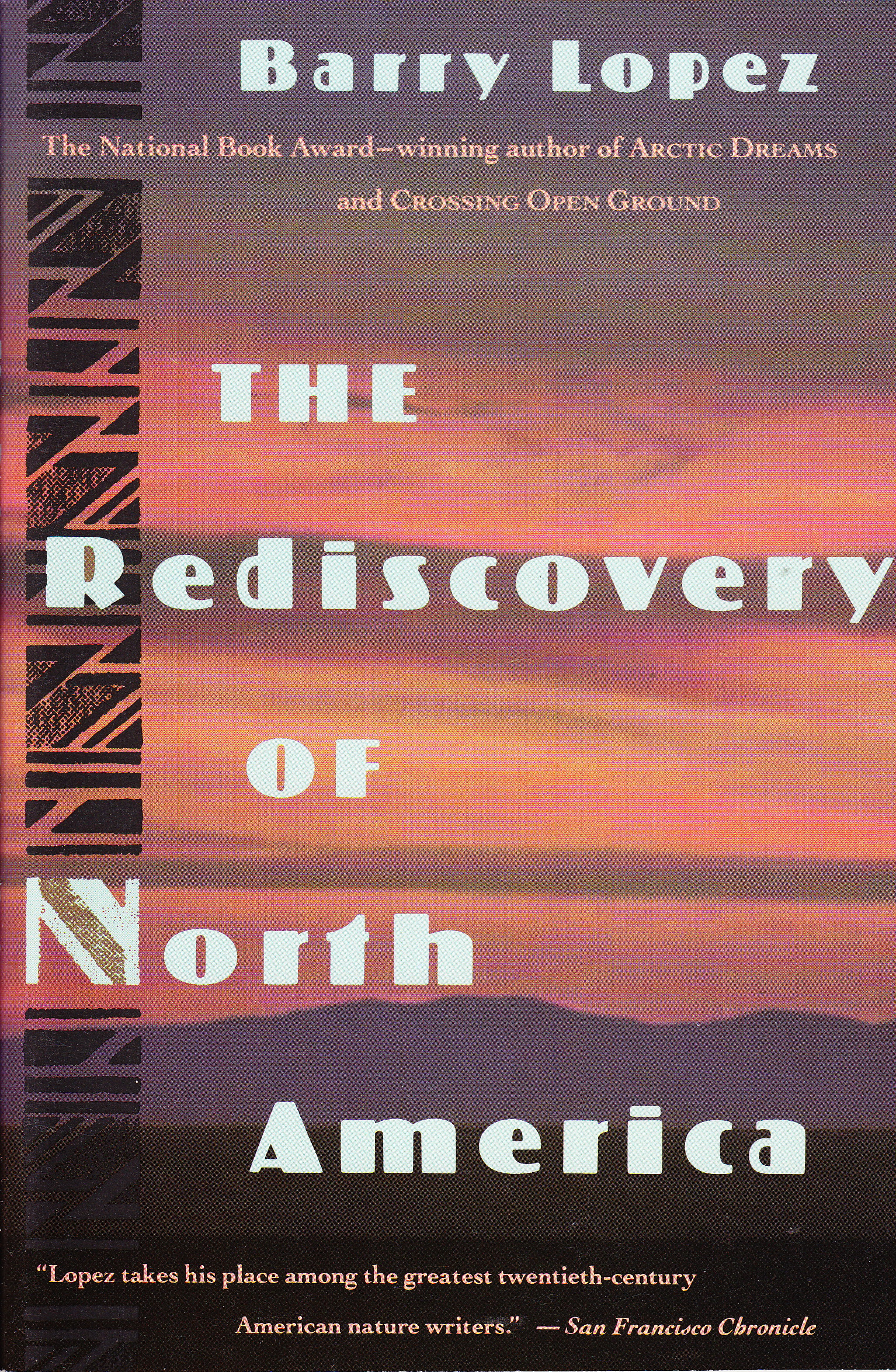
LopezNorthAmericaAs winter begins to settle in, I recall reading Barry Lopez’s masterful Arctic Dreams many years ago. That book left such an impression that when I saw his The Rediscovery of North America—a very small book—I thought it was worth the asking price. Lopez is one of those nature writers who can transport the reader into the world he observes. This brief volume, however, takes the reader to a very different kind of world—the world of European interaction with North America. As children we (and I speak for myself, or perhaps my generation) were still taught that Columbus was a kind of hero. He ventured into the unknown and discovered an entire new world. That world became the everyday place we inhabit with our comforts and our toys. Things only got better from there. Of course, I learned to distrust this view by the time I was an undergraduate, and my perspective has turned a bit more serious since then. These events, viewed from the perspective of the Native Americans, have a completely opposed outlook. Lopez tries to capture a sense of how to rectify these wrongs in his Thomas D. Clark lectures that make the basis for this book.

Greed, no doubt, drove the early explorers of the new world. And a sense of entitlement that has not diminished with the passing centuries. While it is not as simple as tracing this sense of ownership back to Genesis, clearly the Bible plays some role in it. Religions that teach their adherents that they have the sole truth will inevitably lead to entitlement. Monotheism, as I’ve noted before, possesses the tendency to make absolute claims. One God, one Church, one Truth. And non-believers become expendable. To the Catholic Spaniards setting out for the new world (or actually, old world, but tripping up on the new along the way), as Lopez points out, were driven by lust for gold. And spices. And fornication. Things that, if one took it seriously, would be decried by the church as vices. Still, taking advantage of the gullible and helpless is a time-honored practice among many religious bodies, and we know that genocide ensues.

Somehow history has taught us that some genocides are worse than others. Those inflicted on native populations, perhaps because they weren’t always intentional (in the case of diseases) are sometimes still given a silent assent. Yet, as Lopez makes clear, the intention to murder was there already. The conquistadors had already decided that the natives did not deserve the same rights as the God-blessed new arrivals. What saddens me—and I think Lopez too—is that this same sense of entitlement, instead of tempering with time, has continued to increase. Tea Parties and American Values often include removing those who disagree. Inconvenient indigenous populations that aren’t mentioned in the Bible except as Canaanite stand-ins. And should we care to make right what was perpetrated, perhaps we ought to consider rediscovering North America.


Magnificat

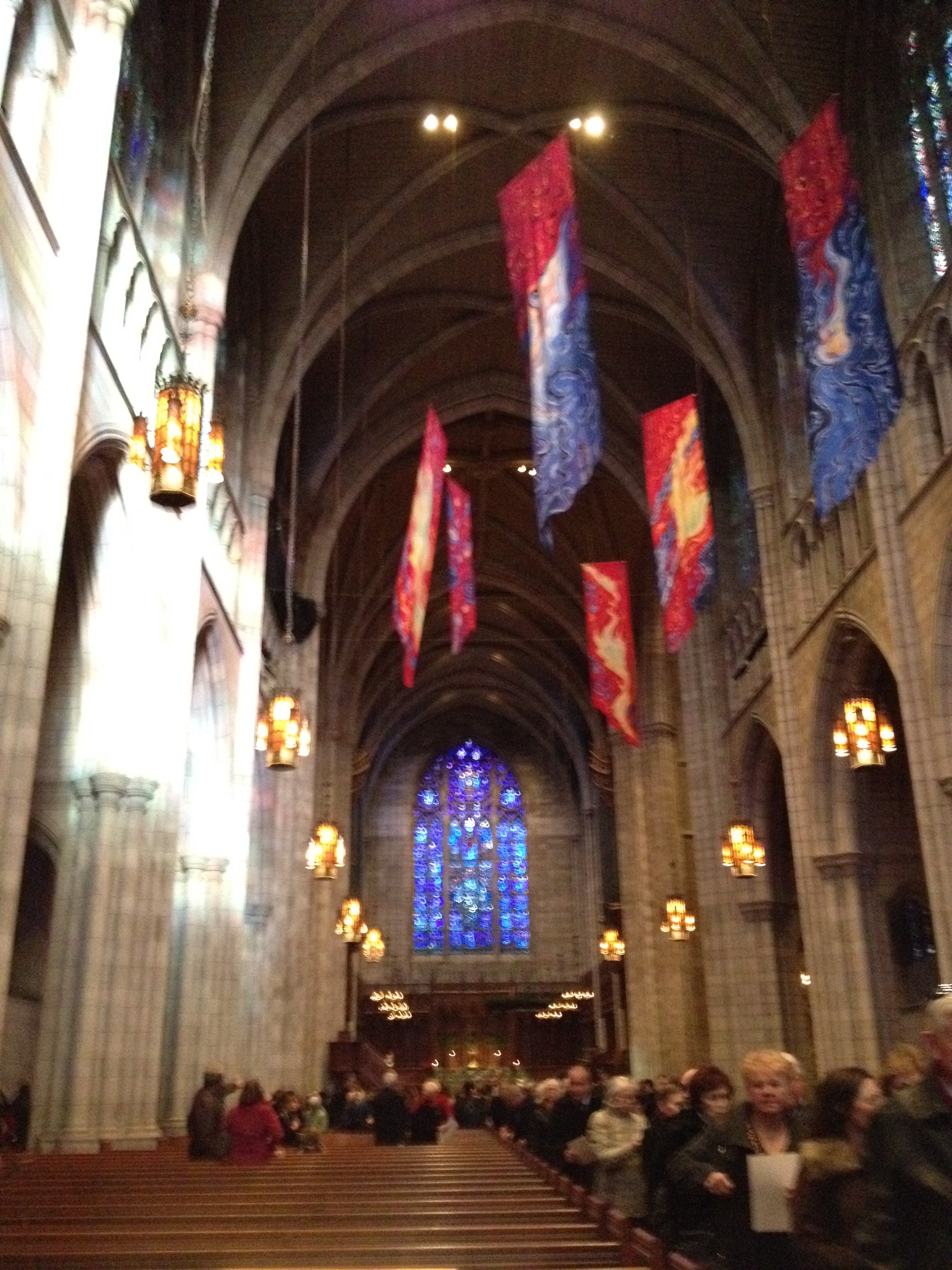
IMG_1857One of the advantages of a huge endowment is the luxury to experience culture. Although we don’t live in Princeton, we don’t live far from it, and most years we venture down to hear the free Advent Concert given by the Princeton Chapel Choir. For those of you who’ve never been to the Princeton campus, or perchance have not visited the chapel there, the setting is part of the experience. On the order of a small Medieval cathedral, the campus chapel at Princeton is by far the largest I’ve encountered, and the acoustics from the soaring stone are impressive, even to an untrained ear such as mine. Since my wife is the musical one in this marriage, she reads the program with an avidity I lack, but I do recognize striking music when I hear it. This year’s concert included a piece I recollected from a few years ago, Christine Donkin’s “Magnificat.”

I’m at the age where it is no longer surprising to find very talented people much younger than myself. Christine Donkin is in this class. A Canadian composer, she has had her music performed in major venues such as Carnegie Hall. Her “Magnificat” is the only piece with which I am familiar, but it is a powerful work that can be compared to a mystical experience in the listening. Written for women’s voices, the piece evokes a spirituality that seems to come easily to those who are submissive. The Magnificat is, by tradition, Mary’s psalm of submission to the divine will, based on 1 Samuel’s account of Hannah conceiving the prophet Samuel. In a world dominated by male humans as well as a male deity, the song of Mary is one of the subtle poems celebrating the upsetting of the entrenched power structures that have held women down. If you listen closely enough, its subversive elements become clear.

Donkin’s “Magnificat,” in a darkening cathedral on a December evening, is a moving experience. It is a piece that leaves me feeling as if I’ve temporarily been somewhere else. And that elsewhere is far from the turmoil and troubles of daily life. And there are no men involved.

Over the years we’ve heard many impressive performances in that stone edifice. None, however, it seems to me, so powerful as that of a young woman confronted with a reality beyond that of everyday life. A reality that men cannot touch, but which, when the circumstances are right, they might hear if they’re willing to listen, and in doing so might find their own burdens lightened for a few minutes on a winter’s evening.


Manitous

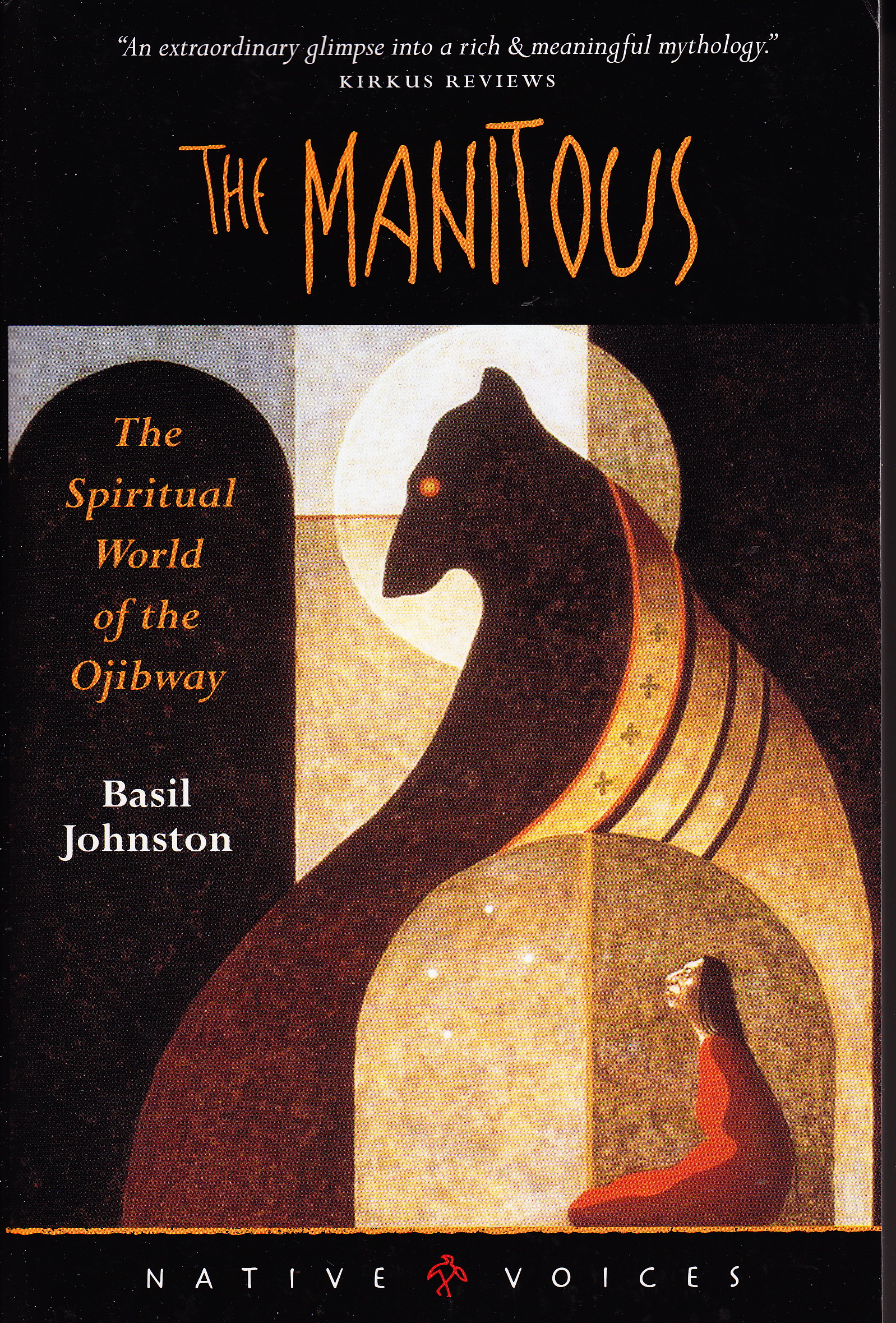
ManitousOne of the yearly autumnal rituals we’ve established is the watching of Escanaba in da Moonlight. It is a silly, crude, and profound movie that revolves around Native American lore—namely, the creature known as the bearwalk. Despite the high level of interest in monsters on the internet, the bearwalk continues to be elusive. Robert C. Wilson wrote a novel, Crooked Tree, about this Ojibwa legend, but academics have seldom explored it. The few resources I found pointed me to the wendigo. Wendigos are frightening spirits of the forest, sometimes presented as skinwalkers, or shape-shifters, who prey on unwary human beings. Some writers call them werewolves, but this isn’t exactly correct. Frustrated at finding no solid information, I picked up a copy of Basil Johnston’s The Manitous: The Spiritual World of the Ojibway. Johnston, who is Anishinaabe, writes to preserve the heritage of his people.

Manitous don’t have a direct equivalent in English. Some have been inclined to designate them as gods or spirits, but they inhabit that strange realm that overlaps with humans as well. The Ojibwa viewed the world as more animate than western science allows. People were part of this larger universe, but were not the sole end of intelligent life. The tales in this book map out an unseen territory where manitous may be found in lakes and streams, in the hearts of trees, in the early prototypes of humankind, and yes, in the wendigo. The wendigo (also spelled windigo or weendigo) is a representation of excessive acquisitiveness. They often begin life as humans, but become cannibals. As they eat other people their hunger grows, along with their bodies, and they cannot be satisfied. The more they eat the more their hunger remains. They are, therefore, extremely destructive, roaming the woods seeking human victims.

Throughout The Manitous, Johnston gives little in the way of editorial comment. One of his stories is a parable for the coming of Europeans and their subsequent treatment of Native Americans, but most of the tales are of the natural world. The wendigo occupies the last chapter of his book. Before putting the matter to rest, however, Johnston makes a poignant and valid point. Although the Ojibwa no longer believe in a literal wendigo, the treatment of the earth by corporations has taken its place. Always hungry, excessively greedy for more to be taken from the earth, industrialists have made the wendigo look as if it were an amateur slaughterer. Living lightly on the land, the Native Americans tried to take only what they needed. Europeans, on the other hand, created new things in order to keep the hunger going. And those who constantly create new needs grow wealthier and wealthier. Instead of naming this inherently destructive system the wendigo, we call it progress and happily invite it to live among us.


Christmas Lights and Machine Guns

“Silent night,” the old hymn goes. “Holy night.” In a gray dawn after a weary, early-morning New Jersey Transit ride to Midtown, I climb off the bus to find the Port Authority Bus Terminal decorated for Christmas. I could say the holidays, since the dangling LED lights are white and non-suggestive of anything too Christian. There are, however, wreaths with red bows adorning the pillars. Beneath them walk men in fatigues with machine guns. I think I’m getting mixed messages here. Later today they’ll announce that there will be no indictment in the homicide of Eric Garner, just a few days after a similar decision concerning Michael Brown’s shooting. There will be protests here in New York, and there will be armed militia when I rush by this evening for an even longer ride home. It’s Christmas time in the City.

IMG_1841

Staten Island may be a long way from Ferguson, Missouri, but both are far, too far from liberty and justice for all. Fear of the other is deep in the human psyche, but for generations we’ve been trying to educate our young that prejudging a person by their race is wrong. We don’t live what we say. Although my hometown was largely white, I had African-American friends growing up. Nothing suggested to me that they were more likely to break the law than any of the other kids I knew. In fact, the bullies I encountered were all white. To our small town, in my young eyes, race didn’t seem to mean too much. We were generally working-class people trying to get by. Prejudice was a word I never heard. Of course, I don’t know the full life of my African-American friends. Perhaps they too received threats and taunts. I hope not, but it seems there’s been more rain than snow this Christmas season.

We live in a constant state of threat. If it’s not racial unrest at home, it’s distrust of the Arab abroad. Always our response is the same—attack and subdue. Show superior force. Some of my fellow commuters look pretty frazzled to me. That night a fight nearly broke out on the bus with a couple of passengers arguing about the territoriality of the narrow seats. I’m looking at the nice Christmas lights brightening the prematurely dark sky as we trundle through the various neighborhoods where the bus makes its stops. This is a racially mixed neighborhood if the people regularly getting off here are any indication of the demographics. It seems so peaceful. The machine guns enforcing civility are far behind. Sleep in heavenly peace. Sleep in heavenly peace.


Underrepresented

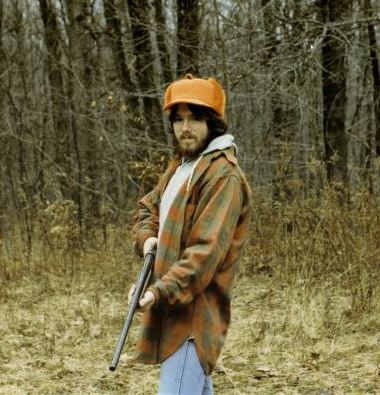
Underrepresented groups, I am told, are eagerly sought by academic institutions. The white male establishment has begun to develop a conscience, it seems. If I appear more credulous than an academic should be, it’s because I grew up poor. While I have no doubts that the entrenched power structures need to change, in an unguarded moment I wonder about the obvious overlooked financial demographic. What of the poor? I’m told by my friends with academic posts that universities are eager to find authentic poor folk—working class people who’ve worked they’re way up. To me, as one such person, this is another academic myth. Even a “white” man can struggle. If you’re born into an uneducated, blue-collar, paycheck-to-paycheck family, getting ahead is often sublimated survival. Those who’ve had me in class may not believe that I grew up with red-neck family values. Duck Dynasty? Well, in my case it was more a case of Deer Destruction, but I lived in a small, industrial, rust-belt town on the edge of the woods. From middle school on I worked to buy my own clothes for school which, I could always tell, were bargain rack compared to other kids who’s parents struggled less. In times of stress (and they are many) I find myself slipping back toward my blue-collar days and wondering just what is wrong with privileged America.

shtgn

I don’ t pretend to have grown up in abject poverty. My wife, from a middle class family, was, however, a victim of culture shock when she first visited the house I grew up in. (I still end sentences with prepositions from time to time.) And that was after the improvements. College was my choice and was paid for by my own work since parental contributions hovered somewhere around the zero line. Along the way I learned to act like others. I even became Episcopalian and most of my “peers” had no idea I didn’t really fit in. I say all this not for pity, but because of a deep conviction that the poor are the hidden demographic. We, as a society, need people to take away our garbage and plow the snow from our streets and dig our ditches. We don’t really want them educated since, well, they would be overqualified. Disgruntled. Our institutions may say they want to hire them, but they lie. The poor make the affluent uncomfortable even as they make them comfortable.

In my campus experience (which, all told, comes to over 25 years) I always found talking to the grounds or maintenance staff more comfortable than the academic staff. I understood where they were coming from. Even now as I wonder how I’m going to afford to get the car fixed, I recall conversations around the more practical matters of life with which I grew up: how to make sure poorly insulated pipes don’t freeze up in winter. Eating venison, or coming home to find carp that a neighbor caught swimming sluggishly in the bathtub were not unknown. While I didn’t go to bed hungry, the food available made me wonder what was in front of me in some fancy restaurants in San Diego. If academe is serious about understanding the poor, they’re going to have to start listening to them. And when they form a department of red-neck studies, they’ll hire someone from an established academic family with an Ivy League degree to lead it. I’ve always been more credulous than I should be.


Scientific Seminary

Old Testament. New Testament. Church History. Pastoral Theology. Systematic Theology. Homiletics/Liturgics. This was a typical kind of seminary curriculum about a quarter-century ago. Obviously there were variations, but the basic topics were Bible and its application. When I attended seminary science was already in the ascendent (seriously, it wasn’t that long ago!). Nobody much worried about how it might impact religion. People in the United States still attended church in large numbers but no one I knew really considered science a threat to belief. They were essentially different realms of inquiry and although some on each side asserted the superiority of their enterprise, the debate seemed to be good-spirited and without excessive rancor.

IMG_1656The situation has, of course, shifted radically since then. We’ve become a society guided by business principles and technology, and religion has all the appearances of being quaint at best, likely just useless, and, at worst, dangerous and deadly. Civilization, however, was built on the premises of a religion that permeated every aspect of life. That influence has been slowly replaced by that of a materialistic reductionism that suggests all things, this blog included, are but the random results of dry atoms bumping about a cold universe. Naturally there has been a reaction. The most vocal of believers, the Fundamentalists of all stripes, have directly challenged science in the arena of veracity. As we all know, however, Fundamentalists aren’t really equipped to convince the masses. The Bible, the underlying strength of the literalist, has come under scrutiny and has been demonstrated to be more inclined to myth than history. What more does a scientific worldview need to weld shut its superior outlook? And yet, reasoning, non-reactive religion still exists. Still has a place in this mechanistic universe where miracles are disallowed.

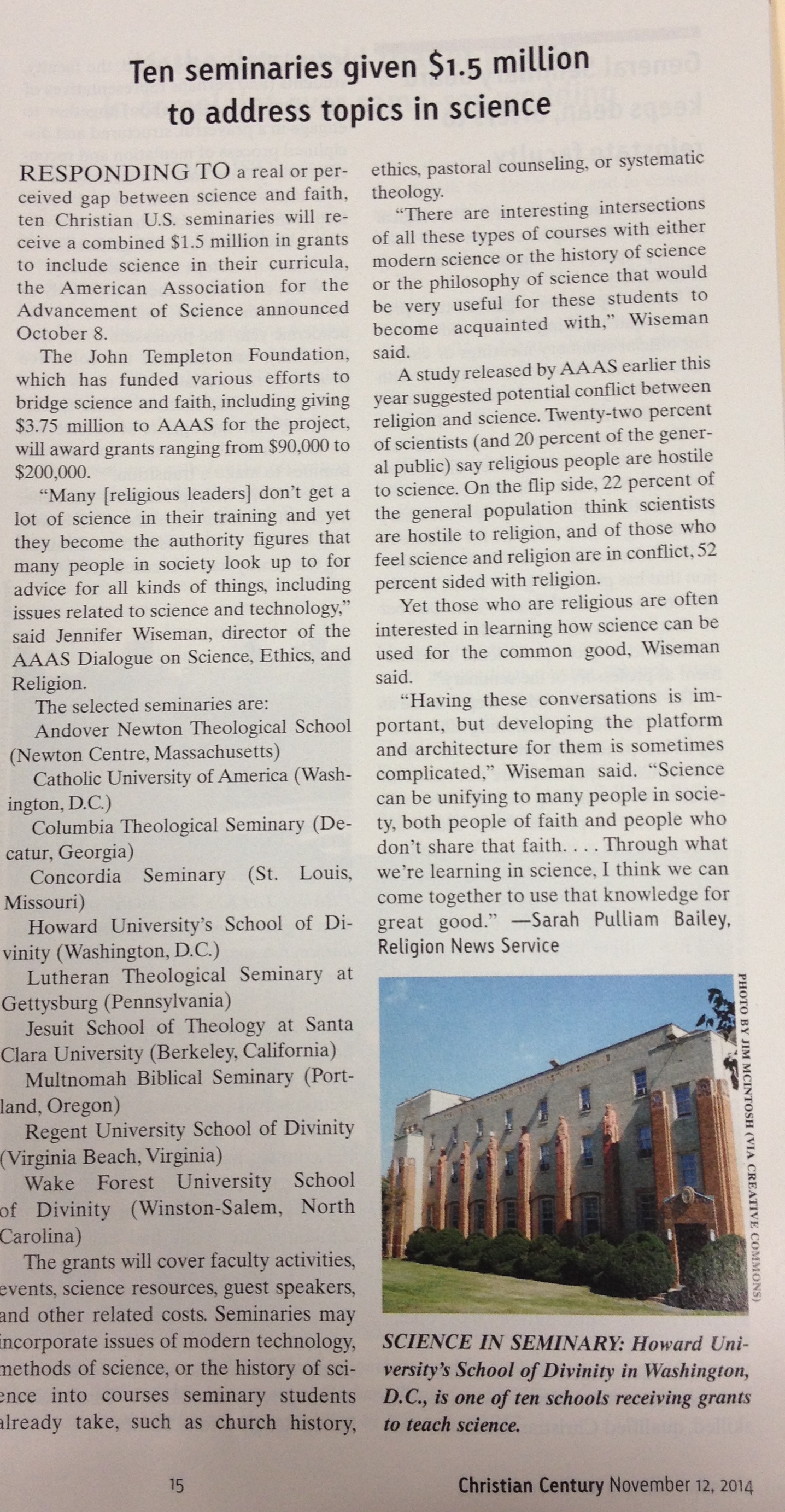
I recently read about a Templeton Foundation initiative that is funding programs on religion and science at seminaries. Some scientists excoriate the Templeton Foundation for trying to keep religion in the picture, but my humble opinion is that Templeton and its money have nothing to do with it. Religion is a very human response to a universe it can’t fully understand. Empirical method seems to work, and the results are so complex that few can even hope to comprehend. All but the most hopeless, on the other hand, can understand “love thy neighbor.” Religion continues to guide countless lives—most of them for the good, and not for the incendiary responses of a challenged literalism. The time has come for seminary curricula to adjust to the world as we know it. That world is run by inhuman forces that may help or harm humanity in equal measure. Religion, however, need not battle with science. It must, however, add it to the curriculum.


Spirit Works

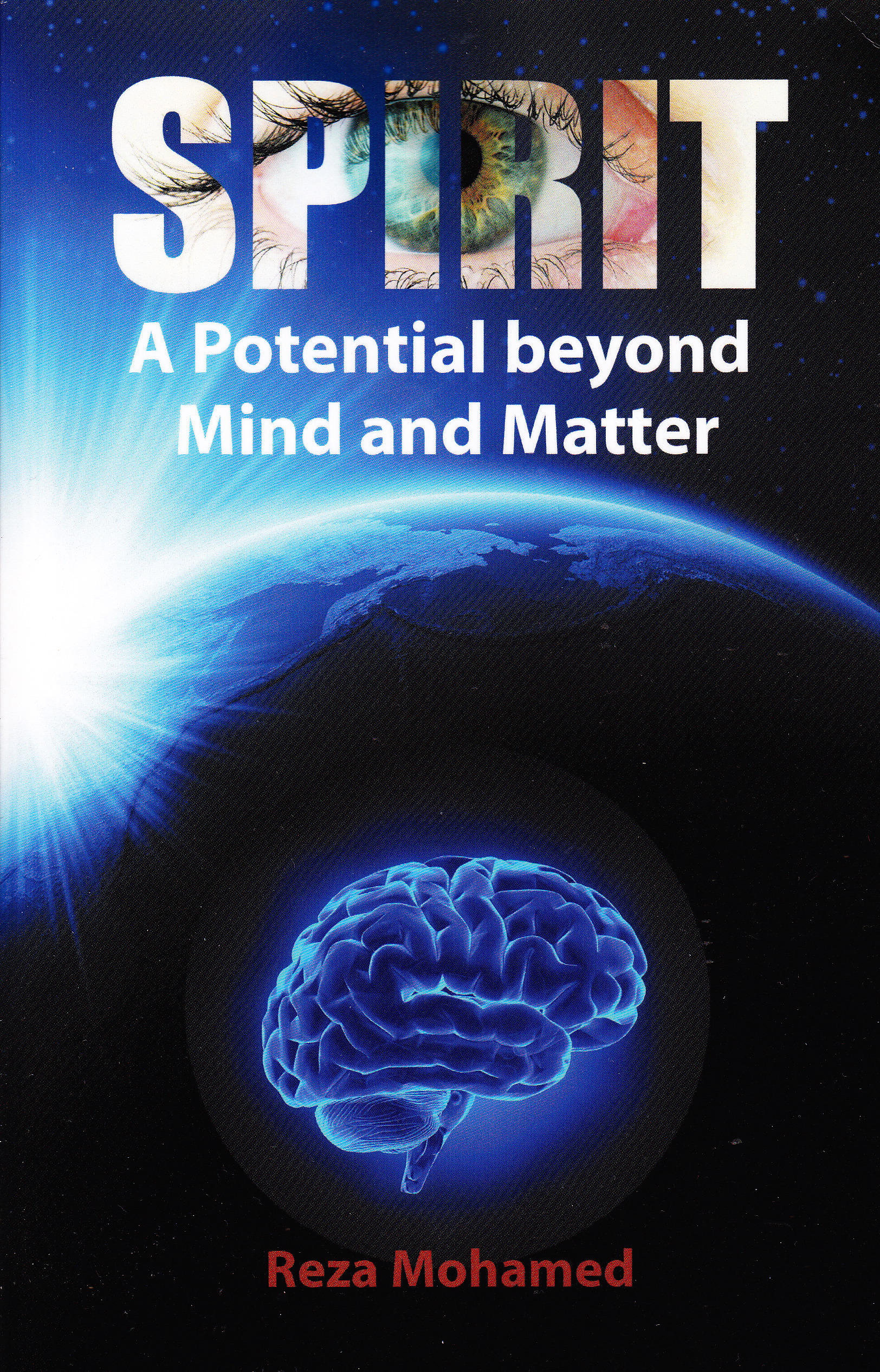
SpiritOne of the unexpected (for me) perks of the academic life was book reviews. Some journal editor would send you expensive academic books you get to keep, just for reading them and giving your opinion in writing! Most academics, truth be told—at least old school ones—would work for books. But don’t—wait. I was going to say “don’t tell the dean,” but it is clear that administration is way ahead of me on this one. In any case, I miss not having a viable academic opinion any more. Not having an institution means journals no longer care what I think about books. Also, working in publishing, there may be a conflict of interest involved. That’s why I was so happy to learn that blogging also leads to free books, on occasion. Most of them aren’t university press books, but you don’t have to be a professor to have something profound or useful to say. So it is that I came to read Spirit: A Potential beyond Mind and Matter, by Reza Mohamed.

There were several points that stopped to give me pause in this book, but about half-way through an idea caught me and has stayed with me since. It revolves around the idea of consciousness, something that Mohamed writes quite a bit about. A number of sources lately have suggested that consciousness is not unique to humans. Clearly, to my mind, animals are also conscious, and I think evidence points to consciousness, on some level, for plants as well. Perhaps even what we call inanimate, or inorganic material. Indeed, perhaps the universe itself is conscious. What occurred to me in reading Spirit, is that perhaps consciousness is the primal element. Maybe it has always existed. Could it be possible that we, like riders on a train, borrow a bit of consciousness while our bodies last, and then when we expire we simply climb off that train and consciousness continues on down the track, waiting for the next passenger?

It is nearly impossible to determine whence consciousness arises. Believing that it always existed is more plausible to me than the odd suggestion that it is just what happens when neurons get all mushy from being too close together. All creatures, as Mohamed notes, have will. Plants that follow the sun—slowly, and over years—seem to have a purpose as well. Who’s to say that it stops there? What have we lost if consciousness is endemic to the universe? Of course I don’t have any answers. Just possibilities. Ideas can spring unexpectedly from books, and as a sometime writer, I can say they even surprise an author from time to time. Then, of course, my opinion is merely that of an independent scholar. But I still find myself working for books.


Catholic Nones

In a recent issue of the Chronicle of Higher Education, an article pondered the future of Catholic universites in an age of nones—those who don’t affiliate with any religious tradition. As with so much in life, the evidence countermands expectations. Enrollment is stable and even non-Catholics are attending. Part of this, no doubt, is because a greater number of high school students are being channeled into college, but there seems to be more to it than that. Those interviewed suggest that it is often that students, nones included, favor an education with a moral grounding. Materialism doesn’t give one much to go on besides human convention. Even if students don’t accept Catholicism, there’s no doubt that the Catholic Church presents itself in a way that admits little doubt over what’s right or wrong. Even if you choose not to observe the strictures, there’s a comfort in know they’re there.

One of the schools foregrounded in the article is Marquette University in Milwaukee. While at Nashotah House I came to know some members of the Theology Department there, and I visited the campus numerous times. One of the interlocutors in the article is a physics professor who, admitting concerns at first, has found Marquette—a Jesuit university—remarkably open to science. The days of Galileo are over. Even Catholics know science is science. Indeed, the Vatican itself employs scientists and a Catholic priest was the first person to formally postulate the Big Bang. As someone who has applied to many Catholic universities over the years, and who has had a fair number of interviews, my sense is that the close-mindedness comes with theology, not science.

IMG_0990

Especially in the days of retrenchment under John Paul II, control over hiring for religion (“theology”) faculty at Catholic schools underwent renewed scrutiny. I was informed that I was not selected for positions because I was not Catholic. You could, however, be a none physicist and land a job. This discrepancy of knowledge has led me to fine tune the Chronicle’s question a bit. The Catholic Church is well funded. Its universities would only be in danger from radical drops in student numbers. This favors the hiring of mainstream professors in every discipline. Except religion. It is as if this small presence on a large campus, such as Notre Dame, could hold out against the humanist knowledge emanating from every other department. A candle, as it were, in the hurricane. And that candle, amid all the nones, must accept official doctrine. At least on paper. And all will be well.


Texodus

I’m not sure what Patheos is, but it has been on my web-radar (or is it “ping”?) for some time now. They host bloggers with a more substantial platform than mine, and often have a number of comments that must require a full-time coterie of first responders. As a working class blogger, however, I siphon off their success to spin my own ideas a little further. All of this is preface to the fact that a recent article by Michael Stone on Patheos comments on Texas’s approval of textbooks where Moses inspired “the American system of democracy.” We are all used to Texas shenanigans by now, but making laws with the ultimate lawmaker just as a movie is being released that portrays Moses as a warrior is apt in a way that Rick Perry’s stomping grounds may not truly appreciate. The need to validate outdated laws with a largely mythical biblical figure is telling. Revisionist history depends on the version of history that is more compelling at the moment, and I find Moses charging the Egyptian army on horseback eerily appropriate.

Textbooks are insidious. They are society’s first crack at young, and naturally open, minds. As we socialize the rising generations to support that with which we’ve always felt comfortable—not wanting to jeopardize our ease in our advancing age—it becomes important to provide the appropriate propaganda. As I speak with fellow scholars (if I may be so bold) I frequently hear them decrying textbooks. By their nature they are a leveling off of what naturally comes in mounds—heaps, even. They are a tool used to keep everything even in a world of rough knowledge. They are insidious in that they are hard to override. Those of us who’ve taught in college know how difficult credibility is when “the book says” is the standard line of recourse. If it was published by Pearson corporation, it must be true.

Revisionist history.

Revisionist history.

Of course, we venerate the published word. Today the Bible, I suspect, were it newly composed, would have difficulty finding a publisher. Since it was written a couple thousand years ago, however, it retains all the trappings of hoary wisdom that is required to make the elders comfortable. Even scholars of the Bible have, as a matter of course, questioned Moses’ role in the story for centuries. As early as the Middle Ages some sages were asking how Moses knew to write his own death scene. Even so, the vast majority took the word literally, and now that we’ve defined ourselves as a “Christian nation,” or at least the southern half of a Christian nation, we can use the Bible as a textbook. What could be more natural? On the big screen I anticipate Christian Bale charging the Egyptians on horseback. In the Pentateuch I read of Moses hiding behind Aaron’s eloquence. One is biblical, but is it believable? If it comes to a contest of force between the two, I’ll go with Ridley Scott every time.