Almost Purgatory

Although it is difficult to tell from 32,000 feet, I think I might have flown over Purgatory on my way home from the UK. The two days I was in Oxford were uncharacteristically sunny and warm. Although it was cloudy around London when we lifted off, the skies cleared by the time we hit the Irish Sea and once Ireland came into view I kept a close watch for what I hoped might be Lough Derg, the site of what was once deemed to be Purgatory. Our flight path took us over the right region, but the maps in the back of the in-flight magazine are never detailed enough for navigation, and the lake itself is not large enough to appear on any but the most detailed charts. Still, I think I might have seen it. If this was Purgatory and I was overhead, I guess I must’ve been in Heaven for a while.

IMG_2129

Symbolism began to kick in, despite the lack of sleep. Our view of the earth today corresponds in a rough way to that of the ancients. For sure, we are more sophisticated, as we suppose, but there remains a lake of fire beneath our feet and the heavens above our heads. The area in between, according to medieval thought, was Purgatory. It’s the place where we live. Believing in the intensely mythological development of a rich afterlife that borrowed elements from the Greeks, Zoroastrians, and Egyptians is hardly something anyone could undertake seriously in the modern world, but the trials we undergo here and now somehow make Purgatory believable as a symbol. When I think of the troubles over the past few weeks alone I can take some solace in a symbolism designed to help us avoid Hell.

As on my trip from New York, I watched hundreds of miles of ice floes, icebergs from the air. I’m not sure if this is unusual—I don’t fly overseas very often, and sometimes it is dark and I can’t see the water below. Of climate change, however, I am absolutely certain. We have undertaken to bring about Hell on earth because of industrial greed. I can’t help but compare how companies continued to promote smoking heavily even after they knew it was killing people. Lucre can make monsters out of ordinary humans. Was that Purgatory I saw back there, over the Emerald Isle? I may never know, but down here on the ground the warming trend continues. Perhaps the ancients knew more than we think they did.

Strange Days

The flight from London to New York is eight hours. Although I always travel with books, sometimes the selection made before the actual reality of time on a plane turns out to be too academic. I read academic books on my daily commute from New Jersey to New York and back, but these trips are not so drawn out as the long flight across the Atlantic. Since my flight was departing Terminal 2 at Heathrow, I had trouble finding a bookstore. There are stores that sell books, but having been to Blackwell’s the day before, the selection was not inspiring. I wandered to the magazine section. Magazines can be good travel fodder since they don’t demand the rigors of a monograph, and glossy pictures always add to the appeal. But what to buy?

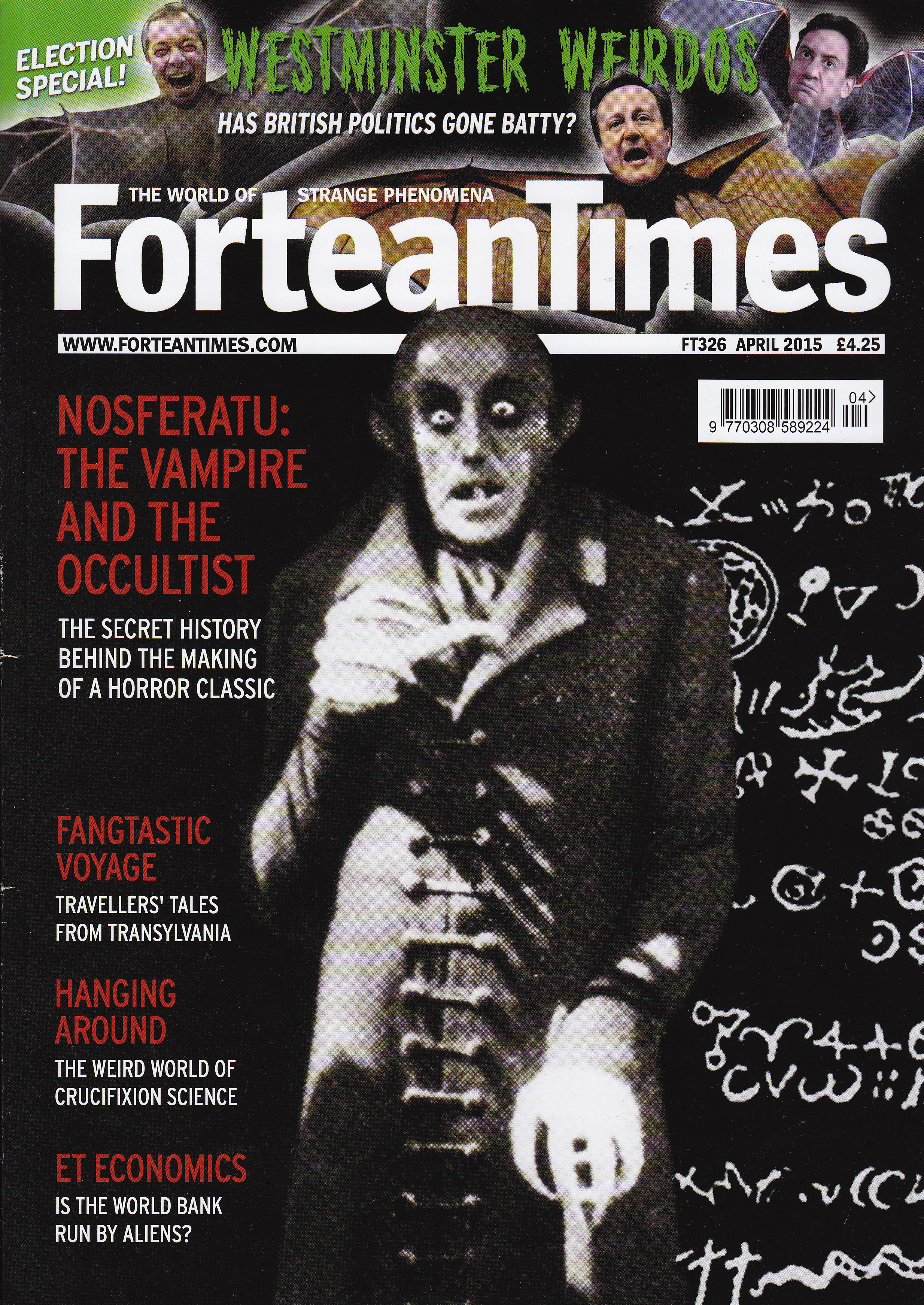
ForteanTimesLooking over the covers, I found one featuring vampires. It turned out to be the Fortean Times, but since I had a row to myself on the plane, I couldn’t see the harm in having a magazine about strange phenomena. I’d never actually read an issue of the Fortean Times before, although I had a general idea of what to expect. While it may seem odd, there is a pretty solid connection between the paranormal and religion. I’ve noticed this for years. Reading through the Fortean Times, it was clear that others have made the connection as well. Many of the articles, including the ones on vampires, touched on obvious religious themes and motifs. This was so much the case that I began to wonder if any kind of solid wall can be erected between the two.

Religion, broadly conceived, tends to be concerned with the non-material world. Its claims tend to defy empirical verification, and its subject matter is often at odds with science (at least in the mainstream). The paranormal is open to scientific investigation in that it tends to be based on secular claims. Like religion, however, it tends to dwell in the non-material realm. After all, vampires coming back from the dead is hardly a phenomenon that is readily recorded with any instrument beyond a Hollywood movie camera. Still, most religions are hostile to the paranormal, and investigators of the paranormal may be unconnected to religion. Both, however, are an engaging recipe for a long flight. Especially if nobody is sitting in the row next to you.


Colorful Gods

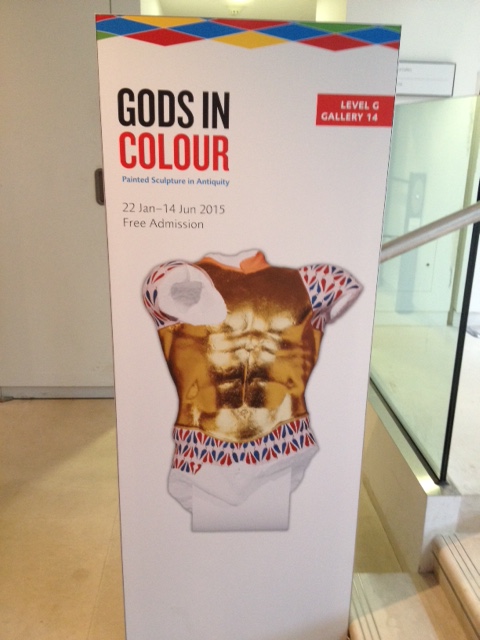
On my last day in Oxford I had enough free time to visit the Ashmolean Museum. The Ashmolean is the earliest public museum in the country, and, although it isn’t nearly the size of the British Museum, it has its share of very important artifacts. While there I came upon the exhibit called “Gods in Colour.” The display was inspired by the fact that ancient Roman statues—and likely those of other ancient cultures as well—were often painted. The elements have worn away much of the decoration, but traces of various chemicals have indicated what hues were likely used to paint these public icons of divinity. We tend to think of classical society as all white marble and stoic formality, but the reality was likely much more colorful. Many god and goddess statues from ancient West Asia also have traces of paint, although in general they were smaller in the various kingdoms of the Levant than the empires of Egypt and Mesopotamia (the latter of which is sadly falling victim to modern day iconoclasts). The Romans weren’t the only ones to see in color.

IMG_2082

Seeing these representations of gods in color reminded me of my first exposure to liturgical Christianity. Having been raised in a Fundamentalist tradition, we certainly didn’t have images about (although one of our churches had a pastoral fresco on one wall). The United Methodist Church, in which I spent my teens and early twenties, had adapted the liturgy of its Anglican parent church, but not the iconographic tradition. When I first saw churches with painted crucifixes and states of Mary, I was taken aback at how powerful they could be. Like most ancients, I realized that these weren’t the gods themselves, but they still conveyed much of what the liturgy was communicating through words and music. One priest explained them as crutches for those who needed help to imagine the divine.

Having seen what images can do, I object to the use of the word “idol.” People are visual animals. We rely heavily on our sense of sight, and our religious sensibilities tell us to look for the gods our minds tell us must be invisible. It is difficult to focus on that which we cannot see. Today we have images both in the natural color of their medium and resplendent with color. We spend hours before the computer screen with its endless array of pixels of all colors. We still think of our gods in full array of saturated hues. In ancient times they tended to be made of stone, but we tend to use another form of silicon, apparently, to get the same effect.


Dis-Connected

One of the more bemusing academic exercises is the analysis of the working class. Sometimes sociologists or scholars of religion take it upon themselves to present the view of the underprivileged. While they certainly seem to get some aspects right, in truth, they frequently don’t have a clue. Growing up in a working class household is the only way to have the authentic experience. I am one of a few, and I should I say I know many, many academics, who grew up in an authentic blue collar environment. When I read my fellow religionists discussing what it must be like to be underprivileged, I think, why don’t they just ask? Oh yeah. That’s right, I don’t have a teaching position. Why not? I have no connections. I have no connections because a kid who grew up in small town in a poor family doesn’t know to go to Harvard. I applied to transfer to Harvard from Boston University and was accepted. I decided not to go. A guy with connections would’ve known better.

Those of my colleagues with university or seminary posts tell me that the authentic blue collar academic is a hot commodity. In my blue collar frankness, I would equate that statement with what one might find behind the hindquarters of a male bovine. When a rare academic job opens up, the connections circuit begin to whir. Those of us who are unconnected (and I know I’m not the only one) will be passed up for one-year replacement positions as well as non-tenure track positions. They’ll gladly hire us as adjuncts—the blue collar workers of the academic world. I have been an inside candidate before. Although I knew entire departments I was not hired. I guess I don’t know the right people, dang-nabbit. (Imagine a thigh slap in there, in case you want to visualize your narrator.)

Blue collar workers are hard workers. As everyone, friend and foe, knew at Nashotah House, I worked hard. I obey the foreman. It’s a skill I learned before I finished middle school when I took my first blue collar job. Don’t bother telling me the excuses since I’ve heard them all before. We had to hire a (fill in the blank). So-and-so was already in our mind when we advertised the job. Once a seminary trustee complained to me that he had to get up at 4 a.m. to catch his flight. I get up at 4 every day, sometimes earlier. He was also well known for having an expensive, frivolous, and vain collection. He was the rector of a large and very influential parish. No worries; the poor you’ll always have with you, but be careful not to let them join the conversation. They might interfere with your connections.

Tell, don't ask.

Tell, don’t ask.


Oxford Haunts

IMG_2007

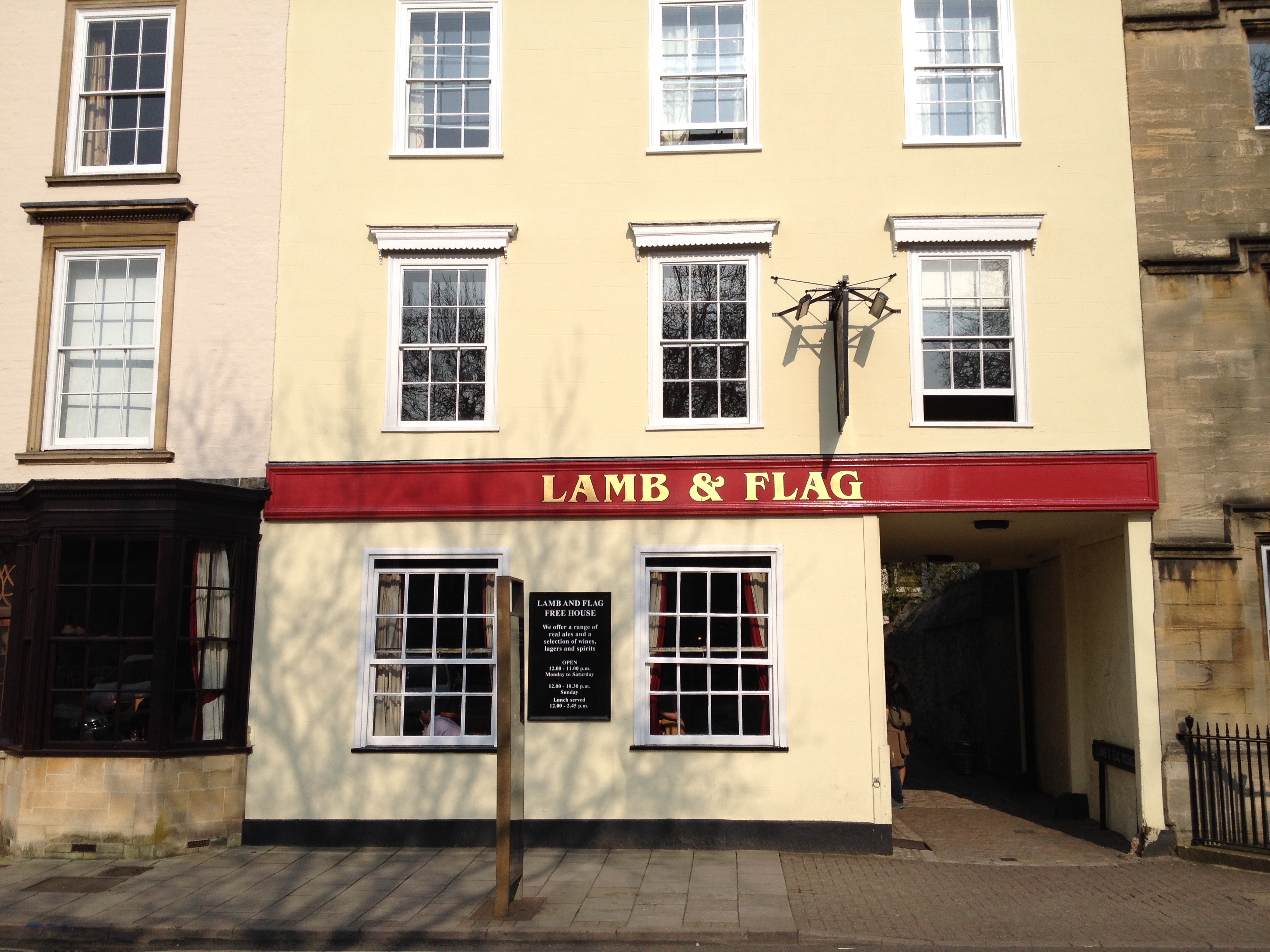
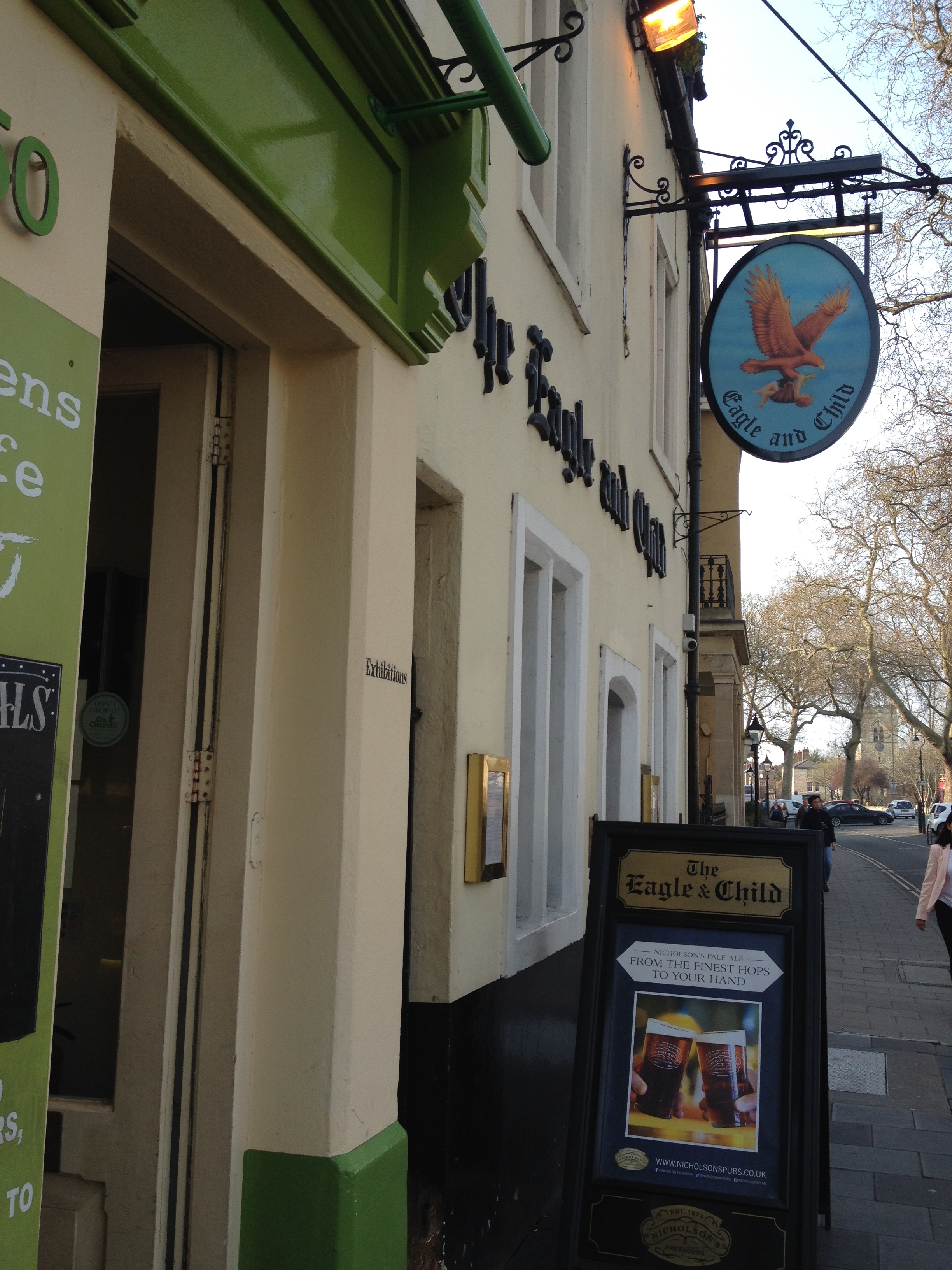
When I travel, when I have time to plan, I like to visit the haunts of literary figures. It would be difficult to think of two more influential (or abbreviation-ridden) English writers than J. R. R. Tolkien and C. S. Lewis. Both Oxford men, they liked to drink, I believe, at the Lamb and Flag. I stopped by to see, but just in case it was actually the Eagle and Child, I back-tracked to see it as well. Post-war Oxford was a place for an academic to write, and C. S. Lewis has influenced an entire generation of evangelical fans who overlook his penchant for drinking, and J. R. R. Tolkien seems to have invented the perfect fodder for CGI animators. Perhaps there was something in the air. Although no less of a literary talent, it may be less common to hear Thomas Hardy’s name. He is rumored to have written Jude the Obscure, appropriately, mostly in this pub. Good to know there’s someone else so obscure, by definition. It’s hard not to feel scholarly in Oxford.

IMG_2038

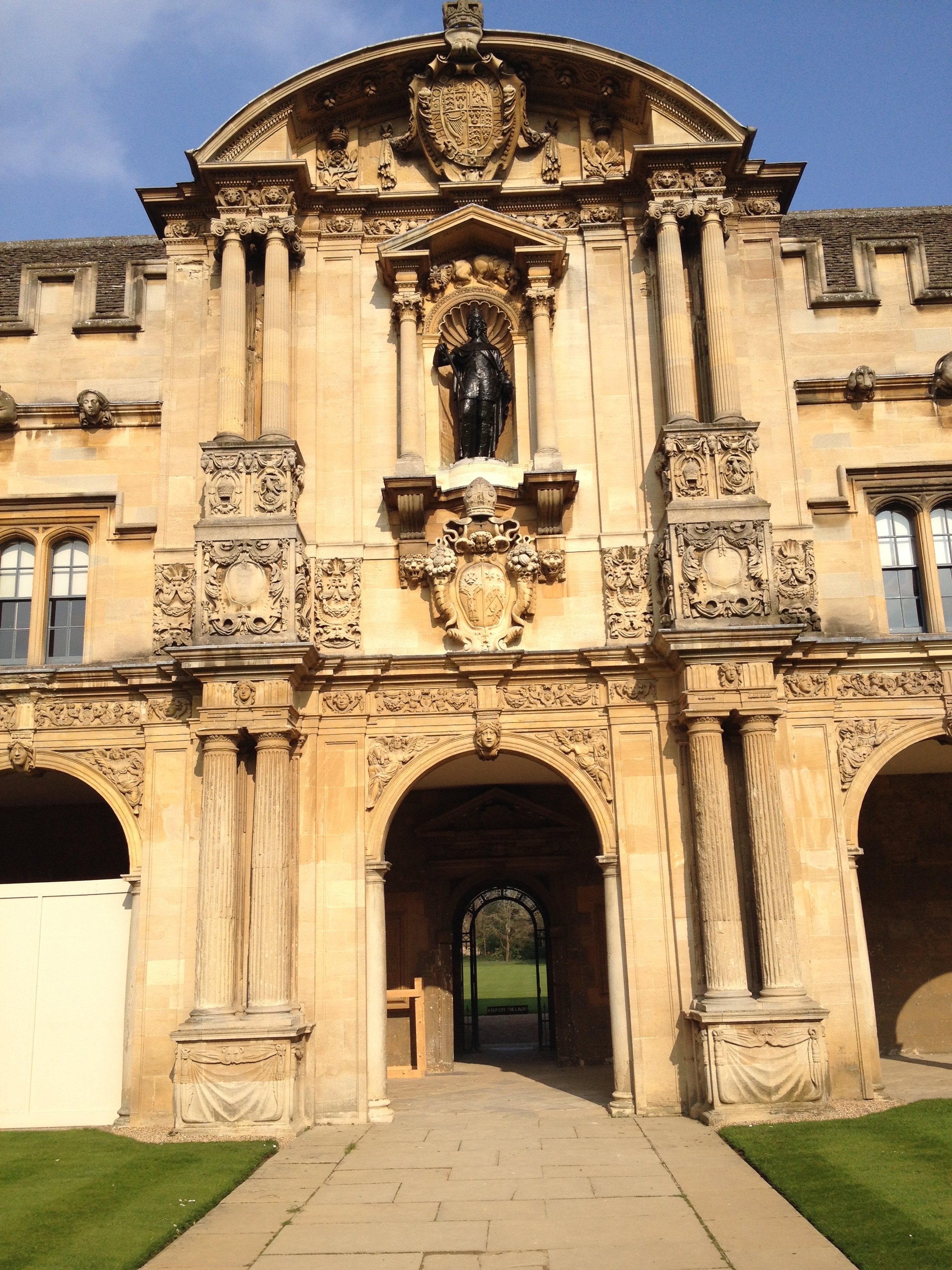
I have to confess, I dressed the part. I wore my Harris Tweed jacket and my Edinburgh school tie. It was a beautiful spring day, the like of which were extremely rare in Scotland some two decades ago. Not knowing that my business trip would offer the opportunities to explore the city a little, I hadn’t done much homework. A colleague suggested I stop into St. John’s College to look at the gardens. They’re only open from 1 to 5, and I timed it right to get there shortly before closing. Students wandering out in jeans, staring at their smartphones, could have been students at any number of universities I’ve known. The setting was, however, quite beautiful. There seems to be evidence that they don’t walk on the lawn. Tradition is treated with considerable respect here. Although, upon closer look, graffiti does make an appearance now and again.

IMG_2010

As I was stepping out the door of St. John’s, a family from eastern Asia was coming in. It was near closing time. The father asked me if this was Oxford University. I explained that it was part of Oxford University, but that the university was quite large and was all around the town. As he pressed me for more information, I wondered why he was asking an American who’d only been to Oxford once before about the place; I hadn’t done my homework, after all. Then it occurred to me. I was dressed rather like a prototypical professor. The tweed, the beard, the glasses, the consistently confused look on my face—I’d been mistaken for an university professor. I stepped outside and looked around. In a different time, perhaps it would have been true. And maybe Tolkien and Lewis would have lifted a warm pint in a cold pub and we all might have learned something.


Paper Oxford

PaperTownsIt looks like a brilliant blue morning here in Oxford, yet my body is telling me that it’s the middle of the night. And that’s saying something, since I normally get up around 3:30 anyway. Routine is kind of a religious thing. In fact, it seems to be the root of ritualistic behavior. The passing of time is a matter that affects us all in some way. Jet lag is one of those ways. I’ve got an important meeting to attend in an hour—that’s why I’ve come all this way—and yet my mind will be telling me I should be elsewhere. Perhaps back over the north Atlantic, looking down at icebergs from the air, wondering if climate change is really that far advanced. Are there any polar caps left at all? Didn’t the Titanic hit an iceberg at this time of year, and wasn’t it a great surprise? At least on a ship you don’t get jet lag. There’s nothing like travel to shake you out of the ordinary.

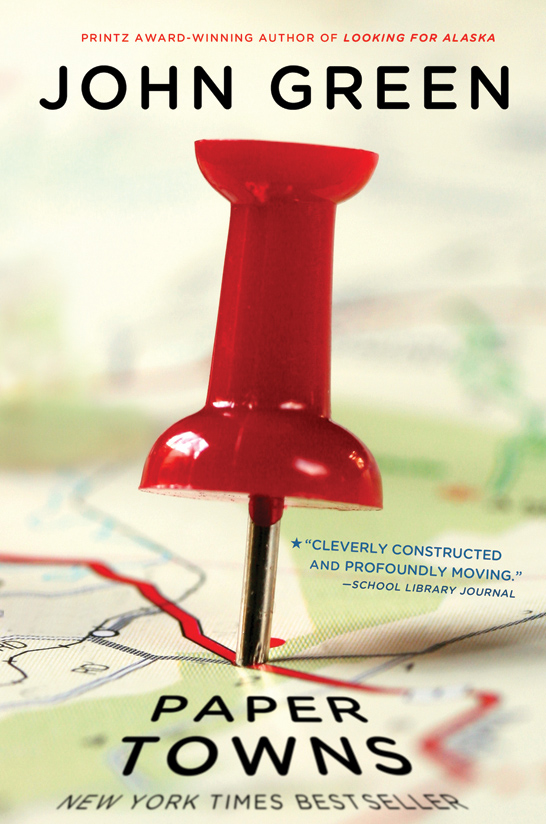
I suppose that’s part of the draw to John Green’s Paper Towns, which I read on the flight over. Although it’s young adult literature, Green has a way of capturing what it was like to be a teen on the cusp of adulthood, and the need to become who we are meant to be. It is a story of leaving home, and of living on the edge. Once a friend said to me that he couldn’t understand someone wanting to leave the place they grew up. I, on the other hand, was only too eager to leave a verbally abusive situation in an industrial town that was slowly dying with no prospects for the young. Needless to say, Paper Towns resonated with me. I can’t remember the last time I read a novel in a single sitting. Although I’ve been an adult for decades, I can still remember the feeling of being young, of falling in love, and wondering what this was all about. High above the north Atlantic, I was sure I still hadn’t figured it out.

There’s nothing religious about Paper Towns. The characters in it assume God to exist, as most Americans do. We make a lot of assumptions. My body is assuming it’s only two in the morning. My clock is telling me that it’s seven. Time is relative, but only one of those placeholders will determine if I am late to work in this place I find myself waking up. I remember being young, and although Oxford has its usual charm, I also know what it feels like to have to leave. The clock tells me that I have to go. The novel in my head tells me the same thing. I’m not sure what time it is. For the moment my paper town is Oxford, and it seems very real indeed.


Accept Cookies

You have probably noticed it. As expected as the warmer days of spring are also the Girl Scout cookies. A symbol of wholesome fundraising, Girl Scout cookies have some dedicated buyers, and many imitators. Like any human organization, the Girl Scouts have their troubles, but I can’t help but compare them with the Boy Scouts in which I grew up. Well, at least for a few years. We’ve watched as the media have declared on the excluding of various demographics from the Boy Scouts. To rise to the top you must not deviate from the mythic model of the perfect man. Meanwhile, as an article in Tablet notes, Girl Scouts have been tolerant of difference from the beginning. In a day when being Jewish was still suspect in the wider community, Girl Scouts were founded with early troop leaders who were Jewish, and this was in the days before the First World War and the ensuing tragedy of the Holocaust during the Second. From those early days, Girl Scouts have continued to have a policy of acceptance of those who differ in religious outlook. It erects no barrier.

The success of social progress depends on how we train our young. Prejudice has to be learned. Children are accepting of those with differences until they learn not to be. Radical groups have to recruit constantly. Fear of strangers is natural, but when it becomes a paradigm it is a pathology. One of my professors once claimed that early Christianity thrived because it was exclusive. Only true members could join, like a country club, making it desirable among hoi polloi. Further research has demonstrated the falsity of this view. There were many varieties of Christianities in antiquity. Only by declaring itself uniquely correct, and convincing Constantine of the same, did one sect become dominant. And dominance was what it was about.

Society is all about getting along. We have come together around money to build the tallest structures on the planet. The tallest buildings used to be in the United States. Then China, Malaysia, Taiwan, Saudi Arabia, the United Arab Emirates. A tower serves no purpose without a collective to take pride in it. Religions, unfortunately, often measure themselves by those who stand outside. Taking the view that it only feels good to be right if others are wrong, it is easy for such thinking to slip into a prejudice that promotes and rewards exclusivity. One percent, anyone? Many aspire to such menial goals as getting more money. For me, a life that has a box of Girl Scout cookies available is enough. And I’ll take a tall glass of tolerance with that, and hope that others will feel free to share.

DSCN5045


United We Fly

IMG_0563

I’m on a flight from New York to London. This wasn’t a trip I particularly wanted to take (what business trip ever is?). I don’t like flying, and changing time zones takes days off my life. Bowing to the inevitable, I dutifully checked in yesterday. However, that didn’t go quite as planned. I’m flying United. I generally take United since they offer many destinations out of Newark, and who wants to cross Manhattan to get to JFK or Laguardia? I’ve actually become rather fond of United’s snack boxes. Since I’m so 1990s, I decided to check in on their website. Two or three pages in, they stopped me and suggested I should use my cell phone. This is much preferred, I’m told. Well, I do have a cell phone, but I’m not sure if I’ll be able to access it in the UK. Still, this is the way things are done these days. I had United’s app on my phone from a previous flight, so I happily typed in my confirmation number, to fly the friendly skies. Since this is an international flight, I have to scan in my passport. That’s a bit worrisome, but the app says to do it and who can argue with an app? Click. My passport is being encrypted and verified. I’m free to go. Then the message pops up. I can’t check in.

I’m old enough to know how to use a landline. I called United. The agent was very friendly, just like the skies, but clearly couldn’t comprehend the complexity of my issue. One, I couldn’t check in. Two, my passport had been sent to somebody, but who was it? United? Some foreign government? James Bond? I didn’t mean to make the guy nervous, but this is my passport we’re talking about! He said he would transfer me to tech support. The call was transferred. The cheery female robot asked me if I wanted a $100 Wal-Mart card. I should press one. I don’t support Wal-Mart so I didn’t press one. She cheerfully insisted. I resisted. She came back on and said that I could press any button for a Wal-Mart card. When I didn’t comply, she hung up on me. I called United again.

This time the agent assured me I would have a human response at tech support. I heard the two tones connecting me with a guy who sounded surprised to hear a voice from the outside world. It was like he was speaking from a dank basement somewhere. He had no idea where my passport scan went either. He suggested deleting the app and then downloading it again. Start the process over. Reboot, as it were. I know the reboot drill, but I was worried about my passport scan. Where had it gone? If his solution worked, at least one problem would be solved. I could check in and reserve my place on the flight (ironically, buying a ticket isn’t enough to do that). I confirmed the instructions with my light-deprived docent. I asked, in parting, what I should do about my missing passport scan. His advice was the very image of an ouroboros. “You might try calling customer service,” he said. I don’t like flying.


Pop Goes the Bible

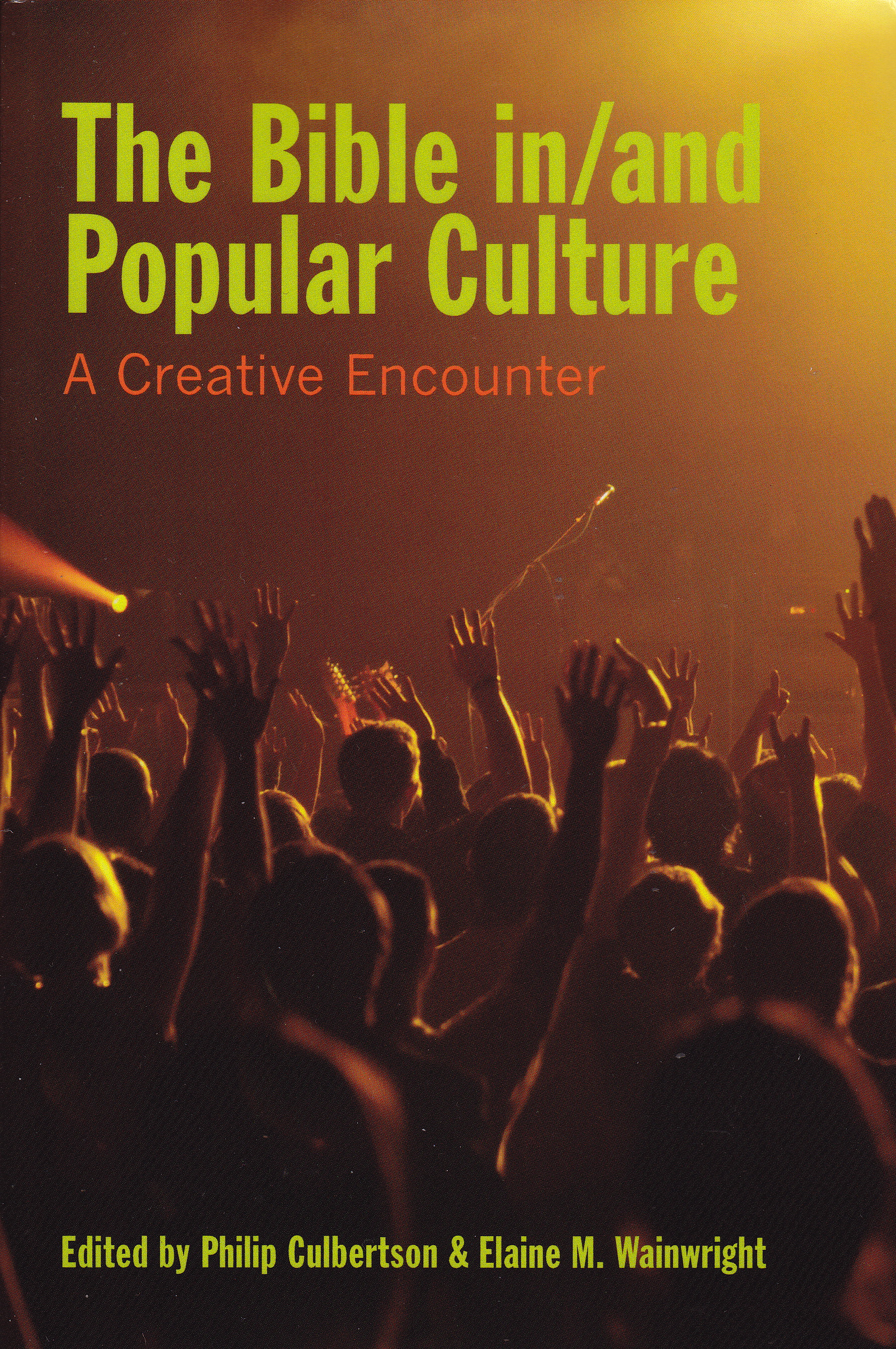
BiblePopularCultureIn keeping with a theme, I followed up The Bible in Film—The Bible and Film with The Bible in/and Popular Culture, edited by Philip Culbertson and Elaine M. Wainwright. It is pretty clear that my professional interests have shifted towards reception history. That is to say, how the Bible has been interpreted over time. Not so long ago—perhaps even when I was a student—Bible interpretation was the purview of experts. Serious biblical scholars tended to look askance at the hermeneutical efforts of mere clergy, just like clergy tended to treat lightly the opinions of the mere laity. The respect of opinion was expected to flow from bottom to top. I have to admit a kind of heady satisfaction with learning to read languages unheard for thousands of years. Who wouldn’t be impressed to find you standing before Hammurabi’s stele, reading away? Like most aspiring biblical experts, I took languages very seriously. As I was teaching, however, it was clear that all my learning failed to sway those who came in with opinions firmly fixed.

One of the takeaways from a study like The Bible in/and Popular Culture is that the Bible changes with those who read it. Who is to say the opinion of the tweedy, bespectacled professor is any more valid than a country-and-western singer, or a novelist, or a screenwriter? Certainly all of them reach much larger audience than just about any biblical scholar. Their ideas about what the Bible says become, in a very real way, the truth. The essays in this slim volume are diverse, showing the wide range of biblical interpretation taking place in a strangely religious secular culture.

What emerges is a somewhat uncomfortable truth—especially for the biblical scholars who’ve spent thousands of dollars and many years to receive a parchment declaring them experts. The truth is, anyone can be an expert. The Bible is out there for the reading. Churches have historically gotten around this by adding tradition next to Scripture as a counterbalance. The culture, however, has decided that the Bible alone bears the weight of verisimilitude. Not all share the same tradition. The Bible, an iconic book, is instantly recognized as authoritative by Catholic, Protestant, and Jew. Even Muslims recognize its status as a holy book. Books, however, change with the reading. Popular culture reflects what the people are willing to believe. What they believe is the Bible. What they mean by that, however, is open to anyone’s interpretation.


New Faiths

Scientology is never far from controversy. In the light of the new HBO documentary on Scientology by Alex Gibney (with New Jersey roots) the Star-Ledger ran a Sunday piece about the Jersey origins of the religion. L. Ron Hubbard wrote Dianetics while living in the state. The article, by Vicki Hyman, points out that the current head of the Church of Scientology, David Miscavige, grew up in the Garden State. John Travolta and Tom Cruise are also New Jersey sons. Living in a religiously diverse state has tempered my perspective on New Religious Movements somewhat. That applies to Scientology as well.

L._Ron_Hubbard_in_1950

Many critics claim that Scientology began as a scam. There are those who claim that it still is. It seems clear, however, that there are many people who believe in it with all sincerity. No religion is free from episodes of abuse or poor judgment. Thus it is with human institutions. No universally accepted definition of religion exists, making categorizations difficult. What members of Scientology do, in as far as this is known, sounds very much like what other religions ask of their members. Oddness of belief is hardly unique to any religion. All ask for contributions from their members. Religions offer a community for those who belong, and many are strongly hierarchical. Even should a founder have had less than pure motives, that doesn’t translate to any less verisimilitude on the part of the faithful. Some viable religions have been based on known fictions.

Ironically, a common response to religions is anger on the part of unbelievers. (If we are believers of one religion we are, by default, unbelievers of others.) A friend of mine recently mentioned Heaven’s Gate on his blog. Although the outcome was tragic, can we say that those who followed Marshall Applewhite appear to have been true believers. Fear of Scientology may largely be based on the horrific outcomes of Heaven’s Gate, the Branch Davidians in Waco, and the People’s Temple in Jonestown. Religions can lead to people doing strange things. And those of us who live in New Jersey know that is indeed saying something.


Happy Disruption

IMG_1567

Last night’s full moon shone brightly, announcing the grounding of the date of Easter, obviously associated with Passover. Unless one has a natural sense of the progressions of the lunar calendar, Easter can always seem a matter of guesswork. It fall on the first Sunday after the first full moon after the vernal equinox. It is one the many transitional season holidays. All holidays are intended to be disruptions from the normal flow of time. Of course, business is the natural enemy of holidays, except for Christmas, and, increasingly, Halloween. The usual business calendar eschews disruption, and there are no days off associated with the Passover-Easter complex. A little thing like death and resurrection shouldn’t stand in the way of turning a solid profit. Still, the point of holidays is their disruption of normal time.

My own time faces disruption this week with a business trip to England. Funny how often these seem to be demanded about this time of year. My usual blog posting patterns will surely be disrupted as time zones zip up across the Atlantic. Disruption will become endemic. Disruption without the celebration. Ritual experts tell us that Passover, the basis for Easter, was a development from an even earlier pre-biblical rite. People have always found a way of marking the more obvious transition of seasons, the planned disruption of daily life.

Routine becomes comfortable, no matter how inherently uncomfortable it may be. I awake before 4 a.m. each day with many others whose lives are dictated by bus schedules and economic necessity. No matter how many years I’ve been doing this my body objects to the early hour that draws me from the comfort of sleep. It is a disruption. Now my disruption is about to be disrupted and I’m wondering what is holy about any of this. Time, which always comes in limited quantities, seems best spent with those we wish to celebrate. Our own private holidays. But business and resurrection don’t sit comfortably together. True religion and money are, it seems, inherently at odds. As I pack my bag and turn to the east, I look at my calendar and wonder when the next true holiday will arrive.


A Slice of Pi

Raster images are made of pixels. MP3 files fit into neat little squares. Who owns a watch with an obsolete dial anymore? We live in the digital age. We are satisfied with less. We are told—and who dares question?—that digitization is more precise than any old analogue technique. There really are not curved surfaces anywhere. At lunch with a friend recently, this topic came up. Again. It is a conversation I’ve had before. Not everything can be quantified. Once upon a time, there was something called “quality of life.” No more can Nigel Tufnel claim, “Well, it’s one louder, isn’t it? It’s not ten.” Everything is ten.

If you don’t believe me, take a digital image and enlarge it. At some point the edges will grow fuzzy. That’s only because our eyes can’t focus on the smallness of the pixels. Keep on enlarging. Eventually you’ll come to the point where the little squares, the pixels, show their characteristic stairway to Heaven. Then go to your favorite art museum. Look at a painting. Get as close as the docent will allow you. Where are the pixels? Or get to know someone with a high quality camera. Preferably one that handles film larger than 35 millimeters. Watch them at the enlarger. The images get bigger, the edges remain sharp and curved. Where are the pixels? Some of us may be too old to truly tell the difference, but try breaking out your old LP’s. If you can find a turntable try one out. Then listen to the CD. Can’t tell the difference? Try putting it up to eleven.

IMG_2535

The classic manual aptitude test has both round and square pegs. We’ve all been told that you can’t fit a square peg into a round hole, but we do it all the time. Life is full of circles, swirls, curlicues. We don’t teach our children to read cursive anymore. The square pegs on the keyboard are sufficient for every possible form of communication. There’s no need to sit back and wonder at the implications that pi is a non-repeating, infinite decimal number. You can’t find the area or perimeter of a circle without it. Nature is stunningly rococo with its spirals, from non-pixelated ripples in the water to the colossal swirls of galaxies so large that the human mind can’t comprehend them. For that you need a computer. And just to be safe, you better make sure that it’s one that can go up to eleven.


Out There…

Spring is a time of hope. As crocuses poke their heads through the slowly yielding soil, we’re reminded that the long months of darkness are only temporary after all. It was only appropriate, then, that my wife should point out to me the returning of the X-Files. Only a limited season of six episodes, but after hearing rumors for years that the third movie was in the works, we’ll gladly take six episodes to remind us that the truth is out there. I’ve not always been a fan or the X-Files, but there are reasons for that which have to do with living in the middle of the woods in Wisconsin in a seminary where the paranormal was, at times, just a little bit too readily at hand. And also because the very topics addressed are those of taboo. The anomalous is fodder for ridicule. Nobody could be so naive. Meanwhile the show was winning awards and creating enduring cultural memes.

Thexfiles

As I’ve suggested many times on this blog, the paranormal and religion are closely related categories. While not many X-Files episodes directly dealt with religion, the second movie made the connections explicit, blending Bible and spooky effects at a distance with abandon. The X-Files and religion share a fascination with wonder. It is all right not to know. Sometimes wanting to believe is enough. We can find information on nearly any topic instantaneously by pulling out our phones and tapping into the local wifi network. We access any bit of random information with ease. And we wonder at our lack of wonder. Where has it gone?

Thirteen years ago the haunting music died. We’ve been left with a reality that feels dull and devoid of possibility. We need some sign of hope. Ironically, it is Fox that offered a world of possibilities far beyond a Republican purview. This was a realm where humanity was no longer in control. Forces outside of and more powerful than us swept into our mundane setting to remind us that even government control is only an illusion. Human pride requires timely mementos that we are simply the dinosaurs of our age. The incomprehensible overshadows us as we spin away our time on a planet nowhere near the center of our galaxy, let alone our universe. And yet we tell ourselves we are capable of discovering the laws that lie behind it all without stepping foot on even the nearest of other planets. Welcome back, X-Files. Remind us where the truth may be found.


The Film’s the Thing

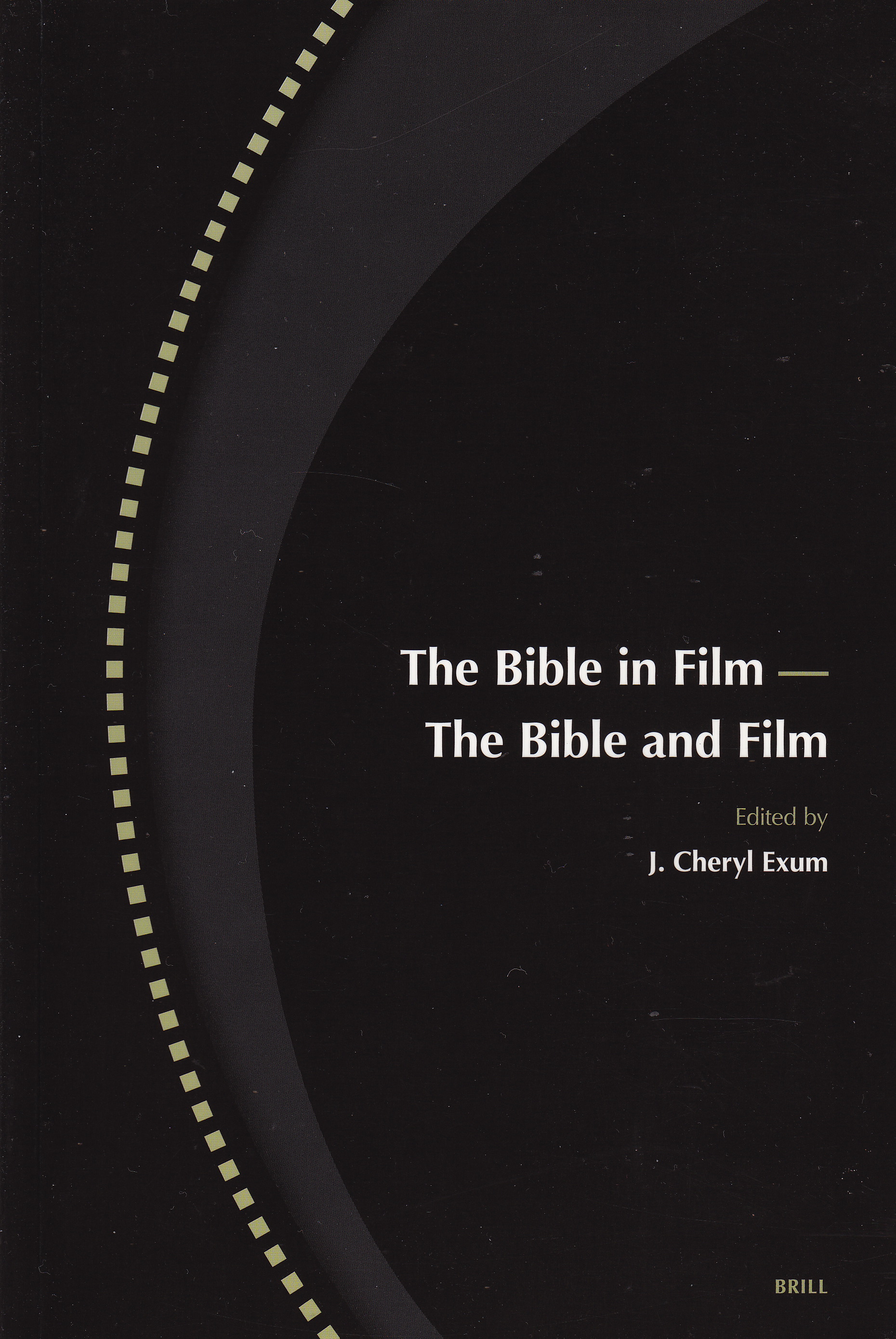
BibleFilmIn the context of teaching, I often described how movies portrayed the Bible. There is an aspect of this that may go overlooked since the Bible is, in the nicest possible way, inert. That is, the Bible frequently functions as a character in movies. In a minor, or supporting role perhaps, but clearly it has an impact on what the other characters do or say. The story wouldn’t be the same without it. So it was that I finally got around to reading The Bible in Film—The Bible and Film, edited by J. Cheryl Exum. This is a collection of 11 academic essays about the Bible in various cinematic guises. A number of the essays focused on Jesus, being the most obvious biblical character to star in movies; he had another one this past summer. The collection, however, is wide-ranging in its biblical characters.

More interesting to me, and this is just a personal preference, is the way that the Bible shows up in movies. Those who decry the study of sacred writ seem to be in denial concerning just how deeply embedded in our national psyche the Good Book is. As the various contributors to this volume show, the Bible appears in ways both subtle and overt in many films. Like it or not, the stories represented in the Bible are classics, and many film-makers find a rich source of material here (when they’re not busy making sequels). The Bible is, to a large extent, who we are.

That’s not to deny a religious pluralism to the United States. We are diverse and that is one of our strongest assets. Still, even though our founders were primarily deists, and not evangelical Christians, their culture was pervaded by the Bible. A large difference between then and now is that, although they weren’t “Bible believers” our founders knew their Bible. In a sense that is almost incomprehensible today, they realized that you don’t have to believe it to see its value. The Bible does have some good things to say. Even now when I get overwhelmed, I can still find some balancing sanity in parts of Sacred Writ. It’s not all about killing your enemies or keeping women silent in the churches. It is a very human document. That’s why, in my humble opinion, we keep coming back, as a society, to the Bible. Anything that is so momentous is bound to find its way into our movies and our other art forms. How we take that is, of course, a matter of personal taste.


Ice Church

Eternity is a concept closely associated with religious thought. It bears a freight that phrases such as “steady-state universe” and “Big Bang” lack. Indeed, the foundations of Christianity and Islam involve the belief that eternal life can be had for those who play by the rules. Great cathedrals and mosques were erected to last forever, or at least until the end of the physical world. Perhaps that is the reason I find the idea of a church constructed out of ice so engaging. Annually for the past several years, a church has been built of ice in the Romanian Alps. Accessible only by cable car, the church is a temporary structure in a land where varieties of Christianity (let alone other faiths) are openly hostile to one another. As the globe slowly wobbles back to a northern inclination, the church will melt and disappear. Still, in its brief time in the world, baptisms and marriages will be performed there. Eternal vows in a temporary structure.

A theological message is inherent in such an institution. We are trained from our earliest days to be consumers. We are to acquire goods and desire more. Were we ever to be satisfied, capitalism would crash to the ground like an ice church left out in the heat. The secular world in unrelenting in its message that we are born to eat, buy, and use. The more expensive, the better. And the more quickly obsolete, the more profitable it will be. The towers of our cities are constructed of concrete and steel, and yet, I have watched new buildings grow and supplant those that have seemingly stood forever but which, in reality, have existed for less than a century. Indeed, all of our towers ought to be made of ice.

IMG_1252

Ice is cold and hard, but it is still water. An article in The Guardian notes that some pastors see this as a kind of baptism frozen in time. Shape given to that which follows the contours of its container. The water, however, will ultimately follow its natural order and rejoin the oceans of the world. While humans are naturally disposed to collect, to save up against lean times, we have to be taught to be consumers. Some of us are content with relatively little, knowing that elsewhere our fellow human beings have nothing at all. Their churches are made of ice, and our corporations are eager to reach even them, to teach them to covet what the more “affluent” have. And the world slowly warms, turning all into liquidity.