Driving the Point

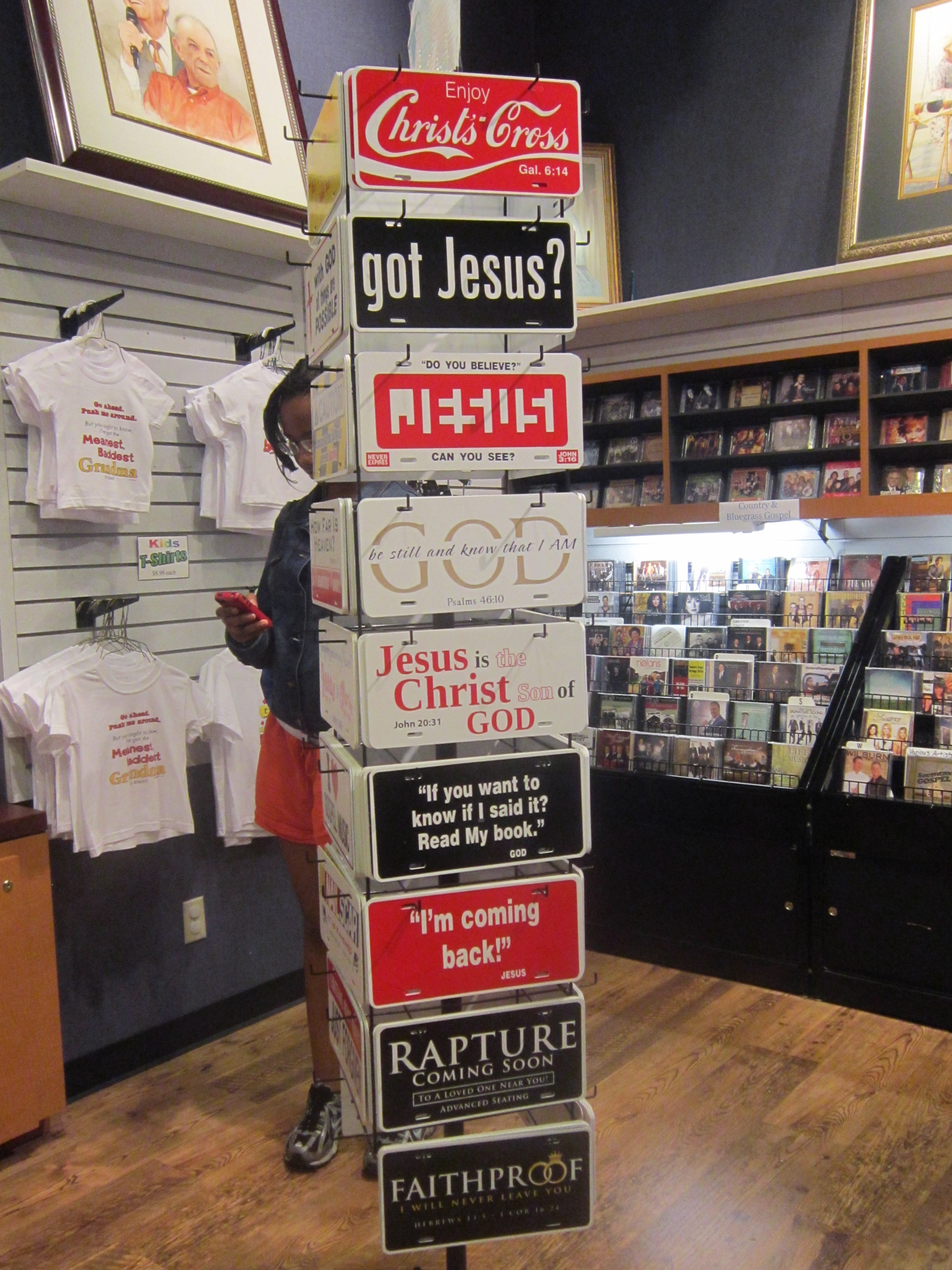
“I drive my car, it is a witness. My license plate, it states my business.” The words are from a song by one of the most creative Christian Rock groups ever, Daniel Amos. While I don’t listen to Christian Rock much anymore, I’ve always appreciated the fresh outlook of this particular band, which was, at least in the ‘80s, ahead of the curve. The lyrics came back to me when reading about a legal suit in New Jersey concerning vanity plates. Like many states, New Jersey has rules against offensive words being spelled out on license plates. When a woman applied for a license reading “8THEIST” it was rejected as “offensive to good taste and decency,” according to a story in NJ.com by Thomas Zambito. Trying the application with “BAPTIST” led to no objections. Others have tried other variations on the word “atheist” and have come up with rejections as well. In a country that prides itself on religious freedom, this is ironic, to say the least.

I’m a bit too pragmatic for vanity plates, or even bumper stickers. Having had to commute long distances after being dismissed from my post at Nashotah House, I often thought that I didn’t want people to know too much about me by the decoration of my car. The culture wars, played out a few years ago by Jesus fish, Darwin fish, Jesus sharks eating Darwin fish, and so on, seemed an opportunity for aggression to me. Already when I’m driving and someone cuts me off or does some dangerous maneuver in traffic, they frequently bear some paraphernalia advertising Jesus on their bumper. Maybe it’s a prayer for protection that allows for stupid driving. It certainly isn’t a witness to the “others first” theology that characterized Jesus’ teaching.
IMG_1216

Is it an affront to decency to be an atheist, or only to advertise being one? The culture wars that plague the United States are based on instant prejudices that make decisions about a person without bothering to witness their behavior. Behavior, after all, is the true measure of goodness. Even higher education is not immune to this system, especially in religion departments. We only want to be surrounded by those who believe like us. Somewhere in this unholy mix is the neglected idea of doing the right thing. Ours is a culture in love with appearances. We object when Muslims want to build a mosque. We object when Roman Catholics run for President. Weren’t not even sure that we really trust the Presbyterian next door. Our differences, one of the historic strengths of this country, have become a liability. Especially when behind the wheel. How different driving would be if we’d just assume that no what the vehicle says, it is piloted by a human being just like us, no matter who they believe the co-pilot might be.
Different Bites

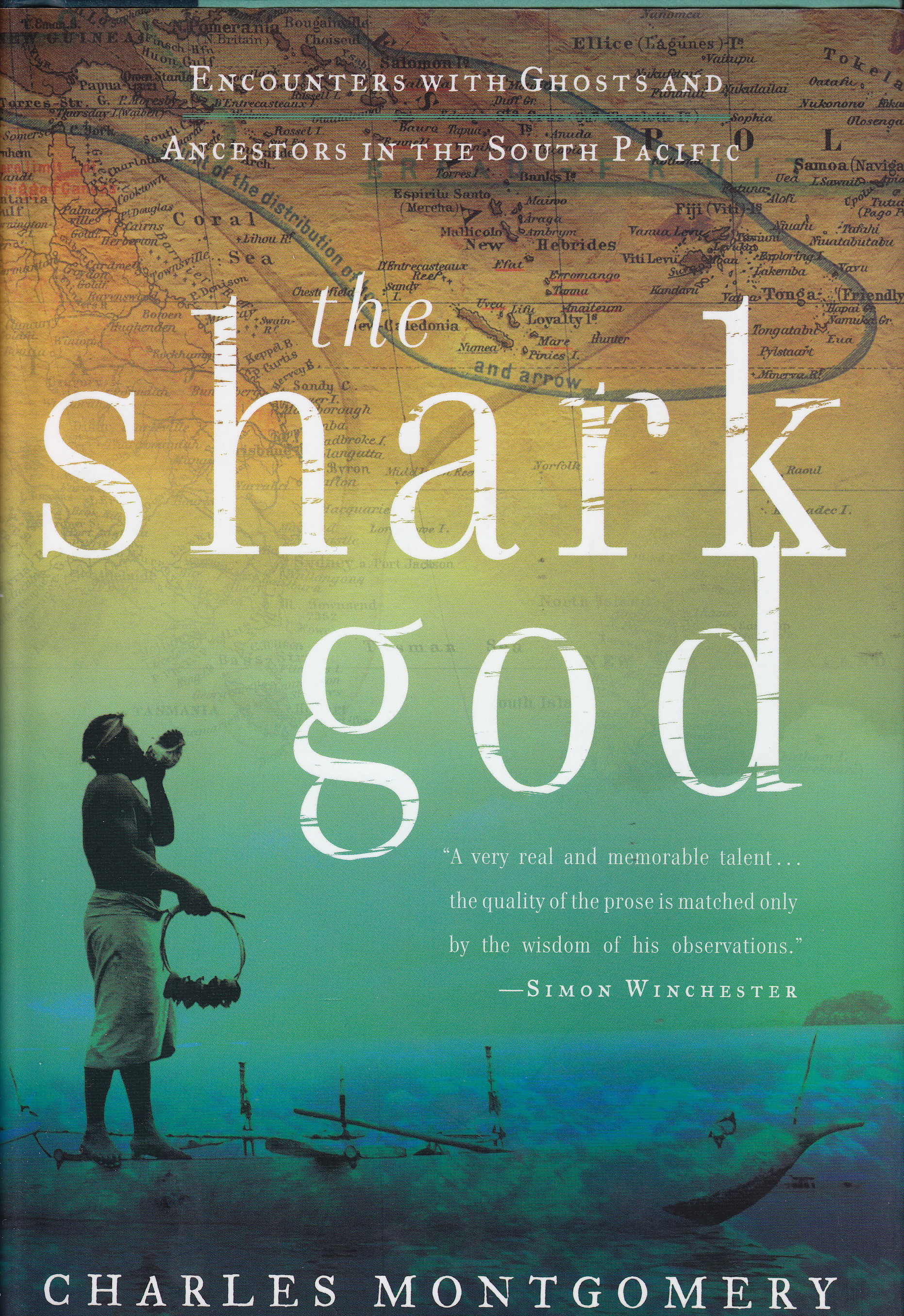
SharkGodThe South Pacific brings to mind light-hearted musicals, uncomplicated lifestyles, and Gilligan’s Island. For those of us born in the eastern parts of North America it can seem pretty exotic. Especially since we can seldom afford to go there. Since my income has wavered around the subsistence level of a reluctant urbanite, I instead travel there in my mind. I came across Charles Montgomery’s The Shark God at a recent book sale. I generally scour the anthropology tables since I find the belief systems of others so fascinating. Montgomery, a journalist, traveled to Melanesia to trace the route his great-grandfather took as a missionary. A non-believer himself, Montgomery wanted to see the magic that a former generation believed in firsthand. Noting that missionaries often despoil the cultures they are trying to “convert,” his tale is full of insights and observations and disappointments. My kind of book.

Montgomery is remarkably open minded. Like many of our generation, he outgrew the religious fervor that seemed so strong just a few decades ago. Still, he is open to the possibilities in the lesser understood cultures of the South Pacific. He notes that E. E. Evans-Pritchard, the famous anthropologist, opined that non-believers made poor anthropologists. Even missionaries might make better, he suggested, since at least they know what it is to believe. And here is the driving tension of Montgomery’s narrative. Sometimes you simply have to be open in order to see. Not all evidence is empirical. He recounts little “miracles” that he later reflects may have been mere diversions. Nevertheless, the world opens up when it is seen through native eyes.

Missionaries, although they may be better equipped to understand foreign (or native) believers, nevertheless try to change them. What I found most fascinating is how even those who fully identify as Christians in the south seas have combined that belief with their indigenous religions. Christianity, even among the clergy, is an overlay for culture. In ways that shock and frustrate missionaries, those converted maintain elements of their culture that fit uncomfortably with doctrine. How do you convert the converted? Or maybe the word is more properly “pervert.” Belief systems grow in cultures and tend to introduce high moral standards, no matter the deities (or non-deities) known. The Shark God is a wonderful window open on the South Pacific, a place to which some of us will only ever be able to travel in our limited minds. We are, after all, products of our culture.


Recycle This

Like nearly all unfortunate white collar workers, the computer provided for me at my job is a PC. I don’t know the brand—that’s not important. When I want to delete a document, I’m asked if I want to move it to the “recycle bin.” Okay, I’ve been an environmentalist since I was a teenager. Growing up in a small town, recycling was a foreign concept, vaguely communistic even, but I could understand that limited resources would run out. Living paycheck to paycheck, that was perfectly clear. The town where I grew up still doesn’t offer recycling, but having a recycling bin on a computer screen? Are the electrons from my documents indeed being recycled, or is this just a way to make me feel good about throwing away something somebody spent hours putting together? It seems such a tautology to me.

This recycled world can be a scary place. I was a victim of identity theft once. Thankfully I hardly have enough to steal that the thief got away with very little before the credit card company found him. It meant having to go a few weeks without purchasing power, and a possible stain on my ratings. One merchant didn’t want to refund the charges, although it was clear that they were illegally made. So we recycle our sensitive material with the greatest care. It has to be shredded first. We had one of those home shredders that took hours of time to feed in “up to six sheets” at a time (two was the actual limit), and before you knew it the weekend was over and you had bags full of bird nesting and you still had to take them to the recycling place. So our local community, we learned, participates in a shredding drive. My wife and I went a few weekends ago and it was so popular that we were turned away at the gate. The line was too long and the trucks were almost full.

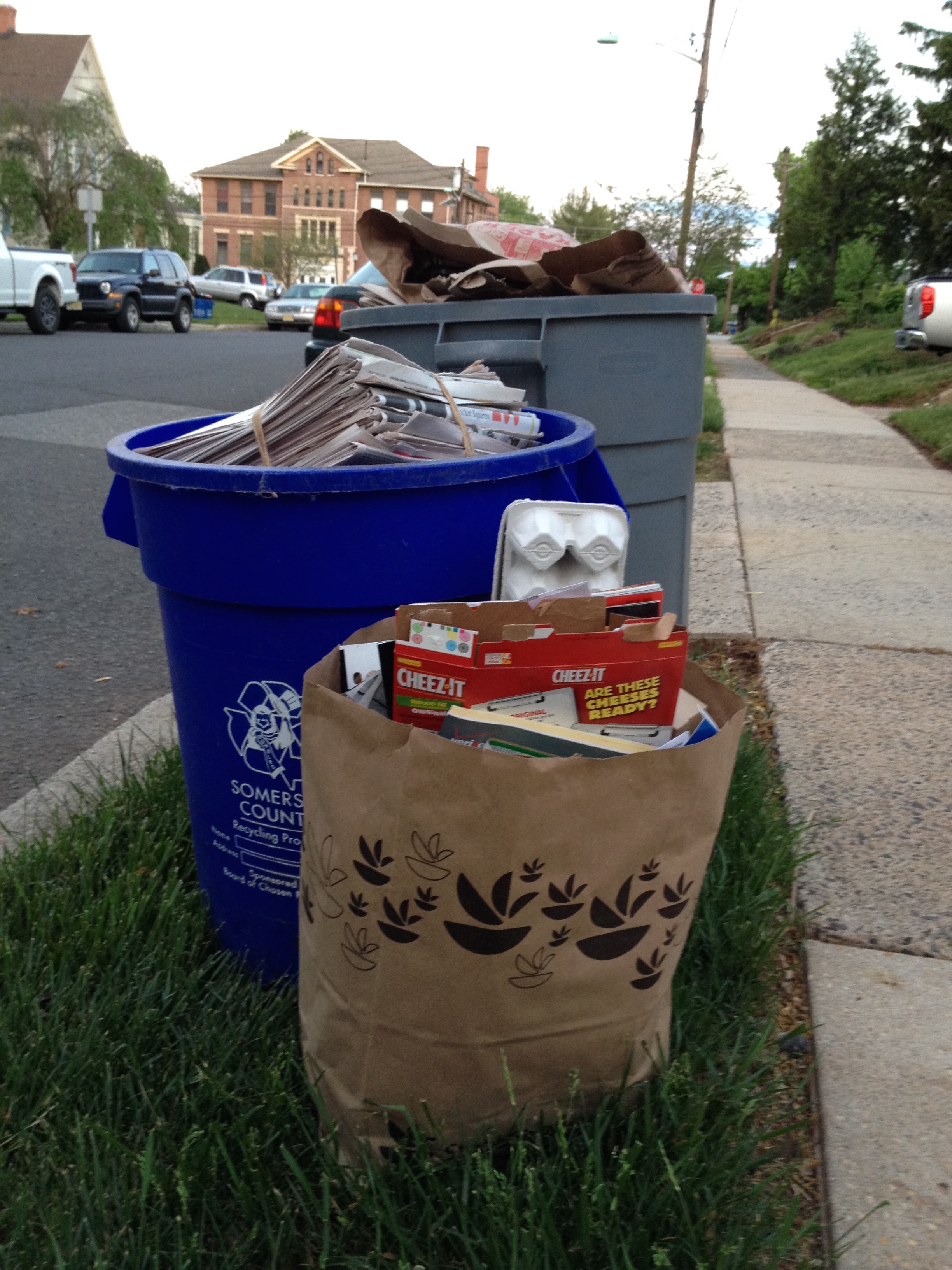
This past weekend I tried again. I had to drive to a new location where, I kid you not, the traffic pattern had to be changed to accommodate all the shredders. I was kind of glad in an impatient sort of way. I’d brought a book to read, anticipating such a wait. I was a bit anxious, however, with a police officer watching. I mean I had a book to my face in traffic, after all. At least it wasn’t a cell phone. The line crept along until I was finally admitted. I had six bags of confidential stuff in the trunk, and I was glad to have the chance to have my personal life obliterated by the huge, roaring trucks. As I inched to the front of the line, the check-in lady asked me what town I was from, and in response gave me a handful of papers that I would only have to recycle. I thought of my recycle bin on my desktop at work. There seems to be no end to disposing of the information that defines our lives. Some would call it a tautology.

C58E576D-BA75-4991-AA88-B095BBED4E1C copy


Pillars of Science

I sometimes wonder if science would have the appeal that it does, if it didn’t have religion to shock and awe. I’m thinking of not only the fact that The Humanist magazine quite often has a focus on religion, but even websites, irreverently named to make the sensitive blush, frequently use it as a foil. My wife likes the site now more commonly known as “IFL Science!” Web acronyms have taught us what the second of those letters denotes, but perhaps because making the name more family friendly leads to more hits, it’s been muted a bit. In any case, the most recent post I’ve seen has to do with that marvelous Hubble image of interstellar gas and dust columns where stars are being born, know as “The Pillars of Creation.” Apart from the stunningly beautiful images, I’ve always been taken by the way that implicitly or even subliminally, concepts of deity lie behind this scene. When the image was first published, I remember staring at it in rapt fascination—here we had stolen a glimpse into the private chambers of the universe. We were seeing what, were we in the midst of, would surely prove fatal. It is like seeing, well, creation.

Eagle_nebula_pillars

Creation is enfolded in the language of myth. Reading the description of this great, gaseous cloud, we are told of the tremendous winds in space (what I had been taught was an utter vacuum) where dust is so hot (I was taught space was frigid) that it ignites into stars, like a silo fire gone wild. It’s like witnessing the moment of conception, although Caroline Reid tells us the dust will be blown away in 3 million years. Perhaps ironically, scientists are scrambling to study it before that happens. Or before that will have happened. At 7000 light-years away, it will have been gone as long ago as Sumerians first put stylus to clay before we know of it. We still have a couple million years for a good gander. And the Sumerians, the first writers of which we know, were writing stories of creation.

It is really a shame that science has, in general, such an antipathy towards myth. As scholars of biblical languages, indeed, nearly any language, know, the language of myth and poetry is especially useful when standard prose breaks down. “Wow!” is not a scientific word. Nor is “eureka!” What other response, however, can there be to seeing the act of creation with our own eyes? Meanwhile there will be those who use science to belittle the worldview of the myth maker and and thinker of religion. Our world, it is widely known, is that of superstition and ignorance. We are those who think only in shallow pools and deny the very reality that is before our eyes. That reality can be full of stunning beauty, but were we to describe it in terms empirical, we might have to keep the interjections and useless adjectives to a minimum.


Original Research

“But are you able to continue your research?” they ask. Academics can be so hopelessly naive sometimes. I recently had a notice on academia.edu that I was in the 30-day top 5 percent of page views. So I’m feeling like the Bruce Springsteen of academics for a few seconds. Meanwhile institutions who look at my record wonder why I haven’t produced anything lately. It’s really quite simple. Take a 40-hour work week (a foreign environment to most academics), add a daily commute of 3 hours, and subtract access to an academic library. As the old computers in sci-fi movies used to say, “does not compute.” My research these days is limited to material that is actually able to keep me awake on the bus (thus excluding most academic monographs) and those that I can afford to buy on an editor’s salary. My research has slowed considerably, in other words, due to circumstances beyond my control.

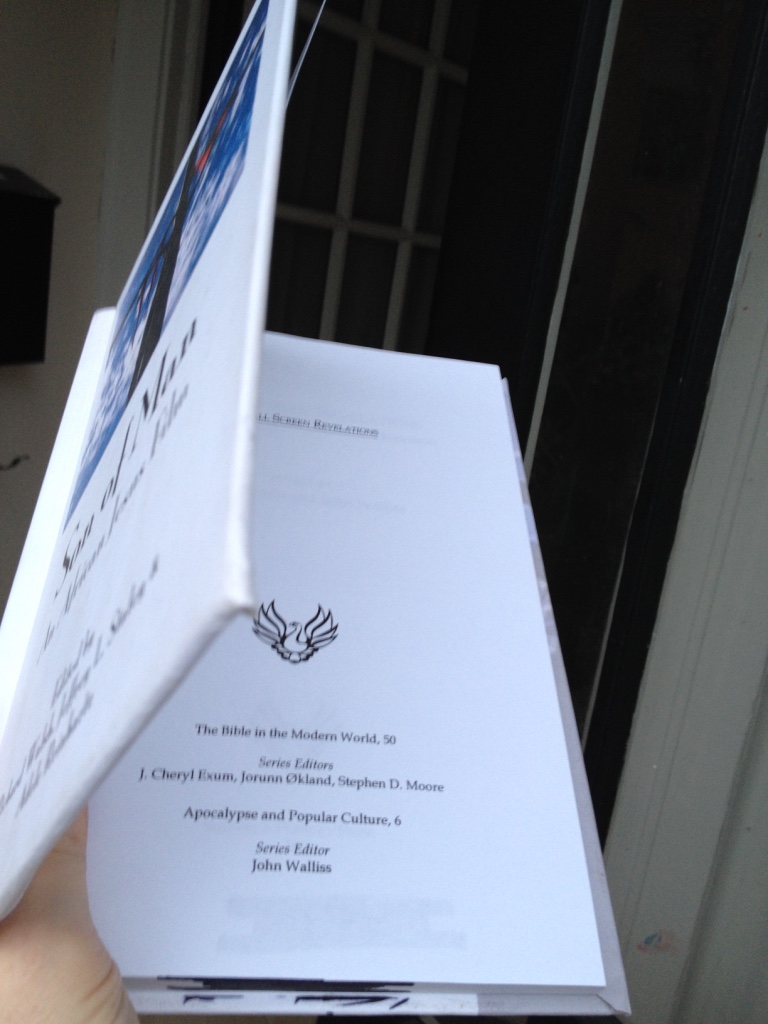
thumb_IMG_2163_1024That’s why I’m sitting here perplexed. Despite it all, I have had a paper accepted for presentation at the Society of Biblical Literature Annual Meeting this year. My project is on the Bible in Sleepy Hollow (thus the recent spate of books on Washington Irving and his hometown). Still, I had to challenge the budget and purchase a couple of things. The cover of my book has me confused. Son of Man, it says. Inside, however, is the text I need—Small Screen Revelations. (If you wonder why, watch Sleepy Hollow, or, if possible, come hear my paper.) The reason for the mismatch between the cover and content of my book is the price. A tome from the appropriately named Sheffield Phoenix Press, even used the volume costs almost $100. It’s just 200 pages. I managed to find a copy misbound for the bargain price of half that. Only an academic would pay $50 for a defective book just to get at the content. Am I able to continue my research? Reach for your wallets and see.

A large part of my job is spending time on university faculty webpages. Many of those I find haven’t published nearly as much as I have, but have comfy, tenured positions. Often it is because they’re the right brand. Catholics like Catholics, Presbyterians like Presbyterians, Baptists like Baptists. State universities hate them all. And once in a while I pull my doctoral robe out of my closet, press it to my face, and weep. I don’t know what a blue collar kid might have been thinking. Earn a challenging doctorate in an obscure field overseas and hope for a modest teaching position somewhere in the land of the most abundant colleges in the world? My race and gender should’ve come to mind long before I got that far. In some ways, I too am a misbound book. Am I able to continue my research? You be the judge.


Always with You

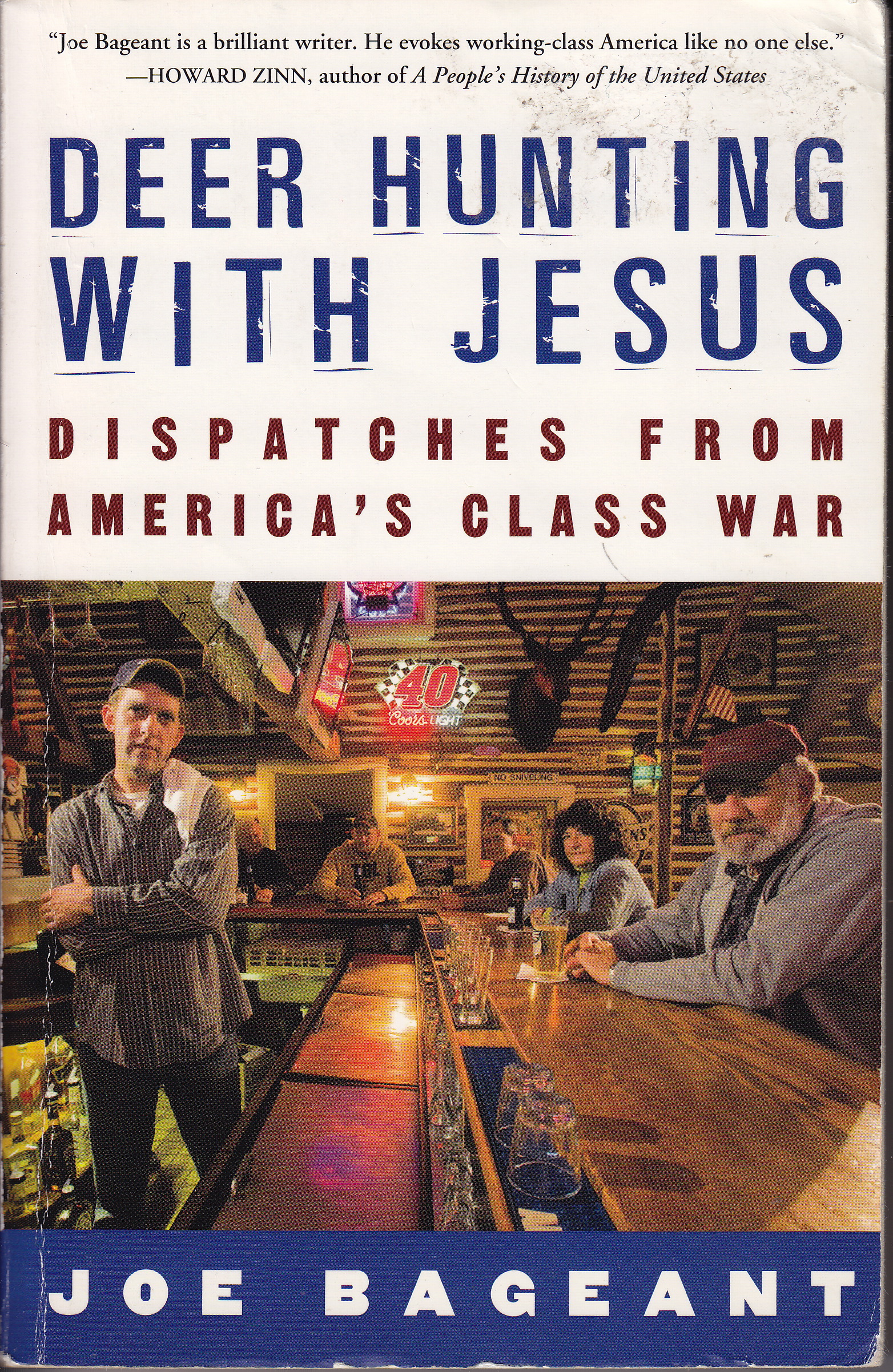
DeerHuntingIf you read only one book this year, let it be this one. I picked up Joe Bageant’s Deer Hunting with Jesus at a used book sale because of the title alone. The blurbs on the back suggested it would be hilarious, and even the subtitle, Dispatches from America’s Class War, didn’t sink in until I began reading. Written during the dark ages of the Bush administration, the contents are a bit dated, yet timeless. Although there’s humor here, I, like Bageant, was born and raised in a working class environment. My father was a house painter (before it became chic) and my stepfather was a blue-collar Joe who did the kinds of jobs nobody else wanted to do. Life was coarse and rough at times, but the people I knew were fiercely patriotic and staunchly Republican. Most adults I knew had never read a book since they’d managed to escape from high school. Deer hunting was nearly as religious as church, and anything you heard in either venue was to be taken absolutely literally. And yet government programs to help them get along were merely shams that politicians knew they couldn’t see.

Like Bageant, I feel at home among the working class. I am one of them. My job may be in Manhattan, but the sensibilities that got me this far are from the backwoods of Pennsylvania. Those who know me outside the office still occasionally call me a redneck. Perhaps it’s an affectation, but it is an affectation born of deep appreciation of the honesty of the worker. They’re no saints, the working class. They will get away with what they can (what bobble-head wagging above a white collar can honestly claim that it doesn’t as well?), they will laugh at the crudest jokes, and they will be mean and turn on each other if provoked. They are, however, good people caught in a system that won’t let them improve. The only possibility is education, the one service governments slash at every opportunity. The system, as Bageant shows, was built just to do that. Like Moses, throughout the book, he calls them “my people.” I know exactly what he means.

When I visit my hometown, it’s like a Bruce Springsteen song. Windows are boarded up and the streets seem even meaner than they were when I was a kid. These are people in ill health with a government that would rather not spend the money on them—we’re used to it, and Uncle Sam knows that—so it assures that the only businesses that thrive are fast food and liquor stores. You can also find a television and rifles, but not much else. The liberals, as Bageant states, don’t know how to relate to the common man. In my own experience, the redneck who earns a doctorate won’t have a chance of getting a job. The university liberals have their own agendas, too busy trying to save the planet to worry about the real people who make their lifestyle possible. I picked up Deer Hunting with Jesus as a joke, but found it the most important book that I’ve read in many years. Please read it and try to understand.


Mother for a Day

In a world set on tearing itself apart because of its differences, there is one thing every single person has in common. We all have a mother. In societies enamored of domination and competition, we take one day out of the year to stop and remember those who gave of themselves so that we could live. We place this day on a Sunday, the most passive of days when it will not interfere with regular business. We give chocolates, flowers, fruit-baskets, and then go back to the same usual grind come the next day. At the risk of gender stereotyping here, I do wonder how much wisdom we must miss by relegating our mothers to the background.

Growing up, we all know, is inevitable. We need to release ourselves “from the apron strings” and learn to cope in a hostile world. Not only do those overseas, different from us, wish us harm, but even our neighbors become our competitors and although friendly, we look for a way to find our advantage. Motherhood is a reminder that there is another way. Families, at least ideally, are built on cooperation. A willingness to set aside our own personal agenda for that of those for whom we care deeply. Used to be that the largest families (before family became a weapon used by religion) were those best placed to succeed. You had a set of people who shared a common mother, who united in a cooperative venture. Capitalism has little room for such a dynamic. It’s “each man for himself.”

Although churches around the country will mention mothers in their services today, Mother’s Day is a secular holiday. Hindus, Buddhists, Muslims, and Mormons all have mothers. Many religious groups, however, do not. Just last week some Roman Catholic women were ordained as priests here in New Jersey. Of course, the “mother church” disowned them, as priesthood is a male prerogative. Mother’s Day is not on the church calendar. It grew out of the Civil War with the sad realization that, left to their own devices, men will make wars that pit brothers against one another. Although I am stereotyping again, I have a hard time imagining a mother who would do such a thing. Mother’s Day should be an opportunity. Not only should we thank or remember our mothers, we should take to heart what motherhood means. I can’t help but believe the world would be a better place for it.

DSCN1941


DOA

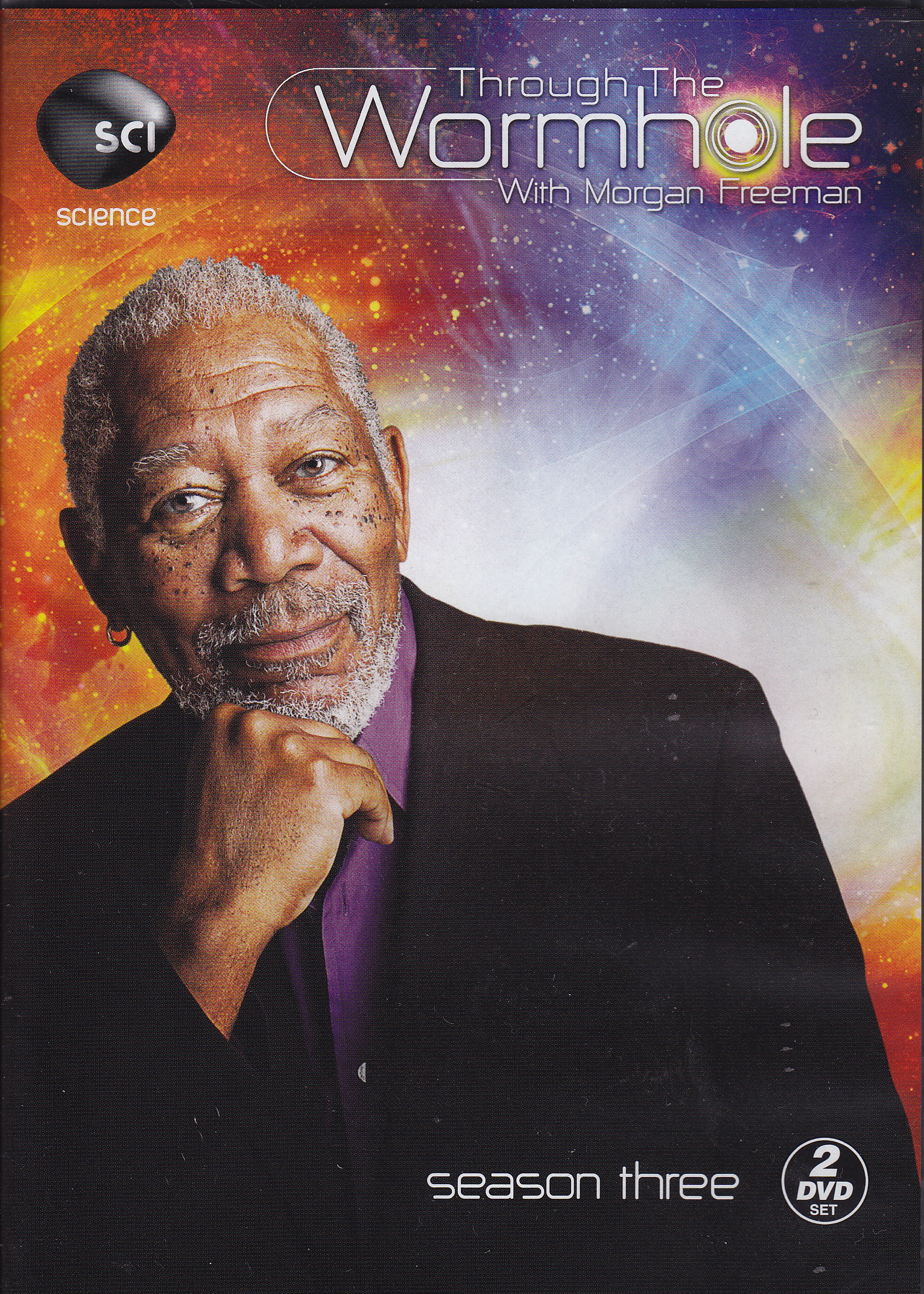
Wormhole3Perhaps it’s just me, but the third season of Through the Wormhole has taken a dramatically metaphysical turn. I always run behind the time when it comes to media; I know that the season is long passed. I started watching Through the Wormhole shortly after the first season became available on DVD. Science has always been an abiding interest of mine, and I face it as someone raised religious and wondering whence lies the truth. (“Through the wormhole,” for the record, is where it might be found according to Morgan Freeman in the opening voiceover.) The third season, through which I’m currently making my way, has begun to raise disturbing questions about life and mortality that start to highlight some of the more Frankensteinian aspects to human curiosity. I recently watched the episode “Can We Resurrect the Dead?”

In the world with which I am familiar, resurrection has always been a religious issue. I grew up with a strong notion of the afterlife, and it was suggested to me that survival beyond death was assured. But the resurrection that various scientists are now exploring is of a different order. For those who can afford the increasingly astronomical costs of top medical care, resurrection is not such an unusual thing. Only, when your body is resuscitated, you wake up the the same weary body that just died. So some of the scientists interviewed suggest that if we can reverse the death “mechanism” that is apparently built into our own mitochondria, we might be able to bring back the dead. Even more bizarre are those called “life loggers” who wear devices to record their experiences in life so that they can be uploaded and preserved. A consciousness digitized and stored on a hard drive heaven for all eternity. Meanwhile a scientist smoking a cigarette in Japan shows us a robot straight from the uncanny valley that looks almost like him and is sent to do some of his lectures in his place.

Maybe it’s just me, but it seems that resurrection used to be somewhat simpler. It was a matter of following the right doctrine and living a life worthy of being continued after this one ends. Now it is a matter of peering through a microscope, or trying to capture on mere devices the multitude of experiences that flood us daily, making us human. Can our future, digital selves really experience human emotion? All those pictures taken while riding a bike—will they convey the effort of balance learned as a child, the sensation of a self-generated breeze on my face, the wonderful weary sensation in my legs upon stepping off? What of that hint of lilac in the air that I picked up momentarily on the wind? Will eternal life, missing the actual life be worth it? I think Victor Frankenstein discovered the answer to that almost two centuries ago.


Useful Fantasy

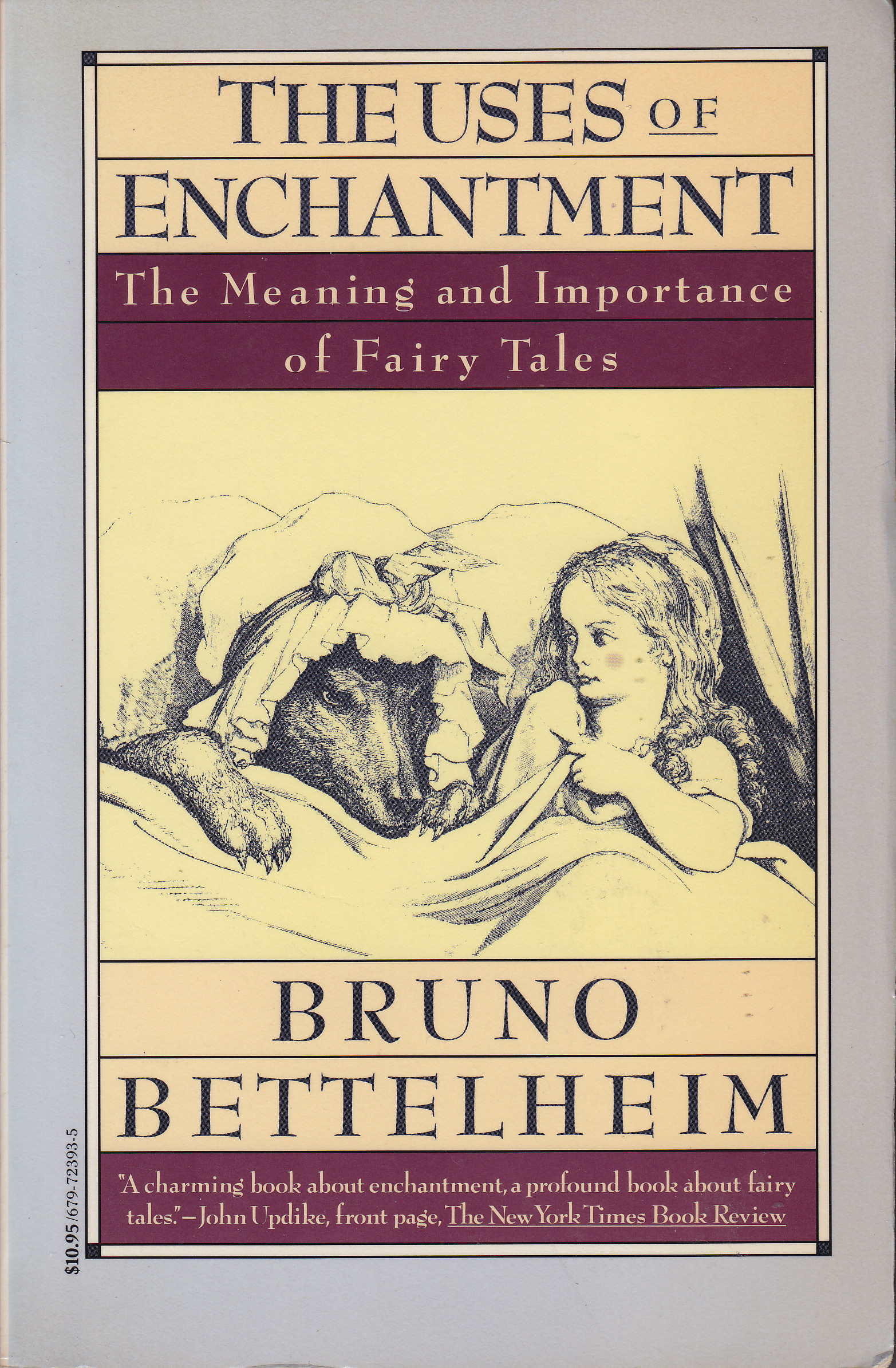
UsesOfEnchantmentOnce upon a time, I heard about a book called The Uses of Enchantment. During my doctoral studies it was recommended to me, and I put it on my to read list. That list is quite long, and I don’t follow it in any kind of order. Like life, it is chaotic and ever changing. Now, some decades later, I have finally read Bruno Bettelheim’s classic, and I wish I’d read it when I first knew of it. Originally published in the 1970s, The Uses of Enchantment was one of the few serious books that suggests fairy tales are important. Bettelheim was an unapologetic Freudian and in reading his book I found the origin of many of the observations I’d read about fairy tales through the years (what does Red Riding Hood’s wolf represent?) owed their origins to this tome. The book is important even for non-Freudians because it takes great care with a subject that clearly deserves it—our imaginary tales are more than simple entertainment.

Fairy tales are part of a long continuum in human thought. Bettelheim shows that they are very closely related to myths, although mythology is clearly something different. Similar, but not equal. Even more intriguing is the fact that fairy tales are closely tied to religion. Bettelheim notes that several biblical stories could almost be classified as fairy tales. The intellectual life of the child, he notes, for much of history depended on religious stories and fairy tales. The very unrealistic nature of both are intended to speak to children in a way that facts can’t. Indeed, the hardened rationalists sometimes seem to lose sight of the fact that we all need fantasy to keep us going from time to time. Bettelheim suggests that biblical stories help children to cope with things on a symbolic level that creates a sense of security.

Already in the 70s, however, many were suggesting that we, as a species, had outgrown our use for fairy tales. Indeed, it is not difficult to find many academics in the humanities who hear the same refrain—we don’t need this fluff. Science, numbers, technology—these are the keys to the future! But what future, I wonder? What kind of world would we have to face without literature, movies, and music? We need our myths still. Despite Disney’s take on them, we need our fairy tales as well. A world without imagination may be efficient, but it is no livable world at all. Bettelheim’s personal demons sometimes cast a shadow over his work. He was a concentration camp survivor, however, and early trauma has a way of staying with a person throughout life. Those with fairy tales to fall back onto may be those best set to survive in the deep, dark woods.


The Eerie

Those who have trundled alongside of this blog for any length of time no doubt know of my interest in weird fiction. Somewhere in the mists of my youth this led me to one of the few venues in which a person can get a hook on the eerie, namely, horror films. I am, however, no fan of violence, and quite sensitive to the human condition. What I have always sought is hauntingly summarized in Robert Macfarlane’s Guardian article sent to me by a friend, entitled “The eeriness of the English countryside.” Horror has become, in keeping with the dullness imbued by a society of constant diversion, aggressive and shocking. New levels of nauseating cruelty are required for generations raised with graphic computer games and an internet that is like the subconscious completely unleashed into the waking world. You need more items jammed under the fingernails to elicit any reaction. That’s not what I’m here for. Whatever happened to the uncanny?

As Macfarlane notes, there is a natural eeriness to the landscape left by human activity. Not just in England, but wherever we set foot. The innocent-looking countryside is seething with undisclosed atrocities. It is no coincidence that in America the “Indian burial ground” motif took off for explaining the haunting of the landscape. The eerie is often our retrospective on what we know we really shouldn’t have done. Macfarlane is writing for those who’ve experienced the English countryside and its secrets, but no matter where we look we can find the uncanny cast into the scenery by our selfish actions. There is horror here, but it is subtle. You have to sit quietly and listen to hear it, but it can, like a good eerie novel, induce shivers without a drop of blood being shed. (Well, maybe a drop, but seldom more.)

Many doubt the soul exists. Others of us take a broader view of the question. Our view of the world is colored by what has brought us to where we are. As someone who has been repeatedly passed over for jobs because of the excesses of the white male society in which my ancestors happened to have tacitly participated, I rest on the horns of this dilemma. All of my conscious life I’ve supported equal rights for all races and genders. The landscape I inhabit, however, is haunted. There have been dark deeds undertaken on this soil, and the soul is that which remembers. Macfarlane is no doubt correct that even the eerie can be politicized. Those of us who daily experience it, however, know that England hosts only one of many, many tainted shores.

DSCN0216


Biblical Art

Although the United States is a religious nation, according to all polls, not many Americans know about the American Bible Society. This organization, based in New York City, has been vastly influential in the history of the nation. Even more influential, however, has been the Bible itself. It pervades every aspect of life in America, whether acknowledged or not. It is an integral part of the fabric out of which the nation is cut. I used to ask my Rutgers students: if there were some unseen force that impacted your life every day in ways that you couldn’t imagine, wouldn’t you like to know about it? Of course they would! But our society has very little tolerance for actually learning about the Bible. As a story in the New York Times states, the American Bible Society had to sell its historical Manhattan property recently. I visited the site on my first trip to New York as a seminary student. Here amid the towering secular concerns of money and greed, was a building dedicated to Sacred Writ.

IMG_1272

The New York Times piece, however, is pointing to the fact that the selling of the building has led to the closing of the Museum of Biblical Art. As Randy Kennedy makes clear in his piece, the Museum was (technically will have been) dedicated to showing the impact of the Bible in secular contexts. The American Bible Society is an evangelistic organization. They arrange for the distribution of Bibles not for secular reasons, but for good, old fashioned conversion of the heathen. This set the Museum a little bit at odds with its host. The Museum, critically acclaimed according to Kennedy, is (was) generally secular in outlook. It recognized that the Bible has influenced us in ways far less than obvious, pervading into our artistic sensibilities.

Although I’ve worked in Manhattan for about four years now, I never had occasion to nip into the Museum of Biblical Art on a lunch break. (Lunch break? What’s that? Money takes no breaks.) This is unfortunate. It seems that the message I had been trying to pass along to my temporary charges was being openly displayed here for New York society to see. Little do people realize, I suspect, that the principles of capitalism—the very system that transfuses the lifeblood into the city—developed out of biblical outlooks on private property. Not that the Bible itself is capitalistic, but it gave a society the basis to develop a form of thought that is, honestly, quite foreign to the biblical outlooks themselves. And ironically, the American Bible Society will continue, even though its intent may be less in keeping the spirit of the very book whose impact the Museum attempted to display.


Who’s Wright?

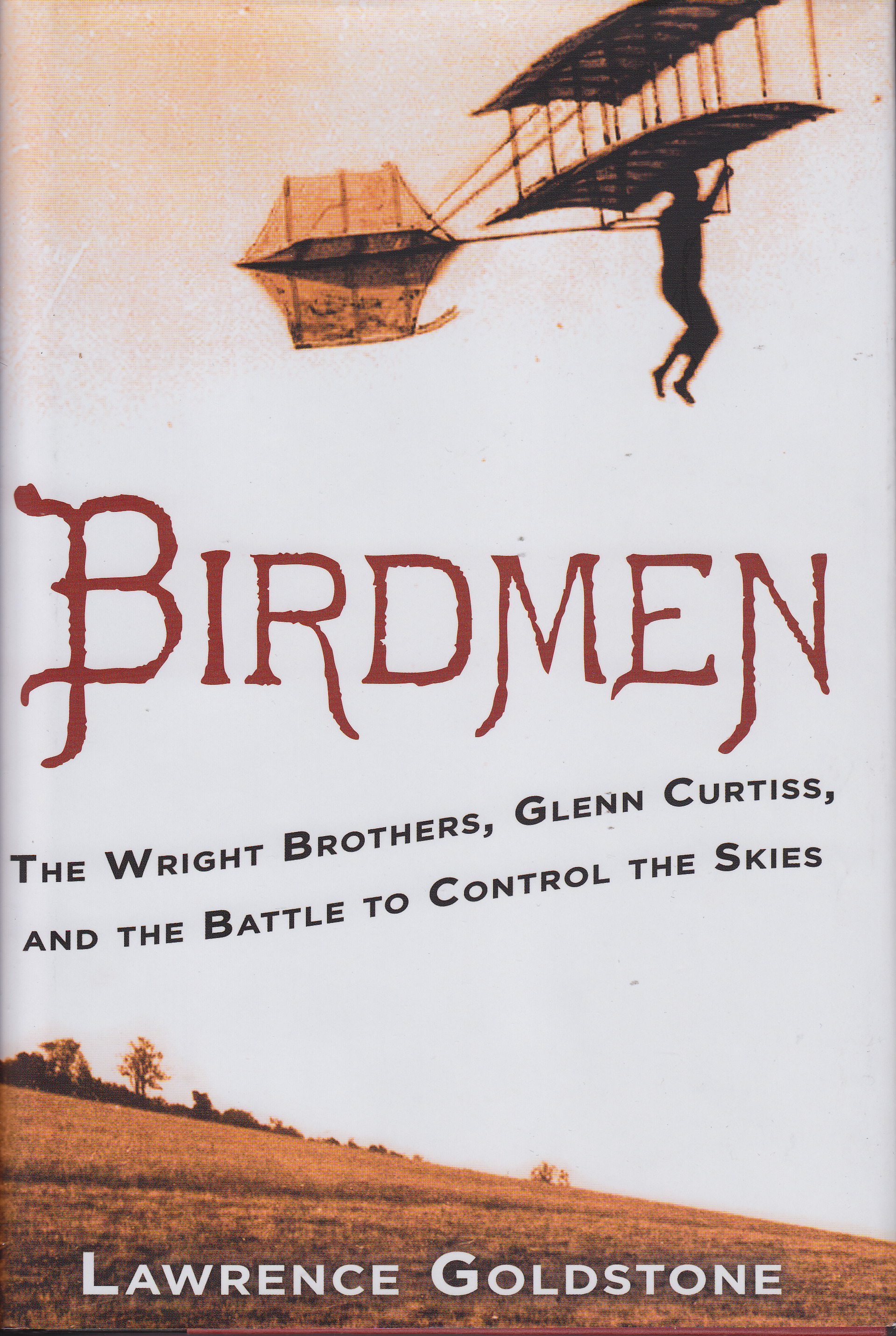
BirdmenUpstate New York used to be known as the “Burnt Over District.” In the days of the “Second Great Awakening,” many new religions cropped up in this region—some to die out shortly, and others eventually to produce presidential contenders. It was also the region that would be the home base of Glenn Curtiss, one of the true innovators in aviation. My wife and I just finished reading Birdmen by Lawrence Goldstone. The Wright Brothers, Glenn Curtiss, and the Battle to Control the Skies accurately sums up the contents. This is the story of how we learned to fly. From as long ago as people could abstract from the fact that birds fly, and we can’t, people have yearned for the skies. We are heavy, earth-bound creatures with the wrong musculature to support wings. Goldstone takes us through the early days—just last century—when heavier than air flight began to look promising. We all know that the Wright brothers, Wilbur and Orville, invented the first workable airplane. The story, however, is much more complex than that.

No doubt the Wrights hit upon the keys to flight first. They knew and met with Glenn Curtiss, who quickly took off ahead of them in innovation. What Birdmen reveals is that the Wrights were PKs. You know, preacher’s kids. Their father was a strict and dour clergyman of the ironically named United Brethren in Christ. Feeling his outlook had been wronged, Milton Wright employed his sons in a lengthy legal battle to gain control of his church. Indeed, Wilbur Wright would sometimes put his experimentations or business pursuits on hold to go and help his father wrangle with the righteous. Theirs was a religion that took no prisoners.

My ancestors grew up around the Hammondsport area and some of them knew Glenn Curtiss (according to family lore). I had always wondered why there was so much fighting among fliers when the real enemy was the steadfast grip the earth has on us all. We were Curtiss people. Sensing that Curtiss had infringed their copyright, the Wright brothers, after making history, spent the rest of their professional lives dogging Curtiss with legal battles that, Goldstone makes clear, were personal vendettas. Their religion convincing them that they were the righteous being beset by the wicked gave them the fuel to snap at Curtiss’s heels as he went on to innovate many of the technologies still used in flight today. At the epilogue, Goldstone states what had become clear to me from chapter one: the unforgiving religion of the Wrights’ upbringing led to their disappearance from the world of flight innovation. Its is a lesson that all who would soar today should read, mark, and inwardly digest.


Two Outlooks

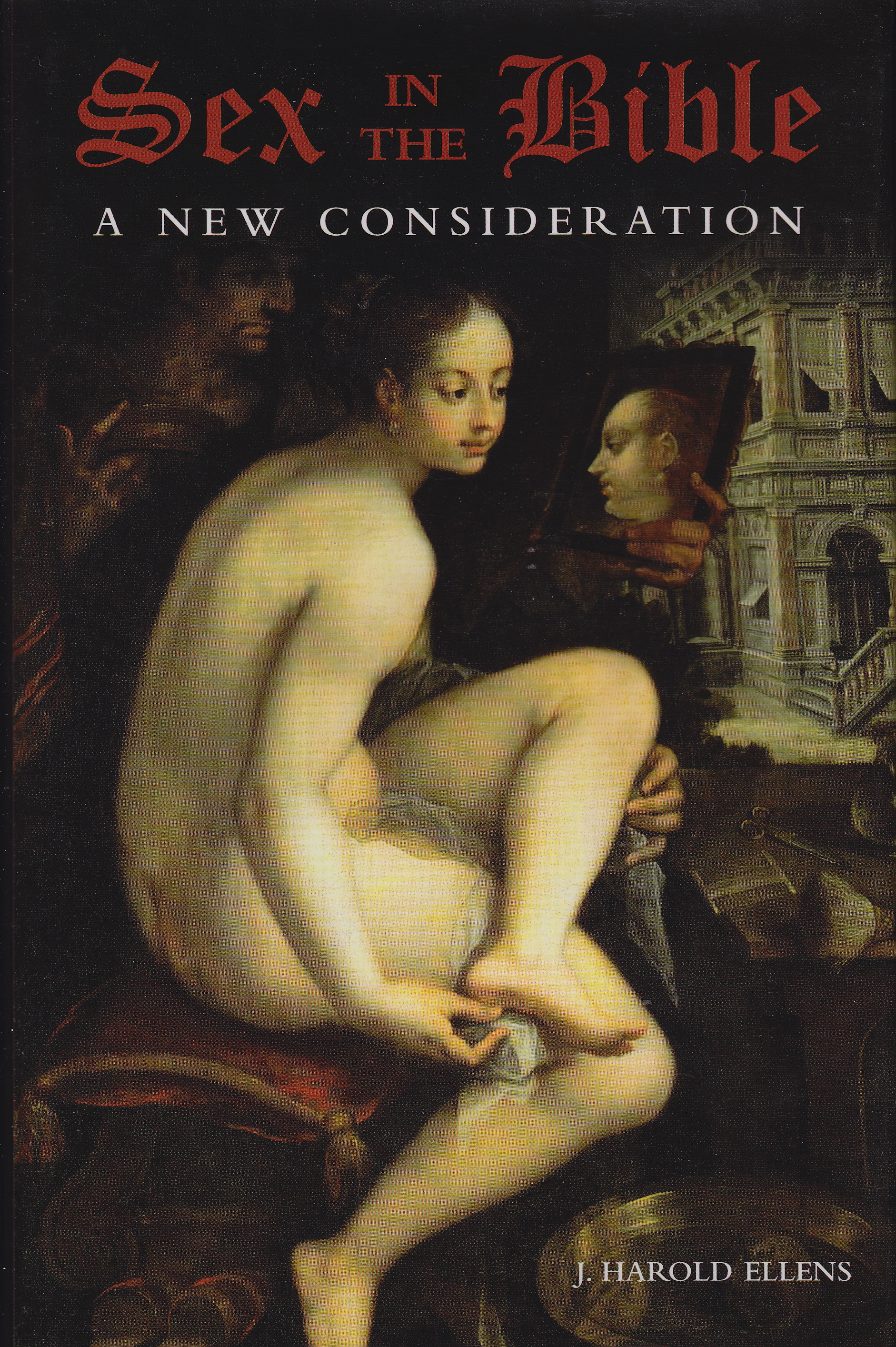
SexInTheBibleThe word polymath used to be applied more easily. In these days of highly specialized training, it is difficult to have expert knowledge in more than a couple of areas. The two areas, sexuality and scripture, dealt with in J. Harold Ellens’s Sex in the Bible: A New Consideration, are such zones of specialization. Students of the Bible have recently begun an intensive exploration of how sex fit into the ancient worldview. Ellens’s book surveys all of the biblical legislation about sexual matters and a fair number of the stories involving the same, with the sensitivity of a professional counselor. Indeed, his practical knowledge of human sexual development and psychological needs based on it should inform society’s understanding of scripture. The Bible is no pristine book. Neither is it a romance novel. Still, ancient people were not as shy about sex as post-Victorians tend to be. The Bible is often frank on the subject.

The main danger of a project like this is trying to decide where to take the Bible literally and where not. Ellens, while he has some training as a biblical scholar, falls into a familiar trap. He assumes, as parts of the Bible do, that Israel’s neighbors were sexually depraved. Not only did they condone things like bestiality, according to Ellens, but they incorporated sexual deviancy into their worship. Ancient records, readily available for decades, give the lie to that outlook. Ellens makes the case that biblical writers had no way of knowing, however, that homosexuality, for example, is a biological predisposition that can’t be changed at will. Other sexual practices that are now considered normal and healthy were perversions in the biblical period. Medical science should inform our understanding of Holy Writ.

This is an argument Ellens can’t win. Passionate though he may be about how all of this just makes sense from a scientifically informed point of view, the fact can’t be changed that the Bible does condemn some sex acts outright. Even more damaging, in my opinion, is that the Bible clearly views women as the sexual property of men, and men regulate the sexuality of their females. Anyone arguing that the Bible is a moral guidebook in regard to sexual mores must face this issue head on. There’s no tip-toeing around it, even with verified psychological pedigree. The Bible is the product of a patriarchal structure that did not tolerate sexual practice outside prescribed limits. We now understand the same behaviors from a scientific point of view, but the written text doesn’t change. It is just that dilemma that makes it very difficult to be an expert on two fields so diverse as sexuality and biblical studies.


Book Culture

The book is not dead. Yesterday, on a warm, sunny spring day that veritably screamed “outdoors,” I found myself standing in line. I was at the Hunterdon County Libraries’ book sale. Having awoken in a panic a few weeks back gasping, “I missed the Bryn Mawr book sale!,” I made it a point to catch this one. You see, I read a lot of books on the bus. My job doesn’t pay very well, so I get inexpensive tomes where I can. And I wasn’t the only one in New Jersey sacrificing a rare, sunny weekend to look at books. I arrived twenty minutes before starting time and was well back in line. Although I seldom find items from my wish list, it always does me good to see so many people out for the purpose of literacy.

thumb_IMG_2160_1024

A book sale, like life, is like a box of chocolates. By far the majority of books here are publications vastly overprinted by excessively optimistic publishers. Of course, some people may buy books without the intent of keeping them, as difficult as that is for me to fathom. Since these are donations, it’s difficult to say much about how they reflect the taste of New Jersey readers. I couldn’t help but notice, however, as I wended my way to the religion table, that those who got there before me were racing through this particular table with a focus I can no longer muster, snapping up the gems, manically filling their bags. About the only other table where I saw that kind of passion was the science fiction section. I get overwhelmed in such environments. Too many titles, too close together, in only the loosest of orders (and sometimes very mis-categorized) can make for frustrated hunting. Nevertheless, I’m glad I marked my calendar.

The religion tables were mostly filled with predictable material that fails to challenge the intellect. Still, if it gets people reading, I have no cause for complaint. After about half an hour it was impossible to get through a single aisle without having to excuse myself a few times. Every subject, every category, had its readers. I was especially glad to see so many young people there. This may be the most hope for the future that I will see all year. Home with an aching shoulder and a supply to keep me going for forthcoming weeks, I notice the clouds drifting over what began as a glorious blue sky. No matter. If it rains, I will have plenty to do indoors. Resurrecting the mind from its slumbers is the most religious of all activities.


Brain Dead

I’ve been thinking about brains (is there any more existential thing to do?). Reading a book this week about the mind (see Thursday’s post) probably has something to do with it. And also having finished a book on zombies maybe contributes as well. You see, I find it strange when scientists assume that we can figure out all the answers with our limited brains. Although we are endlessly fascinated by them, neuroscientists have long noted that they do have weaknesses—they (brains) are easily fooled, and, for those who find no room for the mysterious in the universe, we’ve made up gods to keep us company. We know that relative brain size—relative to body mass, that is—is a large factor in intelligence, but we seem not to imagine the possibility of larger brains than those we carry around. I suppose it’s not without reason that alien brains are disproportionately larger than our own, according to the standard image of the “grays.” We don’t like to think there’s something smarter than us hanging around. It’s a frightening thought.

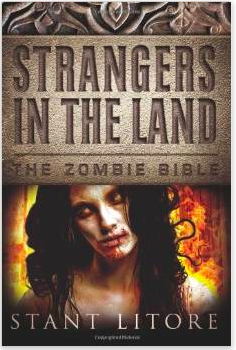
Screen Shot 2015-05-02 at 5.35.48 AMOn the more earthy side, brains have been the usual fare for zombies in one sub-division of the zombie movie neighborhood. George Romero gave us flesh eating as a paradigm, but eventually zombies settled on brains. This was on my mind as I finished the epic Strangers in the Land that Stant Litore kindly sent me in Kindle form. I’d read What Our Eyes Have Witnessed on my own, and the author wanted me to read more. Litore’s zombies are more in the canonical Romero sector—they eat flesh and their bite conveys zombiehood. Strangers in the Land takes its base story from the book of Judges. Only Deborah becomes a zombie slayer. Brains aren’t eaten here, but they must be destroyed for a zombie to—what? Redie? Full of colorfully drawn characters, the story rambles through the countryside of ancient Israel, plagued with zombies. It is the brain that keeps a zombie going.

While I have to stand by my recurring assessment that the zombie is a hard sell in novelistic form (here goes my mind again! Reading a book gives your brain too much time to focus on the utter impossibility of bodies missing organs or vital tissue to move, or “live,” even with a brain) Litore is onto an interesting idea here. Looking at it metaphorically (as surely he intends it) helps. Perhaps I just miss the lumbering revenants of Return of the Living Dead calling out “Brains! Brains!” The Bible, however, is endlessly open to reinterpretation. What Our Eyes Have Witnessed was post-biblical. This current installment moves us into the realm of reception history. I’ve been researching reception history and the undead for a few months now. I have some conclusions to share in an academic paper a few months down the road, but for the time being, I’m still trying to figure out brains. Or maybe I’m just out of my mind.