All’s Fair

The county fair is an institution that tastes like a real slice of Americana. My family’s been involved with our 4-H Fair for several years now. Long days sitting under tents in the August heat, showcasing to young people that a good time can be had without the usual kinds of diversions that lead to regrets and tattered dreams. For many kids the fair will be as close as they ever get to a cow, goat, or chicken. For the less rurally inclined, there are pets like cats, dogs, and small animals. For others there are model trains, rockets, and airplanes. Increasingly robots and more current forms of art such as steampunk and film-making are appearing. In short, there’s pretty much something for everybody there. I know that my entire family has benefited from the experience. I didn’t know about 4-H as a child, so this has been a pleasant awakening for me.

IMG_2408 copy

As I wondered the fairgrounds, something that I suppose I’ve noticed before hit me with a new clarity. The Arts and Sciences tents are right next to one another, and these represent the classic forms of liberal arts education. Yes, the Gideons and Right-to-Lifers are here, but they’re over in the commercial tent. They’re selling something. Education—true education—is free. Those who grow up on farms can learn an awful lot about science by watching animals. The more formal schooling, however, asks for deeper engagement. Creative writing helps to explore ideas that simply don’t flow in conversation. Photography forces you to look at something from someone else’s point of view. Science teaches close observation and practical extrapolation. This is like a little university set up in a grassy field with a very affordable tuition.

The old hiker’s mantra goes “take nothing but pictures, leave nothing but footprints.” This year there was a real emphasis on footprints. The kinds of footprints that many clubs chose, however, were carbon. Many adults have grown up in a culture of consumption and disposal. Our young are now trying to demonstrate for us the errors of our ways. Sure, there are resources to last for centuries yet, but they will not last forever. Who are we to suppose it is our right to take what we please and leave the mess for our young to clean up? A day at the fair always renews my sense of hope. These are all volunteers here, giving up the latter part of their summer to try to make the world a better place. Perhaps the ethics should come up from the young, rather than descending from generations that have put their own wants ahead of those who might truly make a difference.

Go Down, Moses

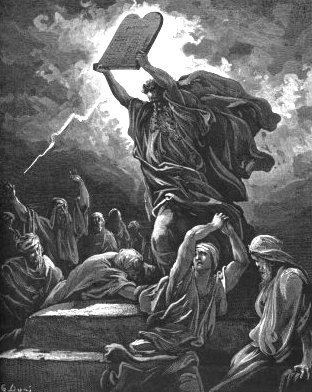
For a time, I tried to write down family tradition. My family was somewhat unusual in that regard. Family saying came generally from my maternal grandparents—my father wasn’t around for my childhood years—and since my grandparents died when I was relatively young, I didn’t hear much of their wisdom firsthand. Still, my mother told me various things her parents used to say and I tried to keep a record. Kind of like I wanted to be an anthropologist for raw folk sayings among the, non-elites. One thing my grandmother used to say, so I was told, was “Where was Moses when the lights went out?” I was always intrigued by this since I supposed it had something to do with Moses the miracle-worker. I guess I imagined Moses waving his rod and the lights coming back on. That single question is all I ever heard of this particular family treasure. I forgot about it until recently, though the miracle of the world-wide web, I learned that the query comes from a song.

Moses gets down

Moses gets down

The song, it turns out, exists in multiple versions. The Library of Congress has a recording dating to 1901 available on the web. According to this version, written by Harry von Tilzer, Moses was not “the” Moses, but a preacher condemning gambling. Also, “lights” is rendered in the singular. So much for the canonicity of family tradition. Duke University library has an undated, but clearly old, version of another song by the same title. This one does reference the biblical Moses, also the name of the song’s narrator. A child afraid in bed at night falls in love with and marries his nurse girl who used to ask him the question “Where was Moses when the light went out?” as he was falling asleep.

Yet another version, dating from 1965, has the question “Where was Moses when the lights (plural) went out?” followed by the answer, “He’s in the dark.” With all of this instant information from the internet, I’m still not certain what was being conveyed by my grandmother with this cryptic question. My mother said she used to say it when someone walked into the room too late to help with something, a kind of sarcastic “Where were you when I needed you?” What is clear is that the song was about as old as my grandmother and she found it somehow appropriate in an unconventional situation. I have to wonder how much of sacred tradition, including the Bible, might have come from misunderstood original instruction. We will, of course, never know. I don’t know what the original lyrics were, but I have learned that even family wisdom has a backstory, like any Scripture, for those who look hard enough.


Shooting Stars

One of the professions I used to consider as a child, before I had any real concept of the way the world works, was a scientist. I wasn’t sure what scientists did, beyond a broad idea of learning about the world though close observation. I was too young to see that it would likely conflict with the Fundamentalism in which I was being raised, and I suspect the same is true of many who become scientists and never stop to question the religion in which they were reared. Although religion, as a profession, won out in my case, I was, I recognize now, motivated by a deep and undying desire to know the truth. I still am, although you couldn’t tell that from my career path. In fact, rationally, it is the most important thing to me. What is truth?

Science has become extremely complex. The average citizen can’t afford the kinds of equipment needed to unravel the fabric of reality. A cyclotron wouldn’t fit in my backyard, and, besides, I rent. When I sat outside this morning looking for the Perseid meteor shower, I didn’t see a thing due to the ambient light. Even looking through a telescope, I know I don’t have the calculus to explain the things I see. Given all this, the average person requires a scientist to explain. But scientists are only human. We know that we haven’t evolved to discover the truth. Evolution favors survival, not philosophy. We also know that we don’t perceive everything. Some animals have senses that we humans lack. Still, we suppose through our use of our five—obviously the best—we can come up with an explanation of everything. The truth will be ours! Or will it? Even thinkers of such stature as Richard Dawkins and Stephen Hawking make mistakes. They’re only human. When we idolize them, we make them gods.

Back in seminary I learned about the three-legged stool. The basis of authority, in the church, rests on three legs (four if you were Methodist): Scripture, Reason, and Tradition. Methodists added Experience. There were checks and balances here. Well, Scripture seems to have fallen out of the running with the Enlightenment, and nones don’t much value Tradition. Experience is subjective, so we’re left with Reason alone. And yet, reason leads to paradoxes such as if the universe is infinite, how can it be expanding? In classical theological terms: can God make a rock so heavy he can’t lift it? Add to that the fact that some neuroscientists are now suggesting that emotion may be the seat of thinking rather than reason and you might begin to wish you had some tradition to guide you. In my experience, I’ve seen, I suppose, my fair share of shooting stars. I sat outside in the predawn hours this morning and saw nothing. Perhaps I should have had a three-legged stool upon which to sit.

Photo credit: Nerijp, Wikimedia Commons

Photo credit: Nerijp, Wikimedia Commons


My Beloved Monsters

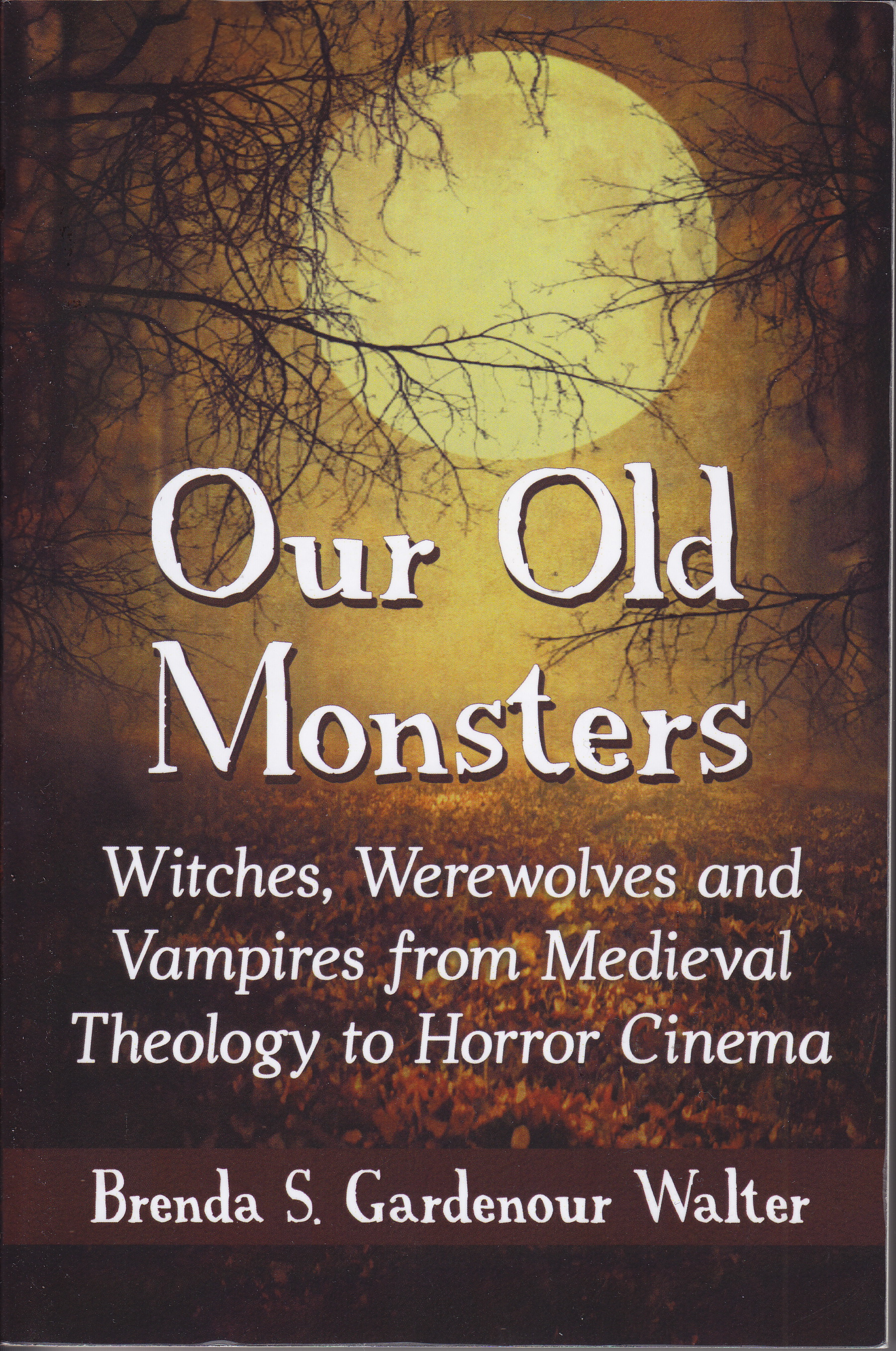
OurOldMonsters copyOnce upon a time I felt radical in claiming that monsters and religion shared a pedigree. Having grown up fascinated by Universal, as well as much cheaper and more tawdry, monster movies, I always experienced a twinge of guilt. My family was very religious, and these monsters were, well, evil, weren’t they? Yet I couldn’t let them go. Although college, seminary, and graduate school each took their toll on this early fascination as I was restructured as a more rational man, the monsters always lurked. In college a friend and I named an invented monster “the lurking.” In seminary and graduate school, demons and ghosts still captured my imagination. Brenda S. Gardenour Walter has, quite unintentionally, vindicated my outlook. Our Old Monsters: Witches, Werewolves and Vampires from Medieval Theology to Horror Cinema just about says it all. Not limiting herself to witches, werewolves, and vampires, Gardenour Walter has given us a novel thesis: monsters come from theology.

Well, not exactly. Medieval theology, as many of us learned in seminary, continued the ancient Greek practice of dividing the universe into four substances: air, fire, water, and earth. Each was associated with a humor in the human body: blood, yellow bile, phlegm, and black bile. Keeping these humors in balance led to healthy bodies. Gardenour Walter, who teaches history in a Pharmacology school, shows how monsters were often viewed against this paradigm. As she notes, this Weltanschauung was not friendly to women. Seeing man as the perfect, rational being, women were considered less rational and more controled by their base urges, leading to the concept of witches. Witches were also associated with demons at a later time, and there is a considerable discussion of that transition.

Vampires were often associated with black bile. Although there are vampiric beliefs going back to very ancient times, Gardenour Walter shows how the modern vampire indeed derives from medieval theology as eastern ideas met western. Unfortunately, in unenlightened times, the concepts were anti-semitically applied, with unwonted liberality. Werewolves were generally dismissed as illusions wrought by demons, although, there always remained an ambiguity. I have to admit not having known that even Augustine discussed werewolves in The City of God, which, it comes to mind, would make an excellent horror movie. The book brings each of these medieval monsters up to the silver screen and considers how their theological pedigree plays out in modern times. This is a book I would have enjoyed as a college student, but maybe, secretly, enjoy even more now as an adult.


Biblically Business

Bibles are business. I recently read that the first book of which Oxford University Press sold a million copies was the Scofield Bible. The Scofield is incredibly resilient to the advancement of scientific thought, and, although large print editions seem to be gaining, it is nevertheless an icon. Conservative Bibles still make good business sense. Still, the Bible originated in a rather more Catholic context. As Christianity was being born, and growing up, there were many sources of information on what it mean to be a member. Initially, being Jewish was a prerequisite. When that was dropped, you would have needed to be able to find an enclave. This wasn’t always the easiest thing to do since Roman emperors sometimes made a quasi-Olympic sport out of killing Christians. Once a church was found and joined, you just participated in the fellowship and listened to the leader. Reading from “Scripture” was likely part of worship services, but the Bible we recognize didn’t exist.

Well, parts of it did. Torah and Prophets were around. The Writings were written. Paul’s letters—several of which are still missing—were still circulating. The Gospels and Revelation would come somewhat later. About the fourth century there was general agreement about which books we meant when the word “Bible” was used. There was some fuzziness around the edges, though. Books like Tobit and Maccabees were accepted by the church, but had never been part of the Jewish canon. Judaism never officially closed its canon, so putting a limit around what would become the “Old Testament” was not as easy as saying it was just the “Jewish Bible.” No books have been added, of course, but nobody bothered to set the list in stone. Now Catholic Bibles, largely because of the counter-Reformation, included the Deutero-Canonical, or Apocryphal books. Protestants soundly rejected them. And Protestants were the champions of personal Bible reading.

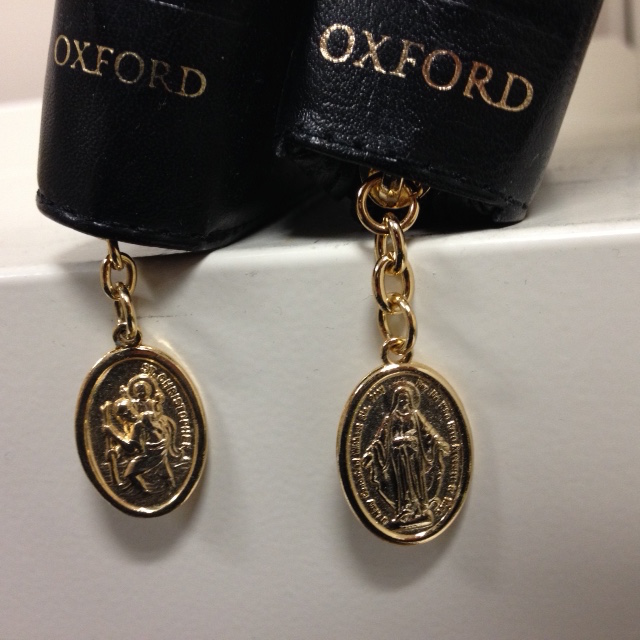
About the midpoint of last century, both Roman Catholicism and Judaism began to show a renewed interest in what had largely been a Protestant (and somewhat Teutonic) endeavor: critical study of the Bible. Bibles specifically directed toward these new readerships began to be produced. With metaphorical bells and whistles. The zipper Bible has always intrigued me. I never owned a zipper Bible. Once I had a zipper case, but never a zipper Bible. What was the message here: the word of the Almighty had to be protected? The other day I came across two zipper Bibles with saints’ medals as fobs. One was St. Christopher (who protects travelers) the other was for St. Mary (generally overall saint). These symbols of tradition interact with the more textual tradition that has come to be known as Bible. Religion is seldom monolithic, and even saints can watch over what is hidden by a zipper and regarded as the ultimate truth among those for whom Bibles are business.

IMG_2404


Credo

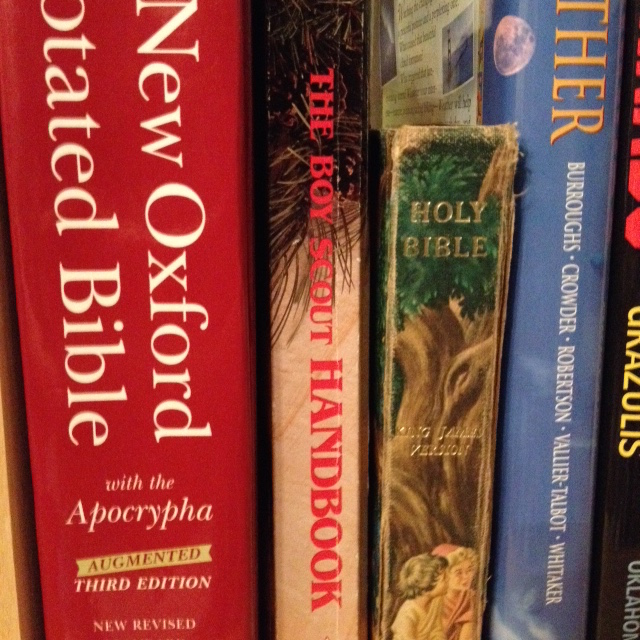
One of my seminary professors, who shall remain nameless, averred in class that Christianity in the first centuries was popular because it was exclusive. Like a country club. If just anybody can get in, why would you want to join? I’ve come to disagree with said professor’s analysis, but I have to admit there are cases where the idea does apply. Country clubs, for example. Organizations that intend to improve society, however, have it in their best interest to have doors as wide open as possible. Otherwise it’s a kind of hypocrisy. If Christianity wanted to make a better world, it soon realized, all takers should be welcome. That paradigm broke down fairly quickly, but at the beginning, I have the sense that all were welcome. So I was pleased to hear that the Boy Scouts have dropped their ban on gay troop leaders. Making a group that sets out to do a good deed a day exclusive heterosexual seems awfully backward. After all, gay leaders are nothing new. Why try to be exclusive?

Of course, the Scouts continue to disallow atheists. This is a fairly common, if medieval, marker of personal integrity. The Elks, last I heard, had few entrance requirements. One of the few stipulations, however, is that you have to believe in God. I don’t know how that plays out for Hindu Elks. Perhaps the more the merrier. Somehow, I doubt it. Exclusive belief entry requirements are a way of weeding out questions before they’re raised. Sheltering those inside from baleful influence among hoi polloi. We are better because we are different. Granted, these organizations go back to a time when theism, of sorts, was virtually a given in American society. Times have changed. Boy Scouts, it seems, are dragged into the future kicking and screaming.

I’ve always been impressed, by contrast, with the Girl Scouts’ openness. No creedal requirements are in place. Atheist girls, Buddhist girls, girls who climb on rocks, any girls are allowed to join. The last three presidents (including Obama) have been Boy Scouts. Two prior presidents have been as well. You might think the organization could meet its pedigree requirements with ease. In my view, they might look to the girls to take a cue on how to make the world a better place. When I was growing up, I knew no atheists. I remember attending a funeral of a family friend who hadn’t been a church goer, and that was pretty traumatic. As an adult I know many atheists and I trust them as much, if not more than, some of the religious I know. Would they be able to lead Boy Scout troops well? I have a suggestion—why not ask the Girl Scouts and find out?

IMG_2405


Excavating Religion

Jamestown, Virginia has the distinction of being the first British American colony to have survived. I’ve only been to Jamestown once, and that was about two or three years before the site was scheduled to celebrate its four-hundredth anniversary. William Shakespeare was still alive back in the home country. The King James Bible was not yet available. It was a gray day when we drove to the site and there were no other people around. Without a guide there was not much really to see—just a sense of being in touch with history by standing where the first English would eventually remake the land in their own image. Even the pilgrims tried to reach Virginia, but missed and landed in Massachusetts instead. Jamestown, however, lays a claim no other site can make.

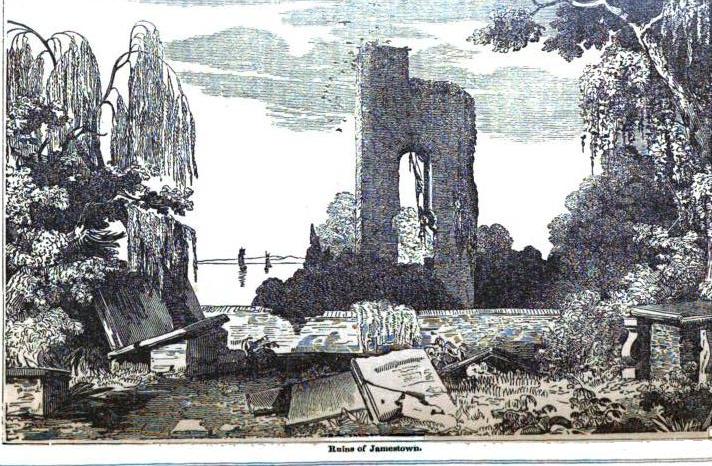
A recent BBC article describes four graves lately found at the site. Located in the church, those buried were men of status. One of them was Reverend Robert Hunt, a clergyman of the Church of England and the first Anglican minister in North America. Interestingly, the BBC story points out, the Church of England was only half a century old at the time. Having spent many years among the Episcopalians at Nashotah House, I learned a great deal of the church’s history. The fact that the Episcopalians made it to America so shortly after their establishment is something I never heard emphasized. Concerned that the Catholic Church, under Spain, was collecting so much territory, the C of E wanted to stake a claim in the New World early on. Partially because of their persistence, we speak English even today. Church and empire were hand-in-glove in those days, and both the church in Spain and in England were state sponsored. Having God on your side can be pretty handy when you want to claim something that really doesn’t belong to you.

The reverend was buried west, facing the people he served, and, according to the article, this helped initially identify him as clergy. The church, in the service of the government, supported the conquest of new lands. The implicit belief that God was on the side of the strong has never really gone away. Mega-churches measure their spiritual assets in terms of fiscal influence. There are those today who believe that the Almighty wants the righteous to be rich, of course, at the cost of the wicked. Jamestown may have, at least partially, set the tone for a new nation that wanted to take more land than it needed. Land that others had occupied, and indeed, still lived upon. Only with the backing of a deity could such claims be made. The biggest god, after all, wins the day. Jamestown tells us more than we might suppose about what we’ve become as a nation. The early years are often the most formative of all.

Jamestown_Virginia_ruin


Time and Again

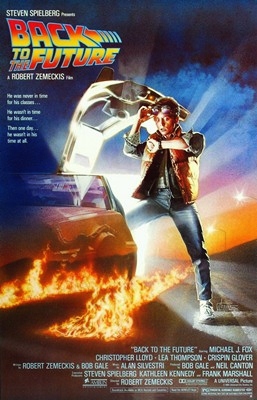
One score and ten years ago, I graduated from college. I also enrolled in seminary and worked in a United Methodist summer camp. I bought my own car and worked as a bag boy in a grocery store. I also met my future wife. Last night we watched Back to the Future, the sleeper hit and highest grossing film of 1985. There’s been a bit of buzz about it because, discounting the sequels, Doc Brown wants to travel thirty years into the future, yes, 2015, which seemed impossibly far off back then. I have to think his envisioned 2015 was more advanced than what we’ve actually managed. Technology, instead of sending us to Jupiter like Arthur C. Clarke imagined, has instead focused on the incredibly tiny. We now do finally have Dick Tracy wrist-phones with real-time images, but we’re still pretty much earth-bound and our rockets are aimed at other people rather than outer space. Instead of fighting aliens with lasers, we’re shooting fellow humans while at church, synagogue, or mosque. Instead of presidential candidates who want to see how far we can go, we’ve got a stagnant pool of people who want to turn the clock back to, well, 1955.

Back_to_the_Future

Don’t get me wrong—this is a fascinating time to be alive. Just yesterday I sat down to recollect the number of computers we’ve purchased as a family and what each could and couldn’t do. Our first couldn’t connect to the internet since no such thing existed. Our first laptop—which we still have—weights as much as a current desktop and has a black-and-white screen. Now we walk around with the internet in our pockets, never really disconnected from a web in which, I’m sure, lurks a huge spider. But back in 1985 you could make quite a few, as it turns out, false assumptions. Church attendance was healthy and would always continue so. We had space shuttles and were looking to walk on other planets. Rock had matured into a provocative mix of selfishness and social protest. Despite the president of those years, things seemed to be improving.

In Back to the Future, Marty McFly returns to the same Hill Valley he left. A fictional town, I noticed last night, that had a seedy downtown square with adult themed stores and movies. The 1955 square had bullies and manure trucks, but a cleanness that was only on the surface. When Marty’s DeLorean reappears in the square in 1985, he crashes it into a Church of Christ. Although this detail had escaped me before, now it strikes me as somewhat prophetic. Thirty years into the future and, like Marty, we are backing out of the church into an age of nones. Our nones not only refer to our religiously unaffiliated, however. We have nones who’ve lost faith in our government, our economy, and our worldview. Instead of going to Jupiter, we stare at our palms. And like Doc Brown, we look back thirty years with nostalgia and wonder at how wrong we are when we believe in the status quo.


Last Chance to Sea

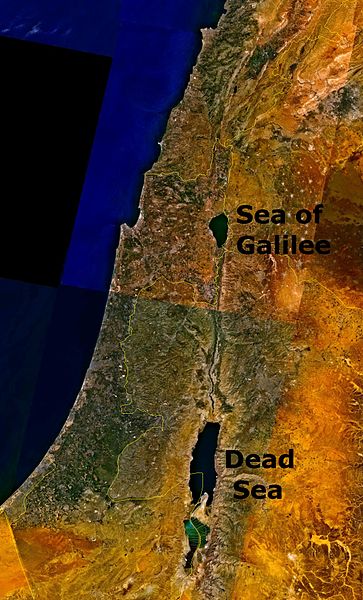
I wasn’t brave enough to don swimming trunks in front of academic colleagues and climb into the Dead Sea. Instead, I dipped a finger in an touched it to my tongue. I’m not sure if it was the bromides or some other toxic minerals, but I immediately wretched and knew that I wouldn’t be putting any Dead Sea salt on my chips. Years later, for comparison, I tried a bit of the Great Salt Lake. Disappointing, to say the least. Already by the time I’d visited the Dead Sea it was dying further. In a recent article on NBC entitled “Thousands of Sinkholes Threaten Dead Sea’s Tourism Industry,” the fate of a sea already dead grows even worse. Water is always an issue in dry climates, and the only real source for renewing Dead Sea water is the Jordan River, which is being dammed and used for human purposes, robbing the Dead Sea of its renewal. The sinkholes are a result of underground salt deposits being dissolved by fresh water as the salty matrix gets siphoned away for industrial chemical farming. Dead Sea levels have dropped 100 feet since 1980.

The Dead Sea is one of the most striking regions on the planet. It is as far as you can go below sea level and still be on dry ground (at least on the shore, that is). The air smells like sulphur and the thickness of the atmosphere at that depth protects you from the sun’s rays, despite the heat. The water is so saline that only bacteria can live there. (The article, ironically, states, “it is very difficult for animals and plants to thrive there.”) By comparison the Great Salt Lake is practically drinking water. Famously, people are unable to sink in the Dead Sea, as its salt enhances buoyancy, so that you can read a newspaper while floating on your back. Like most natural wonders, humans are destroying it. The sinkholes are prophetic, I fear.

363px-Dead_Sea_Galilee

Great evaporating beds line parts of the Dead Sea shore where minerals can be obtained without having to dig into the earth. You can buy some as cosmetics at the local mall. These mineral salts are what make the Dead Sea what it is. And it is shrinking. Satellite imagery of the Sea can bring salty tears to my eye. We’ve slowed the flow of Niagara Falls, and we’ve begun melting our polar caps. Even so, we can’t get enough water to sustain our lifestyle. It has been said that the next major war will not be over oil, but water. Even a glance at California can make me thirsty. In a rare show of cooperation, Israel, Jordan, and the Palestinian Authority are building a pipeline to bring Red Sea water into the shrinking Dead Sea. I hope that this might bode well for the future in the region. Although there is no love lost between these neighbors, they all realize that something unique lies on their border, and when it’s gone it will be a loss to the entire world. That is the real Sodom and Gomorrah.


Witnessing Angels

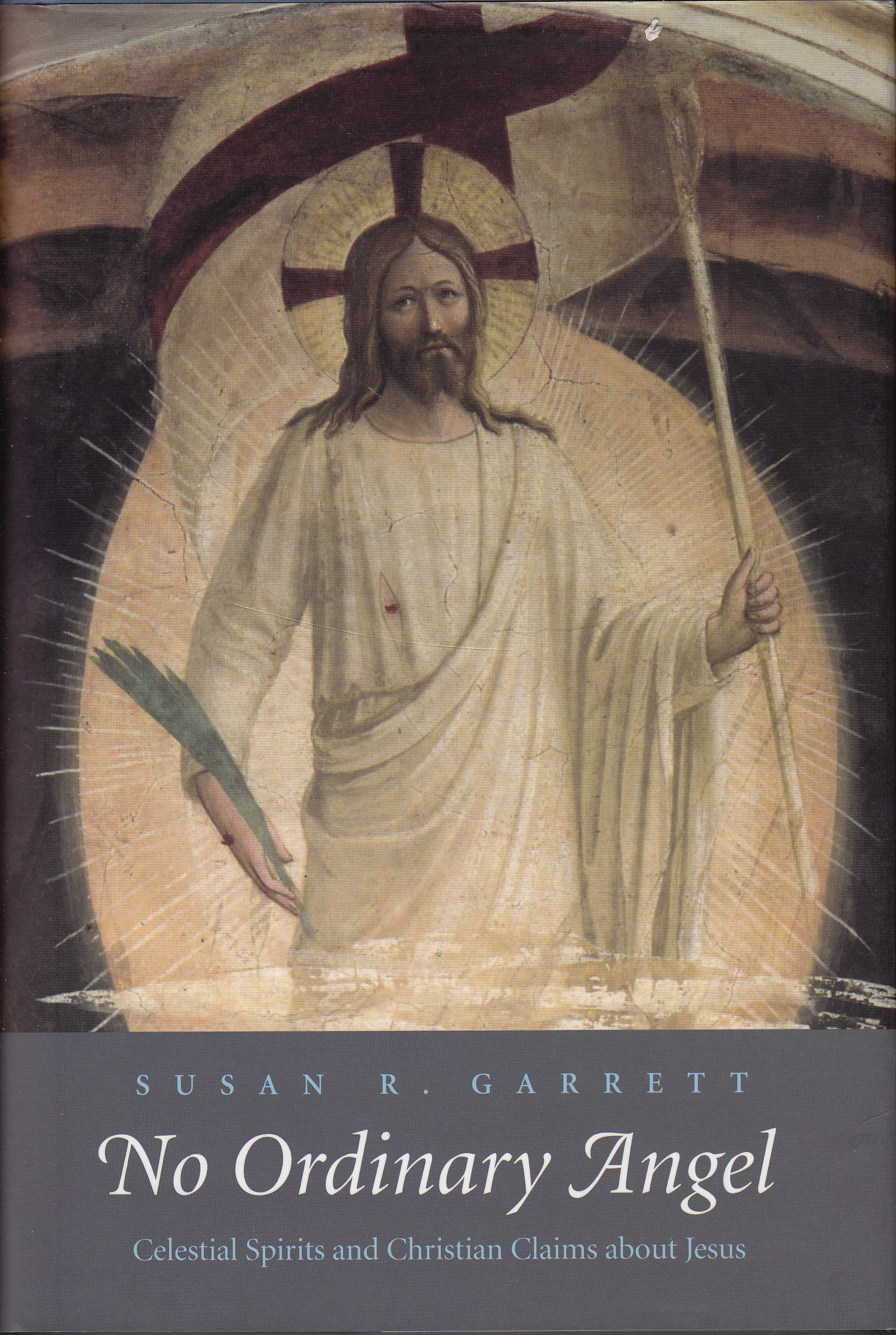
OrdinaryAngelBack in my undergraduate days, I wanted to learn more about angels. Surprisingly, there were no courses offered on the subject, even at evangelical Grove City College. When I finally took an independent study on angels, I found that few serious books had been written on the topic. I was immature as an academic, and I hadn’t learned that the subject of angels was a kind of scholarly embarrassment. Although many biblical scholars still clung to the idea of God, most had jettisoned angels along with other Medieval fabrications such as dragons and virgins. We inhabit a hardened, material world with no room for spiritual beings flitting about. As a student of ancient Near Eastern religions, I discovered angels possessed a hoary pedigree stretching back to Mesopotamia and perhaps beyond. Susan R. Garrett’s No Ordinary Angel opens the question again, and considers the many roles that angels have played and continue to play.

Subtitled Celestial Spirits and Christian Claims about Jesus, the book goes beyond the issue of angels per se, and addresses the distinctly Christian concern of how Jesus differs from them. What becomes clear in the reading of the study is that uniformity isn’t to be had. The earliest Christians already had divergent ideas on many concepts. As Roman Catholicism developed, angels attained a natural role in a world that still allowed mystery and shadows to exist. Protestants, the progenitors of much of science, cleared the closets of supernatural beings, leaving God and a table instead of the hosts of Heaven and an altar. I’m oversimplifying, of course, but there’s a sense in which the more liturgical traditions have more room for angels and demons. You don’t call a Protestant for a proper exorcism. Still, Garrett knows her stuff and shows how angels insinuate themselves into several aspects of sacred experiences of both Protestants and Catholics.

Angels come at births and deaths. They heal the sick, they protect people and they worship God. They rebel and fall, becoming Satan and his minions. Angels are, by their nature, liminal figures. They help to transition people between different states and worlds. As early back as written records, people believed in them. Outside of academia, people still do. God has become wrathful and distant in his old age and, well, you can talk to an angel without having to worry about vaporizing. In antiquity they were messengers. When God didn’t condescend to the earth, angels would come down. Now we get the sense that they’re more like us than we might have originally thought. Or maybe we’re more like them. Angels, even though they may have fallen out of academic fashion, are sure to endure longer than most weighty treatises, no matter how well footnoted they may be.


A Writer’s Life

WeHaveAlwaysLivedSometimes, an experienced editor once told me, the author’s life is just as important as the book she’s written. I can’t pretend to know much about Shirley Jackson, beyond that she wrote compelling fiction and that her name is barely recognized today. Best known for her short story “The Lottery” and her novel The Haunting of Hill House, she didn’t match the output of more prolific writers and therefore, in a world driven by capitalism, didn’t receive much notice. Her work is difficult to classify. Not exactly horror, it is nevertheless unsettling by implication. There’s something wrong beneath the surface. Jackson apparently suffered neuroses for much of her adult life, and her ability to translate angst into literature has gathered her a following among fans of ghost stories. I just finished reading her last novel, We Have Always Lived in the Castle, a funny, quirky, and serious story about two young women who live alone and who, one suspects, are thought to be witches by the local population.

This little novel is difficult to lay aside for long. The characters of Constance and Merricat are too compelling to leave alone for any length of time. The fact that they are pariahs makes the reader want to ensure that they are safe as they remain carefully inside the home they’ve always known. Even though you know one of them murdered her family, you want them to be happy and secure, perhaps because the whole town is against them. I wouldn’t presume to say what Jackson meant by this story, but to me it seems a clear description of xenophobia by a woman who felt she was never accepted. Women being persecuted in New England always brings witch trials to mind. Although we don’t know why one of the girls killed her family, it is easy for the mind to fill in the blanks.

Although Jackson died prematurely, her work has influenced novelists such as Stephen King and Neil Gaiman. Uncompromising in her outlook, she allows her characters access to those strange places of the human mind where many of us wander from time to time. Merricat, for example, practices that sympathetic magic that we all, if we’re honest, admit that we attempt every now and again. Hoping in magic doesn’t make one a witch any more than prayer makes one a priest. We Have Always Lived in the Castle, although as old as I am, reflects a world in which reality can’t be pinned down. Assumptions are made and challenged. Protectors turn out to be exploiters, and the only ghosts are very human characters hated by the community in which they live. Still this is an uncanny tale, haunted by a reality that women still face in even the most progressive countries. Listening to their voices, even if from beyond the grave, may demonstrate just how much a writer’s life might mean.


By the Time I Get to Phoenix

I remember when flying involved going to a travel agent, explaining where and when you wanted to go, and how much you could afford. The agent would contact airlines, get you your best price, and you left knowing that you’d just have to show up at the airport maybe half an hour before your flight so you got there before they closed the door. For our vacation trip, my wife used priceline.com. I’ve used it for business travel myself, but when I am going for work, certain strictures apply. For this trip, expense was a major factor. We flew, outbound, to Spokane, Washington via Seattle, on Alaska Airlines. Since our final destination was Spokane (at least for the air portion of the trip), that involved a bit of back-tracking, but, being Alaska Airlines, who could really complain?

In order to make the trip affordable, we flew back on a different airline (I’m still not sure if it was American or U. S. Air; both reference the same entity, apparently) via an alternate route. Whichever airline it was had a hub in Phoenix, so we flew from Spokane to Phoenix before heading back to Newark. I’d visited Phoenix on Routledge business, but I didn’t spend much time in the airport. It became clear from this trip, however, that the Day of the Dead is a big deal for tourists. Given the popularity of Halloween, I suppose that’s not so surprising. Nevertheless, the sheer volume of Day of the Dead merchandise was stunning, considering that these were, for the most part, impulse, carry-on items. Figurines of various sorts comprised the most popular arrays. Skeletons, fully dressed, engaged in many quotidian activities, although deceased.

IMG_2394

Amid the many daily scenes, I spied a last supper tchotchke. Skeleton Jesus and twelve skeleton disciples gathered around a table for a final meal. Maybe just a little too late. While not a theologian, I couldn’t help but wonder about the implications of this. I know little about the Day of the Dead beyond its association with All Souls Day. The last supper is set up in the Gospels as the grounding, in some way, for a divine plan or redemption. In other words, it doesn’t work if the principals are dead. Already jet-lagged and fuzzy-headed, I couldn’t think to take out my wallet. I really can’t afford baubles in any case, yet there was something profound to think about here. For some reason the market will bear much more in an airport than it will in no-fly zones. Still, as I struggled to stay awake all the long way to Newark, I couldn’t help but think that this was an appropriate image to signal the end of a much needed vacation.


GSP

According to New Jersey Transit, rates for services will go up by 9 percent in October. I may still be on this bus by then. It was like many evening commutes–late. My usual driver didn’t make it to the Port Authority Bus Terminal, and a new driver pulled up tardy. Par for the course. After about an hour on the bus, I realized we were still on the Garden State Parkway, locally known as the Garden State “Parking Lot.” I texted my wife who told me there had been an accident, so that would explain things. We crept along. I read on the bus. I can’t stand just sitting for a two hour commute, staring out the window. My stomach started rumbling. I had to pee. These things don’t usually happen on the trip, since I take care of the latter before I leave work. But this bus is cold, and you know how it is in winter…
Glancing out the window, I realized we’d driven into the Twilight Zone. I had no idea where we were. I pulled out my phone and opened the Google Maps app. We were in Irvington, about 20 miles off course. Widening out the map, I could see no way even to reach highway 22 from where we were. I wouldn’t have been surprised to see a kangaroo come hopping by. At this point I realized that in less than 12 hours I’d be back on a bus in the opposite direction. I hadn’t had supper or sleep, but maybe I should just stay the night? We are very well acquainted, this bus and I. With a shudder I remember that the driver got out to pee before he started this run. Did he have an alternate plan?


Now I’m not one to tell a driver how to do his job, and I was, I suppose, secretly cheering him on in his personal quest to find the Northwest Passage. When we finally came to the first stop I became a believer in miracles. It was 7:30, and I had another hour to home. It occurred to me that New Jersey Transit must be raising its fares to pay for the extra gas. Who wouldn’t want to see Elizabeth in the evening? Or at least smell it? There are no toilets on NJ Transit buses. Maybe that accounts for the smell. I’ve been riding New Jersey Transit for four years now, not always contiguously, and I’ve had some epic commutes. A simple accident leading to a three-and-a-half hour trip home was some kind of new record. A personal best for the driver. Get Guinness on the phone, and get one out of the fridge. I still need a bathroom. That can wait. The only thing that really matters is that life is a journey. And for those of us with unpaid past sins, it’s a journey on New Jersey Transit.


Martian Ethics

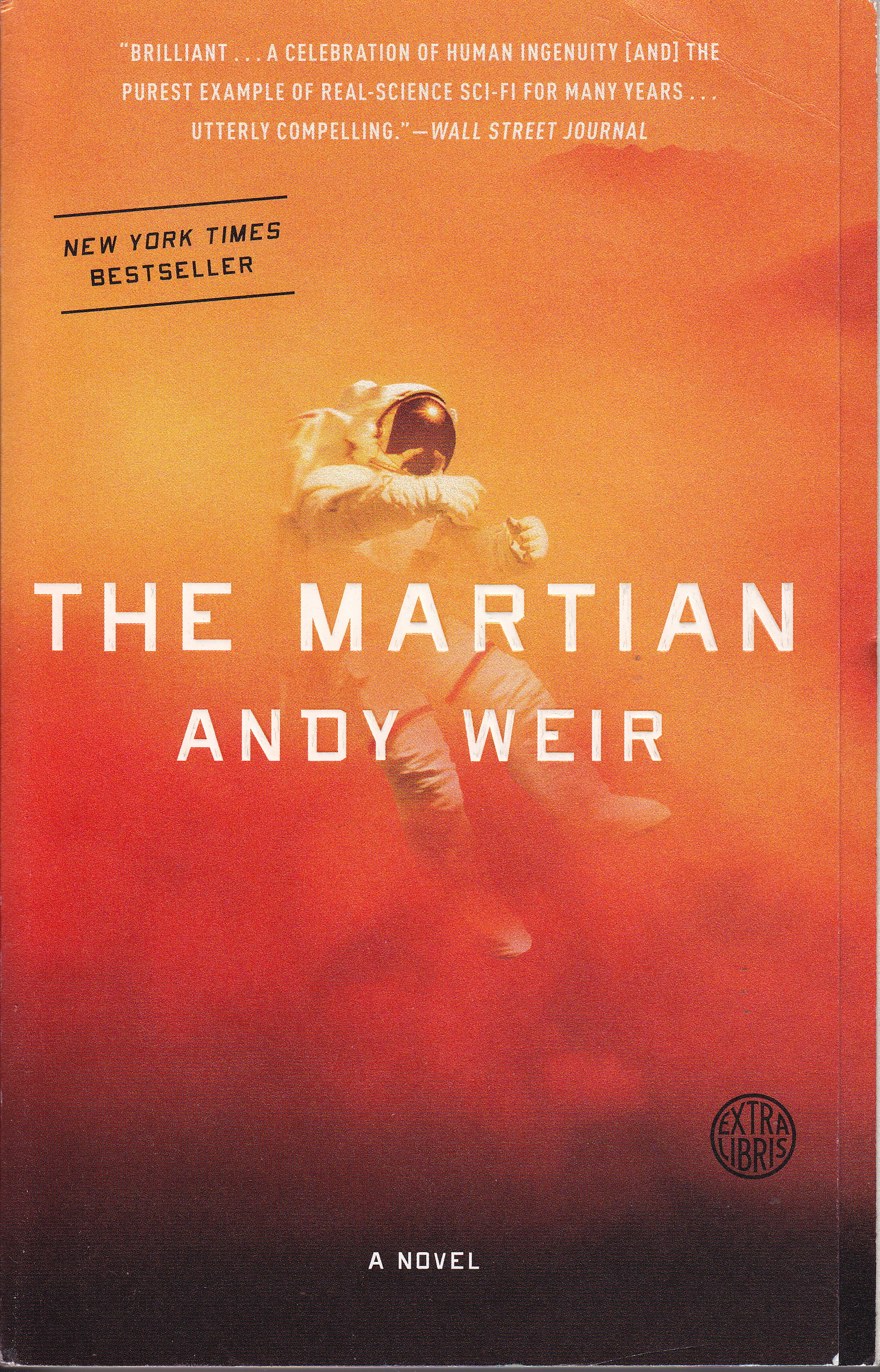
MartianIf you need a boot of optimism, look to Mars. Or, more specifically, read Andy Weir’s The Martian. Not that it’s the greatest literature ever produced, but it is a story brimming with humanity. Mark Watney is accidentally stranded on Mars. His crew-mates, in the midst of their multi-month-long return journey, adjust their course to go back for him. Naturally, nothing goes as planned. Although much of the story is far beyond the believability scale, Weir has the technical background to make it all sound plausible. As an engineer, Watney fixes most problems with an optimism that would leave many humanities specialists weeping in the dust. Time after time a potentially fatal situation develops that is solved by technological ingenuity. Relying on his will to survive, and good humor, the protagonist makes a remarkable journey across the surface of the Red Planet to a potential means of escape. I shouldn’t throw too many spoilers into this post since the book is fairly new. I will say it left me feeling good about being human.

Part of being human is thinking about larger issues. Often, throughout the book, Watney wonders about belief in God. Not enough to make it a main theme, but enough to merit mention on this blog. In a somewhat humorous moment, one of the mission controllers says that he’s Hindu, so he believes in lots of gods. In contrast, Watney, alone on Mars, has a vastly different perspective. Without divine intervention, or even any aliens, he finds a way to persevere when the Fates (or the author) have stacked the odds against him. Mark Watney believes in himself, and he believes in human goodness.

The decision of his crew-mates to return for him is one of potential self-sacrifice. There are no guarantees that they’ll survive. Nevertheless, there’s no second thoughts. When they learn Watney is alive, they decide to go back, no matter what might happen to them. The story awoke a strange optimism in me. Although people are capable of horrendous acts against each other and the planet, I do believe that we are basically good. The bad ones make it into the news. We could all be better, I’m guessing. Still, we will help others when we can, even if all we get from it is the good feeling that we’ve done the right thing. Unfortunately, the only people, it seems, that don’t have the best interests of others at heart are our politicians. Watching the posturing before the primaries I do have to wonder if one wouldn’t stand a better chance abandoned on Mars than in the land of the free. This may be one of the times, it seems, that trusting in human goodness might well be equated to a prayer.


Sickness unto Death

It’s like Nightmare on Elm Street, as my daughter suggested: if my laptop falls asleep, it dies. Actually, that only happens if it turns off. As much as I rail against technology, I have to admit that I get a little choked up thinking about it—my laptop has had its final reboot. Finally back home from a trip where my MacBook died in transit, the local Genius Bar genius told me the frank truth. The on-off switch has stopped working. He was able to take it in the back and get it started with a “hard reboot” and I can’t help but imagine that it involved tiny little defibrillator paddles and a techie with a trendy haircut shouting “Clear!” before jolting the little guy back to life. If it turns off again, though, they can’t guarantee that they’ll be able to bring it back to life. At five years it’s suffering the effects of old age. Planned obsolescence means that you shouldn’t get too close to your machine. Still, with all this talk of artificial intelligence, I wonder if we haven’t given this laptop life. It sits right on my lap every day. It has for five years. It keeps me warm in winter and too warm in summer. It knows my deepest thoughts.

Like Logan, however, it was only planned to live for a few years. Its crystal is flashing, and I’m getting kind of emotional. Yes, it’s been running slower and slower. Sometimes it doesn’t hear my commands. It takes its time waking up in the morning. Still, it has become like a friend. So when the disciples came to Jesus in a panic saying Lazarus was dying, he replied that the sickness was not unto death. Lazarus died nevertheless. And Jesus wept. I wonder if he would’ve felt the same about an old laptop. This machine has been with me through several jobs—it was purchased to help with my teaching at Rutgers, but it has kept me company on many long flights and lonely nights traveling for publishers and trying to remain sane when there was only a whiff of a wifi scent to latch onto. We’ve done a great deal together.

IMG_2398

It can be fixed, the genius said. I have to send it to the iHospital where a new switch will be installed. It will cost a lot of money and if it goes bad again, Apple won’t be able to replace the parts because they don’t keep them on hand all that long. The best solution—buy a new laptop. Spoken like a young man without a child in college. I’m dithering here. I can keep this computer running for a long time without shutting it down. Still, it’s borrowed time. The genius helping the next customer over said, “It’s not a matter of if a hard drive goes, it’s a matter of when.” We’re living on borrowed time. Our devices are meant to be tossed, but my gray matter understands things differently. I like my old laptop, and when Freddie Krueger comes for its soul, I know I’ll be wide awake.