
Identifying birds has never been my strongest skill, although I spend hours pouring over animal indentification books. Ever since I was a child, I’ve wanted to be able to correctly identify what I’ve seen. So many birds, however,have similar coloration and a morphology designed by evolution to do similar things (fly, hide from predators, move quickly, etc.) that even with a good nature guide I still get lost. Yesterday was our last day at the cabin. Always sad to let paradise melt back into the mundane, I was looking out the window when a blur of motion startled me. A bird–I don’t know what kind–had flown into the window and had fallen, stunned, to the ground. Not knowing what I could do, I went out to see if I could help. I’ve only ever rescued one bird, and that was with the help of an animal shelter’s advice in Wisconsin.
Cautiously, because I’m very squeamish, I rounded the corner to find two birds. One, sitting on the ground with its eyes closed, was obviously the one who’d hit the window. Nearby stood another bird of the same species (I can usually tell that much), looking as concerned as a bird can. Spying me, it began the chirp and limp technique to draw me away from its fallen mate. I used to spend a lot of time outdoors, so this wasn’t entirely new to me, but as I was close enough to touch either bird, I began to consider animal intelligence again. Nesting birds will use this ruse to draw enemies away from their mates and young, and it may cost them their own lives. In this case, an artificial scenario (a cabin with very clean windows) had intervened in nature. Nature, In turn, kicked in to save the fallen one. How did the healthy bird know to do that? It wasn’t protecting a nesting mate, but it had transferred the appropriate behavior to a novel situation. Instinct, it seems to me, is the ultimate fudge factor. There was some thinking going on here. Not only was thinking evident, but specifically a kind of thinking more advanced than some human thought (yes, I’m thinking of you, one percenters). The Sermon on the Mount mentions God’s concern over one sparrow falling to the ground. That concern is evident in the show of nature.
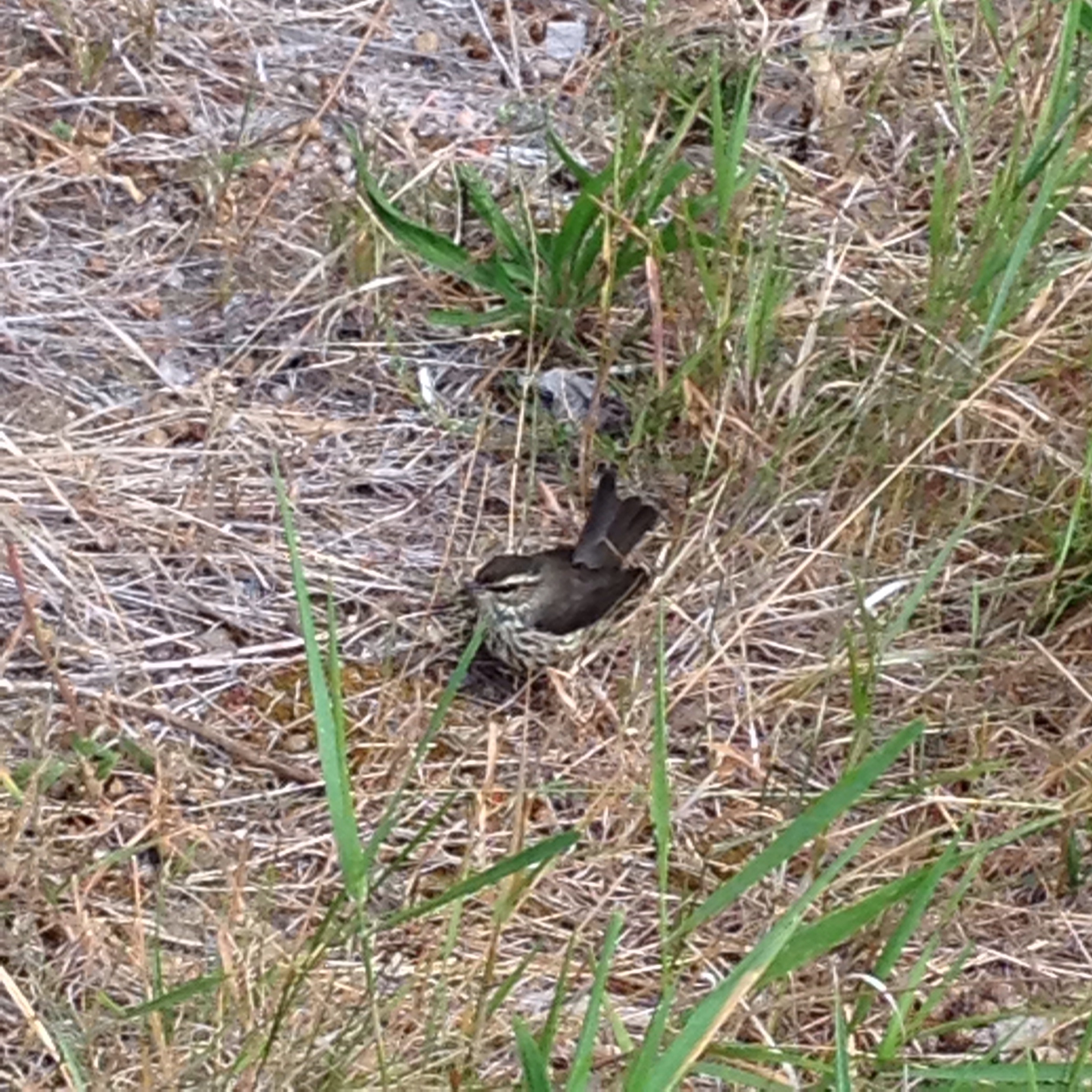
Nearing midnight, my plane circled New York City, with its fortresses of wealth. Sparkling like its own galaxy in the night, it seemed a world unto itself. Just that morning I’d awoken, as it were, far from the madding crowd, but where the fate of one little bird had brought out the willing sacrifice of a friend. Not for the first time in this week away from civilization, I was forced to wonder why, if capitalism is so great, so many people are eager to get away from it. Up in the north woods, getaway cabin building is booming. People want to make enough money to get away from making enough money. I stepped back outside to check on the little bird again. It cocked its head at me, curiously. Its mate was standing by. If only its lesson could be learned, my day’s destination might have seemed just a little more like paradise.

 Steve A. Wiggins