Henging Our Bets

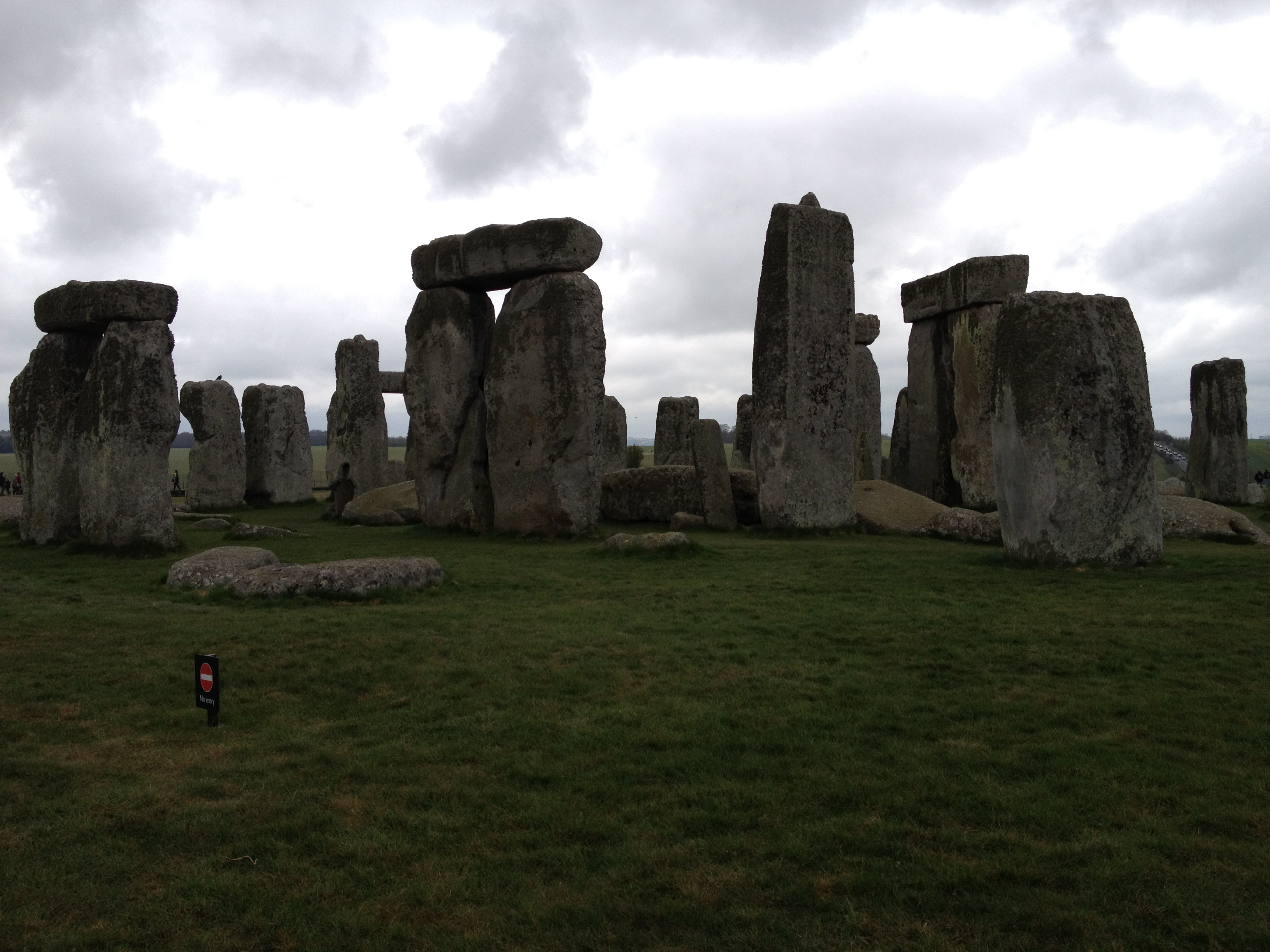
With the discovery of Göbekli Tepe, the history of civilization has received an unexpected prologue. In the view of the archaeologists involved in the excavation, the site can only be religious in nature, indicating that the earliest communal efforts of humans were not for mutual protection or for the benefits of growing crops, but for worship. In an era of angry atheists and nones, this isn’t really welcome news. Many people are ready to flush religion once and for all, claiming that it inspires only terrorists and fanatics to more and more extreme deeds. Well, I suppose Göbekli Tepe can be considered a form of extremism. Massive amounts of energy were required for the building of the site. And it was buried, intentionally, when the builders were finished with it. The news of a new component to the much later Stonehenge complex, the Durrington Walls, has recently been presented. Stonehenge, in England rather than in Turkey, and much closer in time to us than Göbekli Tepe, is a site that has touched the human imagination in a profound way. Still primitive at the time of its construction, Britain was a land already brimming with religious monuments. The new discoveries make it even more intriguing.
IMG_0234

Stonehenge is only a small part of what is now being called the Durrington Walls super-henge. Those who visit Salisbury Plain know that Silbury Hill and West Kennet Long Barrow are both impressive in their own right, and not far from the more famous sarsen stones that appear on everything from coffee mugs to tee-shirts and in movies and television shows of all genres. This part of prehistoric England seems to have been a sacred site many hectares in extent, with various “temples” and monuments dedicated to a religion we simply don’t understand. What is clear is that massive human energies were put into the building, expanding, upkeep, and functioning of this site. People have a deep, and very passionate urge to answer the religious longing that even sophisticated engineering can’t placate.

It could be argued, of course, that we’ve outgrown our childhood need for parents in the sky. Science and rational thought have shown us the way forward and although ancient monuments might be a fun diversion, they really mean nothing. I would disagree. Places like the Durrington Walls super-henge indicate what it is to be human. Clearly, given that even Stonehenge fell into disrepair and lay neglected for centuries, it was not a continuity that stretches, uninterrupted to today. Nevertheless, the effort expended to fill a void we feel should tell us something about what being conscious creatures is all about. Life doesn’t always make sense. The rational cannot explain everything. It would be naive to try to make Stonehenge reveal its secrets, but even standing at a distance (which is the only way you can gain admission any more) you have the sense that you are among those who knew what the human spirit required. Even if pagan and illiterate, they have spoken to us through the ages and we can only continue to wonder at what we’ve lost.


Hunter-Gatherers

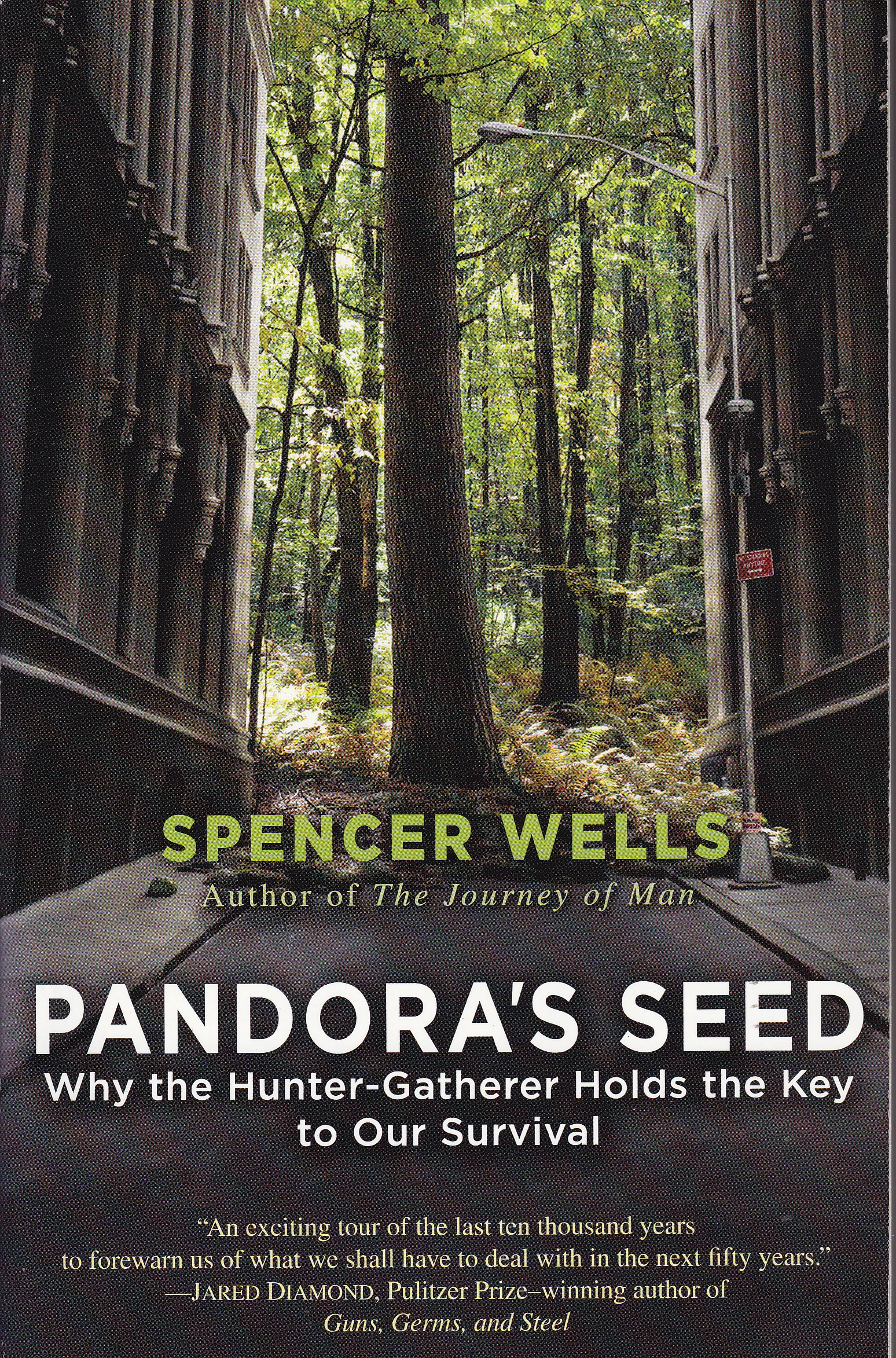
PandorasSeedEvery once in a while I put down my work long enough to look at where we are. It’s often a frightening experience. Not many of us would be equipped to survive the collapse of civilization, despite the many television shows that depict such future anarchy. I suppose that’s why Spencer Wells’ Pandora’s Seed: Why the Hunter-Gatherer Holds the Key to Our Survival was such a compelling book. The more anthropological studies I read, the more clear it becomes that “civilization” has changed us about as much as evolution has. If not more. We have turned into something else, a creature of our own making. Wells demonstrates throughout the pages of this book how, with the first development of agriculture, we began on a track that has made us less healthy, less happy, and more dependent on technology than we have ever been. True, life as hunter-gatherers was never easy. Still, it is telling that they have much more free time than agriculturalists. And, as far as we can tell, they are better-adjusted. They are doing what we evolved to do.

Addressing issues as diverse as from how our diet has changed to genetic engineering, Pandora’s Seed is a wide-ranging and fascinating book. It does show that technology far outraces ethics and our ability to figure out the proper response to complicated questions. We often lack the time to reason things out. And yet, we live in a world where mental illness is set to become the number two natural cause of death within this century. We are profoundly unhappy. We deny climate change although it’s evident all around us. We’ve put into place a global warming that will take a millennium to dissipate even if we stopped using fossil fuels today. We deny that it’s true, we go to dehumanizing jobs, and we eat food that’s not nutritious because it’s the kind we can afford. We lack time and motivation for exercise and disease takes hold. Such a lifestyle even affects our religion.

Tellingly, Wells’ last chapter deals with Fundamentalism. Noting that humans use both logos (logical) and mythos (mystical) thinking for a balanced view of things, fundamentalisms utilize a logos system to try to explain mythos. Violence often ensues. In order to be fully human we have to admit that rationality alone does not solve all our problems, or meet all of our needs. Some of what we require is simply not material. While Wells does not suggest reverting to hunter-gatherer lifestyles, he does suggest that the only solutions to a world of limited material goods (food, fossil fuels, fresh water) that the only way to make civilization sustainable is to learn to want less. Evolution predisposes us to gather more than we need, and certainly, to hear college career counselors talk, we have to want jobs that will bring in more, more, more. The world is becoming smaller, and people are demanding that the greed come to an end. Until that day perhaps the best solution for us all would be to take a walk in the woods and to remind ourselves how we came to be where we are.


Biblical Violence

756px-Winchester_House_910px

Sarah L. Winchester, it is said, was a haunted woman. The widow of William Winchester, she was heir to the tremendous amount of money brought in by sales of the renowned Winchester rifles. Fearing the haunting of all those killed by the weapons, she built what has now become a tourist attraction—an unfinished mansion that was intended to prevent those ghosts from living with her. With the spate of recent multiple shootings, we might wonder how many other gun manufacturers are living haunted nights in their comfortable homes. A recent petition has been circulating to stop Spike’s Tactical from producing The Crusader assault rifle. Predictably, the sales have been so overwhelming that the religious rifle is on backorder.

The Crusader, as the photos reveal, is emblazoned with Psalm 144.1 “Blessed be the Lord my Rock, who trains my hands for war, my fingers for battle.” It also features a Crusader’s cross and trigger setting labeled, Peace, War, and God Wills It. Blasphemy in carbon fiber. I suppose I’m hopelessly naive, not being aware that guns could be purchased online, but the overwhelming demand is nevertheless disheartening. It used to be that the Christians were the good guys. You certainly didn’t have to worry about them shooting you. That was the job of the heathen. So many multiple shootings took place this summer than I couldn’t keep track of them all. I live in a world where guns play no role and I wonder if everyone wouldn’t be happier if we didn’t lay down our arms and learn how to get along.

Of course, the Bible is a book where violence against enemies is permitted, and, in places, even encouraged. Society has repeatedly declared that there is no need for experts trained in how to interpret the Bible, and this is what happens. Psalm 144 is a poem for deliverance from enemies. Historical criticism would likely place the piece as written during a time of war. The era in which the majority of the Bible was written was anything but peaceful. Those parts of the Good Book that are particularly extolled are often those that suggest that the answer to war is peace and that setting aside your own will for the well-being of others is something we should all be doing a bit more often. But we cannot deny that “Peace, War, and God Wills It” aren’t part of the violent worldview we also encounter in sacred writ. I wonder what Mrs. Winchester would have had to say about such mixing of the Bible with guns.


The Day After

I don’t mean to be insensitive. Sometimes I get so busy that I don’t even look at the date for days at a time. This can’t be good, but I was surprised when the anniversary of 9/11 caught me completely unawares this year. That’s the kind of summer it’s been. Not acknowledging 9/11 to New Yorkers is like making ethnic jokes—it’s inherently offensive. The City is always subdued on this date of infamy. Coming the same week as Labor Day this year, I think my timing was just off. In my family, September was always the month of birthdays. My present to my brother of the 12th was late in 2001. I wanted to find something old. Something solid. Something time-honored. I wanted a sense of stability to return to a chaotic world. Being an inveterate fossil collector, I went to a local rock shop and bought him a fossilized cepholapod shell. It wasn’t much, but it was a message and a metaphor.

Today, being a birthday and a day after, feels a little like an apology to me. At the time of 9/11 I knew a few colleagues teaching in New York, but in 2001 I’d not really known the city. I’d visited a few times. I was still employed, although my personal career trauma was, unknown to me, already underway. And looking at the state of the world some fourteen years later, I wonder how much better things are. We haven’t suddenly improved, and as a nation we seem more deeply divided than ever. Candidates who resemble their caractitures more than actual people frighten me. The rhetoric is a sermon of doom. Have we all forgotten how that morning felt?

Television reception was poor, or it may have been the tears falling from my eyes as I watched, at the safe distance of Wisconsin. We’d just sent our daughter off on the school bus and now wanted her back home. I called my brother in Pittsburgh in a panic. The news had said a plane had crashed in southern Pennsylvania somewhere. It seemed the the possibilities of horror were endless that day. And yet. I awoke yesterday fretting over work. My mourning routine was harried and frantic. I didn’t even know what day it was. I glanced a paper headline on the way to work and realized that I’d overslept a tragedy. Some scars never heal. Those wounds cut by religion are the deepest. So we find ourselves on the nexus of a tragedy, a birthday, and a new year. How we respond is entirely up to us.

Time2Remember


Psychobabel

Evolution, we’re told, has one goal: survival. As an unthinking process of nature, evolution “programs” us all to desire survival for ourselves and our offspring. Even attributing that purpose too it is to suggest it’s more a willful agent than a blind process. People, on the other hand, are meaning-seeking creatures and so there’s bound to be some disappointment involved. I was just discussing with a friend how it seems that people just can’t agree on evolution mostly because of the strident claims on both sides. The New Atheists make claims beyond the evidence that survival to reproduce is the “only” role of evolution and we are “just” animals with too much gray matter, and that consciousness is “merely” electro-chemical activity in our brains. Creationists, for their part, say evolution couldn’t possibly account for structures as complex as we see in nature, and therefore a deity much be involved. The rancor grows until both sides end up despising the other. People who look for the middle ground are not newsworthy and fade into the scenery. I wonder if we’re evolved to ever get along.

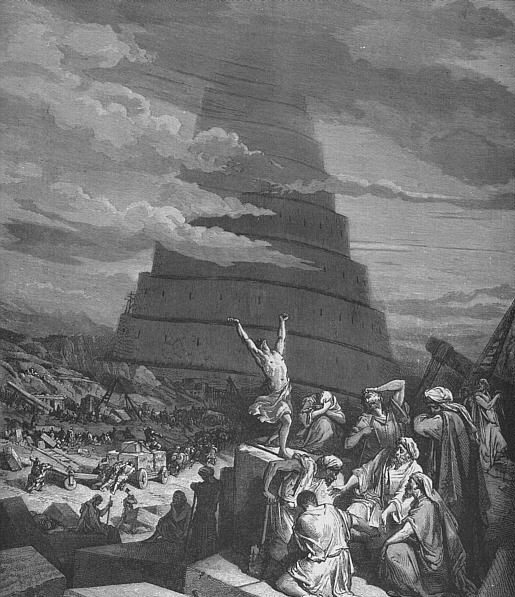
My wife mentioned that it’s like the Tower of Babel story. Here is the tale of God making humans inevitably talk past one another. We can’t understand and so we argue and criticize and insult. A more scientific explanation might be that perhaps we’ve tipped the evolutionary balance with our species-specific success. We are by tar the most numerous species of any large animal. (At least that we know of.) Having put ourselves as lords and masters of the food chain our challenges have become mental and we turn ourselves to the question of who’s right instead of simple survival. Sacred books can’t guide the discussion, but reason alone. And reason, as we all know, has its limits.

Confusion_of_Tongues

The great irony in all of this is that, if we’re evolved to seek meaning, we’re not equipped to find the truth. As neuroscientists have pointed out, the brain’s function is survival, not truth finding. Our desire to know the truth is a human avocation abstracted from consciousness. We’ve not adequately defined consciousness, but since there aren’t many large predators hunting us down anymore, that brain-power has been diverted elsewhere. Despite all this, we don’t see world peace spontaneously breaking out. Even on a smaller scale we find prejudice and hatred and insane mass production of weaponry when our only predators are ourselves. Evolution, we’re told, has only the goal of survival. Being an unthinking principle, even ascribing it this much conscious decision-making is merely a matter of convenience. Does the Tower of Babel mean we must hate those who differ from us, or does it perhaps suggest that the real goal is better understanding?


The End of the Gods

RagnarokHovering somewhere between fiction and fact, A. S. Byatt’s Ragnarök: The End of the Gods is a compelling reimagining of Norse mythology. Starting in childhood, the stark and bleak icons of a world where even the gods die captured my fantasy in a way that the more real myths of my own faith did not. Like “Greek mythology” the tales of the Norse don’t come in an authoritative canon. Like the tales collected by the brothers Grimm they are bits and pieces that Byatt brings to life with honest description and the willingness to trust the outlook of a child. Mythology is too often castigated as puerile and of no inherent worth. We would not, however, be human without it.

I suspect we all secretly envy the gods, begrudging them their strength, but especially their immortality. Most myths admit that gods might die, but often they come back or become greater for their demise. Ragnarök is the final death of the gods. In fact, it isn’t so far from the “heat death of the universe” that some scientists warn us is surely coming. All good things come to an end. Even gods. The Christian God, who becomes omnipotent, omnipresent, and omniscient over time, loses something of his likableness for it. Vulnerability lends us a sense of sympathy. Who cannot help but weep for Balder? Odin, the God hung on a tree, dead and brought back to life is swallowed by a wolf. Even mighty Thor succumbs to the poison of the serpent. The world feels impoverished for their loss. Victorious gods have a way of making warriors of their worshippers. Maybe we have something to learn from the gods of the folk.

Mythology is out of fashion among academe. The only money it brings in is from the movies it inspires. Truth may be had for bargain basement prices, so why pay to learn what makes us believe in the impossible? Reading of the end of the gods instills a kind of inspiration that orthodoxy only smothers. No, these deities never really lived. These events never really happened. Still, humans have always found mythology to be uniquely satisfying. Ragnarök explains a chaotic world where our ideas of justice and fairness are often left disappointed. As Byatt points out, Loki is a compelling figure perhaps because he represents what we all know to be true—visions of control are only delusions. In a world with one, monolithic, monotheistic God, we find things hard to explain. Postulating a world where the gods know that they too face an end, even if only in fiction, may help us better understand a world where facts just don’t add up.


School Bible

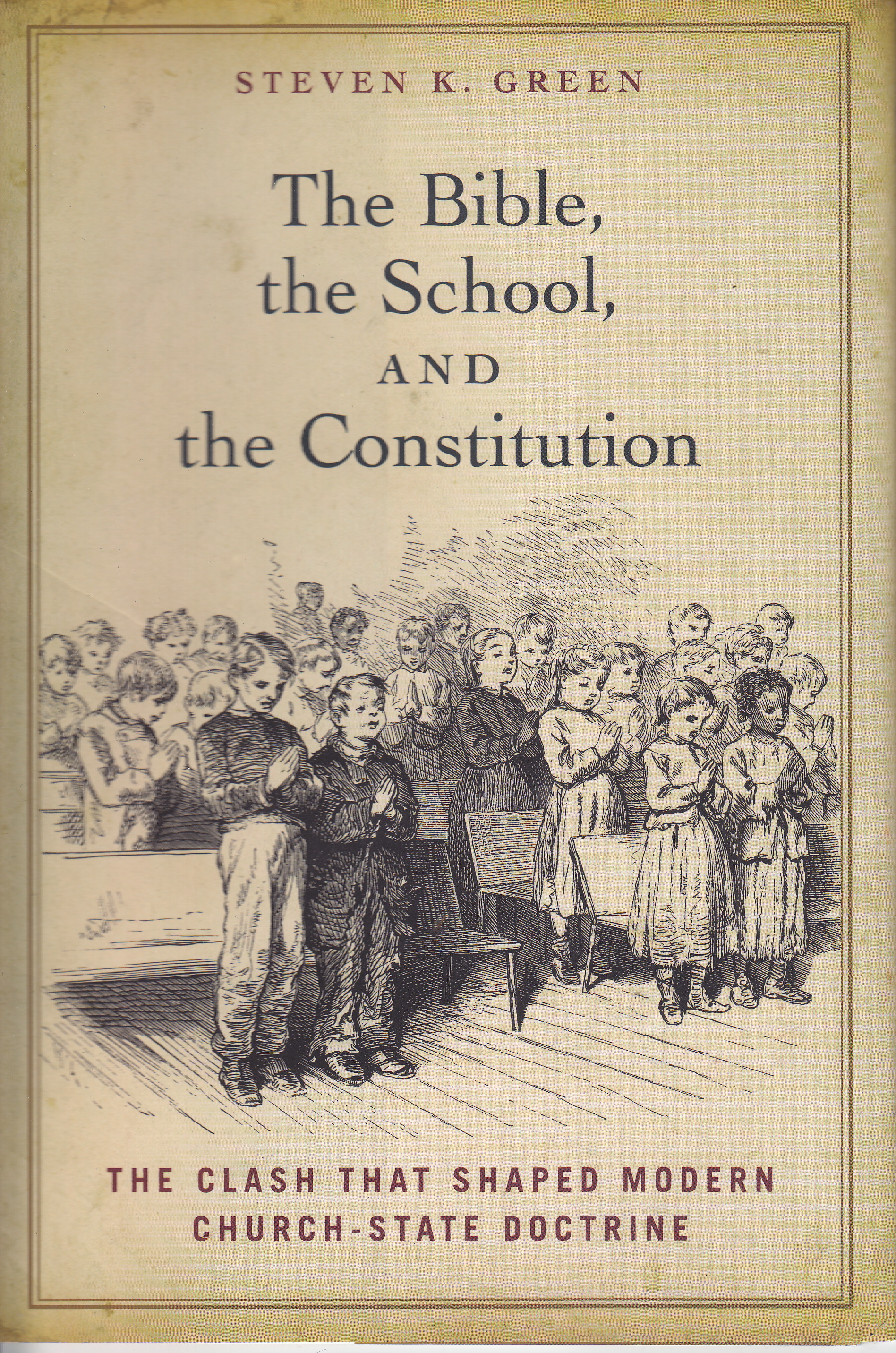
BibleSchoolConstittnAs a very young scholarlet, I recall the horror expressed when some form of prayer was expelled from public schools. It had to have been in the late ’60’s. Maybe early ’70’s. The nation, it seemed, was headed for Hades in a hurry. Little did I know that this was part of a long, drawn-out—tired, even—battle. Steven K. Green’s The Bible, the School, and the Constitution: The Clash that Shaped Modern Church-State Doctrine gives pretty close to the full story. Bible reading in public schools was foundational, in the beginning. In the early days of public education, the Bible was ubiquitous. It was considered non-sectarian since practically everyone was a Protestant. When the religious mix of the country began to diversify in the mid-1800’s, a new dynamic emerged. People got upset. There were riots. People were killed. Legislation was proposed that would explicitly add God—Jesus even—to the Constitution. Who knew?

Green’s study takes a close look at the various cases that arose around the time of the Civil War regarding the Bible in school. Protestants, it seems, didn’t appreciate that Bible reading, in the King James Version, without comment, violated Roman Catholic policy. The first to challenge Bible reading in public schools were Christians. Secularists only joined the fray later. I’m oversimplifying, of course. Some Catholics wanted equal time, the reading of the Douay Bible instead of King James. Others wanted Catholic schools to receive state funding. Nobody was really aware of other religions such as Hinduism or Buddhism. It was a country of limited religious imagination. Various groups tried in various ways to get God—their God only—into schools as the default deity. And so the fun continued.

For me, it was eye-opening to realize that all of this isn’t new. The legislation, since long before my grandparents were born, has been heading in the direction that led to the aggrieved tears in my youth. Green points out, however, that the conflict has never been completely resolved. School vouchers and a long spate of evangelical presidents have had their impact on our children. The Hades that we feared has only come with the weaponizing of our culture, largely by those who want Bible reading back in the schools. The thing we fear finds us through the thing we love. Ironically the issue never seems to be education. God or guns—it’s the power that we want. The early debates revolved around morality. How could kids be moral without Bible reading? How the definition of morality has changed. We, as a nation, still can’t figure out religious freedom or how to let kids be kids.


Mind Your Manna

Foodies have gained a respectable place among the ranks of social critics. Major newspapers and many, many websites tell us how to eat better. Eat healthier, or with more style, or more adventure. Our intricately interconnected world has made obscure ingredients fairly easily found and since we no longer rely on what can grow around here, the enjoyment of food has become a source of quasi-religious meaning for some. What was once a basic biological necessity has become a valued source of culture. We can tell a lot about a person by what they eat.

Like many average people, we shop in the more reasonably priced supermarket near us. We don’t make much money and why pay more for what you can get for less? Over the holiday weekend we bucked the trend and went to Whole Foods as a kind of holiday treat. We had a gift card and we hadn’t been to a Whole Foods since a friend introduced us to the chain in Madison, Wisconsin. We remembered that it was aligned with our ideals: sustainability, simplicity, and the desire to live well. Also, it is very expensive. Like most healthy options in our culture, they’re not really affordable to those of modest means. Still, the store was crowded. To be fair, this is down by Princeton where quite a few well-heeled New Jerseyans reside. The store was welcoming with less crass capitalistic drives to purchase more, but despite its organic feel, it was very much a grocery store like any other. Most familiar brands are missing since what we normally eat is processed to the point of filler, but the hidden foodie in us all appreciates the nutrients nature has co-evolved along with our taste. It seemed like the place for an epiphany.

IMG_2480 copy

Then I spied Burning Bush hot sauce. “Sets the soul afire,” the bottle proclaimed. Quite apart from demonstrating the relevance the Bible still has, this sauce had religious implications. If a hot sauce can hand down commandments, it is a powerful comestible indeed. I have to admit that I’m not a real fan of hot sauces. My taste in foods is pretty simple, if vegetarian. Nevertheless Moses doesn’t stand alone among biblical figures who spice up our food. On a brief layover in Phoenix I spied a whole rack of hot sauce, some bottles suggesting that the heat came from the very nemesis of the burning bush. Hell seems to be another favorite location to be trumpeted by the painful food connoisseur. When we want to claim the extremes, in terms of food, we turn to either Heaven or Hell. William Blake would’ve appreciated this irony. As for me, taking my commandments with mild salsa is just fine. Anything more than this would seem to be a sin.

IMG_2396


Weathering Academia

Come the end of September, I’m scheduled to give a talk at Rutgers Presbyterian Church in New York City. I’m personally very flattered by this because, as it has become clear to me, an academic without a post is mute. I’ve seen colleagues who teach at schools I’ve never heard of consulted by the media—and there is obviously more to it than this—because they have teaching positions. Those of us who used to be professors apparently forgot everything when we take jobs out of necessity. That’s why I’m so flattered. My talk will be on the larger issues behind my book, Weathering the Psalms. I never expected this book to be a bestseller. I knew that it was, in some sense, incomplete. Academic books are the kinds of things you write when you have an academic post. When your day is not programmed with “enter this data, follow up on that book, and when you have time, get other people to write books.” People, of course, with university posts. The rest of us know not whereof we speak.

It’s funny. Back when I was teaching, even if it was only at Nashotah House, I used to be asked to give little talks all the time. It was rare for a year to pass without someone asking me to lead a seminar or share what I’d learned with some august body. That tapered off once I became an adjunct, although a Presbyterian Church in Princeton once invited me to speak because I was teaching at Rutgers (the university). And as I prepare my talk in my free time, I wonder about a society so tied up with name prestige that someone who has something interesting to say is just a crackpot unless a college or university or seminary or think-tank hires them. There are many of us—hundreds, if not thousands—who know as much as our university colleagues about a topic. An individual doesn’t have a name big enough to flash around, so we don’t get asked to share. Keep your hand down and your head down on the desk, please.

IMG_2416

In any case, it has been good for me to come back to the weather and think through some of the larger implications. I’d just had the book declined by a big name academic press when Nashotah House terminated my position. For many years I couldn’t look at the manuscript since it seemed a symbol of my failure. No, the book isn’t everything that it could be, but there is some good information there. The larger implications are actually of some importance here. The weather is studied both by science and by religion. Both understand aspects of it that the other misses. I’m looking forward to exploring this with the good folks of Rutgers Presbyterian who were kind enough to invite a guy with nothing more than a book and an obscure name to come and talk about something that most academic colleagues just don’t notice.


What I Meant to Say

XML. CSS.  Abstracting.  Separating content and meaning.  Sounds kind of scary to me.  As a would-be writer, plodding my way through what used to be the humanities, I’m sometimes frightened when I hear techies talk about where publishing “has to go” to remain “competitive.”  Since technology drives industry these days, we all need to bow before the image with a head of gold.  What you write on the page has to be edited to make it say what you meant it to say.  Then the meaning has to be excised and converted into XML, because that’s the way ebooks like it.  Page numbers are an artifact, and if your device can’t find the phrase you half remember, don’t go looking for an index.  You see, XML files don’t have pages—they’re just an illusion caused by the limited size of paper.  The meaning lies in the stripped, naked, and shivering content.  Or meaning.  Or something.
 
So goes the brave new world of publishing.  We live in the days of inferred information and bowdlerization in inscrutable acrostics.  I’ve actually heard techies say, “we need to teach authors to produce what we need.”  Have you ever seen a dog wag so fast?  Or a tale hold so perfectly still?  What do I mean?  Ask an expert.
 
IMG_2359

The blank page of actual paper used to terrorize many a student.  There are few things so transcendent to me as a new, unused Moleskine.  The very blankness of the pages is like unto the whiteness of Heaven.  This is a place where thoughts can roam free, and I can feel the thoughts coursing from my brain to my fingers as the pen traces paths never before seen.  As this blog attests, my writing does not draw the countless masses.  The vast majority of it written on paper will never be seen by another human being.  Thoughts are captured there, mid-flight.  They’ve never been tamed or tagged or abstracted from their meaning.  In the mind of some, I must suppose, that means they really mean nothing.  When I hold them, however, which I can never do with an XML file, I know that some things are simply too important to convert to what someone else declares they must be.


Hello, I’m Not In

I recently received two “out of office” replies to my own “out of office” message. Being a fan of futility in all forms, this struck me as a great paradigm for the modern age. Email has made vacation superfluous, of course. I was actually out of town moving my daughter back to college, so email was not high on my list of priorities. When I’ve tried to leave work without putting on a message explaining that I’m not there (I tend to respond to emails quickly for an editor, so I’m told) I’ve been politely informed that it is rude not to let people know you’re away. Or computers. My non-message prompted a non-messages from other vacationers’ email accounts, and when I returned, I had to read them as well as the original email that had received my impersonal reply. Both had sent their replies, despite their out of office messages. This is indeed a brave new world.

It is a world where human interaction is optional, at best. Our industry grinds away making devices and services that people will buy with electronic money sent over a network that no one really controls. And we think nothing of it. Business has blinded us to how meaningless humanity has become. Business runs for business’s sake. Even so, we’re asked to check our email when we’re on vacation, in case something important comes up. I used to think vacation was important. It is the sop we’re thrown for working jobs that lack the visceral appeal of growing our own food and relying upon ourselves. Thoreau on the web.

Benjamin_D._Maxham_-_Henry_David_Thoreau_-_Restored

Science fiction is the great predictor of where we might go. Most of it is completely fiction, or course, but some manages to catch glimpses of the truth. Skynet, or even the Matrix or Hal, have sent messages to us. Machines that think are devices we don’t understand. We haven’t even defined consciousness to a level that satisfies anyone. We know it because we feel it. Oh, I’m not really an alarmist about all that. I do wonder, however, where we are headed when technology races ahead while the humanities are disparaged. All those who emulate Spock seem to have forgotten that his appeal is that he’s half human. We build our aliens to specification. And they now pass polite greetings when they speed past each other on the cyber-highway with no laws.


Rainbow Disconnection

The scene can be quite dramatic. A zoom out from a dead or dying Christian martyr as the moving music swells. There’s a sense of poignant heaven in the air as a human being breathes his or her last, lapsing into the hands of an unseen, waiting father. That’s a kind of typical ending to the particular genre of a martyr movie. We’re left feeling sad but somewhat inspired that someone cared so much that they would give up their very life for their belief. I can see the scenes already building as Kim Davis goes to jail for contempt of court. Davis is the Rowan County clerk in Kentucky who refuses to issue marriage licenses to homosexual couples. Although her action violates federal law, she has her conscience for a pillow at night. All she has to do is spend a day in jail before she will become a martyr/cause célèbre for the religious right. I’m sure it’s already started.

Jean-Léon_Gérôme_-_The_Christian_Martyrs'_Last_Prayer_-_Walters_37113

I don’t believe anyone should be made to go against their conscience. I also believe that if you’re an elected official being paid a tax-payer’s salary of $80,000 a year, that you should do your job. I’m sure the case isn’t so simple as all that, but as someone who’s never made anywhere near that much money, I could see myself easily stepping down if asked to do something that I just could not, in good faith, do. Most of us spend our lives compromising a bit here and there when our employment pushes us in directions we feel uncomfortable going. Nobody would consider us spineless for trying to hold onto tenuous jobs in an economy that seems to be endlessly faltering as the wealthy suck up more and more of the free cash. We do what we have to do. Go to confession at the end of the day and live to die another day. The evangelical, however, has a soft spot for martyrs.

Historians tell us that early Christians were probably not killed off as radically as the early records suggest. It seems the numbers might have been exaggerated to make a point. No doubt, many did die, and some in very gruesome ways, but they faced an unspeakable compromise—to deny the creator of the universe and burn in Hell forever. Issuing a license to a couple whose right to marry you question doesn’t seem to fall into the same category. Standing before the great golden throne your defense would easily be, “it was my job. I couldn’t quit because I needed all that money.” If there’s another viable source of income, the argument becomes spurious. I’m sure there are those in Rowan County who feel they’ve got a hero in their jail. The rest of us just get dressed and go to do the job we’re paid to do.


Without Precedent

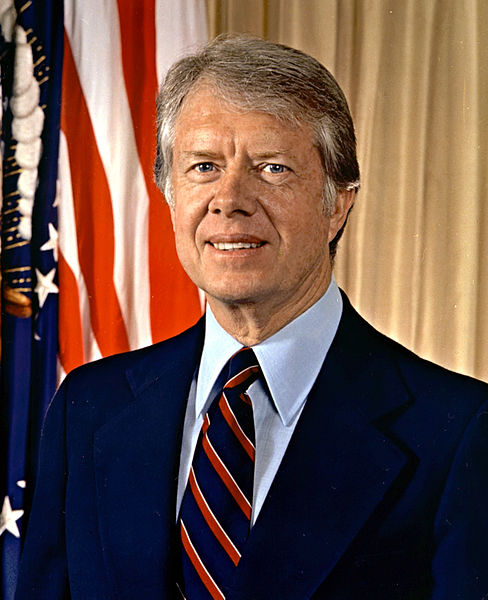
Leonard Pitts Jr. is a national treasure. So many of his Op-Eds make such unwavering good sense that it is difficult to believe he’s not a household name. His recent piece in the Miami Herald concerning Jimmy Carter’s announcement that he has cancer is a case in point. Many reporters would be quick to point to the tragedy since, although the Carter administration is generally undervalued, nobody would ever say that Carter is less than a true gentleman. Pitts, however, takes us deeper. He looks at this understated announcement in terms of faith. Faith, as he points out, in a world where it has taken on an unsavory, if not downright evil, flavor. We do indeed hear about faith that moves mountains, but it is with the power of fully fueled passenger jets. We hear about the faith that builds mega-churches while the homeless and hungry sleep in the city streets. Pitts is quite right, our faith requires a shot in the arm.

JimmyCarterPortrait2

I sometimes wonder how we have come so far down what seems to be obviously the wrong road. Our religion has become a charade and it is used for people to get what they really want rather than to make the world a better place. I always thought true religion was putting others before yourself. Nothing like working in Manhattan to show you how totally off-base such sentiments might be. Jesus can sell books, but his teaching is definitely passé. Yesterday. Old-school (but not in the good way). We have faith in money because immortality, or at least the antidote for mortality, is readily for sale. There’s one born every second. This, we are told, is what gives life meaning.

Of the presidents who’ve retired, we generally hear very little. They sequester themselves and write their memoirs to gain even more money for themselves. Carter has been known to be out there building houses for the poor, living what presidents all say they believe when they ask us to cast our votes in their direction. I’ve always been proud that the first president I ever voted for was Carter. Of course, it was in the beginning of those recent Dark Ages known as the Reagan Administration, and I had voted for the underdog. My faith in the political system has been severely challenged since then. I have seen stolen elections treated as legitimate by those who can’t possibly do too much for themselves. And I remembered my first lowly vote given for a man who, perhaps more than any other, showed Americans their misplaced faith after he had been denied a second term in office. Although Pitts doesn’t say it, I can see it in his pen: the first shall be last, and the last shall be first.


Something Lost

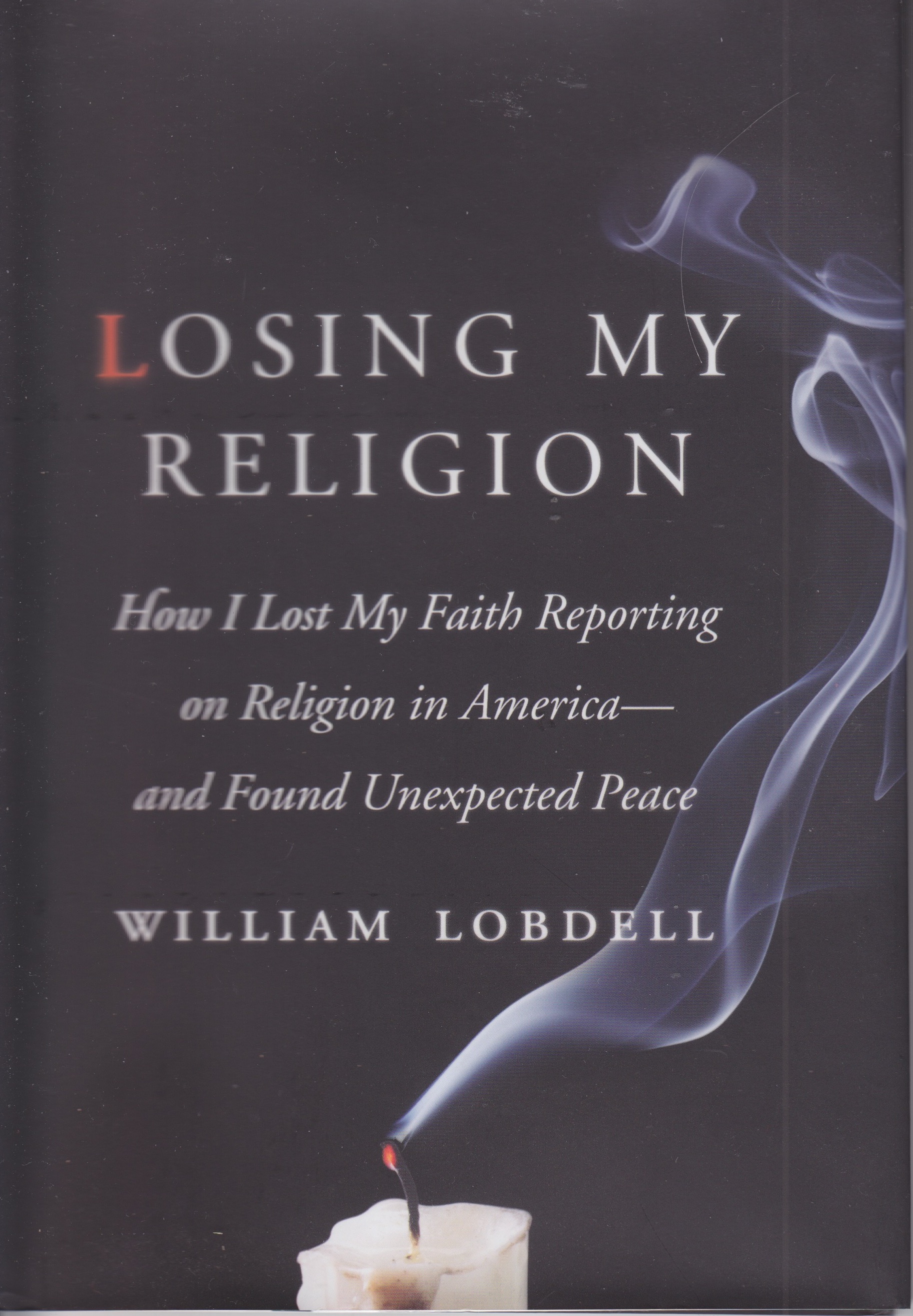
LosingMyReligion“Losing my religion,” I learned some time ago, means “going crazy” in some regions. It was that REM song that made me look it up. Losing My Religion, by William Lobdell, is much more literal. Having a hunger for spiritual memoirs, even if they end up with non-belief, has become an avocation for me. Growing up religious and having paid a pretty steep price for it throughout my career, I feel a bit like I’ve just risen from the analyst’s couch after a particularly helpful session. Here are people baring their innermost selves, trying to make sense out of a world that doesn’t add up. So it was for Lobdell. Since he was a religion reporter for the Los Angeles Times, his is the compelling story of a specialist who’s seen through the veil. His honesty is disarming. When I read such memoirs the question in the back of my mind is always, “what did it?” What pushed a believer over the edge?

By far the majority of these confessions I’ve read are those of women. Since religions have historically treated women poorly, it stands to reason that they might have second thoughts about what they’re being saved from. Lobdell, on the other hand, narrates what brought him to Christianity in the first place, and what forced him to conclude that it was wrong. Going the well-worn path from evangelical to mainstream Protestant to Catholic, he was seeking greater depth at each stage. Then theodicy. Theodicy is a god-killer. No matter how we frame it, there is no acceptable reason for good people to suffer needlessly. Out primate brains simply reject it. That’s not to say that for some faith can’t overcome such persistent doubts. It’s always a struggle, however, and, as Lobdell points out, not everyone is capable of believing what their mind tells them makes no sense.

One thing that stands out from all the spiritual memoirs I’ve read is how religion has such a difficult time explaining suffering. I suppose here’s where eastern religions generally have a stronger starting point. By acknowledging that life is suffering, they ask what we can do about it. Western religions, which often extol the good life, run into problems when theodicy hits. It’s almost as if the concepts can’t keep up with the realities of day-to-day life. Religions are often part of the culture you inherit, being born where and when you are. They also reflect belief structures from the age in which they emerged and those structures evolve over time. Today’s Christianity shares ancient concepts with the first century, but also modern sensibilities about psychology, culture, and philosophy. It can be a difficult mix, not least because it’s artificial and synthetic. As Lobdell notes, he isn’t alone in all this. It is, I might suggest, one of the reasons that studying religion is so important, even for those who do not believe.


To Whom It May Concern

Everything we do is an investment in the future. Some times it’s intentional, and other times it’s purely accidental. My wife sent me a CNN story about what might be the oldest message in a bottle ever found. It’s difficult to conceive an idea more romantic than the lonely castaway throwing a message in a bottle into the sea, hoping for rescue. The size of the oceans make any such chance qualitatively smaller than the smallest possible needle in the largest possible haystack. The sheer volume of the oceans is among the most mind-boggling quantities on earth. The chances of finding a single bottle in the blue is practically nil. Still, the message in the bottle is an investment in the future. We hope it will be found, despite the odds.

This particular bottle, although of some scientific value, is the least of the romantic kind. George Parker Bidder III, a third-generation scientist, dropped about a thousand bottles into the sea to study deep ocean currents. This was more than a century ago. Those finding the bottles were instructed to send the message back to Bidder, now long dead, so that he might enter the data in his notes. Bidder died in 1954, and one of his bottles was just recently found in Germany. Here is a case of a man writing to himself beyond the grave. Could he ever have imagined that six decades after his death a sample of his work would be found? For those who’ve labored only to be forgotten in their own lifetimes, this is like finding a genie in a bottle. We want to believe our lives have made a difference. For most of us, we go through our daily chores never really sure that any more than a handful of people care, and most of them only care if it is earning something for the company. Others stand on the shore and throw bottles into the sea.

The Bible has positive words to say about casting your bread upon the waters. Indeed, it will come back to you, we’re told, in a time of need. This is a metaphor, of course. It is all about investing in the future. When it comes to money, this doesn’t often work. Some people are fortunate in their investments, but many are not. Bidder wanted to know about deep water currents. This bottle would have told him something about them, but he isn’t here to receive the news. Instead he is being heralded as someone who deserves to be in the Guinness Book of World Records. Maybe not a scientist’s first choice of memorials, but an investment is an investment. More people will read about world records than will ever find a message in a bottle, no matter how metaphorical.

Casting bread on the water, New York style

Casting bread on the water, New York style