City of Lights

As the civilized world struggles to make sense over the senseless attacks of ISIS in Paris, the question of where to turn emerges. An attack has taken place. Innocent people have died. We are in mourning, and we want to analyze what happened to make the world feel a little less insane. As my wife pointed out an article on CNN, I was shocked by the terms in which the attacks were described. Here I read about ISIS extending its global reach. Top leaders, we’re told, planned the attack. And ISIS is “getting into the international terrorism business.” These phrases are common in just about every business meeting I’ve ever attended. This commodification of terror frightens me. The way we’ve chosen to handle terror is by making it into a business. These are human lives that have been lost—futures of the most promising kind. Not only are we the victims of blind terrorist groups, but we are victims of a world that can’t see beyond capitalism.

Terrorism is not a business. It is evil, but in a world where religious value is never invoked outside the few who still find meaning in matters of the soul, the vocabulary has been lost. How do we deal with ISIS? Just like you would any business. A hostile takeover bid? Gather your resources, make some deals, and if retaliation takes innocent lives, well, some bonds and chattels aren’t worth that much anyway. Have we lost the ability to describe the world in anything other than economic terms? Is humanity simply another business?

Paris_SPOT_1017

I do not wish to downplay the horrible events that took place in Paris Friday night. At least 120 are dead for doing only the kinds of things people do on a Friday night. Yet there is a terror that has been creeping through the world that refuses to be named. When it feels threatened it clears out Zuccotti Park. It has taken over our institutions of higher education. It buys political offices and rewards those at the top until the rest of us become commodities. Yes, some goods are lost or damaged during shipping. We need to have a metric to measure that. And when our eyes are streaming with tears we grasp the nearest—the only way we have of describing what has happened. A new business has come to town. When terror becomes a business all hope is already lost.
Matins

At a certain time of year, around November after the time change, early morning immigrants to Manhattan see the light. As they stumble out of the Port Authority Bus Terminal and head to the east, it is as if the sun is rising like a monster from the sea. In Midtown the streets run east-west and the avenues north-south. I trip out onto Eighth Avenue and have to make my way to Madison, and the entire walk is facing into the unrelenting sun. You might think at 7 a.m. this should be no great challenge, but then you would betray the fact that you don’t commute in early. Hundreds of people pour in a human stream out of the Port Authority and head in all directions, many of them east. The streets are crowded and you literally can’t see what’s in front of you. You are, in the words of a young Bruce Springsteen, “blinded by the light.” I’ve watched in fascination as this happens for the past four years now. It isn’t the much touted “Manhattanhenge,” but simply the angle of the sun at this latitude at this time of day. It may be fun for a few minutes, but then you realize how dangerous it might be.

IMG_2595

One of the most basic elements of religion is care for others. Indeed, some religions suggest that you should treat others as more important than yourself. When I was growing up I was taught to think of things from somebody else’s perspective: if you were in that position, would you want someone to do that to you? It’s a message I took to heart and to this day I can’t pass a homeless person without a backstab of guilt for not pulling out my wallet and dropping a dollar or two into their outstretched hands. Having been on the receiving end of a pink slip more than once, I can easily imagine being there. Seeing from another person’s perspective can be dangerous. Not considering that perspective can be even worse.

Those out and about at 7 a.m. are go-getters. Climbers. They get to work early. Some, no doubt, stay late as well. The person walking west has the sun at his or her back. The street in front of them is brilliantly illuminated but not blinding. How many times I’ve nearly collided with them because they don’t realize that those of us going east just can’t see. You have to step into the shadow of a banner or awning or streetlight post just to get a nanosecond of relief and make sure you’re not about to step into a hazard like an open freight door. The photo doesn’t do it justice because if it were truly to show what I see, you’d see nothing at all. Raised as I was I can’t help but think of the beast rising from the sea, and the woman clothed with the sun. And the homeless being awoken by beams far too bright after a night on the streets.


Monsters, in Theory

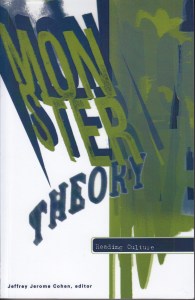
MonsterTheoryI want to understand monsters. I suppose that’s pretty common among Monster Boomers, but the thing is academics have been slow to give credence to our creatures. Yes, monsters are a throw back to the Medieval Period or worse, and reflect superstition, the supernatural, and things that go bump in the night. Our scientific worldview has no place for them, but they continually come back to peek in our windows and stomp on our cities. Horror movies, for example, consistently rate high in box-office grosses. And even adults, if caught in unguarded moments, might confess to enjoying the uncanny. So it was that I read Jeffrey Jerome Cohen’s Monster Theory: Reading Culture. Yes, it’s dated, but by humanities’ standards, it’s not too bad. Jurassic Park, one gets the feeling, was the rage when the book was being written.

As with most collections of essays, this is a Forest Gump of papers. Some of them were quite good and others were that kind filled with po-mo nougat. The one thing that was missing, sadly, is, well, monster theory. I’ve read just about every academic book available on monsters. I have yet to find a serviceable theory to help make sense of them. Yes, there are plenty of theories of origins—where monsters come from—but how to we handle them? Everyone knows that a stake is useful for vampires and a headshot is necessary for a zombie, but what are these revenants telling us really? Why do we still, when we can carry the internet in our pockets and call for help in the middle of nowhere, fear monsters? How do we construct, rather than deconstruct them?

Psychologists, of course, have a couch day with monsters. They represent parents, or phobias, or penises, or any number of things that make us uncomfortable. But how do we know a monster when we see it? Monster Theory, for example, has two chapters on conjoined twins. Now, at the time “monster” was a term used occasionally, but it is highly insensitive, let alone politically incorrect, to refer to humans that way. Then there were chapters on vampires and ghosts. Well, I suppose the dead can’t help their state either, but if they come back they could at least behave. Monstrosity is a concept, like religion, that we just can’t live without. We need our monsters in the dark just as we need dreams and desires. The question is what to do about them, and even after reading this weighty tome, I still don’t know.


Imagining Things

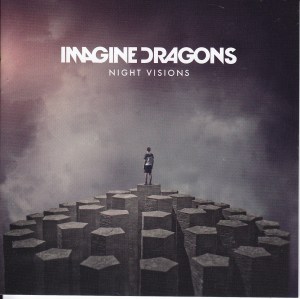
Having a child in college is one way for me to stay attuned to popular culture. You can absorb quite a lot by simply paying attention while on campus. For example, on the last several visits I’ve heard the song “Demons,” by Imagine Dragons, being piped into various venues. Given the biblical language of the song, I wondered about its origins, but, like many a distracted parent, had too much on my mind to pursue it. Well, on a recent visit, the song got stuck in my head. Partially this was because during an a cappella concert the Christian group did a cover of the song. This sent me to the internet—the only place where information on contemporary culture is instantly at your fingertips—to do a bit of poking around. Secular groups, after all, frequently use biblical references unnoticed.

When I learned that two members of Imagine Dragons were from Brigham Young University, I just had to know if they were Mormons. From what I’d seen of concert photos, white shirts and ties were rather conspicuous by their absence. Indeed, it turns out, according to the web, that the group does have some LDS in its bloodstream. I’m not so naive as to think that being of a particular religious background makes rockers religious. The debates raged in college over whether U2 was a Christian group because some of them were Catholics. I don’t recall seeing any crucifixes on the album art. This is all especially intriguing because Christianity and rock-n-roll are considered by many to be natural enemies. The origins of rock in the sexually suggestive blues had many 1950’s parents quite worried.

Religion changes, however, once you get away from the parents. I’ve known Mormons that I couldn’t identify as such until they told me. I’ve known Catholics about which I still harbor doubts. Religious affiliation is sometimes purely cultural. That won’t prevent you from being excluded from consideration for a teaching position at any of their schools, however. Scholars of religion can be the greatest believers of fiction to be found. Still, I have to admit to myself that the song “Demons” does keep me coming back. I wonder if the Christian group performing the song was aware of its Mormon tinge, or if they even cared. Sometimes theology can be had for a song.

ImagineDragons


Make Believer

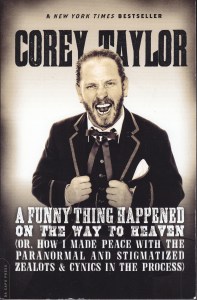
SmthgFunnyMy brother is way cooler than I ever hope to be. While I was busy learning all a tween and teen could about the Bible, he was listening to Lou Reed and David Bowie and Black Sabbath. Since the “door” between our rooms was only a curtain, I heard the forbidden sounds and, despite myself, had to admit that I liked what I heard. In fact, I once gave a lecture on Christian influence in secular rock music, and found many students staring at me in surprise for knowing so much about such debased music. In any case, when my brother recommends a book I know it will always be an adventure. Thus I came to read Corey Taylor’s A Funny Thing Happened on the Way to Heaven: (Or, How I Made Peace with the Paranormal and Stigmatized Zealots & Cynics in the Process). I didn’t want to admit to my brother that I’d never heard of Corey Taylor and that I couldn’t identify a Slipknot song even on Spotify, but the book sounded interesting, blending as it does bad-boy attitude with ghost hunting. November seemed a perfect time to read it. It could lead to some street cred on the bus.

It is difficult to distrust people like Taylor who write with absolutely no pretension (I’m a working-class kid, too). You know that what you’re getting is the real deal. It is also clear that like my brother and many rockers, Taylor is of above-average intelligence. Being smart can sometimes feel like a curse, and Taylor lashes out in several ways during the course of his narrative. He finds it odd to be an atheist who believes in, and has personally experienced, ghosts. I’m not sure that he would find it comforting to know that such a position is not at all as rare as he seems to think it is. Science deals with neither gods nor ghosts, and the average person is left to their own devices to decide who might speak with authority on such issues. Where are we supposed to look when scientists refuse to address such things? Personal experience is a powerful influence.

As with most books by opinionated, brash extroverts, it is difficult not to find yourself liking the writer. Trust may be too strong a word, but I do believe that Taylor writes without guile. After all, people have experienced ghosts for as long back as we’re aware. Why should it be any different for a celebrity? Is Taylor’s house haunted? (Or, more accurately are his houses haunted.) That’s a question no one can answer with certainty. Ghosts are beyond our realm of knowledge. Although plumbers can use scientific instruments, until actual scientists try to explain the immaterial we will be left to choose whom to believe. A metal singer can know just as much as a priest. Or even more, depending on the context.


Shipmates

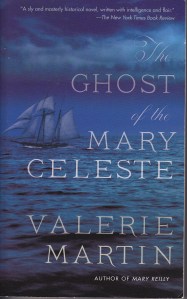
MaryCelesteGhosts have a way of persisting. I’ve had Valerie Martin’s The Ghost of the Mary Celeste on my reading list since I first saw it in hardcover on a bookstore shelf. The Mary Celeste was an actual ship, found with not a soul aboard, lifeboat intact, and no sign of violence, back in the 1870s. To this day no one knows what happened to the crew. Valerie Martin takes this frame and fills it in with a family drawn into Spiritualism, a religion that was just beginning at the time. Spiritualism, which developed in the aftermath of the Fox sisters and the eerie rapping at their upstate New York home, is one of the few religions to be completely at home with ghosts. The faith still exists today, and although Margaret Fox “confessed” to having hoaxed the effects she also retracted her confession, leaving ghost hunters perplexed to this day. These two mysteries, brought together in the moody month of November, make for a compelling novel that urges the reader forward.

Martin also adds the presence of Sir Arthur Conan Doyle to the story. Doyle, an avowed believer in the spiritual realm, also created Sherlock Holmes. As the various characters try to piece together what happened to the Mary Celeste, the ghosts of those lost at sea ambiguously communicate with the living. The world between realms, in this story, is permeable but indistinct. Those lost at sea are, in the narrative, restless. The mood of the novel is unrelentingly moving and thoughtful. Ghosts haunt, but don’t appear. Readers are left to draw their own conclusions.

As today is the fortieth anniversary of the sinking of the Edmund Fitzgerald, it seems appropriate to think about the Mary Celeste. Since Percy Shelley drowned in his own personal boating accident, loss at sea has become one of the hallmarks of Romanticism. Conceived as an answer to the cold, callus industrialism that trailed the scientific revolution, Romanticism suggested that there was an enchantment to nature and that things were not always as they seemed. Prosaically, there’s nothing poetic about dying in a violent shipwreck. That’s what makes the Mary Celeste so compelling. There is no violence here. The sea calls and claims captain and crew as her own. The lack of resolution has led to a very open-ended mystery—the perfect foil to a harsh materialism. Today the Mary Celeste and Edmund Fitzgerald will be sailing my internal seas as the season of spirits and shipwrecks come together in the lengthening nights of November.


Upgrade Downgrade

I don’t have to have the latest toys. In fact, I am happy to stay with what I have as long as it works. I’ve been a frugal lad all my life. The increasing demands of technology worry me. Nobody has to tell me that I keep odd hours. Waking up between 3:00 and 3:30 is hardly normal. Since I post on this blog before I go to work, I get up and turn on the computer, ready to write. As I learned three laptops ago, if you don’t keep your updates updated, you soon find yourself unable to do anything on the web. With my last laptop, whenever an update notice came, I immediately acquiesced. “What humble work I have to do, sir, pales in comparison to your mighty plans.” Now updates begin automatically. Most often I have no say in the matter. In fact, the first thing I saw when I started up my most recent computer was a message saying that a software update was ready to install. So what does all this have to do with my insomniac habits?

2015-11-07 18.47.57

Computer companies assume nobody is getting up and working at 3 a.m. While we’re sleeping our computers are making their electronic deals and sending out their electronic handshakes. We mortals need our slumber. I don’t even know what half this software on my computer does. I know that if it’s out of date, problems are sure to arise. So when I awake to find my computer’s too busy to accommodate me, I wonder how to post on my blog. Some updates politely run in the background, but others necessitate that I turn off the software I actually know how to use until it’s done updating. By the time it’s finished, I’ve forgotten what I was going to write. The computer now determines what might be expressed. When something goes wrong, we’re forced to learn its language. We’re in its country now. Technology is its national language, by law.

Once I was told that travel faster than the speed of light was impossible because of navigation. If you can’t see what’s in front of you because you’re traveling as fast as anything can, how do you know you won’t run into a planet, comet, or software update? You have no means of getting feedback in time to react. It strikes me that we’re already traveling well beyond the speed of light. I grew up writing without a typewriter. I wrote stories and articles on paper with lines, using a pen or pencil. Now I rely on my devices to store my ideas, but they’ve got other plans. I have to wait until they’re done to do my work. Of course, we must conform. At 3:30, human, you should be in bed. My advice to you, dear reader, is this: don’t wake your machine at the witching hour. You might not like what you find.


Burden of Democracy

Speaking of revisionist history, I see that I’m negligent on updating my Egyptology. In a year when you need an Excel spreadsheet to keep track of the sheer number of GOP presidential wannabes, I had to ask my wife who Ben Carson was. She sent me a story explaining how the league of presidential dreamers believes that the pyramids were ancient Egyptian grain silos. His reason for believing this has nothing to do with archaeology or with history and everything to do with the Bible. Now, other presidents of too recent memory have had strange biblical beliefs as well. And that raises the intractable question of how you run a democracy with religious freedom. Some people like to claim religious belief is a matter of choice, but that is rarely true. At a young age we are programmed to accept what our parents or guardians tell us is true. Studies of the brain suggest that once wired for concepts of how God works, the circuitry is difficult to displace. In a country where most people can’t tell a Seventh-Day Adventist from an eight-hour clock, they may be surprised that a brain scientist might believe the pyramids were built to biblical specifications.

From WikiCommons

From WikiCommons

The Adventists are a literalist sect. And they are not the only ones who believe the pyramids have something to do with Joseph and the biblical famine that set the stage for the exodus. It is an idea I encountered as a child, and I didn’t even have a denomination to call my own. Religious belief can be, and often is, completely separate from rationality. Some very intelligent people are biblical literalists. The real problem is that the Bible doesn’t mention the pyramids at all, but then most Americans know as much about the Bible as they know about Seventh-Day Adventists. If people actually knew how much incentive George W. Bush had to start Armageddon, the turn of the millennium would have been far more tense than it was. And that’s saying something.

In our democracy, we want freedom of religion, but we don’t want to be bothered with the details of what a religion teaches. Like many, I was shocked by the headlines of a potential president grossly misunderstanding history, but as soon as I learned Carson is an Adventist everything clicked into place. I would suggest that it is a moral responsibility in a democracy to learn something about religion. We like to think we can fudge on that part of the homework. If we want the freedom of having anyone capable of becoming president, we need to learn something about a human being’s deepest motivations. No matter how much reporters and skeptics want to laugh and scorn, religion makes many decisions for by far the largest majority of people on the planet. The thought that a democracy can thrive without learning what truly motivates its leaders, I would suggest, is the most naive position of all.


Revisionist History

I recently came across a website with academic papers available on it.  Although the internet has yet to achieve its promise as a locus of solid academic material, such sites are becoming more common.  I’ve been uploading my own papers onto Academia.edu since they seem to be old enough not to impact anyone’s sales aspirations.  In any case, this particular website I found noted that a paper had been updated at such-and-such a time, and that anyone who had downloaded the previous version should delete it and use the new one instead.  This is a dilemma.  I know of publishers who make corrections without issuing new editions.  When I buy a book, what it actually says will depend on the printing rather than on the edition.  I wonder if such retractions are really fair.  How does one know when she’s reading something outdated?
 
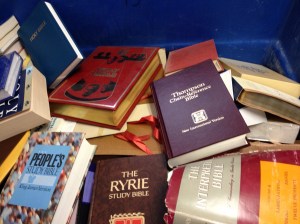
Picture this: a young kid, perhaps an unknowing fundamentalist, reading his Bible.  Then he gets a newer copy of the same translation.  But soon he notices that there are differences.  Although the example may sound overly Talmudic, it is factual.  Bibles, being printed in large quantities, are especially susceptible to error.  When did the printed word become something that’s negotiable?  I’ve been pondering clay tablets and their apparent immutability.  Contrary to popular belief, most clay tablets weren’t fired—it was a lot of effort for something that had limited value.  Some tablets show signs of erasure or additional words being added.  In the case of clay, this is often very clear.  Besides, the readers were few and specialists.  They knew what they had.  But for a modern person staking the salvation of her soul on a document, is it not problematic to change a jot or tittle (of which not the least shall pass away)?  Has technology made us immune to fixed texts?
 
Back to the website I found.  What if I downloaded the faulty paper and wrote my own paper based on it?  How would I know to go back and check to see if a new version had been uploaded?  Am I to spend all my time revisiting web pages to see what has changed?  Knowledge itself seems now to have become whimsical.  What is true depends on the date and time you accessed it.  Perhaps I’m just a dreamer, but there was a time, it seems to me, before post-modernism, when you might purchase a book and be fairly certain of what you had.  Errata sheets (or the more fancy addenda et corrigenda) didn’t intrude into the typeset page.  You could still read correctly, assured that someone had spotted and acknowledged the mistake.  We have, I fear, outlived the need for sic.  And it is only a small step from siclessness to truth that changes second by second. Is this the siclessness unto death?

IMG_1363


Think Bigger

PlanetRagesI’ve spent a lot of time with academics. Having been one myself, I know something of their habits. Getting through a doctoral program involves, at least in some fields, becoming the specialist on a very tiny piece of information. Since people have been thinking about things for millennia, finding something new to say can be a challenge. Often, by the time they’re done, newly minted doctors know an incredible amount about a very specialized topic. This is, in many ways, simply an intensification of the human experience. We think small. Part of the problem is that our brains haven’t evolved to think big. Having learned an awful lot about the weather in the book on Psalms, I have instinctively taken an interest in natural disasters. Charles Officer and Jake Page share this interest, as is evident in When the Planet Rages: Natural Disasters, Global Warming, and the Future of the Earth. This, however, is a big idea book. Globally big.

Throughout the first two sections of the book, which deal with humans in the face of nature, God often comes up. As scientist and science writer (respectively) Officer and Page simply reflect common beliefs. Nowhere do they advocate invoking God, but they note that throughout history, in the face of just about any species of natural disaster, people have. Many people still do. Disasters and God. What a team! We worship what we fear. Once Officer and Page reach the third section of human impacts on nature, however, God drops out of the picture and the fingers are pointing solely at us.

When I read about what we’ve already done to this planet, I, as a colleague once said, start seeking another species to join. We have destablized the atmosphere so throughly that it will take at least ten-thousand years to return to it’s pre-Industrial Revolution state. Ten-thousand years. At the same time, the largest industrial pollutor (the United States) has jury-rigged politics so that only the wealthy can attain high office. Votes can be bought and we simply won’t sign the Kyoto Protocol. Those who knowingly doom their children are the smallest thinkers of all. We have changed the course of the biosphere well beyond our share of time, and even those scientist who deny global warming know that it is true. You don’t bite the hand that signs the pay check. After all, specialists have a tendency to be very small thinkers.


Northern Ghosts

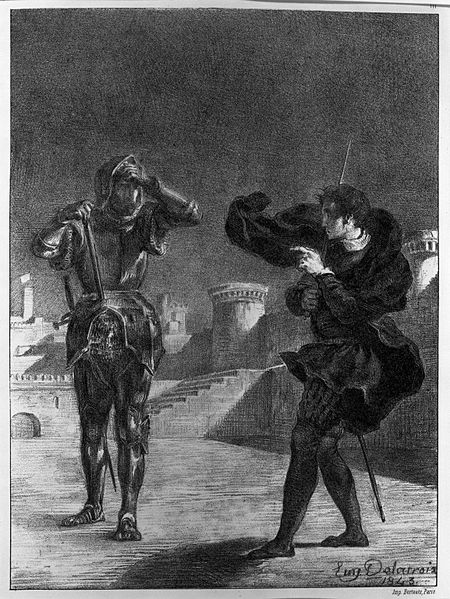
It is the time of year when respectable publications can, in a half-serious way, address the unconventional. The New York Times, for example, recently ran a story on ghost hunting in Norway. Andrew Higgins points out that Norway, among the most secular nations in the world, has come under the spell of ghosts. In a country where church attendance and religious belief seem to be endangered, there is a growing belief that people might somehow survive this mortal coil. Since such a story has to come off as bemused, we don’t get any indication that people have good reason for believing in ghosts—as one of the officials in the story says, they represent something that isn’t “generally accepted as existing at all.” But I wonder if that’s true. Scientifically, in our heads, there just doesn’t seem to be any room in this godless world for ghosts. Skeptics ask questions like “why do they wear clothes?” or “how can a soul remain behind if we have no souls?” Who told you that you have no souls?

Even with the constant materialist discourse of only physical reality, some ghosts cases have been very well documented. So have some hoaxes. People have the spirit of being tricksters, and that doesn’t always help when it comes to understanding the unseen. The point that the article is making, however, is that ghosts seem to be filling a need that the church hasn’t. Church has long been understood as being trapped in the past—concerned with issues deemed irrelevant by people who are just trying to get by in the world. I’ve heard hundreds of sermons in my life and remember less than ten. What is it that we’re trying to do?

Eugène_Delacroix._The_Phantom_on_the_Terrace,_Hamlet

I don’t know if ghosts exist. Many days I’m not sure what reality is, because if it is simply crawling out of a warm bed into a cold apartment before 4 a.m. so that I can go to work, I’m not sure this isn’t some kind of afterlife already. And maybe not the best kind. I know that as soon as people began to record their thoughts in writing, ghosts have been assumed to exist. Despite Ghost Hunters and other popularizers, vague traces are caught by enough people that we can legitimately wonder about the narrative we’ve been fed that says if it can’t be measured it can’t exist. There isn’t a nation in the world where people don’t see ghosts of some kind. Why should Norway be any different? And we wouldn’t even be asking this question if Halloween didn’t provide us with a buffer that makes forbidden topics chic.


Loving It

Given my remarks on occasion, some readers may conclude I dislike science. Nothing could be further from fact. Ever since I was a child I’ve been fascinated by science and secretly—or not so secretly—wanted to be a scientist. Complex mathematics, however, has always been beyond me. My brain simply doesn’t think that way. My gray matter is more inclined towards literature and abstracts, ideas. I am, it is true, distressed by a type of science that starts making philosophical claims as dogma: materialism. Those who make this claim have no scientific basis for doing so—it is a belief. They are entitled to their beliefs, of course, but to belittle those who suggest that maybe we don’t know everything there is to know about the unseen world seems poor sportsmanship to me. Case in point: IFL Science is a fun website. I enjoy the articles I read and it is refreshing to have those who stand up to creationists and other posers get such limelight. Interestingly, a recent article strayed into the uncanny valley.

Clown

Leading with the questions “Why Are So Many People Afraid of Clowns?” the article is categorized The Brain. Or psychology. This is one of those fields where we’re really out of our depth. We don’t understand the way that we think, and even raising the question of clown phobias seems a little odd. History can help to answer some of the questions, but IFL Science does a nice job of suggesting a scientific approach. Historically clowns were outcasts. They are liminal figures who create unease by their very existence. Those who didn’t feel accepted came to do what those who don’t feel accepted often do: try to get others to laugh at you. Sad comedians are more than a stereotype. Those who’ve clowned already know that.

Since I was a clown in college, I’ve read quite a bit about the history of the craft. Clowns were a way of laughing at misery, but also of gaining some sympathy. By exaggerating human features, they become caricatures. We aren’t allowed to discriminate against those who are different, but clowns exist to be excoriated. And deep inside, I think we all know, that those who are ill treated will eventually demand payback. It is a lesson that the world could stand to learn even today. Of course, we don’t want to be told that those who are different share something as personal and important as human feelings. Clowns make natural targets for our fears because they represent something that we know shouldn’t exist—inequality. If you can’t get accolades through hard work, making others laugh provides its own reward. The phobia may arise, I suggest, because we know that every laugh comes with a price.


Legend Quest

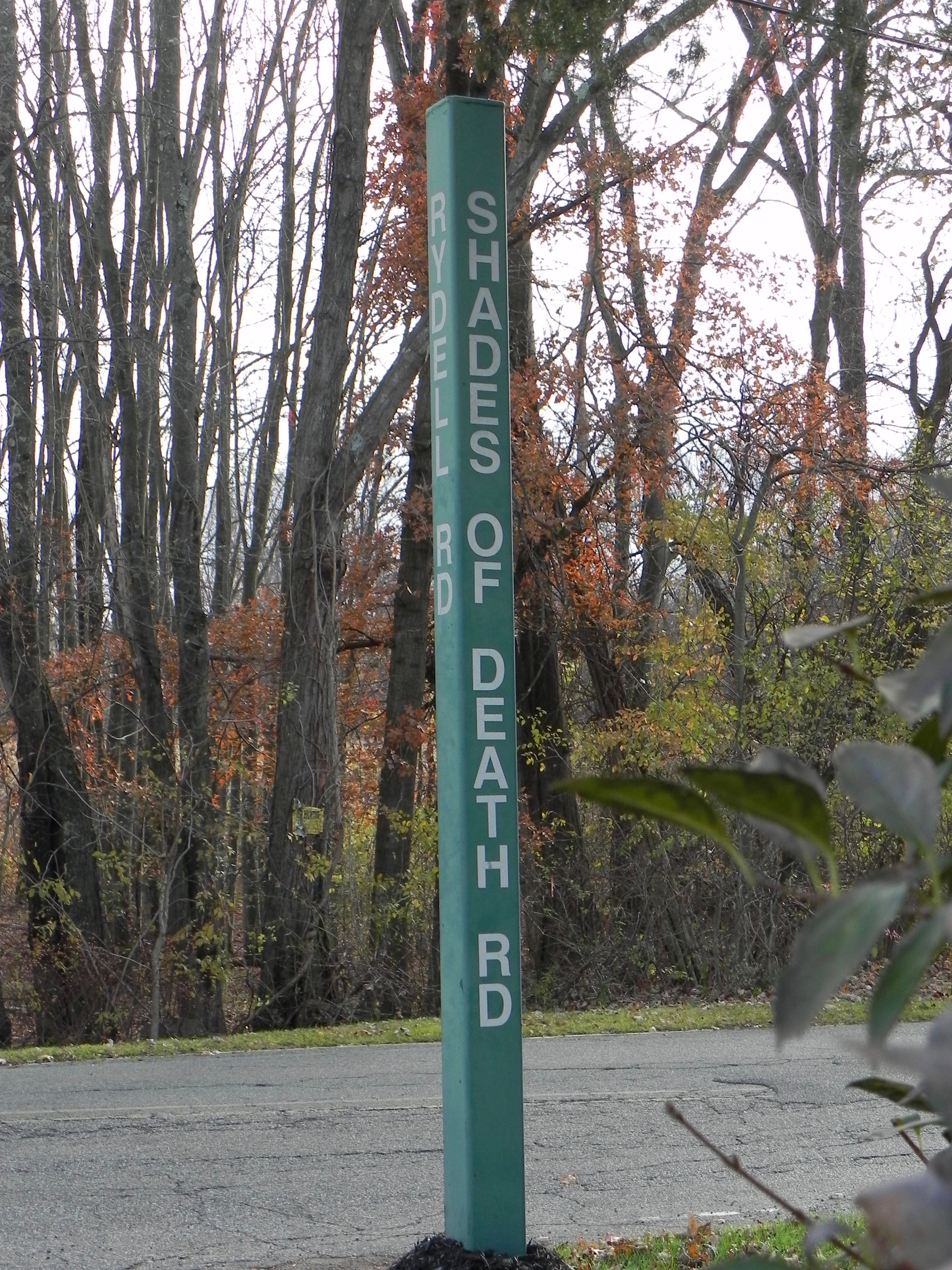
Legend questing is often considered a teenage pastime. Getting away from the mundane, or the oppressively normal, such road trips often lead to a place of spiritual significance, whether religious or secular. New Jersey, whose unofficial state song is about getting out, has its share of questing destinations. Reading Weird N.J. from time to time, one gets an introduction to such destinations handily served up in magazine fashion. The weird, as some scholars have noted, has roots in the religious—the uncanny. At times it is something about the physical landscape. Sometimes an historical event led to this status. Sometimes it’s just a name. Finding accurate information about Shades of Death Road, in Warren County, New Jersey, is somewhat of a fool’s errand. Although my wife and I aren’t teenagers anymore, on Halloween we decided to visit the reputedly haunted location.

2015-10-30 21.08.22

The area is not easy to locate, even in a state with as much road cover as the Garden State. Still, it is a beautiful road, once found. Huge boulders from the nearby Jenny Jump State Park—a place with its own legendary past—interspersed with old trees come right down to the edge of the road. A gorgeous lake, called Ghost Lake, also delights the passer by. The road signs, which are frequently stolen, were nowhere to be seen on our trek. It is, however, easy to see that in days before hermetically sealed cars with auto-lock doors that practically drive themselves such a locale may have brought danger to mind. Local legends claim it as a haunt of highway men, not a few of whom were hanged among its many trees. It was a partially sunny afternoon as we drove along, and lawns were decorated with faux graveyards and ghosts floated down from trees. It was a pleasant way to be haunted.

The typical legend quest involves getting out of the car and engaging in some kind of ritual to see if anything happens. Since this was a spur of the moment trip, I hadn’t done my homework to find out what manner of incantation should’ve been said. Had I prepared, I would’ve had to have selected from the many disparate legends that circulate around the road. Even in the sunshine with little traffic, the place could easily stoke some unexpressed fear. Although the road was named long ago, for reasons that no one truly knows, it maintains its mystique. Curvy, and in places with the roadsigns heavily vandalized, it is clear that a more modern sort of danger might lurk here after dark. Nevertheless, as we emerged back onto a road with a less dire name, I couldn’t help but smile. Shades of Death Road ends at Hope Road. And that, surely, is no accident.


Supernatural Quest

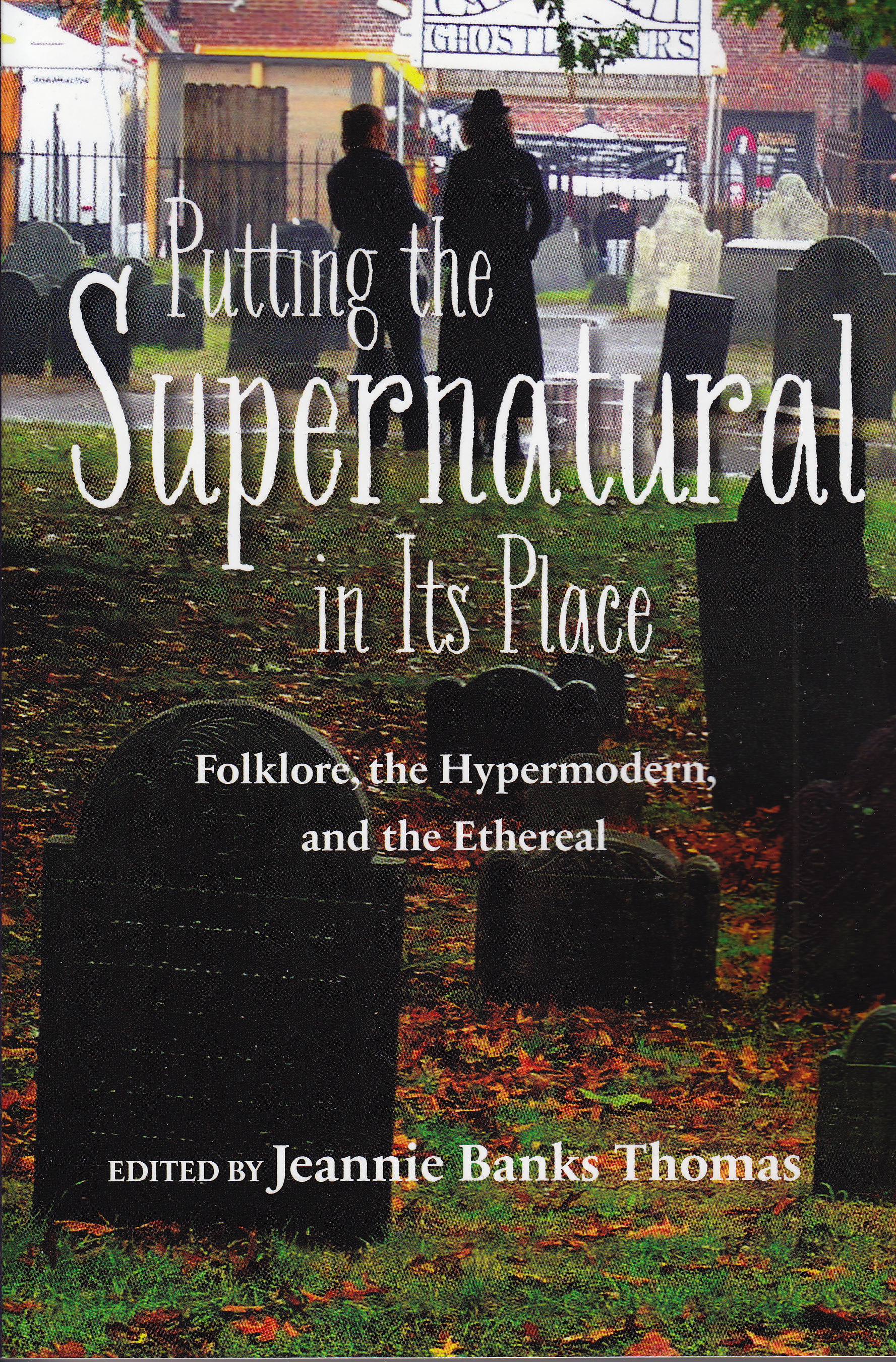
SupernaturalTwo things we’re told about the supernatural: one, it doesn’t exist and two, it can’t be studied. Of course the vast majority of people in the world don’t buy into number one and hardly care about number two. Both, it seems to me, could be wrong. As Jeannie Banks Thomas says in her introduction to Putting the Supernatural in Its Place: Folklore, the Hypermodern, and the Ethereal, belief in the supernatural is not declining. In fact, the more we’re told by cocksure scientists that all of reality is quantifiable and material, the more we become aware of the many exceptions to the rules. Of course, “supernatural” may be a misnomer. It could be that anything sloughed off into that category is simply not understood well enough to be empirically studied. Thinking back over the history of science I find it ironic that the very system that had to convince people that something couldn’t be seen (many gases) could be deadly. Now if it can’t be seen it can’t exist. We certainly don’t want any deities hanging out around here.

But back to the book. Putting the Supernatural in Its Place is a folkloric study of place. The contributors to the volume look at popular beliefs, some serious, some not, that accrue around certain places. As I’ve often stated on this blog, we are aware as humans that some places are fraught with meaning. Scientifically we know this shouldn’t be true, but we feel it when we approach any space of significance. The contributors to Thomas’ book look to some very interesting places: New Orleans, Salem, St. Ann’s Retreat, Lily Dale, Japan, and even movies and the internet. If any of these places aren’t familiar to you, it’s worth picking up a copy of this accessible book to learn more. Supporting folklore is a very good thing. Folklore, after all, is the wisdom of the people.

The places in this book are rumored to be haunted by ghosts, witches, zombies, vampires, and even fairies. Folklorists, of course, don’t try to prove that beliefs are true. Like any academic they study and analyze. The main form of exploration for the non-academic is the legend quest. Many of us have gone legend questing from time to time. A place where something happened is said to have a certain feel or manifestation, so we go to see what it’s all about. If such trips are given religious sanction we call them pilgrimages. We want to see. But more than that, we want to experience something that the past has left behind. In the part of the year when each night grows longer than the last, my thoughts turn to what is usually termed “the supernatural.” And I, for one, am glad to have able guides along the way to make the simple voyage into a quest.


Uisce Beatha

The idea of a state church, I have to admit, sometimes seems not so bad. Before you click off this page in disgust, please let me explain. Once in a great while, I think about what state churches really are. From the most ancient of times, religious institutions supported governments and governments gave money to state religions. It isn’t a perfect system, but the reason it sometimes appeals is that it might prevent the kind of religious quarreling that we see in the run-up to every election: whose religious vision will govern us? I get theological whiplash. Wouldn’t it be easier to have a state church and be done with it? After all, those who live under state churches really aren’t obligated to believe in the teachings, but just to pay for them.

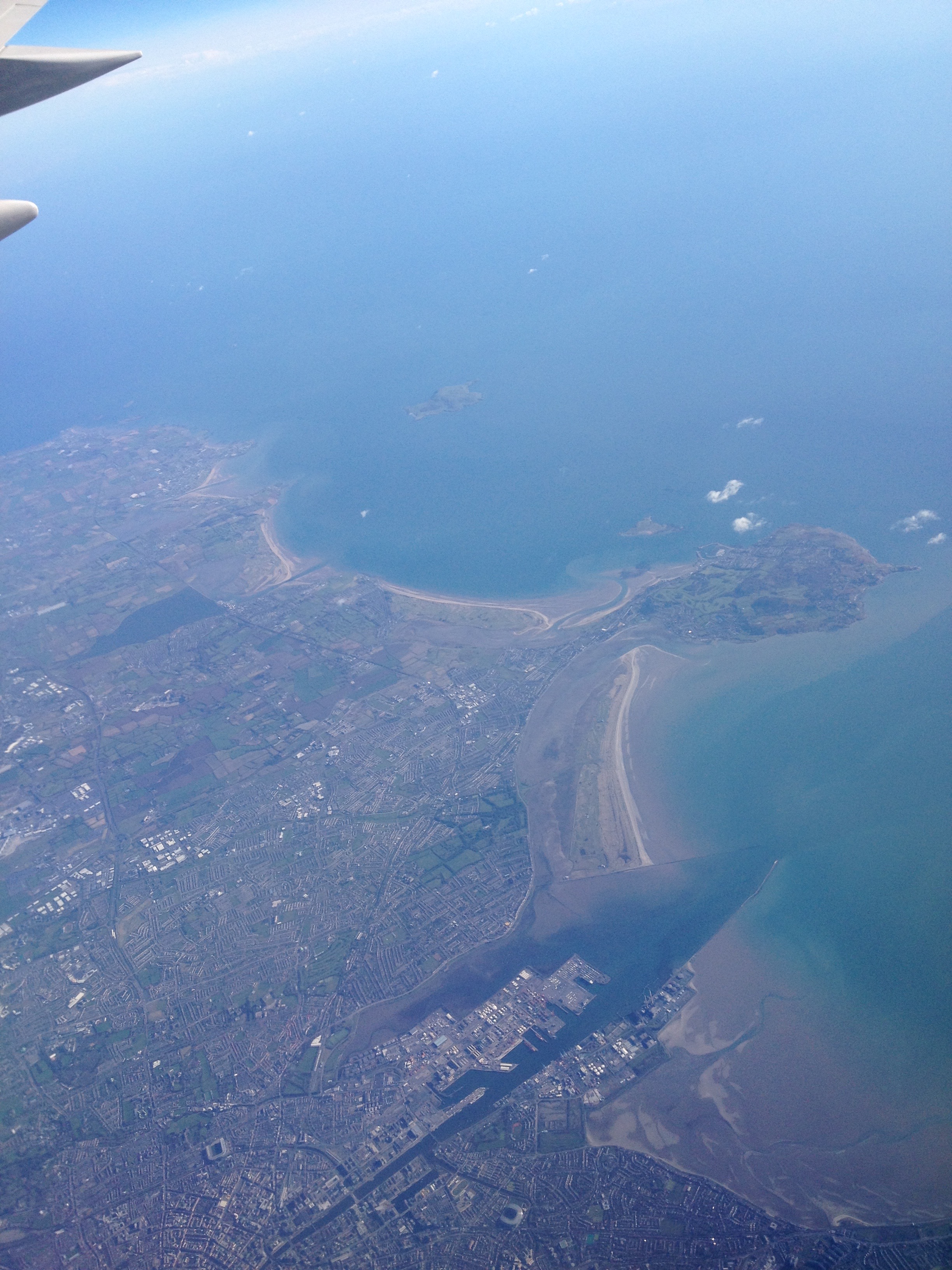
I’m only being facetious here, of course. We all know that in reality where religions and governments get too intertwined human misery results. The Reformation should have taught us that, if nothing else. The crimes of ISIS continue to show that religious belief makes a poor basis for government. Another case that my wife recently pointed out to me is in the quiet and civil nation of Ireland. Ireland has the stereotype of being Catholic, but according to an article in The Guardian, more than 90 percent of state-run schools there are under the control of the church. For some residents, like the family featured in the article, this becomes a conflict when schools won’t admit the unbaptized. Admissions committees with holy water may be a concept that many people find strange, but the fact is churches can set rules just as strict as secular bodies. No baptism, no confirmation, no matriculation.

I would, I think, be concerned as such a parent. Once my child was admitted and enrolled, would not the teaching go against what was being taught at home? Do governments have the right to decide a child’s religious outlook? Here is the dark underbelly of the apparently benevolent state church. Belief, of all things, is an intensely private matter. Many church goers do not understand the deep beliefs of their religious body, and since we seldom stop to think about religion we just do as we’re told. Education, it seems to me, should be very much aware of religion. Instead we see the opposite happening, at least in this country. If we pretend religion doesn’t exist, it will just go away, right? There is a reason that the church teaches that baptism is symbolic drowning. Only for those, however, who pay attention.

Angel's view of Ireland?

Angel’s view of Ireland?