Circus of the Absurd

As long as I’m thinking about ethics, my thoughts turn to the fair. Every August our county 4-H Fair becomes an event in our lives. Since my family has been involved with 4-H for many years, we always try to spend as much time there as we can afford. Jobs and daily life tend to get in the way, of course. While there we get to see the animals that are missing from our lives, and reconnect with art and culture. Robotics are now part of our local fair, and this is the first year that I’ve ever seen pigs there. And there were the political booths. Just around the corner from where the sheriff’s office was giving out free gun locks to prevent kids from shooting someone accidentally was the booth supporting Trump. I’ve never been so strongly tempted in my life to walk up to a total stranger and say, “You are kidding, right?” But no, like the Donald himself, a flashy large sign displayed their ignorance for all to see. We live in the era of the delightfully uninformed.

IMG_2908

I’m no political pundit. I tend not to trust any politicians much. I distrust businessmen even more. The fact is the only thing you need to be a viable candidate for President is money. Over the past several weeks Trump has shown himself to be anything but qualified for political office. Major newspapers run articles that seriously question his sanity. And yet here are good people who don’t have the sense to maybe put up an embarrassed, small sign saying “Sorry folks, we’ll try again in 2020.” We find it hard to admit our mistakes. Especially when the stakes are so terribly high.

I go to the fair to support 4-H and to enjoy an evening out with my family. Although I spend most of every day in a different state working in an isolated cubicle, I can always count on seeing people I know at the fair. I enjoy the arts tent where young folks are making their first steps into lives filled with creativity and imagination. The more technical tents can be intimidating where kids a quarter my age are launching model rockets and those under half my age are building robots. In the herpetology tent I see a snake amid a bed of shredded newspaper. He’s hiding under the photo of a prominent non-politician who has a large booth displaying his name just across the grounds. And I remind myself this is the first year they’ve had a swine tent. I wonder if anything will be the same next year.


Food for Thought

You probably know the ritual. On a given day of the week (often the weekend—your “time off” for good behavior) you troop to the grocery store. You toss the items you’ll need for the week into a cart and trundle home to fit them into the interstices of a crowded kitchen or pantry. Then you start to notice that funky smell when you open the fridge. Or you eat a snack chip and find it gives no resistance to your teeth. Something’s gone off and needs to be tossed again, but this time into the landfill (or hopefully, compost). We’re all so busy that we don’t really have time to ponder this much. After all, the work’s the thing, and we only have a few hours at home anyway, and we can go shopping again soon. Now here’s where it starts to get ironic: we subscribe to Consumer Reports. I’m about the least consuming person you’ll be likely to meet (or not meet), unless, of course, the topic is books. I don’t buy stuff unless I have to. My jobs have been financially disappointing since earning a doctorate and I’ve got tuition bills of my own to pay. Every penny counts. But I digress.

Consumer Reports, in its September issue, discusses the problem of food wastage. Since I’m a simple man statistics impress me. 52 percent, for example, of the produce Americans purchase is thrown away. Math class was some time in the past, but even I can see that’s over half. This is something we’ve paid for and we simply jettison because it’s gone bad before we use it. This particular figure hit me because I like to have fresh produce with my boringly consistent lunch. When they’re in season I buy snow peas. Problem is, our grocery store only sells snow peas in massive packages, hermetically sealed. I can’t get through them before they go bad, and I can’t buy just what I need. For my convenience, I’m told, these tasty greens are prepackaged and pre-priced (at the cost of a small automobile) so I don’t have to dip my grubby hand in the basket and weigh out just what I need. And it’s not just peas. I can’t remember how to make a salad any more because, well, they come in bags, right? The natural habitat of greens.

Free-range peppers

Free-range peppers

The problem goes further than that. Here’s where the stats get scary. According to the article 28 percent of the agricultural land of the world generates food that isn’t consumed. Over a quarter, if memory serves, is ultimately wasted space. A full quarter of our freshwater usage is for stuff we throw away. In the land of overabundance we’ve learned to squander our resources and think nothing of it. It’s just food, after all. It’s not like there are starving people in the world. Perhaps the greatest ethical crimes are those that are so ordinary as to become forgettable, like that trip to the grocery store. Let someone else do the packaging. Anything I don’t eat I can always throw away. We can grow more. It’s a ritual, after all.


In the Details

To a certain mindset, nothing conveys a threat quite like Satanism. Many parts of the world witnessed this dynamic during the “Satanic scare” of the 1990’s. In reality, however, most groups identifying as Satanism do not believe in a Devil and, often enough, don’t engage in worship. These groups are a reaction against aggressive Fundamentalism. For example, a Washington Post article timed as parents (at least) are thinking of back-to-school worries, announces “An After School Satan Club could be coming to your kid’s elementary school.” News headlines are intended to make you want to read a piece, and this one worked in my case. It turns out that the Satanic Temple, the group behind this current initiative, is one of those rationalist groups that doesn’t believe in the Dark Lord. They object, however, to schools allowing Good News Clubs to meet after school hours and want to make a point by offering alternative programing. Devil-themed, but not Devil-believing.

It’s difficult to imagine this kind of situation developing in many world cultures. It raises some very basic dilemmas where two conflicting freedoms co-exist: freedom of speech and freedom of religion. Most people would agree, upon reflection, that public schools should not be used for religious instruction. After school programs, in the minds of kids, still take place “at school” and are not easily separated from regular instruction. (Just ask an undergraduate what an adjunct instructor is and you’ll see that they pay little attention to administrative issues like that.) Fundamentalist groups, such as Good News Clubs, use freedom of speech as their wedge to offer after school programs. It’s not “school,” and it’s after hours. Don’t we allow freedom of speech, and isn’t there space available? Good News Clubs are, of course, evangelistic engines. The Satanic Temple makes the claim that if one religious group can meet after school, so can another.

Neither academics nor society have a good understanding of literalist beliefs. Those of us who once believed—sincerely believed—Fundamentalist teachings are a resource academia has chosen to ignore. Higher education is still an “old boys network” where jobs are offered on the basis of who you know and not on the basis of the knowledge they might offer to students. This, I suppose, is yet another clash taking place. Fundamentalism may seem laughable from the outside, but from the inside the untenable beliefs are taken with deadly seriousness. After school programs are an expression of a very deep-rooted fear that such religions promote. Satanist groups will get headlines by taking them on, but they will continue the conflict rather than offering dialogue to try to understand. They’re only doing what higher education teaches them to do—support those you like instead of trying to move knowledge ahead. Perhaps that’s the real work of the Devil after all.


Flying with Strangers

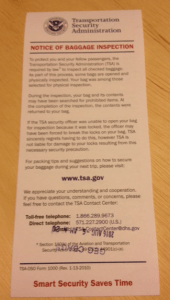
TSAThe world is safe now. It’s okay—you can unlock your doors and windows at last. I have the proof right before me. Two weeks ago I was out of town. To get to my final destination I had to fly. I travel light. Seeing families at the airport with stacks of suitcases, I often wonder what people find necessary to take with them. It depends on the destination, I suppose. If you’re skiing you’ll need different gear than if you’re snorkeling. Or spelunking. In my bag there’s just the same old togs I wear at home. Never a clothes horse, I seldom update my wardrobe. I’m not into extreme sports, and for hiking, well, I can wear what I’m wearing right now. One thing is universal, I suspect. Underwear. We all have tucked away in our bag somewhere that necessary item of human social politeness. That’s why the world is safe, you see. I have in front of me a slip of paper informing me that the Transportation Security Administration has looked at my underwear and declared it safe. Go ahead and fly the friendly skies. Just make sure your underwear is clean.

Long ago I learned that if I fly alone I will be singled out for added security checks. I’m a bearded man. A non-conformist. My beard isn’t one of those consisting of trendy hipster stubble either. Just a regular beard. No fuss, no muss. My life is far too busy for me to spend extra time scraping off hair that will only grow back. I have enough pointless tasks as it is. But once you’ve seen the TSA agents looking you in the face and pointing you to the extra-search line time and again, you start to notice patterns. Especially since nearly every TSA agent in Newark parks in the same airport lot as I do and rides the same shuttle in. Sometimes there are so many of them that they ask if I’m lost. No, just looking for a restroom so that I can check my underwear before you do.

The truly ironic part—and I appreciate irony so I know that there’s no way that an agent can know this—is that I’ve been a life-long pacifist. The draft was reinstituted when I was just the right age to sign up. I was a conscientious objector. One of my uncles was too, during the Second World War. The very title of the conflict should’ve made the need for more objectors obvious. I wouldn’t knowingly hurt another person. Or animal. I step over worms after it rains and will yield to an ant on the sidewalk. Still, you’d better check my suitcase just to be sure. To me, it seems the world might benefit from teaching more people to respect those who are different. Bearded men and those whose skin tone differs are not evil. We just don’t have the time to get to know them before we throw their bag onto the conveyor belt.


Sea Change

MelvillesBiblesMy reading list is long, and it grows longer all the time. I read both fiction and non-fiction with equal avidity. Given that there are so many books I want to read, it is unusual to read entire books a second time (they should be kept for reference’s sake, of course). Two exceptions to the multiple reading trend have been, for me, the Bible and Moby-Dick. In reading Ilana Pardes’Melville’s Bibles, I discovered I’m not alone in according Melville nearly biblical status. As a book itself, Melville’s Bibles went on my reading list as soon as I learned of it. You see, Moby-Dick was added to my personal Deutero-Canon as soon as I closed its cover. Perhaps before. It was an assignment for a seminary biblical studies class on wisdom literature. My high school wasn’t one that required the novel, and all I knew about it previously was that it was a big book about whale hunting. I knew so little.

Pardes looks at Moby-Dick, and other literature, both by Melville and others, through the lenses of biblical characters. Of course there’s Ishmael. And Ahab. Melville, however, knew his Bible well, and to understand his work on a deeper level so must his reader. Job’s there. As is Jonah. Jeremiah, Elijah, Micaiah ben-Imlah, and even Rachel. Pardes takes these characters and shows how they appear, generally in Moby-Dick, spread across a variety of characters. More than one Ahab and Ishmael walk these decks. All the while, she notes, Melville himself wasn’t a typical “believer.” He struggled with the deity that he just couldn’t find. The end result is a compelling analysis of literature and human nature.

This brief study has a disproportionate number of insights. I frequently found myself stopping to ponder what I’d just read. Perhaps that’s to be expected in any book that brings two weighty canonical works together in such a gam. (If you can’t recall what a gam is, reading either Pardes or Moby-Dick will remind you.) Encountering Moby-Dick the first time was like finding a lost book of the Bible. I had no idea, however, at the depth of comparison. Pardes shows just how deep that ocean is. Melville’s well-thumbed, indeed, annotated Bible does play a role in all of this. Perhaps he didn’t intend all the connections readers like Pardes find, but that doesn’t make the connections tenuous. They’re clearly there. Canonical works are like that. Moby-Dick, indeed, is an iconic book and Pardes is a very capable Captain to guide a reader through it.


For Love of English

One of my most frequent imaginary dalliances is wondering what I would have done with my life if I hadn’t been raised religious. Like many young boys I found “exciting” jobs enticing—soldier, firefighter, explorer—but scientist also loomed large in my imaginary horizon. By the time I was a teen I was firmly ensconced in books. My upbringing meant that many of these books were religious in nature, and my concern with ultimate consequences meant religion was the only possible career track to make any sense. It certainly never made dollars. As someone who professionally looks backwards, I’ve found myself wondering if I shouldn’t have focused on English rather than Hebrew and Ugaritic as a career. After all, the Bible has been available in English for centuries now. Besides that, the canon is larger—from Beowulf to Bible and beyond. Reading is, after all, fundamental.

Beowulf, from Wikimedia Commons.

Beowulf, from Wikimedia Commons.

I only discovered BookRiot recently, and that through the mediation of my wife. For the writer of a blog I really don’t spend that much time online outside of work. I like real books, and being outdoors. Too much time staring at a screen brings me down. Nevertheless, BookRiot has stories that cause me to question my career choices from time to time. For instance, I have never knowingly heard of The Exeter Book. Dating to the tenth century, this medieval manuscript is among the earliest of English writings. Showing the interests of the monk who likely inscribed it, it has religiously themed material and riddles. As E. H. Kern’s post on BookRiot points out, The Exeter Book has inspired many later writers and has, through them, made its way into mainstream popular culture. Not bad for a book that I suspect many, like myself, have never heard of.

Old English has the same kind of draw as other ancient languages. Not nearly as dusty as ancient Semitic tongues, it contains the roots to the form of expression I find most familiar. I love looking back at the Old English of Beowulf and spotting the points where my native language has remained relatively unchanged over the centuries. Modern English even begrudgingly owes a considerable debt to the Bible of King James. Our language is our spiritual heritage. We have trouble expressing our deepest thoughts without it. Perhaps had BookRiot existed when I was young, I might have made a rather more informed decision about the direction of my career. Or, then again, religion might have found me nevertheless. From some things there is just no hiding.


Mature Monsters

When I first began this blog, generally focused on religion, I felt the need to justify posts about monsters. Now, some seven years and several books later, I have come to assume monsters and religion are close kin. Many scholars who explore monsters are those in that amorphous field of “religious studies” who’ve come to realize that terror and the sacred are not far apart. In fact, the Bible contains many stories that could be understood as horror, if taken literally. When my wife sent me a story in The Guardian, “Guillermo del Toro: ‘I love monsters the way people worship holy images’” I once again found the connection reinforced. In the article by Jordan Riefe, del Toro comes more than once to religious themes as he describes his fascination with the macabre. Here’s a guy about my age who’s not afraid to admit that he likes the scary stuff and has, indeed, become famous for it.

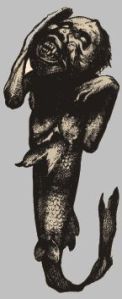
Feejee_mermaidI have to admit that Guillermo del Toro has a way of pressing my buttons. I’ve watched a number of his films and they can be scary even with subtitles to read. Perhaps the reason is that del Toro understands implicitly the tie between religious thinking and the monstrous. An invisible man of infinite power whose revealed will comes in contradictions is certainly a source of fear. So is a child who wears a burlap sack painted like a mask over his head. Known for his fear-inducing creatures, del Toro was raised a Mexican Catholic. He ties this upbringing with monsters in this story. Riefe records him as saying, “I felt there was a deep cleansing allowing for imperfection through the figure of a monster. Monsters are the patron saints of imperfection.” In a mythical world where perfection rests only with divinity and people are told to be perfect, monsters are certain to emerge.

Until quite recently horror was considered a lowbrow genre by academics. As such it wasn’t really worthy of exploration. Perhaps it isn’t surprising, then, that scholars of religion—the new lowbrow—were among the first to take their disfigured friends seriously. Science tells us there are no monsters. We live in a rational world with evolution taking logical steps—if unguided—to more efficient means of survival. That doesn’t stop us from lowering the shades as night draws on. The monsters may be in our heads, but we might also find them in our souls. When we’re informed that such souls are nothing more than imagination we have a very good reason to be afraid indeed.


Spirit of Equality

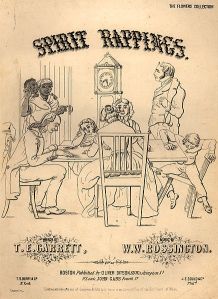
A few weekends back I watched the new Ghostbusters in the theater. Since tuition bills loom larger than life, it takes a powerful draw to get me to spend the money to see a movie in its natural setting. As my regular readers know, I loved it. Critics have tended to, well, criticize the movie, largely for its main drawing feature—the female leads. A thoughtful piece in by Colin Dickey in New Republic points out some of the unusual dynamics at play here. Looking at the history of Spiritualism as the basis for the modern interest in ghosts, Dickey suggests that women have been involved in the long-term fascination with the dead from the beginning. Their motive, however, was generally communication. Women wanted to relate with ghosts to make a connection. The original Ghostbusters movie represented a male, rationalistic approach to ghosts. As Dickey points out, instead of communicating, the men hunt and trap rather than trance and rap.

436px-Spirit_rappings_coverpage_to_sheet_music_1853

Ghostbusters, in all three cinematic presentations, is for laughs. Sometimes classified as supernatural comedy, the film is meant as humor while, admittedly, leaving the door creaking open for some serious thought about the implications. In a reductionistic world there’s no room for ghosts. It’s not possible to say, scientifically, what they might be. From the perspective of traditional belief, however, ghosts are the lost spirits of the departed. Traditional Christian theology places the dead squarely in Heaven or Hell, and they shouldn’t be wandering around down here. That hasn’t stopped people from reporting ghosts. They’ve been recorded almost as long as there has been writing. Today “Ghosthunters,” arms defiantly crossed, use “science” to try to prove the entities exist. This is lightyears from the traditional seance. A ghost under a microscope isn’t very scary.

One of the reasons I found the new Ghostbusters so compelling is that it managed to tiptoe that line between science and spirit that is so rare in the real world. The women, downgraded though they are in the story, are academics. They know, and experience, the dangers of taking haunting seriously. The movie is seriously funny. Like most truly funny efforts, there is a great deal of truth hidden in the humor. Dan Aykroyd’s cameo is one of the scenes that plays on its own loop in my head. “I ain’t afraid of no ghosts,” he says before he drives off toward Downtown. Women, in the film, have a healthy respect for the departed. Not exactly afraid, but not exactly unafraid, they handle ghosts as persons. This may be one of the points Dickey is making in his article. To understand a human one must be human. Spiritualist or Ghostbuster, women have always been superior guides to what is truly important. If only men could learn to listen.


Plain Floods

Erschrecklichewasserfluth

Floods are the stuff of legends. In fact, one of the most pervasive myths of all times is the world-wide flood. While some would see this as “evidence” that such an impossible flood actually occurred (some believing so fervently as to build replicas of imaginary arks), others recognize the flood as a basic human dilemma. We require water, and therefore we build our cities near a source of it. Rivers worldwide are prone to floods. While recently stuck in a holding pattern waiting for space for our flight to land at Newark, floodplains were more than evident from high above. My hometown regularly experienced floods when ice jammed the Allegheny River during the spring thaws. The floods of the Tigris and Euphrates rivers were, literally, epic-making. A piece in the Washington Post rather surprisingly reports “Legends say China began in a great flood. Scientists just found evidence that the flood was real.” The story by Sarah Kaplan demonstrates the universality of unruly water.

I know little of Chinese history and mythology. There’s no reason, however, to doubt that stories of ancient floods were as common there as elsewhere. The flood is, pardon the Christianization, the baptism of civilization. Things have to be washed clean before “civilization” can begin. In this case, according to the story, Yu, the founder of China’s first dynasty, tamed the flood. Now scientists are finding flood deposits from the Yellow River that match the 1900 BCE time-frame of this mythical founding. We can be certain that some will latch onto this date noting how Abraham was said to have emerged shortly after the flood (Genesis chronology says Noah was still alive when Abraham was born) and therefore this is proof of the Biblical flood. Even Sir Leonard Woolley advertised that he’d found the biblical flood in the river deposits of Mesopotamia. When it comes to literalism, any old flood will do.

No doubt many ancient flood stories go back to some historical event. The world was never completely covered with water in human times (before that nobody was here to see), but it’s easy to understand how people might have believed it could have happened. Our view tends to be local, often at the expense of universal costs. Consider global warming, for example. It’s difficult for us to see something that impacts us as such a distance. Taking care of the planet is so hard when we realize just how big it is. Our neglect, however, will definitely cause floods to come. Our denial makes myths for future generations. Headlines millennia down the road, if anyone’s left to read them, will, I’m sure announce with surprise that the devastating floods we’re creating now were indeed real.


Paradise Lost

Reentry is never easy. I’ve just been on a vacation in the woods of the northwest and yesterday marked, via eight hours of air travel and airport waiting, my trip home. Tomorrow work begins again and I hope for the ability to adjust quickly into some kind of routine. Humans are creatures of ritual. We may call it religious or secular, but we draw comfort from knowing what to expect. Vacation disrupts with its mandate to relax and be among loved ones, and with its low level of demands. It can be time to think clearly instead of being harried and harassed and hurried all the time. Today I have to remember how this is done. How east coast time works. What the bus schedule is and how to enslave myself to it once more. I think of how being in a cabin in the woods felt like a restoration of my soul. In fact, it can feel quite a bit like a religious experience.

Silence, for one thing. In a world of constantly competing noises it’s easily forgotten what a commodity quiet can be. The silence of the woods is restorative. Although it was occasionally abused in my days at Nashotah House, quiet was often enforced as spiritual discipline. Nature, in a way that’s hard to appreciate so near to New York City, can be supremely tranquil during the night. Darkness as deep as the silence reminds us what night was meant to be. No priest needs to direct meditations since the soul is already attuned to the divine in such situations. Awaking to the chatter of a red squirrel rather than the rumble of a bus can remind one of what is truly important. When we value our vacation over our vocation there is a message hidden in plain sight.

Today I glance ahead to an unbroken string of work days and the premature end of summer. The hot days can be uncomfortable and that rush of everyone toward the water can lead to endless crowds and congestion. Still, I empathize with those seeking a break from the routine. We are all souls seeking respite from days programmed by others so that the Trumps of the world can reap the rewards of other’s labors. Bleary-eyed from the time change of three zones’ difference, I’ll go to work tomorrow with twigs in my hair, sand in my shoes, and a kind of private paradise in my head. I’ll soon be cured of that as the secular routine takes hold once again.

IMG_2891


Hollow, Sleepy Hollow

Legend_of_Sleepy_Hollow_U.S._Stamp

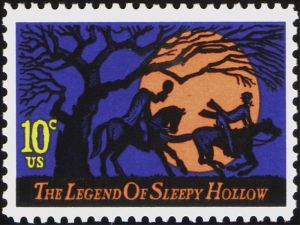
It was recently announced that Fox has renewed Sleepy Hollow for a fourth season. Please! No spoilers in the comments (as if)! I’m running a season behind so I want to protect my innocence. The announcement coincided with the happy news that my article on the Bible in Sleepy Hollow has been accepted for publication in the Journal of Religion and Popular Culture. I’m irrationally chuffed about this since my past publications have been primarily textual explorations of documents in languages nobody reads any more. Having something contemporary accepted for publication felt—dare I say it?—cool. As if I were part of the supernatural television crowd. It also affirmed my decision for which book to pursue next. When I say “pursue” I mean “write.”

You see, as a young scholar I struggled trying to decide what direction my research would take. After writing my book on Asherah, I was a bit sated with Ugaritic goddesses, although I started a book on Shapshu, goddess of the sun. The sun gave way to the weather and I wrote Weathering the Psalms. I lost my job in the midst of my revision of that project and it has taken a decade to find my way back to academic publishing. Research, however, takes on a vastly different form when you’re not hired to do it. Colleagues say, “I can get you access to my university library.” Such a kind thought, but my mind always says “when?” When would I have time to visit a library? I get up at 3:30 for my commute and get home in time to go to bed so that I can wake up again at 3:30 the next day. Research reading on the bus is dicey at best. Weekends are for getting the things done that are neglected all week long. Research has to be squeezed into the interstices.

That’s why I’m pleased about Sleepy Hollow. Watching television, even if on DVD, can be research. I’ve got decades of backlogged reading upon which to draw. When my tastes for light horror integrate with what I’m interested in researching it is a happy day. “The Legend of Sleepy Hollow” captured my imagination as a child. It was probably based on the Disney version, but even so, I never lost the fascination. Tim Burton’s Sleepy Hollow is still one of my favorite movies. Watching the episodes of the Fox series takes time, but now I know that time is not just simple relaxation. No, it’s research. Now to find the time to write that book that’s brewing in my head. Inspired, perhaps prophetically, by a Headless Horseman.


The Cost of Chaos

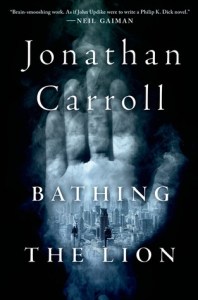
BathingTheLionJonathan Carroll’s novels are always thought-provoking. My reading patterns tend to be driven by book sales and secondhand stores since my reading vice is particularly aggressive. The Ghost in Love is now already years in my past, but I found a copy of Bathing the Lion that I could afford and I was soon dropped into a world of chaos and order. I won’t try to summarize the complex plot here, but I would note the story’s participation in one of the oldest themes of literature—the struggle of order against chaos. The characters called “mechanics” in this book are those who attempt to maintain order throughout the cosmos. Many retire to earth. There, or here, they continue to work against the ever-encroaching chaos.

According to Genesis 1—not the earliest literature, but still fairly ancient—creation is God making order out of chaos. The universe, prior to creation, consists of uncreated, chaotic raw material. Order is what makes our world recognizable. Elsewhere in the Bible creation takes the form of a struggle against a conscious monster that represents chaos. This motif is reflected elsewhere in the ancient world in texts such as the Enuma Elish. Actually, the theme is so common as to be classified as a standard trope of ancient religions with its own name—Chaoskampf. Chaos is always waiting in the wings, ready to break back in and make a mess of our nicely settled existence. The flood story, placed as it is just after creation, is an example of what happens when chaos regains the upper hand.

The battle to maintain order represents a kind of ancient awareness of entropy. If energy isn’t expended, that which is accomplished becomes a wet, stinking mess and anyone who survives has to start all over again. This story is deeply embedded in human consciousness. To our way of thinking, we’re integral to the running of this universe. Spending time in nature gives the lie to this thought. There aren’t that many predators left, but those that are here—cougars and grizzly bears especially—remind us that in the eyes of nature we can be just another meal. Our outlook cannot accept such a low position. As Carroll has the mechanics say, they are not gods. Like human beings, however, they take on a role next to that of divinity. Chaos is the enemy, even garbed in the colors of making us great again. There are still those who will bathe the lion.


Madness of Kings

The Roman Empire ruled the known world. Christianity owes much of its form and structure to the fact that the Romans expressed their rule in a military way and prized what they thought was order and fairness. While all of this was happening across the ocean, what are now ancient cedars had begun to grow in Roosevelt Grove, Washington. Having survived the many forest fires that sweep through this area of the northwest, these trees may be up to 2000–3000 years old with an average of about 800 years per tree. Impressed by such longevity, this year on the East Coast I’ve visited the two oldest trees in New Jersey (posts about them may be found in January and July of this year’s offerings). The Great Swamp Oak may be 700 years old, and the Basking Ridge Oak is over 600. The longest lived trees in the country, however, are out here in the west.

IMG_2890

The cedars of Roosevelt Grove aren’t the oldest. There are Bristlecone Pines further to the south that are twice again the age of these millennial trees. One survives from the days when writing itself was first being invented and has lived through most of human civilization. Wisely, its exact location has not been disclosed. We all know how, in a moment of foolishness, a single human being can easily destroy that which can’t be replaced. The story of the Bristlecone Pines is illustrative. A naturalist studying the trees took a core sample of the tree that, at that time, was the oldest living tree known. When his bit broke off in the tree the solution was to cut it down to retrieve the bit. Fortunately an even older tree was later discovered in the same forest and those who know where it is don’t say. It’s a form of collective madness that makes humans want to conquer. Romans and trees both stand witness.

A few miles south of Roosevelt Grove stands the Shoe Tree. For reasons unknown, decades ago campers began leaving shoes on this great conifer. Shoe trees actually exist in several locations around the country. This particular exemplar was a well-known local attraction. Shoes had been nailed to the trunk, or tied together and tossed high into the branches. Whimsical and illogical, it would have drove a Roman crazy. Then a few years back someone decided to set the tree on fire. Thinking the act had ended the joie de vivre, one unthinking person sought to change history. After the act of destruction, however, shoes were once again nailed to the now dead tree, and once again tossed into its lifeless branches. The tree next to it, I noticed, has started to acquire its own sets of footwear. If it outlasts the empires of today, there will be those of generations yet unimagined wondering about the madness that those who insist on conquering leave in their wake.


Opposites Distract

In the current political climate—and not just in the United States, as Brexit reminds us—opposites seem to be the order of the day. The middle ground seems to have fallen out as those frantic for turning back the clock to a day that never really ever existed make their voices louder and more strident. After seven millennia of progress, the apogee of mankind—and let’s be explicit that we mean rule by white men—was reached in “the greatest generation” and the happy days that followed in the 1950s. Those of us born to protest for an even greater idealism have, by our very nature, disrupted the smooth calm that fictitiously prevailed through the first half of the last century. In a new millennium the ghosts of the last century dictate policy. Would I have felt safer then?

The more I ponder this stark dualism, the more it seems that the origin is religious. In its most recent iteration that religion is branded as Christianity, but in actual fact the dualism goes much deeper than that. The adjective “Manichaean” has become popular with writers who discern a certain black and whiteness to our outlook. Mani wasn’t the first dualist in history. In fact, he was somewhat late to the game. We don’t know much about Zarathustra, or Zoroaster as the Greeks called him, but we do know that he set out to devise a new religion. His outlook was one that saw the world as opposites. For every good god there had to be a bad god. There was a struggle that would result in either going to a heaven or a hell. Just about every religion that has developed ever since has shared his conflicted outlook.

DSCN2077

As political pundits bellow more like hippopotami than elephants, trumpeting that those who are different are not to be trusted, we’ve come once again into a dualistic world. Pluralism and globalization are not without their critics. Technology, however, has ensured that they will continue apace. Some governments have tried to “switch off” the internet. Those on the other side of the Berlin Wall didn’t want the truth of what was happening on the other side to be known. They had invented a dualism that was protected with rifles and threats. The problem is things aren’t as simple as the Manichaeans would have us believe. Ours is a world of beautiful, glorious complexity. It takes religion, it seems, to make such a wonderful chaos into something far too simple to match reality.


Things Unseen

The reductionistic mind doesn’t care for mystery. Unlike a lover, the unknown is a problem to be solved so that the march of nice, neat solutions may continue to march on, unabated. Fear of fuzzy thinking leads to a coldness that those of us experiencing life find not a little unsettling. Take the cougar, for example. Right now I’m in one of the few habitats of the grizzly bear in the lower 48. It is also home to mountain lions (pumas, panthers, ghosts of the Rockies). Just a week before I came here a local website posted a rare photo of a cougar caught unawares. These creatures are seldom seen, and are officially extinct for most of the country east of the Mississippi. That doesn’t stop them from existing, however. Reports from my native Pennsylvania continue to be filed. I saw tracks when I was a child, but never saw an actual cat. A friend in West Virginia had seen one shortly before we visited that state some years back. Even New Jersey still gets the occasional sighting. Officially these are misidentifications.

I recently read a couple of books that addressed the beast of Dartmoor, in the United Kingdom. Dartmoor is a wild and remote area and for many years an uncomfortable story has circulated about an unknown creature that haunts the moors. The story is older than Sherlock Holmes as Sir Arthur Conan Doyle had the detective face the hound of the Baskervilles in that region. Those unhappy with the unknown have sought a rational explanation and now some are claiming that escaped cougars are the basis for the tale. A zoo owner even declares that some of his escaped in the 1980s, causing the stories to arise. The fact that the beast had been part of folklore for over a century already at that point suggests that this may be a little too little a little too late. It’s better than mystery anyway.

DSCN0740

My minimal experience on Dartmoor didn’t lend itself to seeing folkloristic beasts. Even my somewhat extended time in this wilderness hasn’t led to a cougar or grizzly sighting. The mysterious gains its reputation by rarity. The thrill of seeing a relatively common moose is akin to theophanic. I know it’s just a big deer. It’s more than just a big deer. Wonder is an essential part of the human condition. Without it we become as soulless as the mechanistic universe some so desperately want to explain neatly, according to the rules. Cougars escape. Cougars escape detection. What else might we be missing in a universe we’ve only just begun to explore.