Story Power

A story can change everything.  You see, we are story-telling creatures and if you want to sway someone a story is a far better means than a lecture.  I’ve been thinking quite a lot about this because a story, in the form of a movie (it doesn’t matter which one), has been on my mind quite a lot lately.  This got me to thinking about the ways stories we tell ourselves come to define our lives.  It happens on a national as well as an individual level.  We’re engaged by a continuous narrative.  Until some kind of resolution comes we wonder what happens next.  Since my research has lately shifted to popular culture and religion, I’ve had the excuse to watch lots of stories.  Some of them just won’t let you go.

To me there’s no comparison between a well-written movie and one thrown together only for box-office potential.  They do overlap sometimes, but a film where the story is central often has power to stay with you long after you’ve left the theater.  We make sense of life through story.  Our biographies are the stories we tell about ourselves from our own perspectives.  I love to listen to other people’s stories.  I suspect—no, I know there would be a lot less conflict in the world if belligerents would listen to one another’s stories.  The tragedy of politics is those driven to rise to leadership roles often have vacuous stories—the blind ambition to be on top is hardly a tale worth the telling.  We like stories of presidents born in log cabins who had to struggle to get to a position of influence.  They have compelling stories.

Quite often, it seems to me, world leaders today are cut from the somewhat sociopathic model favored by businesses.  No story need be told.  Success is measured by the numbers.  Metrics tell you all you need to know, never mind how your workers feel.  The workers, you see, are telling their stories.  Building their narratives.  It isn’t too difficult to tell story tellers apart from those who climb out of corporate ambition.  The story tellers are much more interesting to listen to.  Even politicians—at least those who’ve not yet lost their souls—can be affected by a story.  It seems strange to me that, given the obvious power of story, we don’t emphasize it more in education.  There’s more to life than getting a job and climbing to the top.  Those on the bottom often have the best stories.


Unconventional Demon

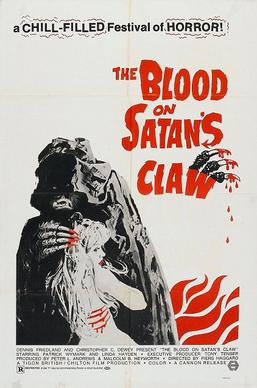
In my book Holy Horror I limited my discussion to fairly widely available and well-known films.  Part of the reason for this is that nobody can watch all horror movies and for those of us who work, there’s just limited time.  All of the films are at least American co-produced, most of them American productions.  The one exception to that is The Wicker Man.  I couldn’t bear to leave that particular movie out.  I didn’t realize at the time that it was classified as the newly coined “folk horror.”  Another film, released two years earlier was the strangely titled The Blood on Satan’s Claw.  It’s a strange but competent British horror film that has an eighteenth-century village falling prey to a demon that is accidentally plowed up in a field.

It is a film that could’ve been included in Holy Horror.  Indeed, the Bible appears in it and one of the adult characters is the local curate.  As the children are succumbing to a Satanism that’s raising a demon, he tries to teach them their Bible lessons.  Like Village of the Damned, the horror here centers on the children.  Flaunting the reverend’s rules, they play in the woods, raising the Devil.  Almost literally.  The demon they summon is called Behemoth.  Perhaps surprisingly, the judge actually saves the day in this one.  At first he’s convinced that the age of superstition is over and insists that it not be brought back.  He learns, however, that the demon is real and deals with it by rather physical means.  Who is Behemoth?

The word translates rather literally to “beasts.”  In the book of Job Behemoth is the land-bound companion to Leviathan, the two monsters that God cites to demonstrate his superiority over mere mortals.  As time wore on into the middle ages Behemoth and Leviathan were recast as demons, although it’s pretty clear that the book of Job doesn’t present them that way.  One of the points I make in Nightmares with the Bible is that demons aren’t fully formed beings in the ancient imagination.  Since the Bible says so little about them, ideas were drawn from folklore and other sources to flesh out these somewhat amorphous entities.  Descriptions of The Blood on Satan’s Claw quite often state that the children of the village are possessed.  If so, it is quite a different form of possession than will become standard two years later with the release of The Exorcist.  It is fitting, I suppose, for folk horror to have a folk demon for its antagonist.


Conflicting Kingdoms

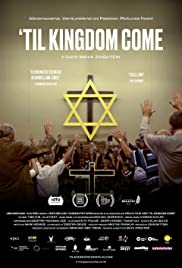
There is reason to be afraid.  Yes, I watch horror but the reason I suggest being afraid is because of a documentary titled ’Til Kingdom Come.  Directed by Maya Zinshtein, the film examines Christian evangelical support for Israel.  Primarily set in Binghamton, Kentucky, the interviews indicate a number of frightening implications.  One, that support for Jews is based on a “convert or die” model.  These evangelicals have the end times mapped out and believe the Bible is a fortune-telling book par excellence.  This doesn’t surprise me since I grew up with some of those very same charts and timelines.  It doesn’t surprise, but it scares.  These true believers never reflect or question their beliefs and this leads them to an emotional coldness that is antithetical to the sympathy Jesus preached.

A second fear factor here is just how organized and just how good at raising money the various Israeli lobbies are.  When evangelicals are elected to congress, these groups have open doors in Washington.  Those shown in the documentary are unfailing in their flattery of Trump.  The Jewish groups are clearly using the Christians to push and anti-Palestinian agenda while the evangelicals, for their part, are using the Jews to force God’s hand in sending Jesus back to end the world.  Under the Trump administration we were nearly pushed to the brink by elected officials who fervently pray for the end of the world.  This should keep any sane person up at night.

The beliefs of these evangelical groups have evolved to the point of not being recognizable as anything Jesus taught.  The conservative social agenda has been mistaken for the Gospel and these groups despise anyone who approaches the Bible to learn what it actually says.  Again, having grown up with this viewpoint none of it comes as a surprise.  I know it’s possible for people to grow out of it.  Watching overweight televangelists stirring up massive crowds to donate to a gospel of hate is nevertheless troubling.  Early on one of the pastors admits that they indoctrinate their children.  He sees no problem with that, although he seems embarrassed to have been caught saying it on film.  One lone mainline pastor, a Palestinian resident of Bethlehem, speaks out against this distortion of the Christian message.  One of the evangelicals walks away from a conversation with him and his heartfelt sympathy for his fellow Palestinians only to say the pastor’s theology is anti-Semitic.  ’Til Kingdom Come is a disturbing documentary.  I think I’ll watch a horror film to calm down.


Museum Time

It was a very strange feeling.  Wearing masks, yes, and socially distancing, we went to a museum.  Casting my mind back, I can’t recall the last time I was in a museum.  On a family visit to Ithaca we decided to go to The Museum of the Earth.  Ithaca is a small town, and this is a small museum, nevertheless the first place Google (or Ecosia) brought up for fossil identification was The Museum of the Earth.  On Saturdays a paleontologist is on hand to help identify the traces of life from millions of years ago that lie scattered around for anyone to pick up.  Collecting fossils has a treasure-hunting vibe to it, and it’s great to find anything beyond the usual, ubiquitous sea shell imprints.  Don’t get me wrong—I love sea shells with their symmetry and flowing lines.  Some of them even look like angel wings.  But there’s a draw to the unusual.

Some time back I’d found a fossil in the Ithaca area that I couldn’t identify.  It was Saturday, and we’d all received at least our first vaccination.  And I had to wait in line to get an identification.  It was cheering to see so many people—with limited, timed entry—coming to a museum.  The specialist confirmed this to be an interesting fossil.  She identified it as a bryozoan, ancient animals related to coral.  This one, she suggested, based on the age of rocks in this area, was likely Devonian.  The age of fishes.  I was glad I hadn’t wasted her time, and I was glad to have an expert eye on something that, let’s be honest, often functions like pareidolia to the laity.

Years ago I took my daughter to an open house day at the geology department at the University of Wisconsin in Madison.  If it weren’t for the calculus requirements (and I even tried to teach myself calculus because of it), I was seriously considering going back to school to study geology.  There is an organic connection between biblical scholars interested in the first eleven chapters of Genesis and paleontology.  I get too busy, it seems, to go down to the local creek to look for fossils.  Perhaps it’s for the best because our house would be full of rocks (even more than it already is).  The earth is a great museum.  Even so, it felt like an alien activity, late in this pandemic, to remember what it’s like to explore these treasures indoors, with strangers.  It felt as if time was actually progressing.


Bible, or Not?

Chosenness comes with a price.  Everyone, it seems, wants to feel special.  One way to ensure that feeling is to believe that you were specially chosen by God to fill a pre-ordained mission on earth.  Since such views are always human views there will be inevitable conflict when another group thinks itself the truly chosen one.  The process goes on and on with history laying waste one claim after another, but belief continues on just the same.  America is a young country, at least compared to much of the world.  Those who “govern” it (originally invaders) felt they were on a mission from God.  Believing themselves the “new Israel” they felt a Calvinistic faith was the only true one.  The people who put the government together were largely deists who’d left that thinking behind.

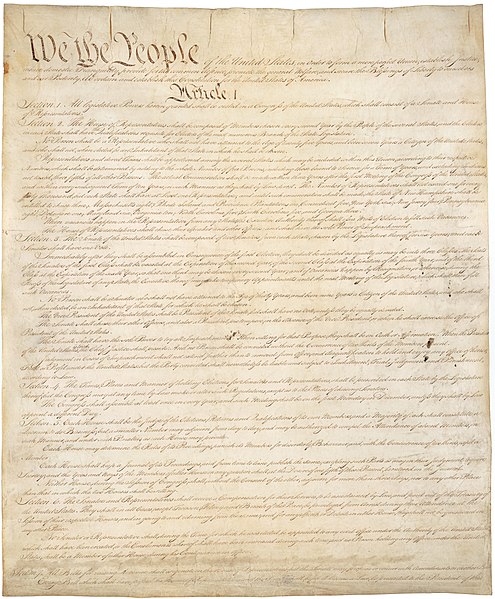
A recent story in the Washington Post cites such concerns with the God Bless the USA Bible, on sale in September.  This particular Bible is bound together with the US Constitution.  The reason people are concerned is a valid one—whenever something is bound with the Bible a significant number of people can’t tell the Bible from the other content.  Believing the Bible to be magically revealed by God, the entire content between the covers becomes sacred revelation.  Putting a secular document like the Constitution in there suggests to some (perhaps many) that said Constitution belongs to the canon of Scripture.  It’s a real enough concern, as easily attested by any who teach the Bible.  Even college-level students don’t know what’s Bible and what’s commentary.

Photo credit: U.S. National Archives and Records Administration, via Wikimedia Commons

Both the Good Book and the Constitution are documents in the public domain.  You can do with them what you please.  You could bind the King James Bible together with Moby-Dick if you wanted to, and if you wanted to make a long book even longer.  The price is confusion among those who can’t really tell the difference.  Many of the more evangelical stripe say “I don’t interpret the Bible, I just read it.”   Putting aside that reading is interpretation, the problem becomes clear.  That which is bound together in one book is one book.  After all, The Book of Mormon mentions Jesus in America.  The hazy view that many readers have of what’s actually in the Bible makes it dangerous to put other documents together with it.  The problem becomes clear when a nation believes itself chosen.  Chosen for dominion, it look to a specific book in support of that idea.  Even if it doesn’t know much about what that book actually says.


Electronic Ritual

Religion and horror go naturally together.  Perhaps that’s something I instinctively knew as a child, or perhaps it’s something only mature eyes see.  It’s clearly true, however.  While reading about The Wicker Man lately I felt compelled to read David Pinner’s 1967 novel Ritual, upon which the movie is loosely based.  In many cases it is better to read the book before seeing the film.  In other cases the movie ends up being the superior project.  I had to keep on reminding myself as I read the novel that it couldn’t be measured against a superior vision of what it could have been.  Having written seven novels myself (all unpublished) I hope that I have a sense of the process.  Unless you’re into the commercial side of things you don’t write for the movie potential—you have a story to share and this is your way of telling it.

The novel isn’t bad.  It’s written in a punchy style that I don’t really enjoy, but the story drew me in.  It almost wasn’t to be.  Like many novels of this era, print copies are difficult to find.  Those available on used book websites, or even on Amazon, probably because of rights agreements, sell for over $200.  That’s a bit much, considering that over two dollars per page is excessive for a novel.  I finally had to cave and get a Kindle version.  I don’t have a Kindle, but I have the software on my computer.  Reading it again reminded me of how superior a print book is to an electronic one.  Reading ebooks tends to be faster but like eating snack food, doesn’t really satisfy you.  

At one point the navigation function stopped.  Confused, I couldn’t go any further in the story and wondered if I’d reached a sudden but unexpected end.  With a physical book I could’ve paged ahead to find out.  In this case, with the controls frozen with that obdurate computer attitude, I had to find another way to make the illusion of reading continue.  I eventually got it going again after clicking here and there, but reminded myself again that ebooks should only be the last resort.  As for the story itself, it was okay.  I read it as a parable about intolerant religion.  I’m not sure it was intended that way, but it certainly seems like a reasonable interpretation.  It ends differently than the movie does, so I won’t put any spoilers here in case you decide to spring $200 to get a used copy.


Ocean Day

Yesterday was World Oceans Day.  It’s probably a measure of how busy I’ve been that I missed it until well into the work day.  Environmental care is one of my major concerns—something that the majority of Americans share but which Republicans block at every chance they get.  The oceans are the largest part of our planet .  Viewed from certain angles, the globe has barely any land on it at all.  And yet, since we live on the dry part, we use the wet part as our dumping ground.  There is an entire island in the Pacific made of plastic refuse.  Big petroleum doesn’t want any alternatives offered even though plastic is one of the most toxic products we produce for other life on this planet.  Shouldn’t governments share the values of their people?

Born in the landlocked western part of Pennsylvania, I first saw the ocean when I moved to Boston.  It was almost so distracting that I couldn’t study.  Here was this seemingly endless expanse of water that we so poorly understand, the symbol of eternity and life itself, right before me.  It was while living on the coast that I came to read Moby-Dick.  I could spend hours on the rocky shoreline, gazing out toward the seas in wonder.  I’m not a sea-farer myself.  I have inner-ear problems and being on a ship for any length of time would likely lead to extreme discomfort.  I can imagine, however.  Eventually I would read Coleridge and Hemingway and understand that I was not the only one who felt this way about the seemingly endless water.

Some of my earliest literary memories involve Rachel Carson’s The Sea Around Us.  It’s another book that opened young, landlocked eyes to what our world really is.  The image of water eternally crashing onto the shore is a comforting one.  As Carson knew, we came from the water and we yearn for it still.  Life as we know it isn’t possible without our oceans.  Yet, having petty human needs for extreme wealth and a sense of power over others, we pollute these seas with oil and plastics and chemicals and figure it’ll be somebody else’s problem.  In reality, the problem belongs to all of us.  Plastic Island, as it’s now being called, is nearly three times the size of France.  It’s composed of 100 percent pollution.  The Great Pacific Garbage Patch is being considered by some the eighth continent.  World Oceans Day should never slip away unnoticed.


Picture This

For a writer with limited time, a blog seems like a good idea.  Years ago WordPress emerged as the premier site on which to host such a venture—it was free (but like all things in the tech revolution it would eventually start charging a subscription fee), easy to use, and friendly to your average Luddite.  Now that I’ve been doing this some dozen years you might think that coming up with daily topics is the difficult part.  Well, it is a challenge sometimes, I admit, but the hardest part is coming up with images.  Occasionally I have an image around which to base a post, but the fact is I’ve discovered several blogs because I was searching for an image.  So I started putting an image in each post.  So far, so good.

WordPress has evolved over the years.  It has become more and more commercial.  After so much space is filled on your site (I pay regular fees for both the space and for the domain name) you must upgrade.  The next upgrade available to me is “Business.”  This blog is purely an avocation.  Any writer who doesn’t offer online content these days, at least according to the marketers and publicists I know, will never write a break-through book.  From my own experience, agents won’t even touch you unless you’ve got a far larger following than mine (and I’ve been faithful for a dozen years).  Anyway, I don’t want to pay for a business plan, so I reuse a lot of images.  That is the most time-consuming part of posting on this blog. 

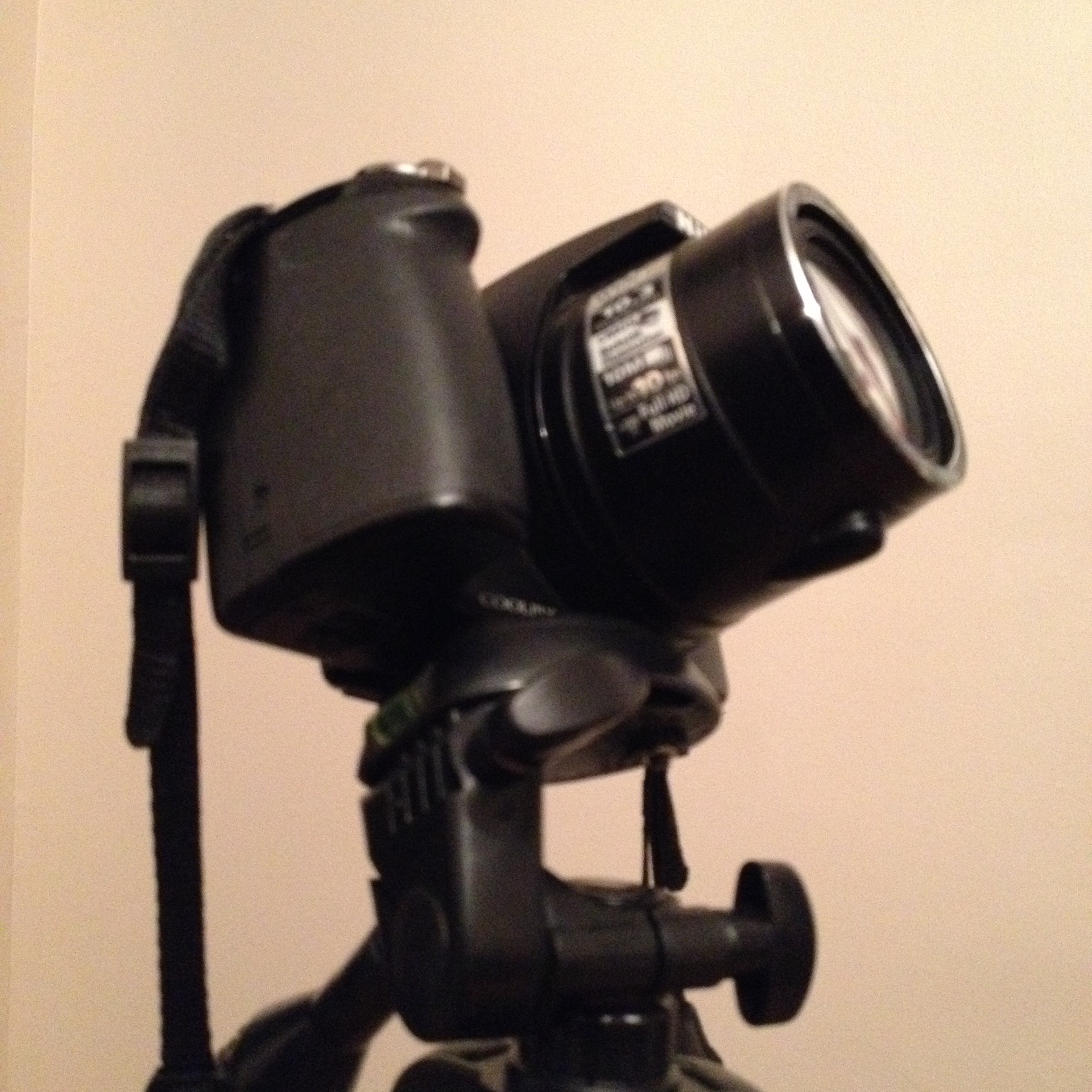
You see, I post each day immediately before work.  To search over twelve years of images is difficult on WordPress.  Many of my images are my own, and my phone names them “img” (which autocorrect wants to make “omg”).  Searching those in WordPress to find a specific image can easily take an hour.  Considering the time these pieces are posted, you get an idea of when I have to start.  Good thing I’m an early riser!  My relationship with technology is an uneasy one.  I appreciate content.  Producing it is an act of pure creativity and it’s important to me to do it every single day.  But work is non-negotiable.  Metrics apply.  Consequences for not meeting them can be significant.  Where is that image I thought would be perfect for the post I wrote?  I should’ve renamed them before using them.  But just this moment, work’s about to start.  Now, what am I going to use to illustrate this post?

Remember the early days?

Rolling with Nature

Even breakfast can be profound.  I’ve written before how our obsession with breakfast cereal was based one man’s religious conviction.  Now it’s widely accepted (whether true or not) that cereal is the healthiest way to start your day’s comestible experience.  Quite apart from that, it’s quick and easy and clean-up’s a snap.  The trick is finding healthy cereal.  Long ago I settled on a species of Shredded Wheat—the kind that comes in little squares.  Unadorned, it tastes fine and is more filling that a cereal puffed up with a lot of air.  (Breakfast is early for some early risers, and I need something to last until lunch.)  The Shredded Wheat model, however, benefits from extra flavor once in a while, so I try to blend in a different cereal (I experiment in the kitchen).  Lately it’s been Cheerios (originally named CheeriOats).

I’ve noted before that one of the fundamental issues with the tech revolution comes down to basic geometry.  The pixel is square but life on our planet is in the round.  You notice it everywhere natural.  Straight lines in nature are rare, but curves are everywhere.  This has practical implications while trying to pour two cereals at once (I told you I experiment).  The stolid, almost Episcopalian, Shredded Wheat does not pour easily.  It takes a bit of poking and prodding to get any action at all.  Cherrios, however, flow more naturally—more on the Pentecostal end of the scale.  As I mix my cereals in my pre-dawn laboratory, I began to understand something about life.  Square corners are superior for stacking and storing, but life wants to be round.  Organic even begins with an o.

The roundness of nature is everywhere evident: eyes, raindrops, plant stems in cross-section, even the great circular wind storms that blow across the surface of the globe.  Objects that are round roll and tumble easily.  Rough edges get eroded away.  The square is artificial, but useful.  It means that the pixel will never replicate the flow and ease of the organic.  Given the nature of pi, each circle is infinite, in one of nature’s greatest paradoxes.  We are the denizens of a spherical world.  Our planet shows us the way to exist upon it, in harmony with the other organic, circular beings.  I linger before I pour the oat milk.  A revelation before breakfast is never a bad thing.  It’s only too bad that after this, the rest of the day becomes artificial.


Pagan Perspective

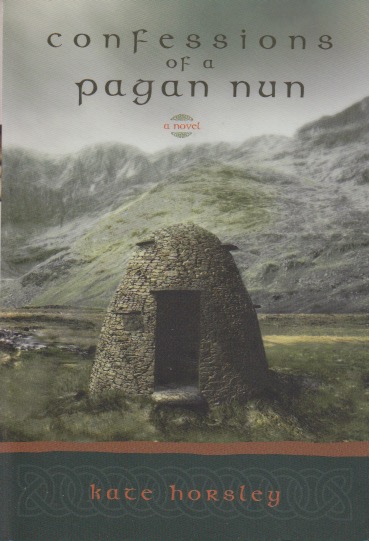
“I would live in a world of Christ-like humans, but not one full of Christians.”  So Kate Horsley’s protagonist Gwynneve writes in Confessions of a Pagan Nun.  This novel is an attempt to envision what life would’ve been like for a woman in medieval Ireland when Christianity came to the land.  Gwynneve is a spiritual seeker who comes to be a nun when it’s clear that this new religion has taken over the old ways.  Learning to write, she transcribes her story after hours in her clochan, or cell.  She recognizes that Christianity has brought good things to Ireland, but at a high cost.  The disparity between rich and poor increases, women are denigrated so that men can run things, and the land is ravaged for the benefit of their new way of living.

The novelty of the idea caught my attention when a friend pointed the book out to me.  I was a bit surprised to see that Shambhala, generally a nonfiction Buddhist press, had published the novel.  Since this is a story designed to make the reader think—it is contemplative, as a story from the point of view of a nun would likely be—the choice of publisher makes sense.  While it’s not likely that a book published there would make the New York Times bestseller list, as an erstwhile writer myself I can attest that novels outside the usual pale have great difficulty in getting mainstream publishers interested.  This too is a matter for contemplation.

One of the main themes of the story seems to be how a worshipper of the goddess Brigit has to become a devotee of St. Brigit when the church made the gods into saints.  This is something that happened historically as well as in novels.  Aware that it was easier to persuade individuals to convert to a new religion if they didn’t have to give up their gods, this seemed a small accommodation to make.  Horsley is not wrong, however, in pointing out that Christianity was not a free ride.  More than a religion, it was (and is) a powerful means for social control.  The vision it offers tends to benefit men over women, the wealthy over the poor, the powerful over the weak.  Despite what the Bible emphasizes, religion has its own conversion experience when it tastes power.  Confessions of a Pagan Nun is a story intended to shift perspectives.  The open reader will learn from contemplating its message.


Hybrids

Photo by Maria Lupan on Unsplash

Hybrids.  They’re everywhere these days.  From hybrid cars to the modified foods we eat, mixed forms seem to be in style.  I can’t think of myself as anything other than a hybrid.  A person not welcome in academia isn’t expected to research and write books, but I just can’t seem to help myself.  There a rare excitement in finding, and loving, a new idea.  Academic writing I can do without, but the writing up of ideas, that is intoxicating.  I’m afraid I can’t always share such things here since I don’t have release time for research and publication and it can take me considerable time to gather all my sources and write up the results.  Meanwhile I’m just a working stiff like anybody else.  A hybrid working stiff.

Describing the elation of a new idea is difficult.  Knowing that something nobody else has noticed before is coming into focus, and that someone might want to publish it is thrilling.  Okay, so many people find other things like sports or dangerous activities exciting.  That’s fine.  For me an afternoon in a museum or library can do it.  You see, after finishing a big project like a book, it’s normal for me to go through a slump.  People ask “what are you working on next?” and although I have many ideas racing along it can sometimes take up to a year before a front-runner emerges.  When it does, however, all bets are off.  Ideas like this can buoy my mood for days at a time.  Now if only I had a classroom to test them out.

I mentioned The Glass Menagerie the other day.  Plays can be, and often are, mirrors of reality.  In high school we had to read Arthur Miller’s Death of a Salesman.  Although that was approaching forty years ago I still remember our teaching pointing out the real tragedy was that Willy Loman had real skills that were evident to those who knew him.  Circumstances, however, had compelled him to become a salesman.  There is a difference between a job and a calling.  Callings, however, are no protection against an economy based on greed.  Perhaps we’re all being channeled into salesmen positions.  Even if that’s the case, however, we know what brings us our sense of meaning in life.  Although there’s no inherent reason that a person can’t research and write on their own, it can be a costly and time-consuming venture without institutional support.  But a hybrid does things a little bit differently.  And hybrids are everywhere these days.


Candid Camera

Early on in the pandemic, various meeting leaders—whether Zoom or Teams—asked participants to put on their cameras.  The point was that, missing seeing other people at the office, the video feed was psychologically reassuring.  I get that.  I began working remotely before the pandemic broke out and I’m still reeling from being ahead of the curve for once in my life.  Does it always feel this giddy?  In any case, we’ve got to the point where many people simply do not put on their cameras, even in small meetings.  Since we are trained for diversity we know that some people simply don’t want us to know how they look on a certain day (or perhaps how cluttered their background is).  And that’s perfectly fine.  It does make me think how artificial work in the office is.

At least you could see this kind.

You put yourself together a certain way to be seen by other people.  In fact, we sometimes even put “dress codes” together for work.  I even had an employer once say dress was “business casual,” only wrinkles were unacceptable.  I don’t iron my clothes, so I guess that particular employer was warning not to let them sit in the clothes basket too long after taking them from the dryer (or clothes line).  In any case, now that we’ve come to realize we may not always look our best, we have an option to leave the camera off.  How many days commuting into the office did we feel this way but were given no choice?  Since leaving academia I’ve never had an office at work.  I was a midlife cubicle denizen.  I never liked the idea. Who looks their best after getting out of bed at 3:00 a.m.?

Being on view isn’t the same as working productively.  The pandemic has also taught us that going into the office is often not necessary at all.  If they supply the tech, which we’d need anyway, we will do our work without Big Brother watching over us all the time.  We’ve become, it seems to me, more humane.  Turning the camera off is a way of perhaps admitting I didn’t sleep well last night.  Or something’s really bothering me and I don’t feel like smiling falsely.  Or any number of other things that might put us in the place of wanting some space.  For once now we have it.  It is my hope that once things start to get “back to normal” that we will have learned some lessons.  We can treat people more like humans want to be treated and still contribute to the bottom line.  It’s amazing how much people will do if they’re treated like human beings rather than cogs in the capitalist machine.


Whose DNA?

The name Francis Crick will forever be associated with the discovery of the double helix of the DNA molecule.  Indeed, he co-won a Nobel Prize for that particular insight.  Of course I didn’t learn about Crick when I was growing up—we weren’t an educated family.  I first learned about him in college when his book Of Molecules and Men was required reading for one of our religion classes.  This book is highly critical of religion, and Christianity in particular.  We read it not to assent to his logic, but rather to have it picked apart in class.  (Grove City was a conservative Christian college then, but less so than it is today.)  Although it has been over three decades since I’ve read it (I found my copy again when we moved three years ago) the sharp critique has remained.  Crick was a staunch materialist.

Image credit: brian0918, via Wikimedia Commons

Although I appreciated his contribution to science, I really didn’t have too much cause to think about Crick after that.  I’m not a geneticist and there are certainly a lot of people out there who make sharp criticisms against religion.  What brought Crick back to mind was when I recently read that he had later come to the conclusion that human DNA was too complex to have evolved by chance.  The piece I was reading used the unfortunate term “intelligent design” so I had to follow up.  Francis Crick hadn’t become a Fundamentalist, had he?  No, it turns out.  Crick had come to believe in “directed panspermia.”  Panspermia is the concept that life isn’t isolated on earth—it exists in space and was brought to our planet by space dust, or some such means.  The “directed” part was what caught my attention.

For a vocal critic of religion, Crick had come to believe that extraterrestrial intelligences had engineered at least human DNA.  This is of particular consequence because until recently the idea of extraterrestrial intelligent life was a laughing flashpoint among scientists and skeptics.  In fact, it’s still regularly labelled as “paranormal.”  I was surprised to learn that a scientist of Crick’s stature had come to this conclusion while being so utterly critical of religion.  Of course, views can change over a lifetime.  No one is born with all the correct knowledge.  It is interesting that Crick believed human DNA to require some outside intervention to become what it is.  Some religious believers share this outlook, but with quite a different origin source in mind.  It just seems to me that our collegiate discussion of his work seems to have been woefully incomplete.


Post-Literate?

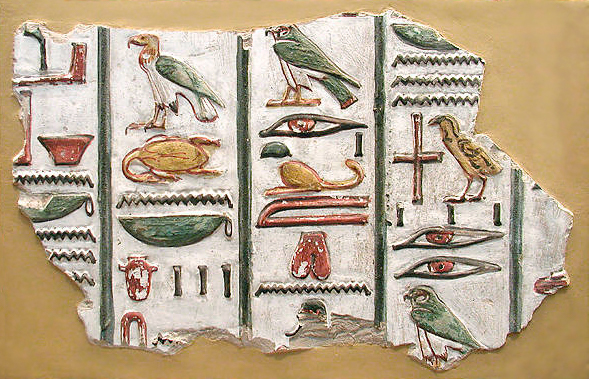
Who would’ve thought that publishing could be a scary industry in which to work?  Apart from the constant changes, that is.  Or maybe the changes are the reason it’s scary.  Our society has never been through a revolution quite like the tech revolution.  Yes, writing was pretty radical when it was invented, but it took millennia before literacy got to the point where it created widespread change.  Tech changes everything, and it does so very quickly.  Writing changes everything, but does so over the longue durée.  It began in a pretty humble way.  Crude drawings, called pictographs, came to represent things that mattered to pre-capitalists.  Take an ox head, for example.  It could represent the entire animal.  While some pictographs can be discerned in cuneiform (just as they can in some Chinese characters), the best example is perhaps Egyptian hieroglyphs.

Photo credit:: Jon Bodsworth, via Wikimedia Commons

Whether wedge-headed oxen or beautifully stylized hieroglyphs, both writing styles came to be representative for phonemes.  Egyptian and Mesopotamian writing tended to be syllabic rather than strictly alphabetic, and indeed, the invention of the alphabet made learning to write simpler.  Even after this innovation, however, it still took over a millennium before its practice became widespread.  Writing meant that ideas could be preserved beyond a lifetime.  Instructions and history could be recorded.  When a mistake was known and noted, remaking that error could be avoided.  (This seems to be a feature that has been lost to history, judging by recent fascist political parties.)  One of the great advantages to writing is the precision with which ideas could be expressed and preserved.

So how does this make publishing scary?  Some analysts are now claiming we are in a “post-literary” society.  Reading is no longer necessary.  We download visual content to gain the information we need.  When ideas need to be expressed in writing, we have emojis.  What happens, however, to synonyms when emojis take over?  Our humble ox head that eventually morphed into the capital A may now be represented by a stylized cow.  Or is it a bovine?  What does that cow image convey?  Books—novelties at the moment—are being written with emojis.  Learning to read is difficult.  It takes years and changes our brains.  Technology is encouraging us to become post-literate.  Even blogs are now becoming outdated.  Yet, looking at those emojis we see the history of writing moving in reverse.  From the precision of clear and accurate description to vague notions that look cool but leave us guessing otherwise.  Perhaps those ancient scribes scratching sketches into clay had it right to begin with.


Watching The Witch

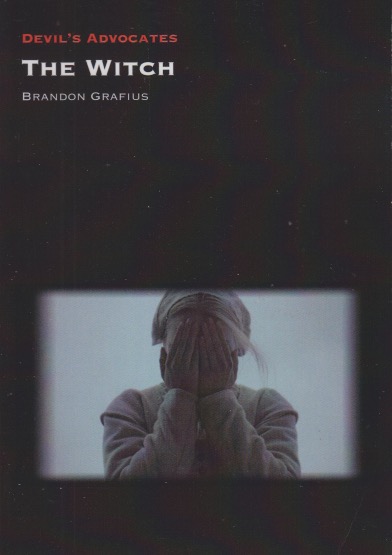
Good things often come in small packages.  I’ve read a couple of Brandon Grafius’ books before, and I’ve had The Witch on my reading list since I found out about it.  This is one of those books that benefits from knowing the raison d’être of the series of which it’s a part.  Devil’s Advocates is published by Auteur Publishing as a set of brief books on specific horror films.  If I didn’t have other financial obligations I could see myself purchasing the entire series.  Fortunately this volume was on a film I’ve seen (horror films have become so prolific that I can’t afford to see all of those I’d like either).  The Witch is a provocative movie, having gained critical acclaim as well as box office success.  It’s also a complex film.

Grafius ably takes us through the Puritan background that’s necessary to understand the social, and familial tensions that make this movie work.  Robert Eggers is a director known for his meticulous attention to period detail.  Even while weaving the fantastic into his stories, the plots are entirely believable.  Grafius has a solid grasp on how religion and horror interact.  That’s on full display here.  Looking at The Witch as an exploration of folk horror, he illustrates the importance of the landscape to the tale as well as how isolation sets a family off against one another.  The Puritan religion creates a monster, as it were.  Grafius doesn’t shy away from the misogyny behind the developing idea of the witch, either.  His explanations of—not excuses for—it are insightful.

Granted, horror films aren’t everyone’s cup of tea.  Or coffee.  As I sensed when writing Holy Horror, fans of the genre enjoy reading about it.  I often wonder why those of us who watch it do so.  In my case, in any way, it feels like a compulsion.  It’s a coping technique and perhaps an antidote to the headlines.  Horror can be an intensely creative and socially aware genre.  The best of it critiques the flaws of society.  As Grafius points out, Thomasin only wants to be a good girl.  The Puritan society into which she was born projects the image of the witch upon her.  Eggers gives us a real witch in the woods, of course.  Grafius explains how this becomes the aspiration of a young woman who’s only trying to do what’s right.  I have a feeling I’ll be going back to the Devil’s Advocates series again.