Thought Experiment

One benefit of aging is that hiccups become less common.  They were always a conversation starter when I was younger—someone you were on a date with, or a college buddy, would get the hiccups and you’d end up talking about how they got rid of them.  Generally it was some variation of taking a long drink of water, often with a twist (not a lemon twist, but some kind of alteration from normal drinking).  I did that myself.  My technique was simply a very long draught of water.  I eventually figured out that it was holding my breath as I drank that did the trick, so I started using the dry method, which was helpful when you didn’t have a glass of water handy.

People sometimes tell me I overthink things.  So with the hiccups.  Somewhere in Wisconsin—I don’t remember where, but we weren’t at home and I didn’t have any water in the car—I thought, if holding your breath gets rid of hiccups, you don’t need an external agent at all.  The point is rather to get your mind off the physical discomfort and it goes away.  If that’s true, you ought to be able to think the hiccups away.  I tried it and it worked.  I’m no physician, and I’m rather squeamish about many body things, but you can kind of feel what’s going on in your throat when you get the hiccups.  What I do now is concentrate on that and will it to stop.  It works unless I’m really distracted by something else I have to do.

Our minds can control quite a few of our bodily functions by concentration.  It’s sort of like mind over matter, I suppose, but I’ve noticed that when I can take the time to analyze something I can often think a physical annoyance away.  It’s difficult to ignore an itch, but if you can do it it often goes away.  Like everybody else I find my hand subconsciously scratching itches.  To invoke the power of concentration entails having to be able to think about it.  Our working lives are filled with the distraction that we call vocations.  Time to concentrate on how the world works quickly evaporates once they hand you that diploma.  We have things to do so that we can get paid, and some of us really can’t afford to retire.  Just think of the things we’d learn if we had the time to think away physical annoyances.


Haunted Landscapes

The Devil’s Advocates series consists of short books focused on a single horror film.  For horror fans they’re a great resource, as they will hopefully also be in teaching settings.  David Evans-Powell’s recent volume on The Blood on Satan’s Claw is a fine example of just how intelligent horror can be, and how it can be interpreted so.  This particular movie from the early seventies was never a major revenue earner, but that in itself is a lesson.  Influence, measured in smaller scales, can still create an impact on people’s lives.  Evans-Powell’s treatment takes several angles, each of which casts light on this unusual movie.  Reading this little book brought quite a few ideas to mind, both about social structures and religion.  The film is set in the early 18th century, with a city judge who is problematic actually saving the day.

Since The Blood on Satan’s Claw is folk horror, quite a bit of the discussion focuses on landscape.  Paying close attention to landscape reveals hidden information.  It becomes almost a character.  At the risk of too many spoilers, the film is about uncovering Satan—or a demon, it’s not terribly clear on the point—from a farm field.  As this evil character gains power the local children are drawn to him and the village authorities are unaware of what’s going on in the nearby woods.  Landscapes reveal and conceal as the creature gains power and the children engage in acts of violence.  The response of the judge is a violence of its own.  The movie doesn’t really deliver all that it promises in that regard, but Evans-Powell explains how the film was made and that, in turn, explains some of the rough edges.

Religion and horror go naturally together.  I suppose any film with “Satan” in the title will address religion somehow.  Not all horror is religious, of course, but many of our fears derive from religious subjects.  It’s almost as if as we ceased to fear the landscape—nature having been tamed to some degree—we began to find fear in religious thinking.  Put another way, religion has kept fear alive.  The Blood on Satan’s Claw was never a major, big-budget release.  Except for fans of British horror it has largely escaped notice.  Folk horror, because of its recent revival, brought interest back to some of these older efforts to explore such themes, many of them implying a religion hidden in the landscape.  This book provide a useful map in exploring that territory.


Religious Dinosaurs

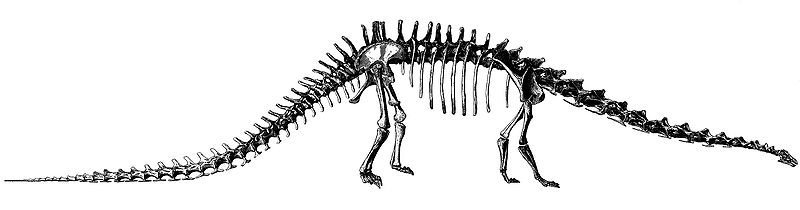
Dippy is, apparently, a common name for pet diplodocuses.  The statue of a diplodocus outside the Carnegie Museum in Pittsburgh is fondly known as “Dippy,” as is the fossilized remains of one such dinosaur from London’s Natural History Museum.  The London Dippy is on tour, or at least has been.  I learned about the fact that Dippy was in Norwich Cathedral just a day or so after the exhibit closed (I wouldn’t have been able to make it in any case; I mean I haven’t been able to get to the Pittsburgh Dippy and I live in the same state).  There are still plenty of photos on the cathedral’s website.  It’s a striking juxtaposition.  A massive stone building constructed to a medieval conception of God and one of the best examples of evolution, far older than the church on several orders of magnitude, peacefully coexisting.

John Bell Hatcher, public domain, via Wikimedia Commons

American evangelicalism has a much harder time accepting science.  I’ve been writing about change recently.  One of the changes in western thinking has been to move from the “I told you so” of clerics to the “I can show you evidence” of scientists.  Those who like others to tell them what to think have a difficult time letting go of medieval notions of the world—that it’s flat, and young, and about to end, as if God has a very limited imagination.  We now know that the world has been here far longer than one interpretation of the Bible posits, but that doesn’t make it any easier to have a conversation about it.  Many religions want to claim knowledge that can’t be questioned.  And yet, dinosaurs and cathedrals seem to mix well.

The assumption that those who think differently are evil, or are inspired by evil, is one of the most insidious children of monotheism.  With one God comes the idea of only one way to understand that deity and all other interpretations come from that divinity’s arch-enemy.  It’s a view of the world that struggles with change.  Historians, even those of us who focus on the history of religions, tend to take a long view. It’s possible to trace the development of ideas that have lead to the strange juxtapositions of our modern world.  Apologists so convinced of their interpretation of Genesis that they think the Bible wouldn’t have found dinosaurs worth remarking about, for example, and then cramming them on the ark.  Others, it seems, welcome dinosaurs into cathedrals.  Which is a better way to be humble before God?


Pop Culture

Something I was reading recently made me ponder how we become acquainted with culture, particularly pop culture.  I can really only speak for myself, but I know television had a lot to do with it.  We were a family of humble means and with three young boys to entertain, television often came to the rescue.  There were the usual Friday night Brady Bunch and Partridge Family lineup and Sunday’s Mutual of Omaha’s Wild Kingdom and perhaps Wonderful World of Disney duo.  Lots of other stuff got mixed in there, too, I’m sure.  I watched Dark Shadows after school and the original series of Star Trek. Gilligan’s Island was a big influence, as was Get Smart.  All of these have come back to me as an adult, and in some ways define my outlook.  It’s kind of scary, actually, the power television has.

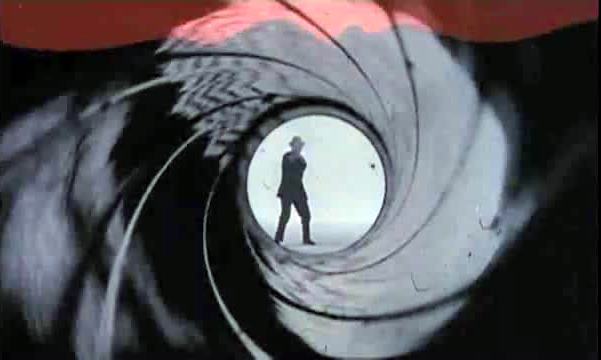
Specifically, however, I had recently read something mentioning James Bond.  How did I find James Bond?  It must’ve been on commercial television broadcasts of the Sean Connery movies, but I knew enough to pick up these titles at Goodwill when we went there on a Saturday, clothes shopping.  Always more interested in books than other things, I remember running my eyes over the spines in the book bins.  I quickly learned to recognize, and snap up, the Dark Shadows books.  I also somehow learned the canon of Ian Fleming James Bond novels.  Perhaps there were lists inside the cover of the paperbacks I bought.  Little boys and spies require no explanation, but how did I learn there were twelve Fleming novels?

From Dr. No trailer, Wikimedia Commons

Since the first film, Doctor No, came out the year I was born, I was a bit late to the party.  Still, as a child I recall being scandalized, and confused, by the sex scenes in the books.  I was after the spy action, not the “mushy stuff.”  Reading TV Guide like Holy Writ, I tried to make sure I could see the movies when they happened along.  In my mind there was one corresponding movie to a book.  Whoever got there first cast it in bronze.  I was offended on seeing Casino Royale for the first time.  It was a comedy.  And what was David Niven doing as 007?  And was that Peter Sellers in there too?  The Fundamentalist brain, it seems, understands only one way of doing things.  Growing up I spent entirely too much time watching television.  I shouldn’t be too harsh about it, however.  It’s likely how I came to know anything about popular culture, even if it was seen through the humble lens of the working poor.


Degrees of Separation

For some reason lost in the fog of weblandia, I get The New York Times, “The Morning” delivered to my email.  By carefully not clicking the links I can get my day’s worth of fear and paranoia for free.  Not all the news is bad, of course, and I’d be glad to pay if circumstances had been different.  After giving all the sorrow that’s fit to print, “The Morning” ends with an Arts and Ideas section.  By then I’m usually cradling my head in my hands but I look up to see the positive side of humanity.  The other day the article on the Metaverse included this line: “In its simplest form, the term — coined by Neal Stephenson in his 1992 novel ‘Snow Crash’ — describes an online universe that people can share together…” and I realized probably the closest I’ll ever get to the Gray Lady.

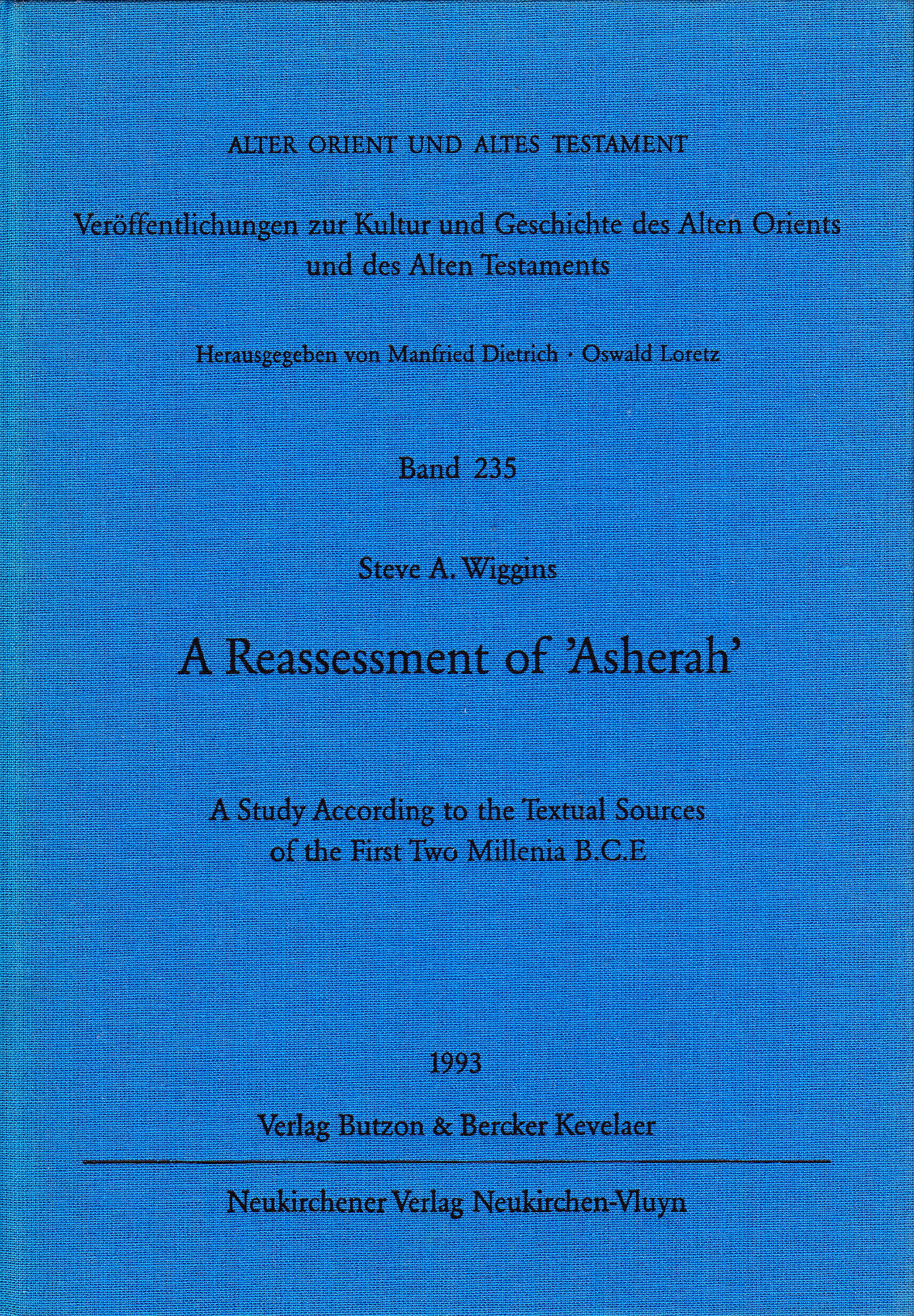
I am, as many of my regular readers know, Neal’s brother-in-law.  He mentions me in the acknowledgements to Snow Crash, something that was discovered by someone at work fairly recently, and which probably did more for my stature than my many long hours daily.  When it comes to degrees of separation, fate, I suppose, plays a role worthy of the Joker.  Neal hadn’t written Snow Crash yet when I met his sister.  Her somewhat unlikely friendship with me eventually led to our marriage and it was in the context of a family gathering that the conversation Neal mentions in Snow Crash took place.  Outside publishing, and in particular academic publishing, acknowledgements are seldom read.  I always read them, though, looking for unusual connections.  I’m often rewarded for doing so.

Asherah was, unbeknownst to me at the time, undergoing a resurgence of interest.  My Edinburgh dissertation was published the same year as a more prominent one by Cambridge University Press.  Just a year later, another came out.  Then another.  The internet was really an infant in those days and we learned of such things through printed resources and printed resources are always in arrears by months, if not years.  Of the many Asherah books mine had the distinction of being the most expensive.  Some things never change, I guess.  Suffice it to say, Asherah was on my mind as Neal and I drove to the store to pick up some baby supplies.  I had nothing to do with his coining the word or idea “Metaverse”—he’d already worked that out.  It was Asherah that ended up in the novel.  I was on my way to a short-lived romance with academia at the time.  Family, however, is so much more than degrees of separation.


Walking Bear

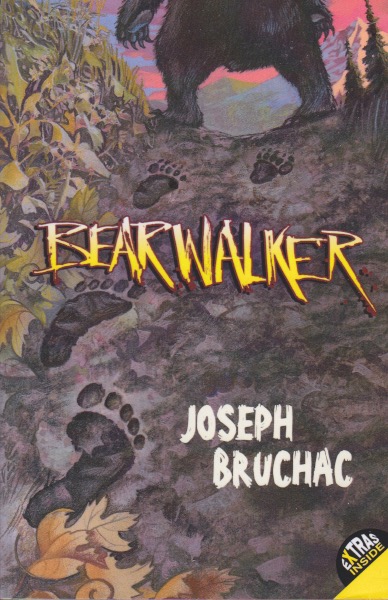
Indigenous peoples have been on my mind over the past several months.  Indeed, I read books by American Indian authors with awe.  In this darkening time of the year the Indian monsters join those of European descent in my imagination.  The wendigo has become somewhat popular in recent years but the bearwalk, or bearwalker, remains obscure.  Although a novel for young readers, Joseph Bruchac’s Bearwalker is a genuine horror story and the author is of American Indian descent.  It took someone giving it to me as a present (mainly because it was for young readers) to get me to pick it up.  I’m glad I did.

As might be expected for young readers there’s some blood but not gratuitous violence.  There are skillful twists in the novel and Bruchac knows how to put his protagonist on a cliff, as the old adage goes, then throw stones at him.  In this case, Baron, a thirteen-year-old Mohawk boy, is tormented by the bullies at his school.  Befriended by a respected teacher, he attends a three-day camping trip to the Adirondacks where a family dispute has led to a plan to terrorize the camp and force its sale.  The plan is to make it the scene of a mass murder with the school children present.  It’s here that Baron is able to demonstrate his worth to his classmates by escaping from the would-be killers and bringing help.

Throughout the story bears feature.  There’s some question as to whether there is a real bearwalker present, but the idea is there.  As with literature for young readers there’s some protective layering—no sex or strong language, for instance—but violence, at least in intent, is clearly there.  It is a very good story with suspense and excitement enough to keep even an adult horror fan going.  The main reason I’d had my eye on the book was to learn how the bearwalker might appear in it.  And also to see the story told from a First Nations’ point of view.  Like Baron in the story, American Indians I read aren’t aggressively angry about the way their people have been treated (which they certainly have a right to be).  There’s nevertheless a sadness and inevitability there.  Still, there’s also a pride in being part of an ancient and surviving culture.  There’s also quite a bit of symbolism in the story; Baron’s parents both proudly serve in the military, despite what the nation has done to their people.  And more subtle indications occur here and there that mainly adults would notice.  Although for young readers this is a real horror story, but one with a conscience.


Sky Dwellers

If the atmosphere’s an ocean, we’re all bottom-dwellers.  Ancient peoples populated the sky above with incorporeal beings, starting with a god, or gods, at the top.  Beneath that great being were other, for lack of a better term, spiritual beings.  Angels, etc.  Eventually, the lower you got in the sky, the heavier bodies became until those of us bound to our planet by gravity (for which they had no concept) were pretty much stuck on earth.  Although this may not seem like it, it was an early form of scientific thinking.  Birds fly.  The first thing you notice upon lifting a bird, is how light it is.  (Bird lifting may be rare to those of us in modern times, keeping the wonder intact when we actually encounter it.  I was once handed an owl-hawk or some such raptor, at a street vendor stand at Stratford-upon-Avon.  As the handler slipped the glove on and asked me to hold my hand out, I prepared for like a five-pound bag of flour.  Instead I could barely tell that the bird, larger than a bag of flour, was even there.  “Light, isn’t he?” the vendor asked.)

Back to science.  If birds, which are light, can fly in the air—some at great heights—it must be that sky-dwelling beings are lighter.  Lighter than birds.  In the Middle Ages, in Europe, this proto-scientific thinking was applied to theology.   Monastics and scholastics tried to determine what exactly spiritual bodies were made of.  Keep in mind that their world consisted of a basically flat earth with a very large dome over it.  That dome had layers—the sun and moon lived in one, the stars lived in one, and then spiritual beings all the way up to God (since monotheism reigned by then).  Stories of angels and demons mating with humans circulated.  How was that possible if they were pure spirit?

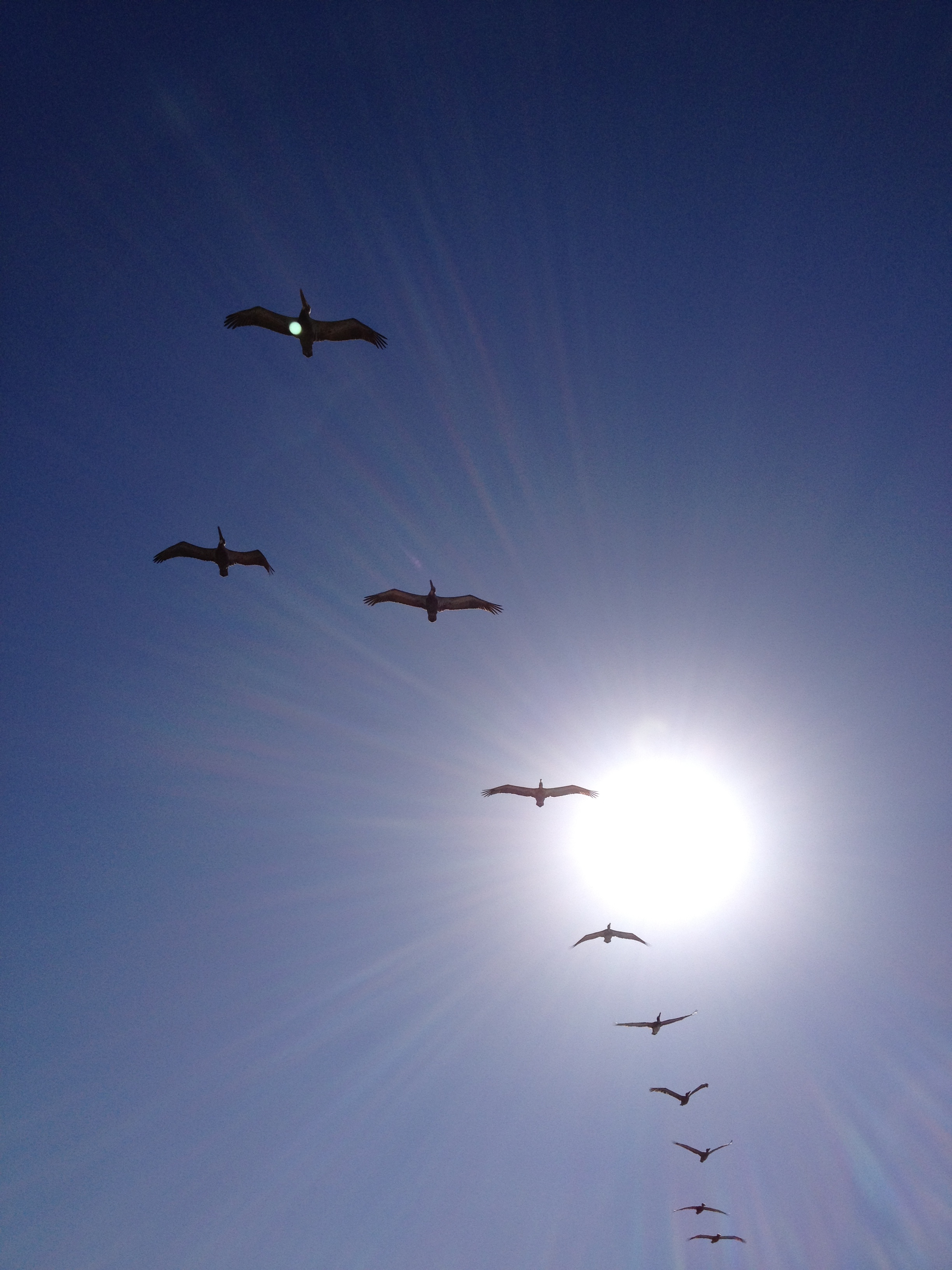
It stands to reason that clouds also inhabit the skies.  It doesn’t take much of a scientist to associate heavy clouds with rain.  Logic suggests clouds are made of water.  Perhaps then spiritual bodies were some kind of vapor.  Lighter than air they inhabited realms far above the clouds.  They descend by gaining weight, perhaps like clouds.  These otherwise ethereal beings would be unknown to us, they dwell so high.  They have to come down to deal with us.  There may be realms even lower, but if the atmosphere’s an ocean, early science suggests, we are indeed bottom dwellers.


Everything’s a Nail

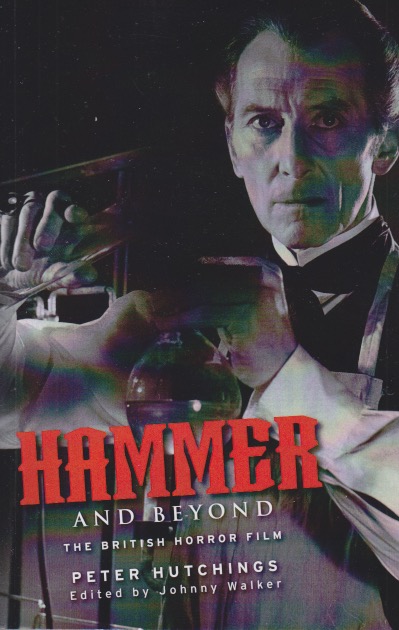
Taking my first, tentative steps into horror analysis, I had read a great many monographs on the subject.  I had watched many horror films over the years, but since my family has no love of the genre, and since habitually under-employed I can’t afford to pay for many, my quota is fairly modest.  I’ve missed out on many.  When I could afford it, I started out with either movies I’d heard of when younger but had never watched, or packs of ultra-cheap B (C or D maybe) movies that nobody has ever heard of.  As I lamented recently, British films were rare—Hammer, which held the English reputation for horror, was the undiscovered country.  Then I saw that Peter Hutchings’ Hammer and Beyond: The British Horror Film had come out in a second edition.  (The new edition contains three of Hutchings’ other articles as well as the original text.)  I had to read it.

Although I’ve not seen many of the movies discussed in the book (again, access issues) it was fascinating nonetheless.  Hutchings considers the elements of gender and Britishness in his readings of the films and there’s quite a lot there.  Horror is generally seen as a conservative genre (it tends to uphold typical social values) and for many Hammer and other films this meant that male prerogative was important.  Equally important, however, is that horror often disrupts this hierarchy.  There are strong, and even fatal, women here.  Horror embodies the acting out of the complex world of fear between women and men.  The study, as befitting a revised dissertation, is laid out chronologically for the most part.

Some readers of this blog have kindly pointed out ways to access Hammer films in the US.  Now all I need is the time.  I’ve been able to keep up with my reading, at least.  And this was a worthwhile book to read, even without having seen much Hammer.  It surprised me, however, that their list of classic horror wasn’t longer.  Having read about Hammer for many years,  I suspected their output was massive.  Instead it was mostly just impactful.  The essays following the main body of the book make the point that British horror was/is distinctive.  These days a lot of international cooperation takes place in the movie industry, and national cinema is becoming more global.  We could use a little less nationalism just about now.  So I’ll continue my quest for Hammer and try to make my way through the movies I really should add to my repertoire.  It’s a good book that can make you want to do that.


Ritual Time

Timeless, it is.  The internet I mean.  The ultimate 24/7.  No matter the time, day or night, it’s always here.  And that’s good because time’s about to change again.  Daylight Saving Time ends, for most of us, tonight.  Then a few short months later, it begins again, disrupting sleep, productivity, and good moods.  As this story on NPR shows, it really no longer serves any purpose and there’s a great will to change it.  But then politicians get involved.  So nothing really happens about it and we yawn and stretch and wish we were asleep as we dutifully move the hands forward or back, hoping we remember the correct direction.  So it goes with tradition.  Religions are filled with actions whose meanings were lost long ago.  We do them because we’re told to.

This particular futility always makes me ponder critical thinking.  Autocrats and others who enjoy authority don’t really encourage it.  Who wants the masses thinking “why am I doing this pointless thing?  Why can’t I do something that makes sense?”  I suspect that’s behind a lot of the decline in mainstream Christianity.  People are busy, frantic, and worried about getting everything done.  Why take an entire Sunday morning (and it takes all morning) of the precious two free days afforded on the weekend, and spend it doing something the same old way?  Religions, we as students learn, are inherently conservative.  Problem is the world outside is changing, and more and more rapidly.  Two day weekends seem hardly long enough and something’s gotta give.

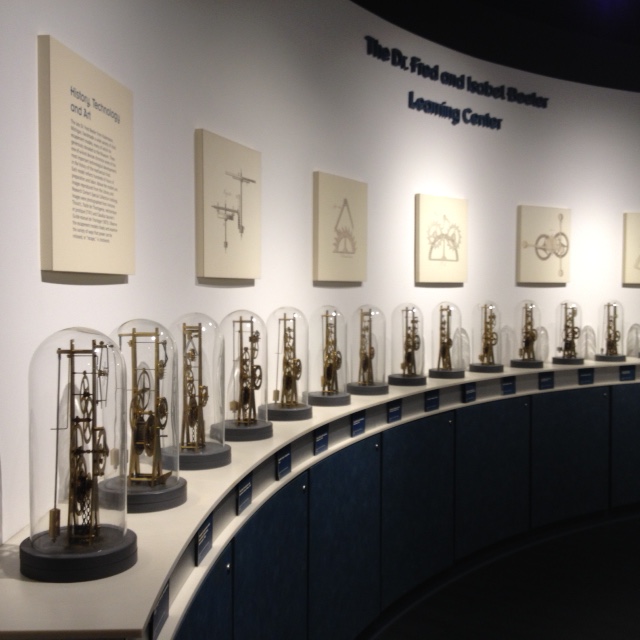
Time is something we are powerless to control.  Change, as long observed in east Asian religions, is the way of things.  Changing clocks then, only to change them back later, is an effort to control that which controls us.  Many of us, I suspect, approach this pointless ritual with a literal sense of weariness.  There are other things we’d rather be doing.  And many more that we’re compelled to do.  Is this some kind of spiritual lesson or simply an exercise in futility?  How do you tell the difference?  Ritual, in the best of circumstances, is comforting.  It reassures us that things are progressing according to some kind of universal plan.  Changing clocks creates a glitch in those plans.  Darkness is about to get more aggressive for the next few months.  Politicians bungle around in the darkness too, powerless to alter that which we do, for once, have the ability to change for the better.


Horror Week

“Remember, remember, the fifth of November,” the old rhyme goes.  Earlier this week I advocated for Halloween being the start of the holiday season.  There’s been a lot going on this week and I’m now reflecting on how Halloween also took some of its identity from Guy Fawkes Day (or more properly Guy Fawkes Night), here on November fifth.  Halloween, as we know it, incorporates traditions from Samhain (actually November 1), All Souls Day (November 2), as well as Guy Fawkes (November 5).  All the while the Hispanic world is observing Dia de los Muertos, a multi-day holiday whose origins are somewhat uncertain but which shares similarities with Halloween.  In other words, it’s a veritable week of spookiness to get our November started off right.

Ironically, at least in corporate America, none of these are work-free holidays.  For the Celts Samhain was the most important day of the year.  A day when the dead might wander into our realm or we might stumble into theirs.  For the modern person it’s a day of checking email, making deals, trading and evaluating how well we did at it.  Pretty mundane stuff.  The message of all of these holidays is that there are matters of deeper import going on.  We should perhaps look up from our monitors and see.  Just as that veil between the living and dead thins at this time of year, so does that line between work and personal life, when our laptops are as omnipresent as a haunting deity set to keep our minds on the sin of not working.  

Guy Fawkes is about rebellion.  More specifically, putting down rebellion.  Keeping the status quo.  Halloween and its siblings are all about challenging the way things are usually done.  I often wonder what it would be like if people took it seriously.  The costumes are fun, yes, and the trick-or-treating, but there’s something more serious underneath.  Perhaps symbolically we pretty much ignore All Saints to Guy Fawkes, or Dia de los Muertos as pleasant diversions.  There’s some spiritual heavy lifting going on behind the scenes, however.  It’s not all about fun and games, because fear is always with us.  We know there are problems but it’s more comfortable keeping things as they are.  Guy Fawkes, perhaps for a cause we see as obsolete—restoring a Catholic monarchy—was trying to change things for the better.  What’s more, his motivation was religious.  There are spooky parallels here, even today.  It might be good to take a day off work to ponder the implications.


Story Time

Why am I so nervous about this?  I’ve done it hundreds of times.  Perhaps it’s because it’s a public place in a pandemic.  Maybe it’s because I’ve never used this particular branch before.  Or the thought of all the people having touched this book ahead of me, leaving God knows what germs on it.  I would’ve never made it through my years of higher education, let alone fatherhood, without having gone to the library.  This is the first time I’ve used this one and I’m not sure what I’m looking for.  My Modern Mrs. Darcy reading challenge is complete but for one last category—a book checked out of the library.  So here I am, mask on face, standing fretfully outside the public library.  Nervously I note that it’s story hour.  My wife assured me libraries are never crowded.  Taking a deep breath, I go in.

The library is a fine institution.  A marker of civilization.  Perhaps I’m afraid of having to take care of somebody else’s book for three weeks.  Maybe it’s because I’m an embarrassingly slow reader and these books all look so big to me.  I’ve fallen into the habit of buying (generally used) the books I need.  We’ve donated quite a few to the little free library across the way, passing it forward, as they say.  Still, it is good to be in here with all of these books.  Even though pangs of guilt come, knowing that the yard requires attention.  And I’ve gotta get that squirrel out of the garage.  But there’s now a book in my hand.  I can go someplace else.

I can’t image a world without books.  A world like Star Wars where nobody reads and everyone lives in a Campbellian fantasy where good overcomes evil.  Our world is more Republican than that.  It would be a better place if people read more.  Maybe let the grass go just a little bit longer.  It’s not going to be the end of the world.  Reading may give crucial insights.  It may even help you to be a better person.  Stepping out into the autumn air I have a book in my hand.  It’s one I’ve never heard of, but one that I’m excited to read.  The library wasn’t crowded.  The children were in a separate room.  The leaves are changing and the breeze is fresh.  There’s a lot to do, I know.  But it is always worth the time to read a book.


Holiday Season

Halloween, in some ways, is the unofficial kick-off of the holiday season.  This was made clear to me when someone recently played the song “Soul Cake” in the context of Halloween.  I’d only ever heard the song in a Christmas context before, and a little research led to the discovery that asking for soul cakes originated as a Halloween custom (before it was called Halloween, even) but was considered appropriate anywhere from All Hallows through the twelve days of Christmas.  The common thread here is, of course, gift giving.  We tend to keep our holidays discrete for commercial reasons but there is a natural continuity from All Hallows Eve through what used to be known as Epiphany (now Insurrection Day).

Holidays help us prepare for things that we know are coming.  For the Celts, Samhain—which led to our Halloween—was the start of winter.  With no Daylight Saving Time to oppress them with the changing of their clocks and throwing everything off for weeks at a time, this was the dark part of the year.  Holidays are helpful in getting through times when natural light is lacking.  From Halloween you can almost see Thanksgiving.  At Thanksgiving we anticipate Christmas.  The winter solstice holidays see us through the shortest, darkest days of the year.  I’m no fan of capitalism, but as long as we’re stuck with it I wonder why we don’t advocate for Halloween as an official holiday.  The start of the holiday season.  In my local town the Christmas lights went up on November 1.

East and south Asian religions spend considerable energy teaching that change is the only permanent aspect of life.  Western cultures, on the other hand, focus on the status quo, the assumption that once something is established, it will, or should, remain as it is.  Time reminds us that change is constant.  We can allow entropy to win by sitting by and letting things fall apart, or we can try to build something useful to prevent a collapse.  Holidays change over time and over religions.  Halloween was a pre-Christian new year celebration.  From there it changed into a solemn holy day to remember saints and then the dead.  Incorporating aspects of Samhain and some customs such as soul cake begging and guising, it grew to a more fun celebration.  Now it’s a commercial occasion to rival Christmas.  The year is constantly changing.  Just when I start looking for my sweaters I see my light summer clothes haven’t yet been put away.  I look forward to Halloween as the start of the holiday season until we get past the longest night just before Yule.


What’s Poppin’?

“How are things in the world of finance?” Admiral Boom calls to a passing George Banks.  The bland answer of fine as everything is good with the pound sterling assures the seaman that everyone is doing their job properly.  This may be a throwaway scene from Mary Poppins, but it captures an anxiety I’ve been experiencing for some time now.  Admiral Boom doesn’t have to be an expert in finance—he knows that Banks and his ilk are taking care of that so that he can oversee his household, keeping it ship-shape.  With the shenanigans of the Republican Party, however, all of us—bankers, seafarers, editors, it doesn’t matter—have to become experts in politics.  Why?  Politicians can no longer be trusted to do their jobs.  Corruption is so rife that they saw no problem with Donald Trump (“How are things in the world of finance?”) being elected.

The internet has given people the idea that they know more than they do.  If you read enough you soon realize just how little you actually know, and that humility (note, Mr. Trump) is the only proper response.  Now we have people all jazzed on the idea that you can express your personal hatreds and be rude to others because, well, that’s what 45 did.  Now we all have to learn about what schemes (and they are schemes) the Republican Party is up to at all times to try actually to steal power.  Come on folks, gerrymandering is a blatant attempt to game the voting system, as is the retention of the electoral college.  And the filibuster.  

Sure, voters should be informed.  We are responsible for gathering facts, and not alternative facts, before we head to the polls.  Beyond that we used to be able to trust politicians to do their jobs.  Yes, there was always corruption—power inevitably leads to corruption—but there were checks and balances.  Those checks and balances are gone.  Now instead of keeping his house Bristol fashion, Admiral Boom must spend hours a day trying to sort out lies handed out like candy on Halloween, trying to figure out what is the truth and what is republicanism.  Don’t be listening for that boom on the dot anymore.  Mr. Binnacle is too busy trying to memorize the names of everyone running for the school board who are anti-masker, anti-vaxxers who stand for Trump and his original stolen election.  How are things in the world of finance?  How can we ever possibly know since we now all have to spend our time back in civics class?


Horror Show

The horror film history narrative runs something like this: although there had been some scary movies in the silent era, the term “horror” was first used to describe Universal’s 1931 release of Dracula and Frankenstein.  Some other studios got in on the action and creature features were a staple of US cinema until the fifties when they began to peter out.  By that point a UK horror industry took off, largely due to Hammer Studios.  While these Hammer offerings often remade the standard creature features, they also branched out into less commonly explored areas such as films set in contemporary times focused on the occult.  This phase faded in the sixties just as “modern horror” was taking off with classics like The Night of the Living Dead and Rosemary’s Baby.  Modern horror quickly grew.  Further divisions can of course be made, and the modern period has gone through several transformations as well.  It’s a rich coffer.

There’s a real problem with this, however, for those who might’ve missed a decade or two somewhere in there.  Many of the UK films are still not available in the US for anything like a fair price.  Part of the reason for this is copyright law, but another is apparently the ignoring of demand.  I saw maybe one Hammer film (on TV) growing up.  Saturday afternoon fair was more often American B movies like Zontar the Thing from Venus.  I’ve got a hankering to watch some of those Hammer films, but even in the 2020s they’re difficult to find.  Even with the internet.  Often the DVDs are (because of differing copyright laws) coded so they can’t be viewed in North America.  You can buy a player to see them, but when you think of the inevitability of streaming it hardly seems worth the cost.

Streaming might be the solution, but much of the Hammer oeuvre doesn’t stream in the US, at least not that I’ve found.  If I’m wrong please let me know in the comments!  You see, I spend time reading about horror and when you do this recommendations often arise.  Some Hammer classics are as expensive as the academic books that discuss them.  Is it possible to be a horror connoisseur?   And can you truly be a connoisseur without sampling what’s on offer overseas?  We tend to forget that the world is culturally divided by copyright laws.  If nobody’s watching the movie anymore what’s the harm in making it free?  If people do want to see it, why not sell it to them at industry standard price?  Even trying to watch horror, it seems, has become a horror show.

Photo by Michael Mouritz on Unsplash