Future Ministry

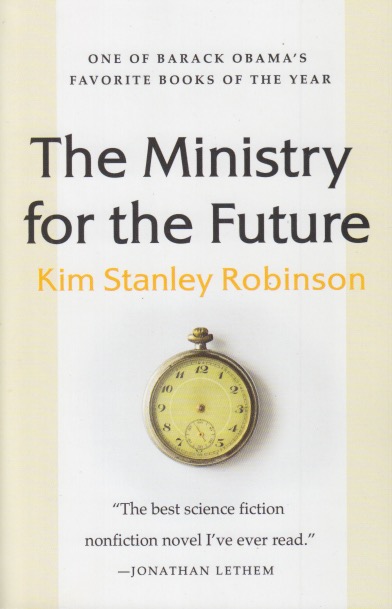
I’ve been on the Green Committee at work almost since I started the job.  Occasionally for Earth Day we’ll have a book discussion.  Usually it revolves around nonfiction books that my press publishes.  This year they selected Kim Stanley Robinson’s The Ministry for the Future.  It’s an environmentalism tale of what global warming may well be like and the political machinations it might take (and the millions of deaths along the way) before we stop burning carbon.  It’s a long and detailed and political story.  Robinson is known as an intellectual science fiction writer and there are sci-fi elements to the book, but its style is realist and its outlook, while ultimately hopeful, is staid.  Even when humans start to move in the right direction.  It’s also a very long book.

Reading it got me to thinking again of a somewhat bewildering truth: environmentalism books tend not to sell overly well and sustained reading, even by supporters, is difficult.  Many of us know that we’re beyond the tipping point for environmental disaster.  The Trump years assured us that it is coming.  One of the elements Robinson makes clear is just how politically entrenched it is.  Perhaps that’s one of the reasons for the despair.  The vast majority of people in the world want a more environmentally conscious government, but plutocracy tends to bring narcissists to the top and the needs of all others are less important.  In Robinson’s version of the story, targeted violence is the only thing that works.  Near the end of the story an interesting idea is raised: the Ministry of the Future (which is a government ministry, not the church kind) concludes a new religion is needed.

The masses of people, you see, are followers.  Religious leaders reinforce the idea that God told their founders—and by extension their followers—the only truth.  Their jobs (and ministries are jobs) include reinforcing those ideas to people who’ve been raised or converted to that particular brand of religion.  A number of New Religious Movements, and even a couple of prescient ancient religions, have been purposely constructed.  The trick is to get followers to accept that the religion is legitimate.  Most western religions around today have been based on the idea that humans can do whatever they want with the planet—even destroy it to force God to return.  I kind of like Robinson’s idea better.  Perhaps that’s why religions form around movies like Avatar.  Not a bad thought, when your job has you reading a sci-fi novel.  A religion saving the earth feels like a novel idea.

Going Green

It’s easy to get eager at this point in the year.  A month and a half after Groundhog Day, we’re at St. Patrick’s, and just a few days from the equinox itself.  Around these parts we’ve had some warm weather after last weekend’s bomb cyclone and most of the snow is now gone.  We’re ready for progress.  We’re tired of winter and huddling indoors.  The crocuses are defiantly open although the warning saying in Wisconsin went “three snows on the crocuses.”  St. Patrick’s green is the fecund green of spring.  Although nobody gets them off from work, the seasonal holidays are signs of hope.  It doesn’t matter which season into which we’re transitioning, there’s beauty ahead.  It’s the kind of change many people enjoy.

Look closely at a flower.  (If the crocuses aren’t up yet in your area they will be soon.)  Open and inviting, it offers insects what they need in return for a bit of cross-pollination.  Yesterday I saw my first wasp looking for a place to build a nest on our house, reminding me to be careful opening doors now because no transition is completely smooth.  Spring is hope in season form.  As much as we may appreciate winter with its pristine chill, spring reminds us that food is soon to be available from the bosom of the earth itself.  The songbirds, now back in force, have been eagerly anticipating it.  They are the heralds of transition, the little winged messengers of assurance.

Photo credit: Andreas F. Borchert, Wikicommons

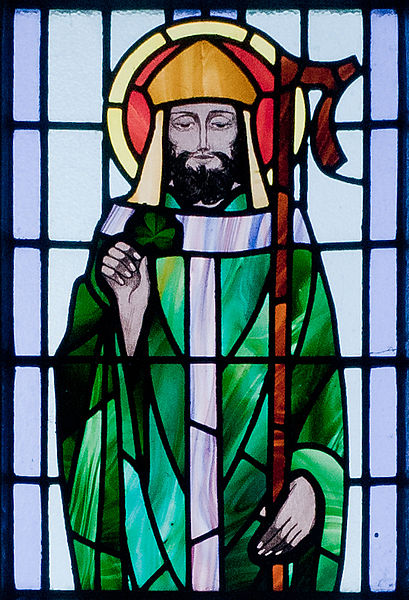
It’s time to step outside and breathe deeply.  The muddy smells of a thawing earth blend with the first fruity hints of buds beginning cautiously to open.  The transition’s not straightforward.  There will be setbacks and chills yet to come.  Nevertheless, the die is cast—St. Pat waves his clover as if to say “This is what lies ahead, as brown becomes green.” Our world tilts as it spins and brings us the delight of seasonal changes.  Saints and birds and flowers must agree on this, even should they differ on the details of what is needful.  It’s a day for celebration, even though it’s a Thursday, a work day with perhaps a respite—after hours of course—to have some fun.  Green is about to reappear.  We wear it today to encourage the timid plants, yes, we need hope.  We look around the world and know that hope is what we really all crave.  


Thinking, Critically

A woman—I don’t know her name—photobombed a Russian newscast with a sign telling the Russian people that they’re being lied to.  Detained by police, her whereabouts are unknown.  I admire that woman.  She may pay with her life  in her effort to encourage what is dear to every teacher everywhere: critical thinking.  Many of the world’s problems are the result of the dearth of critical thinking.  There’s no other way to explain the election of Trump and his main squeeze Vlad.  Thick as thieves, the saying goes.  I recently gave a talk to a small group about publishing.  One of the points I was making is that critical thinking is essential in getting to the truth.  Compare sources, use reason, and never trust a snake-oil salesman.

People vote with their feelings rather than with their rational faculties.  Trump openly admires Hitler, as Putin does Stalin.  These should be signs of warning to those who think critically.  The Second World War wasn’t even a century ago and we’ve apparently forgotten all the lessons it should’ve taught us.  In high school we were shown examples of propaganda and told how to avoid it. Now we see it and can’t recognize it at all. Critical thinking is often frowned upon in modern society.  Being comfortable with the status quo is perhaps valued higher than social justice and the necessary work to get us to where it might happen.  It’s easier to hate than to think.  It’s easier to follow than to question what you’re following.  Education teaches us survival skills, and among them are the ability to think through a situation.  Authoritarianism is seldom—I’m tempted to say “never”—the way to a good result.

Perhaps the saddest irony of all is that those who run outlets like Fox News (and its Russian equivalents) are thinking critically of ways to get followers not to.  Realizing that critical thinking will lead to a more fair and equitable world, they decide to keep their positions of privilege by discouraging their followers from engaging with the basic comparison of sources and weighing of facts.  Instead, promoting “alternative facts” and emotionally outraged rhetoric, they are able to stir up crowds to try to take over the government.  Conspiracy theories are easier to believe if you don’t know how to check facts for yourself.  And the internet has made us all experts on everything.  Russia’s narrative about the war is far from the reality on the ground.  Objective observers have seen what is really happening.  One heroic woman in Russia said enough is enough.  In all likelihood nobody in the world will ever see her again.


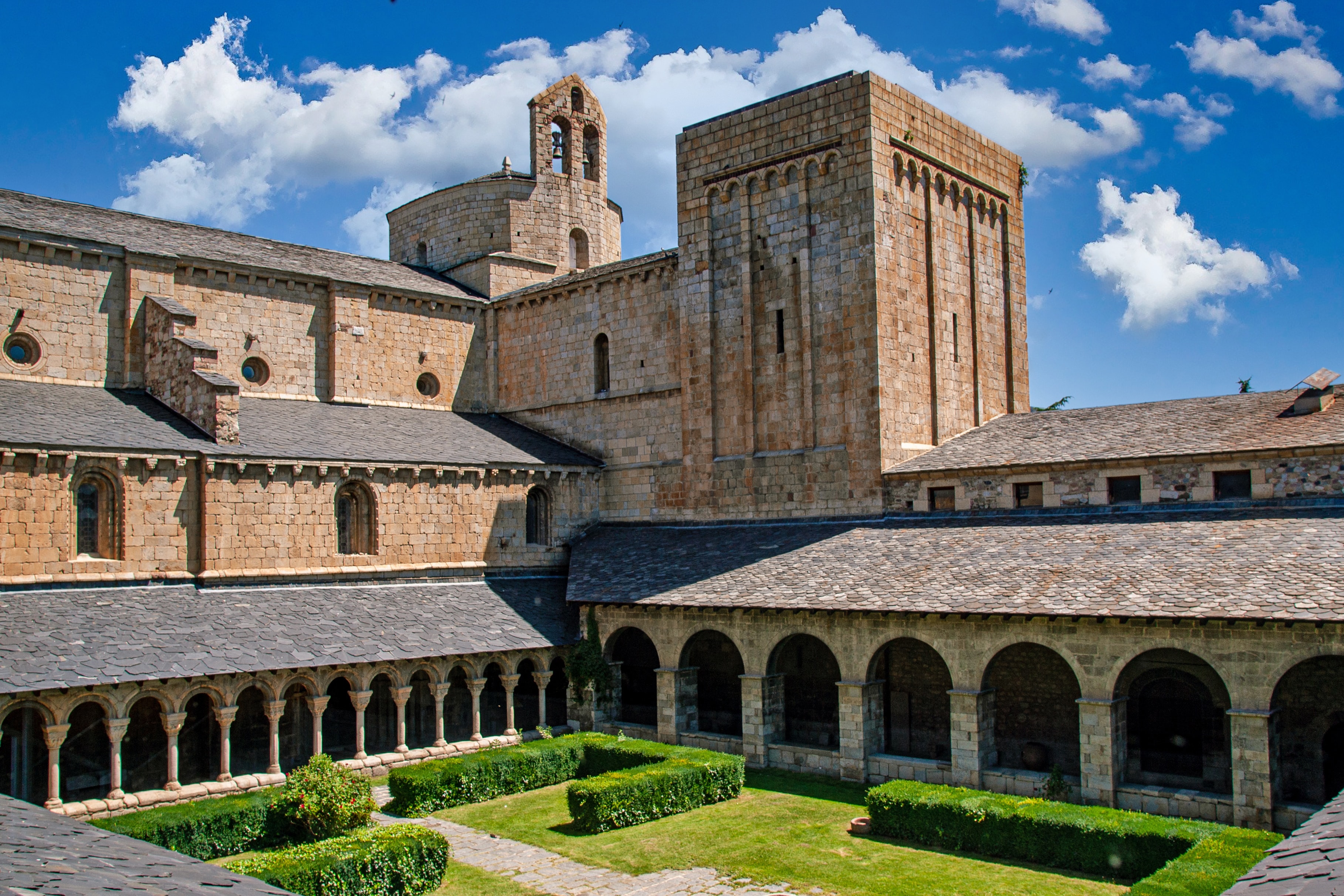
Monasticism

The other day I was reading about monasticism (as one does), and something curious occurred.  The article, which was describing a famous monastery, mentioned that monks lived in the convent.  Now, lest you think anything about religion is simple, I must clarify that in English it is common usage to refer to “monasteries”as places where monks (male) live.  Again, in English usage “convents”are for nuns (female).  The words, however, have a more interesting history than that.  Not exactly interchangeable (can you imagine the confusion?), they do originally refer to different kinds of institution.  

Often monasticism is traced back to Anthony of Egypt.  Anthony famously kept himself away from other people to devote his life to God.  This, of course, led other people to seek him out, wanting what he’d found.  Eventually, the narrative goes, the idea occurred that lots of guys could live together in common, but shut away from the rest of the world.  Thus monasteries were born.  The story’s actually more complicated and I can’t give you the full picture here.  We do know that even in Judaism, before Christianity came along, there were separatist sects.  One of them, known for convenience as “the Essenes,” set up a commune not far from where the Dead Sea Scrolls were discovered.  They lived lives of purity and prayer and women were strictly forbidden.  They seem even to have had a monastic rule.  They lived on the edge of the desert and perhaps were responsible for the famous scrolls.  Monasticism thus had early roots.

The European Middle Ages were the high-water mark for monasticism.  Like our own day, people were dealing with plagues and strong-arm kings and lack of adequate infrastructure.  Many powerful monasteries had been founded, and they could be for monks or nuns, generally not in mixed company.  There were also solitary monks (it was more difficult for women to wander about alone), called mendicants.  Such people needed places to stay now and again, and that was what was called a convent.  A monastery could be for either sex, and the word “nunnery”eventually helped to make this clear.  The English use of the words, while convenient, can lead to confusion because established monasteries could have convents as part of their design.  I suppose not many people are really interested in monasticism these days.  Looking at what’s happening in the world, however, I wonder if we might not be on the cusp of a modern replacement for them.  It would be something curious indeed.


D Evil

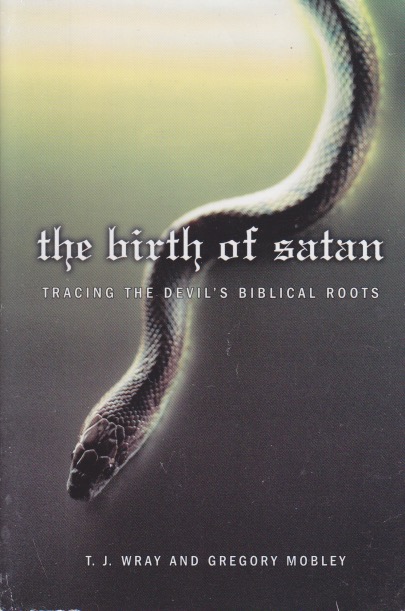
The Devil, they say, is in the details.  T. J. Wray and Gregory Mobley look into those details in The Birth of Satan: Tracing the Devil’s Biblical Roots.  It’s often a surprise to Christian readers that the Devil clearly evolves in the Bible.  From being virtually absent in the Hebrew section, he appears, almost full blown, in the New Testament.  This, of course, flies in the face of the idea that the truth was pretty much revealed from the beginning and that it’s consistent throughout.  The Devil in the details proves that it’s not.  The Bible has multiple suggestions of whence evil arises, God among them.  The Devil came to be one explanation of the origin of evil, but he’s not the only biblical one.

One of the things I found fascinating here, however, was that the authors often refer to popular culture to illustrate their point.  They particularly favor movies.  The authors are biblical scholars and it’s not at all unusual to find movie fans among them.  I suspect that since biblical scholars (apart from the linguists) specialize in stories it’s only natural that movies appeal.  They aren’t given extended discussion here, and indeed, a book about the Devil in the movies would be very thick if it attempted to be comprehensive.  Satan is a movie star.  Since he evolves into the embodiment of evil this is probably not surprising.  A good plot needs some evil in it, and one character in the western canon is the granddaddy of all evil.

Those looking for a fuller biography of the Prince of Evil may be disappointed that this book keeps to its remit—the biblical Satan.  There are, however, many more books about the Devil.  Maybe even more than movies in which he appears.  Scholars and laity both seem interested in this character.  He appears late on the scene, only within the last century or so of the biblical writing period.  His fullest portrait there is the highly symbolic book of Revelation.  And no matter what else you say about it, we can all admit Revelation is tricky to understand.  Since we take the Bible so seriously, one aspect of Satan that isn’t addressed here is his role as trickster.  Folkloric characters who cause chaos (which the Devil does) are often tricksters doing it for no particular reason.  We don’t know why the Devil is bad.  The Bible has no clear origin story for him, since he’s built up from several other cultures’ ideas of bad deities.  To sort it all out requires, well, the details.


Saving What?

It’s soul-tormenting.  For those who always awake in the dark, February starts to offer the hope of some early morning light.  It brings cheer and optimism into late winter.  We are awaking from the long night, only to be plunged back into darkness in an act of sheer, collective insanity.  For many weeks we’ll be tired all the time.  Less productive.  Automobile accidents will increase.  Finally, around mid-April, the early light will return.  Now please don’t misunderstand me.  I like Daylight Saving Time.  I see no logical reason, however, to set our clocks back in the fall.  What good does it do?  Gradual change is much easier on the human psyche, so why do we force a sudden shock to the system twice a year?  If the apocalypse ever actually happens it will be when we set our clocks forward.

Human hubris messes with time.  Many people simply accept the time shift as something we “have to do.” We don’t.  In the technological age there is no reason to continue what was initially a war-time effort to use light to increase production.  Hey, look, it didn’t prevent wars from happening.  All it causes are wicked huge yawns and their knock-on effects.  Time is a valuable commodity and yet we waste it twice annually, with abandon.  People as a group are a lethargic bunch.  The threat of war led the world to adopt a measure to shift light into the evening time, but for only part of the year.  Why not all the year?

When I commuted into New York City I often stood waiting for the bus in the dark.  Late February would come and some cheer at standing in the cold (there was no bus shelter) was possible with the faint streaks of dawn arriving before the bus, like the earth finally opening its sleepy eye.  March would come and I was once again in the dark.  Finally, about a month later the light would return.  Is it necessary to climb the same hill twice?  Can’t we just spring forward and leave it at that?  There will be lots of yawns at work tomorrow.  People will be careless while driving.  It may even lead to deaths.  There’s no reason to do this, but we keep on, as if it were some kind of divine command.  I’ve yet to meet one person—no wait, there was one—who thinks this system works.  Empty ritual is the worst kind.


Original Fly

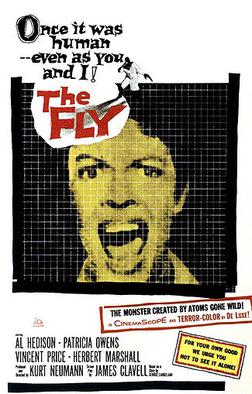
Thinking about it made me do it, I suppose.  Watch The Fly, that is.  This is a movie I grew up knowing about.  I knew the basic plot but somehow was never in the right place at the right time to see it.  Until now.  For a movie from 1958 it remains strangely affecting.  I was wondering whether religion would enter into it, and indeed, in a moment drawn from Frankenstein, André Delambre expresses that he knows what it feels like to be God.  No thunder to drown it out this time.  A short while later his wife Hélène asks him what he’s doing as he is relaxing in the back yard.  He says he’s looking at the sky, or maybe looking at God.  In the light of other mad scientist movies this is a somewhat self-aware moment.

The Fly is one of those movies that had great influence on popular culture.  Although critics at the time thought of it as a gross-out (they obviously had no idea what David Cronenberg would do!) it nevertheless managed to find its way into dialogue with other movies.  The correlation to Willie Wonka and the Chocolate Factory’s Mike Teevee’s scene is remarkably close.  (Adult’s who’ve read Roald Dahl and who’ve paid attention to the movie know that this is kid-friendly horror.)  I’m also pretty sure some of the writers from The X-Files knew The Fly as well.  The Fly, coming during the atomic age, is clearly a warning about using technology that we don’t understand.  Although the movie made a great return on investment for the time, the message still hasn’t been received.

In many ways The Fly set Vincent Price’s trajectory toward being a horror star.  After all, just two years earlier he’d been in The Ten Commandments.  Isn’t he another connection between religion and horror?  Although not the lead in The Fly, as André’s brother François, Price has the most philosophical line: “The search for the truth is the most important work in the whole world and the most dangerous.”  Like the warning about technology, this is a bit of information that might have usefully been heeded.  The political events of 2016 to 2020 demonstrated just how important the search for truth is (and demonstrated religion and horror).  Even with a partial fly brain, André Delambre destroys his notes after making Hélène promise never to reveal what happened.  The truth gets out, of course, leading to the observation behind many mad scientists’ ravings: what is really being sought is the rush of knowing what it feels like to be God. 


Lenten Friday

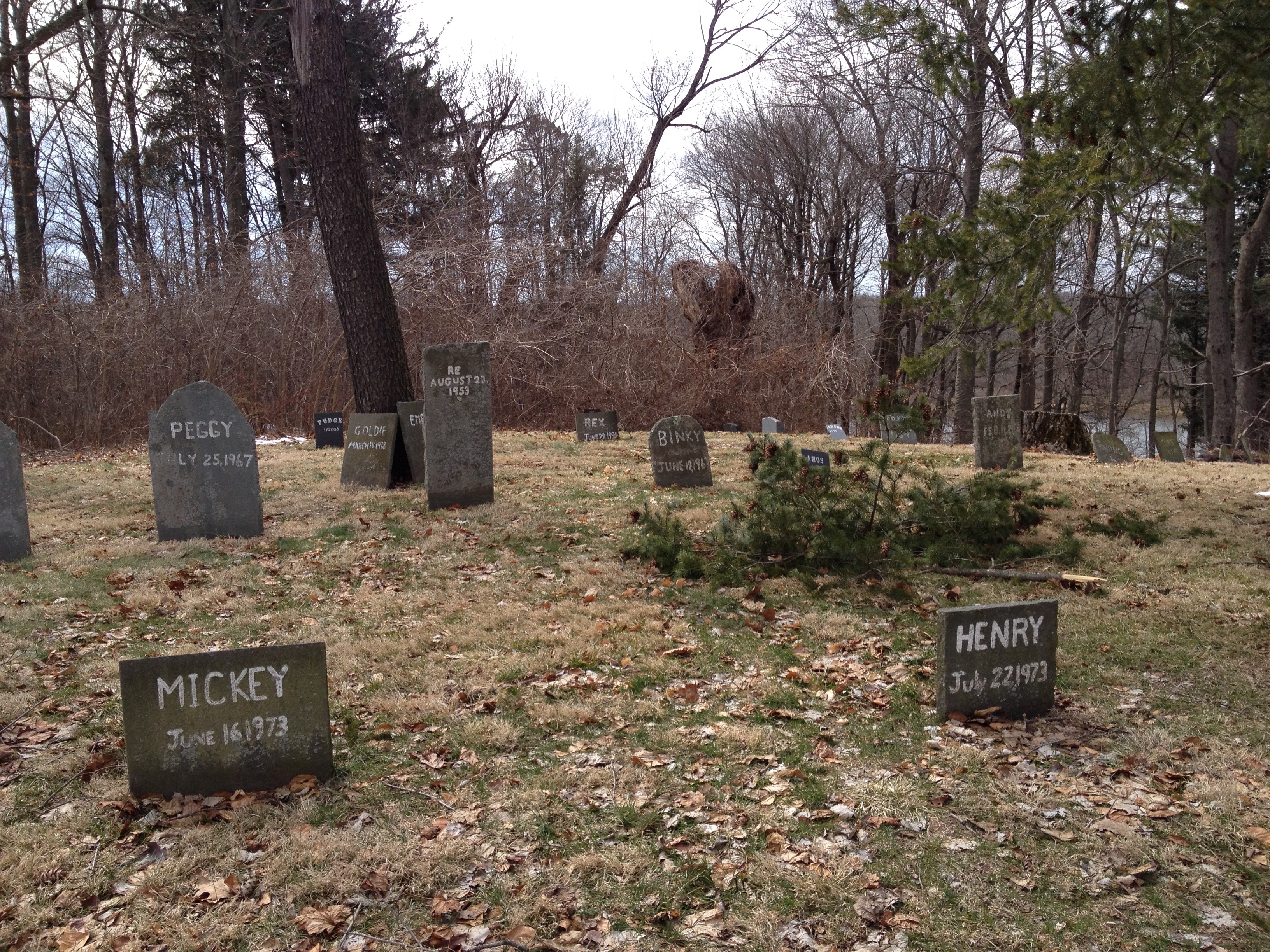
I thought something was on fire when I first saw it.  A plume of black smoke rising against a backdrop of lowering, sullen clouds in a late winter sky.  Then I remembered that there’s a pet crematorium in that part of town.  I was witnessing the end, the smudged spirit of someone’s departed companion.  It made me reflective.  We currently have no pets.  (We can barely afford keeping ourselves going without adding another mouth to feed.)  Having grown up with a variety of animals–dogs, cats, birds, fish, turtles, guinea pigs—and having kept fish, a bird, and a couple hermit crabs for our daughter, I know the connections we make with our animal kin.  They teach children about death.  And they have the capacity to make all of us reflect on what it means to be alive.

I’ve buried my share of pets, but I have no idea what happened to the larger ones.  The cats.  The dogs.  It was pretty obvious when a dog died.  The cats, which were outside pets, tended simply to disappear.  There were no dog grave markers and I still have no clue what the grown ups did with the carcasses.  I once visited a pet cemetery; it was an oddly moving place.  Although we’re taught theologically that animals don’t have souls, it feels like part of ours dies when they go.  That strange teaching is courtesy of the Bible and it manages to hold sway in both science and religion.  And so another puff of black smoke rises from down the block.

Religion has a tremendous influence on us, whether we’re personally religious or not.  Since humans have always eaten animals, it’s likely that the earliest religions helped to assuage the guilt of killing something that so obviously has feelings and thoughts and could, in other circumstances, have been us.  When monotheism came in there was a great reduction in souls.  Humans alone made in God’s image learned to dominate other animals.  Today we have feedlots that are animal Hells while we pat Fido on the head and mourn his passing.  I somehow doubt that we’ll ever find ourselves back in the natural world.  We’ll likely go extinct before that happens.  Until that day, however, some of our saddest memories will be from when our beloved companions pre-decease us.  You can never be certain which way your thoughts might turn when lowering, sullen clouds fill a late winter sky.


Discovering Diaries

When you move, there are always things that get lost.  I wrote about Nietzsche recently, but one of the puzzles from my latest move, now approaching four years ago, was my college diaries.  (I have to be careful not to write dairies, since my spelling could use some attention.)  I used to keep diaries.  I haven’t done so since early in my married life, and even a little before.  While looking for an empty notebook for use at work, I discovered two diaries in the attic.  I’d been looking for them for, it’s safe to say now, years.  I spend quite a bit of time in the attic, so the fact that I didn’t find them in plain sight—a virtual purloined diary—was odd.  But not nearly as odd as what happened next.  

It was still part of our internet-free weekend.  Unable to get online, and having done my morning writing and reading, and with family listening to things in the background (I can’t read or write with background sounds such as music or talking), I picked up one of the diaries.  It was a lesson in the fragility of memory as well as how reading your own words from the past can make the present seem unreal.  It was a veil, if that’s not too Pauline, that came over me.  Who was that young man?  Was my life really that chaotic?  Were friends really that generous?  Did I really know that many people?  Why have specific ones stayed in mind while others who clearly meant so much of me slipped and fallen in my gray matter?

Like encountering a younger version of yourself, reading diaries opens new windows of self-reflection.  I guess I hadn’t remembered myself being as self-reflective as that man in his mid-twenties was.  Perhaps still is.  If you’ve spent any time on this blog you’re probably aware of my tendency to look at things from different angles.  To think things through.  My own brand of neurodiversity is what I think I have to offer.  I try to save my academic stuff for my published writings, but when as many years have passed, I wonder if I will look back on my early posts here and find myself asking who it was that wrote them.  Youth is a time of acquiring new experiences unlike any other.  Having grown up with so very little, the world itself seemed only days old back then.  If memory serves.


When Bible Met Horror

My colleague (if I may be so bold) Brandon Grafius has recently published a piece titled “What Can Horror Teach Us about the Bible?” in Sojourners.  Brandon and I have never met in person, but we’ve worked together a number of times.  We share an interest in horror and we both teach/taught Hebrew Bible.  We’re not the only ones who’ve got this fascination.  When I was able to attend the American Academy of Religion and Society of Biblical Literature annual meetings in person, I would often meet up with others who, apart from their respectable jobs, have a real interest in horror.  There are quite a few of us.  Some journals, like Sojourners, are starting to ask the obvious question: what do these things have in common?

I can’t claim to have watched all the horror movies ever made.  It’s actually pretty difficult to access some of those I’d like to see and, believe it or not, I’m actually a selective viewer.  Often my choices are dictated by research.  Back when I was young, in college and seminary, I’d go to see horror movies with friends.  Since I was living alone in seminary that sometimes led to sleepless nights.  I recall vividly being unable to sleep after watching David Cronenberg’s remake of The Fly.  (To this day I still haven’t seen the original with Vincent Price.  I see that it’s available to stream on Amazon Prime, and since we’ve got the internet back perhaps it’s time I do that.)  What I can claim is that I’ve always watched movies for religious elements and that I often find horror isn’t lacking in that department.

The point of Brandon’s article is that there are horror stories in the Bible.  Indeed, the more I ponder the Good Book the more I see that makes it a frightening text indeed.  Once you get past the sugar coating, there’s fear of substance inside.  Funnily enough, it seems Jesus didn’t often play the fear card, although even he did so from time to time, according to the Gospels.  Religion, which gives us such hope, also makes us so very afraid.  I’m really glad to know that I’m not the only one who’s started to come to that conclusion.  So maybe it’s natural for those raised religious to be fond of monsters.  Getting others to admit it can be tricky, and I’m sure some genuinely don’t like them.  Still, when you’re in a scary place, it’s best not to be alone.


In War’s Domain

Good for absolutely nothing, to borrow the wisdom of Edwin Starr, war has again marred Europe.  We could see it coming from afar because people keep electing autocrats and strong men always want to fight one another.  There should be international laws banning their election, but instead innocent people die because one man has to prove he’s bigger than another.  The evils of the Trump years will be with us for decades.  There’s nothing Christian about waging war.  Seems that some folks have forgotten their Sunday School.  Wasn’t the selfless, self-sacrificing carpenter from Nazareth known as the “prince of peace?”  Of course, Ukraine became Christian long before Russia did.  What deep-seated insecurity such “world leaders” have!

While not wanting to be drawn into open conflict yet again, the world has pretty much all sided with Ukraine.  It has the misfortune of being nestled next to a weary nation with a dictator who despises the west.  Who pulls down his pants and shows off his missiles when anyone starts to open their mouth.  Who isolates himself and his people in the name of self-aggrandizement.  We came close to that over here.  So close that it still makes me shiver.  We feel for the people of Ukraine.  They did nothing to provoke attack, and they probably knew other world leaders would keep their distance.  Putin, like Stalin, wants a USSR.  An empire to put the evil west in check.  Hadn’t we left that kind of thinking behind?  Hadn’t we grown up after World War Two?  Strong men learn nothing from history.  They look at it and see only a mirror reflecting only themselves.

Hitler annexed Poland.  Russia, which has more land than it knows what to do with, doesn’t need Ukraine to be part of it.  The good people of Russia are protesting, just like the women brave enough to march on Washington to protest the fascism America embraced for four years.  I’ve put off writing about this because it’s so difficult to do without dissolving into tears.  Beware of either bare-chested or chest-thumping politicians worldwide!  It’s time to end the era of the alpha male.  We need mothers to nurse us back to health.  They call it “Mother Russia” but what mother acts this way?  The women aren’t impressed, Vlad—they’re in the streets bravely protesting.  It’s International Women’s Day.  Let’s honor women. It’s time to let the women lead.  It’s time to put war behind us forever.

Photo by Jenna Norman on Unsplash

Ghost Religion

Ghosts are back in.  If they were ever out, that is.  A recent article by Daniel S. Wise in Religion Dispatches asks “What Can a Real Life Haunting Tell Us about American Religion?”  The fact that we can ask about such things without a smirk indicates, it seems to me, a new openness about the world.  Wise isn’t trying to answer the question of whether ghosts exist or not, rather he’s parsing things a bit finer.  The real question is how a haunting can inform us about American religion.  Historians have demonstrated time and again that Americans have been open to occult influences from the beginning.  Even Puritans.  We’ve been caught up in the myth of the pursuit of the one pure religion, and since true religion was revealed long ago, our ancestors must not’ve allowed any  religious hanky-panky.  So the thinking goes.

In reality, people see and experience things they can’t explain.  Unlike the standard scientific paradigm suggests, people are capable of distinguishing what’s normal from what’s not.  Yes, people often mistake perfectly pedestrian events as supernatural sometimes.  Ghost-hunters have to eat, too.  But intelligent, educated people also sometimes can’t find a conventional answer.  Those are the more interesting stories.  Wise’s article focuses on just one family’s experience.  It leads to what Wise calls “metaphysical religion.”  This is what has been in this country from the beginning.  Historians like Jon Butler and Catherine Albanese have explored this also.  We’ve seen time and again that ignoring what people actually believe can lead to problems.  That’s why the work that Wise is doing should be applauded.

Whether or not ghosts exist, they can control human behavior.  That’s perhaps an enviable position.  No matter whether rich or poor, female or male, black or white, the ghost immediately captures attention and awe.  They represent knowing what we among the living can’t.  As Wise points out, they can effect our behavior.  Ghosts also cut across the religious spectrum.  While many Christian denominations declare that ghosts can’t exist, it doesn’t stop believers from seeing or experiencing them.  Sometimes it leads to many ghosts being considered demons.  The only connection, theologically, is that both are incorporeal, but that’s a subject we’ve already addressed.  Also earlier I posed the question of whether ghosts are monsters or not.  By not fitting into our airtight materialistic world, I suppose they are by definition.  If, however, it’s someone we know lingering to give us comfort or information, perhaps they will spur a religious response.

Image credit: Henry Justice Ford, public domain via Wikimedia Commons

Wordle

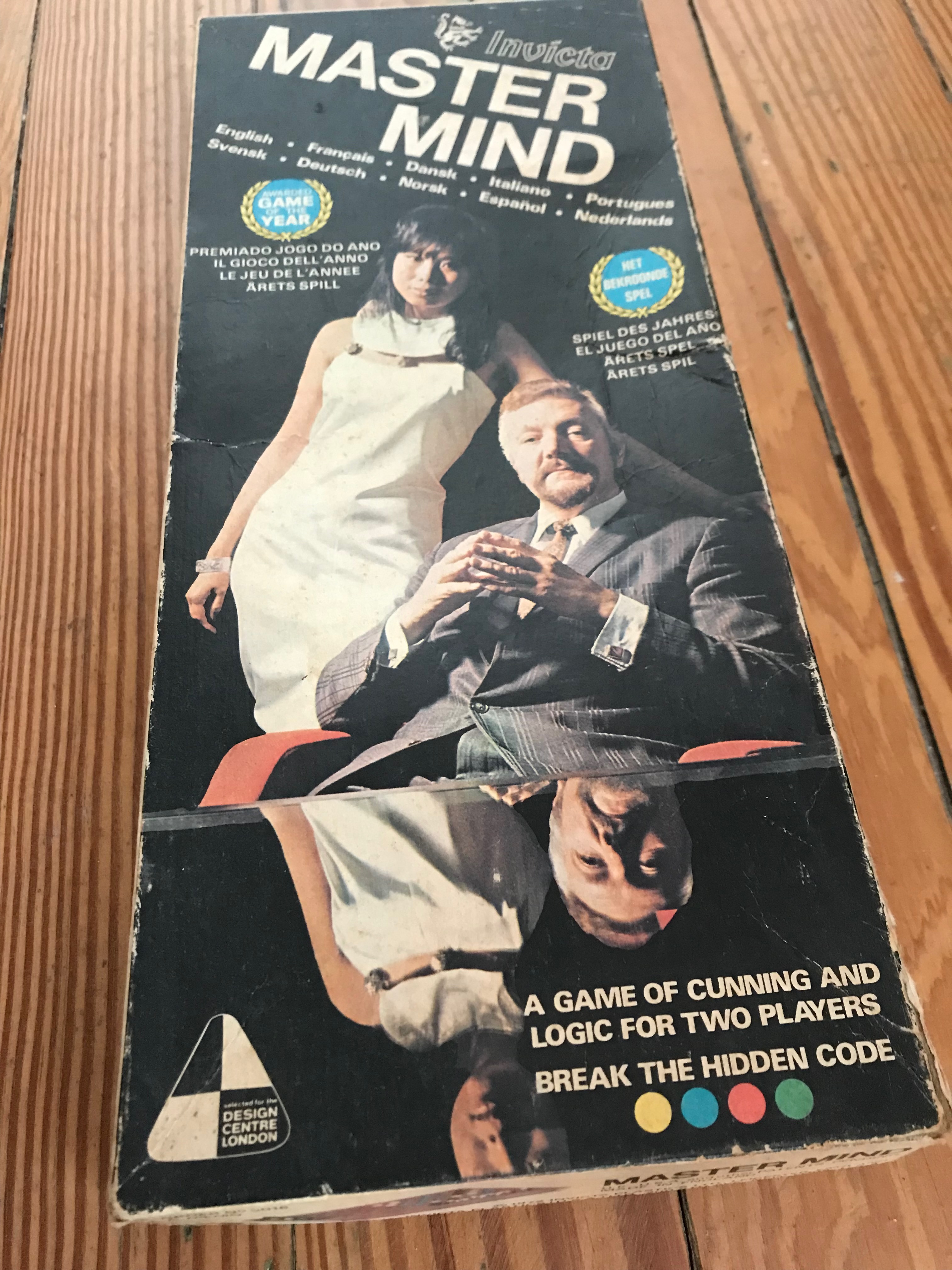
Each year in late capitalism seems to begin with a new fad.  This has been pronounced with the pandemic (which I almost wrote as “academic”) keeping people indoors.  Last year sea shanties were the rage with many of us finding ourselves humming something about a wellerman during the oddest times.  This year’s initial fad seems to be Wordle.  In case you’ve been living on the dark side of the moon, Wordle is an online game that is best described as Mastermind with five-letter words.  Mastermind, in case you were born after the Republican Party turned evil, is a game where you have six colored pegs that one person sets in a board a sequence of four.  The other player can’t see them, but has to try to replicate the colors in the right sequence.  At each guess the one who selected the sequence gives the guesser the following information: which pegs are the right color and which pegs were the right color in the right place.  (It occurs to me that explaining Mastermind could have been left out and I could’ve just described Wordle.  But what’s the fun in that?)

In any case the Wordle player has six chances to guess the right word based on the same clues: the right letter in the wrong place (yellow), or the right letter in the right place (green).  The hook is that you can only get one puzzle per day (otherwise many of us would be starving to death and out of work).  As a kid, I have to say, I could play Mastermind for hours.  I even brought our daughter up on it.  There’s something beguiling about trying to figure out what’s in somebody else’s mind.  There is a dark side to it, however.

I read a lot.  Lately I find that when I’m reading I’m secretly scanning for five-letter words that might be a good initial guess for Wordle.  The ideal word has no repeated letters and at least two vowels.  You need to narrow down the vowels first because every word has to have one of those six letters, since “y” functions as a vowel.  The other day I was thinking “s” has enough lubricant to function as a vowel too, but I digress.  Isn’t that the point of Wordle, though?  To digress?  There’s so much despair in the world with autocrats in power and the planet melting down that we need a little boost.  If only I could let myself read normally again, all might be well with the world.


Underestimated

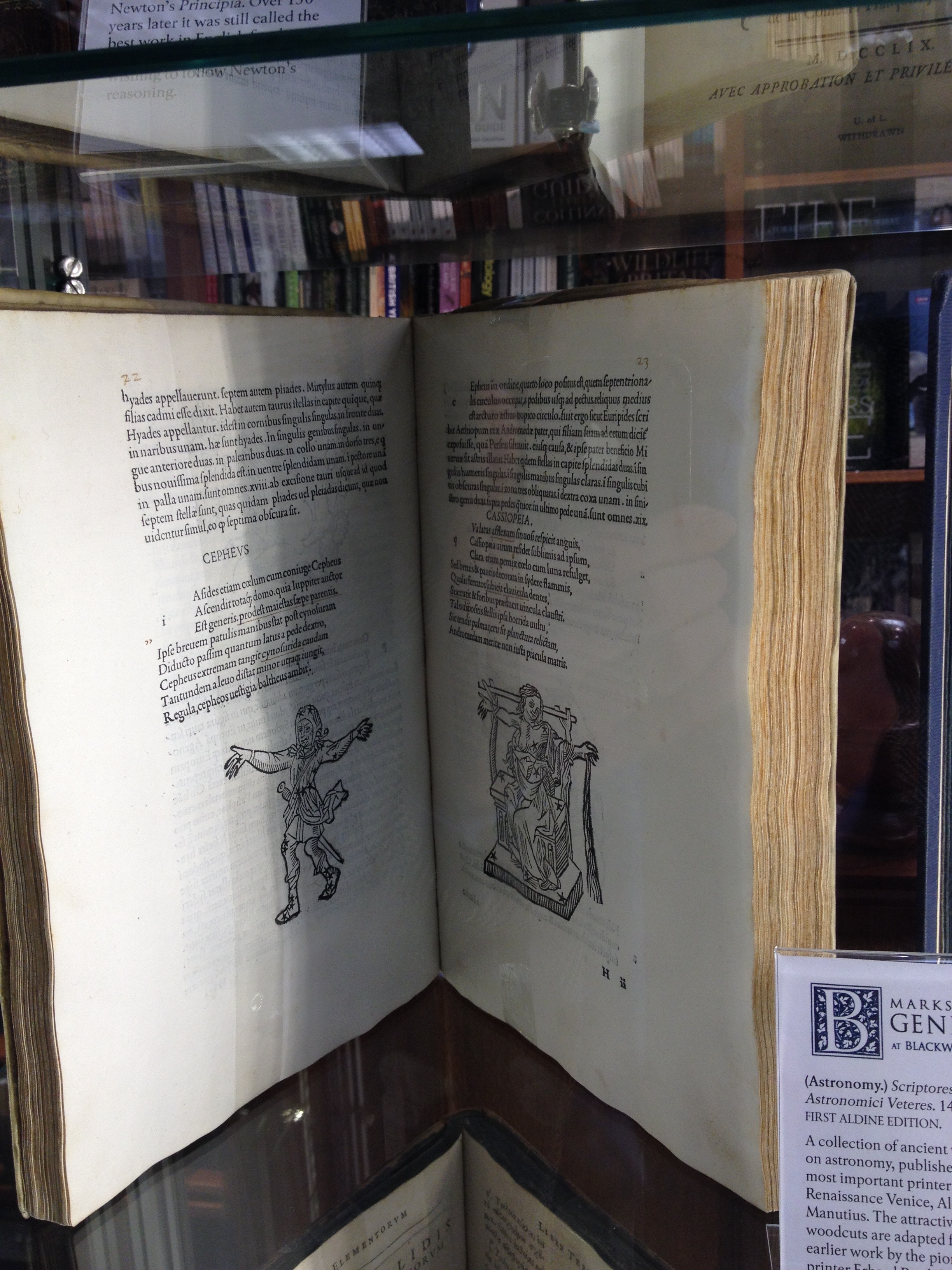
Under-printing, ironically, can create great demand.  Books are generally under-printed because publishers don’t see much of a market for them.  Back before the days of inexpensive print-on-demand (POD, in the lingo) books may not have even existed as electronic files.  Often a publisher won’t print a book unless it anticipates that it can make back its costs.  If they think it won’t sell that well, they’ll print just enough.  And they might even melt down the typeset plates to reuse them for other books.  I’m not sure if that happened in the case of a book I’ve been looking to consult, but something has made this under-printed book extremely rare.  It’s not on Internet Archive.  WorldCat shows it in only two libraries world-wide, the nearest one over 3,000 miles away.  Its price used (and there seems to be only one copy) is $46,000. I can’t tell you what it is because you might buy it before I can.

For the purposes of my research, this is actually the only book on this particular topic.  (The subject isn’t even that obscure.)  The book is cited everywhere this topic is mentioned, and at least one person on Goodreads has actually seen a copy of it.  I have to conclude that all those who cite it must live within driving distance of one of two libraries worldwide.  For the rest of us the book is simply inaccessible.  As an author this is one of the worst fates imaginable.  Even if some price-gouger is selling a copy for $46,000 the author gains nothing from it.  Royalties are null and void for used book sales.  The only profiteer is the person who happens to have found a rare book (from the 1990s!) and is determined to ensure only the most wealthy will be able to purchase it.

I’ve known people who sell used books online.  Those who want to move books try to undersell the unfortunate under-printed title by pricing a bit lower than the competition.  There is no regulation, however.  You can charge whatever you like.  The funny thing is, if someone eventually forks over $46,000 for this book, and then has it appraised (it is a paperback from the 1990s), its actual worth is probably at most in the hundreds of dollars.  Back when we watched the Antiques Roadshow we always knew that the poor person who brought in a book would be disappointed in the appraisal.  Last time I was in Oxford I saw rare books from the 1400s for sale for far, far less than $46,000.  I only hope that my books, as obscure as they are, are never deemed that expensive.  And I would encourage publishers to print a bit more generously, for the sake of knowledge.


The Archive

Publishers hate it, but I bless its holy name.  The Internet Archive is a major boon for “independent scholars.”  If you’re not familiar with it, the Archive is a repository of scanned books.  It doesn’t contain everything, of course, and some publishers have tried to sue, but it operates like a library.  You set up a free account, and if you just want to look up a reference in a book they have, you can “borrow” it for a while, check your reference, and then return it.  All without leaving your home.  Internet Archive really took off during the pandemic.  You couldn’t get to the library and some of us research as long as we breathe, so here was a solution without breaking the bank.  The bank, ah, there’s the rub.

The reason publishers hate Internet Archive is that it makes content available for free.  Working in publishing, I understand the concern.  Publishers have to make money off their books—they are businesses, after all.  And if somebody scans it and makes it free online, your sales are undermined.  But are they?  Now, I can only speak for people like myself, but if a book is directly relevant to my research I will buy it.  Reading online is a last resort. My library is full of books bought for that reason.  Once in a while, though, my research leads into areas I don’t intend to come back to.  Or I remember reading something in a book long ago, back when I had library access with interlibrary loan, and I can’t afford to buy the book just to look up that reference.  Well, Internet Archive to the rescue.  Publishers don’t often turn their mind to independent scholars since we’re not prestige authors.  Waifs of the academic world.

That’s one reasons I don’t feel bad blogging about Internet Archive.  Most traditional academics pay no attention to my blog.  If I were hired by Harvard that would change overnight.  Those of us who skulk in the shadows of the ivory tower don’t mind getting by with freebies like Internet Archive.  And some part of us, even if we work in publishing, applauds such ventures as SciHub.  I do not suggest visiting SciHub, however, and I’ve never done so myself.  Its software automatically scans your hard drive for content that it can add to its huge repository.  It’s not safe.  The idea stands behind Open Access as well.  Knowledge should be free.  But even publishers have to eat.  And those in ivory towers have everything to gain by keeping their edifices pristine.