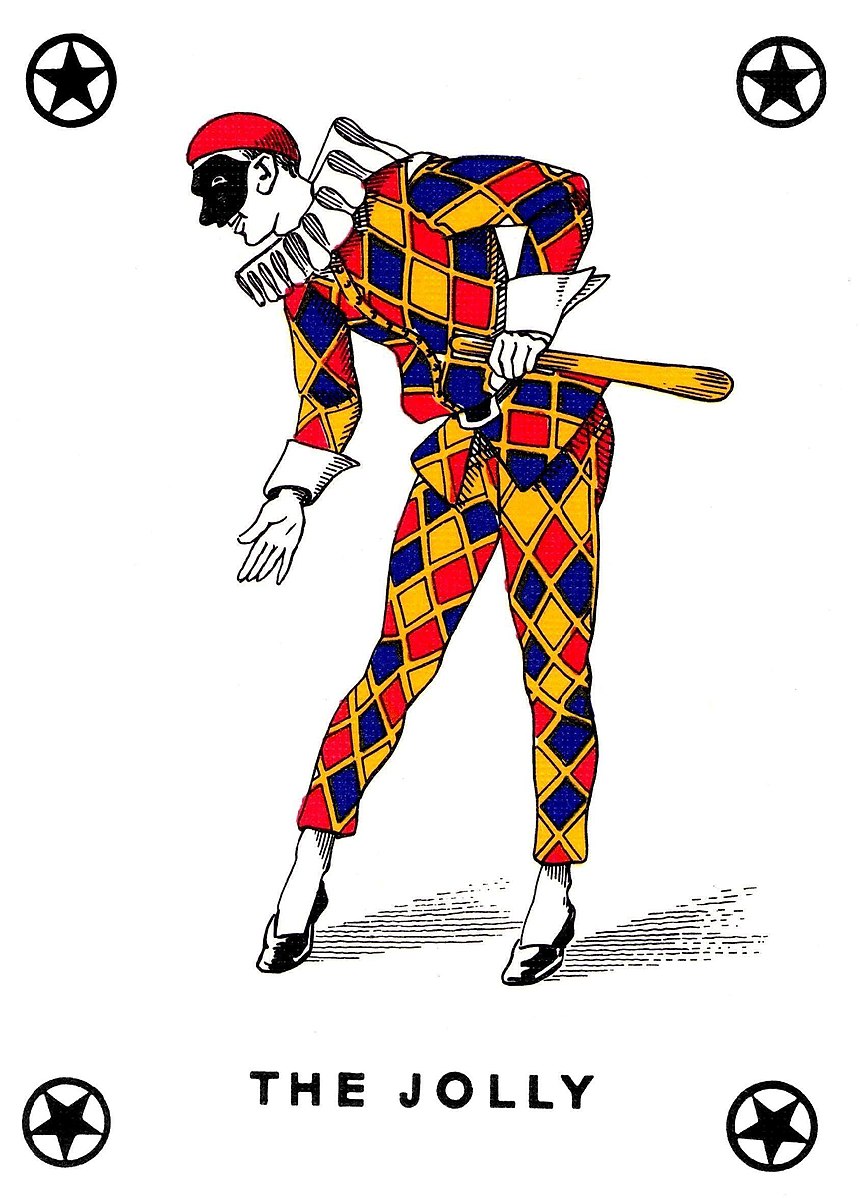
A Bird’s Life

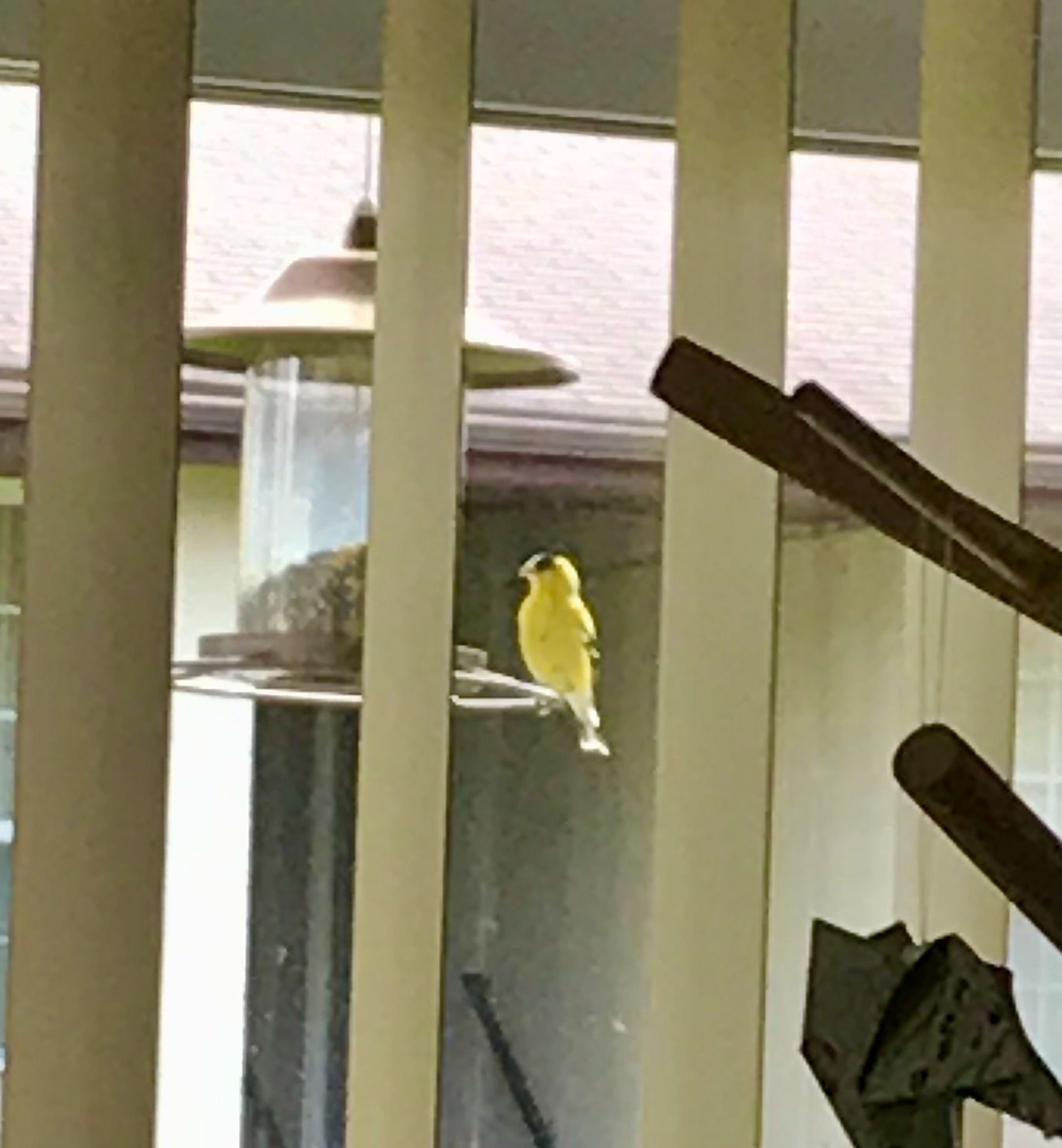
Among the early signs of spring are birds.  Cold and silent, winter mornings have their own form of beauty, but hearing the birds is cause for hope.  The bird world looks cheerful and peaceable but it is a competitive and often harsh place.  My office window looks out onto a porch roof and a stand of trees across the street.  Electric wires constitute a part of the scene as well, giving birds plenty of places to alight and negotiate their bird business.  Like humans, birds are vulnerable, particularly when they’re young.  While teaching at Nashotah House, walking home from chapel one morning after a thunderstorm, I found a baby bird, not yet fully fledged, dying on the sidewalk.  I glanced up and couldn’t see any nests.  I’m not much of climber anyway.  Not knowing what to do I scooped it up and took it home where I could put it in a box.

I didn’t have an early class that day so I called a wildlife rescue center.  Being the days before the internet took over, this was a matter of looking it up in the yellow pages.  We piled the family in the car and drove it down.  They’d told me to keep it warm and try to comfort it.  My daughter held it.  Once we got there they said they weren’t sure if it would survive.  It was weak and chilled, but they would do what they could to revive it.  For several days we all worried about that hatchling.  I thought it might’ve been a finch because of the beak, but otherwise we knew little about it.  Several weeks later the rescue center called.  Our rescue was ready to be released—did we want to do it?

They handed us a brown grocery bag that weighed next to nothing.  “Open it when you’re outside near where you found it,” they said.  Back on campus we opened the bag and our foundling flew off so fast we could barely see it.  Adult birds, confident and socialized, seem more sure of themselves.  They perch out in the open even though hawks scan the area, and even the occasional eagle.  They go about their bird business with a confidence I sometimes envy.  They don’t worry about a 925.  They know what nature’s about.  They may have survived a near-fatal childhood.  They may have pushed siblings out of the nest to have thrived.  They peck and flap at each other in their efforts to mate.  And, above all, they carry spring on their wings.

Shadows of Childhood

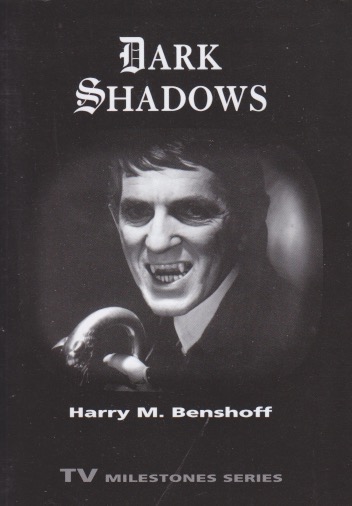
While it may not seem to fit my current re-fascination, I’m not really a “fan”personality.  My interests are far too diverse.  Since I’ve been thinking about Dark Shadows a lot lately I decided to do some reading on it.  There’s a genre of nonfiction that involves small format, short introductions to various media.  I’ve read a few of the Devil’s Advocates series about horror movies and I recently discovered the similar TV Milestones series about, well, TV.  They have a volume on Dark Shadows by Harry M. Benshoff, and I knew it would help scratch my current itch.  You see, I wasn’t really a devoted fan of the show—I watched it after school like a lot of kids did in the late sixties and into the early seventies.  I read a few of the novels.  I never attended any conferences (they exist) and never wrote any fan fiction.  I think my level of engagement was different.

Nevertheless, this is an informative little book.  I found out that there’s even more to the phenomenon than I already knew I didn’t know.  I never really followed the whole plot line.  I didn’t realize just how complex the story is.  Perhaps on some level I knew the series was culturally significant.  As a child I didn’t know much about the wider culture.  We were working class poor, how was I to find out about such things?  For me, Dark Shadows was a kind of escapism, I suppose.  A fantasy that met a need, not a plot to be unraveled.  I wasn’t aware of how sophisticated, if cheap, it was.

By the time I got to college and started to meet different people, it was a moment that had passed.  I really didn’t think much about Dark Shadows again until after my own gothic tragedy of Nashotah House.  During the days of my career malfunction I rediscovered my childhood, perhaps looking for something better.  I started collecting and reading the novels again, and if I’m honest, were it not so expensive I’d consider watching the original series again.  Like all things nostalgic, I know my Rosebud will never be today what it was back then.  My reading sense wasn’t developed enough to see what might’ve been going on behind the scenes.  Benshoff does a good job of bringing much of that to the light.  I’ll likely read more on the series as time goes on, but I now have a better framework for looking at this particular milestone.  Not, however, as a fanatic.


Sexist Instructions

The thing about cars is there’s so much that can go wrong.  And when it does it’s costly to fix it.  Yet, even when working from home, we need them.  We have two, both quite old in car years.  One is approaching twenty.  We bought it new—the first time we’d ever been able to achieve such a feat.  This was one of the new Beetles and it has had never-ending electronic issues.  Warning lights come on that seem to be a malfunction of the warning lights—if you ever wanted an existential situation that’s one right there.  How do you know if there’s something wrong with your engine or is it just something wrong with the warning light?  A worrisome one came on just as winter was settling in and we didn’t need to drive it much before inspection time and we let it sit a little too long.

The battery, naturally, died.  We have an old, seldom used battery jump-starter, which, in the cold of the garage, also died.  We’ve been trying to find time on the weekend when both my wife and I are free (rare) so that I can drive it a ways to try to recharge the battery, but with someone home who can rescue me if I get stuck.  So it was we came to buy a new jump-starter.  These new ones are the size of a cell phone on steroids—much smaller than the old kind.  Ours came from China, I’m guessing, and the instructions are sexist.  They imply that women can use this because it’s easy.  Part of the description reads “It can be used more than 30 times, giving you peace of mind, no matter where you are, if the battery runs out, you can start it without looking for women who are not smart at night in an empty parking lot, such as a college campus or forget you.”  I don’t know about you, but this sounds like the writer had a past he’s trying to deal with.

I was indeed once left stranded because of a dead car battery.  It’s a story I’m saving for my autobiography, if I ever write one, but let me assure you all the people responsible for that abandonment were men.  Men with a car that wouldn’t start while I sat in the middle of nowhere in the dark.  (This was before cell phones.)  I didn’t want to buy a sexist device.  Both men and women have batteries die and I’m always a little scared to jump-start a car.  At least now we can get the Beetle rolling again and drive toward a future where women are rightfully seen as equal to men.  And I hope that instruction writer has found some help, perhaps with therapy.


Search and Research

Woe to those who live to research but who have no professorship!  I have been prone to research since about high school, driven by the need to know.  Almost Wesleyan in my need for certainty, I have always been inclined to check things out.  It took college and a doctorate to teach me the necessary research skills.  It took years of teaching for me to learn how to frame questions on my own.  And it took years of being shunned by the academy to realize that as I’ve been pursuing my personal research agenda that I lack the time to fulfill it.  I’m a slow learner.  Yet I can’t give it up.  The thought process that led to Holy Horror was a kind of epiphany.  I could write a book without reading every last thing about the subject.  The problem, however, would always be time.  I’ve read an awful lot about horror media and I’m only beginning to scratch the surface.

I’m not totally naive.  Okay, I’m pretty far along on that path sometimes, but I want my readers to know that I understand movies and television are made for money.  It’s a business, I know.  But I’m an artist at heart and I like to think the creators are fond of their characters.  Writers are advised to drown their darlings, to put their protagonists on a cliff and then throw rocks at them.  And I also understand that money can make you do even worse to them.  Of course, I’m still thinking about Dark Shadows.  For me it’s been a rediscovery of my childhood.  And just how much time I’d need to make sense of just one television series with a five-year run.  There’s far more information on the web on Dark Shadows than I was able to find in print on Asherah for the years of my doctorate.

And the expense involved.  Plus, it’s only early April and the lawn needs mowing!  I’m still wearing a heavy jacket some days but the grass is always greener.  Period.  What a time to fall into a research reverie!  I need a sabbatical but they don’t have those in the 925 world.  And I need a professor’s salary to be able to afford the media required.  The Dark Shadows series alone has over 1200 episodes.  House of Dark Shadows introduced the fear of the cross to my understanding of Barnabas Collins.  My world has been shaken and to settle it I need research.  What I have, however, is work starting in just a few minutes.

Now watch this, for time is fleeting

April Says

I can honestly say that it wasn’t on my bucket list to mow the lawn while it was snowing.  Friday would’ve been better—sunny and sixty—but I have a 925 and I had a meeting after work I couldn’t get out of.  Saturday it rained all day, which, I know, grass loves.  Sunday was the only opportunity left in the weekend, and with stocking cap and gloves on, I went to mow.  Snow started to fall.  It must be April.  I’ve always believed that “April fools” has an origin in the weather.  I can’t prove it, but it seems just when you think it’s safe to go without a coat, suddenly winter.  Back when we lived in Wisconsin we took a family fun trip to Wisconsin Dells for my wife’s birthday in April.  It snowed.  We rode the famous ducks and then played mini-golf amid squalls.  April fools.

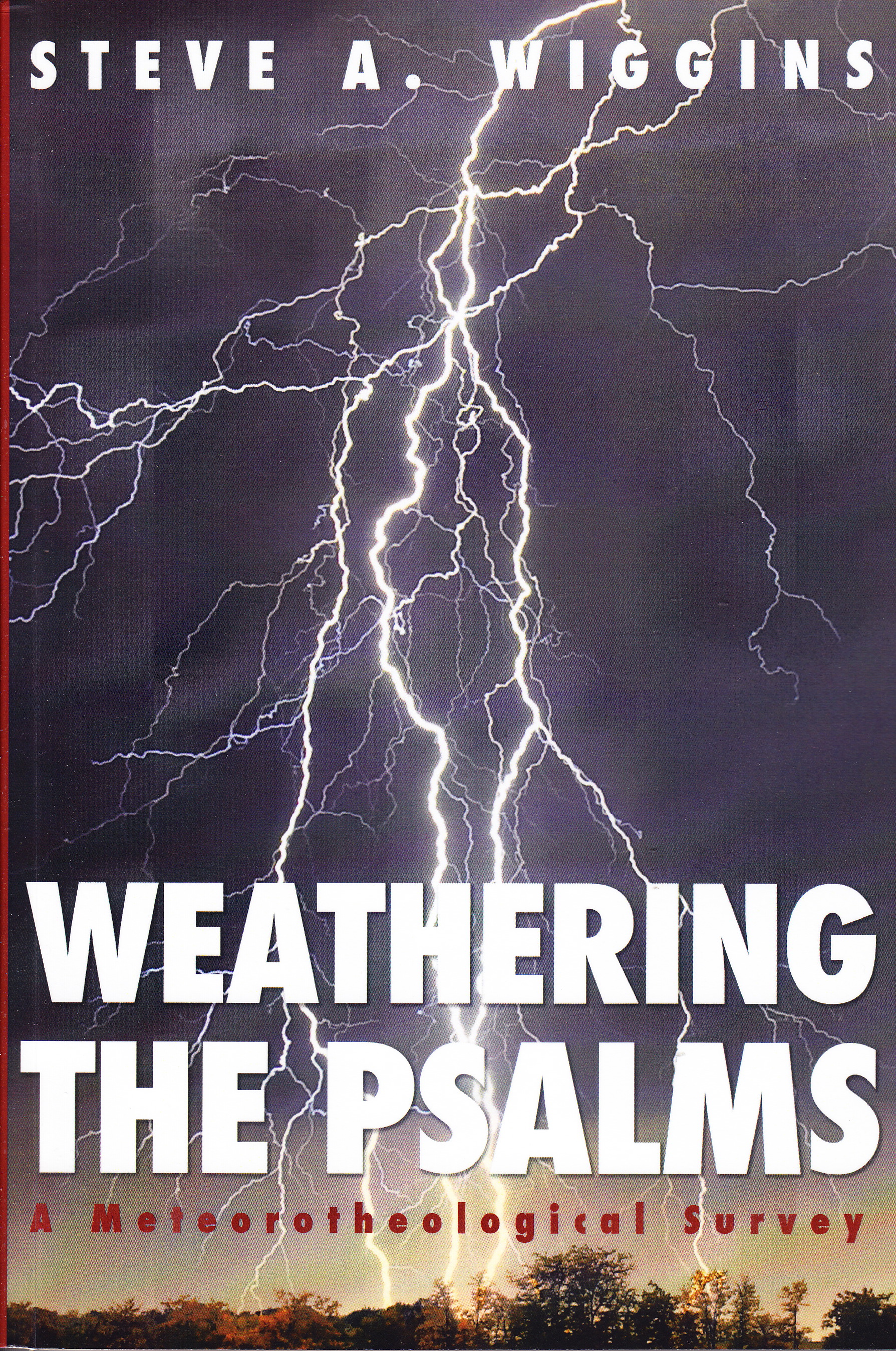
The weather influences many aspects of life.  Why it’s considered a neutral topic I don’t know.  It’s kind of like talking about God.  The only thing we all agree on is that we can’t control it.  Well, we can certainly influence it.  Global warming sets strange weather patterns into motion.  It was in the seventies less than a month ago.  (Which is why grass was unruly just as April began its double-digits.)  Then there’s all the rain.  See what I mean about God?  Divinity and weather were in mind as I worked on Weathering the Psalms.  I still wrestle with how these things relate to each other in the human psyche.  We do tend to think the weather is somehow a judgment or blessing.

My family knows I complain about it religiously.  And mowing isn’t my favorite activity in any weather.  It was late November and I was still mowing.  April (which fools) seems to be a little too soon to be starting that all over again.  Committing at least one day of every weekend until nearly next Christmas to cutting grass.  It’s a long-term commitment.  I suspect those who benefit (monetarily, for we all lose, existentially) from global warming probably don’t mow their own lawns.  They probably have their private jets that don’t need to be jump started because that worrying idiot-light on the dash is on again and they’re afraid to use it.  It’s life in a different key.  Still, we all share the weather.  When it affects crops, or swamps New York City, we’ll all be bound to notice.  Enough grumbling.  It’s time to get the weed-whacker fired up while the icicles start to form.  April fools.


Ecclesiastical Splinters

Religion is a massive, sprawling thing without a fixed definition.  Historians of religion have specializations.  Mine has been ancient religions of the Levant, but we’ve all seen how far that got me.  After taking a few years to recover, my research has shifted toward religions of the modern period.  There are plenty of them and many of them are under-studied.  That latter point makes things a bit easier.  Believe it or not, ancient religions is a pretty crowded field.  After I’d begun to write on Asherah, for example, I learned at least two other scholars were doing the same.  Not that there aren’t challenges with modern religions, particularly if they’re still practiced.  Take Roman Catholicism, for example.  I’ve never been a member of the Catholic Church.  There are Anglicans who would claim part of that title, but it has its own distinctions.

Catholicism is the largest Christian denomination by a long stretch.  It makes claims at being the oldest as well, but that’s a little more difficult to verify from an historian’s point of view.  In any case, Catholicism also likes to show a unified front to the world.  This is a little tricky because any time you get more than a billion people together you’re going to have differences.  Being a hierarchical organization, there is someone at the top to make official pronouncements, but in fact, those below will believe what they believe.  Many Catholics, for instance, use birth control.  I’ve been researching a sect within Catholicism and am finding it difficult to find resources.  It seems the Catholic Church (a billion is power) prefers not to have books out there on how divided it is.

Most Christian denominations are quite divided.  That’s why there are so many sects in the world.  If one is powerful enough to prevent those who dissent from making a big deal of it, good luck in finding useful resources about it!  The sect I’ve been exploring has, as far as I can determine, one footnote hidden away in a university press book devoted to it.  Other sources are, apparently, carefully kept quiet.  Yes, there are power struggles within the Vatican.  There’s a lot at stake here.  On Easter everyone in Christianity (except the Orthodox) will appear united for a day.  Well, not those sects that don’t celebrate holidays.  I don’t know how anyone can not find all of this fascinating.  There’s power involved in religion.  It may not vie with mammon, but it deals in it as well.  And we’ve all got so much to learn.

Photo by Callum Parker on Unsplash

The Campus Library

Perhaps it’s an odd kind of nostalgia.  Many people can’t wait to be done with school and get on with “life.” Some of us remain fixated at the learning stage and society used to shuffle us into colleges and universities where we could be safely ignored.  One of the refrains in the very long song that is this blog has been the lack of a university library.  Although I’ve tried to get to know the academics in the Lehigh Valley really only one has made an effort to befriend me and when I was asking him about library access he actually did something about it.  Such acts of kindness are rare and require a kind of thinking that takes into account the circumstances of the academically othered.  I’ll be forever grateful.

It’s been a long time since I’ve been in a college or university library.  Many are protective and/or restrictive, as if knowledge is only for those academically employed.  I had to look up a couple of references for an article I was writing.  My colleague checked with his institution and yes, I was welcome to come in and use their collection.  The night before going to campus I had a series of nightmares of various librarians barring my attempt to get to the books.  I’d been trying to get there (in real life) for weeks.  Between family work schedules, the occasional weekend blizzard, and the library being closed for spring break, it ended up taking about six weeks to find the time to drive there, negotiate parking, and look up the references.

Everyone has a place they belong.  Mine has unwaveringly been the college campus.  It is home to me, even if it doesn’t recognize me.  I’d almost forgotten the feeling of being let loose in the stacks.  It was a Saturday morning and there was almost nobody else there.  As early as Grove City College I cherished the feeling of spending time in the library.  Few other students were hanging out there, but those of us who belong on campuses know that being surrounded by books is the only place that will ever feel like home.  Having looked up my references I wished that I had more to do.  I’d been to both the Dewey and the Library of Congress sections and, being a weekend, I had much else to do.  Stepping back out onto campus I was filled once again with a poignant nostalgia.  Getting to where you know you belong is a lengthy journey.


Ghost History

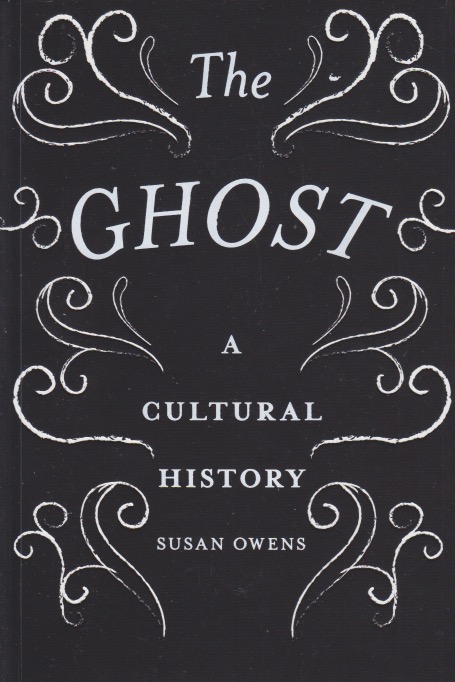
Books on art are often eye-opening to me.  When I was young and trying to escape the working-class hell in which I grew up, I discovered high culture.  This was mostly through local libraries.  I would check out classical music LPs and look at books of classical art.  I did the latter until I could identify several artists by their styles.  (It was probably originally because they’d painted pictures of Jesus and I went to see what else they’d done.)  In any case, I never studied art history.  I recently read an art-historian on the Devil, and now I’ve read one (Susan Owens) on ghosts.  The Ghost: A Cultural History does not address the question of whether ghosts exist, but rather traces the history of how they’ve been portrayed in literature and art throughout time.

Owens quite ably takes us through ancient to modern, pointing out that ghosts change to fit the Zeitgeist—the spirit of the times (not her pun).  In the early modern period ghosts were portrayed as physical revenants.  They were dead bodies that came back to physically harm the living.  We know this fear was widespread because some burials were clearly intended to keep the dead in their graves.  The idea of the physical ghost still comes up in modern horror as the monster you can’t kill because it’s already dead.  It was only gradually that ghosts became spirits and this was largely through emphasis on purgatory, which made it possible for the dead not to be in Heaven or Hell.  Once the idea caught on the literature and art began to focus on the spiritual nature of revenants.  As cultural interests turned towards ruins ghosts inhabited haunted houses.

This is a fascinating study of the way ghosts have evolved over time.  One of the things that struck me was that early commentators often didn’t distinguish clearly between ghosts, demons, and devils.  Demons, as we think of them, really depend quite a bit on The Exorcist.  The use of “devils” in the plural complicates the spiritual geography where we have God v Devil as the main poles of spiritual rivalry.  These ideas, and also those of ghosts, likely blended throughout most of history until a renewed emphasis on literalism came in.  Medieval scholars composed angelologies and demonologies, trying to keep everything straight.  They puzzled over ghosts, however, which don’t fit the scheme very neatly.  They would have benefitted, perhaps, if they had had Susan Owens’ book to help guide them.  It’s an exciting nighttime journey.


Spring Holidays

March and April, despite having their holidays, tend to be months of pretty solid capitalistic work.  Congress may take its April recess and universities have their spring break, but the working stiffs just keep going.  I’ve worked for a couple of British companies and they have a dilemma in the Human Resources department.  Britain has a lot more days off per year than American business practice does.  The dilemma?  How to tell your colonials that the head offices will be closed around Easter when those of the New World will remain open.  You see, very few American companies recognize what some Christians call Holy Week as a time for anything other than work.  Back in the days when I was still trying to work myself into the Episcopal priesthood, I had to ask my manager for Good Friday off and permission was only reluctantly given.

The two major Christian holidays of Christmas and Easter are vastly different in their public expression.  Despite the outlook of Scrooge, most companies consider Christmas a holiday, even to the point of giving you a Friday or Monday off if it falls on a weekend.  A present, as it were.  Easter, on the other hand, reliably falls on a Sunday.  Viewed in isolation there’s no need to give people any days off.  Since I was a teen, however, I took Maundy Thursday and Good Friday seriously.  You were, even in the Methodist church, encouraged to spend the latter in church, especially around the middle of the day.  If at all possible, it should be raining.  It wasn’t a day off for rest and relaxation, but for contemplating sin and its costs (hardly conducive to capitalism).

Universities, however, have tended to shift spring break to St. Patrick’s Day so as to get the damage of drunken students off campus.  Indeed, Purim, the Jewish spring holiday, also advocates drinking until Haman and Mordecai become indistinguishable when spoken.  Sort of like Hamilton, it was the holiday that saved the book of Esther, just like the Broadway show preserved the ten-dollar bill.  When it comes to business, however, Americans are all business.  (Did someone  mention a ten-dollar bill?!)  Money, as MC reminds us, makes the vorld go round.  And holidays are viewed as constant interruptions.  The typical work calendar will have no holidays from President’s Day in February until Memorial Day at the end of May.  It’s typically the longest stretch without a paid holiday.  Just when the weather’s starting to get nicer.  But let’s not forget, money is fully in charge here, for where your treasure is, there your heart shall be also.


Quiet Company

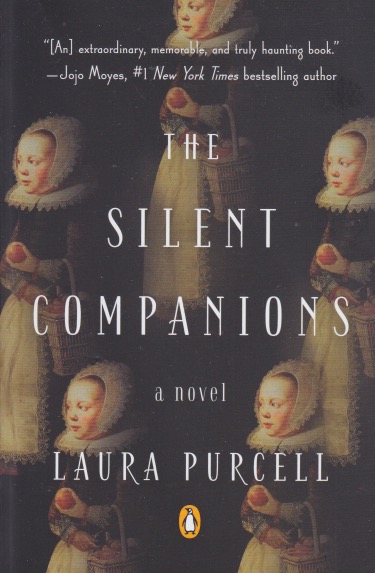
Even as a lifelong fan of speculative fiction, some of the most effective horror is that where a reader is kept guessing.  One of the acknowledged masters of this is Henry James, whose The Turn of the Screw is considered a classic.  There are perhaps too many writers active today to predict who will be considered authors of classics a century or two down the road—writing has to take a long view.  Nevertheless Laura Purcell’s The Silent Companions is, in this reader’s opinion, quite effective.  And ambiguous.  I’m on the constant lookout for gothic novels that work and this is one that surely does.  I’ll try not to give spoilers here, but I do recommend it for those who want a gothic atmosphere.  It is also genuinely scary.  A great deal of this is because the reader is never quite sure what has happened.

The eponymous companions are decorative curios purchased to impress royal visitors in the seventeenth century.  Life-like cutouts of people, they are silent.  Throw in an old, sprawling house in need of repair and a widow who had abusive parents and who’s inherited resentful servants and you’ve got a recipe for an eerie atmosphere.  The novel splits its time between the nineteenth and seventeenth centuries, focusing on the former.  Elsie Bainbridge is a protagonist with many secrets, and not a few skeletons in her closet.  The house she inherited also has a past that included accusations of witchcraft and cruel masters interested in self-promotion.  Told from the point-of-view of the women in a patriarchal society, there is an authenticity to the victimhood even of strong women.

It would be difficult to tell too much of the plot without giving away some of the creepier moments.  There’s a lot going on here and although it’s not a short book it doesn’t drag the reader down with filling too many gaps.  It’s also a novel that allows imagination to outstrip rationality.  Good speculative fiction will do that.  Even some of Poe’s work makes the reader wonder just what is happening—is this in the mind of the observer or is it objectively real?  Think “The Tell-Tale Heart.” Literature takes us into such places and gothic literature does so with more shadows and ambiguity.  Throw in some betrayals, and keep a few well-placed secrets and the recipe is in place for a creepy novel that will keep you reading.


Movie Moving?

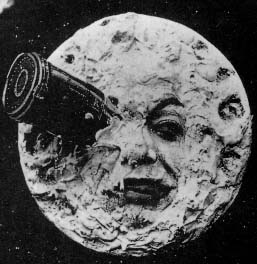
If you don’t know me personally, you may not realize how frequently I quote movies.  On a daily basis, films I’ve seen—particularly multiple times—are the source of some of what I say.  Films have tremendous impact.  Some theorists have even argued that they are the new mythology.  So imagine my distress when an opinion piece in the New York Times suggested that movies are losing their relevance.  Media comes in so many varieties that we can take our choice.  YouTube and TikTok have given television its first real competition in my lifetime.  Our local CD store is a rather sad place, and does anybody even remember Blockbuster?  But movies—the media of entertainment for over a century—irrelevant?

What of the movie star?  It doesn’t matter which one.  The phenomenon of it.  The person recognized as a household name.  Now we seem to be losing yet one more frame of reference.  There’s no firm ground left for culture, it seems.  Is this why things are falling apart?  Movies weren’t the only glue, of course, but I wrote three books on movies.  The larger implications are sobering.  Media, of course, is always changing.  Movies are but a modern form of story-telling.  Already decades ago the weight for this began to swing towards what we used to call video games.   The younger generation prefers stories where their actions decide the ending.  To a point.  Someone had to program this thing and has predetermined possible outcomes.  Like a movie, it’s a story.

Stories are probably the oldest form of human entertainment.  The nonfiction books that sell the best are those with a narrative arc—they tell a story.  Nonficionados may be reluctant to admit that they’re drawn to stories, but we all are.  It’s human nature.  While I prefer books to movies, there are times I just can’t settle down to read.  And also, horror novels don’t quite scare the same way that horror movies do.  Movies have their place.  They can be tremendously expensive to make and many now have so much CGI that actors are disguised beneath layers of code.  Kind of like The Matrix.  Even so, they are telling stories in a format that has become a huge industry that ties culture together with common references.  Can you image a world where there was never a Star Wars?  The internet has perhaps blurred the line a bit and movies are evolving.  As long as we tell one another stories, however, we’re still human.

Image credit: Georges Méliès

Shadowy House

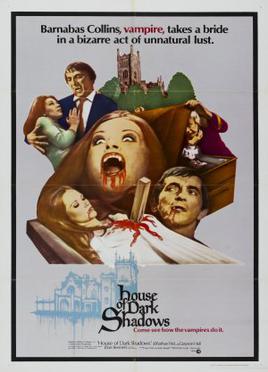
The more you learn the more you realize just how little you know.  The House of Dark Shadows was like a key, a missing puzzle piece for me.  Dark Shadows has been on my mind quite a bit lately.  I’m the first to admit that I’m no expert.  I never saw the whole series on television—I saw many episodes once, during my childhood.  Enough to know who the characters were—especially Barnabas—but when I stopped watching it (when? Why?) I started reading the novels by Marilyn Ross.  Clearly the soap opera was gaining enough ratings to merit the building of a franchise.  But the thing was, there is so much in life that I never concentrated on it.  I read the novels occasionally, and I never saw House of Dark Shadows when it came out in 1970.  Not, in fact, until 2022.

Since I was only eight when it came out, even though it was rated PG, I would’ve had neither the means nor the money to get to a theater.  I had, in fact, never even heard of it.  Having been raised a Fundamentalist, I have a tendency to believe there is just one way a story goes.  I know there are variations—they occur in the canon of Scripture, even—but something deep-seated tells me it should go this way.  House of Dark Shadows (which explains a lot of Tim Burton’s decisions for his movie reboot) has a different story line.  Given that it was 1970 it would have been in the midst of the initial series broadcast.  The movie was quite successful.  Still, Barnabas ends up victimizing Carolyn (which in the novels he is reluctant to do), and Roger, and outright killing a number of people.

I spent the movie trying to process how the story should go.  Of course, I haven’t seen the soap opera enough to know.  This Dark Shadows franchise is episodic and it doesn’t add up.  The film was shot quickly and leaves gaps in the story.  It certainly doesn’t track well with the tale of the Maine family who knows about “cousin Barnabas”and that he visits Collinwood from time to time.  Our course, between the series and the novels there are many, many avenues to select.  When Tim Burton got the idea to make a movie he had an abundance of stories from which to choose.  The House of Dark Shadows isn’t a great movie.  It is gothic and moody and a standalone story.  And it has me wondering about what other dark shadows conceal.


Looking North

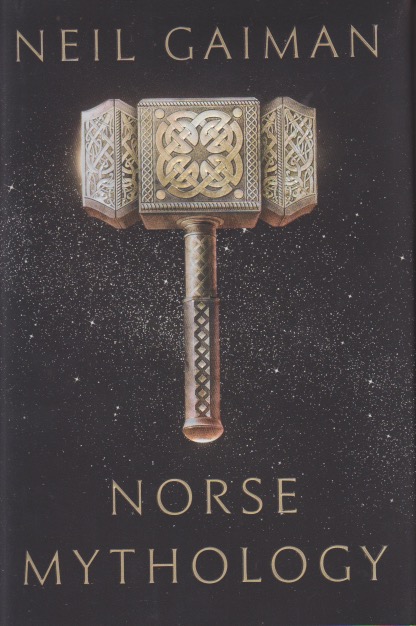
As organized religion continues its slow decline, mythology remains.  Indeed, it seems to be growing in interest.  The problem with many mythologies, for monolinguals, is that they come in languages other than English.  Translation always loses something, which is why, I suspect, Neil Gaiman was tapped to retell the Norse myths.  A very talented story-teller, Gaiman has written about gods before.  He knows their literary potential.  Norse mythology is rather odd in the canon of western thought.  The stories feature gods with as many foibles as humans and with conflicting motivations.  In some ways they are more believable than the monotheistic tradition.  They are both fun to read and poignant.

At the same time Norse Mythology is a somewhat perplexing book.  It’s difficult to tell, without being an expert, what is Gaiman and what is ancient.  In fact, the book sits next to another one with the exact same title on my shelf.  That one is labeled nonfiction, and it’s a bit more academic.  Perhaps it’s an occupational hazard that I tend to want to approach mythology in original languages, if possible.  I’ve never studied Nordic tongues and it would be a little difficult to justify starting now, with all the other things I’ve got to do.  It’s not that I don’t trust Gaiman, it’s just that every retelling is an interpretation.  Still, I’m sure the book gives the flavor of the records that survive.  One of the fascinating features of Norse mythology is that gods die.  Since it ends with Ragnarok, that seems inevitable.

Many mythologies have the world ending with the establishment of the happy reign of a singular deity.  Ragnarok, which Gaiman (and perhaps the originals) sets in the past, sees the gods dying on the battlefield against Loki and the giants.  As the earlier myths make clear, however, death in battle is the most glorious way for the Norse to end their lives.  (And seeing how it has led to a pretty peaceful adult nation, one wonders if the mythology had a calming effect.)  I’ve not read extensively in other versions of Norse mythology so I don’t know if Gaiman’s ending with Balder returning and the world starting anew is his innovation or part of the original.  Having gods who die, however, seems like a potential leveler for humans who suffer from greater powers.  There’s a sobriety to it that lends gravitas to the whole.  And like all good books, Norse Mythology has left me hungry for learning more.


Tax Season

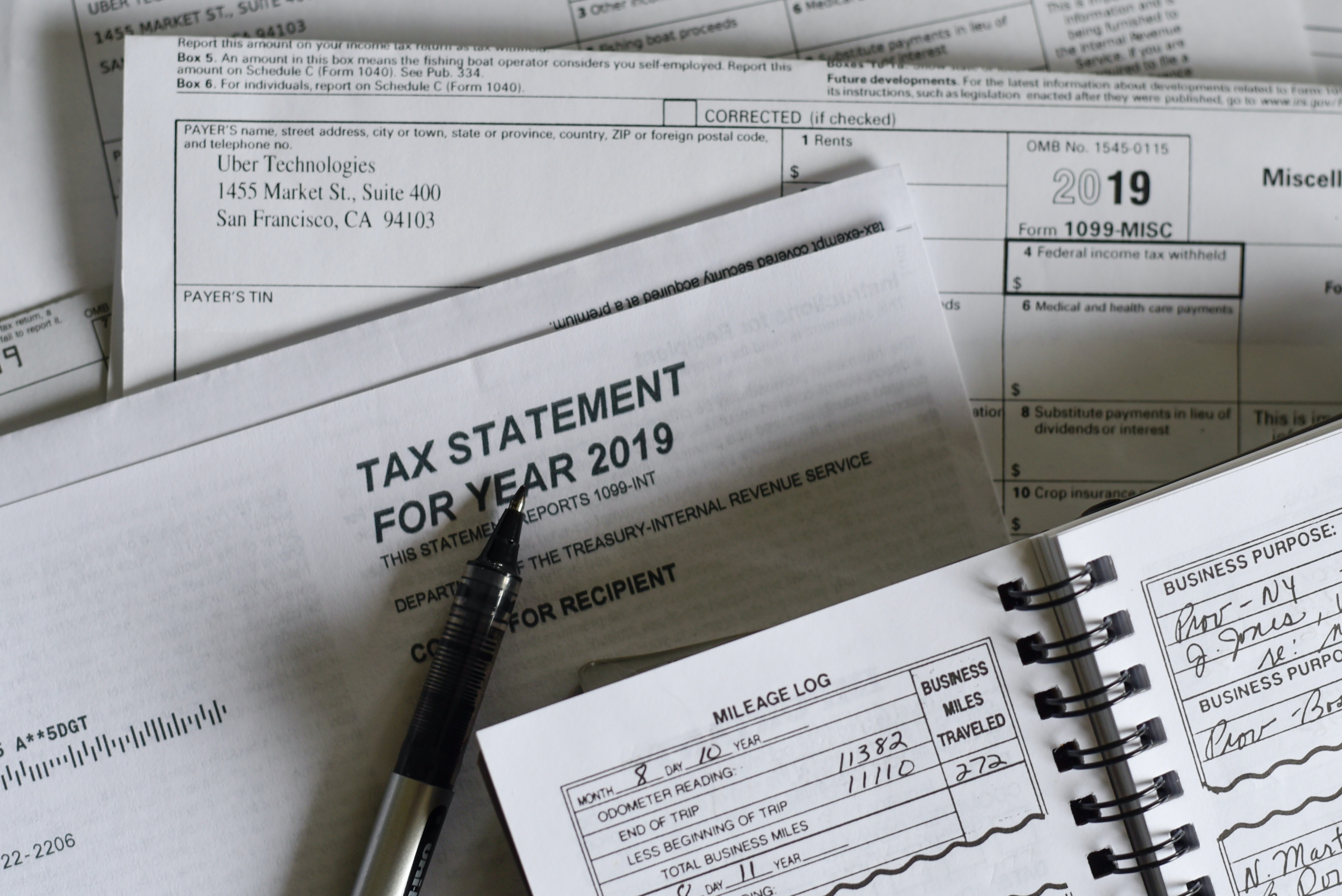
And it came to pass in those days, that there went out a decree from the Internal Revenue Service that all the world should be taxed.  (And this taxing was first made when Penn was governor of Pennsylvania.) And all went to be taxed, every one into his own city. And Steve also went up from Galilee, out of the city of Nazareth, into Northampton, unto the city of David, which is called Bethlehem; (because he was of the county and district of Northampton:) To be taxed with Kay his beloved wife, being great with patience.  Well, not exactly biblical (with apologies to Luke), but this came to me upon having to go to Bethlehem to collect our tax documents from our accountant.  There’s something biblical about living in the Lehigh Valley.

Photo by Olga DeLawrence on Unsplash

I don’t complain about having to pay taxes.  I only wish far less of the money went to pay congressional salaries.  And far less to the military.  Otherwise, I realize that in order for infrastructure to be up-kept, for the many services that make life possible for so many people, those of us who earn enough—even if not exactly flush—owe something to the system.  I’m saddened that the very wealthiest feel they’ve earned the privilege of not paying taxes. Modern-day Herods, I think, ready to kill babies in order to maintain personal power.  Still, those of us who pay participate in the most basic kind of charity.  So we make our annual trip to Bethlehem.

These days many people feel that if they don’t like other people they shouldn’t cooperate with them at all.  Even finding out that a certain Trump has been defrauding the very government which he purported to lead, and has been doing so for many years, doesn’t dissuade some of them.  I think our accountant, who looks gaunt and who doesn’t overcharge, could fairly claim a bit of back taxes that might be due.  Community is an endangered concept.  It’s a place where people support one another, and perhaps even care about others.  When I logon to Nextdoor.com I’m distressed to see the trolling and inappropriate emojis that show up.  The internet makes us all think we’re clever, ready with the snappy comeback.  Even to a recent story about a dead homeless man found in a park.  We need each other.  Society can’t move ahead if everyone keeps everything to themselves.  So it was we drove our rusty, four-cylinder donkey even unto Bethlehem.


1 April

Image credit: Trocche100, public domain via Wikimedia Commons

The funny thing is nobody knows how it got started.  In living memory, and indeed back a century or two—even more—people have considered April 1 a day for jokes and fooling.  Perhaps it was a kind of relief after winter was finally beginning to show its tail, or perhaps it was some distortion of Hilaria, the Roman festival of the goddess Cybele.  Some have speculated that it had to do with switching from the Julian to the Gregorian calendar when many were confused as to what the actual date was.  No matter what its origins are, April Fools has stuck.  It has such resonance that even legislation passed on this date is sometimes questioned as to whether it is serious.  Some locations have grand pranks planned and budgeted.

Nobody, as noted, knows how this got started.  One of my personal favorites posits a biblical origin.  Things tend to go back to the Bible in western culture, don’t they?  This idea takes it all the way back to the tenth generation of the human race: Noah’s flood.  Back in the eighteenth century it was suggested that Noah sent out his first dove before the waters abated on April 1 (this, of course, is based on knowing the exact days of creation—something that was of considerable interest in the seventeenth and eighteenth centuries).  Since the dove was sent on a “fool’s errand”—there was no dry land visible—well, April fools!

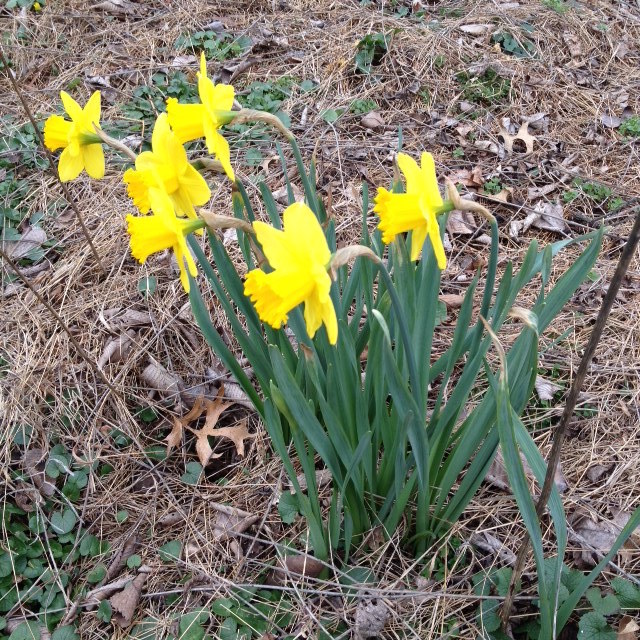
With rare exceptions this isn’t a day off work.  It’s not a holiday with any religious implications, despite speculations about Noah and his dove.  It’s really a day highlighting uncertainty.  Practical jokes can, of course, be harmful.  There can be those, such as yours truly, who might be slow to catch on.  Indeed, almost always the victim of a “practical joke” doesn’t find him or herself in an appreciative mood.  I’ve always personally thought the reference was to the weather.  Snow isn’t unusual into mid-April in parts of the northern tier.  In fact received wisdom suggests not planting annuals until May arrives.  April’s weather, in other words, fools.  Around here we’ve whiplashed through March with days in the seventies and others the coldest of the winter (or so it seemed).  Now we’re into the first full month of spring.  The early flowers are out (some of which succumbed to the cold of this week’s weather) making fools of us all.  My hope is that none of us take this day’s unknown-origin holiday too seriously.