On Offer

Feeling a bit overwhelmed by various January blues, I took me to my homegrown therapy of watching horror.  The newly released The Offering raises many questions regarding religion and horror, focusing again on Hasidic Judaism.  I say “again” because several movies from the past decade have begun to reflect Jewish monsters, often in Orthodox settings.  This is fascinating because Judaism tends not to emphasize spiritual entities, and perhaps that’s why they’re so surprising in such a framework.  I’m not a specialist in Judaism, and I worry about cultural appropriation, but horror is open to all people.  Religion often plays a central role.  A former author of mine, with Routledge, wrote a fascinating chapter in his book that dealt with Buddhist horror films.  So, The Offering. (I have an article on the movie coming out soon on Horror Homeroom, so be sure to check there for more.)
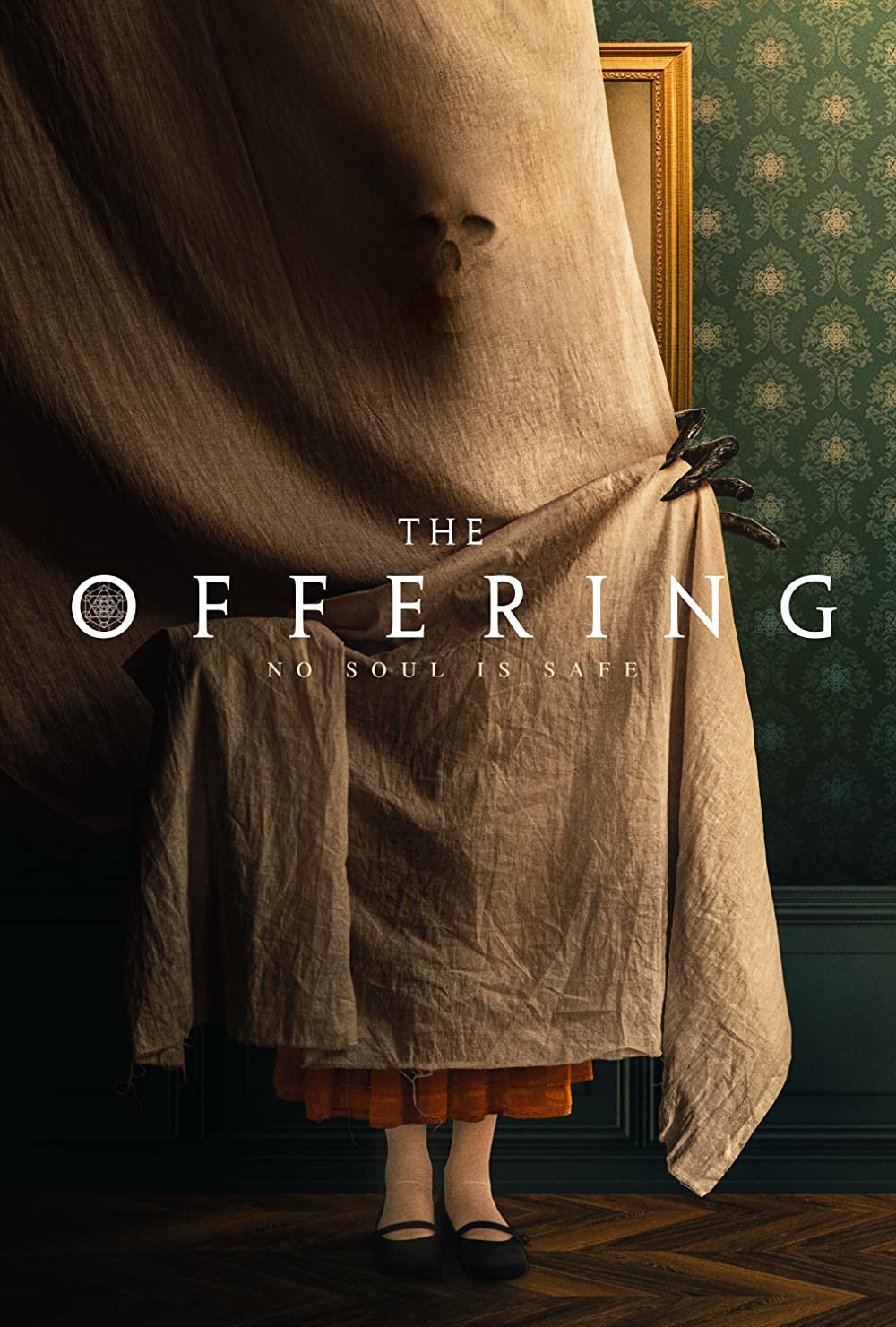
Like most Jewish-themed horror, The Offering is intelligent.  A Hasidic Jewish scholar, wishing to see his recently deceased wife again, accidentally raises a demon.  While demons aren’t especially plentiful in Judaism, this one happens to be Abyzou, a character familiar to anyone who’s seen The Possession, or, perchance, read Nightmares with the Bible or Holy Horror.  Abyzou targets children and so when Art, a non-practicing Jew, takes his pregnant wife to visit his religious father in Brooklyn, the tension is lined up.  Also, did I mention that Art’s father runs a funeral home out of his house?  The scholar’s encounter with Abyzou lands him in the morgue in the basement where, as demons are wont to do, it escapes.  And it wants that unborn baby.  There are also other family tensions which add to the complexity of the story.

I’m not in a position, without committing a lot of research time that I don’t currently have, to gauge the authenticity of Jewish lore associated with the demonic attack in this particular movie.  It is a film, however, that uses many familiar tropes in the service of horror that’s fueled by religion.  Demons are, after all, religious monsters.  Unlike The Exorcist, the goal here isn’t to exorcise but rather to trap the demon.  Exorcism always raises the troubling question of where a demon might go once it’s expelled.  The famous gospel story of Legion entering a herd of swine makes that abundantly clear.  The Offering also makes the threat to a pregnant woman a key element in the tale, and since we know that Abyzou wants the young, we’ve got built-in suspense.  There may not be a ton new here, but the movie addresses some important issues.  The dialogue about religion deserves some in-depth consideration—perhaps after I finish the book I’m currently writing.


The Point of It

It’s not difficult to feel overwhelmed by the scope of the problem.  Race was a construct developed to oppress.  The intention was to keep those of non-European, especially non-northern European, ancestry in servitude.  The rationale for doing so was part capitalistic, but also largely religious.  Convinced that Jesus was white, and that the “New Israel” had passed to Christianized Europe, it didn’t take much theological maneuvering to get to the point that others can be—in that mindset, should be—brought into line.  And since this religion comes with a built-in body-soul dualism, it’s not difficult to claim you’re trying to save a soul by destroying a body.  That way you can still sleep at night while doing something everyone knows is wrong.

Martin Luther King, Jr. stood up to such ideas.  His understanding of Christianity was more in alignment with what Jesus said and that threatened those in the establishment who found any challenge to profit heresy.  There can be no denying that racism is one more attempt to keep wealth centralized.  It’s something not to share, which, strangely enough, is presented as gospel.  There are many people still trying to correct this wrong.  It is wrong when a religion distorts its central message in order to exploit marginalized people.  The key word here is “people.”  Black people are people.  Their lives matter and every time this is said others try to counter with “all lives matter, ” a platitude that misses the point.  We need Martin Luther King Day.  We need to be reminded that we’re still not where we should be.  We’re still held in thrall to a capitalism that rewards those who use oppression to enrich themselves.

I was born in the civil rights era.  I suppose I mistakenly reasoned that others had learned the message as well.  All people deserve fair treatment.  Today we remember a Black leader, but we still have the blood of many oppressed peoples on our hands.  Those who first came to live in this country, whose land was stolen in the name of religion.  Those whose gender and sex put them at threat by those who believe control of resources is more important that care of fellow human beings.  It’s easy to feel overwhelmed, but in King’s words, “the arc of the moral universe is long, but it bends toward justice.”   If we believe that, and if we can act on it, there remains the possibility that we might actually achieve the reason we set this day aside to reflect.

Photo by Katt Yukawa on Unsplash

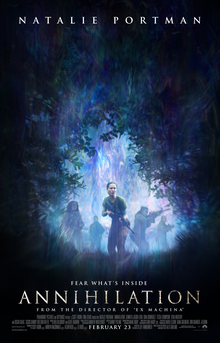
Annihilated

For a long time I resisted seeing it.  Partially I wasn’t sure if it was any good and partially—mainly—it was because of spoilers.  Annihilation came out in 2018, just as I was reading Jeff VanderMeer’s novel upon which the movie was based.  I will always remember this because I worked in a cubicle where I couldn’t see my fellow workers and the woman in the next cube was a bit of a chatterbox.  She and one of her coworkers had seen the movie and began discussing, somewhat loudly, what’d happened.  I was in the middle of the book at the time and didn’t want any spoilers.  I’d never actually met the woman in the next cube and I couldn’t go over and tell her to stop talking about the film because one of the reasons we watch movies is to talk to one another about them.  (Mostly I do this online.)

Enough time has passed, and a different woman at work, remotely, suggested I see it.  I don’t know why the movie did so poorly at the box office.  The director, Alex Garland, has said he didn’t reread the book as he was making the film because he wanted it to be impressions of the novel rather than strictly based on it.  Even as I watched, I recalled some of what I read back in 2018.  I’ll try to limit spoilers here, but if I’m talking too loudly you can just click away (and, hopefully, come back after you’ve seen it.)  It begins when a mysterious “shimmer” appears after a meteorite strike in Florida.  Those who enter the shimmer never come out.  A team of women scientists are sent in, wondering if gender might make a difference.  One of them, Lena, volunteers because her husband did make it out and almost immediately went into a coma.

A sci-fi horror movie, I wonder if it underperformed at the box office because it stars women.  The tension builds between them as they try to figure out what’s going on within the shimmer.  Species have mutated rapidly and the predatory animals are pretty frightening.  The threat, as in VanderMeer’s novel, is ecological.  The ending, I’ll say, is quite different from the book because it was intentionally written as a trilogy and the director wanted to resolve the tension in a single film before reading the other two (which I still haven’t done).  The end result is thoughtful and tense.  The acting is good and the effects are stunning.  I’d class it with Arrival as an intellectual exploration of what it means to be part of a universe we barely begin to understand.  And kudos for having women lead the way.


Missing Thoughts

Photo by Alberto Bobbera on Unsplash

Where do thoughts go?  Like many people who write, I carry a notebook with me to try to catch fleeting thoughts that make their way into my work.  That doesn’t mean you’ll catch everything, of course.  One of the most frustrating things is when you come to a key point in an essay or story and it vanishes before you can catch it.  Such things happen rather frequently.  More so than I would like, and, I’m sure if it happens to you it frustrates you as well.  Where do such important thoughts go?  This is a tricky question to answer because philosophers and scientists still don’t know what thinking, or what consciousness, is (are).  Whatever they are, they have some of my property.

Or do I have some of theirs?  Some have suggested that thinking is a much more collective activity than we suppose.  Our materialist view is that all my thoughts come from my brain and only get out if I share them.  Another way of thinking about it is that thoughts are out there and individuals receive them, like a radio or television.  Clearly our brains are involved in this, but mightn’t they be more like receivers instead of creators?  At least creators working ex nihilo.  One comforting thought, although it doesn’t help at the moment, is that that missing thought might still be out there, and like bread cast upon the waters, it will come back to you.  Sometimes it does.

Years ago I was working on a short story.  While out for a jog a perfect culmination for a scene came to me.  Naturally, by the time I reached home it was gone.  I was in anguish over it for many weeks.  Then, long after I’d stopped worrying about it, it came back within reach.  Something, I have no idea what, brought it back.  I hope this still works.  While rewriting a point in my latest book project, a stunning answer came to me, right in the middle of a paragraph.  By the time I’d hit “return” it had vanished.  The more thought I put into it, the more I felt like I was hitting a concrete wall.  As of this point, the key idea is still AWOL.  Since I don’t know where it possibly could have gone I can’t look for it.  Believe me, I’ve turned over every rock in this aging grey matter I regularly til and I just can’t find it.  Experience tells me it’s still out there somewhere.  And I do hope my receiver’s still functioning when it makes its way back around here.


Feeling Disney

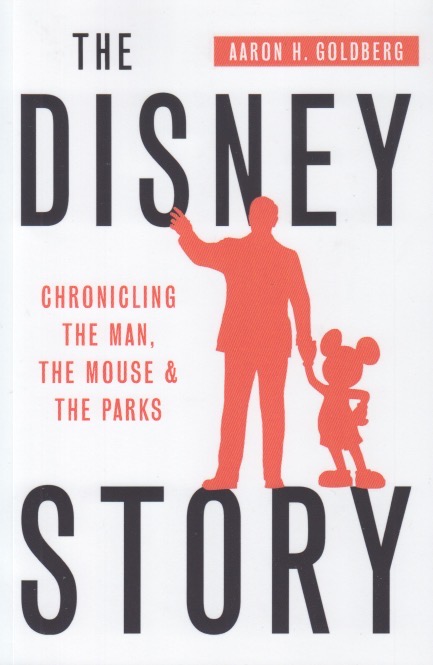
What’s the earliest Disney movie you remember seeing?  If you’re my generation this will’ve likely been in a theater since home recording wasn’t a thing yet.  I suppose it could’ve been on Disney TV, but if it was a new movie you wanted to see it just after it was out.  Mine was The Jungle Book.  Or, at least that’s how I recollect it.  Reading about Ub Iwerks made me curious about Disney so I decided to read Aaron H. Goldberg’s The Disney Story.  The subtitle, Chronicling the Man, the Mouse and the Parks, gives you an idea of what it covers in more detail.  Goldberg’s upfront in letting the reader know that newspapers and period media are his main sources.  The book is arranged chronologically.  It makes for an interesting story but I personally have never been tempted by a Disney theme park—quite a bit of the book discusses these—although there was that one time…

It was back in 1998—what a different world then!  Pre-9/11, pre-Trump, pre-pandemic.  I was still teaching at Nashotah House.  The American Academy of Religion and Society of Biblical Literature held their annual meeting in Orlando, on the Disney campus.  The experience wasn’t a good mix.  Academics and cartoon characters just don’t—wait, maybe they do.  In any case, you had to eat at the Disney estates, although you could sleep in an off-site hotel, that was a considerable shuttle ride away.  And no bars.  I did meet David Noel Freedman there.  It was in a room painted like the inside of a circus tent.  A strange place for a meeting of such gravitas to a still young scholar.

The point is, Walt Disney affects all of our lives.  He was a self-made man, but he had lots of help.  He didn’t live to see Walt Disney World (that’s the one in Florida) open, but he died knowing just about every child in the country recognized his name.  I never considered myself a Disney fan.  Yes, I watched a few of his movies and watched his Sunday evening television show, but I preferred Bugs Bunny and the Warner Brothers’ crowd.  Growing up with television you had your loyalties.  Still, we were well aware of Disney and especially his movies.  We couldn’t afford to see all of them, not by a long shot.  And those we did see were at the drive-in where kids could hide under a blanket in the back seat to economize a bit.  Still, we were infected.  Everyone was.


Not in My House

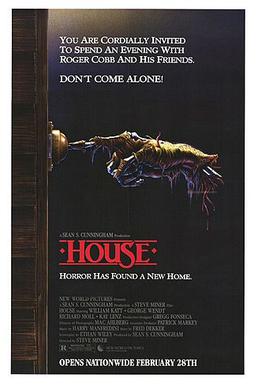
I had a friend in seminary—nameless here because I mention no non-public figures without their permission—who invited me over for movies.  Although he was more of a comedy guy, he liked horror too and I couldn’t help but think of him when watching House (the movie, not the doctor show) recently.  The film looked familiar to me but I couldn’t recall having watched it before.  By the end I was pretty sure I’d seen it with my seminary friend one weekend afternoon.  There was too much I remembered someone else commenting upon.  A comedy-horror, House is one of those not-so-great movies that becomes a cult classic.  The monsters aren’t particularly scary, and the plot’s a bit disjointed, but still it bears repeating once every few decades.  There really isn’t any religious imagery, but it does reflect on American involvement in Vietnam.

Roger Cobb, a divorced horror writer, moves into the house where his favorite aunt died by suicide.  It’s also the house where his young son went missing years ago.  The titular house, which is, of course, haunted, is where Roger plays out his memories of Vietnam while trying to write his next book.  Monsters pop out of closets and show up at his front door as he tries to make sense of what happened to a friend in the war.  I couldn’t help but be reminded of Mark Z. Danielewski’s House of Leaves as mirrors and doors open onto voids that confuse the narrative but make the film like a funhouse ride.  My friend, with whom I must’ve seen it, commented on several of these scenes, which is what convinced me, by the end, that this wasn’t a new film for me.

I watched monster films as a kid—I was a late monster boomer.  Kids talked about prominent horror in school—Rosemary’s Baby, The Exorcist, The Omen—movies I didn’t see until I was an adult.  I watched a few horror movies in college and quite a few in seminary.  I moved away from them until I lost my career and then I came running back.  I’m not really sure what I’m looking for here in this haunted house.  Like most people, I don’t like being afraid, but there seems to be something hidden here.  Horror can convey meaning, even solace.  Very few people understand my use of horror for spiritual development, but it’s something with very deep roots.  And as realities in the quotidian world become more and more untenable, I’ll have at least have had some experience grappling with monsters.  Sometimes even with friends.


The Addiction

I’m an addict.  It runs in the family.  My addiction, though, is learning new things.  Research, it seems, comes naturally to some and not to others.  Like any other activity, some people love it and others, well, don’t.  I think I knew this about my young self, but I didn’t have any context in which to frame it.  Jobs were seen as a kind of necessary evil—you had to do something so someone would pay you and you could buy food and pay the rent.  Nobody in my family could say, hey, that research interest of yours could become a career.  The impetus for even going to college came from a minister who changed my life in many ways, and his encouragement was seconded by several of my teachers.  Many of those I went to school with just stayed in the area and found jobs.

So I get onto a topic and begin to research it.  You soon come to know what Lewis Carroll meant about tumbling down rabbit holes.  It leads to Wonderland.  Always I’m surprised at how little I know.  I’ve learned some new things and that which I thought I knew proves to have been so minuscule that I wonder at my boldness of even trying to write books.  I guess I believe in giving back.  The other day someone asked me to write a follow-up to Weathering the Psalms.  As I told him, that was my plan when I was employed as a researcher.  What happened to my “career” led to my renewed interest in horror.  It just made sense in the light of circumstances.  When that happens, what can you do?  Research it.

There’s a sense, I suppose, in which you end up where you’re meant to be.  If I’d stayed in higher education I’d have had precious little motivation to write about horror and religion.  I had three or four vital research agendas, depending on where I might end up.  I’d have been happy to stay with my semitic goddesses.  I had a second book on that topic well underway.  Fully employed with an optimistic future, I’d given up watching horror.  So much so that I ignored The X-Files when it was running.  So the addiction changes specifics over time, but the drive to learn more underlies it.  Even this morning I learned some mind-expanding things, for me at least.  And I know I will keep coming back although it may cause problems for my career and it gets me nowhere in the larger scheme of things.  I’m helpless when I know my fix is as close as a book.


Like a Splinter

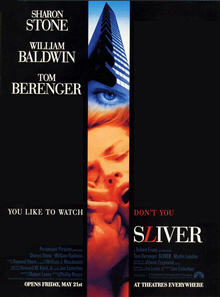
I saw that it was based on a novel by Ira Levin, and it was free on Amazon Prime, so I watched it.  I’m not sure Sliver did much for me, however.  Ironically I watched it a weekend after watching another Sharon Stone movie that had been panned, Diabolique.  (Stone grew up not far from me I learned, but then, it’s a small world.) Something I’ve noticed about myself is that my limited experience sometimes sets false expectations.  My experience with Ira Levin has been The Stepford Wives and Rosemary’s Baby.  I read both novels and saw both movies.  I’d classify them as horror, so I guess I thought that’s how Ira Levin translated to me.  What Sliver (the movie) suggests to me is that Levin must’ve been really conflicted about living in New York City.  In both this movie and Rosemary, getting a great apartment always comes with a hidden problem of a major kind.

Sliver is a bit difficult to figure out because the original ending was changed so I’m not sure what to believe.  One thing I know for sure is that movies that make a character work in publishing are never shot by someone who actually does work in the industry.  Either that or I’ve been shortchanged.  In the movie Carly Norris (Stone), who moves into the Sliver, has a huge office.  I’ve only ever had cubicles, if even that.  No oak paneling and book-lined walls for me.  In any case, the movie focuses on Carly’s home life because two men fall for her as soon as she moves in.  One of them is a killer (this was what was changed with the rewritten ending), and both of them are creeps.  One spies on everyone in the building through hidden cameras and microphones, and the other has affairs with the young, single women.  And maybe kills them.

I guess I was expecting something more like the original Stepford (the remake—why?) or Rosemary.  Both had a message with plenty of social commentary, it seemed to me.  Of course, both of them were pretty close to the book.  (I’ve not read this novel.  Perhaps I should.)  Sliver, at least the film, was more a matter of moving into a building with a mystery and not knowing whom to trust.  It really didn’t suggest much about surveillance, or women’s agency or lack thereof.  It did make a case for not moving to New York City.  I don’t know how an editor could possibly afford such a nice apartment, in any case. 


Reading Prompts

Perhaps it’s because maybe a half-dozen times in the past two years I’ve forgotten to click “publish,” or maybe everyone gets this, but WordPress started giving me daily prompts when I open the new post screen.  Everyday blogging questions such as whether you’re where you’d thought you’d be last year at this time, or what’s your favorite holiday food, or talk about your father or a father figure in your life (a loaded suggestion!).  I appreciate the thought, but I do strive for some measure of depth here.  Believe it or not, many of my posts are metaphorical, written about something that’s not the “obvious” subject of the mini-essay.  (Often when people criticize me it’s because I’m posting metaphorically.  Or maybe I just don’t know what I’m talking about.)  In any case, there have been times when a writing prompt might’ve been useful.  I haven’t used any, though.

Writing is a strange avocation.  These days many people make some kind of living as self-published authors.  The internet offers ways to minor fame—in some cases major fame—for anyone who has the time to put into it.  There’s always the question, however, of what to talk about.  This blog began, back in the days when I was fresh out of teaching religious studies, as a place where I could discuss the Bible and culture, or, more broadly, religion and culture.  That in itself limited the appeal.  People are fascinated by religion but really don’t want to read about it.  So it was that initially I had many followers—particularly among the biblical bloggers set—that eventually dropped off when I began writing about secular subjects.  Mostly I tend to focus on books.

There’s an irony to that as well.  As much as the internet helps some of us learn about books, it’s also a place that has diminished them.  Many people focus on social media to the point that there’s little time left to sit down with an actual book.  Interestingly enough, none of the prompts that WordPress now sets for me daily, has asked about what books I’ve been reading.  Perhaps books are the natural enemy of the online world.  If so, I seem to be caught between worlds.  I set aside time each day for reading, offline.  For those of us who write, reading is our food.  It often gives me the prompts I need for writing daily blog posts.  Even the days that I miss aren’t for lack of content—they’re simply forgetfulness because non-reading events crowd the rest of life.  It’s no wonder, then, that I try to engage others by asking, what books have you been reading lately?


Diabolical

Diabolique, the 1996 remake, is sometimes tagged as horror.  It’s also considered drama and a thriller, so how you classify it has some flexibility.  One thing it’s generally not classified as is “good.”  Most remakes suffer in comparison to the originals, and their originating novels explain a lot more.  Still, it’s set near Pittsburgh and it has a lot of religious imagery in it.  In case you’re not familiar—it’s the story of a love triangle involving a particularly odious man and two women who inexplicably adore him.  One of the women is a young, wealthy heiress who inherited a private school outside the city.  She’s a teacher at the school and her cheating husband is the principal.  Her best friend, beknownst to her, is sleeping with her lecherous husband.  But the best friend also protects the wife from her husband’s bullying.

The wife, a former nun, has a heart condition.  Her husband and best friend plot to scare her to death and inherit the school and all her money.  They do this via an elaborate—almost Rube Goldberg-esque—ruse where the women drown the man and he then “comes back to life” frightening the former nun into a heart attack.  Her best friend, apparently, repents along the way and along with the wife, end up drowning her husband for real when he attacks both of them.  You kind of get the sense that there are few characters with whom to empathize and although this could’ve been a feminist manifesto, it was directed by a man and missed that opportunity.  So why am I discussing it here?

The use of religion in this film is intriguing.  Throughout the school there’s discarded religious imagery.  Crosses cast aside, empty holy water fonts, grace not said before meals.  The husband, not a believer, has put all of that aside.  His wife, convinced she’s murdered her husband, confesses.  Then engages a private investigator, for appearances’ sake.  The thing is, the religious imagery doesn’t really come into contact with the story.  The only real exception is when the wife uses the cross she’s wearing to gouge her husband’s face.  A strange form of salvation indeed.  The movie isn’t that good (it’s free on Amazon Prime, though) but it underscores once again that religion does find a natural partner in crime with horror.  Or in this case, a thriller.  However you want to classify it.  The plot twists aren’t effectively executed but I suppose it’s better than a crucifix in your eye.


Hidden Talent

It’s difficult to imagine any corporation with a more powerful influence on children than Disney.  It catches us early and forms our first impressions on plenty of things.  And, of course, Disney was started by Walt Disney, right?  Well, partially.  I recently became interested in Ub Iwerks (born Ubbe Iwwerks), the man who originally came up with Mickey Mouse.  Ub Iwerks and Walt Disney got their start in animation together.  They both worked for the same Kansas City ad firm as illustrators and then went into business together.  This was in the early days of film—silent and black-and-white—when few took cartoons seriously (they hadn’t made much money yet, and that’s the true mark of seriousness).  The major studios were starting to come together in Hollywood, so eventually Disney moved to California where, with his brother Roy, they began Disney Studios.  Ub came to work with them.

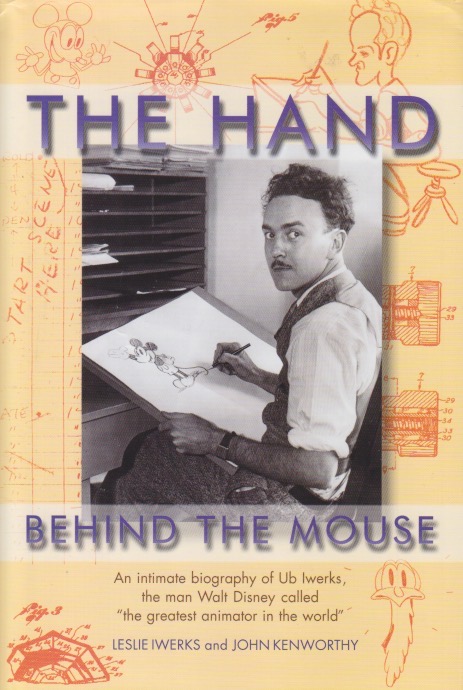
The Hand behind the Mouse, by Leslie Iwerks and John Kenworthy, is a brief account of the life of Ub Iwerks, who was famously quiet but who went on to develop special effects that were far ahead of their time.  Iwerks never really took his deserved credit for Mickey Mouse, noting that what you do with a creation is just as important as coming up with it.  Walt Disney, he opined, was the one who did something with Mickey.  At the same time, Disney claimed that Iwerks was the world’s greatest animator (as the subtitle proclaims).  The two eventually split, with Iwerks forming his own studio and hiring some of the most famous cartoonists of his day.  Hard times came, however, with the Depression and Second World War.  Iwerks closed up shop and went back to work for the by now very powerful Disney.

His move back saw him increasingly in “special processes”—essentially engineering special effects—and he was innovating literally until the day he died.  His imprint on not only Disney, but the film industry (he worked with Alfred Hitchcock on The Birds), was substantial.  He never, however, sought the limelight.  All of this makes him a remarkable individual.  He recognized Disney as the one with a vision and a brand, and also a business-savvy brother (Roy) who could help it all come together.  Walt Disney died at 65, a couple years after I was born.  Ub Iwerks died five years later.  Together they had invented American childhood.  Everyone knows Disney.  It’s the top name in children’s entertainment, a corporate giant.  I’m drawn to those, however, who fall between the cracks of history.  This brief book tells the story of one such individual who should, in all fairness, be better known.


Virtually Taxed

Nobody ever explained it to me.  DVDs, with no moving parts, can still go bad.  Having amassed a library of them over the years, and storing them the recommended way, I nevertheless come across several that have “damaged” areas—like a skip in a record—that confuses readers to the point that the movie simply isn’t enjoyable to watch.  The other day my wife had a hankering to watch one of those movies.  I checked our two streaming services and it was only available for rent, or “purchase.”  I still can’t wrap my head around buying something that doesn’t exist with money that’s purely electronic.  And people don’t believe in the spiritual world!  Well, I bit the bullet and clicked to “buy” the movie—perpetual access is what we call it in the biz.  We watched and all was well with the world.

The next day when I went to file away the receipt, which came in the form of an email, I noticed that we’d been virtually taxed for this virtual purchase.  It never occurred to me before that when you’re buying electrons configured in a certain way, that this is a taxable event.  And your tax is based on the state in which you live.  If you’re in a place with no state tax—New Hampshire, I’m looking at you—these electronic purchases will save you some money.  The funny thing about this is the system works only because we believe in it.  The skeptic who says “What, exactly, did I just purchase?” raises a valid question.  Despite current trends, I don’t mind a bit of clutter.  I can always find the physical object I’m looking for.  It’s the electronic ones that give me trouble.

Our world is becoming less and less substantial.  More and more virtual.  Some of us prefer the corporeal sensations of the hunter-gatherer world.  Feet on actual ground, hands on actual book.  Or DVD.  Whatever.  The cloud, with its taxes, strikes me as distinctly odd.  Politicians can virtually live in a state—Dr. Oz wasn’t, and isn’t, a resident of Pennsylvania—so can I virtually move to New Hampshire and not pay taxes on my electronic purchases?  I’ve always wanted to live in New England, but my jobs have never allowed it.  There’s something about this physical universe, and house prices being what they are I can’t see a move anytime soon.  To deal with this reality I guess I’ll stay where I’m physically located and just watch a movie.

Photo by Olga DeLawrence on Unsplash

Skin Deep

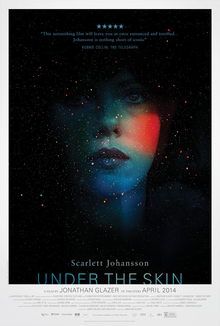
The thing about art-house movies is they’re meant to be discussed.  I spend a lot of time alone and I watch most of my movies alone.  There’s a kind of danger in that, I suppose.  Under the Skin was recommended by one of the books I read, analyzing horror.  I knew nothing about it and it became clear from the opening that director Jonathan Glazer had been heavily influenced by Stanley Kubrick.  In particular, 2001: A Space Odyssey.  There’s also the question of genre—is it science fiction or horror?  Art-house goes without saying.  The story is minimal and the movie is about images.  Even so, Glazer spent years working on the script.  The results won critical acclaim but box office failure.  We know the feeling.

So what is Under the Skin about?  Quite a bit is implied rather than stated outright.  The woman—the characters are generally unnamed—is an alien trying to learn about, while living off of, humans.  Early on she learns that sex appeal will nearly always entrap men so that they can be used for food.  Much of the film involves her driving around Scotland, seeking victims.  She has a co-conspirator who goes around making sure she leaves no traceable clues.  Conversation is minimal and shots linger to a point that viewers might feel the need for some explanation.  When she finds a victim with a deformity, the woman begins to learn empathy.  This victim is apparently set free, but is rounded up by her companion.

The woman tries to befriend a kindly man who tries to help her.  She can’t eat human food and doesn’t know to wear a coat in a Scottish winter.  The intimacy scares her and she comes across a logger in the forest with rape on his mind.  When he discovers she’s not human, he burns her to death.  Her companion, apparently seeking her, has no idea where she’s gone.  Roll credits.  As I say, the story is conveyed by the images and they stick with you.  The beautiful Scottish scenery can’t help but appeal to someone who’s lived there for a time.  The movie leaves you reflective and in the mood for conversation, the way art-house films do.  It’s also another example of Euro-horror.   This has captured my attention of late since it’s generally intelligent and light on the violence.  It makes you think.  Critics loved it, but the paying public didn’t want to hand over cash to see it.  That means, in my private calculus, that it’s well worth watching.


New Horseman

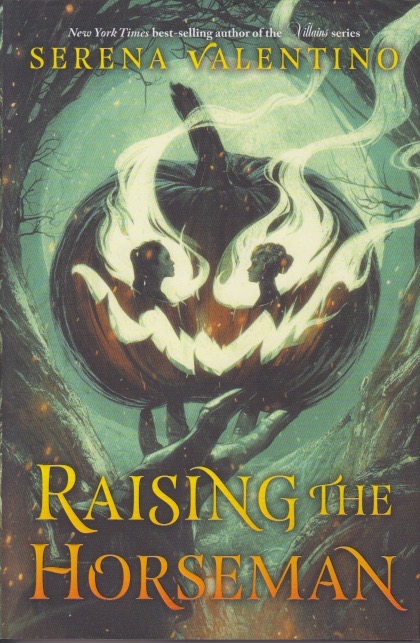
You’d think it’d be obvious, but it took me some time to realize that when a story’s being retold in a literary context, the point isn’t to restate the original in new words.  No, sometimes the vision is quite different and the result is like building a different person from the same skeleton.  I’m still on my Sleepy Hollow kick and I’m interested in what contemporary writers see in the story.  Serena Valentino’s Raising the Horseman is a feminist retelling with sensitivity to LGBTQ+ concerns.  Like some other recent Sleepy Hollow novels—Alyssa Palombo’s Spellbook of Katrina Van Tassel and Christina Henry’s Horseman—she takes the point of view of either Katrina or one of her descendants.  In this case, both, as a present-day Katrina reads the diary of the original Katrina in Sleepy Hollow.

The story is pitched at the young adult level—a literary scene that’s thriving these days—and sets up the story this way:  Katrina Van Tassel married Brom Bones and left her vast estate to her daughter and their daughters, as long as they took her name.  This creates an unbroken succession of Katrina Van Tassels.  As might be expected, the current Kat, as a teenager, wants to follow her own path rather than staying in Sleepy Hollow for the rest of her life.  She meets a new girl in town, Isadora, who encourages her to see how her boyfriend Blake has been keeping her in an abusive relationship.  “The Legend of Sleepy Hollow” is a love triangle, and that develops here as well, moving in new directions.

Valentino has been writing a series called Villains for some time.  That series takes on the viewpoint of the antagonist rather that the hero.  Such tales are quite popular these days as we reexamine dusty assumptions that have been sitting undisturbed for far too long.  Fans of Sleepy Hollow will recognize the base story in this novel, but will be taken along a different path and will be left without a simple resolution.  Younger readers adopt a more open attitude towards life, watching, as they do, the antics of many of their elders (particularly angry white men in positions of power), and they recognize bad behavior when they see it.  The novel is a plea for tolerance, a trait that’s much needed in the world.  The Headless Horseman is still there, of course, but the real villains of the story might not be who you assume they are.


Take the Tour

If you read my blog posts on Facebook, Twitter, or Goodreads (Hi, y’all!), you may not be aware of my actual website.  Now I have no kind of fame, no matter how modest, but the website does contain more than my blog posts.  I’ve been working on it lately to try to update the place a little.  There are separate pages for all my books, for example.  And links to the various interviews I’ve had, as well as links to my YouTube videos (thank you to my original 14 followers!).  If you know me personally you know that I’m not the self-promoting type.  I have a monster-sized inferiority complex (so it’s good that I don’t run for political office), and I’m a champion introvert.  I spend a lot of time by myself.  So why do I do all this web-based stuff?

Good question.  You see, I work in publishing and one of the things I hear constantly is marketing and publicity folks talking about an author’s platform (or lack thereof).  Believe it or not, my humble efforts here outstrip many authors—I do have a website and I tweet and book-face, no matter how infrequently.  In other words I do this to write. Call it being a modern writer.  The days are long gone when you wrote a manuscript and mailed it in and let the publisher do their thing.  To be a writer is to have to promote yourself, no matter how inferior or introverted you may feel or be.  If you’re a regular reader you know I miss the old way of doing things.

Photo by Rodion Kutsaiev on Unsplash

We learn lessons when we’re young.  Those lessons are difficult to unlearn.  I didn’t really know what it meant to be a writer—I grew up among laborers in a blue collar family—but I knew whatever my job might be it would involve writing.  As it turns out I’ve had more success (such as it is) in getting published as a nonfiction writer.  A great deal of that is due to learning how the system works—being in publishing helps—and figuring out how to place a book.  I wasn’t an English or even publishing major.  It didn’t seem to be rocket science back then, but it has become a more technological industry today.  Of course, time for doing this extra stuff is limited.  Indeed, if you work 925 you know that time to do anything outside of work is already rare enough.  If all of this looks like an amateur built it, it’s because that’s true.  The urge to write is, however, elemental.  Some of us are willing to work for words.