More Proof

They’re here!  The second proofs for The Wicker Man have arrived.  Nothing makes you feel like a book will actually happen than seeing the stages unfold.  In the meantime I’ve begun seeking an agent for the next book.  This is always a tricky process—work a ton on a pitch, send it, and try to forget about it because most agents simply won’t respond.  If they do it won’t be for a month or two.  And even then they may not like what you’ve written.  It’s a weird system.  Meanwhile at least I’ve got proofs to read.  Proofreading is stressful enough.  I’ve read my new book proposal lots of times.  It was only after I’d sent it to a couple of agents that I found the typos.  You are your own worst editor.  Even if you’re an editor.
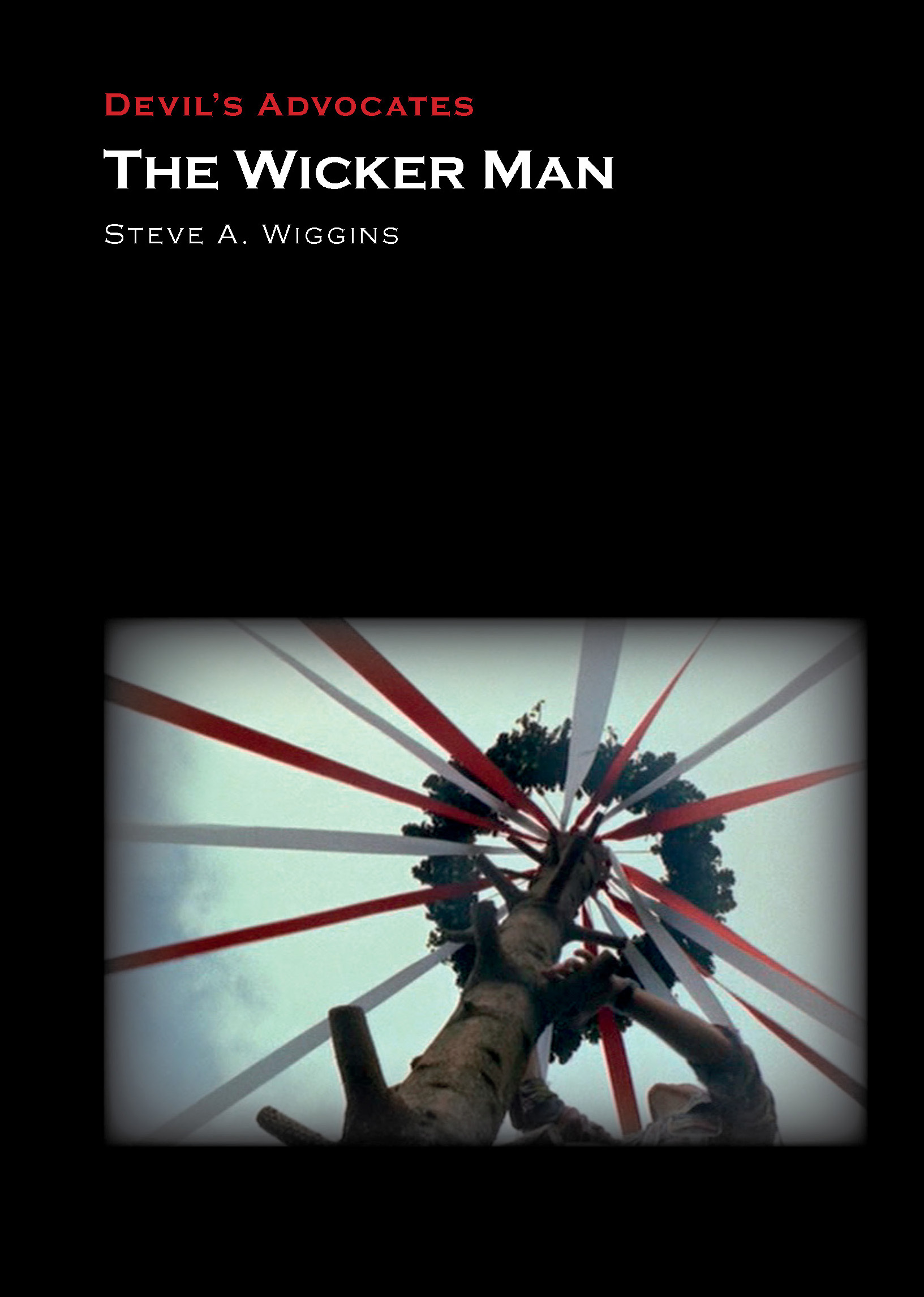
Still, you feel like proofs arriving should be occasion for a day off work.  Like your boss would say, “That’s quite an accomplishment!  Why don’t you take a day off to get started with it?”  I live in a fantasy world, I guess.  The proofs arrive with their shot of adrenaline and then you’ve got to read other people’s ideas for less interesting books (or so it seems).  Maybe this is why not so many editors write any more.  It’s exhausting.  Of course, I’m writing this post instead of reading the proofs.  Every diet should have some variety, even the literary kind.

I’m not a fussy author.  Some turns of phrase I will fight over, but I know copyeditors mean well.  I’ve done some copyediting myself, and I meant well.  Authors are people who are in for the long haul.  From the time you start working on a book (and if finding an agent is part of the process, you need to add several more months) to completion is generally measured in years.  It’s not unusual to get no pay at all for this work.  As Ivan Klima wrote: “A truly literary work comes into being as its creator’s cry of protest against the forgetting that looms over him, over his predecessors and his contemporaries alike, and over his time, and the language he speaks.  A literary work is something that defies death.”  If you can forgive the sexist language, there’s a great deal of truth there.  And part of that process is the effort to locate an agent who shares your vision.  And, of course, getting proofs back to the publisher on time.


Measuring Humanity

The humanities have fallen in love with data.  Let me put a finer point on it: those who use the humanities as a profession have had to turn to “evidence based” metrics in figuring out what it means to be human.  As an actual human, I’m feeling data fatigue.  Some of us aren’t good with numbers.  Our teachers encouraged us to move into the humanities.  Now, at an age of not young, many of us are being instructed that we now have to get good at numbers because numbers are the only truth.  I have philosophical and spiritual objections to this, but you can’t get a job as a philosophical and spiritual objector.  Numbers don’t, and can’t tell the whole story.  The term “calculating” used to be used to describe a person without feeling.  Now we’re all just calculators.

Whither can we go to experience true humanities again?  Professorships are “measured” by success factors.  “Key performance indicators” are applied to the gods.  There are immeasurables, but they can’t be slotted neatly into our computer’s algorithms, so they are swept off the table.  If you want to wear a white collar, you have to put business first.  The soul is dying, but that’s just fine as long as we can keep the body alive.  You see, the humanities used to be about those things that can’t be quantified with “evidence based” metrics.  How it feels to be in love, or why we cower in the presence of an unseen deity.  How do you put numbers on artistic inspiration?  Sure, we can “measure” aspects of Beethoven’s seventh symphony, but they don’t explain what it’s like to listen to it.

Kowtowing to capitalism feels shameful to me.  But challenging capitalism is like pacifists standing up to those with assault rifles.  Greed derives its power only from getting everyone to agree on its objects of value.  The humanities try to argue the point, but those with control of the money are in charge of hiring.  And they do it with their abacus always close to hand.  I never learned to use a slide rule but calculators were required to graduate from the academic track in high school.  Now when I’m being asked to apply that kind of thinking again, I have to cast my mind back nearly half a century while my human brain dreams of reading and writing novels, viewing paintings, and listening to beautiful music.  But it’s a work day, and when it’s all said and done, data rules.  Look for no empaths in upper management.


World’s End?

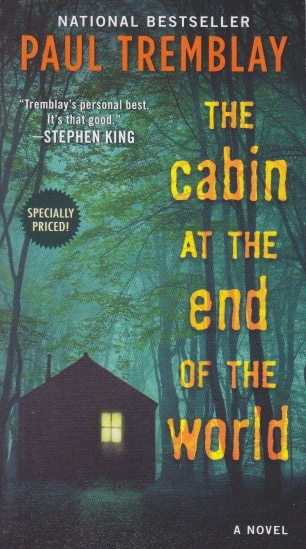
I’ve been writing on religion and horror for quite a few years now.  Sometimes you come across a horror movie, or novel, which addresses this directly.  Paul Tremblay’s The Cabin at the End of the World is one such novel.  A friend strongly recommended this, and indeed, the first half went impossibly fast.  This despite my dislike of home invasion stories.  It nevertheless kept me on the edge of my seat.  I should probably say there will be spoilers here (there will), in case you haven’t read this but intend to.  I’ll hold off on them until the next paragraph, though, so if you’re a faster reader than I am a writer you won’t accidentally run upon them.  So, a family consisting of two fathers and an adopted daughter find the cabin, where they’re vacationing, invaded by four people who believe the world is going to end.  Spoilers follow!

The world is going to end unless the family agree to sacrifice one of themselves to stop the apocalypse.  The strangers are armed while the vacationers are not.  And, as usually happens when those with weapons confront the innocent, the armed prevail.  But.  But the family refuses to sacrifice anyone.  Then the brainwashed four do something unexpected—they kill one of their own.  They continue to do this, attempting to convince the men that if the invaders all die, and neither of the men is sacrificed, the world will end.  Quite a bit of the novel then becomes a theological discussion regarding what kind of god would make such a demand.  Of course, if you read Genesis you’ll already know the answer, right Isaac?

Tremblay knows not to tip his authorial hand as to what’s really happening.  As the cabin becomes a mess of blood and gore, the television seems to be showing predicted apocalyptic events.  The invaders can’t reveal their source of secret knowledge because they receive visions telling them what to do.  The whole thing raises that most troubling of questions: who is really in charge?  Is there a bloodthirsty deity who requires a willing death or are the invaders simply good at acting out their paranoia and interpreting events to meet their expectations?  So it is that Cabin becomes a disturbing story—nearly a theodicy—asking age-old questions of what happens when religious belief conflicts with rational materialism.  There are enough hints of supernatural happenings to make the reader wonder.  And when it ends it affirms something many of us are exploring these days—religion and horror have much in common but neither is clearly understood.


Not Dagon

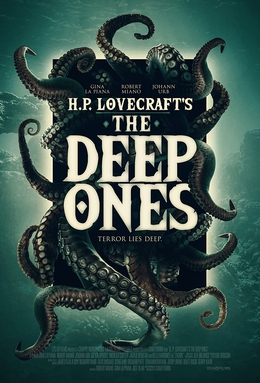
There’s an aesthetic to bad movies.  And when your production company is Crappy World Films you’ve got to wonder if it’s intentional.  Chad Ferrin’s H. P. Lovecraft’s The Deep Ones, which was released in 2020, isn’t a great movie.  It is kinda fun, though.  I’ve had a weakness for explicit Lovecraft films ever since Stuart Gordon’s very moody Dagon.  That film was clearly the inspiration for this one.  With the “low” budget of only a million dollars (it feels strange to write that), it nevertheless has a clean cinematography that shows some artistry.  The story just isn’t that good.  A young couple is seeking a getaway at an oceanfront AirBNB only to discover it’s part of a “gated” community.  Their hosts, who are living in the boat down at the marina, keep on stopping in, not leaving them much privacy.

The set-up is very much a Rosemary’s Baby scenario.  The community, as the title suggests, worship the Old Ones.  They introduce Cthulhu early on, but the young man of the couple has never heard of him (he obviously doesn’t spend much time on the internet).  Speaking of the internet, the film makes the point that everyone spends too much time on it, and there’s perhaps some truth to that, but, if you’re streaming the movie you’re also participating.  In any case, the community wants women to offer to Dagon—and the monster here is clearly low-budget—so they can bear more children for the Deep Ones.  Well, not so much bear children for them as to be pregnant with tentacles that can somehow convert newcomers.  Once you’ve been tentacled, it seems, you’re a member of the community.

There is a kind of Lovecraft vibe to the film despite the often wooden acting and throwaway dialogue.  One thing Lovecraft had learned from Poe was the consistency of mood.  It’s here that the movie runs into some trouble.  At times it’s a little scary, at times dramatic, but too much of it just feels silly.  The case could be made that Lovecraft’s writing tends toward the puerile and there’s some truth to that.  It is never silly, however.  Sometimes when translated to the screen the outlandishness of Lovecraft’s view of the world comes across as so weird as to be funny.  It takes an able director, and a strong writer, to adapt him to cinema successfully.  It’s no accident, then, that the movie is dedicated to Stuart Gordon, whose Dagon is still difficult for me to watch, so full of Lovecraft as it is.


Ultimate Collectables

“Collectible ebook” is a phrase you never hear.  That’s because such a thing doesn’t exist.  Even though I work in the publishing industry, I’m not really a fan of ebooks.  I don’t write my books anticipating pointing to some screen and crowing, “I wrote that!”  No, books exist as entities and there’s a kind of contempt associated with making them disposable by creating them out of ephemera.  I’m not wealthy enough to be a serious book collector, but when I buy used books I notice the rare category of “collectible” with some envy.  This is a book that has been treasured.  You see, I know that when I die I’ll leave little behind apart from my books.  If they were ebooks they’d be worthless.  You can’t sell them or trade them in.  Or even put them into a little free library.

Sometimes buying electrons seems to be more convenient than the alternative.  For example, we’ve pretty much run out of space for DVDs and Amazon seems unlikely to fold soon (like UltraViolet did), so subscribing to a streaming for a movie seems safe enough.  Yes, you can resell DVDs, but often for a pittance and you gain by opening more space.  The space books take up demonstrates their importance.  We bought our house with an eye toward book space, and even though we don’t have many books that would be considered “collectible,” we do have many that are interesting.  Unusual.  They have been conversation-starters when we’ve had the curious over.  (I always look at other people’s books when invited to someone’s place, if they’re publicly displayed.  It’s how people get to know each other.  I’ve never looked at anyone’s ebooks.)

Books are a cultural object.  The big tech companies have been trying to drive traffic to ebooks for years.  The pandemic gave them a leg up, but book sales—print book sales—also increased.  You can watch only so much Netflix, I guess.  I have yet to find a study that shows something read on a screen stays longer, or receives deeper engagement than something in print does.  To be sure, electronic reading has its place, but its place isn’t to replace actual books.  I guess I’m suspicious of the electronic revolution.  It feels fragile and tenuous to me.  If the power goes out we’re left without our gadgets and their contents.  You can still light a candle, however, and read an actual book.  And if bought and treated wisely, you may even find something collectable on your hands.


The Other Mississippi

Salmon aren’t the only animals that head back to their ancestral homes late in life.  There’s a draw to where we’re from.  Many humans can’t physically return for socio-economic or emotional reasons, but there’s an urge that may transcend generations.  For me it’s always been traced through my maternal line to upstate New York.  My mother’s [redacted for security question purposes] family had been in the upstate region around Schenectady for generations, as traced back as far as the 1770s.  It was my maternal grandfather, branching off from his father (who made it as far as central New York) who eventually left the state, after teaching in a one-room schoolhouse, for which, in those days, you didn’t need to be a college graduate.  In any case, I have a fondness for the Hudson Valley and an interest in its history.  

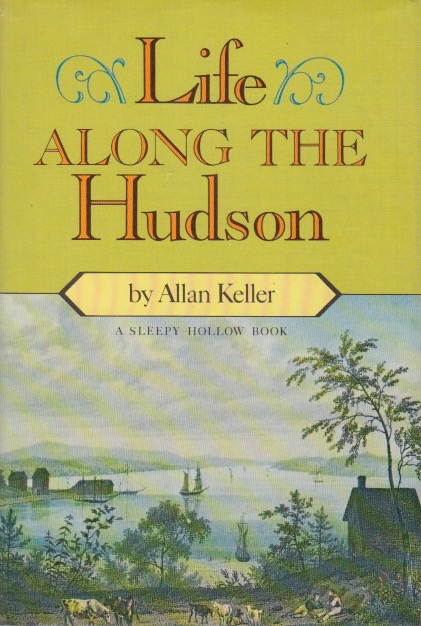
Allan Keller was a journalism professor who never became famous.  His Life along the Hudson is one of those charming, dreamy books about yesteryear.  Richly illustrated, it really isn’t a history (Keller wasn’t an historian) so much as a set of vignettes illustrating the role and importance that the river has had not only for New York state, but for the United States as a whole.  There are chapters about famous residents, battles of the Revolutionary War, historic houses, quirky facts, boating, and railroads.  It’s an interesting cross-section of a forgotten part of America.  Today when we hear Hudson River we tend to think New York City.  And while that’s not wrong, it certainly isn’t the whole story.  The Hudson early on connected Albany with Manhattan as they grew to be the two major points around which the Empire State expanded.

The book was never a bestseller.  It’s not particularly rare.  It is, however, a series of snapshots.  One of those was 1976, when the book was published.  The Hudson had become so polluted that major remediation efforts had to be put in place to redefine it from a cesspool to a beautiful waterway that took the breath away from many early travelers.  This valley was once considered one of the truly scenic spaces in the United States.  Now it’s pretty much a suburb of New York City, but it retains much of its earlier appeal, if you know where to look.  I’ve tried to find jobs that would allow me to move back to this region of upstate New York, but I’ve ended up in my own immediate home state of Pennsylvania.  I’d go back a couple more generations, if I could, but even salmon sometimes never make it back home.


Bad Movies

It’s embarrassing.  No, really it is.  The other day I was posting on yet another bad movie I’d watched and I realized that I should add a new Category (although I’m likely the only one who uses them) on this blog.  Now, it’s a pain to add a new Category to a blog with over 5,000 posts.  I reasoned that my bad movie watching, although a lifetime pursuit, really only appeared on this blog recently.  I had to scroll through the existing Category, “Movies,” to remind myself of what I’d posted on.  I found a few to add to my new Category, then a few more.  Finally the number grew to embarrassing portions.  I kept scrolling until it made me dizzy.  I couldn’t remember whether I’d posted on The Room or not.  It’s not a horror film, but it is very bad.  So bad I watched a parody of it.  Using the search function “The Room” brought up just too many hits and I was already woozy.  Maybe I didn’t want to admit to that one.

Photo by Denise Jans on Unsplash

There’s an aesthetic to watching bad movies.  In fact, there are books written justifying the practice.  I thought maybe I had started my bad movie watching posts with Ed Wood’s Plan 9 from Outer Space, but no.  No, it went back further than that.  As someone who writes books about movies (maybe bad books about movies?) I need to do my homework.  Not only do I write books on movies, I also write on them for Horror Homeroom on occasion.  I’m scheduled to teach a class on a movie this fall.  I’ve even presented on movies to church groups (they never invite me back to talk on that topic again, however).  I know the reason lies much deeper, though.

Part of it derives from a childhood of watching bad movies.  There’s nostalgia involved.  More than that, however, I grew up poor.  Unless you’re a rags-to-riches story (I’m not) that mentality stays with you your entire life.  I’m always trying to cut costs, but I love movies.  On weekends I look for what’s free, with or without ads, on Amazon Prime.  They cater to bad movies, it turns out.  And before long it becomes like an addiction.  There’s a fascination to watching something so obviously poor that nevertheless ended up in theaters.  In other words, hope glimmers through.  My books are far too expensive to sell well.  My name isn’t widely known.  There is, in other words, a validation in watching bad movies.  I’ve got a well-populated Category for them right here.


A Theory

Do you remember that crazy college professor you had?  Chances are there was more than one.  As a late friend used to say, that’s why we pay good money to go to college.  I have an idea, perhaps even a theory, that the neurodiverse used to be largely institutionalized.  And I don’t mean in mental hospitals or “insane asylums.”  I mean in two well-respected social institutions: the university and the church.  Before you can object to the latter, consider that ministers, and before them priests, derived from shamans.  Nobody would doubt that shamans think differently than most people.  So, my theory is that when neurodiverse people came along in capitalist societies, they were shunted toward jobs in higher education and religion.  Out of sight to most people most of the time.  Then capitalism grew.

Both the church and the university became businesses.  Again, if you doubt me about churches, get to know a few bishops.  You’ll soon see.  In higher education, business people were hired as deans and presidents.  Not knowing how to handle their neurodiverse employee pool, they began hiring more “normal” people.  Those who, with no real insight or ambition, figure teaching is a cushy job.  It pays well, and it’s respectable.  But to do the job right you might just have to be neurodiverse.  Now, I don’t have the means to test my theory, but I suspect if you surveyed students over time as they graduated, you’d find fewer and fewer crazy professors.  As my departed friend would likely have said, they’re not getting their money’s worth.

Money doesn’t compromise.  Many people are driven by it without ever asking themselves why.  Do they want to be able to build private rockets to take them to Mars when capitalism finally destroys this planet?  Do they want private jets and the endless headaches of having to worry about getting even more money?  Studies tend to show that wealthy people are far from the happiest on the planet.  In fact, many of them are privately miserable.  They don’t have to work, true, but what do they think about?  Deeply.  I’ve never been driven by money.  I would like a bit more than I’ve been able to manage with my background and specialization.  Enough not to have sleepless nights over whether we can afford to fix the roof.  And still buy books.  It may be crazy to still read like a professor when I’m no longer in the guild.  I like to think I’m participating in a very old tradition.


Coming to History

Perhaps because I was a critical thinker at a young age, or maybe because I’ve always been insistent on fairness, I never took an interest in American history.  I cast my eyes back further, wondering how we got to where we are.  Such looking backward would lead to my doctorate.  Now, however, I’m interested.  I’d pay better attention to American history in school, were I now required to attend.  I’ve known about Kenneth C. DavisA Nation Rising since shortly after it was published.  My family listened to part of the recorded version when long car trips were more common.  Remembering what we’d heard, I eventually purchased the print book as well—I’m a fan of print and always will be, I’m afraid.  I only resort to ebooks when there’s no other option.

In any case, what drew me to these Untold Tales from America’s Hidden History was the information about early revivals.  Particularly those of George Whitefield.  Now, I’d learned about Whitefield in seminary (it was in United Methodist history, as it happens), but I hadn’t realized that he was America’s first superstar entertainer.  People flocked to hear him preach and he even caught the attention and friendship of Benjamin Franklin.  It’s estimated that Whitefield reached an audience of about 10 million hearers, and this was back in the eighteenth century.  He also preached in England and since the American population was just over 2 million in those days, it means he was enormously popular over here.  It was Davis’ book, not a seminary class, that made me aware of the fact.

Having grown up in one of the original thirteen colonies—Pennsylvania was a state by then; I’m not that old—you’d think I might’ve been more interested.  George Washington was in western Pennsylvania at least a time or two, and I even found a Civil War coat button poking out of the ground in our backyard once.  Nevertheless, it took adulthood, and perhaps the recognition of just how fragile our democracy is, to kickstart my interest.  Davis’ book is good for those who are interested in the lesser-known aspects of American heritage.  We aren’t always the good guys, though.  This isn’t the heavy-duty history that totters with facts and figures.  Really, it’s a set of fascinating vignettes of many people mostly forgotten these days.  And like most American histories, it shows that our political troubles today are nothing new.


Shepherding Books

One of the truths of publishing books—unless you make it to one of the big five, and even then it can’t hurt—is that you have to promote your own books.  Almost no publisher can afford to get word out that you’ve published your incredibly interesting tome with them.  So when I received an invitation from Shepherd to put together a list with one of my books on their site, naturally I said yes.  The way it works is your book page features a category of books, anchored by your own, and followed by five recommendations.  The idea is that people attracted to your subject will find this list and your book and, perhaps, just perhaps, buy a copy.  Since Nightmares with the Bible still hasn’t come out in paperback, I started my list with Holy Horror.  You can check it out here.

Authors often have no sense of scale.  Thousands of new books (perhaps up to two million) are published each year.  Think about that for a second.  Even the big five publishers can’t promote every single book, not at that rate.  There is a real satisfaction in having written and published a book, and many authors take that as a kind of entitlement.  “I’ve done my work, now somebody else should do the advertising.”  That may be fine if you have tenure somewhere and your prestige is assured.  If you’re a mere mortal like the rest of us, however, that means using social media.  Make a webpage.  Start a blog.  Get a Twitter and Facebook account.  The fact is, unless you do these things people won’t be able to find you.  They don’t spend their weekends at the local library browsing the shelves for new books.

Photo by Tanner Yould on Unsplash

Shepherd is a free service to authors.  I know many people who write (most of whom don’t read this blog) but if you know of anyone who does, point them to Shepherd.  The homepage has a convenient “Contact Us” link at the bottom.  Some websites will promote your work for a fee.  For me, I’m still waiting for royalties to come anything near what I have to spend to write my books—so far it’s been a money-losing venture.  I’m optimistic, however, that some day my books will be published in the affordable range—not just the big five do this, but most publishers have to be persuaded, through social media presence, that you can help find readers.  Shepherd is a good place to start.


The Idea of Scripture

Although the academic field of biblical studies is slowly dying—this is something I wrote about a long while back on this blog—the Bible and its kin nevertheless continue to shape and control society.  I was recently reading that Islam takes quite a different view of the Qur’an than Christianity does of the Bible.  It’s also clear that Judaism has yet another way of looking at Scripture.  What underlies these Abrahamic faiths is, however, the idea of sacred texts.  They don’t have to be understood, let alone read, in order to alter perceptions of reality.  The idea that God wrote a book, combined with the idea that God doesn’t show Godself or intervene in the world for good in any obvious way, has transferred a kind of godhood onto sacred scripture.

People desire the second coming because of a deep-seated need for God to part the clouds and demonstrate that their way of looking at things is the correct way.  It may be influenced by Scripture or politics or a favorite news channel, but the result is the same—they want divine intervention and since it’s not forthcoming, their sacred texts become the rallying point around which they gather.  Like many people I’m puzzled how a man like Trump, known for his proud womanizing and lack of care for anyone other than himself, came to be seen as a messiah.  Perhaps the key is that moment he gassed American citizens for a photo op holding up a Bible he never reads.  How this comes to be interpreted as a kind of divine moment only makes sense when we realize it’s the idea of Scripture that becomes the reality of many.

I’ve read through the Bible many times.  I have to confess that trying to get through the Qur’an is a struggle for me, but I suspect quite a lot of that is cultural.  I’ve read a few other sacred texts over the years, and have found some wisdom in all of them.  It’s when they become divinities in their own rights that society begins to pay the price.  If a non-interventionist God remains invisible, that identity will be transferred to the divine surrogate—Scripture.  People will coalesce around the idol they can see rather than the invisible one they can’t, right Elijah?  These sacred books have survived partially because they contain old wisdom, and old wisdom is often better than new knowledge.  But they also survive because they have become, in some sense, gods.


Der Golem

The golem is a monster of fascination.  It has been the subject of movies from quite an early period.  The earliest, now mostly lost, seems to have been Paul Wegener’s Der Golem (1915).  This film became the first of a trilogy, with the second (also lost) being, The Golem and the Dancing Girl (also originally titled in German, 1917).  The third film mostly survives and is therefore often called The Golem, based on the fact that it is the one we can still see.  Der Golem: wie er in die Welt kam (The Golem: How He Came into the World, 1920) is considered a must-see early horror film, although that designation comes from the fact of there being a monster.  It’s not scary.  It is, after all, a silent film.

Having watched some recent examples of Jewish horror I realized that I’d missed this one and set out to rectify the situation.  This film is actually the prequel to the other two, with Wegener’s golem having already established a cinematic presence.  I wasn’t sure what to expect from the story, but I supposed that it would be the oppressed Jews creating a golem to protect them and that it would eventually go berserk, as soulless people generally do.  It may have helped to have seen the two missing films, I suspect.  This golem is made to protect the Jews, but the edict against them is cancelled by the fact that the golem exists.  The emperor is impressed with the Jewish magic and allows the Jews to remain in their ghetto.  The golem, however, develops feelings for Rabbi Loew’s daughter, which is an interesting twist.

The rabbi does lose control of his creation, and it refused to allow him to deactivate him by removing the secret word revealed by Astaroth, under a star on his chest.  A little girl outside the ghetto, picked up by the golem, playfully pulls off the star and saves the day.  This really isn’t Jewish horror, at least not in the sense of more recent films.  It’s not very close to the Jewish golem legend and saving the Jewish community is left up to a gentile girl.  The ending clearly inspired James Whale’s Frankenstein some eleven years later, but the messaging of the film is pretty much what you might expect for a non-Jew trying to tell a Jewish story.  The fact that a demon is involved in bringing the golem to life puts us into a more Christianized view of things.  Still, this historic film, which is just over an hour in length, started something that has grown more sophisticated as Jewish horror started to come into its own.


In Pictures

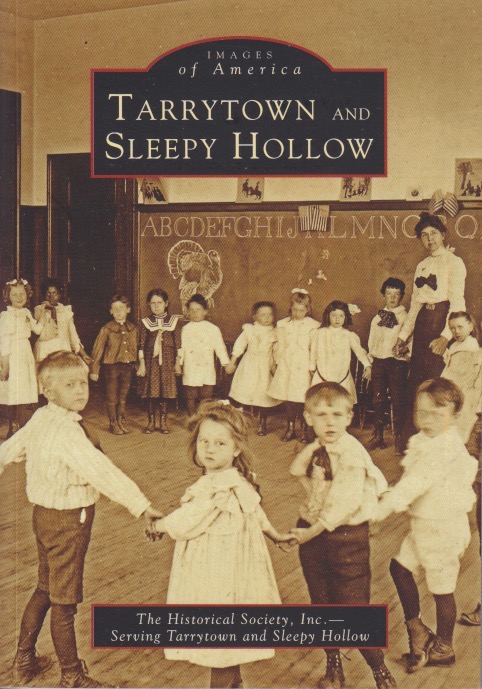
Old photographs are haunting.  One thing I’ve long noticed about high school pictures from the early twentieth century is that those kids look much more grown up than today’s graduating seniors.   (Or even my graduating class, for that matter.)  We’ve extended childhood since then, now stretching it into young professional stage.  Who doesn’t want to be forever young?  It seems to me that those who spend time in bookstores know about the Images of America series of books.  These record what local historical societies collect and put them out there for public consumption.  Some day I’ll get them for all the towns I’ve called home.  For now, however, I wanted a peek at the early days of Tarrytown and Sleepy Hollow.  If you’re by chance not familiar with the series, these books have captions and brief introductions to chapters so there’s context to explain it all. But the pictures are the draw.

One of the other features I noticed was that in a number of group photographs, a person or two is often listed as “unknown.”  It’s a fair bet that the other people in those antique images knew who these forgotten individuals were.  Photography, however, doesn’t really help those born before the mid-nineteenth century.  The photograph has a mysterious power.  It preserves a moment in history and as soon as the shutter clicks we’ve already become an older person.  In my work I have to locate people and I do so on university websites.  I’ve discovered that most faculty are far older than their pictures suggest.  Who has time to update the incremental changes every year?  Before you know it, your hair’s gone gray and you’re struggling to keep the pounds off.  We look at our younger selves and wonder.

At least I do.  I see pictures of a younger me and wonder what he might’ve done differently if he could see a picture of a present-day me.  One thing he would appreciate is my beard, such as it is.  Neither father nor step-father wore a beard, but young me always wanted one.  As life would have it, I couldn’t manage a passable one until after seminary while guys I knew in high school had heavy beards even then.  But this is a small thing.  The real changes take place in our heads.  Each day, each second, is a learning opportunity.  That’s perhaps the reason I like books like this.  Photographs of a place of fascination, even though I know none of the people or their families, are a real draw.  And they’re a form of haunting.


Kenyan Mourning

We ignore religion at our peril.  I may be a voice crying in the wilderness here, but just because church numbers are declining it doesn’t mean religion still can’t motivate.  And in large numbers.  A New York Times story tells how 179 Kenyans starved themselves to death because their preacher told them they’d meet Jesus that way.  It’s amazing how many demons pose as angels of light, even if well-meaning.  All it takes is to hold up a Bible.  People are religious by nature and they tend to believe what they’re told.  Jonestown and Waco taught us nothing about religion.  Universities continue to hack away at its study, declaring it no longer of importance.  Meanwhile useless deaths still occur because of something that “doesn’t matter.”  Religion is so easily weaponized you’d think the Pentagon might want to get in on the action.

How am I to read without an interpreter?

Our world is increasingly secular but that may not mean what it seems to.  Belief, whether in traditional religions or not, is still belief.  We may believe we know certain things, but knowledge is a lot rarer than we often suppose.  Religion evolved—co-evolved, more accurately—with our species.  We need it, even if its gods have lost their divine luster.  And if we don’t have people who can teach us about it without resorting to mere metrics we may be on our way to perdition.  You see, here in America we tend to be a pretty literalist bunch.  I don’t know what it is about our culture, but we’re uncomfortable with metaphor.  Even so we believe in all kinds of things and then deny that we do.

My mind keeps going back to those Kenyans who, trustfully believing, starved themselves to death.  No doubt the introduction of the Bible, without proper instruction, into their culture, meant that such interpretations would eventually arise.  Perhaps inevitably.  Religious thinking isn’t a bad thing, but taking sacred texts from thousands of years ago as roadmaps for today is.  We so want answers in black and white—we want someone to tell us that life isn’t this complex and that “it’s all really quite simple.”  But it’s not.  Religion does help us get through this complex world.  Even though he was a Transcendentalist, Henry David Thoreau tried the monastic approach.  It works for a while, but if we all did it there’d be untold suffering in the world.  In other words, there’s no easy answer.  There never likely will be.  Until such a time as that, we should be studying religion more, not less.  And trying to make lives better, not worse.