Devil Talk

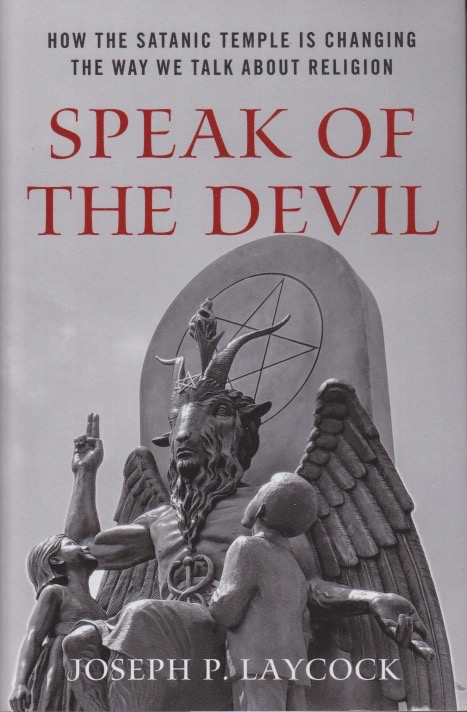
Around here, an after-school Satanic Temple club, prompted by an after-school evangelical club, led to a lawsuit where our tax dollars are being wasted.  Many local people wondered what was going on and I knew I had a book on my shelf that would help to answer that but I had to find the time to read it.  Joseph P. Laycock has been writing fascinating books for a few years now.  I picked up his Speak of the Devil: How the Satanic Temple Is Changing the Way We Talk about Religion just after it was published, but it always takes some time for me to get to books that I know I’ll have to spend time with.  I was right about spending time—there’s a lot packed in here that requires some thought.  I was vaguely aware of what the Satanic Temple is but had difficulty distinguishing it from the Church of Satan.  (I have a book on the latter, but it’s quite big and I haven’t found the time for it yet either.)  Laycock spells it out clearly.

The book begins by discussing how the Satanic Temple entered public consciousness in 2013.  Yes, it’s only been about a decade.  If you think it’s more than that, you may be confusing it with Anton LaVey’s Church of Satan.  They are different organizations.  One thing they have in common is that neither promotes belief in a literal Satan.  Both also rely on shock tactics to get their point across.  The Satanic Temple is a socially conscious organization that reacts to provocations of conservative Christian groups to try to establish their brand of Christianity as the officially sanctioned state religion.  And the evangelical groups have been making in-roads for years.  Playing the innocence card, “We’re just mainstream America saying what everyone’s thinking,” they put religious monuments in public spaces, start public meetings with Christian prayers, and receive state funding for their programs.  Often unchallenged.

Laycock’s not discussing evangelicals, but rather how the Satanic Temple arose in response to efforts to establish one form of Christianity as state sponsored.  There’s a ton of information in this book.  Among the many takeaways for me was the discussion of how good and evil are determined.  This is obviously directly relevant when Satan is involved, especially since the Devil is a post-biblical development.  The Satanic Temple, which doesn’t teach that there’s a literal Devil, attempts to counter the standard narrative by doing good deeds in the name of humanism.  You might be able to guess the conservative Christian response to that.  If you can’t, this book will help to spell it out for you.

Perhaps Unexpected

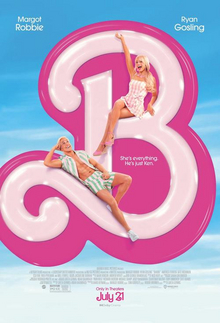
Of course I’d heard about it, but I hadn’t envisioned myself seeing it.  My family, however, wanted to get in on the Barbie conversation and, I justified to myself, at least we’d be in air conditioning for a couple of hours.  Besides, I now get “senior” rates at matinees!  I knew very little of what to expect, and I was pleasantly surprised by what I found.  In fact, I can’t remember the last time I saw a movie that was so full of social commentary.  And I actually learned quite a bit.  If you’re one of the maybe a dozen people who hasn’t seen it, the plot is more complex than you might think.  And the writing is smart.  And it’s funny.  I was hooked from the opening parody of 2001: A Space Odyssey.  The scene based on The Matrix made me realize that I was watching something unusual and important.

I’ll try to be careful with spoilers here, but basically, stereotypical Barbie experiences an existential crisis that leads her to the real world to find out what’s going on.  Ken tags along, uninvited, and Barbie is distressed to find that the real world hasn’t been equalized between the genders the way that she was intended to help it become.  While in the real world Ken gets a taste of patriarchy and decides to take it back to Barbie Land.  When Barbie returns she finds her once perfect world upside down.  But that’s not quite right.  She comes to realize that the world run by women wasn’t exactly perfect because men and women need to cooperate and share some responsibility.

There’s a lot more to it than that, of course.  How we’ve gone for centuries maintaining male dominance (might makes right philosophy), even while claiming to be “enlightened” is a mystery. Gender inequality is one of the biggest social concerns we experience.  Almost nowhere in the world are societies truly equal and Barbie offers a funny, yet poignant way of thinking about that.  I wouldn’t bother writing about it if the message wasn’t important.  The movie isn’t a feminist screed.  Nor is it simplistic drivel.  It’s a surprisingly sophisticated consideration of a society out of balance.  I’ve been in favor of equal treatment of women for as long as I’ve been conscious of the difference.  Raised by a capable single mother, I noticed in my formative years that she was doing what two-parent families did, with less than half the resources.  While Barbie won’t solve all our social ills, it is getting the conversation going.  From my point of view, it’s about time.


Mystical

I would never have experienced Tibetan singing bowls were it not for a family member’s cancer diagnosis.  Something you quickly learn is that many resources are available to help you cope.  One of those local to this area was/is Tibetan singing bowls.  I had no idea what to expect, but as a lifelong explorer of religion, I had gathered that the session would likely involve ways of thinking more common in East Asian cultures.  I was taken, however, on a spiritual journey.  In a darkened room with twenty-to-thirty cancer survivors, on our backs on the floor, we experienced sound.  Now, my musical training and ability are quite limited.  I could not identify most of the instruments (I kept my eyes closed), apart from the singing bowls which I had heard in other, western religious contexts as well.  I’ve had mystical experiences before, but I don’t know you well enough to tell you all about them.

Photo by Magic Bowls on Unsplash

The first thing I noticed this time was the color blotches in my closed eyes.  Everyone sees those kinds of things, but as the sounds increased the colors began to range outside their usual purple into whites and yellows.  It was almost like a segment from Fantasia.  The colors then began to take shape, some forming into flowers.  I knew my imagining mind had taken hold when images began to appear.  Although it was my usual bedtime by this point, I was fully cognizant of being awake.  There was no real storyline, but I was conscious of losing my sense of individuality and becoming part of the greater whole, which is what being a being on a small planet is all about.  As the sound meditation wound down, I realized that it had been many years since I’d put myself into such an environment.  It took some time to reorient myself.  When we arrived at home I was, paradoxically, too relaxed to fall asleep.

One of my college professors warned me against mysticism.  Mystical experiences are rare, in my life anyway, but unforgettable.  If you live long enough and pay the right kind of attention, however, you can find them.  They leave you with a profound sense of hope.  I’m not about to go off and join a Buddhist monastery, but Thomas Merton reminds us that Buddhism and Christianity are perfectly compatible.  This particular college professor was afraid, I surmise, that spiritual experience might outstrip dogged devotion to a single book.  Mysticism can take you to places that convince you what passes for reality is not all that’s real.  Being with lovely people who’ve had to face cancer is a spiritual experience in its own right.  Why shut out the light inside?


Generation Tech

You can’t be lazy in a technocracy.  I find myself repeating this mantra to myself when dealing with many people who use technology only when strictly necessary.  They don’t realize the war has already been lost.  If you want to thrive in this new world order, you need to keep up at least a modicum with technology.  I deal with a lot of people for whom biblical studies means handling only pens and paper.  J. C. L. Gibson, one of my doctoral advisors, wrote all his books longhand and had his secretary type them.  That’s simply no longer possible.  For authors, if you’re not willing to put notice of your books on Facebook, Twitter (or, as it seems to be going, Threads) people aren’t going to notice.  Publishers don’t send print catalogues any more.  My physical mailbox has been quite a bit less used of late.

There’s an irony to the fact that the generation that grew up on Bob Dylan’s “The Times They Are a-Changin’” are now refusing to accept our robo-overlords.  AI is here to stay and shy of a total collapse of the electrical grid, we’re not going back to where we were in the sixties.  The times have a-changed.  And you know what Bob says to do if you can’t lend an appendage.  Now, if you read my blog regularly, you know that I don’t go into this future with a sincere smile.  But at least I try to keep up with what I need to to survive.  I have to stop and remind myself how to write a check.  Or fold a roadmap.  I suspect that many of those who object to doing academic business electronically also drive by GPS.  It beats getting lost.

How does this connect to the internet?

No, I’m not the first in line.  I still wouldn’t be using a headset for Zoom/Teams meetings if my wife hadn’t given me an old one of hers.  This despite the fact I complain that I can’t hear others who insist they can speak clearly without and whose voices are muffled by the echoes in their work-at-home room.  Nevertheless, if you want to be a professional of any stripe, you need to reconcile yourself with technology and its endless changes.  You wake up one morning and Twitter is now X and you find yourself xing rather than tweeting.  I need to get more followers on Threads, but you can’t do that on your laptop—I guess times are still a-changin’.


Pagan Fear

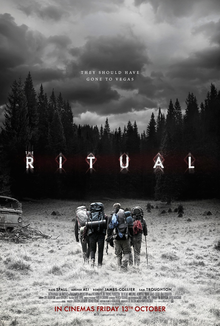
We still fear pagans.  Religion and horror are often tied up together, but when it comes to monsters we trust Catholics and fear pagans.  Of course, when Startefacts recommended The Ritual it was in the context of five pagan horror movies you should see.  I’d seen three of the others, so The Ritual seemed the next logical step.  Four friends are hiking through Sweden to honor the wishes of a fifth friend killed during a robbery.  When one of the them injures his knee, they decide to take a shortcut through the forest where a combination of the Blair Witch Project and Midsommar and Antlers takes place.  After finding a freshly gutted elk in a tree, they take shelter in an abandoned cabin surrounded by runic signs on the trees.  Soon they’re being hunted by a huge creature they can’t see clearly.

The final two are captured by a pagan group that worships one of the Jötnar—the monster that’s been hunting them.  The final boy escapes by getting out of the forest, where the Jötunn can’t go.  The choice of a Germanic monster is a bit different, and the creature design is fascinating.  Jötnar apparently straddle the line between gods and monsters, being a kind of frost giant.  The pagan group sees it as a deity that keeps them safe in return for sacrifices.  Given the number of bodies in the trees, other hikers had decided the shortcut was worth taking in the past.  But still, the pagans are cast as the bad guys.  This is in spite of the fact that the friend whose death started the whole thing was killed in England.

The religious convictions of the English robbers aren’t made clear, but they were raised in a Christian context and are every bit as brutal as the pagans.  In fact, the pagans, although they sacrifice strangers, do try to talk kindly to them (at least if they have the mark of the Jötunn on them).  Not just the pagans are savages.  At least they have a moral reason for what they’re doing, in their own minds.  The criminals are in it only for themselves.  We still fear those of other religions, although they’ve come to their beliefs in a way similar to how we’ve come to ours.  Whether born into it or converted, believers generally come to their conclusions honestly.  In the world of the film, this Jötunn is real.  And, until the end, it protects those who worship it.  So yes, this is a pagan horror film, but it makes the viewer wonder whence the horror really comes.


Whither Wicker?

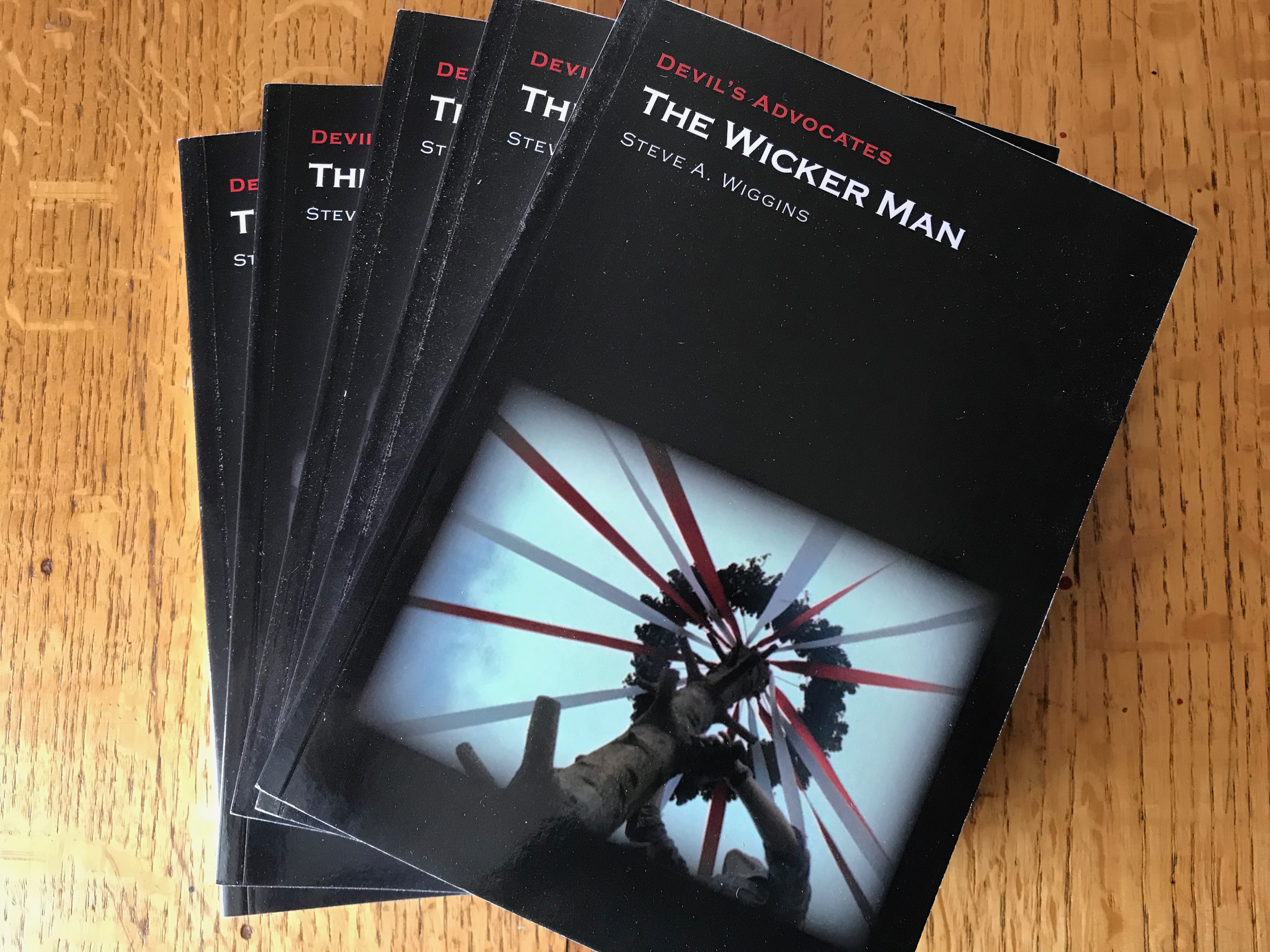
The process of producing a book is a lengthy one.  Even as an author you’re not really ever quite sure when it’s out in the world.  My author copies of The Wicker Man have arrived.  The release date is set for August and the publication date is September 1.  Still, it’s out there somewhere in the world at the moment.  The release date of the book is generally the date that stock arrives in the warehouse.  The book is technically available on the release date, but the publication date isn’t until two-to-four weeks later.  The publication date is when a book is fully stocked at the warehouse and is available in all channels (Barnes and Noble, Amazon, Bookshop, and your independent local bookstore).  Chances are you won’t find this book, being a university press book, in your local, but it can be ordered now.  Even in July.

This is a short book, so I don’t want to write too much about the contents here—then you might have no reason to buy a copy!  In brief, though, I can say that it explores The Wicker Man through the lens of holiday horror.  Not a lot has been published on the sub-genre of holiday horror.  In general publishers tend to be reluctant about holiday books—the perception is that they sell only seasonally (if my buying patterns are taken into account, that’s clearly not true).  Movies, however, can be watched at any time.  The Wicker Man is about May Day but it was filmed largely in November and was released in the UK in December of 1973 (fifty years ago), and in the United States in August of 1974.  People see it when it’s offered.  (Of course, video releases have changed all that.)

The movie has grown in stature over the years.  It appears in many pop culture references and even those who aren’t fans of horror have often heard of it.  There’s been quite a bit of buzz about John Walsh’s book on the movie, to be released in October.  (Of course, it is distributed by Penguin Random House.  I’m learning about the importance of distribution the more I delve into the publishing realm.)  My book has a more modest release and a slightly smaller sticker price (unless you go for the hardcover, then I’m right up there with university press prices).  I thought readers might like to know it now exists.  This writer, in any case, is glad to hold a copy and see the fruits of a few years’ labor, whenever it might come.


Admit This

I thought about writing a letter to the New York Times, but I know my chances of getting it accepted.  A piece run yesterday in said periodical on elite college admissions policies, which favor the affluent, presented an argument frequently used in defense: high-performing colleges are faced with the problem that the highest achieving students are affluent.  I’m here to call shenanigans on that.  I don’t often state explicitly what my background is here on this blog, knowing as I do that I had white privilege on my side, but this admissions reasoning is elitist to the hilt.  I grew up in a poverty-level household and yet when I reached college it was only to have professor after professor marvel at how well I did in their classes.  My GPA at graduation was 3.85, partially brought down by “freshman orientation” and senior ennui.  After graduating summa cum laude, I graduated seminary magna cum laude.  My doctorate was with a major European research university that didn’t use the cum laude system.

In short, a guy from a non-affluent background can succeed academically.  Professors who think otherwise don’t know what they might be missing.  There is a bias against the poor that assumes that intelligence is bred, not an innate ability.  My academic track-record demonstrates that this bias has no expiration date.  Despite my record of achievement, I was routinely passed over for positions at universities and colleges, many of them elite.  I used to keep my rejection letters but the file was getting pretty heavy to lift.  An academic unknown, I didn’t have connections in “the club” and was asked to check my working-class abilities at the door.  I’ll confess when I see such reasoning as “we can’t afford to take chances on the poor” my blood begins to boil.

Some of the smartest people I know never attended college.  Even as a child I could tell if someone was capable of deep thought or not.  I didn’t know many college-educated people; my social circle was among blue collars.  Clergy were the few exceptions, and not all of them had attended college.  Nevertheless, I could see what admissions committees (I used to serve on one) call “special intelligence.”  I also saw how terribly petty the discussions could be when it came to admissions.  Try as I might, I just can’t feel sorry for those in higher education who feel trapped by their own success.  There are gems located in mountains, even if they tend to be buried under tons of plain rock.  Admission teams admit those most like themselves.  Thus it has always been.  And we are poorer as a society because of it.

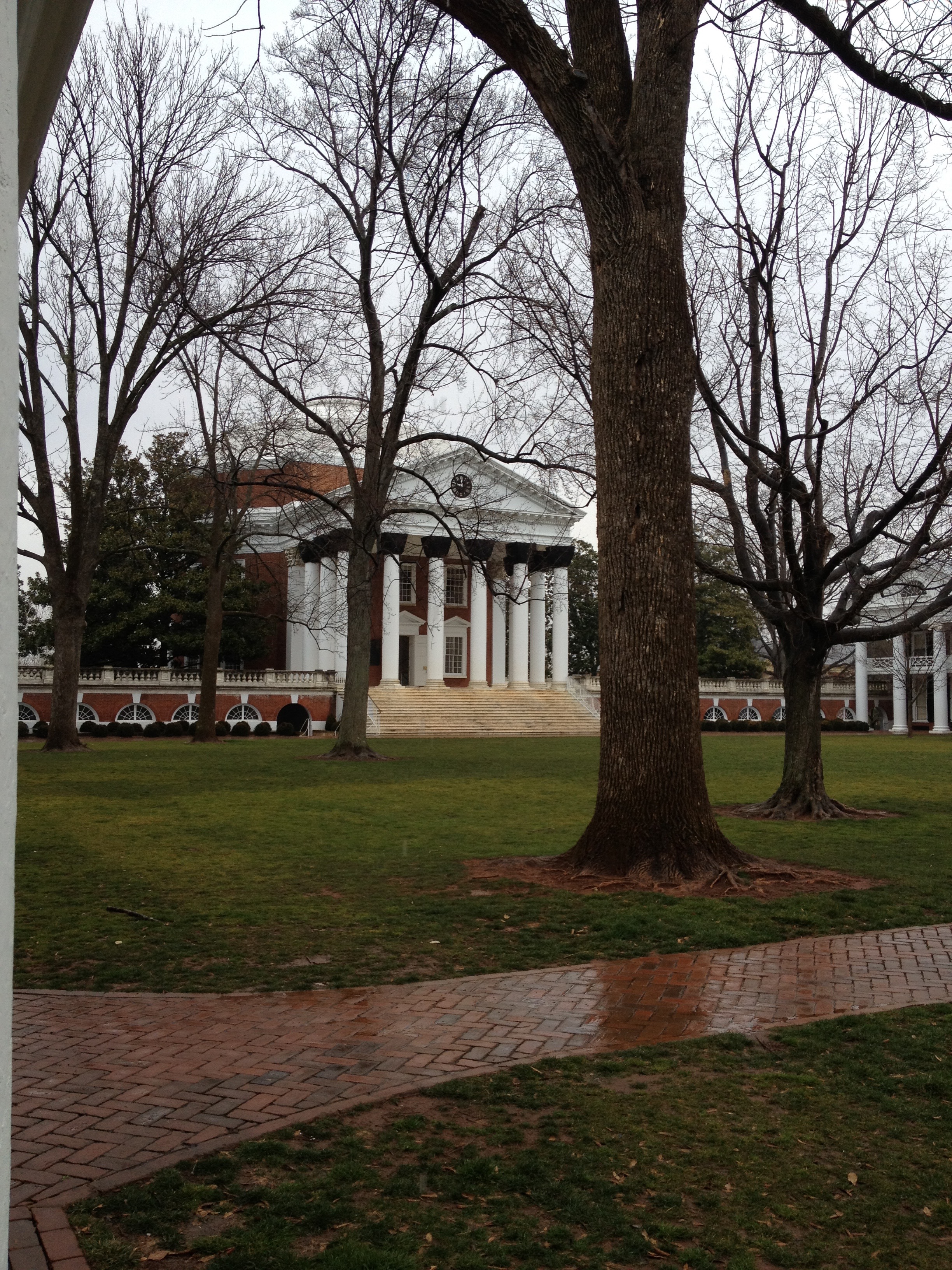
Not singling out UVA!

Creating Light

I spend a lot of time awake when it’s dark out.  I try to limit the number of lights on, both for the environment and not to wake family members who sleep on a more normal timetable.  But this schedule makes me reflect a lot about light.  For example, the other day I glanced at a mirror that happened to be reflecting a light.  By reflecting light you create more light.  Think of the moon.  A full moon on a clear night can make a massive difference in how well you can see.  Farmers used to know this as harvest moons gave the possibilities for longer light-time hours to get seasonal work done.  And that light reflecting in my eye in an early morning mirror made me wonder what would happen if you set up a mirror facing a mirror with a light in the middle.  Wouldn’t you have just created more light in the world?

I’m almost always awake before sunrise.  I don’t recollect the last time I awoke to find the sun in the sky.  There are so many subtleties to morning light.  You can see it coming a long way off.  I try to jog at first light, when it’s just light enough to see where I’m going.  It’s important to seek light in the dark.  There’s a kind of spirituality to it.  Often when I’m jogging I’m amazed at how far even a small light carries.  When I see the stars at night and think how terribly, terribly far away they are, I marvel that their light still reaches us.  Light can be blocked out, but unless it is, it stops at nothing.  Light persists.  

Bioluminescence fascinates me.  We now know that our very genes have the ability to create their own light.  Fireflies and deep-sea creatures have figured out how to do it, and, I suspect, scientists could engineer a glowing person.  We have it within ourselves to create our own light.  Science wouldn’t disagree.  Sometimes such things are best seen by walking around in the dark.  The contrast helps that inner light show through more clearly.  Those who are afraid of the dark haven’t spent the time to truly become acquainted with it.  The dark is a very capable teacher and the rhetoric that it’s evil is based on mistaking, as the Buddha said, the finger pointing at the moon for the moon itself.  But it’s starting to get light out—time for me to go for a jog to seek even more of it in the semi-dark.


Not Seeing

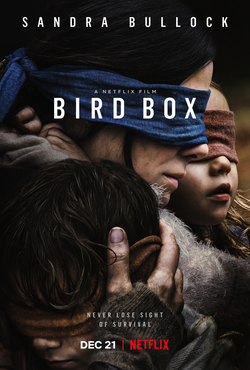
There must be ways to learn about new movies on a regular basis, but now that streaming services also produce films you’ve really got your hands full.  I’ve always had trouble keeping up and one can only afford so many streaming platforms.  In any case, I finally turned my eyes toward Bird Box.  There’s got to be a name for the phenomenon where a movie conditions a certain response that lingers after it’s over.  Fear of the phone ringing, for example, after watching When a Stranger Calls, or of making any noise after watching A Quiet Place.  Ironically for a movie, it’s a fear of opening your eyes (while outside, in any case) for Bird Box.  In fact, I was reluctant to take the garbage out, although it needed to be done.

Unlike many of the films I’ve recently watched, Bird Box had a healthy budget.  Production values were high and the acting was great.  In case you’re even slower than me, the story runs like this: there is a creature that roams outside, hunting people.  When anyone sees it, they immediately die by suicide.  In some ways there’s a similarity to M. Night Shyamalan’s The Happening, but this is much more action oriented.  A group of survivors figure out that they have to remain inside with windows covered, but this presents problems when they run out of food.  Also, a new threat arises—when the criminally insane see the creature they survive and experience a kind of religious mania and they try to make others look.

After being immersed in this world for a couple of hours, you feel like staying inside with the shades drawn.  Of course, during the summer that’s a reality much of the time when things get too hot outside.  The monster and its origin are never really explained, but clearly the effect it has on people is a psychological one.  When you stop to think about it, monsters are all about psychology.  Our fears may not all be in our heads, but most of them clearly are.  Watching such movies can build resilience.  As Tom tells Malorie, “Surviving is not living. Life is more than just what is. It’s what could be. What you could make it.”  That’s a fairly common theme when everything goes haywire, as in a movie like this.  If we embrace monsters they become less scary, at least sometimes.  There’s almost a spirituality to it.  In any case, Bird Box keeps your attention throughout, but maybe don’t watch it before the day’s outdoor chores are done.


Hopeful Flowers

Our front yard is a bit of a wreck this year.  You see, none of us are natural gardeners and with two chronic illnesses among the three of us we’ve had some multi-day hospital visits and shifting of priorities.  The front yard hasn’t been one of them.  I’m able to get out around 6 a.m. on a Saturday, however, to do some weeding.  My philosophy this year is that if it’s not something people would consider an “ugly weed” and if it stays under six inches tall, I’ll let it grow.  We’ve planted some deliberate ground cover that doesn’t seem very deliberate, but it’s slowly taking hold.  And, of course, there are the ubiquitous dandelions.  I don’t really have a problem with dandelions but others think of them as weeds and they do, admittedly, have no sense of personal space.  They’ll grow right up under some intentionally planted flower and crowd it out.

If you’ve dealt with dandelions, you know they have deep roots.  Well, it rained yesterday and the ground was soft enough that I was actually able to gentle one out the whole way today.  It was impressive.  Usually the root breaks off (a brilliant, if frustrating adaptation) less than an inch beneath the surface.  I thought to snap a picture before tossing this one on the compost pile (in the back yard, of course, inside the fence where it can’t be seen).  Talk about depth!  These yellow wildflowers with edible leaves and wine-making potential, are tenacious.  They have a very strong will.  Dandelions are perhaps the most strong-willed of plants.

With chronic illnesses, hope is essential.  Instead of getting angry at “weeds” I look at them as examples of just how mighty hope can be.  They find cracks that are so small that we overlook them.  The soil can’t always be great there, but they carry on.  Dandelions can reach impressive sizes (trust me on that one—I’m no gardener) and they don’t take “no” for an answer.  Such resilience gives me hope.  Were they more conscious (I’m sure they are at some level, but I surely hope it’s beneath the threshold of pain degree) they might well be dominant among the plants.  I missed mowing the lawn last weekend for being in the hospital with family, and it’s clear the dandelions have designs on taking over the place.  I see them and I find a deep peace.  Life finds a way, in spite of difficulty.  


Animate Magnetism

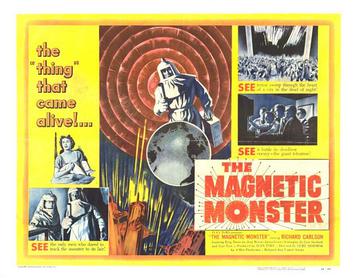
The Magnetic Monster is listed as sci-fi and horror on industry websites.  It falls into that period when horror had shifted to Hammer Studios in the UK and the US had entered that white-shirt, button-down period known as the fifties.  There were still monsters out there but they generally had to do with radiation.  In this case, it’s magnetism and its relationship to electricity.  The movie came out in 1953 and introduces what may have been the forerunner of the X-Files, namely the Office of Scientific Investigation, the OSI.  This team of A-men (yes, this was the fifties) study anomalies in order to keep America safe.  There were a total of three OSI films, of which this is the first.  The eponymous magnetic monster is alive only in a philosophical sense—it’s actually an irradiated element gone wild.

An unrestrained scientist had subjected a radioactive isotope to alpha particles for several days and this started a chain reaction.  He takes the substance onto a commercial airline—in his carry-on, no less (it was the fifties)—but the plane is diverted so the A-men can intercept it.  Every eleven hours this isotope divides and doubles, eating all the energy around itself to do so.  This creates an immense magnetic field.  So immense, in fact, that in a mere matter of days it will throw off the earth’s core and our planet will spin helplessly off into space!  Don’t panic, dear reader, the A-men are on the job.  They find a scientific means of overfeeding this monster and destroying it, which is why we’re all still here.

Interestingly, this is one of the more highly rated movies of the era, perhaps because of its scientific optimism.  Scientists can solve all our problems.  And yet you’ll find them without fail in church on Sunday morning.  The fifties were developing a kind of split personality for this country that was trying to hold two conflicting impulses together in an attempted fusion.  The problem is, overthinking either (or both) of them would demonstrate that they really have separate paths to take.  They may well be compatible, but in ways that relegating religion to Sunday morning simply doesn’t work.  Even today many scientists—generally not the outspoken kind—still hold religion and science in tension.  There is something to this impulse we call religion, but it always seems to have to wait while we use science to destroy the monsters we create ourselves. 


Literary Criticism

One of the drawbacks to being an editor becomes apparent with much reading.  Some people have writing skills.  Others don’t.  That’s no reflection on intelligence, insight, or even brilliance.  Good writing is part talent and part hard work.  The drawback is when someone thinks they’ve got what it takes, but they don’t.  I’m a gentle guy.  I don’t like to hurt feelings and yet I have a job to do.  You see, good writing involves a few things—writing for your readership, being aware of what that readership likes, and giving new information without being all technical about it.  I’ve read academics who write very high-level monographs, sprinkled with “wells” and “you sees,” which come off like a guy my age trying to impress a twenty-year old by being groovy.  Just admit you’re writing for other scholars and get down to it.

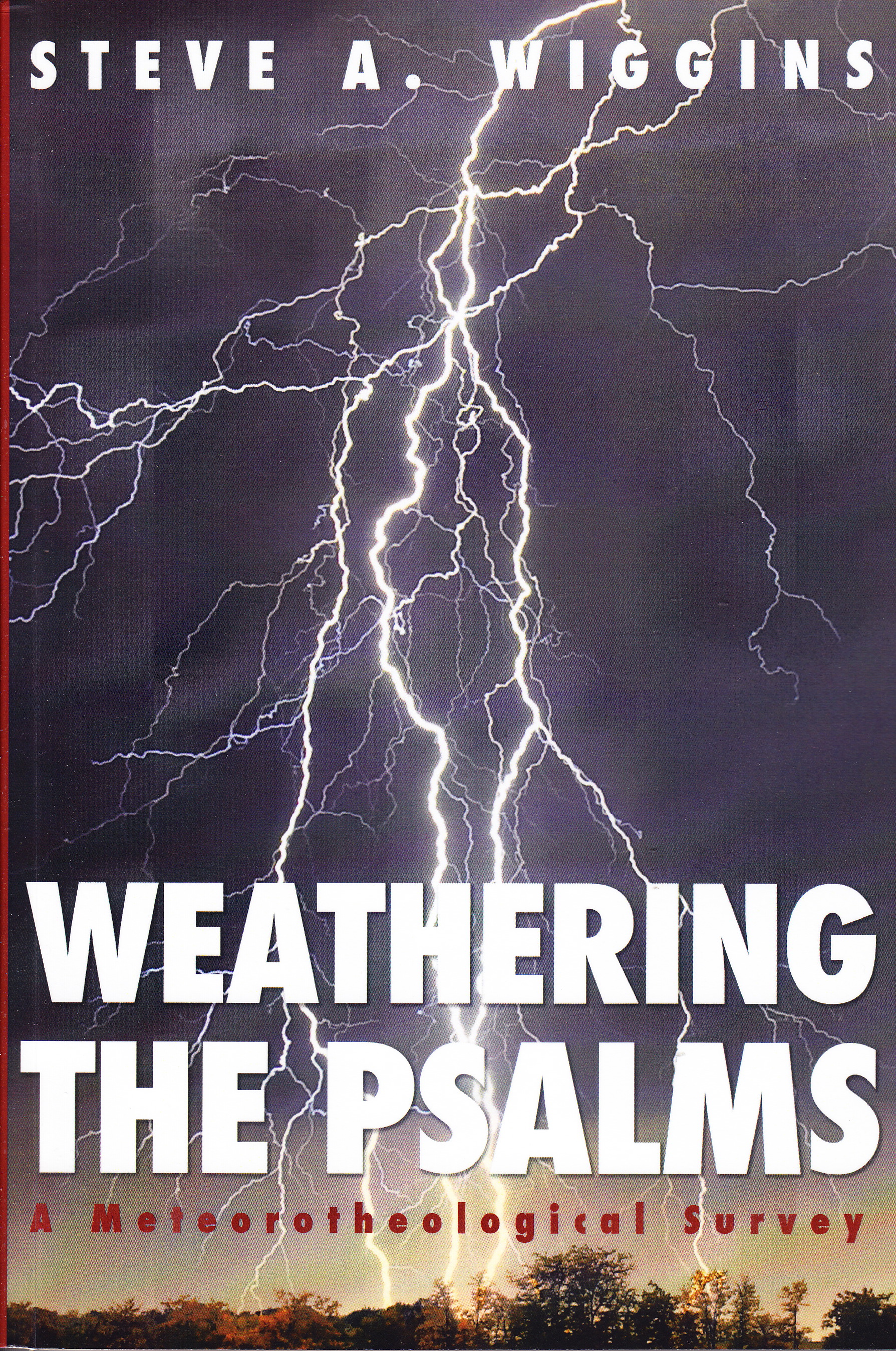
Then there’s the verbless sentence.  You know what I mean—a literary rim-shot, usually at the end of a paragraph, to heighten the drama.  Solid technique.  This only works, however, if you don’t overuse it.  I’ve read books where nearly every paragraph ends with such rim-shots.  Then the author started writing one-liner paragraphs.  This isn’t a Saturday Night Live cold opening.  The writing has to have a certain amount of gravitas.  Especially if you’re wanting to publish with a university press.  I realize that the dream of many academics is to write for a wider readership, but honesty is still a virtue.  When I wrote Weathering the Psalms I pitched it as for general readers.  Ha!  Not even specialized readers have found it that engaging.  It was a book for specialists.  I see that now.

Don’t get me wrong—I read plenty of good writing.  Some of it’s even beautiful.  Editors, however, have to read an awful lot to be able to pick out the gems.  I remember my volunteer experience on the archaeological dig at Tel Dor.  At the pottery reading sessions, a specialist would quickly sort through a box of four-thousand year-old fragments and say within seconds if there was anything interesting (“indicative” was the term she used) or not.  She did this by reading pottery like an editor reads proposals and manuscripts.  You get to a point when you can just tell.  Writing well can be learned.  Some people have an innate talent for it.  Being a gentle guy, it’s hard to be honest sometimes.  I have to keep reminding myself, however, that it’s still a virtue.


Earth Colors

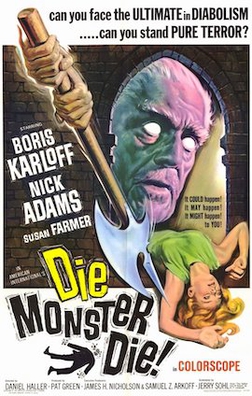
Bad movies can be therapeutic.  While trying to find hope it sometimes helps to see that others are even worse off.  This isn’t exactly Schadenfreude, but rather an awareness that your own efforts  at self-righting aren’t so bad.  Then there’s the hopeful monster theory, but that’s something different.  Already the title of Die, Monster, Die! warns the viewer that this won’t be Oscar-worthy material.  And despite his fame by 1965 Boris Karloff was still landing sub-par roles in such movies as this.  Both the directing and editing are noticeably lacking, evident even to an amateur.  A step backward may help; this movie is based one of my favorite H. P. Lovecraft stories, “The Colour out of Space.”  This is, to me, his most Poe-like tale and could well serve as the basis for a film.  Too much is changed here, however, to make it work.

Arkham is transplanted from its native New England to the old one.  The love theme manages to interrupt the mood of dread Lovecraft used in his story.  Nahum Witley’s use of the meteorite runs counter to the family’s reaction in the original.  The screenwriting doesn’t build much confidence either.  On the positive side, it feels like a fine little haunted house film from time to time, when the plodding plot doesn’t get in the way.  For a scientifically aware visitor, Stephen Reinhart has no concerns about lingering, unprotected, around a major source of radiation.  Although a few of the jump-startles work, the whole ends up feeling just a bit silly.  Of course, I was watching to escape, for a moment, what life throws at you.

Like reading poorly written books, watching bad movies can teach you mistakes not to make.  Movies can be an education rather than simply entertainment.  Cinema is one of the great myth-making vehicles for modern culture and, unfortunately, big budgets are often (but not always) necessary to make them believable.  Here is the hidden element of optimism, perhaps.  H. P. Lovecraft stories can sell films.  They also attach those who may be excluded from studio A-lists because, let’s face it, Lovecraft appeals only to a specific demographic.  The title of this particular film buries the lede, however.  No Lovecraft keywords (Dagon, Dunwich, Arkham, Cthulhu, or any of a host of others) clue readers in to what they might expect.  Learning the film business from Roger Corman might’ve steered director Daniel Haller is this direction, I suppose.  Whether he intended to or not, he produced a therapeutic result.


Here and There

There’s nothing like forgetting to make you remember.  Although we could scarcely afford it, we made many budget trips once we moved to New Jersey from Wisconsin.  As a family we used to keep detailed travel logs and we’d type up the results so that we could remember our trips.  For some reason, drifting about after losing a career, I stopped taking such notes.  Fortunately our digital camera time-stamped the photos.  I spent months organizing them only to have the external hard drive on which they were stored fail.  I’m now getting around to piecing together a bit of a chronology.  “Blog” was originally a portmanteau for “web log,” and since I’ve had no instruction on how it should be done, I mix an actual log with mental musings.  I’ve been doing so daily since 2009. Results may vary.

This blog has helped me keep track of travel, but those hazy days after the Nashotah House incident in 2004 up until blogging in 2009 remain undocumented.  Looking at the time stamps on those photos, it’s clear we traveled quite a bit.  Of course, New Jersey is a somewhat of a feast and it’s within easy reach of quite a few fascinating places.  Even a weekend was enough to explore someplace exotic, relatively local.  We used to make literary road trips on Memorial and Labor Day weekends.  Sometimes even later into the season.  Somewhere in that fog we made road trips to Maine, Connecticut, and upstate New York.  And although I grumble about technology sometimes, were it not for those digital timestamps the dates would be lost forever.  Of course, if we’d kept up our travel notebook…

As an historian, looking back comes naturally enough.  Gorgias Press downsized in 2009 and for a couple of years I made a living as an adjunct professor.  Even so, we managed a few trips (some of them mentioned on this blog).  Things must’ve been less expensive then.  Or else having a mortgage changes your perspective (the roofers are coming yet again this summer).  And the pandemic kept us at home for three years.  Whatever the cause, the urge to stretch wings and see new places remains.  Of course, it’s important to recollect where you’ve been.  In the meantime, I’m trying to piece together what happened those first few years in New Jersey.  That’s the historian’s task—putting together the events of the past from bits of evidence.  It’s pretty clear why historians get excited when they have diaries or notebooks from which to work.  We are, after all, the historians of our own lives.


Who Are We?

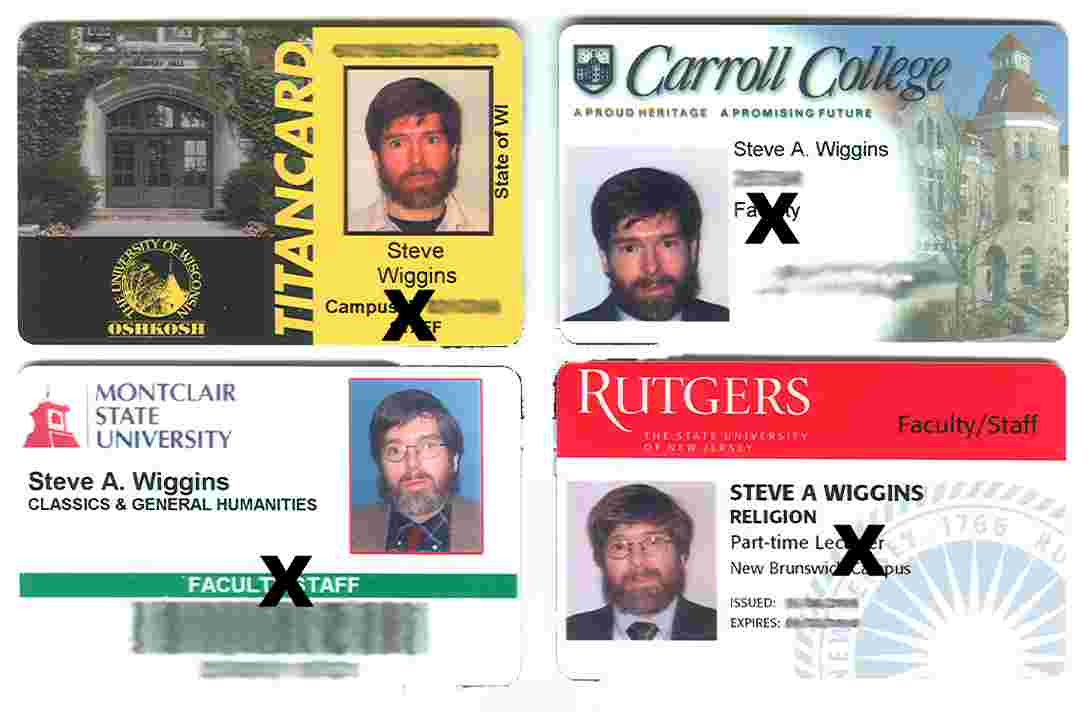
I wonder who I am.  Beyond my usual existential angst, I tried to access some online learning modules at work only to have so many barriers thrown up that I couldn’t log in.  Largely it’s because I have an online presence (be it ever so humble) outside of work.  Verification software wants to send codes to my personal email and my company has a policy against running personal emails on work computers.  Then they want to send a phone verification, but I don’t have a work cell.  I don’t need one and I have no desire to carry around two all the time because I barely use the one I have.  By the way, my cell does seem to recognize me most of the time, so maybe I should ask it who I am.

Frustrated at the learning module, I remembered that we’d been asked to explore ChatGPT for possible work applications.  I’d never used it before so I had to sign up.  I shortly ran into the very same issue.  I can’t verify through my personal phone and I found myself in the ironic position of having an artificial intelligence asking me to verify that I was human!  I know ChatGPT is not, but I do suspect it might be a politician, given all the red tape it so liberally used to get me to sign in.  Not that I plan to use it much—I was simply trying to do what a higher-up at work had asked me to do.  So now my work computer seems to doubt my identity.  I don’t doubt its—I can recognize the feel of its keyboard even in the dark.  And the way my right hand gets too hot from the battery on sweltering summer days.  It’s an unequal relationship.

My personal computer, which isn’t as paranoid as the work computer, seems to accept me for who I say I am.  I try to keep passwords secure and complex.  I have regular habits—at least most days.  I should be a compatible user.  I don’t want ChatGPT on my personal space, however, since I’m not sure I trust it.  I did try to log into the learning module on my laptop but it couldn’t be verified by the work server (because the computer’s mine, I expect).  Oh well, I didn’t really feel like chatting anyway.  But I did end the day with a computer-induced identity crisis.  If you know who I am, please let me know in the comments.  (You’ll have to authenticate with WordPress first, however.)