Hidden Wood

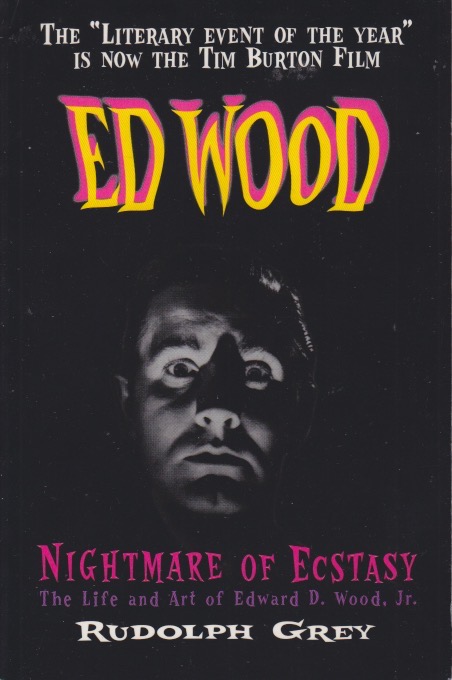
Fandom can lead to fame, even if it’s just cult fandom.  The nature of Ed Wood’s films is such that he could’ve been among those forgotten had he not posthumously developed a following.  Unfortunately it didn’t arise in time to ameliorate the tragic final years of his life when he died pretty much penniless, drinking away the pain.  Rudolph Grey’s Nightmare of Ecstasy: The Life and Work of Edward D. Wood, Jr. may have helped rescue him from obscurity.  Of course, Wood had gained a following earlier than the book, but nobody had really thought to document his life.  What I find so compelling is that Wood was like so many of us—trying hard to gain some recognition only to be shut out of what we love by a huge industry that calls the shots.  It’s difficult to get notice as an independent filmmaker, or even as a writer publishing with smaller presses.

Wood lived a most unusual life.  A straight transvestite, he fought as a Marine in World War Two.  He moved to California to try to break into filmmaking and wrote and directed several movies.  When this failed to make enough money to support him, he turned to writing pornographic novels and film scripts.  Wood had, interestingly, befriended a lonely and washed up Bela Lugosi.  His last two movies were Wood’s work.  Wood found camaraderie with other outsiders in Hollywood and he cast them in his low-budget productions.  He would try to shoot his films in less than a week.  Considering the constraints under which he operated, his movies really aren’t that bad.  They aren’t good by conventional standards, but they’re better than many other people could’ve made them in his circumstances.

This book isn’t a conventional biography.  There’s no narrative apart from the recollections culled from interviews of those who knew him and occasional letters and writings of Wood himself.  As with any biography there are gaps and lacunae.  From a writer’s point of view perhaps the saddest part of the story is how Wood and his wife were evicted from their final apartment and he had to leave his papers and manuscripts behind.  These were reportedly thrown into a dumpster and lost forever.  Although his movies may have been bad, Wood was a capable writer.  And like any writer he felt the loss of his work keenly.  He only lived about three more days after that.  His friends had largely abandoned him, alienated by his drinking and its effects on him.  Next year will mark the fiftieth anniversary of his death and, I hope, the commemorative watching of some bad movies that deserve to be remembered.
Ghosts and Spines

Guillermo del Toro’s early movies are thought-provoking and somewhat depressing.  The Devil’s Backbone, like Pan’s Labyrinth, puts children in the way of adult political unrest and war.  I suspect that sensitive people watching such movies can easily imagine that they could have been put in such circumstances, were things different.  Having said that, The Devil’s Backbone works as a sad, gothic horror movie.  Set during the Spanish Civil War, the film focuses on orphans not quite out of reach of the conflict.  There’s a ghost at the orphanage that, until near the end, we think that the bully among the kids had killed.  The point of view is that of Carlos, a new kid at the orphanage who encounters the ghost and eventually decides to find out what happened to him.  The movie’s nearly a quarter century old, but there will be spoilers below.  Maybe there have already been some—sorry!

As the children, war orphans, try to navigate how to become adults, they have limited male role models—the doctor, who is good, and the groundskeeper, who is not.  Jacinto, the groundskeeper, was raised in the orphanage and although he had a professional-level family, grew up alone and wanting better.  His response was to turn cruel.  We’re not given much of the doctor’s backstory, but due to his position at the orphanage, we have to assume there’s a sadness there as well.  A number of subplots are interlaced with this, one of which involves the title of the movie.  Originally set in Mexico rather than Spain, the Devil’s Backbone was named after a mountain range.  That has to be transferred to victims of spina bifida in the local village.  This medical name has to be explained to the audience and it adds to the gothic atmosphere.

This is an example of a bright, sunny location nevertheless being a fraught place.  The boys (there are no girls at the orphanage) make their own society—not quite on a Lord of the Flies level—because the adults are at their wits’ end due to the encroaching war.  In the end all the adults end up dead.  The future of the boys is uncertain, but they show themselves able to distinguish between good and evil.  Adults, meanwhile, perpetuate a war in which, in real life, half-a-million people were killed.  There’s a lesson here for those willing and able to learn it.  Horror often has a moral, and when the boys are carrying an old crucifix to the courtyard and one remarks that he’s “pretty heavy for a dead guy,” adults should be paying attention.


Outgrowing Fear

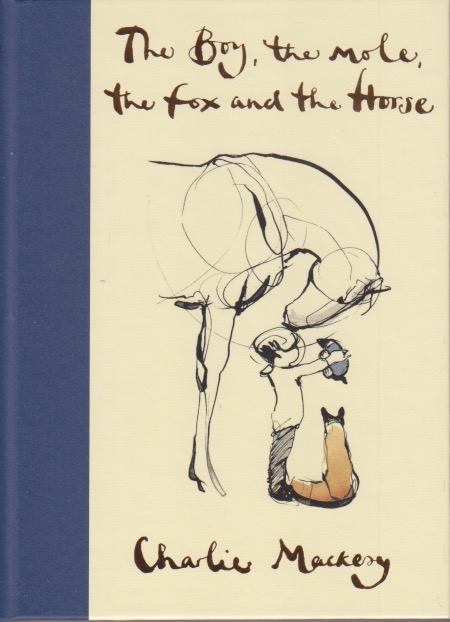
A friend, during a time of trouble, quoted from Charlie Mackesy’s The Boy, the Mole, the Fox and the Horse.  I immediately ordered a copy.  The word “magic” gets thrown around a lot, but this book holds real magic.  It is perhaps the wisest book I’ve ever read.  Do yourself a favor—if you haven’t read it, find it in a library, or order it from Bookshop.org or Amazon.  Visit a local bookstore, and if they don’t have it, ask them to order it.  If people read books like this we’d never need to worry about things.  And if everyone read it and took it to heart, we’d never need to worry about anything again.  There’s much to be said about believing in yourself and believing in the power of love.  At the end of the day they speak for themselves.

The book is for any age reader.  Handwritten and illustrated, it’s written at the level of a children’s book that takes less than an hour to read.  Its message feels almost radical, however.  That having been said, the young adult generation, I’m given to believe, grew up with the kind of outlook Mackesy offers.  The book struck me particularly relevant and necessary, something for those of us in the over forty crowd.  I understand the tendency to grow more conservative as we age and I believe it’s because we’re afraid.  Ironically, the book addresses the issue of fear, pondering how life might improve if we could get beyond being afraid of things.

The artwork is beautiful and the words are inspired.  This is an eminently quotable book.  Mackesy has been an artist by trade.  We can learn so much from such humble artists, if we’re willing to listen to them.  Kindness, love, and simplicity are gifts we often wish not to accept.  It’s very easy to hate and selfishness comes naturally to people.  And when we get together we tend to complicate things.  Once in a while we should set aside the complexities of life and make time for a simple story that reminds us of what’s really important.  Of course, those of us who read are prone to thinking of ways the world could be a better place.  Being open to love instead of hate, trust instead of fear, and hope instead of dread doesn’t come naturally.  That’s why it’s so helpful to have books to remind us of this.  Especially when such a book won’t even require an hour of your time.  I’ll be coming back to it time and again.


The Skinny on Asherah

After being removed from academia, my work on Asherah started to receive notice.  You see, I’m not part of some academic dynasty and I never landed that prestigious job that would convince people I had something worthwhile to contribute.  Besides, it turned out that several other scholars were writing books on Asherah at the same time I was.  The subject, however, has proven “evergreen.”  Asherah holds a lot of explanatory power, it seems.  She solves mysteries like an antique Holmes or Dupin.  And the Bible is full of mysteries.  The other day I saw an article by Raanan Eichler suggesting that Aaron’s rod might’ve been an asherah.  This is an intriguing idea.  In case your Exodus is a bit rusty, there are two staffs (or staves, if you prefer) that feature in, well, the exodus.  One belongs to Moses and the other to Aaron.  (Keep in mind that they were octogenarians when they began the trek.) Their stories continue through Deuteronomy.

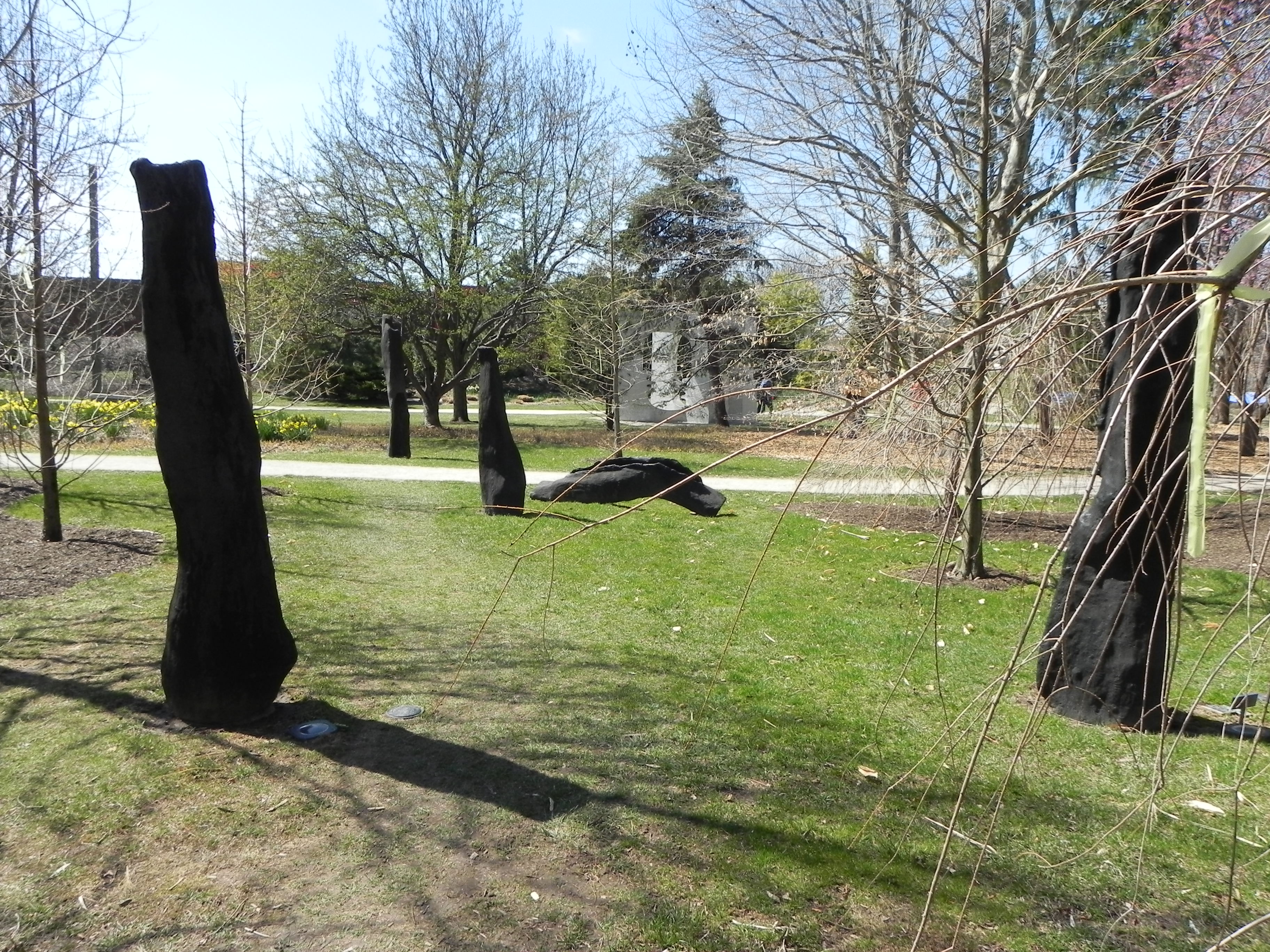
Tova Beck-Friedman ‘s “Excerpts of a Lost Forest: Homage to Ashera,” Grounds for Sculpture

In the narrative sometimes the stick is Aaron’s and sometimes it belongs to Moses.  It transforms into a snake, it turns dust into biting gnats, it divides the Reed Sea.  In short, it’s the kind of staff you’d see advertised as a miracle-working purchase on infomercials these days.  One of its many features is that it produces water from a rock when it strikes said stone.  The problem is God had told Moses to be a stone-whisperer, not a stone-striker.  Because he hits the rock with the staff he’s barred from entering the promised land.  It seems like harsh punishment for a bit of dramatic flair and I suspect that’s why Eichler suggested that the staff was an asherah.  

Of course, the biblical account doesn’t use the word “asherah” for the staff at all.  Although it accompanies the Israelites through the wilderness, and in some accounts is placed inside the ark of the covenant, it isn’t called an “asherah.”  But being in the ark puts it into the tent of meeting, and therefore later the temple.  And we do find an asherah in the temple later in the biblical story.  The thing about asherim is that they’re never defined in the Good Book.  We simply don’t know what they were.  They were made of wood and they could’ve been poles.  They might’ve been trees or statues.  A rod or staff seems to be a slimmed-down version of a full-blown pillar, so who knows?  Maybe an asherah accompanied Israel from the beginning.  Of course, being outside the academy (my own promised land), I’ll never know for sure.


Early Halloween

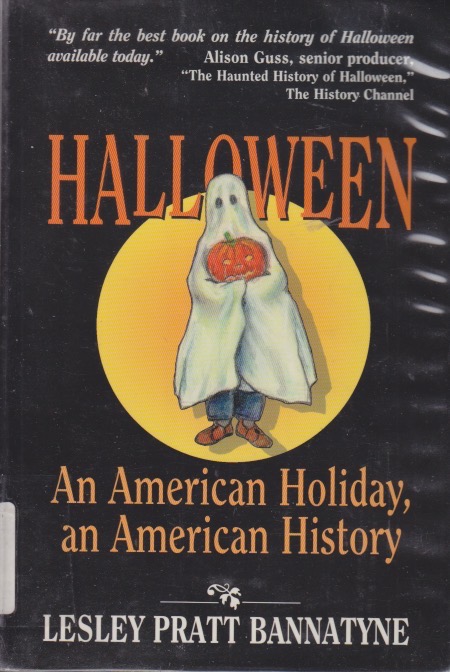
Call it seasonal disorientation syndrome, but I’ve been reading about Halloween.  I’m pretty sure I’m not the only one thinking about it.  Stores will begin Halloween displays next month, if the usual pattern recurs.  So why not do a little advanced study?  Although I’ve written about holidays myself, they’re unruly subjects to handle.  Lesley Pratt Bannatyne is a name familiar to many fans of Halloween.  Her 1990 book Halloween: An American Holiday, an American History kickstarted renewed interest in the holiday and has been followed by other studies, even occasionally with academic presses.  Still, holidays are difficult to pin down.  One of the most obvious reasons for this lies in the fact that before the world became über-connected, holidays were largely local celebrations.  Trends traveled slowly and not everybody agreed on which holidays to celebrate.

The early days of Halloween are the most difficult to piece together.  This is clear in Bannatyne’s book also; we simply don’t have the written sources we’d like.  The ancient Celts, although great strides have been made through archaeology and close examination of ancient writings of outsiders, remain poorly documented.  They didn’t leave archives like the classical writers of Greece and Rome did.  And clearly Halloween has its earliest known celebration as Samhain among the Celts.  Once Bannatyne gets to America, however, there’s a trove of information in her book.  Her chapter on the celebrations among the original thirteen colonies is quite good at demonstrating regional differences not only for religions, but for tolerance for something like Halloween.  Fall festivals predated Halloween as we know it (if we really do know it), and she does a good job of demonstrating how the melting pot effect made Halloween national.

One of the problems with any history is that one event can change everything.  This book was written three decades before Covid-19 and the pandemic was one of those events that did change everything.  It makes it seem as if we were much more carefree back in the eighties when Bannatyne’s book was written.  Halloween was just starting to become an adult holiday again back then.  In the ensuing years it has become even more so.  Communities are seldom what they used to be with the extreme mobility of much of our society, but many still find a way to agree to the terms of Halloween.  Historians of holidays have a difficult task, and we’re still learning about ancient cultures and their modern manifestations.  This is a good book to start that exploration—I know it taught me a thing or two.


What You Can’t Show

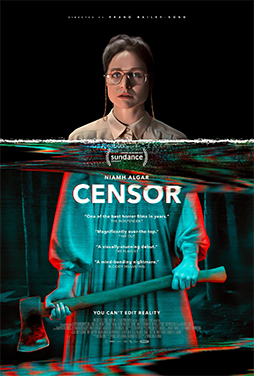
As I spend my life trying to figure out why I do what I do, I take book and movie recommendations.  I really should note who recommends what because it often drives me crazy trying to figure that out after the fact.  A friend recommended Censor, and since this friend told me where it was streaming for free I’m sure I got the right one.  Like several one-word title movies, there are several with the same sobriquet.  This was the 2021 movie and it’s a British horror film which raises the question of why we watch horror.  It does this through the eyes of the eponymous censor (Enid) who’s particularly tough on movies.  Set during the “video nasty” scare of eighties Britain, the question is whether such movies motivate real violence but with the twist that the censor is the one who turns violent.

Enid is haunted by her missing sister and she finds a video nasty star who looks like her sibling and becomes convinced that it’s her.  Enid gets to the set where her movie’s being shot (a remote cabin in the woods) and ends up killing the star and director (after accidentally killing the producer earlier, in self-defense).  She kidnaps her “sister,” and in her imagination—rainbows are everywhere—takes her home.  That’s where the real social commentary comes in because during this imaginary drive the radio announcer says these kinds of movies have stopped, and all crime and violence have ceased, and social harmony has returned to Britain.  This is revealed, of course, as a delusion.

Left to my own devices, I probably wouldn’t have watched this movie.  I don’t like blood and gore—I’m more looking for gothic themes like haunted houses—but it turns out that this is a smart film.  That’s probably why it was recommended to me.  Intelligent but also with tongue in cheek at times.  Still, it’s a movie about reconciling with childhood trauma, which is something that speaks to me personally.  That’s a wound I don’t always like to have poked.  It’s one of those movies on which I’d like to see more analysis, maybe talk to Prano Bailey-Bond, the writer and director.  Horror with female directors is often thoughtful, and movies are really meant to be discussed (just like books are).  The question remains—why do we watch disturbing movies?  I know I’m not the only one who does.  And in this case I remember who recommended it, so perhaps I’ll be able to get some closure.


Small Hops

It was about the cutest thing I’d seen in a month of Saturdays—a baby rabbit.  It was no bigger than my fist and it was looking lost on the sidewalk.  The front “lawn” of the next neighbor’s house is paved and there’s only a wide street in the opposite direction.  Our front lawn has a retaining wall well about the jumping height of the little guy.  I didn’t want it dashing into the street, so I circled around from that direction, but the poor thing couldn’t get high enough to reach our lawn.  It was young enough not to be certain something at least twenty-five times its size meant it harm.  It allowed me to get close enough to scoop it up and put it on our lawn.  It immediately leapt away and sheltered under a bush, before eventually disappearing down a hole that I hoped might be its home.

Besides being a hope-filled chance encounter with the wonder of nature, the incident also caused me to ponder what that leporine brain made of this learning experience.  For human brains, any sufficiently large animal is a monster, and anything even larger is a god.  While there are some bad folks out there, people don’t seem evil to me.  And although we’re certainly not gods, I wonder what that little rabbit thought.  What I was attempting was an act of kindness.  I’m sure it scared the timid tyke—I can imagine being lifted by an enormous creature that I can’t understand and it is a most frightening prospect.  But what if that monster were to set me down just where I needed to be?  Might not my assumptions about it change?

We don’t know what other animals think, yet it’s clear that they do.  Our yard has a fence and we have no dogs, so rabbits tend to like it here.  I often mutter softly and try to avoid direct eye contact and sometimes they let me get fairly close.  I like to think some of the larger ones recognize me, and maybe can tell that a vegan has nothing but their goodwill in mind.  We like to think this about God.  Larger, easily able to harm us, but that somehow being divine also conveys good will.  The bunny incident cast a pleasant glow over the rest of an otherwise anxious day.  It had calmed me and conveyed a sense of appreciation for just how helpful the world of nature can be.  I hope for some tiny rabbits in your life too.


Next Gen AI, Truly

Okay, so it was a scary meeting.  It was about AI—artificial intelligence.  Specifically Generative IA.  That’s the kind that makes up answers to questions put to it, or does tasks it’s assigned.  The scary part, to me, is that we are being forced to deal with it because tech companies have unleashed it upon the world without thinking through the consequences.  Such hubris gets us into trouble again and again but it never stops us.  We’re sapiens!  You see, GAI (Generative AI) is under no obligation to tell the truth.  It likely can’t even understand the concept, which is a human concept based on perceptions of reality.  GAI simply provides answers based on the dataset it’s been fed.  It can generate texts, and photos (which are so doctored these days anyway that we need a photo-hospital), which means it can, to borrow the words of a sage, “make a lie sound just like truth.”  We already have politicians enough to do that, thank you.

My real fear is that the concept of truth itself is eroding.  With Trump’s “truth is whatever I say it is” administration, and its ongoing aftermath, many Americans have lost any grip on the idea.  Facts are no longer recognized as facts.  “Well I asked ChatGPT and it told me…”  It told you whatever its dataset told it and that dataset contains errors.  The other scary aspect here is that many people have difficulty distinguishing AI from human responses.  My humble advice is to spend more time with honest human beings.  Social media isn’t always the best way to acquaint yourself with truth.  And yet we’re forced to deal with it because we need to keep evolving.  Those Galapagos finches won’t even know what hit ‘em.

Grandma was born before heavier-than-air flight.  Before she died we’d walked on the moon.  About two decades ago cell phones were around, but weren’t ubiquitous.  Now any company that wants its products found has to optimize for mobile.  And mobile is just perfect for AI that fits in the palm of your hand.  But where has truth gone?  You never really could grasp it in your hands anyway, but we as a collective largely agreed that if you committed crimes you should be punished, not re-elected.  And that maybe, before releasing something with extinction-level potential that maybe you should at least stop and think about the consequences.  I guess that’s why it was a scary meeting.  The consequences.  All technological advances have consequences, but when it takes a lifetime to get to the moon, at least you’ve had some time to think about what might happen.  And that’s the truth.


Movies about Movies

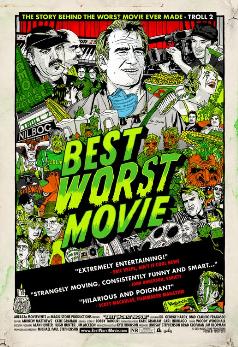
The category of movies so bad that they’re good sometimes spawns the phenomenon of a movie about the bad movie.  The Room, generally on the list of worst movies of all time, was followed by The Disaster Artist.  Not exactly a documentary, it was a movie about the making of the movie.  There’s a macabre fascination with films that dare to be so very bad.  They’re released nevertheless, and if they’re the right kind of bad they grow a following.  Ed Wood’s movies inspired Tim Burton’s movie Ed Wood—dramatized, but apparently not far from the truth.  Troll 2 was followed up by Best Worst Movie, directed by the child star of the original, Michael Stephenson.  Such movies are irresistible in their own right.  So when I finally saw Troll 2 I turned around and immediately watched Best Worst Movie.

A few things stood out in this documentary.  One is that being part of something larger, it’s not always clear what this larger thing will be.  Most of the people in the movie (which was released directly to video) found out about the release by accident.  Many of them never acted again but one thing they all knew: when they did see it, it was clear that it was a bad movie.  The one person in the documentary who doesn’t accept this is Claudio Fragasso, the director.  Fragasso is Italian and he still maintains that this is a great movie and everybody else is wrong about it.  He skulks around the tributes made to the movie and insists to both actors and viewers, that the movie isn’t bad.  They are wrong, he is right.

There’s nothing wrong with pride in achievement, of course.  Sometimes, however, it’s more graceful to admit that you simply got it wrong.  Best Worst Movie follows some of the actors to conferences where they expected huge lines and great attention, only to find a handful of disinterested spectators wondering what all the fuss was about.  At the same time, there are screenings of Troll 2 in major US cities that draw sell-out crowds.  Bad movies don’t appeal to everyone, of course.  They can, however, serve some good and might even add some enjoyment to life.  Best Worst Movie underscores that not all film fans have the same taste.  It also shows that those who enjoy traditionally bad movies aren’t alone.  There’s an aesthetic to being bad enough to be good, and even that can spin off sequels of its own.  And please, Mr. Fragasso, don’t make the sequel you’re touting—this kind of magic only comes once, unless you’re a genius like Ed Wood.


Bad Movie Therapy

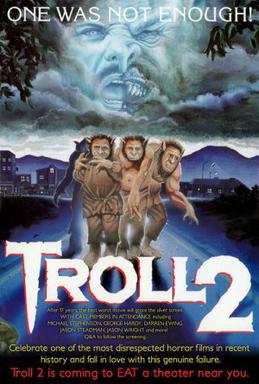
I haven’t see Troll, but it doesn’t matter.  Troll 2 has nothing to do with it.  As a frequent contender for worst movie of all time, Troll 2 is an anti-vegetarian screed and campy horror film that’s impossible to take seriously.  It’s part of my bad movie therapy.  And it’s also an example of religion and horror.  But first, let’s set the scene.  The Waits family (Michael and Diana, and their kids Holly and Joshua) is doing a house exchange for a vacation.  Before they leave, however, Joshua’s dead grandfather appears to him to warn him about the goblins.  The goblins, who are vegetarians, make people eat/drink a special substance that turns them into plants so that they can eat them.  (Yes, it’s that bad.)  Ignoring Joshua’s concerns, the Waitses head for Nilbog (goblin backwards) and go ahead with the house exchange.

The locals (there are only 26 of them) can make themselves appear human and they try in vain to get the visitors to eat.  Joshua prevents his family from eating the plant food by peeing on it.  They go to bed hungry as the queen of the goblins plans her next move to get them floradated.  About midway through the film, we’re shown a church scene in which the minister preaches of the evil of the flesh.  Ironically, this is not far off from the teaching of some Christian denominations.   He tells the trolls what they already know—they have to get the visitors to eat so that they can eat them.  If nothing else, it will make you forget your troubles for ninety minutes, unless your trouble is that you’re being turned into a plant.

Any number of reasons have been offered for why the film is so bad.  While filmed in Utah, the crew was Italian, and most of them spoke no English.  The movie was low budget.  The acting is just plain bad.  All together, however, these features work symbiotically to grow a wonderfully therapeutic end result.  Some of the crew claimed that it was the intention all along to make this a funny film.  Comedy horror or horror comedy is a recognized genre, after all.  The only problem I have now, however, is where to go from here.  So how does the Waits family escape their peril?  I’ll need to offer a bit of a spoiler here.  The goblins are frightened away long enough by a double-decker bologna sandwich that the family can touch the magic stone and destroy the conspiracy.  What are you still doing here? Why aren’t you watching this already?


The Ology

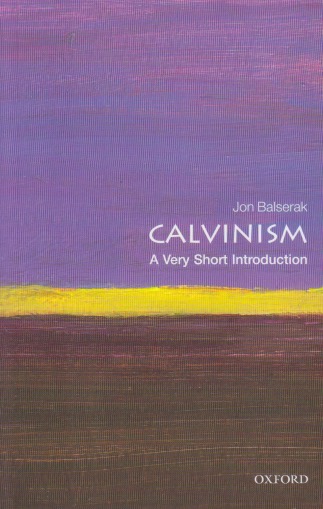
It’s good to refresh yourself once in a while.  I attended a Calvinist college and my doctoral program was in the context of an institution strongly influenced by Calvinism.  I took courses based on Calvinistic theology.  Jon Balserak’s Calvinism: A Very Short Introduction was really a refresher for me and I have to admit that it sparked a pretty strong reaction.  For one thing, many Calvinists unthinkingly accept the tradition in which they were raised.  (Call it indoctrination, literally.  This is true of most religions.)  Those I know seldom believe what Calvinism teaches, for it presents God as a monster. (This is me, not Balserak, and I mean this in the kindest possible way.)  You see, doctrinally Calvinists have to accept Scripture literally and if you do that you come up with all kinds of contradictions.  (The amount of special pleading is mind-boggling.)  The way the Calvinists landed on this was that God created us for his glory, which will be shown in predestining large numbers of people to Hell.  These people can do nothing to change that since God doesn’t really love them.  What would Jesus say?

I argued quite a lot with professors at Grove City College.  I was raised a Fundamentalist, but of the free will stripe.  The Methodist Church, which I eventually joined, was not Calvinistic in outlook.  (Neither are Lutherans or many others.)  Still, Calvinism has unduly influenced American culture—I wish the book would’ve focused more on this.  We are, culturally, heirs of Calvinism.  This little book points out one obvious way this is so, namely, the separation of church and state.  There are many other features that could be pointed out, but the book aims to be universal and this is therefore not a theme.

The book approaches Calvinism theologically.  There’s quite a lot of “shop talk” here that I imagine might put off those who don’t really care to know who said what about a particular point of doctrine.  Balserak points out that Calvinism is complex and there is no one way of looking at everything, but there are clearly some non-negotiables.  These non-negotiables are precisely what prevented me from ever trying Calvinism on for size.  I’ve moved through various religious outlooks on my journey that is geared toward finding the truth.  Calvinism never tempted me, nor did it ever seem to make sense.  It was as if the tradition accepted that Zwingli and Calvin and company had gotten the basics all correct and every act of theology since then involves a casuistry to prove the early teachings correct.  Why not question things?  Well, I guess they’re predestined not too.


Thinking Power

Thoughts are powerful.  An idea can change everything.  While materialism tells us that thoughts are only electro-chemical signals in an organic mass of tissue, those who have them know differently.  I don’t know you, kind readers, well enough to share the full truth of the matter, but I am more and more convinced that materialism is woefully overconfident in its ability to explain everything.  As a friend once told me, science accomplishes a lot and it clearly works, but it also sweeps anomalies off the table as statistically insignificant.  So when we read accounts of educated, rational individuals describing the impossible we laugh it off.  We shouldn’t.  Science and spirit working together is a powerful combination.  Getting the mix right is part of the process.

Our thoughts affect the world around us.  This can be as simple as deciding to mow the lawn.  By doing so, based on a thought, you physically altered the environment in some small way.  Isn’t it merely a matter of degree to let the thought do more of the work?  We’re a long way from mowing the lawn by mind power alone, but we’re at the point where belief (and I’m not talking facile follow-the-leader kinds of belief) should be allowed to grow a little bit.  There’s a lot more to the world than we’re often told there is.  What’s happened to our curiosity that we don’t explore it?  I have some theories regarding why we’ve cut ourselves off from potentially world-changing thoughts—thoughts that really could make the world a better place for all.  We’re tied to old paradigms.

We tend to be too busy to put large amounts of time into thinking.  As a society we undervalue that, in any case, until we need a professor in a specific specialization.  Thinking can lead to action.  We still can’t explain, scientifically, how the thought that I should mow the lawn translates to me standing from my chair, grabbing my hat and gloves, and a battery-pack, going to the garage, and hauling out the mower.  We do know that a thought starts a chain of events, but how does that thought move arms, legs, hands, and feet?  “For verily I say unto you, that whosoever shall say unto this mountain, ‘Be thou removed, and be thou cast into the sea,’ and shall not doubt in his heart, but shall believe that those things which he saith shall come to pass, he shall have whatsoever he saith.”  Or so the perhaps most influential sage in history once said. 


Hoppy Fourth

Today is the one of the relatively rare summer holidays.  Modern industrialized nations tend to take a more relaxed view toward summers without having to give out too many prescribed company holidays.  This seems to follow on from school schedules because the kids are out in summer and adults need some flexibility when work demands collide with family needs.  The internet has made work-life balance a little tricker to achieve since work is always just a click away.  Some more generous employers gave yesterday as part of an extended four-day weekend, which is rejuvenating in a way that’s easily forgotten until you start to feel it.  The sense of obligation takes a couple of days to wind down, and then on Monday you realize “I’ve still got another day off!”  It’s a sublime feeling.  Why not watch holiday horror on it?

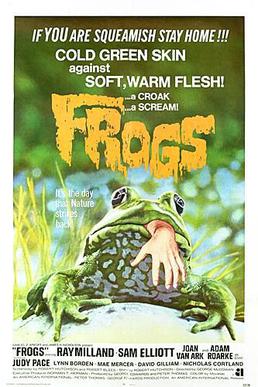
The Wicker Man is a holiday horror movie.  One of my arguments in the book is that holiday horror has to derive its energy from the holiday, and not just be set on it.  For example, I Know What You Did Last Summer and Return of the Living Dead are both set on or near Independence Day but the movies don’t really draw their horror from the holiday itself.  It falls into the same category.  Frogs?  Well, maybe.  Perhaps holiday horror, it’s definitely in bad movie territory.  A rich southern family is dominated by a Trump-like grandfather who controls the money and measures everyone by loyalty to him personally.  On his birthday, the fourth of July, nature revolts and his adult children and grandchildren (apart from one granddaughter), are killed by animals in this eco-revenge groaner.  But is it holiday horror?

One scene may suggest that perhaps it fits the category, but the real significance of that day is that grandpa won’t let it be celebrated any way other than by his prescribed plan.  Even as the estate is overrun by frogs (mostly), snakes, lizards, alligators,  tarantulas, and even some birds (thank you, Mr. Hitchcock), he insists that everyone do what they always do on the fourth of July/his birthday.  The only scene that suggests holiday horror is where the eponymous frogs hop onto a cake decorated like an American flag.  I normally like nature-revenge films, and this one starts out well but quickly goes downhill.  The environmental message is there, but underplayed.  There are some firecrackers and a number of dead rich folks, but otherwise the film seems to have no message at all.  It’s a bad movie.  Holiday horror?  Not really.  Something to watch for a day off work?  Definitely.


Private Therapy

A friend recently introduced me to the YouTube channel, Cinema Therapy.  While I had some vague notions already that cinema therapy was “a thing,” I had never looked into it.  This was so, even while consciously knowing that I use movies that way.  Most of what I’ve seen on the YouTube channel has been about Disney/Pixar movies, especially those that tug at emotions.  These have never been my favorite movies since I have unresolved issues from childhood.  Still I learn a lot from watching their analyses.  It can still be difficult to watch these films, though.  As a family we recently rewatched Finding Nemo.  It struck me pretty hard how growing up without a father figure left me the anxious, quivering mess that I often am.  I prefer movies where I can find a father, no matter how odd the choices may be.

Photo by Denise Jans on Unsplash

In fact, in my own form of cinema therapy, I use horror films.  (Even the YouTube channel parses M. Night Shyamalan.)  Part of this is clearly because such movies take me back to my childhood.  I’m not sure why I found monsters so comforting, but I did.  We had no father and I latched onto the strong men—particularly if they didn’t smoke or drink—that dominated movies  (it was the sixties, after all).  Somehow I felt that this made the world seem alright.  Or a little less scary.   I didn’t understand the biology of parenthood, I just knew that I needed a man in the family.  One who would protect me and show me how to be a man.  Well, that never really happened.  My step-father was verbally abusive and I seemed to be his special target.  I watched horror and listened to Alice Cooper.

Sublimation, in psychology, is where you put difficult feelings aside, acting as if everything’s normal.  I did that for many, many years.  College, seminary, doctoral program, full-time professorate.  Then it all broke down.  After the tragedy at Nashotah House, I found myself watching horror movies again.  It took about a decade of doing that to realize that I could write books about the connection between religion and horror.  With three published (the third about to be, actually), I have a fourth nearly finished.  The writing is therapeutic as well.  I have to wonder, however, if these Pixar movies that are so painful for me to watch are really helping me.  I don’t always feel refreshed afterwards, as I do when I see a good horror movie.  (Bad films are their own kind of therapy.)  I’m an amateur psychologist (no license), with a most intractable client (myself).  My way of dealing with him is to watch horror and call it therapy.


Good-Bad

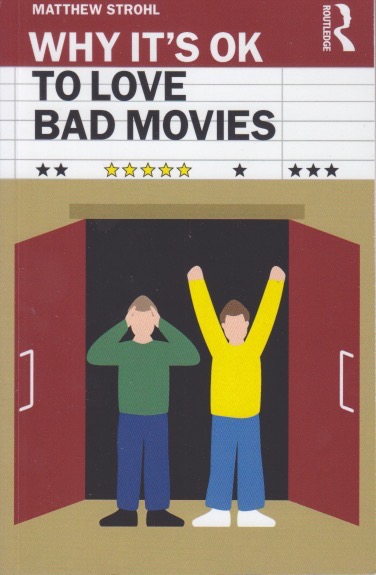
If anybody bothers to follow my movie viewing history, they’ll know that it includes a perhaps disproportionate number of “bad movies.”  In fact, I recently added that as a category for my blog posts.  In need of some reassurance, I read Matthew Strohl’s Why It’s OK To Love Bad Movies.  (As far as I can tell the Why It’s OK series was started by my old boss at Routledge—an inspired idea!)  Strohl is a philosopher, but one who admits to, and even advocates for, loving bad movies.  This book is fun but it does have a serious philosophical underpinning.  I can’t summarize it all here (you need to read the book anyway) but my main takeaways are that ridicule isn’t making the world a better place.  Movies that are so bad that they’re good are definitely a reality.  There’s a community built around it, but I haven’t had many visits from it in my lonely little corner of the internet here.

Strohl points out that not all bad movies are what he terms “good-bad.”  There are certain qualities—aesthetic qualities—that make a bad movie good.  And it doesn’t involve watching the movies to make fun of them.  One of the films that often tops the list is The Room.  When I first saw it I really couldn’t think of anything to write about it on this blog.  It was just another bad movie.  Now I want to see it again.  I do have to say that on my first viewing I didn’t feel like ridiculing.  I was more stunned than that.  And when I watched Plan 9 from Outer Space—another on the list—I felt inspired to learn more about Ed Wood, its famous director.  I’ve since watched a couple more of his movies and I appreciated them.  Now I have a better idea of why.

In addition to discussing the biggies, Strohl also takes forays into some collectives: the Twilight series, for example, and the movies of Nicholas Cage.  These are both often singled out for ridicule, but this book demonstrates that there’s an artistry to such things.  And Bad Movies underscores that not everyone likes the same bad movies.  Strohl also makes the salient point that if we only ever watch great movies we’d have no basis for comparison.  There’s a lot to like in this little book.  One thing it convinced me of (in addition to making me feel a bit better about myself) is that there’s a community out there that I’m missing out on.  Good books bring people together instead of dividing into factions.  This is a good book.