Not Resolved

Some movies are intentionally mind-blowing.  Knowing the kind of movies I like, a friend suggested Resolution with the enticing note that it is free on Amazon Prime.  Since anything free is worth saving up for, and since I was having trouble staying awake on a warm, wet Sunday afternoon when the lawn couldn’t be mowed, I gave it a try.  Even after it was over I wasn’t sure what I’d seen, but I was glad that I had.  Part of the draw is how convincing the acting is.  Another is the bizarre nature of the threats.  Like Sinister (also released in 2012), Resolution involves found media that tell a disturbing story.  Only in the case of Resolution it’s set in a remote part of an Indian reservation and it involves a drug addict and his friend who’s attempting an intervention.
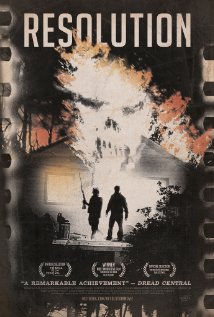
With the addict handcuffed to a pipe, his rescuer encounters a strange set of people in the area and has bizarre media delivered to him by an unknown party.  In fact, he goes to his friend because of a video emailed to him by the addict.  Only the addict didn’t send it.  The media (records, color slides, video tapes, computer files) tell increasingly strange stories until the media also begin to show the two friends almost instantaneously.  A stoned French researcher tells the rescuer that there might be some time-space dislocation here, or there may be a monster.  Reluctant to release the addict until he has several days to get the drugs out of his system, the friend attempts to figure out what all this means.  Then the media begin to show their short-term future.

I won’t say how it ends, but I will say that the title Resolution is well-chosen.  This is a very creepy movie.  A remote location where things just don’t seem right and the conviction that just a few days will save a friend’s life but only if they stay in place is a great concept.  In many ways it’s a movie about stories.  The resolution is the end of the story and that’s something that’s successfully kept up in the air throughout.  Anyone who writes stories knows the feeling of writing yourself into a corner.  Playing around with space-time opens up possibilities, however, corners or not.  I can’t say that I understood everything that was going on here, but it was edgy enough to keep me alert, even on a muggy, drowsy Sunday afternoon.

Fear and Reviewing

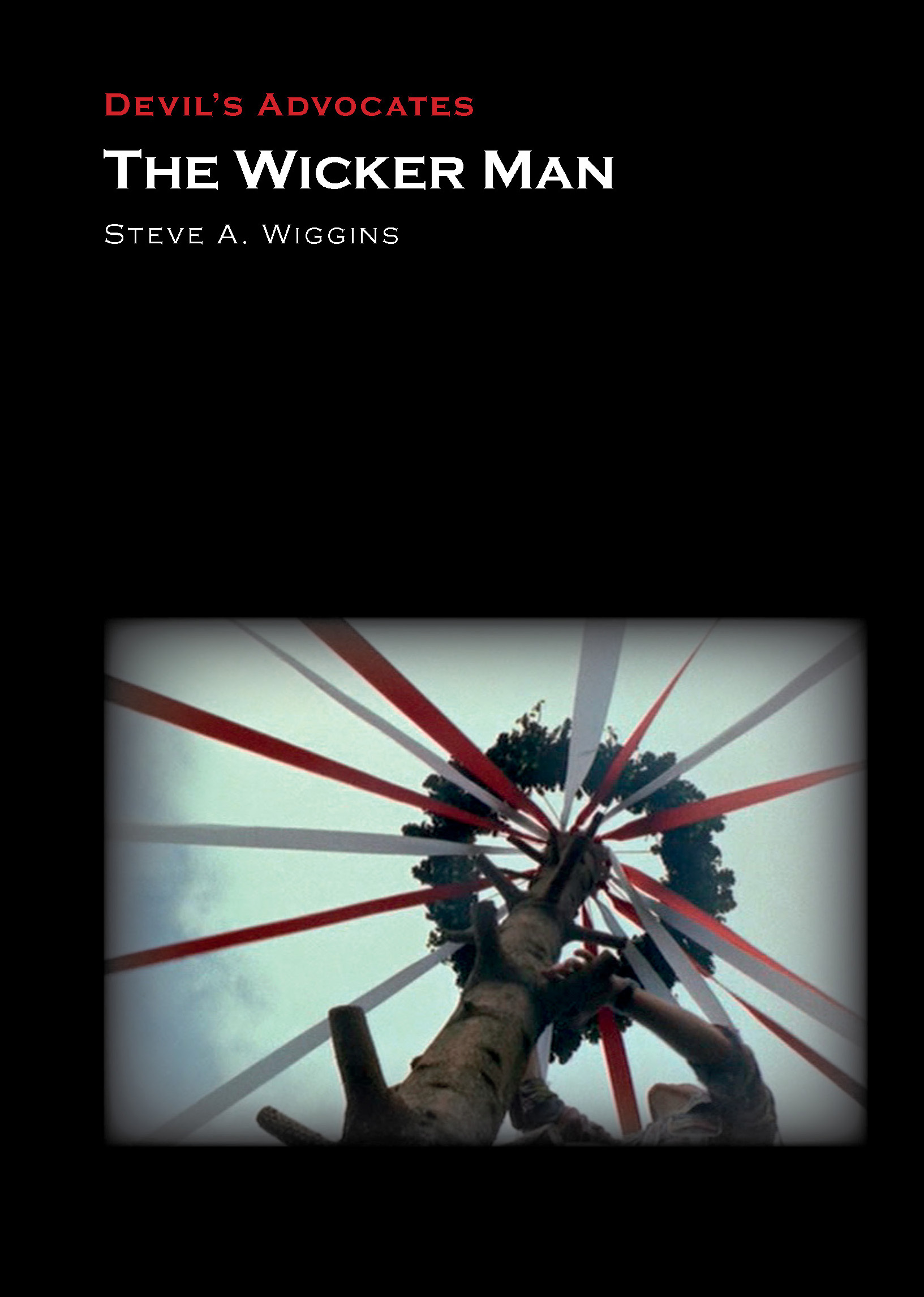
I have a confession to make.  I don’t always read reviews of my books.  I’m always a little scared, even though they made it through the review process and were accepted for publication, there will be those who don’t like them.  I’ve only seen three full reviews of Nightmares with the Bible and two of them were negative.  Eventually, however, I generally come around to taking a look.  Yesterday I found the first review of The Wicker Man on FilmJuice.  It took some time before I could settle down to read it, and to my great relief it was a positive review.  You see, I knew I was taking a chance by writing this book because I was approaching the movie from an unexpected angle.  That often makes fans uncomfortable.  I’m glad that at least one reader found it worth his time. (By the way, I tried to leave a thank you but WordPress, ironically, wouldn’t let me log in—hey guys, I’ve been blogging here for 14 years!)

I’ve watched horror movies since I was a kid.  I started writing about them in 2009, back when I started this blog.  It was tentative at first, being trained as a religion scholar as I was.  I think many of my early readers didn’t know what to make of it when I wrote about horror—wasn’t this a blog about religion?  Well, actually it’s a blog in the old sense of the word, a log.  Ship logs and diaries both depend on what’s going on at the time.  I still work with religion for a job, but I rely on horror films to help me make sense of life.  Since I watch them, I write about them.  Holy Horror was a bit of an experiment for me.  It didn’t exactly become a best seller, but it brought me into the conversation.

Holy Horror was the first book where I discussed The Wicker Man.  I’d discussed it many times on this blog, of course, but having a book published means that somebody’s invested in your thoughts, or at least thinks they can make a buck or two from them.  (This blog is entirely non-profit.)  I knew the Devil’s Advocates series was lacking a volume on The Wicker Man so I asked the series editor if he’d be interested in a new angle.  That set the direction for the next couple years of my life.  Despite my skittishness, I’m delighted to have a positive review on my reading of the film.  If negative reviews come (and they likely will) I’ll at least have the satisfaction of knowing one reader gets what I’m trying to do here.  And I confess that it feels good.


Young Fear

The amazing thing about people is that even when you’re aging you remember what it was like to be young.  I used to have to stop and consciously think of that if I wanted to realize it when talking to those older than myself.  Now that I’m no longer young I don’t need to have it explained.  I’m not afraid to read teen literature.  Those who write it well (John Green comes immediately to mind) make you feel like you did when you were a teen.  I read Jessica Verday’s The Hollow because of, well, the Hollow.  Sleepy Hollow, that is.  This is a young adult novel and even before I was half-way through I got the strong impression that to be satisfied with the story I’d need to read the entire trilogy.  This was a relief since I’ve read Sleepy Hollow novel series before where I had no real desire to press on beyond volume one.

The story isn’t a modern-day retelling of Washington Irving’s legend.  It is set pretty much in the present (although, I notice, tech changes so fast that it’s immediately clear that this was set a decade ago.  Has anyone considered how this constant change will affect literature?) where Abbey, the protagonist, is trying to come to terms with her best friend’s death.  Since her best friend was really her only friend (some of us know what that can be like), she finds solace among strangers.  Those strangers, it becomes clear late in the novel, are not what they seem to be.  Throughout the novel both quotes from and discusses Irving’s story—how could any tale set in Sleepy Hollow not do so?

In any case, this is a quick read despite its size.  Verday captures what it’s like to be a teenager.  My experience of teenage girls was always limited, but I have no reason to doubt that she represents that part accurately.  The funny thing about being an adult is that you learn that you don’t really know how to be one.  For me, dips into youth help to center me when this whole adult thing just doesn’t seem to make any sense.  I don’t want to give any spoilers for the story here, but I’ll likely move on to the second novel in the series before too long, and by the time you get to second in the series it’s okay to assume those reading about it won’t mind a bit more information.  At least that’s the way I think about it, having once been young.


Middle Ground

It’s the real poison Trump baptized.  Polarization.  The idea that there is no middle ground.  It’s a shame since the middle ground has been what’s kept America stable over the years.  Now it seems to be eroding rapidly.  While my sympathies have always been on the left, I realize that radical change tends to dirempt societies.  As much as I deeply desire justice and fairness for all, I know it will take time.  In my way of thinking that “all” includes animals.  That’s why I’m vegan.  Now, I know being completely vegan is likely not possible since who knows what everything is made of, and who has the time to find out?  I do the best I can and I don’t eat animal products and I try not to wear them either.  I know there are those who don’t share my outlook and they’re entitled to their point of view.

For nostalgia’s sake, and to get out of the house, we attended a 4-H county fair.  An annual event when we lived in New Jersey, it’s now a rarer treat.  So I put on that scarce recording of Bruce Springsteen’s song “County Fair,” not on any of his studio albums, and headed for New Jersey.  This county fair is the kind with animals rather than rides, and we stopped in to see the sheep, goats, cows, and alpacas.  It was in the cattle tent that I saw the following poster, claiming “There’s no such thing as vegan.”  Well, I don’t go around saying there’s no such thing as omnivores (thus the polarization) but this poster convinced me that we need to try even harder to stop raising animals to exploit. I understand, I think, the intent of the poster—cattle aren’t just meat.  The thing is, I think of them as conscious beings.

I miss the middle ground.  People no longer want to compromise or negotiate.  Since Trump it’s become “my way or the highway.”  I think I prefer the highway.  That highway takes me far from industrial feedlots where it’s illegal to document the cruelty that these animals undergo daily.  It’s quite a different thing for Bessie to lay down with a fan blowing on her under a tent with a small farmer caring for her, but that won’t feed a nation.  Small farms aren’t the problem. I don’t insist everyone be vegan.  I would like it if we could sit down and talk about it, however.  Cattle raising is the industry that generates the greatest amount of greenhouse gases that are causing global warming.  If we keep dividing ourselves and refusing to change we’ll be having this polarizing argument under water before too many years have gone by.  My highway is middle of the road.  Even slow change can benefit many.  The goal is to get “many” to “all.”


Ghoulish Night

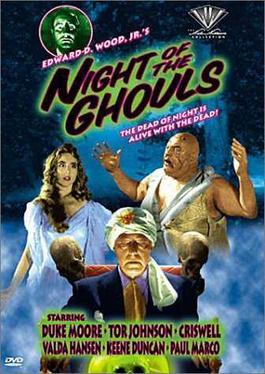
Night of the Ghouls, I like to think that even as a child I would have opined, is a bit silly.  It does show improvement over some of Ed Wood’s other films and the plot is really no more harebrained than some movies I did watch as a kid.  I’ve been trying to figure Wood out.  He was apparently incompetent, but he had no formal training and that could explain things a bit.  He was also creative.  This film is broadly a sequel to the worse Bride of the Monster.  Although only a couple of characters appear in both films, there is quite a bit of reference to the earlier story.  There was a mad scientist who made monsters.  The house burned down (actually an atomic explosion in the former), but someone—no-one knows who—rebuilt on the same location.

In a typically convoluted Wood plot (he wrote as well as directed the film), a bogus necromancer (who is actually, without knowing it, a really powerful necromancer) bilks clients out of their money by raising their dead loved ones for a few minutes.  He keeps the police and others away by having his young female assistant pretend to be a ghost outside the house.  But then she runs into an actual vampiric ghost who’s killing people who wander onto the property.  The police eventually decide to investigate and prove themselves as incompetent as the writing for the film.  They do manage to put an end to the fraudulent seances but it’s up to the real raised dead to put an end to Dr. Acula and his assistant.  At least there’s no atomic explosion at the finish.

The film, in Wood style, is black-and-white and the props are cheap and not really convincing.  A bit of the movie seems to have been intentional comic relief.  It doesn’t really work as a horror film because there’s nothing really scary about it.  Wood was a lifelong fan of horror movies, but fandom doesn’t always equal the ability to replicate the object of desire.  There are several possible horror atmospheres—Poe horror is quite different from Lovecraft horror, for example.  Wood seems to have been unable to strike a vein, however, that was close to an authentic horror feel.  The Scooby-Dooesque role of the necromancer doesn’t really help, I’m afraid.  Still, for fans this is vintage Ed Wood work.  I can’t claim to have figured him out, but if you’ve a hankering for a bad movie, this isn’t a horrible choice.


Geography Quiz

With my daughter’s encouragement, I’ve taken an interest in geography.  While not exactly an isolationist, I’ve often thought that America trying to impose its will on foreign nations is generally wrong-headed.  Still, when I read histories of the early United States, it appears that the desire to own and organize everything from Atlantic to Pacific makes sense to a particular outlook.  Taking the land from its rightful owners was clearly wrong.  It seems that wherever there are borders people fight.  I’ve been quizzing myself on geography and I’m getting fairly decent at identifying countries (not all of them, and not always correctly).  Doing so has led to some learning opportunities.  Africa was, of course, heavily colonized even into my own lifetime.  Only recently have we begun to realize that people should have the right to independence—sounds familiar, right America?

There are lots of quiz games available on the internet that help making these identifications fun.  I’ve learned that the newest country recognized is South Sudan, in Africa.  It became independent just twelve years ago, breaking away from Sudan.  South Sudan is one of the least developed nations in the world—I suspect that some of these conditions contributed to the desire for independence.  Another thing that becomes evident in learning geography is just how much disputed territory there is.  Thousands, probably millions, of lives are lost over border disputes.  This seems like such a testosterone-driven form of politics that patriarchy ought to be thoroughly ashamed of itself.  The United States still plays these games as well, backing our favorites, despite the will of the people.

One nation that consistently shows up in these quizzes is Western Sahara.  Apparently this is still a disputed territory, colonized by Spain but released from its control in 1975.  Immediately fighting broke out between Morocco and Mauritania, its neighbors.  Both wanted control of the region.  The territory is one of the most sparsely populated in the world, being mostly Sahara, but even so it’s worth fighting over, in the strange geography of the human psyche.  I often ponder our apparently insatiable urge to fight and control.  As if we can really control anything.  All it takes is a thunderstorm to park over an area for four hours and any house will begin to feel the damage.  Nobody’s really in control, as you’d think events in Russia might underscore.  It seems unbelievable to me that a world so connected—entangled even—with the internet would still insist on disputing who owns this rock or that.  Just think how much we could accomplish if we’d even allow for a little leeway in our geography.

Remember this?

America the Religious

One of the truths that doctoral work teaches you is that if you look closely at something, minute differences appear.  Those interested in historical subjects write up syntheses that cover over many of these minute differences until somewhat of a false impression might occur.  Consider Puritan New England.  The image is a familiar one to the American imagination.  Rigid, pious, fearful church-goers predominated.  Stern, often acerbic, ministers were voices of authority.  But in actual fact, maybe a third of those eligible to be so in Puritan New England were church members.  Many lived in remote locations and used folk traditions (what the church would condemn as “witchcraft”) to meet their spiritual needs.  This was DIY religion.  And yet, the overall picture is of an uptight, strict, Calvinistic world.  That’s only part of the story.

Controlling the narrative is a powerful thing.  For example, the religious right has often flouted the idea that America was very religious from the beginning.  The “falling away” from the church is only the result of modernism.  Before that, they claim, pretty much everybody was religious.  This is patently untrue.  But if the narrative is believed, it becomes powerful.  Historians face a dilemma here.  Not every single little detail can be written about anything.  If you read a history of, say, the United States, do you think everything is in those thousand pages?  No, not by a long shot.  Entire books written about a single individual don’t cover everything.  The temptation is to present an approximation that covers the general trends.  Those of us who study religious history have an extra hurdle—what people say they believe and what they actually believe might be quite different.

Demographic studies that show only a third of New Englanders were church members indicates that two-thirds of the story remained untold.  The city on a hill may have been an ideal, but most of the people lived in the valley.  People prefer a happy story, of course.  That’s natural enough.  When we look for facts sometimes the story can grow a little confused.  Shrink that history of the US down to a single state and it’s still unwieldy.  Even a single city.  Choices have to be made and approaches have to be decided.  What really happened?  You can bet your bottom dollar that it was a lot more complex than any history book indicates.  People prefer mythological national narratives to naturalistic ones.  When we buy into simple materialism we often mistake our mythic past for a factual one.


Ghostly Book

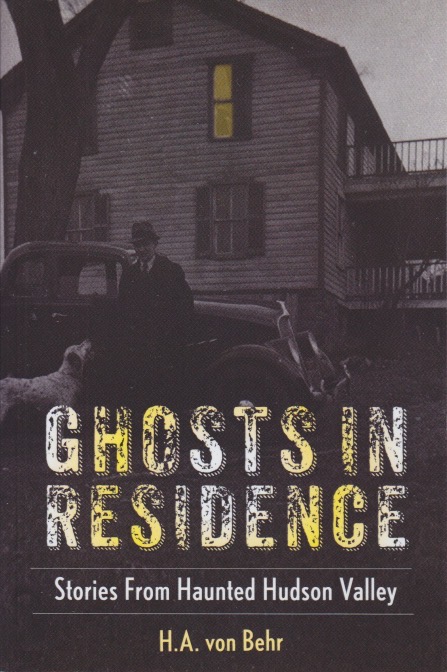
Recently I’ve been thinking about internet searching—how some information is difficult to find.  This book provides an example.  I saw what we in the biz call a “new book announcement” (NBA for bookish sorts).  Since I’ve been reading about the Hudson Valley the subtitle of Ghosts in Residence (Stories from Haunted Hudson Valley) caught my eye.  I assumed it was a new book and eagerly awaited its release.  When it arrived I discovered that it was a “new in paperback” (NiP) edition of a book published in 1986.  This edition, published this year, didn’t update things, including author information.  Given that H. A. von Behr was born in 1902, I doubt he’s still alive, but the book simply borrows the LCCP (Library of Congress Cataloging-in-Publication) data from 1986, showing the author’s dates as 1902–  .  Perhaps unintentionally appropriate for a book about ghosts.

This is an odd book, all around.  Although published in 1986, much of it deals with even earlier times—the author’s recollections of the forties—as well as some more recent events.  Hans von Behr cuts the image of a country gentleman while his neighbors in the Valley go on fox hunts and he has what seem like daily cocktail parties on the lawn.  He dashes off an article about his favorite dog and gets a healthy check from Outdoor Life.  This is a different world.  But then there are the ghosts.  But more than that, also strange happenings.  The ghost tales are intriguing, and some of the other strange events head-scratching.  The whole has a quasi-autobiographical aspect to it, but while not revealing too much.  A couple chapters deal with hauntings in Germany.

My web searching for H. A. von Behr revealed very little.  He was a retired scientist and photographer (he had some high profile clients) and the book contains many of his photographs of the locations discussed.  This short book explains how he came to purchase a haunted farmhouse upstate for a second home (again, a different world), how he discovered it was haunted, and how many of his friends and acquaintances revealed, over time, that their houses also had ghosts.  The book is charming in its own way, and a quick read.  Still, it’s a little disorienting when you can’t find more information about someone online.  The options are to do library research (my favorite kind) but am I really that curious about this author?  I wanted to read about the ghosts, and that I did.  And many other incidental things besides.


Seminary Daze

It’s surprisingly easy to throw away an expensive career that once held much promise.  It really involves just a two steps: spend thousands of dollars earning a Ph.D. in religious studies, and take a job in a seminary.  It’s disheartening to watch colleagues going through this as seminaries contract, then close.  I know how it feels personally.  You’re suddenly aware that your years and years of training have made you practically unemployable.  If you do find a job it won’t pay as well.  Chances are you won’t enjoy it either.  Having taught in a seminary will mark you in academia as one of those “uncritical believers,” and, well, nobody wants to touch one of those.  While I would’ve taken a regular seminary job after my doctorate, my wife remembers me lying awake at night asking “Am I cutting off my career if I take a job at Nashotah House?”  The answer: yes.

I’ve been watching colleagues have their worlds torn apart as seminaries try to figure out how to stay open when institutional churches are dying.  Megachurches don’t require a seminary degree to run—natural grifters do it quite well with no advanced education, thank you.  But mainstream churches have been losing members, and therefore financial support, for years now.  And seminaries supply a commodity no longer in demand.  This may have been a trend when I started out back in the eighties.  If so, nobody told me about it.  I walked into this career naive and came out jaded and cynical.  My motives were to help other people.  It’s getting harder and harder to find jobs where you do that any more.  At least while being able to keep body and soul together.

Thing is, it takes years to earn the degrees you need to teach in a seminary. You have to think ahead.  When I started out, trends suggested a huge glut of jobs in the teaching market.  That never panned out, of course, as human predictions seldom do, and the decline in jobs has been pretty steady over the past thirty years.  Back in the eighties seminaries were doing okay.  Growing, even.  I do hope it didn’t have anything to do with me, but I hit this surprisingly fragile market at just the wrong time.  After having been overboard without a life preserver myself, it pains me to watch colleagues facing the same fate themselves.  Religion hasn’t disappeared—it’s simply taken on new forms.  Those forms don’t require seminary. Those of us who followed the rules on how to teach religious studies, however, somehow find ourselves in disposable careers.


Forgetting Witch

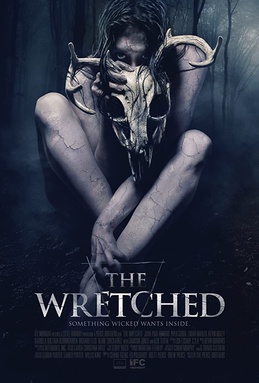
Being forgotten.  Isn’t that one of our greatest fears?  We want to be remembered, our desperate “Kilroy was here”s scribbled on the impermanent earth.  This is the fear that’s at play in The Wretched.  This fairly low budget horror film came to hold the record of being a box-office top earner for six consecutive weeks in 2020.  This was a technicality, of course.  The pandemic was in full swing and other major motion pictures were put on hold.  The Wretched played on, earning little, but more than other films.  It’s not a great movie, but it’s not a bad one either.  It all has to do with what might best be called a “witch.”  In reality, the monster is based only in part on witch traditions, but the twist is this monster makes you forget the people she takes as her victims.

The story hinging on an impending divorce and a somewhat rudderless young man being sent to live with his father in Michigan while his parents sort things out.  Ben, the young man, notices the neighbor’s young Goth wife, but something’s strange about her.  While in the woods, she and her son encountered the monster—revealed as a witch by the occult symbol carved into a tree near her den.  She steals the family baby (you’ll probably hear echoes of The Witch here, and you wouldn’t be wrong) and the family forgets there was a baby.  She then takes over the body of the mother.  Ben spies on them, Rear Window-style, when he’s not at work.  Soon the older son of the couple is missing, and the father claims they have no children.

Ben, while starting a romance with Mallory, a girl from work, pieces together what’s going on, but nobody believes him.  The problem is the missing persons are all forgotten.  To me, anyway, that was the scary part.  Ironically, while not literally so, the movie itself has been forgotten.  We all remember those days of panic in the spring of three years ago.  Long days when we didn’t leave our homes because some killer virus was rapidly spreading and the leader of the country simply didn’t care.  Those who released movies (or published books) in 2020 know that their work was quickly forgotten.  People had other things on their minds then.  I still don’t quite get why it’s called The Wretched, unless it’s perhaps those who are forgotten.  If so, the movie may become a parable of the many creative works that emerged during a time when our collective mind was clearly elsewhere.


Speaking of The Wicker Man

The TheoFantastique website is older than my blog and, I suspect, has more followers.  I was immediately struck when I first found it in my early days of blogging.  Seeing that the fantastic—genres that include sci-fi, horror, and some adventure material—often comments on and often uses religion as its milieu, the site features many posts about topics I find compelling.  Over the years I’ve had the opportunity to get to know John Morehead, the creator and builder of the site and he has kindly agreed to interview me about each of my books that deal with these topics.  The links to those interviews (which can all be found on YouTube) are on the “Social Media & Interviews” page of this blog.  Just yesterday John recorded and posted an interview on The Wicker Man.

There is a small community of us that explore these connections between religion and pop culture.  My interests, as careful readers will know, is really with monsters but I’m still learning how to write about such things and, more importantly, to do so with limited resources.  That often means analyzing films because they are accessible whereas research trips to libraries and locations that monsters dwell isn’t really conducive to a 9-2-5 job with no sabbaticals or even summer or holiday breaks (capitalism is relentless).  I can take in a movie or two over a weekend without leaving home and I can use my writing time to explore them.  Thus Holy Horror, Nightmares with the Bible, and The Wicker Man were born.  And interviews about them can all be found on TheoFantastique as well.  There’s also much, much more there.

By the way, John is also quite a capable author and editor.  He’s got wonderful books to his credit as well.  Some of them appear on this website and the others I haven’t got around to reading yet.  (My “to read” list is about as long as the Burj Khalifa is high.)  I often think that being a full-time reader should be a job.  It is, I guess, if your own books sell well enough.  Otherwise you need to work around the long days at the office to make ends meet.  But I digress.  In this era of information via recorded media, online interviews are key to getting word out about your book.  Coincidentally, quite unexpectedly a single hardback copy of The Wicker Man arrived just yesterday as well.  That always helps when it comes to bookends.  But it may help to watch the interview before just diving in.


Curious Valley

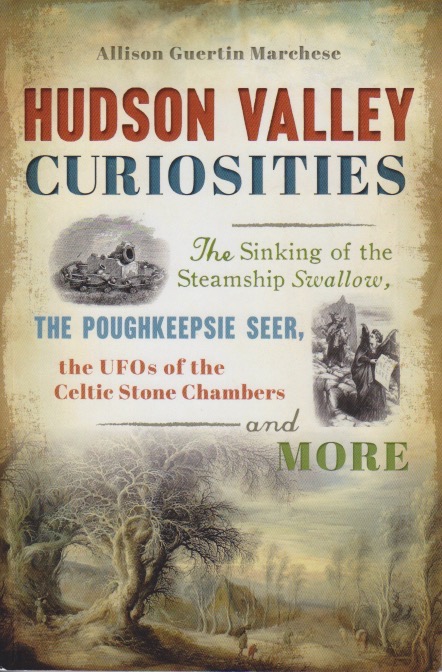
Another of my guilty pleasure reading categories is local history, written by locals.  As a genre these books may not always go back to primary sources, and they may get a fact or two wrong, but still they’re endlessly fascinating and I always learn something (which is the point of reading, after all).  I enjoyed Allison Guertin Marchese’s rambles along the Hudson Valley.  I’d encountered some of these tidbits before, but most of them were new to me and show just how interesting a place this particular river valley is.  Living in a strange world is so much more beguiling than a prosaic, predictable place.  Still, you’ve got to accept that anything can happen.  Unlike many such books, Hudson Valley Curiosities does not focus on paranormal, although ghosts and UFOs turn up a time or two.

Since this region is about 145 miles from end to end, the book divides it into lower, middle, and upper regions and gives about equal time to each.  The curiosities range from mastodons to prohibition busters, from shipwrecks to Shakers.  I’d never made the connection with the Shakers and the Hudson Valley before.  While the Shaking Quakers had their origins in England, they eventually migrated to the New World, settling in the northern end of the Hudson Valley.  The book points out that they were noted inventors, living by their own means as they did, they came up with their own solutions to problems.  Another aspect of these curios is the number of them that involved women who took on the cause of women’s rights.  The first female candidate for President of the United States, Victoria Woodhull, is discussed, as is Deborah Sampson, the woman who dressed as a man to fight in the Revolutionary War.

Marchese provides a helpful bibliography as well.  As someone trained in historical method, I like to go back to the sources.  Of course, that means assessing both publisher and author, and taking into account what passed for facts at the time.  History is an endlessly fascinating enterprise.  Many historians, however, leave out the controversial or questionable materials that a local historian is inclined to leave in.  That’s what makes books like this such a guilty pleasure.  Who doesn’t like to look behind the curtain now and again and see what’s happening out of the public eye?  And it’s helpful to keep in mind that by far the most of history takes place far from the headlines.  That’s where real life happens, no matter how strange.  And it’s a guilty pleasure to read about it from a local who finds, gathers, and preserves the stories.


Striving for

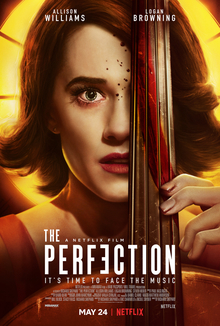
Get Out! was Allison Williams’ first feature film starring role.  Playing the unsuspected villain, she was incredibly believable.  Then I saw M3GAN where her role was again not exactly that of protagonist.  Curious, I decided to watch The Perfection, the horror film between the two in which she also stars.  As always, she starts out looking innocent enough, but this film has so many twists that you might be left feeling a bit dizzy when it’s over.  Williams plays Charlotte, a gifted cellist at the prestigious Bachoff Academy.  Forced to leave by her mother’s stroke, Charlotte became a full-time caregiver, leaving her promising career behind.  She’s superseded by Lizzie, whom she meets in Shanghai as the two are judging a scholarship contest for a new Bachoff student competition.  Lizzie and Charlotte hit it off and travel across China together.  Lizzie, however, falls ill and has to have her hand amputated.

A flashback reveals Charlotte tricked Lizzie into that situation so that the Bachoff star cellist would no longer be useful to the academy.  Another flashback shows why: Anton Bachoff has devised a horrid punishment for making mistakes while playing.  While this is disturbing enough, it takes place in “the chapel”—a room designed with perfect acoustics—and is done to please “God.”  This set-up has been operating for years and Charlotte was rescuing Lizzie from it, albeit in a rather extreme way.  The two cellists team up to bring Anton down.  There are quite a few holes in the plot and rape revenge films are one of the kinds I tend to avoid.  Still, the integration of religion with the horror is intriguing here.  One of the opening establishing shots is a close-up of a crucifix.  Sacrifice is indeed a theme of the film.

Critical opinion was mixed, but mostly positive.  The plot twists get you thinking that Williams is again playing the unexpected villain, and in a way she is.  Still, the real villain is a man who manipulates religious rhetoric (God demands perfection) in order to supply him with access to talented young women.  When they achieve international stardom, they’re not inclined to join #MeToo and lose everything because Anton is not only wealthy, but highly respected in classical music circles.  This is an odd sort of horror thriller that works on some levels but that leaves you feeling violated on another.  It doesn’t play out the religion element in any detail, which would’ve been helpful.  At least it would to a certain kind of viewer, who’s trying to figure out how this all fits together.


Ending Worlds

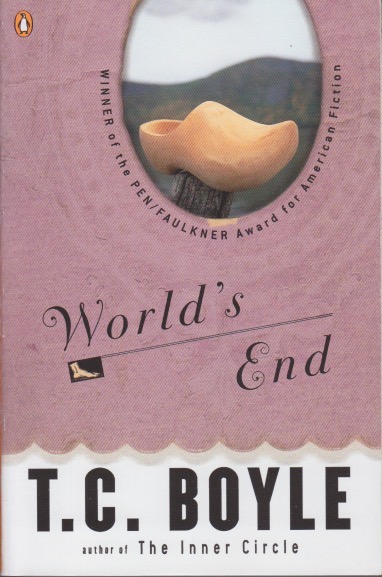
It takes a kind of talent to write a long novel where I don’t have any feelings for any of the characters.  I’ve studied writing enough to know that “Mary Sues”—characters who have no flaws—are to be avoided.  Yet, writing so that no characters over a span of about 300 years seem to be able to garner at least pity (and my therapist tells me I a very sympathetic person) is a feat.  All of which is to say I didn’t much enjoy the award-winning World’s End by T. C. Boyle.  This novel is set in the Hudson Valley, which is one of my current obsessions, and I thought the sense of place would draw me in.  Stories where everyone drinks all the time, and mostly they get high after that, and then wonder why tragic things happen when they drive, really aren’t for me.  I accept and admit that the onus is on me. (I freely confess to preferring speculative fiction.)

Successfully writing a novel that ties several families together over the generations is, however, an achievement of literary architecture.  It’s just that not all novels work for everyone.  There is a sense of maybe a little cosmic justice at the end, but it feels at times almost as if the side that’s being cheered on is the wealthy one.  Maybe it’s reflecting the way life works.  Or maybe I’m not a subtle enough of a reader to understand.  For whatever reason, it really didn’t speak to me.  It could also be that I need to reflect on it more.  Growing up poor with an alcoholic father and seeing firsthand the entrenched ways of the wealthy and how they effectively keep other people down, such tales tend to set me off.  None of this is to gainsay the artistry since it clearly condemns the land theft from American Indians and unrepentant wealth.  

It’s this last point from which the novel really takes its strength—ownership of the land.  As mortal creatures we have a strange idea that we can own something that will outlast us.  In the novel’s resolution that ownership shifts, unbeknownst to the wealthy, back to the original owners through an illegitimate child.  There may be some social commentary intended here and this makes the story less of a justification of white ownership.  I guess many of us are very sensitive to fascist characters since the Trump administration.  Perhaps had I read the novel in the late eighties, when it was first published, this would’ve seemed less troubling because we would’ve thought then that such a thing could never happen.  But three centuries is a long time and we simply can’t tell, although World’s End suggests justice might be served in the long term.


Good Book Selling

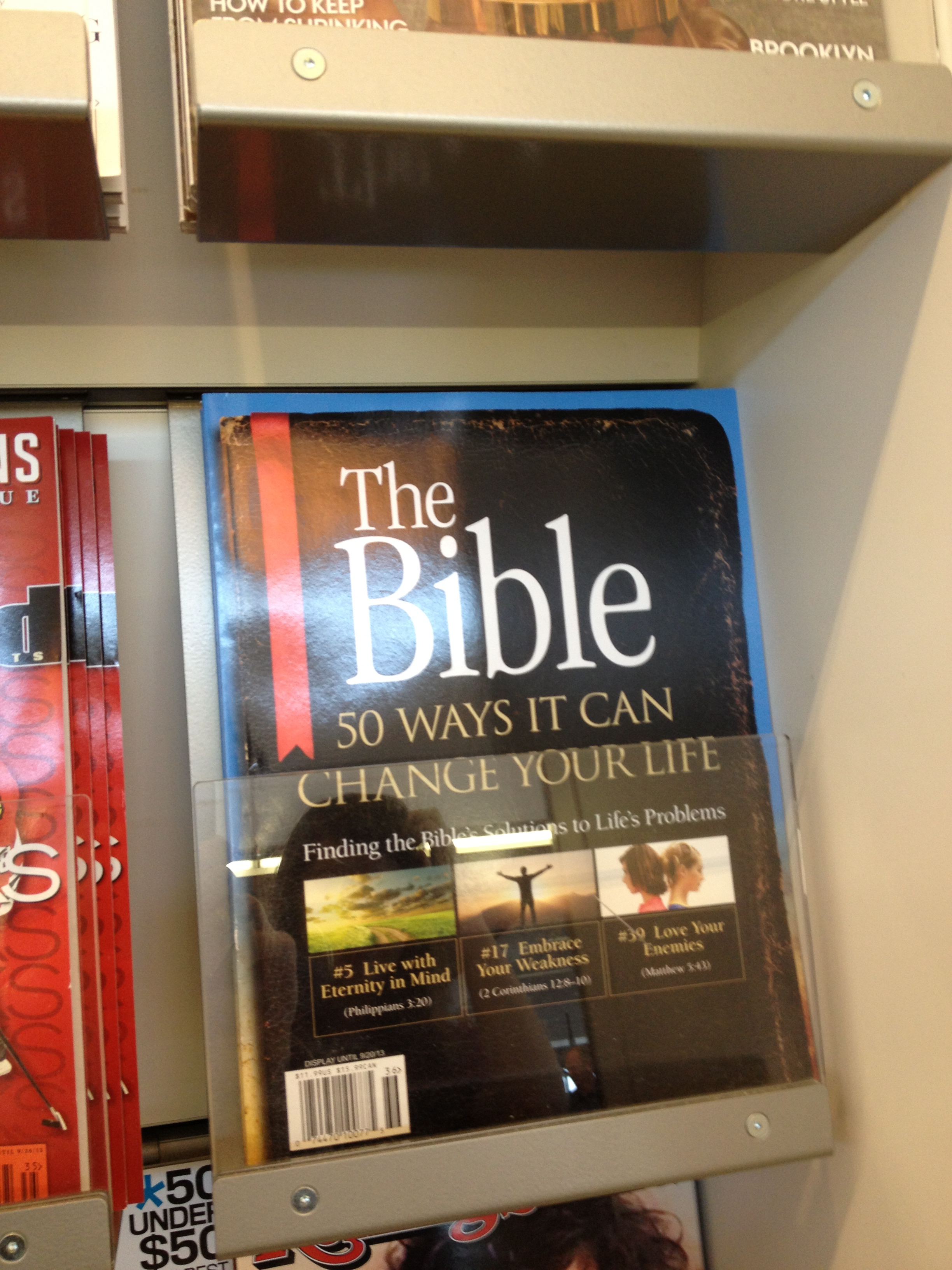
A few weeks back, probably several now actually, the New York Times ran a story about the Bible.  In this age of declining interest in the Good Book such things catch my attention.  Of course, the reason that the story ran was because of the money involved.  Let me explain.  Or at least give the headline: “Oldest Nearly Complete Hebrew Bible Sells for $38.1 Million.”  Money talks, even when it comes to Scripture.  The story was about the auction of the Codex Sassoon, which went to a museum.  Most regular Bible readers aren’t aware of the textual criticism behind their favorite translations—yes, even the good ol’ King James.  You see, no original biblical manuscripts survive.  Not by a long shot.  Every biblical manuscript in the world is a copy of a copy of a copy, etc.  And these copies differ from one another.  Often quite a bit.

Textual criticism is the job of comparing manuscripts and using scientific—yes, scientific—principles to determine which one better reflects what was likely original.  Since we don’t actually have the original we can’t say.  Those who hold views of extreme reverence for one translation or another have to resort to divine guidance of the textual critics to make the case.  For example, they might argue that God inspired the translators of the King James to follow one manuscript rather than another.  The King James was based on manuscripts known at the time (only about six of them) and far older manuscripts—inherently more likely to reflect earlier views and potentially closer to the original—have been discovered since then.  And are still discovered.  That was one of the reasons behind all the fuss over the Dead Sea Scrolls.  They represent some of the earliest biblical manuscripts ever found.

The Bible is an identity-generating book.  In this secular age, the failure of “the educated” to realize this simple fact often leads to underestimation of the importance of religion.  It motivates the largest majority of people in the world.  We should pay attention to it.  It doesn’t make headlines too often, though.  Instead, politicians who pretend they respect the Bible but live lives about as far from its precepts as possible, gather the limelight.  When money gets involved the Bible becomes interesting again.  We think about that thirty-eight-million.  What we might do with that kind of money.  How we might be able to pay somebody to paint that fence that desperately needs it, or better, to help those in desperate need.  The many victims of capitalism.  Where their heart is, there their treasure will be also.