Halloween Spirituality

October, well September and October—actually June through October, took many unexpected twists this year.  I’ve had to lean heavily on Halloween spirituality to make it through.  That’s good because we haven’t had time to decorate for the holiday.  We haven’t had time to get out just to appreciate the leaves, to go to a farm for pumpkins, let alone carve any.  Or come up with a costume.  I couldn’t even get to the theater to see The Nun II, despite having written an article on the universe to which it belongs.  Halloween spirituality works in times of less-than-optimal circumstances.  Anyone who reads this blog more than once or twice knows that struggle is a fairly constant theme.  Halloween spirituality comes to those who need it, and it helps us to get through.  

With the death of my mother this month, I’ve been thinking a lot about family.  My family is where my spirituality began.  I’ve been haunted by the truth since I was a child.  I need to know what’s true.  It’s one of the few non-negotiables in my life.  Halloween is true because it’s honest.  We wear masks, but we do so all the time.  On Halloween we have the courage to admit it.  Some of us are scared little boys or girls inside, trying to find meaning in a world that makes no sense.  A world that is run by the ambitious and greedy—those who are powerful because others fear them (Halloween is honest, my friend)—and who make rules by which the rest of us must live.  Halloween says it’s all right to be scared.  Yes, the monsters are real.  And most of them would treat you far better than you might expect.  Trick or treat.

Halloween spirituality is about hope.  It’s a pivot point around which the year revolves.  I look forward to it each year once it has too swiftly passed.  In the slow change of progress, I hope that it will eventually be recognized as a national holiday.  I find the holidays a season of hope.  For me that season begins with Halloween.  From here it’s almost possible to see Thanksgiving and from there Christmas isn’t far off.  I save vacation days to be able to take a mini semester break—something in every teacher’s blood—that allows me to reboot.  Halloween spirituality is one that anticipates rest and quietness, celebration and reflection.  It’s a time when busyness must wait its turn.  When the dark is allowed to utter its peaceful sighs into a world where too much is happening all the time.  By the way, I decided on my Halloween costume: AI, disguised as a human being.

October’s Child

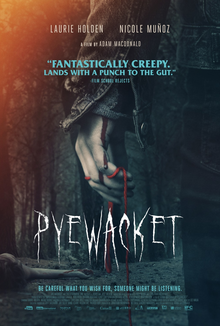
The thing about films is that there are so many of them, and they come into existence in so many ways.  Back when I was a kid, you learned about movies through the newspaper, or television or maybe radio ads.  Sometimes word of mouth, or, if you were lucky enough to see a film in a theater, through previews.  These days the internet has billions of pages and many streaming services and movies are produced faster than we can watch them.  All of which is to say Pyewacket, in my opinion, should be better known.  It’s an effective, thoughtful, and seasonal movie that caught me off guard.  It’s a Canadian independent film, not the product of a major studio, so it didn’t get the notice that massive advertising budgets provide.  I found it by scrolling on Amazon Prime.

Pyewacket is a teen angst movie (I wasn’t an angsty teenager—it came a little later for me).  Leah Reyes and her friends are into the occult.  Leah’s father has died and her mother’s having a difficult time coping.  She has decided to sell the house and move away.  Leah, who has a small circle of close friends, doesn’t want to move.  After mother and daughter are in the new house they fight, with her mother insulting Leah’s friends.  Leah goes into the woods and summons Pyewacket to kill her mother.  After this, mother and daughter make up and the tension builds.  Leah doesn’t want her to die but she’s set something in motion that she can’t control.  There are some really scary scenes in this movie, often without showing anything explicit.  In fact, views of Pyewacket are brief and indistinct, which really works.

This is an October movie.  Moody and evocative, it raises some very real questions.  Not all of them are resolved.  The occultist Leah consults informs her that Pyewacket is very deceptive and she can’t believe what she sees.  This leads to a tense resolution and somewhat abrupt ending.  It is very well done.  The point about deceptive spirits raises one of the truly potentially demonic facets of human society.  Deception throws truth off balance.  (Some of the more cynical politicians know and use this for their own ends, as we sadly know.)  Deception is dangerous and that seems to be almost the moral of this movie.  There are no villains here, but extreme actions can’t be taken back.  If you’re in the right mood, and the dark is just right, this is the kind of movie that delivers.  And I only found it by chance.


With Spiders

It gets October right, but Cobweb leaves quite a few unanswered questions.  One of the queries I always bring to movies is “where did it happen?”.  This isn’t, of course, the same thing as where it’s filmed.  Cobweb was filmed in Bulgaria—that certainly gives it an atmospheric feel.  It’s set, however, somewhere in the United States.  License plates aren’t shown long enough to really help, but a refrigerator magnet in the shape of Pennsylvania may be a hint.  In any case, the story’s a bit of a stretch, and it has some continuity issues, but I may come back to it in a future October.  The acting is pretty good, but the direction could be tighter.  So what’s it all about?  (There will be spoilers.)

A young boy, Peter, is bullied at school.  His parents are odd and they never believe Peter when he hears noises at night.  Or so they say.  As with much horror, things are not what they seem.  Peter’s parents had a somewhat Poesque solution to what turns out to be Peter’s older sister.  Born deformed, they made a pit in the basement to house her.  She gets out into the walls of the house, and talks to Peter at night.  We all know you should never listen to creepy voices in the dark, but she tells her brother he should defend himself from bullies.  And when he gets expelled from school for doing so, she suggests he give his parents the “We Have Always Lived in the Castle” treatment.  In support of this, she points out where he can find the body his parents buried in the back yard.  Now, there are many pumpkin-sized holes in the plot, but for a movie embodying October, I’m willing to let it pass.  Spooky rather than outright scary, the film does have some fairly tense moments.

Rescue comes at the hands of a teacher—and this is always a heartening development.  The name, “Miss Devine,” awoke hopes that maybe some traditional religious elements might appear, but no.  It seems to have been from the lineage of Miss Honey from Matilda.  She does read Poe’s “The Raven” to her class, though.  Overall she’s a teacher who has her students’ best interests at heart, particularly those who are sad.  The message is a little more difficult to discern.  Other than Peter and Miss Devine, pretty much everybody else is unlikeable.  Parents are murderers, sister a manipulative monster (even if made so by said parents), and all the other kids pick on Peter.  A good October effort, Cobweb is a story that needs some direction.


Halloween Tale

Halloween movies are hit or miss. Anthology movies are the same. My interest in holiday horror keeps me coming back for more nevertheless. Tales of Halloween has been fairly well reviewed over the years. As intimated, it’s an anthology film. There are ten separate stories squeezed in, leading to an average of nine minutes per episode. To make matters more interesting, each story has a different director. The end result is kind of like a pillowcase after trick-or-treating, you get some good stuff and some you’d rather not have received. The movie’s also a comedy horror so you’re meant to laugh throughout. Kind of like Halloween itself, I suppose. At least for some people. The movie didn’t do anything for me. There were no takeaways, and nothing really memorable.

Halloween is an unusual holiday.  For one thing, the way it’s celebrated is fairly recent.  Childhood memories of costumes and trick-or-treating and ghosts and goblins are all pretty new.  Well, maybe not the ghosts.  For some of us it’s a spiritual time.  A reflective season.  I’m not sure how anybody can not try to figure out what life’s all about.  Some of us have steered our lives (in as far as we actually steer them) in the direction of trying to figure these things out.  For me, Halloween is a time of spiritual growth.  Not exactly fun, but enjoyable nevertheless.  I know it’s different for different people.  Some people live for the fun and the partying.  It’s like that pillowcase all over again.  There is, at least in my experience, no perfect Halloween movie.  I won’t stop trying to find it, however.

John Carpenter’s Halloween is the movie that really kickstarted films based on this particular holiday.  Although I’m no fan of slashers, I do enjoy this one from time to time.  It’s a well-made movie, moody like autumn.  In Tales of Halloween, the background movie in two segments is Night of the Living Dead, a classic by any standards.  Carnival of Souls is shown in another episode.  Horror is a notoriously self-referential genre.  Last year I watched Trick ‘r Treat, another such anthology film.  It likewise made little impact.  On me, anyway.  Perhaps Halloween isn’t about horror after all.  It’s a time for reflection.  And pretending.  Since we all pretend most of the time it is perhaps the most natural of holidays.  Pretense on other holidays, although it happens, is considered in bad taste.  At least on Halloween we can be honest about it.  Some day someone may actually capture that in a movie.


Witching Season

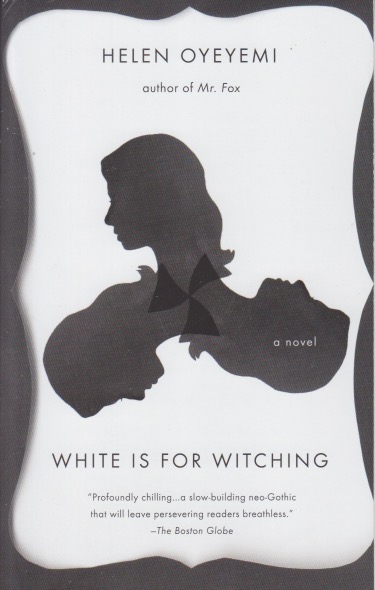
I can’t be sure I understood White Is for Witching, but Helen Oyeyemi’s novel grew on me once I started to piece together what was happening.  A long sit in a waiting room finally got me hooked.  This is an odd story that’s quite a bit about atmosphere.  Miranda Silver and her twin brother Eliot, live in the Silver family house (through her deceased mother’s side) with their father.  They run it as a bed and breakfast, but Miranda’s ill.  She suffers from pica—a disorder where a person eats indigestible items rather than food.  Her mother, who died young, and her mother, and grandmother, continue on in the house, but not as ghosts proper.  They are more a controlling presence guiding the way for the lost daughter who, it seems, is destined to join them.

Miranda’s not an unreliable narrator because she’s never the narrator.  Sometimes it’s her brother, other times it’s her girlfriend, and other times it’s the house itself.  Oyeyemi’s writing is compelling, and she’s great when she takes the narrative thread and runs with it.  The fault is entirely mine, of course, but I prefer a straightforward story where I’m not confused from the start.  I recently put a book down because I was confounded about the issues raised.  I’m flummoxed enough by life itself so that when I want to sit down and read I prefer something that makes sense.  Or that I can follow.  The novel has a wonderful gothic atmosphere and the tragic young woman definitely has shades of Poe.

My compulsion to read appropriate books in October led me to White Is for Witching.  It’s set in England, however, and having lived in the United Kingdom for three years I know autumn there is not the same as fall in North America.  That’s not the fault of the story, of course.  The tale is textured and complex, exploring avenues of madness and isolation (it’s set in Dover and Cambridge).  The part where Miranda falls in love with Ore, at college, becomes quite gripping.  There’s some confusion as to why her twin brother acts as he does, with one of the narrators suggesting that he’s unreliable.  There are speculative elements but no ghosts seen clearly.  And race is obviously an issue.  It’s not the central issue (beyond the author perhaps suggesting something by the title).  There’s a lot going on here.  Normally I don’t read synopses before reading fiction, but this is a case where that might be helpful before indulging in this moody, thoughtful tale.


Learning too Late

Threads of this, crumbs of that.  My life has been a grasping at small bits.  I know the things I like, but which circumstances keep me from.  Nobody is paid to read only, and writing brings in so very little money.  I’ve read Edgar Allan Poe since I was a child, but I haven’t read all of his written works.  (The same is true of the many other writers I admire.)  When I wrote Nightmares with the Bible, I tried to tie the theme of demons to Poe.  I began a chapter with an epigram from “The Raven”—“And his eyes have all the seeming of a demon’s that is dreaming.”  At this point in my life I had not read, or if I had I’d forgotten, “Alone.”  Not published in his lifetime, Poe wrote the poem at 21.  It ends with words that would’ve been appropriate for my Nightmares venture:

From the lightning in the sky

As it pass’d me flying by—

From the thunder, and the storm—

And the cloud that took the form

(When the rest of Heaven was blue)

Of a demon in my view—

Some printed editions end the poem with a period.  The ambiguity of that final em-dash, however, would’ve made particularly well the point I was struggling to convey.  Demons are not what we think they are.  As I continue to read about The Exorcist and its impact, it becomes clear that media mediates reality.  That view of demons has become canonical, but many, from Poe both backward and forward, have wrestled with them.  Not every entity with which we struggle through the night ends up blessing us in the morning, disjointed hip or not.  “Demon” is a very slippery word.  And concept.  In a materialistic world we boldly claim there are no such things.  As Poe wrote, “Of a demon in my view—”

There’s more going on beneath the surface than most people would be able to guess.  This is perhaps why I have a penchant for staring at the ocean.  Misunderstood, certainly.  But never, I hope, shallow.  There are great depths to be explored, but as the ocean teaches us, humans can’t stand the immense pressure at the bottom of the sea.  No, our lives are more like the bits and pieces of seashells plucked from beaches.  We don’t have the whole picture.  All writing reflects a stage on a journey.  Those who embark must earn their keep as they go.  And finding validation after the fact is one of the small joys of life that keep the traveler moving forward.


Ginger Wolves

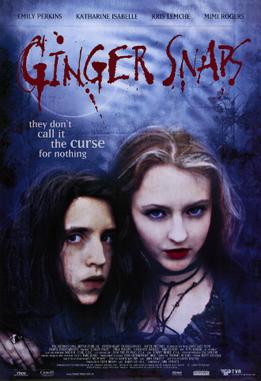
I’ve known about Ginger Snaps for years but the reason I finally watched it was a rainy fall weekend.  The kind of day that suggests imminent winter and you wish that you had a fireplace instead of waiting on the furnace guy to check everything out for another year.  Surprisingly, in my experience, there aren’t many movies that capture that mood very well.  The Little Girl Who Lives Down the Lane is one of the best.  But movies new to me give me topics for blogging, and so I watched Ginger Snaps.  It’s not a typical werewolf movie.  It’s become a cult favorite over the years since it didn’t get much of a box office boost.  It’s smart, and sad, and moody.  And, as is becoming more important to me, well acted.

Brigitte and Ginger are teenage sisters, 15 and 16 respectively.  They share a room and morbid interests.  Their affluent, suburban parents just don’t understand them.  They’re ostracized at school.  Then Ginger gets bitten by a werewolf.  The plot is a coming-of-age story for women, and it has attracted feminist interest over the years.  The sisters are devoted to each other because both are pariahs and, well, sisters.  This begins to change when one of them becomes a monster.  But only to a degree.  Brigitte is determined to stick with her lycanthrope sibling, and tries to cure her.  There’s quite  bit of dark humor along the way but this is pretty effective body horror.  Making it about growing up adds an emotional poignancy to the story.

Werewolves have always been my favorite classical monster.  Ginger Snaps made me realize that it’s almost always a guy problem, however.  Men are the ones struggling to keep the beast inside.  Having this apply to a young woman throws into relief all the uneven standards society harbors.  Some exist for pretty obvious historical reasons, but others are matters of convention, often religious in nature.  Religion is pretty much absent from this movie, however.  Lycanthropy is transmitted like a virus and you don’t need silver bullets to stop a werewolf.  This is a world, in fact, where teens have to try to figure out their own way because parents are too distracted with their own problems.  It is a kind of modern parable, but without a religious angle.  The girls are conflicted about what’s happening to Ginger.  She enjoys the power but fears the consequences.  It is a good Halloween movie, but mostly it’s about growing up, whatever that may be like.


Please Slow Down

I’m always happy to respond to emails from friends.  Lately, however, my account has been so cluttered that emails fall off the top page as more and more things require attention.  This, of course, when I was on a brief vacation for the first time in three years—followed immediately by a family funeral.  When do they expect you to have time to sort through all this stuff?  One culprit is the auto industry.  We bought, out of necessity, a new car.  It’s more than half computer and I receive nearly daily emails from the manufacturer about this or that.  And the insurance company they signed us up for.  You can’t just trash such emails since there might be something important in them.  But you don’t have time to read them all either.  (Many of them are trying to sell you up to entertainment services while driving—I never even listen to the radio while on the road, so please stop thinking I require entertainment while trying to pay attention to the insanity of other drivers.)

Our utilities companies have, of course, begun sending weekly emails as well, asking us to use their services less (or more).  How to winterize your home (with their help, that will only cost a few dollars), and how to save money by turning out lights when you leave the room.  (I learned this as a child.)  Still, you can’t automatically delete utilities emails since they also send notices of when and what your bill is going to be—somewhat important information.  If you subscribe to any news services, they will send you multiple emails a day, some of which you want to read, but not now—I’m trying to figure out how to drive a computer to the grocery store right now, after coming home to a foodless house after a funeral…  The articles look interesting, they really do.  It’s just that I’ve got medical emails I just can’t ignore.  I’ll get back to you, I promise.

Once in a way, I have a weekend morning free enough to sort through the accumulation of mail.  I only hope I won’t find a “past due” notice among them.  I don’t ignore email—I try to keep up with it as much as someone with a 9-2-5 and mortgage can.  And my brain isn’t as young as the thumb-racing, texting generation.  I need a bit of time to figure things out.  Then I come upon that email from an actual friend, buried over on page two or three.  My apologies to you for taking so long to get back in touch.  A new type of snow has accumulated, and it falls any season of the year.  Especially when you’re on vacation and then have a funeral to attend.  It’s like living in a novel by Kafka, or it would be, had I time to read.


Not Grant

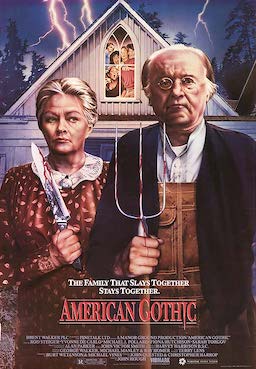
Grant Wood’s painting, “American Gothic,” is undoubtedly his most famous work.  The image is so evocative and suggestive that countless interpretations have been offered for it.  The idea of debilitating isolation suggests itself.  An unhappy self-reliance that has taken its toll on an aging couple (some say the woman is his daughter) often comes to mind.  For some it suggests a movie.  Normally I like horror films from the seventies and eighties.  There’s almost an innocence to them that gets lost in the new millennium.  On a rainy weekend afternoon when I couldn’t be mowing the lawn I found American Gothic on Amazon Prime and it had received four stars and even IMDb showed it as better than average.  The longer I watched the more I was inching toward “bad movie” territory, but I had to see how it ended.

Six young people, four of whom are distinctly unlikeable, have plane trouble and get stranded on a lonely island in the Pacific northwest.  They discover a house furnished from the twenties and it turns out there’s an older couple there who don’t really cotton onto strangers.  As the plot unfolds it turns out they have three adult children who think they’re still adolescents.  And—this is the good part—they are a very religious family (in part.  Again, as often happens in such films, the writers really don’t understand religion).  In any case, the predictable killing off of the kids starts to happen when they continue to be rude and insult the family.  Since we’re in slasher territory here, there’s a final girl—one of the two sympathetic women—who ultimately takes over the house.

Part of the problem with the film is the utter paranoia with which it treats mental illness.  The family clearly has problems and, in a way typical for the genre, they turn toward killing.  Ironically, Pa, when he finds his family has been killed by the one mentally ill visitor (everyone with psychological problems in this movie turns to murder), renounces God and sells himself to Satan.  Interestingly, he doesn’t survive long enough to do anything about it.  Reading about this movie after watching it I came across a new word: hixploitation.  Exploitation movies are familiar to anyone who watches much in this genre, but I’d never considered that Deliverance and company exploit “hicks.”  It’s all about how others look at you.  And, as a movie made in Canada and the UK, it shows us what others see when they look at us.  There’s some ground to explore here in a sequel to Holy Horror


An EAP

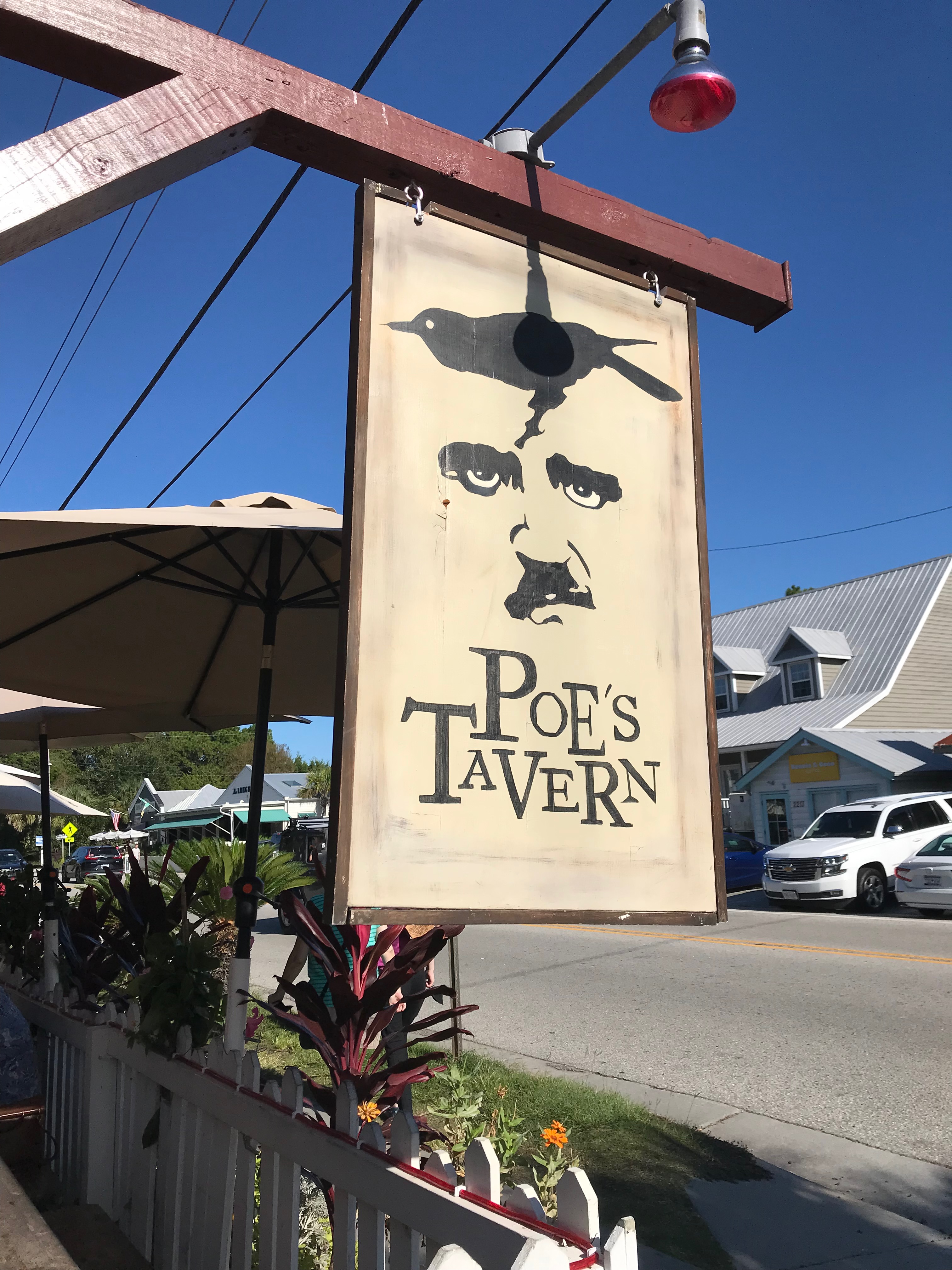
It may be superstitious, but one of the best ways to assure something else going wrong is to say, “I need something to go right just now.”  This year, since June, has been that way.  In the midst of dealing with everything, small moments of joy slip away—moments we want to hold onto during trying times.  One of the touristy things we did in Charleston—or Sullivan’s Island, more precisely—was to visit Poe’s Tavern.  We knew we had to grab a bite to eat there since Charleston is one of the many places to lay claim to America’s iconic writer.  Poe was stationed at Fort Moultrie, perhaps a mile from the modern tavern, in his short-lived military days.  His story “The Gold Bug” is set on the island, and it’s rumored “Annabel Lee” was about a girl he met in Charleston.  We’d wandered around the fort and were shortly to meet family for the gathering that drew us here.  But first we went to see Poe.

Poe himself never ate here—the establishment only dates back to 2003 (opened April 24)—but it participates in the mythology of Edgar Allan Poe.  We have followed Poe—who lived and died as a writer—along the east coast.  My family has visited his birthplace in Boston, his home in Philadelphia, his college dorm room in Charlottesville, his grave in Baltimore, and his Sullivan’s Island home at Fort Moultrie.  There are many more places to visit, and although much of this is mythology, that makes it no less real.

Poe is a controversial figure.  Both the anonymous peer reviewer and a named reviewer objected to my use of Poe in Nightmares with the Bible.  What they perhaps misunderstand is that books are deeply personal effects.  Something few understood about even my academic books is that they were intended as somewhat artistic pieces.  Holy Horror and Nightmares with the Bible are bookends, carefully crafted to go together (and both priced beyond the reach of regular readers, and not marketed at all).  Poe may well be the most recognizable American writer, largely because of an image that has taken hold.  The Poe Tavern has Poe-themed artwork throughout and it participates in that image.  It was crowded already around 4 p.m. when we stopped in for a nosh on a Sunday afternoon in October.  Such drawing power speaks to the mystique of Poe all these many years after his short life and strange death.  And of the fascination he holds for those of us who wish to write, driven by the same bug.


What Message?

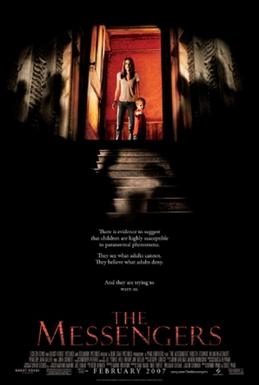
The search for autumnal horror movies is a never-ending one.  Can it really be that auteurs just don’t—drenched in the California sun—get that October feeling?  There’s something in the turning of the leaves and the appearance of pumpkins that changes everything.  And it works every year.  So it was that I thought of The Messengers.  I’d watched this years ago but found it somewhat unremarkable.  I seemed to recollect that, being based on a farm, it was autumnal in character, so I decided to try it again.  I remembered once more why I hadn’t watched it for years.  It’s a serviceable movie, but it is really set in summer (short sleeves the whole way through) and although August farm visits put me in the fall mood, this one is incoherent enough to prevent that feeling from catching on.

Jess is a girl with a past.  Driving under the influence, in Chicago, she was in a crash that rendered her baby brother mute.  In response her parents decide to move to a sunflower farm in North Dakota.  There the crows (actually ravens) attack them.  A stranger arrives and offers to help out.  Of course the house is haunted because of some past murders, but when the crows attack the hired help, it spurs him into a relapse—he’d lived here before and had killed his family, and so he decides to kill this new one too.  Being PG-13, they survive and the house swallows up the murderer from the past.  It’s never quite clear what the crows (the presumed messengers) really want to convey.  Are they trying to warn the family?  Are they trying to awake a killer’s memory?  What do they want?

This is an early Kristen Stewart movie—she’ll go on to more sophisticated horror films.  William B. Davis, with only cameo appearances, offers echoes of The X-Files.  Casting the generally congenial John Corbett as a killer is a bit of a stretch, however.  More intriguing, in this more global world, are the directors—the Pang brothers.  Known for their east Asian movies, including award-winning horror, they took on this American-themed, shot in Canada, project.  It had the backing of a few production companies and a reasonable budget.  Still, it struggles to be memorable.  I seem to recall that the prequel might’ve been a bit better.  But was it autumn-based?  I can’t recall and it’s that time of year when seeing falling leaves and a pumpkin or two make for essential viewing.


Don’t Stare

Having people just outside your window all day is a bit unnerving.  We don’t have central air and I keep my windows open when possible in the summer.  My office overlooks the porch roof but the porch was converted into two interior rooms over the years.  (The house was build about 1890.)  With the extreme weather we’ve been getting (rain storms that routinely dump three or four inches of rain in a short period, especially), leaks have developed.  As of this summer, after five years of ownership, we finally have a completely new roof—we had to have it done in parts because it’s not like we have professors’ salaries.  That meant that roofers were outside my office window all day back in August.  Now this is weird.  I was literally six feet away from some of them some of the time, sitting at my laptop, trying not to watch them instead of working.  The roofers, meanwhile, completely ignored me.  Never once when I glanced up did I see any of them looking in the window.

By the end of the day I was freaked out.  You see, as much as I like performing (as any good teacher does), I don’t like being looked at while I’m working at a desk.  I deeply dislike desk jobs and my posture throughout the day becomes, well, idiosyncratic.  Being forced to act as if I were in a sea of cubicles again was difficult.  Of course, I work longer hours now than I did as a commuter (one of the reasons, I expect, many employers don’t insist on people coming back to the office).  Knowing that someone could be watching you, even if they’re not, makes me uncomfortable.  

I considered how it must be for a zoo animal.  Yes, they’re given some privacy, but it’s often limited.  Animals don’t like to be stared at.  (Despite what materialist tell us, we all know what that  feels like and it makes us fidgety.)  When I’m out jogging I find that if I don’t look directly at them, I can get pretty close to many animals.  If you make eye contact, however, they more quickly scurry away.  Those in zoos must eventually become inured to the staring over time, or at least come to realize that nobody’s going to hurt them.  Still, given their druthers, I expect most of them would rather be in the wild where they can do what they do, no matter how boring, without being watched.  And no roofs over their heads at all.


Something Wicked

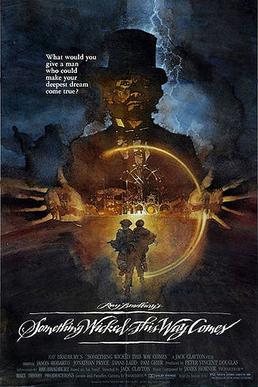
There comes a morning each year, pre-dawn, that it happens.  I crawl out of bed and things feel slightly chilly.  The furnace hasn’t been turned on yet, and ever sensitive to cold, I put on long sleeves and slippers to do my morning writing before the sun.  I start getting a powerful hankering to watch my autumn movies.  This year when that happened, in September, I finally watched Something Wicked this Way Comes.  Now, Disney isn’t a studio known for its horror films.  Over the years, however, they’ve produced some family-friendly efforts toward the scary end of the spectrum.  I tried to make the case in Holy Horror (and a list on IMDb agrees with me) that Pirates of the Caribbean falls into that gentle horror category.  I’ve read established writers on horror claim that The Watcher in the Woods was the movie that frightened them most.  I don’t think Something Wicked falls into that category, but I can say I liked it better than the novel.

And that’s saying something, because it was written by Ray Bradbury.  Bradbury’s stories were an integral part of my childhood.  In fact, much of my fiction writing is modeled on his work.  I didn’t really care for the novel Something Wicked this Way Comes, which I read last year.  The film is an improvement.  And it had a tortured way to the silver screen.  It began as a short story.  Bradbury himself adapted it into a screenplay anticipating a role for Gene Kelley.  This was in 1958.  When that didn’t pan out, he wrote it as a novel.  Filmmakers began to show an interest in the early seventies, but the movie didn’t come out until 1983, after Disney bought the rights and took over production.  The screenplay is mostly Bradbury and the soundtrack rips off Star Wars more than once.

Bradbury could get a little too nostalgic about boyhood.  His yesteryears seem far too innocent to me.  Although, having a few scenes where Jim shows curiosity about sex was a bit racy for Disney, I should think.  Jonathan Pryce does a fine job as Dark, and the mood isn’t bad for family-friendly fare.  I was never much of one for carnivals.  I can’t do rides and it’s easy to see through the games you can’t win and even if you do your prize is cheap.  Other entertainments always appealed to me more.  Still, the film sets a mood, and that’s generally what I’m after when the mornings begin to feel chilly and I’m looking off into another winter.


Frightening Legacy

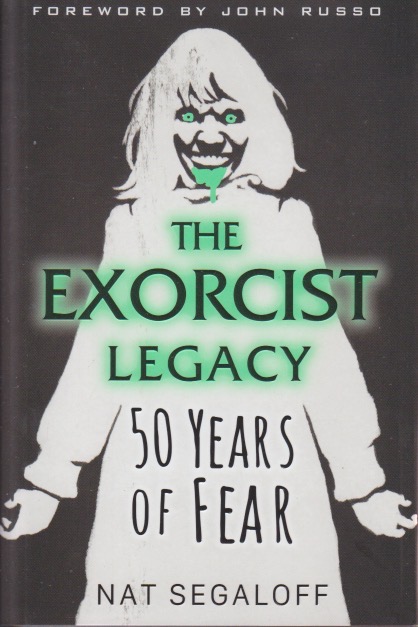
Like The Wicker Man, The Exorcist also turns fifty this December.  I was caught up in this half-century mania and so I got ahold of Nat Segaloff’s The Exorcist Legacy: 50 Years of Fear right away.  The reading was disrupted by life events, but I’d been enjoying it, as time permitted.  Written by a movie insider (as opposed to an ex-academic wannabe), this is a fairly full treatment of the film.  It’s actually not unlike what I tried to do with Nightmares with the Bible, but it is yet another testimony of the importance of The Exorcist to our understanding of demons.  Although one book can’t really be one-stop shopping for any worthwhile movie (there are plenty of books out there on the subject), this one is well worth reading.  For those who enjoy learning about cultural phenomena with a bit of horror tossed in, this is a very good introduction.

One of the things I’ve learned as I’ve tried to break into film reading is that a lot more goes on in making a film than most of us imagine.  And when we see a movie we miss an awful lot.  I’m no shill for Hollywood, but watching a movie multiple times brings out things that writers, directors, and producers didn’t even notice.  Think of the Bible, for comparison.  Readers two thousand years later are still finding new things to say about it.  The Exorcist has influenced religious outlooks in extremely important ways.  Our modern ideas of demons and possession largely go back to this film.  Details may change over time, but even the church has had to respond to it, and actual exorcists reference it.  The Bible says little about demons (again, Nightmares), so we have to pick such knowledge up from elsewhere.

The one part I found somewhat thin was, not surprisingly, parts of the final chapter, “The Mystery of Faith.”  It tends to show when a writer really knows religion.  William Peter Blatty, who wrote the novel and screenplay (the latter at least partially), knew Catholicism cold.  One of the things I’ve been yammering on about for years is that understanding religion enhances our understanding of horror movies.  I’m certain that the connection goes even deeper than that, but books written on horror mention religion often in amateur ways.  If we want to get at what’s really going on here, it’s going to be important to listen to those who understand religion as well.  None of that detracts from this fascinating book that will throw new light into shadowed corners.


Small Bits

A doctorate in the humanities involves learning as much as possible about a limited subject and being able to demonstrate that you know it intimately.  Interestingly, unless you continue the rest of your life in that vein, you’ll realize that you know things only in bits.  Let me use some personal examples, since they’re the kind I know best.  One of my favorite musical artists is Alice Cooper.  To this day he’s the only secular rock act I’ve seen in concert.  I thought I knew Alice, but Spotify taught me that I knew only a very small bit of his oeuvre.  My sense of him as favorite was based on a fragment of what he’s done.  The same applies to fictional characters.  I was a young fan of Barnabas Collins without having watched nearly all Dark Shadows episodes (and neither of the two series related movies), and having read only a handful of the novelizations.  Still, I felt I knew Barnabas.  I suspect I could go the rest of the way through the alphabet with no difficulty.

As facetious as it may be, the “million hour rule” has a grain of truth in it.  That axiom states that to be a true expert in something you have to spend a million hours doing it.  Simple mathematics reveals that means well over a century doing nothing but one thing would be required to fulfill the time.  In other words, no-one is a true master of anything.  We’re all practitioners.  I feel a little better about my recognition that my knowledge, such as it is, is based on small pieces.  What I write in my books are simply entries into conversations started by others.  This is true even if they remain unread.

I’m always encouraged by the neophyte that sets the experts back on their heels.  It’s beautiful to watch knowledge progress that way.  Our institutions are important, but they all become prisons when we suppose they represent the only way to do it.  Life has so many fascinating elements that the truly curious can’t possibly be an expert in them all.  The big picture benefits from stepping back once in a while and considering the small bits that make up the whole.  I can’t claim to be an expert on this, and my knowledge—such as it is—only comes in small bits.  But small bits, when there are enough of them, add up.  The whole picture, however, will never be completed by those of us with only small bits of it.

Photo by Hans-Peter Gauster on Unsplash