Biggest Book

As a bibliophile it’s kind of embarrassing to admit that I’ve only just learned about the world’s largest book.  If you’re like me you’re probably imagining an enormous tome that required acres of trees and fifty-five-gallon drums of ink to print.  But that’s not it at all.  This particular book is located in Mandalay in Myanmar.  If I say it’s a religious text you might be clued in that it represents the Tripitaka, or Pali Canon.  These are Buddhist scriptures.  They are extensive, as scriptures tend to be.  I’m certainly no expert on religions in that part of the world, but it’s clear that the world’s largest book, as a monument, required a massive amount of effort to put together.  Housed at the Kuthodaw Pagoda, the texts were inscribed on stone housed in 729 stupas that are stunningly beautiful.  (Take a look for other photos online—it’s impressive!)

Photo credit: Wagaung at English Wikipedia, published under GNU Free Documentation License

The monument was completed in 1868.  When the British invaded southern Asia, however, there was much looting and damage was inflicted on the shrine.  It was eventually repaired and still stands as the largest book in the world.  It’s no real surprise that this honor would be relegated to a religious text.  Bibles of all sorts become symbols and their symbolic nature often supersedes what’s written inside.  The idea of the sacred book has an unyielding grip on the human psyche, whether we think the book comes from God or an enlightened human being.  Indeed, the sacred itself is an integral part of being human.  When one group wants to dominate another, it often goes for its sacred artifacts.  Cathedrals as bombing targets in the Second World War demonstrate that well enough.  Ironically, we’ve ceased paying much attention to the sacred but we still revere it.

Books represent the best of our civilizing nature.  They’re ways of coming to see the point of view of others.  It really is a privilege to read.  Banning books is, in its own form, a crime against humanity.  Those who ban almost inevitably end up promoting yet more sales of the offending book.  I often see books that make me angry or upset.  My knee-jerk reaction is to want to deface them—this is a human enough response.  But taking time to reflect, I realize that these writers are entitled to their opinions, benighted though they may be.  A civil exchange of ideas is essential to getting along in a world with billions of different opinions.  Every nation should have a monument that shows its love for books.

Sleep Well

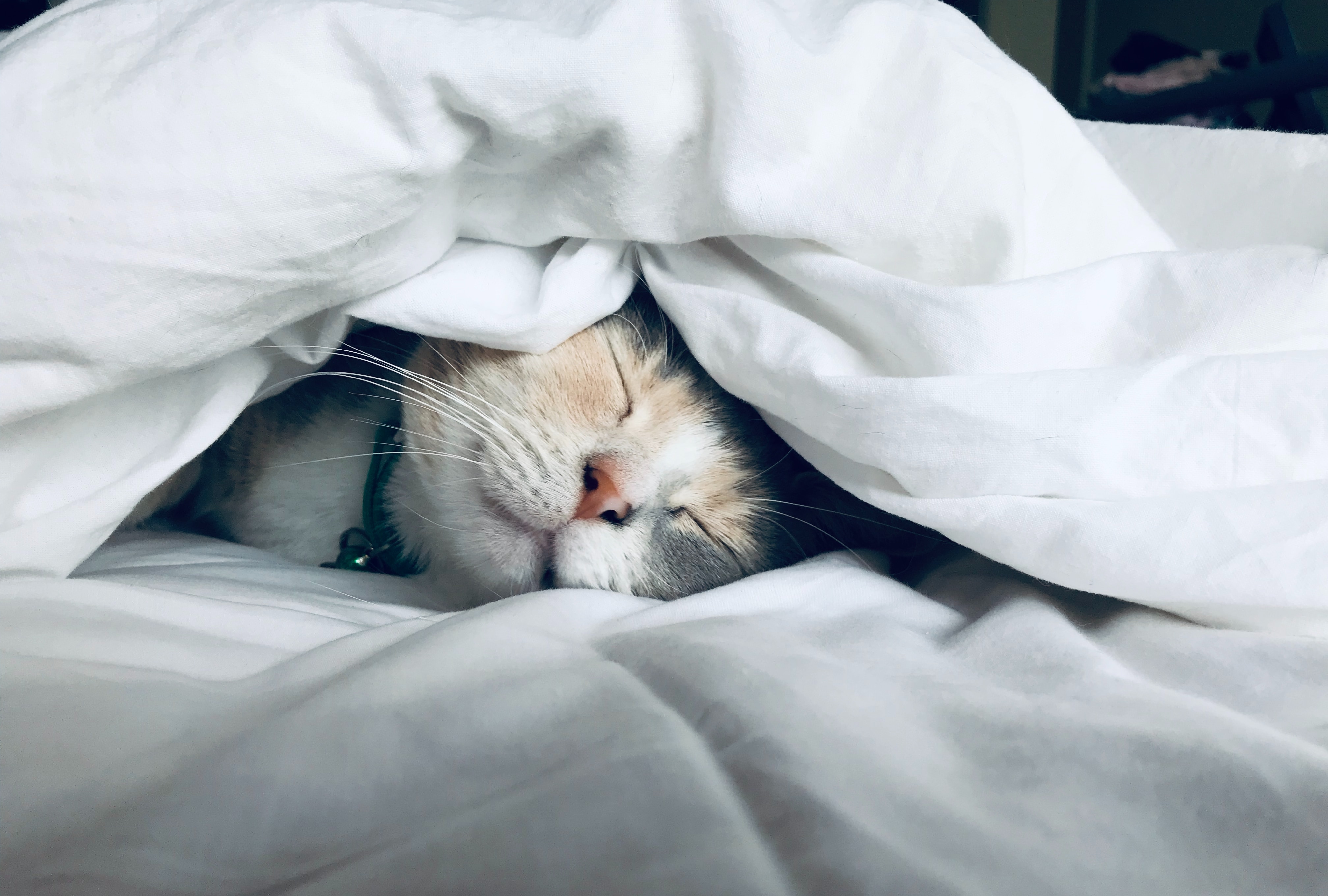
It’s scary, actually.  How you think depends on how you sleep.  I suspect that the degree of this differs individual by individual, but I recently had a couple of consecutive nights where the differences were striking.  To put this in context, it was after ending Daylight Saving Time (it should be kept all year but with Republicans in the House unable to pick a speaker, what chance do we have of them ever passing a simple, but necessary measure?).  Mondays, for some of us, we naturally awake earlier since, well, work.  I happened to wake excessively early that morning and couldn’t get back to sleep, no how.  I functioned alright during the day, but those who work 9-2-5 aren’t allowed naps and some of us aren’t young anymore.  I thought it was a fairly normal day.  That night I slept well.

Photo by Kate Stone Matheson on Unsplash

The next morning it was like my thoughts were supercharged.  I was thinking things I’d failed to pick up on the previous morning.  I was efficient and energized.  What a difference a good night’s sleep makes!  But the herd mentality—work must be eight hours and those hours must be from nine to five (if you work more, that’s great!)—doesn’t allow for bad nights.  It’s ageist, really.  Once you reach a certain age, you don’t sleep as well at night.  Work times are non-negotiable, so you’re forced to keep going through the yawns that a good nap would take care of.  So much depends on a good night’s sleep.

In reading about the history of holidays (I’ve been doing this for years, as The Wicker Man demonstrates), it’s clear that the United States stands out in the dearth of its holidays.  It’s been that way from the beginning.  Most employers don’t give Veteran’s Day off.  None note May Day, which is Labor Day in many parts of the world.  No time to sleep in in this country!  Work while you’re tired, work while you’re wakeful, just as long as you work those sacred eight hours and more.  Of course, all of this may come from that grouchy feeling a poor night’s sleep bestows.  I don’t keep a sleep diary, but I do wonder how many social ills are brought about by a bad night’s slumber.  It’s the darkening time of the year.  Nature’s telling us that reasonable animals hibernate.  The rest of us set alarm clocks to wake us before it’s light, no matter how we fared the night before.


Not Making Decisions

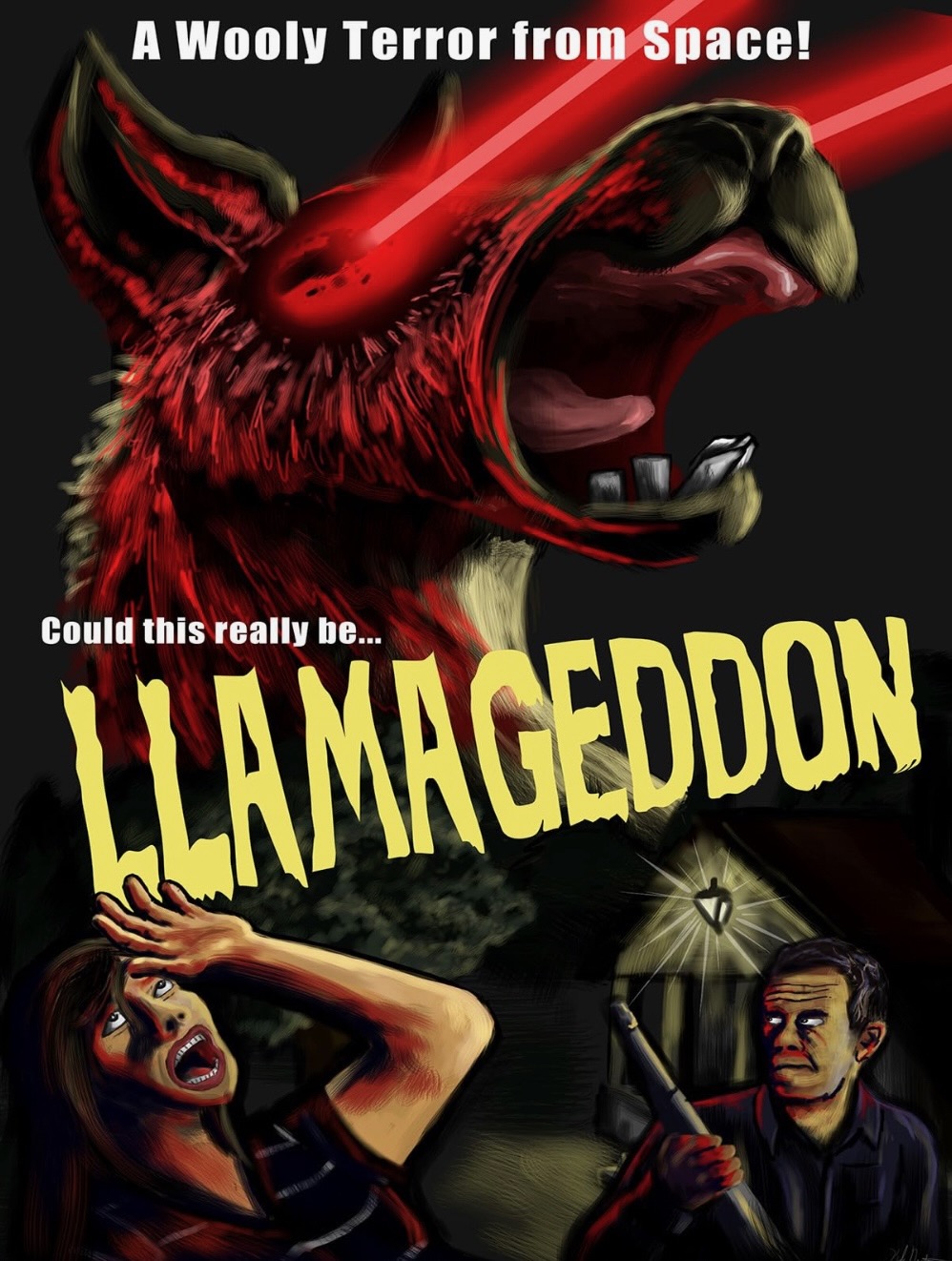
After anesthesia they tell you, “Don’t make any important decisions.”  That’s the excuse I’m using for having watched Llamageddon recently.  That, and it’s free on one of the streaming services to which I have access.  I only found out about it because of such services and I wasn’t in any shape to decide important things like how to spend the rest of the groggy day.  I’m of mixed minds regarding comedy horror.  Or is it horror comedy?  Decisions.  The fact is, quite a few horror movies do involve some amount of fun.  My favorite ones tend to be more serious, but once in a while you find yourself watching movies you know are (or you know are going to be) bad.  I knew this one was.  It’s so bad that it’s got a cult following.  It was, I’m pretty sure, made to be bad.

So a killer llama from another planet is forced to land on earth.  It kills an older couple in Ohio and after the funeral two of their teenage grandchildren, Mel and Floyd, are left to stay in the house.  Mel, who is older and more experienced, contacts all her friends so they can party that night.  Of course, the llama’s still on the loose.  It has laser-beam eyes and it bites and punches people to death and the partiers are picked off, not exactly one-by-one since many of them are electrocuted in the hot tub.  Generally they’re so drunk and/or high that they don’t believe any of this is happening.  Eventually Mel and Floyd’s father arrives and tries to save his kids.  Before dying of llama bite, he kills the quadruped by running it through a combine.

It’s worse than it sounds, but it’s played strictly for laughs.  And, I suspect, it’s one of those movies that’s meant to be watched under the influence.  Since anesthesia is about as close as I’ll ever get to that, I suppose this counts.  Some of the early horror movies have become funny with the passage of time as early special effects age and we become used to better, more convincing fare.     As it is, it’s difficult to find much about Llamageddon apart from IMDb, and the director’s name, Howie Dewin, is a red herring.  I’m fascinated by such films being able to gather a following.  Of course, I confess to enjoying Attack of the Killer Tomatoes when the mood is right.  And a day when decisions are contraindicated, anything can happen.


A Century of Horror

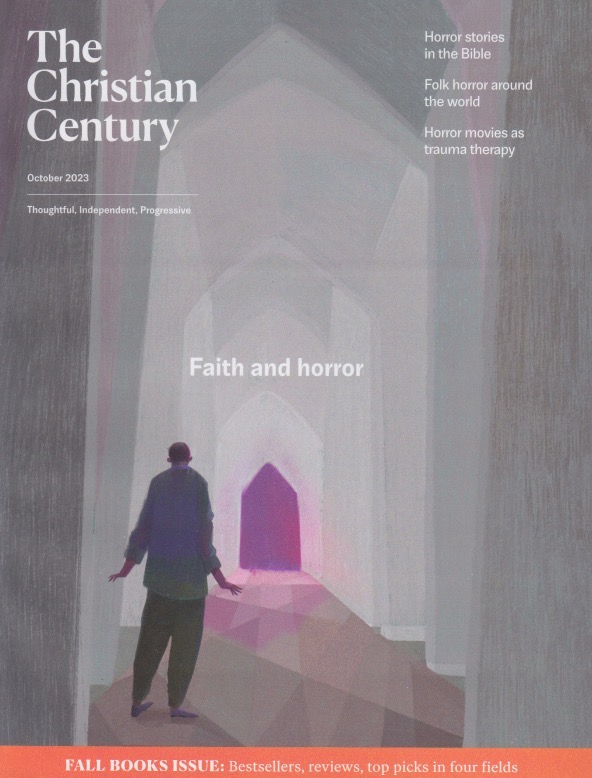
I’m not a magazine reader.  When I go to a waiting room (which is quite a bit lately), I tend to take a book.  The October issue of The Christian Century, however, caught my eye.  As a more mainstream/progressive Christian periodical, CC used to circulate in the office of one of my employers since it features books, the way progressives generally will.  This October, however, it featured five articles on “faith and horror.”  I had to take a look.  I know three of the five authors, one of them without realizing he was a horror fan.  An article by Brandon R. Grafius, “The monsters we fear,” discusses the commonalities between fear and religion, ground that he treats in Lurking under the Surface.  “The wisdom of folk horror” was written by Philip Jenkins—I didn’t know his horror interest—and it engages, briefly, The Wicker Man.  He’s making the point that folk horror is often about somebody else’s religion.

It was “Horror movie mom” by Jessica Mesman that really hit me.  Mesman was traumatized in her youth, and like many of us who were, has turned to horror for therapy.  This is a moving piece and is worth the cover price of the magazine.  Gil Stafford’s “A theology of ghosts” also gave me pause.  Stafford is an Episcopal priest who considers ghosts to be more than just woo.  In this very personal piece he thinks about what that means.  The last feature, “God’s first worst enemy,” is by Esther J. Hamori, one of the colleagues who talks monsters with me.  The piece is adapted from her recent book, God’s Monsters.  Taken together these pieces are quite a mouthful to chew on.  While numbers in mainstream Christianity are declining, Christian Century is still a pretty widespread indication of normalcy.

When I wrote Holy Horror I only knew about the work of Timothy Beal and Douglas Cowan as religion professors writing on monsters and horror.  That book admitted me to a club I didn’t know existed—the religion and monster crowd.  Since I’m not welcome in the academy, I’m particularly drawn to pieces like Mesman’s since she’s writing from the heart (as is Stafford here).  I’m just glad to see this topic getting some mainstream coverage.  I know I’m a guppy in this coy pond, but I do hope they’ll consider, over at the Century, turning this into the theme for their October issues in coming years.  If they do, they can count on at least one extra counter sale.


Old Oak Tree

Trees have much to teach us, if only we’ll pay attention.  They are fascinating plants in their own right, living longer than just about anything else.  During our years in New Jersey we made pilgrimages to two ancient trees in that state: the Basking Ridge White Oak (unfortunately cut down in 2017), and the Great Swamp Oak in Lord Stirling Park, also in Basking Ridge.  Naturally enough, then, when in Charleston last month we had to visit Angel Oak.  Our Charleston visit was not a solo venture, therefore our timing was somewhat off.  Our flight to South Carolina was delayed by about three hours, cancelling our plans for that Saturday afternoon, one of which was to see Angel Oak.  When we arrived at the oak on Sunday we discovered the venerable tree had visiting hours that started after we had an engagement on Sullivan’s Island.  We had to see it through a fence.  (In our defense, several others arrived at around that time, equally surprised to learn they couldn’t get in.)

Regardless, there’s something awe-inspiring about being next to a being four-or-five-hundred years old.  Unlike its departed cousin, the Basking Ridge White Oak, Angel Oak is of the live oak variety.  (Live oak is the rather awkward name for a type of oak tree, not necessarily a designation that the tree is alive.  People sometimes have strange ideas about naming things.)  Like many ancient things, folklore has accumulated around this tree.  Although the name derives from former estate owners, lore has it that ghosts of slaves appear at the tree in the form of angels.  Folklore has a way of saying something important in this materialistic era.  There can be something spiritual about trees.

Although we had only a few minutes outside the fence to appreciate what we were seeing on John’s Island, the experience is one that sticks.  One of the most hopeful things a person can do is plant a tree.  Back at Nashotah House I planted an apple tree that I’d grown from a seed.  I planted it the year my father died (2003) and I often wonder if it’s still there.  After buying our first house we planted a scarlet oak.  A local nursery indicated that oaks help the environment by providing the habitat for the highest number of species here in Pennsylvania.  We used A Tree to Remember after my mother’s passing to plant a memorial.  (Other trees I’ve planted have been snipped off by squirrels before they can live on their own.)  Although outside the fence, I reached up and touched some of the outer leaves of Angel Oak and connected, if only for a moment, with something great.


Double the Trouble

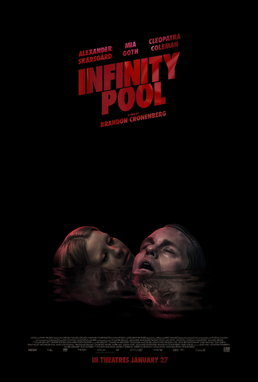
A down-on-his-luck writer (I’m with you so far) vacations on his wealthy wife’s money in a resort in La Tolqa.  La Tolqa is a brutal, very religious, but poor country.  They need tourists.  As the writer, James, discovers, their laws are very strict for a reason.  If a tourist commits a crime they are executed.  However, if they have enough money they can buy a “double,” essentially a clone of themselves, that can be executed for them.  Needless to say, this happens to James.  The name David Cronenberg evokes body horror.  Infinity Pool is the work of his son Brandon Cronenberg and although body horror’s part of it, there’s an even deeper existential fear at work.  Once James’ double dies, his wife insists they leave this horrid place immediately.  James isn’t so sure.

The trouble is that he’s befriended another couple, and the wife, Gabi, has been making no-so-subtle advances on James and he’s intrigued.  This couple sets him up so that he’s likely to break a law, which leads to the killing.  But they’re not finished.  Along with another group of Americans, they travel to La Tolqa every year to commit crimes so they can watch their doubles being killed.  “Murder tourism,” as one reviewer calls it.  They want James to become one of them.  They start putting him into positions where he has to kill his own double.  You can see the existential horror pretty clearly from this vantage point.  Finally realizing that they’ve been mocking him, James tries to escape, but can’t.  As long as the penalty for a crime can be payed by buying a double, they can commit outrageous crimes with impunity.

I have to admit that I envy those who have a family business.  (Mine was alcoholism, so I chose a different career path, such as it is.)  If your father is a well-known, even if often castigated, horror director, you have some guidance on how to get started in the business.  My sense of Infinity Pool is that it’s quite effective, almost at art film at some points.  Like some of his father’s films, it involves both sci-fi elements and horror.  Budapest and Croatia are evocative shooting locations.  The story, while not entirely satisfying, intrigues.  It raises too early the question of whether the double, which has all the memories and thoughts of the original, is really watching the death of the person who actually committed the crime.  Are these copies their own death sentence?  This isn’t resolved, but it’s strongly implied that they’re not.  Still, I’m not inclined to vacation in La Tolqa, which is no place for struggling writers.


The Jonah Treatment

A kayak on the ocean might’ve seemed to be a safe place during a pandemic.  In November of 2020, however, two women ended up getting the Jonah treatment.  While it happened some time ago, the story appeared in Slate just in August, so the world is learning about it after a few years.  At least those of us who hadn’t seen the viral videos before.  Julie McSorley tells how she and a friend were paddling out to see some humpback whales along the California coast.  Then, like a scene from Finding Nemo, bubbles started to well up around them and they found themselves briefly in the whale’s mouth.  They escaped unharmed since humpbacks don’t eat mammals, being baleen whales.  Apart from the natural fascination of the story, what caught my attention was the reference to Jonah in the log line.  As Heather Schwedel notes, few people “outside of storybooks and the Bible” have actually been inside a whale.

Image credit: Gustave Doré, Illustrations of Baron von Münchhausen, public domain via Wikimedia Commons

The typical biblical scholar response is generally somewhere along the lines of, “the Bible says ‘great fish,’ not whale.”  This may be true but we don’t possess a biblical glossary for the animals, real and imaginary, in the Good Book.  Ancient Israelites were neither great seafarers nor precise describers of nature.  There are many strange references to animals in the Bible with no certain referents in the world we know.  Not being oceanographically inclined, biblical authors wrote “great fish,” a term that was still used to describe whales up to Melville’s time.  But we now know there are other big fish as well.  Whale sharks, for example, and if you’ve ever watched River Monsters you’ve likely seen catfish large enough to send shivers down your spine. 

The funny thing about the book of Jonah is that the point of the story is often overlooked for the splashy action.  There’s a moral to the story.  It’s all about not judging others because they don’t belong to your group.  Jonah has already condemned the Ninevites as godless idolaters.  The book teaches that such judgment isn’t a human prerogative.  But we simply can’t get past that image of a whale, or great fish, swallowing a guy and digesting him for three days.  Like Jonah, Julie was spit back out by the whale.  It took only a matter of seconds since, despite what Pinocchio shows, the interior anatomy of most whales won’t allow living space for a long weekend away from home.  Julie McSorley and her friend emerged relatively unharmed.  McSorley even says it was a transformative experience.  One might even suggest it could be a spiritual one.


Unexpected Gifts

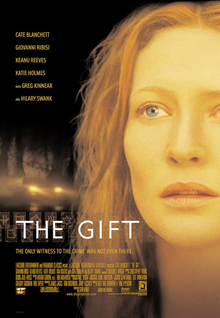
Sometimes horror movie therapy doesn’t go the way expected.  (No surprises there, so no snarky comments, please.  No therapy is “one size fits all.”)  This was brought home to me when watching The Gift.  I was attracted to the speculative aspect of the premise and although it came out over twenty years ago I hadn’t heard of it before.  Although there are speculative elements—at least two ghosts—it is largely a human drama and one that hit me unexpectedly.  As a public service for those who also practice horror movie therapy, I thought I’d consider it here.  (Then call my regular therapist.)  Annie Wilson is a psychic in rural Georgia.  She gives readings for donations to help supplement Social Security since she’s a widow and she has three young sons.  I don’t know why this didn’t start the warning bells a-jangling, but when it was over I realized her situation was like mine, growing up.  (My father was alive, but nobody knew where he was, otherwise I’m on board.)

A violent neighbor, scarily played by Keanu Reeves (forever Neo in my mind), keeps threatening the family since he’s a wife-beater and Annie recommends his wife leave him.  Then a woman is murdered and her body is in his pond (or better, bayou).  Annie realizes that this threatening bully, who’s convicted of the crime, is actually innocent.  Her lawyer, however, doesn’t see the problem—the guy was a menace to society and he’s locked up.  Annie, however, insists on finding the truth.  I have to say that this movie genuinely scared me.  I almost stopped watching.  It wasn’t the speculative part, though.  It was the human part.

Religious locals accuse Annie of being a witch and a Satan-worshipper.  She is, however, simply trying to get by in a society that has failed her.  Having an unstable neighbor threatening her kids doesn’t help.  What’s so scary is that this isn’t far from real life.  For those of us who grew up poor, safety nets are few and the weave is very, very loose.  And you’re made, even as a kid, to feel the social stigma of the crime of being poor.  Annie has a good heart.  She tries to get a man wrongly accused released from jail, knowing that he’ll probably begin threatening her again, if not actually harming her.  Society, however, doesn’t really care.  Raising three small children on welfare on your own isn’t easy.  And, in fact, those kids may well grow up needing therapy.  Even if it’s watching horror to try to make sense of life.


Obscure Subjects

The world is so full of things that require further explanation that I can’t believe there aren’t more universities.  No, seriously.  If you look closely, or even casually, there are so many things under-documented that it’s a wonder we get along.  Instead we focus on criminals who want to be president and deny science is real.  Alas.  What brings this on is that I’ve been working on a book that involves researching pop culture.  Naturally, there are books and articles to read, and even videos to view.  Still, some information just doesn’t seem to be out there.  I’ve run across movies that appear with no explanation.  They’re simply there.  Sure, you can find the name of the writer, director, stars, and such, but how did that movie come to be?  Unless someone (normally a journalist) has followed up the story of its origins, there’s really nowhere to go.  Unless there are extras.

I’m remembering how CDs came with liner notes.  (Does anyone remember CDs?)  Good notes gave you further information on the music.  It was documented.  There was an explanation.  DVDs often lack that.  If there aren’t “extras” on the disc, the liner notes don’t help you much if they don’t exist.  Now that we stream everything a search on IMDb is about the best you can do.  Sometimes Wikipedia helps, but only if the article cites its sources.  We need more information.  I read a lot about movies and I’m always glad when an author has found a source that explains a bit more about why this particular film exists.  Are we that non-curious?

Believe me, I know the world is too full of things already.  On some subjects too much information is already available.  Things like movies, and music—things that really move us—however, are left hanging in the air.  I’m curious about them.  I suppose I could subscribe to trade magazines, but I wonder why those who’re already paid to be professors—professional researchers rather than erstwhile academic hacks like yours truly—aren’t all over this.  Academic respectability can be a real problem sometimes.  I know I didn’t feel like I could explore these things until I’d been ousted from the academy.  You see, I think we need more universities.  Places where the curious can go to learn about even more obscure subjects, but subjects that are really important to people.  It seems a far better use for our ill-gotten gain than spending it on lawsuits just to bring down those that education could take care of as a natural benefit.


Mystery of Poe

I’ve read my fair share of books on Edgar Allan Poe, but I have to say that Mark Dawidziak’s A Mystery of Mystery: The Death and Life of Edgar Allan Poe is perhaps the best.  Like Dawidziak, I realize that writers, as well as other historical figures, come to be who we need them to be.  This book, which pinwheels around the unsolved cause of Poe’s death, is probing of his life as well.  His younger years and his likely psychological profile as a child who never felt he received the love and affirmation that he required, really spoke loudly.  This explains much of his behavior, which was often contradictory and didn’t serve his own best interests.  Today Poe is an icon of horror, but as this wonderful book explains, Poe was so much more.

People are often typecast.  We have limited time and our own lives are so crowded with stuff we have to do that, as a matter of survival, we need to “profile” others.  I’m constantly reminded of this when I spend time with people (which is not often), particularly those I know well.  I leave realizing that I don’t know them as well as I think I do.  I’ve only seen the surface, or just below, if I managed to engage with any depth.  My own involvement with Poe goes beyond memory.  As in a dream, I don’t know when I was first exposed to him or his writing.  Still, I know that I’ve had a lifelong “parasocial relationship” with him.  I suspect that many of us who appreciate his writing do.  Well, back to the book.

A Mystery of Mysteries begins near Poe’s death, setting the stage.  The chapters then alternate, going back to a chronological treatment of his early life, and then picking up the narrative of his death.  Along the way, a compelling portrait is painted.  Like the majority of us who write, Poe didn’t find much recognition in his own lifetime.  Of course, he died young, but his lifestyle might well have created that situation, regardless.  Jealous of others who received more attention, Poe knew he had a special intelligence that was unappreciated.  It still is.  Yes, Poe has many, many fans, but many, I suspect, don’t have a good idea of who he was as a human being.  For as much as he wrote, Poe didn’t really give us reliable details of his own life.  Dawidziak ends with some well-reasoned speculation of Poe’s cause of death.  But I won’t tell you what he suggests because I want you to read this excellent book.


Asking Questions

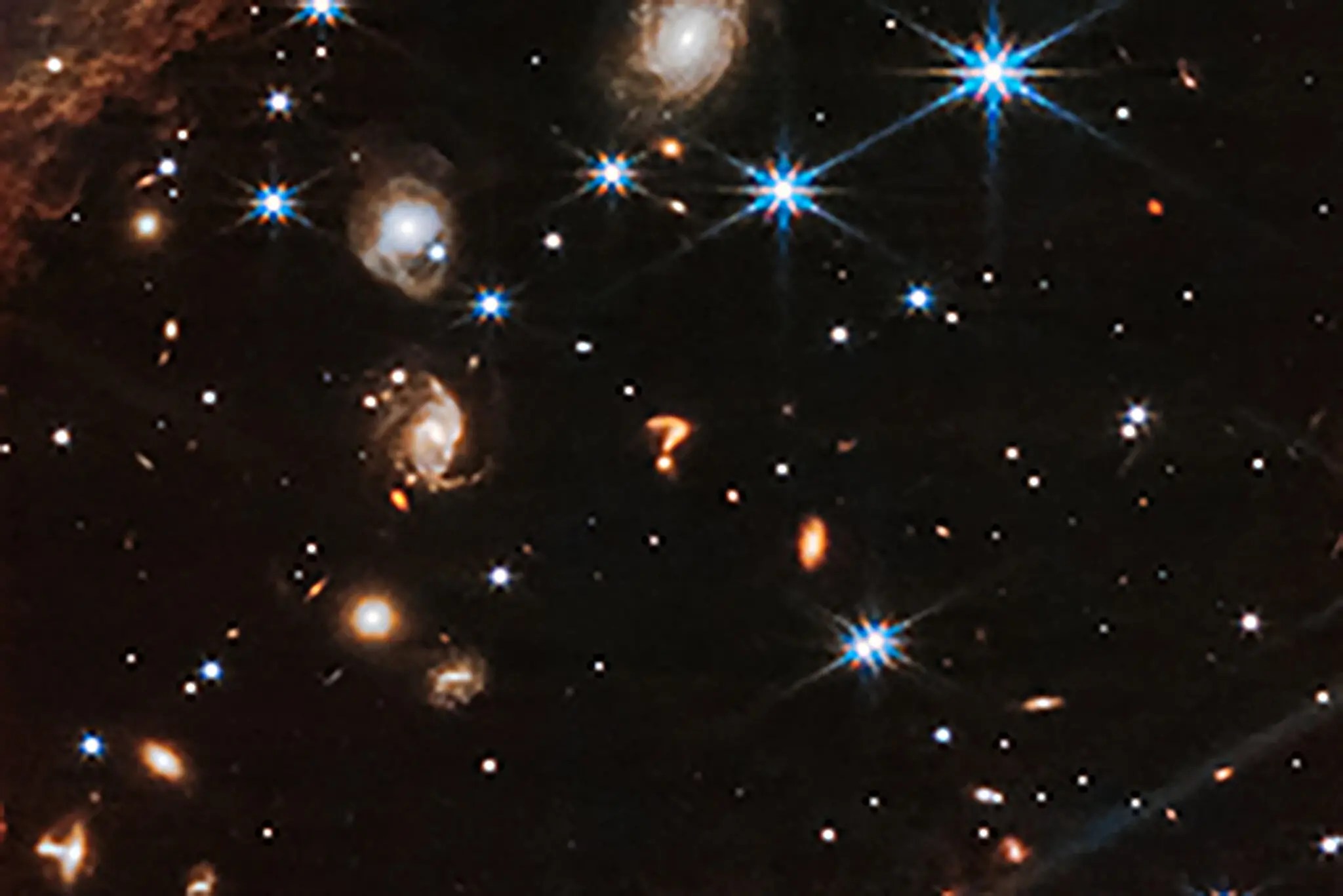
Strangely appropriate pareidolia is one of those oddly specific things that generates a lot of internet interest.  I was late to find out about the “question mark” in space photographed by the James Webb Space Telescope.  Okay, a couple of things: photographs, like the one below, taken by U.S. Government agencies are in the public domain (thanks, NASA!).  This one can be easily enlarged on the James Webb Space Telescope webpage.  To see the “question mark” you need to start from the center red star and look down to the two bright blue stars just to the left of center.  The image I’m using has been enlarged so that it’s obvious.  Serious news outlets have discussed this, but it’s clearly a case of pareidolia, or the human ability to attribute specific meaning, or design, to something that’s random.  We see faces everywhere, but question marks are somewhat less common.

Photo credit NASA: public domain

Given the state of the world—people like Trump able to continue scamming millions of willing believers for his own benefit, hurricanes hitting California, Putin going to war against the rest of the world, capitalism, war in the Holy Land—it’s no wonder that people like to think a big question mark is hanging over everything.  Looking into the sky we expect to see God.  Isn’t it a little disconcerting to see a huge query instead?  I, for one, think it might be best if we learn to recognize false signals rather than seeing some giant message tucked away in some small corner of the universe in the hopes that we’ll turn our seeing-eye telescope that way.  What font is it anyway?  Does it violate some cosmic copyright?

Some signs are, I’m convinced, for real.  I think they tend to be on a much smaller scale.  Way down here where  we can see them.  What appears to be, from our viewpoint, a question mark may be seen as an exclamation point from a different angle.  It’s all a matter of how we look at things.  One of the most important lessons of life is that people see the same thing from different points of view.  If we can accept that, others don’t seem so threatening and strange.  In a small planet plagued with xenophobia, it’s important to discover strangely appropriate pareidolia every now and again to get us thinking about the deeper issues.  We may not find the answers, but often asking the question is the more important thing to do.


Enabling Vampires

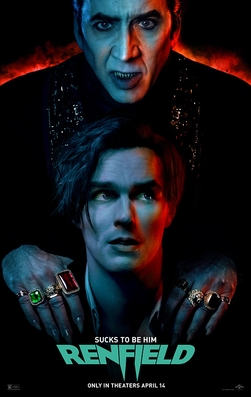
I was skeptical at first.  Nicolas Cage as Dracula?  How could this possibly work?  Nevertheless, Renfield works.  A box office flop, I suspect that audiences may not be ready for a comedic treatment of Dracula, but this is a smart, savvy take on a classic, combining superhero films with vampire lore.  Let me take a step back here.  Renfield is a bit of a slippery character, shifting places with Jonathan Harker in Bram Stoker’s original.  He is Dracula’s servant, but here he’s presented as becoming aware that he’s a codependent enabler.  In his seeking victims from the narcissists who cause pain in the lives of a church support group, Renfield comes to realize that he’s also a victim.  He teams up with the one honest New Orleans cop who’s not on the payroll of the local mob, and together they rid the Big Easy of both vampires and organized crime.

Overly ambitious?  Yes.  But the comedy actually works here.  This is a funny movie with several laugh out loud moments.  Maybe it’s CGI, but in several shots Cage actually looks like Bela Lugosi.  Nicholas Hoult does a wonderful interpretation of Renfield, the madman of the original movie, as well as factotum to the dark prince.  Those who know and appreciate vampire lore will find many subtle insider jokes here.  And Cage undertakes a campy, yet compelling version of Dracula.  Endlessly self-referential, the movie is a skillful blend of vampires, self-help wisdom, and even social commentary.  I’d heard that my expectations shouldn’t be too high here, so I was pleased when they were exceeded on almost very point.  

Horror comedy is difficult to pull off so that viewers feel satisfied that they haven’t wasted their time.  Renfield manages to do this with style, action, and even a bit of drama.  I have an inkling that over time this will become one of those movies that appreciates with age.  The story is convoluted, but this is in service of the comedy.  Everything is so wildly improbable—from eating bugs to gain super powers to Dracula’s blood bringing the dead back to life—and hilariously overblown that it overcomes the difficulties attending such a mashup.  It’s as if Cage knows viewers don’t always take him seriously, and yet he rises to the occasion.  With nods to The Matrix and Pirates of the Caribbean, as well as the vast library of Dracula films, Renfield is the result of homework done and boundaries crossed.


The Good Lurid

It takes a lifetime to make a reputation.  In high school my teachers and classmates knew mine well: religious and full of integrity.  Going on to do three degrees in religious studies confirmed all that (at least the former).  Something that nobody seemed to pick up on was that I liked watching monster movies.  I did less of it in college, but still watched some heavy-duty fare (including David Cronenberg) when I was in seminary.  Once I married life looked more optimistic and I really didn’t feel the need to watch what is called “horror” any more.  Sure, we occasionally saw films everyone was talking about, but in general I moved away from the genre.  It took Nashotah House and its aftermath to bring me back.  In any case, my reputation seems to be such that now when people who know me see religion and horror together they think of me.  I’m touched.

A regular reader of my blog sent me an article from The Guardian titled, “Schlock horror! Meet the family who made lurid movies for the Lord.”  It should be pretty clear, if my integrity is intact, that what I’m trying to do is figure out how these things fit together, religion and horror.  That they do is obvious, but how?  In any case, this article plugs a book by journalist Jimmy McDonough, The Exotic Ones.  The book explores the Ormond family and their odd filmmaking.  The father, mother, and son triad, made a living producing cheap, questionable films.  After a plane crash, which they survived, they became religious only to find their minister wanted them to keep making their bad movies for evangelistic purposes.  The films they produced for the church had religious themes, but used well recognized horror tropes, anticipating, if you will, Left Behind and its ilk.  Like a Thief in the Night scarred many of my generation.

I’m probably not alone in not recognizing any of the movies the article discusses.  If I’m reading correctly, Tim Ormond, the son and sole surviving family member, stopped making these films after the death of his parents.  In any case, I have been developing a fascination with bad movies.  The fact that they’re even made and released is incredible to me (mostly the released part).  Many of us end up reacting to life rather than following the plans we had for it.  Fate—call it what you will—has a way to stepping in.  For one family, however, fate led them to a church that paid them for what they wanted to do.  Many of the rest of us find just the opposite and we end up watching horror to try to understand.


All of Us

All Souls is a democratic holiday.   Since Halloween is really the start of the holiday season, we really should keep it, together with All Saints and All Souls, as a time off work.  (If I had the vacation days to do it, I would.)  I realize these are holidays of Christian origin, and some object to even getting Christmas off because of that—hey, some of us think holidays are a great and necessary part of life!  Of course, I’d be happy having Jewish or Wiccan holidays off too.  Halloween and Christmas are generally secular holidays these days, but that makes them no less meaningful.  In any case, All Souls is the day we commemorate the dead who may not have been recognized as saints.  Like the Day of the Dead, it’s a time to reflect on those we’ve loved and lost.  I always find the naming of our departed especially moving.

Doris Ruth Miller

Among northern Europeans (they aren’t all bad guys) the steps into November were a liminal time.  The restless dead might attempt to return and the living should pay their respects.  The church tried to address this through All Saints Day with its exalted music and ceremony.  Like an afterthought, it seems, All Souls was a time to remember those who are the majority.  The unrecognized, the non-famous, but often very good folk without whom sainthood would be impossible.  You see, I truly believe that most people try to live the best way they know how.  They struggle, yes, and they may have made bad decisions based on what they knew at the moment.  They were, after all, human.  The church set aside November 2 to pause and consider that death comes to all of us.  Winter is on the way.

Winter, in many ways, defines life.  It’s a time in which disaster comes to those who fail to plan ahead.  Food must be stored in advance since it will be scarce.  Nights will be long.  Even keeping warm will be a challenge.  And it can come at any time now.  Some years snowstorms come on Halloween.  And even if no snow falls we enter that fallow time when we’re forced to sit and wait.  It is nature’s way of saying, “Stop.  Reflect.”  Those already departed on All Souls are missed by those of us who remain.  We put on another layer, or perhaps turn up the thermostat, trying to distance ourselves from the chill.  We look to Thanksgiving, and Christmas soon to follow.  And those who perceive subtleties know that hope of spring begins early in February.  The souls who’ve already gone on know more than we, and the least we can do is remember them once a year on the holiday meant for all.


November Nightmares

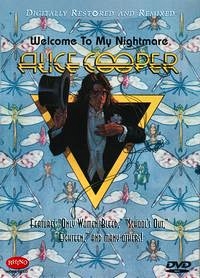
Music videos weren’t really a thing then.  And “Welcome to my Nightmare” was theater as well as rock.  I knew a movie of it existed, but I only made an effort to see it as October was slipping through my grip.  I have a strange, one-sided history with Alice Cooper.  We listened to the radio back when we were kids and we all knew Cooper from “School’s Out,” an unofficial anthem of the seventies.  We didn’t have much money when I was growing up (some things never change), but I had a copy of the album Welcome to my Nightmare.  I couldn’t recollect how I’d got it until my brother clued me in.  We were at Jamesway just outside Franklin one Friday night.  My mother, frugal to the day of her death, saw that Alice Cooper’s new album had a song called “Steven” on it and she bought it for me.

Now Mom knew full well that my official name is “Steve” (she named me).  There’s no “n” in there anywhere.  Yet still, even as I knew this, I found that song spoke to me.  Like the Steven on the album, I was prone to nightmares.  And the sequence of “Years Ago” and “Steven” on that concept album never left me.  Mom would not have approved of the movie version—I found the misogynist parts difficult to watch myself—but it did answer a question I always had: how did he perform these songs in concert?  They seemed too big for that.  They weren’t the snippets I always assumed rock stars did.  (I never attended concerts, so what did I know?)  Alice Cooper is still the only rockstar I’ve ever seen in concert, but the theatrics were brought way down and his back probably ached like mine did after that event.

I’d been looking for a horror movie to finish out the month, you see.  I keep a list of movies that, apparently, are never free on Amazon Prime or Hulu.  It ended up taking nearly all the little time I allot myself for such indulgences to try to find something.  Then I remembered Alice.  It was raining outside and I had caught up on my emails for the moment.  This step into a yesteryear I never knew made me realize just how creative people can be.  We have to get someone to pay us for doing something, and if you can sing and strut, well, you might consider sharing your nightmares.  Something many of us have in abundance, even in November.