Book Stages

There are stages to it.  Writing a book, I mean.  One stage, for me, is realizing that you’re writing one.  I started work on Sleepy Hollow as American Myth years ago, without realizing it.  That was followed by the stage of comprehending that I had a book idea and intentionally writing it.  I suspect that, in the throes of The Wicker Man, I thought “I should do a similar book on Sleepy Hollow.”  Devils Advocates, which is an excellent series, however, feeling the strain on academic presses, was moving to hardcover-first releases (the kiss of death).  I started writing the book anyway, hoping that maybe it might find trade interest.  It is still possible that an agent is out there who would’ve moved it in that direction, but I wanted the book out before Lindsey Beer’s movie gets released.  After the book is drafted, the next stage: find a publisher. (Unless you have an agent.)

Since this is my sixth book, I felt confident (a strange, foreign feeling for me) that I could locate a publisher.  I’d done it five times before.  McFarland did a nice job with Holy Horror, but what sold me is that they dropped the price on it.  Many academic publishers continue to raise prices each year, so if you don’t buy a book right away you’ll end up paying a lot for this muffler.  The next stage is waiting to see what the cover will look like.  That wait is over.  Here it is, the cover of Sleepy Hollow as American Myth:
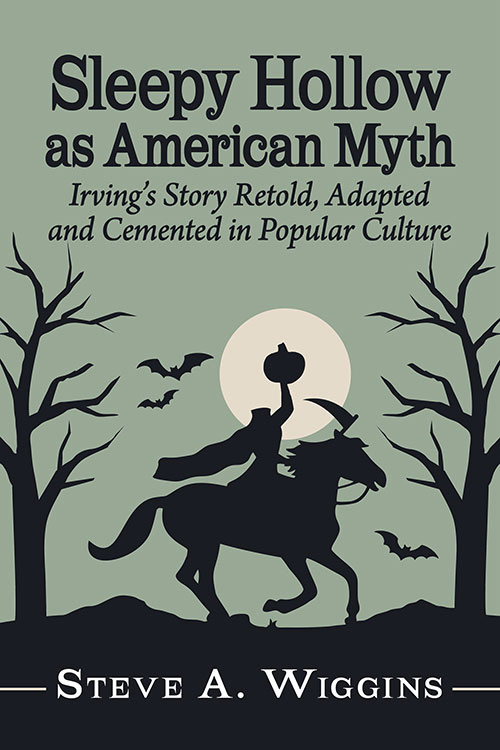
(Feel free to share widely, get everyone all excited!)  I’m currently in the waiting stage.  Waiting for proofs.  Of course, I’ve been working on my next couple of books as well.  You can’t just sit around, otherwise these tomes will never get written.  I haven’t decided which one will cross the finish line first.  If I had an agent they’d be able to tell me which might be more marketable, but since I work alone I’m left to my own devices.  I am bound and determined that the next book will go to a trade press.  I’m trying hard to scrub any whiff of academia from it.  In the meantime, however, I’m enjoying looking at the cover for my current book.  There aren’t a ton of nonfiction books out there on “The Legend of Sleepy Hollow.”  In fact, as nonfiction I know of only one other.  This isn’t what we in the biz call “a crowded bookshelf.”  I’m doing all the pre-publication promo that I can.  I’d be grateful for any shares or likes at this stage.


Academic Politics

Being the curious sort, I followed up on the post I dropped the day before Valentines.  I had written about Scholars Press and how details were hard to find.  I kept digging after that post.  I learned some things.  The Society of Biblical Literature (SBL) used to meet regularly with the American Schools of Oriental Research (ASOR).  ASOR was all about archaeology.  Then, in the year 1969 SBL and the American Academy of Religion (AAR), formed the Council for the Study of Religion.  The next year they began holding their conferences together.  ASOR was still part of it.  In fact, the three societies, along with Brown University, formed Scholars Press.  (For those in the know, this is why SBL now publishes Brown Judaic Studies.)  Scholars Press churned along, but ASOR was increasingly being shunted aside.  The conference started being called AAR/SBL, with no ASOR.  In 1997 (I remember this personally) ASOR started holding separate conferences.

Two years later, in 1999, Scholars Press dissolved.  SBL, the oldest of the societies, began publishing as Society of Biblical Literature.  AAR partnered with Oxford University Press to do their publishing.  (By the by, AAR started out as Association of Biblical Instructors in American Colleges and Secondary Schools).  ASOR went its own way, and Brown settled on SBL to continue its religious studies publishing.  As a young scholar, I was a member of all three societies.  (I didn’t attend Brown, though.  But I did go to a graduation there once, if that counts.)  I wondered why they couldn’t get along.  In a word, it was because of politics.

Those who know me personally likely know that I have tried to pursue the ordination track in three different denominations.  What they may not know is that the reason I never got through the process was, you guessed it, politics.  I started to learn, when in college, just how many power plays were involved in covens of ministers.  When dealing with the ultimate power, I guess, everyone wants to get the upper hand.  That bothered me as a seminarian.  The second and third denominations both showed their politics up front, and those sharp, flashing teeth made me realize that I’d never be free of politicking had I moved ahead.  I suppose I could go be a hermit and live in the desert—I might escape it that way, but whenever two or three are gathered, the politics start to show.  ASOR, SBL, and AAR have quite a lot in common.  All are under threat as part of the dreaded “humanities” category, and yet that’s not enough to make them want to pull together.  Politics just go that way.


Local Gothic

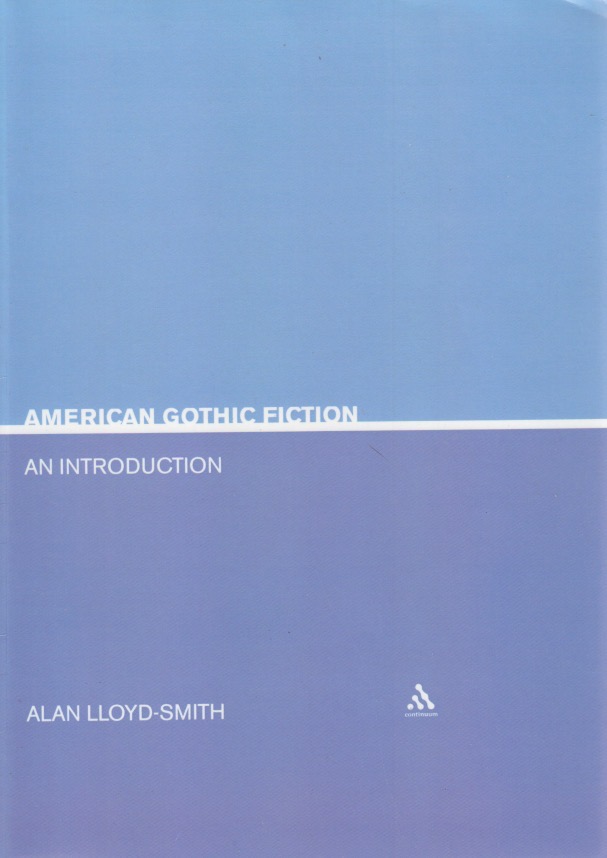
One of the most valuable aspects of the humanities is the range they give the imagination.  As an undergrad from a small town, I was astonished at the range of courses available in a liberal arts college.  Even so, I took only two in the literature department.  I wish I’d taken more.  You see, as someone who grew up poor, my reading has often been budget reading.  Used books found by chance and cheap editions in department stores of a town lacking bookshops.  I soon found that Gothic literature met my needs.  Alan Lloyd-Smith’s American Gothic Fiction: An Introduction is, as you might guess, a series book.  One of those books by an outsider analyzing a different culture’s literature, it is nevertheless quite good for the most part.  Until it decides, as many literary studies do, to go all theoretical.  Prior to that it’s very engaging.

For me it’s less the ideas than the mood of Gothic literature that I find engaging.  It creates a cozy feel, and when I read about Poe, Melville, and Hawthorne, I feel a sense of belonging.  Gothic transformed when it emigrated to America.  Lloyd-Smith does a great job of demonstrating how castles and cathedrals gave way to a landscape built by Native Americans, and an unexplored frontier.  How literature in America tended toward the Gothic from the beginning and even up to the point this book was written, hadn’t really effaced much at all.  Such things are inspiring to me.  It jumpstarted my own fiction writing again.  One curious feature, however, is that the book doesn’t discuss “The Legend of Sleepy Hollow” at all, other than a passing reference to Burton’s film.  There’s quite a lot on Poe and company, Charles Brockden Brown, and some of Charlotte Perkins Gilman.  Even Toni Morrison makes an appearance or two.  (He does cover Southern Gothic also.)

While this is clearly intended as a classroom book—wide, wide margins for note-taking, introductory level until chapter six—it is worthwhile reading for any curious adult interested in American literature.  My life has been a search for my tribe.  For many years it was a very religious search, that, unfortunately led to rejection that left me searching for a new home.  The horror community has been somewhat welcoming, and there’s something Gothic about that in its own right.  In any case, reading about Gothic brings its own melancholy joy.  I mostly enjoyed this book and learned quite a lot from it.  And, of course I bought it used.


Good Timing?

Timing is important.  I hope I have a sense of it, but it doesn’t always work out the way you hope.  My last book, The Wicker Man, was released on the fiftieth anniversary of that cult film.  A bigger publisher with better reach published their own Wicker Man book that year, and mine garnered no attention.  I decided to turn to Sleepy Hollow instead.  This is a story that has been quite well known since 1820.  Although the Fox television series ran out of steam in 2017, I wrote the book when I did because Lindsey Beer has been tapped to direct a reboot of the Tim Burton film of 1999.  Looking for books on the “Legend of Sleepy Hollow” I found very little.  This is what is known of in the biz as “a gap.”  I decided to try to fill it.  Fandom helps in situations like this.

I’ve been trying to find the Sleepy Hollow fandom and engage with it before Sleepy Hollow as American Myth comes out.  I am confident that there are fans out there.  The tragic collapse of the Fox series didn’t lead to lack of love for the tale.  Indeed, further renditions have continued to appear.  Some have gained considerable attention.  The online fan base, however, seems to be, ah, sleeping.  I’m not sure when the Beer movie is slated for release.  It was announced in several media outlets but now we’ve come to the lull where updates have ceased to surface.  I’m certainly no Hollywood insider and I generally don’t even find out about movies until after they’ve left theaters (unless they’re very big).  I hope the timing is right this time.

It takes a couple years, at least, for me to write a book.  I’ve been working on this Sleepy Hollow project, in some way or other, since before Holy Horror came out in 2018.  I sure hope I got the timing right on this one.  The many trade publishers and agents I approached didn’t think so.  Maybe it’s just that people aren’t curious enough to read a book about Washington Irving’s story.  I try to make the case in my book that it has risen to the level of an American myth.  The story’s known world-wide, but its largest fan base is here in the States.  Had the Fox series been handled a bit better, keeping both people of color and the apocalypse in the foreground, it might’ve run a couple more seasons.  The underlying story’s not quite dead in the grave yet, I hope.  But then, timing hasn’t always been my strong suit.

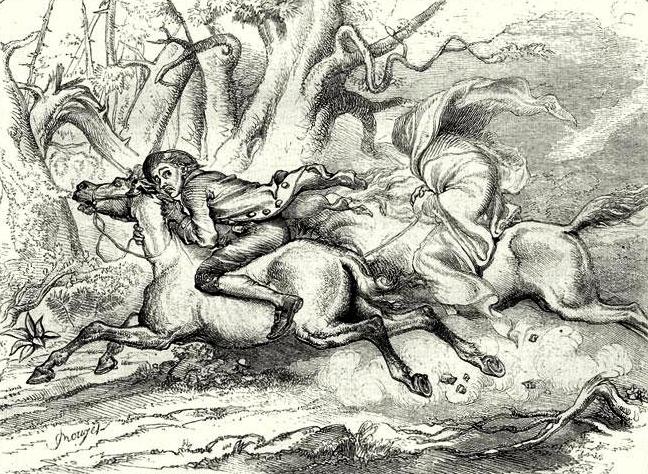
F.O.C. Darley, from Le Magasin pittoresque, public domain

Who Recommended?

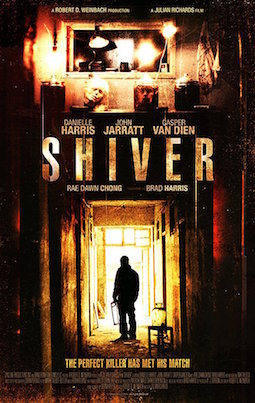
A couple of things: one-word titles can be confusing, and I need to start writing down where I get movie recommendations.  Trying to live reasonably on an editor’s salary, I can’t afford purchasing movies all the time, so I stream what’s free, now only when it’s on my list.  That’s how I had the misfortune of watching Shiver (2012).  I’m not sure it was the right movie, but I couldn’t find any others by that title near the top of IMDb and I couldn’t remember where I got the recommendation.  Although it uses many standard horror tropes, this flick veers a little too much into torture porn for my liking.  Also it’s very poorly written and many of the scenes are improbable (to put it mildly).  The police are totally incompetent (how many times can a serial killer’s intended victim be assured she’s safe by police when they can’t even get the perp to prison in good order?), almost to a Keystone degree.

And this isn’t some Hannibal Lector, either.  He’s kind of a psychopath that’s been making a living selling jewelry to his eventual victims.  Of course he’s a sexually frustrated guy who was bullied as a kid.  See, there are some moments of trying to establish some kind of social commentary, but the writing and most of the acting keep getting in the way.  The violence toward women goes unremarked, and that’s probably what most requires comment.  So I’m sitting here scratching my head trying to figure out who, or what, might’ve suggested this movie to me.  Or is there a different Shiver?  Did somebody leave the “s” off the end?  (I’ve already seen that one.)  I really do need to keep better records.

Bad movies come in many varieties.  This one was disturbing from any number of angles.  I don’t tend to watch serial killer movies.  Violence against women bothers me a lot.  Every main character had a bad childhood.  (One of the stories is simply told and then dropped.)  It’s a movie that might helpfully come with trigger warnings.  As I watched I wondered.  I wouldn’t been watching this if someone, or some respected publication, hadn’t recommended it to me.  Who and why?  Since I watch movies on weekend mornings, mostly, a bad one can start the day off on the wrong foot.  Someone, or some source, suggested Shiver.  Or maybe someone forgot a letter.  That’s the problem with one-word titles.


Lost Decade

The nineties, it seems, got away from me.  Personally, they started with living in Edinburgh with my newlywed spouse. We had no television and no money, and limited time to finish my degree.  Then we landed at Nashotah House for the remainder of the decade.  Our daughter was born, and we settled into the role of new parents as the world went on around us.  The internet hadn’t made its way to that part of Wisconsin and television reception was quite poor.  Now bear with me as I’m trying to reconstruct things.  Twin Peaks ran from 1990 to ’91.  We were in Scotland at the time and had no television.  Northern Exposure (’90 to ’95) started a few months later, and was still running when we returned to the States.  We began watching it because family recommended it, mostly on VHS.  Some family members had watched Twin Peaks, but it was darker, and we opted for lighter fare when we could see TV.  (I hadn’t undergone my horror reawakening yet.)  Then came Picket Fences (1992 to ’96), which I still haven’t seen.  The X-Files, original run, broadcast from 1993 to 2002.  What a decade to lose!

Northern Exposure and Twin Peaks had some things in common, I noticed as we watched the latter, but then they ran at about the same time.  It also seems Twin Peaks and The X-Files shared some secrets.  I can’t say about Picket Fences, but it seems that speculative elements infiltrated these nineties shows.  What’s more, they all received critical acclaim.  I would feel like I lost much of the nineties, except that I was having a great time being a parent.  Although Nashotah House rubbed me the wrong way, I was employed doing what I had pictured myself doing.  Wisconsin was a beautiful state and offered lots of outdoor opportunities, particularly when it wasn’t forty below outside.  What I really lost was pop culture of the nineties, living in a monastic setting.

I recently discovered that I’d also missed much of the music of the nineties.  I’m not a radio listener.  Too many distractions—I can’t listen to music when I write, let alone with some announcer talking.  I don’t listen to music when I jog because I find the natural world so interesting.  It occurred to me just a few months ago that I had very little knowledge of 1990s rock. (Not the preferred genre at Nashotah.)  Some of it is pretty good, I’m discovering just now.  Like a typical academic, I began to shut out the outside world when working on my Ph.D.  Now I spend my time trying to catch up.  Not that I have much time to watch television, or listen to music, but I hate to miss something that everyone else seems to know about.  Then, of course, after the X-Files, Lost ran from 2004 to 2010 and we didn’t catch that either.  Maybe I missed the first part of the new millennium as well…

Photo by Everyday basics on Unsplash

Outside Invisible

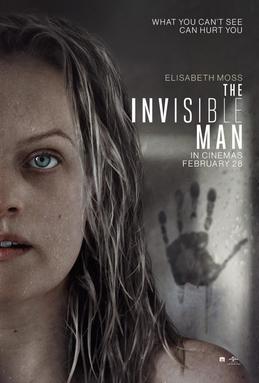
Some of us are fated, it seems, always to be outsiders.  I have no inside knowledge of the film industry.  I barely keep up with the movies I want to see.  Although I write books about horror films, the main players in the field don’t know those books.  It’s like being invisible.  I had hoped to see The Invisible Man some four years ago.  The reboot, I mean.  And having finally caught up, I was impressed.  This is a scary movie that hits all the right buttons.  Most of us, by cultural assimilation, know the bare bones of the story.  A guy has figured out invisibility.  What does he do with this?  Uses it to assert his will over everyone.  In the original, the monocaine made Dr. Jack Griffin insane.  In the remake, an already controlling, self-centered millionaire (Adrian), unknown to anyone but his brother, perfects an invisibility suit.  When his girlfriend (Cecilia) leaves him, he uses it to try to destroy her.

Everyone believes she’s insane.  More than that, criminally insane.  Cecilia knows he was an optics genius and he leaves her subtle clues that he knows where she’s hiding.  He hurts those close to her and they assume Cecilia is causing the harm.  Then it escalates to murder.  Placed in an institution for the criminally insane, she knows Adrian is there with her.  Nobody will believe her, however, since, well, he’s invisible.  This is a movie nearly as harrowing as The Dark Knight.   An unstable genius with unlimited resources and the ultimate alibi forces his abused ex to suffer for ever having loved him.  It’s pretty incredible.  (Has to be seen, I’m tempted to say, to be believed.)

Now, I’m no insider so I didn’t realize that Universal had been attempting to build a Dark Universe franchise based on the original Universal monsters.  I had completely missed that Dracula Untold was the first of the reboots.  I did watch it but fell asleep.  (Hey, I was watching with friends who started it too late for my outsider schedule.)  I never got around to seeing it with my eyes fully open.  Although it made money, it wasn’t, I hear, very good.  Then three years later, The Mummy bombed.  I confess that there’s so many Mummy movies that I’ve lost track of them and I didn’t know this one existed.  Or flopped.  Invisible Man was intended as the third and the movies were to be interlaced into a Dark Universe.  Plans for that franchise have been dropped, but individual movies will continue to be made.  I guess I need to go back to the beginning again.  It only took me a decade to learn this, as is the way with outsiders.


August Thoughts

The other day I saw a headline on a BookRiot email blast: “August is Spooky Season Jr.”  I’ve often wondered why more horror fans haven’t emphasized this.  It’s not just that stores start putting out their Halloween merch, and it’s not that Summerween has taken hold.  No, it’s a feeling in the air.  When I was younger, August always seemed like the hottest month, the dog days of summer.  For many years now, however, I’ve begun to feel autumn’s approach in this month.  Some of the earliest trees begin to change (some start even in late July).  And if I take the time to smell the air when I step outside on an August morning, the first hints of harvest greet me.  The produce at the farmers’ markets should be a regular alert to that.  And my mind turns to the half of the year with which I most resonate.

It’s as if nature wears a mask, lulling us to suppose the weather will always be warm enough to sustain us, dropping rain in appropriate amounts at the correct time.  Yet we know that we have attacked our planet and it knows so too.  The true nature of all of this is change.  And change is scary.  A deep-seated fear accompanies autumn.  Did we store enough away for winter?  Is the house winterized?  What if the furnace breaks down?  What if the cold truly becomes too intense to stand?  I spend most of the year wearing multiple layers and fingerless gloves indoors.  Cloudy days make my office so chilly I can barely stand the lower thermostat setting until the end of the work day.  What if snow prevents me from getting to the store?  What if there truly is something scary in the dark?  All of this begins in August.

I watch horror movies year round.  I like to read creepy tales.  I even try my hand at writing a few.  Even so, I’m glad to learn that I’m not the only one whose thoughts turn toward Samhain even as Lughnasadh dawns.  A cool day in August is enough to start the chain-reaction going.  Some of us feel the respiration of fall even now.  Hear its slow heartbeat.  See its rictus grin.   Harvest tells us something about our own souls.  Our sins catch up with us as the nights grow longer.  The sun sets nearly an hour earlier than it did in late June, have you noticed?  And it rises nearly an hour later, I’ve noted.  Let spooky season jr. begin!


Sleeping and Watching

The older I get, the more flexible my idea of reality becomes.  I’m starting to notice things that may have been happening for decades, but the reflection of age throws into sharper focus.  I’ve mentioned before that a good night’s sleep casts the day in a different light.  Such nights are sometimes hard to come by and unrelenting capitalism doesn’t offer enough “sick days” to sit out the bad ones.  But it’s not only that.  I watch a lot of movies.  Since I’ve been writing books on movies that only makes sense.  Still, I’ve begun to notice how movies stay with you after the credits roll.  Sometimes they remain the whole day until a night’s reboot comes.  This can also happen with reading, but on a slower, and most likely more profound level.

In high school, reading existentialist plays (sometimes in German), I learned to remind myself that watching a play (or movie) is observing an illusion.  Now I’m beginning to question whether that’s entirely true or not.  What enters our minds becomes part of us.  Think of the vast majority of human lives throughout history.  People living out their lives by farming and/or hunting.  Spending every day on the many tasks it takes to stay alive.  No reading.  No watching.  Their daily lives constructed their reality.  How many of us could grow our own food or build adequate shelter?  And God help us if we need a doctor.  Our lives require many other people to ensure we keep on going.  Most of them people we don’t know.  People whose realities are different than mine.

My career trajectory misfired fairly early on, and my reality has been years of trying to make sense of what happened.  From the first days of hurt and confusion I began to cope by watching movies.  For ninety minutes, at least, I escaped reality.  Or did I?  Was I enhancing reality?  What of my existentialist outlook?  Perhaps I was doing what existentialists do best—creating my own meaning.  So if I get out of the wrong side of bed, and the day feels like it really isn’t welcoming me this time around, I await the reboot.  Or when I have a few moments to sit down and watch a movie, I get up from my chair with an alternative reality surrounding me.  Perhaps I have learned something by sleeping and watching.  Maybe I have learned that reality is more flexible than I’ve been inclined to believe.  Maybe somehow this all does make sense.  Or not.


Night or Curse

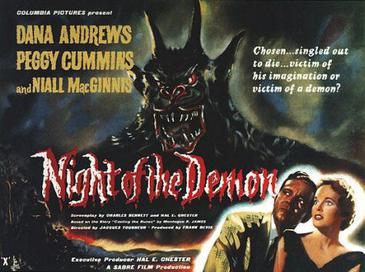
You just never know.  I’ve read lots of books about horror movies, but clearly not enough.  The field only gained academic respectability in recent years, but once the flood gates opened…  So I use my limited time off work both reading and watching horror movies—trying to catch up on what I’ve missed.  Lately I’ve been reaching back to the early stuff, movies from the forties and fifties.  Some of these are what we’ve been led to expect.  Others are not.  I’d heard of Night of the Demon (its American title is Curse of the Demon) but my sources suggested nothing remarkable about it.  As soon as I began watching, however, I realized that this story adapted from M. R. James would be worth the time.  This despite the fact that the monster is shown early and isn’t that great.  (The director, Jacques Tourneur, lost out on this one.)  After I saw it I read that it is considered by many the greatest horror film of all time.

I wouldn’t go quite that far, but I would say that it is very good and, as I learned, extremely influential.  So much so that I was rather stunned after a casual weekend viewing.  The story is about a Satanist whose true motivations are uncertain.  Those to whom he gives runes copied from Stonehenge are killed by the demon we’ve already seen.  The story plays out as a conflict between skepticism and belief—the supernatural is real, but alternative explanations are offered—you can see why the obvious demon scenes are so controversial.  The film makes effective use of jump startles and stingers.  And it’s one of those movies that, in its day wasn’t really appreciated, but reassessment polishes it as the gem that it is.

Proving later influence, such as the wind storm in The Omen, is difficult without a director revealing their sources, like a magician, but others are perfectly obvious.  Kate Bush’s song “Hounds of Love,” plays a clip of a line from the movie.  Richard O’Brien’s lyrics for “Science Fiction/Double Feature” (famous because of the Rocky Horror Picture Show) make reference to Dana Andrews passing the runes.  That line had always puzzled me.  And now I discover that I’ve been missing out on a foundational piece of horror history.  When friends recommend movies, not surprisingly, they tend to be relatively contemporary ones.  The thing is, to appreciate what’s popular now, one must do one’s homework.  And that might must mean hunting down the oldies.  You just never know when you might come across one worth the effort to find.


In Public

Mere days after my dentist appointment I had occasion to be back in the waiting room.  Of course I had a book with me.  Then my attention was caught by either a patient or someone waiting for a patient.  This man had not one, but two books with him.  He was poring over one of them, which was an older hardcover, like an academic.  Since I’d just posted about seeing nobody reading books, I felt I needed to publish a kind of, well, not exactly retraction, but reflection.  The sight of this man, about my age, was profoundly hopeful.  I have no idea who he was and waiting rooms are not generally where I choose to introduce myself.  I do sometimes weigh, however, the demerits of interrupting someone reading with the merits of meeting another reader.  We reading sorts can be private people, although reading in public marks us.

The book I happened to have had a bright, trade cover.  His were more somber and academic.  How could I, whose reading looked facile (it was not, but it looked like it might be) approach someone perhaps awaiting a root canal, who had some serious reading to do?  Two hardcovers bespeak serious business.  This made me reflect on another occasion in Easton.  Again, I was waiting for someone and it was summer so I sat outside on a curb, at the traffic circle, reading a book.  It was actually Toni Morrison’s Beloved.  Evening was falling.  A couple of coeds, or they seemed to eyes from my age, stopped and asked what I was reading.  I explained, and, unaccountably, they seemed never to have heard of Morrison, but were interested.  It was a teaching moment.

Back to the dentist office.  Had I missed out on the opportunity for a free lecture?  If this man were a professor, he’d likely have talked gladly about his work.  One thing I learned from being a professor myself is that people rarely ask about your work.  Yes, colleagues in the same field do, but even at Nashotah House with its small faculty, nobody seemed interested in the research of their colleagues.  As academic dean I even tried to institute a faculty seminar where we could read a paper and discuss it.  I was the only one who ever volunteered to do it.  In retrospect, it might’ve been a lost opportunity, that waiting room visit.  I’ve attended many medical appointments in my life, and finding a fellow reader at one of them was a bit of a silent gift.  I was glad to have been proven wrong.


Gothic Illumination

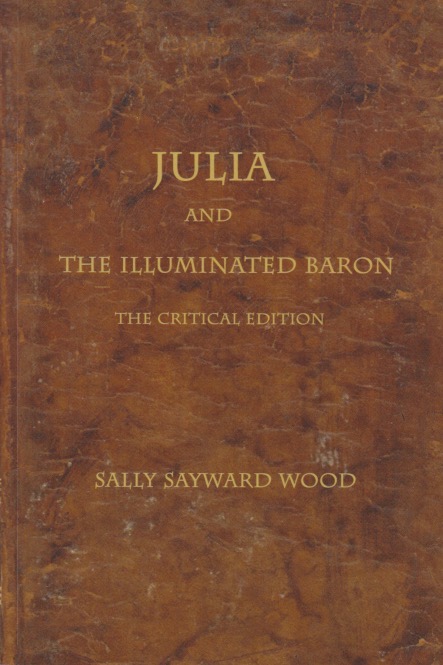
A mere month ago I had never heard of Sally Sayward Wood.  She has seldom received much attention, and it may be in part because her literary finesse wasn’t quite that of her compatriots.  Wood, however, was the earliest American woman to write a gothic novel.  She was also Maine’s first novelist.  I learned of Julia and the Illuminated Baron from a rather unexpected source, but my interest in the history of horror meant that I knew I would have to read it.  Original printings are extremely rare, but the University of Maine has brought them back into circulation.  Julia was published in 1800 and it is old-style gothic.  Set in France, among the aristocracy, it has gloomy castles, dastardly villains, and damsels in distress.  The story also involves an extremely complex set of titled gentry that end up being fairly closely related by the end of the novel.  Well into the story (after about 150 pages) it grows somewhat exciting, but the denouement is something you can see coming, though.

What is really striking about this gothic romance is the extreme vitriol served up to the Illuminati.  In particular, Wood seems quite affronted by their atheistic outlook, stating rather boldly that without Christian sensibilities that morals can’t be preserved.  This wasn’t an uncommon view around the turn of the nineteenth century, of course.  The Enlightenment had begun to take hold and not a few people were very concerned about the implications.  Social change must be slow, if it is to have lasting impact.  Quick change leads to reactionary backlashes, as anyone who looks at history knows.  Still, this makes Wood’s villain particularly nasty.  Perhaps even more surprising is that such biases continue today.

Gothic was an important part of early American literature.  It owes quite a bit to its European forebears, but it developed into its own form in the New World.  When she does mention America, Wood ladles praise on George Washington.  She was born, of course, before the Revolutionary War, when Maine was still part of Massachusetts.  All of this makes me feel somewhat less of a pariah, knowing that the early American tradition was part of the family tree for horror.  In today’s parlance gothic might seem far from the slasher, but without gothic we’d never have had our classic ghost stories that first gave people the frisson that begged for further expression.  Julia and the Illuminated Baron is a bit too satisfied with the wealthy overlords of the second estate.  It is a work of fantasy, however, of one of the earliest American women to try her hand at fiction.


Wax Museum

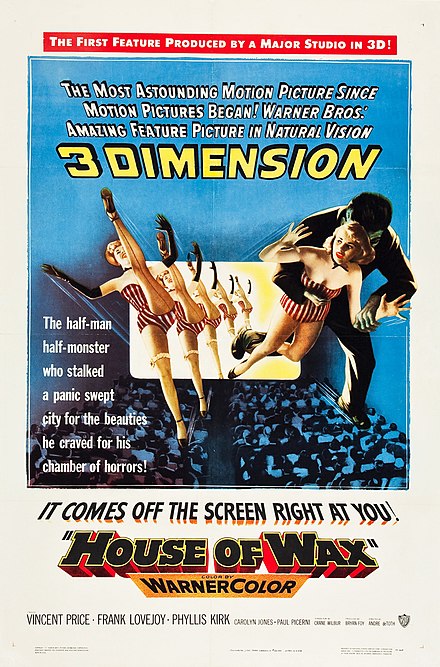
I admit to using Wikipedia and I even support it.  It’s the starting point for looking up things for which we’re not familiar.  Since most movies I watch don’t lead to discussion (ironically, I know very few people in person who watch horror), I often go to Wikipedia to find “conversation partners” about films.  One thing I’ve noticed is that a great number of articles on cinema have a section “Later Reception.”  In my experience, this usually appears on pages about movies initially panned but which have later been reassessed as being better than originally supposed.  In the case of House of Wax, the film was even selected for preservation in the National Film Registry because of its significance.  It’s interesting to read the sometimes boorish comments of the first critics.  Of course, the story had been around for some time then, so they were perhaps too familiar with the premise.

I can’t speak for the Library of Congress’ National Film Registry, but the notable features include its status as the first 3D movie with stereophonic sound, and the first color 3D movie released by a major studio.  For me, however, this was the film that launched Vincent Price to stardom.  He would go on to become the horror icon of American movies for the next two decades and many of the films would be, to use the National Film Registry’s language, “significant.”  The title already hints at the plot.  What horror film with such a title wouldn’t involve embalming a living person in wax?  Rather like Chekhov’s gun, if you title a picture like this, you need to make sure the gun, as it were, goes off.

The 3D gimmicks (I saw it only in 2D) are pretty obvious, but there are many interesting sub themes running throughout the movie.  Even in the button-down fifties there were directors who knew how to titillate.  In any case, the 3D aspect adds another detail to the story.  The director, Andre de Toth, was blind in one eye, which meant he couldn’t see the 3D effects.  This too makes the film worthy of note, and, again, significant.  Price plays his role of the urbane villain quite well, although this villain has cause to be wroth.  An artist forced to watch his work destroyed is likely to become unhinged.  As a horror film it also works well since wax museums are inherently creepy places.  I may have seen this movie in my younger years, but if so it didn’t stick with me.  I would have to agree with Wikipedia’s later reception, however.  This is an effective movie, even for a septuagenarian.


In Praise of Paper

There’s an old saying that the tech industry might consider.  “If it ain’t broke, don’t fix it.”  I’m thinking books.  I work in an industry that’s running after ebooks, sometimes at the expense of actual books.  You know what I mean—the kind printed on paper.  With a cover.  An object.  What techies don’t seem to understand is that something happens to you when you’re reading a book.  It changes you.  Curled up in a chair with a half-pound of bound paper in front of you, you become absorbed.  Chair, person, paper.  All one.  And you’re taken somewhere else.  I’m not saying that reading online isn’t valuable.  Clearly it is.  The experience, however, isn’t the same.  Industry moguls express surprise at vinyl’s return.  They shouldn’t.  It wasn’t broke either.

After reading a meaningful book I’ll carry it around with me for days like Linus’ security blanket.  Its mere presence reminds me that something profound happened to me while I was spending time with that tome.  Especially meaningful books I hesitate to shelve away with the others.  No, I want them to hand to remind me.  To bring back, at a glance, the fascination they engendered.  Let’s call it enchantment.  Capitalism removed enchantment from the world.  In the heat of materialism’s fervor, it made all alternatives irrelevant.  That’s what’s driving the ebook craze.  Hey, I’m fine if you like to read on a piece of plastic, but please leave the option of paper for those who prefer to truly get lost.

I spend most of my waking hours (and all of my sleeping ones) surrounded by books.  When my eye falls on one that I really enjoyed, I take a nanosecond pause to appreciate it.  We all have to decide how we’ll spend our time on this weary old planet.  A good deal of it will be work, and if we’re lucky it will be doing something we enjoy.  Otherwise we have roughly five hours of waking time five days a week to squeeze in the necessary and the enjoyable.  Some will go out and party with friends, others will stay home and read a book.  Many will use devices to fill the time outside the office, whether alone or with friends.  I tend to be in the book crowd.  I’m not embarrassed by that.  Books have been good to me.  Very good.  They say reading is fundamental.  I would add that reading a real book is life itself.


Horror Homework

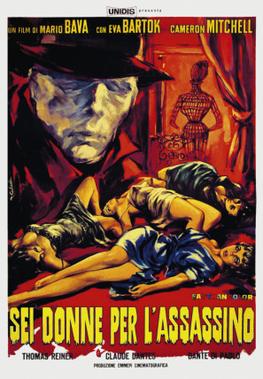
If you write about horror movies, you have to do your homework.  Of course, this means time away from house work (the weeds love all this rain and hot weather) and regular work (which can’t be compromised).  Mario Bava has often been cited as one of the influential horror auteurs, but until this year I’d not knowingly watched any of his films.  So, homework.  I saw a list of movies that made an impact, and one of them was Blood and Black Lace.  It’s horror of the giallo subspecies, never my favorite.  But it was free on a commercial streaming service, so, well that homework’s not going to do itself!  This isn’t generally considered Bava’ best work.  Besides, giallo is murder-mystery and I prefer monsters.  Who wouldn’t?

This film, with its lurid colors and stylistic cinematography, does make an impression.  The acting is poor and the script even worse—apparently it didn’t lose anything in translation.  A crooked couple run a fashion salon.  (There will be spoilers, so if you’re sixty years out of date, be warned.)  One of their fashion models is murdered, but when another discovers her diary the body count mounts.  The film lingers over the murders, which, I suppose, is one of the reasons it’s classified as horror.  With the film’s problems, however, at least this far removed, the whole thing begins to look rather silly.  The women have to die because of the first woman’s diary.  The police are singularly ineffectual, not even taking standard kinds of precautions.  Even with a run time of only 88 minutes it felt too long.

Horror in the sixties was still finding its way.  I’ve been watching a number of movies from that era—generally considered a dry spell for American-made horror—and the results have been interesting.  There are some gems tucked in amid the gravel.  What we’ve grown to appreciate in more contemporary horror cinema learned a lot of lessons from these early exemplars.  I could see foreshadowing of Suspiria here.  I’ll need to do more homework to find other direct descendants, though.  Blood and Black Lace suffers from having too few characters you get to know well enough.  The models, who all seem to have some secrets, die off before we get to know them.  Even the criminal pair behind the killings die in the end.  There’s a kind of nihilism to the story, and it’s all done for love of money.  The story could’ve been better, but you have to start somewhere when growing a genre.  And doing homework.