This Is Halloween

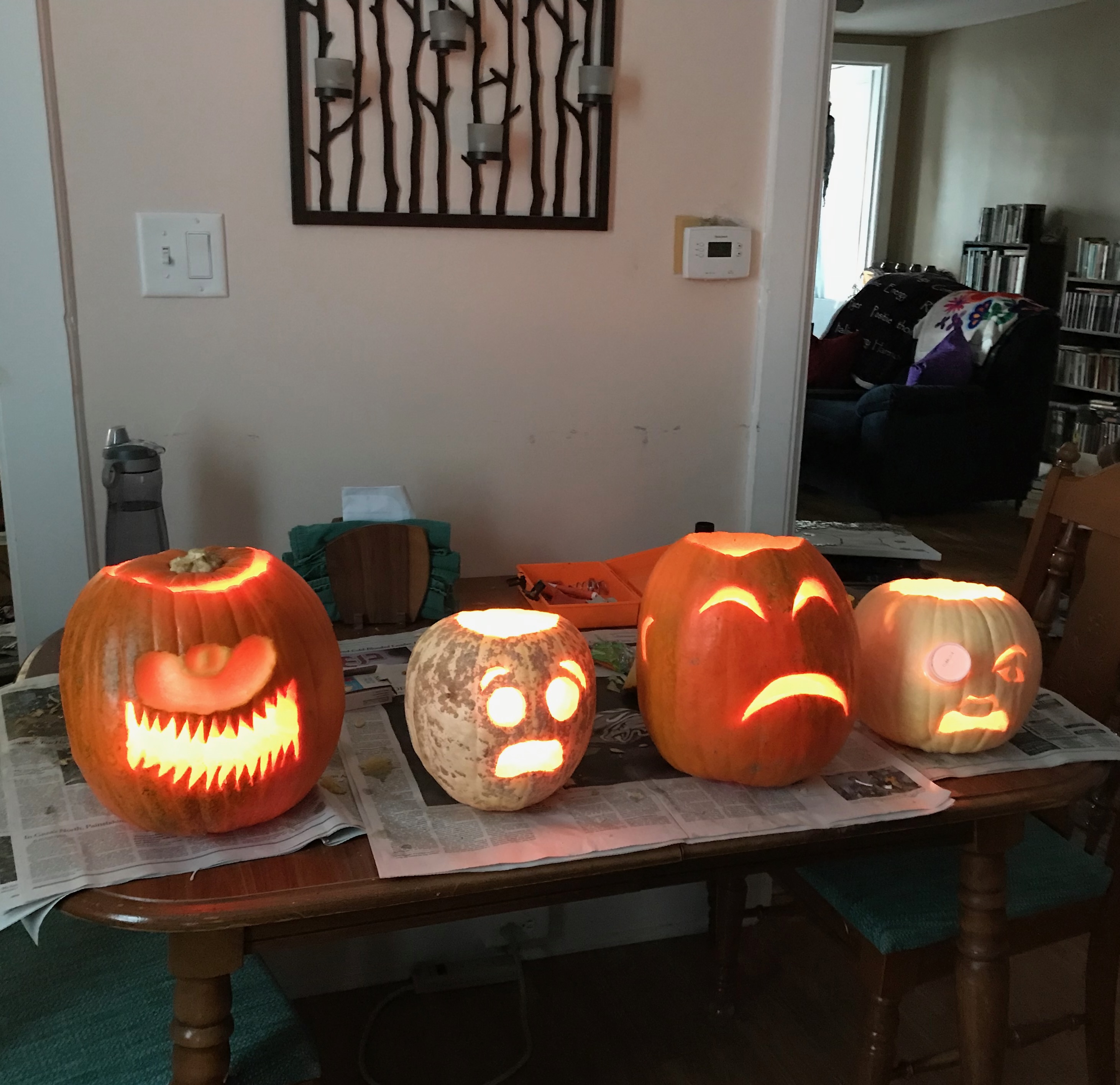
He was probably trying to impress his wife with his wit.  I was in a department store—a rarity for me.  I was wearing a mask, because, well, Covid.  As this guy, older than me, walked by he said “Halloween’s over.  Take off your mask.”  It bothers me how politicized healthcare has become, but what bothered me more was that it was only October 20.  It wouldn’t even be Halloween for another 11 days.  What had happened to make someone think Halloween was over so early?  Yes, stores had switched over to Christmas stuff by then.  In fact, I wandered into another store where Christmas carols were playing.  Capitalism seems to have wrenched the calendar out of order.  We’re tired of All Hallows Eve before it starts.  In fact, just the day before we’d gone out to a pumpkin patch to get our goods and the carved pumpkins are now showing their age.
If that little exchange in the store had been in a movie, it would’ve been a cue for me to transform into some big, scary monster.  Of course, Halloween is what it is today because of relentless marketing.  And a handful of nostalgia from people my age with fond childhood memories of the day.  For some of us, however, it is a meaningful holiday in its own right.  It makes us feel good, even after we’ve grown out of our taste for candy.  It is significant.  Christmas is a bit different, I suppose, in that there is nothing bigger following, not until next Halloween.  Besides, Christmas is supposed to go for twelve days.  The fact that Halloween is a work day makes it all the more remarkable.  We have to work all of this out while still punching the clock.

I had really hoped to be able to get to Sleepy Hollow this Halloween.  Sleepy Hollow as American Myth tries to make the case of how that story and Halloween came of age together.  It is the iconic Halloween story, what with ghosts and pumpkins and all.  And the month of October is spent with scary movies for many people.  This month I’ve posted about horror movies every other day, pretty much, trying to connect with my audience.  If that is my audience.  I tend to think of Halloween as a community.  Those of us who, for whatever reason, think of this as our favorite time of year.  A time when perhaps we don’t feel so stigmatized for liking what we do.  A time that we’re not hoping will shortly end so we can get onto the next thing.  It may have been meant as a joke, but I wasn’t laughing.  Happy Halloween!
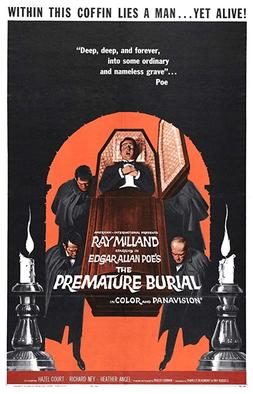

Premature

The last, for me (but actually the third), Roger Corman Poe Cycle film is The Premature Burial.  Released the same year as Tales of Terror, it departs from the other Poe films in not starring Vincent Price.  Indeed, this is because it was originally not an American International film, but was later brought into the fold.  This particular story by Poe doesn’t have the superstructure of this film at all.  Indeed, Poe’s tale is spare, beginning with reported events of premature burial and ending with a first-person fictional account.  The movie does have a quote or two from the story, as well as the elaborate preparations that the narrator, in the movie the protagonist Guy Carrell, undertakes to be able to escape his mausoleum.  In the movie Carrell has to be an aristocrat, so as to afford such a fancy contrivance.

Although the screenplay was written by Charles Beaumont, a frequent Twilight Zone contributor, it lacks pacing and contains some improbabilities.  The theme of grave-robbery is also prominent and doesn’t fit well with what actually happens in the plot.  Since the movie is over sixty years old it’s safe to say that it involves a twist ending.  The marriage—missing in Poe—of Emily Gault to Guy is a ruse to get the family fortune by murdering Guy by fright.  Emily exploits his fears of premature burial (his father suffered catalepsy)  to lead to his own premature burial.  The grave-robbers, however, visit Guy that night, not realizing that he was only catatonic.  Guy then takes his revenge, only to be shot by his sister when he attempts to kill an innocent family friend.

Fitting for the Victorian era, Poe used the theme of premature burial in a number of his stories.  “The Premature Burial” is the tale that contains Poe’s famous quote, “The boundaries which divide Life from Death, are at best shadowy and vague.”  This remains true even going on two centuries later.  Accounts of Near Death Experiences (NDEs) complicate our simple binary of life and death.  The movie is, of course, coded as horror and is part of the suggestive string of interpretations that cast Poe as a “horror writer.”  Corman had been growing a reputation as a director of horror (but he, like Poe, worked in other genres) and it was this recasting of Poe into what was developing into a mature cinematic genre that partially solidified the writer’s reputation.  Premature Burial isn’t the best of the series, but I do feel as though I’ve accomplished something by finally having watched all of them.  Or have I?


Still October

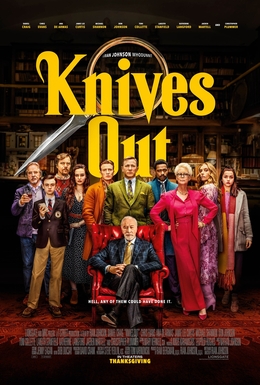
Before October was over, I wanted to watch Knives Out.  Not horror, it’s more of a murder mystery but it’s funny and it makes just about every list of movies to watch in October.  I’m pretty sure that list compilers don’t really understand what I mean by typing in “October movies.”  Or maybe the kinds of movies I’m thinking of simply don’t exist.  More on that later.  Knives Out is the story of the death of a famous writer.  (Given the fantastic house in which he lives, a very famous writer—the majority of us only ever modestly supplement our day job incomes with book sales.)  But this fantasy of being paid enormous sums for what is really hard work is, well, a fantasy.  This writer, who has/had three children, altered his will before his 85th birthday celebration and on this hangs the tale.

The two surviving children, and spouse of the third, have been cut out of the will.  Their means of support—they all relied on their father’s largess—is gone and so when the writer dies on the night of his birthday, by suicide, some questions arise.  There are many twists in the story, and I won’t give away the ending, but the main question that the private investigator asks is why he was hired in the first place.  All the forensic evidence confirms this having been a suicide, and although the adult children’s stories disagree in any particulars, the events surrounding the death seem clear enough.  At the center of all of this is the writer’s private nurse.  She’s an immigrant and she stays out of family squabbles.

The protests over the will bring out the true character of the children, or, in some cases, their spouses.  And although the viewer is clued in early as to what actually happened, like a mystery novel, a vital clue is left out that ties the whole together.  It’s quite well done.  It’s an October movie like Clue is an October movie, or perhaps Murder by Death.  There are some nice shots of trees in color, but it lacks the haunting, melancholy feel that I associate with October films.  Will I watch it again?  I should think so.  Movies like this bear re-watching, if for no other reason than to try to spot “donut holes” (the private detective’s phrase) in the plot.  It’s also a reflection on how money can corrupt.  But also how desperate people can become when their support system is withdrawn.  And that’s truly scary.  Knives Out would work on any dark and stormy night, but it’s not horror.


International Horror

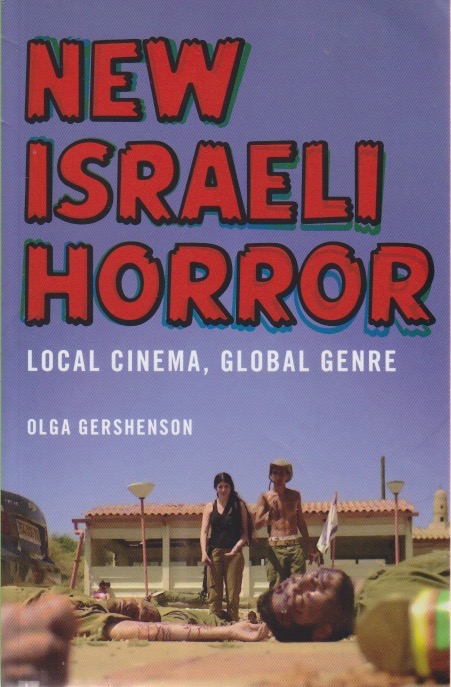
As someone who has written a couple pieces on Jewish horror for Horror Homeroom, I have developed a natural interest in international horror.  I was one of those who scrambled hard to find The Golem (2018) when it came out, but was able to see it only in 2020.  When I learned about New Israeli Horror, by Olga Gershenson, I knew I had to read it.  The subtitle, Local Cinema, Global Genre, pretty much captures how she approaches the subject.  It also helped me understand a bit better the way filmmaking works.  I once, rather naively, asked a film scholar how many movies had been made.  He responded, “It’s impossible to know.”  Even experts in cinema can’t see every movie, and those of us who watch horror can’t see every horror film.  (I wouldn’t want to.)  I hadn’t realized, however, until reading this book, that in places like Israel it often comes down to state funding.

I’ve written quite a lot about Euro-horror over the past few years.  Often cooperative ventures, these are horror films that aren’t part of the Hollywood system, and they are frequently quite good.  Those of us who enjoy movies may not often think of who pays for them.  It’s kind of like book publishing—someone’s got to pay for all this, and hopes to make their money back in the process.  In Israel many movies are funded by official agencies.  And such agencies tend not to like horror.  New Israeli horror, by Gershenson’s reckoning, began only about 2010.  One of the reasons I’ve turned to writing about horror is that its history isn’t so long as, say, ancient West Asian studies, which reaches back thousands of years.  Reading about something not even two decades old, but still history, is fun.

I learned a tremendous amount from this book.  Of the films discussed I’ve only seen one, the aforementioned Golem.  Before writing Holy Horror, I paid no attention to where films were produced.  I’d seen some international movies, sometimes obvious because of subtitles, but my usual fare is homegrown.  I gather that I’ve been missing a lot by not seeing more Israeli horror.  When you add Jewish horror (Jewish-themed horror, in my way of seeing things) to the mix, there’s a new angle to take on religion and horror.  Many of the films Gershenson reads are about Israel’s army and critique of the militarism that has become part of life in Israel.  I confess to not keeping up on politics because to me it tends to be scarier than horror.  But I can see, from this book, that I’ve been missing some interesting cinema.


Betelgeuse

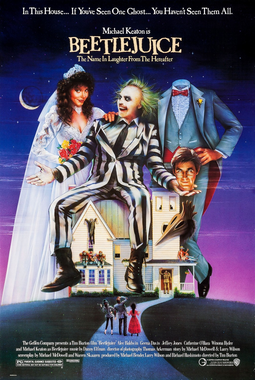
So let me see… from 1988 to 1992, what was happening?  Hmm.  I was getting married after moving halfway across the country in a rented car, moving to Edinburgh with no money, and working on a doctorate.  I guess I was pretty busy.  I missed Beetlejuice in 1988 and confused it in my head with Death Becomes Her (1992), which I may or may not have seen.  Some time ago I felt that I really should watch the former, not because of the sequel.  I may have seen bits of it over the years, but I wasn’t impressed with what I remembered.  Maybe part of the draw—the movie did quite well when released—is how different it was then from many things that came after.  Now that I’ve finally watched it, I can see it has some charms but I felt rather like the critics who noted the Betelgeuse subplot seems dissociated from the rest of the movie.

Michael Keaton as Beetlejuice is fun to watch, no doubt.  He doesn’t have much screen time, though.  His backstory, which seems important to explaining why he is how he is, feels shortchanged.  It also doesn’t really explain why the other characters dislike him so much.  When he’s released to save the Maitlands, he does, yet all they want to do is banish him.  I know better than to look for a coherent set of character motivations in such a movie, but for all the fronting of Beetlejuice, the story is really the Maitlands coming to grips with being dead and having other people move into their house.  The Others, while straightforward horror, handles this dynamic a bit better.  Of course, Beetlejuice is a Tim Burton movie, and that comes with a certain inherent quirkiness.

I had a mixed reaction, it’s fair to say.  Part of the problem may be that I’ve seen some of Burton’s better work, which came after Beetlejuice, before seeing the movie.  And other movies have done quite well in the weird category (Parasite, Everything Everywhere All at Once, Poor Things), making Beetlejuice feel its age.  Or maybe it’s all the build-up to Betelgeuse and then giving him so little time for his antics.  Perhaps it was the title of the film, or its confusion in my brain with another dark fantasy comedy, but it just didn’t press all my buttons.  Seeing it in the context of its Zeitgeist may have helped, but I was rather busy then and that part hasn’t really changed since.


Won’t Tell

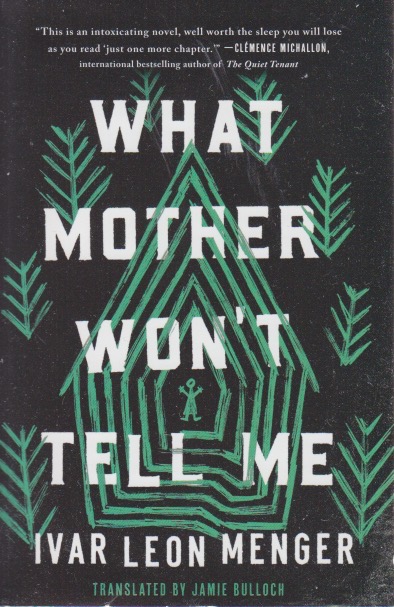
This one is pretty darn close to too tense to read before bed.  I don’t remember how I found out about Ivar Leon Menger’s What Mother Won’t Tell Me.  That’s usually a pretty good sign that I found it in a bookstore.  Those are still places to linger while trying to find something a bit different.  This one is a page turner, but also one that I’m not quite sure how to classify.  It may be horror but the “monsters” are all humans.  I almost don’t want to describe the plot because it is so exquisitely suspenseful.  When I’m reading to get sleepy, I often find myself trying to grasp pieces of a story that are floating away like dandelion fluff, unable to put them back together.  Then I know it’s time to close my eyes and re-read a paragraph or two tomorrow.  That never happened with this one.

I think I can say this much without giving it away: Juno lives on an isolated island in a lake with her parents and younger brother.  The parents warn them of the murderous strangers who are seeking them—the father was a states’ witness against a powerful criminal family—so the children must never be seen on the island.  If anyone happens to come, they must hide and remain quiet until they leave.  They have to practice drills in case this ever happens.  It gets pretty creepy, from nearly the first page.  I would also advise against reading the back cover copy, since it will give some of it away.  I tend not to read the copy until after I read a book—you just never know what they might let slip.

This is a story about perseverance and discovery.  Discovery that is full of tension.  It’s a reminder of how precarious childhood is.  There are plenty of twists in the story and chapters generally end with information that creates a tension that the next chapter will only partially resolve.  The end result is a story that pulls you along and is pretty chilling.  I’m not sure if I’d call this horror or not.  If there’s a good case for a thriller being a separate genre, this could be useful as evidence.  Even if it’s not horror, it is likely to appeal to many who read in that genre.  There’s nothing speculative about it.  Perhaps that’s why the story scares in the way that it does—this could happen.  What happens?  Like mother, I won’t tell you either.


More Poe

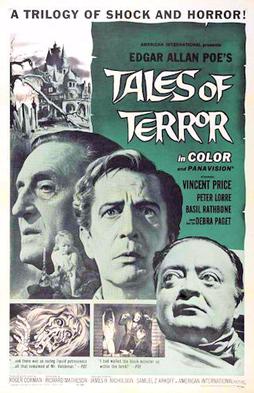
Having admitted to not having seen the entire Roger Corman Poe cycle, I figured I’d better get to work.  I had two movies left to watch and I found Tales of Terror for free on a commercial television streaming service.  As the title indicates, it is an anthology film, bringing together four of Poe’s stories in a three-featurette format.  At the same time, I am trying to catch up on Poe tales that I’ve never read.  More on that to come.  Tales of Terror begins with “Morella,” one of those stories I’ve not read.  There is a danger, of course, in watching a movie first since Corman loved to sensationalize.  I’ll need to wait until I find the time to read “Morella” to know just how much invention there is.  The movie version is an undeserved revenge from beyond the grave story.  Of course it stars Vincent Price.

Although “The Black Cat” gives Price top billing, the story focuses on Peter Lorre’s character, Montresor, borrowed from “The Cask of Amontillado,” with which it’s interlaced (The Cat of Amontillado?).  Montresor is an alcoholic who hates both his wife and cat.  Taking his wife’s money to buy alcohol (something I personally witnessed as a child), he eventually stumbles into a wine tasting convention where he meets Fortunato (Price).  When Fortunato begins an affair with Montresor’s wife it becomes an excuse to wall them both up in the basement.  Lorre plays his Poe characters funny and that makes this segment more a comedy.  Also, there’s a black cat.  The last featurette, “The Facts in the Case of M. Valdemar,” also stars Basil Rathbone.  I haven’t read this story either, so I’m not sure of its fidelity to Poe.  Yet.

The “Poe Cycle” was part of American International Pictures (AIP’s) collaboration with Corman.  Most of the movies were produced quickly and cheaply, although Richard Matheson did write the script for this anthology.  Of course, I hope I haven’t spoiled the two Poe stories I hadn’t read.  I do own an anthology of all of Poe’s fiction, and sometimes it takes movies to make me remove the ponderous tome from my shelf.  (Yes, I’m aware that Poe’s tales are also available for free online, but Poe deserves to be read from an actual book.)  As I’ve mentioned before, I never kept a record of the movies I saw, particularly on television, as a child.  Since the Poe Cycle was still being shown in theaters for part of my youth, I likely missed most (but not all of them) when they were aired on television.  I do remember seeing The Raven decades ago.  At least the internet does allow for a strange kind of resurrection since most of the cycle can be found for free online.


Personal Publishing

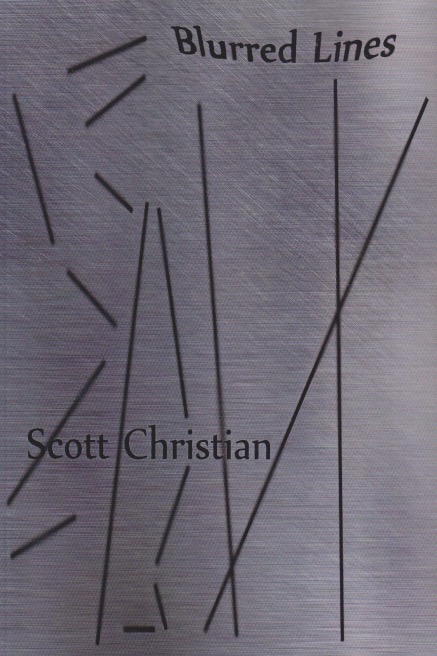
I recently joined the Greater Lehigh Valley Writers Group.  I haven’t really met any other members yet, although I know one from another local community.  By my reckoning, this is the fourth writers’ group I’ve joined and I do hope it leads to some friendships.  I like talking about writing.  I read Blurred Lines by Scott Christian because he’s a person I recently met and he kindly gave me a copy.  A collection of poems and stories, it’s a small book but a deeply personal one.  I guess that’s one reason that I like talking about writing with other people—it is deeply revealing.  There are those who write as a job, and there are those who write because they must.  This book falls into the latter category.  Some of us are compelled to write down what we experience, whether it be in poetry, fiction, or fact.

Self-publishing can be a way of expressing what the publishing industry suppresses.  I once told a group that it’s a little disturbing how much power publishers have in determining what people can read.  I write “can” intentionally.  Only the biggest in the industry have the financial wherewithal to get books into bookstores (where readers congregate like bees on a warm day in October) where they’ll be laid out on tables and priced to move.  Like many others, I began my writing in academia.  It took some time before I realized that academic prices are a deterrent to readers.  Breaking out of that mold is also difficult.  At the same time, publishers have resources to devote to marketing that an individual seldom has time for, or the reach to accomplish.  So it goes.

Another review of Nightmares with the Bible has appeared (this one in Catholic Biblical Quarterly).  While not glowing, it does recommend reading the book, despite the fact that the publisher has no interest in paperbacking the series and it takes a great deal of motivation for even me to spend that much for a book.  Yes, I can understand self-publishing.  It is a writer’s chance to get their voice heard.  Even some famous authors—Mark Twain comes to mind—had to get their start by paying to have their books published.  Some of us write because we can do no other.  We have thoughts and feelings to share.  And I keep joining local writers groups looking for the rare person who will talk to a stranger about that most intimate act we call writing.  Reading such a book is a very personal thing to do.


Another Frankenstein

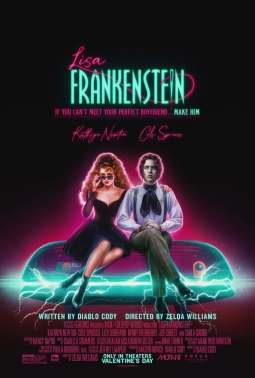
It’s a persistent bias.  Hollywood and the general public (at least critics) still downgrade the work of female directors.  I watched Lisa Frankenstein and loved it.  It’s a movie that was recommended both by a friend and the New York Times.  Okay, so it’s a comedy horror, but it’s well done and again, told from a female point of view.  It reminded me quite a lot of Edward Scissorhands and a bit of Frankenweenie.  But let’s step back a second.  Lisa is a high school senior whose mother was murdered by a maniac with an axe.  She lives with her father, step mother, and step sister in a new town and she’s got Goth sensibilities.  She hangs out in the overgrown cemetery, particularly at the grave of a Frankenstein.  A lightning strike brings the Victorian-era corpse back to life and since Lisa had said she wanted to be with him, he comes to her.

Missing some body parts, including his tongue, he begs Lisa for help restoring them.  This they do through murders (at first, accidental) so fresh parts can be sewn on.  After each addition an electric shock revitalizes the organ and makes the creature more human.  Of course, Lisa goes through the usual high school difficulties and her relationship with her bubbly, cheerleader step-sister keeps her going.  Especially since the step-mother is wicked.  With plenty of nods to classic horror, and an innovative story arc, I found it quite enjoyable.  It isn’t a perfect movie, but it is a very good one.  It shares a writer with Jennifer’s Body, which I discussed not long ago.  The movies have a bit in common, but are distinctly different while dealing with issues of girls becoming women.

I have a soft spot for gothic tales, as regular readers know.  Lisa Frankenstein manages to be gothic while also being funny.  Like Stranger Things, it revels in the culture of the 1980s and the sound track is quite good.  Written and directed by women, it falls into that category of movies that should’ve received more advertising.  I wouldn’t have known about it had not a friend recommended it.  While comedy horrors may be an acquired taste (I still prefer straight-up gothic tales), they often work well.  Another tie-in is clearly Corpse Bride.  There’s a healthy dose of Tim Burton aesthetic here.  Mixed with that pathos we all remember as high school.  The period when our chrysalis begins to crack painfully and we start to take our first steps as adults.  No matter what the cultural bias says, women’s experiences are just as valid as men’s.  And Lisa Frankenstein understands that.


A Second Post?

A second post in one day?  Not really.  As much as I’d love to post more, work drains me.  But I also realize I post early and some people may miss my musings because they’re so early.

Enough prologue.  This is simply a public service announcement.  McFarland is offering 40% off when you order two horror books, through the end of October.  Now that Holy Horror’s price is reasonable, you can really make a killing.  To take advantage of this limited-time sale, use the code HALLOWEEN2024 at checkout.

McFarland prices their books reasonably for an academically inclined small press.  And they have a great selection of horror-themed titles.  Check it out!  Back to your regularly scheduled programming.  (I’ll post again in the early morning, as usual.)


Short Story

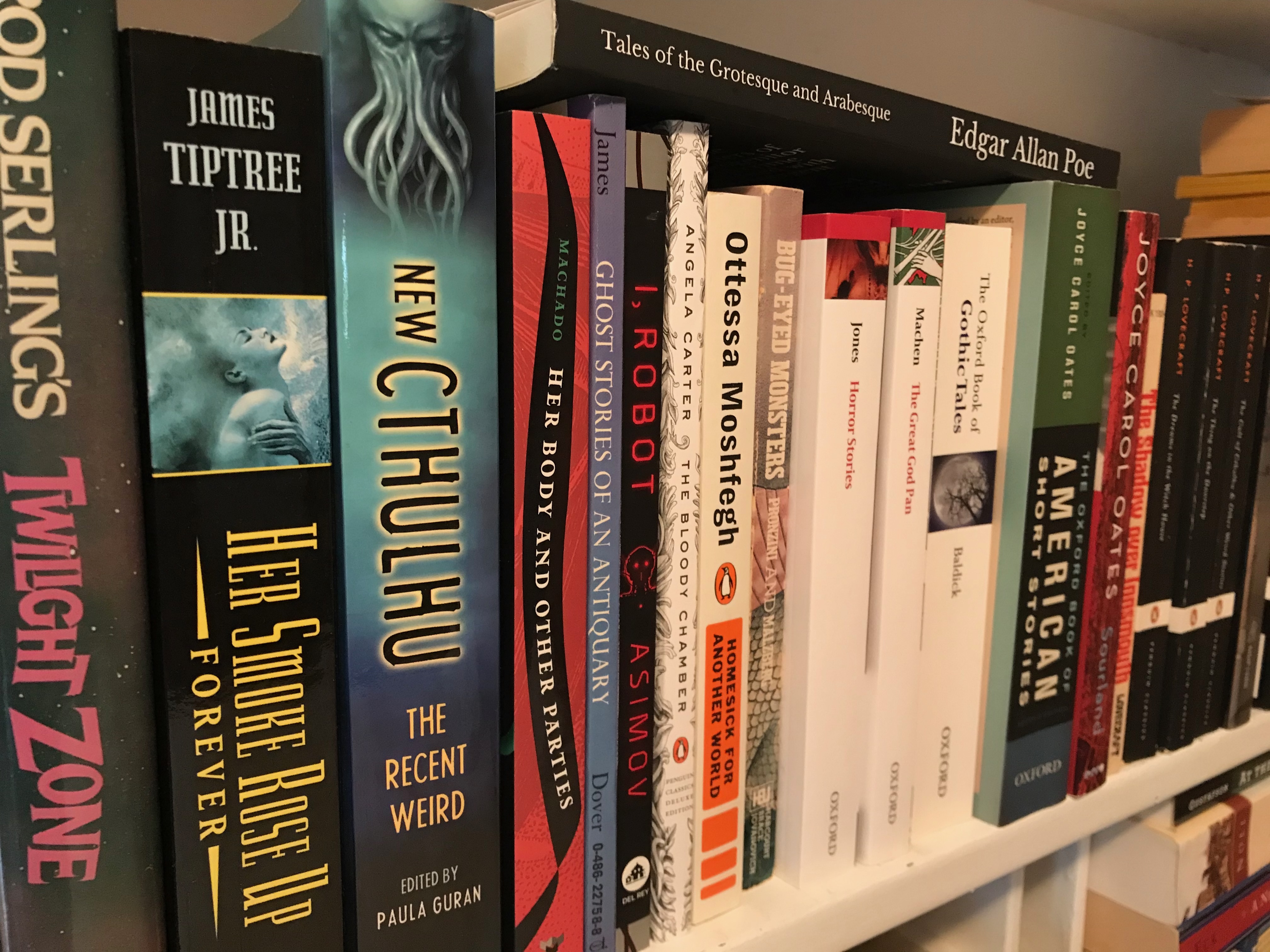
I often reflect on how little I know.  No matter how much I read there is more to be read.  Works worthy of time but sacrificed to circumstance.  I was recently reading a short story by Poe that I’d never read before.  As others have noted, Poe was a prolific author of a great deal of forms—poems, a novel, letters, a scientific treatise, literary criticism, and, of course, his stories.  I came to know his stories through cheap collections available in my small town, mostly not along the lines of those Poe himself selected.  Indeed, editions of his own chosen works, such as Tales of the Grotesque and Arabesque, before the advent of internet-based publishing, were difficult to come by.  Original editions cost many thousands of dollars.  Poe isn’t alone in this category—short stories are an unusual genre.

I know from personal experience that finding a publisher for a collection of such stories is nearly as difficult as finding a publisher for poetry.  Publishers are looking for money, of course, and like Poe, all writers produce stories that interest some but not others.  The novel is safer, and even today’s amazing writers have to find success as novelists before publishers will offer volumes of their short stories.  Tis a pity, really.  I have many volumes of short stories on my shelves, including some of Poe’s, but for some reason publishers tend to cram such volumes so full that they become unwieldy.  Intimidating almost.  It leads to that feeling of existential dread that I felt approaching War and Peace—would I indeed survive to finish it?  (I did, but that is such a Poe-like question I had to employ it.)

The short story is an important literary form that is singularly difficult to publish.  I have managed to find homes for about thirty such pieces, but many more have failed to move even just  the internet critics.  Those that have been published have brought no income at all.  In Poe’s day, an author attempting to make a living could not afford to give away their life’s blood.  Indeed, Poe’s older contemporary Washington Irving struggled with pirated copies of his works being sold overseas (he spent a great deal of time in Europe).  Like Poe, Irving excelled in the short story, or sketch.  We’re often at the mercy of editors who select the stories for us, making them available.  I suspect there’s much that we miss by not stepping outside their personal tastes regarding what to include.  Or, just as importantly, exclude.  Some day, perhaps, I will have read all of Poe’s short stories.  Until then, I’ll find them when necessary.


Whence Evil?

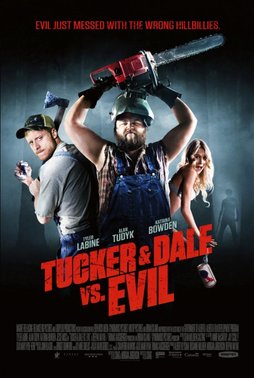
I’m at a stage where horror-comedy, or comedy-horror is becoming appealing.  This sub-genre is really perfect for those horror fans who like to laugh and still get something of substance.  Tucker and Dale Vs. Evil is a great example of the dangers of stereotyping.  Like Scream, it is very aware of horror tropes, but it makes fun of them in creative ways.  At points it’s laugh-out-loud funny, but it is pretty gory.  It begins with the usual folk gothic scenario of a group of college kids going camping deep in rustic country.  At the last gas station, they encounter Tucker and Dale, whom we’ve been primed to think of as potentially murderous hicks.  In reality, they’re a couple of hapless but nice guys on their way to fix up a cabin they bought as a vacation house.

The college kids end up camping nearby and interpret everything Tucker and Dale do through the lens of assuming hillbillies are inbred evildoers.  It’s kind of a reverse Deliverance.  So it sets up a love story between one of the coeds, Alison, and Dale, who rescues her from drowning.  Meanwhile Alison’s friends assume Tucker and Dale have kidnapped Alison and plan to attack to set her free.  Of course, mayhem ensues.  Dale, who is big and shy, and who suffers from an inferiority complex, keeps on making missteps in trying to convince the other kids that his intensions are good.  That’s the most brilliant part of the movie—it cautions against reading people in the light of our biases.  Often when I find myself in areas where we see lots of Trump signs, the locals, in non-political contexts, are very nice.  I feel sad that one man has decided hatred is the only way to power.  Making people distrust and hate each other so that he can win.

People, overall, are pretty descent.  There are some bad ones out there, for sure, but the number of times I’ve encountered helpful strangers—in both rural and urban settings—reinforces my underlying belief that if we don’t try to set people against one another their natural goodness will come through.  It’s hard to do when all the campaigning, and even the rhetoric from 2016 to 2020 was of distrust of others and personal superiority.  The real hero of Tucker and Dale Vs. Evil is Dale, the one with an inferiority complex.  Those who humbly assume that others are better than they are seldom try to hurt other people.  And yet, those who don’t know “salt of the earth” types, who may live in less-than-ideal circumstances, frequently approach them with fear.  It’s a horror-comedy in the making.


Ichabod’s Body

Maybe you’ve noticed this.  When Halloween comes around, the Headless Horseman and the Legend of Sleepy Hollow reemerge.  There’s a reason for that, and I discuss it quite a bit in Sleepy Hollow as American Myth.  Right now there seems to be quite an interest, or maybe I’m just noticing it more.  For example, a local theater where we saw a Poe performance last year is offering a Headless Horseman show this year.  Articles have recently been appearing on Tim Burton’s Sleepy Hollow movie, given that it was released 25 years ago—online discussion, however, is often eclipsed by the Fox television show by the same name.  And before it switched over to Christmas decorations, Michaels had its share of Sleepy Hollow merchandise.  Halloween and the Headless Horseman go together.  (Read the book to find out why!)

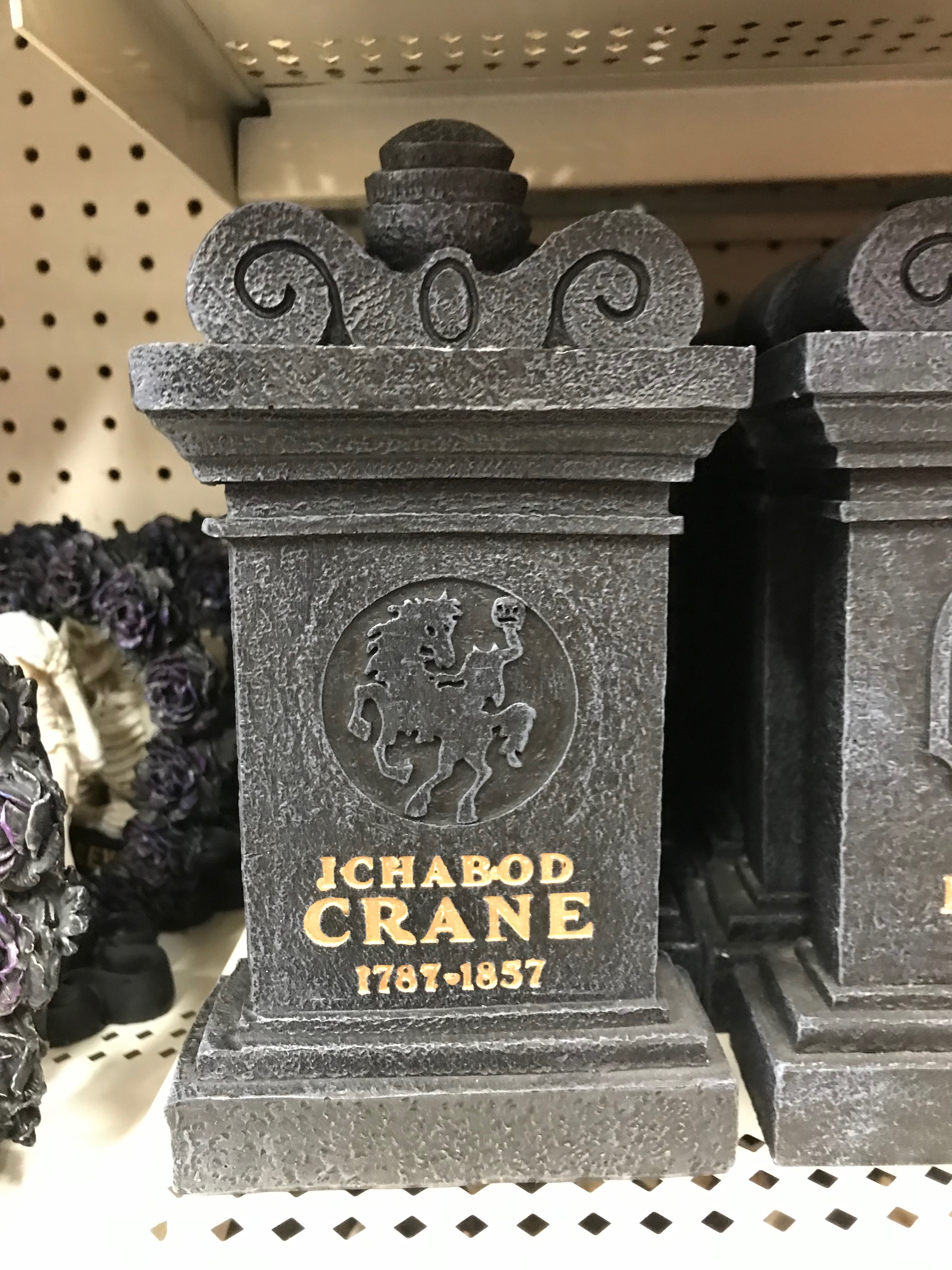
One of the tchotchkes I picked up at Michaels was Ichabod Crane’s tombstone.  In the many renditions of Washington Irving’s legend, Ichabod is treated as the protagonist of the story.  Although Tim Burton’s movie wasn’t the first to have Crane survive, besting the Horseman, the old wives’ tales, according to Irving, had him spirited away by the Horseman.  That’s why I found his gravestone so interesting.  The dates on it (1787–1857) indicate, at least according to this recension, that he died at seventy, surely not the victim of the attack that took place around the turn of the century.  If you’re not familiar with the original story, Irving set it “some thirty years since” the 1820 in which the tale was published, putting the events around 1790.  Burton shifted this to 1799, partially, I suspect, because that was two centuries before the release of his movie.

I do wonder where the maker of the Michaels tombstone got their information.  According to their reckoning, Crane would’ve been but three years old in 1790.  Of course, the story never tells us his age.  Since it is intimated that he relocated and became a judge after dabbling in politics, all of which would seem to indicate that he was a somewhat young man at the time of the tale.  To make Sleepy Hollow scary, though, having Crane cut off in his youth would seem to be more in keeping with the spirit of the season.  Of course, Sleepy Hollow is a legend that has become mythic through its many retellings.  Enough of them that someone could write a book about it all (ahem).  And this is the time of year to ponder it.  


Why, Cathy?

Learning to appreciate bad movies is a skill like any other.  It takes practice.  “Why?” I hear you ask?  Why climb a mountain?  Actually, there is a motive for seeing bad movies, apart from the good feeling they can leave you with.  (I might’ve actually done it better!)  That’s because they’re often free streaming.  If I had an endless budget I might well be able to avoid bad movies, but what’s the fun in that?  I found out about Cathy’s Curse because I was looking for a movie about a cursed doll.  (Don’t ask.)  I’ve seen many, of course.  Child’s Play and the whole Annabelle series.  But I felt I was missing something.  Wikipedia actually has a page on haunted doll movies, and Cathy’s Curse stood out to me.  Yes, I was forewarned, but I was also curious.

A Canadian horror film from 1977, Cathy’s Curse has become a cult classic.  The story line decidedly makes no sense.  Cathy, a young girl, moves into her grandparents’ house with her father and mother.  Her father’s father had died in a car crash with his daughter Laura, about Cathy’s age, some 30 years earlier.  Cathy’s parents are troubled, her mother having recently had a nervous breakdown.  Laura’s vengeful spirit possesses Cathy through a doll the latter finds in the attic.  For some reason, Cathy kills the housekeepers and attacks other children.  She tries to drown herself.  She kills the handyman’s dog.  The dog, which is clearly male, is explicitly said to be female in the movie, perhaps because one of the favorite words of the writer is “bitch.”  After about an hour and a half of running around screaming, the opening of the cursed doll’s eyes suddenly brings normalcy to the house.

There are some genuinely good things about the movie.  The late fall-early winter mood is nicely framed.  Why people hang out outdoors without coats in freezing weather is never really explained, though.  Neither the writing nor the acting are stellar.  And have I pointed out that the story makes no sense?  But still, there’s something there.  The idea of possession, a young girl under threat, the scary old mansion—these are classic tropes.  It’s unclear why, when Cathy’s father is fixing breakfast, he immediately sends her to bed and it’s suddenly night.  Or why the detective calls him by the wrong name.  Or why nobody can take a doll away from a little girl.  Ah, but that’s it, you see.  The haunted doll.  You have to learn how to appreciate these things, you know.


Prophetic Cookie?

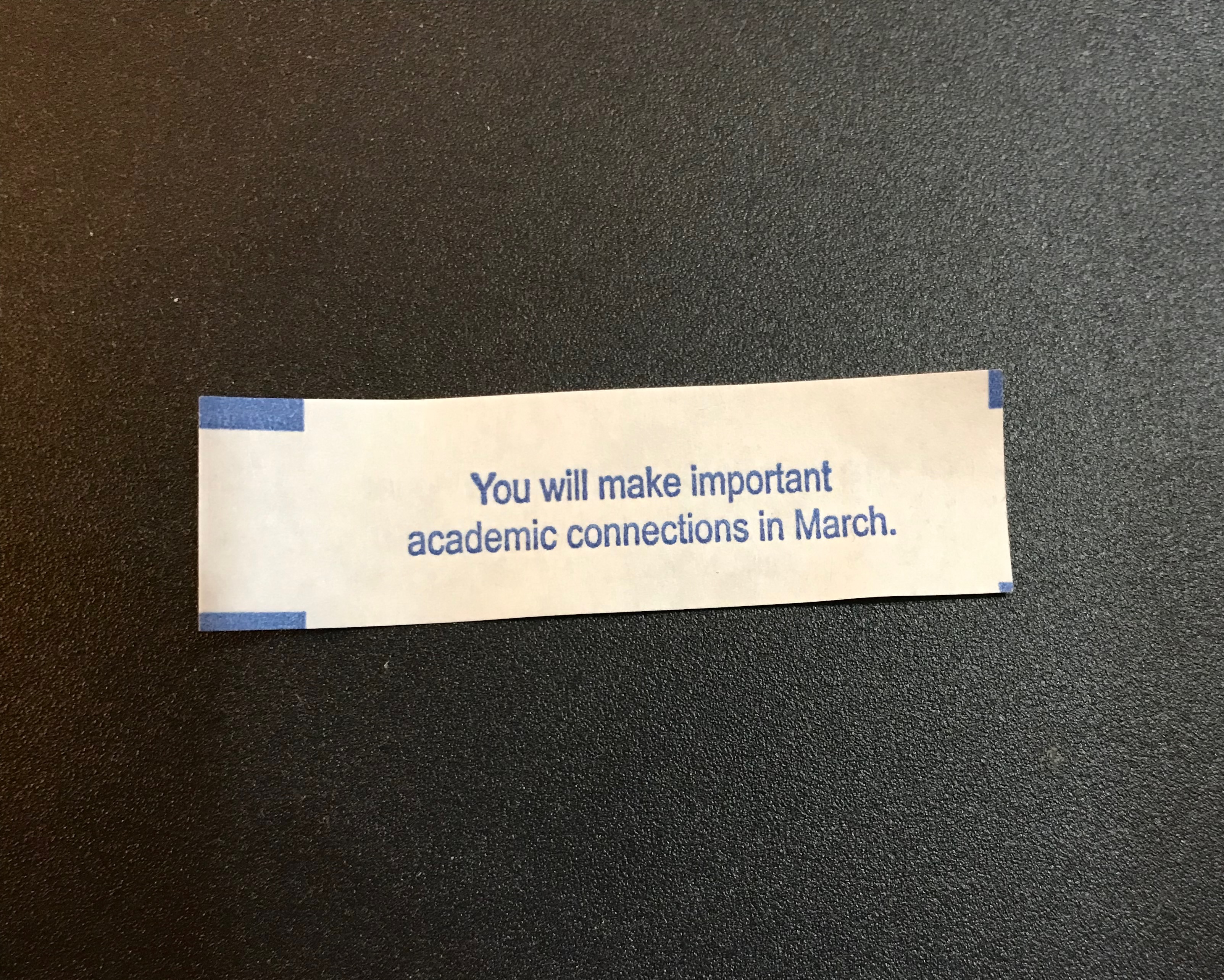
I have no idea if they really exist in China, but the Chinese fortune cookie is ubiquitous in the United States.  I’m assuming that China isn’t tracking them to know where Americans eat, but I do often wonder about what’s inside.  Many years ago I noticed that the “fortune” aspect had dropped out.  Predictions weren’t made any more and your typical cookie had an anodyne, but sometimes witty reflection in it.  They might’ve been called “aphorism cookies.”  Well, that all changed for me after a meal that included said cookies.  I was surprised to see an actual prediction, and, not only that, but one that was strangely apt.  It reads, “You will make important academic connections in March.”  Considering that academics make up a minuscule part of the population, that seems oddly specific, doesn’t it?  And with a date—March.  This differs qualitatively from “Leadership is action, not position.”

There are other future-oriented prophecies in cookies, of course.  “You will become known for your generosity.”  (Gee, that’s nice.)  Or “A short vacation is in order for you.”  But I’ve decided to hang onto this academic fortune to see if it might come true.  I do have many, many academic connections, of course.  That’s part of my job.  And I was an academic myself in my palmier days.  But what seems strange to me is that many people reading “academic” in a fortune would automatically dismiss it, I suspect.  An important academic connection, no less.  Knowing a professor, from my experience, often doesn’t help in getting you anywhere.  I value their friendships, of course, but it hasn’t sold more books.  Or got me that teaching job I still covet.

Will the cookie prevail where other measures have fallen short?  I have to wait a few months to find out.  And more importantly, I have to remember this fortune.  I can, I suppose, put it on my bulletin board amid the Sleepy Hollow and other mementos and hope that half a year from now that I’ll recollect this little post, and that little cookie.  Of course, if someone offers me a job at a local college in March I’ll consider the deal sealed—the cookie was wise.  If nothing apparently happens, however, I’ll still have to wait beyond that to see if something emerges from my many daily interactions with academics.  Maybe one of them will truly be listening.  That’s the thing about predictions—they’re as much interpretation as they are prognostication.