After Daytime

When you’re looking for freebies to watch, it helps to get some advice of what to see.  Particularly if it’s older (and more likely to be available).  I hadn’t heard of Night Watch until I saw it in Stephen King’s Danse Macabre list of really scary movies.  Granted, this was nearly a half century ago and many horror classics had yet to come.  Still, I was surprised at just how “ho-hum” Night Watch was.  Yes, it has a twist ending that makes some of the foregoing less credible, but that little hook was kind of neat.  Otherwise, the pacing is slow and the characters largely unsympathetic.  And scary it is not.  Granted, had I seen it as a young man in a theater, that might’ve made a difference.  I know that Fatal Attraction really bothered me in those circumstances.
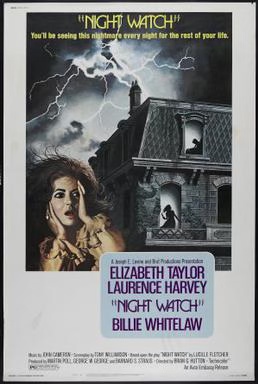
The story of a rich couple with a traumatized wife and an unfaithful husband, it has trouble garnering the sympathy of some viewers.  Elizabeth Taylor’s acting is pretty good, and the setting (lots of British thunderstorms), and some good, creepy music do help the mood.  And if you’ve seen Rear Window and Gaslight a bit of this will look familiar.  Taylor’s character thinks she sees a murdered person in the adjacent house and as her hysteria increases nobody will believer her anymore.  Of course, her husband is having an affair with her best friend (who is living with them), so what could possibly go wrong?  The movie’s generally not considered horror, although a number of King’s favs aren’t.

That got me to thinking about what the scariest movies would’ve been to me back then.  Keep in mind that most of my childhood fare was Saturday afternoon monster movies.  If we move it ahead a few more years, say to the early-mid eighties, I was in college and saw more that was properly scary.  Of course, I didn’t see the really scary stuff until I lost my job at Nashotah House.  So by the mid-eighties my scare list would have included Jaws, A Nightmare on Elm Street, Psycho, and a Dracula movie that I didn’t catch the title of and for which have been trying to locate the specific scene that really set me off.  Oh, and The Cross and the Switchblade.  I was a child with many obvious phobias, and my mother didn’t allow really scary viewing.  A couple episodes of The Twilight Zone really bothered my young psyche.  Perhaps I need to put together a post on movies I’ve seen since then that fall into the Danse Macabre time frame.  There’d definitely be things scarier than Night Watch in there, I assure you.

Gray Matter

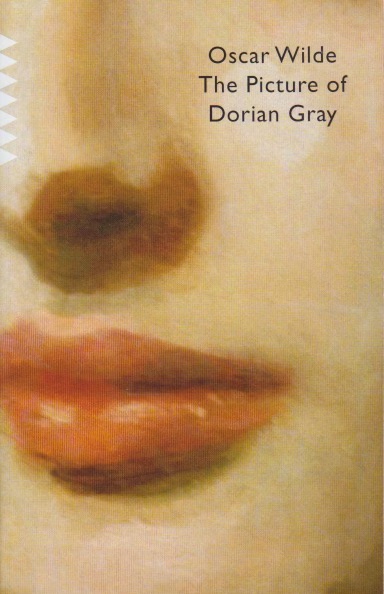
It seems to me that I was living in Boston the last time I read Oscar Wilde’s The Picture of Dorian Gray.  That was long enough ago to have forgotten almost everything except the central premise that everyone knows.  Recently, I had been reading some analysts who consider it a kind of horror story.  Wilde was a great and notable wit, not typically cited as a horror writer.  More recently I’d seen the novel classified as dark academia.  Since there are no students, and there’s no school in the novel, that genre seems forced.  In any case, it is a classic and I was curious about what I had forgotten.  The dialogue regarding morals stands out rather boldly, with traditional Christian values being the gold standard.  In his own life Wilde was known to flaunt these things, but in his story they stand mostly unchallenged.

At the same time, it is a book about seeking redemption.  Toward the end, Dorian regrets the lifetime of evil he’s led.  He wants to turn over a new leaf.  Corrupted from an early age by Lord Henry Wotton, he learned to live a cynical and self-centered life.  He shut out the feelings and needs of others for his own pursuit of pleasure.  As an old man still appearing young, he comes to have his regrets.  Although Wilde didn’t really live long enough to reach this stage in his own, he seems to have understood psychology well enough.  He even tried to have a half-year Catholic retreat.  Length of life often trails regrets in its train.  Of course, for Gray it is too little, too late.  He has made his mark on the world, but it hasn’t been for good.  His final act is a stab at redemption, but the novel gives no hint whether he achieved it or not.

Whether intentional or no, the novel considers the fact that we all wear masks.  And we do so for much of the time.  And there is a bit of horror involved in discovering that we aren’t who we pretend to be.  The real Dorian Gray was locked away in an attic room while his life of dissipation  led to the ruin of many.  The witty dialogue maybe makes this a comedy horror.  At times it seems to get in the way of the mood of the story, but it never stopped the novel from making a similar impression to the nearly contemporary Dr Jekyll and Mr Hyde.  Late Victorians knew something that we, as a society, seem to have forgotten.  The attics of some prominent individuals surely have portraits that belie their appearance on the ubiquitous screen.


Thankful Time

Thanksgiving’s late this year, for which I’m thankful.  I must be nearing retirement age because I really could use a little more time off.  Of course, I’m a big fan of holidays and I wish our late capitalistic system might throw a few more bones to the dogs.  Autumn is always my favorite season.  In September I feel the migratory urge of the classroom, but that’s an unrealized desire now, so I set my eyes on Labor Day and Indigenous Peoples’ Day.  Some of the more progressive employers give the latter off.  From there I can see Halloween, although it’s often a working day.  Still, it’s Halloween.  It’s yet a long stretch from there to Thanksgiving, but if I’m careful with my vacation days I can take a few long weekends as stepping stones to this four-day weekend.

I’m not being sarcastic or facetious at all.  I don’t believe I could survive the calendar year without the holidays and I am deeply, deeply grateful for them.  Capitalism seems to have a death grip on the idea of people as “assets”—a brand of thinking that should be buried with a stake through its heart.  People are people and we work for a living.  We don’t sell our souls for health care and a roof over our heads.  The internet has increased productivity immensely, but most companies are reluctant to consider the costs of overwork.  When you can check your work email from 6 a.m. to 9 p.m., for those of you who can stay up late, don’t you think that a few more holidays might prevent burnout?  Do assets burn out?  Engine parts have to be replaced when they wear out.  Why are we so slow to learn the lesson?

Today we reflect on the things for which we are thankful.  Even in difficult times there are many.  I’m thankful to live in a world with books in it, for one.  On those rare days off I read, trying to catch up with an ever-growing stack of intellectual stimulation.  And I try my best to contribute to literary life, although my books appeal to few.  I’m thankful for hope.  Without it this last year would’ve been impossible.  And I’m thankful for family and friends, whether actual or virtual.  This is an interesting world that I’ve come to inhabit.  The more I learn the more there’s left still to learn.  And with Thanksgiving so late this year, Christmas is less than a month away.  I look ahead and I’m thankful.


Hungry Eyes

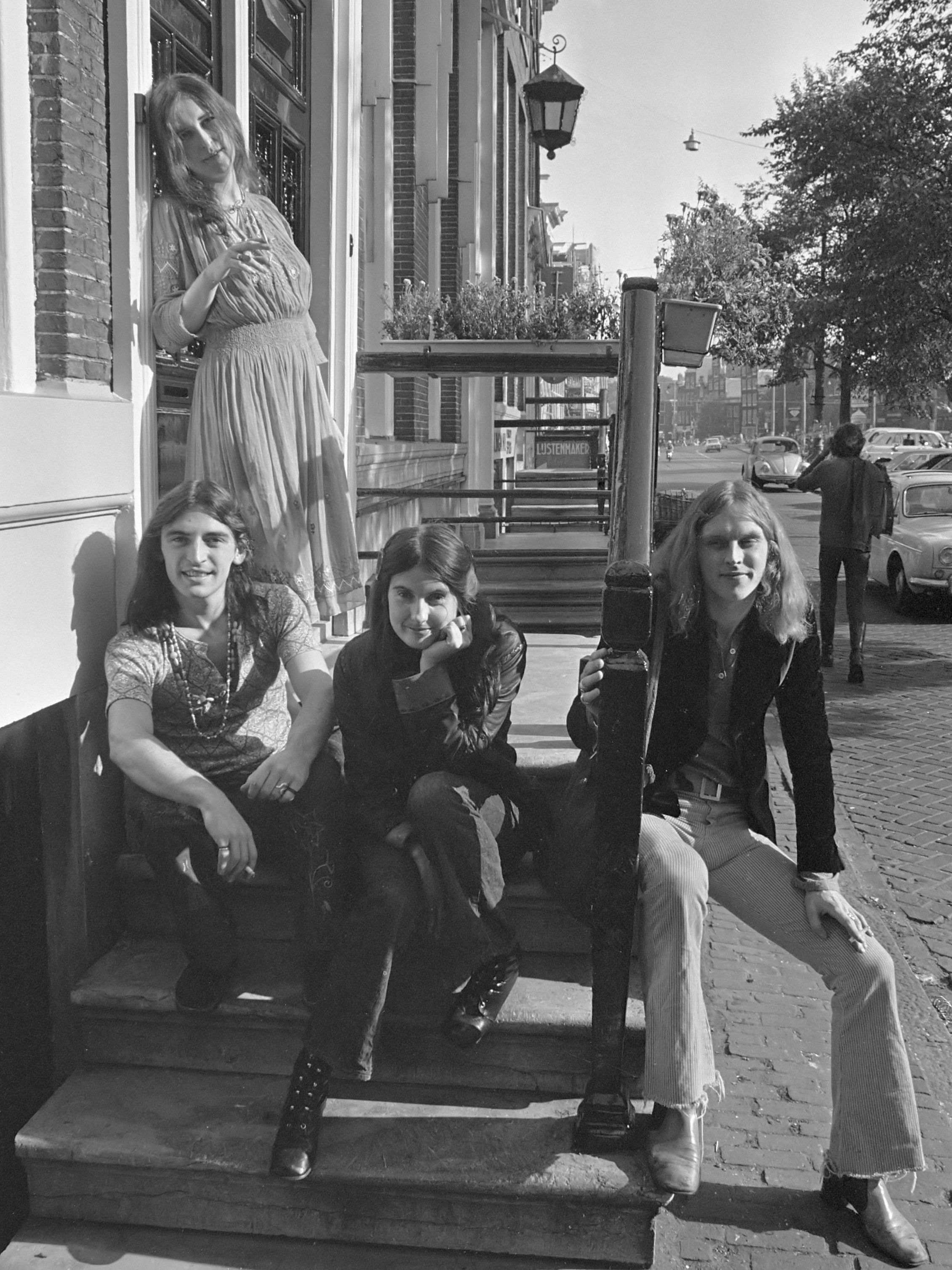
They’re watching.  All the time.  I may be a quasi-paranoid neo-Luddite, but I have proof!  Who’s the “they”?  Technology nameless here forevermore.  So my wife and I attend Tibetan singing bowls once a month when we can.  It’s the night I get to stay up late even though it’s a “school night” and get bathed in sound.  Our facilitator is a kundalini yoga instructor.  To those of you with experience, you know what that means.  At the end of each session we sing the “Longtime Sun” song.  Each and every month the next morning I groggily look it up.  I know it’s a recent song (hey, I’m in my sixties) but I can never remember by whom.  So for the record it was written by Mike Heron of the Incredible String Band and it’s part of a piece called “A Very Cellular Song” on the 1968 album The Hangman’s Beautiful Daughter.  (Now I remember!)  Okay, so I’ve got that out of my system. (I must add that this is disputed, with some claiming it’s an old Irish blessing. But note, AI only complicates the issue because it doesn’t do actual research.)

Incredible String Band: Image credit—Bert Verhoeff / Anefo, under the Creative Commons CC0 1.0 Universal Public Domain Dedication, via Wikimedia Commons

So how’s that proof?  Well, there’s an unconventional website I check daily.  Are you surprised?  Really?  To get headlines I have to reload it daily and the ads sometimes refresh.  I checked this site a mere five minutes after searching “Longtime Sun” for maybe the fifth time and the ads in the refreshed page were for singing bowls.  Just five minutes earlier I’d been searching a hippie tune and already they were preparing ads for me.  You see, “Longtime Sun” is a standard of many (I gather from the interwebs) kundalini yoga classes.  So much so that it’s commonly said that this is a traditional Tibetan song.  Well, I suppose to call it “Very Cellular,” or even “Hangman’s Daughter,” might harsh the experience a bit.

Kundalini yoga is very esoteric stuff if you read a little more deeply.  For me such reading is an occupational hazard, so I’ve read enough to know that many respectable people might be a bit shy upon hearing the details.  That’s not to say that it’s ineffectual on the level of singing bowls.  I have great respect for esotericism, although Hinduism isn’t in my background.  But if “they” know what kundalini teaches, what kinds of ads might begin to show up on the websites I visit?  What’s truly amazing is that a web search for a specific song brought up an ad for something that would be puzzling, were a reader innocently wanting to find out about “A Very Cellular Song.”  For academic purposes, for instance.  Of course, they know, you can merch anything.  You can trust the internet only so far. And they are watching.


Not Plan 9

Dementia 13 is a strange little movie.  It’s Francis Ford Coppola’s directorial debut, and it was produced by Roger Corman and released by American International Pictures.  Like many Corman/AIP movies, it was low budget and quick.  It seems that Corman had some money left over in the budget from a previous movie and he offered Coppola the opportunity to direct a film shot quickly and funded by the leftover funds.  With a script written in three days (and it shows), he set out to film what was intended to be a Psycho knock-off.  The title might give that away, although I’m not sure what the 13 has to do with it, other than being “unlucky.”  Shot in Ireland with mostly American actors, the film is suitably gothic, but the original start to the movie is a red herring.  So what’s it about?

A rich heiress has never recovered from the death of her young daughter, who drowned in the rather sizable pond on the estate.  One of her three sons dies early in the film, setting up a subplot that goes nowhere.  The two remaining sons, unaware of their brother’s death, keep the ritual of the annual acting out the sister’s funeral.  While the widow of the deceased son tries to work her way into the will, she is axe-murdered, bringing this into the horror genre.  The family doctor suspects something’s wrong (although viewers are led to suspect him), and finally solves the crime after another bit character is beheaded.  Part of the problem is the film is too brief to develop the ideas properly.  Released at only 80 minutes, with a 5-minute gimmicky prologue, you really don’t have time to absorb the psychology of the characters.

The influence of Psycho is pretty obvious, the wet woman slowly chopped to death while in the water, is the scariest scene in the movie.  It’s shot in such a way that it’s not obvious that she’s actually being struck until the end of the act (a budget thing, I suspect).  The wealthy widow drops out of the story as the family doctor becomes the self-appointed detective.  Of course, the previous deaths have been undetected, so no actual police come.  In sum, creepy (but not too creepy) Irish castle, siblings working at cross-purposes, a scheming daughter-in-law, and the irruption of the past into the present, along with the black-and-white filming, ofter a quick gothic thrill.  Otherwise, it seems more like homework than an example of foundational horror, but still, it has had inspired a remake, and that’s saying something for a three-day script.


Being Somebody

I am deeply honored, and a little puzzled, to have been recently selected to appear in Marquis Who’s Who.  It came out of nowhere. (Actually, LinkedIn.) As far as I can determine, inductees are chosen for having an impact.  In my case that means having stuck with it for so long—about 15 years of being a professor, 15 years of being an editor, and 15 years as a blogger (with some overlaps).  I’ve not seen the bio that will appear, but I suspect it will say little of my fiction writing, but it may mention the nonfiction books I’ve had published.  From my perspective—and I told the interviewer this—my life has been a long series of struggles and not giving up.  When you’re raised in difficult circumstances the temptation to give up is all around.  But I would be disingenuous if I didn’t point out that my siblings also pushed through as well, and I’m proud of who they’ve become. Three of them are over sixty.  Maybe Who’s Who should be a family thing.

All of us depend on those around us.  Although I tend to work alone—my blog, my books, most of my YouTube videos, these things I do largely by myself—I have the support of my family, both birth and marriage branches.  I have friends, the vast majority of them remote and seldom seen.  They support me in quieter ways and if you’re one of them, you know who you are.  Nashotah House, it is true, discarded me like a used diaper.  They also, however, gave me my professional start.  I was also tossed aside by the University of Wisconsin Oshkosh, Gorgias Press, Rutgers University, and Routledge, all in their own ways and for their own reasons.  I would not be who I am, however, were it not for all of them.

I don’t mean for this post to sound like I’ve just received an Emmy or anything, but the situation has made me quite reflective. And humbled.  I work hard, and I have worked and struggled for many decades now.  I’ve received very few awards along the way, so this is like a bolt from the blue.  I doubt it will make any difference in my day-to-day existence.  I still work 9-2-5, struggle to meet unexpected expenses, and write.  Always write.  But being chosen is a rare feeling for me.  I suspect that’s true for most people who are, like me, just trying to get by with what they’ve got. We get by.  We face four rough years ahead, but we’ll get through them, because we’re all in this together.  Everybody’s somebody who deserves the notice of others.


Not Alice’s

Sometimes I forget that movies are entertainment.  I mean, they’re big business and make some people obscene amounts of money.  In that respect they’re serious.  And also, they literally get into our heads and become part of our life’s experience.  Horror films, whatever that means, are often intelligent and thought-provoking.  I’ve been focusing on genre for a while now and when a friend recommended Willy’s Wonderland, and it was on one of my streaming services, I said “why not?”  This is entertainment, but the genre is all over the place.  Comedy, yes.  Fantasy, check.  Thriller, okay.  Action, definitely.  Horror, I’ll buy as well.  Nicolas Cage movie?  Well, he doesn’t look like he’s in his mid-fifties, and he doesn’t say a word in the whole thing.  The movie has possessed animatronic animals.  Satanists.  Small-town conspiracy.  Teens getting themselves killed.  And “one tough hombre.”

So what’s it about?  Hayesville has made a deal with the Devil.  A serial killer started an entertainment restaurant for kids’ birthdays, but along with his associates, began, well, killing.  Before the police could get them, they committed ritual suicide in a satanic pact, and they were permitted to inhabit the animatronic creatures.  When they weren’t fed, the machines started preying on townsfolk, so now they trap passersby and trick them into spending a night in Willy’s Wonderland so the machines can feed.  Cage’s unnamed character shows up and spends the night cleaning, killing machines, and playing pinball.  A young woman whose family had been killed tries to burn the place down, but, with her friends dead, and Cage leaving town after the carnage, she goes along for the ride.  It’s one of those movies that defies genre conventions.

As with many films released early in this pandemic, this one had a tough time at the box office.  I’d never even heard of it until the friend’s recommendation.  Lots of movies just disappear, but this one has at least the beginnings of a cult following.  It’s not difficult to see why.  If you can put up with the slasher aspect, it has quite a lot going for it.  Creepy kids’ stuff, children’s songs, and tawdry attractions are something we all experience in our own lives.  And a guy who goes around doing good—cleaning up other people’s messes, is something I think we tend to appreciate.  As a former janitor myself, I like the idea that the cleaning crew is the one who, well, cleans the clocks of the mechanical villains.  It’s a wonderland worth visiting.


Re-Unborn

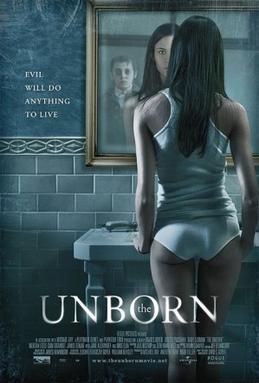
Some months ago I wrote a post about the possession movie The Unborn.  I don’t watch movies to pass the time.  I watch them to learn something.  And many horror movies are fairly smart.  In my blog post on this one I didn’t go into too much analysis because I already knew at that point that I wanted to share my thoughts on the larger venue, Horror Homeroom.  My piece, “Ecumenical Exorcism in The Unborn” has just been posted there.  The fairly small number of regular readers I have know that I post about horror movies with some frequency.  They help me to make sense of things, especially in this insane world where petty dictators keep rising to the top of the political spectrum because, apparently, we hate ourselves so much.  Horror helps prepare you for that.

In any case, The Unborn is a good example of how religion and horror work together.  They cooperate very nicely, in fact.  Religion is pervasive enough in horror that it would be an error to say “religion-based horror” is a sub-genre of the whole.  No, the two go together as naturally as chocolate (vegan, preferably) and peanut butter.  If I had a million dollars I might go back to grad school to explore just this nexus.  (I wouldn’t be looking for a teaching job either, because “fool me once, shame on you; fool me twice…”)  I’m not the only one who knows that there’s something there.  Ironically, before horror films proper were even invented, many churches actively discouraged the movies.  Perhaps they were inherently aware that these represented competition.  And there was already too much competition, what with other denominations and all.  But some films do occupy the same space as religion.  Quite often horror.

If you’re interested in how The Unborn fits into this picture, head on over to Horror Homeroom.  And yes, there is a book-length project in all of this.  It’s one I’ve been chipping away at for years.  That’s because the connection is obviously there, but I haven’t, to my own satisfaction, been able to figure out exactly what it is.  Perhaps I need to add a degree in psychology to my bucket list.  These things meet similar mental needs for a cross-section of people.  I suspect that most horror fans don’t think about it too much, which may be why my blog isn’t exactly jammed with traffic.  That doesn’t mean that the connection’s missing.  There are many things in life yet to be discovered.


Suitable Genre

As I muse over genres, it seems that “low-budget Lovecraftian horror” might be an—ahem—suitable one.  This is perhaps because Lovecraft has trouble being taken seriously as a literary writer and his stories are so easily parodied.  I watched Suitable Flesh unaware that it was a Lovecraftian (low-budget) movie.  I’ve seen quite a few of these over the years and they can be pretty fun.  This one was somewhat enjoyable.  Based on Lovecraft’s “The Thing on the Doorstep,” it’s a body-swapping, possession fest that involves two psychiatrists who have been friends forever but who both become victim of a nameless possessing entity.  It took some adjusting to believe Heather Graham in her lead role here—she doesn’t strike me as the Lovecraftian type.  She does seem to enjoy her role, nevertheless.

Lovecraft famously didn’t write many women.  He was xenophobic and a racist.  He didn’t much enjoy being married.  Modern films (and even novels) based on his works tend to redress this situation, sometimes creating a little disconnect with the white-male Lovecraftian universe.  Still, the story is fun.  Dr. Elizabeth Derby (Graham’s character) encounters a young man whom she supposes is schizophrenic.  In actuality, his body is being taken over by an entity that had possessed his father.  While possessed, the patient begins an affair with Dr. Derby and that leads to her also being a target of possession.  Although not considered a comedy it does seem that part of the story has an inherent humor about it.  Some consider it camp.  Lovecraft’s mood is difficult to translate to film.

Although cinema existed during Lovecraft’s lifespan, his writing wasn’t influenced by the possibility of film conversion.  The monsters are too enormous and the concepts too broad.  The real fear here, apart from the gross-out effects, is that of losing your identity.  The whole centers around a psychiatric ward where the supernatural events aren’t really accepted by the science that reigns.  People end up dying because the supernatural is inadmissible.  In this aspect, it shares some of the overarching concepts of some great horror.  The Exorcist, for example, derives a great deal of its energy from the fact that modern people have great difficulty in accepting that a demon could actually exist and science doesn’t seem to be working.  There are plenty of other examples of this.  Lovecraft’s stories bring us close to this realm, although Lovecraft himself was an atheist.  Maybe that’s one of the reasons his works are difficult to translate to film.  Or maybe something larger is going on.


Eating Conscience

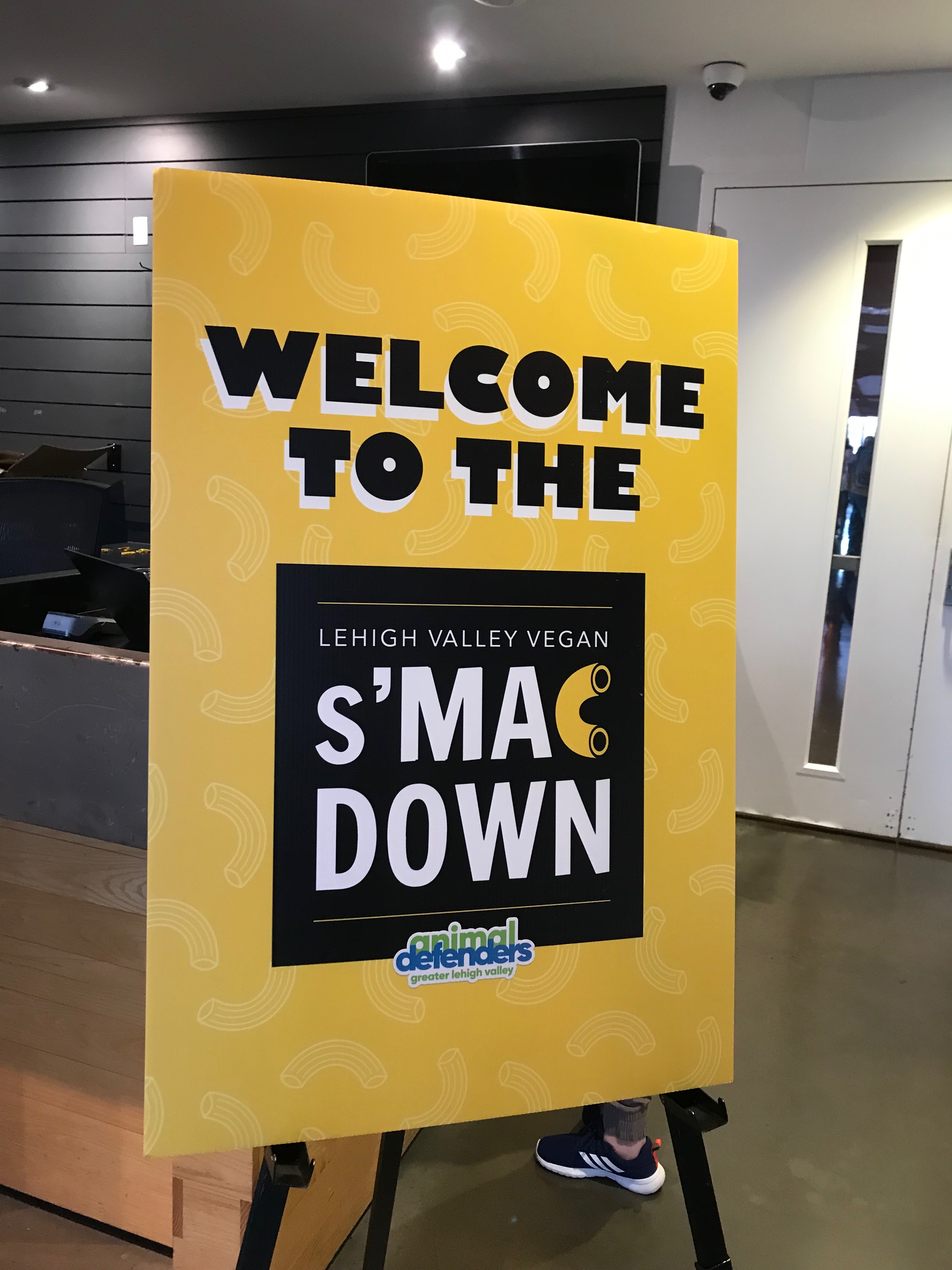
Elections notwithstanding, people—at least many of them—are becoming more accepting of those of us who are different.  Or so it seems on the ground, in some places.  A couple of weekends ago we attended the s’MAC DOWN in Bethlehem.  In case you’re not from the Valley, s’MAC DOWN is an event where hundreds gather to compare vegan macaroni and cheese prepared by area restaurants.  I don’t think that when I was younger—and vegan could’ve been considered a protected category—that there would’ve been a healthy line to get into such an event.  But there was just a couple weeks back.  Even after those who paid extra had been already allowed in and had been given a complementary glass of wine.  It helps, as my family reminded me, that mac and cheese is something people tend to like in general.  Being a vegan myself, I do miss cheese the most but vegan alternatives are getting better all the time.

People are slowly becoming aware that industrial farming of animals simply isn’t sustainable for our environment.  It’s one of the largest pollution-generating capitalistic practices.  It contributes to global warming as well as deforestation.  And how many e coli outbreaks and animal diseases leaping to humans will it take until we realize we’re going about this all wrong?  I became a vegan because it’s very clear that animals suffer as they’re being “processed.”  I don’t want to be part of that.  I understand that others differ in their opinions, which is one of the reasons I don’t write about this often.  But attending events like this can be an eye-opening experience.

It’s safe to say that if eaters didn’t know, they wouldn’t be able to tell that this food was vegan.  Things have come a long way on that front.  Cheese and milk are fairly easy to substitute.  (As is meat, it turns out.)  Butter goes without saying because people warmed up to margarine decades ago and some margarine makers are now putting “vegan” on their packaging.  I’ve been vegan going on a decade now.  There are still places you can’t eat without violating your principles, but events like the s’MAC DOWN show that even non-vegan restaurants are willing to give it a try.  And by and large they do it well.  Of the nine samples we had (in compostable cups with compostable “plastic ware”) there was only one I really didn’t care for.  A couple would’ve been very difficult to pin down as vegan at all.  And then there was the fact that hundreds of people had paid to give this a try, and not all of them were young folks.  It’s good to feel accepted, even when eating by my conscience.


Life Plant

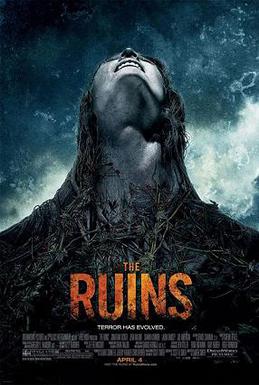
If your backyard is like mine, you’ll find The Ruins scary.  It’s pretty scary even if your plant-control skills are better than mine.  There’ll probably be some spoilers here, so I’ll say upfront that I recommend the movie.  If you’re wanting to see it fresh, well, you might want to pick up here afterwards.  Two couples vacationing in Mexico befriend a German who’s off to find his missing brother, last known to have visited an obscure archaeological site.  When the group arrives, they discover that the local Maya, who don’t speak Spanish or English, try to prevent them from approaching the pyramid.  Once they touch the vines growing all over it, the locals kill anyone who tries to leave.  It takes the group a few days to learn that the vines are carnivorous, and if you get a wound, they will invade your body through it.  It gets pretty gnarly.

Plants, we are coming to learn, share some form of consciousness.  They move (slowly by animal standards, but they do).  And they can quickly “consume” such things as say, oh, paving stones, that have been deployed to control them.   In a matter of maybe three weeks crab grass had nearly completely covered such stones that I laid out to try to reduce the amount of mowing the yard requires.  Plants exemplify the tenaciousness of life.  They can far outlive humans, or any other animal.  Being rooted in the earth has its benefits, it seems.  The Ruins has been described as ecological horror, and I would agree with that.  One thing, though.  Ecological horror often makes it clear that humans “started it.”  Here, the plant grows in one location only, kept under strict control by the locals.

Although the movie didn’t rock the critics, I thought the acting was good and the premise well laid out.  This writer knows how to put his protagonists at the edge of a cliff and then throw rocks at them.  The tourists are all likable people, but they’ve stumbled upon something dangerous, inadvertently, and they have to try to survive amid plants that seem to have a kind of sentience as well.  Somewhat like Triffids.  This is a very tense story.  There’s a bit of gore as well, so be warned.  Nevertheless, it’s not a gross-out for gross-out’s sake.  The larger story is intelligent and it even raises several ethical issues along the way.  And it seems to suggest that if you’re planning to travel to Mexico, stick with the well-touristed ruins rather than trying to discover some new ones.


Dark Academia

Dark academia is the new gothic.  It’s all the rage on the internet, as I found out by releasing a YouTube video on the topic that quickly became my most popular.  Still, I was surprised and flattered when Rent. asked me my opinion on the dark academia aesthetic.  You should check out their article here.  What drew me to dark academia is having lived it.  Although the conservatism often rubbed me the wrong way, Nashotah House was a gothic institution with skeletons in closets and ghosts in the corridors.  Tales of hauntings were rife and something about living on a campus isolated from civilization lends itself to abuses.  An on-campus cemetery.  Even the focus on chapel and confession of sins implied much had to be forgiven.  The things we do to each other in the name of a “pure” theology.  Lives wrecked.  And then hidden.

I entered all of this naive and with the eagerness of a puppy.  I was Episcopalian and I had attended the pensive and powerful masses at the Church of the Advent on Beacon Hill in Boston.  I was open to the mystery and possibilities even as I could see the danger in the dogmatic stares of the trustees.  It was a wooded campus on the shores of a small lake.  A lake upon which, after I left, one of the professors drowned in a sudden windstorm.  I awoke during thunderstorms so fierce that I was certain the stone walls of the Fort would not hold up.  Disused chapels full of dead black flies.  Secret meetings to remove those who wouldn’t lock step.  This was the stuff of a P. D. James novel.  Students at the time even called it Hogwarts.  They decided I was the master of Ravenclaw.

Fourteen years of my life were spent there.  I worked away at research and writing in my book-lined study painted burgundy.  Is it any wonder that I find dark academia compelling?  I’ve often written, when discussing horror films on this blog, that gothic stories are my favorites.  Even the modern research university can participate.  Professors, isolated and often unaware of what’s happening outside their specializations, still prefer print books and a nice chair in which to read them.  And, of course, I’d read for my doctorate in Edinburgh, one of the gothic capitals of Europe.   Even Grove City College had its share of dark corners and well-kept secrets.  What goes on in that rarified atmosphere known as a college campus?  The possibilities are endless.  On a stormy night you can feel it in your very soul.

That article again: Dark Academia Room Decor: Aesthetic Secrets Revealed


Still Sleepy

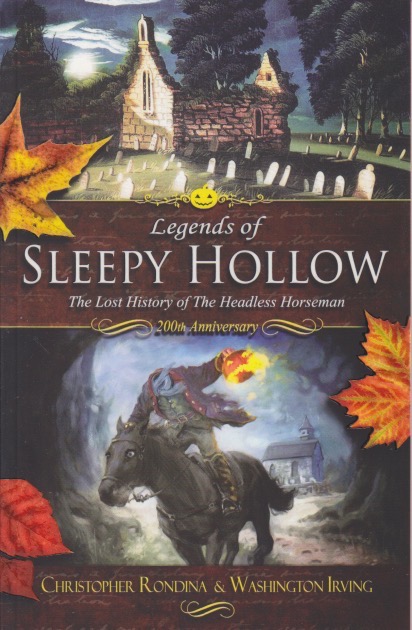
One thing I quickly learned when beginning work on Sleepy Hollow as American Myth was that the story hadn’t really been studied too much by those with academic training.  There are some exceptions, of course.  Another thing I swiftly picked up is that many people who wanted to write on the legend chose the method of publishing the public domain story with a variety of annotations, essays, and other additions, to make a salable book.  Often these are self-published and not always immediately obvious to the researcher as to whether they contain anything important or not.  I had not run across Christopher Rondina’s Legends of Sleepy Hollow: The Lost History of the Headless Horseman until well after my manuscript was submitted.  I found it in the bibliography of a ghost-hunter version of Sleepy Hollow that wasn’t even published by the time I was going into production.  (It doesn’t even have an ISBN.)

I do have to say that Rondina’s variety of this composite genre isn’t bad.  He includes Washington Irving’s story and expands it with an introduction, and brief chapters considering any historical background that there may be.  He also adds a chapter on modern media of the story that includes one television adaption that I failed to find for my book.  Interestingly, after I’d written the manuscript I discovered Joe Nazare’s similarly annotated version, also with a number of the media I’d analyzed in it.  I’d actually corresponded with Nazare earlier, having discovered his website.  Not wanting to discuss what my book was about until after I sent it in (others have more time to write, perhaps, than I do) I didn’t mention our common interest and didn’t discover his annotated version until it was too late to include as a conversation partner.

Self-publication has perhaps become inevitable since standard publishing is difficult to break into.  And the internet gives anyone the ability to self-publish without too much effort.  It does, however, make doing research a bit more difficult.  I determined early on that I could not review every annotated version of Irving’s story.  I selected a few of the most promising and moved on.  Both Rondina and Nazare had interesting things to say about the tale, and it’s a pity that they weren’t discoverable until after the fact, at least to me.  I like to give credit where credit is due, but any ideas that seem similar to these two sources in my book will have to stand as examples of convergent thinking on the part of fans of the “Legend of Sleepy Hollow.”  I know there are many other fans out there and I hope they find the resources they need to understand the story just a bit better.


Sowing Seeds

The Bad Seed is one of the scariest movies Stephen King lists from about 1950 to 1980.  Like many movies from before my time, I was unaware of it.  Projecting it back to 1956, when it was released, it’s pretty clear why it had trouble making it through the Production Code Administration.  Showing no blood or gore, this two-hour feature may seem to drag a little but it ends up in a very dark place.  I’ve never read the novel upon which it was based, but I’ve learned that the ending had to be changed because evil doers, according to the PCA, cannot go unpunished.  In fact, the ending is so dark that the director, Mervyn LeRoy, had the cast do a walk-on introduction when the movie was over, assuring the audience that this was just fiction after all.

The shock comes from a child psychopath.  So much so that Rhoda Penmark has become a character in her own right.  A sweet, innocent eight-year-old girl, she lies nearly as well as Trump and has skeletons in her closet.  Skeletons an adult shouldn’t have, let alone an eight-year-old.  Not only is she a sociopath, she’s convinced all the adults that she’s just as innocent as she acts.  The movie moves into psychological territory quite a lot, including a discussion of “nature or nurture” as the source of human evil.  The title of the film gives away the conclusion on that front.  Some children are born bad.  What’s more, this is the result of genetics, according to the story.  Rhoda is the child of an adopted woman—her adoption has been kept secret from her.  Eventually her father confesses that she was the child of a notorious serial killer, abandoned and adopted by loving parents.  Rhoda herself is raised in a loving, stable home, but she is her grandmother’s daughter.

I won’t spoil the ending, but I will say that if they had ended it at the hospital scene it would’ve been scarier.  The book, apparently, ends the scarier way.  I do have to wonder if Alfred Hitchcock was familiar with the tale in some form.  The movie was released four years before Psycho, but then again, that was based on Robert Bloch’s book.  Maybe he’d read the original.  In any case, I’d been watching King’s list of scary movies and mostly finding myself unbothered.  A couple of his choices: Night of the Hunter, and now The Bad Seed, have managed to rattle me a bit.  Even with its nearly seventy-year-old sensibilities, the latter still scares.


More Time

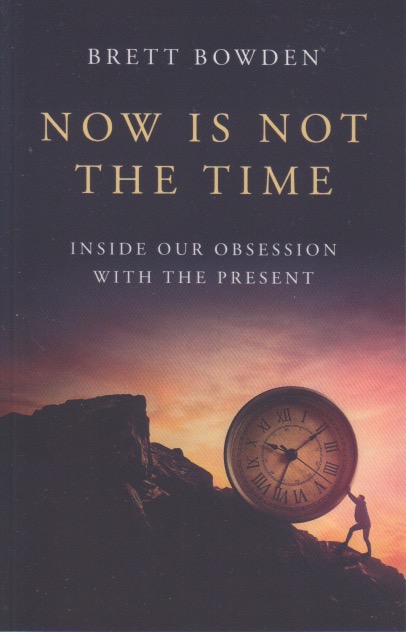
Speaking of time… Time is one of those things that flummoxes me.  A time change, crossing time zones, trying to figure things out on a base-6 system (metric time anyone?).  Confusing.  One thing about time is that we live in it, and so reflecting on it seems a reasonable thing to do.  Brett Bowden does just that in Now Is Not the Time: Inside Our Obsession with the Present.  As an historian, Bowden is experienced at looking back and this brief book is a reflection on why we’re so fixated on now being the most important time ever.  Given recent events, his seems to be a comforting message when looking at the long term of human history, and even longer term of our humble planet’s history.  The present is a blip and the future, at least as far as we know, hasn’t been decided yet.

One of the topics Bowden addresses here is the human propensity to claim and name.  We like to name things and when we do, it implies ownership.  Who but an owner gets to decide on a name?  This leads him to reflect on Eurocentrism, as in the naming of objects, such as Mount Everest, that are very far away and in somebody else’s territory.  We name craters on the moon (which we can’t really just pop over to) and even stars and galaxies.  We’re terribly acquisitive rascals, aren’t we?  We do the same with time—dividing it into eras.  Bowden’s discussion of the Anthropocene debate is quite interesting.  It seems we need a name for the time when people really began changing the planet on a global scale, but geological time ought to hush us up, if we stop and think about it.

As Bowden notes, psychologists and life coaches often encourage us to be in the present.  I think what they mean is that we shouldn’t worry unduly about the future.  That’s good advice.   Something Brett reminded me of is that some cultures, such as those of the Bible writers, view people as moving into the future backward.  It’s like riding on a train facing away from the direction of motion.  We can see the past and we can interpret it.  The future, however, we can’t perceive quite so clearly.  As someone who has studied the history of religions, I tend to agree that looking back is often a source of comfort.  It’s also a source of horror—many bad things have happened, many of them intentionally orchestrated by our species.  But it does serve to ground us in the now.  Even if it’s no more important than what went before or than whatever it may be that will come.