To Dracula, a Daughter

Nosferatu, by F. W. Murnau, was deemed in copyright violation of Bram Stoker’s Dracula, and ordered destroyed.  Rights to the novel were properly purchased by Universal and the horror film proper was born.  Other studios wanted to get in on the action, so the rights to the story of the Count’s daughter were bought by MGM.  They then sold the rights to Universal so that the latter could produce a sequel to their earlier hit.  Dracula’s Daughter didn’t do as well as the original, but it kept the vampires coming.  Some years later, Son of Dracula came out, keeping it in the family.  Having watched Abigail, I had to go back to Dracula’s Daughter to remind myself of how the story went.  I recalled, from my previous watching, that it wasn’t exactly action-packed, but beyond that thoughts were hazy.
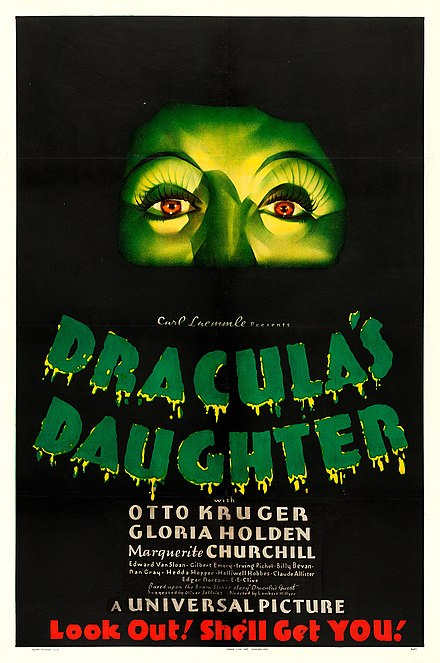
Picking up where Dracula left off, von Helsing (that’s not a typo) is arrested for staking a man.  Then a mysterious woman arrives and steals the body to destroy it in an attempt to rid herself of vampirism.  We see that just five years after Dracula the reluctant vampire was born.  Creating a scandal at the time, Dracula’s daughter also seemed to prefer females.  Apparently the script was rewritten several times to meet the approval of censors during the Code era.  The modern assessment is that this is based more on Sheridan Le Fanu’s Camilla rather than an excised chapter of Bram Stoker’s novel.  Since the world wasn’t ready for lesbian vampires in the thirties, she falls for Dr. Garth, a psychologist that she wants to live with her forever.  Kidnapping his secretary to Transylvania, she draws him to Castle Dracula.  Her jealous servant Sandor, however, shoots her with an arrow.  Von Helsing explains that any wooden shaft through the heart will do.

Already as early as Stoker, at least, Dracula had brides who were vampires.  It makes sense that there might be daughters and sons.  And studios, learning that people would pay to watch vampires on the silver screen, were glad to keep the family dynamics rolling.  Vampires proved extremely popular with viewers—a fascination that has hardly slowed down since the horror genre first began.  Some of the more recent productions explore themes and approaches that simply wouldn’t have been possible in the early days of cinema.  We don’t see Dracula’s daughter actually biting victims—one of the many things the Production Code wouldn’t allow—and there’s no blood.  Nevertheless, the story itself went on to have children and they are still among us.

Imagine Monsters

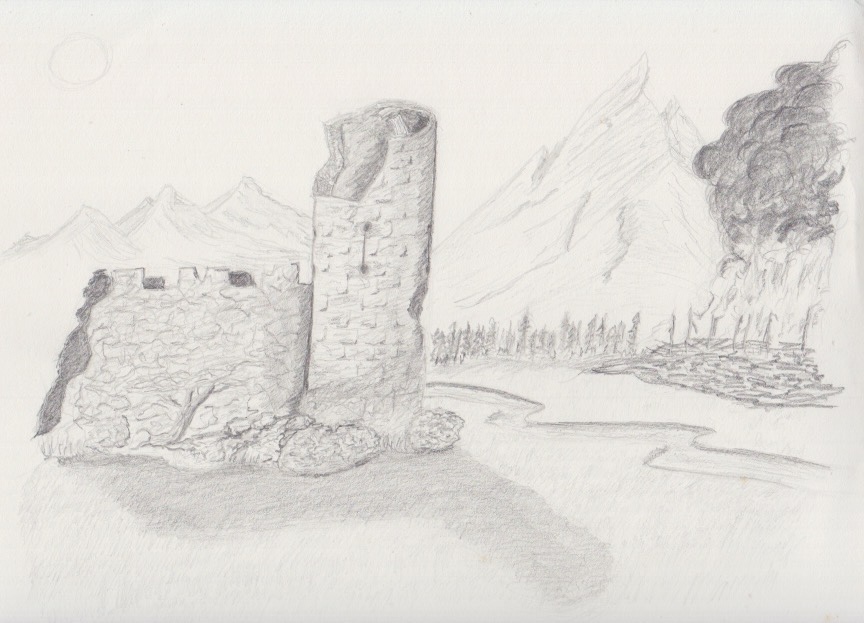
Adulthood is where you begin to recognize the folly of growing up.  Like most people, when I “matured” I was ashamed of things I made as a child and, regretfully, threw them away.  This came back to me recently as I was thinking of a sketchbook—actually a scrapbook that I repurposed in my tween years.  I love to draw.  I don’t do it as much now as I’d like (thanks, work!), but I was encouraged in it by art teachers throughout school who thought I had a little talent.  The sketchbook, however, was only ever shown to my brothers, but mostly only looked at by me.  This particular project was where I was making up monsters.  As with my writing, I’d never taken any drawing classes, but I had an active (some say overactive) imagination.  (That’s still true.)  

In any case, a discussion with my daughter brought back memories of this book I’d discarded by the time I went to college.  I still remember some members of the menagerie I’d concocted.  Even now that I’ve seen hundreds of monster movies, most of those I’d fabricated as a child have no peers that I’ve seen.  These weren’t monsters to be incorporated into stories—they were purely visual.  Although, I can say that my first attempted novel (probably around the age of 15) was about a monster.  I got away with being interested in monsters in high school, but college was a wholesale attempt to eradicate them.  Even so my best friend from my freshman year (who left after only a semester) and I made up a monster that lived in the library.

As an academic, until very recent years, monsters were off limits.  If you wanted to be sidelined (and in my case it turns out that it wouldn’t have mattered) you could explore such outré subjects.  Now it turns out that you can get mainstream media attention if you do (as a professor, but not, it seems, as an editor).  I’m sitting here looking back over half-a-century of inventing monsters, with a sizable gap in the middle.  The interest was always there, even as I strove to be a good undergrad, seminarian, and graduate student.  Now I can say openly that monsters make me happy.  I can also say, wistfully, that I’d been mature enough to keep that sketchbook that preserved a part of my young imagination.  It was tossed away along with the superhero cartoons I used to draw.  And the illustrations of favorite songs, before music videos were a thing.  Growing up is overrated. 

A surviving drawing, unfinished

Stop for a Bite

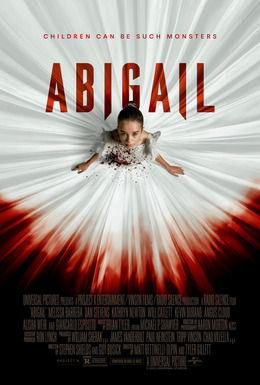
Universal does monsters right.  I’m no movie maven but I don’t know why the whole Dark Universe thing didn’t work out.  These movies are good!  Abigail recently came to one of the streaming services I use and I watched it right away.  (There’s sometimes a delay between when I write about a movie and when it appears on this blog.)  There will necessarily be spoilers here.  I write this as someone who doesn’t watch trailers if I can help it, and who tries not to read about movies before watching them.  So be forewarned, if you are, by any chance, like me.  In case you’re bowing out now, this is a very good flick.

So, this is one of those spates of recent vampire movies where you go for quite a while before realizing it is a vampire film.  Set as a taut thriller, a group of six criminals who don’t know each other kidnap a twelve-year old ballerina.  She’s being held for ransom and the kidnappers have to keep her in the mansion for 24 hours, after which they each will receive their share of $50 million.  What they don’t know is that Abigail is a centuries-old vampire who likes to play with her food.  Suspecting they’ve been set up, the criminals speculate that the girl’s father has set his most vicious killer on them.  Modern, educated people, they don’t believe in vampires (there’s quite a bit of shading from Dusk Till Dawn in here) but they have to figure out how to defeat one.  Like Dusk Till Dawn, they ask themselves what they know about vampires, trying to come up with a plan to survive the night.  As you might expect, a bloodbath ensues.

If you’re the kind of person who reads about movies first, you’ll know, as I didn’t, that this was planned as a remake of Dracula’s Daughter.  It’s been so many years since I saw “the original” that I scarcely remember it.  (So you know what’s coming, eventually.)  I’ve watched many monster movies—like the books I’ve read, it’s so many that I lost count long ago.  Many of these films are pretty good.  And, of course, there are many I haven’t seen—that depends on money, time, and circumstance.  I do have to note, however, that coming up on the centenary of Universal monster movies, they haven’t lost their touch.  I have no idea what happened to their Dark Universe, but I do get the feeling they maybe gave up on the idea a little too soon.


Indigenous Gods

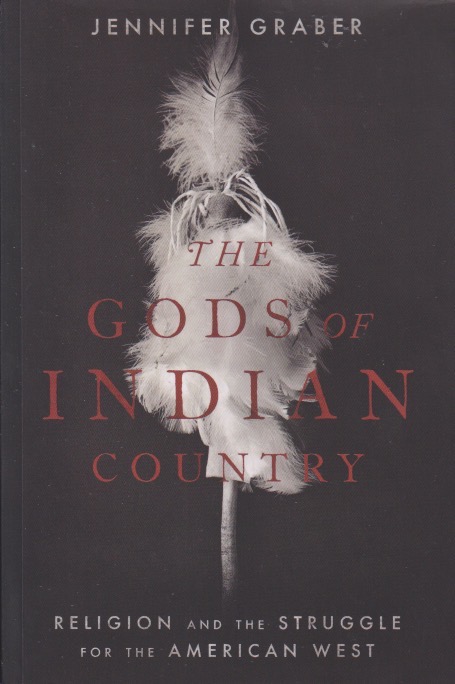
Engulfed by capitalism, it is too easy to ignore the indigenous population of this country.  I grew up thinking, in some way, that American Indians were extinct (this was small town America, after all).  Then we visited a place—in upstate New York, I think, but the recollection’s hazy—where there were real Indians.  This was before exoticism was a bad word, and I thought them quite exotic.  Maybe it was the way I was raised, but I’ve never thought of myself as better than anybody else.  Certainly not on the basis of race or gender, or even personal worth.  In any case, there were still Indians.  I’ve always been an admirer of their culture.  Jennifer Graber’s The Gods of Indian Country is an informative monograph on, as the subtitle says, Religion and the Struggle for the American West.

My interest in American history is relatively recent.  Growing up, I always found European history of greater interest, and then, for many years, the ancient history of the states along the eastern coast of the Mediterranean.  It was the antiquity of it all.  History feels safer when it’s at a great distance.  American history is not old.  When hearing that some of the events discussed by Graber took place in the 1910s, I kept thinking, “were we really that naive just over a century ago?”  Or was our nation willfully blind to the plight of the people who lived here before the Europeans arrived?  The narrative has changed.  And if it hasn’t, it must.  How would we like it if, say, aliens landed and assumed the right to take over capitalistic America?  It’s only our arrogance that prevents us from treating Indians better.

Religion, particularly Christianity, fueled many interactions with the Indians, as Graber ably demonstrates.  The assumption was that Indians had to assimilate to capitalistically-fueled Christianity.  Private ownership.  Free trade.  Otherwise the cultures could not share the land.  Treaties were broken because the “Christian” rules of the new overlords demanded it.  Graber also explores some Native American religious practices as well, chiefly among the Kiowa.  Since the book is fairly brief, it doesn’t include any kind of comprehensive coverage of Indian religion, nor, of course, of early American settler religion.  What happened is that religion and politics joined forces to justify stealing what belonged to someone else.  Those who study the history of religion recognize this pattern.  It isn’t a rarity, unfortunately.  Although my interest in American history is recent, it is growing.  What happened in your own backyard determines so much of how we’ve become who we are.


Dead Darlings

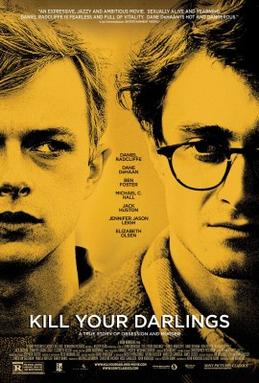
The thing about being a writer is that there’s no one size fits all.  I watched Kill Your Darlings because it is an example of dark academia, or so it’s sometimes presented.  I have read some Beat Generation writers, but the movie made me feel very ignorant of that aspect of American counter-culture.  The movie is based on true events and such things as coincidences of writers always makes me feel terribly alone.  In case you don’t know the story (I didn’t) Allen Ginsberg came under the influence of Lucien Carr at Columbia.  Carr had been surviving at the university by the writing of his one-time lover David Kammerer.  Carr introduces Ginsberg to William S. Burroughs and Jack Kerouac, and the four (excluding Kammerer) kick off what would become much of the Beats.  Carr, however, kills Kammerer and Ginsberg, who has become Carr’s lover, must decide what to do.

Ginsberg grew up in a broken home, as did Carr.  I could relate to their feelings of loss.  Of course, the Beats relied on drugs and alcohol and sex to write, breaking the rules of institutions like Columbia.  Now that I’ve written my “million words” (and more), posted for free on this blog, I think back to my literary friends.  Both in high school and college I knew guys (I was awkward with girls) who dreamed, or at least talked, of becoming writers.  Over the years this pool has dried up.  Seminary and doctoral study were too focused to find those who really wanted to write.  Academic books, maybe, but not forms of self-expression.  Now, I’ve never used drugs, nor have I wanted to.  I write nonfiction books that are creative forms of self-expression.  Naturally, they don’t sell.

Many of us who write were raised in broken homes.  With tattered dreams we set out to try to make something of our lives in a hostile world.  My behavior in college wasn’t exactly conventional, as any of my roommates could attest.  It often appeared that way on the outside, even as poems rejected from the literary magazine were called “too depressing.”  So I pursued an academic career, but there was, whether anybody saw in or not, always a wink in my eye.  The same is true of my writing since.  This blog scratches the surface.  There’s a huge pile of fiction, and yes, poems, underneath.  They may someday be found, but I do have my doubts.  Movies about writers will do this to me.  Even if they don’t really fit my tastes in dark academia.


First Tower

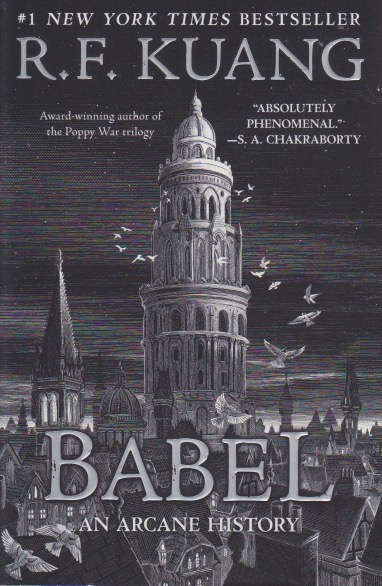
In these days when daring to think feels dangerous, R. F. Kuang’s Babel: An Arcane History feels dangerous to read.  Good literature is like that, even if it’s uncomfortable to read as a “white” man.  A fantasy largely set in Oxford, it’s based on the premise that languages, when placed next to one another, engraved in silver, have enormous power.  The power to run an empire.  This is a post-colonial story, and I took comfort in the working class support, for their own reasons, of exposing the very dangerous world of capitalism.  With its “human capital” as we’re now being called by businessmen.  But I digress.  Four students, three from abroad, are brought to Babel, a tower in Oxford that houses the Royal Institute of Translation.  Their use of their native tongues helps build immense power in this Oxford tower.  Power that fuels Britain’s imperial goals.  But all is not well in academic paradise.

Slowly three of the four scholars come to realize that their home countries are being exploited for purposes of yet further exploitation.  The wealth always flows back to England, and even the small emoluments it offers to those other nations cannot negate the fact that the end goal is British superiority.  The protagonist is Chinese, taken from poverty to live in academic luxury, in exchange for what was his birthright—his linguistic ability.  It doesn’t end well.  This is not a happy novel.  But it does highlight something we seldom consider; our language ability is truly an amazing thing.  We try to convey a fraction of what’s going on in our heads to another person, and that person has some ability to understand it.  And languages are ways of thinking.  I used to tell my students that all the time.  It’s more than just words.

This is also a fairly long book.  As with most fairly long books, you’re left feeling it once the story concludes.  Even though language allows us to communicate, it’s sometimes uncomfortable to hear what someone else is thinking.  We don’t have to be woke to realize that Black, or Asian, or indigenous experience is quite different from what we call “white.”  And such voices deserve to be heard.  We live in a time when white men don’t like to be told that they’ve participated in oppressive behaviors.  Probably most of them (for I believe people are generally good) are not intentionally evil, but they participate in a system which can be.  And often unthinkingly so.  Thus these days thinking feels dangerous.  And this book will make you do so, nevertheless.


Undead Again

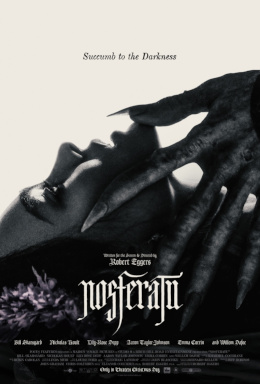
I had intended to see it in the theater, but holidays are family time.  And not everyone is a fan of horror.  Last night I finally did get to see Robert Eggers’ Nosferatu.  Eggers is a director I’ve been following from the beginning.  Here’s a guy who pays very close attention to historical detail.  No slips in letting modern language expressions creep in.  Costume and setting designs immaculate—nothing incongruous here.  I was surprised that he was taking an established tale that’s based on a technically illegal film from Bram Stoker’s Dracula as his starting point.  Still, I’m looking forward to Werwulf, probably about two years from now.  (And speaking personally, I’d love to see his take on Rasputin.)  In any case, Nosferatu.  I avoided trailers and online discussions because I wanted to come to it fresh.  He’s managed to make a disturbing story even more disturbing.

If you’re reading this you probably know the basic story.  F. W. Murnau’s 1922 Nosferatu was in violation of copyright of Dracula, and so the basic story is similar.  Eggers manages to bring to the fore the vampire as sexual predator angle.  He prefers to bite chests and take long, slurping drinks.  I said it was disturbing.  And Orlok really looks the translation of the title, “undead.”   Even at over two hours Eggers has difficulty fitting in all the elements of the story.  And there are some unexpected aspects thrown in as well.  In my mind, I couldn’t help compare it to Werner Herzog’s remake.  Both are art-house treatments of Murnau’s work, which was itself German expressionism.  All three are memorable in their own way.

The one character I didn’t fully buy was Willem Dafoe’s von Franz (the van Helsing character).  This often seems a difficult one to cast.  In Bram Stoker’s Dracula Anthony Hopkins just doesn’t do it for me either.  It must be difficult to pull off eccentric but deadly serious.  The unsmiling obsessive.  That, to me, would be even more disturbing.  Ellen Hutter’s fits are amazingly done and there’s a menace to her melancholy that really works.  I’ve never seen Lily-Rose Depp in a film before, but she seems poised to become a believable scream queen.  I was exhausted after watching the movie after a long day at work (there’s a reason to see things in a theater over the holidays, I guess), but after a night of strange dreams, I awoke to find myself wanting to watch it again.  That’s the way Eggers has with films.  They reward multiple viewings.  And although this story’s familiar from the many versions of Dracula out there, it emphasizes some elements that have, up until now, often only lurked in the shadows.


Asteroid

So, that asteroid.  Good thing Trump won’t be in office in 2032.  Well, it’s only a three percent chance it’ll hit us, but chances are things can’t get much worse anyway.  It might be a good idea to make some plans now—but wait, we currently deny science is real and spend our time renaming bodies of water.  Hmm, quite a pickle.  If science were real it would tell us that an asteroid is not the same as a meteor, although it can become one.  Back in high school astronomy class—yes, our Sputnik-era high school had its own planetarium—I learned that the difference between a meteoroid, a meteor, and a meteorite.  Want to go to school?  Here’s the quick version: a meteor is something in Earth’s atmosphere (thus, meteorology).  A meteoroid is a space rock, or even dust, in the solar system somewhere.  Once it enters our atmosphere it becomes a meteor.

Most meteors burn up as shooting stars and never hit the ground.  Yes, that atmosphere is a pretty good idea.  If a piece does make it to the ground, that piece is a meteorite.  Although your chances of being hit by a meteorite are minuscule, they can be impish.  Not far from here, a few years back, a meteor smashed through the backseat window of a car after a couple had just put their groceries inside.  The meteorite stopped inside a carton of ice cream.  The window had to be replaced, and I can just imagine the conversation with the insurance company.  Or take that meteorite heard on a recording for the first time.  In Charlottetown, Prince Edward Island, a doorbell camera caught a meteorite strike just outside someone’s house.  Both of these were tiny critters, though.

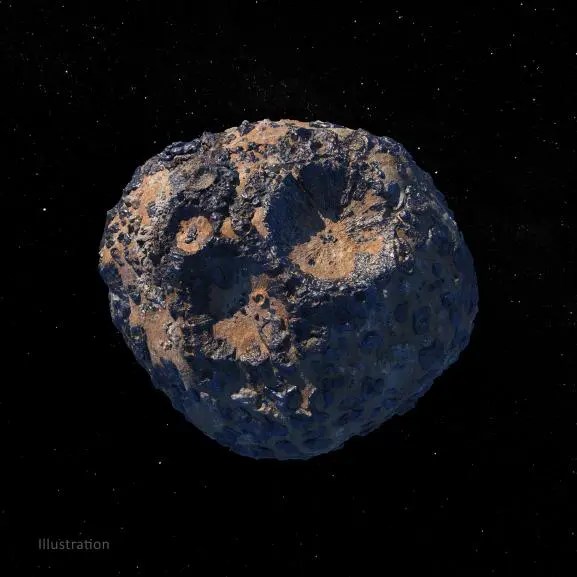
Our 2032 friend is quite a bit bigger.  Sometimes when large meteors heat up, they’ll explode in what is called a bolide.   In western Pennsylvania back in January of 1987 (if I recall correctly) my brother and I were working on a jigsaw puzzle during the holiday break when our house shook.  A loud bang had us worried—we lived in a refinery town, and explosions weren’t a welcome report.  We ran outside to find neighbors also outside looking around.  We later learned that a flaming fireball had gone overhead before exploding, a bolide.  The actual explosion took place quite a distance from us, but sound travels in our atmosphere.  So a possible near miss is scheduled eight years from now.  Let’s hope people show some sense at the polls before that happens. Or we could just rename it MAGA and hope that it hits somewhere else.

An asteroid. Image credit: NASA, public domain

Sounds Funny

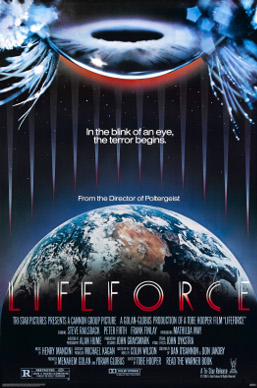
It may be the strangest vampire film ever.  Lifeforce not only postulates the origins of vampires as beings from space who come to suck humans dry of their souls, it also plays off of Invasion of the Body Snatchers, any number of zombie films, and Alien, all with a score by Henry Mancini.  Patrick Stewart is in it, but the plot makes very little sense.  Although it didn’t perform at the box office, it has become a cult film, and some parts of it are actually pretty good.  Directed by Tobe Hooper and partially written by Dan O’Bannon, there was some real talent involved.  Too bad it just can’t seem to hang together.  The main reason seems to be the story-line.  It’s based on a novel, but not all novels translate to film so well.

What’s interesting is that it attempts to provide an origin story for vampires.  When the crew of the Churchill initially discovers the alien ship, the creatures are bat-like.  This intends to explain why vampires are associated with bats.  Since these beings had come to earth long ago, their association with sucking people dry, and bats, led to the belief in vampires.  Of course, following the logic of the story, vampires should’ve nearly taken over the earth before since victims revive after two hours and victimize those nearest them.  Only one scientist in this future London can uncover a specific combination of metals that have to be used to stab a vampire in precisely the right location in order to kill it.  Meanwhile the souls of thousands of residents of London are being sucked up to the alien ship.

The score for the movie also rings a bit oddly.  Henry Mancini isn’t the first name to come to mind as a composer associated with horror movies.  Or science fiction.  Even G-rated 2001: A Space Odyssey knew that.  Perhaps we’re lulled into thinking nothing of it by big studio productions that make the soundtrack sound natural to the movie.  Like all of the elements of a film, however, they really have to work with all the other elements to make something spectacular.  Lifeforce had a large budget and nevertheless struggles.  Tobe Hooper had just come off of directing Poltergeist, which, although never one of my favorites, was a stronger and more lasting entry into the horror canon.  Maybe it’s that vampires and space just don’t mix.  Vampires are gothic monsters and that’s difficult to transfer to outer space with all its gadgetry.  That, and a score that’s difficult to take seriously.


In Praise of Paper

I write quite a lot.  I’ve done so for decades.  As I’ve tried to carve out a writer’s life for myself I noticed a few things.  I’ll start a story or novel and put it aside.  Sometimes for a decade or more, then come back to it.  I recently found what looks to be a promising novel that I began writing, by hand, back in the last century.  As electronics forced themselves more and more into my life, I began writing it on my computer.  I must’ve picked this story up a few years back because I clearly began revising it, but I ran into a problem.  The program in which I’d written it—Microsoft Word—was no longer supported by Apple products.  I eventually found a workaround and was able to extract a Rich Text Format from files that my computer told me were illegible.  If you want illegible, I felt like telling it, go back to the original hand-written chapters!

I dusted this off (virtually) belatedly, and started working again.  Then I reached chapter four.  That’s where I’d stopped my most recent revision.  Then I discovered why.  Near the end of the chapter were two paragraphs full of question marks with an occasional word scattered in.  A part of the Word file that the RTF couldn’t read.  Frustrated and heartbroken—there’s no way I can remember what this said some thirty years after it was initially written—I simply stopped.  This time I went to the attic and found the hand-written manuscript.  I went to the offending chapter only to find that the corrupted passage was missing.  It was what we used to call a “keyboard composition” and it was eaten by the equivalent of electronic moths.

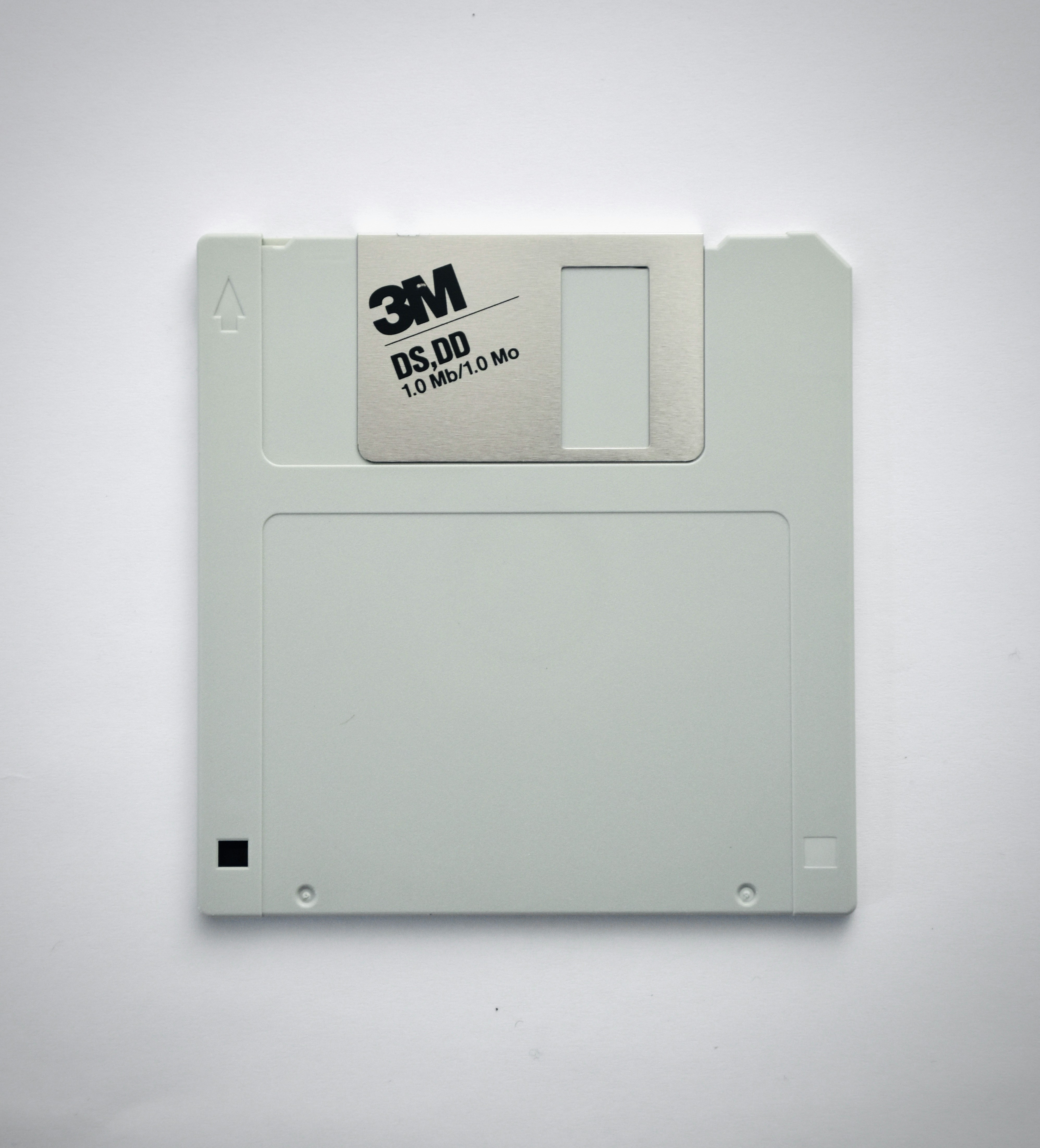
Photo by Everyday basics on Unsplash

Now, I’m no techie, but I just don’t understand why a word processing file can no longer be read by the program in which it was written.  Publishers urge us to ebooks but how many times in my life have I seen a new system for preserving electronic files fold, with the loss of all the data?  It’s not just a few.  And they’re asking us to make literature disposable.  If I have a book on my shelf and I need to look up a passage, I can do so.  Even if I bought the book half a century ago and even if the book had been printed a century before that.  I’m aware of the irony that this blog is electronic—I used to print out all of the posts—and I have the feeling that my work is being sacrificed to that void we call electronic publication.  That’s why I keep the handwritten manuscripts in my attic.


The Power of

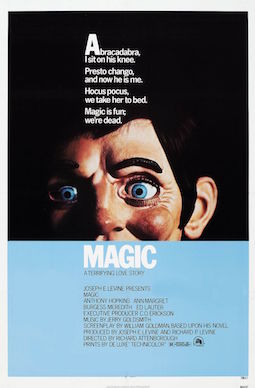
One rare treat is rediscovering something that intrigued you as a young person, but which you’d completely forgot.  Living in a small town and seldom going to movie theaters, I had to have learned about Magic from television commercials.  I remember parts of the trailer, even down to particular phrases, but it was a movie I’d never seen.  I forgot about it.  That’s not to say that in the intervening decades I might not’ve relived that trailer in my head—I’m sure I did—but since I began binging on horror films a few years ago, it never occurred to me.  I remember it scared me as a kid because the trailer consisted of a monologue by the ventriloquist’s dummy.  Herein hangs the tale.  The movie did reasonably well at the box office but nobody seems to discuss it much.  When it showed up on a streaming service, the thumbnail of Fats’ face transported me back to the seventies and I knew I had to see it.

I have a soft spot for seventies horror.  I was surprised to learn that Anthony Hopkins and Burgess Meredith were in it.  And Ann-Margaret.  A movie about a stage magician going mad, I found that it kept me tense.  I didn’t know how the story went.  In case you’re curious, it goes like this: Corky, a stage magician with a ventriloquist act, is about to hit the big times.  He then flees to his childhood Catskills and finds his high school crush managing a remote, rundown resort.  She’s in a loveless marriage and Corky has trouble with women.  Two things become clear: his dummy says what he (Corky) really feels and Corky is seriously disturbed.  Fear of being found out leads him to murder and although Peg, his crush, really liked and likes him, he can’t separate himself from the dummy.

There’s an ambiguity here.  There are a couple scenes when Fats moves on his own.  Otherwise there’s nothing supernatural going on here.  That raises the question of whether the camera is lying or whether spooky action at a distance is taking place.  Overall I thought the movie was well done.  I wouldn’t have tolerated the language Fats uses when I was younger, but I did think Hopkins’ acting was quite good.  Playing a person struggling with a mental disorder requires some convincing acting to be bought.  And there was a feel to many seventies horror movies.  This one brought me back with the power of suggestion, and perhaps a little magic.


Staunching Stigma

Independence Day is not a great movie.  As my readers know, that doesn’t stop me from watching.  I’ve seen it a few times.  Watching it post-UFO/AUP disclosure via the New York Times, I was struck by something.  Even in the diegesis of the movie, where alien craft, clearly visible, hover over major cities, when Russell Casse tells the military he’d been abducted, people roll their eyes.  Of all the stigmas our culture has invented that of the “crazy people” who see “flying saucers” is one of the deepest and most persistent.  Even after the Times, and the US Navy admitted they were real, and their tech is not of human origin, people refuse to believe.  I’ve followed this for some time.  I read a book by Donald Keyhoe before I was old enough to drive.  Like most thinking people on the topic, I kept quiet about it.  Stigma.

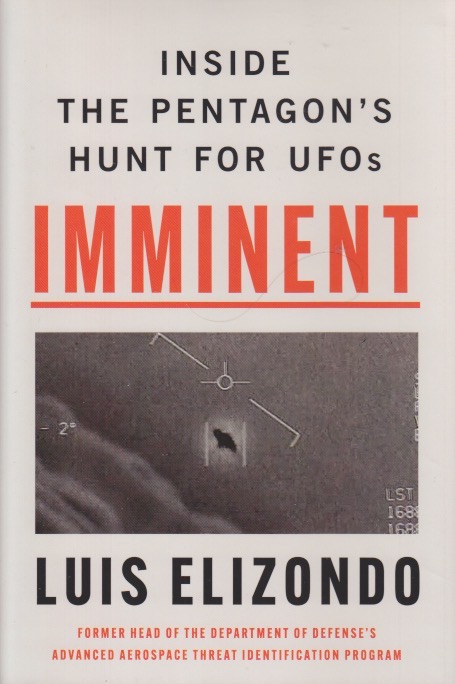
When I received Luis Elizondo’s Imminent for a Christmas present, I was secretly very pleased.  You see, the evidence has been in plain sight (Poe nods knowingly) for decades, for those who don’t accept ridicule as an immediate response.  The Keyhoe book I read was published in 1955.  It was my grandfather’s book.  For sure, the stories casting doubt on Elizondo’s reputation and sanity began almost immediately after he cooperated with journalists in 2017 when a fraction of the truth made the New York Times.  Between Keyhoe and Elizondo, many insider, “death bed” books had revealed that this was something we should pay attention to.  People laughed.  Oh, we love to laugh.  Imminent, however, is quite a sobering book.  I’m not sure full disclosure will ever happen, but it’s trickling out and a finger in the dam can’t hold forever.

Stigma as a means of social control is unfortunately effective.  I’ve always felt that mocking what you don’t understand is a poor way to get smarter.  Still, for those willing to consider the evidence over the years, there’s been plenty to study.  Either there’s something to this or our government and military are filled with pathological liars (outside the Oval Office, I mean).  It seems far more reasonable to examine the evidence, when it becomes available.  There are contractors in the military-industrial complex (Eisenhower warned us about this decades ago) who benefit from keeping secrets.  Imminent is an eye-opening book.  Hopefully it will be widely read and the implications taken seriously.  It’d be too bad if a catastrophe were necessary to stop the stigma, after it’s too late to do anything about it.


Peak del Toro

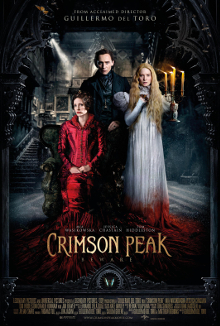
Crimson Peak is perhaps my favorite Guillermo del Toro movie.  Gothic to the hilt, the story—a bit overwrought—features plenty of ghosts and a house appropriate to them.  The many reflexes of horror on display here make it a compelling movie, despite its box office disappointment (although, honestly, how can $19 million really be a disappointment?).  There’s a gothic mansion, a murderous plot, blood-red clay, incestuous siblings, ghosts—what more’s necessary?  Thomas Sharpe is a minor aristocrat down on his luck.  All he and his sister have is the crumbling Allerdale Hall, perched atop Crimson Peak with its clay mines beneath.  In need of investors, they travel to Buffalo, New York, where Edith Cushing (surely no coincidence of names) meets and falls in love with Thomas.  Her wealthy father dies in mysterious circumstances, but she marries Thomas and they head for England along with her inheritance.

It’s clear something’s not right, so Edith, who is an aspiring writer, explores the old house and makes some unwelcome discoveries.  And she sees ghosts.  They help her unravel what’s going on but her health is declining as winter sets in.  Of course, the fact that she’s being poisoned doesn’t hurt.  Thomas and Lucille, the lover siblings, have done this before.  More than once.  There’s a kind of Bluebeard theme running through Crimson Peak.  Each time they inherit the wealth of the deceased brides but they can’t get the mines up and running to save their estate.  The twist is that this time Thomas has actually fallen in love, making it difficult for him to kill Edith.  Their house, except for that gaping hole in the roof, is one of my favorites from any movie.

The more I think about it, the haunted house in gothic films may be the decisive element for me.  I’ve always loved Poe’s “The Fall of the House of Usher,” and perhaps growing up in humble domiciles attuned me to what could be.  I loved reading about Collinwood.  Maybe I even knew that such houses come with a very steep price that consequently casts them as haunted.  Indeed, in the movie itself Edith says the ghosts in her story are metaphors for the past.  Of course, she encounters literal ghosts at Crimson Peak.  This is a movie about moods and gothic settings.  The horror pretty much matches what del Toro offers up in other films like The Devil’s Backbone.  The only monsters here are the ghosts and they aren’t the bad guys.  


A Plea

One literary Saturday recently I found myself in the attic.  When we first moved to this house I sometimes wrote up there but I quickly learned that with no heating it was intolerably chilly on autumnal mornings, and that didn’t speak well for the coming winter.  Nevertheless, I set up a shelf with my fiction writing on it.  I was looking for something on that shelf when I discovered many things I’d forgotten.  Novels mostly.  I don’t know how many I’ve started, but I have completed six (now close to seven).  Going through the papers and folders on that shelf I found about 250 handwritten pages of another novel—one that I’d completely forgotten.  There were stacks of short stories, also handwritten, awaiting some recognition.  I haven’t had a ton of success in getting fiction published—the current count is 33 short stories—but I was inspired by what I found.

When my wife and I visited a lawyer some years back to make out our wills, I kept trying (unsuccessfully) to interject a literary executor.  At that point I had published only three books and two of them were academic.  Besides, there’d probably be an extra charge for adding that codicil.  I guess what I fear is that all of this work will just get dumped when I die.  Retirement doesn’t look like a realistic possibility for me, and what I need is time to sort it out.  Some of the novels aren’t good.  I know that.  Some are.  One was actually under a book contract for a couple of years before the publisher decided to kill it when the acquisitions editor left.  I haven’t found a replacement publisher yet.  Then, a few years back, my laptop started complaining about the amount of writing I was asking it to remember.  I had to buy external hard drives to store some of my writing.  Even I forget it’s there sometimes.

Graphomania should have its definition expanded to include those whose thoughts overflow to the point that they’re constantly writing.  There’s a reason I get up so early in the morning every day.  Up there in the attic I found what I was looking for and pulled it off the shelf.  A half-written novel that I had, unwittingly, started to write again presuming that the original had been lost.  All of the writing has been done while trying to hold down a demanding 9-2-5 with no sabbatical and few vacation days.  Not all of it is finished.  Not all of it is good.  But someone, I hope, will stand in front of the dumpster on some future day and say, “This doesn’t get thrown away.”


Somehow Inevitable

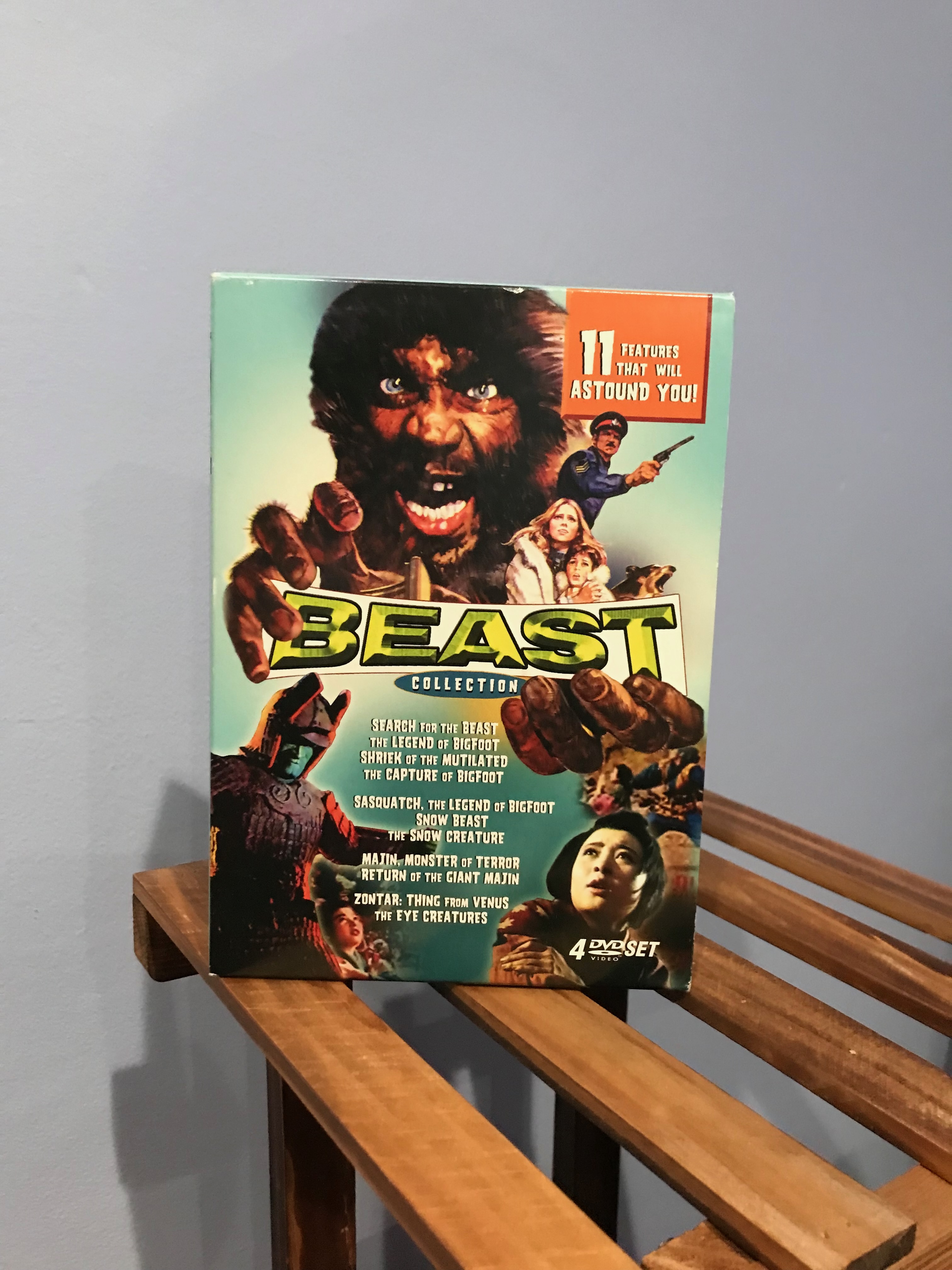
You had to expect me to write about Zontar: Thing from Venus.  I bought the “Beast Collection” set to see it many years ago.  In those days I tried to watch the movies through, in order but I didn’t make it through the first disc, even.  Well, now my perspective has changed—I figured I bought this to see Zontar, and Zontar I must see.  You do know that he controls people, right?  Zontar is a notoriously bad movie.  I saw it on television as a kid, and it may have even been close to the first run since it was made for television.  It’s actually a remake of a cheap Roger Corman movie, so it is a cheap remake of a cheap original.  Nostalgia, however, does funny things to a guy.  Although I saw it half a century ago, I remembered some lines precisely.  Television does funny things to young minds after all, I guess.

In case none of the injectapods has found you yet, it goes like this: Zontar, from, well, Venus, is a bat-like monster with three eyes.  He befriends an earthling outsider scientist, through laser communication, and commandeering a satellite, which becomes a passable flying saucer, lands in  a cave from which he takes over the small town of Jackson, which has a military base and plans to take over by having a general assassinate the president.  Meanwhile, his scientist friend directs Zontar to the four people that he needs to take over the world: said general, the sheriff, the mayor, and his best friend scientist, Curt Taylor.  Things don’t quite go Zontar’s way, despite most of the movie’s running time showing him totally in control.  It feels like it’s a lot longer than its 80-minute running time.

Still, I have to agree with the TV Guide review that says it isn’t as bad as everyone says.  Yes, it is a bad movie but it does have a few redeeming features.  Some of the scenery is nice, and you even begin to care for some of the characters.  The rogue scientist’s wife—despite her constant nagging—is the first person who tries to kill Zontar, and she does this for love.  When Zontar gets her you feel a little sad.  At least I did.  You see, the injectapods haven’t reached me yet and I still have human emotions.  Ironically, it is just such things that drive me to rewatch movies like Zontar all these years later.  And the movie ends with a voice-over moral of the story.  Those 80 minutes weren’t completely wasted.