Bad Intensions

What, exactly, defines dark academia?  I ask myself that question a lot.  Looking for movies that might help answer that question sometimes brings about unexpected results.  A film that appears on several dark academia lists is Cruel Intentions.  I’d never seen it before and since it’s generally classified as a teen romantic drama, it isn’t exactly what I tend to go seeking.  Still, that definition is important to pin down, dark academia.  So I tried.  It presents itself, at least up front, as a teen sex comedy.  A rich playboy at a private school, and his scheming step-sister, enjoy destroying the innocence of new coeds.  She uses coke and he appears to be addicted to sex.  There’s not much to really like about either one.  Then the unexpected happens—he falls in love with one of his intended victims.
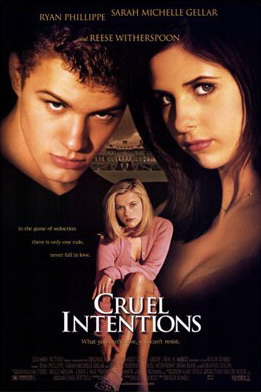
If the plot sounds a little familiar, it may be because it is a retelling of Dangerous Liaisons, a movie I’ve never seen based on a novel I’ve never read.  What makes it dark academia is that it takes place in a private school.  An exclusive private school (but aren’t they all?).  And it does take a dark turn toward the end.  The cad (Sebastian by name) is eventually caught in his relentless womanizing and although the woman he truly loves is a forgiving sort, it can’t save him in the end.  The movie has the fun of double-double crossing and certainly doesn’t paint a very flattering portrait of the rich.  Indeed, Dorian Gray comes to mind as well.

The movie, qua movie, is enjoyable enough.  The acting is pretty good.  I’d seen it described as a thriller as well, and there may be some junior-level thriller moments.  Dark academia, at its best, has some crossover with thrillers, or even horror.  Since the aesthetic appeals primarily to the young, it is perhaps inevitable that it goes gently into that dark night.  I’m trying to get a handle on it because it has captured my imagination.  In many ways dark academia has helped make sense of what has happened in my life.  I love the gothic aspect of the genre.  The few shots of the gothic architecture of Manchester Prep were appreciated, but the movie as a whole doesn’t have much of a gothic feel, beyond the monied privilege of kids who’ll probably never have to do a day’s work in their lives.  Dark indeed.

Unverified

Dear Google Scholar and ResearchGate,

Thank you for listing me as a scholar on your website.  I am pleased that my academic publications interest you.  I am writing to you today, however, about your verification process.  Neither of your sites will verify me since I do not have an email with a .edu domain.  Now, I fully realize that even adjunct instructors are often given a university or college email address.  This is so students and administrators can reach them.  Speaking as a former adjunct instructor at both Rutgers University and Montclair State University, I can verify that such an email address does not verify your scholarship.  It is a means of communication only.  It does not verify anyone (although it may come in handy if you need to contact someone internally).

For large companies with a great deal of resources, I am surprised at your narrow view of both “scholar” and “verification.”  I earned a doctorate at Edinburgh University before email was widely used.  I taught, full-time, for over a decade at a seminary that did not request any .edu emails until well into my years there.  I taught for a full academic year at the University of Wisconsin Oshkosh.  Had you requested “verification” earlier (pardon me, you may not have existed then), I would have been able to contact you from nashotah.edu, uwosh.edu, rutgers.edu, or montclair.edu.  Your choice.  However, since you only decided to begin your online resources after I had moved into publishing, where the emails end in a .com domain, you were simply too late.  The thing about technology is that it has to keep up.

I hardly blame you.  My doctoral university was opened in 1583, long before today’s giants were twinkles in the eyes of the likes of Bill Gates or Steve Jobs.  Scholars used to write these artifacts, called “books” on paper.  They sent them through a service called “the mail” to publishers.  I know all of that has changed.  The fact is, however, that I have published six scholarly books, and several articles.  I am still writing books.  I am simply wondering if you can answer the question of when I became unverifiable because of my email address?  I have a website that details my educational and professional history.  Academia.edu has not asked me to verify myself and my profile there gets a reasonable number of hits.  My question is when are you going to catch up with the times?  Many, many scholars do not work at .edu-domain institutions.  Of course, nobody knows who we are.  Thank you for your kind attention.

Unverified  


Finding Fossils

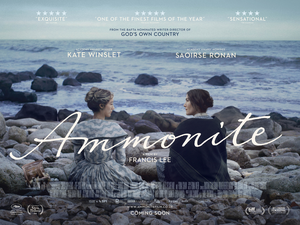
Mary Anning was a real woman.  She made valuable contributions to paleontology in the first half of the nineteenth century, although she wasn’t always credited for her work.  The movie Ammonite is a fictionalized account of her life at Lyme Regis, where she lived and discovered dinosaur fossils.  Being fiction, the movie focuses on how Mary “came out of her shell” by entering into a relationship with Charlotte Murchison (also an historical person, wife of the Scottish geologist Sir Roderick Impey Murchison) who was left in her care when she came down with a fever after trying to recover from melancholy by taking the sea air.  Mary had established a life of independence and wasn’t really seeking relationships; her mother still lived with her and, according to the movie, they had a distant but loving regard for each other.

I was anxious to see the film because it is sometimes classified as dark academia.  Since I’m trying to sharpen my sense of what that might mean, it’s helpful to watch what others think fits.  The academia part here comes from the intellectual pursuits of Anning and the academic nature of museum life (one of her fossils was displayed at the British Museum).  Anning, who had no formal academic training, tried to make a living in a “man’s world,” and in real life she did contribute significantly to paleontology.  The dark part seems to come in from her exclusion from the scientific community, and perhaps in her love for Charlotte, a forbidden relationship in that benighted time.  Of course, this relationship is entirely speculative.

Fictional movies made about factual people make me curious about the lives of those deemed movie-worthy.  Ammonite is a gentle movie and one which raises the question of why women were excluded from science for so long.  No records exist that address her sexuality—not surprisingly, since she lived during a period when such things weren’t discussed.  Indeed, she didn’t receive the acclaim that she might have, had she lived in the period of Jurassic Park.  She was noticed by Charles Dickens, who included a piece on her in his magazine All the Year Round, in 1865, several years after her death.  These days she is acknowledged and commemorated.  This movie is one such commemoration, although much of it likely never happened.  As with art house movies such as this, nonfiction isn’t to be assumed.  Nevertheless, it might still be dark academia.


Recession Value

While reading about recessions (am I getting old, or what?), I suddenly got the creepy feeling that our entire lives are unduly influenced by those who think they know what they’re doing.  Financially, that is.  The Great Depression and the Great Recession were both times of economic hardship because the rules capitalism put in place defined us as being in an era of lowered GDP, or gross domestic product.  Why?  Because there were no jobs.  Why?  Those who hold the purse strings (capitalists) had pulled them shut with all their might.  Then, like magic, depression and recession end and everyone tries to get back to business as normal.  To me this seems utterly ridiculous.  They call economics the dismal science for a reason, after all.  The fact is the rules are made by us.

Society is very complex.  This is one reason that people should really think hard about who they’ll vote for.  Leaders who think it’s all simple inevitably lead to disaster.  If I could, I would switch the world economy away from capitalism.  If I were president and were to try this, it would be a very, very slow process.  It would take generations.  Why?  Because this is a complex system.  Sudden changes don’t last.  Of course, to people who believe the universe took only six earth days to create and that a big flood wiped out all the dinosaurs (or maybe some were on the ark), complexity is anathema.  Of the devil.  Well, as they say, the devil’s in the details.

Image credit: I forgot where I found this; if anyone recognizes it please let me know!

And so we suffer through depressions and recessions.  To those of us with feet on planet earth, it doesn’t feel like much has changed.  We still need to sleep and eat and all that, but some “experts” are telling us why we have to pay more at the grocery store or at the fuel pump, and why those at the top of the pyramid seem to be all right, no matter what happens to the rest of us.  And we let it carry on.  Economic systems are simply a reflection of what people value.  The things we value most cost the most (it’s called supply and demand, AKA capitalism).  The most expensive material thing I own is my house, and truth be told, it’s mostly owned by the bank.  But the most valuable actual thing I own is my mind.  It can’t be bought.  And one thing it keeps on telling me is that all of this business about recessions and whatnot is rather silly.


What the Devil

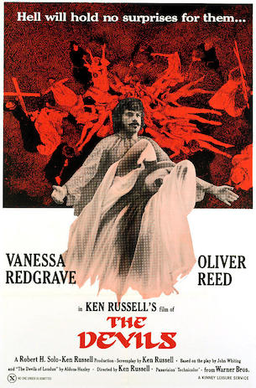
Apart from being one of the most controversial films of all time, The Devils is also devilishly difficult to locate.  For as influential as it was (you can’t tell me nobody in Monty Python saw this before making Holy Grail) it has largely been buried, at least in the United States.  It doesn’t stream and to get a viewable copy you are limited to a Spanish language import DVD and have to manually select English as the language if you want to hear it as produced.  The question is if you do want to see/hear it.  Written and directed by Ken Russell, it is over-the-top.  Chaotic and cacophonous, it’s almost distracting and somewhat boring for about half its run time.  Then it turns incredibly violent and grotesque.  So why did I watch it?  Well, for one thing, it was something I knew I could’ve included in Holy Horror, had I been able to access it then.  For another thing, I’d read about it many times and was determined to find it.

Based on historical events (but stylized to the point of abstraction), the film is about the Loudun possessions of 1634.  Nuns in an Ursuline convent began displaying the kinds of tics that girls would display in Salem some 58 years later.  A local, unconventional priest, Urbain Grandier, was accused of bewitching them and was burned at the stake.  The film makes much of the political machinations taking place, and revels a little too much in the behavior of the nuns.  It also enjoys portraying medieval torture methods and has an almost Clockwork Orangesque feel to it.  Released in 1971, it was given restrictive ratings where it was permitted to be shown, and although some horror has surpassed the excesses in recent years.

Religion’s relationship to horror is a frequent topic of discussion on this blog.  This movie is a textbook example of that.  After my nerves stopped jangling so much, I recollected that Ken Russell was also responsible for Lair of the White Worm.  Another story of debauched nuns and religion gone awry, it made me wonder what Russell’s personal interaction with religion might have been.  He apparently converted to Catholicism and then converted away again.  It certainly doesn’t get much sympathy in his movies.   Father Grandier is somewhat heroic in The Devils, but the overall institution is clearly corrupt.  In some cases religion is the means of fighting horror.  In other cases it is the cause of the horror.  Here the latter is clearly on display, and even that is, unfortunately, over the top.


Remembering Holidays

Memorial Day is an important stepping stone to get through the capitalistic year.  Not only does it mark the unofficial beginning of summer, it’s also the first holiday after the long, long drought of March, April, and nearly the whole month of May.  That’s a long stretch of unbroken work.  My ideal holiday may be one where I could hole up in my study with books and endless time to write, but that kind of situation isn’t really realistic.  There’s a lot to do.  Around these parts, however, getting outdoors to take care of those weeds has proven difficult.  Every day since last Tuesday (nearly a full week, as of today) it has rained at least a little.  Sometimes a lot.  And the temperatures dropped on Wednesday, back to early April levels, as if May were vying for the title of the cruelest month this year.

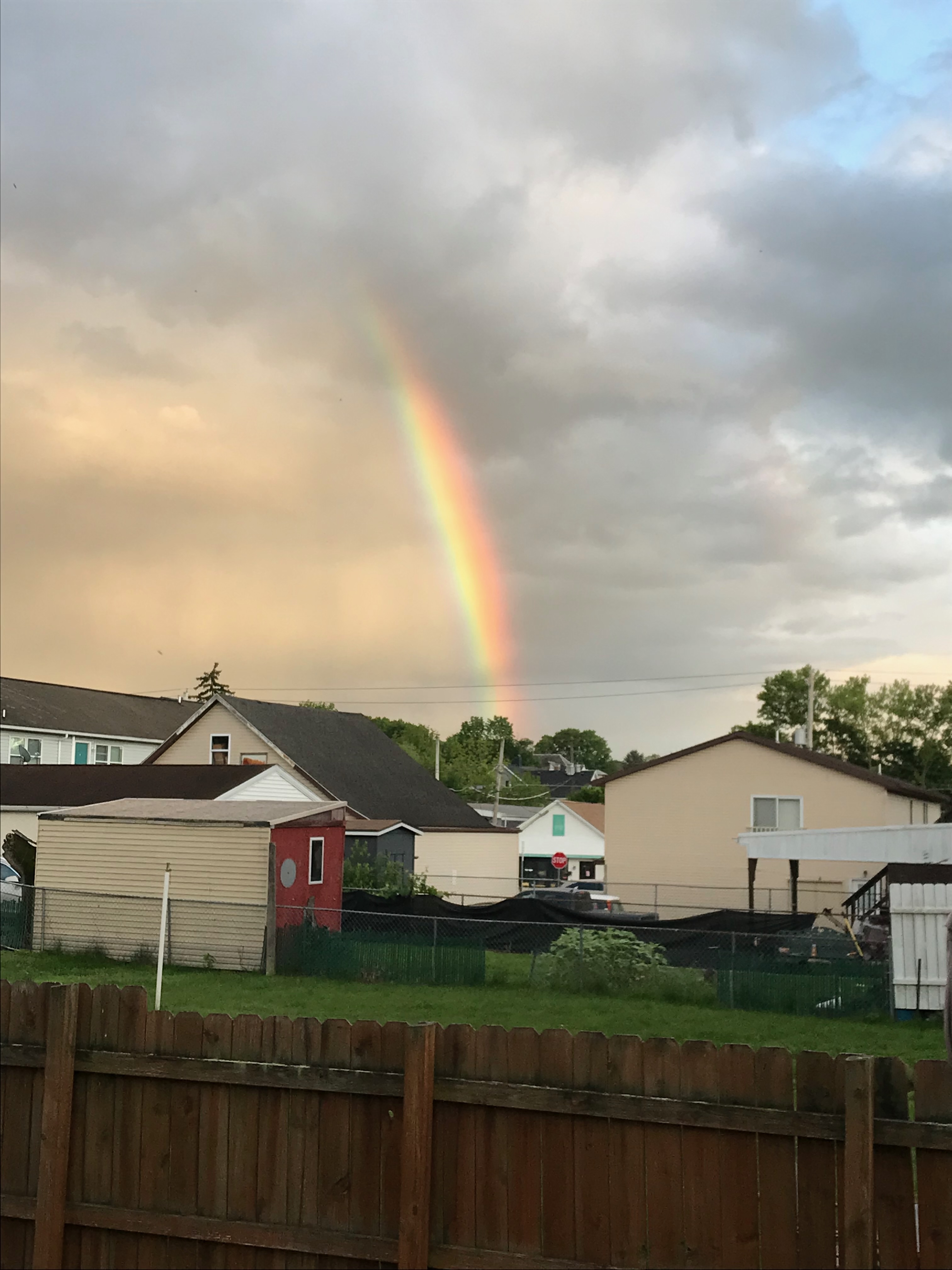
We’ve been making the best of it, getting out to see local attractions while dodging raindrops.  The weeds, I’ve noticed, love this kind of weather.  And I have a visceral reaction to putting on a heavy jacket to go out pulling weeds while watching each passing cloud for a potential downpour.  On the plus side, we have rainbows.  In fact, two nights in a row, about the exact same time, near sunset, we had a rainbow in the exact same spot in the sky.  That’s a sign of hope.  And indeed, the summer takes on a more relaxed atmosphere at work and a few holidays start creeping back in.  Until the stretch of September-October, the second annual drought.  But by then, however, off in the distance I can see the holiday season that starts in November and I know I can make it through to December.

It’s an odd way to live, isn’t it?  Experts talk about how work will be different in the future, but I have a mortgage due in the present, so I step from holiday to holiday, grateful for the time to recover.  With a government trying its best to eliminate benefits to seniors I may have chosen a bad time to reach my sixties.  At least I’m young enough to still pull weeds and push a mower.  (Once the grass dries, that is.)  The main point is not to waste this rare gift of a holiday.  There’s no rain in today’s forecast (but there is for Wednesday, every day through next weekend).  Seeing the sun buoys me up.  And if I can’t have that I can always hope that at least I can have rainbows.


Sunday Wednesday

Being busy people, it took us a couple weeks to watch the eight episodes of Tim Burton’s Wednesday, and I think he’s really outdone himself.  As I mentioned before, I was never a great fan of The Addam’s Family, but I watched it often enough to know the characters and their quirks.   I wasn’t quite sure what to make of the television show.  It had monsters, but nothing really scary.  It was funny but some of the humor seemed beyond me.  I watched it anyway.  I didn’t bother with the movie when it came out.  Then on a rainy weekend afternoon I watched episode 1 of Wednesday and I was hooked.  For one thing, this is dark academia personified.  Exclusive, gothic, school, dark mysteries, secret societies.  It’s all there.  And for another thing, it’s well written and the acting is very good.  And then there’s Poe.

Image credit: Chainwit. This file is licensed under the Creative Commons Attribution-Share Alike 4.0 International license.

(On a side note: I recently found another review of Nightmares with the Bible.  It is my most reviewed and least successful book.  The reviewer agreed with other reviewers that the Poe angle didn’t convince them.  As I told one critic, the Poe angle is a personal one.  Poe was a man, a sin of which I’m also guilty.  And men of a particular stripe feel protective of women.  Maybe it’s one of those biological things we should just get over, but Poe felt that it was poetic and, being a far less intelligent experiencer of that same disposition, I feel it too.  I think Tim Burton might also, for Wednesday seems full of that as well.)

At Nevermore Academy, the morbid, anti-social loner Wednesday learns to accept a kind of friendship from other outcasts.  There’s a town vs. gown aspect as the residents of Jericho don’t exactly love the academy, but they appreciate the money it brings in.  The founding pilgrim, Joseph Crackstone, was a hater of those who were different and tried to rid the world of others not like him (this is important).  Over eight episodes this backstory interrupts into the present and threatens the very existence of Nevermore.  What ties it all together, of course, is Wednesday.  Nearly as gothic as Sleepy Hollow, this Netflix series showcases the aspects of Burton’s vision that I find most compelling.  And the first season was nominated for quite a few awards.  A second season has been approved and I’ll be watching that one, down the road.  I can’t get enough dark academia these days, no matter the day of the week.


Museum Life

Allentown is the third largest city in Pennsylvania after Philadelphia and Pittsburgh.  Here in the Lehigh Valley it abuts Bethlehem and is just a few miles from Easton.  Getting an early jump on Memorial Day this year my family visited the Allentown Art Museum.  My daughter had been there before and let us know that it’s not huge, but certainly worth seeing.  They do have a Rembrandt among their collection, and a few Medieval pieces, including a tapestry that I could swear I saw on a book cover once.  In any case, I would recommend it.  We’re still fighting with rain around here, so it was a great Friday diversion.  We’re museum people, and I’ve pursued creative outlets my entire life.  I like to look at those good enough to be on public display.  As I told my family, when I was young I was curious about art and checked out books from the library on the great masters so that I could learn to identify paintings I hoped some day to see.  And as a bonus, the Allentown Art Museum is free.

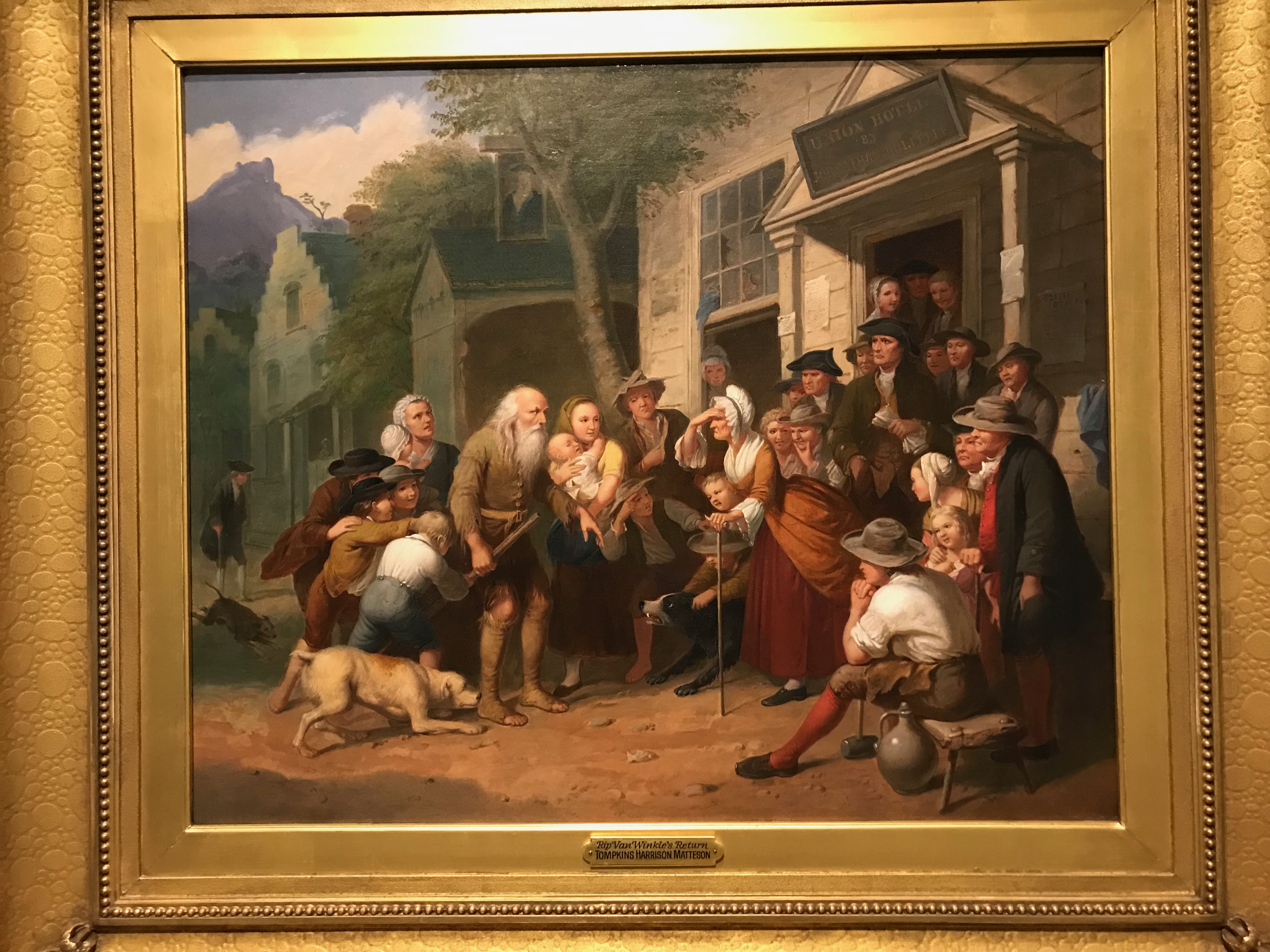
One of the features of the facility is a personal library designed by Frank Lloyd Wright.  The books on display aren’t his actual books (I don’t think), but being a book person I had to look over the titles.  Washington Irving was well represented.  Since Sleepy Hollow as American Myth will be out shortly, I was curious to see if they had The Sketchbook of Geoffrey Crayon, Gent.  This is the book in which “The Legend of Sleepy Hollow” first appeared.  It seems they have all of Irving’s books because I did indeed find the Sketchbook.  Such an unexpected connection was a bonus on what was already an enjoyable visit.  I wandered out into the paintings again and found Tompkins Harrison Matteson’s “The Return of Rip Van Winkle.”  As I discuss in the book, “Rip Van Winkle” is also in the Sketchbook.  Not for the first time, I’d made a personal connection with art.

Visiting art museums always leaves me in a liminal space.  For a while my soul was mingling with those of others driven by creativity.  I’ve made a few art works myself over the years but I’ve really had no training.  I did take a drawing and painting class in college, but I kept none of my output.  I enjoyed making it, however.  My daughter asked why I don’t do more and the issue always comes down to time.  Work takes the lion’s share and now weed control (they love the rain) takes most of the rest.  And writing, of course.  That’s why I need to go to museums.  To become fully human again.


Prior Memory

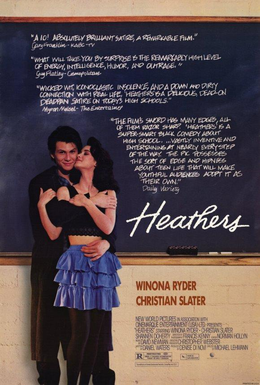
Sometimes I just don’t know where my mind is.  A few months back my wife and I decided to watch Heathers for the first time.  It got a bad rap when it came out but we finally gave in because there were so many cultural references to it that we felt we had to be informed.  Now none of that makes it worth comment.  What does, in what’s left of my mind, is that I was sure I’d written a blog post about it.  I hadn’t.  The thing is, I even thought I remembered some of what I wrote about it.  Uhn-uhn.  Didn’t happen.  So I guess I can trawl my memory and see if I can recollect what I thought I had already said.  Here goes.

The movie is a disturbing and funny look at growing up and its hard lessons.  Everyone said that it glorified suicide, but that wasn’t what I saw.  One person attempts it, and the others are all actually murdered and made to look as if they died by suicide.  Not a lighthearted topic, I know, but the students pretty much all want to live.  J. D. (read into that what you will) is the real criminal.  An outsider with a chip on his shoulder, and who has no problems being (or associating with) a criminal.  Or making others into criminals.  

As with many, perhaps most, adults, I remember the confusion of puberty quite well.  I wanted to be liked in school (I never had many friends) but I was quiet, bookish, and very religious.  Having grown up feeling generally unliked, I found acceptance, for a time, at church.   This movie captures that aspect well—the desire to fit in with a cohort that is particularly hostile (teenagers).

What brought Heathers back to mind after these few months was the fact that some classify it as a dark academia movie.  Dark academia generally has some schooling involved, sometimes directly, sometimes as implied.  There is a natural kind of darkness in high school and into college years.  This is something we may be in danger of losing with universities becoming glorified trade schools.  Not all of life is about finding a job.  The humanities suggest that being human is sometimes enough.  Heathers seems to have aged pretty well, being over thirty at this point.  Some of us took three decades to see it.  And if we feel like we’re losing our minds from time to time, at least now I’ll know I have indeed posted upon this movie.


Friendly Fear

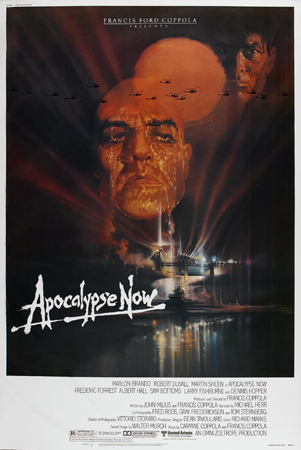
I opened my book Holy Horror with an epigraph taken from Apocalypse Now, a movie I recently watched again.  That quote was from Col. Kurtz: “It’s impossible for words to describe what is necessary to those who do not know what horror means. Horror… Horror has a face… and you must make a friend of horror. Horror and moral terror are your friends. If they are not, then they are enemies to be feared.”  I’ve been thinking quite a lot about how you can make any progress in a discussion with anyone who’s already made up his or her mind (i.e., no matter what you say to them they will not take it seriously.  Think your favorite Trump supporter).  People far smarter than I have noted that the only way to combat this unthinking adherence is to get people to think critically.  That may be correct, but to preserve democracy we need a more assured method in the short term.  That of Col. Kurtz.

Apocalypse Now was based on Joseph Conrad’s The Heart of Darkness.  Both contain a vital truth—fear motivates people.  Democrats have been forward-looking in recent decades, but Republicans run on that fear playbook and it’s very difficult to defeat.  That’s because people are afraid.  It’s important to face fears, but to win elections, you need to seed them.  I know whereof I speak when it comes to phobias.  I was so riddled with fear as a young person that at times I could not leave the house.  At other times even the house didn’t feel safe to me.  I had multiple phobias and difficulty talking to other people.  I’ve grown out of many of these fears, but if I’m honest, I know they’re still with me.  I suspect many other people are also afraid.

Strong men (even if personally weak) appeal to the afraid.  They want someone who can protect them.  I tend to think Democrats think many Americans are better adjusted than they actually are.  You want their votes?  Make them afraid.  I’ve been writing books on fear and its many cinematic manifestations for several years now.  I grew up being afraid of everything.  I don’t advocate creating fear, but when a nation decides Hitler would be better than letting young people read, it’s reached a crisis point.  I do wish progressive political leaders would consider my humble observations.  When afraid people herd together and become the mob with torches.  And just such a mob became the mindless followers of Col. Kurtz.  Just saying.


University Death

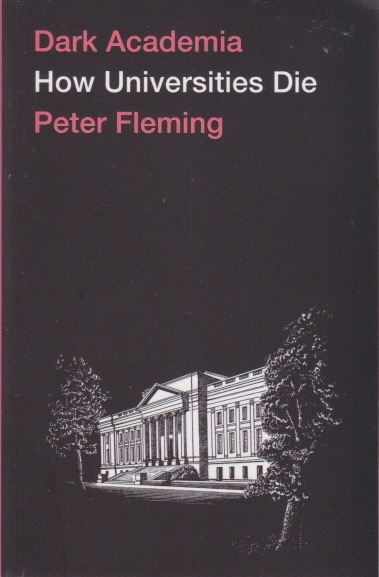
This is an important and thoroughly depressing book.  Despite globalization, I fear that a book from down under might fail to be readily found in the United States, where it’s also needed.  Peter Fleming’s thesis is spelled out in the subtitle.  Dark Academia: How Universities Die.  I’ve read a few other books like this, but I was attracted by the title of this one.  Fleming points out much of what I already knew, but with the stats to back it up, as well as compelling personal stories.  Few people worry about professors.  We’re conditioned to think their lives are easy and carefree.  I doubt they ever were, but since the eighties, when universities started to act like business ventures, the cracks showed in the foundations and their lives grew harder.  Capitalism ruins everything.  Fleming discusses the political maneuvering in the UK and Australia, as well as in the US.  We’re all facing the same nemesis.  Greed.

Politicians began attacking universities likely because they realized that educated individuals can see through the shenanigans that people like Trump, and Reagan and Bush before him, pulled.  They didn’t want alternative voices.  Debate is anathema.  The easiest solution was to make education a business because businesses always want more money.  Now, I’m shooting from the hip here, but Fleming pulls such things together with evidence.  I have witnessed firsthand some of what he describes—living as an adjunct instructor, barely making enough to cover the bills.  At the same time learning the university I was working for had been hiring “managers” (hundreds of deans, associate deans, etc.) but couldn’t afford to hire faculty.  That sports (something Fleming doesn’t address) were allocated far more money than teaching.  Yes, things were bad.

Fleming points, rightly, in my opinion, to neoliberalism as the culprit.  That’s the form of liberalism that’s wedded to free market capitalism while spouting the causes that traditional liberals support—care and concern for all people.  The older I get the more I see that neoliberalism is what the Republican Party used to be.  They’ve veered hard right and since, in America, liberals have never really had a chance to hold power since Roosevelt, they’ve become neoliberals.  Thus began the transformation of higher education before I ever started my doctorate, but I didn’t know it.  I’m no political scientist.  I’m a teacher interested in the past.  And religion.  Having grown up poor, I invested all my scant resources into getting qualified to teach, only to discover that the ivory tower was being sold to the highest bidder.  Dark academia indeed.


See Monsters

I have a soft spot for seventies movies, but I can’t decide if The Sailor Who Fell from Grace with the Sea is horror or not.  I found it on a horror list, and an oblique reference to Lord of the Flies got me interested.  It reminded me, in some ways, of The Wicker Man.  Although based on a Japanese novel, the movie’s set in England.  Two subplots seem unrelated except they happen to the same widowed mother and son.  The son is part of a group of five boys in a private school who have a secret society (echoes of dark academia here).  The leader, although not yet at puberty, is a sociopath who’s very bright and the others follow him.  He declares that a perfect balance (a very East Asian religious outlook) exists that adults simply cannot realize it.  Indeed, adults are bad.

At the same time, the boy’s mother meets and falls in love with a second-mate on a merchant ship.  The boy likes the mate too and feels that they have found a perfect balance.  Thus the two plots come together.  The boys in the club feel that the son has gone soft on their principles, and so to prove he hasn’t they arrange the vivisection of an anesthetized cat.  When the sailor returns, unexpectedly, to try to marry the widow, her son objects.  The perfect balance has been distorted.  The boys decide that the sailor must be treated “like the cat.”  They take him to a distant overlook on a pretense, and drug him.  In a long shot at the end, the boys gather around his unconscious body.  Now, the similarities to The Wicker Man may seem passing, but the idea of human sacrifice is there.

Is this horror or not?  Hard to say.  Most of the movie revolves around the mother’s relationship with the sailor (which the son watches, voyeuristically, through a knothole in his bedroom cupboard.  The secret society is always there, however, and when the plots come together you realize that the sailor will have to be killed.  Like Wicker Man, there’s nothing really explicit here, although Wicker Man does have a horrific ending.  The Sailor only has one by implication.  The leader of the secret society of boys is pretty scary and apart from the widow, parents are pretty scarce in the movie.  I was left wondering what it was that I’d just seen.  I can see why someone would list it as horror, but it had other echoes that I felt might fit better.  It was, however, free for the streaming.


Gothic Novelties

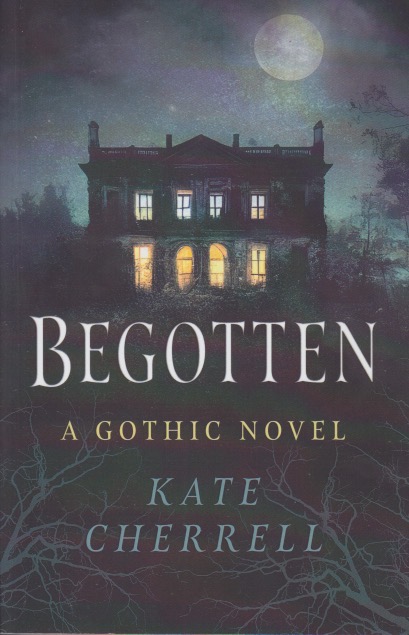
I’m a sucker for a good gothic novel.  Dilapidated houses on the moors, suggestions of ghosts, the kind of encompassing darkness that enfolds you.  Women facing a man’s world just as Victoria took to the throne.  Hints of the supernatural.  So when offered a review copy of Kate Cherrell’s Begotten, I jumped at the chance.  Gothic it is, that I’ll give you that.  Perhaps I’m getting more discriminating in my tastes, but the classics are hard to beat.  I’m particularly fond of Jane Eyre and Wuthering HeightsBegotten’s not up to that level, of course, but I found the pacing slow and the narrator difficult to sympathize with. It has the kind of ending that sets me off, as I’ve written about before. (No spoilers here!)   Given that I’ve never succeeded in having a novel published (not for not trying), I am impressed.  

Novel writing is difficult.  Let me qualify that—good novel writing is difficult.  It’s more than simply stringing a story out over two-hundred-plus pages.  There are so many things to keep in mind.  That element you introduced on page 50—was it necessary?  Does it show up again in some significant way?  Secondary or tertiary characters that you introduced; will readers wonder about them after they depart the story?  Have you given them too much emphasis and therefore you need to provide them with a proper send off?  Do the characters sound like they fit in the time-frame you’ve chosen into which to set the story?  The history element is crucial for me.  A book set in the early nineties that has characters using the world-wide-web is suspect.  Or in the case of a gothic story, did Victorians express themselves that way?

I’m struggling writing my current novel.  I’ve completed seven others, some of which have hung together better.  A wise man once told me that to write a novel you should write 100,000 words and throw them away.  Or maybe it was 200,000.  Or five.  In any case, I passed that benchmark decades ago.  The novels I think worth publishing are those I’ve gone over a few times, polishing and editing as I go.  Maybe someday they’ll be ready to face the blue pencil, but until then I keep working at them, making them as worthy of a reader’s time as possible.  Not all writers do this kind of intensive revision.  Tales with unreliable narrators are often very hard to pull off convincingly.  But I know what it’s like to have a story living inside you bursting to be spilled on paper.  And if it’s gothic, that can cover a host of sins.


Eye Eye

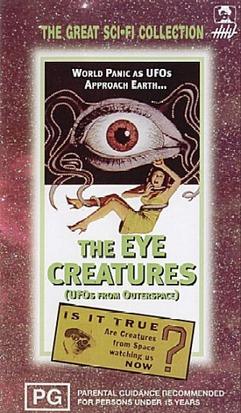
When trying to be conscientious about not spending too much money on movies there’s always the risk of seeing something cheap.  In the case of The Eye Creatures, not only was it cheap, but it was also a throw-back to childhood.  I remember seeing this one in my younger years, and, not yet old enough to be critical, loving the costumes.  Rewatching it as an adult, where some critical faculties remain, reveals it to be a bad movie.  Poorly written, poorly acted, and poorly financed, it ticks all the boxes.  It’s actually a remake of an earlier American International Pictures film, and AIP wasn’t known for its lush budgets.  To be fair, the film is supposed to be a sci-fi horror comedy, but the comedy isn’t that good.  The unintentional gaffs are.

So, the Air Force is concerned about keeping flying saucers secret.  When an “unfriendly” one lands where the teens all go parking, the Air Force investigates while the eponymous eye creatures terrorize the local kids.  Specifically, they seem bent on revenge against Stan Keyton and his girl, because they ran over one of the creatures.  Keyton gets arrested for manslaughter because the creatures substitute the body of a drifter they killed for the corpse of their own comrade.  The police don’t believe in aliens, of course, and the Air Force denies everything.  Keyton and gal decide, after discovering the the eye creatures explode when exposed to light, to round up the necking kids and wipe out the aliens with their headlights.  They figure nobody will believe them anyway.

Some movie monsters stick with you for decades.  The eye creatures are one example of this.  Simply seeing the movie title reminded me of them, although the only plot point I could remember was that they exploded in the light.  I didn’t recall all the voyeuristic watching of teens making out that the Air Force officers did.  Or the tedious revisiting of the Old Man Bailey character.  One of schlockmeister Larry Buchanan’s films, it was released the same year as his other cheap childhood favorite, Zontar, Thing from Venus.  As much as people like to make fun of makers of such cheap movies, Buchanan gained recognition in the New York Times (as have other makers of schlock such as Roger Corman and William Castle), so there is something to these movies.  For one thing, those of us who grew up in the sixties remember them.  And, if we also remain cheap, we can see them again as adults, and relive a bit of cinematic history.


Little Things

Those on anti-clutter campaigns (whose lives I can’t imagine) claim that we have too much stuff.  That may be true, but when you reach a certain age these realia can serve to remind us where we’ve been.  How we’ve become who we are.  We moved to our house in a whirl.  Neither my wife nor I had enough vacation days to take any time off and we had to move 55+ years of stuff over a weekend.  Lately I’ve been going through some of the boxes of little things you keep.  They were generally mixed in with papers I didn’t have time to file, bits of hardware, and a few things I’m not sure why I kept.  In the archaeology of my life, the layer labeled Nashotah House retains a prominent place.  It took many years before I could look at my little Nashotah House things without being overwhelmed by emotion.  Nearly twenty years on, I hope I’m beginning to get over it.

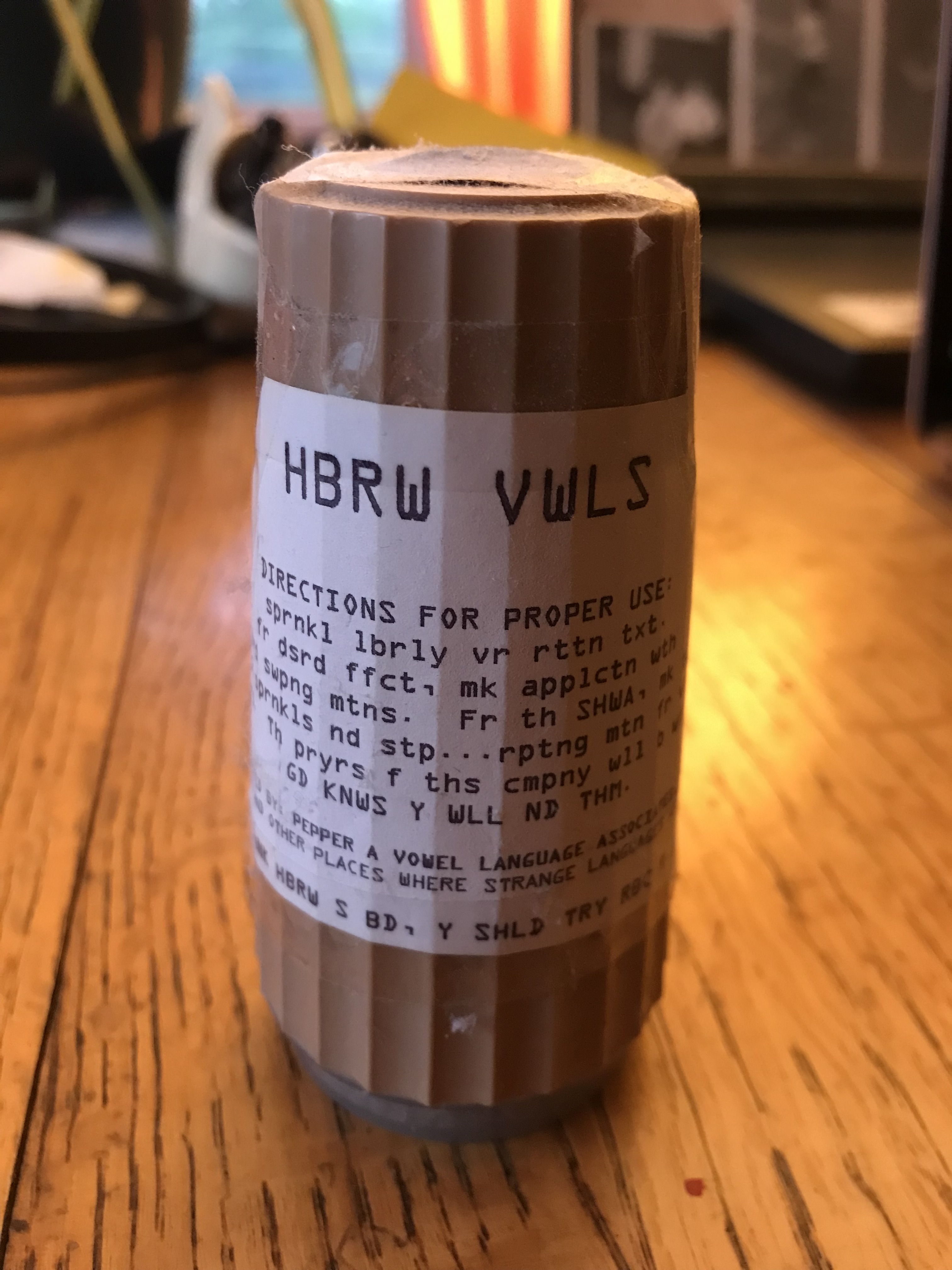
One of the little things I unearthed was a pepper shaker.  One of my students (now sadly departed) had made a label to express her frustration and humor at trying to learn Hebrew as a mature woman.  I’m probably now the age she was then.  This little artifact has been with me through a great number of momentous changes in my life.  It can still bring a little smile, however.  I see it and I remember Judy giving it to me with a laugh.  I probably shared it with the class.  Even now it has two-decade-old pepper in it.  The declutter experts would say it belongs in the dumpster.  They’re wrong.

Nashotah House was the only job on offer following those intense Edinburgh years.  As all of these things recede further and further into the past, they become more valuable.  No matter how small, these objects played a part in what I remember and rubbed me in a way that influenced my shape.  I don’t know what that final shape will be, but I jealously guard my little things, these boxes of years.  They are points of contact between my life and those of others.  I found many other pieces of myself in these miscellaneous boxes.  I know that someday, all things being equal, this stuff will probably end up in some landfill somewhere, waiting for some future archaeologist wondering what realia we kept back in the years when the world went insane.  And if s/he is really brave, they might even try some of the pepper on their future lunch.