Halloween in December

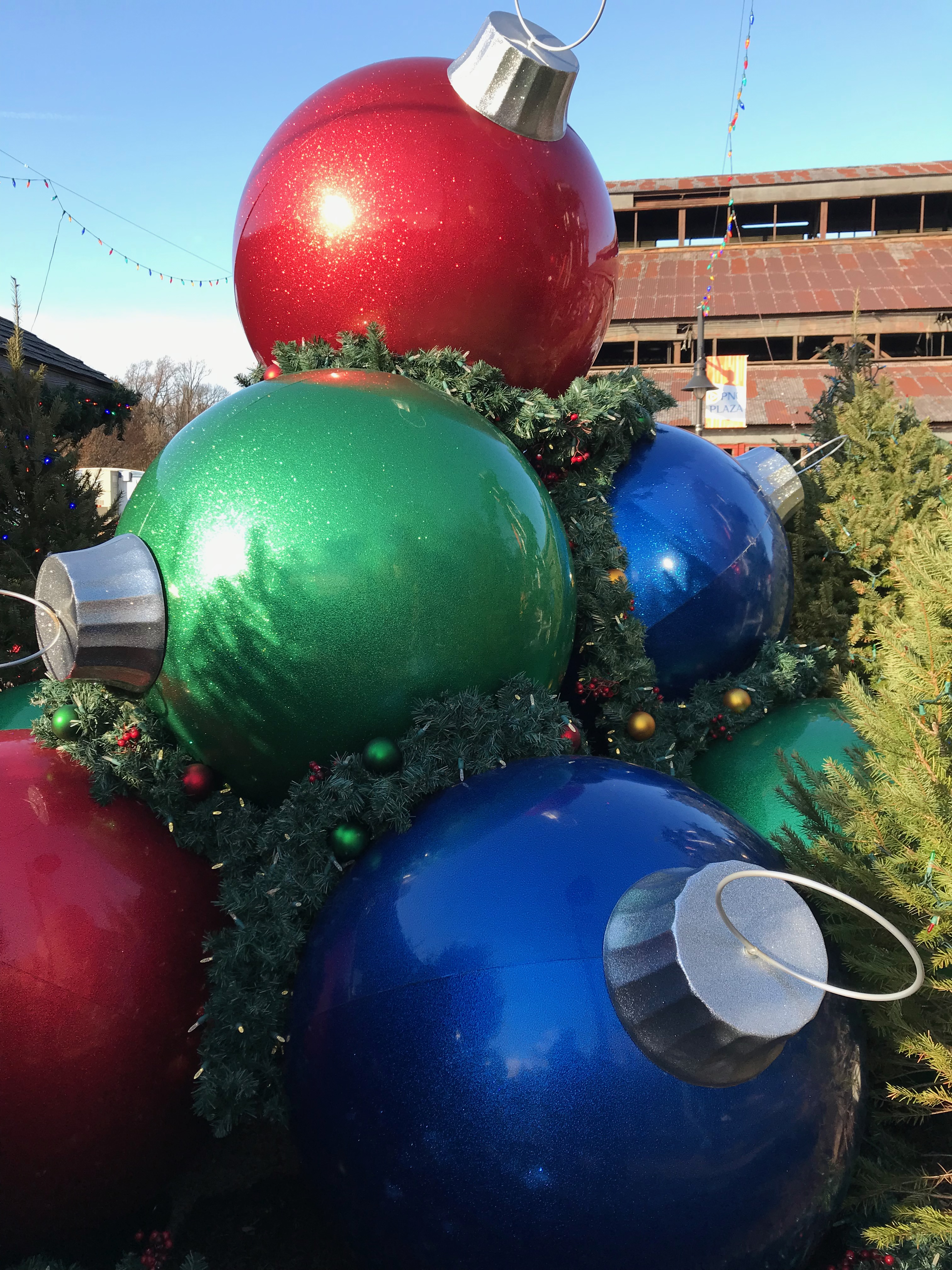
The wind was frigid.  We were still in the cold snap that layered the northeast in its gelid blanket for the first part of December.  We had advance tickets for Christkindlmarkt, a Bethlehem tradition.  As we wandered through the tents I was thinking of one of the few Facebook groups I follow, Halloween Madness.  Most of the posts are repurposed from the internet but the last few weeks, since Thanksgiving, the offerings have been blending Halloween and Christmas.  Most people don’t stop to think how closely related the two holidays are.  (I devote a chapter to Halloween in Sleepy Hollow as American Myth, where I explore this connection in a preliminary way.)  But in this bleak December—we’ve seldom seen the sun for more than a couple hours at a time since the aforementioned Thanksgiving—my thoughts emigrated towards horror.

For those of you who’ve never been to Christkindlmarkt, it’s a germanic themed market consisting of four (or more) large tents, full of vendors.  Many of them are Christmas themed, but not all.  Those that are Christmas themed tend toward the Currier and Ives version of the holiday, but some consider the more ghostly side of the season.  Although I didn’t see any booths explicitly devoted to horror themes or monsters, a few of them had a bit of this aesthetic to them.  I’m no fan of capitalism, but I have to wonder if this isn’t a missed opportunity.  I think there’d be some fans.  I do enjoy Christmas for its symbolism and optimism and coziness.  I really do.  But when I have a few free moments in the holiday season I sneak in reading a scary book or watching a horror movie.  There is a connection, but you have to study the holidays to see it.

I fear that this year I was trying pretty hard to preserve any bodily warmth between the tents and didn’t really have much time to think about it until the next day.  I’m always mindful that Edgar Allan Poe’s “The Raven” is set in December.  And that both Charles Dickens and M. R. James associated Christmas time with ghosts.  I suspect most people, however, prefer the cheerful, happy side of the holidays.  I don’t blame them.  Life can indeed be harsh, as harsh as this windchill, for much of the rest of the time.  There are some of us, however, who do find a little lift by peering into the darker corners, even at this festive time of year.  And with natural light in such short supply, there are a lot of shadows about this chilly December.


No FOMO

Some fringe websites (of course I do!) present the case for reincarnation via past lives memories, particularly of children.  You see, adults hear/read/see a lot of things as the years weigh down and we might misremember something we encountered somewhere else.  Children have less exposure and therefore make more credible witnesses.  I know perfectly rational adults who believe in past lives as well.  I must confess, however, that this is one of the scariest things I can imagine.  I’m glad to have lived, most of the time, and I’m not in a hurry to end it prematurely, but the thought of doing it all over again is terrifying.  Even if it’s a different and better life.  You see, I entered life with a lot of questions and I have to say, over six decades later, I’m still uncertain about many of the answers.

If reincarnation means starting from scratch all over again, that scares me.  I’ve spent much of my life building walls to protect myself from the things that hurt me.  I avoid overly risky activities.  I handle sharp objects with great care.  I spend quite a bit of time by myself.  I don’t like being hurt.  That may be one reason that I watch horror movies.  They help to desensitize that particular phobia.  Still, I have to think of all the hard lessons I’ve learned in this life and have to think about how I might improve upon it all with another go-round.  In religions of East and Southeast Asia, where belief in reincarnation is common, the idea is often that you want to break out at the end.  Nirvana.  The place were you don’t have to queue up again.  Even Plato thought reincarnation might explain a lot.  But the very thought makes me feel weary.

If you could be rebooted with the knowledge of your previous life intact, that’d be one thing.  The idea of one day finding myself in another mother’s arms, not knowing anything, learning each microsecond, well, it’s frightening.  My parents weren’t educated people.  They taught me the blue-collar hard knocks of life (which I don’t want to have to learn again).  The white-collar hard knocks are sometimes even worse.  I tried to live this life as a clergyman, but that never really panned out.  I sometimes wonder if the Abrahamic religions/monotheistic traditions, didn’t develop Heaven and Hell out of fear of reincarnation.  The idea certainly makes sense, in some contexts.  And it’s one of the scariest things I can imagine.


Final Rites?

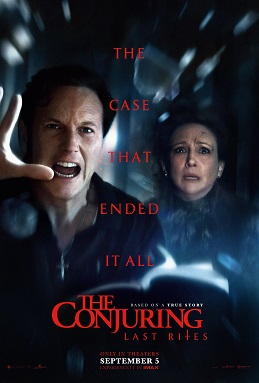
The Conjuring: Last Rites, aka The Conjuring 4, is more of the same.  Reusing tropes that have ceased to be scary, it draws Annabelle back into the story and sets up the possibility of future films by getting the Warrens’ daughter Judy involved.  It is kind of a downbeat to pick up the Smurl haunting since this is widely considered to have been a hoax.  And the movie pulls out all the stops.  Levitation, upside down crosses, and demonic faces suddenly appearing have all been done before.  The conceit that a demon is using ghosts to torment the Smurls is familiar from earlier films in the series.  The franchise, however, remains quite Protestant despite its Catholic trappings.  The somewhat heavy-handed suicide of Father Gordon once again demonstrates the lack of deep comprehension of how Catholicism operates.  It is meant to parallel the suicide that starts the movie, but really adds nothing to the plot beyond shock.

The film tries to do too much and loses any pathos among the Smurls because of the strong subplot, if not the main plot, of the threats against Ed and Judy Warren.  To do this they had to make the real life Judy much younger than she is in real life and cast the unnamed demon threatening the Smurls back to an attack on Lorraine, while pregnant with Judy, in the 1960s.  This allows for a Stranger Things aspect of the 1980s for the action.  It also strangely misrepresents Pennsylvania.  The script seems to presume West Pittston is near Pittsburgh (it’s not, but rather close to Scranton) and it shoots the location in England, obviously for cinematic reasons.

There’s a lot of insider knowledge presumed here—you need to know the fictionalized backstory the series has been building up over eight films.  This comes to a head in the revisiting of actors from the past Warren cases at Judy’s wedding.  Perrons, Hodgsons, and a Glatzel attend, valorizing the often controversial work of the Warrens.  (They were ejected from the Perron house and visited the Hodgsons for maybe part of a day.)  The other movies in the series tend to hang together better but the lack of deep understanding of Catholicism remains perhaps the largest hurdle.  Interestingly, at the box office this has been the highest performing film in the franchise so far.  Since the Conjuring universe is encroaching on 3 billion dollars (2.7 at the moment) gross profit, clearly it strikes a chord.  And there’s every reason to suppose, prequel or sequel, it’s not really the last rites after all.


Books and Mormons

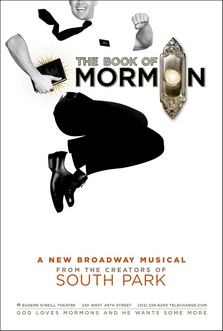
Some time ago we went to see Book of Mormon on tour.  I really knew very little about it other than it was consistently praised as being very funny.  I’m always a little concerned about poking fun at anyone else’s religion because I know people take their beliefs very seriously.  As I reflect on the show (which was quite funny) it seems that it wasn’t so much poking fun at the Latter-day Saints so much as it was poking fun at religion itself.  That’s less problematic as it’s not singling anyone out for ridicule.  It’s a system that’s being made light of.  Or at least any religion that is an effort to convert others.  There’s a kind of violence to it.  And if Book of Mormon is about anything, it’s about missionaries.  Amid the laughs it makes some valid points—trying to convert people without first trying to understand their culture is a fraught activity.

People want religious specialists who thoroughly understand their tradition.  I can say from experience, both as an erstwhile seminary student and a seminary professor, that the time given to become an expert is insufficient.  The older I’ve grown the wider the perspective I’ve tried to step back to see.  To be an expert on a religion really requires some facility with understanding other religions.  To understand, say, Methodism, you need to understand Anglicanism.  To understand Anglicanism, you need to understand Catholicism.  To understand Catholicism, you need to understand early Christianities.  To understand early Christianities, you need to understand Judaism.  And so the widening concentric circles go.  Nobody can be an expert in all of them, and each of these religions mentioned has, in its own right, sub-specializations that have their own experts.  Who has time to learn the religion of those they intend to convert?

Any religion that makes supernatural claims (and many of them do; it’s their nature) makes extraordinary allegations.  Those allegations, when examined closely, reveal some improbable elements.  Trey Parker and Matt Stone, two of the authors (most famous for South Park) apparently said that they had no intention of making fun of anyone’s religion and a spokesperson for the Latter-day Saints indicated that no real offense was taken, acknowledging that it’s parody and parody is only offensive if it’s taken seriously.  Many religions have thin skin when it comes to parody or satire.  The serious part is that some religions, in real life, take conversion of all others with a zeal that could (and does) become dangerous.  Still, this musical is very funny, as long as it’s not taken too seriously.


Thanksgiving Reentry

One of the facets of attending AAR/SBL that I’d forgotten is how international attendees marvel at American Thanksgiving.  While it is far too focused on food for my liking, it is nevertheless an oddity among late capitalism’s sops.  I’m slowly becoming acclimated to the 9-2-5 environment I so desperately wanted to avoid in my career, but I’ve noticed that, at least in my case, the three publishers for which I’ve worked have this in common.  What is “this”?  The only four-day weekend in the entire year is Thanksgiving.  Probably that stems back to the fact that it falls on a Thursday and employers probably don’t want bloated, food-comatose employees trying to keep awake on Friday, and failing.  Perhaps there’s also the kinder motivation in realizing that by this point people have been working hard for many months and the US has comparatively few paid holidays.

I’m thankful for being home after the conference.  My trip to Boston underscored how much of a hermit I’ve become.  Afraid of crowds because of Covid, and not having ready cash as a result of being scammed, staying home has become a comfortable idea.  Being with others, I was glad to find, provided stimulation.  There are colleagues, both in publishing and in academia, that I look forward to seeing.  I’ve been slow to admit, I suppose, that my ouster from the latter is indeed permanent.  It’s wonderful to see friends who remember me when.  Looking back, I was very naive, even as a professor.  And I see many who, pardon my saying so, still are.  Unless you’ve been in the business world where a four-day weekend is a big deal, living in the ivory tower shelters you from much.

So I’m still in the “reentry phase” of conference recovery.  Although I was thankful to have been able to travel to Boston by train, getting home on a rainy night with heavy New Jersey traffic was a test of endurance.  In my hermit’s life I drink a lot of water and even rehydrating after shorting myself for five days takes an effort.  I’m thankful for the opportunity to have been in New England again.  And for friends on both ends of the trip who appear to welcome me for what I am.  What I’ve become.  Even though sleeping in a luxury hotel where the thermostat isn’t kept quite as chilly as we can afford to keep it at home, I’m thankful to sleep once again in my own bed knowing that there is a wider world out there and I can still function in it.


That Was Quick

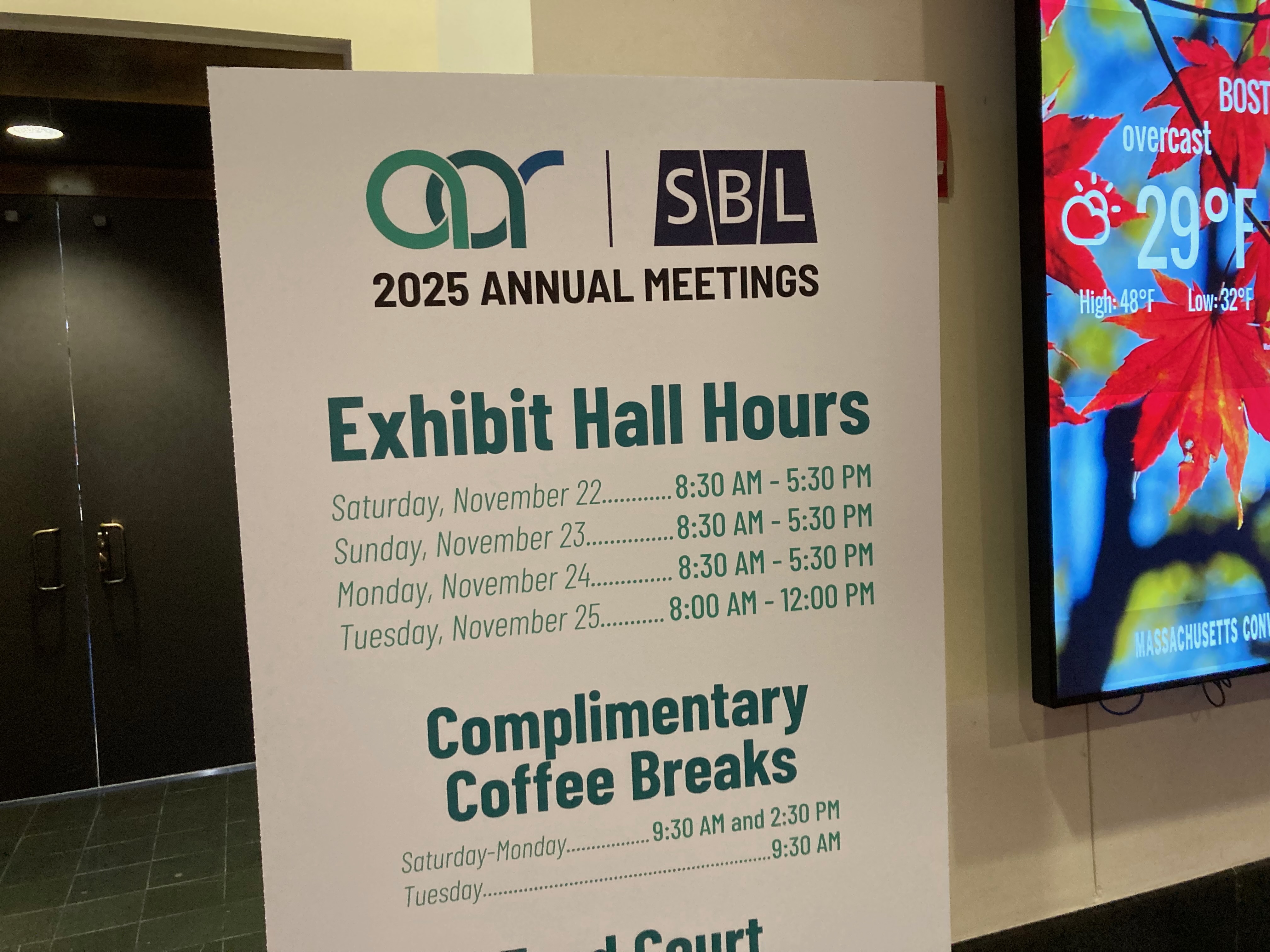
It happened when I wasn’t looking.  If you’re a regular reader you’ll know that I’ve been in Boston since Friday for the AAR/SBL Annual Meeting.  This is a work event for me and I’m pretty much in meetings from 8:30 (or earlier) to 5:30 (or later) each day.  I always come home with “conference voice”—I can barely speak until Thanksgiving.  In any case, while I was distracted in Boston this blog slipped past a milestone.  At some point over the weekend I surpassed a million hits.  Given how rare large numbers are in my life, this is kind of a big deal for me.  I know websites that get attention and critical acclaim hit the million mark within months, or even weeks.  Still, at the ripe old age of sixteen, I’ll take it.  And I’m very grateful to any and all of you who’ve taken a moment to read my musings over the years.

During the conference I was talking to a friend who’s become a celebrity on TikTok.  I also spoke to another friend who’s become a more traditional media darling.  They both outshine me by orders of magnitude.  Attending events like this is always an humbling experience.  I’ve managed to hang around since 1991, with a few gaps, and although it’s always a grind to get ready and get myself out the door, I always walk away amazed at how much so many people have achieved.  Mine is not the only story of a first-generation college student finding a place in the professional world, even if it may not be exactly the place I’d hoped for.  I’m in good company.  I do suspect that most of my readers are not people from this venue.  If I’m wrong, please feel free to comment to let me know.

Mostly since being here I’ve been musing over Edgar Allan Poe and worrying about the traffic I’m sure to encounter once I get off the train and have to drive home during rush hour in New Jersey.  But I’ve also been listening to the stories of friends and colleagues.  They may think they’re pitching me their latest book, but what I’m hearing is their story.  That’s perhaps the most wonderful thing about conferences.  Being distracted enough not to notice when good news creeps upon you.  I know blogs are old fashioned and generally considered outdated.  That describes me as well.  But it warms my heart that so many viewers have stopped by.  My profound thanks to you all!


Boston’s Poe

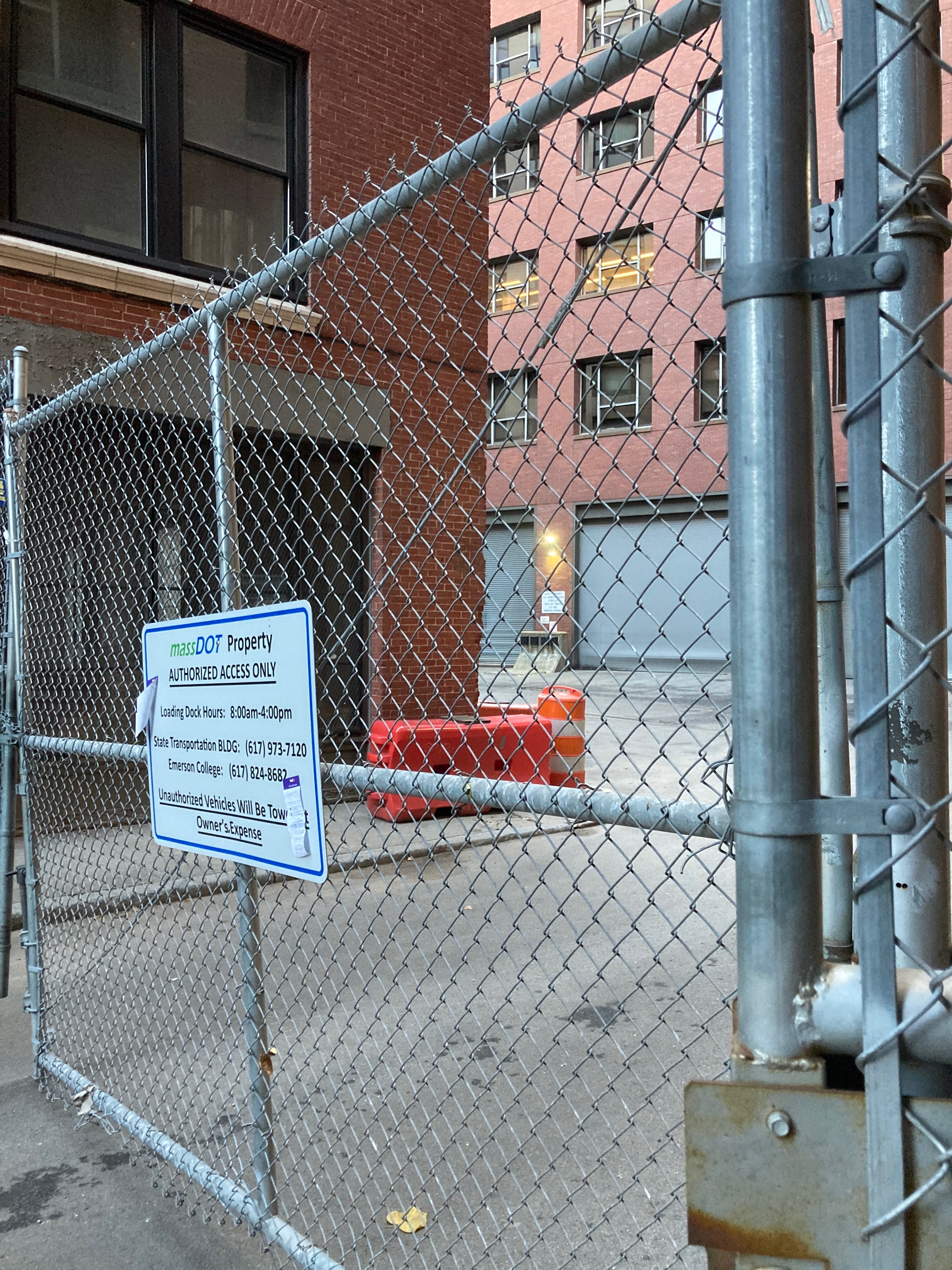
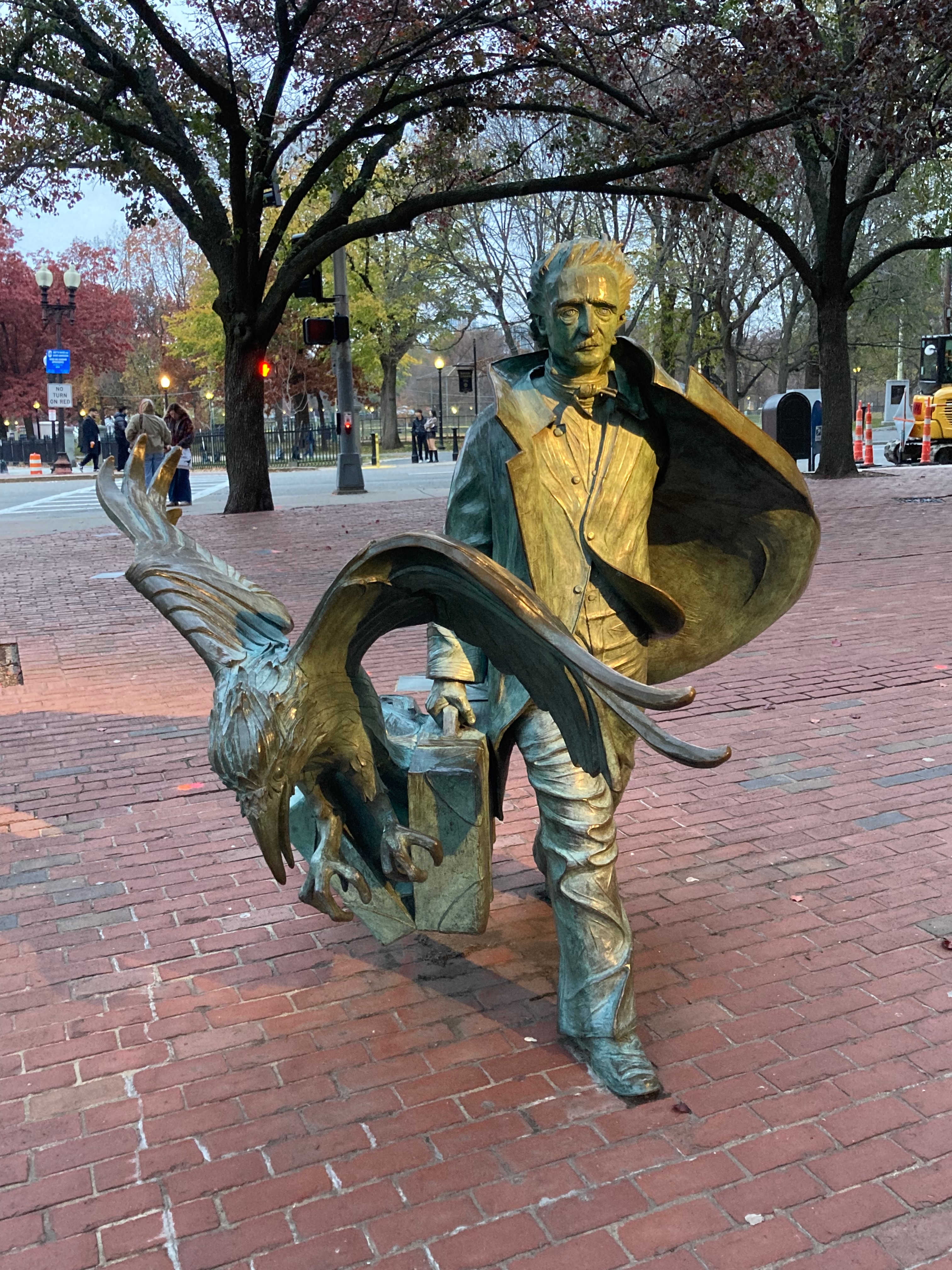
Among my parasocial relationships, the strangest are those with people long dead.  Poe is among them, and, I suspect, this is probably a common thing.  As I age and find it difficult to muster the energy to attend large meetings with lots of people, the one factor that excited me about this year’s AAR/SBL, apart from being in New England again, was meeting Poe.  Now, I know that “Poe Returning to Boston” isn’t actually Poe himself.  But I do believe that places retain something of the essence of what happens in them.  Poe was born in Boston, on Carver Street.  The building itself was demolished some time ago.  I set out to see the site yesterday morning before the conference began, only to find that it is now fenced off, having been acquired by MassDOT.  As I stood there, wondering, fearing, it occurred to me just how much of a role pilgrimages play in our lives.

I’ve written about my SBL experiences before on this blog—look at my November posts for many of the years I’ve been doing this—but Boston is by far the most personal.  Part of it is certainly the fact that I lived here for about three years, but Poe is definitely part of it too.  As I went to do an uncrowded photo essay of Stefanie Rocknak’s statue, although it was quite early on a Sunday morning, and also quite chilly, I wasn’t the only one there.  A couple came along to pose with Poe.  When I took my initial photo (on my Saturday morning post) I had to await a different couple consorting with Poe.  I know this isn’t Poe, but it has come to represent his presence is my favorite city.  The mingling of emotions was strong.  

The sign designating this as Edgar Allan Poe Square is faded and weather-beaten.  I can imagine that local politicians have headier issues with which to wrestle, beyond replacing an aging sign for aging tourists.  And having read J. W. Ocker’s Poe-Land, I know there’s a bust of Poe in the Public Library now.  I walk by it each morning and evening, but the conference schedule keeps me out.  Poe himself was no great fan of Boston but this is where the world first met him.  I know that I should get my head in the game of academic conferencing, but I’m a little distracted by the presence of a friend I never met.  And breathing the rarified air of New England.


Old School

How often do hotels refurbish or do they all look the same?  I met someone in the lobby of a hotel in which I had stayed, okay, 26 years ago.  Nothing about it looked the slightest bit familiar .  Look, I grew up poor and only remember one hotel from before college (we never stayed in them)—the one I remember was a place we stayed on a family trip to Washington DC.  Ironically, I had a stuffed elephant toy with me on that trip.  With the career upgrade to professional and conference attendance, stays at hotels became more common, although they’re still somewhat infrequent.  Conference organizers entice with luxury hotels in major cities.  Some remain in memory.  Most don’t.

I know hotels pay a lot to decorate and brand, yet the places of the monied seem anodyne.  This hotel could be just about anywhere and will eventually blend into that haze of places somehow very alike that cost many hundreds of dollars to stay.  I might’ve stayed here before.  Maybe not.  This lobby doesn’t look familiar but the street outside does.  When I stayed here in 1999 [check] my wife and daughter were able to come.  Not being an editor, we’d been to the New England Aquarium that day and my daughter wanted a seahorse rubber ball as a souvenir.  On the way to this hotel she dropped it and it bounced into Tremont Street.  In a poor object lesson, I ran after it.  I wasn’t hit by a car, but my doing so traumatized my daughter enough that she still won’t talk about it as an adult.  That’s how I know we stayed here before.

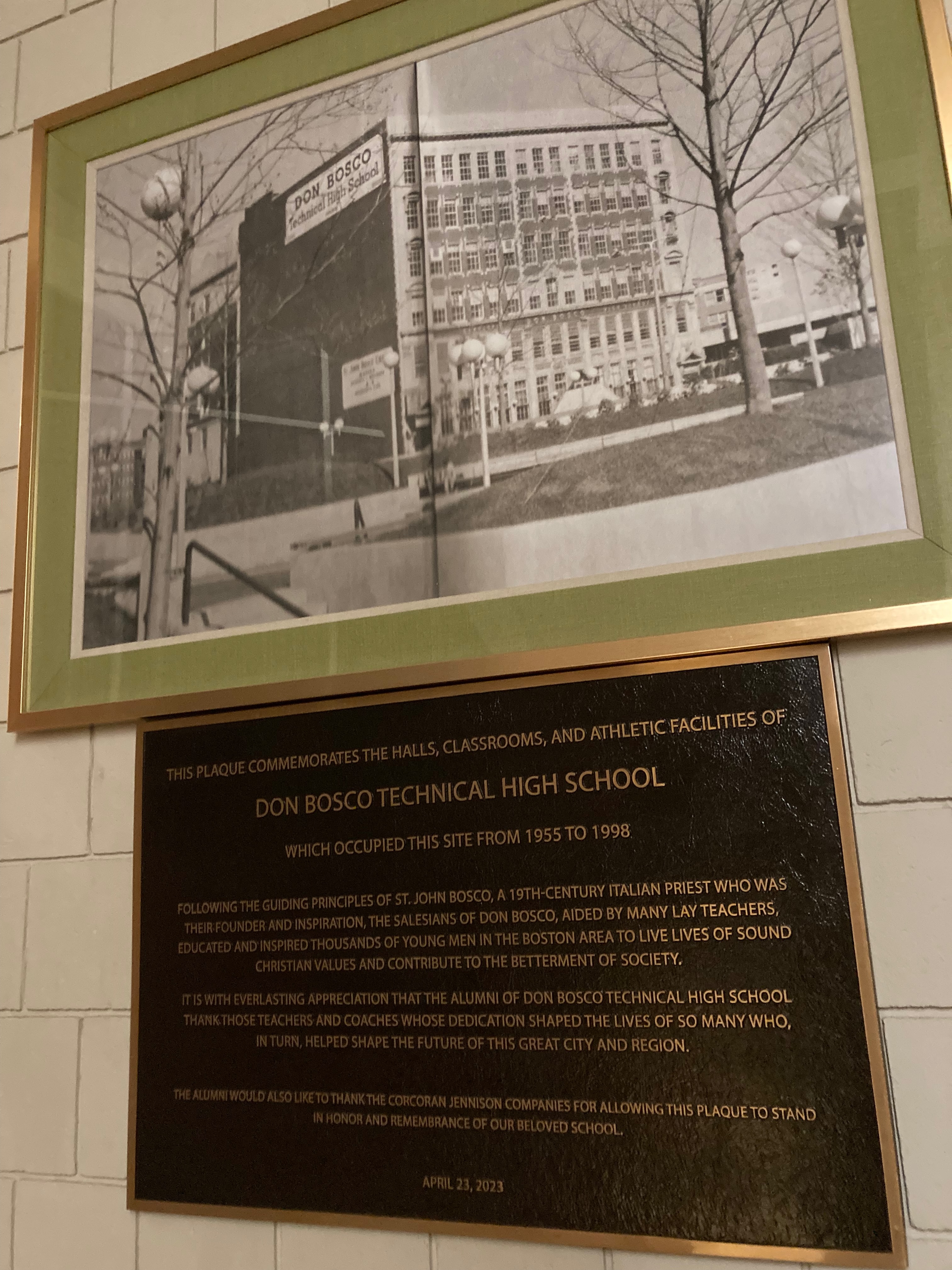
When I visited Boston for work I 2012, I stayed in a hotel I remember but whose name I do not.  It’s never been a conference hotel or I’d choose it.  It was a bit run down, but it had character.  I don’t even know if it’s still there.  Cities change.  Some parts of Boston are unrecognizable since I lived here.  Even the hotel in which I’m staying (which is nice enough, except for the loud music that suddenly starts at 2 a.m.) used to be a school.  I suppose that’s appropriate for a hotel used as an educational conference venue.  Generations of young people were once educated where I’m trying to sleep as the room shakes with someone else’s rock beat.  I may remember this hotel as a place where sleep fled, or I may find it fading into that space where all conference hotels merge even as a poignant thought arises that nothing ever remains the same.


Boston Bound

Honestly, I’ve reached a stage where travel seems quite a burden.  I’m a creature of habit and I haven’t had to interrupt that habit for three years now.  I missed the last two years of the AAR/SBL conference due to a variety of issues.  I’m pleased that this meeting is in Boston, a city of which I have fond memories.  Still, getting there from here isn’t as easy as you might think.  It’s simple enough to catch a direct train from New York or Philadelphia, but I don’t live in either.  To be there in time for my meetings later today I have to catch a fairly early train.  That’s not a problem; I’m an early riser.  To get to a station where a car might safely be left for four nights is a bit more difficult.  It involves an hour’s drive no matter where you end up going.  I’ve driven in Philly enough to know that I don’t like driving in Philly.

Although Allentown is the third largest city in the state, there is no train service from it to the Amtrak lines that lead up and down the coast.  So I’ll be driving a while.  Once on the train at least I won’t have to worry about traffic.  At least for a few days.  In Boston I wasn’t able to get into one of the close hotels.  In warmer months that wouldn’t be much of an issue, but November in Massachusetts can be chilly.  I remember that from living there.  There are shuttles from my hotel to the conference center, but I like walking Boston.  It brings back memories.  Beantown is one of those places that many people fall in love with and want to stay after they get there.  Although I lingered three years that didn’t seem enough.

Photo by todd kent on Unsplash

I was a young man when I moved to Boston.  Looking back, I knew so very little.  Almost as little as I know now.  For this conference, I’ve stayed in this same distant hotel in the past.  It’s in a part of town I’d never explored as a student.  It isn’t far, however, from Edgar Allan Poe Square.  I’m hoping the weather allows for some photographic opportunities around there.  The conference itself, in my more familiar Back Bay, is work.  Not much time to relax and see the sights.  Still, I know that once I get there I’ll again feel the old attraction.  It happens every time I go.  Even it means a drive and a train ride into late November.


Migration

Since the American Academy of Religion and Society of Biblical Literature annual meeting (AAR/SBL) is coming up soon, I got to thinking about my experience of the event.  I went to some memorable meetings and missed a few for various reasons.  I’m at the point where I don’t really crave attending anymore, but when I should go, I do.  My first experience was in 1991, in Kansas City.  I flew back from Edinburgh for that one.  It was the last time it met in Kansas City.  It was obvious, however, that this would become an annual pilgrimage for me if I ever landed in academia.  My first couple of years teaching were part-time with a full-time load of courses but Nashotah House had some faculty development funds to help pay my way.  My wife would go and we’d stay with friends whenever possible.  It became an academic addiction.

I skipped the year my daughter was born, but when AAR/SBL met in New Orleans we drove down from Wisconsin.  In 1998 I attended the infamous meeting at Disney in Orlando.  Then in 2000 we met in Opryland in Nashville.  This was an experimental phase, I’m guessing, but themed locations weren’t popular with serious scholars and soon we were back to major cities without theme-park vibes.  Having lost my toehold in academia, I missed the 2005 meeting in Philadelphia, but was back for the Washington meeting, representing Gorgias Press.  The three-year separation that started in 2008 I missed, except for the first lonely year in Boston.  I was back for San Francisco in 2011, working for Routledge.  Two years later I was in Baltimore, staying off site, with my current employer. I drove down for that one.

In 2018 I missed the Denver meeting because of a snowstorm panic in Newark, after sleeping the night on the airport floor.  Then the pandemic kept me away for a couple of years, but one of those was virtual anyway.  The last one I attended was 2022 in Denver.  This year I’m scheduled to be in Boston.  Even when my career has slipped off the academic rails, this meeting has been a rather constant touch-stone for November.  Now that I no longer give papers—the last one was on Sleepy Hollow in Atlanta, I believe, ten years ago—the spark has gone out of it for me.  I am glad to be heading back to Boston, however, on somebody else’s dime.  I’ve got some Poe sights to see in my off hours there.  And some 33 years of history to recollect.


Shaping Halloween

Halloween is the favorite holiday of many.  I suspect the reasons differ widely.  Although the church played a role in the development of this celebration, it didn’t dictate what it was to be about.  It was the day before All Saints Day, which had been moved to November 1 to counter Celtic celebrations of Samhain.  Samhain, as far as we can tell, wasn’t a day to be scared.  It commemorated and placated the dead, but it wasn’t, as it is today, a time for horror movies and the joy of being someone else for a day or a few hours.  There isn’t a preachiness to it.  Halloween is a shapeshifter, and people love it for what it can become.  If December is the month for spending money you haven’t got, October is the month for spooky things.  Halloween is the unofficial kick-off of the holiday season.

For me, it’s a day associated with dress-up and pumpkins.  Both of these bring back powerful childhood memories.  The wonderful aroma of cutting into a ripe pumpkin can take me back to happier times.  I remember dressing up for Halloween as far back as kindergarten.  I could be someone else.  Someone better.  It was a day when transformation was possible.  I’m probably not alone in feeling this, although I’m fairly sure that wasn’t what was behind the early use of disguises this time of year.  I’ve read many histories of Halloween and they have in common the fact that nobody has much certainty about the early days of its inception, so it can be different things for different people.  Even within my lifetime is has moved the needle from spooky to scary, the season of horror movies and very real fear.

There’s a strange comfort in all of this.  A knowledge that if we can make it through tonight tomorrow will be somehow less of an occasion to be afraid.  It is a cathartic buildup of terror, followed by the release of being the final girl, scarred, but surviving.  And people, from childhood on, enjoy controlled scares.  Childhood games from peek-a-boo to hide-and-seek involve small doses of fear followed by relief.  The future of the holiday will be open to further interpretation as well.  As a widespread celebration it is still pretty young.  And like the young it tests its limits and tries new things.  At this point in history it’s settled into the season of frights and fears in the knowledge that it’s all a game.  I wonder, however, if there isn’t some deeper truth if we could just see behind its mask.


October’s Poetry

October is a beautiful, melancholy time of year.  Edgar Allan Poe died on October 7.  Two years ago today, my mother died.  This was brought home to me forcefully yesterday.  A colleague had invited me to address her class at Princeton Theological Seminary about Weathering the Psalms.  I had vacation days that have to be used up or lost, so I took the day off.  My wife and I drove to Princeton, a town we know well.  When we lived in Somerville, about 15 miles north of there, we’d visit Princeton not infrequently.  I wasn’t really familiar with the seminary grounds, however.  My colleague informed me that her class, on the Princeton Farminary (where a program in ecology and theology is housed) would be meeting in a barn so I should dress appropriately for the weather.  A cold front had come through, so I went for the tweed and turtleneck combo.

So we set off on a beautiful drive along the Delaware.  The leaves aren’t at peak yet, but there was plenty of fall color as we navigated our way toward Frenchtown, where there is a bridge across the river.  The GPS also told us this was the way to go.  On River Road, still in Pennsylvania, a flagman refused to let us on the bridge, although the signs did not say it was closed.  He impassively waved us on.  The GPS insisted we “return to the route.”  We soon found out why.  The next crossing is seven miles further down, along winding roads with a 25 mph speed limit.  The drive was beautiful, but suddenly I was going to be late for my appointment.  The new route added 45 minutes to the estimated travel time.  After uttering some choice words about unplanned bridge closures on a road where there are only a very few ways to emulate Washington’s crossing, we eventually arrived.

The weather beautiful, if a little chilly, the class decided to meet outdoors.  I hadn’t forgotten how much I love teaching.  It was brought back to me with force.  With the trees reminding us that winter is not far off, and the students eagerly asking questions, I felt at home for the first time in many years.  It was a temporary shelter, I knew, but it was a kind of personal homecoming.  Carefully avoiding the Frenchtown bridge, we drove north, crossing to River Road at Milford.  If the GPS had known that to go forward you sometimes need to go backward, it would’ve sent us to Milford that morning.  We arrived home tired but glowing from a day out of the ordinary.  As I put my tweed away that evening I found a pencil from the the funeral home where I last saw my mother in the pocket.  It had been the last time I’d worn this jacket, two years before.  October is a beautiful, melancholy time of year. 


Alien History

If aliens sat down to read earth history, they’d get the impression that we’re a very warlike species.  While, no doubt, this is true for a large part of history, I’d suggest that at least since 1900 it hasn’t been so much that the species is warlike, but that its leaders are.  As long as we have “shallow bastards” (to use Frank Turner’s phrase from “1933”) leading us, is it any wonder?  Even with current world leadership given a pass, looking back over the big ones of the last century, it was mentally unstable leaders with fragile egos that led to wars.  I’m sure some national resentment across borders certainly exists, but would people just go and kill those in the next town over, in the “modern” world, if their leaders didn’t tell them to?  Think of World War II, brought on by a madman.  Yes, Germany had grievances, but war wasn’t the only way to solve them.  And killing Jews did nothing to help anybody.

Or World War One.  The assassination of an Archduke need not have led to nations clashing with excessively deadly force.  Men with inflated egos and personal ambitions seem to have played a large role.  To any aliens reading this, some of us would like to take exception to this warlike generalization.  Human society is complex, and the jury is still out on whether democracy can really work when the electorate doesn’t bother to educate itself.  Or allow itself to be educated.  Still, my sense of my species is that we’ve managed to civilize ourselves out of being warlike, but we do have strong emotions that we need to learn to control.  Watching Washington flirt with war every day because of incompetence, well, dear aliens, we’re not all like that.

Image credit: NASA (public domain)

The world into which I was born seemed to be okay as far as national boundaries went.  Younger generations are raised to realize that colonialism was an evil, exploitive outlook.  There are those alive, unfortunately many of them in public office, who want to go back to acquiring more land.  And countries, sometimes artificially created (generally by Europeans), continue to break apart.  South Sudan became a country only in 2011, but Sudan appears to have been artificially held together by pressure from other nations.  I still don’t see why globalism and lack of war can’t coexist.  If nations had thinking persons in charge rather than macho men eager to show how big they are (aliens, this is a human fascination, I’ll grant you), we might well be able to live in peace.  If you want to take them back to your planet, you are most welcome to do so.


Who Owns It?

Who owns the Bible?  No, you can put your hands down.  I mean who owns the concept of the Bible?  This question occurred to me while thinking about the Apocrypha.  Does the Apocrypha belong or does it not?  This became a polarizing issue with the Reformation and subsequent Protestant ownership of the concept of the Bible.  The Apocrypha was mostly written by Jews, but has never been part of the Hebrew Bible.  The process of narrowing down the books to include wasn’t straightforward and since God hasn’t spoken on the topic, has never really been settled.  The books of the Apocrypha circulated with the Bible, as did a few other books.  Sometimes they were even bound together inside one cover with the standard Protestant 66 books.  Obviously I’m discussing the Christian canon here.

I’m sure you’ve known someone this has happened to, if it hasn’t happened to you personally.  This person is an actual expert on a topic.  S/he goes to a place where an unexpected discussion on their specialization breaks out but nobody asks them to speak to it.  This person then becomes offended, sometimes even speaking out, loudly, that this is their area, they have expert knowledge of it and should be consulted, at the very least.  More likely than not, their opinion should be considered definitive.  This is the image I have in my head with Protestants and the Bible.  Sure, the Catholics had it long before, but they didn’t encourage individual study.  In fact, they discouraged laity from reading it.  Only when they, the Protestants, came along did anyone really pay attention to the Bible, and, it must be admitted, they do have a point.  All the Bible study that goes on today, no matter what faith tradition (if any) would not have happened without the extreme Protestant reverence for the Good Book.

But still, there are other branches of Christianity that disagree.  There are more Catholics than any single sect of Protestants.  And a great many Orthodox Christians as well.  Some of the latter include the books of 1 Enoch and Jubilees in their Bibles.  Even so, any publisher that wishes to make inroads on selling the Bible must defer to the Protestant canon.  This is the case even though the King James Bible included the Apocrypha.  So as I ponder who it is that owns the image of the Bible, my mind keeps coming back to the same place.  Those who make the loudest, and most prolonged claim are the Protestants.  They own the Bible, in the public eye.


End of the Story

You know that feeling?  Like when you’re driving in thick fog and you know you should stop but you’re late and you have to keep going?  There comes a moment as you’re driving when you know that it’s going to end, and probably badly.  Yet you keep on going.  Trump has me thinking of the end of the world quite a bit.  I know there are many evangelicals out there praying for it fervently while the rest of us would like a little more time on this beautiful planet.  I’d be lying if I said I didn’t understand this outlook, because I do.  I grew up with it and I’ve never forgotten the sensation it caused.  And then I pondered that we are story-telling, and story-thinking creatures.  Perhaps other animals don’t think this way, but we constantly tell ourselves stories.

A story has a beginning, a middle, and well, eventually, an end.  We all know, at some level, that we’re mortal.  Life will end, and every completed story has an end.  Why not the world?  It’s a strangely haunting idea, the world continuing on without us here to make it interesting.  Plants will grow in any soil they can find, even microscopic cracks in the pavement.  Every year it’s like one day everything is suddenly green where only the day before we could see the sky through the branches.  And animals continue their quests for food, mates, and shelter.  Some live to hide while others strut.  Each has a role to play and if you watch them closely you’ll find yourself narrating their stories.  That rabbit.  That bluejay.  That fox.  They have a beginning, middle, and end.  If they can’t tell it, we can do it for them.  It comes naturally to us.

Long ago I learned how one version of Bible interpretation came up with the end of the world as we know it.  I also learned that this was contrived, just as all interpretations are.  This particular one has landed, like a seed, in the cracks of our mind.  It grows, just like that weed in the pavement.  This story must have an end.  We can imagine it no other way.  Even when we grow up and realize that the story was only one we told to children—children old enough to handle it, of course—we still have this certainty that an end is coming.  Like driving in the fog, we just know it.  Even when we realize that in reality we should be putting on the brakes.