Things that Appear

As a movie, Apparition fails on many levels.  One way that it passes is being free on Amazon Prime, which is how I found it.  The trick with Prime, of course, is that really good movies tend to be available for a limited time, keeping you on the website.  Time is money, after all.  I was drawn into Apparition from the “based on real events” tagline, even though I should know better.  It was a hot, sleepy weekend afternoon, and I’m not a good napper.  I’m not going to worry too much about spoilers here, so if you’re into penance, you might want to wait until after you’ve seen it.  Set at the real life Preston School of Industry—a boy’s correctional institution in California—the boys are tortured and sometimes murdered by the warden and guards.  This is one of the few real-life parts: a housekeeper at the facility was murdered in an unsolved crime at the site.
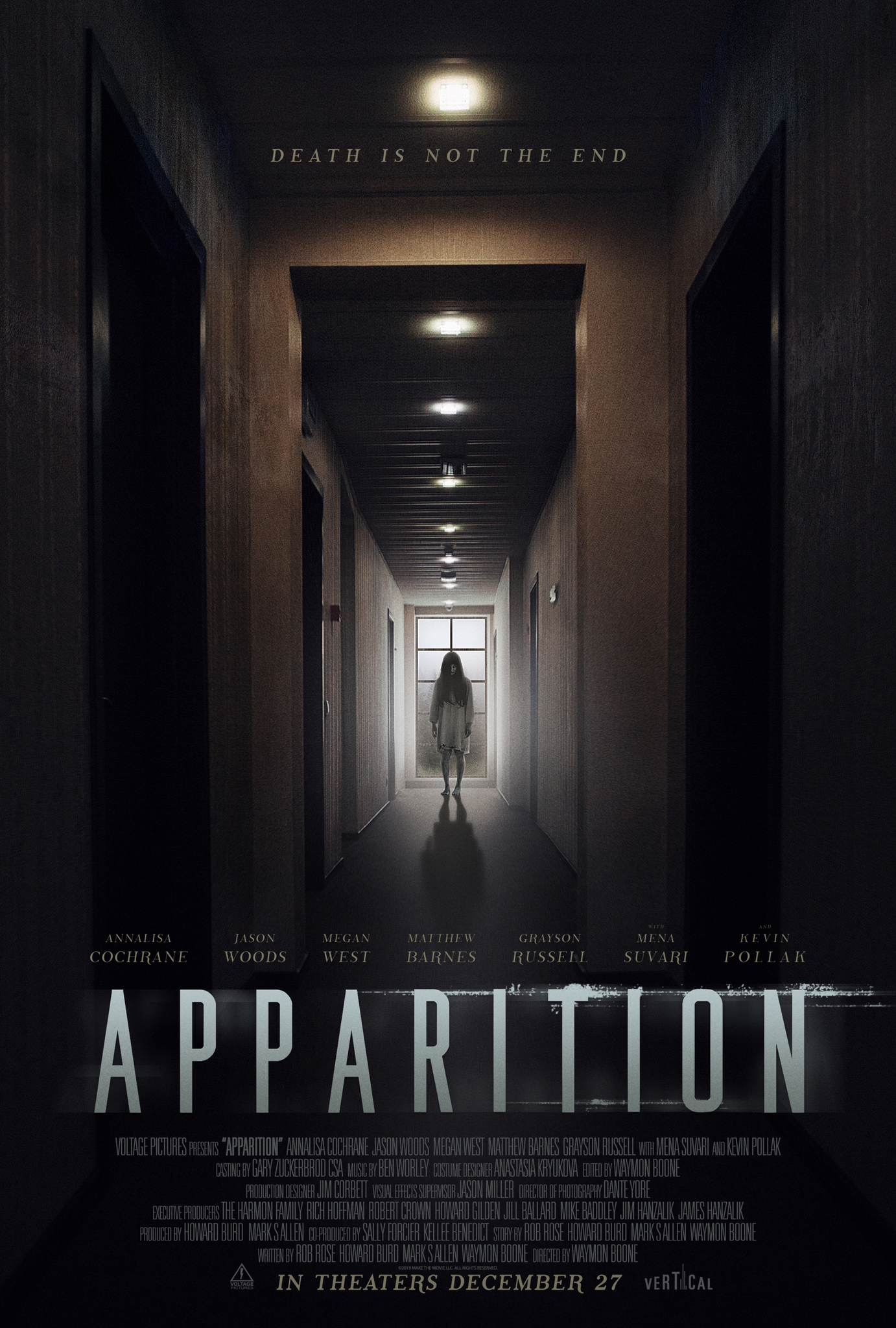
Fast-forward two decades.  The former warden (the place has been closed), is hosting the lavish rehearsal dinner for his son’s wedding.  The son is unloved (his father is a sociopath, after all), and doesn’t treat his fiancée very well.  Meanwhile a younger son is a nerd who’s developed an app called Apparition.  Through some unexplained technological wizardry, it allows the user to connect to the dead.  Another couple, son and daughter of two of the former prison guards, decide to try it and discover that it works.  When the bride gives it a try it leads the five young people to the Preston School.  There various ghost-hunter startles are used as the ghosts of the murdered boys take their revenge on the offspring of the warden and guards.  The bride discovers her father was a “good cop” and that’s why she wasn’t killed.  The younger son is actually the son of the murdered housekeeper, another of his father’s dark secrets.  The parents come and get what’s due to them.

What makes this unremarkable film (and very little comment has been given on it) worth discussing here is that during the opening credits a Bible is shown open to Exodus.  The verse called out is 20.5: “Thou shalt not bow down thyself to them, nor serve them: for I the Lord thy God am a jealous God, visiting the iniquity of the fathers upon the children unto the third and fourth generation of them that hate me.”  This isn’t referenced per se in the film, but the warden does suggest the school is a righteous place.  That’s a fairly brief reward for watching, but I hate to waste even a lazy weekend afternoon when it’s too hot to work outdoors.

The Truth, for Free

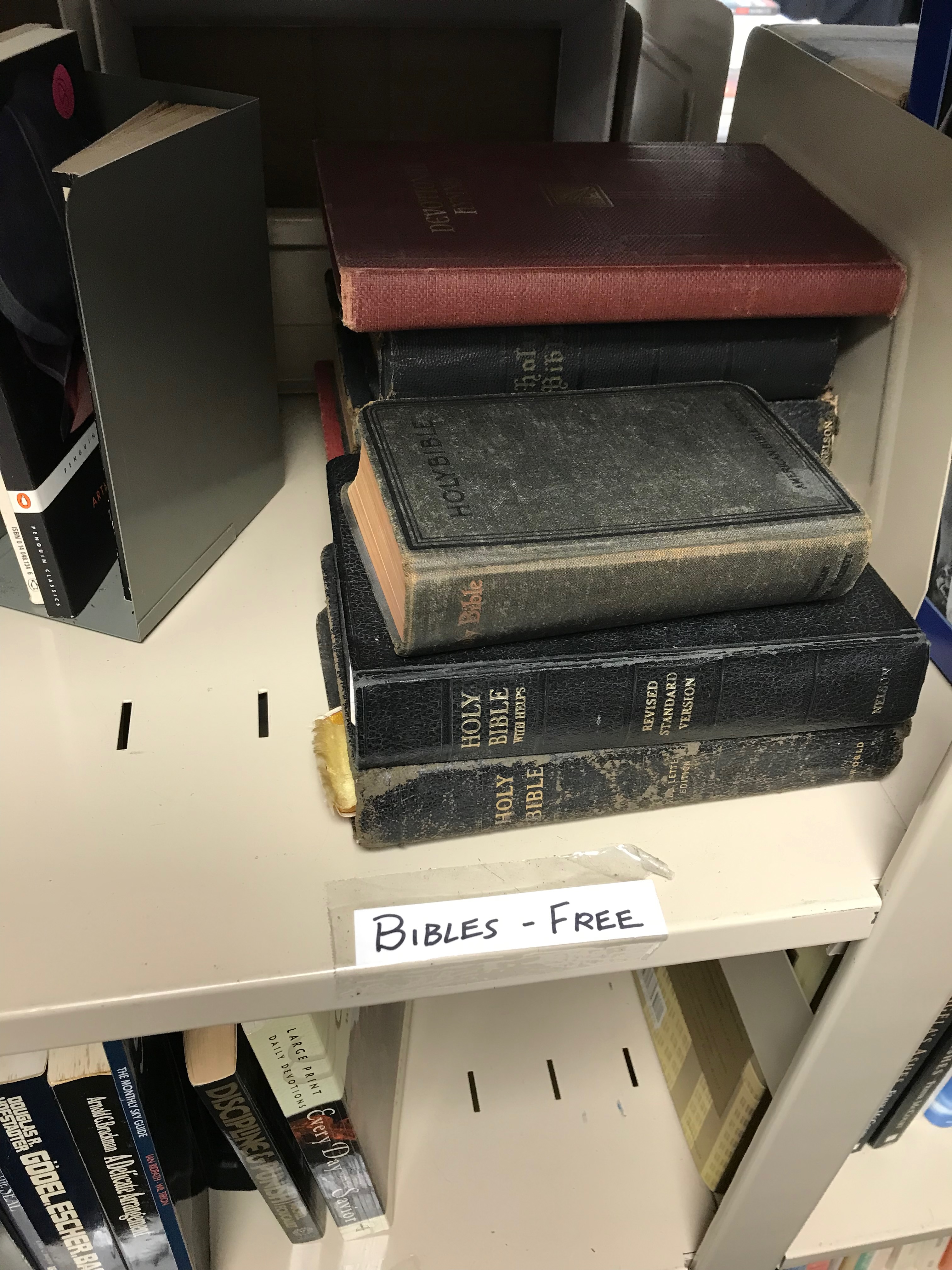
The Book of Common Prayer, reaching back to my Anglican days, is and always has been in the public domain.  Although the poetic language and culturally relevant phrases could by charged for use, they’re not.  The idea seems right-headed to me.  Although the Church of England, like many other religious bodies, has its own specific theology and approach to things, which it believes is right, as opposed to all other belief systems, it shows its conviction in making its sacred text free.  Copyright exists to protect intellectual property.  If an individual or an institution, or a company, creates something, copyright assures them that nobody else can monetize it without the creator’s permission, and often such permission involves a royalty.  The C of E has foregone that.  Print away!

I tarried many years among the Episcopalians before it became clear to me that I wasn’t exactly the kind of saint they were looking for.  I’ve had to move on, but I very deeply appreciate the integrity of an institution that says, “I made this, but you can have it.  I really believe in it.”  If you’ve decided to print and sell religious books, however, beware the Bible.  Most of the common translations in circulation (apart from the good old King James) are covered by copyright.  Unlike the Church of England, the bodies that sponsor Bible translations expect to be paid for the use of said translation.  This is, in part, a business decision.  They have valuable property—for many the keys of salvation itself—and if you want it you should be willing to pay for it.

This contrast has often struck me as very odd.  How capitalist religion has become!  In what do Bible translating bodies really believe?  Believe me, I know that any large publishing effort requires a lot of work.  Resources.  Still, those who do the translating generally have church or university jobs.  They’ve already got a steady stream of income, no?  And yet they will expect to be paid their billed hours for bringing the truth to the world.  I’m not a good investment thinker.  Money doesn’t really motivate me.  This is one of the reasons I have tried several times to find acceptance as a clergy person.  My values seem out of sync with the rest of the world.  I even bothered to learn the original languages in which the Bible was written, the better to read, mark, and inwardly digest them.  Still, I wonder if those who truly believe would not feel more authentic giving away all they have in order to attain the kingdom of Heaven.


From Russia

A New York Times headline recently caught my eye.  “Russia opened a murder investigation into a car blast near Moscow.”  I wondered how a country that’s an aggressor at war, killing civilians in Ukraine every day, would be interested in something so petty as murder.  Then I saw the rest of the headline: “that killed the daughter of an influential ally of President Vladimir Putin.”  So there it is—some lives are more valuable than others.  Don’t get me wrong—I’m saddened by this (and any) murder.  And the use of violence to get what one wants is unethical.  Justice in this world, however, is based on unequal standards.  The supporters of Putins and Trumps matter more than any other people.  Death should not effect them the same way it effects civilians being missiled and shot.

Throughout all this we might wonder where the voice of the church is.  Churches, as institutions interested in power, are political players even when there’s no state religion.  The Patriarch of the Russian Orthodox Church supports Putin implicitly.  With the power of Russia, the power of the church rises.  A few thousand dead civilians, well, let God sort them out.  Churches become corrupt when they become politically powerful.  Politics is one of the most polluting things humans can do.  Long ago Lord Acton put it this way: “All power tends to corrupt; absolute power corrupts absolutely.”  Churches got into power-brokering in the fourth century and we’ve seen the results ever since.  It’s not just Christianity, however; Islam makes it political and yes, even Buddhism and Hinduism incite violence when they become politicized.  A religious body that takes its mythology too seriously becomes dangerous when it tastes political power.  The world has many mythological figures.

What really took my breath away, however, is how many state resources will be devoted to finding and prosecuting those who killed one government supporter—we must find and punish those responsible—while thousands lie dead with the Russian government as their killers.  Other nations are just as guilty of course, but there’s a karmic imbalance when that nation is an aggressor in war.  Would you have ever expected a fair trial in Nazi Germany?  Does not unprovoked war make a mockery of the very concept of justice itself?  Justice, of course, means fair treatment.  For all.  She’s pictured as wearing a blindfold, after all.  She’s perhaps one of those mythical figures as well.


The Roll of Churches

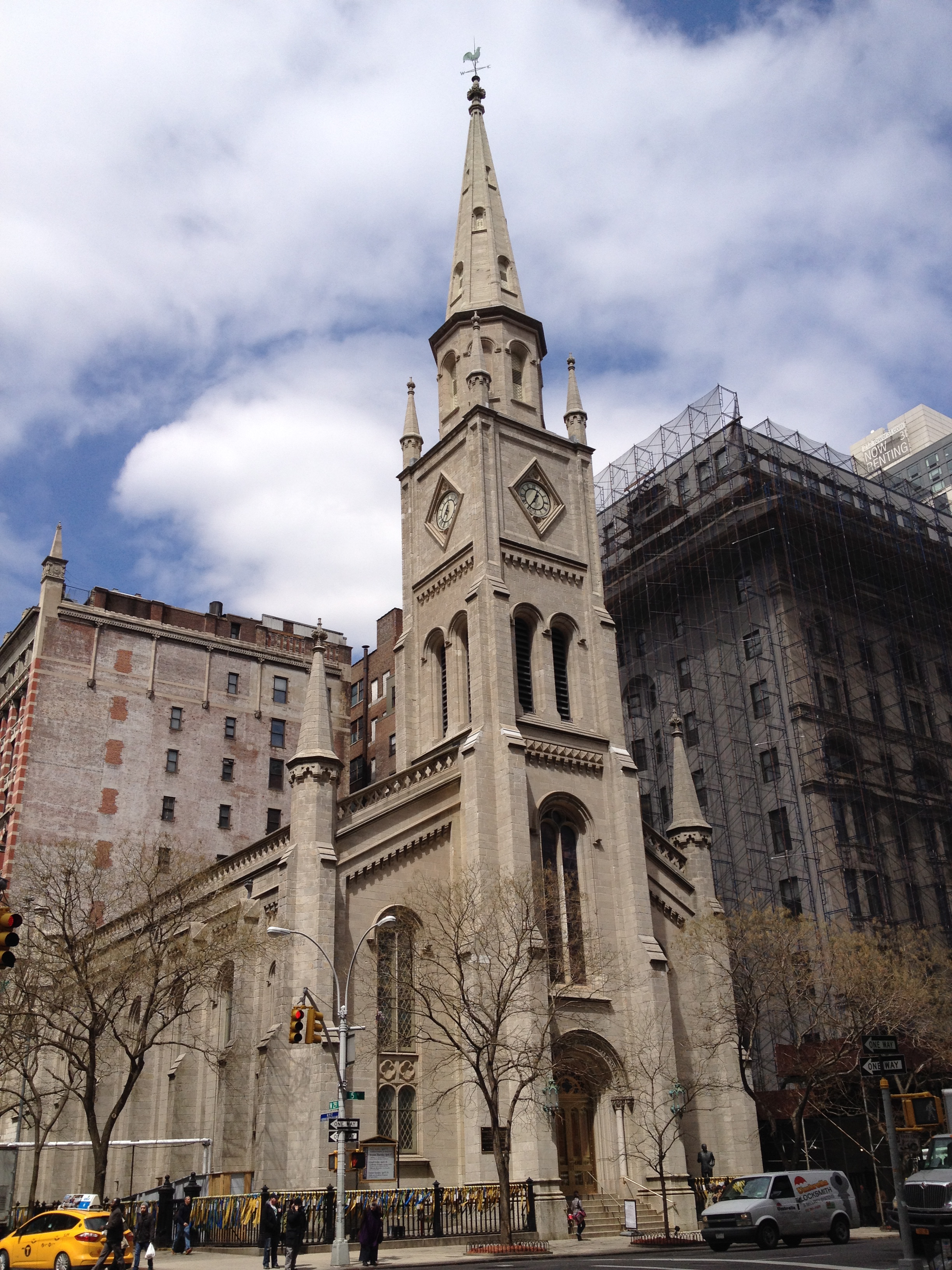
I really don’t have time to follow any social media religiously, generally glancing at a page and perhaps scrolling down an inch or two when I have a moment.  I tend to glance at headlines, often pre-selected for me by a non-human intelligence, I expect.  Nextdoor dot com occasionally has a story that looks important to read, because it’s local.  Recently a poster from Bethlehem noted meeting a homeless person and was asking virtual neighbors where to turn for help (for the homeless person).  The answers weren’t surprising but reminded me of something I recently heard elsewhere—this is where churches still have a chance to shine.  While I’m tired of all the doctrinal and theological nonsense that arises from those who didn’t pay close enough attention in seminary, I do lament the plight of our churches.

Society has been too Republican for too long to care for those who can’t make it in an uber-capitalist environment.  Those with mental illnesses turned out when Reagan-era “reforms” “improved” our system for handling them.  Those who, through no fault of their own, can’t hold down a job.  Those who just happened to end up on the wrong side of a wave and find that a new wave breaks over them before they can properly take a fresh breath.  As the most affluent nation in the world, each homeless person is a reminder of the terrible price we pay for living within a system that rewards greed far above anything else.  Churches do have their problems—I’ve experienced many of them firsthand—but they often feel an obligation to take care of the sick, the homeless, the elderly.  Those not of value to a capitalist system because they don’t “contribute.”

When I commuted to Manhattan my bus arrived early.  I often saw the many homeless sleeping on the street as I made my way across Midtown.  Many days I wished I had an extra peanut butter sandwich with me so that I could give them something.  Anything.  Churches that aren’t caught up bickering about whose genitals belong where, or whether females are equal to males, often turn their sights to those who need help.  These churches are supported by the donations of members (for which said members can claim a tax break).  These are members who care for those they’ve never met, simply because they are human and in need.  Churches themselves are now facing difficult times and, unless they support Republican causes, can be assured they won’t receive a government bail out.  Compassion may be a dying species.


Scary Cosmology

In many ways a harrowing book, A Cosmology of Monsters, by Shaun Hamill, is a real achievement.  A monster story, it’s less a story about monsters than it is about people—which, upon thinking it over, is generally the case.  This story is about the suffering people undergo, sometimes simply for being who they are.  Hamill gets his hooks in early and drags you through this wonderful, terrible story.  Even now that I’ve finished it I’m not quite sure what to make of it.  What’s it about?  Maybe I can try to give you a few signposts and pointers.  To find out more you’ll need to read it and check my work.

The Turner family, through no fault of its own, has been living under a strange kind of curse.  It involves monsters, from what is probably another dimension, kidnapping and enslaving them.  The Turners aren’t alone in this.  Others who’ve been suffering from various causes are also targeted and treated.  Perhaps this is partially a parable on suffering and depression.  The Turner family faces death, missing children, forbidden love, and regret.  They run a local haunted house around Halloween, which the father’s regular job finances.  They do it for fun and it’s free.  It keeps them going when a terrible diagnosis is given.  Stressed financially and emotionally, they barely manage to stay together.  Noah, the narrator and only son, checks out the competition, including a Christian Hell House.  There he meets the girl he’ll eventually marry.  But the monsters don’t stop coming.  He befriends one.

An intricately interwoven story, you might call this horror but you would probably be closer to the truth with literary fiction.  There are uncomfortable facts about families.  Things we tend to overlook or ignore in order to keep society running smoothly.  These kinds of issues are brought out into the open here and mixed in with monsters.  On both the human and monster sides, the emotionally wrenching ideas have to do with relationships.  Noah, who was born just as his father was dying, establishes relationships both with his family and a monster.  As the story progresses over the years, his wife is added to this complex of relationships and they all end up, in a way, competing.  Decisions have to be made and someone you love must lose.  This novel makes monsters and humans the objects of the reader’s sympathy.  What’s more, it works.  I hope I haven’t given too many spoilers here, because this is quite an accomplishment, and well worth a reader’s time.


Burdens

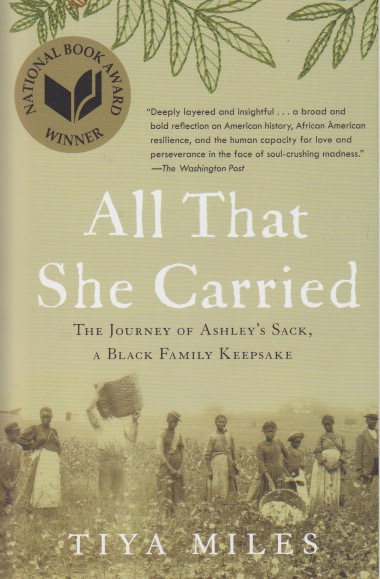
Listening is very important.  Sometimes there’s nothing really to say but “I hear you.”  This kept occurring to me during All That She Carried: The Journey of Ashley’s Sack, A Black Family Keepsake.  Tiya Miles is a history professor, and she helpfully includes an afterword telling how she came upon the topic for this book.  Ashley’s sack is just that, a sack.  On it, the owner, a female descendent of enslaved African-Americans, stitched a short inscription about the history of the sack, how her grandmother had given it to her mother when the latter was a child under ten, sold away from her mother in South Carolina.  This isn’t an easy book to read.  I have difficulty being faced with what “religious” “white” folks did to Blacks and justified themselves that people can be bought and sold.  Listen, I told myself, just listen.

Those who would deny that any of this ever happened need to learn to listen.  In order to capitalize on the resources this country offered, our ancestors engaged in morally reprehensible acts.  And the cruelty didn’t end with the shipping and the selling.  The treatment of unfree Black people itself was a crime, and their white captors knew full well what they were doing.  Preventing their slaves from having nice things while they themselves lived in luxury.  Beating, raping, and murdering when they didn’t get their way.  Selling their own offspring born of slaves to make a profit.  All the while claiming to be good Christians.  It’s often this part that I have trouble understanding.  Even a literalistic reading gives no license for treating other human beings this way.  Only money does that.

The style of history in this book isn’t that to which many of us are accustomed.  At the point of raising mental critiques I repeated, “You must learn to listen.”  Those who have made the rules showed themselves to be corrupt, and they must be willing to consider alternative ways of telling a story.  Miles makes the point that the history of unfree Blacks was largely erased, leaving the possibilities for histories and heritages slim; if the regular rules are themselves oppressive then it may be time to listen to those of others.  It seems impossible in the age of the world-wide web and all that it implies that we live on a planet where people repeatedly deny their sins while clutching their Bibles in their fists.  We need to learn to listen.


The King

Stephen King.  I haven’t read all of his books, but I’ve done quite a few.  I’ve watched movies based on some.  I read my first story by him in Junior High School.  I’ve even read books about him.  From what I can tell, he’s actually a man with his head on straight.  While some may find that a strange thing to write about a horror writer, it’s been my experience that those who enjoy horror, either as producers or consumers, are generally good people.  Recently King was testifying against the proposed buyout of Simon & Schuster by Penguin Random House.  Penguin Random House is already the largest trade publisher in the world.  The buyout would probably benefit King personally, but he testified it would make things worse for other writers and for independent bookstores.

How many people these days argue against things that benefit them personally?  Certainly not elected officials, particularly of what used to be a grand old party.  It’s all about me!  That seems to be the mantra of late capitalism.  King has publicly called for his own taxes to be raised.  This is nothing short of heroic.  While the Good Book advocates over and over for this kind of behavior, “Bible believers” have somehow overlooked it.  Leave it to a horror writer to get to the heart of the message.  I have no idea if King is part of any religious group or not—he certainly uses a lot of religious imagery and many religious concepts in his writing.  Of course, you don’t have to be in such a group to embody their proclaimed principles.

Thinking of the needs of others was drilled into me as child raised in a Fundamentalist faith.  Looking around me these days, I don’t see many Fundamentalists that hold to that any more.  Enamored of power—especially the power to control other people’s lives—they flock after rich pretenders who care nothing for the Gospel.  Sacrifice (for that’s what we’re talking about here) is something horror writers know well.  It’s never easy giving up something that’s valuable to you.  Or even thinking about it.  Writing, while very enjoyable, is hard work.  Training your mind is like physical exercise—it doesn’t just happen.  I’ve got a few Stephen King novels on my “to read” pile.  They’re big books, often intimidatingly so.  Once I start reading, however, I know I’ll find the work engaging.  And if I pay attention, there will be a message there too.

Not that kind of book.

Paperback Reader

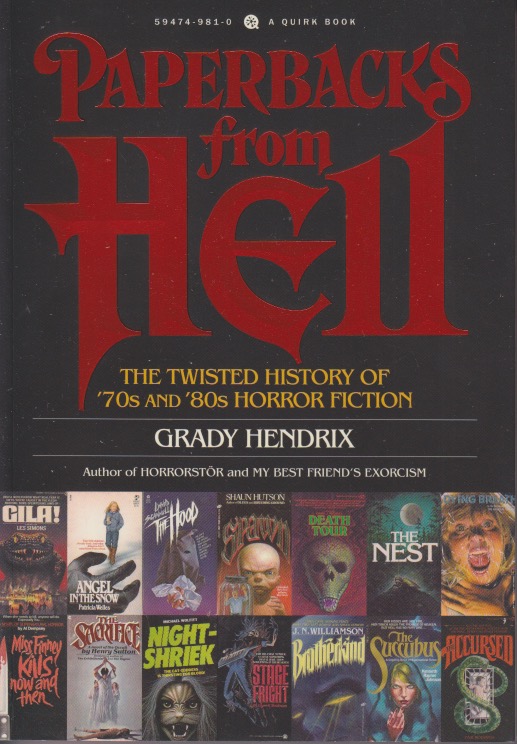
Sometimes I wonder why I do it.  Horror is a strange category for books and films, but one thing that may be a draw is that they take me back.  Life, it seems, is cyclical.  I liked monsters as a kid, and grew out of it when college and graduate school taught me to be serious.  As a working academic this genre can spell death to your career, so when my career died anyway, I was left grasping at my childhood to try to make any sense of this.  Grady Hendrix’s Paperbacks from Hell took me back.  Not that I’ve read all the books listed here—I came away with a list I want to read—but the lurid covers are a reminder of the kinds of things that caught my young imagination.

Subtitled The Twisted History of ‘70s and ‘80s Horror Fiction, this is actually a very fun book to read.  Hendrix has a light touch and had me nearly laughing out loud (quite an accomplishment) a time or two.  And I learned a lot.  Although I write books about horror, the genre is a large and sprawling one and this book takes a clear focus at the paperback market.  Just a reminder: paperback originals were designed to be sold and consumed quickly.  No waiting around for 18 months while profits from the hardcover roll in.  Hendrix really knows what he’s talking about when it comes to the history.  It also seems like he may have read more horror than is necessarily good for you.  He clearly knows how the publishing business works.

Several of these books were big enough that I knew about them.  He starts off with Rosemary’s Baby and The Exorcist.  (And The Other, which I’m now obligated to find and read.)  In fact, the first chapter focuses on religion-themed horror.  This is something that only began in earnest in the late ‘60s.  While the horror paperback market may have tanked in the ‘90s, the film side of the genre has been doing quite well and continues to do so.  The late sixties also got that kick-started.  It seems that when people stopped running from the fact that religion is scary, horror itself grew up.  I was shielded from that part as a child, but now, looking back, I can see that things weren’t quite what they seemed.  This full-color, grotesquely illustrated book has great curb appeal.  And if you’re not careful, you can learn a thing or two as well.


Remember the Doorway

I’m glad it has a name.  And I’m also, relievedly, glad it’s normal.  The Doorway Effect.  I’m sure it’s happened to you.  You walk into a room and immediately forget what you came in for.  I’ve been afraid of some early onset of something because I’ve noticed it more and more, but it turns out that this is a normal brain function.  A recent article by Jessica Estrada explains that our brains are constantly framing.  A large part of that framing has to do with our physical location.  When you step through a doorway that framing changes and some of the residue (what I came in here for) might easily get left in your previous location.  In other words, it seems to be an effect of humans making different rooms for different purposes.  Our thought lingers in the place it was first born.

Photo by Filip Kominik on Unsplash

Our brains are fascinating organs.  Every time I read about how children’s brains form, I wish I’d studied psychology instead of religion.  How we could help our children if we understood what their brains just aren’t capable of doing just yet!  How many spankings could have been avoided if parents understood brain development?  Beating someone doesn’t teach anything.  Instead, we might try to learn how minds use brains.  Young boys can be quite reckless.  One of the reasons?  Their brains haven’t developed enough yet to think through the consequences of their actions.  Yes, they can push limits for other reasons, but their thinking simply doesn’t yet involve adult caution that (hopefully) comes with a developing brain.  One of the real consequences of this, for which I’ll volunteer as a poster child, is religion.

Children’s brains are not developed enough to accept and comprehend religious thinking until they’re about 12.  We’ve known this for many decades now.  And yet, the theology of parents means they try to convince their children of religious truths before their brains are developed enough to sort it out.  Look at Congress and the Supreme Court to see the results of this.  Most people never seriously question their religion.  For many it was instilled in them as children, before their brains could properly process it.  The rest of the country pays for it with laws then enact.  We’ve known about this for decades and have decided that studying religion is a waste of time.  But I digress.  Now I forget what I started to say when I began this post.


Woman in the Wilderness

The “Burnt Over District” is religious historian shorthand for upstate New York.  That particular region, during the “Second Great Awakening,” spawned so many religions and hosted so many revivals that it was difficult to believe anything more could sprout there (thus, “burnt over”).  One of my great fascinations is the origins of religions.  Not only that, but where those religions began.  On a continent-size level, Asia is clearly the champion, with all of the “big five” beginning there.  But religions evolve, sometimes rapidly.  Christianity in Britain gave rise to such groups as Quakers and Anglicans, and, in a post-Christian phase Britain gave the world Wicca.  The Germans were also great religious innovators with Luther and the Pietist and Anabaptist traditions.  Perhaps it’s in the Anglo-Saxon blood to make religions new.

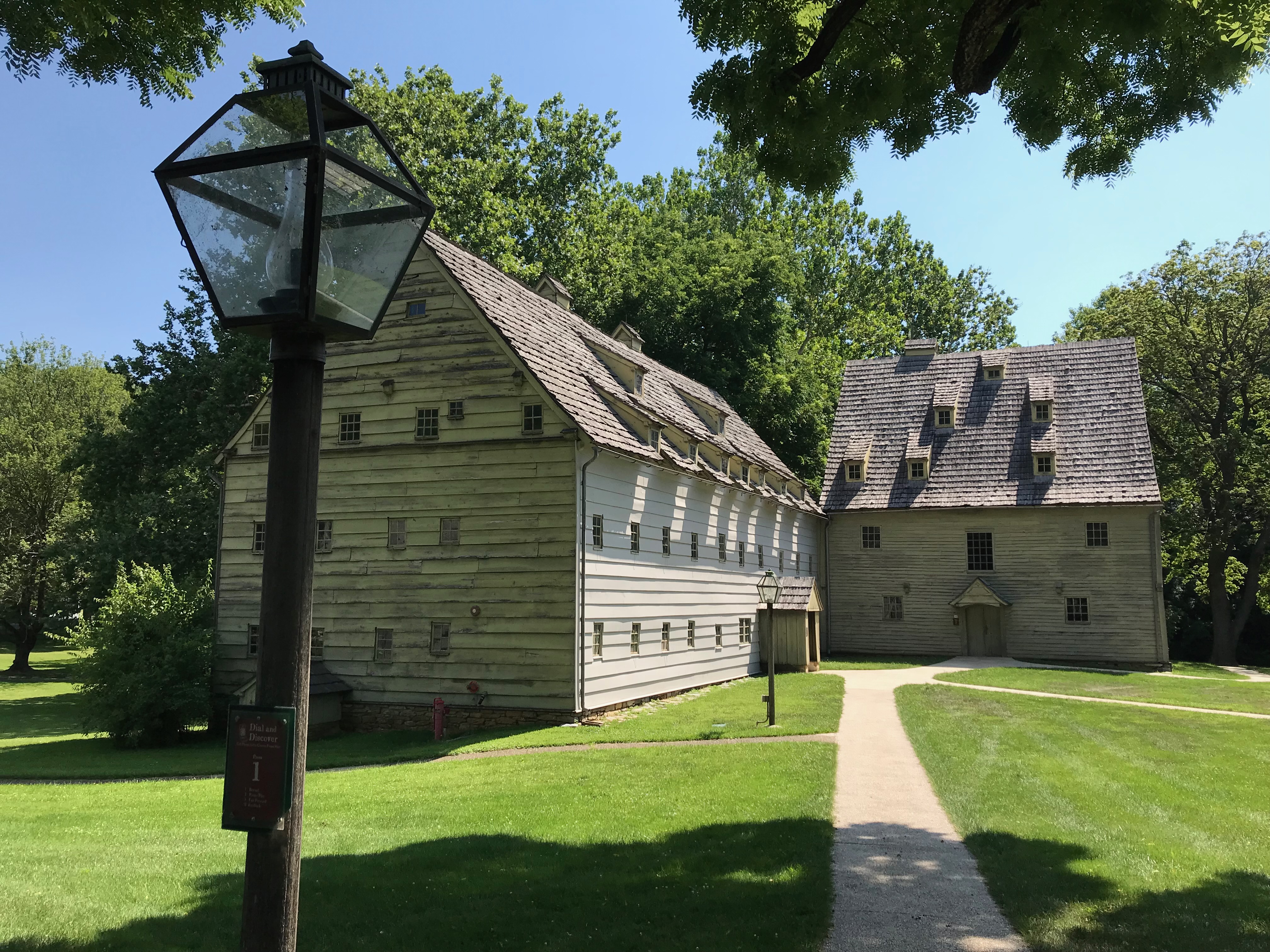
After visiting Ephrata Cloister recently, my mind naturally turned to the “Hermits of the Wissahickon.”  If you’ve not heard of them, you’re not alone.  They, despite being men to a man, preferred the title “Society of the Woman in the Wilderness.”  They were followers of Johannes Kelpius.  Kelpius, like Conrad Beissel after him, was a German mystic, Pietist, and musician, and he also believed the end of the world was imminent.  This was in 1694, just a few years before Beissel laid the foundations for Ephrata Cloister.  Like Beissel, Kelpius decided Pennsylvania was the best place to set up camp.  Although founded by Quakers, Pennsylvania offered something some other colonies didn’t—real religious freedom.  Given that you could be killed for being a Quaker in some of the other colonies, this didn’t seem like a bad idea.  Convinced Jesus would return in 1694, Kelpius and his followers settled into a cave just outside Philadelphia, by the Wissahickon Creek.  They set up a quasi-monastic community to wait out the clock near the city of brotherly love.

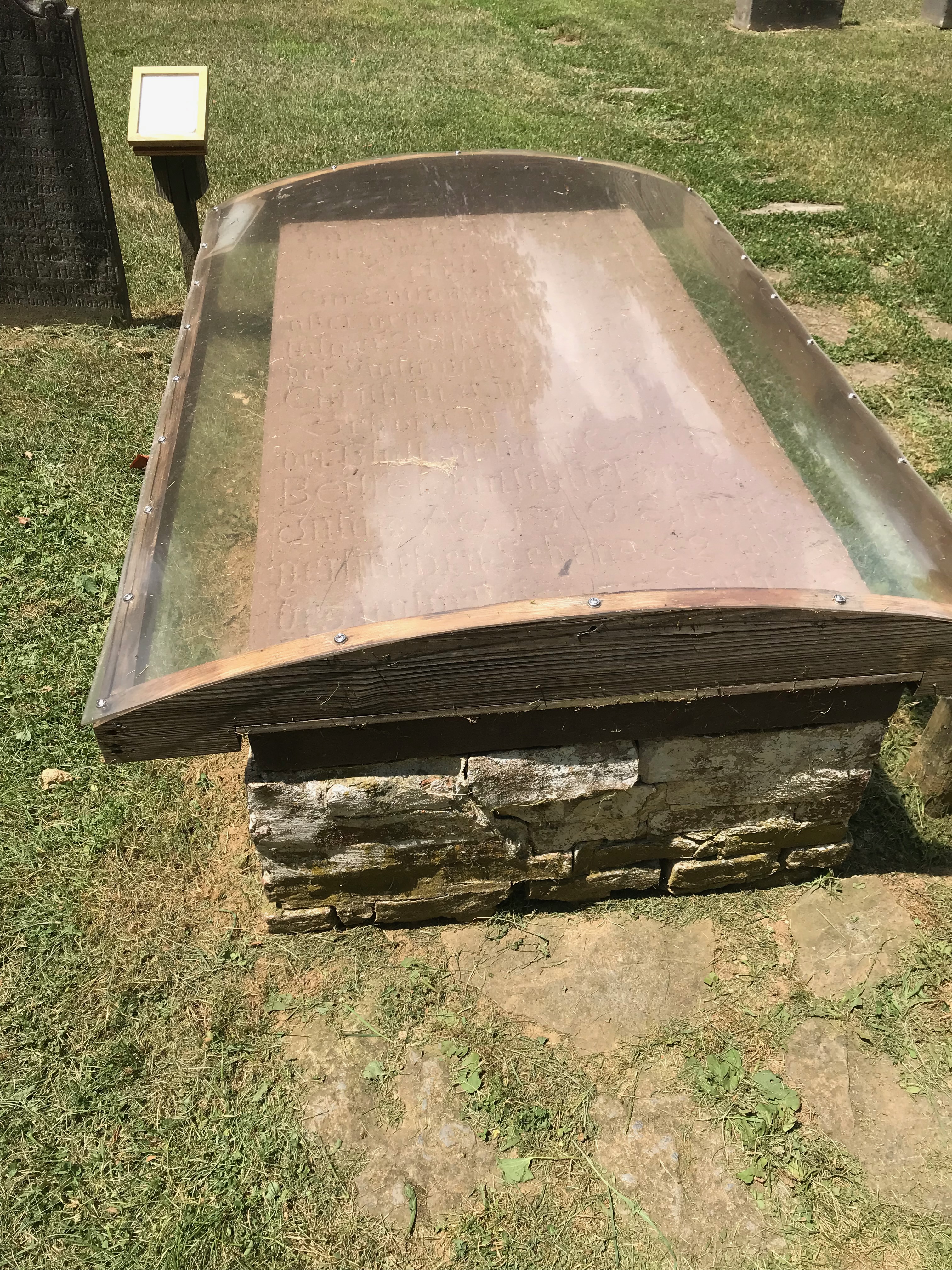
It’s difficult to know if Conrad Beissel was consciously imitating the work of Kelpius.  Religious leaders tend to have pretty strong views of their own outlooks.  The draw to Pennsylvania, in those days, was strong.  Interestingly, both Kelpius and Beissel are remembered for their music.  The death of Johannes Kelpius isn’t as well documented as that of Beissel—you can see the latter’s burial place in Ephrata.  Like millions of others, Kelpius lived through the “great disappointment” of not having the Second Coming occur when he supposed it would.  Some suggest Kelpius believed he would be translated after death.  He died in 1708, as his younger colleague was exploring the wilderness several miles to the west.  Keplius’ final resting place is listed, perhaps fittingly, as “unknown in Pennsylvania.”

Beissel’s Grave, Ephrata Cloister


Yep, Nope

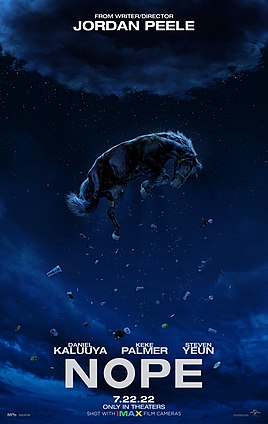
I can honestly say that I’ve never seen a movie that starts with a quote from Nahum.  I also honestly admit that Nope left me scratching my head, but very glad to have seen it.  I trust Jordan Peele implicitly as both a screenwriter and a director, and I know I need to see Nope again to make it all fit (if that’s possible).  His movies are the most Twilight Zoneish things out there, and despite Peele’s reported reason for naming the film Nope, I’m going to keep watching the skies.  It’s clear he had done his ufological homework.  Even the idea that—SPOILER ALERT—have you seen it yet?  Are you going to?  You might want to finish this later, if you haven’t—they are biological entities has been widely discussed.  

Although classified as horror, Nope has mercifully few jump startles.  In fact I noticed (there were maybe only 10 of us in the theater) that one couple had brought their kids.  I can imagine they had some interesting discussions on the car ride home.  For me, driving home alone, I felt like I’d watched Close Encounters, Twister, Signs, and Arrival simultaneously.  Peele set out to film a spectacle and he did indeed.  Horror has become more intelligent of late, and there’s so much going on here that I’ll need some time to sort it out.  The online nattering suggests the Nahum quote (“I will cast abominable filth upon you, make you vile and make you a spectacle”) reflects Peele’s thoughts on the Bible.  A more literal take might see the evacuation of waste creating a spectacle, which it does.  How to explain the angel form of the creature?

Alien horror works.  Alien sees them deep in apace, but many films, such as Fourth Kind, see them closer to home. Fourth Kind, also by an Africa American director (Olatunde Osunsanmi) never received critical acclaim, but I thought the first half was impossibly scary.  It’s natural enough to fear those we don’t understand.  Perhaps that’s one reason we tend to deny their existence.  If we deal with them in fiction we can call it horror and go home happy.  Nope asks us to consider whether our differences matter so much in the face of a non-discriminate predator that eats any human that enters its territory.  Even if they were there first.  I still have a lot of questions about the movie.  Some of them will likely never be answered.  One that will is “Do you plan on seeing it again?”  The answer is yep.


Beyond Natural

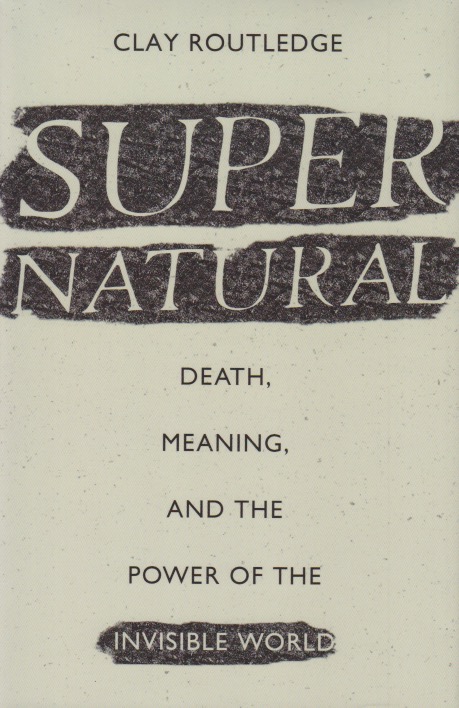
I’ve read quite a few books about the supernatural.  Often these books, which are mostly written by scientists, tend to show the problems with supernatural thinking.  Clay Routledge, it seems to me, has a healthier approach.  Supernatural: Death, Meaning, and the Power of the Invisible World isn’t an apology for the supernatural.  In fact, Routledge is a psychological scientist.  An open-minded one.  The book isn’t an apology, but it does show how natural supernatural thinking is.  This engagingly written study isn’t always easy to read—you have to be prepared to think about death a lot.  But also meaning.  Routledge makes a good case that the human search for meaning is related to our awareness of our own mortality.  We know we’ll die, and we don’t want to believe our existence has been for naught.  That doesn’t make all of us religious, but it does, perhaps, open us to the supernatural.

One of the main takeaways for me is that people misunderstand the power of religious motivation.  Especially in the context of our current political climate.  Many people can’t believe that supreme court justices would decide against laws that slow global warming.  Survey after survey, however, indicates that strong belief in religion means having little or no concern about the world ending.  In fact, for many it is a culmination devoutly to be attained.  You don’t need surveys to learn this.  You just need to talk to Fundamentalists.  I grew up believing this world was a sinful, corrupt place soon to be destroyed.  Further reflection on religion convinced me that this view was wrong, but I certainly understand it.  Too often those trying to find solutions to such problems simply dismiss religion as a motivating factor.  That’s a fatal error.

This is an insightful book.  Although based on science it is neutral toward religion.  Or I should say, the supernatural.  Routledge demonstrates that even scientists, when tested in controlled circumstances, subscribe to some supernatural beliefs.  They may be more abstract, such as the idea that things happen for a reason, or that we’ve been put here for a purpose (the teleological argument), but they are nevertheless present.  To be human is to be a meaning-seeking creature.  We may not be the only ones.  Whether or not that’s the case, our drive for making sense of all this tends to move us toward the supernatural.  Routledge ends with a plea for us to listen to one another.  Pay attention, and care for, those who believe differently.  We have a lot more in common than we have views that separate us.


Twisted in Knots

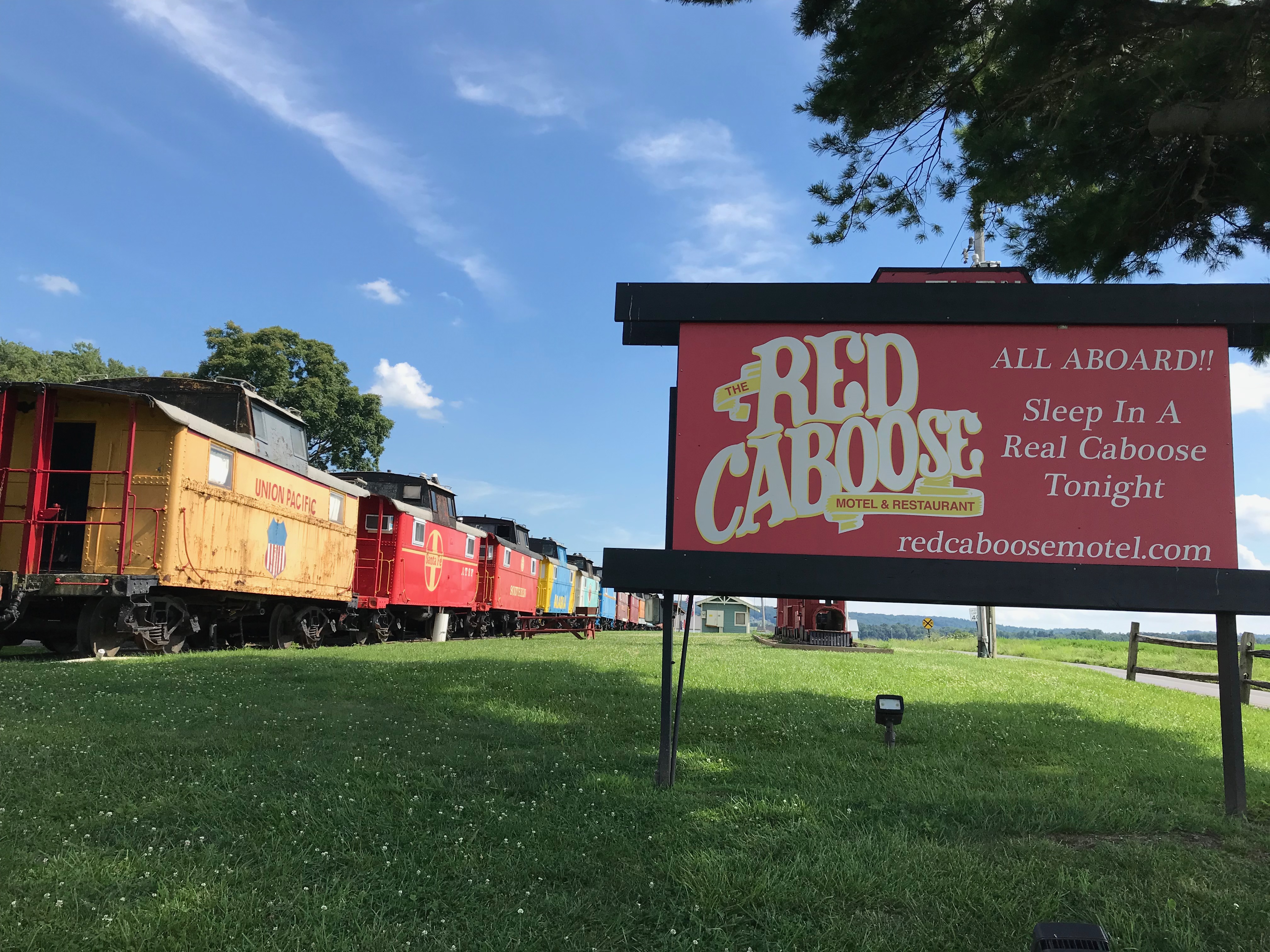
Our staycation at the Red Caboose in Ronks brought to mind the Weird Al Yankovic parody of “Amish Paradise.”  Bored-looking tourists in Lancaster County can’t find anything to do.  While it may be true that many big city entertainments are lacking, we had no trouble filling up a day.  We discovered the little town of Lititz.  Just north of the city of Lancaster, it retains several buildings from the eighteenth century along its main street, and the same quaint, boutique feel of Lancaster itself continues.  I have to admire the creativity of shop owners who have to appeal to the varied tastes of the tourist crowd.  Of course there was a bookstore—there are several in this area—and we long ago discovered the dual value of books as souvenirs.

The reason we were in Lititz, however, was the pretzels.  The Julius Sturgis Pretzel House makes the claim of being the oldest commercial pretzel bakery in North America.  Built in 1784, this is one of the early buildings still standing, and they offer brief tours where you’re taught to roll  and knot a pretzel.  Pretzels are, of course, a European invention.  Since they were an avocation of monks, their shapes became imbued with religious symbolism.  The initial U shape was, like a gothic spire, intended to point thoughts upward, toward God.  As I learned, the twist (which was an indication of a handmade pretzel) was symbolic of marriage and “tying the knot.”  This leaves a fish-like shape, and the Icthys moniker for Jesus would’ve been known to monks.  The folding the knot onto the outer loop symbolizes the arms across the chest used in Catholic prayer as a way of embracing the cross.  The resulting twisted breadstick has three holes for the Trinity.

The real innovation in Lititz, however, was the hard pretzel.  If I heard correctly, Julius Sturgis was working at a pretzel bakery in town where he had the duty of cleaning out the ovens.  The hard bits could be used for animal food, but they gave Sturgis the idea of intentionally baking hard pretzels.  This is the most common commercial form sold today, but southeastern Pennsylvania, which produces eighty percent of the pretzels sold in the United States, is still a soft pretzel paradise.  Radiating out from Philadelphia to locations like Lancaster, Reading, and Allentown, pretzels are eaten more frequently in Pennsylvania than elsewhere.  The religious aspect of pilgrimage still exists for those who venture to Lititz to find the birthplace of the hard pretzel, and the opportunity to stick your fingers in the dough.


Ephrata Cloister

Conrad Beissel isn’t exactly a household name.  I never heard of him until a visit to Ephrata Cloister during a Lancaster staycation.  My wife knew about the Ephrata Cloister due to a music course she took at the University of Michigan; he was influential in developing a distinctive musical style.  Since we were in the area we stopped in for the tour.  Beissel was banished from what would become Germany in the early eighteenth century.  He made his way to America where he established a kind of monastery in south central Pennsylvania in the early 1700s.  Not Catholic, he was inspired by German Pietists, the Anabaptists, and Christian Mysticism.  Not ordained, he established what became a Seventh-Day Baptist association because whenever he tried to settle as a hermit others came to him.

Celibacy has always been a hard sell for religions.  Once his Camp for the Solitary was established, it grew to about 300 members, with only some 80 celibates, or solitaries.  This 80 was half men and half women.  They built around 40 buildings in what was then the frontier and they couldn’t have survived without the 120 or so married people who joined the church but continued to live at home with their families.  Like many separatist groups, the Seventh-Day Baptists were expecting Jesus’ return at any day and lived their lives accordingly.  Not strict about others joining him in this, Beissel was an early vegetarian, eventually becoming primarily a vegan (although that name wouldn’t develop for a couple centuries).  They had midnight worship services since they believed Jesus would return in the middle of the night.  They were, with the supportive families, self-sufficient.  The group established a printing press, and at one time it was possibly the largest printing operation in the colonies.

After Beissel died, the community continued.  They realized that, like all celibate communities, it would be difficult to survive and the celibacy rule was dropped.  The last celibate member died in 1813.  The community by then had taken on the form of an independent church and it survived until the 1930s.  The remaining land—some of it had been sold off over the years as the community shrank—was bought in the early forties to be preserved by the state.  Theirs was never a very large group, but it was significant enough that their memory was felt to be important enough to preserve.  Beissel wasn’t alone in establishing such sects here in Pennsylvania.  The tradition is, interestingly, part of the American heritage and demonstrates how the religious, ordained or not, live in their own worlds.


Odd Getaway

It’s small.  Almost cramped, you might say.  But then again, a Pennsylvania Railroad caboose wasn’t really designed to be a two-bedroom apartment with en suite bath.  Why the Gideon Bible was laid open to Ezra 2.62–4.19 I couldn’t fathom.  I suppose the story begins in Wisconsin, and ends up with me deep in Trump territory for an overnight getaway.  Let’s start at the Badger State.  I’ve always been a sucker for the unusual.  In that regard, I suppose getting a job at Nashotah House was inevitable.  When I spied Weird Wisconsin in Books & Company in Oconomowoc, it became an obvious birthday ask.  When we moved to New Jersey I learned that Weird NJ was a magazine as well as a book, and I bought, and read, every issue.  I also bought both volumes of the book and those of nearby New York and Pennsylvania.  It was in the latter that I first read about it.

The Red Caboose Motel began as a kind of a lark in the late sixties.  A Lancaster county man bought a bunch of cabooses at an auction and then had to figure out what to do with these tons of steel.  He settled on refurbishing them as individual hotel rooms.  I read about them in Weird Pennsylvania and hoped that someday I might stay in one.  My family, feeling restless after more than two years of pandemic isolation, wanted a short staycation.  Hotels involve corridors and breakfast rooms, often tiny, and too many Americans just won’t get vaccinated.  This seemed an ideal opportunity to spend a night in a discrete, self-contained caboose.  And, I admit, to tick something off my bucket list.

Driving behind Amish buggies to get there after a hot day on the streets of Lancaster—a surprisingly busy and loud city—the Red Caboose felt like a good getaway.  Given the number of cars parked outside cabooses, we weren’t the only ones with this idea.  Lancaster is more than just Witness territory.  Known for its boutique shops and pretzels, as well as its thriving Central Market, it’s a busy place in July.  Bumper stickers and loud, aggressively roaring pickup trucks indicate that outside the city the Trump myth reigns supreme.  In town we visited two independent bookstores, one of them quite large.  With at least seven to choose from, Lancaster feels like a readerly place.  Indeed, I could, had I the money and time, envision renting a caboose for a month or two to do nothing but write.  Why they wanted me to read about rebuilding the Jerusalem temple I just don’t know.  I’ll chalk it up to being weird in Pennsylvania.