Last Baptist?

The Southern Baptist Convention is the largest Protestant denomination in the United States.  It’s the core of a powerful voting bloc that gave electoral (but not popular) victory to Donald Trump.  It’s also the location of an attempted takeover by a fascist faction that wants to make Christianity the most oppressive religion in the history of the world (moreso than it has already been).  This past week the Convention narrowly avoided this by electing a moderate president for the year.  The struggle was real and the consequences very deep.  The true cost of Trump’s presidency will continue to emerge for years to come.  Permission was given for extremists to be vocal and validated and bad behavior was relabeled as “Christian.”
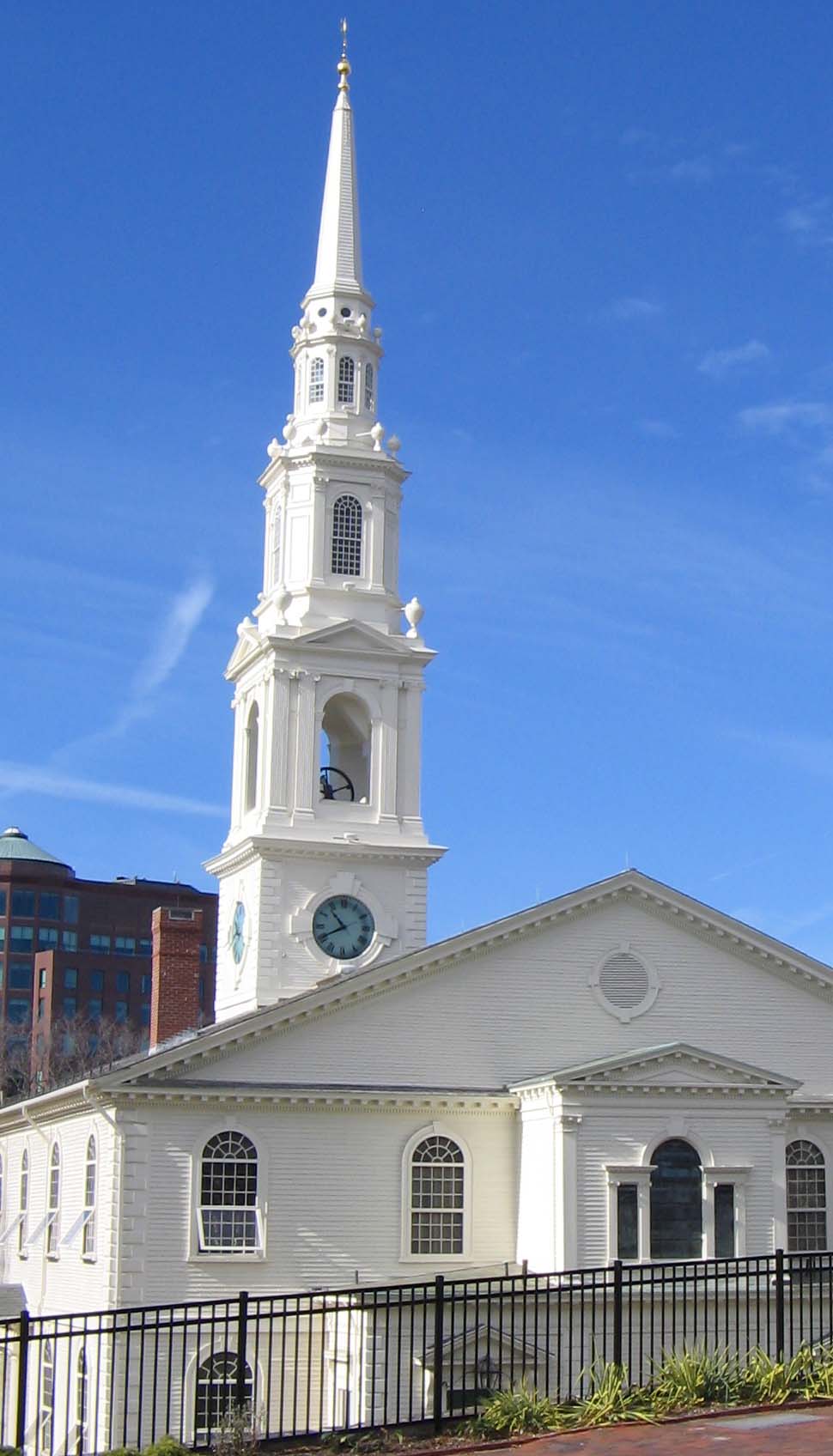
Roger Williams’ first Baptist church (in the country)

We, as a society, have a bad habit of ignoring things we don’t believe in.  Just because many educated people have come to see the lie behind much of what “Christians” say, they assume they don’t need to pay attention to them.  Years of ignoring the insidious actions of many conservative Christian groups has led us to a political precipice where many months after the fact some people who can’t count still believe 232 is greater than 306.  While some may wonder how we’ve come to this point the answer is obvious—there are groups of “Christians,” organized and well funded, who’ve been active in politics for many decades.  The Southern Baptist Convention wanted, in some sectors, to make that official.  They wished to be Trump’s own party.  They wanted white supremacy to be the norm, women to be chattels of men, and those whose sexuality differs to be criminals.  And they nearly won.

We ignore religion at our peril.  A recent study by the British Academy has shown that in the United Kingdom the study of religion is in decline.  I know of no similar study this side of the Atlantic, but anecdotal evidence suggests the same, if not worse here.  Those who study religion from within other disciplines such as sociology, history, or psychology, don’t really address the question of what religion truly is.  People experience religion as extremely urgent.  Misguided leaders instruct them that their version of God has endorsed the very tactics the Bible itself excoriates.  When the largest Protestant denomination is nearly taken over by political extremists, we should be paying attention.  A troubling template was, despite the majority vote, forced upon us in 2016.  So much so that it feels like it was a decade ago and we suffered from it for longer than we have.  And the kettle is still boiling, only this time those dancing about it claim to be Christian.


Celebrate Freedom

Perspective.  The most valuable thing I learned growing up was to try to see things from the perspective of others.  It’s the basis of sharing and empathy and kindness.  It’s what makes us human.  Juneteenth celebrates a Black holiday, but it applies to us all.  Today (actually tomorrow) commemorates the day when slavery was ended in Texas.  As much as southern states sometimes like to posture, all but the most frightfully unenlightened know that slavery is wrong.  The exploitation of others because we have the power to do so is the very embodiment of evil.  There’s no need for a devil if human beings can do this all by themselves.  Black lives do matter.  We need to stop countering this with “all lives matter” because until we acknowledge systemic racism such responses only serve to perpetuate the problem.

The history of the Christian (and yes, religion fueled and still fuels it) European domination of the world is a long, sad, and unethical one.  Blacks, because they’re often so easily visually identified, have borne the brunt of this domination.  In many ways this continues to be the case even today.  Red lining still exists.  Discrimination still exists.  Blacks are more likely to be imprisoned than others.  Poorly trained police are more likely to shoot and kill them.  This must change if society is to improve at all.  Congress has just passed a bill making Juneteenth a national holiday.  This gives the lie to the posturing of many of our elected officials.  This shows how deep Trump’s lies went.

More socially conscious employers made today a paid holiday in support of Juneteenth, even before the senate passed the bill.  We need to admit that we’ve been wrong.  We need to admit that special interests have kept us from seeing what should’ve been as obvious as the color of our own skin.  We’ve tried to keep slavery going.  We’ve made life hard for those easily identified as not “white.”  I have to wonder if this situation would’ve ever developed had we grown the more accurate habit of calling some people pink and others brown.  “White” was chosen for its theological implications.  Make no mistake, this was a carefully constructed divide.  Those who initiated the terminology—pink men, all of them—used their Christianity to demean, debase, and degrade other human beings.  Juneteenth celebrates one small step in what is necessarily a long journey.  We need to undo systemic racism.  We need to learn to say Black Lives Matter and we need to live it.

Photo by Leslie Cross on Unsplash

No, uh, It Won’t

Irony comes in all shapes and sizes.  Over the past several decades various fundamentalist groups have built replicas of what they believe to be life-size versions of Noah’s ark.  All of these are approximations because the cubit was never an exact measure.  Nobody knows what gopher wood was.  Most of them ignore the fact that the story of Noah clearly borrows from the more ancient Mesopotamian flood story where the measurements of the ark differ.  In any case, these arks—some containing dinosaurs and others not—are made for convincing people that Genesis is to be taken as history.  While there is some irony in that itself, the larger irony comes in the various proofs that are given that such things really would work to preserve all species since evolution could not have happened.  To work such models have to be seaworthy.

One such ark, according to the BBC, has been detained in Ipswich because it is unseaworthy.  An ark may be useful on dry land for drawing tourists, but would such a large boat work on the open ocean?  All of this brought to mind a Sun Pictures documentary from my younger days.  Giving the ark a makeover, various literalists re conceived the classic design from children’s Bibles to a more boxy, sturdy shape.  This was based on alleged encounters with the ark on Mt. Ararat.  To test this new design, the producers made a scale model and tested it in a pool of water and declared it eminently seaworthy.  Of course, there’s no way to make water molecules shrink to scale to test whether a full-sized ark could actually handle the stresses and strains of a world-wide flood.

Ship building is an ancient art.  Peoples such as the Phoenicians, the neighbors of ancient Israel, achieved some remarkable feats in ocean travel without the benefits of modern technology.  They didn’t have boats large enough to hold every species of animal that exists today, but they sure knew how to get around.  The real issue with literalism is the failure to recognize ancient stories for what they were—stories.  Such tales were told to make a point and the point was often obvious.  The obsession with history is a modern one—indeed, the ancients had no concept of history that matches what our current view is.  Borrowing and adapting a story was standard practice in those days.  Unaware that centuries later some religions would take their words as divine, they told stories that, in the round, just wouldn’t float.


Conflicting Kingdoms

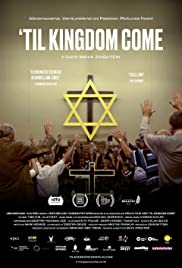
There is reason to be afraid.  Yes, I watch horror but the reason I suggest being afraid is because of a documentary titled ’Til Kingdom Come.  Directed by Maya Zinshtein, the film examines Christian evangelical support for Israel.  Primarily set in Binghamton, Kentucky, the interviews indicate a number of frightening implications.  One, that support for Jews is based on a “convert or die” model.  These evangelicals have the end times mapped out and believe the Bible is a fortune-telling book par excellence.  This doesn’t surprise me since I grew up with some of those very same charts and timelines.  It doesn’t surprise, but it scares.  These true believers never reflect or question their beliefs and this leads them to an emotional coldness that is antithetical to the sympathy Jesus preached.

A second fear factor here is just how organized and just how good at raising money the various Israeli lobbies are.  When evangelicals are elected to congress, these groups have open doors in Washington.  Those shown in the documentary are unfailing in their flattery of Trump.  The Jewish groups are clearly using the Christians to push and anti-Palestinian agenda while the evangelicals, for their part, are using the Jews to force God’s hand in sending Jesus back to end the world.  Under the Trump administration we were nearly pushed to the brink by elected officials who fervently pray for the end of the world.  This should keep any sane person up at night.

The beliefs of these evangelical groups have evolved to the point of not being recognizable as anything Jesus taught.  The conservative social agenda has been mistaken for the Gospel and these groups despise anyone who approaches the Bible to learn what it actually says.  Again, having grown up with this viewpoint none of it comes as a surprise.  I know it’s possible for people to grow out of it.  Watching overweight televangelists stirring up massive crowds to donate to a gospel of hate is nevertheless troubling.  Early on one of the pastors admits that they indoctrinate their children.  He sees no problem with that, although he seems embarrassed to have been caught saying it on film.  One lone mainline pastor, a Palestinian resident of Bethlehem, speaks out against this distortion of the Christian message.  One of the evangelicals walks away from a conversation with him and his heartfelt sympathy for his fellow Palestinians only to say the pastor’s theology is anti-Semitic.  ’Til Kingdom Come is a disturbing documentary.  I think I’ll watch a horror film to calm down.


Bible, or Not?

Chosenness comes with a price.  Everyone, it seems, wants to feel special.  One way to ensure that feeling is to believe that you were specially chosen by God to fill a pre-ordained mission on earth.  Since such views are always human views there will be inevitable conflict when another group thinks itself the truly chosen one.  The process goes on and on with history laying waste one claim after another, but belief continues on just the same.  America is a young country, at least compared to much of the world.  Those who “govern” it (originally invaders) felt they were on a mission from God.  Believing themselves the “new Israel” they felt a Calvinistic faith was the only true one.  The people who put the government together were largely deists who’d left that thinking behind.

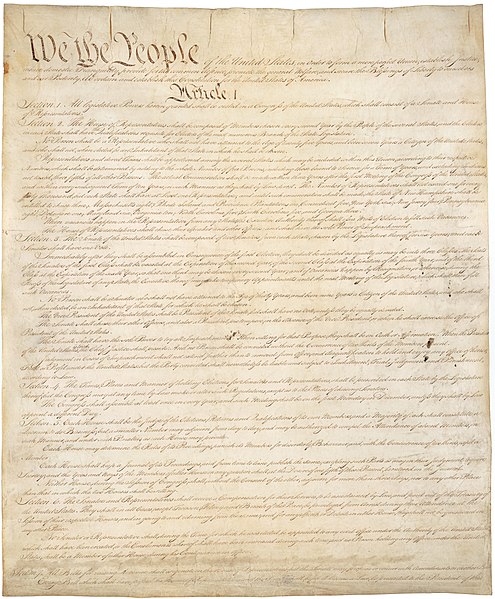
A recent story in the Washington Post cites such concerns with the God Bless the USA Bible, on sale in September.  This particular Bible is bound together with the US Constitution.  The reason people are concerned is a valid one—whenever something is bound with the Bible a significant number of people can’t tell the Bible from the other content.  Believing the Bible to be magically revealed by God, the entire content between the covers becomes sacred revelation.  Putting a secular document like the Constitution in there suggests to some (perhaps many) that said Constitution belongs to the canon of Scripture.  It’s a real enough concern, as easily attested by any who teach the Bible.  Even college-level students don’t know what’s Bible and what’s commentary.

Photo credit: U.S. National Archives and Records Administration, via Wikimedia Commons

Both the Good Book and the Constitution are documents in the public domain.  You can do with them what you please.  You could bind the King James Bible together with Moby-Dick if you wanted to, and if you wanted to make a long book even longer.  The price is confusion among those who can’t really tell the difference.  Many of the more evangelical stripe say “I don’t interpret the Bible, I just read it.”   Putting aside that reading is interpretation, the problem becomes clear.  That which is bound together in one book is one book.  After all, The Book of Mormon mentions Jesus in America.  The hazy view that many readers have of what’s actually in the Bible makes it dangerous to put other documents together with it.  The problem becomes clear when a nation believes itself chosen.  Chosen for dominion, it look to a specific book in support of that idea.  Even if it doesn’t know much about what that book actually says.


Whose DNA?

The name Francis Crick will forever be associated with the discovery of the double helix of the DNA molecule.  Indeed, he co-won a Nobel Prize for that particular insight.  Of course I didn’t learn about Crick when I was growing up—we weren’t an educated family.  I first learned about him in college when his book Of Molecules and Men was required reading for one of our religion classes.  This book is highly critical of religion, and Christianity in particular.  We read it not to assent to his logic, but rather to have it picked apart in class.  (Grove City was a conservative Christian college then, but less so than it is today.)  Although it has been over three decades since I’ve read it (I found my copy again when we moved three years ago) the sharp critique has remained.  Crick was a staunch materialist.

Image credit: brian0918, via Wikimedia Commons

Although I appreciated his contribution to science, I really didn’t have too much cause to think about Crick after that.  I’m not a geneticist and there are certainly a lot of people out there who make sharp criticisms against religion.  What brought Crick back to mind was when I recently read that he had later come to the conclusion that human DNA was too complex to have evolved by chance.  The piece I was reading used the unfortunate term “intelligent design” so I had to follow up.  Francis Crick hadn’t become a Fundamentalist, had he?  No, it turns out.  Crick had come to believe in “directed panspermia.”  Panspermia is the concept that life isn’t isolated on earth—it exists in space and was brought to our planet by space dust, or some such means.  The “directed” part was what caught my attention.

For a vocal critic of religion, Crick had come to believe that extraterrestrial intelligences had engineered at least human DNA.  This is of particular consequence because until recently the idea of extraterrestrial intelligent life was a laughing flashpoint among scientists and skeptics.  In fact, it’s still regularly labelled as “paranormal.”  I was surprised to learn that a scientist of Crick’s stature had come to this conclusion while being so utterly critical of religion.  Of course, views can change over a lifetime.  No one is born with all the correct knowledge.  It is interesting that Crick believed human DNA to require some outside intervention to become what it is.  Some religious believers share this outlook, but with quite a different origin source in mind.  It just seems to me that our collegiate discussion of his work seems to have been woefully incomplete.


Watching The Witch

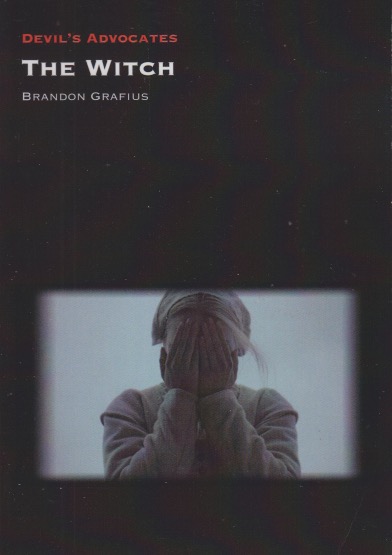
Good things often come in small packages.  I’ve read a couple of Brandon Grafius’ books before, and I’ve had The Witch on my reading list since I found out about it.  This is one of those books that benefits from knowing the raison d’être of the series of which it’s a part.  Devil’s Advocates is published by Auteur Publishing as a set of brief books on specific horror films.  If I didn’t have other financial obligations I could see myself purchasing the entire series.  Fortunately this volume was on a film I’ve seen (horror films have become so prolific that I can’t afford to see all of those I’d like either).  The Witch is a provocative movie, having gained critical acclaim as well as box office success.  It’s also a complex film.

Grafius ably takes us through the Puritan background that’s necessary to understand the social, and familial tensions that make this movie work.  Robert Eggers is a director known for his meticulous attention to period detail.  Even while weaving the fantastic into his stories, the plots are entirely believable.  Grafius has a solid grasp on how religion and horror interact.  That’s on full display here.  Looking at The Witch as an exploration of folk horror, he illustrates the importance of the landscape to the tale as well as how isolation sets a family off against one another.  The Puritan religion creates a monster, as it were.  Grafius doesn’t shy away from the misogyny behind the developing idea of the witch, either.  His explanations of—not excuses for—it are insightful.

Granted, horror films aren’t everyone’s cup of tea.  Or coffee.  As I sensed when writing Holy Horror, fans of the genre enjoy reading about it.  I often wonder why those of us who watch it do so.  In my case, in any way, it feels like a compulsion.  It’s a coping technique and perhaps an antidote to the headlines.  Horror can be an intensely creative and socially aware genre.  The best of it critiques the flaws of society.  As Grafius points out, Thomasin only wants to be a good girl.  The Puritan society into which she was born projects the image of the witch upon her.  Eggers gives us a real witch in the woods, of course.  Grafius explains how this becomes the aspiration of a young woman who’s only trying to do what’s right.  I have a feeling I’ll be going back to the Devil’s Advocates series again.


Buried Truths

I owe a lot to fossils.  Growing up just a block from a fossil-laden river in western Pennsylvania, as a kid I’d go fossil hunting with my brothers.  They weren’t difficult to find.  Maybe not museum-quality, but not bad considering that they were free for the taking.  I’d pour over some rock with many shells perfectly impressed in it and wonder.  Of course, my childhood religion taught that the earth was quite a young place because that’s what the Bible seemed to indicate.  Other than Chick tracts and related comic books we didn’t have many books around the house to explain this discrepancy.  One thing was pretty clear—the fossils were quite real.  We had no doubt that there had been dinosaurs.  How they fit into the Bible’s chronology (since the Good Book was written long before dinosaurs had been discovered) was unclear.

Mine was not an educated family.  We simply believed what the preacher told us.  Since Fundamentalist preachers don’t attend seminary, their response was probably something along the lines of, “the Bible says…”  Thinking about how to apply the Bible in a complex world was not their strong suit.  So we’d be taught that evolution was evil, but just literally a stone’s throw from the church hundreds of fossils could be found.  I suppose the evidence of those fossils kept me grounded.  I never could buy the “theory” that God created the world with apparent evidence of great age to test our faith.  A deity like that isn’t worthy of the name.

I still pick up fossils when I find them.  Apart from a brain coral and some crinoids, mostly I just find shells.  Knowing that this particular rock is evidence of the sea floor millions of years ago is thrilling.  It puts me in touch with the great antiquity of our planet, the times when people had not yet evolved to complicate everything.  Just a few days ago I found a rock with a vignette of life under the sea.  Looking at it closely there are crinoids among the shells, and what appear to be a drag mark where some unknown creature disturbed the silty Paleozoic sea bottom on its way someplace long before humans showed up.  Fossils always remind me of the responsibility of reading the Bible with an eye toward rationality and a recognition that a guide isn’t the same thing as a taskmaster asking you to believe the ridiculous.  That, I suppose, is why I can’t pass up a fossil on the ground. 


Out There

Do you see them?

While recently re-watching an X-Files episode, I noticed something odd.  A quick online search revealed that I wasn’t the only one to notice this particular quirk, and, in fact, there had been considerable previous discussion on it.  What really struck me wasn’t the resolution of my question, but the fact that so much had already been written on a single episode of a single television program.  It’s one of the problems with trying to keep up with pop culture—there’s so much out there (besides just the truth!).  I’ve been exploring pop culture with the Bible for a number of years.  There’s plenty enough in the X-Files to warrant a larger project, but even without that, there’s just no way to keep up.  You could spend your life trying to unpack what several people wove into a single program.  Each episode took considerable thought, planning, and resources.  Once it was out there, reception history began.

So much of scholarship is analyzing what someone else has done.  Some monographs are more footnote than actual text.  What I’ve been suggesting regarding pop culture is that it is the way people understand religion.  The information people receive often comes from what modern authors and screenwriters compose.  A few X-Files later, during a religiously themed episode, something was implied to be in the Bible that’s not.  Again, I address this directly in Holy Horror, but every time I see an example, it catches me by surprise.  The average viewer doesn’t know to research what they’re being told and if it’s played straight, as it was in this episode, it becomes part of the truth that’s out there.

Those interested in how beliefs develop and change over time have recently begun to ask about the average person instead of “official religion.”  In antiquity this is difficult to gage since the average person was illiterate and poor.  Even in modern times with relatively high amounts of literacy and everyone writing on the internet, trying to understand religion is difficult.  Now it’s a matter of too much information.  Fan sites exist for popular media.  The canons of Harry Potter fandom alone would require a lifetime of study.  Limiting oneself to the X-Files might be a start.  My own publication history with pop culture and religion began with Sleepy Hollow.  It could have just as easily begun with the X-Files.  No matter where you choose to begin understanding religion, you’ve got your work cut out for you. And this post has just added to it.


The Unholy Trio

Culture has a powerful prophylactic component.  People don’t want to be seen questioning authority and accepted “truths.”  This is especially the case as they grow out of their teenage years and learn to fit in as part of the herd.  Some subjects make this particularly clear because cultural biases deride them, never giving them a fair chance at consideration.  I’ve run into a number of these over the years, but an example will bring these abstractions to clarity.  Recently a commentor sent me to the video “Kaneh Bosm: The Hidden Story of Cannabis in the Old Testament.”  The idea is one I’ve addressed before—that cannabis was used in incense combinations in the biblical world.  Now, I haven’t done research on this, but what becomes clear is that many scholars over the years have dismissed the idea out of hand because, well, it invokes pot.

The reason marijuana—something I’ve never used and have no desire to try personally—has been demonized is one of considerable interest.  This is especially the case since it appears to have been widely used in antiquity.  No respectable biblical scholar, however, would be caught suggesting that it might have been incorporated in the rites of ancient Israel.  The modern stigma of cannabis, in other words, discounts the possibilities that in ancient times it was used in sacred contexts.  The “war on drugs” in the United States was largely led by religious conviction.  The heirs of Christian prohibition.  Sure, some drugs can lead to real problems.  The deeper issue, however, is that society’s structure leads people to the place where drugs seem to be the only answer.  The civilized response?  Make them illegal.

That mark against controlled substances colors our view of history.  If such things are illegal now then they must never have been used.  Chemical analysis of various utensils (what might be called “paraphernalia” today, indicates that ancients knew of and used cannabis.  Our ordered view of ancient Israel as receiving the one true and utterly sacred faith preclude the possibility that our demonized substance could’ve been used in ancient times.  I’ve noticed this with the other topic of the documentary—Asherah.  Conservative scholarship still denies that ancients might’ve thought Yahweh had a spouse.  (My own work does not deny this, but simply questions the nature of the evidence; I think it is likely people believed Yahweh had a consort.)  So we once again collide with a “no go” topic.  So, after we admit the possibility of drugs and sex, so the thinking goes, what we we find next—ancient rock-n-roll? 


Shunned

Belonging is important for our species.  As much as some of us may be introverts, we still need other people.  Given the wide divisions of human interests and activities, one way people have traditionally come to know one another is through religious organizations.  Let’s face it, getting to know your neighbors can be dicey.  People from work may not be those you want to spend off-hours with.  Joining an organization is a great way to get to know people and, if you’re seeking like-minded friends a religion has been a time-honored way to find them.  Of course, many religions are now becoming as polarized as our society, but even despite that one religious practice seems especially insidious—shunning.

Shunning has been used in Christianity from the beginning.  One of the real issues, verging on torture, is when someone is raised in a tradition and has made all their friends in it.  Many sects encourage this, some overtly, other less so.  Those within the fold will not, it is emphasized, lead you astray.  If you are shunned, then, you lose not only your welcome at social gatherings or worship, you also lose your friends.  For separatist sects—consider the Amish, for one example—integrating into another society is extremely difficult.  You were raised to live one way and how would the shunned even begin to know how to live like other people?  This applies not only to small sects; being part of the group is a major draw for everyone from Catholics to members of an evangelical mega-church.  It’s a means of having a community.

Moving accounts exist of Mormons or other believers being excommunicated or disfellowshiped.  The world they knew is gone.  Religions create community and the lost of that community is a cruel punishment to invoke.  Particularly since the offenses that lead to such exclusion are often doctrinal—matters of personal belief.  People are naturally curious, and the desire to learn more frequently leads into uncharted territory.  Some traditions will then invoke sacred texts—more specifically a certain interpretation of sacred texts—to justify the exclusion of the curious.  Those texts, however, are interpreted by other fallible human beings.  Still, the fact that religions continue to use shunning (call it excommunication or any other name) is an indication of the inherent cruelty that religions can express.  What could be more hurtful, especially among those who separate themselves from the world, than to throw them out of the only enclave that they know?


Just Justice

Like many people raised to believe in democracy, I’m distressed to see that the right wing, worldwide, has taken to a full-on attack against it in an effort to keep power.  In the United States Republicans that stood up against the cult of Trump (who was no architect, but a figurehead only) are now being run out of Dodge by their own party.  Meanwhile a friend in Britain sent me an article about the open and obvious corruption of Boris Johnson and how the Tories are completely overlooking it in an effort to keep “democratic authority.”  It wouldn’t be so bad if the right wing came right out and said “we want to run things, no matter what it takes,” but instead they appeal to religious ideas and try to make it seem like their side alone appeals to “justice” while doing the exact opposite.  Paging Mr. Orwell…

The best test case is Jesus.  Have you noticed how Jesus has fallen out of right-wing Christianity?  Apart from occasionally taking his name in vain, the principles they stand for generally go against the core teachings of the Gospels.  The fascism of the right wing has taken what good there was in Christianity and jettisoned the kernel to keep the shell.  It’s like a bag of pistachios where all the nuts have been discarded, leaving only the hard casings behind.  The really sad thing is that both in the US and in Britain, these power-mongers are in the minority.  They use political loop-holes to make their strong-arm tactics look like the will of the people.  Things like restricting voting access, made possible by courtroom politics.  Isn’t Justice supposed to be blindfolded?

We know for a fact that many of these same people are fully cognizant that fascism led to World War II.  They know Hitler used the same tactics to gain power.  They know that millions and millions of people died.  And now they trumpet the one thing that brought this nation together—the recognition that fascism was evil—as the way of true Christianity.  I’m sometimes asked if I believe in demons, having written a book on the subject.  Demons are, if you look closely, are considered the source of evil in the world.  Quite often stories about them have them possessing good people by pretending to be something that they’re not.  Can demons take over entire political causes?  Did we not see naked evil in the Nazi regime?  How do we not recognize it now that it has taken root in one political party that has claimed the name of “Christian” while simultaneously discarding the teachings of Christ?


Women and Mothers

This is our first Mother’s Day with a female Vice President.  After four years of a female-groping administration, it feels like we’ve made a turn in the right direction.  Ironically, it’s often religions that keep women oppressed, even while women are often more faithful to them.  Religions like to claim to have the answers, and for the monotheistic traditions an origin myth with Eve—the first mother—as the first picker of forbidden fruit, has suggested one answer that has held women down for centuries.  Taking origin stories too literally can cause so much suffering in the world that we’re confronted with the question of their morality.  Religions are for people.  If they exclude half the human race we need to pause to ask if we got something wrong.  It’s Mother’s Day, always on a Sunday.  It’s a chance to think about such things.

Many churches will have sermons honoring mothers today.  Will they work for the wellbeing of women for the remaining 364 days of the year?  Our society, purely on the basis of biology, routinely puts women at risk and underplays the need to help them when that happens.  I’ve seen this firsthand.  We’re finally starting to get some female representation in Congress, yet less than a quarter of the seats are held by women.  Isn’t government supposed to represent its constituents?  Why has half of humanity had to struggle for so long to be treated as equal?  Mother’s Day cannot be a salve to ease our consciences about mistreating women for the rest of the year.  Equity should not be a goal, it should be reality.

We’ll be thinking about our mothers today.  Still under a pandemic, we’ll be Zooming them or calling them.  Those fortunate enough to live close may even get to see them in person.  These mothers sacrificed a lot to take on that role.  Our society could not continue without them.  We’re starting to come to the realization, I hope, that it is male-devised forms of government and business that are the problem.  They protect the wealth and power of a few.  They jealously guard against letting men offer the true justice of equity.  Some religions have begun to address the obvious injustice they have largely originated.  The story of the Garden of Eden was meant to teach a lesson.  That lesson has been abused for centuries as a way of making women seem somehow less than men.  It’s Mother’s Day.  Let’s see if we can’t learn to read more deeply and apply what we have learned.


Reviewing Nightmares

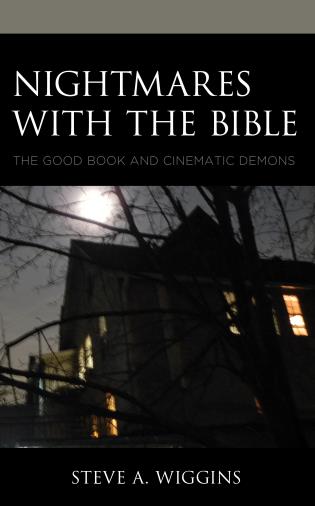
If you’ve wanted a copy of Nightmares with the Bible but the cost is a little dear, I might recommend you look on the Reading Religion website where, as of my last look, a free review copy is available.  The catch is you have to write a review.  This is, of course, first come, first served service.  I tried, more than once, to get Holy Horror listed on their website for review, so I’m glad to see one of my books finally made it.  The idea of the horror hermeneutic seems to be catching on.  Technically speaking, however, what I’m doing is more history of religions than hermeneutics.  History of religions, at least part of it, examines whence ideas arise.  Nightmares asks that question specifically about demons.

The specific focus on horror in religion is a fairly new field of study.  Biblical scholars—indeed, those who specialize in very old fields of study in general—must keep looking for new angles.  Unlike any other piece of literature, the Good Book has been the target of scholarly interest from the very beginning of the western academic tradition.  It’s easy to forget, when looking at many secular powerhouse schools, that the very idea of higher education arose from what is now the discipline of the lowest paid of academic posts.  Being so old, religious studies, known at the time as theology, is hardly a venerated field.  I tend to think it’ll come back.  If you look at what’s happening in politics in this country, it’s bound too.  And yes, there will be horror.

Horror studies in the field operates by recognizing that horror and religion share common ground.  Like religion, horror is considered backward and uninformed.  Neither is really true of either horror or religion, but perception becomes reality for most people.  Finding themselves in remedial class together religion and horror have begun to speak to one another.  Horror has quite a following, even if those who like it keep mostly quiet about it.  The same is true of religion.  Many of the most effective horror films bring religion directly into the mix, often making it the actual basis of the horror.  The first books that I know of that brought the two explicitly together only began appearing at the turn of the millennium.  At first there were very few.  Now an increasing number of tomes have begun to appear.  For better or worse, two of mine are in the mix.  If you’d like to review the most recent one, you might check out Reading Religion, and maybe spare a kind word or two for what are, after all, baby steps.


Post-1984

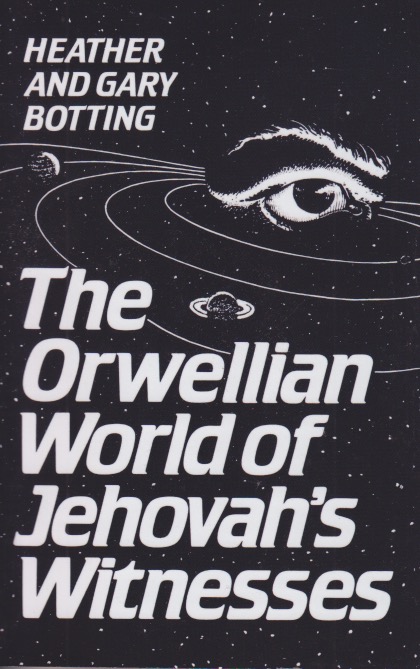
To truly understand a religion, you must be part of it.  This is the dilemma that underlies the entire discipline of religious studies.  And it all comes down to that slippery concept of “belief.”  One of the books that has been on my reading list for years now is Heather and Gary Botting’s The Orwellian World of Jehovah’s Witnesses.  What finally prompted me to read it was the (relatively) recent receipt of an invitation to spend what many call Good Friday (for it is today for the Orthodox) with the local Kingdom Hall crowd.  As I mentioned in an earlier post, the last people to come to my door before the pandemic began were the Jehovah’s Witnesses.  I’ve read about them before, but scholarly literature on the sect is rare, despite their obvious influence.  One reason for this, I suspect, is that to understand you have to partake.

This is where the book by the Bottings comes in.  They were raised as Witnesses and eventually left.  They have been on the inside.  This book takes the interesting hook of comparing that inside world to the vision of the Party in George Orwell’s 1984.  Not only that, but the math regarding the end of the world, or Armageddon, more properly speaking, showed that 1984 was the terminus for the next phase of Witnesses’ history inaugurated by the spiritual return of Jesus in 1914.  It is no accident that this book itself was published in 1984.  The world of the Watchtower is explored creatively and somewhat thoroughly here.  The only problem with reading it nearly forty years later is that I’m left curious for updates.  The Witnesses are, after all, still out there.

The thing about beliefs is that we all have them and we can’t always explain them.  They are part of our rational faculties, but also part of our emotional thinking as well.  No one is totally objective and even Mr. Spock gives in to feelings once in a while.  No system of belief is entirely rational.  Since we don’t have all the data it necessarily can’t be.  We tend to believe what we feel is right.  Those raised in traditions of NRM (New Religious Movements) absorb the beliefs their parents and guardians teach them just as much as Catholic school kids do.  They are often warned about those outside the tradition and what they will inevitably say about it.  This makes them look prophetic.  Once a child has been raised in an exclusionary system, getting her or him out of it is not only difficult, but often damaging to them.  So it is with belief.  This book really made me think.