Heavenly Questions

A lot can happen when you’re in a coma. Or nothing at all. I haven’t read Kevin and Alex Malarkey’s account of the latter’s trip to Heaven during a coma, and it looks like I never shall. A story by Kyle Swenson in The Washington Post explains how Alex Malarkey, now that he is no longer a minor, is suing Tyndale House over the publication of his Near Death Experience (NDE), penned by his father. The story, according to the Post, was a fabrication. Alex awoke from his coma recalling nothing, but Kevin knew a good thing when he saw it and wrote an account of the young boy going to Heaven. Alex says it never happened. The Boy Who Came Back from Heaven is now being pulled and pulped as a hoax.

NDEs are real (even if one didn’t happen in this case), but what they actually are is a matter of debate. The mainstream interpretation is that they are the last gasps of consciousness before a brain dies, temporarily. These often comforting thoughts can be quite similar in very different contexts and sometimes include the formerly deceased knowing details that they couldn’t possibly have witnessed in real life. Scientists willing to buck convention explore these episodes less with the intention of proving Heaven is true than with probing the idea that souls are real. That consciousness somehow continues. That life may, after all, be eternal. Since there are no scientific apparatus in the afterlife, there’s no way to measure or quantify such events. This leads most scientists to conclude that these are merely dying thoughts, or, as in the Malarkey case, hoaxes.

Ever since Raymond Moody’s Life after Life, confessional publishers—particularly of the evangelical brand—have promoted such stories. Religion and science, while not necessarily the cats and dogs they’re presented as being, don’t often coalesce around a common nucleus. Part of the problem is that spiritual events are beyond the reach of the scientific method since no laboratory conditions exist to test them. A number of scientists and medical doctors attest the reality of NDEs, but these occur in human consciousness—a realm of which we know little. Religious publishers know a good story when they see one since the doubts cast by science have to be regularly dispelled. The problem is the money such stories attracts also allures those seeking the fiduciary comforts of this material world. In this case, it seems, if you didn’t have the experience yourself you could capitalize on someone who did. Or didn’t. Those eager for proof are always willing to buy and sell the story.


Ouch! Ouch!

The cold and flu season seems to have had an extended life this year, what with snow still falling in April and yet another week of cooler weather in the forecast. Although there’s no cure for the common cold, we do have the ability to prevent many maladies with a vaccine. Under eight years of Republican governance, New Jersey had become quite friendly to those who don’t want their kids vaccinated, despite being the most densely populated state in the union. The reason many objectors give? “It’s against my religion.” There was a massive outcry recently when a bill was approved that requires religious objectors to state what their religion is and what exact tenet of that religion vaccination actually violates. The statements of those opposed show that religion was largely being used as an excuse by those who didn’t want their children inoculated. Confirmation class has a purpose after all.

Social responsibility, of course, reaches beyond the home. In fact, it begins as soon as we open the door. Add to that the fact that most people can’t describe the basic beliefs of their own religion accurately and you have a real case for contagion. When you sign up to join a religion—what a capitalistic idea!—you generally go through training classes to let you know what you’re publicly proclaiming you believe. Given that religion deals with everlasting consequences, you might think most people would pay close attention, embedding the facts deeply. That, however, often isn’t the case. Beliefs are handed down like family heirlooms, or are gleaned from watching television (usually Fox). One’s religion is useful for making excuses, but people hate to be challenged on this point.

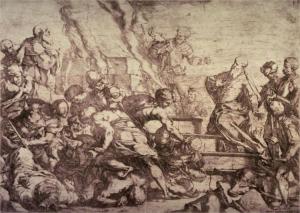
In the right’s continuing war on social responsibility, they’ve been pumping the media full of anti-vaccine fear. Vaccines, they’ll aver, use human embryos. Any other other form of conspiracy theory can be used to turn hoi polloi against them. Our society was built into what it is by as many people as possible agreeing that when it comes to the good of all, individual prejudices sometimes have to be overlooked. It’s natural enough for parents to be concerned for the wellbeing of their children. It’s sadly ironic when their “religion” tells them that the most basic protections are somehow evil. Who can help but to think of Abraham holding the knife above a bound Isaac on the altar? That is, if they happen to be of a certain religion, and if they paid attention during their version of confirmation class.


Situation Norman

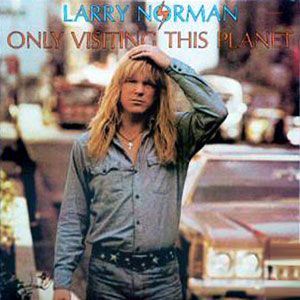
It was in a locker room. I couldn’t believe I was here. First of all, at Gordon College—that bastion of conservative Christianity. Second of all, in the same room as him. A friend had offered to drive me up here from Boston, where we were both in seminary. I was a little saddened to see less than 200 chairs set up on the gym floor, carefully arranged on a tarp so as not to mar the shining wood beneath. Larry Norman came onto stage to great applause, and was remarkably intimate with his fans. He’d been a big name in the 1970s, almost single-handedly starting the Christian rock genre. After the concert was over, my friend said “Do you want to meet him?” Here he was, in the locker room, taking the time to speak with fans, individually. He refused to sign autographs, preferring to give the glory to the Lord. But he listened, he responded, and, it was clear, he loved.

While the sections of the brain that process religion and music may not be the same, we know that our gray matter is intricately interconnected. Analysts have noted that the most famous religious leaders of modern times have quite often been deeply affected by music. Religious services without some form of music are in the minority for a reason. And it really doesn’t matter what style said music takes, it moves people. Instead of apologizing for my own musical tastes, I’ll simply note that I was exposed to Larry Norman at a young age. Although his religious perspective and mine had parted ways before I had the chance to meet him, I’ve never disparaged his music. It is authentic, innovative, and above all, sincere.

Gregory Alan Thornbury has just published a biography of Larry Norman. I will surely read it. Although Christian rock has grown insipid and cloying since it began, it is still a remarkably lucrative business. Evangelicals will pay good money to get those rock rhythms with unthreatening words and praise of Jesus thrown in. Norman’s songs, however, were complex and nuanced. Equal parts love and social justice, they might not even mention Jesus. Or when they did, they might suggest he was a UFO. Unconventional. Blasphemous to some. As the ‘70s faded into the ‘80s, Larry Norman was considered old news. He had, however, started something that was bringing other people lots of money. And he looked me directly in the eyes late one night in the locker room of a conservative Christian college, and told me to keep on believing. Obscurity, he showed by his life, is no measure of a person’s actual importance. And music and religion can never be separated.


Mediated Reality

According to the Good Book, Methuselah lived nearly a millennium. For all that, the information on him in Genesis occurs in a mere five verses, in a span of seven. We learn when he married, whom he sired, and how long he lived. Not much information of the last antediluvian, especially considering how much time he had. When I searched for him on the web the other day, the information box that showed up on Google had, at the very top, a picture of Anthony Hopkins. I immediately recognized his makeup from Noah, a movie that I just can’t make myself love. The fault for having no other image may be the failure of human imagination—where do we find an image of a thousand-year old?

The internet mediates our reality. One of the points of both my books now in the works is that modern understanding of the Bible is largely media based. Few people have the time or inclination to read such a big book. (Given the continued evangelical support of Trump, it’s pretty clear that most of them haven’t read it either.) We want other people to do the heavy lifting and give us a summary in neat little boxes at the top of the screen. There’s far too many things to do in this tangled web to be spending months reading a ponderous, outdated tome, even if it does have plenty of sex and violence. Even if it influences the lives of each and every person living in America every single day. We’d rather have someone else—preferably not some egghead with a Ph.D.—give us the executive summary.

Once I did the math. If you add up the dates in what I used to call “Genesis years,” the year Methuselah died was the year of the flood. The Bible doesn’t say that old Methuselah drowned when the windows of heaven were opened, but it’s a reasonable conjecture. Nature abhors, it seems, a human being living so long. Our bodies just aren’t built for it. Some trees, on the other hand, have been alive for thousands of years. Botanists call them “Methuselah trees” (I told you the Good Book influences everything!). The pity is we know so very little about this ancient human being from days of yore. Was he a good man? He seems to have been washed out in the sluice gates of what became one great universal sewer at the time. Although we know little, his life would make quite an epic movie, I think. We already have an actor lined up, for Google tells me so.


Knowing It All

Reading about the Trump administration underscores once again the traditional American contradiction of, love of, but mostly hatred toward, experts. When you’re lying on that operating table, you stake your life that an expert is going to perform the surgery. When you buy that airline ticket, you’re banking that the pilot will be an expert. If you’re electing the most powerful individual in the world, you’ll excoriate experts and defer to the guy with the weird hair that says whatever he pleases and has never been a public servant a day in his life. This observation isn’t original with me, of course. I’m only an editor. Nevertheless, the same dilemma comes down to my little world of academic publishing as well. Most academics don’t understand this business—I was an academic at one time and I certainly didn’t—and yet don’t like to bow to the expertise of those who do.

Please don’t misunderstand. I’m making no grand claims to understanding this industry into which I unwittingly stumbled. I have been involved in it for over a decade now and I’m still learning. One of the things I’m learning is that many academics don’t trust experts. In part it’s academic culture. A doctoral program, if it’s a good one, will make you question everything. Sometimes even experts forget when to engage the brakes. When dealing with the experts at a publishing company, many academics doubt the expertise of those who do this day in and day out for a living. Books, however, have measurable sales records. There’s hard data for analysis. Not that it’s foolproof (but what is?), such metrics are time-tested and based on reasonable data sets. Often that’s not enough to convince an expert that other experts know more than they’re revealing. A personal philosophy, but one which I pursue with appropriate skepticism, is that other people should be left to do their jobs. As I frequently note, those who talk to the bus driver, freely giving advice, often make the situation worse for everyone.

The case of religion, however, is a special can of worms. There are no experts in this field, even among those of us who are experts. Had I realized this when I was younger, I’m not sure it would’ve made much of a difference in what I ended up doing with my life. You see, religion is all about ultimates. The big questions. The sine qua non of every single thing. When I read about things like politics, or entrepreneurship, I think to myself, “That’s all fine and good, but at the end of the day, is it what really matters?” If life is a search for meaning, why not grab it by both hands and try to become an expert at it? Some would say that’s the job of the philosopher, but let’s face it, religionists and philosophers deal in the same currency. One is more abstract than the other, to be sure. Still, don’t take my word for it. Please consult an expert.


Americanism

I’m a bit too much of a contrarian to be a regular bestseller reader. I do occasionally bow to curiosity though, and I do have a lot of time on the bus. But that wasn’t the reason I turned to Michael Wolff’s Fire and Fury: Inside the Trump White House. Purchasing this book was a statement. Another in a long line of protests in which I’ve taken part since January of 2017 (and even before). You see, I mourn. I mourn what our country has become. My first indication that I should write (which I of course ignored) was the winning of a statewide essay contest my senior year in high school. The topic of the essay was “Americanism.” My piece was respectfully cynical; I was surprised I won. This was in the days before personal computers and I didn’t think to keep a typed, or even hand-written copy.

The essay was cynical not because I don’t believe in America, but because I do. I’ve been confronted on this issue concerning my blog occasionally. My jeremiads. You see, you only get this fed up with things when you love them deeply. I sometimes rail about higher education, for example, because I care about it. Fire and Fury created in me a—to borrow from the book’s vocabulary—Kafkaesque bewilderment about how a nation based on high principles could possibly sink so low. Politicians are perhaps the most self-serving of human beings, but at least they try to make sure the country doesn’t go off the rails. This train leapt the tracks months ago, and our elected officials refuse to do anything about it, each playing their own angle, hoping personally to come out of it ahead. Worth a jeremiad, I’d say.

I was a Republican in high school. I wasn’t old enough to vote, so that party affliction was never official. When I did register at 18 it was as an independent (remember, contrarian). As a Fundamentalist I was ahead of the Tea Party, at the time. Even with this level of patriotism I wrote an essay taking my country to task. I was raised in a poor family. Told an education would improve my chances, I found myself facing predatory loan officers and others eager to wring my blue collar until it was possible to twist no further. If I had no money, my future money would do. I’d already had a taste of that as a high schooler. That was three-and-a-half decades ago now. I kinda hoped the country might improve in all that time. And I kinda wish I’d kept a copy of that essay as a memento of more optimistic days. Fire and Fury sells so well, I suspect, because I’m not really alone in feeling this way.


Easter Monday

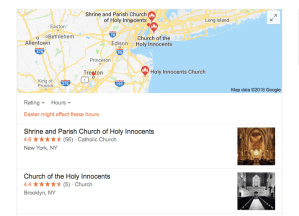
This year has been a comedy of liturgical errors. Ash Wednesday fell on Valentines Day and Easter on April Fools. Notwithstanding the clash of sacred and secular, the ironies seem to grow each day. I arise early to write. Even on weekends. Before the time to head out for any religious service, I’m sitting at my keyboard, letting my thoughts have their free-range time before penning them back up again for either being with other people or beginning the long work week. On my way to work, I frequently pass Holy Innocents. A Roman Catholic church on West 37th Street, it stands out among the more commercial ventures on either side. Yesterday, Easter morning, I decided to google it. I’ve always been curious about churches, and I’ve never been inside this one.

Google gave me a map of Midtown Manhattan, along with a statement of when this business would be open. “Easter might affect these hours” it helpfully noted in orange letters. An orange-letter day! Easter might affect these hours. Those who champion Artificial Intelligence may need to come up with a way of having “that talk” with their computers. How could any intelligence unaware of the deep-seated human need for the transcendent understand the difference between a church and a business? (Okay, I can hear the more cynical saying there is no difference, but you know what I mean!) How would any algorithm know that Easter is the holiest day of the Christian year and that, at least for some churches, yes, they will be open for business?

Some parishes, we must explain in 0s and 1s, begin this service at midnight on the cusp between the last and first days of the week. Others will gather sleepy-eyed parishioners on top of a hill, out in nature, to watch the sun rise. Still others will eschew any holiday and treat it like any other Sunday. The reasons for these stances are nuanced and not easily understood even by human beings. Our robot overlords, let us hope, are programmed to understand this peculiarity of our species. We relish the thought of Easter, at least in this hemisphere, as telling us that winter is indeed over. Although snow may still settle on the crocuses, it will not last. Days are longer than nights now, as they must, of a mathematical certainty, be after the Vernal Equinox. We are entering the light phase of the year. So much hope and anticipation are wrapped up in this brightly colored, pastel holiday that we have trouble explaining it rationally. Today, of course, everything is open for business today. Except a few churches, as Google may fail to let you know.


Two Cities

Augustine of Hippo wrote that there were two cities. If you’re reading this blog you probably know what they are. Today, according to some, is Easter. For others it’s not quite there yet. Call that one city. It’s also very near that other national holiday—tax day. That’d definitely be the other city. Now, I’m not going to go into any detail here, but I’ve always done my own taxes. If you’re old enough to remember going to the public library to pick up two or three copies of the paper forms, sitting at home with a pencil, eraser, pen, and TI-30, and spending an entire Saturday reading through the instructions and scribbling, you know what I’m talking about. These days everything’s online.

I can’t recall how many years I’ve used TurboTax. It was free, easy, and generally led to a refund. I miss those days. This year when I sat down with Intuit’s child, it started asking questions I didn’t understand. Perhaps you’ve run into some industries that do this—they make up their own vocabulary and if they use the words in a way the dictionary doesn’t, well, it’s the dictionary’s fault for not keeping up. TurboTax started doing that. And unless you want to pay even more than they’ve already sold you up for, there’s no way to ask questions. The answers online use the same obscure lexicon. So this year I had to do probably the most adult thing I’ve ever done. I got an accountant.

Setting up the appointment for after work, it was a matter of looking at dates both my wife and I, and more importantly, the accountant, had free. It was only as judgment day dawned that I realized it was Good Friday (for some). Arranging to work from home that day so I could get to the office before the buses rumble out of New York, I ran into a traffic jam. No doubt people out to do their last minute Good Friday shopping. We were meeting the accountant for the first time, and I wanted to make a good impression. Be punctual. I had neglected to coordinate the two cities on my calendar. The accountant was understanding. He commented on how easy our taxes were, compared to many. Turns out TurboTax had been closing off many perfectly legal options and charging us for the privilege. So now it’s Easter. Taxes are due in a couple of weeks. There are two cities, and if either is neglected there’ll be Hell to pay in the end.


Group Activity

While reading about various religious phenomena—both positive and negative—one of the recurring aspects that forces itself on our attention is contagion. Going back at least to the 450 prophets of Baal on Mount Carmel, the idea of crowd sourcing religious frenzy can be disturbing. It involves groups of people and loss of control. Not only is the frenzy itself frightening, but also the apparent paranormal accoutrements to such enthusiasm. In more specific terms, the revivals of the “Second Great Awakening” and the mass exorcisms described by Michael Cuneo in American Exorcism both boast supernatural elements. I’m not saying there can’t be a scientific explanation, but I am saying what happens in such circumstances has been understood to be supernatural by educated, experienced people. Both demoniacs and new religious converts display superhuman strength and atavistic behaviors that one doesn’t otherwise see in a lifetime. Once they start happening, they spread.

This is one of the draws of charismatic Christianity. Speaking in tongues can be quite contagious, I’m told. According to Cuneo’s carefully anonymized accounts, so can demonic possession with its attendant paranormal activity. Some scientists have explored the idea of consciousness as a “hive mind” phenomenon. Many “minds” brought together can produce something greater than the sum of the parts. We’re used to this in the world of insects, but since humans like to be radically individual we miss the instances where it occurs among our own species. While not always so, such events are often religious in nature. People gathered together in emotionally charged settings, personal experience draws off of that of others, and suddenly a person’s doing something they formerly believed to be “impossible.” God and demons both have explanatory value here.

Despite our tendency to want to destroy each other, humans have great potential when we work together. Our petty fears and jealousies could be contained, disassembled, and repurposed, if only we possessed the will to do so. The desire to stand out in a crowd—not to blend in but to be a unique individual—runs strong in our fractured psyches. We hate being mistaken for somebody else. Religious experiences, much maligned these days, tend to be group experiences. Yes, a mystic may have a personal and highly individualized rapture, but in the presence of others the excitement may be shared. “Mass hysteria” and group hypnosis have sometimes been posited as the culprits behind such events. Those who participate, however, use other terms to describe what has transpired. They may not call it a “hive mind,” and they won’t be alone in rejecting the phrase.


Signs of the Times

America’s phallic affair with guns should give us pause to wonder what the true motivation is. My wife sent me an NPR story on the World Peace and Unification Sanctuary in Newfoundland, Pennsylvania. Congregants gathered carrying AR-15s, saying that the Bible’s rod of iron was really a semi-automatic. Did I say it was a phallic affair? According to the story by Scott Neuman, some of the faithful had substituted the crown of thorns for a crown of bullets. Literally. That man dying on the cross because of government overreach, I suspect, wishes he had his hands free so he could rub his eyes. He’s hanging here dying with the title prince of peace only to have grenade grannies praising his name with high explosives. This is what passes for Christianity these days.

Photo credit: Isabelle Grosjean ZA, Wikipedia

Sensible evangelicals have been in full retreat since November 2016. Stripped of their label by extremists who somehow mistake the lamb of God for Rambo, they no longer have a name of their own. Like worms on the sidewalk in the rain, there’s nowhere left to go. The same is true of rank and file Republicans. They wonder what has become of the (God help us!) party of Nixon. Watergate seems like a mere indiscretion compared to this. I’m sorry, were you waiting for Armageddon? Don’t worry, those who move the hands of the doomsday clock have shifted it closer to midnight than it’s ever been before. You’ll have your end times soon enough.

Among the ironies witnessed by the crucified one from his vantage point high on the cross is that it was his zealous followers who started all this. Religious experts tell us that all world religions depart significantly from the teachings of their founders within one generation. If you’ve read Paul’s letters you know this to be true. I grew up as a Fundamentalist. Even though for my career I specialized in the Hebrew Bible, my upbringing was focused on the red letter words of the other testament. Over and over and over again I read them. Think of others before yourself. Turn the other cheek. Walk the extra mile. Give away everything you own. The ones I don’t recall internalizing were: arm yourself with deadly force. Give your grannie an assault rifle. If someone slaps you on the cheek, blow him away. It is more blessed to destroy than to forgive. We sit beneath a giant clock with a commander in chief with an itchy nuclear button finger. Even a clock can be a crucifix, if you look at it in a certain way.


Evil Masters

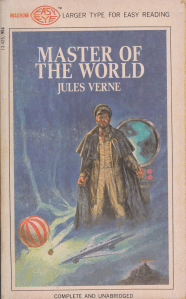
Whoever Modern Mrs. Darcy is, she keeps me honest. This is my third year of doing her reading challenge, and in an effort not to go out and buy all the books I want, I try to select from among my own pre-existing collection tomes I’ve never read. One of the categories this year was a classic you’ve been meaning to read. I spied on my shelf a copy of Jules Verne’s Master of the World that I bought before my high school years but had never actually consumed. I think I was a bit put off by 20,000 Leagues under the Sea. Don’t get me wrong—that’s a great book, but it’s dense and long and very detailed. And I was probably too young when I read it. Master of the World, like 20,000 Leagues, was part of Verne’s magnum opus Voyages extraordinaires, a set of fifty-some novels recounting, well, extraordinary voyages.

What makes Master of the World topical to this blog is the Devil. I’d better explain that. The story surrounds a somewhat naive detective trying to solve the mystery of a great, inaccessible, hollow mountain in North Carolina. While investigating this mountain (prior to the age of heavier-than-air flight) he learns of an automobile that is terrorizing the United States by driving 200 miles per hour. The credulous colonials seriously think that perhaps the Devil is driving this car. While that may be but passing fancy, it’s an image that replays itself throughout the book. Anyone who recklessly drives so fast—and the car can transform into a boat, submarine, and airplane as well—must be diabolical. The Devil’s amusements seem pretty tame, and the driver isn’t supernatural after all, once he’s discovered.

Robur the Conquerer is Master of the World, in his own opinion. At the climax he flies his marvelous machine into a hurricane, proclaiming his mastery like a good mad scientist. The machine, called The Terror, is destroyed and Robur is presumably killed in the storm. When our narrator returns home after several weeks missing (he was kidnapped by Robur and thus learned a bit more about the driver’s madness), his housekeeper has the last word. She declares that although Robur was not the Devil he was worthy of being so. The Devil has become a lot more nasty since Verne’s day, apparently. Why, our own government makes Robur the Conquerer look like an amateur demagogue. Either we’ve become terribly more accepting of everyday evil, or the dark lord has grown even worse over the century. I, for one know which one to believe.


No Whine

Sneaking in a grocery run to Wegmans before church one Sunday awhile back, I was in line behind a distinguished looking gentleman. “I’m sorry,” the clerk told him, “we can’t sell alcohol before 11 a.m.” She set aside an expensive looking bottle of Glenlivet as he nodded solemnly. From behind me a woman called out, “Is that true, I can’t buy my wine?” Like Paul Masson, it seems, in New Jersey they will sell no wine before its time. Many, I suspect, have supposed that blue laws would’ve lapsed by now. What most people probably don’t realize is that this is yet another instance of how the Bible continually impacts our lives. Although the weekend has become enshrined as relief from jobs that most of us find tedious, blue laws were biblically based to keep us in line.

The Puritans did all within their power to enforce their views onto larger society. Sunday was not only “the sabbath,” it was a time for no fun—read Laura Ingalls Wilder for getting a sense of what this was like even on the frontier—and church attendance. Nothing potentially more attractive than church was to be on offer on Sunday morning. Here in over-populated, wonderfully diverse, secular New Jersey, those doing their weekly grocery shopping were learning the Bible has a very long reach indeed. Even if many people don’t realize that the Good Book’s behind it, they must abide by Puritan standards. I suspect many have no idea why blue laws remain in force. The Bible doesn’t loosen its grip easily.

As we pushed our cart past the ends of the other check-out lanes I noticed that several of them had bottles purloined at the point of egress. I suspect that most of the would-be buyers weren’t hurrying home to get ready for church. Instead, they were probably annoyed that they’d have to go out again later to continue their purchases. The Supreme Court has upheld blue laws on the basis of giving time off to those of certain professions that work by the hour. Those of us who don’t punch the clock are, according to the logic of such a decision, given exemption from the law of the land (but not to make immoral Sunday morning purchases. Indeed, in some professions attendance at church is part of the job expectation). It is perhaps bewildering for those raised in different religions. The idea of time off, although it probably wasn’t intended for humanitarian reasons, has also become one of the hidden blessings of the Bible. Without the sabbath, our weekends would also be an opportunity for others to make more money by the usufruct of our precious time. Holding off a few hours to buy alcohol seems like a small price to pay, in comparison. The Bible giveth, and the Bible taketh away.


Exercising Exorcism

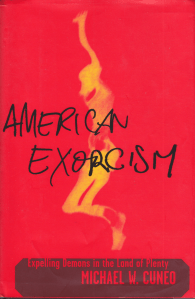
About the last people, ironically, that you’ll find researching demons are religion scholars. That’s perhaps a slight exaggeration, but there’s an embarrassment to the topic that serious academics just can’t shake. Nobody wants to be thought truly believing in that stuff. Michael W. Cuneo, who teaches sociology and anthropology at Fordham University, isn’t afraid to look. His American Exorcism: Expelling Demons in the Land of Plenty is a user-friendly, often witty look at what is an amazing phenomenon. Exorcism had pretty much gone extinct by the middle of the twentieth century. Then The Exorcist happened. Cuneo makes no bones about it—Hollywood wrote the script on what was to become a somewhat bustling business through the end of the millennium and beyond. And it wasn’t limited to Catholics. Protestants, mainly of Evangelical stripe, cottoned onto Deliverance ministry and joined the fray against the demonic.

American Exorcism reflects Cuneo’s personal account of attending exorcisms. As he puts it at the end, no fireworks occurred. In fact, he’s skeptical that demons exist and he strongly suspects exorcisms work in the same way that a placebo does. He’s well aware that the majority of people he met and talked with in the making of this book disagree on that point. Cuneo himself attended at least fifty exorcisms, both Catholic and Protestant, and shysters among the exorcists were rare. Most were sincere, devoted people who are helping others in distress for no fees, no glory, and no promotion. They see a need, believe they know the diabolical cause, and take the devil by the horns (metaphorically speaking).

There is a solid mistrust between academics with their studied skepticism and exorcists with their eyewitness accounts that defy belief. Cuneo suggests that even what they think they see may not really be happening in the real world. My question, coming down to the end of the fascinating book, revolves around what exactly this real world is. There can be no doubt that present day concepts of exorcism are largely based on “the movie.” Cuneo seems just a bit reluctant to say what I also declared in my forthcoming book—pop culture, the movies, dictate reality for many people. At least in the realm of religion. Sacred institutions have lost their authority to make ex cathedra pronouncements about what is real and what is not. Few bother to, or can, delve into the tedious work of reading academic studies on the subject. It’s far easier to let the unseen presences behind the camera take over. Isn’t that what possession is about, after all?


Russian Along

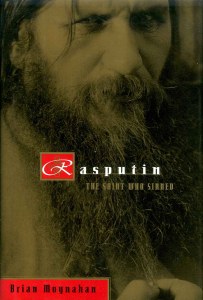
Living at Nashotah House—if you haven’t been, trust me—makes one curious about Rasputin. While on the faculty there, his name was used as a common slur. When Brian Moynahan’s Rasputin: The Saint Who Sinned came out in 1997 my wife and I bought it and read it together. Two decades on the details had become fuzzy and, having read about Aimee Semple McPherson and her faith healing reminded me of the famous Russian scallawag. For all his personal faults, Rasputin did seem to have genuine healing abilities. He was more shaman than orthodox, to be sure, and Siberia was the home of shamanism as well as Rasputin. For those who don’t know the story, in pre-Revolution Russia Grigory Rasputin rose from a Siberian peasant family to the most trusted advisor to the Empress of Russia, Alexandra Romanov. Her weak-willed husband, Nicholas, also gave credence to the mystic, despite the latter’s well known drunkenness and womanizing.

The fascinating aspect of Moynahan’s treatment is that it brings out the saintly side of this figure who’s grown such a notorious reputation. That’s not to whitewash his extreme lifestyle, but it is to acknowledge that he was far more complex than many critics make him out to be. He seems to have been sincere in his faith, and perhaps a little mentally imbalanced. He was kind to the poor, and charitable. He wasn’t a bigot, a sin quite common in his day. He was a working class mystic who took advantage of being inebriated with power. His influence over Alexandra was so strong that he could appoint Prime Ministers even in the midst of a world war. This is a fascinating personality.

Reading the book at this point in history, however, proved strangely unsettling. Many of us wonder how a rational, fairly educated and prosperous nation could tolerate the buffoons who inhabit Washington, DC. Daily we see insanity—with no exaggeration—on the level of the throes Tsarist Russia, or even of Rome under Caligula. Instead of taking steps to right the course, the Russian, excuse me, I mean Republican, Party does any and everything in its power to keep the illusion of normalcy alive. Even while foreign ministers of his own party tell the European powers to ignore their own president, American Rasputins just can’t survive without their daily power fix. The sad thing about that last sentence is that after writing it I felt as if I were somehow being unfair to Rasputin. And I lived at Nashotah House long enough to know what I’m talking about.


Medical Missionary

So it was this routine medical screening. The scary-looking machine had an open window that said “Laser aperture: do not stare at beam.” Someone had taped a Yankees emblem on the superstructure as well, and I wondered if that caused anybody additional anxiety. Mortality doesn’t scare me, but medical tests bother me a lot. I was glad to get outside, even if it was cold and icy. There’s quite a few medical facilities in our town, so I had walked to this one. On the way home, watching out for ice on the sidewalk, I passed a bus stop. A woman said “Excuse me, but could you spare a dollar or two?” I’d just come from a medical office, I was wearing sweatpants (which I never do unless I’m jogging) and I had no pockets. “Sorry,” I said, “I just came from the doctor, I don’t have anything on me.”

“I’m a missionary,” she said. Without giving me a chance to get away in the chilly air she began to preach a sermon just for me. It was after morning rush hour and nobody else was around. I wondered when her bus would come. I nodded politely and agreed, and took two steps away. Still she continued. After a few minutes I wondered how long this would go on. I’d already told her I agreed with her. She was insistent that Jesus would give me anything I wanted if I confessed my sins every day. “Money, cars, houses…” I had to wonder why she was taking the bus, then. Besides, all I wanted was to get home, and she was preventing that from happening.

Finally I had to turn and leave her mid-homily. I try never to be rude to religious folks. They’re only doing what they’ve been told to do by others. I did wonder what it was about my appearance that didn’t make her believe me. It had been a while since I’d had a haircut. Was it the beard? The sweatpants? The fact I was wearing a black jacket? Ice was everywhere on the sidewalk. This neighborhood is middle aged—sagging a little, with drainage issues. Mortality doesn’t scare me, but sometimes being accosted by religion when you just want to get indoors on a winter’s day, you think even a begging missionary might understand that. I thought back to the scary machine with its little warning sign. Some people are tempted to stare too long into the light. It can affect the way you see. Indeed, if you let your gaze linger, you might just possibly even go blind.

Image credit: Torsten Henning, Wikimedia Commons