Hoping for Light

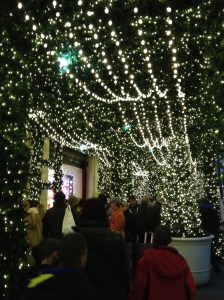
Although the stores have been playing Christmas music for some weeks now, it is technically Advent. I think we could all use a little Advent as days grow shorter and dark nights increase their influence over our lives. As a nation we’ve been brutalized by a minority candidate and this has become a bleak December that Poe would certainly have understood. The spinning mind occasionally falls upon George W. Bush who somehow has begun to look normal. The president who told us when America was under attack we should shop. After all, that’s what people do in December, right? We buy things to make ourselves feel better. It sure is dark outside most of the time. Advent is all about candles and light and hope.
img_2638

One of the more endearing aspects of human beings is our ability to see the positive amid negativity. Darkness is the natural state of the universe. Stars are tiny points of light in an endless cold and dark universe. Most of what’s out there has no light beyond those willing to burn bright enough for others to see. We, however, see the light of daytime as normative, slumbering away the hours of darkness. We thrive in light and the light has to be augmented by candles as we struggle against the natural darkness that would, if it could, encompass the universe. Darkness, despite its emptiness, is endlessly hungry. Advent reminds us that we must be light if we want anyone to see in the growing nighttime.

We miss this important dynamic if we leap straight from Halloween to Christmas, pausing briefly for Thanksgiving. The church has made its fair share of mistakes, but Advent wasn’t one of them. Experts tell us Jesus wan’t born in December. Christmas isn’t really a physical birthday. It’s an ancient rite concerned with the return of light to darkened skies. A fervent appeal for our colorful lights and candles to encourage the light that we know, we believe, is out there to return to us. Scientists tell us that it’s just that the earth lolls at 23 degrees on its axis and all of this is just a balancing act. That may be so. I’ve never been off the earth to check. Down here on the ground, however, the days come only reluctantly and the nights linger longer and longer. And we can choose to see darkness as our natural state, or we can ignite a candle to encourage the light to return.

Protest Reading

In these days of bold ignorance, reading in public is an act of resistance. A world that follows the uninformed to perdition requires those who stand as witnesses. Those who read. As a cabinet of the wealthiest people in the country is being assembled we need to remind each other that wisdom and wealth aren’t the same thing. Not even close. We read to improve our minds and we find, in such reading, that wealth increases happiness only to a point. Excess wealth leads to misery, but like the addicted, those who have it just can’t stop. Stop, I say, and pick up a book. To help with this my wife sent along the Banned Book Advent calendar. That’s not to say we can read a book a day, but I believe the world would be a better place if we could. Especially if those books were banned.

You see, banned books cause us to think. That’s the payoff. I’ve read many, many banned books. Some of them I didn’t like very much, but that’s not the point. Liking what you read may lubricate the process, but it is the reading itself that stretches the mind. Makes use of mental muscles we didn’t know that we had. Those who ban books want prejudiced minds to prevail. Think about it: prejudice comes from the combination of the prefix for “already” and the root for “judging.” The prejudiced have already decided. Reading challenges. It has from the earliest days of myths on clay down to the era of ordered electrons on a flat screen. Reading makes you question. The thought police prefer mindless acquiescence. Want to show your true colors? Pull out a book and read.

IMG_0899

The season of Advent is one of anticipation. We all know what’s behind door 25, but the journey is the point. That journey is better when it’s literate. When I travel my carryon always has books. More than I can read on the trip, just in case. Books are banned because we fear knowledge. Once exposed to an idea we must deal with it. Far simpler to lock it away in some sealed room and continue to do things like it’s still the 1450s. Before Twitter started revolutions, books did. When we put down our books we are opening an invitation to ignorance. Last month showed what happens when that invitation is given. I won’t make it through a book a day this season, but I flip out my reading material whatever chance I get. And I believe a better future will result.


Holiday Season

Now that the holiday season is upon us, I stop to think about what holidays really do. “Keep Christ in Christmas” signs have popped up like winter dandelions as Trump signs consider to litter the landscape. Thanksgiving, however, gave me the opportunity to forget about all of this for a while. The culture of signs. Signs telling us we must bow down and worship. The holidays signal a season when it is okay to hibernate and forget that more powerful forces out there may wish you harm. Part of the trouble is that those who are coming sometimes can’t see beyond their own interests. Perhaps what I do for a living conflicts with the job I’m paid to do. Conscience dictates that one or the other must go. But conscience is such an old fashioned idea.

img_3092

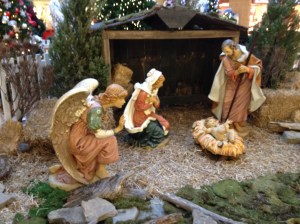
The holidays start with Thanksgiving, but it is now the Monday after. Those in liturgical traditions of Christianity will note that we are in Advent, a season of anticipation. I do wonder what we’re anticipating. Perhaps it’s because Thanksgiving came and went in a blur of travel weariness this year. The few days when commuting wasn’t an issue were the opportunity to stay still for a while and not look at news feeds and reflect on all we’re thankful for. I started hearing Christmas carols in stores shortly after Halloween. We’re entering the season of money in a country in love with lucre. Take a close look and see what lies in that manger.

Most years the stretch of dark months of November through January are accompanied by a sense of peace. Human beings loving each other and getting along. I guess I’ve been away from the news for a few days. I know there was a Black Friday last week. I also know that money has a strange way of funneling upward, a kind of osmosis of Mammon. On my quiet strolls I wonder what we, as a country, truly value. On the highway stuck in traffic with thousands of others returning home, I try to think that in these metal shells are living, breathing, loving human beings. Many of them only trying to get ahead. We’re all in a rush since there’s so much to do before we allow ourselves another holiday. Wouldn’t life be better with more days for reflection? I’d rather not politicize the holiday. Keeping Christ in Christmas seems to be asking for one not to forget the offering plate. I’m wondering about those sleeping in the street not far from Trump Tower. I’m wondering what ever became of conscience.


Abundance

img_2996

A few weeks before Leonard Cohen died I saw a story on how his song “Hallelujah” had been done to death. Covered and recovered, it seemed to be on every cover artist’s playlist. It is a haunting song, however, and the notion of a cold and broken hallelujah feels somehow appropriate this Thanksgiving. Don’t get me wrong—I am thankful for more things than I can name or would care to share with complete strangers on the internet. In fact, when I literally tried to find a job in Canada in anticipation of a horrible November surprise, one of my immediate regrets was that I’d no longer have American Thanksgiving to celebrate. Thanksgiving, to me, has been images of a cozy indoors with special food while the chill takes over outside. Two days in a row off of work. Sleeping until I’m not tired any more rather than waking according to schedule, no matter how troubling the night might have been. In short, feeling safe and secure in a world growing colder.

Since the first week of November the iciness has been growing more intense. I know it’s the circles I go around in—and perhaps they are small enough to call them semi-circles—but I have seen more sad and depressed and scared faces in the past weeks than I have seen in my previous half-century on this planet. It’s Thanksgiving Day, and even vegetarians look forward to something special by way of fancy nourishment. But it feels like a cold and broken hallelujah to me. Entrepreneurs have already been reminding us that tomorrow is Black Friday. We should get our game-faces on and our credit cards out and head to our favorite retail establishments. Pack up our troubles in the old plastic bag and spend, spend, spend.

Thanksgiving, of course, was an originally generic religious holiday. It’s hard to give thanks without someone to, well, thank. You could be Muslim, Jewish, Christian, or even one of those who thanks dharma, karma, or chance. Just be glad that we’re here right now and even though the wind is gusting and there’s perhaps a bit of snow in the air, we have an indoors where nobody hostile is looking for means to exploit us any further than we wish to be exploited. That our planet, for the time being, still supports human life. And that by any measure other than the Electoral College we all really want progress and fair treatment for all. I am thankful and mindful of those who had to sacrifice to allow us the privilege of being here today. It’s Thanksgiving, and I’m thankful.


United or Untied?

Beliefs can be most problematic things. I’ve spent the better part of the last five days in one of the reddest of “Red States.” People in Texas were unfailingly friendly and kind. They seem genuinely interested in helping me although I’m pretty stereotypically a “blue stater” (the beard, the tweed, the glasses—there’s no mistaking it). They help me when I’m lost. They look out for my well-being. But I’ve been conditioned to think poorly of my neighbors. My father was a high school-educated working man from South Carolina. I grew up poor in Pennsylvania. This man taking my check ticket is amiable and solicitous. He doesn’t ask me what I believe.

Sometimes the Founding Fathers got it wrong. The Electoral College has created Red and Blue States. God created people. I want to think that those who are from elsewhere are different. Predatory. Out to get me. In reality what matters is that you and I are beside each other right now, and we’re perfectly happy to be so. We are people. I don’t know what you believe. You don’t know what I believe. It really doesn’t matter unless you believe you should harm me or I should harm you. (I don’t.) This isn’t normalizing the devastating administration constructed brick-and-mortar on hate. There are legitimate foes to face. Me? I’m on the side of the people. All the people. Female people. “Foreign” people. People who love those who are biologically similar or different or anywhere in-between. I can’t believe that our government has tried to drive such a deep wedge between us. From Camelot to Asphodel in one lifetime.

img_3087

Our deeply divided country is in need of healers, regardless of belief. From everything I’ve heard there is no health in the incoming administration. Business has long been the enemy of people—long before Adam Smith formulated its name those who have, without intervention, take advantage of those who have not. Its no coincidence that those wounded in service of their country are given purple hearts. Not red hearts. Not blue hearts. I’m here among people who wish me well, and who, although they’ve disagreed about politics in the past, have never allowed an election stereotype them so badly. We need to end the Electoral College and its unholy progeny of red and blue and swing states. Let people be people who unite against the real enemy—the one that’s trying to tear us apart. That’s something I truly believe no matter how problematic it might be.


Foundation Myths

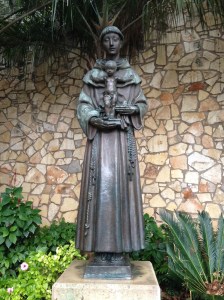
Foundation myths are some of my favorite myths. If you’ve got to believe in something, it may as well be something fun, right? Usually before I travel to a place I do some research on it. For some reason November of this year has proven to be under a kind of shadow and I wasn’t thinking clearly in the run-up to this year’s AAR/SBL meeting in San Antonio. I’d traveled here once before, and when I raise that occasion with anyone the automatic response, like so many automatic sprinklers, is “that was the year it rained.” This may be the year of the flood, but at least the skies have been dry. I decided to make up for my lack of knowledge by taking in the markers along the River Walk. There’s quite a lot about saints and the founding of this city. I learned that it was named for Saint Anthony of Padua. The site of the first mass, in 1691 (just a year before hell broke loose in Salem) is marked with a granite slab along the green river with its endless supply of ducks.

We’re fond of naming cities after saints. San Francisco, Saint Louis, Saint Paul, San Diego, Saint Petersburg. Perhaps we’ll soon be adding Leningrad to that list. I suppose we like to compare our communities to our better angels. We’re all trying to be good, after all, aren’t we? With all these saints looking over us these ought to be very kind cities indeed. We have yet to name a major city after Jesus, but that doesn’t stop the saintly communities from trying to cash in on the big name.

img_3051

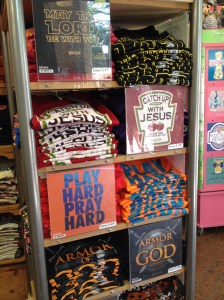
Conversion has become a somewhat problematic concept. In current doublespeak we would all be better off if we were the same. If what I’m hearing is correct that means Caucasian, male, pseudo-Protestant, and rich. Well, we don’t want too many to be rich—it’s hard to feel special if too many join the country club. Our saints are those that know how to shuffle the money and make it all look above board. Meanwhile we can sell our Jesus tee-shirts and have those admittedly Catholic saints stand guard over our walls and bless our rifles and condos. It’s pleasant to live in the new promised land. Too bad the good Lord made some kind of error the first time around, but to forgive is divine, after all. I think we can afford to be magnanimous when we’ve got the saints on our side. Myths are so much fun to believe.


Post Post-Truth

One of the benefits of working with words is that you get to participate in reality. George Orwell famously wrote that if people didn’t have the words to express concepts the government didn’t like, those concepts would cease to exist. At least as long as they allow us to have the internet, concepts may survive. Oxford Dictionaries’ word of the year reflects just this. The word is “post-truth.” Post-truth is a word of hard currency in the political marketplace. It essentially means that objective facts no longer outweigh emotion and personal belief in establishing reality. Think “global warming isn’t happening because it cuts into my bottom line.” Think “humans didn’t evolve from a common ancestor apes because an outdated book doesn’t say they did.” Think “Donald Trump won the election.” Truth is no longer truth without “post” in front of it. Believe what you will. No, I mean that. I choose to believe Trump was not elected. Post-truth cuts both ways.

In a world where reaction has replaced dialogue and where you win arguments by revealing your NRA card, truth is merely the first casualty. Already mainstream media, who told us the post-truth that Trump, according to the polls, couldn’t win, are now telling us it’s all politics as normal. This will be a simple transition of power. Pay no attention to the man behind the curtain. There is no wizard in Oz. Politicians lie. Only those born without a brain stem don’t realize that objective fact. We can be sure that even George Washington lied from time to time. There was no cherry tree-gate. Unless you choose to believe there was, then I guess it has to be okay. Your truth’s as good as mine.

img_3044

Over the past several years some prominent scientists have been saying philosophy is but misguided navel-gazing. It tells us nothing of reality. Truth, however, is a philosophical concept. Post is something to which you tie people before a firing squad. Truth has, until recent days, been considered that upon which all reasonable people could agree. The earth is not flat. We are flying around the sun so fast that it makes me earth-sick. We were able to put people on the moon. All of these are now post-truths. Along with the fact that every vote counts. In this slurry of fear, hatred, and distrust, who has time to worry about objective facts? Lexicographers do. And I praise them for giving us the most relevant word since Moses stumbled down the mountain with a tablet that read, “Thou shalt not bear false witness.”


Who’s Bigger?

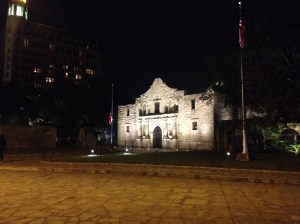
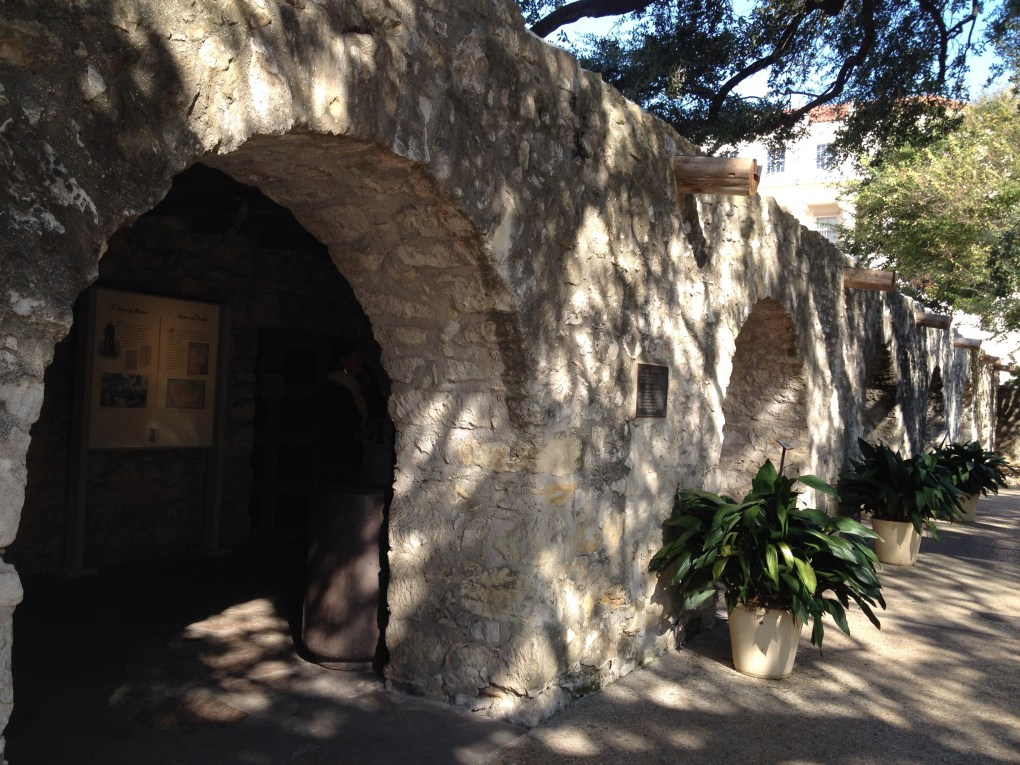
Sometimes we have to work so very hard for unity. On the day before the conference proper began, I decided to take in some of the sites. In San Antonio this means the River Walk and the Alamo. I was awake early, as usual, and since the Alamo doesn’t open its doors until 9 a.m., I took the River Walk first. Seeing the gift shops selling countdown to Obama’s last day novelties, I had to shudder. It may be a sad day when you have to look to the Alamo for consolation. What looked like a rainy morning became a sunny day and the Alamo was crowded by the time I arrived. Last time I was here I stopped in the church, and I think that was it. I decided to look in the Long Barrack room, noting the sign that read “Please remember this is a place of reflection and respect.” No photos. No food. Just respectful thoughts. I stepped inside.


img_3055

There can be no disguising that this site was host to a bloody battle some time ago. As I looked at the period rifles and the caliber of the musket balls graded up to cannon balls, I reflected how we’ve invented ways to hurl bigger and bigger pieces of hateful stone and metal at each other, faster and faster. A few thousand died near here, perhaps some in this very room. A couple of guys walked up and one said to the other in his beautiful Texan accent, “There’s some beautiful weapons here.” I could almost hear the tears in his voice. His companion agreed. “They’re bigger than what I carry,” he prayed. People had died here in the past, and it seemed that perhaps the best we could look forward to was more deaths in the future. Reflection and respect.

There’s no point in visiting a place like the Alamo without a sense of the history that made this place what it is. It is not a shrine to glorified warfare. It is a mission, an abandoned church, that became out of necessity a place of self-defense. I just can’t shake the thought that so many people died here, but the point of visiting seems to be celebrating a nation where you can wear your weapons proudly. It is a supreme irony that this particular November the conference I attend happened to have long ago locked in this particular venue this particular year. I could very much use a place of reflection and respect. Instead, I’m thinking of how so terribly hard it is to work for unity in what seem to be the increasingly Untied States.


By Their Love

One of my high school teachers—I don’t have to say who; if you attended my high school you’ll already know and if you didn’t you won’t know him anyway—wrote in my yearbook, “I hope you get what you deserve.” I wasn’t very good in this teacher’s class, but he explained to me, “I sign everyone’s yearbook the same way. If you do well, I hope you get rewarded. If you don’t do well, I still hope you’ll get what you deserve.” This teacher had a reputation for being somewhat of a philosopher, and his words have struck me as particularly appropriate for this moment. We, in the cosmic scheme of things, get what we deserve. As a nation I guess we deserve a First Lady, in an example to young women everywhere, has appeared naked on the internet. Her husband married her after two previous women and has made his views on gender perfectly clear. My conservative friends went to the polls knowing that. I hope they get what they deserve.

The problem is the rest of us are stuck with him too. I’ve lived through bitter, spiteful campaigns before. The genteel art of campaigning is thoroughly deceased. 2016, however, is the first year that I saw pure hatred as a political platform. And it wasn’t on both sides. Trump made of virtue of hating one’s neighbor and claimed the election was rigged until he won—then it was, of course, impossible that it would’ve been rigged. Former First Lady Hillary Clinton, who kept her dignity throughout, never stooped to inciting hatred of fellow Americans. It likely cost her the election. To the people now saying this is just politics and stop complaining I say we have all been victimized and we all ought to feel very ashamed. This election wasn’t about money. Or financial positions. Or foreign policy. It was about hate.

DSCN4694

Hate can only be counteracted by love. I have seen many women responding to a man who considers them mere sexual object by reaching out in kindness to strangers. Women organizing to try to make this country a more positive place. Meanwhile, I hear men I know saying at last we have a strong leader who will bring them prosperity. If money is what you care for, you have my pity. This country is about freedom, equality, and fairness. All of that was jettisoned last Tuesday. Even those saying “get over it” are doing so with a smugness that is a thin veil over intolerance. I’ve never carried on with frustration so long after an election before. That’s because never before has an election—no matter which party triumphed—been won by a platform of evil intent. My grandmother, a Teutonic matron of occasional Valkyrie disposition, used to sum it up well when we boys were getting out of hand. “Schäme dich!” she used to scold. I know a country that could use her words right now.


The Least of These

Despite criticisms to the contrary, the pre-Reformation church did have concerns about the average person. About the poor. In those days church offices commanded a good deal more esteem than they currently do among the populace, and being a priest was a position of power. The concern for the quotidian human—at least of the Christian variety—was demonstrated in All Souls’ Day. Although the date migrated around the calendar before settling on November 2, it came part of one of the very serious (days of obligation) annual celebrations along with All Saints’ Day, November 1. It was recognized that not everybody could be a saint, and all the faithful departed deserved a special day of commemoration. Through a complicated history this two-day celebration came to be associated with Celtic beliefs about the crossover day between worlds, samhain, giving birth to Halloween. It seems appropriate on All Souls’ Day to think about the poor.

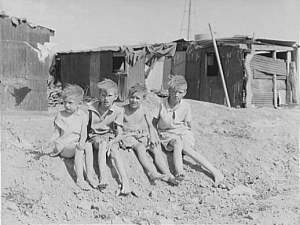
An article in the Washington Post reports on findings that poor children, in their words, “that do everything right don’t do as well as rich kids who do everything wrong.” There are indeed deficits that attend the poor all their lives. Those of us who began in such circumstances can sometimes break through in a system that favors the upper classes, but it is rare. Good paying jobs are reserved for friends of the wealthy or to those who might pay them back in some way. The poor have little to offer beyond their souls. Our system, the so-called “free market” deals in souls. The poor are, make no mistake, chattels. Even in higher education, where we’d like to think thinkers think, positions are granted based on privilege. The loftier music and liturgy is, after all, reserved for All Saints’ Day.

dorothealangemigrantworkerschildren

Like many raised in humble circumstances, I grew up hearing about the American dream. If you work hard you can succeed. But that really depends on who you know and how much they’re willing to help out. Stats are now beginning to back up what those of us who have lived experience in the lower register already knew. Having faced it throughout my career, I know I’m not alone. Just the other day I met someone else who grew up poor who’d hit the bullet-proof ceiling carefully installed by children of privilege. Not ambitious beyond desiring the basic comforts of a job that covers the bills and allows for some reasonable amount of surplus against lean times is, it seems, more than the wealthy are willing to grant. After all, All Saints’ must come before All Souls’, for even Heaven has its hierarchies.


Tis a Season

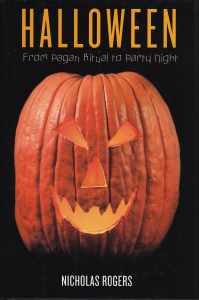
halloweenI always seem to be running late. Still, I wanted to be reading a book about Halloween on Halloween. If I might be pardoned for bleeding over into All Saints’ Day, I’ll share some thoughts this November on Nicholas Rogers’ Halloween: From Pagan Ritual to Party Night. Academic treatments of holidays, I fear, often suffer because of dispassion. Academics tend to emulate Spock in their writing, and I think that those who write about Halloween should really “get” Halloween. Oh, one can discourse about its quaint history in this ever so rational world, but one might just miss what the whole thing is about. To be fair, Rogers was writing his book during the trauma of 9/11. He wonders if Halloween may be fading. Nashotah House was suffering under an evangelical administration at that time, and the usual Halloween spirit was muted. Some fifteen years on it seems that Halloween earns yet more money and people admit that it’s hip to be scared.

Rogers gives a brief treatment of the early, but hidden, history of the holiday. The Celts weren’t much into writing about their festivals and invaders didn’t think much of their quotidian life to begin with. Trying to understand Halloween from modern times, piecing the puzzle together back over time, doesn’t really help much either. Treating the day in its British context, then in its American context, Rogers favors a thematic approach. His section on Halloween movies is interesting. Like most modern treatments of the holiday, his book makes comparison with el Dia de los Muertos, and the usual complaints of cultural imperialism. Maybe Halloween is just too much fun to pass up. It also means this post isn’t that outdated.

Nobody owns Halloween. It is taken as a serious holiday by some Wiccans, but liturgical Christians are far more intense about today, All Saints’ Day. It isn’t a national holiday and no national government decides the correct day for trick-or-treating. Perhaps prophetically Chris Christie cancelled Halloween the year of Hurricane Sandy, but did he really? Sitting in the dark for a few days with evenings lit by candles—some of them in Halloween holders—felt pretty spooky to me. Halloween may be a source of intellectual curiosity, but it is a holiday you either get or you don’t. October is its prelude, November is its aftermath. It is, as the Celts used to believe, when cold weather seriously begins to take over and light is a rapidly vanishing commodity. I may be a day late, but Halloween isn’t quite over yet.


Hallow’s Eve

img_2982

Halloween is finally here, and I’m on my way to work. Over the weekend I noticed youngsters about in costume, heading to a local business that was holding, apparently, some kind of ghostly do. For me it’s just another day—Halloween isn’t an official holiday in any government’s book. Business as usual. Still, I can’t think of Halloween without recalling Nashotah House. I began, and effectively ended, my academic career at Nashotah. Idyllically located in the woods, it was a seminary that knew how to celebrate Halloween well. We were expected—required, actually—to be in church for a good part of the next two days for All Saints’ and All Souls’ days. But Halloween night we were allowed to be afraid.

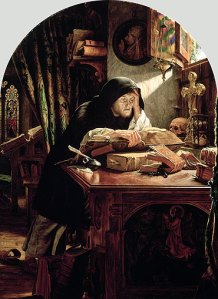
Gothic writers often used to focus on places like monasteries and churches for moody frights. Nashotah began its life as a monastery, but soon turned into a seminary. The stone buildings were old—for this country—and gothic in design. We had an on-campus cemetery with a bona fide black monk. Students reported seeing ghosts, and with such a small population of religiously devoted people the imagination grew like toadstools. One morning at around 5 a.m. the door handle to my apartment rattled loudly. I’m sure it was just someone trying to get into a forbidden chapel whose only access was through my rooms. Thunderstorms echoing through the kettle moraines that surrounded the Wisconsin campus could be impressive indeed. On Halloween the maintenance man drove a hayride through harvested corn fields and the cemetery where opportunistic ghouls would pop out to frighten the slow-moving, exposed riders.

Since those days Halloween has instead become just a day of work. No more the grandeur of All Saints’ Day being an actual holiday, holy day, followed closely by All Souls’. This is just another day except for the kids who can come around and get some candy if I’m not too tired to hand it out later. I suspect this is why I spend so much of October reading about monsters and ghosts and scary movies. I no longer have a Halloween to focus my energies. So here it is Halloween. It’s dark outside and I’ll be standing in that dark, waiting for a bus. When I climb off at the end of the day, I’ll be sharing the nighttime streets with children who are perhaps the only ones who celebrate holidays as they should be commemorated. Already a month ago I began noticing the Christmas displays in local stores. It was my first real scare this season.


Only October

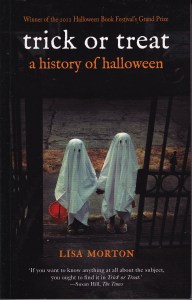
trickortreatComfort may be a strange word to describe Halloween, but it is accurate. I’m no specialist on the holiday, although I’ve read a few books on it—most recently Lisa Morton’s Trick or Treat: A History of Halloween. Growing up in what felt to me like an uncertain environment, holidays—and especially Halloween—have left me with positive impressions. Morton’s book explores this strange combination of fear and fun and suggests that many people of my generation do find comfort in its celebration. I grew up without a father in a conservatively religious home. Yet I loved the escape of putting on a mask and being someone else. Coming home with a bag of candy was a bit like that dream I still have of finding a penny on the ground and then realizing there are thousands of them just beneath the surface. There’s a security in that dream and I always find a tear in my eye when I awake from it.

Halloween is, appropriately, a chimera of holidays. It is solidly pagan. It is equally solidly Christian (specifically Catholic). Perhaps to placate those troublesome Celts, the Roman Church moved its commemoration of All Saints and All Souls to November 1 and 2, allowing for the Eve of what used to be called “All Hallows” as a holdover of Hibernian lore. Morton goes beyond the northern European fascination with the darkening of the year to explore other regions and how they mark the season. The southern hemisphere, obviously, doesn’t have the same pattern of autumn and spring, and the holiday has had less success there. The threat of the light never returning has to be real to make the fear stick. The warmest memories of my childhood seem to come from the days artificially lengthened by electric lights and the holidays they spawned: Halloween, Thanksgiving, Christmas. Comfort.

The air has begun to turn chilly around here. I’ve found myself shivering a morning or two while waiting for the bus. As I pull on my coat and step out into the pre-dawn dark, a stop sign creaks eerily on the deserted street. I’m headed to a long day in a city of stone and glass and warmth will be difficult to find. Halloween decorations get lost in the enormity of New York City and its constant quest for money. So I recall Halloweens of my small-town childhood. I tend not to go out at night, but I haven’t always been this way. When there was an unspoken comfort awaiting at home, no matter how frightening it could be at times, I would brave the dark and ask strangers for candy. Is it any wonder that Halloween still glows in a world somehow grown too cold?


October Weekend

img_2973

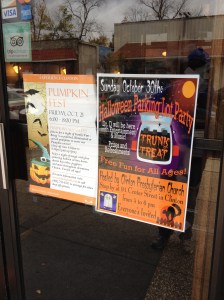
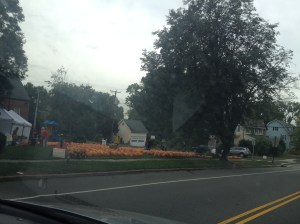
Bright orange pumpkins under a cloudy gray sky. October is surely here. But this is an urban area of the kind in which northeast New Jersey specializes. As I approach I see that it’s a church. A church that has made a truce with Halloween. Judging from the number of people here, it’s a cordial detente. So much of American society lies mired in contradiction that I have to ponder this. Halloween in an age of nones may be simply fun. An opportunity to spend money on pumpkins that won’t be eaten and gourds that can’t be. Decorations for a mildly scary night that somehow makes us feel comfortable and snug at home. October is like that.

Churches have been struggling to maintain active memberships. And although the antagonism has been overblown, Halloween has been an uneasy part of the church calendar. It has, however, become a major commercial opportunity. Depending on the commodity, only Christmas or Easter will draw more lucre from people. The devils and demons and ghosts of Halloween sit awkwardly in the pew next to the victory over death that is the main draw to traditional Christianity. But people will predictably spend their cash for the privilege of carving a pumpkin. Just the memory of the scent, the feel, the contentment of creating a jack-o-lantern makes me want to stop and support whatever denomination this might be.

It is a weekend, however, and I have many errands yet to do. I content myself knowing there are happy people in this temporary pumpkin-patch. The faith of Linus is a powerful thing. To get ready for the week ahead in which I’ll have time only for working, commuting, and sleeping, I keep moving. The orange fades from sight. The cheerful memories of childhood pass. I go on to my next stop. My first errand began at 6 a.m.this morning. Noon is fast approaching. I need a tiny piece of hardware that can only be found in a big box store. I prefer to support the local economy but that shop is all the way across town. Inside the Depot plastic Christmas trees of every description fill the front of the store with winter dreams of even more spending. I forget what I came in here for.


Majority Report

In your mind’s eye, picture American 500 years ago. What do you see? Even those of us who’ve studied history have trouble envisioning the past with so different a set of parameters. At least if we’re honest with ourselves. 1516. The Salem Witch trials are almost two centuries in the future. The landscape is occupied by Native Americans. There are some European settlements. Protestantism is something new. In fact we’ll need to wait another year for Martin Luther to drag out his hammer and nails, theses in hand. The America we see then, not called “America,” let alone “United States,” is a diverse—some might say “wild”—world of decidedly non-European sensibilities. Global warming wasn’t an issue, and King James hadn’t even been born yet, let alone been commissioning the most famous Bible in English ever. So why am I asking you to look back?

luther_at_erfurt_-_justification_by_faith

This presidential campaign has largely been a waspish one. During the turmoil, books have been published proclaiming the end of “white, Christian America.” In an interview on PBS one of the authors of such a book, Robert Jones, talks about how America has changed. He notes that what he really means is that white Protestants are, statistically speaking, no longer the majority. Just a few centuries ago that was also the case. Think about Protestants a minute. They’re the ones who invented the Bible as we know it. Oh, the book had been around, in some form or other, for a couple of millennia (well, a millennium and a half, back then). Other than scholars in need of more fresh air, few spent much time with it. The church told Europeans what God demanded and the majority of people just got on with their daily lives not worrying about what some book they couldn’t even read might say. How things have changed!

We worry about the end of our majority. I like to look back and see that this world we’ve built is one based largely on a book that was mainly the invention of those who had some discussion points with the church. Not quite a hundred of them, even. They were largely Anglo-Saxons. If they knew about “the New World” their knowledge was hazy and imprecise. From that perspective it doesn’t seem like much is being lost in the changing religious demographics of this country. Back in the old world, if one wished to feel nostalgic for such things, they would’ve taken their complaints and found the nearest church door. Now we nominate candidates who think this country was ours in the first place, without ever even reading the Bible used to support that myth. What a difference a few centuries can make.