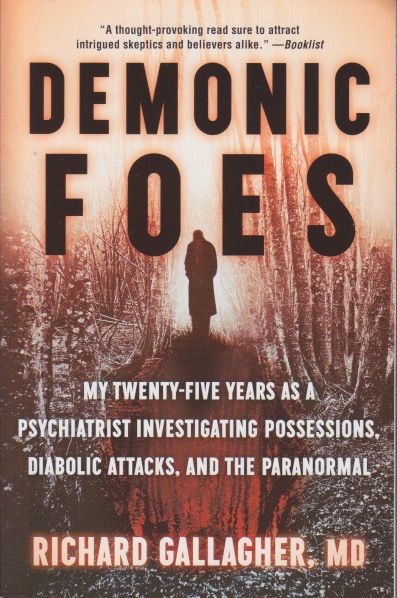
Demons Again

Exorcism is sexy these days.  I fully understand why $100 books on it escape attention, but I’d been looking for Richard Gallagher’s treatment since 2016 when I learned that he was writing it.  Demonic Foes is, however, a little disappointing.  As I am wont to do, I tried to find information on the author only to discover that he appears on many webpages but really has no online presence himself.  He teaches as Columbia but his page there is minimal as they come.  The book, which I suspect easily caught an agent’s eye (see my opening sentence), is a rambling tour—very roughly chronological—through the author’s experiences with and thoughts about demons.  I’m left puzzled, however, about why he maintains the secrecy around his priest mentors, although they are dead.  Believe me, I understand withholding names, but if you’re trying to convince people, we need something to go on.

There are some interesting, and scary cases here.  But Gallagher also gives nods (somewhat skeptically) to Malachi Martin, but also to Lorraine Warren, and Fr. Gabriele Amorth.  At times he easily moves between movies and actual events.  His writing style at times obfuscates, unintentionally, I expect.  Before too long it becomes clear that, as a Catholic, the author distrusts anything occult, paranormal, or parapsychological.  At one point he suggests assuming spirits are demonic until you can prove otherwise.  At the same time, he suggests possessions are rare.  I’m left wondering about a number of things.  There’s no bibliography and his knowledge of the ancient world isn’t that of a specialist.  Even his history of demons doesn’t address the nuanced issue of how Christianity came to understand demons as the New Testament seems to.  He gets some facts wrong about other religions.

I’m no stranger to cobbling books together while working full-time and trying to hold daily life together.  You can hire book coaches (if you afford them) and not all editors are willing to tamper with money.  (Trade publishers do what they do for lucre, don’t you know.)  Demons are a controversial subject.  The tired orthodoxy of demonizing other religions still holds for some, and it seems to here as well.  This rambling book raises more questions than it answers: which exorcisms did the author witness?  Why are non-Catholics said to have rosaries?  Why are verifying names kept secret?  If wanting to convince people, why are so few dates or precise places given? I appreciate what Gallagher is trying to do and I agree with him that we need to avoid dismissing demons because they don’t fit a scientific worldview.  As he admits in the epilogue, he holds a traditional view of what demons are.  I’m left wondering what we might find if science would take the paranormal seriously.

Upon Further Occlusion

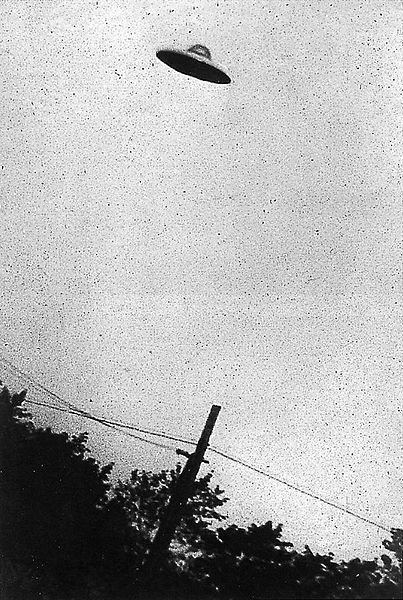
Admittedly the source is GBN, but the headline is irresistible: “Nasa ‘quietly funding’ theological conferences amid ‘demonic’ UFO fears.”  Essentially an interview with Nick Pope (no relation to “the Pope”), the story posits that NASA has been spending on theology because of fears that UFOs might be demons.  Nick Pope is a recognized ufologist, but the story doesn’t state where he acquired the information on NASA’s spending habits.  Pope did work for Britain’s Ministry of Defence, and has had a long-standing interest in UFOs.  And some US congressional members have stated that they believe said UFOs are demons.  I’d still like to see some documentation, however, before accepting that NASA’s paying for conferences in a discipline that’s on decline in academia.  Seems a little difficult to believe.

It also seems like this would be a more exciting theological conference than the one I attend.  Perhaps even stranger than UFOs is the use of the word “theology.”  In British English the word tends to mean what “religious studies” means in these (still) United States.  American English understands theology to be a distinct part of religious studies—the discipline that is occupied with philosophical questions within a specific tradition.  The one probably most familiar is Christianity, where historical theology and systematic theology are often on seminary curricula.  I’ve noticed more and more Jewish and Islamic theology cropping up in recent years.  I always take pains to say I’m not a theologian (in the American sense).  Maybe it would just be easier to consider UFOs.

Image credit: George Stock, public domain via Wikimedia Commons

There’s no doubt that theology gave us demons.  One of the points I was trying to make in Nightmares with the Bible is that that’s not entirely true.  Demons came first, and theology later.  People have, historically, always believed there were other entities that behaved with intelligence.  Generally they were more powerful than mere humans.  It was really only around the time that Christianity began that such entities were coded as purely evil.  Those who posit that UFOs are demons really aren’t up on their theology, which makes me wonder what kinds of conferences NASA is spending its money on.  If it is.  This seems plausible because the government often spends on things that are unexpected.  I personally would like to see a bit more of it funneled towards education, but I’m just one voter.  In any case, if there are such conferences, and if they’re British style theology, please put me on the mailing list.


Clergy Problems

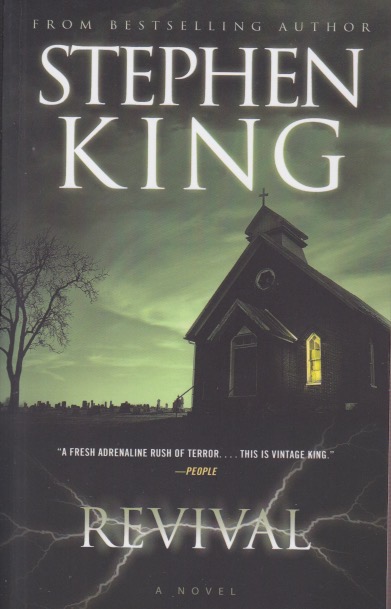
I believe Revival is the most recently written Stephen King novel I’ve read.  It was pretty good—it certainly scores high on the religion and horror scale, although it takes quite a while to get to the horror part.  Part of the problem for me is that I liked Charles Daniel Jacobs.  I tended to relate more to him than to Jamie Morton (the narrator/protagonist).  Perhaps this was because, like Jacobs, I studied to be a Methodist minister.  And like him, came to have a rather different view of what is really going on in the world.  He’s clearly King’s villain, however.  Or “fifth business” as he’s termed in the novel.  The secret lightning he seeks turns out to be a kind of MacGuffin.  I was curious to know more about it.  The novel, as is typical, has several subplots but the main one is how Jamie and Charlie face what’s after death in a tragic climax.

Charlie starts out as a Methodist preacher.  When his wife and son are tragically killed, he becomes a huckster who actually has tapped into an electrical power that can heal people.  It often, however, leaves bad aftereffects.  Jamie, who knew him as a kid, is cured by him from a heroin addiction.  Their paths continue to cross over the next fifty years or so—this is a longitudinal story—as Jamie comes more and more to distrust his childhood hero.  Charlie can use electricity to perform wonders and it make him rich.  He wants more, however.  He wants to see beyond death to assure himself that his wife and son are in a better place.  It seems to me that that motivation isn’t a bad one.  The only way he seems a villain is that he doesn’t really care for other people.

The story is well told but it doesn’t have the same “classic” feel as some of King’s earlier novels.  He well understands, however, that horror and religion belong together.  I haven’t read all of his novels—not by a long shot—but clergy aren’t rare and when they’re present they’re implicated in the horrors, or in this case, responsible for them.  These are important insights, as others have also noticed.  Revival is one of those books that requires some reflection.  It certainly feels like something written by a man facing the limitations of the aging process.  And not necessarily at peace with it.  Ministers sometimes do go bad—they’re only human—but they can also lead to real change.  I, for one, am interested to hear what King has to say about it.


Scholarly Publishing

So here’s the thing about innocuous names—they don’t work well with the internet.  Search engines throw a rod trying to find something so insipid that it might mean anything.  I’m driven to this topic by the fact that “Scholars Press” or something like it, is used by a number of organizations, some apparently predatory.  If you’re a scholar of religion you know to what I’m referring when I say “Scholars Press.”  You know the neat, trim little monographs that you consumed like popcorn while writing your dissertation.  Try to find a history of the press online.  I’ll wait.

So finally I heaved myself out of my chair and got an actual book (imagine that!) off the shelf.  It is a volume I purchased when the American Academy of Religion and Society of Biblical Literature met in Orlando.  A conference to remember.  So, along with Woody and Buzz Lightyear, we were gathered to learn about religion and I finally shelled out for Ernest W. Saunders’ Searching the Scriptures: A History of the Society of Biblical Literature 1880–1980.  There I found what Google couldn’t: Scholars Press dates from 1974, a joint venture of the two societies.  Originally it published books from the University of Montana at Missoula, and later moved to Chico, California.  Finally it settled in Atlanta and eventually split into two as AAR and SBL took on the publishing of their own books.  I saved myself several minutes of probably fruitless scrolling.  It seems nobody else is really interested in this.  I am an historian of religion, but an historian none the less.  I wanted to know the sequence of events.

I am curious when the two decided to break up this venture.  There was a divorce, or temporary separation, between the societies some years back—I can’t recall when it was—that seems a logical time for them to think about taking on their individual publishing programs, but then again, they may have started before then.  In other words, I don’t have the date when Scholars Press dissolved.  Religious studies, I realize, is a small discipline.  For many colleagues it’s their entire world.  Some of them write histories about various aspects of it—I saw a book that I want to read about the murder of a religion professor Ioan Culianu back in 1991—but compared to history or English, we’re minuscule.  And we don’t seem very curious about ourselves.  We’re an odd lot, that’s for sure.  And we don’t always pick the best names.


Brain Exercise

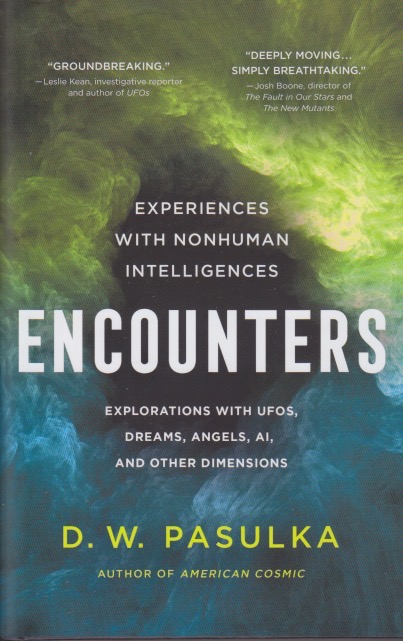
Why do we read, if not to expand our minds?  I’ve read all of Diana Walsh Pasulka’s previous books but Encounters is mind-blowing.  I feel particularly honored that a scholar of religion has been able to put together so many pieces of a very strange puzzle.  Pasulka’s first book was about Purgatory.  Having grown up Catholic that seems a natural enough choice.  Her second book, American Cosmic, focused on a topic that academics were just starting to address at the time—UFOs.  That book justly earned her acclaim.  Encounters takes a few steps further into the mysteries of being human.  Those who experience UFOs have much in common with people who have other extraordinary encounters.  The profiles in this book will give you pause time and again.

Many of us have felt that the unfortunately successful government strategy of ridicule toward experiencers has been a blanket covering up the truth for too long.  I was interested in UFOs as a child and was unmercifully teased for it.  One of the reasons I was interested was that I learned, when I was about eleven, that my grandfather had been interested as well.  I was only two when he died, so there was no way to learn this personally.  It came through discovering a couple of his books that my mother had kept.  Since she was one of five siblings, it’s difficult to say if he’d had any other books on the subject, but being a reasonable kid, I wondered why this was a forbidden topic.  You could talk about ghosts (at least a little bit) and be considered “normal.”  Mention UFO’s and you’re insane.

When the Navy’s video recordings of UFOs—renamed UAPs—were released in 2019, there was silence in the room for about half an hour.  Serious people began to realize there might be something to this.  Of course, those who’d internalized the ridicule response continued to fall back on it, perhaps as a defense mechanism.  That revelation has allowed, however, serious consideration of what is a very weird phenomenon.  I’ve deliberately avoided saying too much about what Pasulka covers in her book.  As I generally intend when I do this, what I’m hinting is that you should read this book.  You should do so with an open mind.  If you do, you might find yourself thinking in some new ways.  Of course, some will ridicule.  Others, however, may walk away with an expanded perception of reality.


Sequel Pondering

Of course I’m working on another book.  I can’t say what it is at the moment, but one of the projects I’ve long been contemplating is a kind of sequel to Holy Horror.  The problem is that if the first book didn’t sell very well (the premise is perhaps too academic), a sequel couldn’t be expected to do any better.  I’m still working on sloughing that academy skin.  But I keep watching what we insist on calling “horror” and the more I do, the more I find the Bible in it.  Others have taken up the gauntlet—mostly academics who have jobs that encourage such behavior—of connecting horror and religion.  The Bible’s role, while a subset of the larger field, has its own particular parameters.  In one of my notebooks I have a list of 23 movies to add to my analysis.  I know that there is a twenty-fourth, but it’s only streaming on an exclusive service and still costs a bit too much for something that doesn’t come with a plastic case.

In any case, Holy Horror just scratched the surface.  One of the factors I’ve mentioned before is that there is no database of the Bible’s appearances in film.  It would be an extensive list altogether, and a substantial number of horror films would be on it.  In general, it seems, people really aren’t too interested or intrigued by this fact.  I certainly am.  Our society is a curious mix of sweet and salty.  We want to think we’re too sophisticated for religion, but religion undergirds just about everything we do.  Otherwise it’s pretty difficult to explain how the Bible keeps showing up in horror.  Usually as a mysterious artifact.

I recently saw myself referred to as a biblical scholar.  There’s no doubt that I taught biblical studies for many years.  I even wrote a book interpreting one aspect of the Good Book.  My degree, and my interest, however, has always been historical.  I follow this history of ideas.  Although many people don’t understand my current horror fascination, it’s clear this is another jog down a trail of history.  How did we get to the point that a totemic (the scholarly phrase is “iconic”) Bible became a stand-in for God in movies?  I’m not sure I’ll ever be able to write Holy Sequel, although, if my profession ever permitted it, I’d certainly have the interest in doing so.  There’s a lot to be learned from such explorations.  That’s true even if the books containing the information only appear on a few dusty library shelves.


Sinful Thoughts

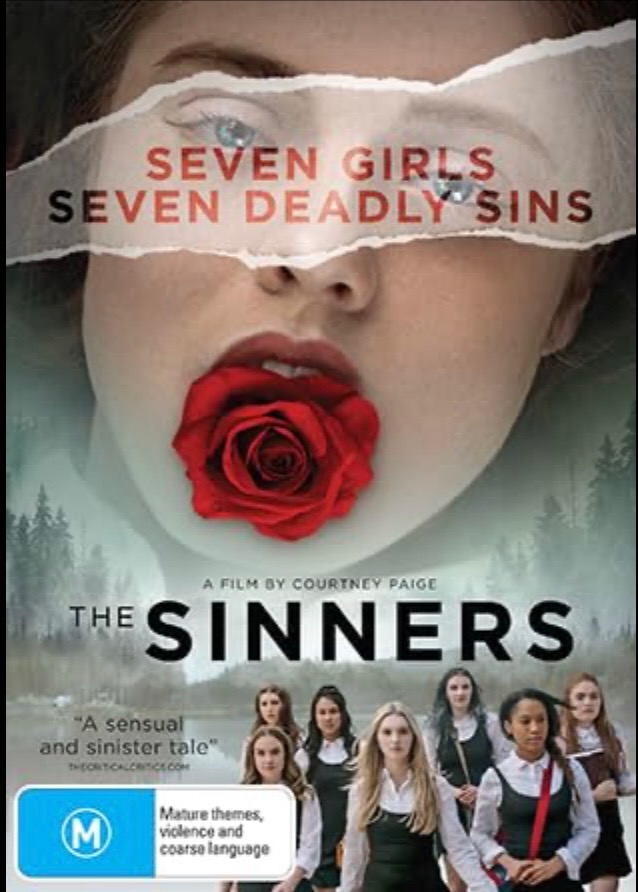
The driving force behind Holy Horror is the fact that the Bible appears in lots of horror movies.  More than might be expected.  Although I’ve moved on to other projects, I still keep an eye out.  There may not be time or opportunity in my life to write a sequel, but you can’t unnotice the Bible in The Sinners.  The title drew me in, as did its free status on Amazon Prime.  It’s a Bible-based flick, for sure, but even the basic description gets religion wrong.  I generally like movies by female directors, and this one was a project of Courtney Paige whose name, for some reason, sounds strangely familiar.  In any case, one of the biggest blunders movies like this make is that the religion doesn’t hang together.  Of course, it doesn’t say what variety of Christianity it is, but it’s of the literalist stripe.

Seven alpha females at a Christian school in a Christian community form a clique in which they’re each characterized by one of the seven deadly sins.  They’re lead by the pastor’s daughter, of course.  One of the girls keeps a journal in which she confides that she confessed their activities to the pastor.  The betrayed girls decide to scare the offender but she escapes when they’re intimidating her.  She’s found dead but then the other sinners start being murdered.  The police aren’t really effective and the girls try to figure out who’s behind this.  I won’t say who but I will say that it doesn’t really make much sense.  Scenes jump around and characters appear with little or no introduction—it’s disorienting.  But that religion…

I know enough PKs (preacher’s kids) to know they often aren’t as innocent as dad thinks (and it’s generally dad).  I also know that forced conformity of religion builds resentment and resistance.  But there’s something wrong here.  The pastor drinks wine.  Even the truly religious girls drop f-bombs.  One even attends a Satanist meeting with no explanation.  The pastor’s wife is having an affair.  The school librarian has sex with her husband at the school between classes.  They can all quote scripture, and often do.  What religion is this?  I couldn’t really engage with the movie because there were too many distracting religious gaffs.  Hey, I don’t mind when movies show the problems with religions—they’re fair game for commentary, after all.  But if you’re going to do it, try to understand the mindset of the religion you’re criticizing.  There’s a lot to think about in this movie, and it really isn’t that bad.  But for those who know religion there’ll be some question of which it is that’s under fire.  If I ever get back to Holy Horror I’ll say more.


Unusual Places

I don’t recall how I first learned about Mitch Horowitz’s work.  I read Occult America as soon as I found out about it—it helped as I was transitioning to writing about religious culture (largely through horror films) since there’s a healthy dose of occult in horror.  While still in publishing Mitch agreed to look at Holy Horror before it landed with McFarland.  The thing about my life is that it’s too busy (9-2-5 isn’t a size that fits all) to keep up with writers I find fascinating.  I hadn’t been aware of Horowitz’s continued, and continuing, book writing.  As soon as I saw Uncertain Places: Essays on Occult and Outsider Experiences I ordered a copy.  It brought back to mind the semester break at Nashotah House when I realized that to get anywhere near the truth you need to question and question boldly.  I told my students that if they didn’t challenge their perceptions with reading during semester breaks they were wasting them.

I met Mitch (although we’ve never seen each other in person) through our mutual friend Jeff Kripal.  They both have the courage to question apparent reality and to not stop at the line that the wall of materialism throws up around the pursuit of knowledge.  Uncertain Places is well titled.  Like almost all collections of essays some speak to the reader more than others, but I found myself pausing frequently to consider what I’d just read here.  One thought that keeps recurring is how even someone with a terminal degree can constantly feel like there’s so much more to explore.    Horowitz is a seeker unashamed.  And that also took me back to my past.

Growing up poor, I didn’t have many resources other than my mind to help draw some preliminary conclusions about reality.  Like many red-neck families of the time we had a CB radio and we were each instructed to come up with a “handle.”  I believe it was my mother who suggested “Searcher” to me.  She knew that I would never stop looking.  Uncertain Places is the work of another searcher—one who’s less fearful than I tend to be.  (I’m working on it.)  Reality, it seems clear to me, is far more subtle than most of higher education has taught me that it should be.  We try to make occult scary and demonic but Horowitz is, like yours truly, an historian.  Those of us who explore the history of religion can find ourselves in some pretty unusual, one might say uncertain, places.  And rather than dismiss what we see there, we take a closer look.


Truthful Fiction

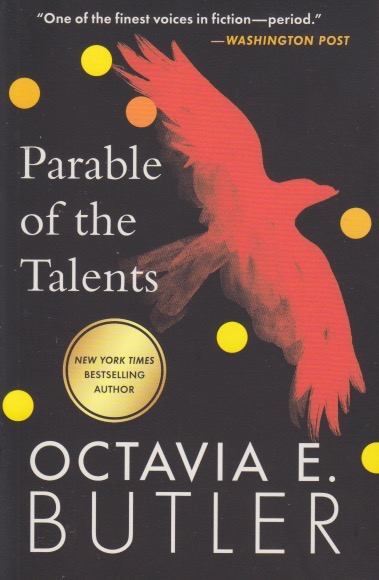
Octavia E. Butler is a name I’ve known for some time.  Various people, most of whom I don’t know, had recommended her books, particularly Parable of the Talents.  It turns out to have been one of the scariest novels I’ve ever read.  It’s not horror—it’s science fiction.  It’s scary because it’s just too plausible.  The first inkling I had that something was amiss was when I read how Andrew Steele Jarret ran for president to “make America great again.”  Jarret pretends to be Christian to get the vote and America suffers terribly when he’s elected.  I flipped back to the copyright page.  1998.  I read on anyway.  It’s not too often you find a sci-fi book about someone starting a religion.  And named after a biblical story, as well.  I was doing fine until Jarret’s supporters destroyed Olamina’s peaceful community and enslaved the survivors.

It’s all just too plausible.  Of course, there’s a lot going on here.  Butler was an African-American whose ancestors had been slaves.  The religions presented in the book are a bit too black-and-white, but the followers of Christian America behave like many followers of Trump.  Butler saw this two decades before it happened.  The slavery part of the book was difficult to read.  There was so much pathos here, so much deep memory.  Although Olamina is a flawed character, she is a visionary with the best interest of the human race at heart.  This dystopia is perhaps a little too close to reality.  Those who recommend the book say that it’s hopeful, so I kept on reading.  And yes, there is a hopeful ending.  Getting to it left me floored.

Religion defines us.  In the growing materialism—false, as anyone who feels deeply knows—the idea that a story could be built around religion seems unlikely.  Butler has done that, and done it in spades.  I was surprised to learn that she’d studied at the Clarion Workshop, not far from where I grew up.  Being from an uneducated family I never heard of the Workshop until I was an adult.  And besides, it left Clarion, Pennsylvania for Michigan before I even got to high school.  Still, it gives me a sense of connection with a woman who saw more than many did.  Although Parable of the Sower is earlier, I’m not sure that I have it in me to pick it up.  At least not right away.  I’m still trembling a bit from Butler’s second parable.


Salem Away

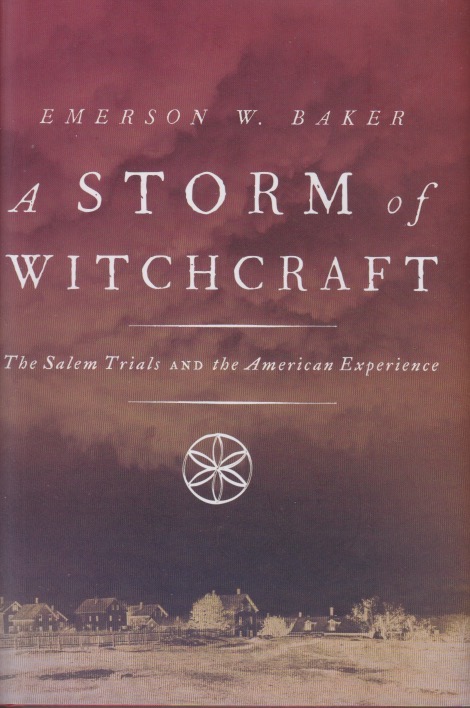
I can’t help but think the term “witch hunt” has been cheapened in recent years as a prominent, wealthy white man has been claiming to be the victim of one.  Nevertheless, America was actually home to an infamous witch hunt some centuries ago.  I’ve read a few books about it and there are many more yet to be read.  The thing Emerson W. Baker’s A Storm of Witchcraft has going for it is the broader context he gives the events.  Not only the events but the town of Salem also.  Older than Boston, and a major city in its day, Salem had more history than the trials for which it is famous.  Baker does a nice job of describing the ambivalence that residents have felt, and still feel, towards its past.  Tragic, yes, but fascinating also.

I fell in love with Boston the first time I set foot in it.  I made quite a few trips to Salem during my years there, drawn in by the history.  So much isn’t recoverable.  One of the aspects that comes clearly through Baker’s treatment is just how much of a Puritan problem witches were.   And not just witches.  Puritans didn’t care for those who differed from them.  Quakers could be just as bad as Devil worshippers.  And the tragedy of Salem illustrates that the Puritans didn’t much care for one another either.  Religion gets that way when it’s weaponized.  Baker points out the many pressures of what was essentially a frontier town on the coast.  War with American Indians was still a reality.  And Salem wouldn’t be innocent of the slave trade some decades later.  But it all seems to keep coming back to 1692.  And the death of the innocent.

Baker also points out how Cotton Mather covered his own tracks, justifying what he knew was wrong in order to keep privilege in its place.  We tend to think of that as a modern trait, but clearly clergy were well aware of it back in the early days of this nation.  Religions always do have a difficult time admitting it when they make mistakes.  I think they’d find that people can be pretty forgiving, though, especially since they often advocate forgiveness themselves.  This book is a thought-provoking treatment of Salem.  The events that took place there have shaped this county in unexpected ways.  They made the case, centuries ago, for tolerance of those who are different.  It’s a lesson we still have trouble learning.


Christmas Silence

Christmas seems to have come too fast and not fast enough this year.  Like Halloween, it’s one of those long anticipation holidays.  The older I get, the more I appreciate the silence about it.  Not in a Grinch-like way, I hope.  More along the lines of “Silent Night.”  We spend so much of the year—so much of our lives—hustling about, barely having time to think.  Speaking personally, it takes about a week off work just to begin to get to that phase.  I need time to let the daily onslaught of work and capitalism and angst tune down.  There’s a quietness about Christmas that’s profound.  I suppose that’s why I like to spend it with my small family and not feeling obligated to go anywhere.  It’s like those precious moments before sunrise that I experience daily, only all day long.  That’s truly a gift.

The newspapers and internet sites have been summarizing the year for the last couple of weeks.  That always seems premature to me.  I understand why they do it, but Christmas and the days following are some of the very best of the year, and it makes sense to include those along with the stress, darkness, and ugliness that are the daily headlines.  I can’t help but think of Simon and Garfunkel’s “7 O’Clock News/Silent Night.”  Especially this year.  Christmas is for everyone, and the insistence that we make it exclusive (putting Christ back into it) makes it divisive.  Why some people have to be right all the time I don’t know.  I prefer Hamilton Wright Mabie’s take: “Blessed is the season which engages the whole world in a conspiracy of love.”  Simon and Garfunkel are both Jewish and I think they understood “Silent Night” better than many Christians did back in 1966.

I’ve been writing quite a lot about horror movies this year.  The months and days leading up to Christmas have often been difficult ones.  Such movies are therapy.  They can even fit into the beautiful silence of this day.  That’s my hope, anyway.  May this day include enough silence for you.  The rest of the year has no difficulty filling itself with trouble.  We need holidays.  Christmas has always struck me as the most peaceful of them all.  Ministers, and even those of us who never made the cut, tend to be holiday experts.  Those who don’t get caught up in the dogmatism of it all are the most blessed.  Christmas is for everyone.  And may it be peaceful this year.


Bears Repeating

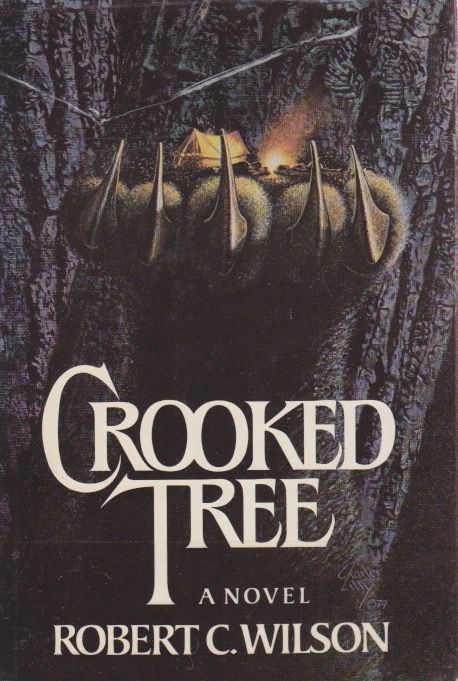
I read Robert C. Wilson’s Crooked Tree before I began this blog, I guess.  I remembered it being better than it seemed this time around, but it works as a horror novel.  In fact, the first third or so was quite unnerving, although I’d read it before.  After that the plot tends to require greater suspension of belief.  But then again, American Indian horror has come a long way since then.  Wilson, according to the limited information about him online, isn’t an Indian.  These days publishers are very concerned with appropriation—something that wasn’t an issue back in 1980.  And these days the work of Stephen Graham Jones, who is both a Blackfoot and an excellent horror writer, raises the bar considerably.  But Wilson is honest about the situation in his laying out of the novel.

Axel Michelson is a lawyer and he’s working to preserve the fictional Crooked Tree State Forest and prevent development.  Many of his colleagues and neighbors in Michigan are Indians, and so is his wife.  Axel’s efforts are hampered by a sudden onslaught of black bear attacks.  The description of the first three or four are scary enough to dissuade you from ever going camping again.  Axel’s assistant is an Ottawa and and he and his family suspect a bearwalk is involved.  This is the reason I read the novel the first time.  As a Native American folkloric monster, the bearwalk is difficult to uncover.  There are a couple more novels—one of them hard to find—that feature the tales, and there’s a university press book on folklore that has some accounts.  Not much more is out there that I can locate.

A bearwalk is a kind of shape-shifter.  A spirit that can control bears, in this case.  Axel becomes the white savior who uncovers the ancient ritual to stop the bearwalk, which has taken control of his wife—his main motivation for stopping it—while the Indians can’t figure out what to do about it.  They do tell him about the ritual, but mourning the loss of their culture, they fear it’s gone forever.  Meanwhile the bear attacks continue but once the shock of the first few attacks has worn off, they don’t scare so much.  There’s also a lot of supernatural involved, mostly drawn from native traditions.  It seems clear that, like Axel, Wilson did quite a bit of research on American Indian folklore.  He treats the Ottawa culture with respect and wrote a novel that might’ve had more influence than it seems. It’s well worth the read the first time around.


After Effects

Every once in a while you find a book you wish had been published sooner.  The Exorcist Effect, by Joseph P. Laycock and Eric Harrelson is one of those books.  Although it covers many of the same films I talk about in Nightmares with the Bible, it does so with a different target in mind, and a lower price point.  Drawing on the observation that human recall is often accompanied by “source amnesia,” they explore the idea that famous horror films (and some less famous) get remembered as “facts.”  This seems to be a greater danger to those who don’t actually watch horror or who watch it uncritically.  Movies such as The Exorcist become the basis for what individuals believe about demons.  But it’s far more dangerous than that, because in a culture where everything’s politicized, horror movies become “the truth” for groups like QAnon.

Considering Rosemary’s Baby, The Exorcist, and The Omen as prime examples, they then move on to consider the fascinating, if weird, lives of Ed and Lorraine Warren, and Malachi Martin.  Popularizers such as these three influenced both horror films and general public opinion about demonic possession and exorcism.  The study moves on to the Satanic Panic of the eighties and nineties and how heavy metal music both utilizes and ties into the Exorcist Effect.  This important book ends by discussing the very real dangers of a society that elects presidents and others based on this Effect, which confuses reality and movies.  The book shows how many of the ideas behind conspiracy theories either misremember, or intentionally misuse, horror films.

Back in the days when I started Nightmares with the Bible there was comparatively little published in readable terms that discussed demons or, specifically, the portrayal of exorcism in movies.  Laycock and Harrelson’s book would’ve been a welcome contributor to that dearth of resources.  As someone who works on the fringes of the fringe, I don’t always hear the discussions other scholars have and I’m often left to my own devices when it comes to finding and reading information on horror films.  Without library privileges, it often means having to purchase the books to access them.  I was thrilled when I first learned about this book and I’m glad to have finally had the opportunity to read it.  I’m sure I’ll be coming back to it on occasion.  After writing Nightmares, I took a bit of a break from demons because being in the dark for too long can do odd things to a person.  But not knowing about them, as this book shows, might cause even greater problems.


Nuts and Bolts

It all began with an innocent laugh at the local hardware store.  It was Saturday morning, around 8:30 and I had to get some nuts and bolts.  Literally.  From those neat little trays that separate out individual pieces that may be the last place on the planet you can spend just a dime.  These local stores have an honor system with little bags on which you write down how many of which piece you took and the price.  Also a dying breed, these bags are made of paper.  One other guy was there doing something similar and when I picked up my bag, another clung to it and slipped to the floor.  He laughed.  Then apologized.  He explained that he seldom made it through the day without some aspect of Murphy’s Law taking place.  I let him know I didn’t take his laugh wrongly and that I knew Murphy’s Law, perhaps too well.

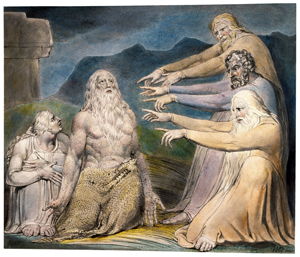
He then told me that he thought he’d write a book about it.  A novel, he said, like the book of Job.  My ears perked up.  Only this time, he suggested, God had to treat Job so that only bad things happened and used Murphy’s Law so that they would turn out good.  Every good thing God wanted to do would have to appear evil at first.  I encouraged this stranger to write this book.  I meanwhile couldn’t believe that I was having a conversation about Job with someone I didn’t know in a town where I’m still a bit of a newbie.  Do I have “former Bible professor” written on my forehead?  Even when I’m wearing a mask they seem to be able to tell.

Job, according to William Blake

But seriously, although I don’t get out much any more throughout my life I’ve had strangers approach me with religious issues for conversation.  Often at the strangest times.  I wonder if this happens to other people.  You can’t assume someone will know the book of Job, or what it’s about.  You can’t know that a stranger won’t take such a story idea the wrong way.  Me, I was counting out nuts and bolts.  Perhaps I was there to build my own Frankenstein’s monster.  Or some evil device to end the world.  Would Job calm me down or rile me up?  As it was, I was glad for the diversion.  8:30 on a Saturday morning is well into the day for me, having been awake for over five hours already.  And I’m glad to have an innocent laugh from a stranger.


Evolving Holidays

Holidays evolve.  I noticed this Thanksgiving that protests against the origins of the holiday have grown.  The same is true concerning the “Christmas Wars” every single year.  Some holidays (of which we have relatively few in this country) are disappearing altogether.  What seems to have been overlooked, or forgotten here, is that holidays change over time.  Public analysts and early holiday promoters encouraged government recognition of holidays as a means of bringing the nation together.  It’s easier to do this if we recognize that holidays evolve and the general trajectory is toward becoming more and more inclusive.  There will always be those who protest the “secularization” of holidays, but they share a large part of the Venn diagram with those that believe the Bible is a science book.  Things change.  Evolution is real.

I’m not just writing this because Thanksgiving and Christmas represent holidays from my tradition.  It’s true that they represent what was the majority religion (Christianity) at the time they were established here, but I would be glad for holidays from other traditions to be added as well.  Americans need more time to rest and recharge.  Anyone who’s studied the history of Christmas, say, realizes that its origins aren’t really Christian.  It’s a combination of a Christian alternative to Saturnalia, the recognition of St. Nicholas (December 6), Germanic Yule, and the festival of Roman Calends to start the new year.  Among other things.  Early Christians didn’t celebrate Jesus’ birthday.  Nobody had any idea when it was, but a tradition grew and as it grew from diverse roots it became more and more inclusive.  Why should we protest a day when we can acknowledge its troubled past and look for ways to make it better?  Something for everyone.

Holidays bring people together.  I’ve been researching them for years and I’m amazed to see how those that survive eventually catch on and bring people together for a common purpose.  Think of Halloween.  Masking disguises who we are.  It’s a day when everyone is welcome.  There are those who protest it, of course.  But holidays need not be seen as triumphal celebrations of some past misdeed.  (Here’s a hint from history: almost no historical event is seen as positive from everyone’s point of view.)  Instead, why not embrace those few red letter days that we have and use them to seek a common purpose?  Why not encourage those in positions to make decisions to consider the good of a few more holidays?  Trouble can always be found, but holidays, if done right, may help heal.  It’s the way of evolution.