Going In, Coming Out

Being primates, perhaps it is no surprise that we are fascinated by who is doing whom. We, literally, by nature, find sexual alliances fascinating. Despite the fact that close observation of nature has indicated that homosexuality is indeed natural—it has been observed in many species, and isn’t even limited to mammals—we can’t help but make it a deciding factor in what an individual is. Two unrelated news stories over the past week have focused on homosexuality as the overwhelmingly defining trait of a person. In the first story, the Evangelical Lutheran Church of America (ELCA) has elected its first openly gay bishop. (Gay bishops, even in the pre-Reformation church, have not been exactly an endangered species.) The Rev. Dr. Guy Erwin, however, is so much more than a partnered gay man. He is a highly educated person who had held that most rare of positions—a bona fide academic position in higher education. He is also a member of the Osage Nation. His election as a Native American or as an academic would not be newsworthy. His orientation, well, that’s a whole different story.

Meanwhile, across the planet, the Southern Baptist Convention (SBC) is cutting its ties with the Boys Scouts of America because the BSA has decided to make honest men of its boys. BSA has recently voted to allow gay boys to remain in the Scouts, something that the Mormons had no problem accepting. Quite apart from the misguided SBC move, I was saddened to see CNN’s inaccurate headline, “Baptists plan exodus from Boy Scouts.” The story does not indicate that the Baptist brand of Christianity has withdrawn, so to speak, from BSA, but the Southern Baptist Convention. Baptists are much more broad-minded than the SBC brotherhood (I use the phallocentric collective intentionally) would indicate. All Baptists, it seems, are guilty by association.

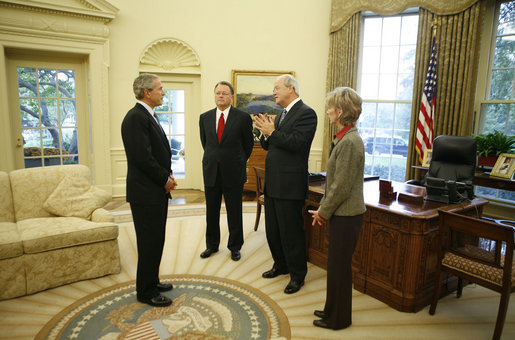
SBC in the White House

SBC in the White House

People are complex. Putting them into neat categories is unfair to who a person really is. The category “gay” is notorious for subverting all other qualifiers for decent human beings. As the National Socialist Party recognized, the easiest way to build a case against a people is to put them together in a class that “deserves” our fear, mistrust, and hatred. Don’t look at the individual beneath the label. You might be forced to change your mind. Did that individual overcome the difficulties of being a “minority” in his or her own native land? Did that individual work hard to climb through the educational system to attain an advanced degree? Did that individual commit his or her life to another person, no matter what the social stigma? None of that matters, as long as we can talk about his or her “orientation.” It is society itself that requires reorientation.


Super Stition

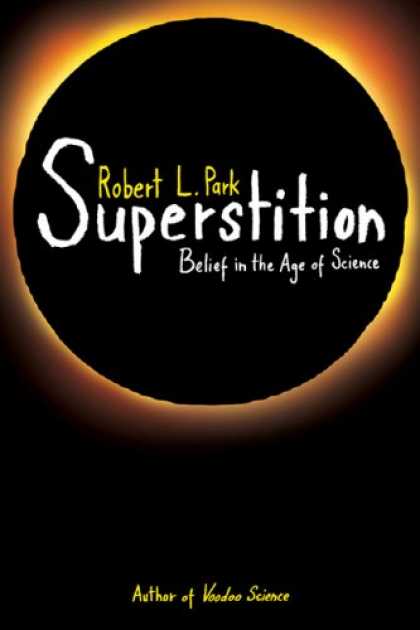
SuperstitionElijah is a folkloric character. Despite the common misperception, most of us who study religion know the difference between myth and reality. There are, nevertheless, lots of engaging traditions about Elijah. Even in our secular culture we joke about leaving a door open or an empty chair available for the disappearing prophet.

It is difficult not to like Robert L. Park. Reading his Superstition: Belief in the Age of Science was often a pleasure. I read Park’s Voodoo Science a few months back, and I enjoyed his supreme rationality very much. Many of the weird beliefs he decries clearly deserve his denunciatory treatment. Like many among the New Atheist movement, he believes that rationality, scientific thinking, will eventually displace religion completely. The final line of his book, “Science is the only way of knowing—everything else is just superstition,” however, maybe overlooking some vital information. In the first instance, scientists are humans too.

There’s no question that much of what Park writes makes perfectly good sense. The God of the gaps is gasping, indeed, dying. Double-blind prayer experiments just can’t work. Evolution does work. Quantum mechanics are abused by many New Agers. This all makes sense. There are, however, some gaps that rationality misses as well.

It has always bothered me that reality is much more than human senses reveal. Rationality is based on the premise that we have, or can discover, all the facts. There is an unseemly arrogance to it. We know, rationally, that “lower” animals experience sensory input unavailable to us. In many ways, Spot is more intelligent than his human “owner.” We use bloodhounds to find people for precisely that reason. We know that “bird brains” navigate in ways impossible for humans to emulate. Even a bee drunk with nectar can buzz its way home. And these are only the life forms that evolved on earth. Our rational knowledge is only a tiny fraction of all possible knowledge. And I’m not convinced that science is really the only way of knowing it. I just feel it in my gut. It’s a big universe out there, full of possibilities we haven’t yet encountered. Is the evolved human brain, limited as it is, the sole arbiter of reality? Is there some form of thought we have not yet reached? I will continue to enjoy reading books like Superstition. I will also, however, continue to leave the door open just a crack, in case Elijah does show up after all.


Inhumane Society

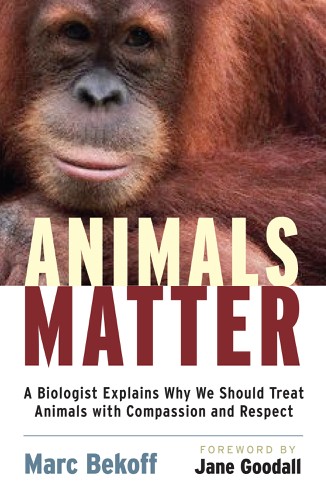
AnimalsMatter“I’m a member of PETA,” I’ve had more than one wag say, quoting bumper sticker wisdom as if it were profound, upon learning I’m a vegetarian. “People Eating Tasty Animals,” they then spell out with a smirk. I stopped eating animals at about the turn of the millennium, and since then I’ve discovered more and more reasons that it was the correct decision. I’ve just read Marc Bekoff’s Animals Matter: A Biologist Explains Why We Should Treat Animals with Compassion and Respect. It saddens me that in our world where nothing escapes being posted on Facebook, people still tend not to notice the suffering we impose upon animals as a matter of course. I’ve always been inclined to look closely at things, including animals. Watching them, it is clear that humans are indeed animals only differently evolved. Our mannerisms, our emotions, even our expressions, can be found among our animated kin. We share a planet on which we all evolved together, so why do we find it so easy to exploit other creatures?

One of the reasons Bekoff notes, without being judgmental, is that some religions inform us that people alone are special because we bear the image of God. Although God is supposed to be altruistic, we don’t wish to share that exalted status with any other species, apparently. Even in the twenty-first century many otherwise intelligent people still claim that animals feel no pain. Can’t reason. Are mere machines. We’ve been taught to distrust common sense that informs us that if an animal in distress acts like a human in distress that it experiences the same anxiety. The more we study animals the more human they become. The theology of Genesis has much for which it will be called to answer.

It seems, however, that the Bible is used as a mere excuse here. We exploit other animals because we can. We have taught bovines and ovines to trust us so that we may more easily slaughter them. Perhaps this is an exercise in divine image bearing, but somehow I doubt it. Reading Animals Matter in many ways felt like listening to a scientist who has taken the message of the Lorax to heart. We treat animals the way we do because we don’t understand their language, but we are morally obligated to speak for those who have no tongues. Although accessible to younger readers, Animals Matter is nevertheless a profoundly disturbing book. What does it say about the highly evolved when they exploit their relatives who’ve not learned the language of humans? Or, more accurately, who’ve not learned to vocalize like humans. Other animals speak, just like people sometimes, if we would only translate their actions into words.


Evolving Morals

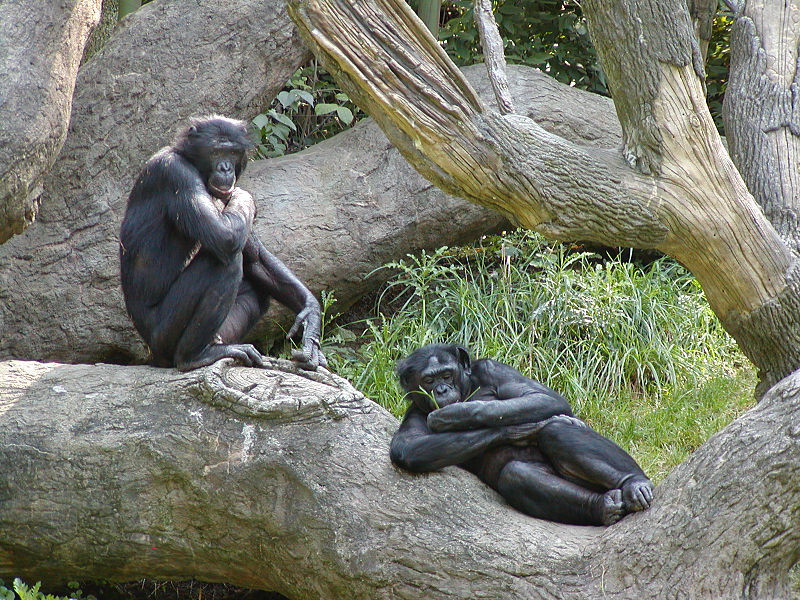
CNN recently interviewed Frans de Waal about his new book, The Bonobo and the Atheist: In Search of Humanism among the Primates. Of course the book immediately went on my “to read” list. I’ve followed de Waal’s non-technical work for years and I have come to trust his judgment. As director of part of Yerkes Primate Research Center, de Waal knows apes better than most of us know our neighbors. He has been exploring the origins of altruism and empathy in the great apes and has come to some amazing conclusions. His past work has shown that much of what we have attributed to special revelation has actually arisen in people through regular evolution. The apes, particularly the bonobos, but also chimpanzees, show startlingly human reactions to moral situations. In the interview, de Waal notes the implications for religion. In his opinion, morality predates religion since the former is seen in other primates while the latter is not.

As much as I trust de Waal’s judgment, the unanswered question remains: what exactly is religion? Animals display rudimentary religious behaviors, but in human-speak religion is often intertwined with belief. In watching a recent episode of Morgan Freeman’s Through the Wormhole—“Is There Life After Death?”—it was clear that while scientists tend to stand on the “no” side of this divide, in the end it comes down to a matter of belief. Not all religions, however, are tied to belief. Some religions assert that what you believe is not important, but rather, what you do. In such religions morality is much more like our primate kin’s version of religion. As Freeman points out, you really can’t know what another person believes. You can ask, but if you believe their response is always an open question. Here is the dilemma of religion as a matter of belief. Even Jesus putatively said, “by their fruits you will know them.” Morality here sounds like religion.

Frans de Waal suggests in his interview that morality differs from religion by being earlier in the evolutionary scale. If, however, religion evolved—which it surely did, as we can continue to observe its evolution today—it may be of a piece with morality. We object to suggesting animals have religion; this suggestion would knock humanity off its pedestal as the only species to which an incredibly human-like god revealed (as it is said) himself. What de Waal has gone beyond proving in his previous books is that much of what qualifies as religion is found among the great apes. De Waal doesn’t put it in those words, but as a lifelong student of religion I have observed the connections first-hand. A scientist may not feel qualified to define religion, just as a religionist is not qualified to correct a scientist. I eagerly await the chance to read The Bonobo and the Atheist, but I already know that I will find much of what de Waal writes to be beyond question, and we may all be much closer to the origins of religion than we realize. Even our great ape kin.

Michelangelo's muse? (Photo by Greg Hume)

Michelangelo’s muse? (Photo by Greg Hume)


Crab Walking

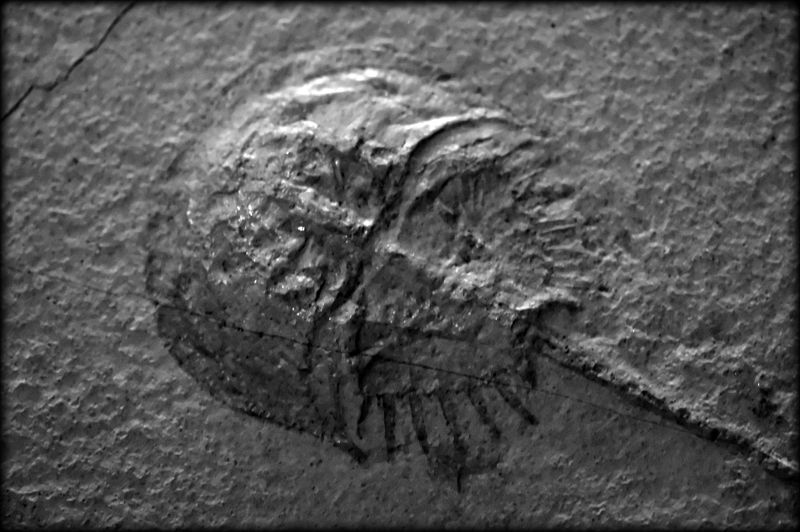
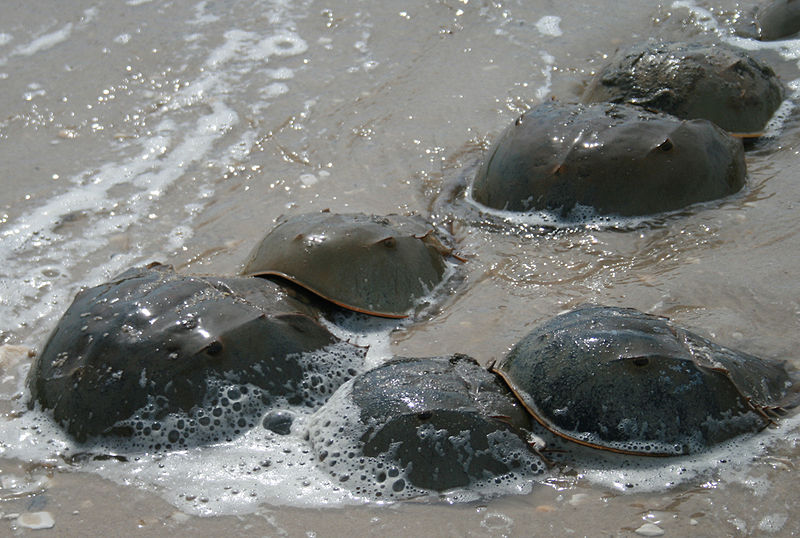
445 million years may seem like a long time. For the horseshoe crab, however, the eons have been spans of years with little change from a rather simple existence that involves lurking under the water and crawling out this time of year to breed. For many of us, Hurricane Sandy is already a somewhat distant memory of days (weeks for some) of no electricity, sitting in the dark, wondering when life would get back to normal. Some parts of the Jersey shore are still suffering from the after-effects, but many of us have had to “just get on with it,” and forget about the damage caused. For the horseshoe crab, however, it is not so easy. For creatures that have survived virtually unchanged for hundreds of millions of years, Sandy dealt a cruel blow. The largest concentration of hermit crabs in the world breeds in Delaware Bay, just down where New Jersey and Delaware nearly come together. Numbers had been declining in recent years as horseshoe crabs were used for bait by fishers, landing them on the “near threatened” scale of the countdown to extinction. Hurricane Sandy eroded the beaches where the crabs breed, and human detritus, left years earlier to protect expensive homes, now provided unsurpassable barriers for most of the crabs. Biologists are at work trying to rebuild the habitat in time.

Not only the time-honored horseshoe crab, but the American subspecies of the Red Knot, a migrating shorebird, has come under threat. The Red Knot, which stops in New Jersey to snack on horseshoe crab eggs on its way to the northern breeding grounds, has been declining in numbers. No crabs, no birds. While the troubles of two species may not seem like cause for concern, the fact that one of those species has been successful since millions of years before the first dinosaur even appeared should give us pause. Dinosaurs showed up some 200 million years after the horseshoe crab had been solidly established on the beaches of the pre-Triassic world. Nature would not be set to wipe out the crabs after a single hurricane, but human obstacles may do what nature would not—endanger a perfectly adapted species so that “valuable” real estate can be protected.

It is tragic when people lose what they’ve worked to attain. It is, however, shortsighted to think that we are the only important species on the planet. We have evolved in a system that includes all the other organisms on our world—our family tree goes beyond that cousin that always embarrasses us to the very crabs that crawl in the silty, brackish water of the Delaware Bay. We’ve all had an impact on each other. Even if you’ve never seen a horseshoe crab, just by reading this post they have come into your life in some way. When we start constructing our grand dreams for a fine life, it seems that we should take into account those who have been here long, long before us. Their requirements are modest, but their place in the cladistic tree of life is just as important as ours. Extinction is forever.

From Wikipedia, by Asturnut

From Wikipedia, by Asturnut


Backyard Wisdom

From where I was sitting, the robin appeared to be asleep. It was an overcast and chilly spring morning, so I had to admit that I was a little envious. Our back yard is divided from the neighboring landlord’s property by a kind of picket fence with square-topped stanchions every ten feet or so. The robin was sleeping on the stanchion closest to an old maple tree. A wiggle of movement caught my eye. Further down the fence, maybe seven or eight pickets back, sat an impatient gray squirrel. It was sitting up on its haunches, and flashing its bushy tail in an obvious attempt to draw attention to itself. The robin sat, implacable. The squirrel looked around like a nervous commuter who will be late for work. It hoped a picket or two closer. Up on its haunches, looked around, jiggled its tail. Still the robin sat. The squirrel turned toward the maple tree and reared back, preparing to jump. It was too far. The squirrel turned back to look at the bird. The robin, flapping its wings a time or two, hopped into the air and landed on a picket two further down beyond the stanchion. The squirrel climbed onto the now vacant spot and leapt into the tree. The robin flew back to its original post.

This little exchange brought home to me once again the intelligence of animals. I don’t know what was going through the minds of these two different species, but they obviously both wanted to be at the same place at the same time. Perhaps some moral imperative passed in unspoken form between them. The squirrel needed to be close enough to make the leap into the tree, and the robin was clearly comfortable where it was sitting. Something had to give. I don’t know if robins peck on squirrels when nobody’s looking, but the rodent, larger than the bird, was obviously cautious. In the end, a compromise was reached and each ended up where they wanted to be.

More than a show of intelligence, I also saw this as a parable. I imagined how differently it might have worked out if the robin were a Christian and the squirrel a Muslim. Would there be any giving way? Any acknowledgement of the need of the other? A few wing flaps, a little leap to the left, and the squirrel found its sanctuary. The robin simply returned to where it was. They both wanted the same sacred space. They didn’t raise voices or argue—the whole exchange was terribly polite. Behavioral biologists often suggest that we can learn much by watching animals. As I watched what must have been only a minor incident in the backyard world of robins and squirrels, I felt as if two of the great teachers of our many religions were enacting a parable for humankind. If only we would pay attention.

IMG_0675


Neither Black nor White

What hath Rome to do with Lagos? In the portion of the newspaper where religion is freely discussed—the Sunday edition, of course—Jeff Kunerth published a thoughtful piece entitled “Black atheists might feel lonely, but they’re not alone.” Kunerth reveals a double dilemma for the African-American non-believer: strong emic social pressure to be religious and etic deconstruction of race by many atheists. I know African-American humanists, and I have been informed of the lack of attention given to humanism and race. Both, in many circles, are troubling concepts. We like to think we’d evolved to the point of “race” disappearing from the social spectrum, but we also feel pride concerning cultural achievements, some of which are tied to “race.” Where would our culture be without the influence of African-American music, story, and art? Is belief required to truly belong?

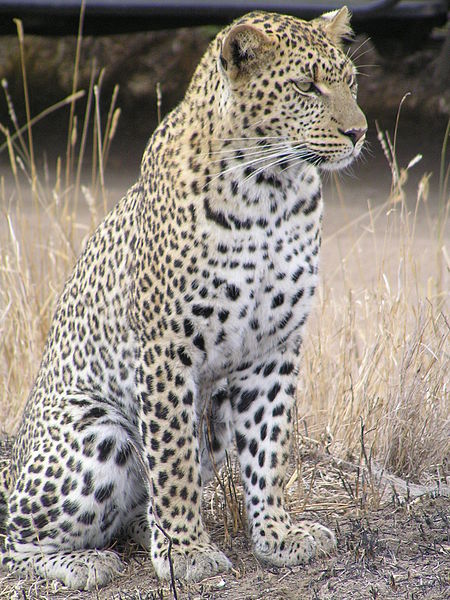
I often wonder why it is that skin tone is used to divide people. Inevitably my thought goes back to the Bible. In the ancient view reflected in the book of Genesis, all creatures, humanity included, were created with inviolable boundaries of “kind.” As mules and ligers demonstrate, however, boundaries are often only as strict as we permit them to be. “Can the Ethiopian change his skin?” Jeremiah rhetorically asks in 13.23 of his eponymous book, “or the leopard his spots?” Not only is race fixed, but gender as well. Each according to his own kind. It’s this easy division that’s troubling me. Humans of all “races” may interbreed, something not possible for the liger or mule. We are free to change our outlook. The leopard spots are in our minds.

None of this is meant to belittle the difficulties faced by black atheists, or any others who are excluded by their own “kind.” It is simply a suggestion that we might enlarge the pie, to borrow from Getting to Yes, before dividing it. Belief has to be a matter of conscience, and acceptance should be a matter of principle. Too often religious beliefs divide rather than unite. Atheists and true believers, of one “race” or many, have a common cause to make a better world for all. The prophet anticipates a negative answer to his rhetorical question. Allow me, Jeremiah, respectfully to disagree. Yes, a leopard may change its spots anywhere except in the prejudiced savannah of the human mind.

Leopard_africa


Paging Dr. Asimov

Who remembers Rock ’em Sock ’em Robots? Plastic “robots” in the boxing ring trying to knock each other’s block’s off was a form of entertainment for kids of the ‘60s before such things as humanoid robots actually existed. So when Boston University’s alumni magazine had an article about dancing robots, I had to see what was up. As regular readers will know, I’ve been exploring some of the problems with reductionism lately. This idea, that humans and animals are just fleshy machines, breaks down when we try to design robots that can do some of the most basic of human activities. Sometimes we dance and we don’t know why. Apart from Wall-e’s dance with Eve, robots have trouble getting the concept. Graduate student John Baillieul notes that this isn’t about “some high school guy who had trouble getting a date, so you get a robot. The ultimate goal is to understand human reaction to gestures and how machines may react to gestures.” Having actually been a high school guy who never even got to the prom, I’m wondering how depressed our robots get when the fem-bots all look the other way.

Rockem Sockem

The reductionistic outlook suggests that we can eventually program robots to respond as humans would, responding fluidly to situations, allowing them to over-ride their “instinct,” which, the article implies, equals programming. We have no idea what instinct is. It is something all biological creatures have, from the heliotrope following the sun to the human dancing her heart out. Do we want machines to replicate our most intimate emotions? Even our most reliable chip-driven devices sometimes freeze up or rebel. My car has recently got the idea in its mechanistic brain that the right-hand side rearview mirror should be rotated as far to the right as possible. We bicker about this all the time when I get in to drive. Well, machines know best. They, after all, are the shape of the future.

So programming robots so that they can react in real time to non-verbal cues, like all sentient beings do, is a desideratum of our mechanistic Weltanschauung. Notes Rich Barlow, the article’s author, “bats, for example, camouflage their motions so that they can sneak up on insect prey, a fake-out familiar to anyone who’s tried to swat a pesky fly.” My question is who is the pesky fly in this robot-human scenario? Who acts irrationally and unpredictably? Isn’t our instinct to smash the fly a result of our annoyance at it landing, yet again, on our sandwich with its dirty feet? And what is that stupid dance that it does when it’s all over our food? Reductionism must, by definition, reduce instinct to the level of a kind of genetic programming. Even this aging blogger, however, knows what it is to dance without knowing why. He also knows what it feels like when your date goes home with somebody else, something to which he’s not convinced that we want robots calculating an “instinctual” response.


Dog-gone Belief

A recent book I read, I can’t remember precisely which one, suggested that one reason the average citizen has trouble with science is the fault of evolution. We evolved, at least some of us have, to rely on common sense. We trust appearances to intimate reality, and act accordingly. The problem is that science, almost in principio, informs us that things do not operate according to common sense, but according to laws that are inscrutable to most of us and involving math way beyond our limited ability. Even with a calculator. For example, the earth is spinning really, really fast and hurtling around the sun so quickly that I think I’m going to be sick. Really? Common sense tells me that I’m stationary, and my inner ear only gives me true peace when that is the case. QED, as my high school pre-calc teacher used to say. But it’s not the truth. We are spinning and jetting through space.

IMG

An article in Time magazine recently brought this disconnect home on a very poignant level. “The Mystery of Animal Grief,” by Jeffrey Kluger, explores the animal grieving process. Many species have been observed to react to the death of one of there own very much like humans do. Physical attitudes of bowed heads, actions that signal depression, and even rudimentary burials are all documented among animals. Some scientists disagree: reductionism declares that this is all appearance (like common sense), and if the professor on Gilligan’s Island taught us anything beyond building with coconuts and bamboo, it is that there is a rational explanation for everything. Animals grieving? It takes a human to do that. Well, actually, it takes a human to declare with such certainty that our animal cousins can’t feel like we do. Although our only current pet is a hermit crab—and perhaps many uninvited spiders—I grew up with dogs, cats, guinea pigs, and assorted other creatures. They express real affection. If they didn’t, I can’t think people would keep them.

I wondered, as I read Kluger’s article, when religion was going to come into the discussion. It wasn’t a long wait. Religion, he notes, is a human mechanism for coping with the finality of death. Dead is dead, after all. Animals can’t be religious, so they can’t experience the emotions we do. Or so science would mostly declare. I struggle with reality on a daily basis. My experience has taught me that things are not often what they seem, but sometimes my path lies in a direction diametrically opposed to that of Dr. Heisenberg. We are animals. Animals are part of our family. I’ve experienced people who show no emotion when their close associates are suffering. I’ve also experienced a dog that would cuddle up next to me and lick my face when I was sad, an encouraging look in his canine eyes. Animals are smart and empathetic. They have some understanding of death—it’s just common sense. I write this as I’m hurtling through space at 660,000 m.p.h. while spinning at a thousand miles an hour. If my reasoning seems suspect to you, consider the circumstances.


Intelligence, Evolved

intelligenceinnatureAnyone who has looked into the eyes of a cat or dog can have little doubt that they think. What exactly they think is, of course, a matter of conjecture. I had been meaning to read Jeremy Narby’s Intelligence in Nature for a few years now. We are taught at a young age to eschew anthropomorphism—although our eschewers don’t use that word—as the childish way of perceiving the world. Animals don’t think because that’s reserved for people. We sit in the finest spots in the poshest corners of the animal kingdom and the sign says “No Dogs Allowed.” I never really outgrew this child-like belief because the minimal scientific evidence I’ve been able to infer supports the idea that like us, other animals think. Narby, an anthropologist, agrees. At least to a point. I don’t wish to make claims for Dr. Narby that he wouldn’t support, but he provides fascinating empirical evidence, “down” to the level of amebas and plants, that indicates intentionality. Nature is alive with thought.

As an anthropologist, Narby begins his consideration with the insights of shamans. Although scientists rarely countenance shamans, they are among the earliest of human religious specialists and they have long promoted the idea that humans are fully integrated into nature. We are not separate and above. From our brains to our bones, we are one with the natural world. If we think, should not animals think? Interestingly, this idea brings Narby into some of the same territory as Thomas Nagel; intelligence may be a cumulative process. Our brains’ ability to think may be the result of collecting together the thought processes of our fellow creatures to a point where our thinking becomes abstract. We’re told that dolphins and whales don’t think like us—they don’t build cities, do they? Maybe it’s because they didn’t evolve opposable thumbs. Maybe it’s because they’re smarter than we are.

There are, it seems, many thinkers on the outside of the hallowed confines of hard science that are chipping away at the strict materialist edifice. There can be no serious question that the empirical method explains much of what we experience in the universe. It has always amazed me, however, that we assume that humans are able to find the outer limits of existence with our limited senses. We know animals can see, hear, smell, taste, and maybe even feel in ways beyond our capabilities. Who’s to say that there isn’t other input well beyond our limited senses that we use to survive in this environment? After all, we didn’t evolve to know everything—we evolved to be able to thrive in our ecosystems. For that you don’t need all the answers—just enough to get by. If you doubt my reasoning here, I suggest you ask your dog or cat.


A Tale of Two Bees

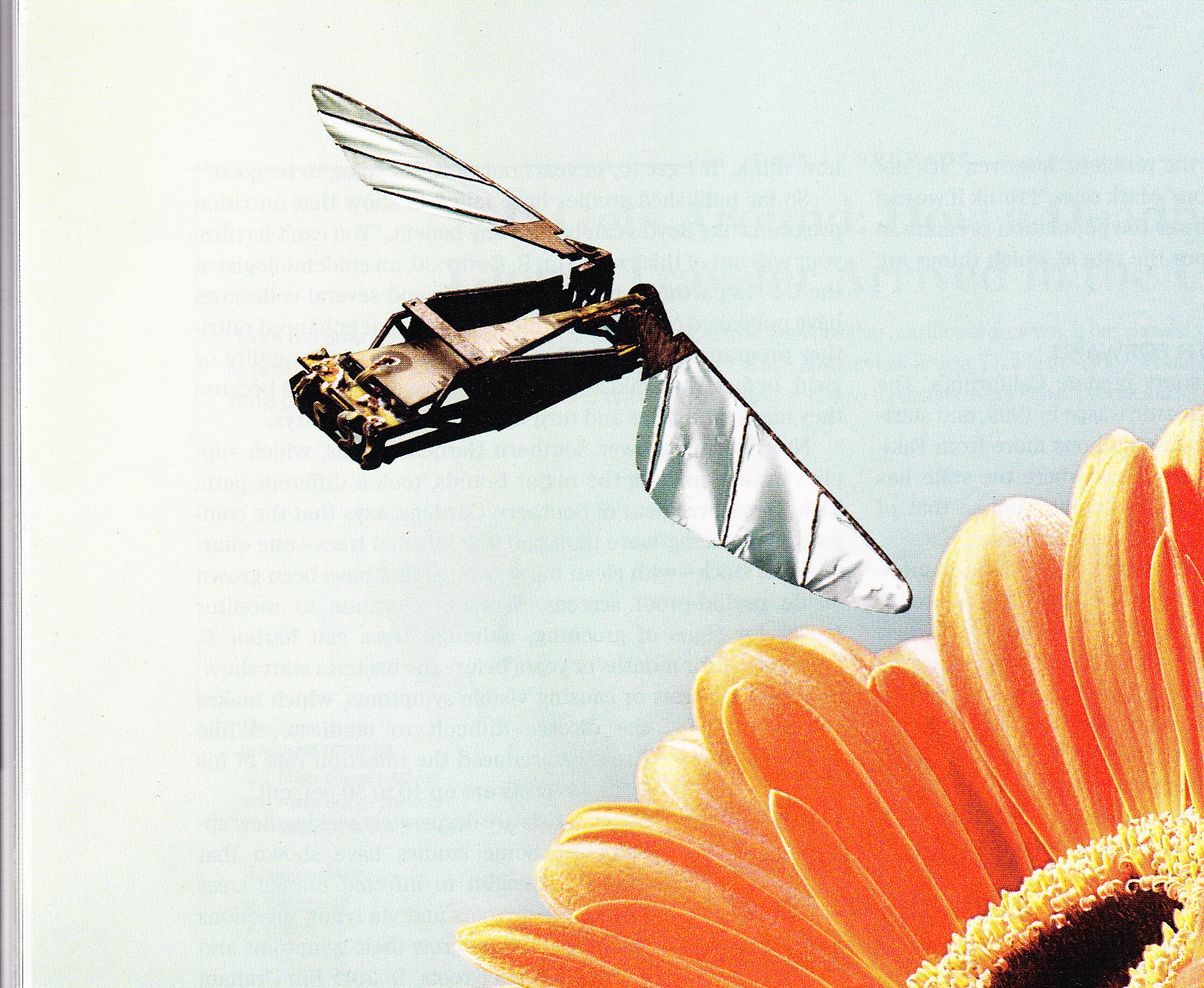
We’re nearing the competition season for FIRST Robotics. The animated, mechanical creatures created from scratch since early January are now set to compete for a kind of ultimate, ultimate frisbee. Only you can’t call it “frisbee,” for copyright reasons. Ironically drone bombers have been in the headlines this past week. Drones are robotic planes that fly their missions with human pilots sitting safely hundreds, or even thousands of miles away from the action. People are beginning to wonder—is this ethical? I pull out the Scientific American I purchased at Bush International in Houston last week. There’s an article about robo-bees. In a scare that seems like it could have come straight from the X-Files, I’ve been reading about the disappearance of bees. There are people seriously worried about this. It does seem that we failed to learn the lesson of Rachel Carson, and a land of milk and honey just doesn’t appeal without the honey.

The robo-bees are the size and roughly the shape of biological bees. They can be programmed to behave like bees and pollinate plants that our missing bees have been, well, missing. There may be hope for the flowers after all. But I wonder about the honey. No doubt, technology will come to the rescue. Those labs that gave us sucralose, aspartame, and stevia can surely invent a golden, viscous liquid sweetener that drips from a pipette. No cause for worry here. We can recreate the natural world in the laboratory. Honey has been reputed to have medicinal effects, but we can synthesize medicines in the lab as well. You might not want to dribble those on your biscuits, however.

Honey is made from nectar, the mythological food of the gods. Hinduism, Buddhism, and Judaism all recognize the religious significance of honey. Those of us who’ve been stung realize that a price has to be paid for such divine sweetness. The gods are like that. Roses have thorns for a reason. Not that I’m not impressed with the technology behind robo-bees. I am astounded that tiny robots can be built to fly and perform as we understand nature to dictate the Apis genus. They don’t, however, have the minds of bees. Mind is not the same as brain, as we’re beginning to learn. And minds are not limited to Homo sapiens. I recall when in our arrogance we thought we could improve the productivity of bees (capitalist bees) by breeding them with their Africanized cousins, biologically separated by an ocean. Many nightmares haunted me of the resulting killer bees. Yes, I had been stung as a child. Just by regular, garden-variety bees. From those painful events I learned a valuable lesson. We tinker with nature at our own cost. I, for one, am willing to deal with real-life stingers to taste the very food of the gods.

True bee or not true bee?

True bee or not true bee?


Flight of Fancy

I’m about fully recovered from my recent visit to Texas. Travel is perhaps the greatest form of education. After having my regular government pat-down, and hearing the airport loudspeakers warning me not even to joke with a TSA official, I was in a subdued mood as I awaited my flight. Airlines have learned to fine-tune human vanity. I know they are hurting for money, as many deregulated industries are, and there must be a marketing trick to get people to pay different prices for the arriving at the same destination at the same time. One of the most ridiculous is that of United Airlines’ Priority Access. Don’t get me wrong, I like United Airlines well enough. Their service has generally been on time, and they make being a human sardine as comfortable as possible. Some of the in-flight snacks, if you can afford them, are actually pretty tasty. But first you have to get onto the plane.

Of course, active duty military are free to board at any time. Tree-hugging pacifists, wait your turn. The part that really gets to me is that those held in special esteem by the Airline (i.e., those who can afford to pay more) are invited to board via the “Priority Access Lane.” This “lane” is created by laying a ratty carpet on the left side (or right side, for some gates) of an imaginary line composed of a couple of those retractable belt stanchions. To the left, sheep. To the right, goats. (Or vice-versa. We’re pretty hard to tell apart.) I’ve written about this before, but what caught my attention this time around was that a seeing-eye dog was boarded along with his human, via the “Priority Access Lane.” As I watched my canine brother sauntering towards the jetway, I was lost in thought. Not one sparrow falls to the ground. The privileged are boarding with a dog.

On my return trip home, at the ironically named George Bush International Airport, every few minutes a public announcement was broadcast about the interfaith chapel. Passengers were told that it was available 24 hours a day, and were given its precise location. Over the past couple of years I’ve had to fly a lot. I always notice the airport chapels, and I feel for those who are anxious about flying. I’ve never heard such a p-a announcement encouraging use of these chapels before. Perhaps I’m too fixated on how I never get to walk down the “Priority Access Lane.” I know my place; I was born among the working class, and when the plane goes down, I’ll be among my own kind. But I do feel sorry for the dog. He has no choice but to be classed with those who are, in the airline’s opinion, of higher priority than the common citizen. Next time I think I’ll just wait in the chapel, contemplating how god spelled backward is dog.

IMG_0558


Animal Mentalism

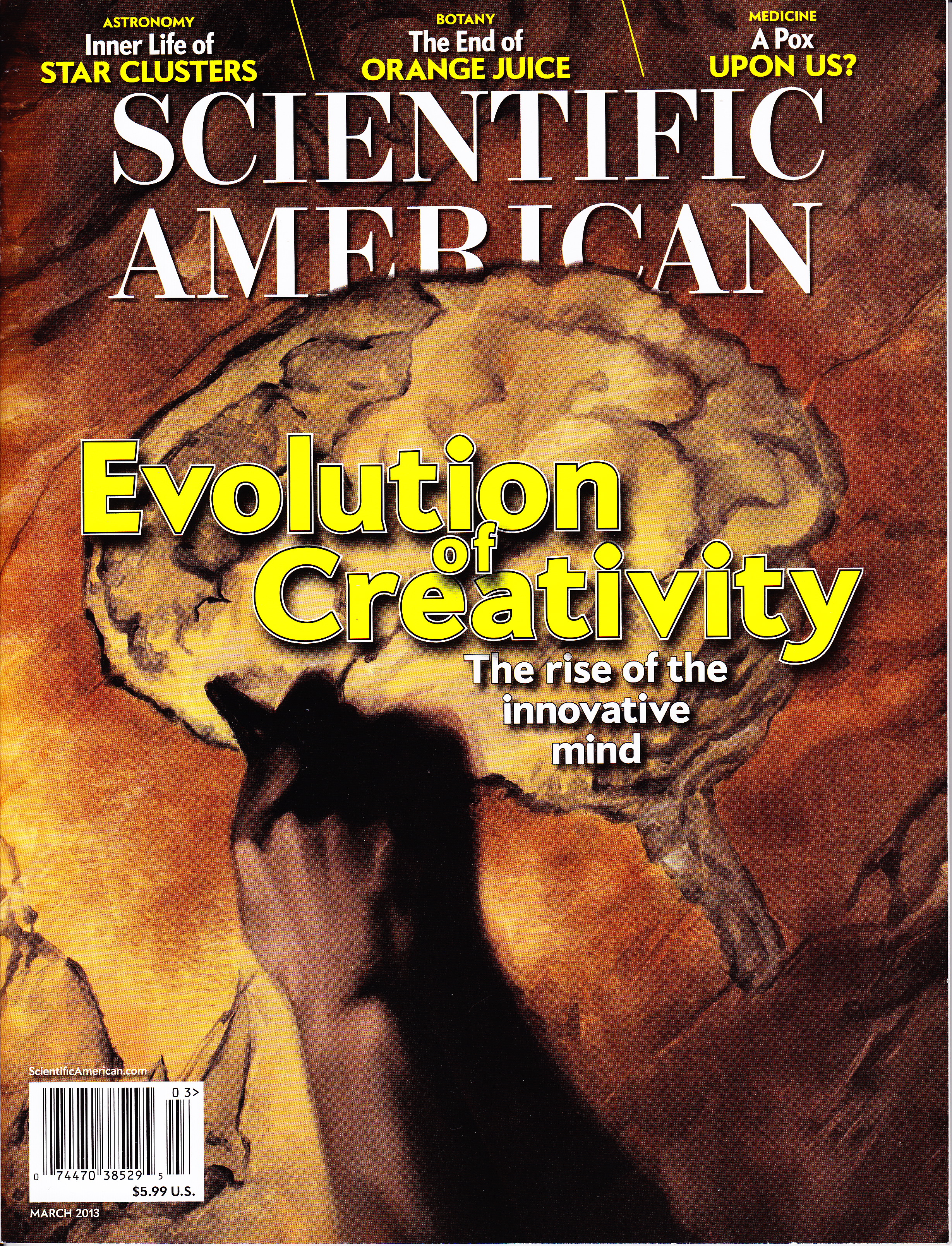
SciAmScience is how we know things. Most things, at least. One of the fundamental aspects of human life not yet grasped by the great empirical method is creativity. We generally have an idea how it works, but, like so much of human experience, it is difficult to describe precisely. When I saw this month’s Scientific American fronting with the headline “Evolution of Creativity”—two of my favorite topics—I knew I’d have to read it. The article by Heather Pringle zeroes in on the archaeology of very early human history. Before modern human, actually. I’d been telling students for years that the development of such traits as artistic representation, burial, music, and an awareness of some forces “out there” could be found tens of thousands of years ago. These, I suggested, marked the beginnings of religious sensibilities. I’d be willing to go even farther, however, and suggest that we share some of these traits with our fellow creatures. Religion may have a biological basis. That’s not where Pringle is going, however, and she addresses not religion, but creativity.

Pringle suggests that evidence for human technology—modest though it may be—stretches back further than the 40K epoch that seemed to house an explosion of human innovation. She shows how sophisticated knowledge of the environment and corresponding innovations were occurring 77,000 years ago, and even earlier. Some of it stretches back before Homo sapiens; stone weapons may be as early as Homo heidelbergensis and kindling fire as early as Homo erectus. Even our Australopithicene cousins seem to have been happily knapping stones two-and-a-half million years ago. The evidence, at the moment, seems to end there. I wonder, however, how far back cognitive development goes. We tend to underestimate the thinking abilities of animals, despite our constant surprise at how smart they seem to be. How very human! How very male, to assume that everything else is here for our use and pleasure.

Scientists often come upon with astonishment ideas that creative folks have been pondering for centuries. Science must be careful—that is one of its limitations. Creativity, the phenomenon Pringle explores, contains, in the words of Lyn Wadley’s team in Science, chemistry and alchemy. Creativity, like religion, isn’t afraid of magic. No doubt, some scientists will claim that true intelligence only begins with humanity. Looking at the way we treat each other, sometimes I doubt that it begins even there. If there is any hope for us, I would humbly suggest, it will come in the form of creativity. It is that very alchemy that keeps me coming back to science, and science will teach us, eventually, that animals are creative too. When we place ourselves among them, we will have created a world.


Monkey’s Uncle

T.H.Huxley(Woodburytype)

An opinion piece in Saturday’s New Jersey Star-Ledger highlights the 150th anniversary of T. H. Huxley’s Man’s Place in Nature this month. Well, Huxley may be forgiven for writing in the idiom of his day—he was Darwin’s contemporary after all—when he really meant humanity’s place in nature. The article, by Brian Regal, points out the common fallacy that evolution, as propounded by Darwin, says that we descended from monkeys. Quite apart from the insult to monkeys, Huxley was the one, as Regal notes, who made explicit something about which On the Origin of Species kept decidedly mum: the evolution of humans. People did not descend from monkeys. Nobody except religious opponents ever suggested that they (we) did. Evolution is a biological fact, and monkeys are evolved just as we are evolved. We had a common ancestor somewhere back a few millions of years ago.

This neverending story of religion (of some sorts) fighting evolution should capture the fascination of anthropologists, sociologists, and psychologists. It shouldn’t be ignored. Darwin wasn’t trying to start any fights. Huxley, well, he may have been, but with good cause. The facts, even in the 1850s, were definitely pointing to descent with modification. In fact, breeders of dogs and pigeons and other animals had known this for centuries. All that Darwin and Huxley attempted was to be intellectually honest with the evidence. It was religious believers who, reading between the lines, picked this fight. The Bible, after all, seemed to say we’d been created on day six (or day one, if you read Genesis 2 literally), and that meant science had to be wrong. Religion is used to setting its own terms. The debate is in the cathedral, not in the academy. Although by the end of the nineteenth century nearly all major branches of the church had come to some kind of understanding of the facts, the issue flared up with again around the time of the First World War with the advent of “social Darwinism.” Then, the religious objectors claimed, we did not descend from monkeys.

Funny thing is, Darwin and Huxley would’ve agreed. Instead, insidious motivation was attributed to some of the greatest minds in science. Accusations were made that everything in the lives of both Darwin and Huxley gainsaid. Natural selection made Darwin ill with its implications, but he could not shy away from the evidence. He believed in truth. Although Huxley coined the term “agnostic” to define his position, he had good reason. The biographies of these scientists are well worth reading before making accusations. So as we stand (or more likely, sit) on the sesquicentennial of Man’s Place in Nature, it might be a good opportunity to assess whence the friction is arising. We claim, in our still limited understanding, that monkeys can’t speak. (I’ve seen the movies and I know differently, nevertheless…) If they could, I imagine the debate would go something like this: “those hairless creatures who say that we are less important than they, they have the audacity to claim a common ancestor with us? Maybe evolution is a myth after all.”


Grown up Fish

InnerFishEmbryonic recapitulation. That’s what it used to be called. I didn’t learn about this in biology class, but rather in the Creationist literature that challenged the very concept. I suppose those deep evolutionary roots are what led me to read Neil Shubin’s Your Inner Fish: A Journey into the 3.5-Billion-Year History of the Human Body. Not that anyone who’s considered the facts can question evolution, but this book nevertheless took me back along my own evolutionary descent from Fundamentalism to a reluctant rationalism. I recall the frequently repeated Fundie catch phrase, “no transitional forms.” Probably what they were looking for was a mermaid-like creature that was half reptile and half bird, divided down the middle. Even at a tender age, while accepting their rhetoric, I wondered why archaeopteryx didn’t qualify. A flying feathered lizard? Sounded pretty transitional to me. Shubin opens his fascinating account with the discovery of Tiktaalik, a transitional form in every sense of the word. Here is a fossil that shows the tell-tale limbs and organs of moving from fish to amphibian. Yes, Virginia, there is evolution.

Shubin doesn’t stop there, however. He traces the various features of human bodies back to our piscine ancestors. From gills to gonads, we are bipedal, air-breathing, mammalian fish. No surprises there, really. One gets the sense that Shubin’s book wouldn’t be such a wonder if there weren’t organized Creationists out there constantly challenging the obvious. All living things on this planet are clearly related. Some of the cousins may be very, very distant, but we are all part of the same family. This threatens Creationists and others who need to feel different, special. People are related to God, they suppose, in ways that mere animals are not. Biology gainsays that concept, so no matter how much evidence we might marshal, the Fundamentalist is duty-bound to reject it. We’re trying to break up a personal relationship here, after all.

While Shubin does a wonderful job of explaining whence our biological features, I was nevertheless heartened to read him referring to the essence of being human. Some scientists reject “essence” as a vague concept that can’t be examined in a laboratory. That may be true, but we all know what an essence is. As a concept it too has explanatory value. It would be very difficult to read Your Inner Fish and come out doubting evolution. At the same time, Shubin realizes that people write books, and fish do not. That’s not to say that we’re superior to our fishy family, but that we are different. We have our own essences. That doesn’t mean we were created this way—maybe we’ve just evolved with them. Either way, Shubin is charming romp though 3.5 billion years of our history.