Dog Gone Rapture

With the world about to end tomorrow, a friend pointed me to a story of a savvy entrepreneur. The idea is so obvious that I’m completely jealous I didn’t think of it myself. Among the Fundamentalist camp it is widely acknowledged that animals don’t have souls. They do, however, make wonderful companions nevertheless. When their good Christian owners are raptured to the skies, Rover is consigned to a cruel death by starvation if his soulless biological form is left inside. Poor soulless, sinless Rover! Reason (such as any theological thought can be called “reason”) and emotion clash. Bart Centre comes to the rescue. His company will break into the now abandoned private property that God had blessed you with, and rescue your pet. For a reasonable fee. As an atheist, Centre is pretty sure he won’t be going anywhere.

At notable—and even some rather forgettable—points in human history, people have guessed that it is all about to end. This is a strange belief when parsed apart from its original context. Ancient mythical thought tended to be holistic. We humans, with our own cycle of births and deaths, have trouble imagining anything that doesn’t follow the same pattern. All things must have beginnings and ends. Zoroastrianism began as a persecuted sect among the Old Persian religious realm. Persecuted sects tend to want an end to the suffering, and so it is no surprise that Zoroastrians gave us the end of the world. When Judaism was under the severe predation of Antiochus IV Epiphanes, it too looked for a radical change. Christianity under Nero and Domitian looked for a triumphant culmination of a universal purpose. And no end came. Instead, under Constantine Christianity gained a privileged position. With only periodic outbreaks, concern for the end of all things was pacified.

Today with the ease of lifestyle among most American Christians, it is surprising to see such antipathy toward the world. In the words of the Metatron, “Was Wisconsin really that bad?” Or maybe I have read it wrong. Perhaps this is the final culmination of the Prosperity Gospel: Christians have got it so good that the only way to better their lot is to end it all? Religions have always demonstrated their acquisitiveness either in terms of souls or currency. When you’re on top of that world, what direction is there to go but out? But you can’t take it with you, including your soulless friends. Perhaps that’s the real lesson in all of this: humans struggle to mix reason and emotion into one psyche, despite their diverse evolutionary paths to consciousness. We may readily accept the mythical but still wonder who will take Rover for his walk.

Cafe Press's take on the issue
Conscious Cats

To pass yet another rainy Saturday, and to celebrate Earth Day, my family went to watch Disney’s African Cats yesterday. An avowed nature-film junkie as a child, I watched Mutual of Omaha’s Wild Kingdom on a weekly basis and have supplemented that fare with nature films throughout my life, when possible. It disheartened me a little to learn that some of the adventures were spliced together from different filmings, but I always believed every word avuncular Marlin Perkins said. After all, the show ran on Sunday nights, and who’d dare lie on a Sunday? Noting the humor even as a child when Marlin Perkins would stand back as Jim Fowler wrestled the anaconda or outran the crocodile, I could not get enough of authentic nature footage. As a child, wildlife sightings were limited to squirrels and rabbits, a number of birds that looked disconcertingly similar, and many, many bugs. Once a king snake slithered down an alley down the street, and we felt like Marlin Perkins, keeping our safe distance.

A trend in recent years has been to anthropomorphize animal films to engage children’s interests. So it was with African Cats. Each lion and cheetah family was described in human terms with human motivations, longings, and emotions. It is clear from watching many, many episodes of Zoboomafoo with my daughter (we even saw the Kratt Brothers live at a New Jersey Greenfest a couple years back) that animals genuinely do experience emotions. Anthropomorphizing them, however, has always disturbed me. I’ve been a vegetarian for well over a decade now, believing that animals have the same right not to be eaten that I fervently hope they respect in me. But placing them in the same level of consciousness as humans increases the suffering in our world a little too much. Both lions and cheetahs die in this G-rated movie. That is the unfeeling course of nature. Suffering comes at the level among humans of being aware of this misfortune, and taking it to heart. Theodicy is among the most intractable of theological problems.

Today as millions of Christians celebrate resurrection, my thoughts are with the animals. African Cats shows incredible footage of millions of wildebeest migrating, but packages them as mere prey for the hungry lions. What of the inner life of the wildebeest? In our society where the few lions demand the best while countless prey animals go about their daily grind, eking out a living from an unfeeling earth, the subtle message was almost overwhelming. Yes, the vast wildebeest herd can spare a member or two to predation. What if that member is you or me? It is the trick of numbers and the curse of consciousness. I respect and admire our animal co-inhabitants of our planet, but without the myth of resurrection isn’t giving them consciousness just a little bit too cruel?

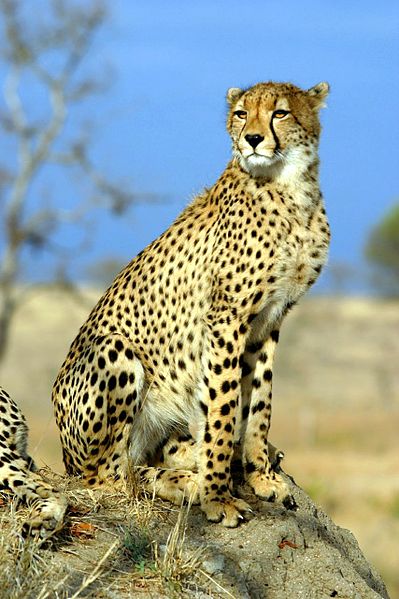
James Temple's cheetah from Flickr, via WikiCommons


Cat Tales

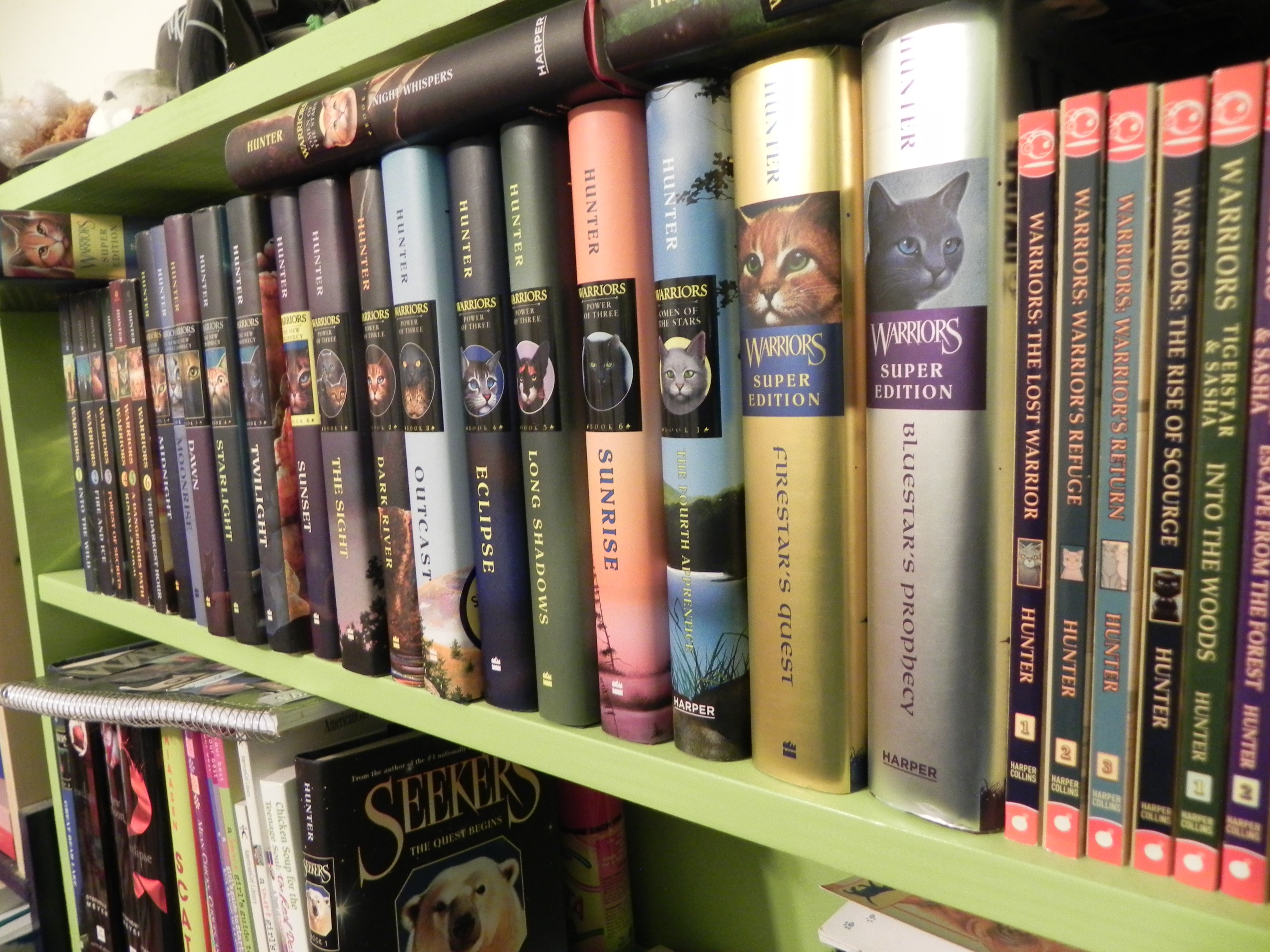
Several years ago a cat named Rusty, aka, Firestar, came into our lives. Since my wife is allergic to cats Firestar is, of course, a fictional character. I’ve written about the Warrior series of tween books by Erin Hunter before, and last night I was reminded of the centrality of religion to the story. My daughter has been a fan of Warriors since fourth grade. One of the few luxuries we allow ourselves is the (now mandatory) purchase of the newest installment on the very day of its release. Waiting even one day cannot be tolerated. Although my daughter is among the more wizened readers of the series, her devotion is undying. She’s the kind of fan publishers (and some deities) covet. Last night I took a break from grading student papers to take her to see Erin Hunter at the kick-off book signing for the latest release in the series.

What a publisher loves to see

I have to admit feeling a bit out of my league waiting in a massive line where the average age is, on the whole, several decades below mine. There was even some question as to whether we would even be admitted since we had the dreaded B tickets rather than the highly prized A stubs. Having read the first twelve books as bedtime stories quite a few years back, I hadn’t expected the founder of the quaternity of Erin Hunters to be quite so witty. As she explained (mostly to the adults present, I believe) her interest in devising the series, she cited “religion” as the second of her interests. In the series, tribes of feral cats each have a shamanistic “medicine cat,” and the spirits of the departed cats play an influential role. Ms. Hunter also explained that the clans could be taken to represent different religions, all struggling to coexist.

Now I could understand that I was clearly in the world of fantasy. Religions, like all human institutions, are prone to corruption. Lofty ideals, inspiringly presented by insightful founders, soon come to be used as weapons and tools to win control over other people. Since religion is understood to be sacred, few suspect the insidious uses to which the various tenets of belief-systems may be put. Those of us who have toiled long among the religiosphere must become more circumspect about our surroundings or be consumed by them. Many of us know firsthand what darkness religions are capable of generating. In fact, it is something that even cats recognize, if Warriors be a reasonably reliable guide through this tangled forest. And like cats, many religious warriors can barely keep their claws sheathed.


Anubis Rising

As if reality weren’t haunting enough, I’ve been continuing my quest to find the scariest fiction book written. I’ve borrowed suggestions from others, but it seems that the fear factor is a decidedly personal thing. Nevertheless, the suggestions are often enlightening as well as provocative. I recently finished Dan Simmons’s A Winter Haunting. Simmons’s work had previously been unexplored by me, so this was a foray into the unknown. Of course, I read horror with an eye toward the sacred and I’m seldom disappointed. In A Winter Haunting the sacred appears in the form of Egyptian religion. Simmons makes very effective use of hellhounds, tracing them back to Anubis.

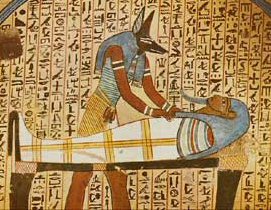
Now Anubis lays me down to sleep

The religion of ancient Egypt had a morbid preoccupation with death – or maybe it was just a healthy recognition that it is inevitably coming. Many of their gods eventually ended up patronizing the dead in some way. Andjety, Ptah, Min, Osiris, Isis, Nephthys, Maat, and Thoth, as well as Anubis, regularly appear in the cult of the dead. And, of course, pyramids represented the stairway to heaven long before Page and Plant. Death and its psychological angst have been crucial to the development of religion from the beginning. The Egyptians honed it to a fine art.

Anubis was likely associated with the dead because of the scavenging of wild canines at shallow graves. Magic, a phenomenon anthropologists have difficulty distinguishing from religion, dictates that the source of the problem should be appropriated as its cure. To protect the dead, the scavenger of the dead transformed into Anubis. Simmons did his homework, for this transformation is well represented in A Winter Haunting. Without knowing this particular plot device, I had been reading about Egyptian funerary cult independently of the novel and this coincidence proved entertaining as well as informative. I won’t be sleeping with the lights on, though. The search continues.


Myth of Jerusalem

As I stood atop the Mount of Olives watching the sun set over Jerusalem several years ago, I had difficulty believing I was actually there. For a working class kid who’d only ever been to Canada before (and only because we lived not too far from Niagara Falls), this was a moment like a scene from the Bible itself. Jerusalem is a city of myth and dream, and it represents just how seriously mythology may be taken. A new book, Jerusalem, Jerusalem: How the Ancient City Ignited Our Modern World, by James Carroll, was reviewed in Sunday’s newspaper. I have not yet read the book myself, but a couple of lines from Tom Mackin’s review leapt out at me: “Jerusalem is as much a symbol as a reality. Because most Orthodox males spend their time studying the Torah, they are unemployed. Piety brings poverty.” This is editorializing with parsimony.

Those of us raised to believe that pursuit of the highest calling of humankind is that of seeking the divine often end up forced to live the consequences. This pursuit does not pay, unless one is willing to sell one’s soul to become a televangelist. Unemployment has a way of sharpening one’s focus. The message repeatedly heaped upon you by society is that you have nothing of value to contribute. True, religious founders often declare the ineffectual satisfaction of lucre, but then, most of them didn’t have a child to put through college. Having spent nine years after high school studying the Torah (and Prophets and Writings and documents written long before any of this), I see now what could not be seen then.

When I watched the sun set over Jerusalem with some friends, a stray cat wandered over, looking for affection. Or, more likely, food. I had some scraps that I shared with the hungry kitten when it unexpectedly bit my finger and scampered away. My friends, concerned for rabies or some other infection, rushed me down the Mount of Olives and into the Holy City seeking a holy pharmacy. Little did I know at the time that a myth was being enacted at the expense of my aching finger. Acts of kindness are rewarded with the hand that feeds being bitten. I had to come down from the mountain, earn a doctorate, and be dismissed by well-groomed evangelicals before I could finally see that the symbol was the same as reality. I need to read this book to restore my faith in mythology.

More and less than it seems


Dog Gone!

Religion is a strange attractor. Maybe not in the exact same sense as in chaos theory, but in reality it brings together mental states so bizarre that science fiction and fantasy writers have a buyer’s choice. Yesterday the New York Daily News reported on a South Carolina woman who hanged and burned a one-year old pit-bull puppy. Why? The bitch had bitten the woman’s Bible. Citing the animal as a “Devil dog,” the southern woman became a vigilante for the Lord. Now she’s being tried on charges of animal cruelty. This story touched me in a number of ways.

With family roots in South Carolina, I can conjure up images of this happening. Having known many, many Fundamentalists, it seems even more plausible. Given the constant barrage of contrary messages descrying the presence of evil in the world, all the sudden any mutt can become Mephistopheles. Begging off the Baskervilles, the demonic hound has a long pedigree in mythical imagination. It is well known that the Bible cites dogs as unclean animals, but it is their charnel character that leads to the development of the full-blooded hellhound. Prior to the Hebrew Bible, in ancient Ugarit dogs had an infernal connection. It isn’t seen clearly, but the association is there. Snatches of the underworldly dog appear long before Cerberus, and last well nigh into the twenty-first century.

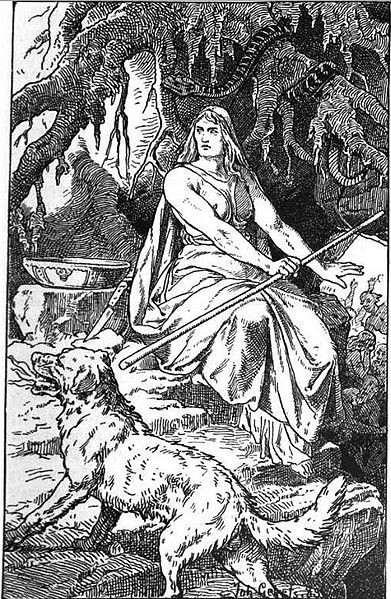
Hel and his hound

Unfortunately for the deceased canine, it is a myth. Hellhounds still abound in popular media, everywhere from The Omen to O Brother, Where Art Thou? Dogs, however, were among humanity’s earliest partners in the survival game. From about as early as I can remember, we always had dogs in the house, and nary a demonic encounter. We never put them on trial, even when house-training was in progress and an accident occurred.

The news story reminded me of an episode of Dragnet I saw as a child. A woman was arrested for murder, and Sergeant Friday, in his unflappable voice, told his partner it was because the victim had shot one of her books. In the final fade out, after Bill Gannon asked what book it had been, Friday holds up a Bible with a bullet-hole through it. I was a little confused. Was the woman guilty or was someone shooting a Bible just cause? The episode did not answer the moral dilemma. I can’t even remember the outcome. But in 2011 things haven’t much changed. If he goes to South Carolina McGruff better watch what he takes a bite out of, or it could be lynching time again.


Misjudging Dinosaurs

Two dinosaurs diverged in the middle of evolution, and I’m not at all sorry that they both flourished. One became an herbivore, harming no one but plants, while the other grew into a carnivore, eating its siblings. That’s the way of this evolutionary universe. The Eodromaeus and Eoraptor split took place near the very inception of the dinosaur form, with the most basic of existential options: eat or be eaten. Noted paleontologist Paul Sereno has been excavating these Argentinean Lilliputian dinosaurs and has detected that the species, while similar, had irreconcilable food preferences.

Dinosaurs are often relegated to the age of children. When we grow up, we’re supposed to take interest in more modern developments and leave the dinosaurs in the dust. Their value, however, is often underappreciated. We learn about our world by examining theirs. Identification is subtle and sometimes wrong. Little Eoraptor is now thought to have been the plant-connoisseur, despite the terrifying, Jurassic Park-sounding name. We call them what we think they might be. Further discovery often changes the complexion of the picture.

When forced into a choice of more adult occupations, perhaps I unwittingly rebelled, choosing to study ancient religions. Like dinosaurs, religions evolve. As a child it was far easier to tell the preferences of dinosaurs since their morphology often gave them away. Religions are much more subtle. We are told that some dinosaurs survived in the form of birds. Many, many millennia of evolutionary pressure reduced their size and morphed their scales into feathers. Sometimes it’s hard to recognize a carnivore even when it’s just outside your window. That’s the way it works. Some follow the herbivore track, others prefer the way of the carnivore.

It's not the Eoraptor you think you know (from WikiCommons)


Which Witch?

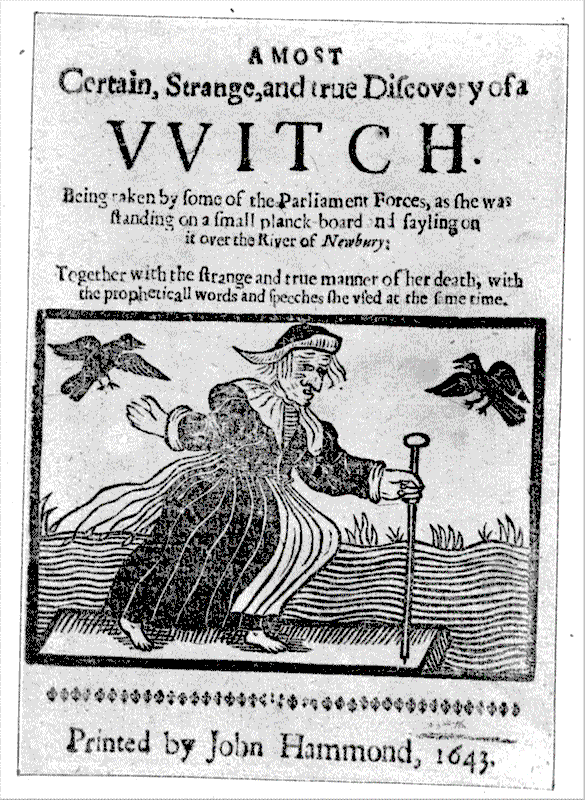
Witches have been flying all over the Internet the last few days. A story from AP Online, picked up by several websites, reports that witches in Romania are planning to cast spells on the government. Now, I have to admit to having been tempted to cast a few spells myself during the Bush years, but since I don’t believe in magic the desire simply fizzled. These witches, however, are serious. Cat excrement in hand, the carcass of a dog nearby, these witches are outraged. Perhaps even more surprising is that some government officials are taking it seriously too, according to the article. The reason for the hexes? Romania has just started charging witches income tax.

Romania is a nation that evokes the darkness of primal forests haunted by werewolves and terrorized by vampires. The one-time domicile of Vlad the Impaler, the region has retained this mystique into the twenty-first century while elsewhere rovers roll around the surface of Mars and instantaneous world-wide communications are available at the press of a button. I am nevertheless encouraged by this display of activism. These supernatural citizens are challenging what they perceive to be unfair government practices. Statesmen wear purple on auspicious days to mitigate the effects of enchanters who are in touch with the financial struggles of the vast majority of religious specialists. Most of us just sit back and take it.

Meanwhile, as thousands of blackbirds fall from the sky, members of our own government are posturing to take back the modest health care improvements President Obama has helped to institute. Emotional Republicans are getting ready to strike back at programs designed to help those less fortunate than they are (apparently so they’ll have someone to pray for at grace over meals). “Are not two sparrows sold for a farthing? and one of them shall not fall on the ground without your Father” (Mt 10.29). Never mind casting spells, the government will always find ways of making life less comfortable for those they see as threats. Which witch would you choose? I’d select the one with a moral compass, even if she has cat excrement in her hand.


Resurrection From the Crab

My daughter loves cats. We have, however, lived in apartments since having been forced from our four-bedroom house at Nashotah. That means we’ve been at the mercy of various landlords for our choice of allowable animal comfort. Most landlords disallow cats and dogs, so we’ve gone the route of caged or terrarium pets. Birds, reptiles, and arthropods are fascinating but hardly cuddly. All three taxes share the phenomenon of molting, and once out of their artificial environments they are also all difficult to get back in. Our current non-embraceable companions are hermit crabs.

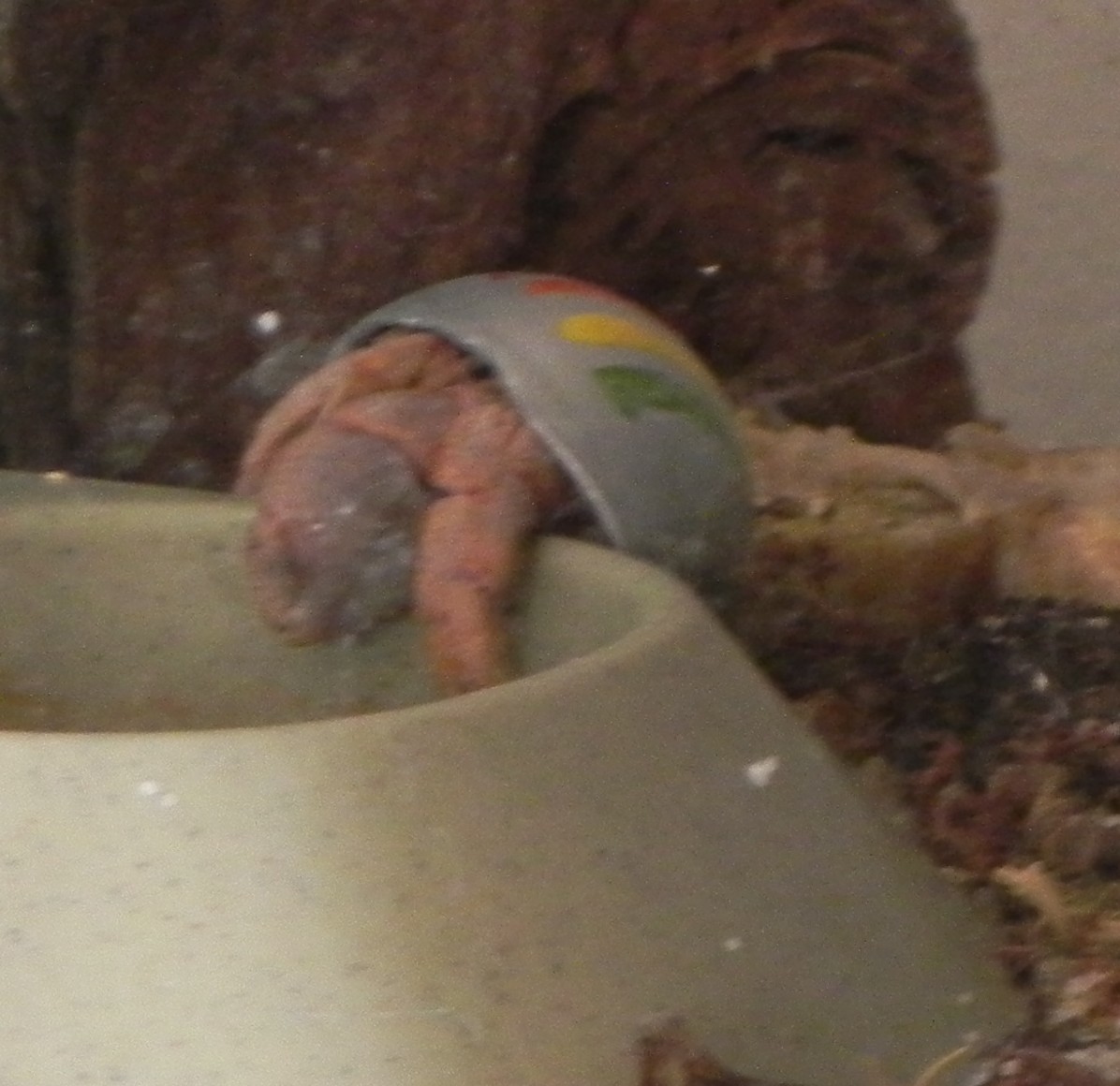
If early Christians had known of hermit crabs, I am sure they would have used them as symbols of the resurrection. (They could have used Baal as well, but that was a non-starter I’m afraid.) Our adventure began in a mall. The salesman told us, in broken English, that they would live two or three years, with proper care. We purchased one and were chagrined when it died shortly after, just when my daughter was hosting her cousin for a week-long visit during the summer. Shocked and tear-stained, we went back to the mall for a replacement crab. Later that week, crab number one (Sparky by name) suddenly reappeared. What we assumed was the corpse of Sparky was only his (or her – I have no idea how to tell) molted exoskeleton. It hung limply out of the shell like a deflated crab, but inside a new incarnation was preparing its epiphany.

This drama has enacted itself many times. This past week Sparky’s companion really died. Since the crabs are not the center of attention during the holiday season, I was the only one with this esoteric knowledge. The pile of legs and vacant shell were a little gruesome, but tucked into the corner of an out-of-the-way aquarium, they attracted no other attention. I resolved to bury the little guy. Today as I prepared to take care of his crustacean cadaver, I was astounded to find him (or her) alive and well and inhabiting a different shell. Resurrection. Our crabs have outlasted their projected livelihoods and are into their sixth year with us. Every time one dies, he (or she) comes back. If they couldn’t use Baal or Adonis, early Christians might well have caught on to the symbolism of the humble hermit crab.

I was dead, but now I am alive


Where Are the Wolves?

Spend a leisurely hour at your local commercial bookstore and you won’t be able to avoid seeing vampires. Just yesterday I noticed that a neighborhood bookstore had an entire section entitled “Teen Paranormal.” Zombies also continue to grow in popularity, now having their own line of undead Christmas products. And where is the humble werewolf? Not gone, just lurking in the shadows.

This weekend I finished the third werewolf book by my one-time co-Wisconsinist, Linda S. Godfrey. (She’s still there, but I’m not.) Lest any of my readers think I am casually lumping her work together with the fictional fantasy monsters, I must declare up front that The Michigan Dogman is not a work of fiction. Linda is a careful researcher, a former journalist, and a woman who possesses something many researchers lose over the years: an open mind. The problem with occasional phenomena is that they are almost impossible to test in any empirical kind of way. Since even before the Beast of Bray Road story broke in 1992 occasional reports of bipedal canines had stumbled into the news once in a while, causing headline-happy journalists to push the werewolf button. Underneath the current monster hype, however, is an intriguing question of origins.

Where do all these similar stories originate? While not even close to the number of reported Bigfoot sightings, the dogman/manwolf sightings that Linda has pulled together are impressive for their overall uniformity. Witnesses who’d never heard of the creature repeatedly report fine details that mesh with accounts of individuals otherwise unconnected. The standard answers of hoaxes and misidentifications just don’t cover the three volumes worth of material she had compiled. Few would stand by the assertion that these are shapeshifting humans, but for those with an open mind the werewolf trilogy gives pause (paws?).

The universe is large beyond human comprehension. Simply because we’ve evolved very complex brains doesn’t mean we’ve found all the answers. I’ve never seen a werewolf or any other popular cryptid. But having studied the strange world of religion all my life, I know better than to declare, ex cathedra, that very strange things cannot exist.


Thanksgiving Day

This post is an excerpt from my unpublished book for young readers giving the history of American holidays:

When you think of Thanksgiving you may see visions of a big turkey dinner and a four-day weekend. If you’re like me (I hope not!) you probably think that ever since the first Thanksgiving dinner in 1621, Americans have had a big November feast every year since. This popular cozy image may be heartwarming, but it is wrong. Thanksgiving in history is a custom that goes back to the Puritan settlers. Puritans came to America so that they could practice their religion freely. They were religious people (not a great sense of humor); things had been pretty tough for them – crossing the stormy Atlantic in small ships, not knowing what to expect when they arrived, lots of people dying on the way – not an easy thing to do! Once they got here, there were no grocery stores and they hadn’t planted crops earlier in the year, they didn’t even know what would grow here. Many didn’t survive, they weren’t America-tolerant you might say.

What we think of as the first Thanksgiving involved English colonists (Pilgrims) in the Massachusetts Bay Colony and the Wampanoag tribe of Native Americans. One of the Wampanoag, Squanto, served as an interpreter – pretty big of him, considering he’d learned English from being a slave. He taught the settlers how to grow corn, which was unknown in Europe. (What the English called “corn” is what we call “wheat.” The more correct word for what we call “corn” is “maize.”) Squanto also taught the Pilgrims how to catch eels to eat – maybe he found a way to pay them back after all! The first Thanksgiving meal in 1621 followed the Pilgrims’ first successful harvest. They ate deer and some wild birds – enter the turkey! – along with their crops.

You see, both the Wampanoag and the English had traditional harvest festivals – many peoples do. “Thanksgiving,” however, has to do with, well, giving thanks. Did I mention that the Pilgrims were religious? They believed that God had successfully brought them here, so they thanked God. Not every early harvest was so great. In a bad year they had a day of mourning rather than a Thanksgiving feast. Some historians place the first “Thanksgiving” in 1923. The Pilgrims had experienced a drought. Frantically they prayed for rain, and, Flanders-like, it came. So they held a Thanksgiving. These Massachusetts Puritans held Thanksgivings in church rather than around a banquet table. For them, these irregular days of giving thanks marked the survival of difficult times, not fancy food. So they held occasional Thanksgivings, not watching football after a big meal, but praying in church. By the middle of the 1600s settlers began to have a harvest-day Thanksgiving pretty much every year, but not always on the same day. They had not set a specific date to give thanks and feast.

Puritans, you must realize, gave thanks at the proverbial drop of a buckled hat. They prayed before meals as a regular practice – something many families continue to do. To set aside a day for special prayers, like Thanksgiving, was as natural for them as women wearing bonnets. The practice of having an annual (yearly) day of giving thanks got underway in Massachusetts around 1630. Other colonies joined in, but not always at the same time. Remember, harvests come at different times in different places.

[See Full Essays for the rest of the story.]


West Texas Dead

A small item from the Star-Ledger wire services proclaims, “Former priest accused of trying to hire hit man.” Since the story was bylined Texas I started to wonder if the accused was someone I knew. Nashotah House boasted more Texans than any other statehood citizenship when I was there, so it was natural enough of a gut-level reaction. Fortunately, it was wrong. A former Catholic priest named John Fiala stands accused of trying to hire a neighbor to assassinate a teenager who’d accused him of sexual abuse. In a travesty of at least three of the ten commandments, a man of the cloth allegedly attempted to bare false witness (the error is intentional).

We hold clergy to a high standard in our society. The mystique of being “called” by God, secreted away in a provocatively named “seminary,” and emerging ontologically superior to other humans has a touch of whimsy that is difficult to dismiss. Having twice been a victim of seminary, once as a student and for even longer as a faculty member, I learned some important truths about those trained for ministry. They are merely human. In fact, my best students were those who recognized and embraced this fact. When I was informed that an ultra-pious candidate was about to “shed the shackles of the laity” and would return from his weekend ordination “ontologically transformed,” I rolled my non-ordained eyes. I had seen the test scores and intense faculty evaluations. Ontological change? We should be so lucky.

So, a man barred from any sexual outlet seeks a silent victim. We should not wonder. Attempting to get a neighbor to become an assassin is a bit over the top, even for most Texans. It does, however, illustrate my point that the laying on of Episcopal hands does nothing to change the essence of a person. Clergy are just as human as anyone they serve. It is when they think otherwise that problems arise. Secular students in the halls of Montclair State University are talking about the Vatican’s changing collective mind on condoms. Discussion and exegesis of the issue cover the front page of the New Advent website. Too bad the decision hadn’t been made a few months earlier. This situation might not have emerged at all. As the paper states, “the Sacred Heart of Mary Parish in the West Texas community of Rocksprings [is] a rural enclave known for sheep and goat herding.”

Don't let it get your goat


Lions, and Politicians, and Bears


A man was eaten by a lion in Zimbabwe yesterday. A boy on his way to school in Alaska was attacked but relatively unharmed by a brown bear. Predation. Much of the way humans act is based on our long history as both predators and prey. Evolution (may not apply in Kansas or Texas) has designed us to cope with these constant stresses of finding enough food and avoiding becoming food. A great deal of religious behavior can be traced back to avoidance of predation and success in the hunt. We like to think that we are somehow not animals, but animals are smart enough to disagree. Just ask that cheeky squirrel that finds ingenious ways to circumvent all the deterrents you put in place to assure that those seeds go to needy birds, not fat rodents. We are part of the mix. Our opposable thumbs help immensely; we build our own ecosystems to keep lions and bears out.

Yesterday was a day of predation. Even within the human sphere we find that killing others is permissible, as long as it is done slowly by those in fine clothes and fancy automobiles. Depriving the less deserving is a time-honored human behavior, after all, survival of the fittest only applies to animals, not us. Right? By backing policies that protect the wealthy in their lofty sanctuaries while others shiver in November’s Tuesday chill we show human nature. Humans are predators as well as prey.

Intriguingly, many politicians who support laissez faire economics deny evolution exists. Instituting policies that ensure survival of the wealthiest, they deny up and down that evolution has anything to do with the way that we are. It’s all in the nature of the evidence. And nature itself is evidence. We may be the smartest, most well adapted of the mammal class, and yet we can be eaten. What does the evidence suggest? From the point-of-view of a lifelong observer of religion, it suggests we are still the prey. When religion stealthily crawls into bed with politics, it is evident that even religion itself may be a deadly predator.


Fearsome Fish

It must be October. As I was looking up a word on Dictionary.com, I noted one of their “the hot word” features entitled, “Scientists discover a fish they name ‘dracula.’” The fish, which is native to the eastern part of Asia, was discovered in 2009 but is just now starting to draw attention. The name apparently derives from its fangs. Vampires, however, have their ancient origins in creatures that draw the life force from humans. In the ancient world the “life force” could take different forms: blood, breath, and even semen. Soon a whole array of life snatchers populated the ancient mind – incubi, succubae, Lilith, demons, and any of a number of other contenders for the human essence. The fear of being drained is a very ancient one indeed.

While in my adjunct office at Montclair yesterday I met a colleague. We discussed the visit of the exorcist to campus that I missed but he attended, and while discussing the mythology class we both teach he mentioned how vampire movies make use of mythic themes. I have been using this information from the beginning for my class, but I was fascinated that another part-time instructor would latch onto the same film motif as I did to illustrate modern myth. The vampire is such a part of our culture that people often forget its religious origins.

I attended a public performance of a two-man play at a local library this week. The play was a conversation between Edgar Allan Poe and Bram Stoker. Naturally, vampirism played a strong element in the single-act show. While Poe and Stoker were not contemporaries, they did both share an awareness of how religion tied in with the macabre. The Frank Ford Coppola movie Bram Stoker’s Dracula makes this connection explicit as an enraged Vlad Tepes stabs a cross in his chapel with his sword, starting a flow of blood that he greedily drinks.

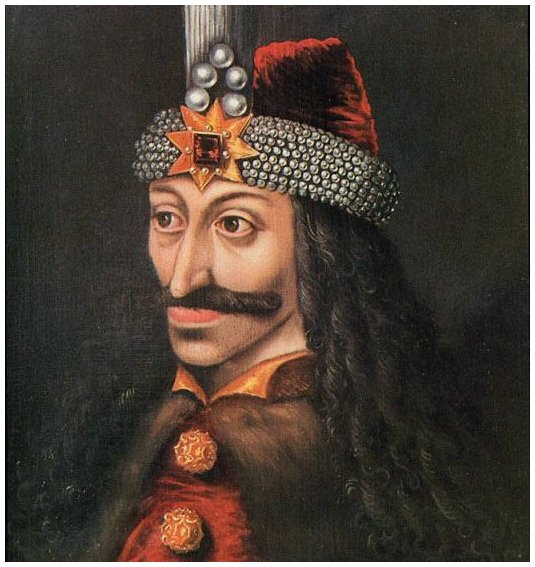
Vlad Tepes on a good day

We’ve just crossed into mid-October and I already find myself surrounded with vampires. It is characteristic of religion to deal with our deepest anxieties, and the more we reflect on vampires the deeper we find they reside in the religious sensibilities of both fish and phantom.