Rorrim

It was an object of wonder. Handed to me as a child, the Bible inspired a kind of awe reserved for the big events of a young life. Here were the very words of God, in King James English, for me to read, mark, and inwardly digest. Well, at least read. And read I did, as only the fear of Hell is able to motivate an impressionable psyche. When a parish minister saw the trajectory of my life, he suggested exploring the ministry. More Bible reading ensued. With only Halley’s Bible Handbook as a guide, interpretation was largely a matter of what the minister said, and the kind of primitive reason that resides in a teenager’s head. I made it through college as a religion major without ever hearing about Mesopotamia’s influence on the Bible. Once I did hear, in seminary, it was clear to me that to get to the truth, you had to go back beyond the first page. Mesopotamia was only part of the story. The Bible was a book compiled in a region where other religions shared concepts, deities, and stories with the Israelites. While unique in some respects, it turns out the Bible wasn’t as unique as I’d been led to believe.

Mesopotamia, vying with Egypt, was the true cradle of the civilization that gave rise to who we are in the western world. Perhaps in the eastern hemisphere as well. The great cities of Sumer, and later Babylonia and Assyria, yielded cuneiform tablets and other artifacts that insisted we widen our view of antiquity. The heirs of this tradition developed Judaism, Christianity, and Islam. All three monotheistic religions have bred sects that despise this ancient past with its uncomfortable truths, and thus we hear of IS destroying the evidence with abandon. The years of my life spent studying these cultures disappears so quickly under the bulldozer’s blade. For all this, it is IS that is the passing fancy. You can’t destroy the truth. You can damage it, however, to the detriment of everyone.

IMG_0188

Political regimes, and not just in the Middle East, operate with an unbecoming arrogance when they believe in their own self-righteousness. Were it not for those who wondered what these wedges on clay meant, we might still have to reckon (more seriously than we already have to do) with those who insist that it’s the Bible way or the highway. Unfortunately, it often takes disasters such as this wanton destruction of the past to wake the media from its lethargy concerning the cultures that gave our religions birth. There’s so much more to distract. The world can’t make up its mind about the color of a dress, and meanwhile those backed with a justification of true belief destroy that which can never be replaced. Given the rhetoric of political leaders even here, I suspect that our past is no longer safe, no matter where we house the artifacts bearing witness to the truth.


A Night at Culture

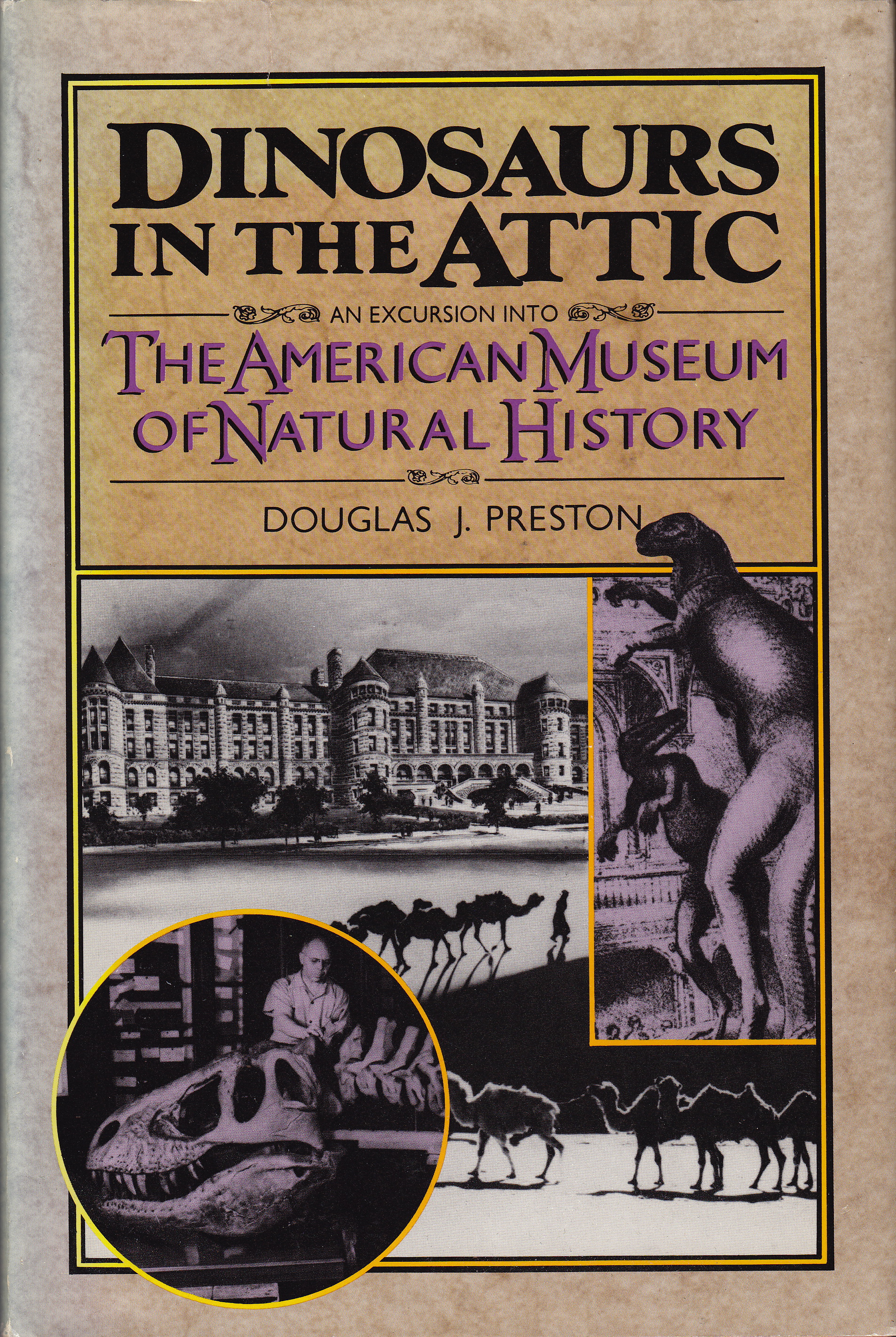
AmericanMuseumOne of the undisputed benefits of living in the greater New York City metropolitan area is the potential for culture. I know that culture exists everywhere, and that is precisely one of the points behind Douglas J. Preston’s Dinosaurs in the Attic. I picked this up at a used book sale because of my love of dinosaurs, but the subtitle provides more of a description: An Excursion into the American Museum of Natural History. Just when the first Night at the Museum movie came out, the American Museum of Natural History offered a program of nights to sleep in the museum, geared toward children. A generous family member bought us tickets and we got to sleep in the oceanarium under the giant whale dangling from the ceiling. We were allowed to explore galleries by flashlight, including the most famous collection of dinosaurs in the world. Who wouldn’t want to read about the backstory of such a museum after such an event?

As might be expected, with roots in the late nineteenth century, it was a different world in which this museum was conceived and built. Rare animals were shot to be part of exhibits, artifacts were acquired and shipped across national borders, and even world-class bird collections were bought to help an indiscrete baron avoid the humiliation of having an affair revealed by a blackmailer. Still, the religious element was clear. One of the founders for the museum, Albert Bickmore, went off in search of artifacts with his Bible tucked under his arm. Exotic places and peoples were still allowed to be called exotic, and the museum eventually became famous enough to star in a movie.

What struck me the most about this fascinating story, however, is when Preston points out that the most fragile, and valuable possession of the museum are the myths. Early ethnographers visited peoples that, even then it was already too clear would become extinct (culturally), and recorded their religious stories. This, and not the thundering Tyrannosaurus Rex, was the true purpose of the museum. Museums are about people. What we discover, what we make, and how we impact our planet. Myths, religious stories, are some of the most unique and delicate pieces of information that we can leave behind. Even materialists have beliefs. We all believe in something. Although nobody goes to a Night at the Museum to read dusty old stories, it is a source of comfort that they are there. Many of the cultures have indeed died out. Were it not for the foresight of those who could see where globalization would eventually lead, they would have been forever lost. And a world without myth is not a world worth living in.


They Might Be

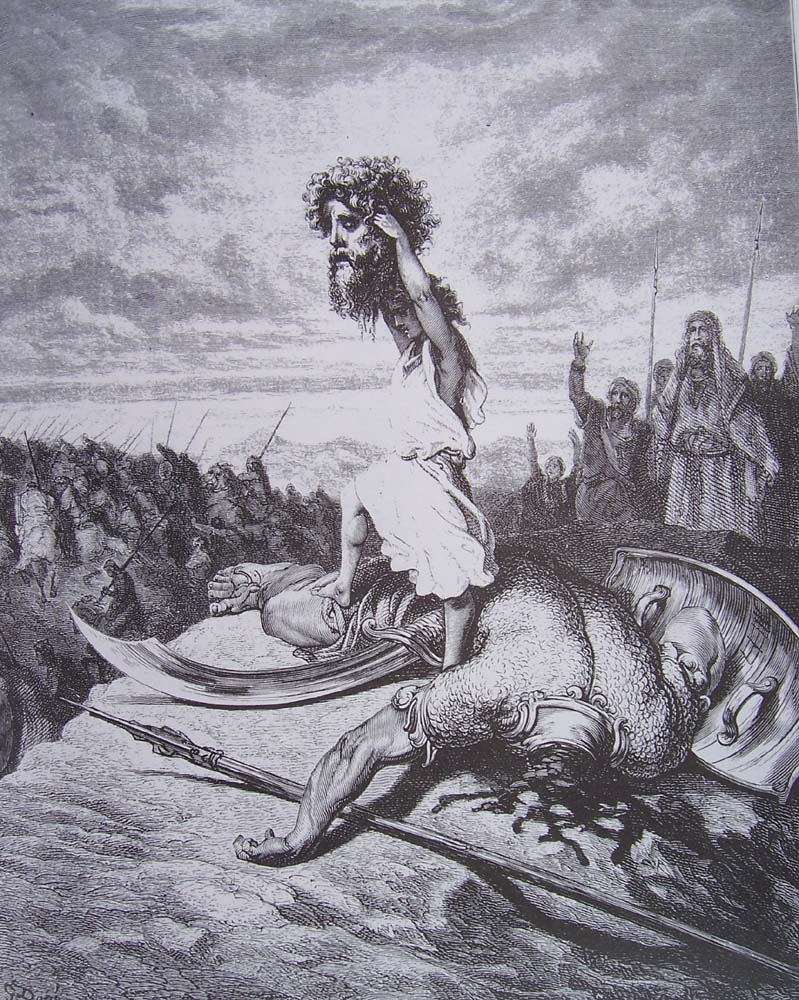
Last week I mentioned that a letter-writing friend had sent me two articles from the 1868 Prescott Journal newspaper. Some time ago I did some research into the history of newspapers since many of the stories from the early days of the medium seem difficult to accept. Perhaps it was a more credulous time, or perhaps newspapers were a form of entertainment as well as information, but the occasional hoax made its way into the pages of even reputable papers. I’m always surprised how many tales involve a kind of biblical literalism, whether stated or not. The second story from the aforementioned Wisconsin newspaper has to do with a giant skeleton unearthed at the Sauk Rapids. At ten-foot-nine, this veritable Goliath was estimated to have weighed some 900 pounds when alive. This prodigy sparked some piety in the writer, who concludes by stating, “We hope ‘642’ [the article doesn’t hint at the referent here] may learn humility from this dispensation of Providence, and that a view of the ‘femur’ and ‘fibula’ of this deceased stranger, may teach him the futility of all attempts at fleshy greatness in these degenerate days.”

Quite apart from the pious closing, the idea that giants once inhabited the earth is indeed biblical. Studies have been undertaken that speculate on why people of antiquity believed in giants, and one of the more plausible explanations has to do with the discovery of megafauna bones. Not having a conceptual world wherein dinosaurs or mammoths might fit, giant leg-bones and ribs, for example, look pretty much like those of people. Only much larger. Whatever the reason, people all over the ancient Mediterranean believed in an era of giants, and that belief made its way into the Bible as well as into Greek mythology. Only, if the Bible says it, it must be true, no? And so, finding giants in the earth is not to be unexpected.

Goliath_Bible

Interestingly enough, this craze of finding giants has not ceased. The internet keeps bogus photos of unearthed giant skeletons alive and the explanations we’re given amount to proof of the flood. After all, the Bible says giants came before the flood, and if Noah wasn’t a giant, well, they had to have been wiped out, right? But then they show up again later in the form of the Anakim or Goliath and his kin. The question of whence the giants 2.0 came is not answered, but if it’s literally true then there should be no surprise if one should turn up in Wisconsin. After all, other oddities have turned up in that same state, some of which still defy explanation in the rational world of the twenty-first century.


Windmills of My Mind

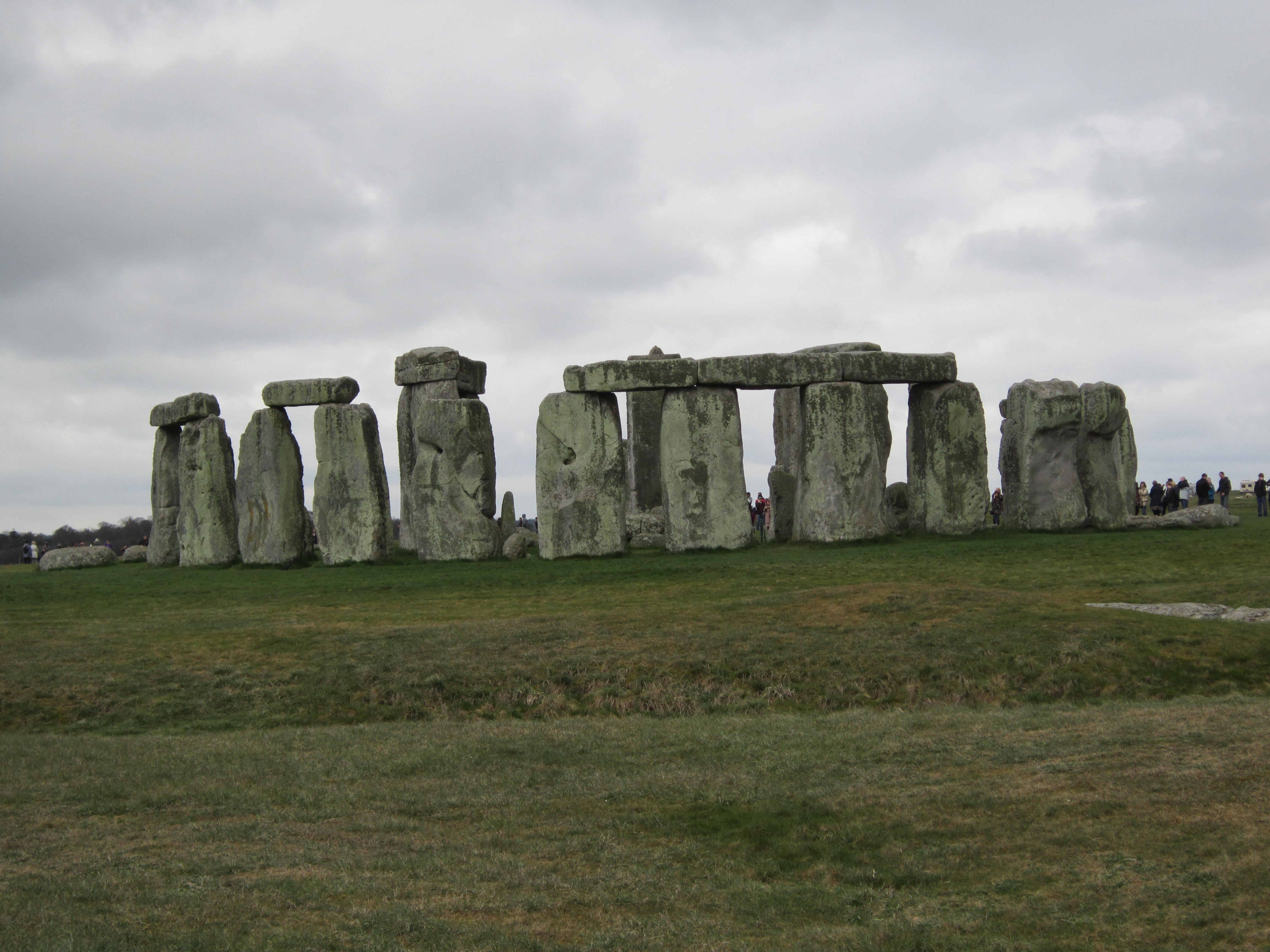
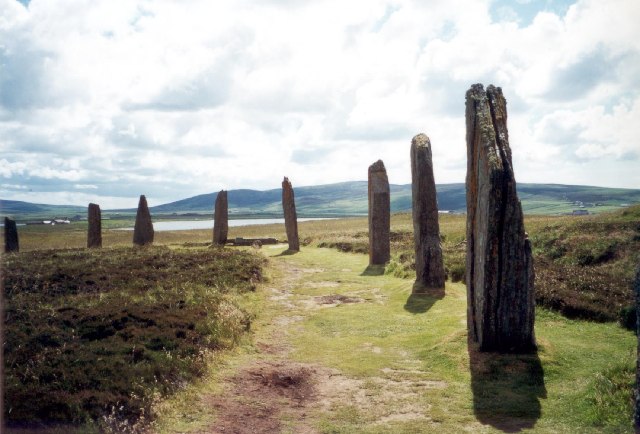
Stonehenge may be the best known stone circle in the world, but it is by no means the only one. Not too many miles from its more famous cousin lies Avebury, a village that is built on the site of an ancient stone circle and henge. Far to the north, in the Orkney Islands the impressive Ring of Brodgar stands sentinel over Stromness on Mainland. My students were sometimes surprised to learn that the Middle East also has its ancient stone circles. Some speculate that the town of Gilgal in the Hebrew Bible derived its name from such a circle. In the 1920s a series of large stone circles were discovered in what is now the kingdom of Jordan, and these circles are back in the news as archaeologists try to decipher the purpose of these huge rings. Unlike their European relatives, the Jordanian circles are only a few feet high, but they are about 400 meters in diameter. Eleven are known. Clearly not high enough to pen animals, the circles remain a mystery even today.

Ring of Brodgar, Photo credit: Alex Cameron, WikiMedia Commons

Ring of Brodgar, Photo credit: Alex Cameron, WikiMedia Commons

Most ancient circles have uncertain functions. We don’t really know what they were for, but considering the tremendous amount of labor involved at such sites as Stonehenge and Avebury, clearly they were considered extremely important. Likely religious. Circles, of course, are an embodiment of mystery—they have no beginning or ending. Even pi, a necessary figure in circular calculations, seems to be an infinitely non-repeating decimal value. Adding to the questions of the Jordanian circles is the lack of a decisive date. They seem to be a couple of millennia old at least, perhaps significantly older.

Like the lines on the plains of Nazca in Peru, the significance of the circles can only be fully appreciated from the air. People have long left drawings for the gods, it seems. Circles, however, suggest a kind of utility as well as just a pleasing shape. One of the problems of archaeology, however, is that it can’t always tell us why people built unconventional structures. Archaeologists are sometimes left guessing just as much as the rest of us. The stone circles of antiquity are, in their way, humbling feats for us to ponder. If they were religious features of the landscape, their construction in an the neolithic period points to a significance beyond the level of the great medieval cathedrals of Europe. It seems no wonder, then, that religion has been with us ever since, despite its frequently announced demise. What are the Jordanian circles? Religion often steps in to explain what reason cannot. Given what we know, this guess may be the best solution.


Viking Trail

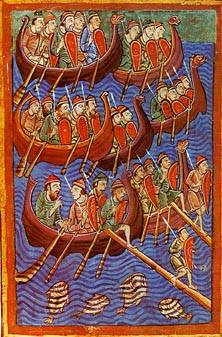
History is a powerful elixir, capable of transforming sinners to saints with the mere passage of time. Well, calling Vikings saints may be a bit of a stretch, but still, they have become some of the sexy bad boys of the Middle Ages, and with the finding of a Viking horde in Scotland last month, they are in the news once again. Vikings and monks were kind of like medieval dogs and cats. Monasteries, located in lonely regions, often amassed wealth and Vikings, looking for loot and less scrupulous about bloodshed, were eager to take it. The give and take (literally) of this violent lifestyle involving seafaring, battles, and churches, makes for good ancient drama and much of it took place along the coasts of Scotland. Our Scandinavian scourge, however, didn’t stop there. It is well established that the Vikings made it to North America well before Columbus. Those who don’t dismiss the Kensington Rune Stone also claim that the Vikings reached Minnesota long before football ever did. Whatever the reason, we are fascinated with Vikings.

Wikinger

Perhaps they are the ultimate autonomous self-promoters. We all would secretly, at least, enjoy being able to set our own standards so that they favored us and our loved ones. The Vikings represent the flaunting of the rule of law, traveling far to take what they want by force. And, perchance, leaving a bit of treasure behind as well. The Vikings became Christianized and the slave trade (long before the New World caught hold of the idea) was effaced to the point of becoming uneconomical to them. Nobody is certain why, but the Vikings, probably for a variety of causes, ceased to be the terror of the seas. Now the Scandinavians are considered among some of the most literate peoples of the world.

Along with the decline of the Vikings, however, also came the fading of the monastic cultural hegemony. To be sure, there are monks and nuns still today, but the force with which they gripped the medieval imagination began to decline with the Protestant Reformation and the recognition that vast wealth, even if cloaked in poverty, is still vast wealth. Now the finds from both monasteries and Viking sites constitute historical treasure. Information about a world long gone. The underlying idea, however, is never very far from the surface. We may lay claim to post-colonialism, but powerful economies have a way of getting what they want in the way of trade treaties and tariffs in any case. When a Scot finds a Viking these days, it is a cause for celebration as we let bygones be bygones and cut the humanities curricula nevertheless. The Vikings never really disappeared.


Watchers and (Un)holy Ones

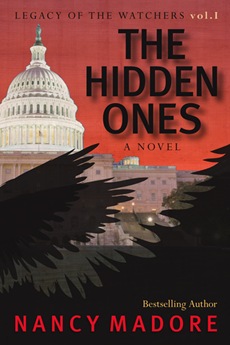
HiddenOnes Angels, demons, djinn, watchers, giants, and a healthy dose of fantasy pervade Nancy Madore’s novel, The Hidden Ones. In this present world where, I’m told, the supernatural is irrelevant, it is pleasant to come across a work of fiction that delves so deeply into the pagan roots of Judaism, Christianity, and Islam. Monotheism does have its own skeletons in its capacious closets. Madore is a novelist who insists on prying open those doors long shut, and spinning a tale that involves first responders, shady military officers, and a band of rather hapless archaeologists. And Lilith. Throughout the story Madore comes up with clever etiologies for stories that will appear in canonical form much later, and at one point I couldn’t help wondering if the screen writers of Noah had read her book. Well, actually, The Hidden Ones is the first of a trilogy, Legacy of the Watchers. I’m sure the next two books will contain many surprises as well.

The Hidden Ones put me in mind of Michael Heiser’s novel, The Facade. Both take on the mythology of the Nephilim, the fallen ones about which the Bible tells us enough only to leave us hungry. The early chapters of Genesis are like that. There’s so much going on that those of us reading it many centuries after it was written are left wondering what the full story was. The writers of the Bible had no compunction to disbelieve in monsters and beings beyond the human ken. Nor does the Bible attempt to systematize them in any sustained way. These creatures just are. As the old saying goes, however, fiction has to make sense—those who write with gods and angels have to make them fit into a system.

No doubt, the uncanny occasionally intrudes upon our rational world. The Hidden Ones presents one such intrusion that, ironically, takes some of the fact of the Bible while leaving the theology suspect. We know that even before the Hebrew Bible was complete ancient scribes were attempting similar things. The book Jubilees, for example, tries to fill in some of the unanswered questions of Genesis, including the watchers and details of the flood. Jubilees, however, never made it into the Bible thus depriving canonical status to the backstory that demonstrates how religion often chooses for ambiguity, leaving it to theologians to bring it all into a system. And novelists. And among those novels that tread where even J, E, P, and D quail, is The Hidden Ones.


Clockwork Heavens

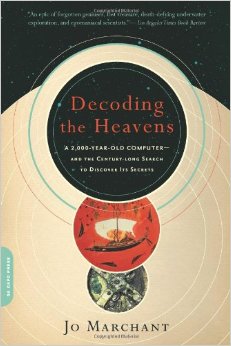
DecodingTheHeavensIn a museum in Athens sits a device chock-full of gears and cogs and dials. Indeed, it looks quite a bit like the movement of a pre-digital clock. This particular object, known as the Antikythera Device, is what would sometimes be labeled an “out of place artifact” were its provenance not so well attested. History doesn’t always play fair. Jo Marchant’s Decoding the Heavens: A 2,000 Year Old Computer—And the Century-Long Search to Discover Its Secrets tells the fascinating story. Discovered by sponge-divers blown off course by a storm in 1900, a sunken ship at Antikythera became the first ever site of a ship-wreck excavation attempt. Even today underwater archaeology presents numerous challenges, but in the turn of the previous century, even land-based archaeology was a kind of glorified treasure hunt rather than an attempt to reconstruct ancient history. As the divers visited and revisited the site into 1901, they discovered ancient Greek statues that are among the best preserved from the ancient world. They also found the corroded box of gears that nobody really noticed for several months.

Marchant carefully unravels the slow process of discovery, acclaim, and forgetfulness that accompanied learning about this highly advanced computer. As with many other important finds, World Wars I and II led to distractions that made history somewhat less appealing than killing millions and then trying to recover from the damage. (The Ugaritic tablets, as I’ve often suggested, suffered a similar forgetfulness for being found at the wrong time.) As scholars, usually only one or two in a decade, began to notice the Antikythera mechanism, it became very much an object out of time. A sophisticated computer for calculating the movement of the sun, moon, and planets, the device could also show the phases of the moon, predict eclipses, and keep track of the Saros, Metonic, Exeligmos, and Callippic Cycles (18, 19, 54, and 76 years in duration, respectively). These cycles accounted for the adjustments needed by leap years and other fixes in the modern calendar. I can’t even keep track of Daylight Savings Time.

Adding to the mystery and drama, the Antikythera Device dates from the first century BCE, a time confirmed by radiocarbon dating and the presence of coins found on the ship. It is unknown who made it, but the influence of Archimedes is implicated. A similar device would not be known for another 1500 years with the beginnings of the Early Modern Period. The Roman Empire, which held power in the Mediterranean world at the time, was on its way toward the legendary decadence that would lead to its inevitable fall. It seems that a culture based on military might had little use for academic devices that were literally centuries ahead of their time. History does not repeat itself precisely, but broad strokes may often reveal more than passing similarities. And for those who want to discover a computer than shouldn’t have been, Marchant’s book is an excellent introduction to how the wisdom of the ancients still keeps us guessing.


Historic Crossing

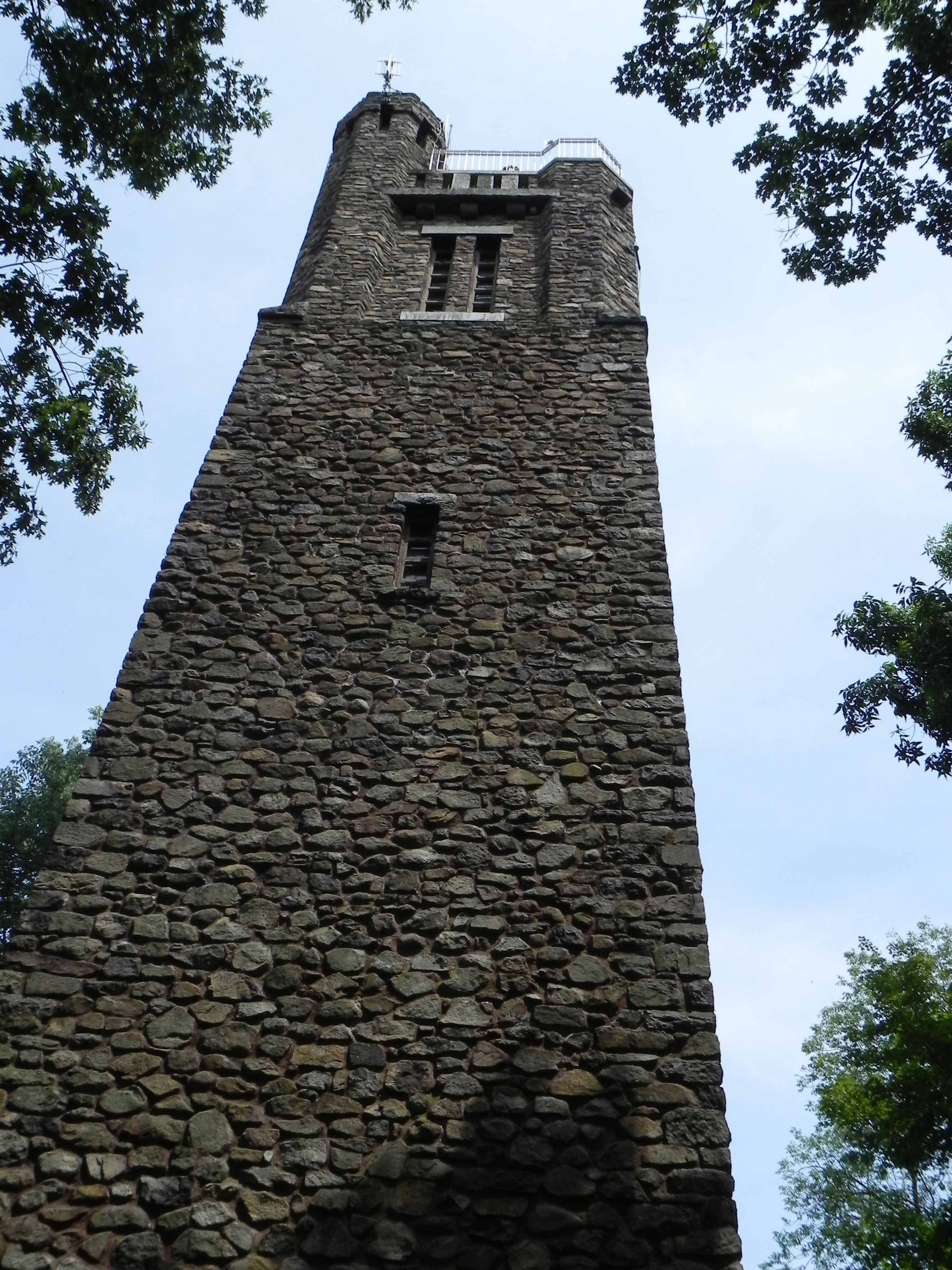
If Washington crossed the Delaware, I figured, so could I. Of course, I have a car and I was going from New Jersey to Pennsylvania, but history doesn’t always repeat itself precisely. In New Jersey, the landing side of the crossing, a modest park marks the spot, along with plenty of space for outdoor activities. Pennsylvania, meanwhile, has a tripartite park which includes sculptures, an historical village, and a tower. The tower was built from 1929 through 1931 in commemoration of the momentous crossing. My mother visited the site as a teenager, some few years after it opened. On a mission to recapture part of her childhood, I made a visit to see a bit of history, and also to experience the great views. As far as towers go, this one isn’t the tallest, but in Bucks County, it is among the highest points and you can see for many miles on a clear day. On the top of the tower I overheard a man explaining to his family that Washington built the tower in the 1700s and that it was used in the Revolutionary War. He lamented that it would be easy to be trapped on top of the tower, and urged his kids to imagine what it would have been like.

DSCN4865

My thoughts went to the Bible. We’ve come to know through archaeology and comparative sources that many of the events portrayed as history are about as accurate as having Bowman’s Tower built by a long-deceased George Washington. And yet we continue to teach children that stories for which no evidence exists are history. We don’t always have a good grasp on how to tell the difference. In the United States George Washington is nearly divine in reputation. His travels are attested on an almost omnipresent scale; even my childhood home of Franklin, a tiny burg near the Ohio border in Pennsylvania, saw visits from the general. I grew up knowing little of the history of the man who would become the first president. I did know, however, that he’d crossed the Delaware.

History is not so easy as it seems. What “actually happened” on the ground may not offer much meaning to those who seek it. Only when the events become story—sometimes sacred story—do we start to get a sense of why the Bible has such a grip on a large swath of the human race. It is story with no apology. Its historicity is far beyond recoverability: who saw the creation of the world? Even the events in the human timescale were written, for the most part, centuries after the occurrence, with all the liabilities that entails. Built by members of the Washington Crossing Park Commission, the park I’m visiting intends to demonstrate the importance of a singular event that led to the freedom of an entire nation. Indeed, the crossing of the water to free a nation has a distinctly biblical feel to it. And even if that first exodus never happened, we tell our children it did, and we have no less a figure than George Washington building a tower to prove it.


Dead See Scrolls

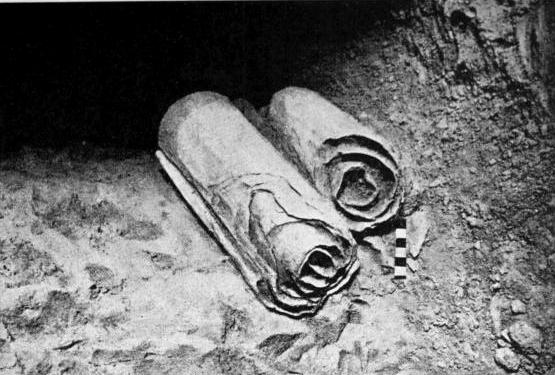
Despite her ability to overlook my obvious deficiencies, my wife has good eyesight. Last week she spotted an article carried by the Associated Press entitled “Dispute over ancient scrolls changes modern law.” Although many ancient documents (notably those from Ugarit) outweigh the importance of the Dead Sea Scrolls for understanding the religion of ancient Israel, the Scrolls have continued to be headliners. There never seems to be some sort of scandal very far from the Scrolls, and this article by Jennifer Pletz reaffirms that assessment. The name of Norman Golb is familiar to just about any Hebrew Bible scholar. His work on the Scrolls is highly regarded. The story, however, brings the scandal down a generation to Golb’s son Raphael, a lawyer and literature scholar. In a case whose details rival the minutiae of the Scrolls themselves, the younger Golb is accused of sending emails putatively said to have been sent from his father’s rivals confessing plagiarism. To what point, beyond alleged family honor, one hesitates to speculate.

Dead_Sea_Scrolls_Before_Unraveled

“Sculduggery,” J. C. L. Gibson once said, “is always just around the corner in archaeological circles.” The same might be said to apply to the Scrolls. Episode after episode of scholars behaving badly have attended the controversial documents since their accidental discovery on the eve of Israel becoming a state. Ironically, the Scrolls in some symbolic ways represent the struggles of the Israelis. No one doubts their importance, but access has always been an issue. Careers were made and secured by the Scrolls, reaching to the highest academic offices in the land. And yet, we can learn more by turning back the pages of history just a little further.

The Scrolls date from that troubled time period when Christianity was just beginning to emerge from Judaism. Tempers flare at implications masked or insinuated. As if the Scrolls were really the much sought philosopher’s stone. The original generation of Scroll readers is going the way of all nature. Those associated with the more solid tablets of Ugarit have long passed that way already. And yet we still have Bible museums being built and implications left dangling. Law suits are filed and ownership of the Scrolls is disputed. In the twenty-first century scholars are still willing to risk it all on some parchment fragments that have the appeal of the esoteric. Hidden truths, almost apocalyptic, squirreled away in desert caves. Knowledge is indeed money, unless, of course, you actually know how to read the Scrolls for yourself.


Backyard Archaeology

Among safe topics for discussion among strangers and casual acquaintances, the weather tops the list. It affects each and every one of us continually, and there’s nothing we can do about it. The ideal neutral subject. In fact, however, the weather is highly freighted with religious thinking, deeply sublimated. If you listen closely, you will hear it. Well, this year, at least in the northeast of the United States, winter has been the topic. We still have snow on the ground in New Jersey, and it has been here continually since January. The thaw has begun, however, and when I went to fetch the paper I noticed a newly melted item on the lawn—an archaic newspaper. Obviously the paper-deliverer missed the front steps that day, and by the time I stepped outside it had already been buried. Curious, I brought it inside to get a first-hand look at the past. It was the Monday, February 3 paper. The day after the Super Bowl. Apparently nothing much else was happening in the world a month ago. I don’t even know who played in the game.

IMG_1237

Religion and sports have a long pedigree. One of the first books I signed up at Routledge was on religion and sports in American culture. Routledge decided to sack me before the book was published, so I haven’t had the opportunity to see it yet. Nevertheless, it is clear that the meaning once provided by the strong arm of the Lord is now covered by the stronger arm of the athlete. I’ve watched in fascination as reporters question the players after the game, panning for bits of wisdom as if they might actually get us up off the couch and lead us to a few minutes of physical glory. Instead cliches trickle out: “we saw what needed to be done and did it.” “I took it to the next level.” “First of all, I want to thank Jesus.” Each one like a nugget of pure gold. I still don’t even know who was playing.

On my kitchen table, however, sits a soggy newspaper with the answers to that. The news is old news. And damp. We’ve had an entire Olympics since then, and war seems to be breaking out in the Crimea. Wait a minute, what century is this again? It seems that no matter how old the news is, it still isn’t old enough. One of the oldest news flashes received by humankind, if the Mesopotamians are to be believed, is that there is a huge flood coming. I turn on my browser and lo, a flood indeed! Noah will be released later this month. Posters began to appear in Manhattan as soon as the Super Bowl cleared out. Move on to the next big thing. And, unbeknownst to me, a newspaper laid buried beneath the snow, containing all the information I needed to know. I’m still wondering how that flood turned out.


Dromedary Dilemma

Photo credit: John O'Neill, WikiCommons

Photo credit: John O’Neill, WikiCommons

This past week two friends have pointed me to news articles about camels. In the modern, western imagination camels are biblical animals, pushing their way onto the ark, carrying long-suffering patriarchs across the desert, and squeezing through the eyes of needles. These news stories indicate that camels were actually not introduced into the Levant until about the tenth century B.C.E., i.e., a few centuries too late for poor Father Abraham, whom, according to Genesis, was a noted camel owner. Of course, the reason that this is news is because Fundamentalist groups insist that every word of the Bible is literally true. If it says Abraham had camels, then, by gosh, camels he had—archaeological evidence or no. One story points out the problems for Zionists, for whom claims on the land derive from the mandate to Abraham (and, presumably, his camels). Biblical scholars have long been aware of the complex methods of scripture writing, and no camels are no problem. The bigger issue, I suspect, is that Abraham has been awol for some time as well.

Abraham, as the progenitor of the three major monotheistic religions, bears a tremendous weight on his weary shoulders. It is the weight of history. Or lack thereof. I may be a few years outdated here, but the earliest figure historically attested in the Bible is (or was) Omri, the king of Israel who spawned the notorious Ahab. Prior to that, historical records are pretty silent. Yes, I know the Tel Dan stele mentions “house of David,” but that is like mentioning Willy Wonka’s chocolate factory—it doesn’t make Mr. Wonka any more real (even though you can buy a Wonka bar at some candy stores). That means that, in the jumble of biblical history, everyone in Genesis falls into the questionable historical category. Even if Moses (himself historically dubious), wrote Genesis (and he didn’t), he wouldn’t have known Mr. Abraham personally. He had been long dead. If he’d ever been born. I’m getting worried about his camels.

Religions have often tied themselves to historical claims. Such claims are always tenuous and negotiable. For instance, I watched a movie about Abraham—Lincoln, it was called—where I learned quite a bit that I didn’t know about a very historical Abraham. At the same time, I knew the movie wasn’t history. When we rely on history to cite our superiority (often one of the functions of religion), we had better be willing to take the risks. The first biblical historical figure is a “bad guy” king of a secessionist kingdom, this time in the north. Even once we learn that the storied characters of the Bible may have never trod the earth, we don’t leave them as camel fodder. They are part of the tradition, whether they participated in history or not. I realize, however, for some it would be easier to swallow a camel than to strain out this particular gnat.


Explained Away

The premise seems sound. Although science tends to indicate that God is not necessary to explain anything, religion itself may still be useful. In a nutshell, that’s the basis of Alain de Button’s TED talk, “Atheism 2.0.” We don’t need to believe in God to find religion a useful paradigm. There’s so much more to being human than being simply analytical. De Button begins from the premise that there is no god, but that religion teaches us many useful lessons. It is a fascinating concept. I’ve had de Button’s book on the topic on my reading list for some months now, but like so many pressed for time, I find it simpler to watch a 20-minute TED talk than to read an entire book. It is refreshing to see someone on TED not simply dismissing religion. My friends in the STEM community often recommend TED talks, and they usually leave me feeling small and insignificant. Now I can at least show my face.

A deep irony pervades this condescension to religion. Scientific study of the past (known by the collective term archaeology) has recently given strong indication that the religious impulse is what led to civilization itself. The mysterious site of Gobekli Tepe, as I’ve mentioned before, seems to reveal that even before high antiquity what drew people together was the emergence of religious belief. Religion leads to culture, and culture leads to science. Science rejects religion and what happens to culture? Just take a look around. I’m still a naive man with working class values. In the course of my business travels I’ve often ended up in what might be considered the sketchiest kinds of neighborhoods. The suburbs keep moving further out. What happens when we run out of space? God only kn— wait, that’s a forbidden premise. Materialism only knows.

De Button’s talk is fascinating in that he doesn’t simply dismiss religion. Like most non-specialists, he focuses on the accidentals that reveal something savvy religionists have always known—there’s a healthy dose of psychology in any religion. Call it neuroscience, or call it truth. Religions have something to teach us. Civilization, it seems, began because of religion. De Button is clearly correct that we need not believe the minutia of religious doctrine to get something out of it. Atheism is not always evil nor is piety always above moral suspicion. Being human, we can’t help but wonder what is really real, however. Religions claim to know, as do some sciences. Little can be said beyond the fact that none of us know. Of course, TED will ask some of us to speak to the issue and the rest of us should just sit still and pay attention. To be noticed is to be an expert.

The eternal struggle (photo credit JuanMa, Wikipedia)

The eternal struggle (photo credit JuanMa, Wikipedia)


Ancient History

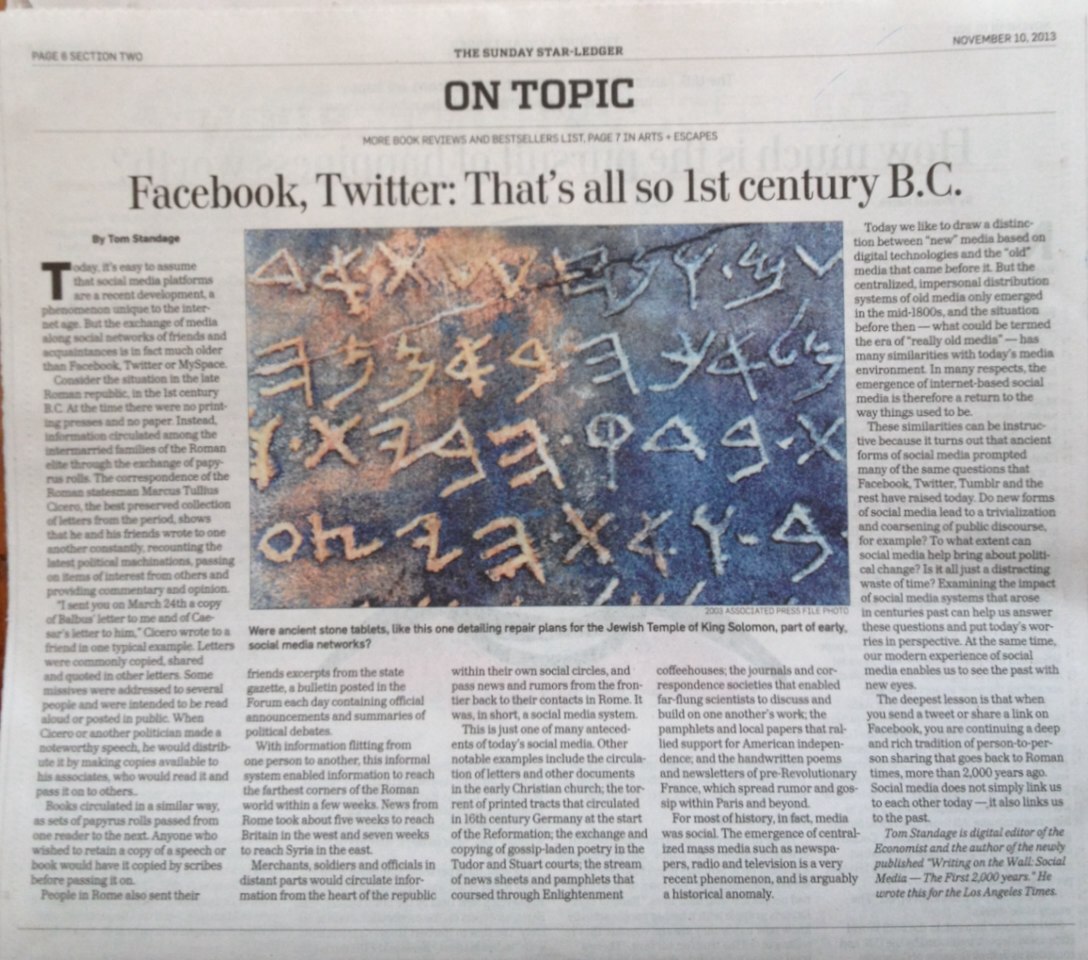
Every great once in a while somebody in the popular media seems to remember suddenly that the ancient world existed. I suppose that it is the fate of forward-looking species to forget the past, at least until it looks trendy. An editor for Sunday’s paper, for example, ran an article by Tom Standage, “Facebook, Twitter: That’s all so 1st century B.C.,” written originally for the Los Angeles Times. Tom Standage has written popular histories that go back to the Sumerians; I really enjoyed his A History of the World in Six Glasses. He’s got a great grasp of antiquity. In this short article, Standage points out similarities between modern, electronic social media and the distribution of gossip in ancient times. Indeed, he is basically right about writing: as soon as people learned to do it, it proliferated. Communication at a distance is such a wonder that we seldom pause to consider just how revolutionary it is. Social media has just made it that much easier. Instant thoughts, at the speed of light. Anywhere in the wired world. And yet…

SolomonFakeNot having been trained properly in journalism, I don’t know how newspaper articles are designed. People, I know, don’t like huge blocks of text without some visual candy. To illustrate Standage’s article is a close-up photo of some funky paleo-Hebrew letters with this caption: “Were ancient stone tablets, like this one detailing repair plans for the Jewish Temple of King Solomon, part of early social media networks?” I may be obsolete in the scholarly world, but I instantly recognized this inscription. It was “discovered” and rapidly disseminated in 2003. Almost immediately it was clearly demonstrated to have been a forgery. Scholars nowhere accept this as an authentic artifact. Even those of us who last saw this a decade ago know that it’s fake. Social media, indeed? Somebody in the design department needs to read their ancient history.

What is so striking about this faux pas is that most well-meaning readers have no way of assessing or ascertaining the validity of such an image. Oh, the script is cool, no doubt about that—but the artifact is fake. To answer the question posed by the caption: no, this is not ancient social media. It is a modern hoax. People are susceptible to hoaxes because of two factors: TMI and P. T. Barnum. Too Much Information exists for anyone to stay on top of it all. For progress to occur we need to rely on experts on the past to clear the way for us. Phineas Taylor Barnum knew how to turn any cheap scam into instant cash. It is no surprise that Solomon’s inscription first appeared on the antiquities market, certainly with an eye for cashing in on the success of the recently promoted James Ossuary, the one where someone much later added the phrase, “the brother of Jesus.” I’m sure that Tom Standage was in no way involved in the choice of image for the reprint of his article in our local paper. It does, however, suggest an old message that will even fit on your Twitter character limit: “There’s a sucker born every minute.”


Divine Sex Change

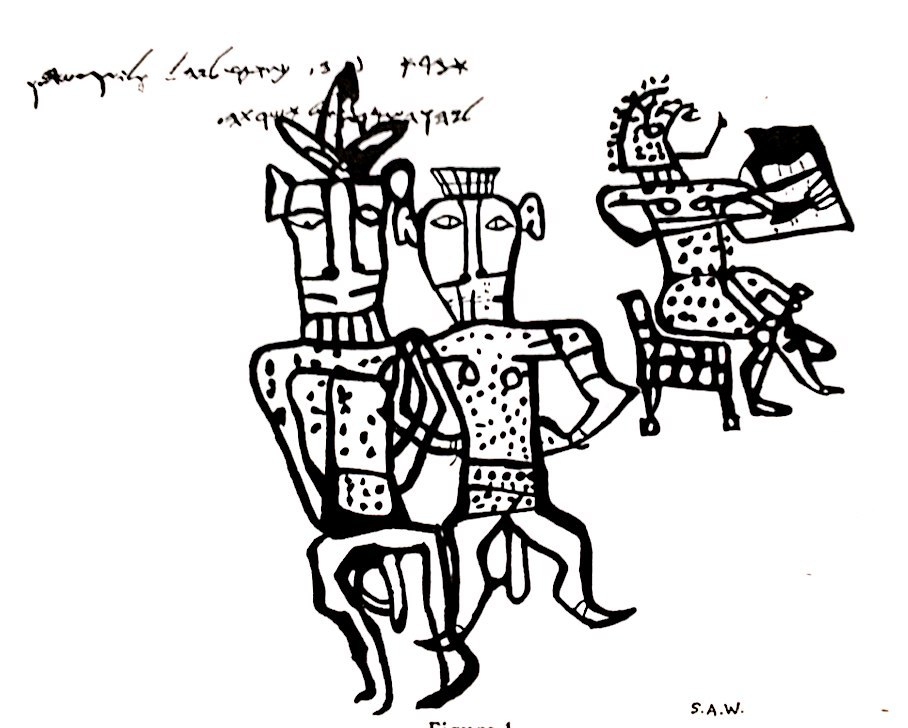
One of the greatest problems in reconstructing ancient religions is the ambiguity of the evidence.  Most ancient artifacts are not labeled (they probably didn’t need to be for the original viewers) and few have textual materials explaining them.  This became clear to me when studying the famed inscription found at Kuntillet Ajrud in the mid-1970s.  The most (in)famous aspect of this artifact was that an inscription overlapped a doodle, and due to the urgent desire to interpret the inscription a particular way, the line drawing was supposed to be an illustration of the inscription.  The inscription is commonly translated as something along the lines of “I bless you by Yahweh of Teman and his asherah.”  Many scholars took asherah to mean Asherah, the goddess, despite no evidence for pronominal suffixes on personal names in classical Hebrew.  The doodle shows three figures, perhaps related, of which two were said to be Yahweh and Asherah.  Despite the very clear resemblance to the Egyptian dwarf-god Bes (Kuntillet Ajrud is between Israel and Egypt), it was argued that the figures in the “foreground” should be considered Yahweh and his main squeeze, Asherah.

KuntilletAjrud

The artistic analysis of these doodles has always been torturous. Tiny, perhaps insignificant, details were ascribed great importance—particularly those indicating the gender of the figures.  For the Yahweh-Asherah connection to work, one had to be male and the other female (with the male preferably in front).  The problem was that both figures seemed to have penises (in keeping with Bes’s typical representation).  In order to make it clear that the right-hand figure was female it was claimed that she was wearing a lion skin and the “penis” was literally a tail, the leopard’s tail, seen between “her” legs. The problem seemed to be a possible scrotum appeared to be present.  The left-hand figure, larger (therefore, in front) had a clear scrotum, and that sealed the case, in a manner of speaking.  Little chestal circles were said to be breasts on the right-hand figure, but male nipples on the left-hand figure were lacking.  Oh, and they were dancing, as shown by the woman playing the harp in the “background.”  Believe it or not, seriously scholarly debate raged over this—nothing short of the discovery of Yahweh’s wife seemed to be at stake!  A colleague recently emailed me to tell me the final report of the archaeologists concludes that the “scrotum” on the right-hand figure was a mere dust smudge and so, aha!, she is a female after all!


I argued years ago that this drawing was clearly a representation of Bes. The connection with the inscription is accidental (the jug on which the inscription occurs is full of doodles); if someone wanted to illustrate an inscription, they would not draw figures that actually obliterate part of the caption. Assumption is built on assumption here, however, making for a very shaky foundation indeed. Don’t get me wrong: I would like to see Yahweh as happily married as the next deity. It is not good for the god to be alone. Still, it is going to take more than a divine sex-change operation to transform Bes into Asherah. If nothing else this divine gender-bender ought to serve as a cautionary tale for scholars, yet somehow I doubt that it will. We see what we want to see.


Stone Age Henge

At a hotel during a recent excursion, I saw a National Geographic (I think) special on Gobekli Tepe (this is the fate of those of us kept from a daily sustenance of academic listservs bearing the most exciting news). Gobekli Tepe is an archaeological site in Turkey, discovered several years ago by Klaus Schmidt of the German Archaeological Institute. It is an odd site, dating back to some 11,000 years ago, that consists of megalithic (big stone) constructions earlier than Stonehenge or the great pyramids of Egypt, both dating from the Bronze Age, roughly. The complex of odd buildings seems to be religious in function because they bear no practical purpose, and the implications of the site are that our earliest steps towards civilization have been misinterpreted from the beginning. We have been taught that domestication of plants and farm animals led to fixed centers of living. Gobekli Tepe suggests that religion led to settled life and farming came later.

375px-GobeklitepeHeykel

The implications of this are rather startling for those of us who’d been working on the assumption that religion developed as a way of keeping the gods happy after people had the luxury of surplus food brought on by agriculture. It turns out that hunter-gatherers learned to live in settled locations because of religion. That is, religion, instead of being just another component of culture, is what led to culture in the first place. In a climate where the most vocal intellectuals insist that religion must be shut down, chopped off at the roots, and burned in the oven of rationality, we see that none of us would be enjoying our urban lifestyles if religion hadn’t brought us together in the first place.

There is no doubt that religion may be taken to extremes, and that when it is, it becomes dangerous. Religion, however, is no foe to rational thinking. Gobekli Tepe is a site of astounding engineering for Stone-Age hunter-gatherers. Engineering is applied science, and so these people were using their understanding of the world to establish a ritual site for the practice of their religion. They needed to live nearby, although they still had to spend their days chasing animals and gathering foodstuffs along the way. Religion made them realize that life together was a necessity for humanity to thrive. We should take a more balanced view before declaring religion a source of evil only. We may never be able to coax the gods into the laboratory, but that doesn’t mean that they don’t have a very important function for human civilization. If they are taken in reasonable doses, they might even lead to astounding transformations.