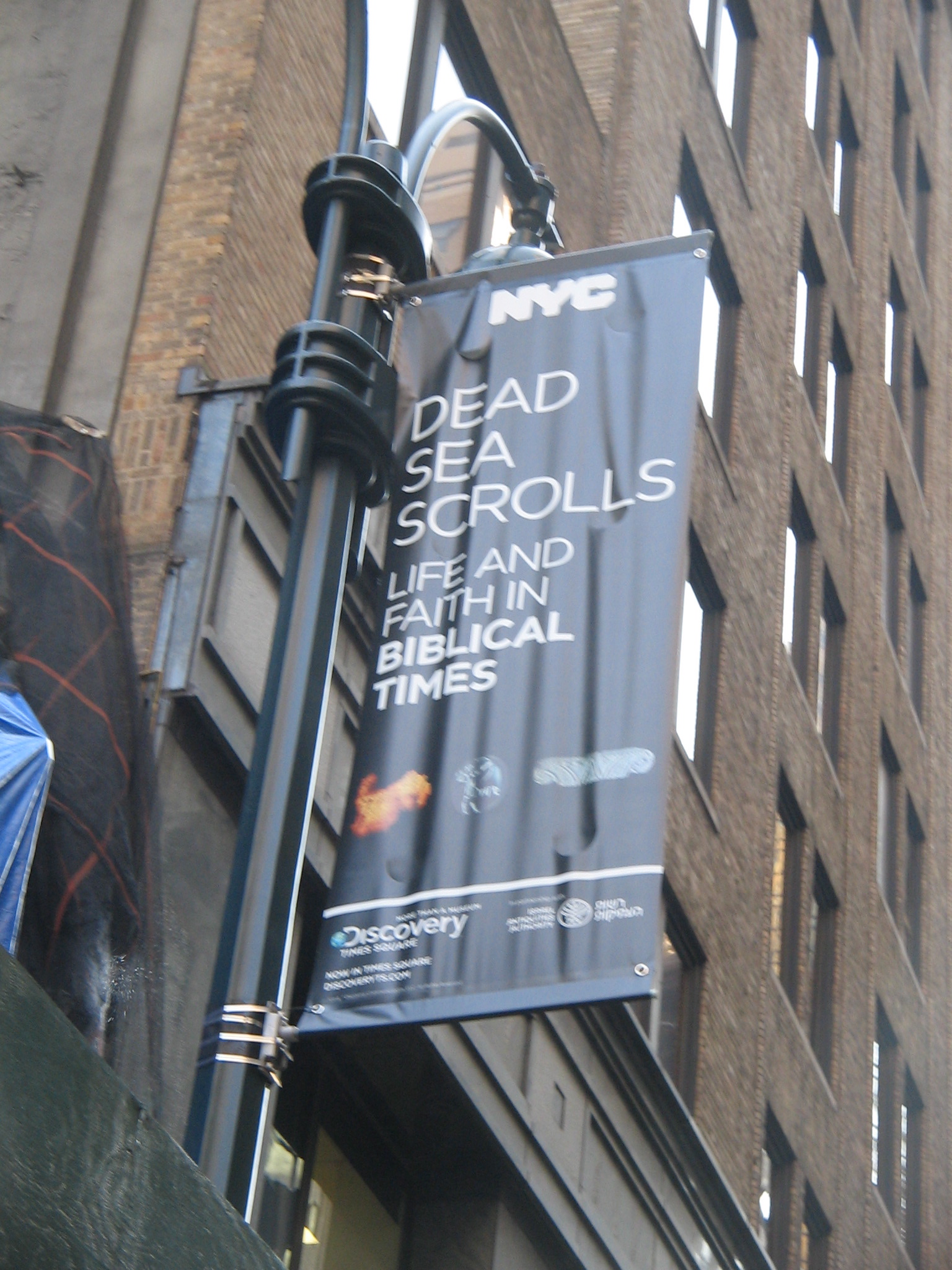
Dead Sea Souls

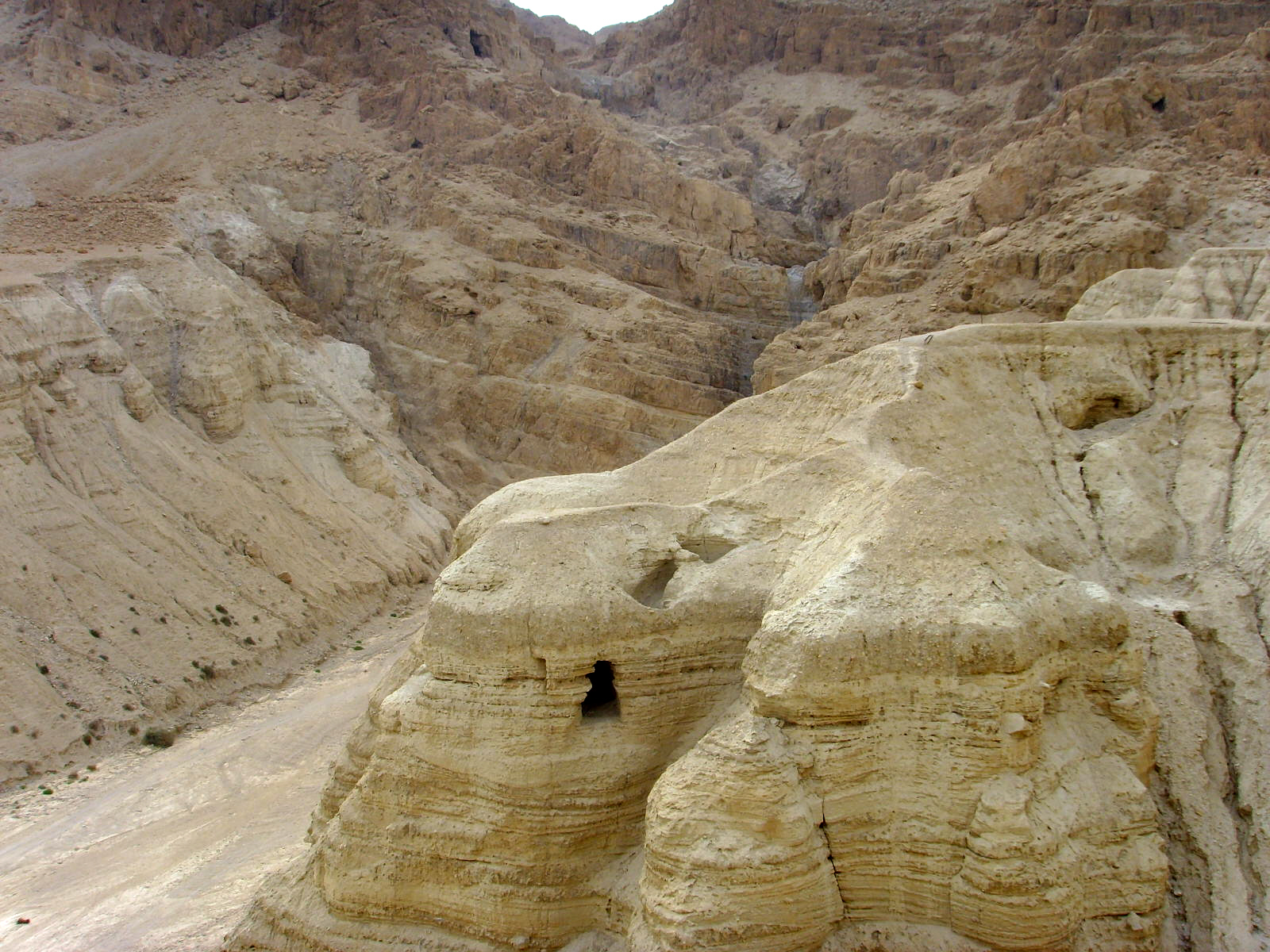
The Dead Sea Scrolls are coming to Times Square. Times Square is the kind of place where you know your being sworn at, but you’re never really sure in what language. It is a place of the people. So the sacred meets the profane. Mircea Eliade would be scratching his great head with his pipe firmly in hand. The Dead Sea Scrolls are the sexiest of ancient documents. Their story has it all: mystery, intrigue, conspiracy, romance—well, maybe not romance. A chance discovery by dirt-poor Bedouin in a desert, ads being taken out in the Wall Street Journal, clandestine meetings with ancient texts being viewed through a hurricane fence in a forbidden zone. And do those scrolls ever get around! I first saw them (those that are accessible to the public) in Jerusalem. The next time was in the Field Museum in Chicago. Now I’m feeling a bit blasé about the whole thing.

Those of use who’ve spent much time (too much time) with ancient documents relating to the Bible know that the Dead Sea Scrolls require no introduction. The far more interesting (and sexy–yes, literally sexy) Ugaritic tablets still receive slack-jawed stares of unrecognition, despite their importance. Those who read the stories of Baal, Anat, El and Asherah wonder why the “Classics” only begin with Homer. People have been creative with the gods since writing began. The theme of the human race might be summed up as, “if the gods are so powerful, what am I doing in a dump like this?” Fill in the blanks—that’s religion. From the beginning, once we’d come up with gods, we began to wonder why they treat us so. People are on the receiving end and so many things can put gods into a bad mood. It’s your basic dysfunctional family.

No doubt the Dead Sea Scrolls are important. We have learned much about the context of early Christianities from them. They provide the earliest manuscript evidence for the Hebrew Bible. And they’ve got that Dead Sea mystique. When I read the story of their discovery, I understand why crowds will flock into a tight room to stare through the glass at a bit of shriveled parchment that most of them cannot read. It’s like standing next to someone famous and powerful; maybe Moses or King David. Or more famous and powerful, like George W. Bush. I know, that was the last administration. But the Scrolls come from an even earlier one. I just hope somebody will give me a call when they find one that tells what happens when Baal meets Astarte. That will be worth the price of admission! And, who knows? It might even fit in with the spirit of Times Square (pre-Disney, of course.)


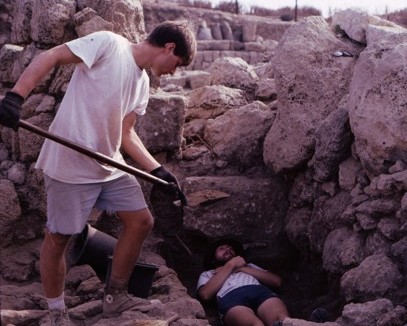
Tepe Temple

When a colleague sent me an NPR story on Göbekli Tepe, I was thrown back into the conundrum far older than archaeology itself—how can a site be identified as religious? Most of us hardly realize that when we enter a church or cathedral that the overall plan is based on that of the earliest temples we know. Conventional wisdom associates temples first with the Sumerians, the harbingers of civilization itself. The basic premise was that a niche existed for a cult image (statue of a deity, generally) with an altar before it. Although the concept was widely disseminated, many reformed and rereformed Christian groups tried to distance themselves from it, calling altars “tables” and making them mobile. Probably the most successful are the Pentecostals; last time I attended a service the “sanctuary” felt like a warehouse. Actually, it was a warehouse. In general, however, there has been little need to reinvent the religious wheel, so the standard plan still often applies. Enter Göbekli Tepe.

Göbekli Tepe is located in southeast Turkey, near what was actually Mesopotamia in ancient times. The hill-top site is a Neolithic structure, and that means it was built before agriculture became widespread, during our hunter-gatherer stage. It is the earliest known human religious structure. The article on NPR questions precisely this: is it religious? How do we identify structures in pre-writing cultures as religious? Some archaeologists are guilty of labeling any structure or artifact with no practical function as “religious,” but this is a little cynical. Part of the problem is that religion itself remains ill-defined, being a post-Christian category to describe behavior singled out for God’s benefit. As a child I wondered, if God exists how could anyone not devote all their time to God?—the very speculation that led to my profession. Ancient people, like all animals, felt the urge to eat, rest, seek shelter, reproduce—animal things. It was a full-time job. When agriculture simplified things a bit by giving some measure of control over food supply, other professions began to emerge. Priesthood, as a means of ensuring continuity among the entire system, was one of the coveted jobs. Göbekli Tepe predates the Sumerians by thousands of years. The large structure with reliefs carved into the rock seems temple-like to some, less so to others.

The NPR article points out, correctly, that the distinction between sacred and profane may be premature as applied to Göbekli Tepe. We can test the cases even today: certain human functions are considered profane, chief among them sexual acts. It is clear from the sexuality of ancient religious artifacts that the profanity of sex is not an ancient idea. Ritualized eating is very common and still takes place in highly stylized form among many Christian, Jewish, and Muslim groups. Work itself was considered to be a divine assignment in ancient times. Our ultimate bosses were the gods. Little room remained for “secular” pursuits. By compartmentalizing life into “religious” and “not religious” we have found a way to pursue our own selfish ends and still wind up in the pews on the weekend, congratulating ourselves for obeying the dictates of divine law. Where is true religion to be found here? Is it not more likely to reside among ancient people, like those of Göbekli Tepe who lived their entire lives in the service of the gods?


Springing up Moses

“Springsteen’s work and person invite analysis in terms of the biblical themes of exodus and promised land,” so wrote Kate McCarthy in “Deliver Me from Nowhere: Bruce Springsteen and the Myth of the American Promised Land” (conveniently in a Routledge title, God in the Details: American Religion in Popular Culture, second edition, 2011). Having just finished Bruce Feiler’s America’s Prophet (not Routledge), I am attuned to the exodus theme at the moment. Feeling an unaccountable, personal connection to the other Bruce (Springsteen), I have felt the sense of exile in his songs since I was a teenager. I had no idea who Springsteen was when “Born to Run” made it to the charts. Living in a nowhere town at the time (population less than 1000), I felt the burning need for a personal exodus that eventually landed me in the largest city in the country. But still the sense of exile remains.

Lest readers be too confused, it might be politic to point out that the biblical concept of exodus likely had its origins in the Exile. Without rehearsing too much history, the Babylonian Empire, under Nebuchadrezzar, conquered Jerusalem in either 587 or 586 BCE, leading to the deportation of a significant number of Judahites who would become, over a generation, the “Jews.” These people were exiles, forced to live under the watchful eye of a political overlord with whom they shared only the most basic of heritages. Their religions had grown apart over the centuries, and as the Jews began to think back on their homeland, the exodus came to mind. Archaeological evidence for an exodus of biblical proportions (literally) does not exist. Why, then, the story of the exodus? Did not the desire to return home involve crossing the desert, with a divinely appointed leader? One who carried the law (Torah) with him? When Ezra led returnees home in the fifth/fourth century, he had the Torah in hand. Like Moses, he led the people out of bondage under the Persian plan. Exile and exodus are twin children of oppressive regimes.

So, how do ancient desert wanderers come into the orbit of a very damp New Jersey, and in particular, it’s arguably most famous resident? Alienation is home. Very few teenagers don’t understand this. As we attempt to integrate them into adult life, something vital, essential, is left behind. Consider all the long-haired artists of the ‘60’s and ‘70’s who still perform, now shorn to conservative acceptability and sometimes churning out very conventional songs. The fire has gone out. It is difficult to escape exile when you carry it with you. That’s something I think Bruce understands. His look may have changed, but his message has not. America has always been a haven for exiles. Simply because an exile moves into a new setting, however, does not mean that the promised land has been reached. As McCarthy seems to be saying, and as I have often felt, the promised land disappoints. The seeking is what must persist. America may have its Moeses, but it will find, from atop Nebo, that the path is where your feet already are.

Look carefully at your prophets!


Holy Land Grabs

Civilization began in the “Middle East.” Ever since then, it has been a struggle to keep it together. One of the sad realities of the last century and continuing into this is that peace in this region seems as elusive as a Tea Partier with compassion. Claims to land are among the most complex of human inventions. Having never been a property owner, I’ve only ever watched this from the sidelines, but I know the endless surveying, assessing, and negotiating that goes into drawing invisible lines across the surface of our planet in order to determine who owns what. At least as early as the Code of Hammurabi, the placing of property markers was considered the concern of the gods. Humans are clearly among the most territorial of animals.

When my wife showed me a CNN story about an archaeological dig at Khirbet Qeiyafa in Israel, this old issue raised its weary head once more. The site, whose ancient name is not yet known, is being suggested as “the city of David” by archaeologist Yosef Garfinkel. The evidence for the suggestion, as far as I can tell from news reports, is that the city fits the right time period and lacks pig bones. With the Bible’s great claims for David’s very large kingdom, archaeologists have been unable to find evidence that such a grand entity ever existed. David himself is not historically attested outside the Bible. Those who make land claims based on a putative gift of God, however, must find physical evidence to back it up. This wish hovers like a dove over every excavation.

The death of an archaeologist

Archaeology has frequently been commandeered by special interest groups. The field of study began in the “Middle East” to find evidence for the historicity of biblical stories, some of which were never intended as history. Daunting emotional claims, however, weighed heavily on the minds of those who led the excavations. The Bible made what they supposed to be historical claims, so the physical evidence had to back it up. When Jericho was excavated and found to have been abandoned at the time of Joshua not a few heads were scratched. Archaeologists returned to the city in later excavations to try to question the results. Jericho was a ghost town long before Joshua came along because the story of Jericho has something more important than history to convey. That larger message, applicable throughout the world, seems to be: don’t base claims to special privilege on the Bible. Tea Partiers could even learn a thing or two from that message as well.


Assyrian Dreamers

And the widows of Ashur are loud in their wail,
And the idols are broke in the temple of Baal;
And the might of the Gentile, unsmote by the sword,
Hath melted like snow in the glance of the Lord!

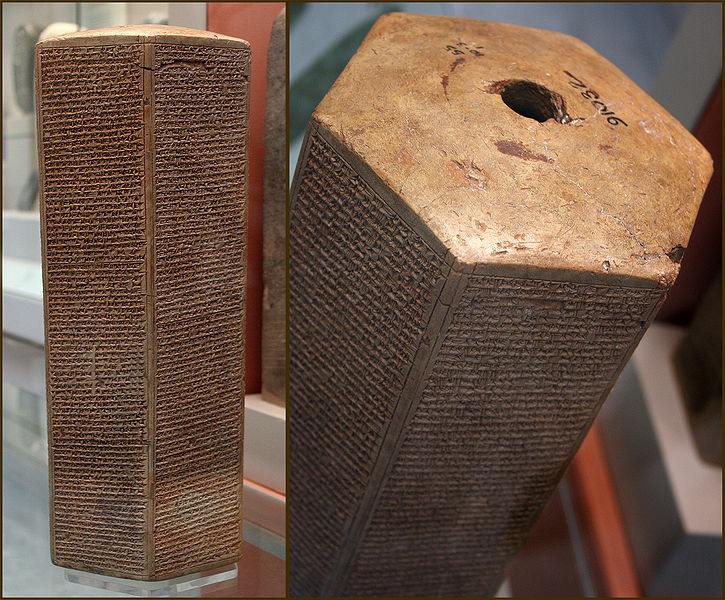
These lines from Lord Byron’s “The Destruction of Sennacherib” were recently quoted to me by one of my relatives who houses a tremendous store of memorized poetry. The poem is Byron’s vision of the siege of Jerusalem, a historical event that is now well understood because the actual annals of Sennacherib were discovered in 1830. The Akkadian version of Hezekiah’s revolt and the subsequent siege of Jerusalem in 701 BCE match the statement in 2 Kings 18 that declares Hezekiah bought off Sennacherib, thus sparing his kingdom. The biblical version then goes on to add the event eulogized by Lord Byron that an angel was sent after a prophecy of Isaiah and the Assyrian army fell decimated outside Jerusalem. The latter event is not historically accurate, but it is much more poetic. Who would write a poem about a king paying off his enemies?

Annals of Sennacherib

The Bible is comfortable with conflicting accounts of events, sometimes laying them side-by-side without comment, supposing that the reader is bright enough to see the obvious contradictions and draw the relevant conclusions. With the birth of Christian Fundamentalism in the 1920s, however, the myth of biblical inerrancy was born. In a world rendered in shades of gray, a distinct comfort lies in having answers in black and white. The Bible, considered the exact (if sometimes dodgy) words of God himself, could not be other than one hundred percent historically accurate. This version of history distorts what actually happened to what must have happened.

Lord Byron, notorious sinner that he was, seems to have been closer to the biblical spirit when he penned his famous poem. Glorying in the bravado of a warrior God who lays waste an entire army without lifting a sword or spear is fanciful, if breath-taking, poetic license.

For the Angel of Death spread his wings on the blast,
And breathed in the face of the foe as he pass’d,
And the eyes of the sleepers wax’d deadly and chill,
And their hearts but once heaved, and for ever grew still!

bears a grandeur lacking in “Hezekiah gave him all the silver which was found in the house of the LORD, and in the treasuries of the king’s house. At that time Hezekiah cut off the gold from the doors of the temple of the LORD, and from the doorposts which Hezekiah king of Judah had overlaid, and gave it to the king of Assyria.”


The Big Man

“When the change was made uptown/And the Big Man joined the band…”

Clarence Clemons (from WikiCommons)

Among the earliest markers of religion in human culture is the advent of music. While still disputed, bone “flutes” from about 40,000 years ago seem to indicate that early humans knew the value of music. Driving around now that the weather has warmed up, it is clear that people still find music so important that they like to share it from their open car windows at a volume I find uncomfortable even across the street. Like religion, music is an intensely personal aspect of life. Although I mention bands I like occasionally in this public forum, I never parse my music tastes too much because they are a little too revealing. With Clarence Clemons’ death yesterday, however, it is appropriate to pause and give my respects.

Those who know me sometimes wonder at the fascination I have with Bruce Springsteen; I am not an idol-worshipper and not all of Springsteen’s work appeals to me equally, but he represents an appreciation of the ordinary person. What first drew me to his music was the fact that he understood blue-collar mentality and angst generated by an unfair society. In an interview on his Born to Run special edition, Springsteen notes the seminal change that Clarence Clemons made in the E-Street Band, as reflected in the opening quote from “Tenth Avenue Freeze-Out” above. The playing of Clemons’ saxophone was so distinctive that even my very untrained ear could often pick it out on other artists’ albums even before reading the credits.

The E Street Band, of course, changed over time and lost a first-generation member with Danny Federici’s death three years ago. Although Bruce Springsteen is alive and well, and still active in causes to help those who are victims of an uncaring system, the E Street Band will never be the same without Clarence Clemons. The old camp song says that music never dies, and that is a hope we can hold out for the impact of remarkable performers as well. When I walk into a classroom with kids who have no idea who the Beatles were and who’ve never heard of Alice Cooper, Deep Purple, or Pink Floyd, I feel my age. But it is okay as long as I can still listen to the music once I get home (I never play the stereo while driving—I prefer to concentrate on the music a little too much). It is like a religious experience. I am sure the cosmos is a more harmonious place for having hosted Clarence Clemons, even if just for a little while.


Iraq’s Bell

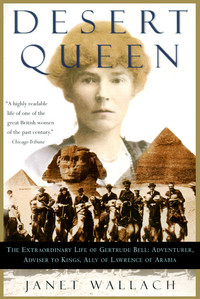
Gertrude Bell requires no introduction for students of the ancient Near East. A strong-willed, self-determining woman, her influence was arguably as great as that of her friend T. E. Lawrence (Lawrence of Arabia), but being a woman in a man’s world, movies were not framed around her life and she was not mythologized into a larger-than-life character. I have just finished Desert Queen by Janet Wallach, the life story of Gertrude Bell. Although tending towards the overly romantic in parts, this biography does a fine job highlighting the influence Gertrude Bell had on the newly formed country of Iraq at the close of the First World War.

Although Gertrude early lost her mother she was a child of a well-to-do English family. She was considered an anomaly at a still patriarchal Oxford in her day, but soon discovered the draw of the Arabian and Syrian deserts. Traveling seemed to be an antidote for being a capable woman in a man’s England. In the desert the sheiks and tribal heads came to treat her as an equal, like a man. (T. E. Lawrence, on the other hand, was famed for occasionally pretending to be a woman.) Assigned a government post in post-war Iraq, she helped draw up the borders of the present nation of Iraq and achieved a status with the desert tribes to which few of her male colleagues even aspired. Failing in health and fortunes, lonely in the desert she loved, Gertrude Bell committed suicide in Baghdad and was buried in the land she loved.

The story of Gertrude Bell is inspiring despite its sad ending. Here was a woman who refused to accept the model society cut out for her gender. Part of her loneliness resulted from her staunch unwillingness to be like other passive, subservient women of her time. After the reigns of political power slipped from her hands, Gertrude Bell founded the Baghdad Museum, collecting the initial artifacts herself and donating a substantial portion of her remaining funds to the museum in her will. Until the “Second Gulf War” it was the finest collection of ancient Mesopotamian artifacts in Iraq, where culture itself began. Gertrude Bell’s books are still read, but she is still known primarily as the associate of Sir Leonard Woolley and Lawrence of Arabia, although she was a woman on her own terms. She remains a symbol of what might be accomplished even when the standards of society declare a person unfit to lead based on gender or any other physical attribute.


Lesson of Salem

I married a witch. I suppose I ought to clarify that a bit. My wife is descended from Rebecca Nurse’s brother Jacob. Rebecca Nurse was one of those unfortunately hanged as a witch in Salem, Massachusetts in 1692. My family has been spending the last couple of days touring Salem, seeking to get in touch with our heritage. Yesterday we had the rare opportunity to tour the home of Rebecca Nurse which, remarkably, still stands over 300 years after the tortured events of the late seventeenth century. Our tour guide was impressively knowledgeable about the witch hysteria. She noted that in the Puritan (Reformed) mindset, with no science to speak of, evil could only be explained by the Devil. If misfortune came, the Devil was to blame. Even after the “witches” were exonerated (too late to save 20 lives), it was understood that the Devil incited the girls to make their false claims against their ultimately and penultimately righteous neighbors. Without the Devil none of this made sense.

The Rebecca Nurse homestead

Salem was founded as a utopian community free to live out its Puritan religion. It was named after Jerusalem, a city of peace (!). As our guide noted, religious freedom was not the same as tolerance; the Puritans wanted the freedom to celebrate their own religion, but were extremely suspicious of all others. One of those hanged as a witch, George Jacobs, had nearly beaten a neighbor to death simply because he was a Quaker. Rebecca Nurse, however, at 72 years old, was no threat to anybody. She was a member of a Christian community that turned on her. Condemned for charges the nearly deaf woman could not even hear properly, she was hanged for consorting with a mythical Devil.

Rev. Parris's house, where the witch hysteria began

No doubt the religion of the Puritans was a harsh religion with a God nearly as unforgiving as that of Sweeny Todd. The problems occurred, however, when the law came into the hands of religious leaders. There is an allegory and a moral to this story. Today many of the tourist attractions in Salem focus on the need for true tolerance. They no doubt come closer to the spirit of the founder of Christianity than the Puritans ever did. As I stood looking over the hole in the ground that is all that remains of Rev. Parris’ parsonage—the very location the witch hysteria began as his daughter Betty started to act odd after hearing the stories of the slave Tituba—a profound sadness afflicted me. Twenty people died and many lost all their worldly possessions because of an uncontrolled mythology of a church convinced of its own righteousness. An allegory and moral for the twenty-first century indeed. Have we yet learned the lesson of Salem?


Sex and Violence in Ancient Pompeii

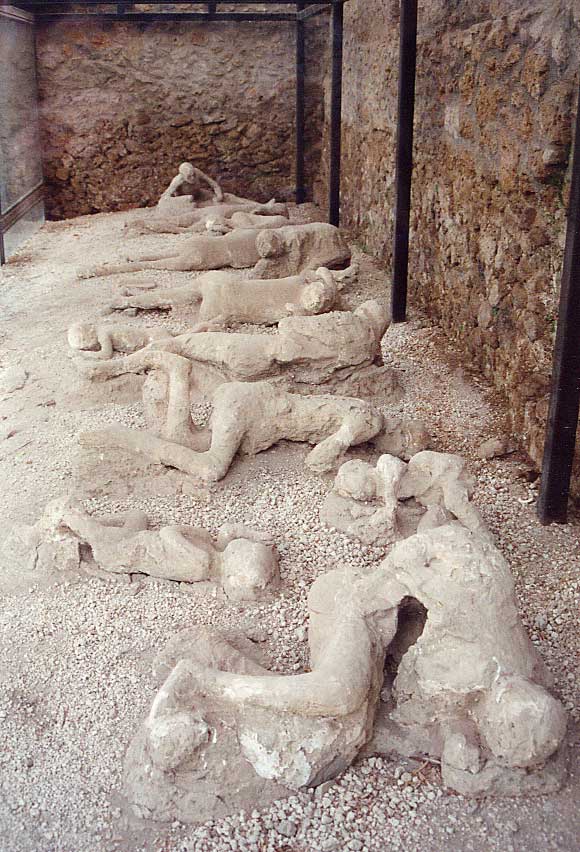
The earthquakes and tsunami that have devastated northern Japan have me thinking about natural disasters. Currently in New York City there is a display of artifacts from Pompeii, an exhibit I have not yet had a chance to visit. The parallelism of the two tragedies, however, has not escaped me. Pompeii’s destruction by Mount Vesuvius in 79 of the Common Era and its subsequent rediscovery and excavation are the stuff of legend. An unsuspecting city in the shadow of a sleepy volcano, at the pinnicle of its civilization, suddenly snuffed out. Forgotten for centuries, and eventually rediscovered. But rediscovery led to embarrassing revelations.

How will you be remembered?

Some of the first artifacts recovered from Pompeii were the erotic frescos that adorned many of the buried structures. Further, such images as super-sized phalli and other cultic implements of questionable morality led to reburial of some of the material because of more recent sensibilities. We judge ancient and extinct societies on the basis of modern predispositions on decency and propriety without considering that it is our view that is the innovation. Even a cursory read through the Holy Bible will reveal many stories where sexuality plays a prominent role. This suggests that biblical writers, like most people of antiquity, were less shy of sexuality than their post-Victorian heirs.

Natural disasters have a way of stopping time. Not just in the sense of speeding up the rotation of the earth by another 1.6 microseconds either. Surveying the wreckage of what we believed was a stable status quo, priorities are suddenly shifted. Compassion, rescue, and survival outweigh the petty differences of just the night before. Disasters are snapshots of the human condition. As the hot ash settled on Pompeii, lovers clasped in their final moments, never imagining that some two millennia further on that more modern, civilized tourists would be embarrassed by so human a response. Disasters are harsh teachers, but we may learn in the face of an unfeeling nature that we are all humans after all.


The Politics of Dentistry

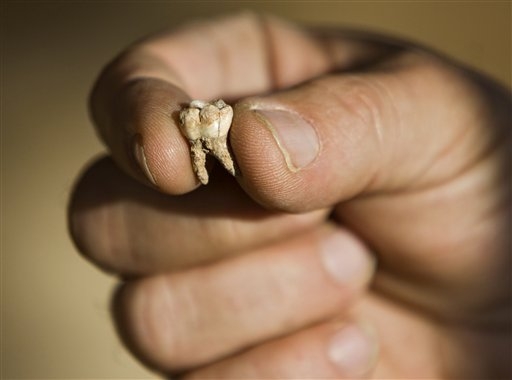
A story from the Associated Press on NPR this week announced the discovery of some teeth. No ordinary teeth, these perhaps belonged to Homo sapiens at 400,000 BP (“Before Present,” no apologies to gas-guzzlers). And they were found in Israel. Archaeologists from Tel Aviv University are quoted as stating this could rewrite the story of human evolution, suggesting that modern humans emerged some 200,000 years earlier than thought, and in Israel instead of in Africa. Now those are some ambitious choppers! Coincidentally, the discovery was announced the day I was discussing the earliest human occupation of the Levant in my Winter Term class. Of course. One of my students pointed the article out to me.

One of the endlessly fascinating aspects of archaeology and paleontology is the constant surprise of discovery. Often I have to remind myself that the past only exists in reconstruction. Once the moment is over it is lost forever, only to be rebuilt by specialists in documents and artifacts. Reconstruction, however, often comes with a political price tag. Anyone who follows the claims based on archaeological finds knows the folly of discovery. In disputed territories the work of archaeologists is used to stake claims to modern land ownership. Who in the world would not want to own the first location where modern humans emerged on the planet? What staggering claims could be made!

I have always sensed a comfort when thinking of human origins in Africa. Far from the (modern) industrialized mayhem of “civilization,” early hominids took their first tentative steps in Africa. Cut off from the rest of the post-Pangean continents except via the narrow passage of the Sinai, Africa harbored our pre-sapiens ancestors. Once they reached Asia and Europe, they interacted with Neanderthals, as genetics now demonstrate. Interaction led inevitably to extinction, so politics had to have been involved. To find the pre-political Garden of Eden, we need to cast our eyes on Africa. Anthropologists are even now disputing whether the teeth are of Homo sapiens or not. I find, when I’m in the dentist’s chair, it is best to leave politics out of the discussion.

From the Associated Press


Ipse Dixit Dragon

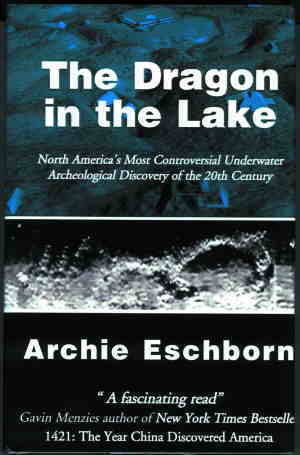
Confession time: I have little patience for scholars who have already made up their minds before examining the evidence. Anyone who has put themselves through the ordeal of reading my academic publications will know that I do not advocate sloppy research or slipshod thinking. Nevertheless, if we are to be honest about our world, we must follow the evidence. It is for this reason that I sometimes read unconventional material. I am well aware that untrained amateurs sometimes misinterpret what they see (so do trained professionals), but when evidence exists, why deny it? I just finished reading Archie Eschborn’s The Dragon in the Lake. Chalk this up to my having lived for many years in southern Wisconsin, and maybe a touch of nostalgia. I first learned of Eschborn’s book while teaching for a year in the Anthropology and Religion Department at the University of Wisconsin, Oshkosh. The chair of the Anthropology Department had me in his office one day and showed me this book by a “crackpot” amateur underwater explorer who really believed the claims that Rock Lake – between Madison and Milwaukee – actually housed underwater Native American structures.

I visited Rock Lake during my years in Wisconsin, along with the nearby prehistoric site of Aztalan State Park. There is no doubt that Aztalan was a major settlement of Native American mound builders. The structures there, while not quite rivaling Cahokia in southern Illinois, are quite impressive. Aztalan is three miles east of Rock Lake. Rumors of “pyramids” in Rock Lake have circulated for many, many years. The lake, however, is clouded with marine growth and sediment, and although there are undoubtedly underwater features the official line is that they are glacial artifacts rather than human constructions. Eschborn’s book is an attempt to demonstrate the artificial nature of these features. At his own expense and effort, the author built up a small research society, purchased a boat, and spent several early springs and late falls (when the water is clearest) sending divers and sonar scanners into the water to document what is there. While the book was self-published (and could have used some professional editorial attention) it nevertheless lays out solid evidence that Rock Lake does house a mystery worthy of exploration.

While I can’t accept all of Eschborn’s conclusions, I would insist that his evidence demands the attention of those who deny it is even worth investigation. This is less a struggle of evidence versus absence of evidence than it is a struggle against academic arrogance: professionals know better and need not be bothered with evidence. I have personally witnessed this in my own field many, many times. It is what Eschborn calls “ipsi dicit” [sic]; ipse dixit, “he himself said it,” is the assumption that a well-respected authority may be accepted as uttering the truth in principle, based on reputation. Many professionals in this country make their living based on this faulty premise. Eschborn died prematurely shortly after his book was published, before he could launch the next phase of his investigations. While his interpretation of the data may reach too far, the world suffers for the loss of a truly open mind, and the establishment ruling, as usual, still stands.


Where Would Jesus Park?

The walls of the Old City of Jerusalem may not go back to the time of King David, or even Jesus, but they have become one of the iconic symbols of a legitimate site of world culture. As a young man my first sight of those walls was almost enough to bring me to tears. I had read about Jerusalem since my earliest days after graduating from Dick and Jane, and to see the Holy City firsthand was the experience of a lifetime. Too bad it is some of the most hotly disputed real estate in the known universe. Sacred to the three major monotheistic faiths that seem dead set on destroying this or that portion of it, Jerusalem is unlike any other city on earth.

The problem, as any urbanite knows, is where to park. According to Matt Beynon Rees of the Global Post, Jerusalem’s city planning committee is considering literally undermining the sixteenth-century walls of the Old City to construct a parking lot. Just a few short years after U.S. troops drove heavy military machinery atop Nebuchadrezzar’s Babylon in order to satisfy Bush-family oil lust and personal revenge, once again one of the irreplaceable monuments of the past may come under the contractor’s gaze. I teach at Montclair State part-time, so, believe me, I know about parking headaches! There have been times when I thought I’d have to drive the fifty miles back home without stopping for class since every space on campus was full. Yet I wouldn’t suggest tugging down historic University Hall to make room for more cars.

The problem seems to be that in our disposable culture we’ve lost sight of what can never be replaced. Immediate urge takes precedence over what our ancestors left for us to ponder and marvel over. A great hue and cry went up when Yellowstone burned in 1988, a lament that the former beauty would never be restored in a lifetime. Damage to structures from centuries past may be repaired, but the wonder of their staying power will forever be lost. It cannot grow back like Yellowstone, no matter how long we wait. Yet, parking meters under the Wailing Wall might save locals from having to take a bus. Regardless of theological conviction or absence thereof, some sites are simply sacred to the human story. The human story, however, has become one of convenience. Where else might Jesus park his Holy Esprit without having to walk (not on water) to get to the temple?

Sure, it's a nice view, but where do we leave the car?


Sacred Geography

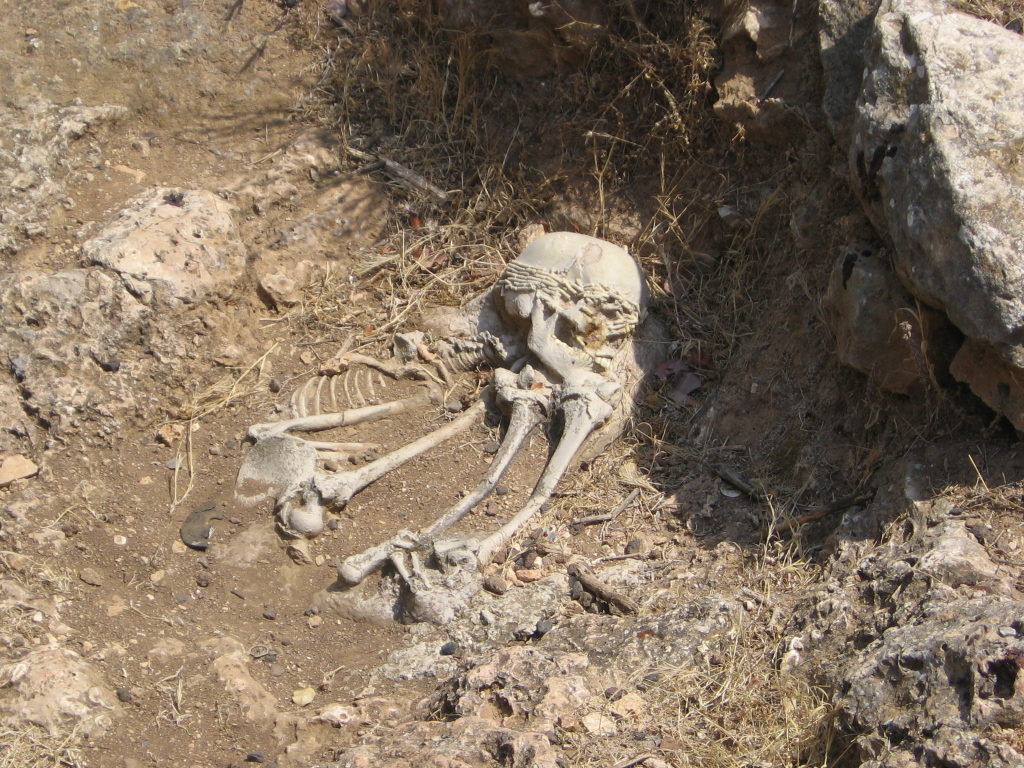
Pilgrimage. The concept that certain places are special is deep-rooted in the human psyche. So deeply rooted that we consider it a religious behavior. Even as scientists recognize the need of many animals to return to their birthplaces or areas that they sense beyond the range of human perception, as human beings they feel it too. Even scientists have the urge to revisit that special spot. Otherwise the travel industry would be in great trouble. Pilgrimage is considered a religious behavior, and the sacredness of place has been noticeably in the news this week. MSNBC reported on the find of a skeletal pilgrim to Stonehenge from 1550 BCE. Yesterday the New Jersey Star-Ledger ran a story about a temple/mosque dispute in Ayodhya, India. Both of these stories center on the sacred geography of the region.

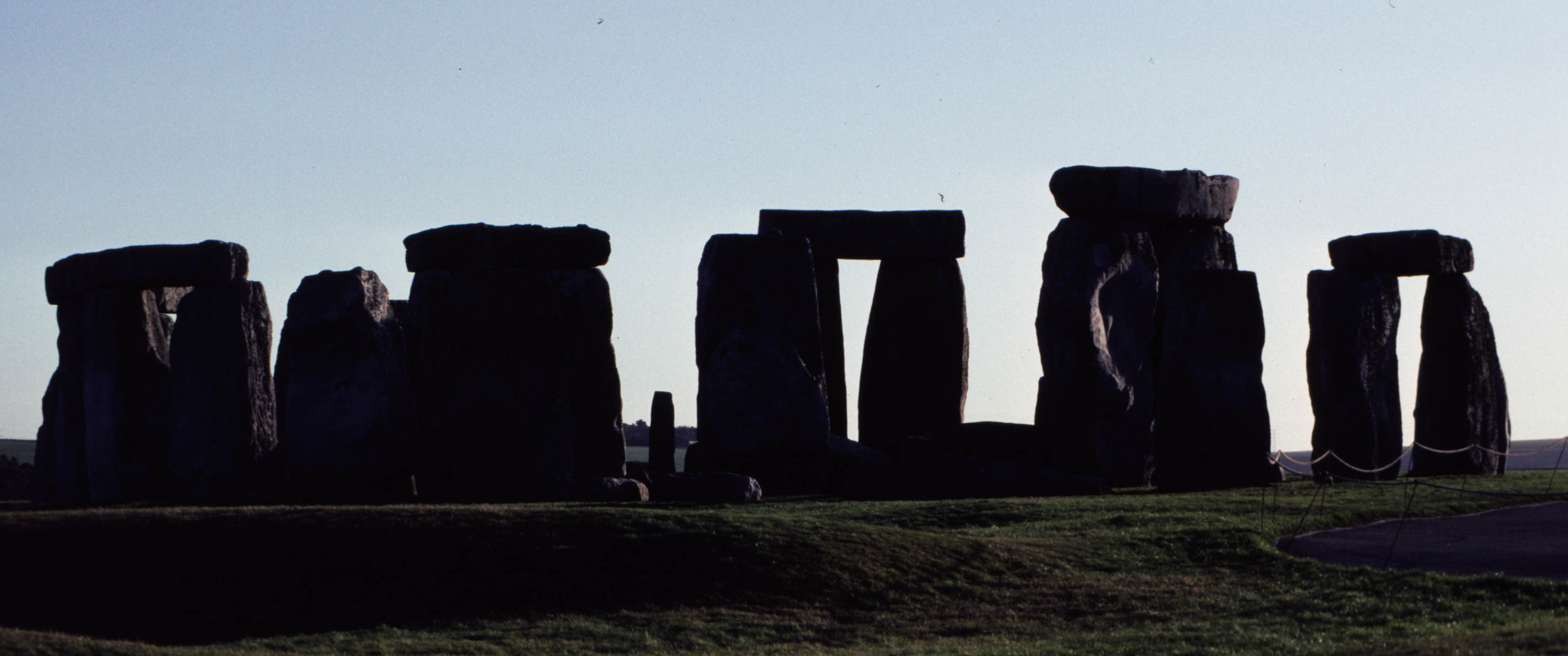
Stonehenge has been a magnet not only for Druids and New Agers, but for anyone with a sense of connection to European prehistory. In the winter of 1990, under a chilly British sky and gusty winds across Salisbury Plain, my wife and I made our pilgrimage to Stonehenge. The low angle of the sun in the sky in a dusky British December only enhanced the experience of standing near a monument that has become an icon of the mysterious and the transcendent for modern domesticated citizens of a straightforward, technological world. The news story states that the skeleton unearthed was of a Mediterranean teenager, far from home, in the shadow of what was already a famous landmark. Even over two decades on, I can still feel the inarticulate sense of longing I felt at Stonehenge, so near the winter solstice, and I understand why that young boy went there to die.

Meanwhile in Ayodhya, the site of a mosque has been declared two-thirds under the ownership of Hindu plaintiffs who claim the site as the birthplace of Lord Ram, a Hindu god. Naturally objecting is the Muslim population that currently has a mosque on the site. Sacred sites raise emotions and tempers readily. Humans want access to their holy places – this is the power of sacred geography. It is certainly palpable in the Bible, and was obviously present the last time I was in Jerusalem. Whether it is hardwired in our biology or simply born of whimsy, sacred geography will never go away. Either we can learn to share it or fight to the bitter resolution, but no matter how much blood might be shed the site will only grow more and more significant because of that very blood.


Crimeless Victim?

Anyone who’s spent much time with the Dead Sea Scrolls knows the name of Norman Golb. Long-term Oriental Institute professor at the University of Chicago, Golb has been active in research on the Scrolls for decades. Tuesday the New Jersey Star-Ledger ran a confusing article about the trial of Golb’s son for identity theft. After reading the piece several times it is still not clear what Raphael Golb has done that is either newsworthy or illegal. It does involve the Dead Sea Scrolls, however, and that is always enough to draw the attention of the Associated Press.

Is the truth in there?

The Dead Sea Scrolls continue to fire the imagination of the general public in a way that is somewhat baffling. The scrolls themselves are largely obscure and fragmentary, the information they contain is often arcane, and the published pieces raise excitement mostly in scholars rather than a general readership. The fact that it is not too difficult to fill a class on Ancient Near Eastern religions at Rutgers University seems to indicate that people are still avidly interested in the past, particularly in that conflicted part of the world where civilization began. While the media report the more sensational finds, interest quickly peters out while new and more exciting stories hit the wires. It’s fun to imagine what the field of studies would be like if sustained media interest told the public what to find fascinating in the ancient world.

This article, however, represents the unfortunate reality that scandal is often the drawing point for ancient studies. People are attracted to scholars behaving badly, intellectuals receiving their timely comeuppance. It is disappointing that the subject matter itself doesn’t receive more attention. The Ancient Near East is, after all, the source of what we continue to recognize as culture. Reading the article over again, the most disturbing element is not that Raphael Gold has allegedly committed identity theft. The most disturbing element is that a professional journalist describes him, apparently without a hint of irony, as “a brainiac.”


Natufia to Say

The Natufian culture predated the Israelites by millennia. They were gone by at least 7000 years by the time Israel appeared. The Natufians seem to have been the first permanent residents of a hotly disputed piece of real estate: Israel/Palestine. On Monday MSNBC reported on the archaeological find of a feasting hall among the Natufians. The story reminded my wife of similar stone-age sites that we visited in the Orkney Islands several years ago. What the story reminded me of, however, was the marzeah. The Natufian site features two activities: feasting and burial. The article notes the coincidence of 28 human burials, including one shaman, and the unmistakable signs of feasting. Bring them together and its sounds like marzeah time to me!

Natufian burial, from Wikipedia Commons

The marzeah is an imperfectly understood social institution from the ancient Levant. It is mentioned in the Bible as well as in the Ugaritic texts. Although plausibly reconstructed by modern theorists, we simply do not have a complete record of what the marzeah entailed. Two of the key elements seem to have been feasting and a funerary nature. Monotheistic religions tend to downplay the role of the dead as influential entities since they interfere with a monistic view of the divine. The two Hebrew Bible references (Amos 6.7 and Jeremiah 16.5) do not speak highly of the practice. The Ugaritic material suggests drinking may have been involved as well, further problematizing the ritual.

Now here is where the ambiguity of archaeology is thrown into sharp relief. The fact is we do not know what the Natufians were doing when they buried or feasted at this site. The Hilazon Tachtit Cave does not seem to have been a regular occupation site, and we do not have any reason to connect the burials with the feasting. Beyond a hunch. The hunch is the incredible urge to bring like things together. People excel at pattern-recognition. When I read of funerals and feasting my mind leapt to the marzeah. There seems to be no organic connection between the Natufians and Israelites (or Ugaritians), but the continuity of cultural concepts seems to strong to dismiss. Were ancient people toasting their dead with feasts that were remembered down into the Late Bronze and Iron Ages?