Bull

Bulls have long been symbols. If I write “that’s bull” your mind will likely fill in the missing implied word. In ancient times the king of the gods, El, was known as “bull El”—probably for a very different reason than the veiled scatological reference above. Bulls were powerful and, to those in settled, agrarian societies, necessary for life. Of course, they can turn on you and kill you with little thought. Even in our high-tech, urbanite world, we keep our bulls at hand. “Charging Bull,” a golden calf if there ever was one, is a famous Wall Street statue erected to the glory of mammon and greed. On May 7, to celebrate International Women’s Day, a statue called “Fearless Girl” was placed in front of “Charging Bull.” Our symbols require some reevaluation. In a kind of Trump-up, another artist placed a statue of a dog lifting its leg on the girl, according to the Washington Post.

We creative types can be sensitive about our work. Apart from writing I’ve dabbled in drawing, painting, and sculpting, although few have seen the results. I know that the space around an artwork is part of the art. I’ve posted before about Grounds for Sculpture, one of my favorite places in New Jersey. The idea of a sculpture park is that the context of the image is important. Statues show up fairly frequently in New York City. The ever-changing art along the pedestrianized part of Broadway in Midtown keeps the walk to work interesting. Interacting with art is performance. At the same time, the respectful viewer knows, artists are making a statement. Placing a girl before a charging bull says so very much.

“Fearless Girl,” unlike the great lummox she faces, is temporary. Nevertheless, the statement she makes is loud and clear. Wall Street might more aptly be named Ball Street for the amount of testosterone that surges through the place. Men erected a system to keep women out of positions of power. And even when a small symbol of female resistance is placed, some man has to have a pug pee on her. I wonder what our society’s become. We’re hardly agrarian any more, yet we still feel “bullish” about things. When’s the last time anyone used “girlish” as a compliment in a business context? “Fearless Girl” will be allowed to stand until February. The pug is temporarily gone, but will be back. When the girl goes the pug will follow. All that will be left in Bowling Green Park will be bull.


Jericho

Those who think walls actually keep people out have never ridden the train through North Philadelphia. Or into Newark. I have to admit that I’ve always found rail-side graffiti aesthetically pleasing. Some of these vandals are real artists on a scale that is truly impressive. Speeding trains are, of course, dangerous. And in urban areas they are fenced off to keep people out. Thing is, walls don’t work. Riding to Washington DC for the Women’s March a couple weekends ago, I was watching the graffiti on the way into Philly. Vast, colorful, and with a flair for design, it makes the usual visual fare for railway riders much more interesting. Buildings, we know, have facades to be public facing. If you go around to the back of the strip mall, things look a lot more spartan indeed. I’ve spent my fair share of time in employee break rooms. Executive washrooms they’re not.

The thing about facades is that they’re fake. Like in those old westerns where we see them jutting up higher than the actual roof of the store or saloon, making them look bigger than they really are. Or even a small town boy who works in Manhattan can see it. Walk down the avenues of Midtown and the glitz is never-ending. Once you get to the minor cross-streets you see the service entrances and smelly trash bags stacked in the alleys. Would you want to enter that store if you knew what was coming out the back? We prefer our self-deception. We prefer to call our lies alternative facts. We can sleep better at night that way, knowing that our heads of state are so so brutally honest. Just don’t wander behind the cameraman. Things aren’t what they seem.

img_3171

To get to New York City from where I live, you have to change trains in Newark. The graffiti along the way is intense. Long ago I noticed a signal hidden in the noise. “Paint the Revolution” it reads. Or read. I don’t know if it’s still there. Graffiti’s often the bare truth. The thing is, it’s difficult to photograph. Trains move fast and phones focus slowly. Things look blurry and those in power can tell us the words of hoi polloi are ugly and defacement of property. Have they ever walked behind the building to where the workers come out? It’s easy to find. If you smell the piles of garbage you’re getting close. Executive washrooms they’re not. But the back door is far more honest than any facade.


Capital Carol

The idea of exchanging presents on a holiday emerges from the impenetrable veil of time. We don’t know when the practice began—the idea of copying the Zoroastrian wise men in Matthew is a bit of a stretch and the date of Christmas wasn’t settled until much later in time. However and whenever it started, giving gifts at this time of year has become one of the defining features of late capitalism—it’s almost as if Jesus of Nazareth was born for this. An economy that measures self-worth in terms of money is just the place to have God-incarnate celebrated by giving lavish gifts. Those of us who make no money off the holidays can’t deny that it feels good to give someone something. People like, in general, to make each other happy.

This year my wife asked for a non-material gift. We made our way to the McCarter Theater in Princeton to see their acclaimed performance of Charles Dickens’ A Christmas Carol. A gift of a memorable family time and a truly spectacular play. Seeing this story in 2016 felt especially important. Dickens was a famous advocate for the poor and was well aware of how they suffered at the hands of the wealthy. Indeed, those with too much money lose their humanity almost completely. The story is focused around Christmas, but the message is needed for every day, especially in over-long years such as this. Capitalism is a form of social evil. Anything that lowers humans to mere ciphers on a page is the very definition of sin.

christmas-carol

We all know how the story goes, but to see accomplished actors undergoing conversion is nevertheless a strangely hopeful experience. As the story makes abundantly clear, it requires so very little to make others happy. The point of having money, after all, is to use it for the good of others. Seeing one man facing his own mortality only to realize that he has isolated himself from the care of others is a powerful experience. As we move forward into the long and dark days ahead, there is a reminder here that we need to keep close to our hearts. There may be fewer presents under the tree this year, but we are all the richer for it. This is the kind of gift that we need to share with the entire world.


So Long, Marianne

fullsizeoutput_122f“It’s a cold and it’s a broken Hallelujah.” Leonard Cohen has died. But can you blame him? This seems to be a week for losses. I came to appreciate Cohen’s work long after his best-known songs had been and gone. The interviews with and news stories about him that I’ve read convince me that he was an extraordinary man. Spiritual and sensual, he was a true contemplative. He strove to experience what it means to be human. I sometimes fear we’ve lost that as a goal. I see headlines proclaiming that we can now have chips implanted in our brains—we can become part computer. “You held on to me like I was a crucifix,” he once sang. Who believes in crucifixes anymore? Salvation doesn’t come from above. It comes from self-interest. From business and bank accounts. And that chip in my head.

My wife taught me the value of music therapy. When the forces of darkness gather, listening to music can help you through. Many artists have covered Leonard Cohen’s songs. So much so that some have forgotten who it was that wrote them. A true artist, I suspect, doesn’t mind. Those of us who delve in creativity know that we are more like receivers than gods. It takes worshipers to make a deity. The songs that Cohen wrote were messages to the world. Poetic and deeply personal, they are reminders that being human is okay. In fact, it’s what we’ve evolved to be. I have a feeling we’re going to be needing more poets in the days to come. Someone has to shine the shoes of those who work in Trump Tower. My mind is singing “Chelsea Hotel.” Everybody knows.

Cohen was a reminder that sacred and secular are not so far apart. In fact, they are often difficult to distinguish. There may be a problem when you discover that in seminary, but if you can put it into a song perhaps people will listen. Eras, it seems to me, ought to have anthems. F.D.R., one of the truly great Presidents of the century past, proposed “Happy Days Are Here Again.” I wonder what songs we’ll be associating with the presidency over the next four long years. Will there be any music at all? Far be it from me to proclaim any man a prophet, but can you listen to “First We Take Manhattan” and come to any other conclusion? Go to iTunes, or that chip in your head, and listen. You might just end up singing “Who by Fire” as well.


Final Frontiers

img_0610

Is there such a thing as an existential illness? Answer that if you want to, but it’s rhetorical. I’ve been voting since 1980 and I’ve taken my fair share of bruises in the process, but this time my soul feels as if God has hung his “gone fishin’” sign on the pearly gates for good. I am ill. Maybe it was the ebullience that came from having eight years of progress where, although things weren’t perfect, they were sort of holding steady. I’ve always considered myself a populist. I don’t know how a billionaire can convince millions of people he’s one. To be populist you’ve got to be one of hoi polloi. Growing up poor, I took my licks then and I’m still taking them now. No, this wound goes deeper than the bone. Deeper than the viscera. It’s an existential illness.

All things considered, I don’t write too much about politics on this blog. All my adult years I’ve been an unapologetic Democrat. I confess to having grown up Republican. But I believe in the fair treatment of others. I know not everyone will or can be happy. I also know that it’s wrong to denigrate anyone because of their gender, race, orientation, or physical ability. Seems to me that our country was sort of the final frontier where you could go if you believed this kind of thing. Where can you go from the final frontier? There are no other land masses to discover. Maybe if I put on enough layers, Antarctica might not be so bad. Beyond that, where can one go to be a liberal in a world that desperately need some heart? Where money isn’t the measure of all things. Where Mom is right just as often, if not more than, Dad.

It’s a strange thing, this existential illness. Politicians are already cooing their pleasantries, as if nothing more than a slight upset occurred. It seems to me that whenever there’s an upset the popular vote disagrees with the electoral college. It also seems to me there should be a place where the wealthy aren’t considered better by virtue of their material status. I have this existential illness, but I can still dream. Is there a way forward from here? Sometimes I think I can see that horizon where all people are treated fairly and equally, and sometimes the sun seems to be rising over that horizon. Today I feel motion-sick from being jolted backwards. I’ve been disappointed before, but I don’t remember it hurting this badly. If anyone knows a good existential doctor, please pass along her name.


Fictional Fact

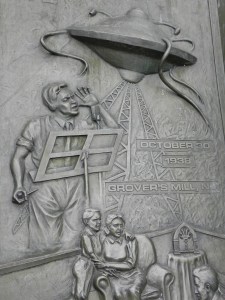
Do you remember that tragic sinking of a Staten Island ferry when a giant octopus pulled it under? Sounds vaguely familiar, but I wasn’t living near New York at the time. A story in The Guardian tells how Joseph Reginella, a sculptor, made his commemorative piece of art for Battery Park for a fictional incident. Like the memorial for War of the Worlds in Grover’s Mill, New Jersey, this is something we remember that never really transpired. We remember what never happened. It’s easy to forget that memory evolved for specific purposes. Mainly we remember for survival. Our brains evolved to keep us alive. If we don’t recall where we found water, or where that hidden cliff edge is, we don’t last for long. But we remember other things as well. The time that Oog borrowed your stone axe and didn’t give it back. Our social memory made us human, so we’re told.

dscn4239

No doubt it is possible to develop a keen memory. Precise recollection of events just as they happened, in sequence. It’s also possible, even collectively, to misremember things. We tell stories. We make myths. There was no giant octopus incident. Maybe we saw such a thing in a movie one time. That movie, paired with the plausible evidence of a public monument commemorating the event becomes a modified reality. I’m just sure I can remember it happening, can’t you?

Studies of such phenomena tell us that memories aren’t what they seem to be. To make distant recollections Holy Writ, for example, we have to rely on divine inspiration. Without it we might just be remembering a story somebody told once upon a time. And where did I put the car keys? Yes, our memories are open to manipulation. Things that never happened become real this way. George Washington did not chop down a cherry tree and confess to his father because he could not lie. And yet we believe. We make myths because they give our lives meaning. Face it, evolution is a pretty boring explanation for why we’re here. Natural selection has no goals in mind. Things that work best tend to survive in the gene pool. And in some people’s memory there may be a giant octopus in that pool as well. Did the the Cornelius G. Kolff get pulled under or not? Would a ship with such a name ever be made up? Myths are still born every day, even as the octopuses cower in their caves, awaiting the next naive ferry to transcend reality.


Buying Intangibles

Perhaps it seems that I’m writing quite a bit about music these days. Being a theoretical and practical failure in the practice of music, it may seem presumptuous. If I’m honest, I’d admit that visiting the site of Woodstock was kind of a religious experience for me. That experience and the fact that popular musicians from my younger days have been in the news of late compel me to analyze a bit. My wife shared a blog post on John Pavlovitz’s website entitled “Bono Called Out Christian Musicians For a Lack of Honesty. He Didn’t Go Far Enough.” The screed is both about the Christian music industry and about current trends in evangelistic super-churches that share in the glitz and glam and leave you wondering what Jesus would do. The message of early Christianity and the sixties was similar: social justice, peace, non-judgmental attitudes, care for others, love all. Don’t worry about the bottom line.

Many churches, it has become clear in this age of nones, are struggling to compete in the spiritual marketplace. Since every institution must have “product”—not books, music, reverence, or worship, but “product”—money must change hands. If you have any doubts look at what the mega-church pastors are driving. Christian bands seem not to have a social conscience so much as a desire to feel good. It’s a thriving industry, for sure. Music that makes you feel safe is delivering false promises, though. The deity thundering on that mountain might ask you to sacrifice your own son, and there could be a good, solid backbeat to that. What is the role of religion in an entrepreneurial society? It used to be that you couldn’t buy what they were giving away. Everything now has a sale tag on it.

Back in college we used to argue about whether U2 was a “Christian band” or not. Clearly they recorded on a secular label. Amy Grant, the darling of 1980s believers, matured and seemed to fall from grace. Larry Norman, never part of the establishment, died too young. Music and religion both stand, in fact, out of the reach of sticky capitalist fingers. Anything that you have to pay for is more a cheap imitation. YouTube has made all of recorded history available for all. Even mainstream churches are experimenting with tablet hymnals and virtual communion. Grace mediated through a touch screen. Debit cards accepted. The only thing that seems to be missing is that human touch. That down in the mud reality of it all. Music that had a message and that message wasn’t about supporting convention. “Upon this rock,” you can almost here the man say, “I will build my church.”

IMG_2833


Simon Says

Music preserves your youth. When my wife was studying music therapy, one of the pieces of information she received is that those whose brains have begun to shut down the speaking faculties can still sing. People respond best, in such states, to the music of their youth. Anyone who lives long enough will decry the noise that the younger generation calls music. I’m thinking about this not just because of my recent visit to Bethel Woods, but also because of a New York Times story that Paul Simon is planning to leave the musical stage. Simon and Garfunkel was among the music of my youth. Accessible music with profound lyrics and, for the most part, a muted sadness. I grew up a long way from New York City, but listing to this music I felt like I was wandering the streets of the Village, soaking in a reality I would otherwise never experience.

It strikes me as no surprise that among the earliest manufactured artifacts discovered are musical instruments. While I seem to have missed nature’s boon in offering musical gifts, I nevertheless inherited the appreciator’s side. I don’t often listen to background music. I listen to music to listen. It carries its own meaning, akin to what we tend to think of as a religious experience. No doubt, for many, Woodstock felt like such an encounter. Music that could take you away from the troubles of a war-torn, prejudicial, jaded society. Even if only for a few moments. “I am a Rock,” was, for much of my youth, a kind of personal anthem.

IMG_2836

During a commencement address in not too distant months past, Simon told the graduates that ours was becoming a society at war with art. Music is money. College isn’t about becoming who you are; it’s career training. We don’t allow our young any time to explore any more. Few are willing to admit that capitalism, unrestrained, is just as bad as communism. Music used to be about the soul. The artists I know tell me it’s now about the cash. The man calls the shots. So as I stood on the hill overlooking the former Max Yasgur’s farm a few days ago, the lack of sound was poignant. There used to be, it seemed, different ways of existing in the world. Today the tempo is set and the music composed by those who prefer marching tunes that lead straight to the bank. Standing on that windswept hill I’m sure I can hear the sound of silence.


Things Remembered

IMG_2839 copy

Freedom. Independence Day is our celebration of liberty. Yesterday I happened to find myself at Bethel Woods, the out-of-the-way location in New York where Woodstock was held. Probably no one in 1969 realized just how formative Woodstock and its message of peace, love, and music would become for American culture. Those of us who came of age in the ‘70s learned about it as recent history (I was only seven at the time and, I’m sure, would’ve found the whole thing somewhat unChristian had I been here then). Much has changed in the intervening years. Not many peaceful events get so much airtime any more. Upwards of 400,000, basically unpoliced, youth, gathered in Bethel, New York, for three days of music, chaos, and peace. The Vietnam War was still draining our nation of its youth and murdering its idealism. Fear of the other, racial inequality, and male superiority were part of the context that led to the need for Woodstock. Freedom was free.

Often on this blog I reflect on the sacredness of place. Events that take place in a location leave their impression on the land. Bethel Woods Center for the Arts, the current administrators of the property, have left the field largely intact. As my wife and I stood at the top of the hill and tried to imagine almost half-a-million people here, it was strangely quiet. The nearby museum had plenty of music playing, but standing where it actually happened, there were only ghosts of an event studied in school and which, even today, kids can generally identify. I couldn’t have named every act that played the concert and, although the music was clearly important, it was the gathering that is most remembered. Self-governing youth getting along in an area so remote that still today you have to drive a couple miles to find even basic necessities, sent a powerful message. It was an event that, I fear, can never be replicated. The snake has spoken.

Nearing fifty years later, we’ve become so paranoid that anyone who looks Middle Eastern is under suspicion. Guns, which children of the sixties shunned, have proliferated and may now be carried, wild-west style, in many states. A fear-mongering candidate bellows fascism before the Grand Old Party. Remember, Nixon was president during Woodstock. I may have lived hundreds of miles from here, occupying myself with the matters that seven-year-olds find so pressing. But Woodstock happened. By the time I got to Woodstock, everybody else had gone. I see others milling about the museum, slightly older than me. Perhaps some of them were here for the event itself. We all seem to be searching for something here. The festival had its problems, for sure, but with a sincere belief in freedom, it makes the pre-seventies United States feel like a strangely foreign county. How do we get back to the garden?


Industrial Revolution

Everything’s industry. It has haunted me for some years now that we’ve let our corporate greed run away with our imagination so that nothing but “industry” remains. We don’t wish to interfere with the gun industry. The guns we like the best are those designed especially for killing lots of people. We feel happy having them in our homes. We’ve supported industry. Time was when society had more than just industry. Education, for example, was not an industry. It was just education. No measurable outgoes but a better society. Now we quantify and try to measure, thinking there’s something magical about numbers. My, what big ammo you have! The better to shoot you with, my darling. Think of it as the people killing industry.

After all, if you spend all that money on an expensive automatic weapon and don’t kill anyone with it, haven’t you wasted your money? Well, wasting money is good for industry, so we shouldn’t be too harsh. Most people know better than to take their weapons out and blow away those they don’t like. I would feel better if more people were like Pedro Reyes. (We, however, want to build walls to keep his kind out.) Reyes is an artist who had people in Mexico City turn their guns in for useful things. He had the guns smashed with a steamroller, at an army base, no less. The metal from the guns he melted down and made shovel heads so that people could plant trees. Over 1500 guns were turned in. The biblical allusion has already been made, but we would rather, in this country, ignore the good book we love so.

What would the gun industry do if people stopped needing to defend themselves so much? What if people felt less fear? What if politicians, instead of cynically using fear to win nominations, and elections, had the best interest of citizens at heart? Guns are for wars, and wars are useless. We have far more to offer one another than pools of blood and gore and guilt everlasting. Does it not strike anyone as odd that mass shooters intend to die at the end? We could use more shovels to bury them all. Wouldn’t it be even better if, before the shooting began, their guns were melted down and cast into useful tools? One might, in an optimistic mood, call such a thing an industry.

DSCN5084


Virgil’s Vigil

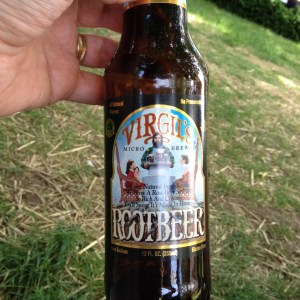
IMG_2798I can never keep Virgil and Beatrice straight. I blame Dante. Allegories can be so tiring. So, sitting under a tree in Princeton, enjoying a root beer float prepared at The Bent Spoon, I ponder the empty bottle before me. Virgil’s root beer. So good, it states, that I’ll swear it was made in Heaven. It is good, I must say, but didn’t Virgil lead Dante through the other place? You see, I’ve just spent a pleasant morning at Grounds for Sculpture, the outdoor museum set up by Seward Johnson, a sculptor that some accuse of kitsch. Others come by the busload to see what it’s all about. Johnson’s cast sculptures of people are so lifelike that it isn’t unusual to find yourself staring at an actual person sitting on a bench, wondering if they’re real or not. I spend a lot of time pondering reality, and this place makes that question explicit.

Descartes said “I think therefore I am,” but what if I am really the thought of another? How would I ever know? As I wonder around among the sculptures, a different face of reality shows itself. Many of Johnson’s pieces are sculptures based on paintings. To get behind the surface you have to imagine what the unshown side must’ve looked like. That which the original artist left out. Any art is a matter of perspective. Unseen realities—isn’t there something Dantesque about all this? Is Virgil the guide through Heaven, or is that Beatrice?

These statues, in quotidian poses, are so real. If they’re cast from actual persons, maybe they are. After all, this camera I carry is capable of capturing souls. And if you don’t make it through the first time around, there’s always Purgatory as a safety net. This bottle in my hand causes me confusion. Is my tipple divine or diabolical? How much difference is there between them, really? Princeton is a place that needs no one, after all, except those who have already made a success out of life. A place with expensive root beer on offer. A vice for which I’m willing to pay. Maybe life is a divine comedy after all.


Holiday Weekend

John Seward Johnson II is a sculptor whose work is instantly recognizable by a number of people. Realistic, life-size bronze castings of people doing everyday things, some are painted so as to be difficult to distinguish from quotidian humans. Others are left more abstractly colored or sized so as never to be mistaken. They are, in many ways, explorations of what it means to be human. One of Johnson’s statues, “Double Check” presents a business man sitting on a bench, checking his briefcase. It is most famous for having sat near ground zero and having confused rescuers as a real person traumatized by the events of September 11. Memorial Day seems like a good opportunity to revisit the statue that many thought was human, and which many people still adore.

DSCN6309

While perhaps the most obvious question a sentient being can ponder, what it means to be conscious (and in our case, human) is without an easy answer. We are animals aware of our own mortality in a way that causes many of us angst, or even terror. Humans (and perhaps other conscious animals are) notorious anthropomorphists—we think of other creatures, and even inanimate objects as being like ourselves. We can mistake statues for real people. All too often we treat others as if they were made of cast bronze. Memorial Day is for remembering, but the fallen haven’t only been the victims of the madness we call war. Violence done to others for one’s own gratification is an act of war on a personal scale. Individuals who destroy many others need to stand long before a statue and ponder.

“Double Check” has become an icon of sorts. People left gifts and remembrances for the victims of the attack on the statue. When the real thing isn’t there, sometimes a statue will do. This can teach us something about being human. As we die, at least in this culture, we are buried and a headstone becomes our statue. Our representation for the world to remember that we were here. Our progeny may lay flowers on our grave on this date some day in the future while statues that look just like humans will remain largely unchanged, asking those who remain alive to check again. To think, what does it mean to be human? And when any of us may be tempted to harm anyone else, perhaps we should gaze at a statue and consider the implications.


Vitruvian Savior

If memory serves, I was still in seminary when “Piss Christ” was first unveiled. As photographic art, I can’t say when the shutter snapped, but I seem to recall animated discussion over it and since seminary animated discussion has been at a premium, so I think I’d remember something like that. In any case, the artwork still has the power to shock and enrage as the world teeter-totters in its love-hate relationship with religion. Some people seem surprised when other people respond somewhat pointedly to what they perceive as affronts to their beliefs. The thing about beliefs is, well, people believe them. In this day of electro-chemical signals between synapses it may be hard to attribute any substance to belief. Still, if someone makes that claim, insult their mother and see what happens. Beliefs, by their nature, are sacred.

438px-Vitruvian

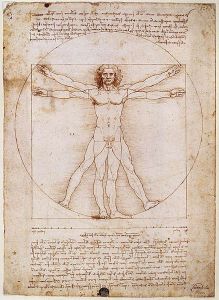
I was reminded of this when my wife pointed out to me a story about Dartboard Jesus. If you’re not a Rutgers University person (as I no longer am), it takes only a little imagination to visualize this artwork. Conjure a dartboard in your mind. Then picture a crucifix superimposed on it with darts instead of nails. Red darts, if that helps. You’ve got it. The official name of the piece is “Vitruvian Man,” but the public outcry was enough to have the piece removed from public display. I taught (strictly as an adjunct, no complications, please) at Rutgers for four years. People sometimes expressed surprise that multiple sections of Intro to “Old” and New Testaments filled up every semester. I wonder if the university ever takes measure of its students’ beliefs. I had Seventh-Day Adventists in my courses. I had Jains, Muslims, and Hindus. I had Atheists and, God help us, Episcopalians. One thing all these people had in common was belief. Not beliefs, but more singular: belief.

No one in the world intentionally believes falsely. Indeed, should Oxford Dictionaries be trusted, belief is “Something one accepts as true or real.” By definition, it seems, beliefs are believed. Artists serve a valuable function in expressing ideas that words struggle to articulate. There is more going on when your crucifix is juxtaposed to a glass of urine or a dartboard than you might otherwise imagine. It says something about belief. In some cultures such heresy is punishable by death. It isn’t so much a matter, I would suggest, of freedom of expression as it is a matter of advocacy. Artists are teachers and even teachers sometimes don’t consider how their lessons will be taken. Respecting belief, perhaps, is something electro-chemical signals leaping tall synapses in a single bound simply don’t understand.


God’s Rain

Photo credit: Micahmedia, Wikimedia Commons

Photo credit: Micahmedia, Wikimedia Commons

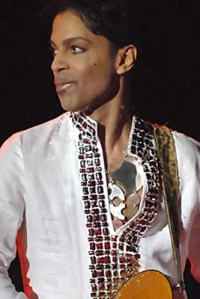
Music has been in the news this week with the death of the artist formerly and forever known as Prince. Also, in a lesser covered story, Bono’s friendship with Bible translator Eugene Peterson. This post will focus on the former former artist. I’ll have to circle back later to pick up Bono and Peterson. I have to admit that I haven’t listened to Prince much lately. I saw “Purple Rain” when it came out, and some of his songs have resonated with me throughout the years. What makes him such an intriguing figure is his view of sexuality. My source here is the Washington Post, specifically, an article by Michelle Boorstein stating that Prince was, beneath the sexy exterior, a conservative Christian. Specifically a Jehovah’s Witness. He would not be alone in this role since Alice Cooper is famously also a conservative Christian. Life upon the stage is that of the actor. With Prince, as Boorstein points out, the question goes deeper: he wrote about religion, but he also wrote about sex.

Those of us who indulge in creative writing know that poetry is perhaps the only place where dishonesty is impossible. Song lyrics are true. Prince often cites Christian tropes (see Boorstein’s article for samples), but his material is deeply sexual as well. This leads to the suggestion that he saw sex as a means of worshipping God. Once again, Prince doesn’t find himself alone in this place. Scholars brave enough to examine both religion and sexuality often find a connection there, and not just a tangential one. Both are about communing with something greater than the individual. Thinking back to my first viewing of “Purple Rain” I can say it wasn’t the religion part that stood out to me.

Histories of Rock-n-Roll are rife with stories of performers’ untamed sexuality, so that’s hardly news. What really strikes me is that with recent deaths—David Bowie, and now Prince—the media seems intensely interested in their views of religion. We don’t often look to artists for advice on how to live our lives, but as the polar opposites of scientists and rationalists, they are in touch with and willing to share their feelings. And we the people want to know what they thought of God. Often because it is so surprising. It’s easier to put someone in a box. Religion, however, is way more complex than most non-specialists think. It has room for creativity, for sexuality, and for exploring the meaning of life. I many not listen to Prince much, and when I do it’s not for religious advice. I am, however, inclined now to think in new ways about colorful rain.


Head of STEAM

The market producing doctorates in the humanities is showing no signs of slowing down. The fact is we’re all human, and many of us aren’t very technically inclined, unless we have to be. There are fewer and fewer jobs for these bright students who graduate with doctorates in the humanities, but the plight of the “privileged” is no concern to wider society. Let the eggheads figure it out. At the same time, wisdom in the job market is that careers in Science, Technology, Engineering, and Math (STEM subjects) are growing and showing the most promise for future careers. The pace of technological change is so rapid that yes, obsolescence for new devices is six months or less. My iPhone 4 is a dinosaur, although when I first held it some three years ago it was so advanced that I was afraid of it. A moment’s reflection will reveal that the most advanced technology is already in use in the military since staying ahead of the enemy is always the bottom line.

This situation has led to some concern, and not just among those of us in the humanities. Some in the world of STEM are saying that quality of life suffers. To indulge a stereotype, try to imagine geeks without Star Trek. We know that Star Trek was as much fantasy as science fiction. My iPhone makes a communicator look just plain silly. Star Trek is, however, creative indulgence. While many would hesitate to raise it to the status of “art” it is part of the Arts: fine arts, literature, film, music, and some television. The stories it tells are the stories of human beings (and one alien) struggling against often more advanced civilizations. In the end, humanity always wins. If we exit the stereotype, scientists are often musicians and writers as well. Some become novelists or consultants on box-office busters. We are more than meat machines.

Recently voices have been heard suggesting that STEM should be STEAM. The Arts have an integral role to play in the scientific and technological fields. Even some numbers are imaginary. The basis for developing imagination is the Arts. Although we could have made it to this point in our development without Star Trek, the fact is that many of us growing up with it, as well as the more silly, but also influential Lost in Space, and what we now know is a most assured cash cow, Star Wars, know that these shows helped shaped the present we inhabit. Arts give us visions. There continue to be those who castigate the Arts as “soft” and “weak” and tangential to the cold hard facts. But they are wrong. Humans can’t survive without a source of warmth and energy. And the first great engines of advancing civilization still have much to teach us, for those engines ran on steam.