Infinite but Expanding

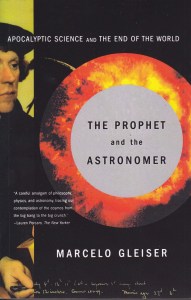
What could be more humbling than living in an infinite but expanding universe? Since the days of Copernicus, Brahe, Kepler, Galileo, and Newton we’ve known that the apparent reality of both our own lives and that portrayed in Holy Writ is inaccurate. The earth doesn’t hold still, and the sun doesn’t rise or set. The universe isn’t a layer-cake with Heaven above and Hell beneath. Instead it’s mind-numbingly massive. The only appropriate response, it would seem, would be silent awe. Marcelo Gleiser, whose work I’ve mentioned before, is a rare scientist. Rather than continually slapping the rationalist card on the table and declaring science the trump suit, he brings an element of humility to his writing. So much so that he’s willing, almost eager, to engage religion. Not in debate, but in conversation.

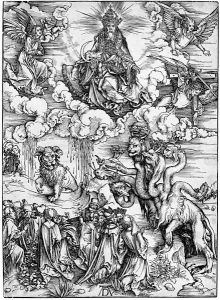
The Prophet and the Astronomer is a wide-ranging book that is tied together around the theme of the end of the world. A few weeks back we had yet another brush with a biblical literalist declaring the end of all things. Gleiser, although his book was published over a decade ago, was called in to comment in various places. This book opens by discussing ancient ideas of the end of the world. These are necessarily religious ideas. We don’t fully understand ancient concepts, but enough remains for us to see that apocalypses have their origins in Zoroastrian thought. Judaism encountered such thinking and the book of Daniel ran with it. Early Christians also had the world’s end on their minds, and the book of Revelation developed into a full-blown apocalypse. The world, or at least the western hemisphere, has never been the same since. Centuries of living under the threat of a cataclysm that could come at any second surely takes its toll.

Gleiser then shifts to the real harbingers of potential apocalypses. Comets and asteroids still exist and could theoretically deliver what the Bible implies might happen—a fiery end to the planet. This is sobering stuff. But the book doesn’t stop there. Bidding adieu to the dinosaurs, The Prophet and the Astronomer sweeps us into this great, expanding universe and how it may end, scientifically. Black holes and the heat death of the universe can be truly terrify. What is remarkable about the book, however, is that Gleiser openly acknowledges that science can’t give the comfort and meaning that religion can. Instead of saying, “be tough, face facts” he suggests that scientists might consider a narrative that adds value to a cold, dark universe. That’s not to say some of the story isn’t technical and some of the concepts aren’t difficult to grasp, but it is to suggest that science and religion should sit down and talk sometime. Hopefully before the end of the world.
Colleagues

The death of a colleague is a shocking grief. Although my teaching career was cut short at Nashotah House, the faculty there was always small, and often close-knit in a way that an insular school promotes. I had been teaching there for about eight years when Daniel Westberg was hired to teach ethics and moral theology. Dan was kind, gentle, and non-political. At first he was part-time, but eventually he became a regular member of the faculty at some personal expense. We came to know him and appreciate his wisdom and patience. Dan was a priest and had earned his doctorate at Oxford University. Just over a decade my elder (the faculty from which I left was generally at his age; I was the youngster), Dan kept in good physical shape, as befits a truly spiritual person.

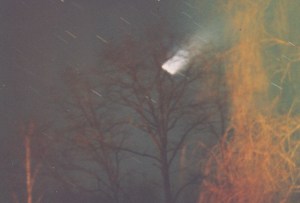
Nashotah House takes its name from the lake by which it was built. Colleagues sometimes joked about the fact that the seminary was wooded, lake-front property and implied that recreation time belied research time. It was, however, a place of intense study for the faculty. It did also offer the opportunity to experience nature. Dan drowned in a boating accident on Upper Nashotah Lake this past week. The image of that lake is etched forever in my mind. The night before I learned of my colleague’s death I was reflecting how I stood on the shore of that very lake late one night to photograph comet Hale-Bopp burning in the western sky. I had been reading about comets and that night by the lake stands out in my mind as a numinous moment. The lake, it seemed, had always been there.

After I left Nashotah House I let my colleagues fall into the safe mental compartments of memories. A few of my students kept in touch, but in general I heard from my colleagues only very rarely. Some may assume I spend more time on Facebook than I do. There are painful memories associated with the seminary. Now one more painful memory is added to the rest. I ate with Dan and his wife. Talked with him. Attended chapel with him. We had that distance that always separates clergy from laity, but I considered him a man that could be trusted. A priest with integrity. We went through quite a lot together in that small community on the lake. The death of a colleague comes with a guilt for not having kept in touch. A sadness for an opportunity missed. A life of kindness extinguished is a shocking grief.


Small Wonder

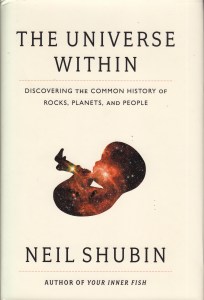
Nothing makes me feel small like thinking about the universe does. Never a large individual anyway, thinking how this apartment encompasses me and it is dwarfed by the small town in which I reside, it’s only a matter of moments before I become a mere microscope slide. And that’s before I even reach the level of just our planet. I’m sure Neil Shubin didn’t mean to make me feel bad when he wrote The Universe Within: Discovering the Common History of Rocks, Planets, and People. In fact, I’m pretty sure that he intended it to be a book that makes the reader feel connected to life, past and present, as well as to the stars that long ago spewed out the elements that have made such life possible. This is a big picture book. From the perspective of a paleontologist the very rocks that entomb the fossils live. The stream of particles is unbroken from the Big Bang to our little corner of the Orion Spur.

The great orthodoxies of science, however, require faith. No matter how the math works, it seems impossible to the rational mind the the entire universe could fit inside the space of the following period. Then, for some reason not yet known, bursts out to infinite but expanding size. Shubin brings many concepts together here—the effects of Jupiter on bringing earth into the Goldilocks Zone, the impact light and dark have on our bodies, whence the dinosaurs might’ve gone—and weaves a tether through it all that ends up in the hand of humanity. Evolved beings we are, but evolved from stardust as well as primordial soup. And then there’s the fact that the earth itself, as is inevitable, is slowing down. Days are growing longer yet we don’t get any more done. And we have maybe a billion years left before the sun goes Trump on us.

There is a strange comfort in being connected to all of this. And also a sense of shame as well. We are, as far as the fossil record reveals, the only species to initiate a mass extinction single-handedly. We have this whole planet and we want even more. It comes as no surprise that religious language crops up now and again in a treatment like this. After all, words divested of such concepts can take us only so far. The Universe Within is a book with a universal perspective, placing us squarely somewhere within a context that we simply can’t comprehend. And yet, reading it somehow leaves me feeling small.


Doomsday, Again?

It’s hard to keep a good apocalypse down. Ever since Jesus of Nazareth did his best Arnold Schwarzenegger impression of “I’ll be back” some of his followers have obsessed when just when that will be. Sorry for the late notice, but the current prediction is for tomorrow. If you’ve got any weekend plans, you might want to rethink them. I know traffic in Jersey is already bad enough without white horses breaking through the clouds. An article my wife promptly sent me from NPR, “Is The Apocalypse Coming? No, It Isn’t!” by Marcelo Gleiser, addresses the documentary The Sign. No doubt about it, there’s some impressive astronomical gyrations here, but planets moving through constellations do not an apocalypse make. As Gleiser points out, the real question is why people believe such predictions so passionately.

Larry Norman’s song “I Wish We’d All Been Ready” captures the mood nicely. Growing up in a tradition that believed, as only literalists can, that this world is the center of the cosmos, Norman’s song haunted my teenage years. These were the heady days of Hal Lindsey and a very hot Cold War. I had to register for the draft. There was unrest in the Middle East. Sonny and Cher had split up. The signs were aligned, it seemed. As they had been nearly every year since about 30 CE. Paul of Tarsus was waiting. And John of Patmos. And Timothy LaHaye. True believers all. Conviction begets conviction. Seeing another fully convinced is a powerful incentive.

Even now, if I’m honest, I shudder a little when I hear such predictions. What if, by some odd chance, they are right? Raised in that tradition, it’s nearly impossible to jettison that private fear. Rationally I know that clever people can make all kinds of connections that have nothing to do with the Bible. I know that John’s Revelation isn’t about the end of the world. I know that the views of Paul were bound by the developments of his age. I know the Rapture was invented in the nineteenth century (CE). Still, the chill slithers through me when I consider how it felt as an uncertain teen on the brink of Armageddon. I could envision it clearly. Some who were utterly sure swayed me. Specific dates and times weren’t biblical, but the wait for any moment now was even more terrifying. Tomorrow will begin and end just as any other day on planet earth. And another apocalypse will enter the planning stages, coming soon to a universe near you.


Self-Conscious

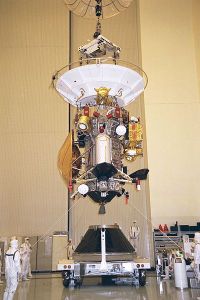
Cassini is no more. The Saturn-bound satellite was launched in 1997 when the earth was a very different place. As it’s four-year sell-by date passed, the little robot who could kept on snapping photos around the ringed giant and its moons. Remote controlled from three planets and an asteroid belt away, it was decided that the explorer had to be destroyed in Saturn’s thick atmosphere rather than contaminate one of the moons where life might someday be found. Yesterday the probe burned up on its way through Saturn’s perpetual cloud bank. This has led to many emotional tributes, even among scientists who believe Cassini was just a machine. It also shows us how little we really know about consciousness.

During the two decades that Cassini was in space, we’ve learned quite a bit about animal consciousness here on our own planet. Many are now finally becoming convinced that we share this strange quality we can’t even define with other biological entities. Well, at least the “higher” kind. And we can’t help but think that maybe our more intelligent machines possess it too. We treat them as if they’re alive and willful. That could be a case of our own consciousness projecting itself onto inanimate matter—that’s something consciousness is pretty good at too—but since we lack the ability to measure consciousness, we can’t know if it’s there or not. To hear the astronomers talk, we’re going to miss Cassini, a machine that outperformed expectations. Ironically, once we get machines off the earth they tend to do that, even without oil changes every 5000 miles.

Down here on earth we complicate consciousness with cash. Devising an elaborate economic system to demonstrate who can buy power in the White House and who can’t, we want to know who is more important than whom. It’s a simple metric. Bank accounts tell the truth, no matter what the level of consciousness—or even of sentience—that the account holder may have. And then we wonder why a nation that can send a satellite three planets away can’t even figure out that all races should be treated equally and fairly. Cassini was a collaborative effort. Different races, genders, and economic classes contributed to its remarkable voyage. Eyes around the country were moistened when its last image was projected to earth. We wisely decided to immolate our satellite before we could contaminate another world. Meanwhile on our own planet we’re barely conscious of what we continue to do.


Eclipse 2017

It’s the day after the eclipse. Perhaps it’s because of the internet, but the excitement about this somewhat common event reached a fever pitch. Maybe it was because we all wanted something other than Donald Trump to talk about. Maybe it was because we hoped that the eclipse might have brought about some profound change. In the days before science was a thing, eclipses were divine events. The sky doesn’t darken at noon. It is an uncanny, an eerie thing. The last eclipse—alas, only partial—that I experienced was at Nashotah House. My wife was still a student in Illinois at the time, and without her to remind me, I went about my classes as usual. When I stepped outside the eclipse was already in progress. Nashotah’s quite rural, but the birds and insects were silent. The light was weird. The shadows of the leaves were scooped crescents on the ground. I could understand why pre-scientific people trembled.

These days we know there’s nothing more to life than scientific formulas and a bit of sloppy chemistry. So why do we bother getting bothered about eclipses? The fact is they remain religious in our minds. This is nature acting in a way not normal. Apocalypses generally include the sky growing dark. One of the plagues of Egypt was darkness. In the ancient mind the sun did not so much cause light (the moon could give light too) but it lived in the realm of light. If something blocked the sun that was one thing. If something invaded the realm of light, that was another. An eclipse was such an invasion. Even as monotheism began to take hold, people thought of the sun as a deity. It, after all, directs our lives.

In New York City I wasn’t sure what to expect. I went to street level with a couple of colleagues about 10 minutes before maximum coverage (about 71%) began. Knots of people stood on the corners on the eastern side of Madison Avenue—those who build skyscrapers don’t think of eclipse viewing on the streets below. What struck me most, however, was a kind of peace and awe. Strangers sharing various viewing devices with each other and looking up expectantly. Clouds had begun to move in, and I found myself talking to complete strangers, sharing out the eclipse-viewing glasses my wife had given me. We were participating in a moment of transcendence. Such moments are rare today. No, an eclipse is more than simply the moon moving in front of the sun. It is a human event as well. And one which, in the absence of the sun, brings out the best in us.


New Religious—Bang!

Religion, no matter what the skeptics say, gives us something to believe in. Even those who claim no religion believe in their non-religion. We can’t escape belief. It’s no surprise, then, that new religions constantly emerge. As people find new things—or events—meaningful, and they come together around the phenomenon or episode, a religion eventually emerges. Take the example of the Chelyabinsk meteorite. On February 15, 2013 a resounding explosion rocked Chelyabinsk. What was likely a former asteroid had headed for Russia (which they seem to prefer almost as much as Donald Trump) and became a meteoroid (the name for meteors while they’re still in outer space). Once it entered the earth’s atmosphere and became a meteor proper, it superheated and exploded in the sky—a phenomenon known as a bolide. For those of us who’ve experience them, bolides are unforgettable. Once the pieces of the exploded meteor hit the earth they became meteorites.

Image credit: NASA/ESA, public domain

Meteors are an everyday occurrence. Any time you see a shooting star—which you can do any clear night—you’ve seen one. Large, exploding meteors are rare. Shortly after the Chelyabinsk meteorite fell, according to Astro Bob, the Church of the Chelyabinsk Meteorite formed. This group did not wish for the main body of the surviving meteorite to be raised from Lake Chebarkul, where it fell. Their protests became religious as they chanted, prayed, and sang. A new, if temporary, religion was born. Astro Bob goes on to say that religions and meteorites are no strangers. Indeed, up until the Middle Ages and even a little beyond, it was believed that rocks could not fall from the sky. A meteorite, then, was a sign from either God or, well, you know who. When the impossible happens religions are quick to follow. Astro Bob’s story was written in 2013, so he doesn’t declare the fate of the Church. The meteorite was raised from the bottom of the lake in October of that year.

New Year’s Day in 1987, while I was home from seminary on break, putting a puzzle together with my brother, our house shook. A loud boom accompanied the shock wave. We ran outside to find the neighbors staring at the sky, and a few casting a wary glance toward the petroleum refinery in town. The news later that day told us a bolide had exploded nowhere very near us. We were within the shock wave, and those fortunate enough to be outside that January saw a flaming meteor in the daytime sky. I remember it well thirty years later. I already had a religion at the time (Methodism, starting to tend toward Episcopalianism) so my plate was already full. It was nevertheless a dramatic event, and when your world is literally shaken, you will naturally look for something to believe.


Sky Blue

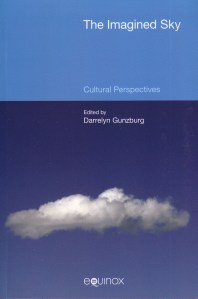
How do you capture a true and abiding fascination in words? That’s a thought that comes to me once in a while when I think about the sky. It’s so hard to define, yet it’s always there. To quote myself: “To understand the weather is somehow to glimpse the divine” (used with permission). I waited for The Imagined Sky: Cultural Perspectives, edited by Darrelyn Gunzburg, for years. I think I first saw an ad for the book two years in advance of publication (yes, scholarly presses can do stuff like that). I kept stopping by the Equinox booth at AAR/SBL to see if it was available. It was the same kind of drive that led me to write Weathering the Psalms. That hope of grasping the intangible. To hold the sky itself. One of my early creative writing club stories was about a boy who wanted the sky. I wanted this book.

Like all books of essays from different authors, it’s a mix of fruits and nuts. There’s some very interesting pieces in here while others seem to have been made to fit only with some difficulty. Still, the sky. I admit to being somewhat disappointed as I read along. This wasn’t for research—my book on the topic is already done—it was for pure intellectual curiosity, what passes for pleasure among academics. Many of the pieces were mired down in detail. Written bout the sky, they refused to soar. Then I came to Tim Ingold’s essay. Here’s what I’d been looking for. Someone who knew the sky could only be approached in terms that contradict themselves at every turn. There is something to say about the daytime sky. It has to do with the nature of light. And of the sky seeing us.

The sky, by definition, is larger than this rocky substrate we call home. It encompasses everything above us. I work in a cubicle with no access to outside windows. I wilt daily like a plant deprived of sun. (Although the wonderful article on light pollution by Tyler Nordgren gave me pause over even that.) I need to see the sky. When clouds block my view, my outlook begins to suffer. It’s that ethereal cerulean I crave. Without it I am but a troglodyte eking out a minimal survival on toadstools and lichen. The sky is our orientation. It is our timepiece. It is eternal. Of the things we do that are evil, polluting the sky is one of the most unforgivable. The key may be in the word “imagined,” but if we could only understand the sky we will have found true religion. They’re called “the heavens” for a reason.


All There Is To Know

I’m sorry, I didn’t mean to be rude but I just had to laugh. A friend sent me an article from Science Alert titled “A Physicist Just Explained Why the Large Hadron Collider Disproves the Existence of Ghosts.” Intrigued, I read, “there’s no room in the Standard Model of Physics for a substance or medium that can carry on our information after death, and yet go undetected in the Large Hadron Collider.” One of the reasons, I believe, science has trouble among hoi polloi is such arrogant statements as this. I don’t know about ghosts, and for a very good reason. There is no experimental way to test for that which doesn’t exist in the material world. The LHC may tell us all we can know about the world that we perceive (although I doubt it) but it can’t tell us about that for which there is no measure (e.g., consciousness). I don’t mean to get all complex here, but let’s stop and think about this for a moment.

What we know of the universe is what we can perceive and extrapolate from that perception by reason. We, however, don’t perceive everything. Our five senses evolved for one purpose and one purpose only—to survive in this particular environment. That’s a trait, hate to admit it as much as we might, that we share with other animals. It helps to be able to see, hear, touch, taste, and smell things clearly. These traits give us valuable information about the world around us—is that plant poisonous? Is this heat going to kill me? Should I avoid approaching that large, angry-looking bear? Things like that. What our senses don’t tell us is the aspects we didn’t evolve to perceive. We understand everything about nothing. Put another way there is nothing that we understand completely. Entire books can be written about the concept of zero and that’s just an abstract. We only experience a small piece of this universe.

That’s the problem with being in the backwater of the galaxy. I grew up in a backwater so I know what I’m talking about. Things might be different if we lived near the galactic hub, where beings with different senses may well exist. We know, for example, that even on our planet some animals perceive magnetic fields. Who knows what kinds of abilities might have evolved on worlds that posed different challenges to survival than our own? Who are we to say that here in our basement on earth we have a machine that can uncover every possible permutation of anything in the known universe? I don’t know about ghosts, but, I suspect, they’re laughing too.


The New Neighbors

Apartment dwellers often ponder new neighbors. If anything gives the lie to being in control of your own destiny, renting your domicile does. Still using the old, aristocratic terms landlord or landlady, we know that we are under someone else’s authority. “As long as you’re under my roof,” my bully of a step-father liked to huff, “you’ll obey my rules.” When you rent, you can’t choose your neighbors. Those who own the property have final say. If they play the stereo too loud (“game” is probably the modern equivalent, but I was born before Pong even came alone) and won’t listen to your plea for a more monastic setting, you throw yourself on the mercy of your lord or lady. We got new neighbors this week. Not just us, but the whole galaxy. Seven new earth-like planets—surely ruled by Trump-like dictators—have been discovered. Let’s hope they’re early to bed, early to rise types.

During the Bush administration I often fantasized about the aliens landing on the White House lawn. I thought, with a president so obviously lacking intelligence, what would our new neighbors think of us? Would they complain to the landlord? You’d think that after that long trip across cold, vast interstellar space they’d maybe have the right to expect to find the brightest and the best in charge, right? Mission accomplished. The sign says so right there. Or to put it in a modern key, “Earth first, Earth first.” If they’ve got their intergalactic television on, I hope it’s switched to a different channel.

15207890820_d855b341e3_z

Contact, the novel by Carl Sagan, suggested the first contact from the aliens would be of Adolf Hitler. Among the first poisoned radiation this planet flung off into space was the fascist propaganda of 1930s Germany. Earthlings, not yet tempered by the Trump brand, were shocked. Surely this is a sign of hostility! Unless, of course, you control both the legislative and executive branches. Then you can just decide not to show up at the town hall and tell everyone you’ve got more important things to do. So, what will our new neighbors think? Do they just want the bodies of their compatriots from Roswell back, or is it a more serious discussion to be held behind closed doors? After all, African slaves were merely chattels in a negotiation between a more powerful culture and unhuman indigenous dullards with nothing better to do. On the spaceship back to their extraterrestrial slave mines, I do hope they have the common decency to keep the music down to a reasonable level.


Hidden History

the_official_poster_for_the_film_hidden_figures_2016

History involves perspective. We sometimes forget that. I was alive when human beings first reached the moon, so maybe I’m a bit blasé about what a great technological accomplishment that was. Down here on earth we were still having trouble with the human rights thing—still are, incredibly. Working in my own silo I hadn’t heard of Hidden Figures and wouldn’t have gone to see it if my wife hadn’t suggested it. It’s hard to be reminded of the world into which I was born and how terribly backward it was. For all my conservative upbringing we were never racists. Of the two African American guys I remember attending my elementary school, I was proud to call both of them friends. I could see no reason not to think of them as friends. We lived in the same town and had the same basic needs. I had no idea the struggles they really faced.

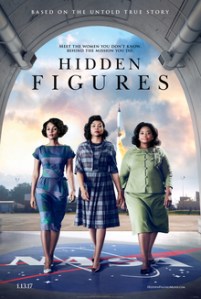
Although offering social commentary, gently coating it with humor, Hidden Figures follows the story of three mathematicians who made America’s participation in the space race possible. Moreover, they were all women. African American women. Brilliant, but unequal under the law. I was glad for the darkened theater as I couldn’t keep my eyes dry thinking of the terrible backward step we’ve taken since November. This nation has never been fair to African Americans and police statistics bear that out. Given equal opportunity, I can’t help but think of what me might accomplish. How this nation could support a bigot for the highest office in the land I can’t compute. It sets the clock back before I was born. We wouldn’t be where we are not without shining examples of humanity like Barack Obama.

We are fighting for the future. Over the past few weeks every few days I’ve been attending marches, rallies, and political meetings. I’ve been signing petitions until my clicking finger is numb. I wish there were more that I could do. The blatant racist, sexist maneuvers by Mitch McConnell should stand out as a mark of shame on all who claim the name American. Silencing Elizabeth Warren from reading a letter by Coretta Scott King regarding Jeff Sessions. When our children’s children look back on this age they will rightly wonder how people who’ve been privileged all their lives could turn their backs on progress in the name of racial insecurity. And how Mr. McConnell could’ve had the appallingly bad taste to do so during Black History Month. History involves perspective.


Somewhere out There

If last month’s election taught us anything it’s that nobody really knows anything. For many years now I’ve been saying that the sign of an educated person is s/he admits how little s/he knows. Socrates may have beat me to that idea, but there are still people whose intellect appears so great that we should pay attention. To my mind, such as it is, Stephen Hawking is one of those people. I don’t understand his formulas, but some of the concepts I can grasp. So when Prof. Hawking says we have approximately 1000 years before we make our planet unfit for human life, I think we should take notice. In just a decade we’ve gone from a Wall-e White House to a Dumb and Dumber one, and old mother earth is due to take a beating. Hawking, according to a story in The Washington Post, advises us to look for another planet to colonize.

 Photo Credit: (NASA/Bill Ingalls)

Photo Credit: (NASA/Bill Ingalls)

Colonization seldom ends well. I wonder how the rest of the universe feels about us moving into the neighborhood. We dump our waste into anything pristine enough to carry it away so that people can make some of their number wealthy so that they can feel better about themselves. We can’t go one year without a war somewhere in our world and we kill one another just because we look different. We can’t even elect a president who’s smarter than any random undergraduate. Not exactly the kind of invasive species you want living next door. Any system can be gamed—capitalism most of all—and if it were up to me I’d prefer to have thoughtful neighbors. Perhaps the universe is politely saying to Dr. Hawking, “not in my backyard.”

What I find truly amazing here is that religion gave us the entitlement. Believing that the gods are like us, or that one deity made us in his white, male image, we’ve figured out this world’s ours to destroy. Just like entitled kids with too many toys. Daddy can always buy you another. So now we’re in the market for a new planet. One that’s not too hostile, but easily exploitable. A capitalist planet, but one that doesn’t mind a bit of help from former communists. You see, once we’ve figured out how to exploit another planet, there’ll be no stopping us. I have great admiration for Stephen Hawking. It’s just this time I think that we need to set our own house in order before we start inviting ourselves to somebody else’s home.


Hoping for Light

Although the stores have been playing Christmas music for some weeks now, it is technically Advent. I think we could all use a little Advent as days grow shorter and dark nights increase their influence over our lives. As a nation we’ve been brutalized by a minority candidate and this has become a bleak December that Poe would certainly have understood. The spinning mind occasionally falls upon George W. Bush who somehow has begun to look normal. The president who told us when America was under attack we should shop. After all, that’s what people do in December, right? We buy things to make ourselves feel better. It sure is dark outside most of the time. Advent is all about candles and light and hope.

img_2638

One of the more endearing aspects of human beings is our ability to see the positive amid negativity. Darkness is the natural state of the universe. Stars are tiny points of light in an endless cold and dark universe. Most of what’s out there has no light beyond those willing to burn bright enough for others to see. We, however, see the light of daytime as normative, slumbering away the hours of darkness. We thrive in light and the light has to be augmented by candles as we struggle against the natural darkness that would, if it could, encompass the universe. Darkness, despite its emptiness, is endlessly hungry. Advent reminds us that we must be light if we want anyone to see in the growing nighttime.

We miss this important dynamic if we leap straight from Halloween to Christmas, pausing briefly for Thanksgiving. The church has made its fair share of mistakes, but Advent wasn’t one of them. Experts tell us Jesus wan’t born in December. Christmas isn’t really a physical birthday. It’s an ancient rite concerned with the return of light to darkened skies. A fervent appeal for our colorful lights and candles to encourage the light that we know, we believe, is out there to return to us. Scientists tell us that it’s just that the earth lolls at 23 degrees on its axis and all of this is just a balancing act. That may be so. I’ve never been off the earth to check. Down here on the ground, however, the days come only reluctantly and the nights linger longer and longer. And we can choose to see darkness as our natural state, or we can ignite a candle to encourage the light to return.


News from around the Universe

In the last couple of weeks two large-scale news items caught my attention. One describes how a newly discovered galaxy is made up of mostly dark matter. The other tells how a new fossil find in Greenland may push the origins of life on earth back to 3.7 billion years ago. If you read my blog, you know that I’m a frustrated scientist. I’ve always tried to follow the developments in the field and even considered it as a profession until I ran into the wall of mathematics. Ran into the wall, banged up the car beyond repair, and was barely able to walk away. That’s the breaks in a world where ambition and ability aren’t the same thing. So I have to take my science like baby-food, mashed and strained before it makes its way to my brain. I know I’m not alone in this—the whole field of “humanities” proves that. (Originally science (astronomy) was one of the humanities, but oh how we’ve grown!)

Into the storm

Such frightening things as mathematics aside, these are exciting stories. I’ve been looking around this galaxy quite a bit, and I can believe dark matter outweighs light matter and I’ve never even been off the earth. The story is encouraging because it shows just how much we have yet to learn. Nothing could be more exciting for an erstwhile educator. The opportunity to stretch one’s mind should never be taken lightly. At the same time as dark matter is growing, so is the age of life on earth. I have to admit that I’ve not even been to Greenland, but the idea that life began so soon after the earth formed has cosmic implications. If we were such fast starters, doesn’t that suggest that elsewhere in the universe the same may be true? Ironically, here on earth uniformitarianism is considered a foundation of science. But once you get off earth scientists are reluctant to say the same processes could have happened elsewhere. But what do I know? I’m still trying to figure out trigonometry.

Earthbound I may be. Humble humanities specialist from start to finish. Nevertheless it is an amazing time to be alive. Once we’ve figured out that human brains—products of evolution that they are—aren’t capable of ultimate comprehension, we’ll be able to bask in the light of billions and billions of suns and raise a glass with our cosmic neighbors, made of light matter or dark, and proudly say that we’ve made some real advances at last.


The Neighborhood

583px-Ptolemaicsystem-small

Let me send out a warm welcome to the neighborhood, I think. Not that I officially represent Earth—or anything for that matter. I’m just friendly, I guess. Now that astronomers have strong evidence that the nearest star to our own, Proxima Centauri, likely has a planet, it’s not premature to head over with a casserole. It’s not every day that a new solar system is discovered. We don’t know for sure that the planet’s there, but chances are pretty good. In reading about this discovery I learned that the orthodoxy has changed since I took astronomy in college. It seems now standard wisdom teaches that most stars likely have a least one planet. I can’t even count the stars—I usually start to trail off after I get to about ten—so I can’t imagine the number of potential planets out there. And where there are planets, there are gods.

Let me rephrase that. If there are billions and billions of planets it is very likely that there’s life out there. I know I’m racing ahead of the evidence here, but let me have my fun. If there’s life, there’s a chance, a glimmer of a chance at least, that given enough life we’ll find consciousness. I’ve always thought it was a touch arrogant on our part to assume we were the only ones out here. Perhaps it’s because the stakes are so, ahem, astronomically high we seem to be afraid to admit the possibility. We don’t really want to be alone in this cold, vast, universe after dark. Enter the gods. Conscious beings—even arrogant ones—have no trouble supposing that there is an even greater presence out there. I suspect this isn’t an earth-bound bias. I should hope that conscious life looks toward the stars with wonder, and even after they discover that there’s no lid on their planet they might still ponder what else might be out there.

Let’s suppose there are other creatures out there with other gods. When the meeting takes place we’ll need to have that discussion. You know the one I mean. We’ll need to ask whose deity is really real. Is it yours or is it ours? Hopefully we’ll enter into this with an open mind. I suspect it will depend on who’s in the White House, and all the other big houses, at the time. There are certainly those who claim their own almighty brooks no rivals. If it turns out that we can’t agree, I hope it doesn’t come to blows. There will always be other planets to explore, and maybe even new orthodoxies to accept. It’s an infinite universe, after all.