Mars Bars

It brings tears to my eyes. A little guy millions of miles from home. The only spark of acknowledged intelligence on the entire planet. It’s his birthday and he’s singing “Happy Birthday” to himself. It’s downright depressing. The guy, however, is the Mars rover Curiosity. It is a machine. The headline, however, jerks an emotional response from all but the coldest of individuals: “Lonely Curiosity rover sings ‘Happy Birthday’ to itself on Mars.” It’s that word “lonely.” It gets me every time. Then I stop to think about machine consciousness again. Empirical orthodoxy tells us that consciousness—which is probably just an illusion anyway—is restricted to people. Animals, we’re told, are “machines” acting out their “programing” and not really feeling anything. So robots we build and send to empty planets have no emotions, don’t feel lonely, and are not programed for sadness. Even your dog can’t be sad.

Amazing how short-sighted such advanced minds can be.

We don’t understand consciousness. We’re pretty wowed by our own technology, however, so that building robots can be brought down to the level of middle-school children. We build them, but we don’t understand them. And we may be losing part of ourselves in the process. An undergraduate I know who works in a summer camp to earn some money tells me a couple of disturbing things. Her middle-school-aged charges are having trouble with fine motor skills. They have trouble building basic balsa-wood airplanes. Some of them can’t figure out how paperclips work. One said she couldn’t write unless she had access to a computer. This camp worker’s supervisor suggested that this is typical of the “touchscreen generation.” They’re raised without the small motor skills that we’ve come to take for granted. Paperclips, it seems to me, are pretty intuitive.

Some 34 million miles away, Curiosity sits on Mars. An exile from Earth or an explorer like Henry Hudson? Or just a machine?
pia20602_sol1338_take7frontlook

Machines don’t always do what you tell them to. I attended enough high school robotics sessions to know that. Yet at the local 4-H fair the robots have a tent next to the goats, the dogs, and the chickens. We’ve come to love our devices. We give them names. They seem to have personalities. Some would claim that this blog is the mere result of programing (“consciousness”) just as surely as Curiosity’s programmed singing to itself out in the void. I’m not for turning back the clock, but it does seem to me that having more time to think about what we do might benefit us all. This constant rush to move ahead is exhausting and confusing. And now I’m sitting her wondering how to get this belated birthday card delivered all the way to Mars.
Act of Balance

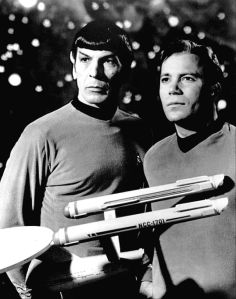
They call it the green-eyed monster. Jealousy. Under its weightier name of envy, it becomes a deadly sin. I often wonder if envy isn’t behind the debate that seems to have atheists and believers in religion talking past one another. Each seems to want, it appears to me, what the other has. Atheism has emerged in this new century as the current brand of intellectualism. Those who rely on reason alone don’t require comforting ideas such as God or salvation to get along in a world that has learnable rules and no magic. On the other hand, as an article by Barbara J. King on NPR points out, some religionists (Alister McGrath, while good for illustrative purposes, may not be the most representative choice) insist that atheists miss out on the meaning of life. Goal-oriented behavior, which we all understand, in a traditional monotheistic context is a divine mandate. We want to get to a better place either here on earth or after we die, and God has given a set of rules to follow to enable us to get there. Along the way, nature veritably drips with the dewy beauty with which God has infused the universe. Those Mr. Spocks among us miss it all, for their non-nonsense approach to reality.

Leonard_Nimoy_William_Shatner_Star_Trek_1968

It’s pretty clear, as I’ve traced it out here, that the believers envy the reputation of solid rationality readily claimed by scientists. We all would like to be able to prove we’re right. Pointing to a law of physics and declaring, “this law can never be broken” carries a satisfaction that is rare in the theological world. Still, I wonder if some atheists aren’t just a little jealous of the teleology of having a goal set by someone else. Heaven and Hell may be passé, but you have to admit that having challenging rules laid out is somewhat invigorating. Doing something because you “should” can infuse a sense of meaning into life. Some people, if they could just do what they wanted, would opt for no more than eating, sleeping, and meeting biological necessities. They sometimes claim religion gives them the motivation to do more. It can make a difference if a deity takes the initiative.

You’ll never, however, be able to prove a religious point empirically. Gravity pulls things downward as surely as sparks fly upward. And we can send a person into space to prove it’s true. No astronauts, as far as we can prove, have ever seen God in space (RIP, Edgar). Reason and emotion, religion and science, thought and action—these things need each other in order for a balanced life. Problems arise, it seems to me, if we take an extreme position. Life is complicated, and simple answers just don’t apply. Perhaps if we allowed for a bit more balance, we might all find life just a bit more satisfying.


Digging to Look up

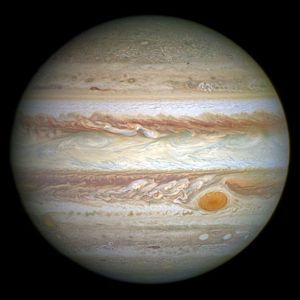
Ancient technology is a growing field of interest. A couple years back I gave a talk about ancient technology at a local Steampunk convention. The smallish audience that attended had lots of questions about how ancient people accomplished marvels such as the Antikythera Mechanism, or even the pyramids of Egypt. As new discoveries continue to show, our antique forebears had access to knowledge we have always assumed to be beyond them. An article in Gizmodo tells the story of how Matthieu Ossendrijver, an astroarchaeologist (and hey, this was simply not a job description I ever found in a college catalog, for the record!) at Humboldt University, has been studying an Akkadian clay tablet (the article doesn’t specify which one, beyond “text A”) that demonstrates that the Babylonians understood one of the principles that led to calculus. Tracking the movement of Jupiter, the Babylonian priests knew that measuring the area under a curve could provide the distance traveled by an object. This principle, in the annals of science, wasn’t discovered until about 1350, C.E. Babylonians knew it over a thousand years earlier.

Jupiter_and_its_shrunken_Great_Red_Spot

Although we marvel at the engineering of the ancients, we tend to think of them as superstitious. After all, they believed in gods and things like that. As Maddie Stone points out in her article, however, priests were also astronomers. Believing that messages from the gods existed among the stars, peoples of ancient times kept careful track of the heavens. Apart from romantic couples looking for time alone, how many people spend an evening under the stars, looking up at a universe that is so much larger than the internet that it can actually made you shudder? There is a wonder out there that can’t be replicated electronically. People knew that the sky and the gods somehow belonged together, and they knew this millennia ago.

Given that many of us hold doctorates in reading ancient, dead languages (too many, perhaps), you’d think all the clay tablets found would’ve been read, catalogued, and neatly stacked away by now. This is far from the truth. Tens of thousands of tablets were excavated back in the days before archaeology became an endangered practice in places like Iraq and Syria. Crates full of these tablets were shipped to museums and few have been transcribed, let alone translated. There is ancient knowledge stored away among the receipts and chronicles and myths of people who lived in the cradle of civilization, and now that information remains buried in museum basements because it is deemed not worth the money spent to provide jobs for those who can read them. As is often the case, however, when we are willing to listen to others, even long dead, we are amazed at what we can discover.


Imagine the World

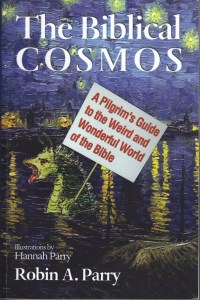
Biblical CosmosRobin A. Parry’s, The Biblical Cosmos: A Pilgrim’s Guide to the Weird and Wonderful World of the Bible is a fun trip through territory already familiar. Familiar, that is, to anyone who has studied the biblical world on its own terms. Fundamentalists, I think, would benefit from taking this guided tour seriously. The fact is, most people have no real sense of how mythology might inform a scientifically inclined world. Not that Parry will convince everyone, but the dangers of literalism are best disarmed by a believer. This little book endeavors to demonstrate just how odd a world produced the Bible we still use today.

Although the point of the book may not be what I took away from it, I would suggest that the most important aspect is that times change.  A biblical worldview, unless one is mentally able to hold two realities simultaneously in mind, is simply not possible today.  I told generations of students that the world described by the Bible does not exist.  It is a flat world, held up by pillars and with a solid bowl inverted over it for a sky.  At the same time, those who lived in the biblical world were not simpletons.  The basics of science were well understood and their engineering capacity easily bypassed that of the current writer.  It was a world based on different assumptions than ours.  The problem occurs when people who know better (i.e., anyone born since about the time of Copernicus) try to pretend that the Bible can be taken literally.  It is disingenuous to say so.  The Bible, regardless of divine status, is a document of its time.  No dinosaurs had been discovered.  The processes of geology were understood only in the most rudimentary of ways.  Stars were not millions of light years away.
 
So what are we supposed to do with this information?  Parry concludes his book by describing ways in which the biblical view of the cosmos might fit, conceptually, into a modern theology.  For many of those starting out in the academic study of the Bible such a demonstration can be quite valuable.  Those who’ve been at it a while will surely have come up with their own systems.  When books become sacred, in the minds of the believing community, the “truth” attributed to the book is the truth of that era.  As any scientist or historian will attest, truth is contingent.  We haven’t learned everything yet.  Given the limitations of the human mind, we likely never will.  We should accept our universe with a little mystery.  Humility can be a good thing, and it is more effective not having to make excuses for what will surely become outdated information sooner than we think.


Myth Making

Beautiful.  Standing outside in the pre-dawn, looking up at the current alignment of Mars, Jupiter, and Venus in the east, I am struck by their presence.  The planets, “wanderers,” were known by the ancients to be gods.  Tales were told of how they came to have their places in the sky.  For those too busy to look up, Venus alone can take your breath away.  After the sun and moon, it is the third brightest natural object in the sky that can be seen on a quotidian basis.  It has been brilliant this month, and the peoples of ancient times were fascinated by how this morning and evening star rose high only to flee before the coming of the sun.  Myths were built around it.  Venus, it is no accident, was associated with the goddess of irresistible beauty.  She still is.

DSCN6017

Trailing behind is Jupiter. The Roman avatar of Zeus, Jupiter is the king of the gods, but not the brightest.  Following Venus, it is the fourth brightest object in the sky, followed by various stars in their unchanging positions.  Jupiter seems to be chasing Venus these days.  Sometimes I see the two of them cavorting in the light of the moon.  The object most desired by the king is no object at all, but a goddess who outshines even the power of the primal deity.  And then there’s Mars.  Mars lags farther behind, never quite the master of war, at least according to Homer, that he hoped to be.  He is nevertheless the consort of Venus, for strong emotions tend to go together.

I glance at my watch and I know I should be headed to the bus stop by now, but I dash inside for the camera.  It is a vain hope that I can capture what even these eyes can plainly see.  It is a drama acting out in the celestial sphere.  Three planets in a neat line, clear as Orion’s belt, within the length of my thumb held at arm’s distance.  I can hear the bus rumbling toward the corner, and I know I’ll have to rush, but even as I power-walk to the stop, I keep glancing over my shoulder to catch a few last glimpses of a myth in the making.  Is it any wonder that we’ve lost the magic in our lives, when we can’t even take the last moments of darkness to pay tribute to the gods?


Inventing Concepts

A neologism is an invented word. Of course, it is impossible to be certain about the origins of many words, and even the many neologisms attributed to William Shakespeare may have been overheard by the bard at the local pub. Still, one of the things I sometimes dream of is inventing a word that will come into wide circulation. I think it must be easier to do in fiction than in non-fiction writing. When I first wrote my book, Weathering the Psalms, I chose what was, at the time, a neologism for the subtitle. “Meteorotheology” was a word I’d never read or heard before and, quite frankly, I’m not sure how to pronounce. Although the world-wide web existed when the book was written, scholarly resources were still few, and tentative. Amazingly, that has changed very rapidly. Now I’d be at a loss to find most basic information if I were isolated from a wifi hotspot. In any case, the web has revealed that others beat me to it when it comes to meteorotheology.

I suppose that some day, when I have free time, I might go back and see if I can trace the web history of the word. It is used commonly now to refer to God taking out wrath on people through the weather. For example, when the Supreme Court decision on the legality of gay marriage was handed down this summer, there were various websites—more popular than mine!—asking a “meteorotheological” question: when was God going to send a hurricane to punish the United States for its sin? These were, as far as I can tell, all tongue-in-cheek, but there can be no question that some people treat meteorotheology that way. It is a sign of divine wrath. My own use of the word had a wider connotation. When I was invited to present at talk at Rutgers Presbyterian Church in Manhattan a few weekends ago, I was reminded of my line in the book: “To understand the weather is somehow to glimpse the divine.”

That’s an idea I still stand by, but it is difficult to move beyond. What exactly does the weather say about beliefs in the divine? There’s plenty of room for exploring that. I know that when I walk outside to fetch the paper on a clear fall morning when the moon and stars are still out, I know that I’m experiencing a kind of minor theophany. The brilliant blue of a cloudless October sky can transport me to places unlike any other. What exactly it is, I can’t lay a finger on. That’s why I came up with the word meteorotheology. I many not have been the first person to use it. I may even be using it incorrectly. But the weather, in my experience, has many more moods than just anger. Any autumn day is enough to convince me of that.

DSCN6011


Meet the Neighbors

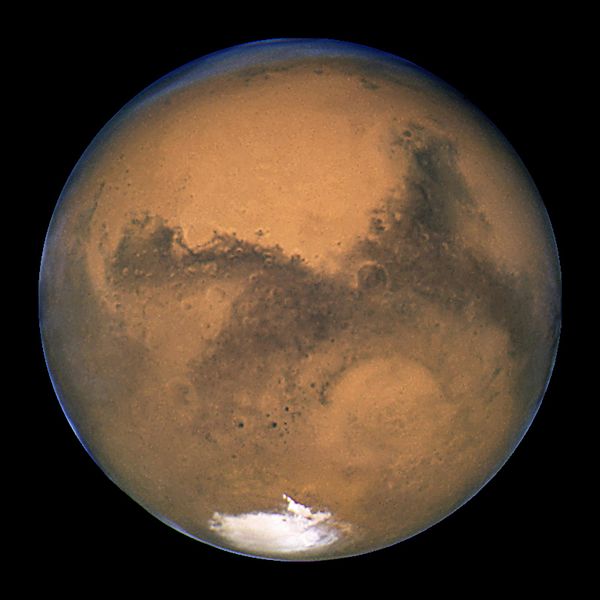
I was called “moon boy” and was otherwise taunted in ways I care not to share. As a child I openly spoke about my fascination of life in space and was ridiculed in the way children specialize in executing humility. So it was with great appreciation, but not much surprise, that I read that water had been discovered on Mars. Where there’s water, there’s likely life. I won’t say “I told you so.” Life, although I know I’m being premature—I’m a moon boy after all—has been one of the many tools in the God-of-the-gaps bag. God-of-the-gaps thinking is where a religion, in the light of scientific explanation, backs and fills by saying only God could do x, y, or z. The weather used to be a gap, but meteorology and fluid dynamics have started to explain many of the things that happen in the atmosphere. But life—life! Life was something only God could do, and it was only here on earth. Mind the gap.

Mars_23_aug_2003_hubble

No, we’ve not yet discovered life on Mars. Those who spend every hour of their waking days combing at incredible magnification the photographs coming from Mars have suggested life forms. Some of them, I must admit, have been very intriguing. The official stance, however, has been that Mars is too cold for life because, as any trekkie knows, life has to be as we know it. I would venture to say that life will be announced on Mars before too long. Astronomers and astro-biologists are a cautious lot, but I think that life is probably a lot more common than we’ve been led to believe. And I have to believe that we’re not the most intelligent species possible. How else can we explain what’s happening in the run up to the Republican Convention? E.T. may not live on Mars, but somebody else might.

Often I ponder how strange our geocentrism is. Copernicus and Galileo more or less proved that we’re not the center of the universe. Reluctantly the church let go of that fiction, but scientists, in some measure, have held onto it. We are the only planet with life. Life on our planet is the most advanced that it is anywhere. And because we know that nothing travels faster than light there’s no possibility that life elsewhere has ever found its way here. To claim otherwise is to face a scientific inquisition. Water on Mars? Yes! This is a new chapter not in the history of the universe, but in appropriate humility in the face of the unknown. Take it from the moon boy—there’s a lot more yet to be discovered.


Somewhere, Out There

With Pope Francis’s impending visit, the New York-Philadelphia corridor is abuzz with discussions of traffic and commuting disruptions. From a little further away, Irish Central is reporting that the Vatican chief astronomer has gone onto record stating that he believes in extraterrestrial life. (Despite the headline, the article doesn’t say anything about UFOs, and the astronomer, Fr. Funes, is noted as saying that he doesn’t believe extraterrestrials are flying here.) The real issue, however, is metaphysical, rather than physical. How would life elsewhere impact theology? Long ago the Vatican expressed some comfort with the idea of evolution. As early as Augustine of Hippo, thinkers have noted that reason cannot contradict truth and still be convincing. The evidence for evolution, overwhelming as it is, falls under that rubric. Life in space, at least according to orthodox science, is more a matter of mathematical certainty rather than experiential. And like any scientific idea, not all scientists agree with the astronomical odds in favor of life in space.

Funes, according to the article by Frances Mulraney, believes that aliens are not fallen races in need of salvation. The grand master plan laid out in the Bible was unique to this world only. Human beings sinned, we required divine intervention, and, as you’d expect from a Christian source, the incarnation, death, and resurrection of God’s only son. It does raise interesting questions about what the aliens might think of a chosen race. How could you not think yourself superior if you had no need of God’s special attention? One can only hope that ET isn’t the jealous sort.

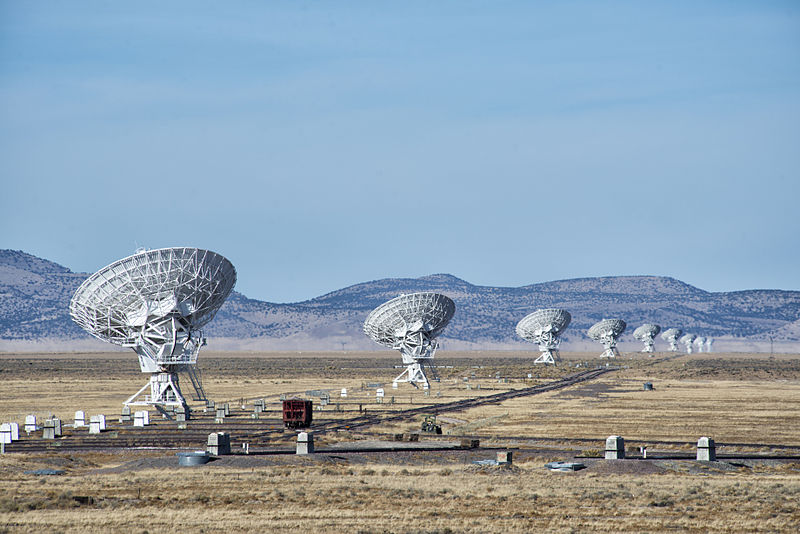
Photo credit: John Fowler, Wikimedia Commons

Photo credit: John Fowler, Wikimedia Commons

For years those who speculate about non-earth-based life have argued over how religions would handle the news that humanity isn’t alone. Would religious observance increase or decrease? It might depend on what our fellow universalists have to tell us. This, in a nutshell, is the dilemma of ancient religions. Founded when worldviews were pre-scientific, back when the earth was the center of everything, they didn’t add an infinite universe into the equation. And infinity always complicates things. Fr. Funes says the Bible isn’t a science book, and indeed, biblical scholars have long known that to be the case. It’s the contingencies outside the ordinary of two millennia ago that are most worrying to literalists. Even with all we have learned of science, we have a great deal yet to comprehend. Religion is a uniquely human response to an uncertain universe. And since ours is apparently infinite and expanding, religion may very well be something we’ll need to take with us to the stars.


Shooting Stars

One of the professions I used to consider as a child, before I had any real concept of the way the world works, was a scientist. I wasn’t sure what scientists did, beyond a broad idea of learning about the world though close observation. I was too young to see that it would likely conflict with the Fundamentalism in which I was being raised, and I suspect the same is true of many who become scientists and never stop to question the religion in which they were reared. Although religion, as a profession, won out in my case, I was, I recognize now, motivated by a deep and undying desire to know the truth. I still am, although you couldn’t tell that from my career path. In fact, rationally, it is the most important thing to me. What is truth?

Science has become extremely complex. The average citizen can’t afford the kinds of equipment needed to unravel the fabric of reality. A cyclotron wouldn’t fit in my backyard, and, besides, I rent. When I sat outside this morning looking for the Perseid meteor shower, I didn’t see a thing due to the ambient light. Even looking through a telescope, I know I don’t have the calculus to explain the things I see. Given all this, the average person requires a scientist to explain. But scientists are only human. We know that we haven’t evolved to discover the truth. Evolution favors survival, not philosophy. We also know that we don’t perceive everything. Some animals have senses that we humans lack. Still, we suppose through our use of our five—obviously the best—we can come up with an explanation of everything. The truth will be ours! Or will it? Even thinkers of such stature as Richard Dawkins and Stephen Hawking make mistakes. They’re only human. When we idolize them, we make them gods.

Back in seminary I learned about the three-legged stool. The basis of authority, in the church, rests on three legs (four if you were Methodist): Scripture, Reason, and Tradition. Methodists added Experience. There were checks and balances here. Well, Scripture seems to have fallen out of the running with the Enlightenment, and nones don’t much value Tradition. Experience is subjective, so we’re left with Reason alone. And yet, reason leads to paradoxes such as if the universe is infinite, how can it be expanding? In classical theological terms: can God make a rock so heavy he can’t lift it? Add to that the fact that some neuroscientists are now suggesting that emotion may be the seat of thinking rather than reason and you might begin to wish you had some tradition to guide you. In my experience, I’ve seen, I suppose, my fair share of shooting stars. I sat outside in the predawn hours this morning and saw nothing. Perhaps I should have had a three-legged stool upon which to sit.

Photo credit: Nerijp, Wikimedia Commons

Photo credit: Nerijp, Wikimedia Commons


One Flew Over Cthulhu’s Nest

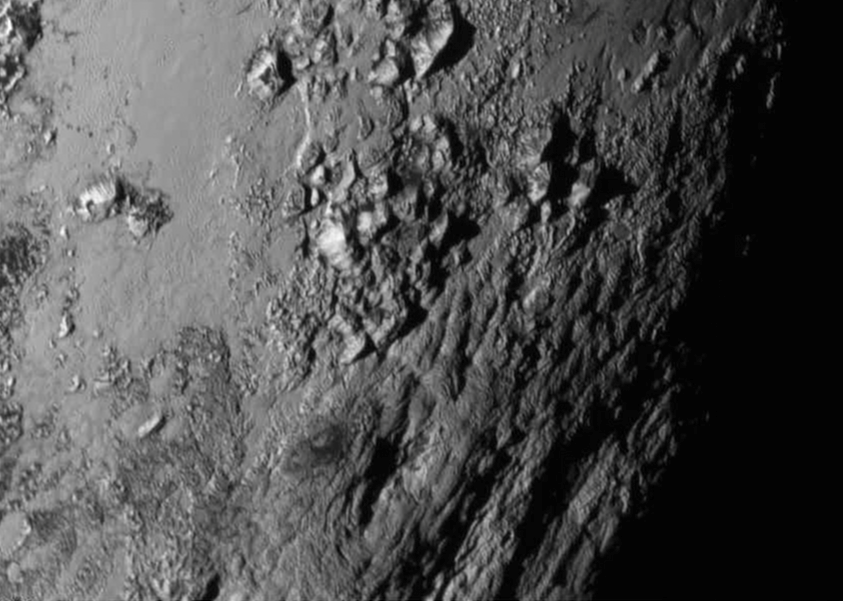
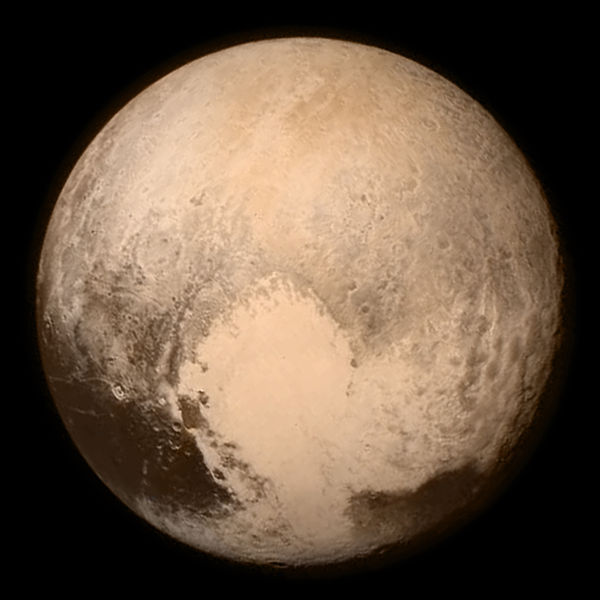
Pluto is a metaphor for the ultimate of outer limits. Just one of many largish objects in the Kuiper Belt, Pluto for a while held the status of the final planet in the solar system. With the photos from New Horizons coming in, we’re discovering a world more complex than most have imagined. It’s not just a snowball after all. With discovery, of course, comes naming. The planets are all named after Roman gods, just as our weekdays are named after Germanic deities. The features on our celestial neighbors often bear more prosaic names, such as those of astronomers or decidedly non-mythological human beings. As the rules of nomenclature go, the first to find claims the privilege to christen. What shall the new features of Pluto be called?

I was gratified when the New York Times photos displayed the informal names by the New Horizons’ team. There is a large area called “the Heart,” but lurking to the lower left there’s a feature being called “the Whale,” or, more appropriately, “Cthulhu.” The internet breathed new life into H. P. Lovecraft’s literary fame. Like most writers, he remained obscure for his entire life, finding really only one publisher who favored his work. Genre fiction has always been considered the bargain basement of literary artists, and Lovecraft wrote in the lowest part of that basement, horror. (Okay, well, romance might be further down, on purely literary grounds.) Only within the last few years has horror literature begun to be recognized by academics as worthy of serious exploration. Nevertheless, it was as the Monster Boomers grew up—or failed to—that Lovecraft reemerged. The world-wide web has become the lair of Cthulhu and of his minions.

Far out in the most remote reaches of our solar system, Cthulhu awaits. Lovecraft fans know Cthulhu is one of the Old Gods, but that he is also a being from the stars. His murky, dark presence has thrived on the underworld of the internet, and now has fired imagination on the darkest planet of an obscure solar system. What more could a writer dream? A fictional creation being suggested as the name of a planetary feature. H. P. Lovecraft lies decomposing under the loam of Providence, Rhode Island. His imagination, however, has reached as far as, at least to date, humanity can possibly go and find some kind of land beneath our feet. And that land, appropriately enough, is peopled with monsters. The Old Gods lie dead but dreaming, and they will rise again.

15-152


The Last First

Pluto_by_LORRI_and_Ralph,_13_July_2015

Pluto used to be a planet. Humans, in our unfaltering confidence, have downgraded it to a sub-planet, a dwarf planet, as if we know how big a planet ought to be. Even so, the arrival of New Horizons at the mysterious ice world has us all interested once again in the has-been wanderer. For ancients looking into the fixed stars of the night, the planets were all mysterious. They move against the backdrop of the stars that always maintain their places. When the planets came to be named, the gods suggested themselves. Our modern names, of course, reflect the Roman borrowings of Greek gods. Many of the Greek deities go back to ancient West Asia, where even Zeus has a strong counterpart in Hadad, or Baal, and Aphrodite is recognizable as an aspect of Ishtar.

Pluto, or Hades, was the ruler of the underworld. He was known to be decidedly rich since, well, if you can’t take it with you, someone has to inherit. Pluto, like the devourers of Ugaritic mythology, was forever hungry. Insatiable. This association of wealth and death gives us our word “plutocracy,” rule by the rich. As Bruce Springsteen sang, the poor want to be rich, and the rich want to be kings. “And a king ain’t satisfied til he rules everything.” Who says mythology isn’t true? As New Horizons flies by, we will learn more about the hellish world perpetually frozen so far from the sun. We wonder if perhaps we’ll learn more about ourselves by peering into the farthest rock from our star, Sol’s youngest child. Hades was the brother of Zeus, the king of the gods. Even Zeus had to dispose of the Titans to claim that title. In a scenario going back to ancient times, the younger generation—those we recognize as gods—struggled to make it to the top. As the paper describes it, Pluto is the last first—the last “planet” that is being closely examined the first time.

I grew up in a nine-planet solar system. I recall learning of Clyde Tombaugh’s discovery of Pluto, marveling at the math and patience required. Now that we’ve reached the outer fringes of our solar system, our little piece of the galaxy, we’re still uncertain how to occupy the earth. Many claim that science will vanquish religion completely, and that those who believe are hopelessly superstitious and uncritical in their thought. And yet, if we were to take a close look inside New Horizons, this technological wonder that has reached the farthest point of our sun’s gravitational influence, we would discover a small package of Clyde Tombaugh’s ashes inside. The man who discovered Pluto is the first to actually go there, although he’s been dead for nearly two decades. Even the most stoic of scientific minds must pause for a moment and appreciate the profound symbolism of this illogical gesture.


Contacting Faith

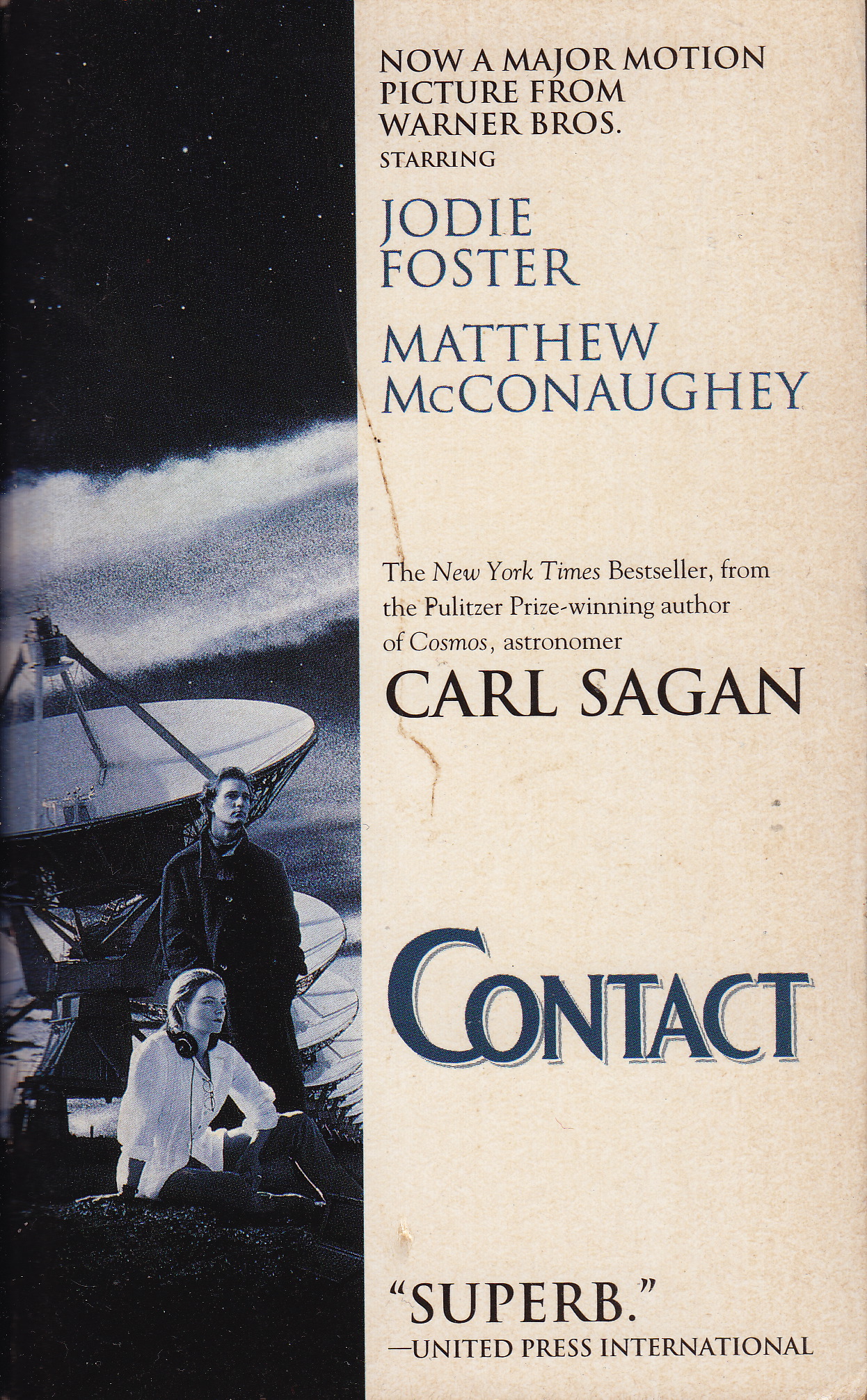
Contact_0001Sometime after the movie Contact came out, I saw it while on a flight to somewhere here or there. As with most movies on airplanes, it didn’t receive my full attention and I seem to recall not hearing a lot of the sound. Having always been intrigued by the possibility of aliens, however, I told myself I’d watch it again. Several months ago I did just that, but as Carl Sagan hoped, much of the story had become somewhat dated. I finally finished reading the novel, and this was a case of the book being better than the movie (as is frequently the case). A number of things surprised me about the story, the primary one being just how prominent religion is in the plot. In the movie some crazy preacher sabotages the first machine just as it’s nearing completion, and even though Ellie Arroway is long connected to Palmer Joss, their relationship doesn’t seem to dominate the script the way it does the book.

Almost immediately upon reading about adult Ellie, it became clear that religion was a major interest that Carl Sagan had. While the chiliasts receive many scathing comments throughout the novel, thoughtful Christian thinkers, such as Palmer, find a way of being taken seriously by Ellie, despite her own personal unbelief. Unable to understand how someone could not accept the evidence before their eyes, she wants to belittle religion but can’t when serious thinkers like Palmer remind her that they have a sophisticated worldview as well. The story represents a long struggle between alternative outlooks. While as a novel it doesn’t always flow, it pulls the reader along, partly based on the intriguing character of Sagan himself.

Carl Sagan believed in life on other planets. He was less sanguine about the possibility of either ancient astronauts or current-day visitors from space, but he kept an open mind. While he was the respected author of numerous scientific papers, other astronomers didn’t always know what to make of such a popularizer. Of course I never knew him, but I have to wonder if his true beliefs didn’t appear in his fiction rather than in his factual writing. At times I found the novel slow and plodding, and as the machine gives ambiguous results, I wondered where the rest of the story could go. Sagan profoundly brings the end back to belief. Without evidence, Ellie finds herself in the place of the religious who believe on the basis of experience and faith alone. And she finds her best friend is a clergyman. Contact, with its God-like aliens, is really a story of finding oneself a place in an infinite universe. To do that well, Sagan seems to have believed, requires both science and religion.


Old Curiosity Shop

I’m not sure how I’ve managed to live in New Jersey eight years without discovering the Old Book Shop in Morristown. Used books represent the opportunity to find things otherwise hidden away, even often from the all-seeing internet. That’s why I visit book sales at any opportunity, and haunt used bookstores. The Cranbury Bookworm, never easy to reach, was denuded of its glory by a greedy landlord and has only a few shelves remaining in a much diminished location. The Montclair Book Center takes a concerted bit of driving from here, but I always enjoy it when I go. Over the weekend, however, the Old Book Shop was my destination. Although it’s not a large space, the books on display are reasonably priced and represent intelligent collecting. I found a book or two on my wish list there, and many more that, were I in a more lucrative line of work, would have come home with me.

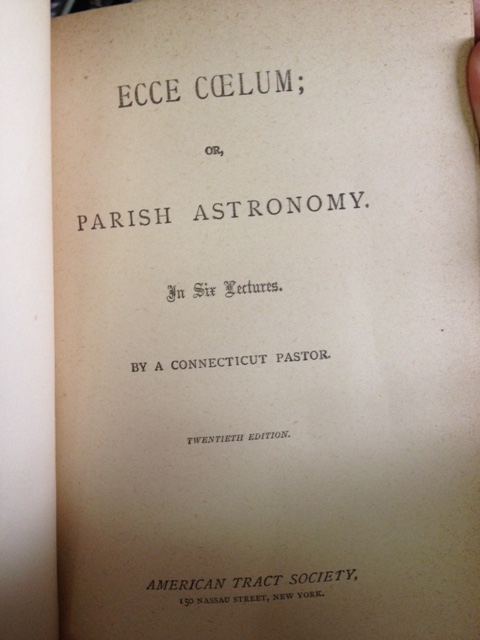
One book my daughter found in the science section, Ecce Coelum; or Parish Astronomy, by a Connecticut Pastor, was clearly from the days when science and religion got along better together. A little research revealed the author as Enoch Fitch Burr. What really caught my eye was the dedication, “lectures on astronomy in the interest of religion.” I’m not sure how I managed to leave that book behind, in retrospect. As a layman both in science in religion terms, I have had lifelong interests in both. It’s only been within the last couple of decades that I’ve noticed a growing tension between the siblings. Like all childhood fights, it is a contested matter of who started it. It does trace its roots back to Galileo and Bruno, but more recently to the Creationists and their never-ending campaigns to have their religion christened science. Back when Ecce Coelum was written, science and religion had much to learn from one another.

IMG_2200

Now they no longer speak. Those who believe all answers lie in material explanations treat religion as a mental disease. The conservative religionists call the scientists atheists, as if that were still an insult. Name calling and bad feelings, I don’t believe, will ever lead to the truth. The science of today will eventually find its way into the used bookstores of tomorrow. Religion books have long lined these shelves, reminding me of the day when she was the queen of sciences. She’s often treated as the jester these days. What scientist now declares, “behold the heavens!”? We might actually benefit to a great degree if both the empirical and the ecclesiastical would behold their world with a little more wonder. And tomorrow’s readers will puzzle at our strange hardness of heart.


Pillars of Science

I sometimes wonder if science would have the appeal that it does, if it didn’t have religion to shock and awe. I’m thinking of not only the fact that The Humanist magazine quite often has a focus on religion, but even websites, irreverently named to make the sensitive blush, frequently use it as a foil. My wife likes the site now more commonly known as “IFL Science!” Web acronyms have taught us what the second of those letters denotes, but perhaps because making the name more family friendly leads to more hits, it’s been muted a bit. In any case, the most recent post I’ve seen has to do with that marvelous Hubble image of interstellar gas and dust columns where stars are being born, know as “The Pillars of Creation.” Apart from the stunningly beautiful images, I’ve always been taken by the way that implicitly or even subliminally, concepts of deity lie behind this scene. When the image was first published, I remember staring at it in rapt fascination—here we had stolen a glimpse into the private chambers of the universe. We were seeing what, were we in the midst of, would surely prove fatal. It is like seeing, well, creation.

Eagle_nebula_pillars

Creation is enfolded in the language of myth. Reading the description of this great, gaseous cloud, we are told of the tremendous winds in space (what I had been taught was an utter vacuum) where dust is so hot (I was taught space was frigid) that it ignites into stars, like a silo fire gone wild. It’s like witnessing the moment of conception, although Caroline Reid tells us the dust will be blown away in 3 million years. Perhaps ironically, scientists are scrambling to study it before that happens. Or before that will have happened. At 7000 light-years away, it will have been gone as long ago as Sumerians first put stylus to clay before we know of it. We still have a couple million years for a good gander. And the Sumerians, the first writers of which we know, were writing stories of creation.

It is really a shame that science has, in general, such an antipathy towards myth. As scholars of biblical languages, indeed, nearly any language, know, the language of myth and poetry is especially useful when standard prose breaks down. “Wow!” is not a scientific word. Nor is “eureka!” What other response, however, can there be to seeing the act of creation with our own eyes? Meanwhile there will be those who use science to belittle the worldview of the myth maker and and thinker of religion. Our world, it is widely known, is that of superstition and ignorance. We are those who think only in shallow pools and deny the very reality that is before our eyes. That reality can be full of stunning beauty, but were we to describe it in terms empirical, we might have to keep the interjections and useless adjectives to a minimum.


A Kind of Lunacy

I can never keep track of the vernal equinox. Actually, I have the same problem with the autumnal equinox and both solstices. I think it’s because when I was growing up I thought they always came on the 21st of the month. That’s a nice, regular interval. Our months, however, are not natural. Were they to follow the moon (whence we get the word “month”) they would be about February length. The moon’s phases, however, do not keep to human time. In actuality, a month is approximately 29.53 days. Various emperors throughout history added days to their months, making our jumble of 365.25 days a mix of mostly 31-day periods, with some being 30, and February alone holding out at 28. Or 29, depending. All of which is to say, I didn’t realize spring was here until the day was mostly over. Here in the northeast it was snowing, and the celestial dome was occluded. That was a shame since it was also the day of a solar eclipse. I consoled myself by realizing that even if it had been sunny I was in the wrong location to see the eclipse, so I wasn’t missing much.

DSCN3762

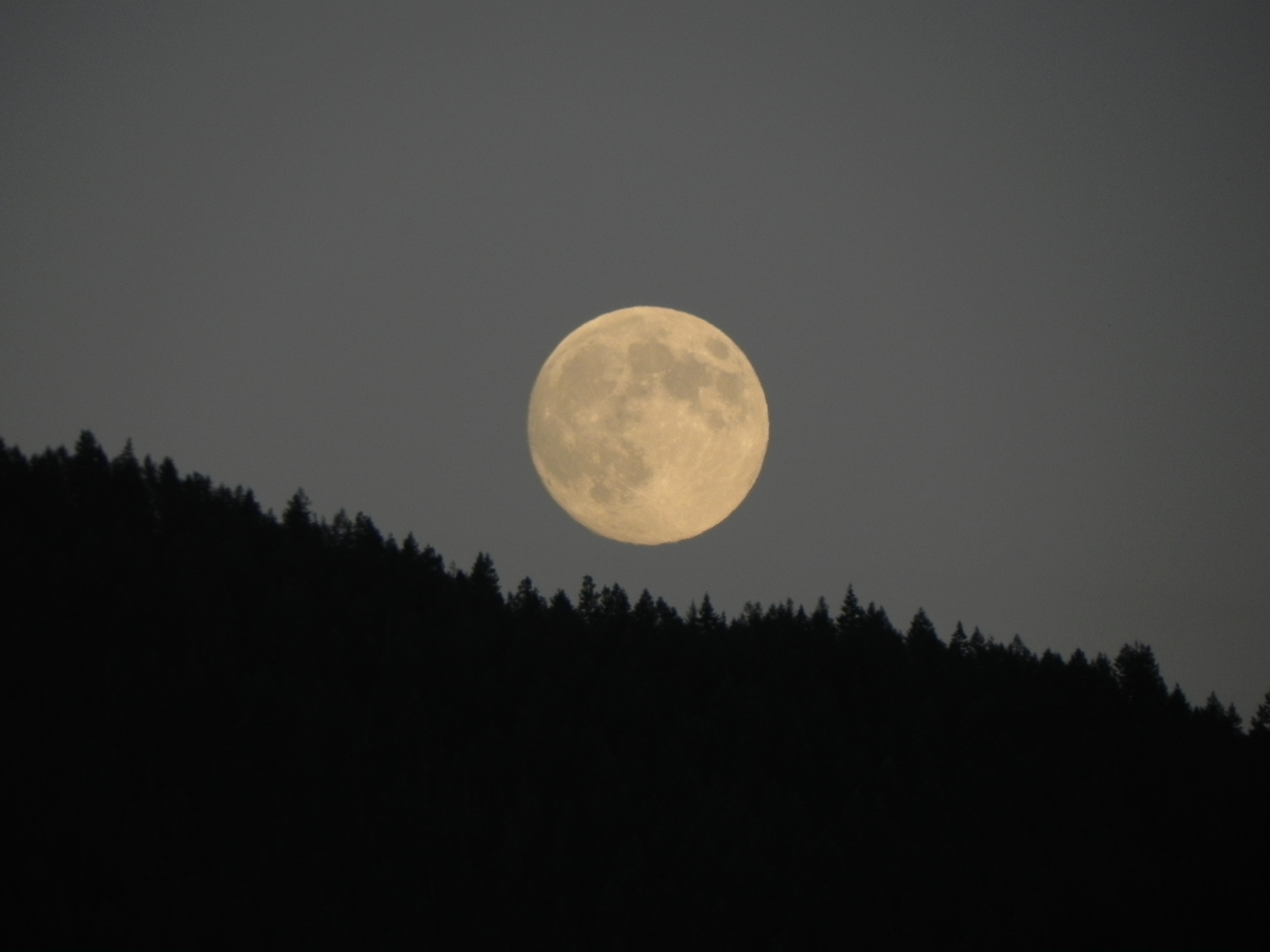
So spring subtly appeared this year. Not only was the day an eclipse day, for some, it was also a “supermoon” day. That is to say, the moon was at its closest point to earth at the time, making the eclipse a truly spectacular one, if you could see it. All of these astronomical machinations on the event that sets the date for Easter has developed a new kind of mythology. According to The Guardian, some minority of clergy have seen this event as initiating the apocalypse. Of course, eclipses are by their nature local events. The vernal equinox occurs every year, and the first Sunday following the first full moon of the equinox will be Easter. We get a supermoon (or perigee-syzygy of the Earth-Moon-Sun system) about every 14 months, so this is hardly rare. But then, the moon has always been the locus of mythology.

Ancient peoples knew the phases of the moon intimately. As the main source of non-artificial light at night, it was a boon to those without electricity, or even gaslight. Without physics to provide a mechanism, stories developed to explain the ever-changing status of our nearest neighbor. Some of those tales took on religious elements, and many religious calendars remain lunar. The vernal equinox, however, is a solar event. From now on the days will get longer until the summer solstice, a day of celebration and mourning, as we move back into the days of declining light. Each of these celestial events comes with its own religious freight, and it seems, dissenting clergy notwithstanding, that so it shall carry on for many moons to come.