Woodwork

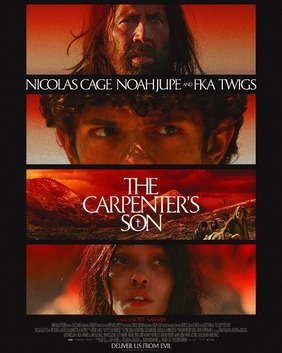
It’s not often that I get to see a new horror movie on opening day, but I managed to swing The Carpenter’s Son with a screener, courtesy of Horror Homeroom.  I’m not going to say much about the movie here, because you should go there to read my response—I’ll let you know when it appears.  But I should try to whet your appetite a bit.  Among those of us who read and write about horror and religion this was a much anticipated movie.  A horror movie about Jesus.  Such things have been done before, but this one is played straight with an interesting premise.  It’s based, loosely, on the Infancy Gospel of Thomas.  This isn’t to be confused with the Gospel of Thomas.  Early Christians, it seems, favored the doubter’s point of view.  The Infancy Gospel is the story of Jesus’ miracles between the ages of five and twelve.  Even among early Christians these accounts weren’t taken as gospel truth.  They make for an interesting movie, however.

I think about horror and religion quite a lot.  Since the late sixties the two appear together frequently and, according to many surveys, make for the scariest movies.  Religion deals with, not to sound too Tillichian, ultimate concerns.  In the human psyche you can’t get much larger than death and eternity.  These are the home turf of religion.  Of course, death can be handled in an entirely secular way, but there’s a reasons hospitals almost always have chapels in them.  Eternity may be slotted in cosmology, but what it means comes from religion.  Forever seems pretty ultimate to me.

One thing I didn’t give in my Horror Homeroom piece about The Carpenter’s Son is my thoughts as to whether it’s a good movie or not.  Did I like it?  To a certain degree, yes.  Although I’ve been impressed with Nicolas Cage in horror movies lately—he can really rise to the occasion—sometimes, as in The Wicker Man, he just becomes, well, Cagey.  This happens once in a while in The Carpenter’s Son too.  When he’s questioning Mary about where “the boy” came from, his voice gets the wheedling, whining, kind of mocking tone that doesn’t set him as his best.  Likewise, when he tries to instruct young Jesus in various ways, it seems far too modern to fit the palette of a period drama.  I watched it a couple of times to write the article and I have my doubts that I’ll watch it again.  I did think the portrayal of Satan was good, and appreciated some of the dialogue about evil.  It wasn’t my favorite horror movie in recent weeks, however, even though I saw it before it opened.


Witching Season

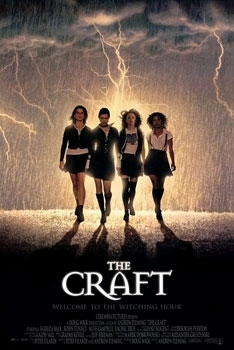
Tis the season for movies about witches.  The cult classic The Craft is another one of my old movies—I don’t think I’ve written a blog post about it before.  In any case, this autumn felt like good timing for a movie about female empowerment.  Rewatching it, it was difficult to miss how religion and horror are tied together.  Indeed, the Bible appears in the film as well.  This makes sense since the girls attend a Catholic school.  So what is this one about?  Teenage Sarah has moved to Los Angeles and is having trouble fitting in at school.  She is a “natural” witch who catches the attention of the small coven consisting of Nancy, Bonnie, and Rochelle.  They invite her to complete their coven so that they can invoke Manon, a deity larger than God.  Once they attain their powers, they begin redressing personal wrongs, but begin to hurt others as they do so.

Sarah is the daughter of a witch and her mother died in childbirth.  Sarah has difficulties with using powers to hurt others.  She was primarily interested in a love spell, but it too has consequences.  The coven experiments with even more powerful spells, giving the girls very obvious powers.  Especially Nancy.  Nancy is angry and enamored of power.  Sarah decides she wants out of the coven, but they’ve become too powerful.  Since Sarah tried to take her own life before, Nancy tries to force her to do so, only to succeed this time.  She’s backed up by Bonnie and Rochelle, both enjoying their powers.  Their attack, however, brings out the natural power of Sarah’s witch nature.  In the end, all of them lose their powers except Sarah.  

There’s a strong moral streak through the movie.  Unrestrained power leads naturally enough to abuses—something we’re living through daily in real life.  This is played off against a largely ineffectual Catholic Church.  A street preacher, who doesn’t seem very Catholic, also tries to warn Sarah but his method of using snakes is off-putting, to say the least.  He dies off pretty early in the film.  Religious structures of the monotheistic world have historically closed doors to women.  Some still do.  The power of nature encompasses both women and men, and the power that women have often frightens men.  Again, we see the fear of losing power played out.  This is comically addressed in another witch movie, The Witches of Eastwick.  Indeed, it is directly addressed there.  That’s yet another of my old movies, unless I’ve written about it here before but have lost my powers of memory.


Hungry Madness

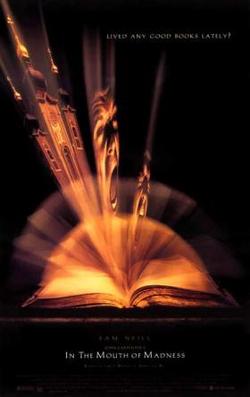
It’s been on my wishlist of movies to watch for a few years, In the Mouth of Madness.  A tribute to Lovecraftian horror, as well as a probing of insanity, it is a heady mix.  In keeping with my usual rules for movie watching, I hadn’t pre-read anything about it that would give away the plot.  Coming to it fresh, a number of things stood out.  There were some very good scenes and parts of the movie made me want to like it a lot.  It is a great movie for religion and horror analysis, and in that regard it’s much better than Prince of Darkness (despite Alice Cooper).  In fact, had I been able to see it years ago, it would’ve been included in Holy Horror.  That itself is noteworthy since two of John Carpenter’s other movies were in it: The Fog and the aforementioned Prince.  I suppose I should provide a little summary (if possible) in case you haven’t seen.

Trent is an insurance investigator, and a hardened skeptic.  A horror writer who outsells Stephen King, Sutter Cane, has gone missing and Trent’s sent to investigate.  He discovers that Cane is in a town that doesn’t exist (Hobb’s End) and that his books are not fiction.  In fact, Trent is a character in one of his novels.  When people read his latest book, In the Mouth of Madness (a title adapted from Lovecraft), they go insane and begin killing others.  The plot gets a bit busy because people are starting to transform into slimy, Lovecraftian monsters and this reality, if the book is read, or movie watched, will spread to all of humanity, leading to our extinction.  A bit too ambitious, the plot can’t hold all this weight, but it really isn’t bad.  There’s just too much going on.

The religion elements come in because Cane has holed himself up in an unholy church.  He refers to his latest novel as the “new Bible.”  “More people,” he says, “believe in my work than believe in the Bible.”  He later refers to himself as God.  I haven’t seen all of Carpenter’s films, but there seems to be a trajectory of his earliest major films being his best.  Halloween and The Thing are classics.  The Fog isn’t bad.  When he brings religion into his stories, as in The Fog, things begin to cloud over a bit.  Prince of Darkness doesn’t deliver a believable Devil.  In the Mouth of Madness doesn’t quite hang together well enough.  It’s not a bad movie, though.  It has given me some ideas for another book, if I can stay sane long enough to write it.


Who Owns It?

Who owns the Bible?  No, you can put your hands down.  I mean who owns the concept of the Bible?  This question occurred to me while thinking about the Apocrypha.  Does the Apocrypha belong or does it not?  This became a polarizing issue with the Reformation and subsequent Protestant ownership of the concept of the Bible.  The Apocrypha was mostly written by Jews, but has never been part of the Hebrew Bible.  The process of narrowing down the books to include wasn’t straightforward and since God hasn’t spoken on the topic, has never really been settled.  The books of the Apocrypha circulated with the Bible, as did a few other books.  Sometimes they were even bound together inside one cover with the standard Protestant 66 books.  Obviously I’m discussing the Christian canon here.

I’m sure you’ve known someone this has happened to, if it hasn’t happened to you personally.  This person is an actual expert on a topic.  S/he goes to a place where an unexpected discussion on their specialization breaks out but nobody asks them to speak to it.  This person then becomes offended, sometimes even speaking out, loudly, that this is their area, they have expert knowledge of it and should be consulted, at the very least.  More likely than not, their opinion should be considered definitive.  This is the image I have in my head with Protestants and the Bible.  Sure, the Catholics had it long before, but they didn’t encourage individual study.  In fact, they discouraged laity from reading it.  Only when they, the Protestants, came along did anyone really pay attention to the Bible, and, it must be admitted, they do have a point.  All the Bible study that goes on today, no matter what faith tradition (if any) would not have happened without the extreme Protestant reverence for the Good Book.

But still, there are other branches of Christianity that disagree.  There are more Catholics than any single sect of Protestants.  And a great many Orthodox Christians as well.  Some of the latter include the books of 1 Enoch and Jubilees in their Bibles.  Even so, any publisher that wishes to make inroads on selling the Bible must defer to the Protestant canon.  This is the case even though the King James Bible included the Apocrypha.  So as I ponder who it is that owns the image of the Bible, my mind keeps coming back to the same place.  Those who make the loudest, and most prolonged claim are the Protestants.  They own the Bible, in the public eye.


Preying

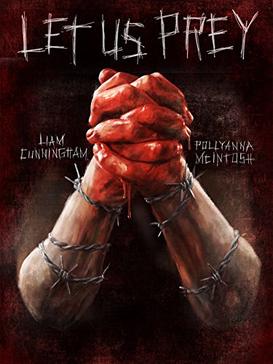
Several aspects of Let Us Prey don’t make a whole lot of sense.  The police in this small Scottish town are all corrupt, at best.  And when push comes to shove, they choose to murder one another.  For some reason the sergeant wraps himself in barbed wire as he tries to bring the wrath of God onto his subordinate officers.  The night starts out with four prisoners being locked up and only one survives.  He’s shown emerging from the sea, with ravens, at the start of the movie and he’s never really explained.  He’s there to collect the souls of sinners and he seems to be able to control other people.  The whole thing turns into a bloodbath before it’s over.  In other words, it lacks the subtlety of much Euro-horror that I’ve watched.  One thing it does have, though, is plenty of use of the Bible.

I suppose with a title like Let Us Prey such a development shouldn’t be unexpected.  Rachel is a new constable in the police station.  The story begins with the stranger, Six—the number of his jail cell—nearly being hit by a car.  Or having been hit.  The teenage driver is arrested and finds a pedophile teacher already in the lock-up.  Two other police officers, after having sex in their patrol car, find the stranger and bring him in.  The local doctor examines him but when the doctor attacks him, he’s arrested as well.  Finally, Six is locked in.  It’s discovered that the doctor had murdered his family earlier in the evening, and the reckless driver had earlier hit and killed a classmate while out driving.  The pedophile kills himself and the two other police officers murder the doctor.  Then the sergeant, who’s a serial killer, comes back to kill everyone left alive.  Six and Rachel survive and Six reveals that he’s collecting wicked souls and invites Rachel to join him.

The Bible quotations (some not accurate) all come in the context of retribution.  The sinners are to be punished.  Rachel, however, escaped a childhood abduction and seems to bear no burden of sin.  The other police—who had all decided Rachel should die—end up dead themselves.  A gritty, supernatural police story, this film suggests a larger backstory without providing a lot for viewers to go on.  The openly Christian sergeant wears a cross, drinks when he drives, and kills his homosexual lovers.  Is there perhaps a message that the movie’s trying to convey?


Name Your State

My grandfather’s name was Homer.  I’ve often wondered about that since he was from a long line of uneducated farmers.  Since he was born in Bath, New York, and since I’ve poked around upstate for genealogical purposes, I noticed that there were several place names derived from the classics, including Homer.  I suspect that’s where his name came from.  His ancestors had biblical names.  This got me to wondering about the many upstate classics town names of Utica, Syracuse, Ithaca, Corfu, Palmyra, and more.  A little (very little) research led me to Robert Harpur.  Harpur was a one-time clerk in the New York State Surveyor General’s office, and he assigned names to several towns, using classical sources.  I haven’t found a comprehensive list, but all of this makes me homesick for upstate, a place I’ve never lived.

My Homer

My mother’s paternal line had deep roots in New York state.  Nobody in the family went to college, although my grandfather did take a couple of courses at Cornell to qualify as a country teacher.  Then, many years later, my daughter moved to Ithaca.  We spent many fine weekends there and would’ve moved there had we been able to afford it.  It was a kind of homecoming.  But the connections have a way of wending their way around, as they often do.  Robert Harpur settled in Binghamton, New York.  Harpur College, now Binghamton University, State University of New York, was named after him.  Not aware of any of this, my daughter attended Binghamton University.  (There was even a picture of me on their website for a while, a photo snapped by someone as I sat in the financial aid office one parents’ weekend, begging for more money.)  I have no way of proving this, but it seems that Harpur’s interest in the classics may have led to my grandfather’s unusual Christian name.

Here’s where it gets interesting.  Homer had a sister named Helen.  Of Troy?  (There’s also a Troy, New York.)  Perhaps a family name?  My records don’t really answer that for me.  And they had a brother named Ira.  Ira is a biblical name, but it also may be a variant of the name Hera, the wife of Zeus.  This had nothing to do with my writing my dissertation on Asherah, who is perhaps the namesake of Hera, or at least it has been proposed.  I doubt my ancestors would’ve named a son after a Greek goddess (the family was of Teutonic origins).  Or maybe great-grandpa Adam was more educated than he let on and had read the Iliad?  If only I could afford to get back to Ithaca I might just go on an odyssey of my own.


Job Months

I’m sure you’ve had them too.  Job-like months when everything seems to happen all at once.  Your bank account grows anemic, making Quicken feel more like quicksand.  Our most recent started when the roof leaked yet again during heavy storms—I sure am glad climate change isn’t real!  Can you imagine how it’d be if we had extreme weather?  This house dates from the late nineteenth century and presumably, if such super-soakers had always been common, well, the roof would’ve been replaced down to the joists.  In any case, in our fourth call to the roofers over seven years, we faced yet another scary bill.  Then the sink began to leak.  Some minor repairs I can do myself, but this house was an either a DIY’s paradise or purgatory.  For us, mainly the latter.  

A couple years back there was a leak from the upstairs toilet tank.  Now, I’ve replaced the guts of a toilet more than once.  I bought the parts and went to work.  It was then that I discovered a previous owner had purchased a fancy-brand toilet for which toilet guts couldn’t be purchased (well, maybe from Japan or China, by slow boat).  You’ll probably agree that without an outhouse, a working toilet is more or less a necessity.  I watched YouTube and my wife and I went to Lowe’s and bought a new toilet.  I’m sure angels were laughing watching the two of use wrestle this metric-ton porcelain throne up the stairs (and demons laughed as we got the old one down).  Installing it looked straightforward.  When it started to leak, the plumber—we’re on a first-name basis now—came over.  He pointed out the faulty mounting pipe and asked if I’d installed it.  It was from the previous owner with high-class taste in toilets.  He turned to his companion and said, “This is why we’ll never go out of business.”

So a twenty-dollar toilet gut replacement turned into a $600 full toilet replacement.  This was in my mind when I had my head under the sink.  We seem to have stopped the water getting in from above, at least for the moment, but now it was clear that the base cabinet under the sink was going to need to be replaced as well.  I called Doug and he said he’d slot me in as quickly as he could.  I’m pretty sure Job didn’t have indoor plumbing.  He probably had to repair his own roof a time or two, though.  Only in his case, it happened just before God made a bet with Satan.  So the story goes.


Non-Saints

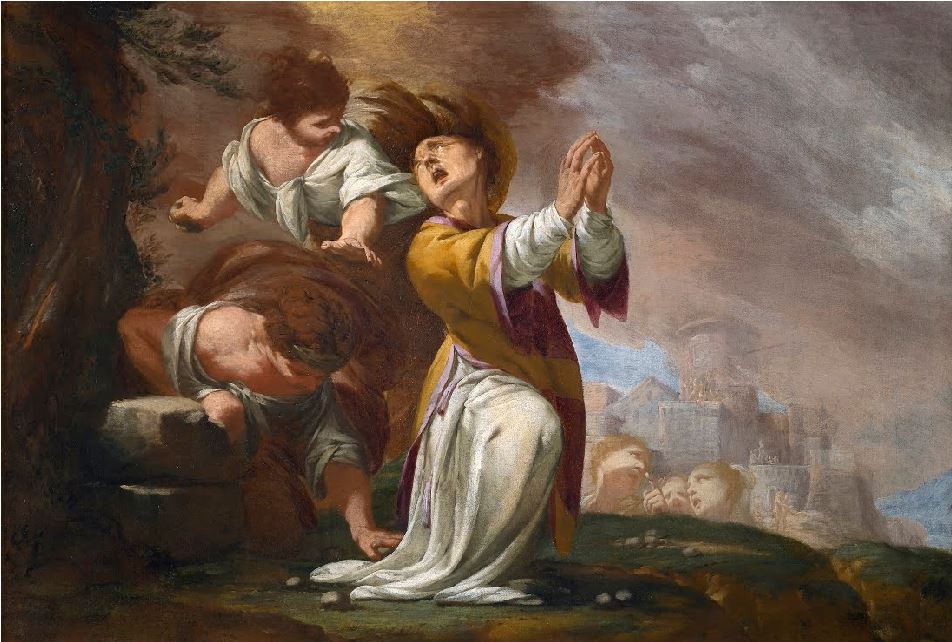
It was an epiphany.  My wife has, on more than one occasion, accused me of playing the martyr.  I know very well that I let other people step all over me.  The epiphany came when I was reading about Stephen’s martyrdom in the Acts of the Apostles (in the New Testament).  Unbidden by me, a memory—more of a distinct impression, a deeply planted feeling—arose.  I started reading the Bible at a young age.  The story of Stephen is disturbing to a child.  The thought of being stoned to death for saying what you believe is a species of horror.  The memory, or impression, was of my mother pointing out how good it would be to be like Stephen.  He is not technically my namesake, but since there were no male role models in my family, I subconsciously made the connection: Stephen the martyr, Steve the martyr.

Giovanni Battista Lucini – Martyrdom of St. Stephen, public domain. Source: https://artsandculture.google.com/asset/martyrdom-of-st-stephen/twGNCf3waLKDvA via Wikimedia Commons

It’s strange to realize this suddenly after half a century of not consciously recollecting it.  What we teach our children stays with them.  If we tell them that it’s good to die for your beliefs, well, we shouldn’t be surprised when they grow up with strong convictions.  (My brother tells me that Virgos think they’re always right and that’s why we’re stubborn; is it the stars or is it the Good Book?)  The Bible puts a positive spin on Stephen’s death.  Formal sainthood isn’t a biblical concept, but he dies forgiving his murderers.  It struck me there in the middle of a working day.  Some of my subconscious personality traits floated to the surface.

My deep desire to avoid Hell also formed my young outlook.  Although my beliefs have to be held accountable to what I’ve learned over decades of study, that fear never departs.  This too was planted in me before I had any real concept to absorb it.  When I grew old enough, the horror became academic, but nonetheless real for it.  I’d studied the history of Hell and I knew New Testament secrets.  To avoid the bad place, be like Stephen.  The dilemma is that as life goes on, we continue to learn.  Young parents don’t know as much as old ones do.  And since we have to teach our children not to run out into the street, or not eat that thing they found, we cast ourselves as The authority.  And that includes things religious.  If we live an examined life, we see shades of nuance where once there was only certainty.  And sometimes we have epiphanies.


X-Rayed

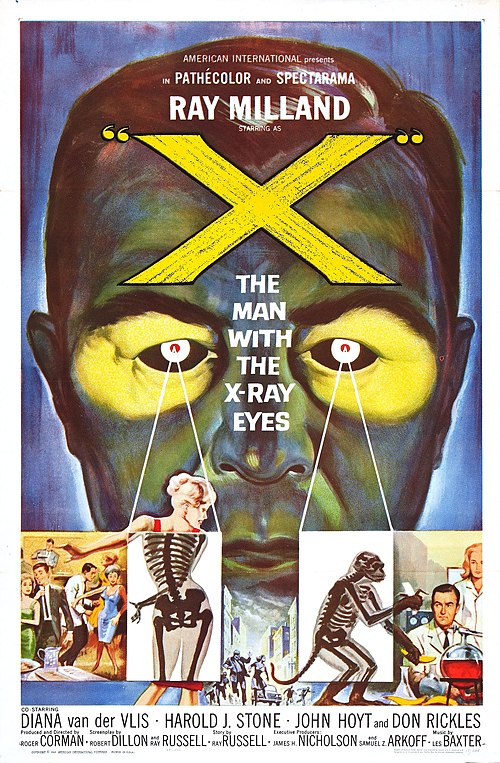
If you’re of a certain age, you’ll remember the comic book ads for x-ray specs.  That’s the idea behind a Roger Corman film that Stephen King thought one of the scariest he’d seen.  X, subtitled The Man with X-Ray Eyes, came out in 1963.  Not to be confused with the X of the modern trilogy, this X follows a Doctor Xavier who develops a formula that allows him to see inside people so that he can accurately diagnose and cure them.  This formula may affect his sanity, however, and he kills a friend who is trying to take the ability from him.  A wanted man, he finds a carnival barker who exploits his gift as a trick.  It was a bit jarring to see Don Rickles in a horror movie, but stranger things have happened.  In the midst of this exploitation, an old friend finds him and drives him to safety.

Then to Las Vegas, where his sight allows him to win unabated.  When the police are called he steals a car and increasingly sees through the fabric of the universe.  He stumbles into a road-side revival where the preacher encourages him to take Matthew 5 literally and he does so as the congregation chants “pluck it out!”  What makes this final scene so arresting, apart from qualifying it for Holy Sequel, is that before the minister tells him to mutilate himself, the doctor says he sees through the darkness to the eye that “sees us all.”  He sees God.  The minister interprets this as the Devil, confusing the most elemental entities that exist one for the other.

The movie has some lighthearted moments, some even apart from Don Rickles.  When the doctor begins to see through everybody’s clothes, it’s presented in a humorous way.  But for the most part, the film is played straight and it manages to raise some serious issues for those who think through the implications.  Our senses evolved to help us survive.  Accessing abilities beyond that is a catalyst for disaster.  Indeed, Dr. Xavier early on notes that he’s approaching godhood because of this newly won ability.  It also means that an individual might know too much.  It seems that at the end he does.  The movie is remarkable even today in several ways.  Technology has made special effects more believable, but the human side of this story remains unaltered.  A doctor wanting to help patients becomes more of a monster than a man, in some respects.  And perhaps the most remarkable aspect is that this is a serious horror film made by Roger Corman for AIP. Scary even to a young Stephen King.


End of the Story

You know that feeling?  Like when you’re driving in thick fog and you know you should stop but you’re late and you have to keep going?  There comes a moment as you’re driving when you know that it’s going to end, and probably badly.  Yet you keep on going.  Trump has me thinking of the end of the world quite a bit.  I know there are many evangelicals out there praying for it fervently while the rest of us would like a little more time on this beautiful planet.  I’d be lying if I said I didn’t understand this outlook, because I do.  I grew up with it and I’ve never forgotten the sensation it caused.  And then I pondered that we are story-telling, and story-thinking creatures.  Perhaps other animals don’t think this way, but we constantly tell ourselves stories.

A story has a beginning, a middle, and well, eventually, an end.  We all know, at some level, that we’re mortal.  Life will end, and every completed story has an end.  Why not the world?  It’s a strangely haunting idea, the world continuing on without us here to make it interesting.  Plants will grow in any soil they can find, even microscopic cracks in the pavement.  Every year it’s like one day everything is suddenly green where only the day before we could see the sky through the branches.  And animals continue their quests for food, mates, and shelter.  Some live to hide while others strut.  Each has a role to play and if you watch them closely you’ll find yourself narrating their stories.  That rabbit.  That bluejay.  That fox.  They have a beginning, middle, and end.  If they can’t tell it, we can do it for them.  It comes naturally to us.

Long ago I learned how one version of Bible interpretation came up with the end of the world as we know it.  I also learned that this was contrived, just as all interpretations are.  This particular one has landed, like a seed, in the cracks of our mind.  It grows, just like that weed in the pavement.  This story must have an end.  We can imagine it no other way.  Even when we grow up and realize that the story was only one we told to children—children old enough to handle it, of course—we still have this certainty that an end is coming.  Like driving in the fog, we just know it.  Even when we realize that in reality we should be putting on the brakes.


Who’s Counting?

While joking around recently with my daughter, I started counting to ten in Spanish.  I’ve never studied the language, but I can stumble through academic articles in it with a dictionary.  In a senior moment I forgot that “ten” was “diez.”  We had a laugh about it and got back to life.  The next day while doing my sit-ups, I was counting in German, as is my habit.  (The push-ups get counted in English, thank you.)  It struck me that “dreizehn” is where the “teens” start, and I wondered if this was because of some base-six counting.  I decided to check Spanish to see if the pattern holds.  Those of you who know Spanish know that it doesn’t.   In English, which follows German, our teens begin at “thirt” (third).  

Numbers have always fascinated me.  Math not so much.  While I find the base-ten system natural, there is something to be said for base-six.  I’m not sure if that’s where German “zwölfe” comes from, but it does give us our “twelve.”  But those teens are always difficult, aren’t they?  In human life we hit sexual maturity with all of its complications.  Do we project those onto our numbers?  Do other animals do the same?  We now know that some animals have at least the concept of absolute numbers down.  Some birds know exactly how many eggs are in their nests, and bees know what “zero” means.  Their lives tend to be shorter than ours.  Do their ideas of numbers reflect that?

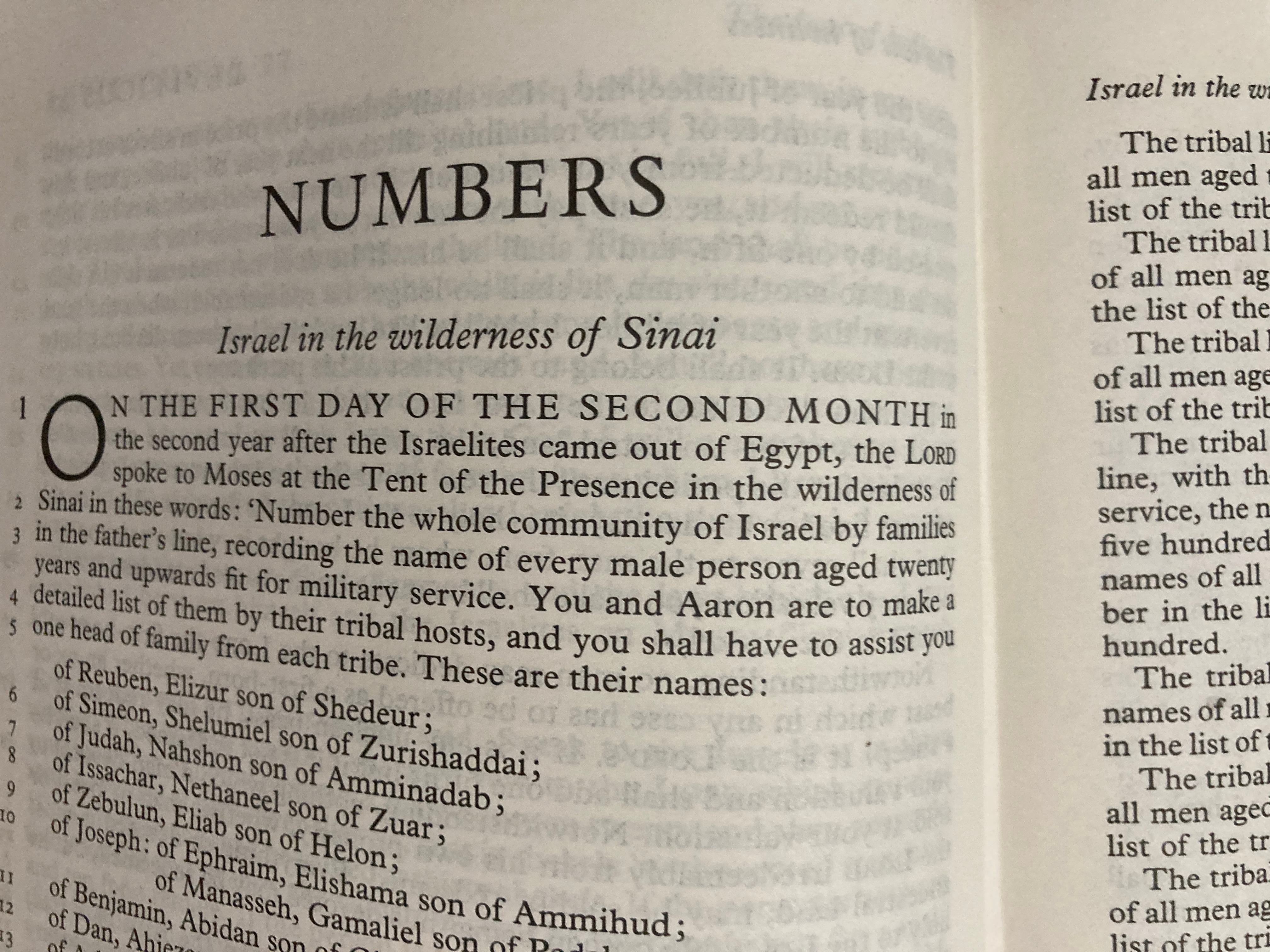
As human beings we know that that good old base-ten number 100 is kind of a life goal.  We know that 100 is “old age,” but we know that it isn’t exactly unusual for a person to live that long.  Of course “ninety” is compatible with either base-six or base-ten, and is a more reasonable goal.  Numbers are used for marking.  They’re so basic to our everyday life that, unless you’re a mathematician, accountant, or scientist, we hardly think about them at all.  Civilization began, however, with gods and numbers.  Kings wanted to know how many people they controlled (some things never change).  In the Bible God punishes David for trying to find out.  There’s even a book called Numbers.  The Mesopotamians used a base-six system that gave us the 360-degree circle.  We still use it even though a 1000-degree circle would give us much greater precision.  I could muse about numbers and counting systems all day, but it’s time to go do some sit-ups, in German.


Cat Tales

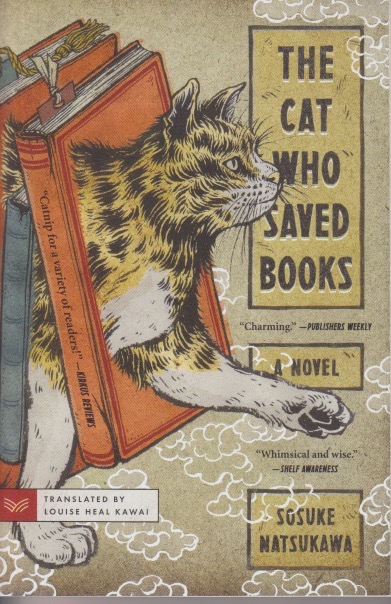
Sometimes I go into an independent bookstore and just look what’s on the shelf.  Often this ends up being an attempt to find a book that isn’t monstrous in length.  Much of what’s currently on offer is long, but I grew up reading 128-page paperbacks (not great literature, granted) that set my expectations.  Now, I do read long books.  Since books and movies are staple topics for discussion on this blog, however, I need to keep things moving in both kinds.  All of which is to say that I picked up Sosuke Natsukawa’s The Cat Who Saved Books because it was short.  This particular bookstore was one where I know and trust the owner’s taste.  I’d bought Haruki Murakami’s works there before.  I really didn’t know what I was getting into this time, though.  I like cats.  I like short books.  I like the Japanese authors I’ve read.  So.

The BISAC code on the back of this one didn’t state that it was fantasy.  I like some fantasy fiction, but my tolerance is limited.  The fault is mine entirely; I own that.  I enjoy speculative fiction and a book with a talking cat felt like it might fit that niche.  I thought the story of The Cat Who Saved Books was good, and the message was sound.  But it felt a bit trite.  The previous Japanese author I’d read was Murakami, and he’s pretty incredible.  I can give you a taste of this book, however, and raise a question about it.  A teenage boy is left taking care of his grandfather’s bookshop after his guardian dies.  A talking cat appears and leads him to four labyrinths where the boy has to rescue books that are being misused.  His arguments to save them don’t seem profound, but something might’ve been lost in translation.

The question is that one of the characters claims to be a book almost two-thousand years old that has had more influence than any other book. Was this the Bible?  Interestingly, nearly every book mentioned in this novel is from the “western canon.”  I have to wonder if this particular book, which is a rather severe character, is the Good Book.  I don’t suspect there’s any way to find out, really.  Still, it seems to fit the sense that Natsukawa uses.  This is an innocent enough fantasy novel.  I guess I prefer my fantasy to have solid rules laid down so that I have an idea what to expect.  But then again, my perspective is that of a primarily western reader, and one who craves short books now and again. I’m open to learn.


Bible and Horror

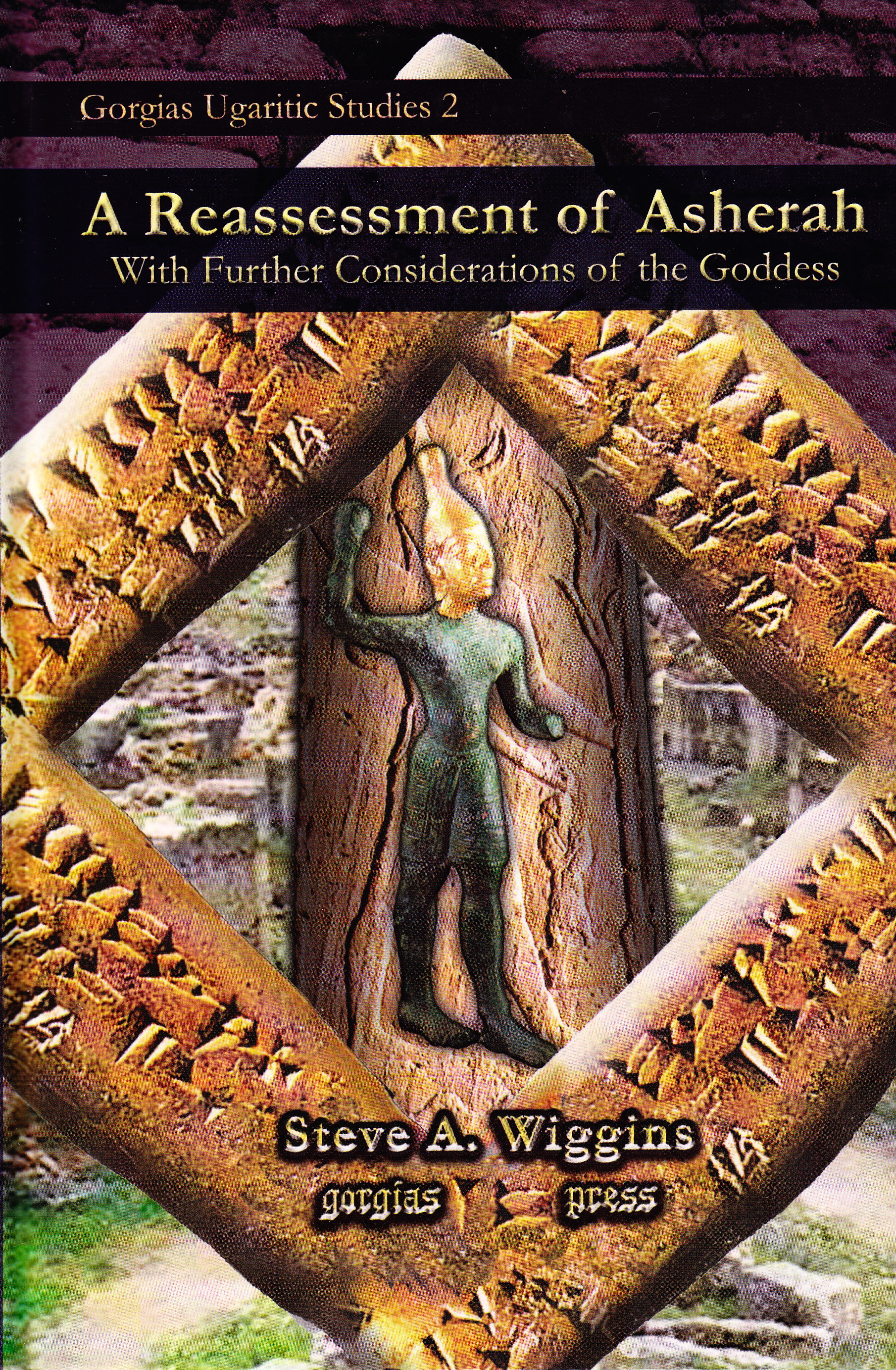
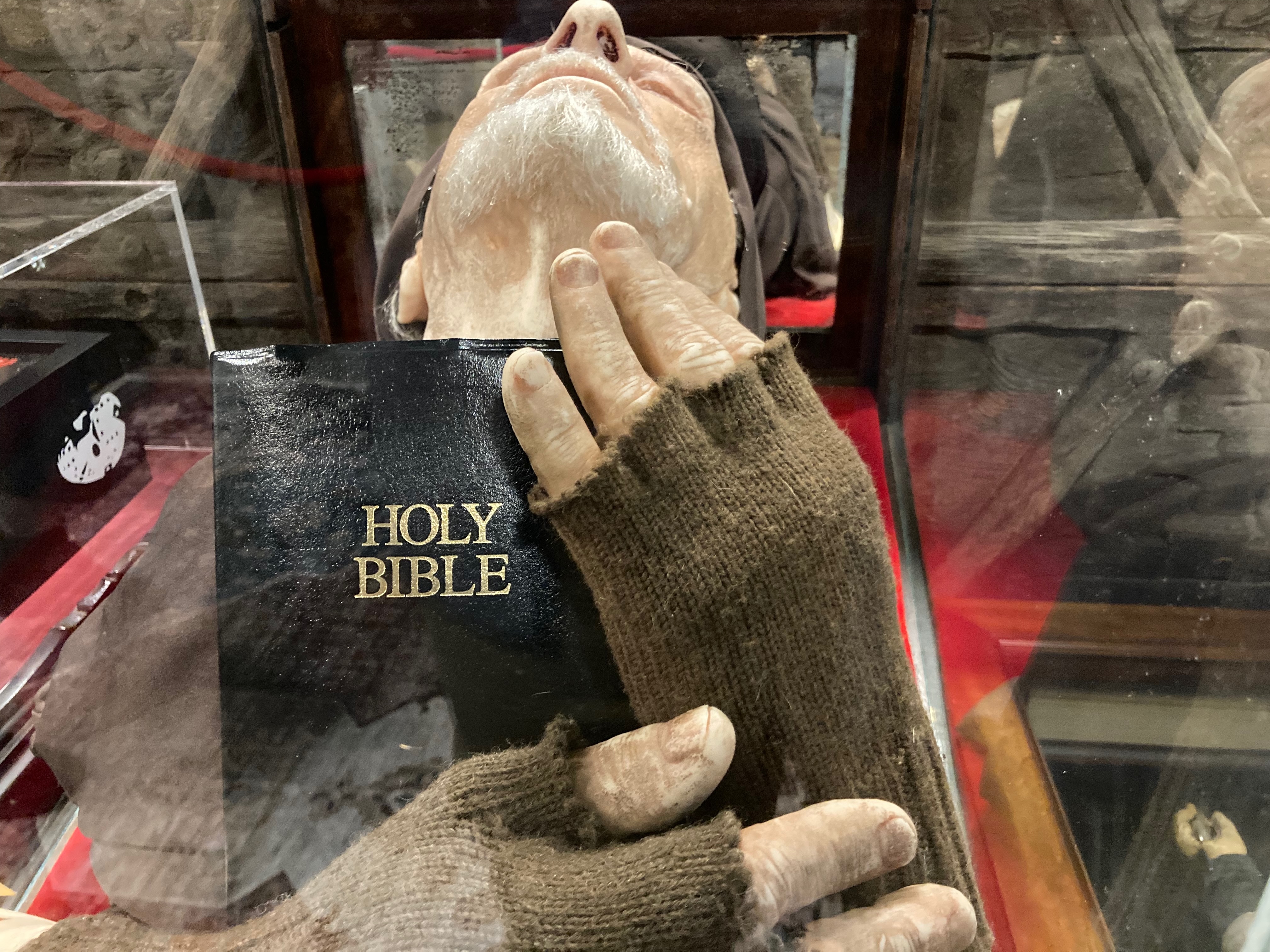
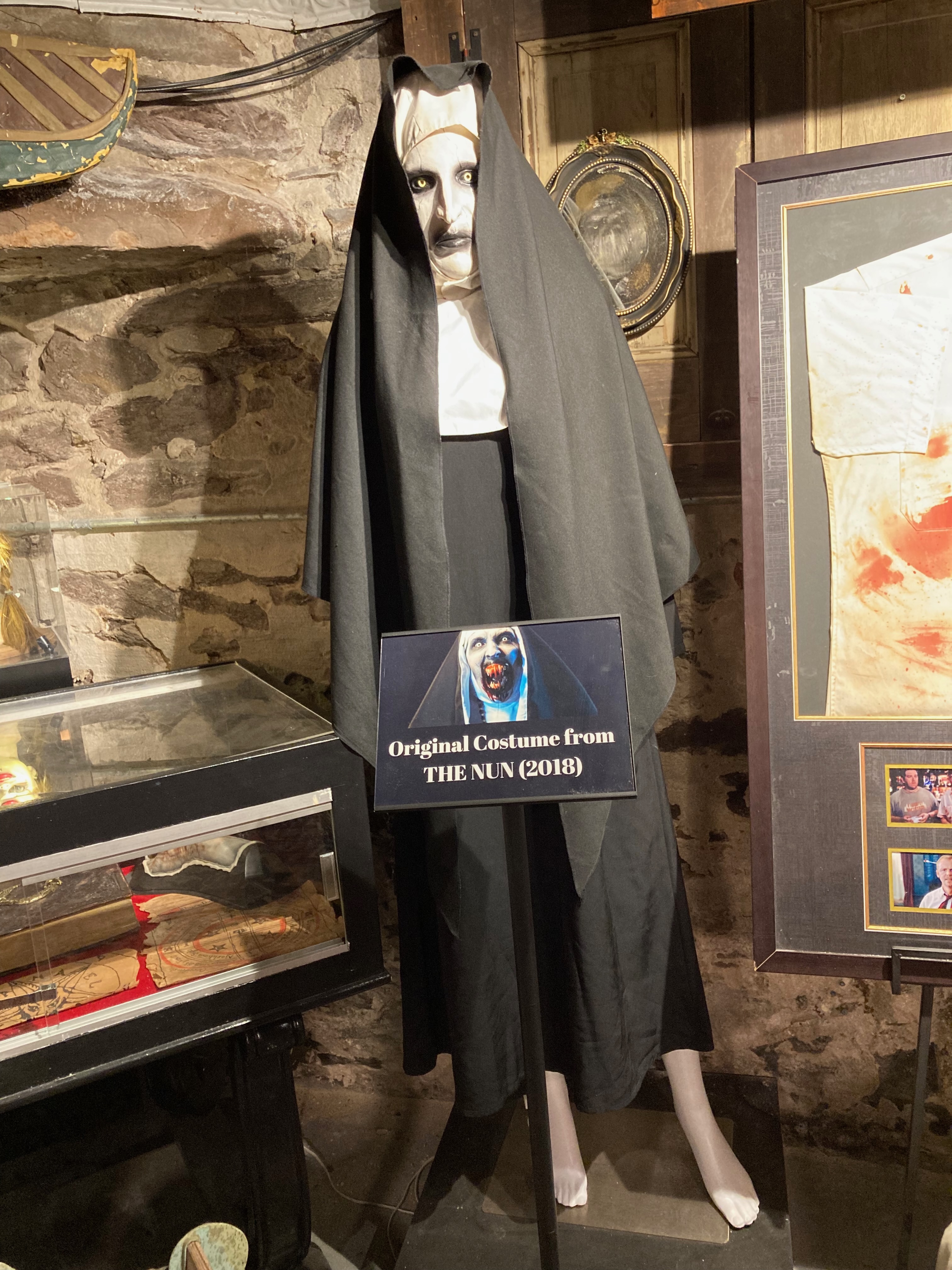
Having written Holy Horror, I keep an eye out for Bibles in horror contexts.  In the context of A Nightmare in New Hope there was the torso and head of Fr. Alameida from Stigmata.  In his hands he clutches a Bible.  Of course, if you’ve seen Stigmata you’ll know that Alameida is already dead at this point, having been so from the start of the film.  Those visiting a horror museum are likely completely nonplussed by seeing a Bible there.  Much of the horror genre builds on religious themes.  Witness The Nun.  The original costume for her is standing over in the corner right there.  If I had enough time (i.e., if I were in an academic post again) I would be spending my time trying to figure out this connection.  I’ve written about religion and horror in four books, in several articles on Horror Homeroom, and in too many blog posts to remember.  There is a connection that only professors have the luxury of thinking time to explore.

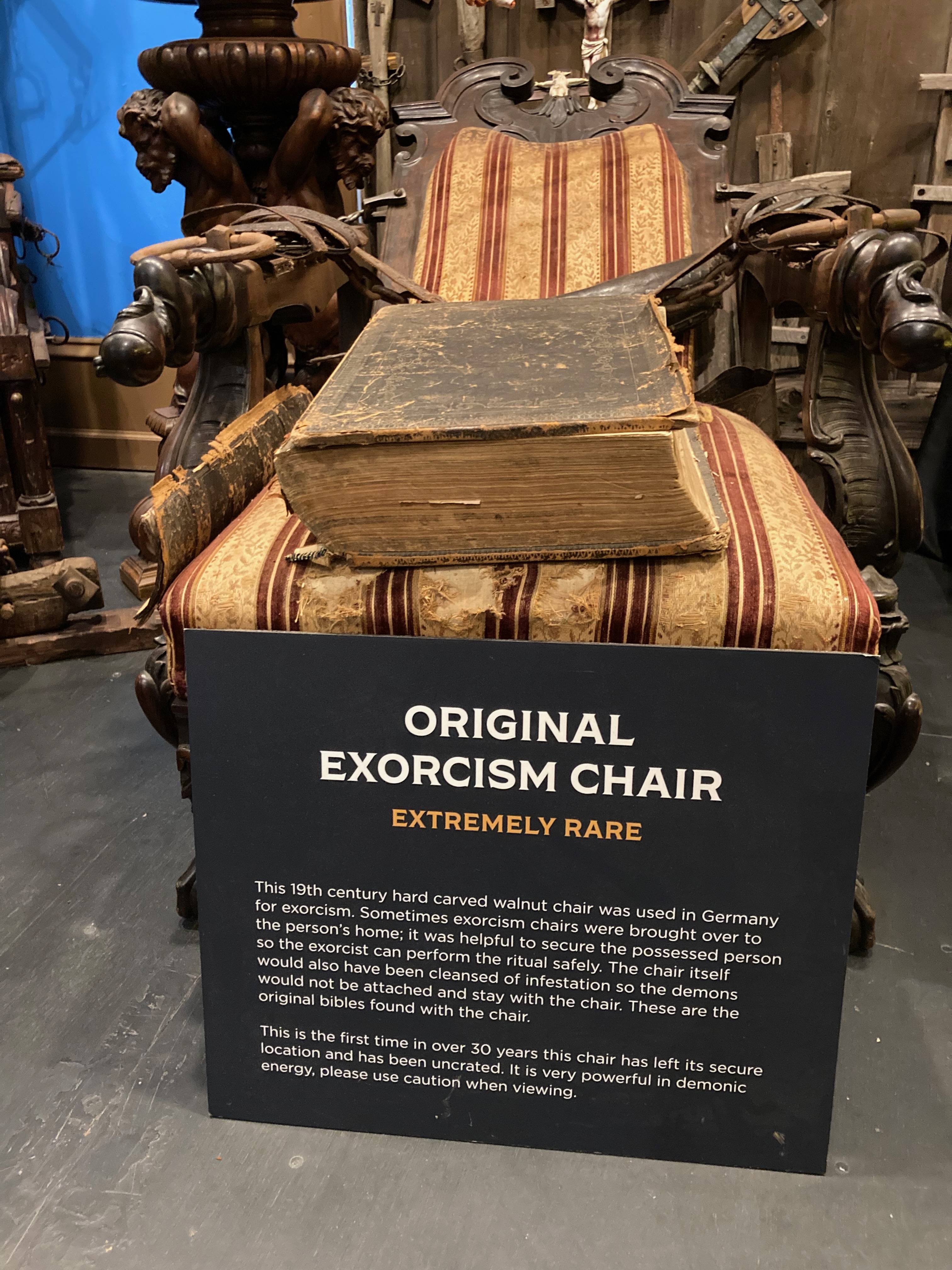
A couple hours later at Vampa, Vampire Paranormal Museum, Bibles were again in evidence.  Indeed, in profusion.  Vampire hunters, it seems, never wanted to be without the Good Book.  Many of the vampire hunting chests (entire chests!) included a Bible.  As noted in a previous post, Michael Jackson owned a vampire hunting kit for a while, until the Jehovah’s Witnesses convinced him he shouldn’t.  In one of nature’s ironies, in the mail when we got back from the museum was a handwritten letter to me from the local JW Kingdom Hall.  Religion and horror.  Vampa also owns a rarity, an exorcism chair.  Things get a bit muddy here since the chair dates from the nineteenth century but exorcism as we know it largely derives from the movie, The Exorcist.  And that takes us back to New Hope.

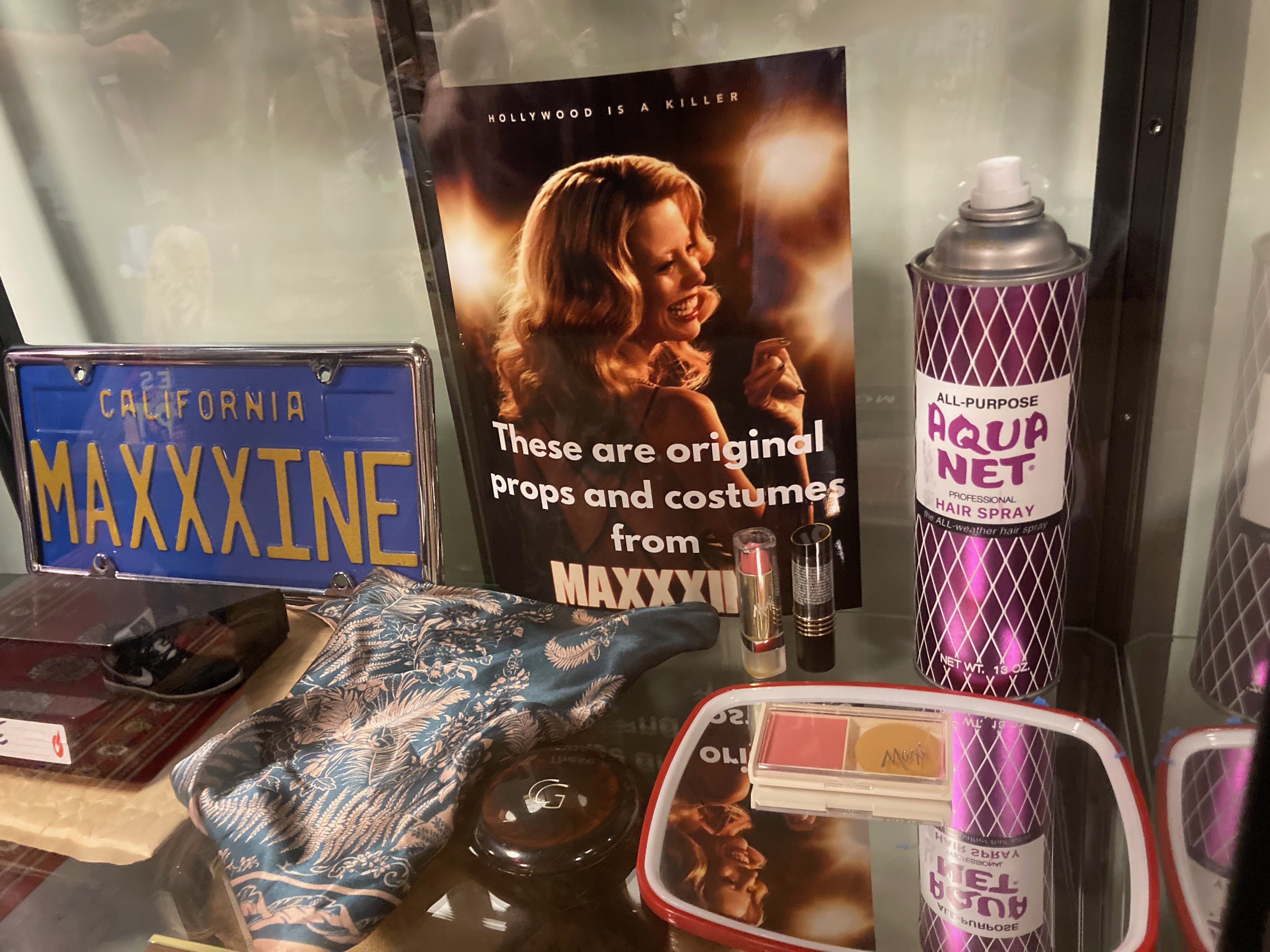
My interest was primarily in artifacts from actual movies.  The Exorcist head of Regan McNeil in Nightmare in New Hope was, I believe he said, a cast.  A horror museum without at least a passing reference to The Exorcist would feel strangely incomplete.  And then there’s Maxxxine.  The entire X trilogy is framed around religion that leads to horror, over a couple of generations.  There’s a connection here and I haven’t found a convincing explanation for it yet.  It’s one of the many books that I’m working on at the moment.  But time is limited.  And Fr. Alameida’s presence in this room, holding tight to his Bible, reminds us that the topic bears exploration.


Meeting Buffy

I have a confession to make.  I had never, before just recently, seen any of Buffy the Vampire Slayer.  This is kind of embarrassing because it was being talked about even as I was just starting to teach at Nashotah House.  And it has been discussed in religion and horror books quite often.  I understood that the television series was considered better than the original movie, but I felt that it was important to go to the source, at least to start.  Joss Whedon, it is reported, distanced himself from the film he wrote because it began taking a different direction than he’d envisioned.  The television series, which was praised among any number of critics, was more what he had in mind.  Still, the film isn’t terrible.  The concept of a ditzy blonde being an unwitting vampire hunter is entertaining and Kristy Swanson plays a pretty good Buffy and Donald Sutherland a great Merrick.

Having not seen the series to compare, the movie stands fairly well on its own.  Vampire comedy horrors can be quite entertaining.  The plot here is a bit overwrought and the love story feels tacked on to the vampire narrative.  It lacks the strong through line characteristic of Joss Whedon movies.  So, Buffy doesn’t realize that she’s a slayer, a kind of reincarnated vampire hunter.  Merrick convinces her by telling her what her dreams have been.  And Buffy has preternatural abilities—reflexes beyond human reach.  And the vampires have been awaking in Los Angeles.  The story just doesn’t hold together as well as it should.  I was a bit surprised, however, to find the Bible quoted a time or two.

The charm, which also led me to read about Abraham Lincoln as a vampire slayer, is the unexpected juxtaposition.  A cheerleader, or the best president we’ve managed to elect in this divided country, and vampires?  Even more, vampire slayers?  Vampires, although monsters, are often symbolic and sometimes sympathetic ones.  Buffy’s vampires aren’t charming.  Sometimes funny, yes, but they aren’t the tormented souls that elicit human sympathy.  And Buffy adds its own backstory mythology.  In Dracula Van Helsing was a mortal aware of vampire habits.  Buffy sees this as a predetermined role, specifically female in nature.  I’m not sure if I’ll be able to carve out the time to watch the television series.  But at least, at this point, I have been able to put a bit more flesh on the character of an unlikely vampire foe.  It only took me thirty-three years.


Deadly Seven

Seven, styled Se7en, shades more toward the thriller end of the stick than horror.  The two are very closely related, of course, but as a gritty cop drama, the main horror element is the gore.  And the serial killer.  Indeed, it’s often compared to The Silence of the Lambs, a card-carrying horror club member.  My main complaint is that much of the movie is shot so dark that you can’t see what’s going on.  The unnamed city is about as cheerless as Bladerunner, and even when people aren’t being stalked by the serial killer they’re being murdered anyway.  So this dark setting brings together two detectives, one retiring (played by Morgan Freeman) and one with anger issues (Brad Pitt) set to take over.  The two are only supposed to overlap seven days, but the seven in the title refers also to the seven deadly sins.  

A literate cop drama—Freeman knows his literature (Milton, Chaucer, Dante, and even Thomas Aquinas)—it is a step above the standard crime drama.  The fact that Freeman spends his nights in the library may be the reason some people consider this dark academia.  The academic part is otherwise absent.  In any case, it is Freeman who recognizes that victims are being killed for their embrace of one of the seven deadly sins.  An obese man is fed to death, a greedy lawyer has to cut off a pound of his own flesh (in a hat-tip to Shakespeare).  When Freeman’s character tells Pitt’s that it’s from the Merchant of Venice, the later says “I’ve never seen it.”  Not read it, but watched it.  It’s Freeman who recognizes the endgame that the serial killer is playing and tries to warn Pitt.  But Pitt’s wrath is also a deadly sin.

The seven deadly sins aren’t biblical.  They emerge in early Christianity, taking shape through such writers as Tertullian, Evagrius, and Pope Gregory I.  They have remained in Catholicism as  pride, greed, wrath, envy, lust, gluttony, and sloth (which sounds like the profile of some narcissists in the news).  They’ve been used in proper horror films as well as in thrillers, giving a convenient number of infractions to pursue.  Seven is one of those films that has become more highly regarded over time.  One might say that a prophet is without honor in their own time.  In any case, the movie is gripping and sad and a bit bloody.  It doesn’t unfold exactly as you might expect.  And no matter its genre, it can leave you thinking.