Good Book Gone Bad

The Bible is a book of horror. This isn’t the main point in Holy Horror, but the fact is terror is never far from the surface in the Good Book. My days as a young scholar of the Bible were defined by the works of feminist scholars. One of the influential books of that generation was Texts of Terror by Phyllis Trible. Not hiding behind a masculine orthodoxy, she looked at how various biblical stories appeared from the eyes of female readers. There is indeed terror everywhere. The evils of slavery condemn that hideous loss of agency when one human being becomes considered the property of another. Women, before the feminist movement began, were taught that the Good Book demands this perverted social structure. They are indeed, in the eyes of its patriarchal world, property.

Important as this realization is, the terrors of Scripture go deeper. Even overlooking the genocides—the numbers make it difficult to take in the horrors of the individuals classed as faceless victims—there are multiple accounts of gruesome murders and violence in the Bible. Wars were an annual expectation. Diplomacy was often considered religious compromise. “Us verses them” mentality led to constant conflict. When it came to executing one another, the denizens of the Good Book could be quite inventive. No doubt women and foreigners were poorly treated on a daily basis, but when left to their own devices with divine voices in their heads, the men of Holy Writ knew how to terrorize one another quite effectively.
Even after the message of Jesus of Nazareth, which included love and care and compassion, the Bible goes on to close with the violent visions of Revelation. Perhaps it’s not appreciated so much in the present day, but the Apocalypse had a difficult time making it into the Good Book. Unfortunately the reasons weren’t that it was a book of horror, but the very fact that its status was debated should give us pause when hiding behind the rhetoric of a canon with its door slammed shut. The Bible contains some high, soaring words of noble thoughts and divine consolation. God can be an empathetic lover. With its status, in toto, as a book of divine revelation we have to pay serious attention to the fact of its participation in the genre of horror. Much of this is in the backstory of the films I discuss in Holy Horror. Others may have already explored this dynamic of Scripture, but it’s often a Good Book gone bad.


Kakistocracy

While in seminary I had the interesting job of teaching a visually impaired student Greek. This wasn’t an arbitrary choice on the part of my professors since, as an undergraduate I had exhausted the Greek curriculum at Grove City College and my fourth year the professor suggested I teach the course to the second years. This was, however, strictly koiné—I’ve always been from the lower class echelons. Trying to figure out how to explain a dead language to a student who couldn’t see required some creativity. At that point in my life ministry loomed as a career and it was still fairly easy to learn new languages. I was studying Hebrew at the time with the inimitable William Holladay at Andover Newton Theological Seminary, both of which are now gone.

I recently ran across a story in the Washington Post that utilized an unfamiliar word based on Greek: kakistocracy. It seems that the present administration has officials scrambling for new words to describe the depths to which our government is willing to sink. There’s an old saying: “the Greeks have a word for it”—I suspect the ancients would be shocked to see this particular word emerging again after centuries of progress. The translation of kakistocracy is quite logical for those with some Hellenistic training; it means “rule by the worst.” The sad thing is that democracy has come to this. Anyone with a fragment of a brain stem could see that 45 didn’t win the election in any sense but an electoral college one—giving us a new direction to sling the related word “kaka” around. It was the fact that those privileged to vote simply didn’t get around to it. As it was, the “incumbent” lost by three million votes. Nobody, however, is willing to do anything about it. It’s kaka.

If the swamp has been drained, it’s been to become a cesspool. With complete disregard for decency, decorum, and democracy, the directives issuing from the potty mouth on Pennsylvania Avenue demonstrate just how diabolical government can become. The sad thing is, the Greeks already had a word for it. One thing we know about our species is that we like to repeat our worst moments over and over again. Even worse, we seem to be proud of it. So as the kakistocracy grows to include porn stars, genital grabbing, and treasonous relations with foreign nations, the world looks in wonder and concludes people like George Washington and Thomas Jefferson had gotten it wrong after all. At least the student I was tutoring, although she couldn’t see, wanted to learn to read. And that made all the difference.


Exorcising Theology

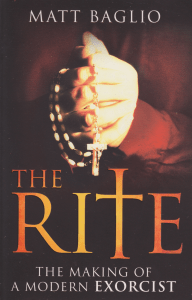
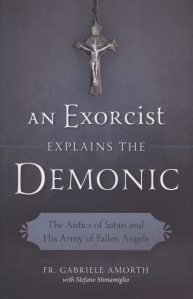
Among those curious about exorcism, the name Fr. Gabriele Amorth requires no introduction. As “the Vatican’s chief exorcist” (a claim the book makes), Fr. Amorth was known for conducting many deliverances and for teaching a new generation of exorcists. Looking for an entryway into his perspective, I read An Exorcist Explains the Demonic: The Antics of Satan and His Army of Fallen Angels. That a priest in Rome should be conservative was no surprise. What was truly astounding about this account was how unquestioningly the exorcist accepted nearly everything to do with Roman Catholicism. His reading of the Bible is quite literal. His understanding of the Virgin Mary as the Mother of God offers no nuance. Demons are fallen angels and, somewhat surprisingly, he uses “Devil” and “demon” interchangeably. For a hierarchy so thoroughly parsed, this was a bit unexpected. Encountering these explanations, much of what I’d recently read in Matt Baglio’s The Rite made sense. Baglio’s protagonist studied in Rome when Fr. Amorth was still active.

Much of the book felt like a lecture from the 1950s. Sex, drugs, and rock-n-roll can all lead to demonic possession. And it turns out to be quite pervasive. Many people, saints and sinners alike, are possessed and don’t even know it. This is truly, according to the priest, a “world with devils filled.” The book begins with a Catholic, if literal, interpretation of Jesus’ role in the salvation of humankind (although the masculine pronoun is preferred throughout). Not only that, there’s no question that women can or should be exorcists. This is something that priests alone can handle. And he even goes far as to point to Eve (who literally existed, one gets the impression) as an example of how women are more easily tempted than men. Reading this brief tractate was like stepping back into a world that even antedates that of the Republican Party. Not decrying science, however, Fr. Amorth suggests medical explanations can account for some of what sufferers deem as possession. Those who think they are in trouble with demons should first go to a psychiatrist. If the problem can’t be solved, it’s time to call in the men in black.

Another area of concern is his outlook on other religions. African and East and South Asian belief systems are coded as possibly satanic. This universe is a strictly Catholic one. Having noted that, a strong undercurrent of love pervades the book. It’s clear that Fr. Amorth was a priest motivated by care for others. His theology may have been hopelessly medieval, but his heart was in the right place. And, if the accounts are to be believed, he was quite good at expelling literal demons. Some of the metaphorical ones, however, seem to have remained firmly in place.


Mediated Reality

According to the Good Book, Methuselah lived nearly a millennium. For all that, the information on him in Genesis occurs in a mere five verses, in a span of seven. We learn when he married, whom he sired, and how long he lived. Not much information of the last antediluvian, especially considering how much time he had. When I searched for him on the web the other day, the information box that showed up on Google had, at the very top, a picture of Anthony Hopkins. I immediately recognized his makeup from Noah, a movie that I just can’t make myself love. The fault for having no other image may be the failure of human imagination—where do we find an image of a thousand-year old?

The internet mediates our reality. One of the points of both my books now in the works is that modern understanding of the Bible is largely media based. Few people have the time or inclination to read such a big book. (Given the continued evangelical support of Trump, it’s pretty clear that most of them haven’t read it either.) We want other people to do the heavy lifting and give us a summary in neat little boxes at the top of the screen. There’s far too many things to do in this tangled web to be spending months reading a ponderous, outdated tome, even if it does have plenty of sex and violence. Even if it influences the lives of each and every person living in America every single day. We’d rather have someone else—preferably not some egghead with a Ph.D.—give us the executive summary.

Once I did the math. If you add up the dates in what I used to call “Genesis years,” the year Methuselah died was the year of the flood. The Bible doesn’t say that old Methuselah drowned when the windows of heaven were opened, but it’s a reasonable conjecture. Nature abhors, it seems, a human being living so long. Our bodies just aren’t built for it. Some trees, on the other hand, have been alive for thousands of years. Botanists call them “Methuselah trees” (I told you the Good Book influences everything!). The pity is we know so very little about this ancient human being from days of yore. Was he a good man? He seems to have been washed out in the sluice gates of what became one great universal sewer at the time. Although we know little, his life would make quite an epic movie, I think. We already have an actor lined up, for Google tells me so.


Updates

So, I’m getting ready to update this website. I’ll give you a warning before things change. Another update, however, is in order. I’ve been promising that I’d let you know when my forthcoming book with McFarland received its final title. Well, drum roll please! The final title is actually the first title I proposed—Holy Horror: The Bible and Fear in Movies. And it has an ISBN: 978-1-4766-7466-7. And a cover design too, but I can’t share that just yet. It is appropriately lurid, matching the subject. But in all seriousness, the book makes a case for the fact that many people understand their religion via popular media. Being a bad boy, I look at it through horror movies.

The title Holy Horror was a play on Douglas Cowan’s excellent book, Sacred Terror. I recall reading that book, starting the night I bought it as SBL, curled up in the swank conference hotel bed, turning pages until I couldn’t hold my eyes open any longer. It had honestly never occurred to me that religion scholars could get away with writing about horror movies. Cowan had the natural advantage of being a Canadian, something I’ve always longed to be. He also has a secure university post. I was, at the time, just a guy trying to feel secure in what seemed like (and turned out in reality to be) a threatening seminary position that was shortly to end.

It may be difficult to understand how horror can be consoling. It can. I’m a squeamish guy. I don’t like blood and gore. I hate being startled. Nevertheless, I took comfort in this genre as my career was falling apart. Holy Horror was a cathartic book for me to write. There’s more than a little metaphor in it. One thing that will become clear to readers is that the Bible is no stranger to horror movies. Ironically, many of them are strangely conservative—Carol J. Clover’s classic Men, Women, and Chainsaws (which I’ve reviewed on this blog) made that point clearly. Horror often has the same message as your typical Disney film, although it’s presently slightly differently. How so? Well, I can’t say very much here or you’ll have no reason to read my book. McFarland does a great job with publishing this kind of title. You won’t find it in Barnes and Noble, and not likely in your local indie either, but it’ll be available on Amazon and these days that’s enough. And before long these pages will change to reflect its coming.


Re-reading the Rite

I’ve written on The Rite before. My current book project, however, led me to reread this account after watching the movie based on it a couple of times. The film dramatizes, of course, the somewhat understated demonic activity in the book. The protagonist loses about 30 years in age and isn’t yet a priest. As is usual, the book is better than the movie. Matt Baglio’s story follows Fr. Gary Thomas from parish ministry in California to his discovery of possession and appointment as an exorcist. As part of the Vatican initiative to have an exorcist appointed in every diocese, Fr. Thomas was sent to Rome to take a course on exorcism. His experience was all academic until he began to attend actual exorcisms with an unconventional Capuchin monk. Very little described in the book is difficult to believe.

This time around the curses nabbed my attention. Among exorcists of the Roman Catholic stripe, there is a strong belief in the reality of curses. Not only the reality of curses, but the belief that curses can lead to demonic possession. Knowing that Catholicism has struggled with accusations of being unsophisticated and behind the times, the fact that this isn’t more widely known is pretty self-explanatory. Growing up Protestant, I was always taught that curses are make-believe. They don’t really have any influence on a person’s life. The world of demons, however, is a supernatural one and the concept of curses still holds sway in this universe, as the book shows.

Another arcane aspect that resurfaced when I reread this book is just how elaborate the Catholic backstory is. Many Catholics, it’s clear, distance themselves from such topics as the Devil and demons, but there’s no escaping the Virgin Mary and the drama of Jesus versus the powers of evil, as well as the intercession of saints. The problem is that many of the players are personified in the Bible. It’s pretty hard to say the Good Book got it wrong. That worldview lends itself to belief in supernatural impingement on this sphere. Not that that’s a bad thing. Many people, however, would rather believe in a materialist world with physical cause and effect being the main operating paradigm. Demons complicate all that. But then, so does the idea of Mary being a perpetual virgin, and even the patrilineal heritage of Jesus himself. The Rite brings to the light something many would perhaps prefer to be kept under a bushel. Strange things do happen in this world, and they do tend to respond to the backstory that’s been told. That makes such books difficult to classify, even with the backstory.


Personifying Evil

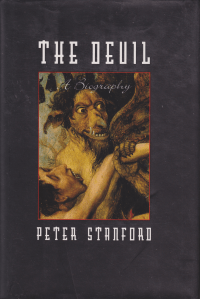
Biographies seldom cover millennia. Even if one were to try to uncover all the scant facts on old Methuselah at 969 years, it would still fall short of four digits. So Peter Stanford’s The Devil: A Biography takes the long view. Even with that lengthy perspective, there’s little that might be known about the prince of darkness. Even with a role in the Good Book his appearances are few and details are lacking. What Stanford does, of course, is outline, more or less, the history of Satan. This is no easy task since few ancient sources focus on trying to provide explanations for exactly who this might be.

As with most books by non-academics (and I don’t mean to sound snobbish here) there are some overstatements. Some of the details aren’t so finely parsed. It’s the big picture the author’s after and he does quite well when it comes to the modern era. Not only is there enormously more material from which to choose, there is also a great deal of literature and even headlines available to harvest. All writers that I’ve encountered on the subject make the point of demonstrating that news of what’s happening in the modern world suggests either the Devil exists or that something (or things) is doing a great job parodying such a character. When seeing evil in the highest reaches of the government it’s not so hard to believe.

The thing about the Devil is that he almost died out. In the nineteenth century when the explanatory value of science was firmly kicking in, and industrialization was making our live both easier and harder, the dark lord went underground. Humans seemed capable of making and claiming their own evil, and even the professionals—the clergy and formal religionists—had admitted Satan was most likely a metaphor gone wild. The birth of Fundamentalism, a movement that became prominent only in the 1920s, necessarily resurrected the Devil. The Bible does mention Lucifer, so he had to be real. Since that day he’s learned a lot. Protean to the extreme, he bears many guises. No longer beholden to a demonic tail, cloven hooves, or a pointy beard, he most often appears clean shaven and wearing expensive business suits. Borrowing a phrase from the Good Book, it’s by his fruits that we know him. Stanford’s biography shows its age a little, but when you’re covering a couple thousand years of speculation, being outdated is only a venial sin.


Refillable Ideas

Maybe I’m too slow of thumb, but this ought to be simple. For many years I kept a small slip of paper in my pocket, along with a pen. Eventually I upgraded the paper slips to Moleskine notebooks since they’re harder to lose and the covers mostly prevent the smudging of my ideas. When something strikes me I don’t reach for my phone—by the time I enter the passcode, select the app, and try to type with fat thumbs, the idea’s gone. Instead I pull out my Moleskine, battered and frayed by the final pages, and my pen. The problem is I’m still enough of a working-class guy to lose pens. If a cord comes disconnected beneath my desk, I’m down there on my back fixing it rather than calling IT. Pens fall out of my shirt pocket on planes, trains, and automobiles.

A lost pen shouldn’t be a problem, but finding a pen that writes right away is. Like most people I have scores of throw-away plastic pens handed out by vendors with their company name on them. I prefer a good quality pen—the kind a family member gives you for your birthday—but they hurt when you lose them. I finally settled on a happy medium. One of my kin gave me a heavy-weight, refillable pen that has a robust clasp so it doesn’t slip out of my pocket, down between the seats of public transit vehicles. Refills, however, are another story. Who would’ve thought that I’d spend my time reading reviews on Amazon just to find pen refills that write the moment inspiration strikes? Well, I do.

Unlike those who whip out their phones to write things down, I still pull out my notebook. Nothing is more frustrating that feeling an idea evaporate while waiting for the ink to flow. My most recent refill is on strike most of the time, while that cheap pen from the health fair at work never seems to have a problem until it runs out of ink and has to be tossed into the landfill. I wonder if the Bible would’ve ever been written had Moses to rely on the poor quality of pen refills available before the common era. Maybe he had less commuting time, although I’d say 40 years in the wilderness qualifies. His stone tablets may have been heavier than my Moleskine, but his chisel was sure and his words still adorn courthouse lawns everywhere. Perhaps I’m too modern after all.


Hope for the Future

I’m standing in a haunted place. There was an act of violence here this week. Gun violence. A man died in this restaurant where I sat with my wife and had lunch just a couple of months ago. I’m in Princeton for a rally organized by a teenager. We’re here to tell the government we the people want sensible gun control laws. The website said they were expecting 500. Five thousand turned out instead. Princeton’s not the kind of town where you expect gun violence. Affluent and privileged, it’s the kind of place many of us go to get away from real life for a while—they’ve got the best bookstore around and you can still find DVDs at the Princeton Record Exchange. You don’t expect people to be shot dead here.

America’s perverse affair with firearms goes hand-in-hand with its refusal to ensure adequate treatment for the mentally ill. We give them firearms and wonder what could possibly go wrong. We elect the mentally deficient to highest office in the land and instead of reining him in, the GOP reigns with terror. They have shown time and again that they prefer NRA money to our children. They have sold out. And the word appropriately used to describe such a party good manners prevent me from inscribing on this blog. Republicans, true republicans, need a new party. Instead they refuse to call this aberration in Washington what it truly is. Thousands took to the streets yet again this weekend. This was my fourth rally or march since January of last year, and hey, government—they keep getting bigger.

“Woe to the inhabiters of the earth and of the sea! for the devil is come down unto you, having great wrath, because he knoweth that he hath but a short time.” So saith the Good Book. It’s a book the Republican Party has forgotten how to read. Especially the “evangelicals” who’ve betrayed their saintly name. While I’m here in Princeton, a few hours away in the sullied capitol of this once reasonable nation, half a million are on the march. And just as women led the way last January we’re being shown the truth that anyone can lead better then old white men. And the fact that the organizers of these protests are high schoolers, I am inclined to leave the last words to the prophet Isaiah, whom, for any Republicans who might be reading, is in the Bible: “The wolf also shall dwell with the lamb, and the leopard shall lie down with the kid; and the calf and the young lion and the fatling together; and a little child shall lead them.”


Group Activity

While reading about various religious phenomena—both positive and negative—one of the recurring aspects that forces itself on our attention is contagion. Going back at least to the 450 prophets of Baal on Mount Carmel, the idea of crowd sourcing religious frenzy can be disturbing. It involves groups of people and loss of control. Not only is the frenzy itself frightening, but also the apparent paranormal accoutrements to such enthusiasm. In more specific terms, the revivals of the “Second Great Awakening” and the mass exorcisms described by Michael Cuneo in American Exorcism both boast supernatural elements. I’m not saying there can’t be a scientific explanation, but I am saying what happens in such circumstances has been understood to be supernatural by educated, experienced people. Both demoniacs and new religious converts display superhuman strength and atavistic behaviors that one doesn’t otherwise see in a lifetime. Once they start happening, they spread.

This is one of the draws of charismatic Christianity. Speaking in tongues can be quite contagious, I’m told. According to Cuneo’s carefully anonymized accounts, so can demonic possession with its attendant paranormal activity. Some scientists have explored the idea of consciousness as a “hive mind” phenomenon. Many “minds” brought together can produce something greater than the sum of the parts. We’re used to this in the world of insects, but since humans like to be radically individual we miss the instances where it occurs among our own species. While not always so, such events are often religious in nature. People gathered together in emotionally charged settings, personal experience draws off of that of others, and suddenly a person’s doing something they formerly believed to be “impossible.” God and demons both have explanatory value here.

Despite our tendency to want to destroy each other, humans have great potential when we work together. Our petty fears and jealousies could be contained, disassembled, and repurposed, if only we possessed the will to do so. The desire to stand out in a crowd—not to blend in but to be a unique individual—runs strong in our fractured psyches. We hate being mistaken for somebody else. Religious experiences, much maligned these days, tend to be group experiences. Yes, a mystic may have a personal and highly individualized rapture, but in the presence of others the excitement may be shared. “Mass hysteria” and group hypnosis have sometimes been posited as the culprits behind such events. Those who participate, however, use other terms to describe what has transpired. They may not call it a “hive mind,” and they won’t be alone in rejecting the phrase.


Testamental Annihilation

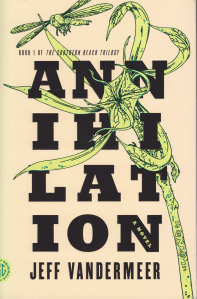
I’d be a hypocrite if I didn’t tell you there may be spoilers below. The book to which I alluded last week—the one made into a movie—was Jeff Vandermeer’s Annihilation. I first saw the book in a Green store in Ithaca, New York. I figured it must have a planet-friendly message if it were being sold at such a venue. I’ve finally had time to read it. There may be spoilers, so if you plan to see the movie, be warned.

Set in a kind of edenic dystopia not far from now, the novel gives none of its characters names. The narrator is the biologist of a four-member team sent into Area X—a region in the south from which no expedition has returned. Clearly intended to be part of a series, the novel does leave quite a few things hanging. Among the many unanswered questions is what has happened here. One of the problems with having Bible-radar is that you can’t overlook references to the Good Book. Without going into too much detail, the story has mysterious writing on the wall. That itself is a biblical trope, of course, but when the biologist discovers notebooks from previous expeditions, she considers that the writing is like something from the Old Testament. This description made me pause and ponder. The Hebrew Bible has, in the popular imagination, been cast in the role of a harbinger of doom and gloom. Granted, there are many passages that have earned that reputation, but on the whole it’s a very mixed bag. Still, in popular culture “Old Testament” means things are going wrong.

While not a horror novel, there are elements of horror here. People transforming into plants and animals, sloughing human skin. And resurrection—how New Testament! This made me think that maybe a penchant for horror isn’t such a strange thing for a guy who spent a decade and a half teaching the Hebrew Bible. My motivation for going in that direction had more to do with my interest in origins, but nevertheless, I also grew up watching monster movies. Maybe, unbeknownst to me, I was bringing the two together in this field of study. It’s difficult to tell at the end of book one what the overall message will be. But since I’m discussing the Hebrew Bible maybe I’ll take a stab at prophecy and predict that the second book of the series will be in my future. And I wouldn’t want to be a hypocrite.


Belief Matters

What you believe matters. This is shown clearly in the case of exorcism. Brian P. Levack admits to personal reasons for interest in this dark subject. His The Devil Within: Possession and Exorcism in the Christian West is a masterful treatment of a topic that it considers from many angles. As a form of Christian practice it goes all the way back to the beginning—Jesus’ initial fame was as an exorcist of sorts. He didn’t require any ritual or authority to expel demons, but he became a public figure largely because of his ability to do so. Levack’s study focuses mainly on the Middle Ages and the Early Modern period. The latter was the high-water mark of possessions until the resurgent interest of the post-Exorcist twentieth century.

An aspect of exorcism that had raised my curiosity more than once was its Catholic disposition. Many Protestants believe in demons, but only the Roman Church has the grand ritual to drive them out. There are Protestant exorcisms, but they have a different goal—they’re intended to eliminate sin. This leads Levack to a strong contrast between Catholicism and that most extreme of Protestant traditions, Calvinism. Few Calvinists suffered from possession. Those who did were not held blameless, as in Catholicism (if you were being controlled by a demon you could hardly be held responsible for your actions). Calvinists believed only the sinful could be possessed and since their God is Republican you can hardly count on any mercy. In fact, if you were possessed, chances were you would become a witch. And everyone in early modernity knew what the cure for that would be.

We tend to think that the Enlightenment drove such beliefs extinct. In fact, the height of both witch hunts and demonic possession came after the scientific paradigm took hold. Levack makes the point that this is a kind of theater—performance undeniably plays a part in exorcisms. Both science and Calvinism, taken neat, can leave a body feeling cold and in need of some emotion. As the book notes, you could generally find a Catholic priest who’d be glad to drive out your demons. It seems that the great forces of good and evil play themselves out not only in the spiritual realm, but in the varieties of religious experiences in the all-too-political world of the church. The Devil Within is a fascinating book with a plausible thesis written by an author who understands that ideas have consequences that aren’t always easy to expel.


No Whine

Sneaking in a grocery run to Wegmans before church one Sunday awhile back, I was in line behind a distinguished looking gentleman. “I’m sorry,” the clerk told him, “we can’t sell alcohol before 11 a.m.” She set aside an expensive looking bottle of Glenlivet as he nodded solemnly. From behind me a woman called out, “Is that true, I can’t buy my wine?” Like Paul Masson, it seems, in New Jersey they will sell no wine before its time. Many, I suspect, have supposed that blue laws would’ve lapsed by now. What most people probably don’t realize is that this is yet another instance of how the Bible continually impacts our lives. Although the weekend has become enshrined as relief from jobs that most of us find tedious, blue laws were biblically based to keep us in line.

The Puritans did all within their power to enforce their views onto larger society. Sunday was not only “the sabbath,” it was a time for no fun—read Laura Ingalls Wilder for getting a sense of what this was like even on the frontier—and church attendance. Nothing potentially more attractive than church was to be on offer on Sunday morning. Here in over-populated, wonderfully diverse, secular New Jersey, those doing their weekly grocery shopping were learning the Bible has a very long reach indeed. Even if many people don’t realize that the Good Book’s behind it, they must abide by Puritan standards. I suspect many have no idea why blue laws remain in force. The Bible doesn’t loosen its grip easily.

As we pushed our cart past the ends of the other check-out lanes I noticed that several of them had bottles purloined at the point of egress. I suspect that most of the would-be buyers weren’t hurrying home to get ready for church. Instead, they were probably annoyed that they’d have to go out again later to continue their purchases. The Supreme Court has upheld blue laws on the basis of giving time off to those of certain professions that work by the hour. Those of us who don’t punch the clock are, according to the logic of such a decision, given exemption from the law of the land (but not to make immoral Sunday morning purchases. Indeed, in some professions attendance at church is part of the job expectation). It is perhaps bewildering for those raised in different religions. The idea of time off, although it probably wasn’t intended for humanitarian reasons, has also become one of the hidden blessings of the Bible. Without the sabbath, our weekends would also be an opportunity for others to make more money by the usufruct of our precious time. Holding off a few hours to buy alcohol seems like a small price to pay, in comparison. The Bible giveth, and the Bible taketh away.


Nightmares with

One of my greatest phobias is that people will think I’m arrogant. Those who know me realize that I’m highly self-critical, as befits a lapsed Fundamentalist. Self-image isn’t my strong suit. So it is with great trepidation that I celebrate a tiny bit at another book contract. Book number three (still not officially titled) now rests with McFarland Books. Shortly after I signed the contract for the book nameless here forevermore, Lexington and Fortress Academic announced a new series: Horror and Scripture. Maybe you know the feeling too. You’ve just done something you’re proud of and then you’re upstaged. My book deals with the Bible and horror films—what could be more Horror and Scripture than that?

The new Lexington/Fortress series has two editors. One of them is a friend of mine. (Monsters and horror don’t often mix with the Good Book, and those few of us interested in such things receive glances askew.) She asked me if I’d consider contributing to the series. This takes a lot of careful thought on my part. I have a sum total of about an hour a day to write, often less. I can read research-related material on the bus, if I can stay awake, but other than weekends—already quite busy catching up from not being home all week—I have very circumscribed writing time. Nevertheless, I do get up at 3:00 a.m. so that I can have that vital hour to write. Why not focus my efforts onto another book? Perhaps insanely, I submitted a proposal. This week a contract came.

In the short span of one year I’ve gone from being able to claim two books to four, almost like a parable. My untitled book is written and submitted. My contracted book is already half-drafted. After my McFarland book I’d already begun work on a sequel, you see. It lacked form and substance, but the proposal forced me to bring it together. Now, barring any unforeseen disaster, I should be able to submit this new book within a couple of years. By admitting this to you, dear readers, I fear I open myself to accusations of either arrogance, or at least greed. It is, actually, rather like this: my wife often tells me “we must cut the coat to fit the cloth.” I don’t have an academic position, but I’ve learned a lot about the publishing industry over the past decade. Research is a constant in my life, as it is with most credentialed people, no matter their jobs. So it is with fear and trembling that I announce my next book: Nightmares with the Bible. Watch this space for cryptic updates as the details unfold. And please don’t think less of me for it.


One Isaiah

Everyone wants to be remembered. While many don’t wish to be famous, we all hope that someone notices the noteworthy things we’ve done. By any measure Isaiah of Jerusalem seems to have succeeded. Every year around Christmastime his words, set to music, are sung in churches around the world. He gets regular readings among those who attend synagogue and even those who take secular Bible classes have to reckon with him. Isaiah even attracted imitators before his book was finally compiled. According to the Good Book he was a trusted advisor to King Hezekiah. But what do we know of him as a person? Biographical episodes in his book are rare, unlike those of his fellow major-leaguers Jeremiah and Ezekiel. Who was Isaiah?

It’s not Christmastime, so why am I writing about him now anyway? Well, a friend pointed me to a recent archaeological discovery from Jerusalem that is a broken seal impression (technically called a bulla) that may have originally read “Isaiah the prophet.” The news was broken in Biblical Archaeology Review, but it can be read about for free here. Eilat Mazar, the archaeologist publishing the inscription, notes that it reads “Yesha‘yah[u] nvy…” As often happens in archaeology, the end of the inscription is missing. In case your Hebrew’s even rustier than mine Yeshayah sounds a lot like Isaiah—go ahead, sound it out. The word prophet is nvy’. Don’t let that apostrophe fool you; it’s a full-fledged consonant in Hebrew. If that final letter has been reconstructed correctly the seal would read “Isaiah the prophet.”

My friend asked me what I though of this. My initial impression is that it would be odd for anyone to sign themselves with the title “the prophet.” If they did it would require a bit more hubris than I mentally attribute to Isaiah. You see, a prophet was selected, so they believed, by God. Chosen even among the chosen people. It wasn’t a pleasant job—once again, Jeremiah’s jeremiads come to mind. Would someone have signed himself “the prophet”? We don’t have a terrible lot of information from the ancient world about individuals. What we do know is subject to exaggeration and other forms of hyperbole. Did Isaiah, mouthpiece of Yahweh, carry an official seal declaring that the contents were bona fide possessions of a man who saw God sitting on his throne and survived to tell the tale? Or is it a hopeful reading of those who want to demonstrate the Bible is true? It’s a question the reader must decide, for, as always seems to happen, the evidence is broken just at the crucial point.